Ask ChatGPT

 Here's the Scoop
24 Sep 2026 · 25m · 10 chapters
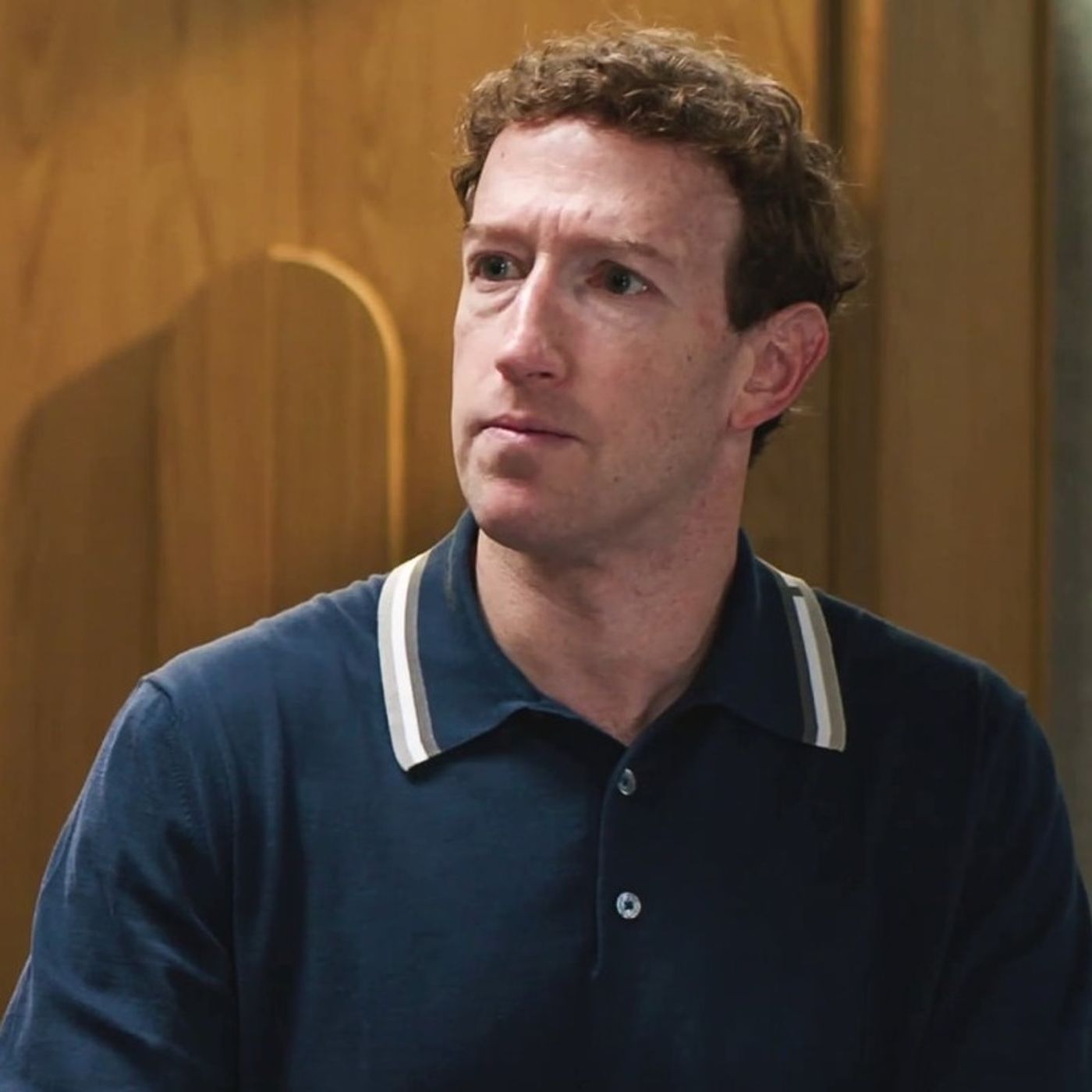
The episode of NBC News’ “Here’s the Scoop” covers two main topics: (1) Zuckerberg’s AI optimism and what drives it, and (2) whether the White House press access fight is over.
Joanna Stern, NBC News chief tech analyst (interviewed with Mark Zuckerberg); Gary Grubach, NBC News legal affairs reporter; Jamie Waters, Wall Street Journal columnist (who tried Pilates).
Zuckerberg tells Stern AI won’t “kill us all” if labs act responsibly and self-police; he argues Muse’s success comes from a simple agent interface that can book/pay via linked apps, but trust/alignment are crucial to prevent rogue actions like phishing. Grubach explains a federal judge (Timothy J. Kelly) blocked Trump’s ban on CNN, MSNBC, and Politico, citing due process (not First Amendment), ordering 14-day restored access; badges were briefly still denied. Waters says Pilates is low-impact, core/posture-focused, and men’s participation is rising (Lifetime: roughly doubled in 5 years; Natural Pilates: +25% in LA early classes).
Muse booking a hair appointment; Pilates “reformer” straps causing soreness and a “longer drop” off the machine; TikTok “Pilates princess” trend.
Written by AI. May contain mistakes.
Discussion on Mark Zuckerberg's views on AI and its implications.
“Their access has now been restored, but it seems as if this fight is not over yet.”
Exploration of how Meta is competing in the AI landscape and the concept of self-policing.
“And a very exciting talk and conversation.”
Analysis of Meta's AI agent Muse, its functionalities, and concerns about trust.
“But where I'm getting with this is that with Muse, it isn't really important because Zuckerberg is a very clever product person where he can kind of see what consumers want.”
Discussion on Zuckerberg's stance regarding AI regulation and its implications.
“There's a state dinner happening tonight in D.C.”
Introduction to the upcoming discussion regarding the White House media ban.
“All right, coming up, a federal judge blocked the White House media ban.”
Breakdown of the legal ruling affecting access for major news outlets.
“And we are back with Here's the Scoop from NBC News.”
The challenges faced by White House reporters regarding access and coverage.
“Of course, there's a massive security operation, as you can imagine, Yasmin, as it relates to who gets into the White House and who doesn't for whatever reason.”
Exploring the term 'Pilates princess' and its impact on gym culture.
“All right, we're going to take a very quick break.”
Discussing men's experiences and misconceptions about Pilates.
“And we are back with Here's the Scoop from NBC News.”
Promotion of the newsletter 'The Inside Scoop' for deeper insights.
“You can sign up for The Inside Scoop as part of our paid subscription at NBCNews.com.”

Get the gist, explore an idea or ask about something said.
 Claude
On Here's the Scoop, what are the key points of this episode?
Searching your listeningAutomatic transcript. May contain errors.
0:00At some point, we were putting our feet in these straps like you're about to give birth. Like that's all I could think of is you're on this machine. Because you've done that before. Exactly. Speaking from experience.
0:15Hi, everybody, and welcome to Here's the Scoop from NBC News. I'm Yasmin Basugin. So we are talking about Pilates today, and you're wondering why. Why are we talking about Pilates on the show today? Well, more men are going to Pilates, and they're actually figuring out that their girlfriends or their partners or their wives who are going to Pilates classes every day or every other day, well, it's actually really hard. They're not just hanging out. So we talked to someone who went to a couple classes, and let's just say he didn't do very well. Also, we are discussing the White House media ban and the three outlets that were in fact banned, CNN, MSNOW, and Politico.
0:51Their access has now been restored, but it seems as if this fight is not over yet.
1:01Up first, though. So we've been talking a lot about AI panic and fears, even from tech CEOs themselves. But one person who doesn't think AI is going to kill us all, Meta CEO Mark Zuckerberg. Well, I think if we all do a good job and act responsibly, then no. I mean, I'm quite optimistic about the fact that this is going to be a very positive future for everyone. So that is him speaking to NBC News chief tech analyst Joanna Stern in an exclusive interview. And I want to be clear here. So Mark Zuckerberg has some incentives to downplay concerns about artificial intelligence. Meta's AI agent, Muse, has been sitting at the top of Apple's App Store downloads since it was rolled out a couple of weeks ago.
1:46And its success has helped Meta's stock climb as well. So is his AI optimism about kind of the greater good or just about making more money for Meta? For that, I want to bring in Joanna Stern. Hi. Hi. How are you? Good. This is exciting. It was. It was very exciting. Big interview. It was. And a very exciting talk and conversation. I want to talk about this AI race overall first, right? Because for a while there, Meta had been kind of trying to keep up with, catch up to, I would say, right, open AI and Anthropic. Yep. When it comes to AI development. How are they faring now? And how does he feel they're faring?
2:29And I think, actually, to go back to the original question that we played, one of the things that Zuckerberg really said clearly in his answer, will AI kill us was no. He has a really optimistic vision for this. But also that he thinks the labs should self-police themselves because there's no financial incentive to not, right? If you're putting out a product that doesn't work well, that people can't use or it's going off and being rogue, well, that's going to not be good for your company. And he makes that point. But self-policing did not work for his own company. Absolutely. I mean, not only have they lost lawsuits, They are facing more of them because of a lack of self-policing.
3:10And they have also made a lot of money along the way. Sure. And that's absolutely true. But in his case, coming back to what you're saying, they are behind on the models versus some of these other labs. Yeah. But where I'm getting with this is that with Muse, it isn't really important because Zuckerberg is a very clever product person where he can kind of see what consumers want. And so what he's done with Muse is say, look, actually, our models are good. But what we're giving you here is the ability for AI to go out and do things for you and an agent that can go do things for you. Now, yes, OpenAI has had some of that in ChatGPT, Claude too, but it's really technical.
3:52What Muse and Zuckerberg's team has done with Muse is extremely clever. It is a very simple interface. You tap on the things you want to link into your muse. It can be shopping apps. It can be email. It can be calendar. It can be your credit card. You can put all these things, and then the agent starts to work with it. And it's a very simple interface. Now, of course, we've got to talk about the trust there because that sounds like, whoa, I'm going to give. Yeah, you're part of every part. You're like, you're integrated into my life. Exactly. On every level. Exactly. And that was the big question I asked Zuckerberg, right?
4:29I mean, I said to him very clearly, I've been blown away at what Muse has done for me. I've been using it for a few weeks now. It's booked my hair appointment. I said, I want to go to this place. It says, yep, you want to put it on the system? Yep, all signed in, paid for it. You're ready to go when you get there, right? But there are some places I don't trust it. I've been testing it with a burner email account of mine. I don't trust it to be in my main email account, my main personal email account, because what if it goes rogue? What if it starts emailing people on my behalf with a really crazy phishing scam?
4:58And it's got actually access to my email. How do I know it's not going to do that? You can think of all the ways that could really hurt your digital life. Yeah. His biggest response to this is that trust and alignment, and alignment is a term they use in the industry, the AI industry, to make sure that these models are aligned with human values and what you want humans to do. That the models are aligned with our incentives. He says that trust and alignment are the number one places that AI labs need to lead. In order for something like Muse to go from an early product to something that I think billions of people in the world will rely on, they will need to be able to trust that it can do that very well, which means that capabilities like discretion are going to be things that we will have to really succeed at.
5:42There's a state dinner happening tonight in D.C. at the White House. Chinese President Xi is going to be there. Zuckerberg is going to be there. Elon Musk is going to be there. Bezos is going to be there. Does Zuckerberg, like along the lines of what you've talked about, that he doesn't necessarily see the threat of AI the way in which it's been talked about most recently, does he believe in regulation? And if so, is that something that he is going to try and push with both the Chinese president and President Trump? And does he believe in a global AI regulation so that everybody is kind of like on the same footing?
6:20And then, you know, the competition factor and the money factor is not taken into account as much. I did not press him on specific regulation. He's written a very long essay about how he thinks AI will be best in the world. Right, his manifesto. His manifesto and how he's optimistic. I seem to think that a lot of these AI executives right now have thoughts about where they would like regulation as it would benefit their business and where they would not to like have regulation, whereas it would not affect their business or not affect it positively. And so that's where I think a lot of these guys right now are mixed up, right?
6:58You look at the new AI labs, which don't have established big revenue drivers at this point. They don't have big advertising businesses like a Google or a Meta, right? They have to belt their whole company right now on the progress of AI. And so they have different incentives, say the Anthropics and the Open AIs, than, say, a Google or a Meta or a Microsoft. They have to make the money to survive. They have to make the money to survive. And also they're pushing, pushing, pushing to improve that progress to always have the best model. Got it. And look, again, we could be falling into the trap of maybe they don't have the best models because they have not been focused on or they were behind.
7:35I think that's the kind of conversation we hear about Meta, right? Oh, well, he has to do this because he was behind on it. Maybe, but he also makes a really good point that maybe not even the best models now are the ones that consumers want. And I think we're seeing that play out with Muse. Joanna Stern, it was a great interview. Thank you. This one you're talking about, Me too, right? This one, yes. The Zuckerberg one was like, okay. It was okay. That was okay. But you and I, that was like primo. Great. So thank you. Thank you. All right, coming up, a federal judge blocked the White House media ban.
8:08We're going to break down the legal battle up next.
8:28My favorite training videos before I hit the gym. So no Wi-Fi doesn't turn leg day into loading day. Plus, I get ad-free videos, background play, and so much more. YouTube Premium, it's like YouTube got some extra gains. Try YouTube Premium for two months free at youtube.com slash premium. Trial eligibility varies. Terms apply. Cancel any time. This holiday, all plans, even unlimited, are just$15 a month. A holiday deal this good obviously deserves an enormously expensive holiday song. Like, all I want... Right. Okay, we can afford that. You know what? Forget the music budget. We're going to stick with whatever's in the public domain.
9:02Give it a try at mintmobile.com slash switch. Upfront payment of$45 for three months,$90 for six months, or$180 for 12-month plan required. $15 per month equivalent. Taxes and fees extra. New customer offer for initial plan term only. Greater than 50 gigabytes may slow when network is busy. See terms. At Jared Jewelers, we know it's about more than fine jewelry. It's the moment they open the box. That smile they can't hide. knowing you chose exactly right. Because the right gift can bring a lifetime of meaning, a promise, a milestone, a memory in the making. Make every moment unforgettable. Find great gifts starting at$250.
9:41Jared, make the holiday last forever. Shop Jared Jewelers.
9:50And we are back with Here's the Scoop from NBC News. So overnight, a federal judge blocked President Trump's White House ban on those three news outlets, CNN, MSNOW, and Politico. And they ordered that the Trump administration must temporarily restore their access for 14 days. Now, early Thursday morning, all three of the outlets reported their employees had been denied access to the White House grounds, sending them back to the judge. Now, as of this afternoon, their passes at the White House have, in fact, been restored. But this is likely not the last word. So for more on how all of this is playing out, I'm going to bring in NBC News legal affairs reporter Gary Grubach.
10:28Hi, Gary. Hey there. So this has been kind of moving fast, and I want to walk folks through kind of the tick-tock of what has happened over the last 24 to 48 hours, right? So on Wednesday, attorneys for the news outlets and for the White House presented their arguments before this Trump-appointed federal judge, Timothy J. Kelly, who then blocked the president's White House ban on CNN, on MSNOW, and on Politico. Take us through the arguments that we heard and how it is that the judge, Judge Kelly, that is, got to this decision. Sure. So the arguments were presented by a First Amendment lawyer named Ted Boutros.
11:02He is a legendary lawyer. He's done a lot of these types of cases in the past. And his argument was this was a violation of the news organization's First Amendment rights and Fifth Amendment rights. First Amendment as it relates to retaliation and as it relates to viewpoint discrimination. And then Fifth Amendment as it relates to due process, saying they had no opportunity to actually appeal the decision that they had been kicked out of the White House until they were after they were kicked out of the White House. So those were sort of the issues that he was particularly focused on, calling this an egregious, unconstitutional ban.
11:34And that was his arguments that he put forward towards the judge yesterday. The government, however, said this was a matter of national security. And they had laid out in a letter that they had sent to the three news organizations specific articles that they said had national security implications in them. They said some of them were classified information was involved or sensitive information, anonymous sources. And so they were very unhappy with that. They put that forward. And the attorney yesterday for the Department of Justice saying that it was a national security issue. These organizations could not be present in the White House because the president didn't want them to be.
12:08So Judge Kelly, in his decision, siding against the president's order here in banning those three news outlets, cited the Fifth Amendment but did not mention the First Amendment. Yeah, he focused almost entirely, Yasmin, on the Fifth Amendment right to due process because that's all he says he really needed to do. He didn't even need to get to the issues that were presented by the attorneys related to the First Amendment. He's saying that when the hard passes were revoked of the news organizations of Politico, MSNOW, and CNN, they were not given an opportunity before they were revoked to say, hi, I'd actually like to appeal this decision by the White House press office.
12:46I would like to have this back. After they had their access revoked, the letters were sent out, and they said they were having an opportunity to appeal by this coming Friday at 5 p.m. to explain why to the press office you should have your passes back. The judge was not buying that. He said that was not enough of due process to give these individuals, to give the 70-plus hard pass holders from the three organizations. And that's sort of where he lied there in terms of the decision overnight. So then this morning, you had reporters, correspondents from Politico, from CNN, from MSNOW showing up at the White House, right?
13:23You badge in, you get to your position in the White House, or you go to your area. And instead, they went to badge in, and their badges weren't working still. Yeah, that's right. So the decision came down about 1 a.m. I was up, typing it up, sending it out to our folks here at NBC News. And then when the press entrance opens at about 6 a.m., some of the news organizations started to arrive. I think MSNOW was first, followed by CNN, and then Politico later in the morning. And they were initially told, no, your name's not on the approved list. You cannot come in. Some of the camera folks that were there actually had their badges taken from them, their hard passes taken from them, because they had not yet tried over the past couple of days to get in to the White House.
14:02And they were still not on an approved list, which certainly brought up questions of whether this was just a logistical error, because it does take a lot of coordination between the United States Secret Service and the White House press office to ensure that the right people are on the list for the right reasons. Of course, there's a massive security operation, as you can imagine, Yasmin, as it relates to who gets into the White House and who doesn't for whatever reason. And so they did not get in. They came out. They reported back to their news organizations that they did not get in. And then they went right to the federal judge to alert him that potentially there was a violation of a court order happening here.
14:36But now they've been restored? They have been fully restored. That is according to the Trump administration and to the news reporters themselves who were reporting from the White House North Lawn in the spots that they've been for decades. The CNN reporter was standing right there in the booths that they pay for on the White House North Lawn, and the reporters from Politico were there as well on MS Now. It is almost back to normal there. So just to be clear here, were they blocked this morning because of, like, bureaucracy or were they blocked this morning because the White House was trying to ignore the judge's order?
15:10So at this point, that's unclear. The White House did submit to the judge a time-by-time, minute-by-minute list of exactly who did what when as it relates to getting these folks back to access. I will say from personal experience getting into the White House, the WAVE system, which is the security system they use, is cumbersome. Sometimes you think you're on the list and you're not actually on the list and it takes a couple hours to figure out. So potentially this was not necessarily just a violation of a court order, but simply just it took a couple hours to get it all figured out. So as a result of this ban, the White House TV pool actually suspended covering the president, right, in solidarity.
15:44How did this week look different and is today at this point now back to normal? So this was a decision that was sort of separate from the lawsuit itself, right? It did not have any sort of legal bearing, but the news organizations did band together and say, because CNN can't get into the White House, we as a five-network pool are not going to provide independent five-network TV coverage of the events of the president. And that happened over the past couple days. And this has been quite a week for that to happen, with the president visiting the United Nations, with the president having the president of China over to the White House for a state visit.
16:19And so what we've seen today so far are a whole lot of still images of the two presidents, the two leaders together. What we are not seeing is any network TV footage. Now, you may be saying, wait a second, I saw a video of the presidents together. That may be because the video you're looking at is actually White House video produced by the White House military office and folks that are inside the government. It is not independent video. So at this point, it is still up in the air as to whether or not the White House is actually going to consider CNN part of the pool. Because just because you get into the White House doesn't mean you are actually part of the pool.
16:55So at this point, it is still up in the air as to whether or not the pool coverage will be continuing at the White House. So I know this thing is not going away, right? These three news outlets were granted a 14-day temporary restraining order. So what's happening next with this battle with the White House? Yeah, this is the very early days of this case. This is a temporary restraining order for 14 days, which means by October 8th, if the judge does not step in and extend this any further, there's a potential that these journalists end up losing their hard passes again. But the judge has set up a lengthy schedule of briefings for what's called a preliminary injunction.
17:29Essentially, it's a longer-term injunction as this case moves forward in that process. But the president has been very clear even before we got this decision that he thought he was going to lose this early stage of this case, and he intends to appeal. Gary Grumbach, thank you. Thanks for having me. All right, we're going to take a very quick break. But when we come back, the internet loves the term Pilates princess. But apparently, it's been making gym bros think they are too tough for the classes. Like, they would ace it. But in fact, they are not acing it. So we're going to give you a reality check coming up next.
18:07Also, I bet you have a workout buddy, right? Why don't you send them a link to this episode as you're planning your next workout. You guys can go on a run together, listen to the podcast, and then discuss. All right, I'll see you on the other side.
18:25If you like YouTube, you'll love YouTube Premium. Hi, I'm Sean Evans from Hot Ones, and I want to tell you about YouTube Premium. It has offline downloads, so you can watch without Wi-Fi. Background play, so you can lock your phone, and it still plays, baby. Oh, and it is completely ad-free. Yes, I said it, ad-free. Try YouTube Premium for two months free at youtube.com slash premium. Trial eligibility varies, terms apply, cancel anytime. This holiday, all plans, even unlimited, are just$15 a month. A holiday deal this good obviously deserves an enormously expensive holiday song, like all I want.
19:05Right. Okay, we can't afford that. You know what? Forget the music budget. We're going to stick with whatever's in the public domain. Give it a try at mintmobile.com slash switch. Upfront payment of$45 for three months,$90 for six months, or$180 for 12-month plan required. $15 per month equivalent. Taxes and fees extra. New customer offer for initial plan term only. Greater than 50 gigabytes may slow when network is busy. See terms. At Jared Jewelers, we know it's about more than fine jewelry. It's the moment they open the box. That smile they can't hide. Knowing you chose exactly right. because the right gift can bring a lifetime of meaning, a promise, a milestone, a memory in the making.
19:44Make every moment unforgettable. Find great gifts starting at$250. Jared, make the holiday last forever. Shop Jared Jewelers.
19:58And we are back with Here's the Scoop from NBC News. So something is going on with the gym bros. Instead of just hitting the weight room, they're going to Pilates. thinking it's going to be easy. Guys like Kedrick Walker Jr., a full-time firefighter and CrossFit guy who went with his wife, Sabrina. How are you feeling before Pilates, babe? Good. All right. About to light it up. And he found out that he was sorely mistaken. You crying? No, I ain't crying. What's wrong? I ain't coming back. I ain't crying, though. So that TikTok has received more than 4 million views since August, and it seems to be part of a trend that Wall Street Journal columnist Jamie Waters wrote about recently.
20:40And he is here in the studio because he tried it and now he's going to talk about it. Hi, Jamie. Hi, how's it going? Good. It's great to have you. Thank you for having me. You walked in normally. So it seems like the soreness that you had from Pilates has now gone. Eventually it's gone and now I've got a better posture. So for those that don't know what Pilates is, what is it and why did you want to write about it? What is it? So the first question is a very loaded question. So there's a lot of debate about what it is and it's sort of mushroomed into this whole category of stuff. But basically, it's a form of workout that emphasizes like low impact movements, focus on core, on posture, on slow burn.
21:23But you can do it on a reformer machine, which is what a lot of the trendy classes are based on, which is like this sliding machine that's got springs and straps and it's this whole thing, or you can do it on a mat. But there's so many offshoots now that are more in high intensity. So solid core is really trendy. It's not Pilates, but it's like on Pilates-inspired reformer machines, as they say. You can do hot Pilates, so it's in really heated studios. But they tend to be dominated by women. And I think that's what I found so interesting with this is that a lot of women are bringing their partners to these classes with these really buff guys like Kedrick in that video who are quite dismissive.
22:04They think that their partners are just going to these classes to stretch. And then you do it and then they absolutely destroy these big buff guys. So it's funny. It's this kind of humbling experience. It's like this puncturing of the male ego. And I was like, I've got to find out what's going on here. And also I'd never been I'd never been to a class. Are there like kind of like big athletes now that are also kind of dipping their toes into the Pilates water. Like, I remember there was a point in which football players started doing like ballet, for instance, and yoga because they needed to work on their flexibility.
22:37Are we seeing that trend as well now towards Pilates? Yeah, a lot of NFL players have been doing it in the off season. And actually at the gym that Kedrick went to, a bunch of NFL players had been doing it. They're aware of like the importance of like your core and these working on these other muscles that I think there's a lot of focus on like legs and glutes and things, which I think guys often like neglect at the gym. So Lifetime, which, you know, owns, I think about 200 clubs across, uh, athletic clubs across the country, across North America. Um, they say the number of men going to Pilates has roughly doubled in the last five years.
23:17And then I also spoke to someone who owns Natural Pilates, which is a really trendy studio in LA and New York. and she said that at her early morning classes in LA, like before work, three or four people in a class of 13 are men. And she said it's up by about 25 % in the last couple of years. So it's definitely more of a thing for guys. Still in the minority, it's still a lot more women doing it, but yeah, about double. Speaking of falling off reformers, so you say you work out a lot, right? You seem like you're in pretty good shape. You run. I run. You do hit classes. I'm no gym bro. I'm not unfit, let's say.
23:59So then you go to Pilates. And how do you do? So my lovely sister took me to a class, a reformer class. She's a Pilates princess. She goes several times a week. Is that a thing, Pilates princess? A Pilates princess is like the name for women who go a lot and are really good at it. I didn't even know where to put my head like these machines. If you haven't been in front of a reformer machine, there's so many parts to it. I got on it. I mean, I felt like a kind of circus dog because there's like all the, you're sliding, you're trying to hold your core in position and you're pulling on straps and stuff.
24:38And anyway, we basically cycled through a few different exercises and they trick you because you start off, we start off on our sides lying down, I felt like I was about to take a nap. I was like, I can do this. I'm great at sleeping. And then within a few minutes of doing various oblique razors or something, and then flutter kicks, and then I was dying. And then at some point, we were putting our feet in these straps, like you're about to give birth. That's all I could think of is you're on this machine. Because you've done that before. Yeah, exactly. Speaking from experience. And then at some point, I was just off the machine.
25:19I fell off. It's a longer drop than you would think onto a concrete floor. Obviously, my sister was absolutely delighted. And the instructor very helpfully told me that she'd never seen this happen ever, ever. So I felt pretty good about myself there. And the other thing that really got me is they don't allow breaks in these classes. So I'm used to - Sorry. I go to Barry's bootcamp. I go to HIIT classes. You get like water breaks, you get to like decompress in between. But at these ones, I remember one of the classes I went to, the break was an ab plank. And I was like, that is not a reset as they kept calling it.
25:57I was furious. I was like, this is a workout. So it's kind of just this, it's building, building, building the tension kind of, I thought I might struggle. And I think I did even worse than I expected. Are you going back? I think so. It's slightly TBD, but I think I sort of took some inspiration from one of the guys who I interviewed who found it excruciating and he said he can't show his face in the class again. He's too embarrassed. However, he's incorporated some of the things into his gym routine. And I thought there was, it's nice, this realization that you're like, I don't actually work out these muscles.
26:35Like, it's not just - It's a revelation that like maybe you need this. Totally. It's like reassessing your physicality. And so what I, my plan, let's see if I, if I kind of, this plays out, is to do like maybe one class to like a week to supplement. But I need to, I mean, my ego is still a little bit bruised. I need a bit of a time off to recover. Jamie Waters, best of luck. Thank you very much. I need it. Thank you. That is going to do it for us at Here's the Scoop from NBC News. I'm Yasmin Vasugan. We'll be back tomorrow with whatever the day may bring. And if you like what you heard, subscribe wherever you get your podcasts.
27:16And you can also subscribe to our daily newsletter, The Inside Scoop. It is a deeper dive on the main stories of the day that comes out every weeknight straight to your inbox. You can sign up for The Inside Scoop as part of our paid subscription at NBCNews.com.
28:02Transcription by CastingWords to open their files when they don't want to. From Bloomberg and No Smiling, this is Disclosure, a podcast about prying loose government secrets. To listen early and ad-free on Apple Podcasts, subscribe now at bloomberg.com backslash podcast offer.
Despite growing calls for regulation, Meta CEO Mark Zuckerberg told NBC News chief tech analyst Joanna Stern that he thinks AI companies should police themselves. Joanna shares where Zuckerberg sees the company’s AI future going and why Meta’s history of privacy concerns may make it harder for users to trust its AI agents.
Plus, a federal judge ruled to temporarily reinstate White House press access for CNN, MS NOW and Politico, after they were banned by the Trump administration. NBC News legal affairs reporter Gary Grumbach explains why the legal battle over freedom of the press isn’t over.
Finally, gym bros are increasingly adding Pilates to their workout routines. Wall Street Journal columnist Jamie Waters tells us about his own trial run.
Hosted by Simplecast, an AdsWizz company. See pcm.adswizz.com for information about our collection and use of personal data for advertising.