Ask ChatGPT


 Here's the Scoop
30 Oct 2026 · 26m · 10 chapters
The episode of NBC News’ “Here’s the Scoop” covers (1) what’s next after Israel’s election and (2) how AI and education pressure are shaping 2026. International correspondent Matt Bradley explains that Netanyahu’s far-right bloc won 53 seats and Gadi Eisenkot’s bloc won 48, but 61 are needed to form a government; both leaders refuse Arab-majority parties. Bradley highlights Arab parties’ gains (from 10 to 19 seats) and says they could become a bloc, though major parties likely won’t coalition with them. He notes uncertainty could trigger another election and discusses implications for war/strategy toward Iran. Author Min Jin Lee discusses her novel “American Hagwon,” based on her move from South Korea to NYC (Bronx Science, Yale) and interviews with ~100 Korean-descended students.
“shadow education” via hagwons (about 80% of South Korean children attend) fuels pressure; U.S. admissions similarly demands APs/extracurriculars/essays; college costs and loans make kids question whether it’s “worth it.”
a character (Mido) stays to support family instead of college; VoteMate, an AI voting-info tool, uses volunteer-run, nonpartisan sourcing (prioritizing .gov and nonprofit “ground truth” like Ballotpedia/Democracy Works) and refuses to tell users who to vote for.
Matt Bradley (NBC News international correspondent); Min Jin Lee (author of “American Hagwon”); Jared Perlow (NBC News AI reporter; discusses VoteMate).
Written by AI. May contain mistakes.
Exploring the impact of AI on the 2026 elections and voter information tools.
“So, 2026 is by many accounts the first AI-fueled or AI-powered election.”
Discussion about the unclear results of Israel's elections and future implications.
“And no surprise here, it's actually powered by AI.”
NBC News correspondent Matt Bradley analyzes the Israeli election results and political landscape.
“Up first, though, so the results of Israel's elections are in, and they are anything but clear.”
Discussion with author Min Jin Lee about her novel and the education system.
“And we're back with Here's the Scoop from NBC News.”
Exploration of the role hagwons play in South Korea's education system as discussed by Min Jin Lee.
“It's a decade-spanning book that explores the challenges that students face in both Eastern and Western school systems and the sacrifices that parents make to help their kids thrive.”
Explore the role of hagwons in South Korean education and their impact abroad.
“It's called shadow education because it parallels formal education.”
Discuss the financial burdens of higher education and the pressures faced by students.
“And when we are back, we're just days away from the election and AI is playing a huge role.”
Learn about VoteMate, an AI-powered tool designed to help voters.
“All right, so election day is just a couple days away.”
Explore various ways voters can prepare for elections beyond chatbots.
“Of course, voters have many different chatbot options to choose from.”
Discuss the financial burdens of higher education and the pressures faced by students.

Get the gist, explore an idea or ask about something said.
 Claude
On Here's the Scoop, what are the key points of this episode?
Searching your listeningAutomatic transcript. May contain errors.
0:00So, 2026 is by many accounts the first AI-fueled or AI-powered election. And if millions of Americans are going to be turning to their chatbots for information about who to vote for or which candidates most agree with their positions, then I think having some sort of tool that really strives to be nonpartisan and is transparent and run by a team of volunteers in this way could be a helpful step. Hi, everybody, and welcome to Here's the Scoop from NBC News. I'm Yasmin Basugin. So today on the show, oh my gosh, we're just a couple of days away from election day. Do you have a plan? Do you even know who is on the ballot?
0:34If you don't, don't worry because we've got you. There is this new app that's out and it's going to help you kind of read in on the candidates before you're actually casting your vote. And no surprise here, it's actually powered by AI. Plus, high school seniors are in their final sprint to the first round of college applications. They're due in just a couple of days' time. Today, I am speaking with author Min Jin Lee about her new novel, American Hagwon. And this book goes really deep into how competitive schools have become in the U.S. and South Korea and the sacrifices that our parents are making and parents in general to get their kids the best education.
1:16We talked to her about how to take some of the pressure off of your kids to get into those kind of increasingly expensive expensive and top-notch in Ivy League schools.
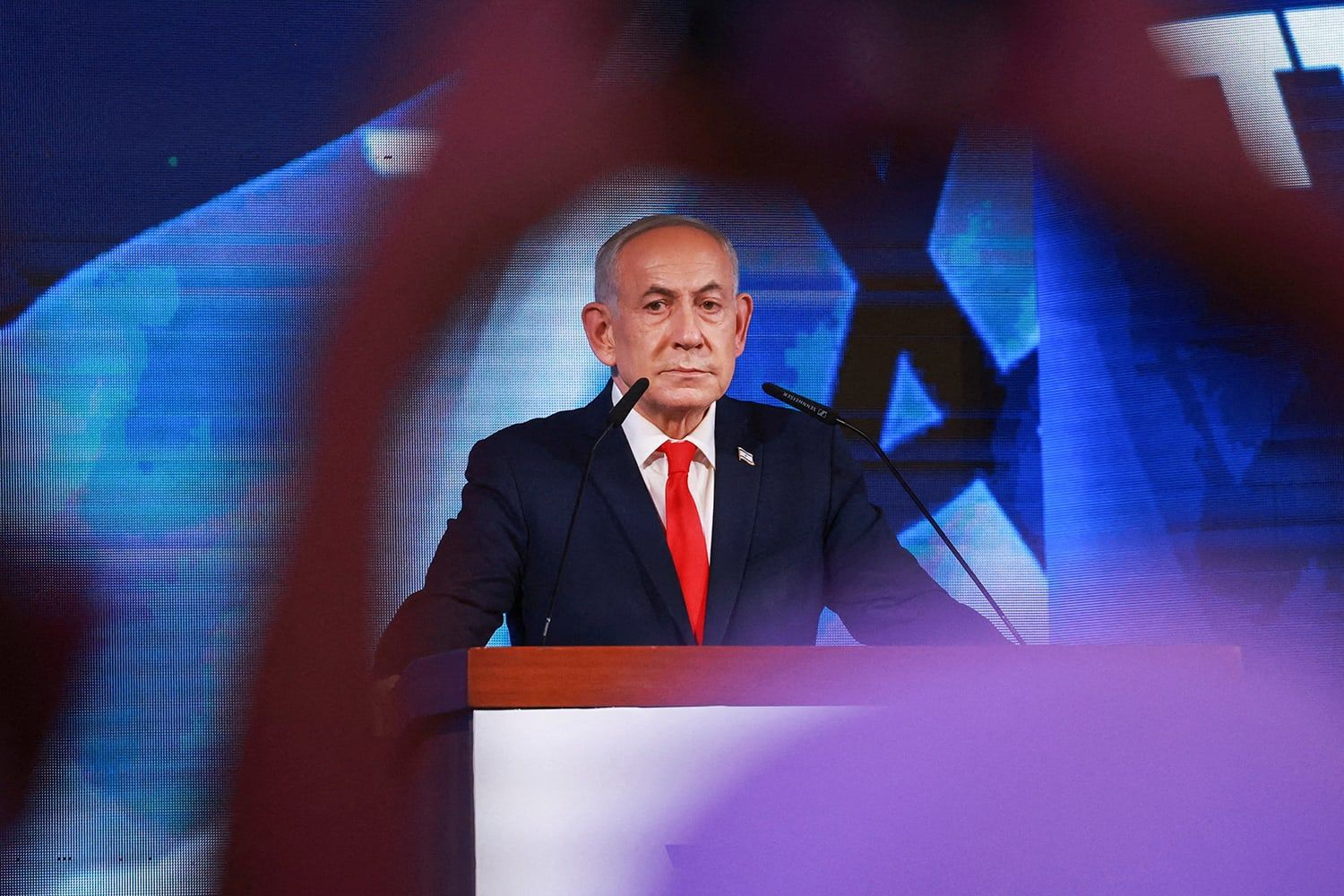
1:28Up first, though, so the results of Israel's elections are in, and they are anything but clear. Prime Minister Benjamin Netanyahu's far-right bloc took 53 seats, and the bloc supporting his main rival, Gadi Eisenkot, took 48. But in Israel's parliamentary system, you actually need 61 to form a government. And both Netanyahu and Eisenkot have said they will not work with Arab majority parties who picked up a lot of seats. So now the work begins. We're likely to see weeks of negotiations trying to hammer out partnerships with other factions to piece together a governing majority. So I want to bring in NBC News international correspondent, Matt Bradley, for more on how this is likely, potentially going to go down.
2:11Hi, Matt. Hey. Netanyahu had, you know, been criticized for his handling of the war in Gaza, for the ongoing war with Iran, for his handling of what's going on between Israel and Lebanon as well. How should we interpret this result that Netanyahu has gotten from this election? Well, it's interesting the way you frame this, Yasmin, because, yes, Netanyahu has been criticized for all of those things very, very harshly, very, very strongly by the whole international community. All of that criticism has come from what you could call the left. But here in Israel, much of the criticism of Netanyahu's behavior in policies toward Palestinians, toward Arabs, toward the Lebanese, toward Iran.
2:55Most of that criticism and the harshest, the criticism that has stuck the most, has come from the right. So in a way, that was part of the rejection of Benjamin Netanyahu here by voters, of partial rejection, because as you've said, and as we've all noted, these were not conclusive results. But what we did see was an enormous amount of mobilization on the part of the Arab political parties, the Arab Israeli parties. Some would call them Palestinian-Israeli. That has really made a huge difference in terms of the calculations going forward. But again, even with that, even with their massive showing, it hasn't really tipped the scale in either direction because, as you said, both sides are not willing to work with them.
3:34So in the outgoing Israeli parliament, the Arab majority parties had 10 seats. They've gained nine now, so they're at 19, almost doubling their presence in the Knesset. What does that tell us? Well, it tells us some very interesting things about the Arab-Israeli population here. 20 % of the population, and now, for the first time, really, it's starting to look as though the numbers of seats that they have in the Knesset in Israel's parliament is starting to look like it represents their share of the population of the country as a whole. It was nowhere near that. And one of the things that I think were, you know, when I was speaking to some Arab-Israeli activists and politicians, one of whom is going to be seated in parliament, And she was telling me, you know, it's very difficult because we had to overcome a lot of Arab-Israeli anxiety about the elections.
4:23Many Arab-Israelis had not participated before. And suddenly they were coming out in full to vote. And this vindicated that decision because now suddenly they have a swelling group inside the Knesset. If they were to unite and use all 19 of their seats in one expression of Arab-Israeli interest, if they were to form their own coalition in a way, they could become a sizable political bloc. If they were to join into another coalition, they would be a sizable political bloc within a governing coalition. So they would not be able to be ignored. That's one of the other reluctant things is that, you know, there's a lot of suspicion in Israeli society and Jewish Israeli society about Israeli Arabs and about the politicians' goals and designs on having power here.
5:09But at the same time, they would be very, very foolish to ignore their bloc in parliament. Eisenkot and Netanyahu, do they need these 19 seats in order to form a majority? Or could they do it without them? Yeah, we can talk about some of the scenarios going forward. the easiest and in many ways least likely scenario is to bring in the Arab parties. So the Likud, that's almost, that would be very, very, very unlikely for Likud and for Netanyahu's bloc to try to bond in with the Arab parties after he spent the past six months assailing these Arab politicians and calling them all sorts of terrible names and assailing anybody who it looked like might be willing to form a coalition with them, including Eisenhower.
5:51But at the same time, Netanyahu and his allies have in the past reached out to Arab politicians during previous election cycles and really flirted with them. And if you believe Mansour Abbas and some others, they've said, who are Israeli Arab politicians, they've said that they've been hearing from them, that already Likud members and right-wing leaders are reaching out to them and talking to them, asking them about policies. So do they need them? Do they need the 19 seats that were gained in order to form a coalition? Or can they do it without them? They can form—to form a coalition for themselves, they would.
6:24Eisencote would. That would be the easiest way, but it's the most unlikely. The most likely thing that I think a lot of people that I've been talking to really believe is going to happen is that Eisencote and Netanyahu form a coalition with themselves, with each other. With who at the top? Then they have to decide. And if there's no coalition? If there's no coalition, then there's another election. And that could take weeks to determine that there's no coalition. for everybody to run out of hope. A lot of things kind of have to go wrong. And, you know, in this political environment, it looks like so many people are invested in trying to make sure that this works without going to election.
7:02But people that I've been speaking to, analysts, everybody who's been, who's, you know, old hands at this, they look at this and they say, a new election would favor Netanyahu. So for Netanyahu, he may want to see everybody going back to a new election because it means he won't get people flying in from abroad who hate him. Nobody's – fewer people are going to be willing to shell out the money and spend the time to make that trip. And they're counting that the Arab population who went to the vote this time won't make the same showing in the next – if there's another election. Any sense of what this means for the war with Iran?
7:31I mean, you know, there's reporting to indicate the president that – and what I mean by the president, I mean the president of the United States has said he wants to basically strike Iran after the elections. There's been reports that Netanyahu has the same idea in mind. Obviously, they launched this war on Iran together. However, you and I spoke before this election, you talked a little bit about the instability inside Israel, the economic instability, folks' opinions on the war with Iran. How does this kind of reflect on this instability that we're seeing now as they're trying to form these majority governments?
8:04How does this reflect on the war with Iran? Well, I mean, I think a lot of Israelis have fallen out of love with Donald Trump and the war with Iran. The stats show it. The public opinion shows that they are in many ways less so, but in many ways almost as outraged as Americans are by the failures of the war in Iran. And they are taking it out on their leaders. However, it was a very popular political move when it first started back in late February. There's a lot of anger towards Iran and a feeling that if this were to succeed, then it would be worth it. It hasn't succeeded yet. That maybe Netanyahu hopes that he can make one last move that would finally decapitate the Iranian regime, that would finally, you know, realize the goals of this war that has so far eluded Trump and Netanyahu.
8:50But that's a really big gamble, isn't it? Because the Iranians have defied the worst of American and Israeli attacks. Matt Bradley, thank you. Thanks, Yasmin. All right, coming up, award-winning author Min Jin Lee tackles some big questions about the education system in her new novel. Our conversation about the pressure that we put on young students to succeed, that's next. And while you're listening to the ads, do us a favor, share your favorite episode of Here's the Scoop with a Friend. Tell them why you love listening to the show. It's a great way for us to find new listeners. We'll see you on the other side.
9:29Ulcerative colitis and Crohn's disease symptoms don't pause for the moments that matter. That's why understanding your treatment options matters. Discover what's possible with Trimphia. Gucelcomap. Trimphia is a prescription medicine used to treat adults with moderately to severely active Crohn's disease and adults with moderately to severely active ulcerative colitis. Serious allergic reactions, increased risk of infections, or lower ability to fight them and liver problems may occur. Before treatment, get checked for infections and tuberculosis. Tell your doctor if you have an infection, flu-like symptoms, or need a vaccine.
10:02Talk to your doctor and explore what's possible. Or call 1-800-526-7736 to learn more about Trimphia. And visit Trimphiaradio.com.
10:47And we're back with Here's the Scoop from NBC News. So for a lot of high school seniors, Halloween is not the scariest part of the fall. They're dealing with the common app, the application portal to get into colleges. And the first deadlines are right around the corner. But the application fees are just the last piece of what can be a years-long, incredibly expensive process with college tuition costs rising and acceptance rates. Sinking a lot of parents end up dishing out a lot for private tutors, SAT prep, admissions consultants, just to have a little bit of an edge. But is all of it worth it?
11:21And how are families who don't have the same resources supposed to actually keep up? Those are just a few of the questions at the heart of award-winning author Min Jin Lee's new novel, American Hagwon. It's a decade-spanning book that explores the challenges that students face in both Eastern and Western school systems and the sacrifices that parents make to help their kids thrive. And I am so glad that Min is joining me now. Hi, Min. Hi, Yasmin. It's great to have you. I'm thrilled to be here. So your latest novel, American Hagwon, explores the education systems in a couple of different countries.
11:57And I want to talk a little bit about your own journey. Because you and your family moved from South Korea to the United States when you were just seven years old, right? You moved to Queens here in New York City. You actually went to Bronx Science as a high schooler. I did. It's kind of this specialized high school here in New York City. The best school in the world, yeah. Excuse me. That you have to test, but you have to test into. It's very competitive to get into Bronx Science. Well, it was easier back then. I'm not being modest. It was easier back then. Don't undersell yourself. It's hard to get into.
12:30It's hard to get into now. It's really, really hard to get into now. And BTW also went to Yale, so there's that. So you're somewhat smart. But how did those early experiences in your life, how did they shape this latest novel? Oh, you know, I think the experience of going to Bronx Science, for example, was really wonderful because it's basically like a nerd factory. And when I was in middle school and also in elementary school, I kind of had a hard time. Things got a little bit better as I got a little older, but I had great difficulty, you know, with bullying and also other kids. But then the teachers are really great to me, so I really believe in public education.
13:10But when I went to wrong science, which you had to test into, I really felt safe. Like nobody picked on me anymore. I could just focus on the learning. So there's really something to be said about separating the kids who really can't function with the general population. Without that support in a way. And you weren't a great student when you were younger either. No, I wasn't. I was actually just, well, English is my second language. But the big thing was I really couldn't deal with the other kids very well. So at the beginning of your latest novel, American Hagwon, the Ko family moves back to Korea from Australia, right?
13:42And their three kids, Bo, D.H., and Mido, they really struggle to kind of keep up in school. everything changes when they kind of get in to this tutoring center or this hagwon right that that is the word for a tutoring center in korean and and then when they get older they move back they move to the united states i should say and some of them end up running a hagwon in california why were why were these kind of tutoring centers these hagwons why were they so important to the story that you were telling well in south korea it's really normal to go to hagwon as a matter Matter of fact, you would be really outside the system if you didn't go to a hagwon.
14:21And hagwon is actually elective school. It's called shadow education because it parallels formal education. About 80 % of South Korean children age four to five go to hagwon. 80 %? 80%. So then if you were the parent— So it's affordable? Some can be very, very affordable, and some can be incredibly expensive and hard to get into. But in South Korea, hagwons are just an important part of the system. What I was really interested in is that once Koreans leave South Korea, they still carry these ideas and go elsewhere with them. And they start making their own hagwons. And there's basically hagwons in every neighborhood where you'll find a Korean.
14:59In America, in the United States. Yeah, like New York, there's a lot of hagwons like 20 blocks from here. You know, a lot of kind of what you talk about in this book when it comes to the hagwons, when it comes to the pressure of the education system, has a lot of parallels to what I think a lot of, you know, American kids are facing right now in this country. I know that you interviewed 100 or so students of Korean descent for your book. Are they feeling the pressure of the education system in general that they're dealing with? I think what you're feeling in America, I can speak about this lane pretty comfortably, is that right now, working class, middle class, and even upper middle class people and ruling class people feel very strongly that they don't want to go down in the world.
15:43Right. So even though education can be a path for social mobility, when you think about highly selective schools, that's a different track of social mobility. Right. So you can find a better mate. People are actually talking this way. You can get a better rate on investment. And again, people talk this way about education because school is so expensive and debts are so high. And the pressure to get the most bang for the buck is considered something that is now part of the discussion of higher education. And that pressure is really intense. And it's on the shoulders of basically 13 to 17-year-old children.
16:18And they have to take a million AP classes. They have to do really glamorous extracurriculars. And then they have to write these compelling essays. And then the testing, which you talked about because you said, like, the testing was a lot easier back then when you were going to school versus— Significantly easier. Than it is for kids now and the prep that they have to put into that testing. So the ideas of trying to get into three major universities in Korea, that idea is now really part of Western countries that are pretty advanced economies. You know, one of the characters in your book, Mido, the only girl of the family, instead of opting to go to college, stays and works to support her family.
16:59And it feels like that's like a question that some kids these days are in fact grappling with, right? Like, is it even worth it anymore? Yeah, people are asking that question because it's really expensive. If you want to go to a pretty decent college in America right now, you're going to end up having to pay either$100 ,000 for four years for a state school. But over half a million dollars to go to a private college or university. That's a lot of money. And also, if you look at the interest rates for the life of the loan, it's even more. Well, yeah, but you also think about like all the things that you just spelled out, like the pressure, the work that you have to do to get into that school, the work that you have to do to stay in that school, the pressures of pleasing your parents who have put you there in the first place and sacrificed.
17:41And impressing your peers. And impressing your peers and sacrificing. Do you feel like it's worth it? Of course I think it's worth it. No, but I don't think it's worth it in the reasons why that people believe. Okay. I mean, you could look at education as a capitalist construction. It's like a part of something that you buy. If you think of college as something that you buy, and it is something that you buy, I think that you're going to have different expectations of it. If you think education is something that you need because you need to grow as a person and you're going to explore more about who you are, it's a very different reason why you go to college.
18:21But I think somehow we have to have both those things in the conversation, not just one or the other. So in a way, we have to really wonder, well, what is higher education for? And I think it's a really fair question. And what's the answer? I think we should get a higher education. I do think that the cost of it is something that we have to deal with. And also, I think it's very important for kids to take some time off between high school and college. I really believe in the gap year because these children are exhausted. They're so exhausted. exhausted. And they're kind of afraid to take that gap year because they don't know what they'll do.
18:57But I'm just thinking, do anything. That's not the American way, though. It's not the American way. It's certainly not. It's not the immigrant way. I mean, well, for some it is. But like, my parents would not have ever encouraged me to take a gap year, being of Iranian descent. I can't imagine like many Korean parents would encourage a gap year. And certainly they wouldn't encourage a gap year for girls because usually girls who are immigrants are really kind of pushed to do things as quickly as possible. Right. And I'm making a generalization, but I can speak for Koreans. And I can say that it is something that we have to think about even more seriously now because what I'm witnessing is a lot of kids are breaking down.
19:36What is your ultimate goal as a writer in the message that you're communicating to your readers? I would love it if we could be contextualized. What do you mean by that? So, for example, like you grew up as an Iranian-American child. Uh-huh. Do we understand the context of your life? I don't think in America we do. I think we're missing huge amounts of information about the people that we live with who are our neighbors. And I think that what stories can do is provide context. And by providing that context, what does it do? We can see our humanity. Min Jin Lee, thank you. Thank you. We're going to take a very quick break.
20:15And when we are back, we're just days away from the election and AI is playing a huge role. We're telling you about a new tool for voters. That's next.
20:45with moderately to severely active ulcerative colitis. Serious allergic reactions, increased risk of infections, or lower ability to fight them and liver problems may occur. Before treatment, get checked for infections and tuberculosis. Tell your doctor if you have an infection, flu-like symptoms, or need a vaccine. Talk to your doctor and explore what's possible. Or call 1-800-526-7736 to learn more about Trimphia and visit TrimphiaRadio.com. Think GLP-1s are too expensive? On Rho, you can access FDA-approved GLP-1 weight loss treatment at your lowest possible price if you're covered. Start with Rho's free insurance checker.
21:24Just upload your insurance card to see if you're covered for certain GLP-1 shots. Whether you use insurance or pay cash, Rho helps you find an option that works best for you. Plus, Rho's membership plans help you save even more. See if you qualify at roe.co.health. Rx only for side effects of GLP-1 medications, including boxed warning, go to row.co slash safety. Additional row membership be required. Hi, I'm Angie Hicks, co-founder of Angie. One thing I've learned is that you buy a house, but you make it a home. For decades, Angie's helped millions of homeowners hire skilled pros for the projects that matter.
21:54Angie, the one you trust to find the ones you trust. Find a pro for your project at Angie.com.
22:02And we are back with Here's the Scoop from NBC News. All right, so election day is just a couple days away. And maybe you've already voted. Millions of Americans have. But maybe you're also busy with your job and your friends and your family and all the things that we have to take care of in life. And maybe you're not even sure who's on the ballot. So you've been putting off potentially voting. Well, there is a new AI-powered tool called VoteMate, and it's supposed to help with some of your questions. But how does it actually work? So for that, I spoke to NBC News AI reporter, Jared Perlow. Hi, Jared.
22:36Great to see you. Good to see you. VoteMate, what is it? How does it work? So it's an AI-powered app and website that helps curate information from the internet and provide information to anyone who wants to access it. It's free about how to vote, where to vote, the candidates that are on their ballot. And then you can actually chat with this tool to figure out what those different candidates stand for, try to see where you're most aligned, where you disagree with different candidates, and make up your own opinion from there. Any worry that this could potentially be a partisan type app. I think that's a great worry to have and something you should always keep in the back of your mind whenever you're using any sort of AI tool.
23:14So today's AI systems, you know, they still have to boil down vast amounts of information into succinct answers, and there might be some biases that wind up filtering down into those answers. But I talked with the founder of this company, VoteMate, just last week, and she said that she strives, and the whole organization, which is run by volunteers, strives to make it nonpartisan and just as straight down the middle as it can be. So we also have to think about where these AI systems are pulling their information from. Yeah, exactly. Which is? So they provide a whole ranking on their website. You can go check it out, votemateus.org, I believe it is.
23:48And they say that they prioritize websites that end in.gov domains, so official government domains. Okay. And then they prioritize nonpartisan sources. Yes, but for instance, White House ends in.gov. White House ends in.gov. So if it's sourcing from WhiteHouse.gov, that is partisan information coming from the Trump administration. But primarily for those sorts of websites, information about how to vote, where to vote, like mail-in ballots, what is the election day, when is the election cutoff, when is the mail-in drop-off cutoff. And then they also partner with a series of nonprofit organizations.
24:23They themselves, VoteMate is nonprofit, but they also partner with outside nonprofit organizations that focus on gathering real down-to-earth election information. And then they feed that into a variety of apps, not only VoteMate, but also Anthropics, Claude, and OpenAI's ChatGPT. How is this, how is VoteMate different than other AI tools, for instance, ChatGPT, Grok, so on and so forth? Right. I mean, that's why I found this startup, this really nonprofit grassroots effort so interesting, because many people, probably hundreds of thousands of people, use ChatGPT and use Claude and use Gemini from Google for election information every week.
25:02But the difference is that VoteMate says that they focus specifically on election-related issues. And they really leverage these partnerships with the nonprofit organizations I just mentioned. They really focus on two. One is called Ballotpedia, and the other is called Democracy Works. And I actually chatted with founders and high-level employees at both of those organizations. And those organizations employ teams of humans who actually ring up state houses and say, is the information on your website accurate? When is the election happening? where are the different voting locations, and they create these databases that they then license and share to these other AI chatbots.
25:38And so that's kind of the ground truth of it all, because we still do, in this age of AI, have to rely on humans making that final decision about what information to trust or what not to. So is that kind of their argument in how they're battling misinformation? Exactly, yeah. And one of those organizations, Democracy Works, actually licenses its technology to OpenAI and to Anthropic as well, because those gigantic companies, I think Anthropics is probably going to IPO around$2 trillion. They also realize it's in their best interest to provide non-biased, accurate information about where to vote and how to vote as well.
26:09Do you have it on your phone? It's being pulled up. So I just put in my address and now it's pulling up my ballot because it's partnership with Ballotpedia. I talked with Josh Altick, Ballotpedia's director of content. He says they go all the way down the ballot. He said if your dog catcher, if your town council member is up for election, that's going to show up in their information. So could we ask it who you should vote for? Well, do you want me to just ask who should I vote for? Is the thing, is it only going to let you vote in New York? Like, can you say who should I vote for in Michigan for senator?
26:37Well, I put my address in. I happen to live here in New York. And actually, VoteMate usually hems and haws and says, I'm not here to provide recommendations. I can just provide information. Okay. So tell me, like, who do you think I should vote for as governor of New York? I should vote for as—you're asking VoteMate, not me, Jared. Yes, I know. I'm aware. Governor of New York. Everybody, just so you know, this is VoteMate's answer. This is not Jared Prolow. This is not Jared, exactly. The journalist's answer. So VoteMate's thinking, and they actually run on some donated computing power from Microsoft.
27:09They have an in-kind donation program with Microsoft. And here's the answer that VoteMate just pulled up. Quote, I can't tell you who to vote for because VoteMate is nonpartisan and the choice is yours. I can lay out where the candidates stand so you can compare them. I'll pull that together now. And then it looks up Kathy Hochul's candidate profile, and it's looking up Bruce Blakeman's profile. And then it gives me this whole readout, which I'll just show to you, about Kathy Hochul's platform and Bruce Blakeman's platform. Oh, that's really interesting. Talks about child care for Kathy Hochul, pre-K.
27:41It talks about what she's saying when it comes to the economy. And so I think it really, it brings together this picture of 2026 is, by many accounts, the first AI-fueled or AI-powered election. And if millions of Americans are going to be turning to their chatbots for information about who to vote for, which candidates most agree with their positions, then I think having some sort of tool that really strives to be nonpartisan and is transparent and run by a team of volunteers in this way could be a helpful step. Of course, voters have many different chatbot options to choose from. Or you can do the old fashioned thing and talk with your friends, talk with your family or, you know, read your voter guides.
28:17Jared Perlow, thank you. Always a pleasure. All right. That is going to do it for us at Here's the Scoop from NBC News. I'm Yasmin Basugin. We'll be back tomorrow with the final episode of Here's the Scoop Election Edition. Subscribe wherever you get your podcasts so you don't miss it. And you can also subscribe to our daily newsletter, The Inside Scoop. It's a deeper dive on the main stories of the day that comes out every weeknight straight to your inbox. You can sign up for The Inside Scoop as part of our paid subscription at NBCNews.com. We'll see you tomorrow. Thank you.
29:18repair to deck upgrades. So leave it to the pros who will get your jobs done well. Angie, the one you trust to find the ones you trust. Find a pro for your project at Angie.com.
The Israeli election results are in, and neither Prime Minister Benjamin Netanyahu nor his opponent, Gadi Eisenkot, has enough seats for a majority government. And they’ve both pledged not to form a coalition with Arab-majority parties, which nearly doubled their representation. NBC News international correspondent Matt Bradley breaks down how these results could shape the upcoming coalition-building process.
Also, award-winning author Min Jin Lee’s new novel, "American Hagwon," tackles the increasingly competitive, expensive and stressful education system through the lens of a South Korean family striving to help their kids get ahead. She joins "Here's the Scoop" to discuss how she thinks we can reimagine education and the importance of family in bridging the gap.
Plus, many people are increasingly turning to AI chatbots for information on candidates, ballot measures and even polling locations ahead of the midterm elections. NBC News AI reporter Jared Perlo explains how a new, nonpartisan AI-powered app, VoteMate, is hoping to help voters and stop the spread of election misinformation.
Hosted by Simplecast, an AdsWizz company. See pcm.adswizz.com for information about our collection and use of personal data for advertising.