Ask ChatGPT

 Here's the Scoop
7 Oct 2026 · 26m · 9 chapters
A roundup of U.S. election messaging and battleground spending, plus France’s student/teacher school protests, and a memoir interview with comedian D.L. Hughley.
Ryan Nobles (NBC News Chief Capitol Hill Correspondent) discusses Maine, Michigan, and campaign money. Richard Engel (NBC News Chief Foreign Correspondent) reports from Paris on France’s protests. D.L. Hughley (comedian/actor; memoir Charlie’s Boy) discusses his upbringing, gang involvement, and moving to Ohio.
Republicans are “breaking with Trump” via candidates’ distancing and by investing money mainly in defense (Kansas/Iowa/South Carolina) rather than offense. In France, protests began after students saw rats, leaks, overcrowding, and police injuries; government says left-wing parties are manipulating unrest. Hughley says comedy was his “weapon” and that Ohio gave him an artistic awakening.
Maine Senate debate (Susan Collins vs. Troy Jackson; Trump mentioned ~20 times). Michigan governor race (John James voting history on war powers vs. his “end the Iran war” messaging). France: 250,000–500,000 marchers; 500+ schools closed; stun grenades/injuries cited. Hughley: Bloods involvement; mother targeted after he used her car; drunk Thanksgiving revelation about his biological father.
Written by AI. May contain mistakes.
Discussion about D.L. Hughley's memoir and life experiences.
“Up first, though, so the midterm elections are right around the corner, and early voting is starting to ramp up.”
Overview of the upcoming midterm elections and significant debates.
“And Collins did try and push back on that several times.”
Analysis of Susan Collins' race against Troy Jackson and Trump's influence.
“name, but at the end of the day, she's able to deliver specifically for the voters of Maine.”
Exploration of the Michigan governor's race and candidates' positions.
“And I've stood up to him recently in his administration with regard to tariffs, and I said this war in Iran needs to end quickly, as in yesterday.”
Discussion on funding and the financial strategies of political candidates.
“the people they think can deliver those results or they think have already given them those results.”
Coverage of ongoing student protests in France regarding school conditions.
“Upfront payment of$45 for three months,$90 for six months, or$180 for a 12-month plan required.”
Learn about the ongoing protests in France for better education and school conditions.
“In the suburbs, a lot of schools are falling apart, honestly.”
D.L. shares personal stories about his upbringing and the impact of discovering his true father.
“You, okay, you have made your career in stand-up.”
Hosts wrap up the episode and express gratitude.
“And I just wish I'd have got to say him.”

Get the gist, explore an idea or ask about something said.
 Claude
On Here's the Scoop, what are the key points of this episode?
Searching your listeningAutomatic transcript. May contain errors.
0:00If I made my mother laugh, she didn't hit me. If I made my father laugh, he paid attention. Girls would want to be around me because I made them joke. It was my weapon. Hi, everybody, and welcome to Here's the Scoop from NBC News. I'm Yasmin Basugin. So today on the show, I got a chance to speak to comedian D.L. Hughley about his new memoir, being a part of the Bloods Gang when he was a lot younger, and then why moving to Ohio may have actually saved his life. It is not a conversation you would expect, but it's really good, so you're going to listen to that. Also, there have been some violent protests that are ongoing in France with students and teachers joining forces to protest conditions in their schools.
0:42We've been talking to people on the ground there, and we're going to bring it to you.
0:49Up first, though, so the midterm elections are right around the corner, and early voting is starting to ramp up. So candidates have less than a month to make their case to voters. Last night, there were debates in Maine, in Michigan, in Iowa, and in Georgia, and obviously the economy, the war in Iran, and data centers were on the agenda. So for more on this, I want to bring in NBC News Chief Capitol Hill Correspondent, Ryan Nobles. Hey, Ryan. Hi, Yaz. Let's talk specific states here. I want to start with Maine and the Senate race there. So you got Republican Senator Susan Collins, right, in this really close race against Democrat Troy Jackson.
1:27Jackson last night in this debate brought up Donald Trump, I believe, 20 times or so, right, wanting to place Susan Collins squarely next to President Trump. And Collins did try and push back on that several times. Here is what she said when asked if she'd campaign with President Trump ahead of Election Day. I don't think that President Trump is going to come to Maine. He's talking about going to a lot of different states. I've heard nothing from his office. and I'm not exactly his favorite senator. From that snippet of what you heard and also from her performance in the debate last night, do you feel like Troy Jackson had a point or do you feel like Susan Collins did an effective enough job in distancing herself enough from the president?
2:26The reason that Susan Collins has survived for as long as she has in a state like Maine, which is tilting blue and becomes blue, more blue with every election cycle, is that she has her own brand. She's been able to convince the voters of Maine that she offers an independent style of politics, that yes, she has an R by her name, but at the end of the day, she's able to deliver specifically for the voters of Maine. That's become an increasingly difficult argument to make when Maine voters see that Donald Trump is enacting all these policies that directly impact them, you know, in a way that hurts them, perhaps maybe more than any other country or any other state in the country.
3:04But in Maine specifically, these tariffs and the trade war with Canada, they're destroying businesses. They're destroying families. They're making life so much more difficult. So Troy Jackson's play here is to try and convince Maine voters that despite all of her rhetoric and despite this independent brand that Susan Collins has built, it actually does not meet the reality of the situation. How often is she actually voting time to time that are counter to Republican policy goals? So those votes exist and she can point to them. But I think a more useful exercise would be to look at when she's voted against a Republican policy and it's destroyed said Republican policy.
3:42Got it. Most of the time she gets these sacrificial votes that party leadership allows her to take. Like on the record. Yeah, they know they're still going to get this passed, and she works with them to get to that point where there would be a controversial nominee or some sort of policy objective or spending plan. So I think what Troy Jackson is trying to say is that she's done a pretty good job of convincing you with a few smattering of votes here or there that she's stood for the people of Maine against Republican and Democratic administrations, but the reality and the record doesn't reflect that.
4:18So I want to talk Michigan then, too, and the governor's race there, because you've got Democrat Jocelyn Benson, who's leading Republican John James in the polls. And like Susan Collins, James also said that he doesn't always agree with President Trump. And I've stood up to him recently in his administration with regard to tariffs, and I said this war in Iran needs to end quickly, as in yesterday. they. Here's the thing, though, Ryan. As a House representative, he has voted against multiple war powers resolutions that pushed for an end to this war. So do you think that messaging that we just heard from James is landing with voters if, in fact, they are unhappy about the war with Iran that is still ongoing?
5:08For him to now say at this stage of the game that he opposes the Iran war, that he wants the Iran war to come to an end. I think most voters are like, okay, well, what are you going to do to make it stop? You can't just say you want it to be over with. And there are, this applies to Democrats too. I don't want you to think that this is just about Republicans in general, the American people are sick of politicians across the board. And the reason they're sick of politicians across the board is because of this illustration that you're providing us right now. They say that they're with the American people on a particular issue, but they're not doing anything to reach that goal or the ways they're getting to try and reach that goal are unsuccessful.
5:49So what voters want right now are results. They don't want promises. They don't want rhetoric. They want results. And they're going to vote for the people they think can deliver those results or they think have already given them those results. I want to talk money here because that oftentimes determines where we, right, as we're watching these races and the potential of what's going to come out of it should be focused on. We, you and I, have talked about Texas, right, and the Senate race there and the money that is being poured into Texas both by Republicans and by Democrats there. We know the GOP is also pouring, you know, hundreds of millions of dollars into congressional races since the start of September.
6:29Remember, if we are looking at where the money is going, if we are following the money, what states, what races, I should say, feel as if they are in play right now? Yeah, that's a great question. Because, you know, we can look at polling data. We can look at candidate rhetoric. We can do all these things. And Republicans can tell us that they're still fighting a good fight in Georgia. They can tell us they still got a shot in North Carolina. They can say all of those things. And they can also tell us that they're not worried about places like Kansas, Iowa, and South Carolina. But then you watch what they do, and it tells a completely different story.
7:06So they pretty much abandon most of their financial investment in both North Carolina and Georgia. And that reads to me like those are lost causes. Both John Ossoff and Roy Cooper seem to be ahead by pretty significant margins. That would be a huge hold for Democrats in Georgia and a huge pickup in North Carolina. but Iowa, Kansas, and South Carolina, those are three states, Yasmin, that we never even, you know, envisioned being part of the battleground map. And now all three are live balls. You know, there are some rating agencies, NBC not yet, because we are now rating races. And if people haven't gone on our website to check out our ratings, I think are done really well.
7:44There are some rating agencies that have Kansas in toss-up territory. We don't have it there quite yet, but the Republicans are investing money there. They sent$5 million to South Carolina. That shows that they are playing major defense now. And they do have a huge financial investment here and a huge financial edge. But the money right now is not being used to win or flip seats in almost every state except for Michigan and New Hampshire. Every other state they're playing defense. And what they're doing is stopping the bleeding. They are triaging their candidates in Kansas, in Iowa, and in South Carolina, to a certain degree, Alaska, to try and prevent them from losing races that in a normal environment should be absolutely winnable for Republicans in an election cycle like this.
8:38Ryan Nobles, thank you. We're almost there, Yaz. 27 days, so let's go. Let's go. All right. We're going to take a very quick break. But while you're waiting, why don't you forward this episode to a friend that you want to encourage to vote or drop us a line and then let us know how you're feeling about the elections. What are people in your community talking about? We want to hear from you. Also coming up, students and teachers in France are taking to the streets to protest conditions in their schools. We're going to hear more from Paris in just a second. I'll see you on the other side.
9:18If you like YouTube, you'll love YouTube Premium. It's destroying athlete, creator, and YouTube Maxer. YouTube Premium enhances how I use YouTube with awesome features like offline downloads so I can download my favorite training videos before I hit the gym. So no Wi-Fi doesn't turn leg day into loading day. Plus, I get ad-free videos, background play, and so much more. YouTube Premium is like YouTube got some extra gains. Try YouTube Premium for two months free at youtube.com slash premium. Trial eligibility varies. Terms apply. Cancel any time. This holiday, all plans, even unlimited, are just$15 a month.
9:53A holiday deal this good obviously deserves an enormously expensive holiday song, like All I Want. Right. Okay, we can afford that. You know what? Forget the music budget. We're going to stick with whatever's in the public domain. Give it a try at mintmobile.com slash switch. Upfront payment of$45 for three months,$90 for six months, or$180 for a 12-month plan required. $15 per month equivalent. Taxes and fees extra. New customer offer for initial plan term only. Greater than 50 gigabytes may slow when network is busy. See terms. At Jared Jewelers, we know it's about more than fine jewelry. It's the moment they open the box.
10:26That smile they can't hide. Knowing you chose exactly right. because the right gift can bring a lifetime of meaning, a promise, a milestone, a memory in the making. Make every moment unforgettable. Find great gifts starting at$250. Jared, make the holiday last forever. Shop Jared Jewelers.
10:52And we are back with Here's the Scoop from NBC News.
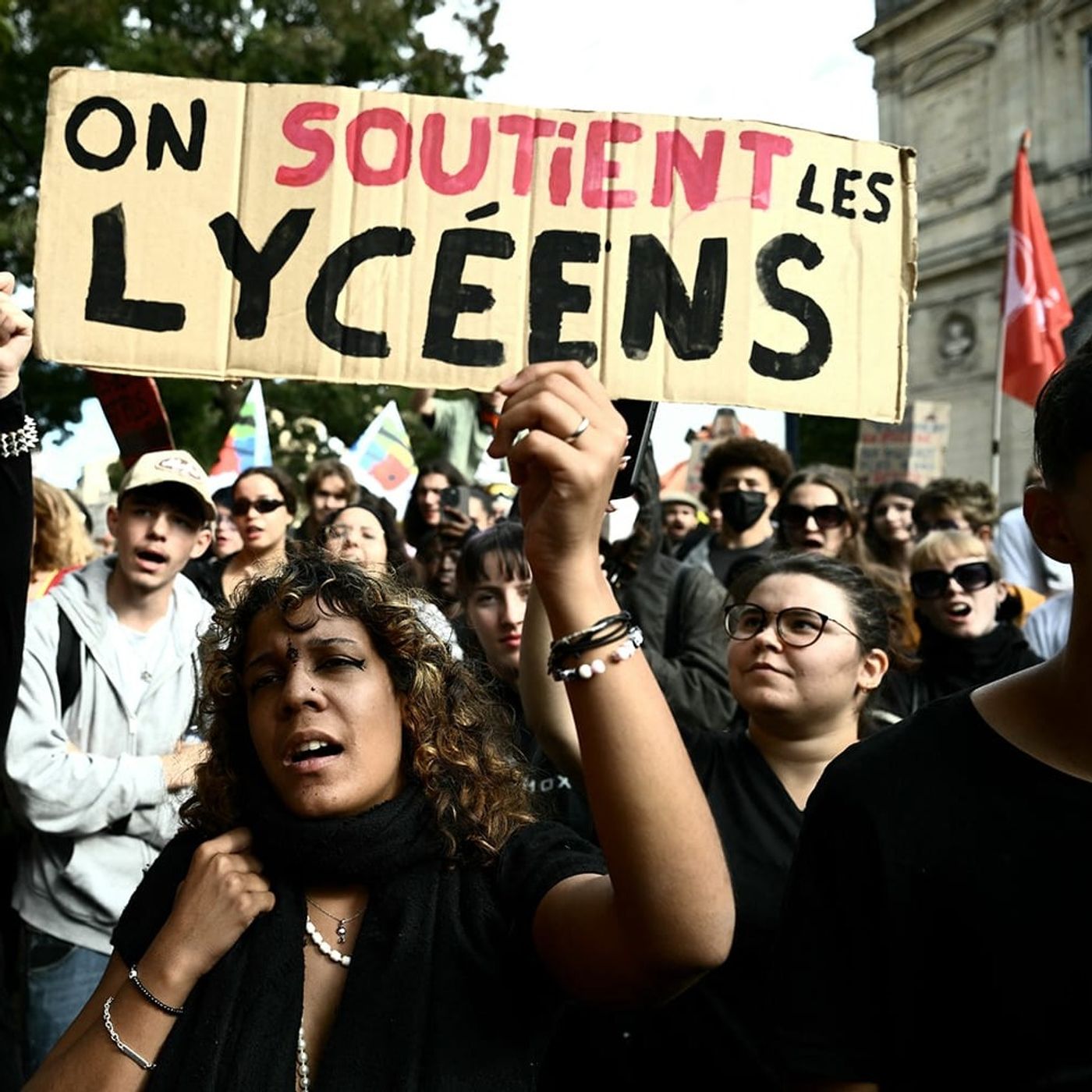
10:58So in France, hundreds of thousands of students, teachers, and parents took to the streets on Tuesday, part of weeks-long protests against understaffed and dilapidated classrooms. And things got heated and even violent. Authorities say they've arrested thousands of people. Today, more than 500 schools across the country are closed. And more marches are planned for tomorrow. So for this, I want to bring in NBC News chief foreign correspondent, Richard Engel, who's been in Paris for us. Hi, Richard. Hello. It's always good to be with you. Yes, I'm in Paris right now in Place de la République, and things are considerably quieter today than they were yesterday.
11:38But it's not over yet. So a French government official has said that over 250 ,000 people were marching on Tuesday. French unions are saying it's more like half a million. You have been out in the streets. You've been covering these protests. What have you been seeing? I think it's good to go a little bit to the origin story. A few weeks ago, when students went back to school after the summer vacation, and it really began in one school in a poor suburb of Paris. And people went back, and the students were outraged. They saw rats and leaks and overcrowded classrooms, so they decided to blockade their schools, which is an old French tradition.
12:22This is something that French students have been doing for decades. And this one school started to block entrance, so they literally went out and said staff couldn't go in, students couldn't go in, schools closed today. And other students said, well, we have the same problems in our school. Let's go out and close our schools in solidarity. And the riot police were sent in, and the riot police do what riot police do. They marched in with their plastic body armor and shields and stun grenades, and there were some serious injuries. And that, of course, only caused more people to go out onto the streets.
13:03And then organized labor joined. And I think that's why it was so different yesterday. A couple of reasons. One, it was really young students. So some of these demonstrators at the vanguard were 14, 15, 16 years old, 17 years old. They were also joined in some cases by their parents because their parents agreed with what they were doing. And there were a group of people out there who were parents or teachers in some cases or just local adults. And they were wearing white armbands to show that they were not protesters but with the protesters and trying to be human shields for the protesters. The French government, Emmanuel Macron's government, is saying this isn't just an organic, spontaneous group of students who are angry with poor conditions in classrooms.
13:51They're saying that this is being instigated and manipulated by left-wing political parties, one political party in particular that is capitalizing on this moment in order to make gains ahead of the election scheduled in April. I want to hear Juliette because she is a school supervisor educator that you spoke to because you've been speaking to a lot of protesters out there about what exactly is going on and what they're seeing in some of these schools. In the suburbs, a lot of schools are falling apart, honestly. It's really bad. There's water damage. Some schools have rats, molds. Some don't have heating.
14:34I mean, that sounds horrible. That's horrible. And this young woman, she's in her early 20s, and she's actually like a teacher's assistant. So she's a junior teacher, a junior educator, and she was out there in solidarity with the students because she thinks what they're doing is correct and that they should go out and say, we won't accept this. Schools are falling down. We're also overpacked in classes where we don't have enough teachers. They're underpaid. And it's pretty common that teachers don't get replaced for a few months, even the whole year. So a lot of things are going bad in the French schools and such.
15:17So we're here to fight for our future and for our rights. In a certain sense, it's very encouraging that young people are out there saying we want better education. We want harder classes. We want more teachers. We want more attention. And the government's answer has been, well, we can't afford it. You know, our budget's too tight. We're overstretched. And the protesters aren't believing that. They're saying we've heard this before. Look at all the rich people. Look at all the billionaires in this country. we can afford not to have rats in the schools in Paris, in poor neighborhoods and in wealthier neighborhoods.
15:59They were saying, this is it. This is the hill that we're going to take a stand on and we're going to keep this movement going at least until the April elections. And there are more smaller demonstrations planned for tomorrow, Thursday. and on the 17th, so 10 days from now, they're expecting even bigger demonstrations than the ones we saw. What's interesting to me is the French Interior Minister, Laurent Nunez, who has, in one respect, defended policing methods that are used against these high schoolers that are out in the streets protesting, but also ordering his ministers to tackle the students' leading demands, including ensuring absent teachers are replaced, reviewing the length of the 8 a.m.
16:43to 6 p.m. school day and the need for longer lunch breaks. Any reaction to those potential changes and or what exactly the interior minister is saying? So that's an encouraging sign. And today the government was talking about dialogue. They're saying this week they want to have meetings with students. They want to have meetings with student activists. They're trying to find a way out of this. And they've been defending their actions because one of the growing list of grievances was that, and it remains, that the police have been using excessive force. And there have been several quite serious injuries.
17:25In one case, a young student's hand, a male student, was blown off by a police stun grenade, these loud bang grenades that are used to scare people and break up crowds. It seems, according to numerous reports, that he picked it up and it blew up in his hand like a big firecracker and blew off his hand. Another student was hit, was fired at point-blank range and hit him in the jaw and knocked out his teeth, which is a very serious injury. So there have been some people who've been badly hurt by this unrest, and the government was saying, listen, we're using non-lethal force. And by the way, there were no guns.
18:08and I've covered demonstrations all over the world. There were no live fire. Nobody had guns. The police didn't pull out their guns. It wasn't armed. And that's a big difference. Richard Engel, thank you. My pleasure. All right, coming up, how D.L. Hughley learned that stand-up comedy is a hammer and lots more from his new memoir, Charlie's Boy. That's next.
18:40If you like YouTube, you'll love YouTube Premium. Hi, I'm Sean Evans from Hot Ones, and I want to tell you about YouTube Premium. It has offline downloads, so you can watch without Wi-Fi. Background play, so you can lock your phone, and it still plays, baby. Oh, and it is completely ad-free. Yes, I said it, ad-free. Try YouTube Premium for two months free at youtube.com slash premium. Trial eligibility varies, terms apply, Cancel any time.
19:37and 50 gigabytes may slow when network is busy. See terms. At Jared Jewelers, we know it's about more than fine jewelry. It's the moment they open the box. That smile they can't hide. Knowing you chose exactly right. Because the right gift can bring a lifetime of meaning. A promise, a milestone, a memory in the making. Make every moment unforgettable. Find great gifts starting at$250. Jared, make the holiday last forever. Shop Jared Jewelers.
20:14And we are back with Here's the Scoop from NBC News. So you might know actor and comedian D.L. Hughley from his role in the sitcom The Hughleys, or as one of the big four comedians on the original Kings of Comedy. Maybe you go way back and you remember him as the original host of BET's Comic View back in the 90s. Well, D.L. has a new book out, and it's called Charlie's Boy. It is a memoir of his upbringing in South Central Los Angeles, and also how he found out that the man that he called father, Charlie Kuegley, was not his biological dad. This book is about reckoning with that revelation, a stint in the notorious gang, The Bloods, and how an unlikely move to Ohio shaped his path to adulthood.
20:54And D.L. Hegley is joining me now. Hey, D.L. Hi, how you doing? I'm good. You have a great smile. Thank you. So do you. That NBC money, huh? I wish, by the way. That's my dental plan. You, okay, you have made your career in stand-up. You've made your career in TV, comedy, now podcasting. Now you're an author of Charlie's Boy. Yes. Charlie is your father. Father, yes. But you found out he wasn't your biological dad when you were 10. 10-11, yes. 10-11. What was that like for you, that moment? It was a drunk Thanksgiving. You know, everybody got that one uncle. No way. No, really. Like, hey, you know that ain't your real daddy, right?
21:37I'm like, what? And so it came out of nowhere. And I remember, I can distinctly remember from that moment on feeling decidedly different. Like, I could have lived my whole life without knowing that. Why do you think they didn't tell you? Like, why do you think they didn't tell you that he wasn't your dad? I think they didn't care. Like, when I grew up, black people, they didn't go to court and adapt you. You just spent the night on somebody's house long enough and you was theirs. My mother was—he met my mother with my biological father. They were serving in the military, and he meets my mother, and he falls in love with her.
22:12and she was pregnant. She had had my older sister, and he loved her. And my biological father did something insane, and she ended up leaving him and going with my father, Hughley. So I was born to him, actually. But I think that I always represented to my father, Hughley, I looked like my physical father. And my mother, I think that that was the love of her life. Your biological father was the love of her life. I'm sure. Not Charlie. But I think I always reminded him of the love that he would never have. And there was always a distance that I could never quite place. It always was a little colder.
22:55Not me, but colder. And when I found out that he wasn't my father, it all made sense to me. There was another revelation in this book that you were in the Bloods Gang. That is some serious stuff, let's just say. But I think that when I hear it, I don't have any romantic notions about it, but it was you grew up in a neighborhood and, you know, I'm a kid and I want to be something. And I want to be with people who accept me and I want to be in a situation where I have where you are safe and you can be heard and you're a part of something. And so it didn't ever feel like I was doing anything wrong.
23:30It felt communal. It gave you identity. It gave me. And I would say that it was the first time that I ever felt a level of identity. I didn't ever feel seen at home. So I think it was the first time I ever felt seen. Now, of course, there are things that I deeply regret about that. But the one thing I don't is that it set the metric for me. I got what the rules were. When we're talking about you being a part of the Bloods Gang, you got your mom into kind of some trouble, right? She became a target. Yes. Because you used her car as a getaway car. All the time. All the time. I can tell you this, that I did so much.
24:06My mother still is mad at me. Me too, by the way. I could understand it. But I would take her car and I would do dirt. And then one night she was coming home and they shot at her car because they thought I was in it. What does do dirt mean? You know, I would do things you weren't supposed to do in her car. Okay. One time I got into an accident in another city in Gardena. And I drove home like nothing ever happened. Yeah. And the police come to my mother's house. And they were always coming to her house. And they would come to my mother's house. And the woman who I hit with my mother's car identified my little brother.
24:47And I was like, well, it wasn't me. No way. You let him take the fall? Yes. How little? He was like 12. And you were? I was like 14. Oh, come on. Yeah, I'm like, hey. This lady said it was him. Was your brother like pointed in two different directions? No, they knew it was, he couldn't have done it. Yeah. But the woman was assisted that he did it and she didn't recognize me at all. Like, what can I say? I wasn't, it wasn't me. And so I think that, but it was always honestly a sense of wanting to be something and to count somewhere. So your parents ship you off to Ohio. Right. Because they don't want you in trouble anymore.
25:29Right. Right? They're worried about you. What is it about you that made you get shipped off and become who you are today? I think that it would be disingenuous to not ascribe it to some level of divine province. I think that I was way more fortunate than I should have been. But I do, I will say this, when I was growing up, I knew I was going to do something. I didn't know what it would be. And so I would catalog things in my mind that just would be little touchstones that would say that I could feel different and I could be different and I could do a different thing. And when I came to Ohio, it felt like I was breathing for the first time.
26:10And when I started, the very first time I picked up a microphone, I went, this is that, this is, I didn't know what epiphany was, but later on, that's what I would describe it as. It was like some people have a theological awakening. I had, I think, an artistic one. And I think that all of the things I remember so vividly, I can understand it will become the wellspring of experiences I would draw from. Why do you think it was comedy? Like, why was comedy your savior in a way? I think that it was the only thing that made people pay attention to me. It was very disarming. I knew what it was. Like, if I made my mother laugh, she didn't hit me.
26:47If I made my father laugh, he paid attention. girls would want to be around me because I made them joke. It was my weapon. Like, when I grew up, I was the first one. I was a very small kid, so I was the first one picked for a fight and the last one picked for a game. And so I understood that I needed something else. So you could be—I remember this big dude named Cliff. He used to harass me all the time. And one time I talked about him so bad that he just skulked away. And I said, this is a hammer. What do you want people to take from this book? Marvin Gaye wrote an album called Hear My Dear. And it was an album where he lost a divorce settlement.
27:26And so he had to give the album to his wife, his ex-wife. And he could have wrote anything, but he wrote his best work. This, to me, is akin to that in that this is a conversation and my observations about a man who I could never actually have that conversation with. I'd have never been able to tell him this thing. I'd have never been able to tell him how much I loved him and how much.
27:50how much he meant to me. So this is my love letter to a father that he'll never know. So I'm very proud of the work I've done. I'm very proud of how I felt about him. And I just wish I'd have got to say him. So it's that. D.L. Hughley, the book is incredible. The picture is even more incredible. How old are you here? Four. Four. Yeah. And I'm still just as fly as I am now. Minus the tats. Minus the tats. It's an incredible book. It's out now. Wherever you get your books. D.L. Hughley, thank you. Thank you now. Thank you. Appreciate it. Thank you. That is going to do it for us. Here's The Scoop from NBC News.
28:36I'm Yasmin Basugin. We'll be back tomorrow with whatever the day may bring. And if you like what you heard and saw, subscribe. Wherever you get your podcasts. And you can also subscribe to our daily newsletter, The Inside Scoop. It is a deeper dive on the main stories of the day that come out every weeknight straight to your inbox. You can sign up for The Inside Scoop as part of our paid subscription at NBCNews.com. We'll see you tomorrow.
29:11Hi, I'm Angie Hicks, co-founder of Angie. And one thing I've learned is that you buy a house, but you make it a home. Because with every fix, update, and renovation, it becomes a little more your own. So you need all your jobs done well. For nearly 30 years, Angie has helped millions of homeowners hire skilled pros for the projects that matter. From plumbing to electrical, roof repair to deck upgrades. So leave it to the pros who will get your jobs done well. Angie, the one you trust to find the ones you trust. Find a pro for your project at Angie.com.
Republican candidates in Maine, Michigan, Iowa and Georgia separated themselves from President Trump’s most unpopular policies in debates on Tuesday night. NBC News chief Capitol Hill correspondent Ryan Nobles explains how GOP candidates are threading the needle on issues like the war in Iran, data centers and tariffs as the midterms inch closer.
Plus, hundreds of schools in France have been closed as protests over decrepit conditions continue into their third week. NBC News chief foreign correspondent Richard Engel takes us onto the streets of Paris, where some protests have turned violent, and breaks down the changes thousands of parents, teachers and students are demanding.
Lastly, actor and comedian DL Hughley discusses his new book, “Charlie’s Boy,” out this week. It’s a memoir of his upbringing in South Central Los Angeles and his journey to discovering that the man he called “father” was not his biological father. He talks about reckoning with that revelation, his stint as a member of the Bloods gang, and how he found direction in the most unlikely of places: Ohio.
Hosted by Simplecast, an AdsWizz company. See pcm.adswizz.com for information about our collection and use of personal data for advertising.