Ask ChatGPT

 Here's the Scoop
2 Oct 2026 · 27m · 11 chapters
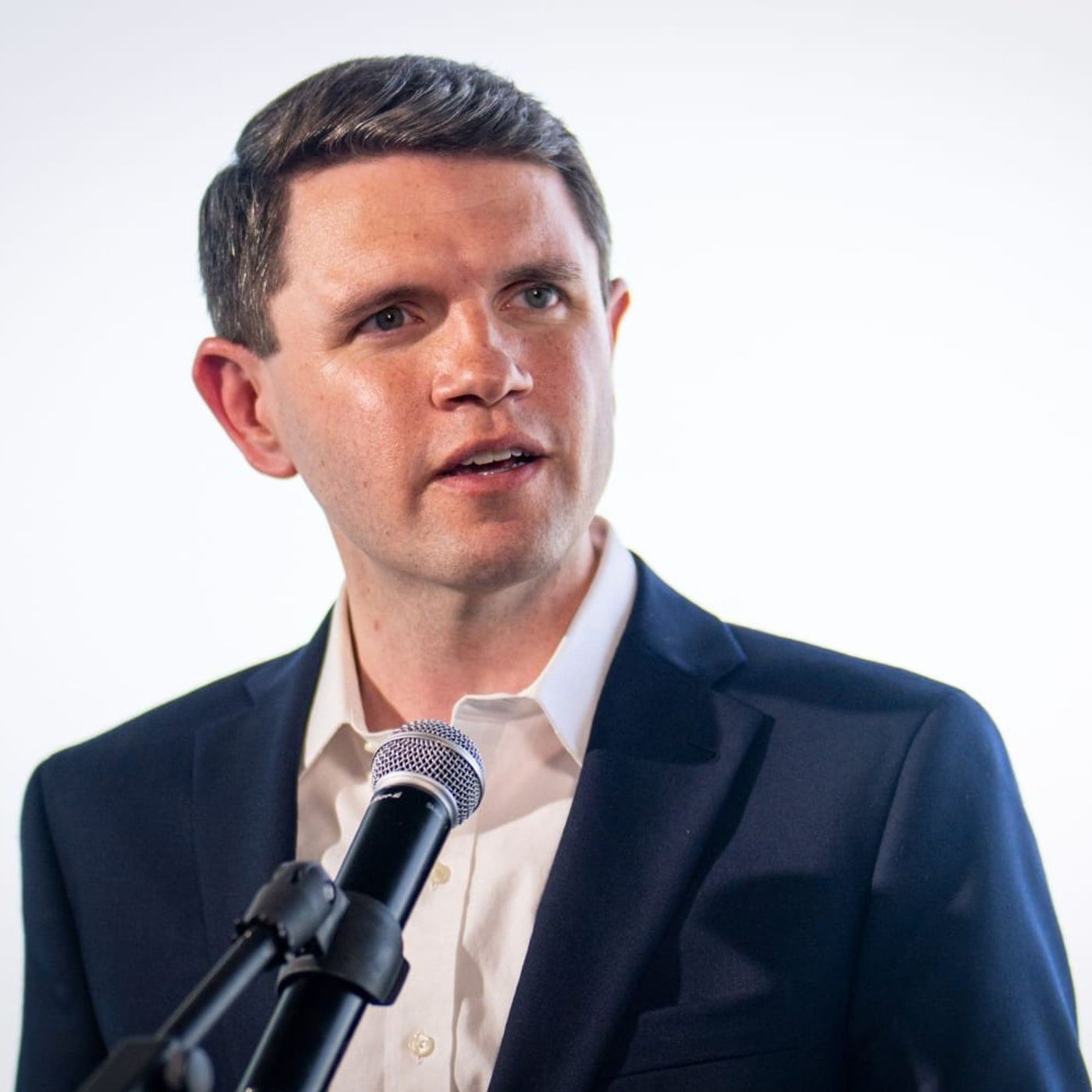
The episode covers two NBC News stories. First, it discusses why Democrats are investing in Texas Senate races ahead of the midterms: Senate Majority PAC plans to fund ads backing Democratic state Rep. James Tellarico against Republican AG Ken Paxton. The segment cites Paxton’s ethical and legal troubles (impeachment, corruption investigations) and shifting Latino voter dynamics, plus broader economic and political headwinds for Republicans. It also notes Democrats see Texas as expensive but strategically important to force GOP spending elsewhere.
Second, it features a Dateline investigation into Dana Beatty’s 1989 Cincinnati rape case. Beatty, an IBM rising star, was attacked by a masked man; DNA was later reanalyzed using forensic genetic genealogy, identifying Fred Tanzer. Charges were blocked by Ohio’s statute of limitations (later corrected via a federal sting), leading to a 15-year sentence for lying to federal agents. The episode also highlights a patchwork of sexual-assault laws and includes a database of statute-of-limitations rules.
Garrett Haake (NBC Lone Star/White House correspondent) and Vicky Wynn (NBC consumer investigative correspondent); Dateline correspondent Blaine Alexander (Dana Beatty story).
Written by AI. May contain mistakes.
Discussion on how companies determine ticket prices based on user behavior.
“And it's different depending on our habits, for instance, on our phones or on our laptops or on our tablets.”
Analysis of the competitive Senate race in Texas and Democratic strategies.
“I'm going to put that on my business card.”
Exploration of factors influencing Democratic confidence in the Texas race.
“I mean, there's almost no end to how much money could be spent in there.”
Discussion on President Trump's influence and strategy ahead of midterm elections.
“So if we zoom out just a little bit beyond Texas and the president kind of has started his media blitz, his tour, whatever you want to call it ahead of the midterm elections, you have been on this tour.”
Insights from interviews about key issues in Texas and their implications.
“tomorrow morning, you're going to have a new episode out talking about Democrats in Texas.”
Introduction to the upcoming Dateline investigation regarding sexual assault.
“And that is the Here's the Scoop election edition that you can find right here in this feed on Saturday morning.”
Interview about Dana Beatty's cold case and the challenges faced in pursuing justice.
“Greater than 50 gigabytes may slow when network is busy.”
Explore how new forensic genetic genealogy helps solve cold cases.
“that they could actually use new technology on the DNA evidence that had been collected back in 1989.”
Discuss the implications of outdated sexual assault laws in different states.
“But when we are back, how companies are using our digital history to charge us different prices for the very same products.”
Understand how companies use personal data to charge different prices.
“Just think about all of the things that you input when you are making a purchase.”
Learn how consumer behavior impacts pricing and strategies to save money.
“bump the price a little bit because you're probably going to get it.”

Get the gist, explore an idea or ask about something said.
 Claude
On Here's the Scoop, what are the key points of this episode?
Searching your listeningAutomatic transcript. May contain errors.
0:00So what do they do with that information and with AI and with the algorithms? They use it to try to predict your behavior. What will you do? How much are you willing to pay? Hi, everybody, and welcome to Here's the Scoop from NBC News. I'm Yasmin Basugin. All right, so you're on your phone or your computer, and you're logging on because you want to get, like, a ticket to a concert, right? Maybe you want to go see Harry Styles or, I don't know, Madonna or Taylor Swift, right? and your ticket is one price, then your friend who's going to go with you has a ticket that is a different price. Well, Vicky Wynn here at NBC News is digging in to how companies are actually deciding how much to charge us for things like, for instance, concert tickets or plane tickets or even merchandise.
0:47And it's different depending on our habits, for instance, on our phones or on our laptops or on our tablets. So we're going to talk about that. Also, we are talking about a special Dateline investigation into a sexual assault survivor's 30-plus year fight for justice and how the statute of limitations laws can actually get in the way of accountability. Up first, though, the midterm elections are just about a month away. President Trump is on a major campaign blitz to help Republicans hold on to their narrow majority in Congress. So this week, the president made a stop in Texas where there is an unexpectedly competitive Senate race between the Republican Attorney General Ken Paxton and Democratic State Representative James Tellarico.
1:34NBC News currently rates the race as a toss up, which is really unusual in deep red Texas. So now it seems like National Democrats see an opportunity there. Senate Majority PAC, that's the main super PAC for Senate Democrats, said it would start to fund ads in support of Tellurico. So could this be a sign that Democrats are getting more confident that they could flip the Lone Star state? For that, I'm going to bring in our Lone Star correspondent, NBC News Chief White House Correspondent Garrett Haake. I like that. I'm going to put that on my business card. I mean, you're from there, so it makes sense.
2:14Talk about this new spending from the Senate majority packet and how that could impact Tellurico's race. Look, I think the actual impact is likely to be very small, but I think it is an important signal that Democrats are standing by to invest money in Texas. But the gap between what Democratic outside groups are spending in Texas and what Republican outside groups are spending is enormous. This buy, and I don't have the exact figures, it's probably in the six figures, maybe low seven figures, Republican outside groups are in like the nine figures already in Texas. They're going to probably spend$200 million on mostly negative ads going after James Tallarico on Ken Paxton's behalf.
2:55So this is meant to signal that Dems are paying attention to this state, that they're in the fight. But if you're a Democratic Senate leadership or one of these outside groups and you're trying to figure out how to get to a Senate majority, there are several other states that are currently in play that might tip your way before Texas that are much, much cheaper to invest in and maybe better places to be spending big dollars now, especially when there's just Texas is a money pit. I mean, there's almost no end to how much money could be spent in there. You've got two of the top 10 media markets in the country in Texas, a half a dozen others that are very expensive.
3:32So in some ways, Democrats nationally would really love to win Texas for a variety of reasons. But even if they don't, they would also love to make Republicans spend a fortune there that they can't spend in those other competitive states. So what advantages are the Democrats seeing actually in Texas? Is it because of a weak candidate like Ken Paxton? Is it because of what they potentially see as a strong candidate like Tellurico? Is it because of immigration reform? Is it the Latino vote? Like, what is it? It's kind of all of the above. I mean, I think when it comes to the opportunity to win statewide, worldwide, Paxton's weakness kind of outweighs Tallarico's strengths and some of those other issues.
4:10He is a uniquely challenged candidate. He's had all these ethical standouts. He was impeached. He's had, you know, he's been investigated a little bit, never charged criminally after some of his former staffers turned him in on corruption allegations. He's got this long laundry list of challenges that have made the Senate race in particular competitive. And Tallarico is, you know, was sort of a prized recruit in a way. That's at the top. But then sort of the mood music here is just as bad in Texas for Republicans as it is everywhere else. The president's unpopularity is a real problem. The drag on the economy is a real problem.
4:46And also what we're starting to see in polling, which is a reversal of the gains Republicans had been making with Latino voters, giving those voters back in Texas, which has a plurality of Latino voters, I think the percentage is in the 30s, is a very toxic brew for Republicans to try to hold on to a red state that has little flashes of moments where you could kind of peek at it and say that could be competitive. There are things about Texas that should make it more competitive. And in this environment, all of a sudden, those flashes are starting to look more prominent. So if we zoom out just a little bit beyond Texas and the president kind of has started his media blitz, his tour, whatever you want to call it ahead of the midterm elections, you have been on this tour.
5:26He started in like ruby red states. Listen, he's got low approval rating right now, right in the 30s. He's got a lot of Republican candidates that have distanced themselves from the president when it comes to the Iran war. The jobs numbers came out today. They're not great, lower than expected. Unemployment ticked up just a bit. How is the White House, how is the president signaling like, hey, things are good, man. Things are OK. Well, look, I mean, they're trying to find whatever slivers they can in the economic data to make it look like their programs are working. I mean, in the numbers out today, they pointed to gains in manufacturing jobs and in certain areas of the economy where they are trying to link those gains to Trump policies.
6:06But you're right. I mean, on the macro level, all that stuff cuts really negatively for the president and especially for his party when they're in charge of everything in Washington. I mean, they run the House and the Senate as well. And so there's not even another sort of factor that they can blame when they have complete control. But what you're seeing the president do is try to do a strategy that James Blair actually outlined for us in the first episode of our Midterms podcast, which is that, you know, Democrats are going to use Trump against them all over the map. They should use Trump for Republicans where they think he can be helpful.
6:42And that's mostly to turn out those not especially motivated, unlikely voters who've come out and vote for Trump in presidential elections and then disappear in between. And so you're going to start to see him, especially in places where he thinks he can turn out those voters. And the other way that I'm thinking about it, Yaz, I'm a college football fan. I think about the start of this is kind of like the president's non-conference schedule. He's playing a bunch of teams he ought to beat. He's playing a bunch of easy games at home. Build up the confidence. Build confidence, knock the rust off, kind of get a little momentum before he starts getting into the bigger, more competitive contests and states as we get closer to Election Day.
7:21Well, Garrett Hicks, speaking of the Here's a Scoop Election Edition podcast, which will be out wherever you get your podcasts on Saturday, i.e. tomorrow morning, you're going to have a new episode out talking about Democrats in Texas. What's one big takeaway from the conversations that you had. I'll give you two takeaways. I think one of the things that's interesting that we found in this episode, we talked to Gina Hinojosa, who's the Democratic candidate for governor there, is the number of issues that are kind of involved in the statewide races in Texas that are not traditional left-right issues.
7:54And this is why Democrats think they have a little bit more of an advantage. It's the politics around data centers, which are very big in rural parts of the state. And it's about things like education, but also, you know, who's winning in the economy, this question of corruption, like are the rich getting richer on the backs of people who are doing the work? These are issues that are popping up a lot in national polling, but for a variety of reasons are particularly acute in Texas. And the Democrats there think that those issues open the door for them a little bit more than they might otherwise.
8:26And the other factor that I took away from this, which I think plays in Texas, but could also be an issue nationally and something I think we want to explore in the weeks ahead, is that a lot of these rural voters who helped Ted Cruz, for example, beat Beto O 'Rourke back in 2018 by swamping the Democrat, really coming out of the woodwork, are particularly harmed in the Trump economy. You know, if you're a farmer, you can't buy new equipment because your mortgage rates are too high. It's too expensive to get a loan. You can't put diesel in the equipment that you have because it's too expensive to buy.
8:57It's near a record high right now. And you can't sell what you grow abroad because of retaliation for the tariffs. If those folks don't even vote Democrat, they just stay home. That could change a lot of races, not just in Texas, but a lot of these other Midwestern and battlegrounds that have more rural components that we're starting to see pop up all over the map. And so those are things we explore in this episode that I think are going to continue to be themes throughout the country in the weeks ahead. And that is the Here's the Scoop election edition that you can find right here in this feed on Saturday morning.
9:30Garrett Haig, thank you. Thank you. All right, coming up, a new Dateline investigation that highlights how archaic laws can make it harder for sexual assault victims to get justice. That's next.
9:48This message comes from Wise Business, the only account your business needs to scale globally. You're building a business with global ambitions, but hidden fees are eating into your margins. With Wise Business, you can pay overseas suppliers without exchange rate markups. Have customers worldwide get payment details in 22 currencies, so you get more of each hard-earned payment without hidden conversion fees. Be smart. Get Wise Business. Download the app. T's and C's apply. This holiday, all plans, even unlimited, are just$15 a month. A holiday deal this good obviously deserves an enormously expensive holiday song, like All I Want...
10:28Right. Okay, we can afford that. You know what? Forget the music budget. We're going to stick with whatever's in the public domain. Give it a try at mintmobile.com slash switch. Upfront payment of$45 for three months,$90 for six months, or$180 for a 12-month plan required. $15 per month equivalent. Taxes and fees extra. New customer offer for initial plan term only. Greater than 50 gigabytes may slow when network is busy. See terms.
10:53And we are back with Here's the Scoop from NBC News. So we talked this week about the former Cornell University student who alleges that she was raped by multiple fraternity members back in 2024, but no criminal charges have been filed. Now, New York's governor, Kathy Hochul, says that she's appointing Attorney General Letitia James as a special prosecutor to oversee the case. Here is Hochul at a press conference on Friday. This woman, this young woman, had already endured something that is utterly unspeakable. And then at every turn, she was failed by people and institutions with an obligation to protect her.
11:34For many survivors, this case is a reminder of just how hard it is to find accountability. Legal challenges are at the center of a new Dateline special about a 30-year-old cold case. The new doc examines Dana Beatty's decades-long fight for justice. So to talk more about Dana's case, I want to bring in Dateline NBC correspondent Blaine Alexander. Hi, Blaine. Hi, Yasmin. So good to see you. It's good to see you. Thanks for joining us on this. So a lot of details in this case are going to be tough for listeners to hear. But tell me briefly what happened to Dana Beatty at her home back in 1989. Well, Dana Beatty, at the time she was attacked, was, I mean, what you could call a career woman on the rise.
12:26She was a rising star at IBM. She was young. She was single. She was living on her own, had her own condo, living in Cincinnati. I mean, just had this beautiful, well-rounded life. One day after work, she comes home. She's planning to come home, change clothes, go to an aerobics class. She comes home and she notices, hey, I think somebody's been in my apartment. Suddenly, this man jumps out, dressed in all black from head to toe, wearing a mask, holding a butcher knife. And he proceeds to use her stockings to tie her to her bed and brutally rape her over the course of the next five hours. She reported what happened to her.
13:05Why didn't the investigation go anywhere? Police worked this case. I mean, they worked it hard for quite some time. And then the case went cold. And I want to take our listeners back to when we're talking about 1989, 1999, 1991. There was evidence. There was DNA evidence that was left behind at the scene. But back then, not a whole heck of a lot could have been done with it, right? Now, it was more than 30 years later, though. Dana goes on, picks up the pieces of her life, gets married, has a beautiful daughter. Her daughter grows up and says, you know, I know this horrible thing happened to my mom.
13:40The daughter becomes actually a listener of true crime podcasts and starts to think maybe there's something that can happen in my mom's case. Maybe we can solve this. She reaches out to a cold case detective in Cincinnati and gets the ball rolling to actually try and reopen this case. And that's how the whole thing got started. And once this investigation was reopened, a detective then tells Dana. that they could actually use new technology on the DNA evidence that had been collected back in 1989. And he said, are you interested in using this technology to solve your crime? And I about dropped the phone on the floor.
14:23I'm like, are you kidding me? Because you weren't expecting this at all. Zero. Of course, I was, I mean, ecstatic is an understatement. Yes, they use something called forensic genetic genealogy, which basically means they're able to take that DNA, go back, kind of reconstruct a family tree and in ways narrow down who could be, you know, a potential suspect. So then here's the crazy thing. The DNA evidence matched a man named Fred Tanzer who had been married to Dana's friend at the time. One of her closest friends, in fact. So Dana knew him. Knew him well. This is somebody that she had allowed to stay at her home when he was applying for med school several years before the attack.
15:08This is somebody who was at her wedding after the attack who gave her a hug. In our episodes, you actually see video of him hugging her, standing there front and center at her wedding. I mean, the levels of just how disturbing this is go so deep. But then the statute of limitations in Ohio prevented prosecutors from actually bringing charges. I think this is actually the cruelest twist in this entire saga, right? So they go through everything against all odds. They find out who this person is. They're getting ready to prosecute. And then the lead detective learns, actually, no, we misread the law.
15:48The law was misread. Statute of limitations has already run. And because it's expired, he will never spend a day in prison for what he did to Dana Beatty. But there was a team of U.S. attorneys, an FBI agent, local police, who said, we've got to do something. They ultimately came up with a sting operation. He's ultimately been sentenced to 15 years for lying to a federal agent about the rape, but not the rape itself. What about his ex-wives, though? Because they've both now alleged that he drugged and raped them. Why couldn't charges come from their allegations? Yes. In the course of that investigation, they spoke with Tanzer's former wife and his wife at the time.
16:25Ultimately, they both said that while they were married to him, that he had drugged them and raped them, had sex with them without their consent. So naturally, you think, OK, charges can come from that as well. From the first wife who was living in Ohio, though, Ohio state law said that up until 2024, it was perfectly legal for a spouse to drug and have sex with their wife without their consent up until 2024 when that law was changed. Are you serious? I had to when I was preparing for this episode, when I was preparing to report on this and shoot this, I had to read it several times to make sure that I was reading it correctly.
17:01That's unbelievable to me. OK, but it also brings up another point because this Cornell case is now happening. And there is this law in New York. You know, a lot of folks are looking at kind of these sexual assault laws across the country and wondering, like the one that you just talked about in Ohio, like what is going on here? The New York law, for instance, makes it more difficult to prosecute sexual assault cases when, in fact, an individual has taken drugs or consumed alcohol on their own. And they're on their own volition, right? How are you reflecting on Dana's case and the story that you told in this Dateline piece, especially with what is happening at Cornell?
17:42I think that what we're seeing is a kind of evolution in the way that sexual assault is discussed across the country in different cases. And I certainly don't want to put the two cases side by side because there are so many differences. But one of the things that I really learned while reporting on Dana's case is just how much of a patchwork there is when it comes to the laws around sexual assault, right? There was a point in our interviews when I spoke with the U.S. attorneys and they said, just consider this. You know, Cincinnati, of course, is right on the border between Ohio and Kentucky. Dana's condo, her window actually looked over the river into the state of Kentucky.
18:23They said, had she just been on the other side of that river, we wouldn't even be having this conversation. Tanzer would have been arrested because there is no statute of limitations in the state of Kentucky. Right. I mean, just think about just that small thing that could alter so much. And so when you have people, women or men who have been, you know, the victims of rape or sexual assault, there are many people. And I think that there's a growing chorus of advocates out there who say you've got to have clearer laws and really kind of remove some of these barriers to people getting justice for what happened to them.
18:59I agree with you. There's a real kind of patchwork situation that's taking place with sexual assault cases and laws across the country that it seems like needs to change considering kind of the reckoning that is happening right now. I was going to say, one of the things that I want to highlight is as part of our reporting on this episode, something that our Dateline team, several of our producers and NBC News digital team did is we put together this very comprehensive database, which basically looks at all of the statute of limitations laws around the country from state to state. And that's available on NBCNews.com.
19:35People can literally go on and look up what the laws are in their state because there is so much of that confusion. And so I do want to point to that database to kind of help people understand and just kind of go through and actually see what the laws look like from state to state. Blaine Alexander, thank you. It's been a joy. Thank you. And Blaine's new Dateline episode, Unmasking the Monster, airs tonight at 9 p.m. Eastern, 8 p.m. Central, and will be streaming on Peacock starting Saturday. All right, we're going to take a very quick break. But when we are back, how companies are using our digital history to charge us different prices for the very same products.
20:16That's next. And also, while you wait, think of your favorite person to shop with, someone you always send your shopping cart to or a shirt or a pair of pants or shoes you want to buy. Why don't you this time send them a link to this episode? They're going to love the next story.
20:37This message comes from Wise Business, the only account your business needs to scale globally. You're building a business with global ambitions, but hidden fees are eating into your margins. With Wise Business, you can pay overseas suppliers without exchange rate markups. Have customers worldwide get payment details in 22 currencies so you get more of each hard-earned payment without hidden conversion fees. Be smart. Get Wise Business. Download the app. T's and C's apply.
21:35Gigabytes may slow when network is busy. See terms. Still waiting in line? Again? That's time you'll never get back. Save time and money with Stamps.com. Over 4 million businesses have skipped the line with Stamps.com. Join them to save up to 90 % off carrier rates from your computer or phone right now. Print postage for certified mail, registered mail, and packages in seconds. Then schedule a pickup right from your home or office. For a limited time, go to stamps.com and use code podcast for a free welcome gift. Taxes and fees apply.
22:11And we are back with Here's the Scoop from NBC News. So we already know that the cost of living feels sky high these days. But what if we told you that some of us are actually paying more for the same stuff? I'm talking concert tickets, travel, even merchandise. That's because companies are collecting and using our personal data, and then they're conducting something called price experiments to see how much we're willing to pay. So how does this work? And how can you keep your costs down? I'm speaking with NBC News anchor and chief consumer investigative correspondent Vicky Wynn, who did the deep dive on this and is going to educate us all on how to make sure we're not getting hoodwinked, essentially, by these pricing situations.
22:59Absolutely. So how is it using our personal data, our personal information to get that pricing? So for years now, we have been reporting on how companies are able to create a digital profile of who we are based on every single thing. Our purchase history, the type of phone we have, how we're holding the phone, how quickly we text on the phone, our battery percentage, the weather outside. Just think about all of the things that you input when you are making a purchase. And so what do they do with that information and with AI and with the algorithms? They use it to try to predict your behavior. What will you do?
23:36How much are you willing to pay? And so from our years of reporting on how companies collect data to where we are now, we're understanding more about how they're using that data behind the scenes. And one example that we had in our story had to do with StubHub. This is a ticket resale market online. I had a team of nine total NBC employees.
24:04Okay. It's an expensive ticket. 7 p.m., right? So we pick the same seats. We all search at the same time. We're all on our computer. What happens when we look for the seat? So the price of the ticket, which is set by the reseller, came up the same for everybody. But the fees were all over the place and by a wide margin, right? same seats, same night. Some people were paying$62 more than other people. No way. And in fees. And there was no real reason for it, right? So one person was being charged$73 in fees, somebody else being charged$134 in fees. And you're just like, why is there such a huge discrepancy?
24:41So when we went into incognito mode, that's when you go into your computer, you know, and you open up a new tab in incognito. But went from whatever that difference was$62 difference to down to$19 difference, right? So when you're in incognito mode and they don't have as many data crumbs around you, it's harder for them to figure out who to charge more in fees. And then when we went onto the phone, not in the app, the fee difference just went down to $3. That's$3,$19,$62, no rhyme or reason. And so when we reach out to StubHub, and I really want to make sure that you hear what they have to say about this.
25:19How do they explain it? They're like, these are randomized tests on pricing and that they deny that they're doing any kind of surveillance pricing. They say it's not based on your purchase history, your demographics, your location, or your account data. But the person who got charged the most fees, Lauren Wilson here, she's like, I just bought some tickets to an event recently and none of us had. And so she had a recent purchase history and she's like, I do wonder if they think I'm more likely to buy tickets and therefore they're like, let's see if she'll pay more. Let's see if she'll pay more in fees.
25:49And these are the kinds of randomized pricing experiments. It's not just Dubhub. Companies are doing this all of the time. And I think - Like for clothes too? For food delivery, for clothes, for grocery store items. We talked to the - Plane tickets. Plane tickets. We talked to the author, Lindsay Owens, of this new book called Gouged. And she did an incredible amount of research into all the different ways that different companies, apps, services are using our data to not only run price experiments, but also to do something that she calls surveillance or personalized pricing. And that is a term companies hate.
26:24And she said that it was really interesting because you can look at where companies file patents to see what they're thinking and where they're wanting to go with something. And so we looked at a patent that DoorDash filed, right? And DoorDash filed this really interesting patent. And what they wanted to say or what they wanted to see is that they want to see how hungry hangry users are, how agitated you are, right? Based on things like a low battery, fast scrolling speed that suggests you could be searching urgently for something to order on the app. So in response, DoorDash told us we never used that.
27:00we withdrew our application for the patent and that this was meant to help people find support if they were struggling on the app. But when I hear you explain that, I would think, well, then they're like, OK, if this person's really hungry, like if they're scrolling really fast and their battery is low, we're going to charge them more because they want like something delivered fast. They need that burrito now. They need it immediately. So maybe we can charge them an extra dollar or two or maybe we can raise the delivery fees. And they're going to pay whatever a price experiment. And what the problem is, is there are no laws, right?
27:33Like no federal law to ban any of these practices. Some states have taken some measures. Here in New York, for example, they at least require companies to disclose, hey, we're using your personal data. But just disclosing it to me doesn't make it necessarily right or doesn't make me as a consumer agree. Or I don't know how it's affecting me, so then I don't necessarily know to disagree with it. Totally. Okay, so how do I, how do we, how does one, how do we protect against this? Okay, this is exhausting. First of all, what needs to be done, according to Owens, and, you know, a lot of people who have been watching this space, studying it, there just needs to be a law to ban this practice altogether.
28:08I mean, she in one case pointed to a patent that was filed for a smart shopping cart that when you put a can of tuna in your shopping cart, it could know and raise the price on mayonnaise because it's predicting, oh, you're probably going to need mayonnaise to go with your tuna, so why don't we just bump the price a little bit because you're probably going to get it. But in the meantime, I think what we as consumers need to do is, number one, be aware. This is happening. Sometimes it doesn't pay to be a loyal customer. It doesn't pay to be on the app or it doesn't pay to be part of the membership because sometimes they know you're the sushi on Sunday gal.
28:40We're going to charge you this because you're going to get it no matter what. Be the one-timer. And also compare prices relentlessly. So that means checking the price on your computer, checking the price on your phone, logged in, logged out, in regular mode, in incognito mode. I mean, who has the time? calling a friend in a different location. Hey, I'm trying to book this thing. How about you? Or I'm trying to buy this thing. What's the price showing up for you? Because sometimes it's based on your zip code. Vicki, this is a great story. Thank you. Thanks for having me. That is going to do it for us.
29:10Here's The Scoop from NBC News. I'm Yasmin Basugin. We'll be back on Monday with whatever the weekend may bring. And if you like what you heard, subscribe where we get your podcasts. And you can also subscribe to our daily newsletter, The Inside Scoop. It is a deeper dive on the main stories of the day that comes out every weeknight straight to your inbox. You can sign up for The Inside Scoop as part of our paid subscription at NBCNews.com. We'll see you Monday.
29:46Ulcerative colitis and Crohn's disease symptoms don't pause for the moments that matter. That's why understanding your treatment options matters. Discover what's possible with Trimphia. Gucelcomab. Trimphia is a prescription medicine used to treat adults with moderately to severely active Crohn's disease and adults with moderately to severely active ulcerative colitis. Serious allergic reactions, increased risk of infections, or lower ability to fight them and liver problems may occur. Before treatment, get checked for infections and tuberculosis. Tell your doctor if you have an infection, flu-like symptoms, or need a vaccine.
30:19Talk to your doctor and explore what's possible. or call 1-800-526-7736 to learn more about Trimfaya and visit TrimfayaRadio.com.
President Trump is on a major campaign blitz to help Republicans hold on to their narrow majority in Congress. One of the first stops on his tour: Texas, where Attorney General Ken Paxton is locked in an unexpectedly close Senate race with Democrat James Talarico. Now, top Democrats are funding ads in support of Talarico. NBC News chief White House correspondent Garrett Haake explains why Democrats think they may be able to finally flip Texas.
Next, a Dateline investigation looks into how a 30-year-old sexual-assault cold case was solved - and still didn’t yield justice for the victim. Authorities were able to identify Dana Beatty’s attacker, but state statute of limitations kept them from prosecuting him. Dateline NBC correspondent Blayne Alexander explains the legal roadblocks for those seeking accountability for sexual violence and how they differ across the country.
Lastly, the price you’re being charged for concert tickets might depend on how much the ticket vendor knows about you. NBC News anchor and chief consumer investigative correspondent Vicky Nguyen explains how “price experiments” work and what consumers can do to protect themselves.
Hosted by Simplecast, an AdsWizz company. See pcm.adswizz.com for information about our collection and use of personal data for advertising.