In short
Women’s health innovation and longevity, with a focus on perimenopause/HRT, better hormone measurement, and why “boring” lifestyle habits plus relationships matter more than expensive biohacking. Also discusses social media regulation, sleep/screen changes, and how to find non-dismissing women’s health care.
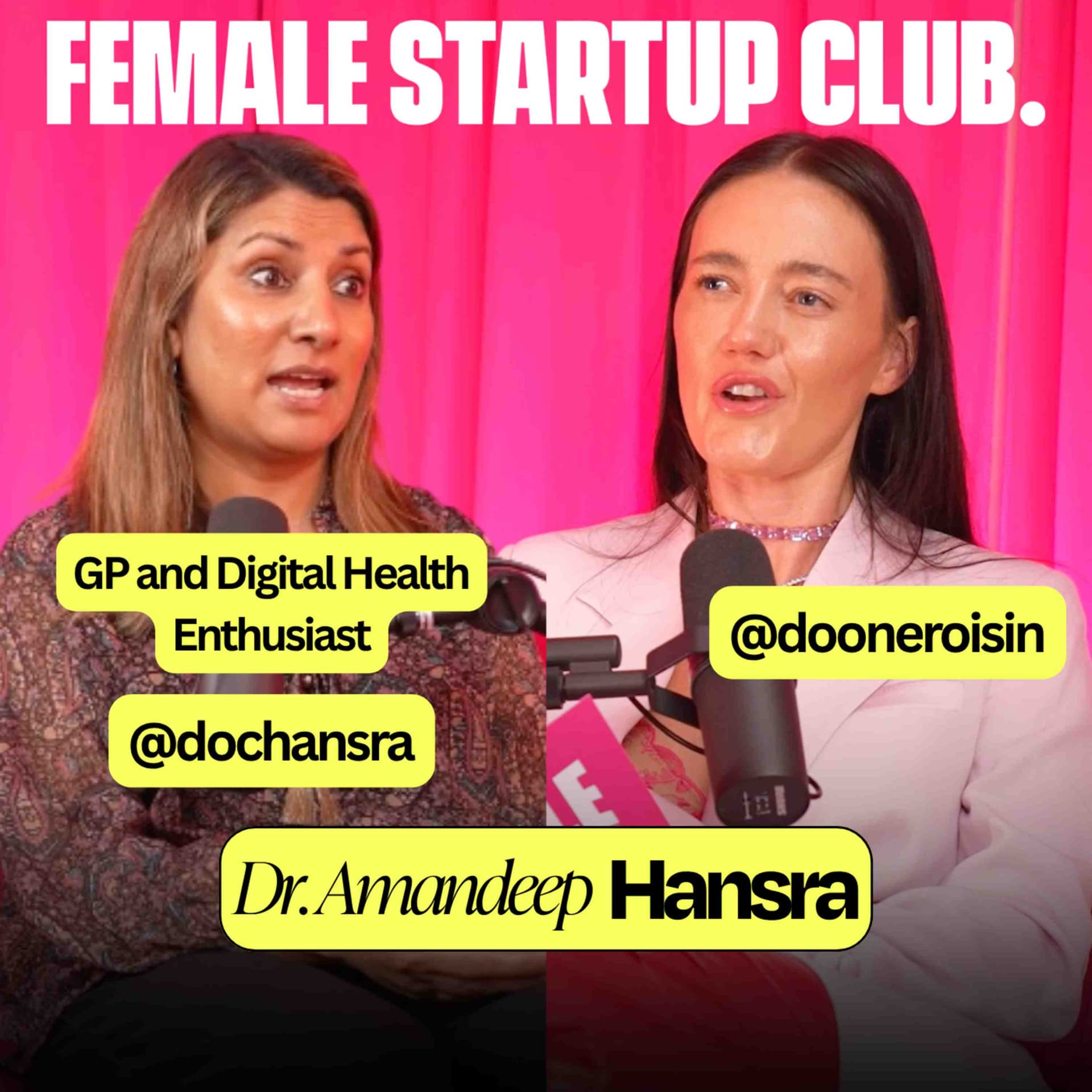
Guest (Dr. Amandeep Hansra) background: Practicing doctor; co-founder/investor at Medical Angels with ~34 investments; invests in women’s health and female founders. Mother of two. Grew up in a tiny Indian village for the first five years of life with limited healthcare access; later moved to Australia. Also has an arts background (theatre/performing interest) and uses media to bring credible health conversations to the public.
Key claims
- Women were historically excluded from medical research; modern real-world data (wearables, hormone tracking) can improve women-specific care.
- HRT risk fears were amplified by the Women’s Health Initiative, which studied women >10 years post-menopause and used a regimen not current today; starting HRT within 10 years may improve outcomes.
- Hormone blood tests are snapshots; perimenopause needs continuous pattern data (e.g., patches).
- Longevity is strongly linked to relationship quality (comparable impact to not smoking), not just protocols.
- Social media likely needs regulation similar to past anti-smoking efforts.
Notable examples
- Lari Health: modern estrogen patches designed to stick better and reduce skin reactions.
- Monair: AI app using eye/tear-duct area to estimate iron levels at home.
- At-home cervical smear testing as a “game-changing” model.
- Brian Johnson/Kate (women’s biomarker “guinea pig” plan) and blue zones (Okinawa, Greece, South America) as longevity frameworks.
Written by AI. May contain mistakes. Listen to the episode to check what was said.
Chapters
Tap a time to open that second in VOThe Impact of Social Media
0:00 to 2:29
Discusses the societal effects of unregulated social media usage.
“Manipulate all of these people into doing things we wanted them to do.”
Disconnecting to Reconnect
2:29 to 5:16
Shares personal experiences on disconnecting from screens and improving life habits.
“Amandeep, welcome to the Female Startup Club podcast.”
Championing Women's Health
8:31 to 14:01
Dr. Hansra discusses her motivation to support women's health and her cultural experiences.
“So one day I think, oh, I'll go back to theatre when I'm older and, you know, you can afford to live off a theatre salary.”
Rethinking Women's Health Research
14:01 to 17:10
Explore how traditional health systems have overlooked the unique needs of women.
“in your chest, that means you're having a heart attack.”
Innovations in Women's Health
17:11 to 19:36
Discover new technologies and startups addressing women's health issues.
“I imagine it's like super cool when you get pitch decks across your desk every day that you get to look through and be like, wow.”
Longevity and Lifestyle Changes
19:37 to 23:14
Learn about the importance of lifestyle habits and social connections for longevity.
“I mean, a woman comes in now to see me in general practice and I'm like, I can do it or you can do it.”
Understanding Perimenopause
23:15 to 28:00
Delve into the changes women face during perimenopause and the need for more research.
“I don't know if you've come across the blue zones and they've been studied over the years because they're areas in the world where people they've got the highest number of people who've lived past 100.”
Understanding Menopause and Hormonal Changes
28:00 to 29:15
Learn about the hormonal fluctuations during menopause and the need for early intervention.
“that are affecting women who are silently suffering, and I do say silently because most of them just don't go and see anyone about it, then I'm all for us finding out more about it.”
Challenges in Diagnosing Menopause
29:15 to 30:47
Discuss the myths surrounding menopause diagnosis and the importance of tracking hormonal patterns.
“levels right now at this second, they might look completely normal, but you could, I'm not saying you would be way too early, but you know, you could be menopausal.”
The Evolution of Hormone Replacement Therapy (HRT)
30:47 to 33:27
Explore the history and current understanding of HRT, including its benefits and risks.
“What about things like the Dutch test though?”
Show all 27 chapters
Current Attitudes Towards HRT
33:27 to 36:38
Examine the modern perspective on HRT and why many women are still not receiving it.
“So there has actually been benefits that we've been able to identify and the cancer risk was more to do with the fact that these women were of that age.”
Finding the Right Doctor for Women's Health
36:38 to 37:56
Get insights on how to find a supportive doctor who understands women's health needs.
“I think that long-term, we're going to start seeing, I think, a shift back towards giving women what they need at points in their life.”
Self-Advocacy in Healthcare
37:56 to 42:00
Learn the importance of advocating for yourself in medical settings and finding the right fit.
“And I've kind of sidetracked from my notes here.”
Finding the Right Doctor
42:00 to 43:30
Learn the importance of finding a healthcare provider you connect with.
“until I moved back to Australia and it creates a level of distrust for the system, which isn't good for anyone basically because then you avoid going and you're just like, oh, I'm going to hear the same thing.”
Understanding Women's Health Needs
43:30 to 46:44
Discover how women's health needs vary through different life phases.
“Otherwise, we'll be here until tomorrow, which I would love, but I'm sure you wouldn't.”
Cold Plunges vs. Saunas
46:44 to 48:48
Explore the benefits and considerations of cold plunges and sauna use.
“is because I also think the replacement that you need will be based on your individual needs.”
Research on Women's Health
48:48 to 52:40
Understand the challenges of funding research in women's health.
“You know, there's definitely research on that.”
Evaluating Health Information
52:40 to 55:55
Learn how to critically evaluate health information and studies.
“Is it true that just on the topic of cold plunges.”
Exploring Personal Health Insights
56:00 to 56:40
Learn about personal health practices and monitoring for better well-being.
“outside of the regular, you know, eat well, sleep well, you know, diet and kind of exercise stuff.”
Managing Metabolic Health and Stress
56:40 to 59:30
Discover strategies to address insulin resistance and stress management techniques.
“So interestingly, I was actually testing a startup that was pitching to Medical Angels.”
Importance of Nutrition and Supplements
59:30 to 1:01:10
Understand the role of protein and key supplements in women's health.
“And I found it really helps like my, and I can tell because I measure my heart rate variability and it was dramatically improved by doing this.”
The Impact of Sleep on Health
1:01:10 to 1:03:30
Learn how optimizing sleep can enhance overall health and well-being.
“Because you can, I remember at one point, my sister and I were trying this whole, like, what do we take?”
Protein Intake and Dietary Shifts
1:03:30 to 1:05:40
Gain insights into effective protein intake strategies and dietary approaches.
“But again, it's one of those things that it sounds really easy.”
Understanding GLP-1 Medications
1:05:40 to 1:10:00
Get informed about GLP-1 medications, their uses, and health implications.
“I think they said that that's where it kind of stops working.”
Understanding Peptides and Their Uses
1:10:00 to 1:12:49
Learn what peptides are, their natural occurrence, and the implications of peptide injections.
“They tell you that it hasn't caused serious harm.”
Benefits and Risks of GLP-1
1:12:50 to 1:15:18
Explore the potential benefits of GLP-1 for conditions like PCOS and its effects on dopamine.
“and quickly those producers or pharmacies that are getting it for you, the sort of off-label stuff, they will disappear when you have a bad reaction and you will have no one to go to.”
Innovative Solutions for Women's Health
1:15:19 to 1:17:10
Discover simple yet impactful innovations that can address everyday challenges faced by women.
“And that studies have shown that that happens quite quickly if we're not careful.”
Transcript
Automatic transcript. May contain errors.0:00Doone Roisin:I feel like we're going to look back in time, like in 100 years time or even 10 years time, who knows, but I feel like we're going to look back and be like, wow, so crazy that we were able to just like use social media with no regulation. Manipulate all of these people into doing things we wanted them to do. Well, even just to like be on it for like however long we wanted because it's so like, you know, if you think about smoking and like the work that the government did in Australia to reduce smoking, I reckon that is what will happen with social media. It's getting there with the kids being, you know, taken off social media.
0:34I think there's an understanding of how it's impacting people's brain development. Yeah. It's just even adults are being influenced significantly, and I think there will need to be a time where they will have to be regulated in some way.
0:46Doone Roisin:Yeah. I hope so. I hope so too. I hope so. Actually, my husband and I, we like to do these quick trips to, you know, out in nature with this company called Unyorked, and they do the little tiny cabins. So you disconnect, you put your phone away, and you do it for like 48 hours or something. You don't look at your phone. And the last one that we did, we just decided when we got back We weren't going to watch TV or have screens at nighttime at all. So like once we finished work, we used to binge Netflix and like watch a show or whatever. And that was our nighttime kind of routine. Whereas now we play cards, we like cook dinner, whatever it is.
1:20Doone Roisin:But we go to bed really early now. Whereas we used to go to bed at like midnight, 2 a.m. Because it sucks you in and you just like stuck. And you don't feel tired. You just feel that wired feeling. Whereas now I get naturally tired. I'm ready to go to bed. I have like fully wound down and it's one of those things like you know people always say like good sleep routine good diet nutrition kind of situation good exercise routine and when you try those things like 30 days of no caffeine or 30 days of no alcohol I'm always like that didn't make a difference like I feel exactly the same but this and this one seems so easy and like it wouldn't make such a huge shift but it's changed my like spirit yeah like I wake up in the mornings and I've been someone that's like tired my whole life and I feel more like I'm just ready to get up I'm ready to get out of bed yeah amazing so weird well things we've been preaching for years around screens and about sleep and about you know timing and and people just go oh surely there's like an easier hack and I'll just take a drug instead yeah it's the hard work stuff but it's not really that hard when you actually do it it's commitment right and it's habit forming Yes, it's habit forming.
2:29Doone Roisin:Okay, let's jump into it. Dr. Amandeep, welcome to the Female Startup Club podcast. Thank you so much for having me, Dune. I am very excited to have you on the show. I'm excited to ask you 700 million questions that I have lined up. Oh, I'm getting nervous now. Don't be nervous. You're the expert. You're going to know everything. You have such an impressive track record. I want to give our listeners just a little bit of an overview of who you are. You are a practicing doctor. You treat patients multiple times a week. You are also an investor backing the future of medicine and the medicine kind of industry for women specifically and female founders who are changing the landscape.
3:12Doone Roisin:And you've made something like 34 investments through your fund, which you are a co-founder of, Medical Angels. What are three things that people might not know about you to introduce yourself? Oh gosh, that's a hard question because so much of my identity is linked to all the professional stuff I do, but I am a mum. I have two beautiful children, one who's already moved out, the other one who's learning how to drive. But I think for the longest time I have wanted to experience like being a mum. And so everyone sees me in this professional world, but I'm like the best job in the world I have is like being a mom and I wouldn't wouldn't change that for the world so that's probably one of the things that I don't really talk a lot about is my family I think the second thing um that people probably don't know about me is that um I actually spent the first five years of my life living in a tiny village in India um so I grew up I was born in the UK but went to India at a very young age and really lived in an environment where there was no access to healthcare services, wasn't immunised.
4:26I don't think I even had shoes. Grew up in a sort of a farm environment where you milk the cows for breakfast in the morning. We never went to a store. We never bought food. We grew everything ourselves and we ate ourselves. And even though I look back and I think, oh my God, I have all this cool stuff now and I live this wild, glamorous life. I think the happiest time in my life was like those first five years of just living completely simply, hanging out with cousins, you know, running through the field, like literally having no care in the world. And yeah, it's interesting how as our lives get busier and, you know, more developed and we move up the social ladder, that it doesn't necessarily bring more happiness.
5:05So, you know, I always sort of reflect back on where I've come from and where I am today and not always see it as, oh my God, that's amazing. I think, oh, it'd be nice to go back to that simple life some days. And we were initially just talking about getting off screens and social media. And yeah, back then it was a lot simpler. It's so interesting. I didn't know
5:26Doone Roisin:that about you and my upbringing, like, you know, the first probably, I think we moved maybe when I was sub 10, but like maybe seven or something like that. But we grew up on the side of a mountain, similar type vibe my single mom raising her only daughter on the creek very living off the land type vibe eating our own veggies killing our own chickens and at the time and especially you know all throughout my kind of teens and even early 20s I used to look back at my childhood and just be really embarrassed about how I grew up because we were so you know I would say poor my mom says that she's rich in life.
6:05Doone Roisin:She would never say that, but I would say that. And, you know, growing up in that, you know, we lived in a shed. So growing up dirt poor to where I was and the people that I was around in my like later life, I had a lot of shame around that. Whereas now in my thirties, nearly into my forties, I have such pride of that upbringing because that upbringing on the soul has shaped the way that I think and shaped, you know, so much that's a core part of me now. And I look at that and I think, wow, like if I was going to raise children, I would also want to go to the middle of nowhere and raise kids on the land.
6:46Yeah. Look, I completely agree with you. And I had that shame too. I was like, I don't want to tell people that I grew up poor or like rural or didn't speak English. And now I'm really proud of that. That's what makes you unique and makes you who you are. And it's about owning your past and where you came from.
7:03Doone Roisin:Absolutely. I actually think it was the podcast that got me to talk more about my childhood, which is interesting. I think back in 2021, my audience was starting to be like, we'd like to know more about you. And then I started talking about it. I'd never talked about it before and it brought it out of me, which is something that I'm grateful for, for Female Startup Club. That's two. You've got one more. Oh, no. You're going to have to dig deep. Okay. One more that people don't know about me. I think when I first started to think about what I wanted to do with my life, it wasn't medicine. I wasn't really thinking about being a doctor.
7:42I think early on, I wanted to be an actor. And I got involved in theater and drama and Bollywood style well close to it I think I was I auditioned for a role as Jasmine on um you know they were doing a big Aladdin production and um unfortunately I moved countries and missed it but um and had a few little cameos on some shows but I think that now it's come full circle because I get to kind of do some of the presenting and I do a lot of you know, talks and I get to speak to media, but it's really about, you know, bringing credible healthcare sort of, you know, conversations and voices to the public.
8:24So slightly different. I'm not acting, but I still get to do the performance side of things and I get to do a cool podcast like this. So one day I think, oh, I'll go back to theatre when I'm older and, you know, you can afford to live off a theatre salary.
8:39Doone Roisin:I feel like there's a way that you could still do both though because I'm like there are those like there's one and it's just slipped the name has just slipped away from me but there's like a a school kind of like singing choir group that you can join and you join at certain times of the year and it's just for fun it's just for pleasure and then you'll do a performance at the end of the year yeah and one of my girlfriends was telling me about it and they sing kind of songs from Glee and things like that and she's like it's so much fun it's so good for the soul and you're kind of like in that performance kind of space.
9:10Doone Roisin:And having that conversation with her drove me to start doing singing and dancing lessons just for fun, not linked to work at all, not like attached to a goal just because I love karaoke and I love singing and my poor husband has to put up with it. But I'm like, yeah, you should just join one of those kind of like theatre groups that does a production at the end of the year for fun. I think I will. And you don't have to link it to work. I think that's a great thing about, you know, art is you can just have it separately and do it for the love of it. I think as soon as she's tried to make a living out of it, it becomes stressful.
9:43So that's a great takeaway. I'm going to go away and investigate. Next time I see you, I'm going to be like, so when are you coming to visit your performance?
9:52Doone Roisin:Let's practice together. I'll help you with your lines. You mentioned that you don't talk about your children often and I wonder if that kind of links into why you do what you do now and why you are a doctor, why you became a doctor or why you became kind of interested in women's longevity and women's health specifically. I don't know if you have girls, boys, both. Yeah, yeah. But I wonder what your answer is to kind of why you do what you do. Well, I think I've always been passionate about supporting women for a number of reasons. I think I grew up in a culture where, you know, women were quite marginalised in our sort of, I come from a South Asian Indian culture and, you know, the way that we raise women is that they have a purpose, which is to get married and have children.
10:45They're not really there to contribute to society necessarily or have jobs. And so, you know, my mum fought quite hard to get an education and then I had to fight quite hard to get my education. You'd think we would have learnt something. And I think that watching how, you know, so many women that I was surrounded by, you know, how much their light was sort of dimmed, you know, potential that they had, things that they could have achieved, but was sort of fed down this path of your job is just basically to marry and reproduce. And it is quite a problem in our culture and it continues to be. And we had obviously cultural things around having arranged marriages and back in the day, and still happens now where you pay dowries, you know, as a family of a daughter where you would pay someone to marry your child.
11:32So we, you know, we've had lots of problems, I think, in our culture about supporting women. And when you look at the health outcomes of women in these cultures, they're significantly worse than their male counterparts. You know, we have infanticide that happens in our culture where they will kill, you know, baby girls because they don't want to have a girl, they want to have a boy. And so I think I've grown up, you know, really wanting to champion women and girls and how much they can contribute to society. But the more I looked, the more I realized it wasn't just a problem in my culture. It happened, you know, across the board.
12:09I came to Australia and I was still seeing it. You know, I was sitting in, you know, rooms full of men making decisions about how we fund women's health things. You know, I was sitting, you know, in, again, rooms of men deciding how, you know, women's health services were delivered. And when I'd look at the outcomes, they were always, you know, poorer for women. And I think just myself growing up and going through the system, and I've had my own share of, you know, health issues and trying to access the health system for my own problems. And I'm very health literate. And I'm thinking, if I can't do this, how can any other woman, you know, navigate this?
12:46And so I think there's been drivers from multiple parts of my life. And obviously for my kids, wanting to give them a better world as well, because I watch, you know, what I've been through, what my mum's been through her grandma you know my grandma's been through and I think you know we have so much knowledge about what we need to do it's just actually about how do we implement this and you know we're half of the world's population but yet so much of the world 90 percent of it is designed around men and I think that's what I really want to change and particularly about supporting whether it's investment into women's health care or whether it's backing women who are doing great work in this space that's really been kind of like my target focus
13:26Doone Roisin:Where do you think the world of medicine for women will be in 100 years time? Oh, gosh, I have stopped even predicting the next 10 years because it feels like so much is changing so rapidly. But if we think back historically, when we used to research medical conditions, we predominantly did it on men because we were like, don't want to, you know, have women, you know, complicating outcomes. Women are going to have babies. We don't want to put them at risk of anything. So we just sort of carved women out. And what we did was we did mass studies on men. When we think about heart disease, cardiovascular disease, when we say, okay, if you have pain in your chest, that means you're having a heart attack.
14:08That all came from studies on men. Women don't present that way. And so for many years, we had a whole health system that was designed around research that had come from men. And what happened is that they would extrapolate this to women and say, oh, women are just like smaller versions of men, a bit like how we did it with kids as well. They're just mini adults. But the thing is, is that women are so biologically different when we think about it in terms of, you know, hormonal makeup, you know, all of our biological, you know, factors are different than men. And you can't just apply disease and treatment the same way that you do to men, just to women and tweak it a little bit with a lower dose, because that was what was happening or with a slight, you know, anatomy change because it's a woman, you actually need to study women.
14:57And things have started to change, but only in the last sort of 10 years where there's been some mandates around having women, you know, a minimum number of women enrolled in clinical studies. But what we're finding is that women are so engaged in their own health and they are some of the most forward-thinking, you know, adopters of technology. so we're all now wearing you know our wearables you know i've got my aura ring and my apple watch and we're collecting data collecting data at a speed that is you know never been done before in history and more so than men um and so what is happening is we're actually getting real world data on women and whether that's you know they're measuring their sleep cycles you know their hormones you know fertility journeys periods like everything that they're tracking is giving us this treasure trove of data that I think we can start to now see what are the health service and system impacts of having women with this data that traditionally relied on research and clinical trials where they've been excluded.
15:58But now we've got something that's even more valuable, I think, because it's actually in the real world, not just in a trial setting. And women are then using this information to go, well, I'm going to innovate here. I'm going to use this data to build things. I've got an AI algorithm that I've figured out that these are things that are going to impact women. I was just looking at a company this morning that has worked out actual biomarkers doing a blood test for detecting postnatal depression. I mean, who thought that you could do a blood test for that? But again, women come up with these ideas because it affects us disproportionately.
16:33And now we have access to the data to make a difference. And so in 100 years, I think we are going to be definitely on a level playing field, if not a bit further ahead than men's health because we are so diligent at tracking and looking after things and also about bringing our whole community with us. So we want to help all other women that are going through the same thing. And I think that is what is creating this wave of female entrepreneurs who are building in women's health.
17:03Doone Roisin:Yeah, I'm excited for all of this. This just sounds exciting and like cool to be at the forefront of, you know, women and founders who are innovating and changing that landscape. I imagine it's like super cool when you get pitch decks across your desk every day that you get to look through and be like, wow. Yeah. It must be actually hard to choose. It is really hard. But, you know, you get ones that just talk to you. And, you know, another company that we were looking at, Lari Health, who just said, you know what, the estrogen, you know, patches that women have for HRT are rubbish. They've been built off technology that's, you know, 20, 30 years old.
17:41They don't stick properly. They cause skin reactions and they're actually out of supply at the moment. So we're going to use modern technology, build our own patches, produce them here in Australia and, you know, solve this problem for women. And it was just, yeah. And it was like, you look at that. Yeah. Exactly. I was the same. I was like, oh, my God, how do I help you? Like this needs to happen like yesterday. And so it doesn't even have to be, you know, groundbreaking stuff that's, you know, using AI or fancy tech. It's just like get us stuff that sticks properly to our skin and we're happy, you know, and gives us the hormones that we need.
18:16And that's what really excites me is that, you know, the breadth of these ideas that come through and the tenacity of these women that are like, I'm going to solve this, not because I think I'm going to make lots of money out of it. great that they do, but just that they're just so passionate and driven by a purpose. And that's what gets me out of bed every day.
18:36Doone Roisin:A friend of mine, Candice, she sent me this really cool company the other day called Monair. And it's basically this woman, she's kind of figured out using AI, how you can scan your eye and scan kind of like the, I'm going to say it wrong, but like the under eyelid tear duct kind of space and then that can predict or detect your iron levels from yeah because if you get so we do it visually or i'll just pull down someone's you know bottom eyelid and and look at you know the color of what they conjunct either the you know if it's pale and i go you look anemic but to have an actual tool that does that yeah and you can do it yourself like you just download the app and do it yourself and so when you think about those types You're like, oh, this is amazing.
19:24Doone Roisin:I don't have to go for an appointment and do all these other things. I can do the first step at home. The same way, I guess, that all these kits are coming, changing the way that you do the first pap smear type thing. Yeah, well, the at-home cervical smear test has been game-changing for women. Game-changing. Yeah. I mean, a woman comes in now to see me in general practice and I'm like, I can do it or you can do it. She's like, what? I can do it myself? I'm like, yeah. Like, here's the kit. And they just get so excited. They're like, oh, I got all prepped down there and now I don't even need to be prepped.
19:55It's literally amazing.
19:57Doone Roisin:When I think of longevity and kind of women's longevity, my mind still instantly goes to Brian Johnson, who is obviously, you know, a kind of human guinea pig, if you will. I read that he spends about two and a half million dollars per year on his protocol and all that kind of thing. But fascinatingly enough, thank God, a few days ago he posted that his partner and his – she was originally the CMO of his company. I think she became CEO. Yeah. And she's now his partner as well, Kate. She has decided to go down, you know, the rabbit hole and be the guinea pig for women's testing. So she's announced that they're going to be doing all of her kind of like biomarkers and all these types of things and do the same protocol, but for women.
20:48Doone Roisin:Well, not the same protocol. Go down the same pathway. What do you kind of think about when you hear, you know, what Brian Johnson's doing and kind of the longevity biohacking community? Yeah. Look, it's been interesting watching that community because when I think back to everything we were taught in medicine, it's pretty much the stuff that he's doing, a lot of it he's doing. If you think about the basic stuff that he's doing that all of us could be doing, which is not plasma exchanges and methyl blue and all that, it's getting the right quantity of sleep. We talked about this earlier. It's going to bed at the same time every day.
21:23It's knowing your optimal sleep pattern. It's maybe looking at your heart rate variability and seeing when you're having good days where you should push yourself, where you should rest. It's about making sure that you're eating whole foods and not processed food. It's about not smoking and not drinking alcohol. And look at all that basic stuff, which I think is actually 90 % of it. And it sounds really boring because we've been saying this forever. You go see your GP and they're like, eat better and sleep better and blah, blah, blah. And then you get given a whole bunch of supplements and it's like, well, or you could just take the supplements, but the supplements are only going to do 10 % of the work.
21:59The 90 % comes from everything else. And so I think what they are, you know, sort of, I guess, marketing is what you can do if you are super wealthy, you don't have a job, you don't have to do anything else, but your job actually is 100 % to look after you. And I say this about all of the celebrities, like it is their job to look like that. If I was paid money to just work on what my body looks like or feels or to biohack it, then I would probably have the same outcomes. But that's not reality for most of us. So I think the most important thing, and we've learned this in medicine, is that the best change or advice you can give a patient is something that is actually practical that they can do, that they can form a habit around.
22:45And most of us can't form habits around just spending all day, every day biohacking. We all have to make a living, right? And also the easy things are hard. Yeah, the easy things. Waking up at the same time is hard. It is hard. And, you know, thinking twice about picking that extra course of meal or, you know, having that cheeky drink at the end of the day, you're like, you know, that stuff to say no to that is hard. But that is the stuff that makes most of the difference. And, you know, if you look around the world, there are these blue zones. I don't know if you've come across the blue zones and they've been studied over the years because they're areas in the world where people they've got the highest number of people who've lived past 100.
23:28Doone Roisin:Oh cool yeah so like where yes is it like civilizations who don't have no it's like there's a place in Japan in called Okinawa this is a little island where you've got all these little Japanese people that have lived forever and the health some of the healthiest people there's a place yeah the place in Greece, there's a place in South America. So you look around the world and the thing that they realized was that something they all had in common, it wasn't just like the Mediterranean or Japanese diet, great. They spent a lot of time outdoors, you know, they were planting gardens or, you know, going for walks or whatever.
24:04So very driven to go outdoors and do activities. But one of the most important things about all of them was that they had a really strong sense of community. They had these incredible relationships with each other where they supported each other. They back about, you know, what we talked about, you know, earlier on about where we grew up. You know, they had like a village raising them. They stayed in close contact with people. They felt like other people had their backs. And from all the research that they've done on these blue zones, they've actually found that the greatest longevity marker, you know, or predictor is the quality of your relationships.
Read the full transcript
24:41So it's the equivalent of you, you know, the reduction is equivalent of you not smoking. So that's how significant it has an impact on how long you're going to live. It's like you stopped smoking. So I always wonder with these people that have these great protocols and take all of these, you know, biohacking things that if they just focused on their relationships, would they live just as long and not spend two and a half million dollars doing it?
25:08Doone Roisin:It's so interesting. I used to be a bit like, you know, unsure of Brian Johnson, but I watched his documentary the other day. And because we see a lot of the content that is, you know, a hook or a headline in the media or something like this. But actually, when I watched the documentary, I just became a bit of a fan because I was like, oh wait a minute he is addressing the fact that actually what he's doing isn't for the masses what he's doing is to try and push medicine along so that other people can eventually be able to do things like measure their biomarkers easily if they want to or whatever yeah but when you read his protocol he's like until you do x y and z you you can't go to the next phase and the main things he says is around diet it's around sleep it's around all the basic stuff and the thing that he says is exactly what you're just saying.
25:59Doone Roisin:He's like, you have to focus on relationships. And until you have these types of things sorted, you can't even go to the next level because you have to start with solid foundations. And it gave me this whole new respect for what he's doing, because he's like, you know, this, it's not for the normal person to spend millions of dollars. But if we can go through the list and try things and test things and create a movement around it, if 10 ,000 people want something and there's that demand there, the medical industry can potentially bring out new things and new innovation that more people can access.
26:34Doone Roisin:And so then, of course, the immediate argument is like, okay, well, it's only being done on you, thus it's being done on men, et cetera, et cetera. And now with Kate being kind of the guinea pig on the other side for women, And it's going to be really interesting to see those kind of things. And I wanted to read through the questions that they're wanting to kind of answer and track over, you know, 10 years of time and see if you had any kind of answers just to go through exactly what he kind of tweeted. Yeah. So first that they're looking at is can perimenopause be slowed down? Yeah. Please elaborate.
27:13That was my question. Okay. This is interesting. You know, perimenopause has become a relatively new phenomenon. You know, for many years, women and, you know, I hate to say it, but it's, you know, can start in your 30s. So it's not just you hit 45 and that's menopause and, you know, then it's all downhill. It's like we start feeling the effects of our hormones changing in our 30s. And women are coming in earlier and earlier, more out of awareness. And they'll come in and they'll say, you know, it's mum brain or I've got brain fog or I'm just too busy or I've got so much stuff going on. It was the peak of your career.
27:47So you're like, you know, you put it down to everything else, but the fact that your body's actually changing and your hormones are changing. And I think that if we can know more about that space, if we can understand what are the changes to the body that are happening that are affecting women who are silently suffering, and I do say silently because most of them just don't go and see anyone about it, then I'm all for us finding out more about it. it would be great to understand when does it happen, why does it happen, you know, are there any influencing factors from a hormone perspective because we don't tend to rush to put women on hormone replacement therapy in their 30s.
28:26We wait till they're having hot flushes and night sweats and sometimes I think, my God, why would we wait that late? You know, maybe we can start hormone replacement early. Maybe there are other things we can do to influence hormone production. And so I I am totally supportive of that and I think I'd love to know more about perimenopause. We do not have enough data in that space. Yeah.
28:47Doone Roisin:And for perimenopause or maybe even more broadly menopause, I am not super well versed on this topic for myself yet, but can you just go into the doctor and get like a blood test and it'll tell you if you're in menopause or not? See, this is the myth, right? Is that everyone goes, okay, I will just go and get a test and it will tell me if I'm a menopause. And it doesn't, unfortunately, it doesn't quite work that way because what happens is our hormones fluctuate day to day, hour to hour, minute to minute. So when I do your hormone levels right now at this second, they might look completely normal, but you could, I'm not saying you would be way too early, but you know, you could be menopausal.
29:25Well, maybe not. I'm 37 or I'm about to turn 37. So I could be. So you could be, but we would take a blood test at a point in time. And this is where I really love where we're going with data and how we're getting continuous data. Because if you think about the traditional way of going to see the doctor, you see the doctor, you get a blood test, you've got a measurement at a point in time, or they do your blood pressure, or they do your blood sugar level. It's always a momentary reading or assessment, whereas hormones fluctuate. And so what you actually need to do is watch the patterns of hormones.
29:57And we realize that's been very hard in the past because you can't do a blood test every minute and check what's happening or every day that's too much but what you can do is obviously then look at the symptoms and go i so we diagnose menopause based on symptoms not based on a blood test but if you're really post-menopausal the blood test should show that your hormones are low you know continuously but the the perimenopause early menopause period is really difficult and i just want to say if anybody's innovating in this space and can create a patch where we can monitor hormones and actually read them and know what the fluctuations are happening, and maybe that's what Kate's going to stimulate, is that we need to be able to measure hormones better to be able to identify when these women are entering that phase of perimenopause and help treat them.
30:47Totally. Wow.
30:48Doone Roisin:That would be, I mean, incredible. What about things like the Dutch test though? I've done a Dutch test I think it's a US based yeah what did they measure on that do you remember I think it was like across a couple of days and I think it was urine like yeah multiple times was it saliva but you had to do it like morning night during the day and you had to be very specific about like yeah the kind of the time and you know the the food you'd eat and things like that it was something we do tend to do here in Australia. I mean, I don't know whether there's lots of evidence to support that. I think the more that you get, more information that you get, the more accurate, obviously, you can sort of head towards, but you will never get a definitive yes, no, without having sort of, you know, ongoing trends and, you know, sort of longitudinal data, which is what I think you really need.
31:44And so we have gone on symptoms. And I think that, you know, if somebody develops some innovation in this space, it's going to help us be able to, yeah, pick this up a lot earlier. But yeah, I think what they're moving towards with the Dutch test is really trying to have more than one point of measure.
32:00Doone Roisin:Yes. There's something I wanted to ask you now just off the back of that question. It was further down in my list of questions here, but I wanted to ask you around the HRT kind of treatment. Why can't you just take it, you know, when you're younger and like, what is it? I feel like I hadn't really even heard about HRT until, you know, more recently. Yeah. Look, unfortunately, we had a real scare back in the early 2000s. There was the Women's Health Initiative. They did a big study on a group of women and gave them HRT and they had to stop the study early because they found that these women were having higher rates of breast cancer and cardiovascular disease.
32:41And then there was this big uproar. All these women that were on HRT came off it and they were like, oh my God, it's going to give us cancer. The problem is when we look at the details of that study, they were actually studying women who were over 65. So they were like 65 and over. So they were actually more than 10 years post-menopause. There was a specific HRT regime, which we don't use anymore. And a lot of these women had a high rate of breast cancer risk anyway. And so when they dug into the study, they realized, okay, maybe we overreacted. And then they've spent the last 20 years doing obviously more studies and realized that actually if women start HRT within the 10 years of menopause, that they actually have overall improved cardiovascular outcomes and live longer.
33:29So there has actually been benefits that we've been able to identify and the cancer risk was more to do with the fact that these women were of that age. Once you get older, your cancer risk increases. And it wasn't really to do with the HRT. And so the FDA in the US removed the black box warning, I think it was in 2025 from HRT and said, it's no longer, you know, something we need to be worried about that people should be on it. But the really sad thing is, you know, they looked at this, I think it was in 2020, they looked at a group of women who were all sort of post-perimenopause or menopause or age who went to the doctor with symptoms.
34:06And I think only three or 4 % of them got prescribed HRT. So the doctors still haven't, you know, gone out there and said, we've now got the evidence to say it's not bad. We can start it earlier. So there's, it's, I mean, what people don't realize is it's like taking the pill. It's like a lower dose of hormones in the pill. And because the pill has hormones in it that we need to stop us ovulating or having, you know, getting pregnant. But HRT just gives you the smallest amount of hormone that you need to manage your symptoms. And so I think we're doing more and more research to say, well, how early can we start it?
34:44Obviously, if we start it too early, then women are still in their fertile period and it doesn't work for fertility, like to stop you from getting pregnant. So they'd also need to have a contraception method. But I'd say for women who, who for whatever reason you know don't need a contraception method you know maybe they've you know had their tubes tied or whatever that there is no reason that you can't look at a personalized view of when measure up all the risks and benefits because it has benefits for your heart has benefits for your bone you know obviously you talk about longevity and just your symptoms and you're functioning every day, like your mood.
35:24And, you know, I myself have started it, you know, where we went through, well, I've started to feel a little bit perimenopausal and went, you know, there's nothing but benefits for me at this age. And it can be life-changing, you know, when you suddenly feel like you wake up, a bit like what you were saying before, and you're like, I feel like a new person. I'm a different human being. And so I just say to women that if you don't feel right, like go and have the conversation. And if you don't find the right doctor, and even myself, I went to three doctors before someone said, okay, I'm happy to prescribe it.
35:59Three doctors. And I'm a doctor myself. I could have written the script myself, obviously not the right thing to do. But I was like, I want someone to manage this for me, but it took me three goes. So I just encourage women, if you find that you're getting a resistance, sometimes it's coming out of unfounded fear.
36:15Doone Roisin:yeah there's a stigma or personal bias exactly something yeah in the way of the kind of the facts yeah and there's just defensive medicine of like i want to protect myself from getting sued so it's better if i don't give you something um but you know everything we do in medicine carries some sort of risk um and as long as you know what the risks are and you weigh up the benefits versus the risks, which is what I did. I think that long-term, we're going to start seeing, I think, a shift back towards giving women what they need at points in their life. And you will see, and there's economic benefits.
36:55The number of women affects their work productivity, what they're able to achieve in a day, the way they parent, all of these funny memes about women going through menopause, like we'd like to get rid of them and say we actually treat this. But I think it's having its days coming back.
37:13Doone Roisin:Yeah. Oh, gosh. It's so interesting because when you're kind of, I guess, approaching the age where these types of conversations are coming up more and social media is like bringing these things to the forefront. To me, I'm like, wow, wouldn't you want to do it? Like, that sounds amazing. I'm like, great. Put me on the wait list. Yes. You just got to find the right doctor. And there's some great services that really just focus on perimenopause now and menopause, which is also what I'm loving about the innovation space is that people have identified that you need specific clinicians who are very invested and knowledgeable in this space.
37:45And I've got quite a few great companies like MetLuma and MIMA, like they've got, you know, great services that they offer to women and in a very safe and supported environment.
37:56Doone Roisin:Right. That was actually my next question. And I've kind of sidetracked from my notes here. But my first question was, how do you actually find a doctor that is kind of removing the stigma and the bias and who is, I guess, just, you know, women's first type doctor? And my second question was around medical studies and kind of like, what needs to change to do more medical studies and more medical research on women to advance that side of it? But we'll start with the how do you find the right doctor? How do you find the right doctor? So, you know, now there's a lot of, you know, women specific practices, which is, you know, my sister's a GP focused on women's health.
38:40The whole practice is very women health friendly. They'll see men, but you know, it's predominantly 90 % women. I think if you go to those that are advertised as women's health practices, you know, already that the doctors working there have got a lot of knowledge about treating women. I'd also say that it might be better to go to a female doctor if you can find one. I know in some remote rural areas, you don't have that luxury or choice, but if you can't see somebody physically, there are so many online services that have women's health doctors, like MetLuma, which I was talking about, but there's a bunch of them out there.
39:17Like Maven Clinic in the US. Yeah, exactly. So they're really targeting women who need that specific advice and you might not get it from your traditional general practice. But the great thing about them is they spend longer with you. You know, I went to one of my appointments and I was like, oh my God, why isn't she kicking me out? And I was in there for like an hour and I'm like, you want to hear everything about me? But normally I'm in and out 15 minutes and like somebody just goes, I can't give you a script.
39:40Doone Roisin:In the UK, it's five minutes and you go in and they're like, it's five minutes, like one problem. And I'm like, I've got so many and I reckon they're all linked, but like, it's going to take me more than five minutes and it's more symptoms. And they're like, you've got five minutes. That's just how the system works. But that's not proper medicine. Like, and this is why people turn to alternative services or what they see in the influences on social media. Cause they're like, my doctor didn't listen to me and women do get dismissed. And, um, you know, I will say this as someone who experienced this, where I was clearly having some neurological symptoms, something weird was happening in my body.
40:16And I went to see a doctor and he said to me, you're, you know, you're in your forties, you're sort of that age. Are you sure that it's not anxiety? And I was thinking, you know, I am a doctor myself. I probably would have thought about those options before I'd like come to someone like I was that desperate that I needed to see someone. And I was like, I now know what all women feel when they feel like they're getting dismissed, that everything's anxiety. So if you feel like something's not right in your body, you keep seeing somebody until somebody listens to you. And that may mean that you have to find some of these services.
40:52It might be that it's online, that's okay. If they need to do something physical, they will find out a way to get whatever they need, whether it's blood tests or get you examined somewhere. But at the end of the day, what we found with technology now is it's made accessible, care accessible to people that didn't have it before and really, you know, specific care. So if it is for women's health, there are services that specifically target perimenopause or menopause or fertility. So, you know, I would just Google, find something that feels like it talks to you as a brand as well. You can tell when things have been designed by not women, for women.
41:31So sometimes you're like, that does not look very women friendly, but it says it's a women's health business. So something that talks to you that makes you feel that you're going to be seen. but you don't have to just go to the first place and say, I've been told it's anxiety or something else. Well, I've had my opinion so now it's nothing. Don't do that. Please advocate for yourself and go see other people until you get the answers you need.
41:54Doone Roisin:Yeah, I think that's a really important message because even for myself I think about the times that I've been dismissed basically forever from doctors until I moved back to Australia and it creates a level of distrust for the system, which isn't good for anyone basically because then you avoid going and you're just like, oh, I'm going to hear the same thing. And so it's important to hear that kind of message of advocate for yourself, keep going, keep looking for a better doctor that's suitable for you. Not necessarily a better doctor, sorry, but a doctor that you mesh with so that you can get to the bottom of whatever's happening because you know yourself better than anyone else.
42:38Oh, 100%. And I say it's like dating and finding a partner. Like you don't just go, okay, well, this person looks good on paper and I've just got to push through even though I don't really like them or I don't want to be vulnerable with them. And, you know, it's an intimate relationship because you tell people, you know, you tell a doctor some of your most deepest, darkest, most vulnerable things and you've got to have somebody that's sitting on the other side who you feel safe with. And if you don't feel safe, like you're going to be judged or they're going to dismiss you, then you find someone that you do get on with.
43:09And I say this about psychologists. I say this about GPs. The dentist. Yeah, don't settle for the first person and say just because they've got a qualification. And it doesn't mean you're judging whether they're good or bad. They're just not good for you. Find the right person.
43:24Doone Roisin:Yes, I love that. Okay, I'm going to read through the list of things and then we can talk to the ones that speak to you. Otherwise, we'll be here until tomorrow, which I would love, but I'm sure you wouldn't. So the list goes, we started with the can perimenopause be slowed? How is cognitive load and mood affected? Does stress impact men and women the same or different? Does women's bodies need more iron, magnesium, and protein at specific phases? Should women be fasting? Should recovery protocol change by different phases or stay the same? What's the earliest detectable signal of perimenopause?
44:03Doone Roisin:should women be cold plunging can pms symptoms be alleviated maybe that means without medicine i'm not sure what should a women's sauna protocol be should dosage change throughout the month when it comes to supplements i imagine what keeps a regular cycle and can fertility be improved yeah wow and i think a few of those we even had on our list from the other day like the Yeah. Look, I love all of those. I do think they're all answers that we need. But you are right when the question you said before about the clinical trials is that this will be N equals one. We'll have Kate and her biomarkers and every woman is different.
44:46And things that also affect us are our ethnicity and biology and our childhood and how we grew up and our diet. There's so many influencing factors that we do need to try and study as many women as possible because I think one won't tell us what's the ideal sauna protocol. Exactly. But I think some of those I have some you know sort of gut hunches over what we'll find. I absolutely think women will have different requirements based on different phases in their lives. Like we're different to men in the sense that we obviously change due to our hormone sort of profiles. And when we go through pregnancy, when we go through post-pregnancy and we go through perimenopause, menopause, we've got so many phases in our lives.
45:35And at different points, different things are going to be important. So the supplements you need leading up to having a baby, it's going to be very different to supplements you need to age well. So I think fundamentally women are going to need different things to men. So I definitely think, you know, things like iron and magnesium, vitamin D, like, you know, we have more trouble in maintaining our muscle mass. We have more trouble in maintaining our bone mineral density, you know, that then affects our metabolic health. So, you know, in terms of whether we get diabetes or cardiovascular disease is related to muscle bulk.
46:11And if we don't protect that as we age, you know, we then get all these other medical problems. So it's all very, you know, linked. But I do think that we're going to, as we do more research in this area, we're going to be able to provide a much more personalized and customized service to women where, again, the risk is that we go, okay, now we're studying women. All women are the same and all women are going to need this. And I go back to my hormone, you know, innovation that I want somebody to build where it's actually tracking your hormone levels day to day. So, you know, wearing a patch and it's working out what your estradiol and your progesterone, et cetera, are all doing.
46:49is because I also think the replacement that you need will be based on your individual needs. So if that same patch could then release the right dose of hormone for you as a person in that moment, that is when we get to true personalized care. And so I don't want it to just, we figure this stuff out about women in general. I want it to be, we figured out that women need a very specific protocol and we're going to give them all the tools that they need to manage their own requirements and whether it is supplements as well. Like who knows that exactly this many milligrams or grams of, you know, because it comes in that tablet form is what you need and is what I need.
47:28Like, wouldn't it be great if we could get that dose to exactly what our body needs at that moment as an individual? And this is where precision health is going. And that's where I think will be. Yeah, definitely. And I would not be doing cold plungers. So that's probably my only
47:43Doone Roisin:other question in there. I love cold plungers. I love cold water. I run hot. I'm like an internally hot person. I think, okay, you can do cold plungers. Just don't do it a couple of hours after strength training because it actually reverses the hypertrophy of muscle that you're trying to do. So I think for women specifically, men less so, but cold plungers actually just undo some of the work that you've just done with your muscle, building your muscle. And it's so important to build your muscle. So wait a couple of hours and then do it. I think hot and cold is fine. Like if you're going to do hot and cold, but the ice baths of really getting into that freezing, cold plunges and women's body temperatures just run a bit higher.
48:27So I think if it's above 10 degrees, fine, but I just wouldn't be, you know, there's so many other, and it's great for mood. Like it definitely elevates your mood, which is why everyone gets addicted to them. So it's good for short term benefits, but I think the longer term benefits for muscle, you know, preservation for women. They need to be careful. Saunas, I'd say, go for your life. I don't think enough women sauna. You know, there's definitely research on that. They did a large Finnish study because of, you know, Finnsal sauna. But they found that, you know, I think it's about four to seven times a week if you can, 20 minutes at 80 degrees.
49:03And they found that, you know, improved cardiovascular, you know, benefits as well as, you know, lower rates of death from all mortality. So basically it gives you longevity. And I haven't really studied the infrared saunas in as much detail. These are traditional Finnish saunas, but we think the data is going to be similar. So I definitely think saunas, you know, a red light therapy, there's some evidence around red light, particularly for collagen production and improving your skin. Yeah, I wear the red mask, but I'm like, do I need a whole red mat?
49:35Doone Roisin:Does my dog need one too? Like, where are we at with the mats? So I think the studies, again, show that the ones that you might get on Amazon are not good enough. No, no, but the doctor approved medical grade. Well, not medical grade, but the ones that are allowed to be at home medical grade. Omnilux is what I bought. Yeah, so get a good, you know, credible one. Yeah, they are expensive, but it does help with, you know, we use it for scar reduction and, you know, for particular dermatological conditions. So there is medicine around that. But, you know, some of the stuff is still emerging. So I just say to people, you know, keep looking at the evidence and particularly evidence around actually doing studies on women.
50:17So don't just rely on what, you know, is coming out and saying, we've studied 1 ,000 people, make sure that there are 1 ,000 people that look like you or that might have similar biology to you. And some of these things, you know, not particularly these, but some of the drugs that people are getting interested in now, they've only had animal studies and animals don't behave the same way as humans so please wait for human studies before you put things in your body yes obviously yes not brian johnson you do you do
50:46Doone Roisin:you yeah um but everyone else but you know just on the topic of the the clinical trials and things like that i'm kind of like but why can't we just be like oh cool do some tests on me let's gather a thousand people and go to a place and do some testing. Like, I don't know. It just seems like kind of like an easy one. It comes back to money. It was always about money. So if you think about, I remember I was talking to a psychiatrist recently. He was telling me that for PTSD that they found that yoga could be just as effective as some SSRI antidepressant medication they give, right? Wow. But nobody is going to fund a trial of yoga because they can't sell.
51:37There's no one that sells yoga. Like, I mean, you know, there's a small gym that does yoga. But whereas if you are a pharmaceutical company that sells an antidepressant, you will fund a trial that shows antidepressants work in PTSD. so you might front up the hundreds of millions of dollars that it will take to take a whole drug through a pathway and do the trials and you know because you're going to get the commercial
52:02Doone Roisin:benefit at the end but then I'm kind of like women are the biggest consumers like we control the money in the household especially as women you know kind of become more high earning etc etc I'm like so why aren't there more things going into research because we will buy it yeah oh look I think it will get there, but they need to find the drug that they can sell to women and get pharma to do the trials. Okay. But to do trials on things that are not drug related, you have to find somebody that's really motivated, interested and has money and can get grants. So it's all follows the money, unfortunately.
52:39Got it. Got it.
52:40Doone Roisin:Got it. Wow. Okay. Is it true that just on the topic of cold plunges. Is it true that it damages your fertility and uterus and things like that because you're getting too cold or is that a myth? I haven't read anything in the studies that says it damages your uterus or anything. I think it's more just if you're pregnant or you're trying to get pregnant. Obviously, temperature regulation is important, which is why we don't tell people to do saunas and things when they might be incubating a little human. Incubating a little human? I've I've never heard that. I love that. Because, you know, you raise a temperature and that little person's going to get hot as well and they're developing.
53:18And it probably is similar with, you know, really putting them through a shock of a cold sort of insult. So I think fertility, I haven't seen any studies, but it's definitely one, again, just to watch because I think they're starting as it's becoming more and more commonplace for people to do this hot, cold thing. You know, there are more studies happening and on women as well. So I think they probably won't know because obviously it's not been a thing, you know, for a long time. And now suddenly it's become a commercial. It's become mainstream. Yeah, definitely.
53:49Doone Roisin:You've said this just a couple of times. It's piqued my interest. When you're saying, you know, look at the evidence and look at the studies. For someone like me who's like not an academic, like, you know, wouldn't even know where to go to read the evidence. how do you recommend just the average chick go and do research and evidence in a way to get to an answer yeah great question so i have had patients of mine who've gone well i went to chat gpt or i went to claude or gemini and you know it's quoted a study it said this was going to be really good for me it's quoted a study i saw the link um so therefore it must be good What we have found with some of those open large language models is that they make up links and references.
54:39They need to be agreeable. So you click on the link and it doesn't exist. And some people don't click on the links. They just go, oh, I'm just going to trust. There's a link, so it must be real. They make those links up. So not always, but sometimes. So my advice is if you're going to use any of the open models, make sure that you follow the link and actually look at the study. But the other great tool to use is open evidence. So it is free and it is something that we as clinicians will use as well, where it is, again, an AI tool that gathers all of the credible medical evidence and will present it to you.
55:14You just ask it a question. You could say, tell me about cold plunges and what it does for women's fertility. And it will pull up all the studies, whether it's from the MJA or New England Journal of Medicine, like all the credible publications. and it will put it into something that's quite readable, but you can also then follow the links to the actual study and read the study if you're interested in it. But open evidence has been great. I love that. Yeah, so I would just stick to something that's going to give you, you know, proper scientific evidence rather than some of just the open LLMs.
55:46Doone Roisin:Oh, my gosh, I love that. I'm such a, like, get into a rabbit hole and I can feel that that's going to be my new thing. It's very dangerous. That's going to be my new thing. Yeah. I want to kind of switch to understand your personal stack and the things that you do, even if it's rituals that are, you know, non-traditional or not conventional, outside of the regular, you know, eat well, sleep well, you know, diet and kind of exercise stuff. Yeah. What are the other things that you do? Or what are the other things, you know, like we just spoke about the red light therapy or saunas or whatever. What are those types of things that as a doctor you're like, This is what I do for myself based on what I know about myself.
56:28Well, I think the first thing is getting as much information about yourself as possible. So I was a bit against the wearables and wanting to measure everything. And I go through periods where I'm like, I don't want to know anything. I'll take it all off. And then I put it back on. I'm like, I want to know stuff now. So interestingly, I was actually testing a startup that was pitching to Medical Angels. and part of it was a continuous glucose monitor that normally diabetics wear and you wear it for two weeks and it tells you what your sugar does. And I'm like, I'm fit and healthy. This is going to be a bit of a waste of time, but I'm going to do it just so I know what the product is and what customers would experience.
57:07And I put it on and then at the end of it, I was like, it's broken because it showed that I had a high sugar. Like most of the time I'm like, why would I have high sugar? And particularly when I was exercising and things, and I was like, okay, I should just double check. So I went to the doctor and I said, look, I don't want to say that this thing is broken, but can you just, you know, run some tests and make sure that I'm okay? And I actually found out that I had insulin resistance. So it's like very early pre-diabetes and I panicked a bit because I was like, oh my God, Like I eat well, you know, I exercise, like, you know, I do all the sleep well, do all the things that I'm supposed to do.
57:48But obviously it hasn't worked for me because I'm my age and already I'm on the early stages of some sort of metabolic disease. But I then did a bit of a, you know, did the deep dive, got lost in the research. And one of the things that also can contribute to insulin resistance and, you know, moving to sort of metabolic disease is obviously high levels of stress. And I thought, well, the thing that I probably haven't managed is stress. So I could sleep and eat well and do all of that. But what are the things that I can do to de-stress myself? And it was simple things like I do 10 minutes of meditation every night.
58:25It doesn't have to be a lot. You know, I do a little bit of vagal stimulation. You can get all sorts of devices online. and they feel weird, you know, a little buzzing in your ear or whatever, but they just bring down, you know, like the sympathetic nervous activity. So it just helps, you know, manage your nervous system. I also love sound frequency. Incredible if you haven't done it. It is seriously. I don't think I've done it. What is that? So it's basically you lie in a room. It's like the best nap you'll ever have if you do fall asleep. But they place certain sound frequencies which kind of talk to your body because your body is made up of predominantly water.
59:05And if you think about sound and how it impacts and affects water, so that water vibration sort of gets internal and the sound frequencies talk to certain brain waves. And it all sounds a bit woo, but it's actually really effective. And you get into this sort of meditative. Like the bilateral kind of stuff as well, right? Yeah, and you get into this really deep relaxation which you just don't get, you know, from just lying down having a sleep. And I found it really helps like my, and I can tell because I measure my heart rate variability and it was dramatically improved by doing this. As I was doing sound frequency, I was doing the meditation and I love the sauna, so I'm a sauna convert now.
59:48But all the things that just make me feel good, you know, the stuff that I just walk out and I go, I feel great. because if you feel great, chances are it's good for your body, except for like if you have a few drinks. Drugs. Yeah, and drugs. I should caveat that. But generally if it's not to do with putting stuff in your body and you feel good about it, then why shouldn't you do it? And, you know, people get that from exercise like endorphins and, you know, people get real high from exercise. Like if you're getting highs from that sort of stuff, fantastic, keep doing it. But I have been obviously loading up on the protein.
1:00:21That's such an important thing for women. So, you know, what you're doing in your 30s is going to affect you when you're in your 70s and how you're going to age. So make sure that you're getting enough protein. I would say the things that I also just take is magnesium, you know, glyconate helps me sleep. And I think women, you know, tend to go low on the magnesium and things like the pill can also lower your levels. Vitamin D, you know, so critical for our bones and skin. And I also and creatine is the other thing. I was going to ask you this. everybody is raving about. It's not going to bulk you up.
1:00:55It's good for women. Women start at lower levels. So we should be getting, you know, some supplements. So, you know, those are probably the basic things that I would say, and obviously checking iron. So iron and B12, I find that sometimes I'm low in. So I tend to replace things that I know I'm going to, I'm low in rather than going, I'm going to try everything. Because you can, I remember at one point, my sister and I were trying this whole, like, what do we take? You know, both aging, she's a year older than me. and at one point we were like, I'm taking 10, I'm taking 12. I was like, okay, we've got to stop.
1:01:26Let's just go to the things that we know. There's evidence that we're low in, we can't get it from our diet or we need help and then, you know, take that. But I know it's boring but I also think the biggest thing that's made a difference to me is sleep as well. Like it is the drug that will be better than any other drug you take is getting that good amount of solid sleep and it is doing all the sleep hygiene stuff, which is getting off the screens. I do a bit of meditation. You find like sometimes people find getting into a hot bath or the sauna or whatever it might be can help get them into that, you know, relaxed state to get that good, you know, the REM sleep and the deep sleep that you need.
1:02:06But that is going to, you are better off spending your money and time on getting your sleep right than on a whole bunch of supplements that may or may not hit the mark. Yeah. It's so interesting
1:02:16Doone Roisin:because the sleep thing for me, I mean, I hear this all the time. You should mouth tape, you should mouth tape, but people don't tell you why. And so I'd had all these different issues in different directions. And at the end of last year, I got recommended to see a holistic dentist and we found that my jaw has twisted out of alignment and I'm a chronic mouth breather. I don't even remember breathing with my mouth closed. And so it took me about 20 days to even be able to keep tape on a tiny piece at night. And then I got a splint because my, you know, instead of the old way of like doing a jaw surgery or something like that, it's like a five-year process, but we can eventually move my jaw back into alignment.
1:02:59Doone Roisin:I guess my upper palate has collapsed and it's like a V instead of a semicircle. And all this to say, at first I was seeing the dentist and being like, because I have to go back every month or two months to change the splint. And I was like, yeah, I don't know if I see too much of a difference yet. But the thing that I have noticed is that I'm dreaming. I never remembered my dreams. Whereas now I dream every single night, sometimes two times a night, and I can remember it the next day. Whereas now, you know, six, seven months on, the difference is dramatic. My sleep is dramatic. Being able to sleep through the night with tape across my mouth and wake up without headaches, wake up with much kind of more zest, zest for life really, which also has dramatically improved from stopping TV and screens at nighttime, putting my phone in a drawer at a certain point and having a proper wind down where I get tired.
1:03:57Doone Roisin:But again, it's one of those things that it sounds really easy. So you almost disregard it. And the easy things are very hard. But they're also very effective. But they're very effective. The sleeping is crazy. Yeah. And I find that when I – because I like to go away into nature every summer and get away from all the craziness. And I find even though people say, you know, when you camp or you go out and stay, you know, in the tiny houses you're talking about, I love that too. But I just find I get the deepest sleep there because you take away all of the noise, the lights, the distractions. You don't have any connectivity, so you're not scrolling your phone.
1:04:31And I find particularly if I like hiking and then doing a good sleep, you know, camping somewhere, whatever. And they're the best sleeps that I have. And it's not even on a beautiful mattress or with a nice pillow or whatever. It's just like you get the deepest, most refreshing sleeps. And I think we do need to go back to a bit of that. And, you know, we've awakened our nights with everything, you know, whether it's Netflix and social media and lights and going out and drinking. and what we've done is robbed ourselves of the most important ingredient to living a long life and that is sleep.
1:05:06Doone Roisin:You said something else that I heard the other day which really surprised me and really made me realize that I was like, oh, I've been doing it wrong. Someone told me that actually when you're eating protein, because I would have like snacks of protein throughout the day and I could never hit my protein goals, and they were like, you actually need to have a certain amount of protein for it to actually like do the thing that it's meant to do in your body. Thus, you need to be like stacking your protein like into the three core meals, not trying to have it just at any old point during the day. So having like a proper, you know, 25 to 35 plus.
1:05:38Yeah.
1:05:39Doone Roisin:Only up to 60. I think they said that that's where it kind of stops working. Yeah. But having a solid protein versus like just a little yogurt that you've got on the go kind of thing. Look, it does. You can add it up. But I think the most effective way is, you know, as part of your well-balanced meal. So you should have, I mean, I wouldn't say to people, you know, just have a piece of protein and nothing else. You know, you still have a balanced diet, but having like the combination of things, but really stacking the protein as your main thing. I grew up on carbs, like my, again, from my cultural heritage, we were like rice and bread people.
1:06:15And it was a huge shift to go from, oh my God, there's no rice or bread or pasta in this meal. Well, how is this a meal? But, you know, and protein being the main thing, but then having, you know, your veggies and your salad and the most diverse and the most colorful diet you can have, and that's not through colorings, I mean like natural color, is actually the healthiest. So try and like try new things all the time when you go to the supermarket and go, never seen that vegetable and what an interesting color and just get it because all of that color is going to help your body. But definitely the protein should be built into those main meals and then you can have top ups and things in between.
1:06:51But I think, you know, work out based on your – and your protein requirements, by the way, change depending on your age and your weight. So, you know, there's plenty of calculators online. People can work out, but it's not just a standard amount for every person. You need to work out what you need and also based on your activity. It's a formula. It's a formula. It's a math equation. Yes.
1:07:11Doone Roisin:Okay. I'm conscious of the time. So last kind of thing I wanted to get your opinion on is GLP-1s. yes, no, who, when, concerns, but also emerging good things. Okay, great. So GLP-1s are, I think, an incredible innovation for us in medicine, predominantly initially for diabetics. You know, that's what the drug was designed for, to help patients who had metabolic disease and diabetes. It was a great treatment for that, but obviously they found out you can also lose a lot of weight on it. It has been one of the best peptides. I think injectable peptides has come out, you know, in my practice of medicine.
1:07:54I think it's great for people who need it, but it is a serious drug. So it's not just like a supplement. Please don't take it as a supplement. It is a medication that needs to be monitored. There are some serious side effects that, you know, people do get. We've had people who've ended up in hospital. People can end up with pancreatitis, thyroid issues. but also with the studies that have shown the weight loss that happens with semaglutide which is a ZenPIC in one of the studies they showed that 40 % of the loss was actually lean mass which included your muscle that you were losing, bone mineral density and water.
1:08:32So it wasn't actually fat. So if you think about that, that is going against everything that we're trying to do when you're trying to age well which is keep your bone mineral density up, keep your muscle mass up. And so if you're going to do it, you have to be hardcore on the protein and you also have to be hardcore on the weights. So you have to be lifting weights to be able to maintain that muscle mass because you're working against something that's trying to take it away. So my advice is if you're going to do it and you've got a medical reason, so I'm not saying the size six person that goes, I want to get into this tiny dress for this ball next week.
1:09:13I'm talking about the actual person who's got a BMI that meets the criteria, that is overweight, that has potentially all these other complications that are going to happen if they stay overweight. The risks outweigh the benefits. Sorry, the benefits outweigh the risks in that scenario. So then you should definitely talk to your doctor about the GLP ones. Obviously, we're coming out with newer ones all the time. But at the moment, the two main ones are semiglutide, which is a Zempic, and Manjaro, which is to zapatite, which also you'll see Manjaro, you'll see Zepbound, like all different names for them.
1:09:52But they're two main drugs. They're injected weekly, and you do need someone monitoring you. They are also TGA cleared. So our Therapeutic Goods Association tells us what drugs are safe to take. They check all the studies for you. They tell you that it hasn't caused serious harm. And so we need to follow them. There are a bunch of experimental drugs, peptides, still in the class of peptides, but they're not necessarily GLP-1s. What even is a peptide? Just to like put a basic. So peptide is basically like a smaller form of a protein. It's like a chain of amino acids. So it is something that is naturally in our body.
1:10:26We have thousands of them. They work as messengers in our body and tell body parts, you know, functions to do what they're supposed to do. And so the reason why it's become so popular is we figured out that you can create these in injectable forms and we can inject our body with them, which is what the GLP ones have done. Right. So what else can you inject? Yes. But insulin is a peptide. You know, we've had that around forever. It's not brand new, the peptide idea. But peptides include like oxytocin, you know. You hug somebody, you get some, you know, oxytocin release. Like our endorphins, you know, these are all peptides.
1:11:01But what the peptides... Oh, my God, you can inject endorphins? Yeah, so the peptides everyone's talking about are the peptides. So either the GLP ones that are TGA cleared, so as we mentioned, Zempic and Manjaro, et cetera. The second group are the gray zone that have not been regulated that are being produced by backyard labs that are putting stuff in it and, you know, people are coming and saying, oh, I can take this peptide to increase the melanin in my skin or I can take it to help me with my injury. Oh, I've done that. Yes, so those ones. When I was 18. Yes, so they're grey-zoned. I turned it orange.
1:11:38Yes, so some of them are actually put in this class with the FDA that they're actually Category 2, which means they think they can cause harm. So we have to be careful about ones that you see online that you buy from non-clinical places, backyard labs that are supplemented with other things.
1:11:56Doone Roisin:I think I got mine at like, well, they don't exist anymore, but in Brisbane we used to have those. They were like tanning machines. Yeah, yeah. So there are those. And then there's the peptide class, which is kind of your oral peptides, which are like collagen and, you know, the copper peptides, which help with skin. And there's some evidence for those. They're not as, you know, worrying as the ones that you're injecting. But I do worry about people following influencers online who are injecting RETA or whatever else. The problem is that a lot of those have not been studied properly, not on humans.
1:12:32Some of them are studied on animals or that they're still undergoing trials. So we don't know if there's going to be bad outcomes. We've had people have allergic reactions to them, have ended up in hospital. So I would just be careful about what you're using. Make sure it's regulated because if it's not, you've got no one to go to if something bad happens. and quickly those producers or pharmacies that are getting it for you, the sort of off-label stuff, they will disappear when you have a bad reaction and you will have no one to go to. So I just say go and talk to a doctor who does work in sort of the longevity space and most of them will tell you the ones that are regulated and the ones that you should steer clear of.
1:13:16Doone Roisin:I've read online and, again, this is not from open evidence, but I wanted to get your take. Like with things like GLP-1 or with GLP-1s, I've read that they're starting to say there are side benefits for things like PCOS or endo or even people who struggle with addiction. Do you have any thoughts? Yes. So there is evidence that's coming out now that it works on sort of our dopamine reward system. So the same way it kind of reduces your desire for appetite. You know, people talk about food noise. It gets rid of your food noise. everyone seems to talk about that with GLP ones, is because often we're eating because we get a short hit of dopamine, you know, as a reward because we're snacking.
1:13:59We like, you know, the stuff that we want for me, you know, it might have been carbs or whatever. But, you know, for people, they have a thing that kind of gives them that reward. And so that's why it takes away some of that food noise. But in taking that dopamine, affecting that dopamine reward system, it also affects other things where you feel like you get rewards. So for some people, It is gambling. It is alcohol. It is, you know, other addictions. And so we're starting to see some benefits, but definitely PCOS as well, because that is a metabolic, there's an element of a metabolic disorder there with PCOS, you know, affecting your sugars and things.
1:14:33And so we do find that patients with PCOS can, you know, get definitely a reduction in some of their symptoms. It's not licensed for us to give it to them for PCOS, but people who've got the weight issue and their PCOS independently gets better. But we've also found independently it can improve cardiovascular health, which is independent of your weight. So if we ignore that your weight is contributing to your heart problems, the GLP-1 alone can impact your heart health. So that study has come out recently as well. So there are lots of benefits that are starting to appear with the GLP-1s. I think we just need to weigh it up with any sort of downsides and making sure it's monitored.
1:15:18As I said, you don't want to lose your bone mineral density. And that studies have shown that that happens quite quickly if we're not careful. And we don't want to lose our lean muscle mass as well, because again, that just kind of backs, you know, all the benefits that we're getting.
1:15:33Doone Roisin:Gosh, I feel like I could ask you a hundred million more questions and I'm so grateful for your time. I want to just end on a final question, which is for any female founders or aspiring on the way entrepreneurs coming up, who should be pitching you and what are you kind of, we mentioned earlier something that you were looking for, but what else do you want to see coming across your desk? Yeah, look, I mean, some of the companies I've mentioned, which are solving just even what seems like simple problems, they don't have to be, you know, super whiz bang, AI enabled, you know, they could just be women have this problem and we need to fix it.
1:16:12And it of my friends, you know, started Modi Bodhi, the period underwear, like, yeah, which is, was game changing. And I'm thinking, you know, just think about this, the simple challenges that women have every day, whether it's, you know, incontinence or whether it's, you know, expressing milk for a baby because you're away from them. How can we do that better? Like there are so many things that are clunky, that are just not well supported for women. And every single one of them needs us to look with a fresh pair of eyes and say, in this day and age, is this acceptable? And if it's not acceptable, if a man having to do that would not do it, then why are we doing it?
1:16:53So I just encourage you to look at some of the simple things and just say, how can we make it better for all women? And really think about what we want the future generations' lives to be like and how we want them living as women in this world where we have abundant technology and innovation, just needs to be applied to the right group oh my gosh absolutely have you heard of everform
1:17:16Doone Roisin:the founder rosie oh my god i'm gonna send it to you afterwards she does this she's like a i think she was a physio a women's physio but she developed this like patented innovation it's pregnancy wear that kind of like holds you up but isn't in a way where it's like it's kind of for um incontinence but also for i forget what the word is but like after you after you have a baby and prolapse and things yeah so it keeps you up it's compression wear but it's not going to you know some compression wear can and women are wearing compression wear after pregnancy but then it's actually pushing everything down whereas this is holding everything in it's incredible stuff i'm gonna send it to you afterwards i mean you look at the stuff that they give you to wear after you've had a bed and you're just like my god that is horrible and why would I want to wear that yeah um we can do so much better yes we can do so much better thank you so much for coming on the show thank you so much for having me it's been a pleasure it has been a pleasure gosh hey it's Dune here thanks for listening to this amazing episode of the Female Startup Club podcast if you're a fan of the show and want even more of the good stuff I'd recommend checking out femalestartupclub.com where you can subscribe to our free newsletter.
1:18:33Doone Roisin:We send it out weekly covering female founder business news, insights and learnings in D2C, and interesting business resources. And if you're a founder building an e-commerce brand, you can join our private network of entrepreneurs called Hype Club at femalestartupclub.com forward slash Hype Club. We have guests from the show joining us for intimate Ask Me Anythings, expert workshops, and a group of totally amazing, like-minded women building the future of D2C brands. As always, please do subscribe, rate and review the show, and post your favorite episodes to Instagram stories. I am beyond grateful when you do that.
From the publisher
Dr. Amandeep Hansra is a practicing GP, co-founder of Medical Angels (34 investments and counting), and one of Australia's most vocal advocates for closing the gender gap in medicine and health investment.
But what she really wants you to know about women's health surprised me.. because the biggest breakthroughs aren't coming from billion-dollar labs. They're coming from women who got fed up and built something.
In this conversation with Female Startup Club, Dr. Amandeep gets refreshingly honest about why medicine still gets women wrong, what the HRT scare of the early 2000s actually showed us, and how she ended up with insulin resistance despite doing "all the right things."
I wanted to know:
- Why she had to see three doctors before getting HRT prescribed (as a doctor herself)
- What GLP-1s like Ozempic actually do to muscle and bone in women
- The free tool she recommends for researching your own health (not ChatGPT!)
This one is for the woman who's ever left a doctor's appointment feeling dismissed, and is ready to advocate harder for herself.
🔗 LINKS
→ Dr. Amandeep Instagram: [@dochansra ]
📱 Join 160K smart chicks in the Female Startup Club universe
→ Female Startup Club's Instagram: www.instagram.com/femalestartupclub
→ Doone Roisin's Instagram: www.instagram.com/dooneroisin
→ Get opportunities delivered to your inbox 3x weekly here: https://female-startup-club.beehiiv.com/
Hosted on Acast. See acast.com/privacy for more information.