In short
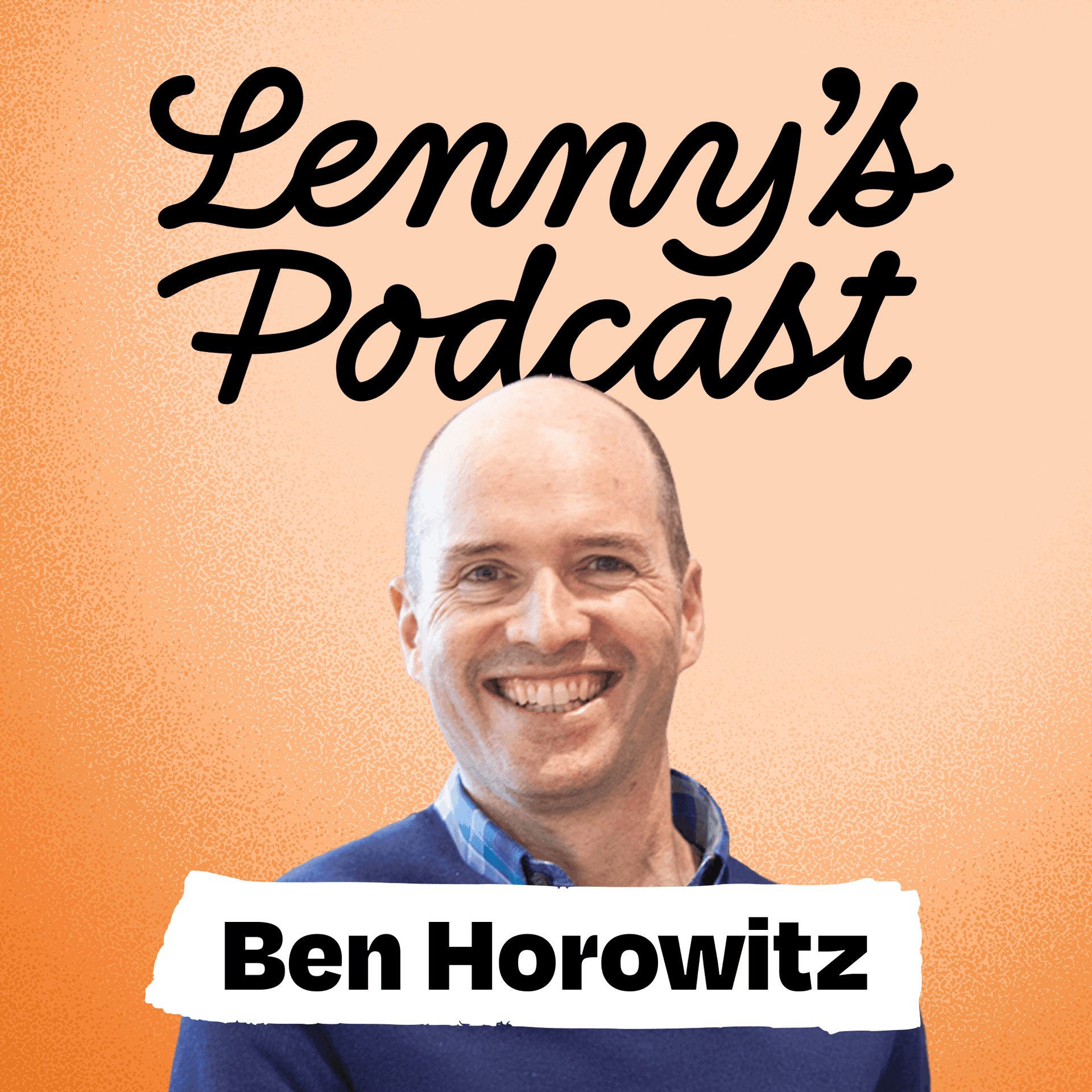
Episode Summary: $46B of Hard Truths from Ben Horowitz
Podcast Details Title: Lenny's Podcast: Product | Growth | Career Description: Interviews with world-class product leaders and growth experts to uncover concrete, actionable, and tactical advice. Episode: $46B of hard truths from Ben Horowitz: Why founders fail and why you need to run toward fear (a16z co-founder)
Guest
Ben Horowitz, co-founder of Andreessen Horowitz (a16z), a leading venture capital firm.
Key Themes & Takeaways
- Founder Mode: Half Right, Half Wrong
- Ben discusses the duality of "founder mode," recognizing that while it can drive innovation, it can also lead to dangerous decisions if not balanced with strong leadership.
- The Importance of Decision-Making
- Hesitation is Harmful: Ben emphasizes that hesitation often results in worse outcomes. Founders need to make tough decisions quickly, as indecision can paralyze teams.
- Run Toward Fear: Leaders must face challenges head-on rather than avoiding difficult conversations or decisions.
- Lessons from Product Management
- Ben's famous essay "Good Product Manager/Bad Product Manager" discusses the leadership aspect of product management, arguing that successful PMs must act as leaders without direct authority.
- Founders and Company Leadership
- Not every founder makes an effective CEO. Ben underscores the psychological aspects of leadership and how confidence plays a critical role in decision-making.
- He also outlines when it makes sense to replace a founder as CEO, often tied to a loss of confidence leading to hesitation.
- AI Opportunities
- Ben identifies the current landscape of AI startups, suggesting that while there is a lot of hype, there are still significant opportunities for innovation, especially in foundational models and applications.
- Cultural Insights: The Paid in Full Foundation
- Ben talks about his nonprofit, the Paid in Full Foundation, which awards pensions to pioneering hip-hop artists. It highlights the importance of recognizing talent and contributions within cultural contexts.
- Life Lessons
- Emphasizes the importance of resilience and the expectation that life is inherently unfair. Founders should focus on what they can control rather than seeking fairness.
Key Moments in the Episode
- Introduction to Ben Horowitz (00:00)
- Leadership lessons from Shaka Senghor (04:09)
- Running Toward Fear (10:15)
- Who Shouldn't Start a Company (19:35)
- The Importance of Managerial Leverage (24:54)
- Understanding AI opportunities (01:02:43)
- The impact of the Paid in Full Foundation (01:18:53)
Recommended Resources
- Books Mentioned:
- "The Hard Thing About Hard Things" by Ben Horowitz
- "What You Do is Who You Are" by Ben Horowitz
- "The Weirdest People in the World" by Joseph Henrich
- "Writing My Wrongs" by Shaka Senghor
Conclusion Ben Horowitz offers a wealth of insight into the challenges of leadership and the mindset needed to navigate the startup world. His experiences highlight the importance of decisive action, the complexities of product management, and the cultural responsibilities that come with success in business.
Written by AI. May contain mistakes. Listen to the episode to check what was said.
Transcript
Automatic transcript. May contain errors.0:00The worst thing that you do as a leader is you hesitate on the next decision. The thing that causes you to hesitate is both decisions are hard. Probably one of my bigger ones on that was we went public with two million dollars in failing 12 months revenue at 18 months old. That's obviously a bad idea. But the truth of it was the alternative was going bankrupt and that's a worse side. It's very difficult and painful to be a CEO, to be a founder. In spite of that, so many people want to start companies. The psychological muscle you have to build be a great leader is to be able to click in the abyss and go, okay, that way is slightly better.
0:37We're going to go that way. If everybody agrees with the decision, then you didn't have any value because they would have done that without you. So the only value you ever add is when you make a decision that most people don't like. You are famous for writing one of the most popular pieces of literature for product managers. What I was trying to get out and good product manager, bad product manager was the job is fundamentally the leadership job and it's a tricky leadership job because nobody is actually reporting to you. There's always this kind of sense that the PM is not the mini -CO, how dare you call yourself that.
1:10I actually think that's exactly what the PM is. It doesn't matter if you write a good spack or you have a good interview or you do this or do that. What matters is that the product wins. Today, my guest is Ben Horowitz. Ben is the Z in A16Z. The world's largest venture capital firm with over 46 billion dollars in committed capital. Their investors in OpenAI, Curse or Andral, Databricks, Figma, basically every generational tech company. He's also the author of Two New York Times Bessling Books. The hard thing about hard things and what you do is who you are. Ben is endlessly fascinating. He started a rap group when he was younger.
1:46He started his career as a product manager and wrote the now famous good product manager bad product manager piece in our wide -ranging Conversation we cover a ton of ground and Ben shares stories and insights that he's never shared anywhere else a huge Thank you to Shaka saying horror all the goats see an Adam Newman for suggesting topics for this conversation If you enjoyed this podcast don't forget to subscribe and follow it in your favorite podcasting app or YouTube It helps tremendously and if you become an annual subscriber of my newsletter you get a year free of 15 incredible products, including a year -free of lovable, replete, bolt, and 8N linear, superhuman, de -script, whisperflow, gamma, perplexity, warp, granola, magic patterns, raycasts, chap here, D and mobbing.
2:31Check it out at Lenny's newsletter .com and click product pass. With that, I bring you Ben Horowitz. Today's episode is brought to you by DX, the developer intelligence platform, designed by leading researchers. to thrive in the AI era, organizations need to adapt quickly. But many organization leaders struggle to answer pressing questions like, which tools are working? How are they being used? What's actually driving value? DX provides the data and insights that leaders need to navigate the shift. With DX companies like Dropbox, Booking .com, Adian, and Intercom, get a deep understanding of how AI is providing value to their developers and what impact AI is having on engineering productivity.
3:12To learn more, visit DX's website at getdx .com slash Lenny. That's getdx .com slash Lenny. This episode is brought to you by Basecamp. Basecamp is the famously straightforward project management system from 37 signals. Most project management systems are either inadequate or frustratingly complex. But Basecamp is refreshingly clear. It's simple to get started, easy to organize, and Basecamp's visual tools help you see exactly what everyone is working on and how all work is progressing. Keep all your files and conversations about projects directly connected to the projects themselves so that you always know where stuff is and you're not constantly switching contexts.
3:54Running a business is hard. Managing your projects should be easy. I've been a longtime fan of what 37 signals has been up to and I'm really excited to be sharing this with you. Sign up for a free account at basecamp .com slash Lenny. Get somewhere with Basecamp.
4:12Ben, thank you so much for being here. Welcome to the podcast. All right, thank you, Lamy. So I'm to be here. I'm even more excited to have you here. I want to start with a question that a close friend of yours suggested I ask you, Shaka Singh Hor. So Shaka, he's like, we could do an hour just on how interesting this guy is and the thing he's got. He's very honest on Joe Rogan that he's very. So we're not going to do that just to give a glimpse. He was in prison for 19 years. He was in solitary for seven years. He led a huge prison gang. He wrote about him in your book as a great example or great culture in the prison gang that he ran.
4:50So interesting. But something that he learned from you that he told me I need to ask you about is about success and how to be successful and how it's not what people think. And he said that you learned this lesson from a pilot. What is that story? What is that lesson? It's kind of, I mean, I'd say it's a long life lesson, but the pilot story is, I actually, I asked people silly questions sometimes when they meet them and so I met this gentleman who was a pilot and it was right around the time JFK Jr. crashed his airplane and ultimately died. And I asked him, I was like, you know, like, what happened?
5:34Because there's always, you know, the story in the press, and I know this from them writing about me or anything, is it's always, what's the best narrative, not what's true? So you can never kind of actually find out what happened. You just find the like the best story version of what happened. And, you know, the story in the press was all about, oh, he wasn't trained on instruments. Instrumentation was flying at night, and I wanted to know was that right? And the poet said, well, he said really, it's like all playing crashes are a series of bad decisions. And none of the decisions by themselves is that bad, but when you add them up it's bad.
6:14So the first decision was he needed to get wherever he was going and that was the priority. And in flying, that can't ever be the priority. You know, because there are conditions, there are things that happen. And then the second one was, well, like his timing of when the sun would go down was wrong. So he thought he'd be flying in sunlight and he was him. And then once he got up there, it was, when the plane was going down, kind of making it go up, was a bad decision because he was upside down. And so I said, I can't remember all the things, but this guy had like 17 steps, 17 bad decisions in a row.
7:00And the big thing for me that I felt was really true is, it's one decision leads to another. And so if you can break psychologically, you can take the sunk cost, then that gets you out of a lot of bad pass. and then, you know, a little good decision may be difficult, but you have to believe it's going to lead to the next one. And, you know, a lot of success is about that. You know, it's a small thing, a small thing that's hard to do that doesn't seem to have a high impact. But it leads to the next small heart to do thing, and then eventually you get an outcome. So that was kind of the concept.
7:46So the lesson there is just success is just a bunch of little things. It's not this like who I got here in a big thing. Yeah, when somebody were to write a story about me, they would be like then bend at this really smart thing and blah, blah, blah, you know, happy ending. But you know, it really wasn't like that. And I'm thinking it's like that for you or anybody. And you know, I spent a lot of time with Shaka on, you know, how, because it's always your own psychology that, you know, gets you. One of the most insightful things he said to me is, excuse me, most people who are in solitary for seven years, that's it, you're insane, you're never coming back from that.
8:24It's just an impossible thing. But if you study his story, he actually really was massively self -improve coming out of solitary, which is, you know, like, and he wouldn't recommend that for anybody just to be clear, it wasn't solitary. But what it was, you know, was he changed in solitary, he was able to change a big set of beliefs that he had about himself that kind of got him out of that. And the thing that his conclusion from it, which I think I was really interested in, he's like, like, I was in prison for 19 years, I was in solitary for seven, I come out, I can't run an apartment, I can't vote, I can't get a gun, I can't do like like no rights.
9:03None of that was anything compared to what I did to myself. And I think that's very true for CEOs in general. And people in general is that like all the things that you perceive that are happening to you that are bad, you know, be it like the systems against you or somebody undercut you or racism or sexism or this or that or the other is very small compared to like it means a lot if you believe it. You know, if you believe what people say about you, if you believe what they did to you, then that destroys you. But if you go like that, that's not me. You can overcome almost anything. And that, you know, he's got a new book out on that anyway.
9:44That thing is very good because that's the, you know, I say more than anything, that's a key to success. Something you, like if you look at all the writing you've done, it's essentially about the struggle and pain and suffering of being a CEO. You're hard, you know, you're first of That's what's the hard thing about hard things. There's a lot of talk these days about just how important struggle is and how valuable it is to go through struggle. Jensen's big on this. He talks a lot about just you have to go through pain and suffering to be a great leader. Yeah, but you don't really have a choice.
10:13Like that's sure. There's something that I saw you share that I love, which is running towards fear versus running away from fear, something that you tell all your leaders to work on. Easy to hear, hard to do. We don't like doing things that are scary running towards things that are scary. Why is this so important? Why is this something people need to learn to do? Well, so the biggest mistake that you made there, the worst thing that you do as a leader, like there's things in your control and there's things like how do your control. And hesitation is, you know, that's generally the most destructive.
10:47And I go through all the ways that it's destructive, but it's extremely bad. And the thing that causes you to hesitate is, you know, both decisions are horrible, right? Like there is, like, it's not business school where like you're going to a case study. And if you don't know, then the company would have gone this way. But if you had done that, it's a great success. Like that's not actually, you know, what happens to you SCO, what happens to you SCO, it's like, okay, if we re -arc, you know, like this product is the architecture is not actually get us where we need to go. I kind of know that but if we re -architect it like we're gonna probably miss all the features, missed a quarter, have trouble raising money, you know, shatter it said so like that's really bad and then not re -architecting is really bad and so I'm just gonna try like an avoid this subject because I don't even want to deal with either of those.
11:49And that's the worst thing because if we are, you know, if action is the better choice and, you know, that's good. And then if you don't make an explicit decision, then the whole company is going to get nervous because they know that the architecture is whack and you got to fix it. And maybe like probably one of my bigger ones on that was, you know, we went public with $2 million in trailing 12 months revenue at 18 months old, right? Like, and that's obviously a bad idea. I mean, people like, there's no question that wasn't a bad idea. But the truth of it was the alternative because of where the private markets were was going bankrupt.
12:32And that's a worse idea. And if you look at that time, you know, March in 2001, when we went public, you just It's like at the number of CEOs that hesitated on that and didn't do it and went bankrupt, it's a lot. And so that's, you know, that getting good at making a decision that everybody's going to go, wow, that was insane. And like you went, like the Wall Street Journal wrote a whole like long story about how stupid I was and then business week wrote a story called the IPO from Hell. That was the name of the... like our idea, the idea from hell, which isn't like, was accurate in a sense. But so like, that's really bad.
13:15But it wasn't as bad, and this is why it's so scary to make that decision, because you know that's gonna happen. I knew those stories would get written. Like there was no question. And yeah, and that's the kind of muscle. So like if you think about like the psychological muscle, you have to build to be a great leader, is to be able to like look in the abyss and go, okay, we're going, that way is slightly better. We're gonna go that way. And it's very hard to do. All right, I know it's a thing people struggle. And it began something, should I fire the head of sales? So I don't wanna have that conversation.
13:52Like, and then I'll have to replace them. And then like there's gonna be a bad PR story. And then, and, and, and, and, and, and you can kind of quickly calculate all the bad stuff that's gonna happen if you do it. But if you don't do it, that's probably gonna be much worse. And, you know, kind of, that's why you have to run towards a pain and darkness. What is the advice you share with founders? Because as you said, it's very hard to do this. Just like, what helps them actually get better at this is it just been being by their side telling them this is how it is? Is there anything else you can...
14:22No, no, no, no, no, no. Like, I would say this is one where, you know, I can't really coach you to be good at this. It's like I can point it out so that you recognize that you were slower, whatever. But it's kind of like, I always like it when I talk to them. It's like football. You could have a really fast, great athlete, but if they don't trust their eyes, if they don't run to the ball when they see it, I think, maybe that was a fake, then they're that step slower and then they're not, they'll never be as good and CEOs or like that. If you don't trust what you see and you don't run at it, then you're just not going to be good.
15:05And it's hard to get CEOs not to hesitate. But one thing that does help is they look at it and I look at it and I kind of confirm that that is as it appears. And sometimes they're afraid of the conversation. So that one I can help with. So, you know, a CEO might be afraid, like, they want to do something, but they don't know how to say it. They don't know how to have the conversation with the employee, so I can walk them through that. You know, I had an entrance where the CEO said, hey, you know, like, I need your help then. My CTO, he's an asshole. And I was like, okay, you know, like, great, I said, but you're not going to fire him.
15:52Because I know it's a good CTO. Or are you asking me, should you fire him? He said, no, no, I don't want to fire him. And I was like, so you're asking me what to do because you don't know how to have that conversation with him about being an asshole without him quitting. Like, that's what you're saying. And he goes, yeah, that's the problem. And so I go, like, why is he an asshole? And he says, well, he's an asshole because, you know, the other day, he made like a very junior young woman in our finance organization cry. And I was like, oh, that, that's kind of, yeah, I got you. I said, like, this is what I would say to him.
16:26I'd say I just should have down and I would say, like you're a really good director of engineering because you do a great job of managing with team, get the products out, all that. But like you're not really a CTO because to be a CTO, you have to be effective with other parts of the organization. You can't just be like effective only with engineering. And so, you know, and making like somebody cry, like she's never gonna do anything you want. You lost all effectiveness with all the findings by doing that. And so if you want to get it that I'll help you all work with you on it, but if you don't I'm going to have to hire a CTO at some point because it's like obvious so I need that.
17:03And you know and then he's like, oh okay I can have that conversation. You know I can't have the conversation that hey you're an asshole because I want them to quit but I can have the conversation that's more specific and a lot of kind of getting people not to hesitate is just getting them over that. And so, so often, like, and I would say, you know, really in a CEO's career, a lot of it is just not knowing how to have the conversation. There's also, I imagine an element of, I just want to be liked, I don't want people to hate me. You have this great line that you want to be liked and respected in the long run, not the short run.
17:37Yeah, that's tricky because it's so, by the way, I have to deal with this in the firm too. and people wouldn't be entrepreneurs friendly. I'm like, no, it's not trendily, respectful, but you gotta be able to tell them the truth in a way that you probably don't tell most of your friends the truth. Because your friend, look anthropologically, we want people to like us, like it's just so they don't throw us to the lion or whatever, like that's just kind of a thing. So you say, tell people what they want to hear. But in dealing at a company level and a context that you're on the board of somebody's company, you've got to be able to tell them what they don't want to hear.
18:19That's the most important thing you're going to say. And yes, they're not going to like it when you say it. There's no question. But over time, like it could save the company. And all the most important things I've said are things that I've said to CEOs that they did not want to hear.
18:42And then, making, if everybody agrees with the decision, then you didn't have any value because they would have done that without you. So the only value you ever add is when you make a decision that most people don't like. And that's where leadership comes in because you know that's where it's got to get to. And that's the thing that takes practice. I think when Jensen talks about like you got to get to near death, to get yourself to do that, that's true. It's hard to build that if everything's going great. And I would say you like the CEOs who kind of had an easy run of it sure they're like, let's say they just watch a product that's an instant hit.
19:25It's very hard for them to develop that muscle compared to the ones that build a company like Jensen where he like, you know, got it it out for multiple decades before they have big success. Clearly it's very difficult and painful to be a CEO, to be a founder. In spite of that, so many people want to start companies, so many people like Dream of having their own company. Who is not right to start a company? What advice do you share with folks that are thinking about starting a company that may not understand just what they're about to get into? Yeah, so it's funny. So there's a couple of things.
20:00John Reed, who is the CEO of City Group when I started as CEO said to me something I never forget. He said, then the only reason to start a company is because you have an irrational desire to do so, because it's not worth the money. And I was like, wow, he doesn't even quantify how much money. And this guy's running cities, so he's a very numbers banking guy. And he didn't quantify it. And I remember when we sold Loud Cloud for $1 .6 billion, I remember thinking, wow, that wasn't worth the money. So I think if you're doing it for the money, that's a very bad reason. It'll be extremely difficult to get to an outcome.
20:46You really have to have an irrational desire to do something larger than yourself to kind of improve the world in some way that somehow, like that is your purpose. And if you don't feel that, then you'll never get through it. It just is too many, too many bad things happening along the way. So now how do you think of founders that are kind of looking around for ideas that kind of brainstorm, that look for market opportunities versus come from, I have a mission, I got to do this thing in the world. If you have a, you know, my business partner Mark Royce talks about that. So like, if you have a product that forces you to build a company, that is a great case of it, right?
21:27Like, okay, you built something and the world wants it and you need a company to deliver it. That's going to, you know, you already have the right product. And so that's very helpful. I think there are cases of people, I think you'll have Packard was kind of built that way that they're alive, okay? Like we got to build technology, you know, is that abstract? We got built in technology for the world, you know? And then they started with, well, like, what do you need? You know, they got at the next bench thing, what is the engineer sitting next to me need? The next engineer on the bench, so kind of how they define the first set of products.
22:02So it can work the other way, but like I think the thing that is in common is, like it's just a very abstract idea that like you have to build something that's going to be important that like is going to, you know, people are going to like working there, people are going going to benefit from the products. You have to have some weird, patch up other than, oh, this is going to be successful. I remember I called out of my ear. I think that's how I think your way better off taking sucks off for a meta and just, well, doing that, that's a way better deal. On these lines, something else, Shaka suggested ask you about it.
22:40Apparently there's a story where the CEO of Databricks asked you for $200 ,000 in the early days. And you said no. And it's not because you didn't want invest and is more about helping them think bigger. How did it happen there? So there were six of them, there are six HD students. And while in Jan Stoika, who is their professor, in Jan, it was a super genius. But when I met with them, they were like, we need to raise $200 ,000. dollars. And I knew, you know, like I know at the time that what they had was this thing called Spark. And they had, you know, the competitor was something called Hadoop.
23:28And Hadoop, you know, had very well -funded companies already running towards it. And Spark was open source. So like the clock was kicking. And, you know, and I think they didn't quite know know what they had. And then there's also a thing, although I wouldn't say Jan has his mentality, but professors in general, it's a pretty big win if you start a company and you make $50 million like you're a hero on campus, that's a pretty cool thing to have done. And so I'm always a little nervous about a company that comes out of academia thinking too small anyway. And so I said like I'm not gonna write you a check for $2 ,000.
24:13I already checked for $10 million. Because like this company, you need to build a company. You need to really go for it if you're gonna do this or the rice like you guys should stay in school. And they were all graduating right then. So that was kind of that. And Ali, Ali actually was VP of engineering at the time. and it was a while before I made him C .E .O. and that was very good luck on my part because I had no idea that they had a guy that good inside the company who could be come C .E .O. When I invested, that was just, you know, that got smiled on me and gave me that one. So speaking of Ali, I actually asked him what to ask you about and he immediately shared this story.
25:00I don't know if you remember this in your first one one -on -one with him after you made a CEO. He was struggling with a bunch of low performers because he was coming in to lead the company and he was trying to turn things around, trying to coach them, trying to level them up. And your advice to him was, at quote, you don't make people great. You find people that make you great, that make the company great that you learned from, not the other way around. And there's something that he called managerial leverage. What is that all about with the lesson there? Oh yeah, so like, understand here just to come see you.
25:30So I was teaching him, he had been VP of engineering and she was different and I'll get into why and what I mean by leverage. So I actually wrote a post about this, the little Wang quote where I think the quote was, the truth is hard to swallow and hard to say too, but I graduated from that bullshit. Now I hate school. And I was always my feeling about this particular idea was, look if you're VP of engineering, You can develop people. You can teach them to be better engineers. You can teach them to be better engineering managers. That's very doable. But if you're CEO, what do you know about being CFO?
Read the full transcript
26:13What do you know about being VP of HR? What do you know about any of these jobs? You know, a tip may be VP of engineering, right? And so the idea that you're going to take somebody who isn't world class at marketing and make them world class, and you don't know anything about marketing is a dumb idea. It just doesn't work. And then the company can't afford for you to be spending time on that because they need you to make very high -quality fast decisions and you do set the direction for the company and they need you to have a world -class team. And so like that, it's a very hard lesson if you've been VP of engineering because if you're a good VP of engineering, you do develop your people.
26:55But as a CEO, it's not like you don't do any of it, but it's very, very small compared to it. So I like to make things just very stark. So you get what I'm saying. I don't like to hedge it. And then managerial leverage means just, it is very simple. It's okay if I had the ideas about what your department should do next, if I am kind of pushing you to kind of move your organization forward, then that's no leverage. What's leverage is if you're telling me what you should do and how you can push the company forward, that's leverage, then I'm getting kind of more than I'd have if you weren't there.
27:36Otherwise I could just man have fucking to. And that's the point when you feel like you're not getting leverage when you gotta go say, hey, why aren't we doing this, why aren't we doing that? That's when you gotta make a change. And by the way, he's unbelievable at that. As good as anybody. I've seen as a guy who's not Calla says to see if he really cares about the people who work for him. He really wants him to have great careers and all that, but he does not hesitate. Like if he's losing leverage, he'll make a move. Kind of going back to the origin story of A16Z, something you guys were really big on was helping founders stay.
28:12C .O.'s become great C .O.'s, not replace them with professional C .O.'s. I want to flip this question on you. When does it actually make sense to replace SEO? When are people not going to make great SEOs? It really, there's a very consistent thing about how it comes, which is, you know, then somebody doesn't make it. And it kind of starts with confidence, is where we put it. So, when, like, if you invent a product, you kind of recruit a team, so for all of You'll send your CEO, you ever run a big organization. You don't know how to do that. Most founders are like that. And so if you don't know what you're doing, you're going to make mistakes.
28:56And they all make a lot of mistakes. And then when you make those mistakes, they're very expensive. Like they could cost you to do it down around or they could cost you to lose a company or they could cost you a customer or you know you scrub the product. like they're very high impact and not just on you, but everybody who you talked into joining you. And so that kind of motion can really cause you to lose confidence. And then if you lose confidence, what happens is you hesitate on the next decision. And as we talked about, like hesitation is very dangerous because one, like it, it locks up the company, but even worse, what happens is if you have senior people working for you, they get very nervous and they feel like they need to jump into that void and make the decision for you.
29:48And that's when it gets political, like very political, because people are like vying for power inside your little screwed up company. And so now you've got a political dysfunctional organization. And that, you know, like that's that's generally where like, okay, the founder probably can't run this thing anymore. That's how it happens. So most of what we do as a firm is to try to help people with that confidence problem. And there's a whole series of ideas that we have around that. But that's, you kind of have to somehow climb the confidence and the confidence you've purve together. It's very hard to do.
30:31And particularly if you're an engineer and you're used to getting things right, or if you've been a straight -age student or something like that, it's very disconcerting. I'm just better at having CEOs who are like C -minus students. Why is that? Yeah, the little physicist is like, well, it's just good to be used to filling. So I think I wrote this, but the median on the CEO kind of test is like 18. It's not like 90. And so you got to be comfortable getting a lot of D -minuses because the D -minus is fine. You know, as long as you don't get the F, as long as you'll run out of cash, as long as you don't lose all then, you know, okay, like you've got through it, keep going, you know, and match.
31:15That's a lot of the thing that we try to do, CEOs. Yeah, it comes back to your core, I don't know, message through your first book is just how much you will fail and how much you will struggle and how much paid you'll go through a CEO. Yeah, and you know, a lot of why I wrote that book was just say, nanalyze it. I think what happens is, particularly when I wrote it, and I think it's come back and been true now, it's like the way the narrative gets written on all these successes is like, oh, they came up with a genius idea and then they built this company and they heard all these smart people and it was all great.
31:53But that's not all how it happens. And I've spent enough time with everybody from like Mark Zuckerberg to Sam Alderman and so forth that they all go through that same thing that you, who has your start -to -line company go through, you screw a lot of things up and they have massive consequences. But you have to kind of maintain your confidence. Actually, I was at a storytelling event last night and I was chatting with someone that right into there and told her I was chatting with you today and she said how meaningful your first book was to her as a founder exactly as you said normalizing that it's very hard and painful and this is just the way it is.
32:35Yeah and the feeling like I mean you know like if you think about organizational design or the you know goals and objectives or okay or whatever management technique like you need like a you know a basic like eighth grade education to like do any of that So it's not that complicated. The difficult part is the feeling that you have when you have to do it. It's very, like the hard thing of matter, a re -origate, you're redistributing power. So you're gonna have people really frickin' mad at you. Cause somebody's losing power if you do it correctly. And that person may be like a really good employee.
33:10Dealing with that is the hard thing. Like knowing how the organization should work to make communication better, it's not their complex. Yeah, I think about, I was at Airbnb for a long time and just the guy in Brian who, I don't know even if he had a job before Airbnb. Oh, yeah, I spent a lot of time with Brian and he, after COVID, he had all kind of clicked for him. And then he did that, he had a good talk on founder, and so forth. But the reason that was so articulate is because he had screwed every one of those things up. But he hired LT and all this stuff. And he's very senior people. And he wanted to defer to them, but you can't defer as a CEO.
33:53Because you know what Airbnb should be doing. He may know what fucking finance should do, but you know what Airbnb should do and this kind of thing. And then it gets really wild when you can't defer decisions as a CEO. and you gotta understand what people are saying and go, now we're gonna do this. And this again comes back to the point if you have to go through the struggle and pain and failure to learn those lessons. Yeah, I know. I mean, they're really hard to learn without kind of doing and without, like without paying the consequence. And I, you know, like, you know, like I make mistakes.
34:29I, I, I have a conversation with Ali, they had a gay and I was like, he's like, how's it going, Ben? And I was like, well, you know, like I'm finally dealing with something that I had put off for a very long time. And he said, why did you put it off? I said, good things were going too good. I didn't have to deal with it. And he's like, yeah. He said, I know that. Like I'd say, Ali is one of the, if not the kind of best private company CEO out there. And he's making a mistake and I'm making a mistake. So it's just tough. You said that one of the, maybe the main reason founders failed to see us is they lose confidence.
35:05and you had some ideas that you guys have to help founders work through that, or their couple you can share how you help. Yeah, yeah, so we do a lot of things on that. So the kind of design of the firm is about confidence. So the first thing is, well, what would give you, well, like if you can get stuff done, so if it's wonderful, I could give you a network that is good as Bob Iger's network. Day one, like the day you step into the job. And so, you know, we have 600 people at the firm. And why is that? Well, most of them are building that network for you so you can call any CEO or anybody in Washington or you know kind of any executive or that kind of thing and give them on the phone and they'll talk to you and you can kind of deal with that thing.
35:51And then that just makes you feel like a CEO. And then, you know, we have a lot of people in the firm like myself who you can talk to, unlike a CEO to CEO basis, as opposed to an investor to CEO, and just kind of feel that. Early in the firm days we used to do this thing, I think I'm gonna bring back in some form this thing called the CEO barbecue. And it was like, you know, a lot of people have these events where they bring in speakers and this and that and the other. And I always felt like those were one, they were too many days, and sometimes, you know, what they said wasn't really applicable and that kind of thing.
36:32And so, I said, why do we just have a barbecue? And like, I would barbecue. We get everybody in my backyard. I was 500 people at the peak, which is why I had the kind of stuff. I couldn't get much food after that. And then, you know, we'd have Larry Page in Mert Zuckerberg in Kanye West. And so you're a CEO in there, you're like, wow, like, I must be important. I'm here with all these guys. And we're just hanging out having a drink eating barbecue. And so then when I go back to my company, I feel like I am somebody and like, okay, I might not be like perfect at all this, but I am really a CEO.
37:13I was at the CEO of Barbequix, crying out loud and that couldn't do anything. And so, you know, that's, but it's all, the whole idea was always like, okay, do you feel like you can do it? Because that's, you know, that's half the battle. And look, having been in, and you know, every CEO has been in a position where they feel like, well, maybe I shouldn't be the one running this thing. Maybe it's just too big for me. And that's a bad, you don't want to go there. And because as we said, founders can't get to the next product. And that's something that, you know, almost no professional CEO is able to do, like there have been rare cases, but very rare.
37:57So clearly you've worked with a lot of companies, a lot of founders. Let me kind of zoom out a little bit and ask you this question. And what's the most counterintuitive lesson you've learned about building companies that goes against common startup wisdom? Well, the common startup wisdom keeps changing. Like one of the early ones that was wrong and kind of brain articulated it. And then now I think a little bit of what people have gone to is also wrong. So the first idea that was wrong was like, okay, build a team of senior executives. You know, what cities you get product market, it is as fast as possible and they can scale the thing.
38:36And I think that you got to build that team slowly and deliberately kind of pace to your ability to integrate and then manage them. Because if you bring in a bunch of senior people and you don't know really how they match to your company or how that function works or so forth, then you're going to start deferring. And once you start deferring, it's going to get out of control very fast. Because they're going to build empires, they're going to get political, they're going to do all that kind of thing. So that was bad advice. You kind of have to do it in a measured way. I think that founder mode, I think a lot of people have taken to never hire anybody with experience.
39:17And that's also bad advice in that. Look, somebody who knows how to do something can really accelerate your thing. show very early on. One of the founders, Greg Chyander, Ursula at Databricks was running sales. And I'm like, Ollie, like, you're going to have to hire somebody who knows sales because Ursula is PhD in computer science. Like, I like that. That's probably not where you're going to have to start if you're going to catch these guys before they take Spark and use it against to you. And I sat down with Arsalan and explained why I said, like, you know, a lot of what sales, there's a lot of knowledge in how to build a worldwide sales repensage.
40:03And you need knowledge of customers, territories, territory splitting, rip profiles. Like, there's just like a litany of stuff that you really can only learn by doing trial and error. And you don't know any. And so like you're phenomenal, like let's get you, you know, and he's still, he's a very senior executive in the company now, but we need somebody who knows that. And the idea that there are companies that go, okay, we're just not going to hire that because we're in gender mode. That's also a mistake. So then there's a lot of, it's more subtle than you think, and it's more complex than you think.
40:41And so you kind of have to get all the way to the truth. And these little snippets of advice that BC's give, because they watch some fucking podcast, are all fucking stupid. Like, it's just, there's a lot of depth that these things. You have to know the answer to the next question, the next question, and the next question. And it does drag, be crazy. Like, one of the other things that happened along these lines, just to show you how little you know as an investor about what it means to be CEO, one of the we were at a board dinner, one of the CEOs says to me, he goes, or one of my, we in one of our CEOs says, hey, you know, Ben, like that thing you told me a while ago about don't be CEO at home, he said, like I, I, I, I was doing that and I stopped and it really helped me.
41:27And then the other kind of V .C. said, yeah, you know, you got to unplug some time. And I said, I was like, what the fuck are you talking about? He's CEO, he's not I'm plegging, like he's getting shit all the fucking time. Like he's got to deal with that. Like I was the one who said, I was like, you can't go home and boss your family around. That's what I meant. You know, like so which, you hear something from like somebody who, but if you happen to done it, you don't even know what that means. And so then you kind of then trying to transfer the advice to the next guy, I was like, well, so anyway.
41:59So, but it's, you know, like he was very innocent. I don't want to kind of speak bad of him, but like, that's how it sounds, right? But that's not what it is. That's an amazing story. Well, so the advice partly here is just don't believe everything you see on Twitter and little sound bites of advice. Yeah, I mean, like, and I think actual CEOs know it and that's kind of how people in my profession gonna get a bad rep because like giving advice, well, that's not something that you know but something that you heard is very dangerous, I think. So speaking of advice that you've shared that might be at a date now.
42:35You are famous for writing one of the most popular pieces of literature for product managers. There's a lot of PMs that listen to this podcast called Good Product Manager, Bad Product Manager. And if you actually go to that post today, at the top you say, this document was written 15 years ago and it's probably not relevant today for PMs. I present this merely as an example of a full training document. Still, people linked to it, I actually just linked to it as it is just like this is something every PM needs to read. What is it that you think people should maybe not take away from it? And what do you think people still should take away from that piece?
43:07Yeah, so the reason I wrote it when I wrote it was that I had a lot of product management. And one thing about product management is it's a job that's completely different at every company. And there is no training for it. So like everybody kind of figures it out as they go. So, and depending on what's being emphasized, like they'll get wrapped around the axle on, you know, like if it's under price company, okay, well, like, you know, pitching to customers early, I need to be like really good with the press or I need to be really good at writing, you know, the product requirements document or that kind of thing.
43:47And none of those are all like these tasks, but none of those were the job. And what I was trying to get out and good product manager, bad product manager was the job is fundamentally the leadership job. And it's a tricky leadership job because nobody is actually reporting to you. So, it's like this influence, how do I get people to do what I want, even though I'm not paying them, I can't fire them, I can't promote them, and so forth. And which is kind of the essence of real leadership, because if you start to rely on promotion and firing and so forth for authority, then you're never going to be good at being CEO or anything.
44:37So I wanted them to get into the mindset of, okay, your actual job is to get a product into market that customers love that's better than anything that anybody else in the world puts in market. Like that's your job. And so to accomplish that job, you need engineering to understand you with clarity. you need to understand engineering with clarity, you need to have a really good view of the market and the competitors and the technology and so forth. And you need to kind of put that all together and deliver the thing. And all the other things are tasks that may or may or may not need to do. I don't know if you need to do it, but like the thing is, you know, you have to be the leader.
45:28You've got to get the thing done. And so what I think it's still good on is that the mindset, be the leader. I think the details of any kind of thing that was kind of tasks specific was like really for my group at Netscape in 1996, whenever I had a hell of a running. So it was a kind of document I read out of frustration, But I am glad that the people so like it. And I think leadership in general is under under valued, underestimated. It's the most powerful thing. And most of the great companies, Jensen is a great example. Like what a phenomenal leader he is. Not just in video, but of the whole industry.
46:25And he doesn't have authority over the industry. but like he drives it for. And that's why they, good product management, your bad product management is so important because that thing, if you learn how to do it, that's the thing. I didn't realize he wrote that initially as just an internal document. And then he made a call. And that's the other, it was kind of before blogging took off. So it's just an internal thing. And I probably should've later. It was, I was just getting so mad, you know, and by the way, by product management team, at the time was like very good, very talented people. They just were not getting that concept.
47:03So like David Widen set Coastal Ventures, Ragu Ragu Ram, who went on to be COVM, where I mean like the team was like that team. But they were driving me crazy. And so I was like, I can't yell at people anymore. I have to like explain to myself. And so it's a good thing. If you find yourself yelling at people, like you probably haven't explained what you want. It was the other big take away from that. Do you ever think that piece would be so long lasting and so I don't know how to do it? No, I didn't even know. I thought it was kind of like aggressive when I wrote it. Like you could tell I was mad because I called it good product manager, bad product manager.
47:43It's like bad dog. You know, bad product, bad product manager. That was kind of the emotion I had. So, yeah, you know, it's kind of shocking. Yeah, some of the things that you write. I would say that that's kind of creative and you probably know this. Like the ideas that you have, the things that you write in five minutes end up being much better than things you write in five weeks, you know, and I find in talking to, you know, musicians or writers or anybody has that same experience. Like the thing that you've already synthesized so much that you just have to write it out is that's the best stuff.
48:21There's something that you mentioned there in your answer about the PM being the leader. There's always this kind of sense that the PM is not the mini -CO, how dare you call yourself that. I actually think that's exactly what the PM is. They're basically the closest to the CO. Their kind of job is to think like the CO within the team. Yeah, people get mad because everybody, this is the whole challenge of management in general. People get jealous sort of a stupid shit. But like from the perspective of the PM, like it doesn't matter if you write a good spec or you have a good interview or you do this or do that.
48:58Like what matters is at the product range and you have to get all the way to there and kind of work backwards for Nat and you can't do that with that leadership because it is about okay, we want to build that. And you're not necessarily, day, the question comes up with every idea or this or that. I mean, you're just the keeper of the vision. You know, and that's true for CEOs too. Like, you know, not every idea on a company coming from the CEO, like that's, I think it's a misunderstanding what a CEO is, is why people don't like that. They don't know what a CEO is, but a CEO isn't the one who has every idea, it gives every order, it does have a, that's not the way it works.
49:40The way it works is there's somebody who's got a consolidate, you know, get all the good ideas, prioritize them, decide which good ideas we're going to do, and then get everybody on the same page of a very high fit, early understanding of what that is. And you know, so that it is a CEO kind of function. Now it doesn't mean like I'm better than you, it just means like that's what I'm doing. This episode is brought to you by Miro. Every day new headlines are scaring us about all the ways that AI is coming for jobs, creating a lot of anxiety and fear. But a recent survey for Miro tells a different story.
50:1676 % of people believe that AI can benefit their role. But over 50 % of people struggle to know when to use it. Enter Miro's innovation workspace, an intelligent platform that brings people and AI together in a shared space to get great work done. Miro has been empowering teams to transform bold ideas into the next big thing for over a decade. Today, there is a forefront of bringing products to market even faster by unleashing the combined power of AI and human potential. Just of this podcast often share mirror templates, I use it all the time to brainstorm ideas with my team. Teams especially can work with Miro AI to turn on structured data, like sticky notes or screenshots into usable diagrams, product briefs, data tables, and prototypes in minutes.
51:00You don't have to be an AI master where to toggle yet another tool. The work you're already doing in Miro's Canvas is the prompt. Help your teams get great work done with Miro. Check it out at miro .com slash Lenny. That's miro .com slash Lenny. Let's talk about AI. I'm very proud of us. It's been almost an hour. We haven't even mentioned AI. I think that's a record. Okay, so I asked Adam Newman. We work founder, now flow founder, someone you work closely with now, what to ask you about. He said he had some really interesting insights about how AI is impacting hiring. You know, Adam is probably the single most controversial investment that we ever made.
51:41Like we got called everything from stupid to sexist to racist to this and that for like literally just funding that. And I think it's going to end up being one of the best investments we ever made. He's doing a phenomenal job there. But there's an important principle in that which kind of we do as a firm which I think is not widely done, but I would love it if people copied it, which is something I learned, you know, us, we've all made bad decisions. Most of them, they don't make a mini series about it. Right? And so, like to judge them on that, you want to judge people on what they do well, not what they screw to.
52:44And, you know, because that's where you see the talent. If you look at what Adam did well, it's truly a attacker. You know, like we work, everybody knows And so we work it. It's a name, a more important commercial real estate brand than we work, like you can't. And so I went in accomplishment. And then, yeah, and there were so many things that went into that and, yeah, so many things he did right. And then if you kind of look at, really unravel the things that went wrong, most of it was like a combination of inexperience and nobody around him that would tell him the truth. And so like that. And maybe he wasn't good at listening to the truth either at the time.
53:29But to throw away a guy on that, which is by the way the world was so mad at us for not throwing him away, for believing in him, it's just that it's a big mistake. And I credit Mark, his Mark is one who called him up originally and just said, hey Adam, what are you doing? because like, you know, we watched what you did. We worked and we thought it was pretty impressive. And so I think that, you know, that's probably the biggest secret there. It's not really about AI, but I think that, like looking, you know, Judge Al Davis once said, you know, coach players and what they can do. And I think that's very true.
54:12You know, judge people and what they can do, you know, coach people on what they can do. to help them take their strengths and use them as opposed to over focus on their weaknesses and just hand -raining about the one fucking thing they don't know how to do. Because look, everybody's uneven. What you're describing, essentially, this is the job of an investor, is to find an underappreciated asset and invest before something people don't see. Yeah, and I mean, I think that venture capital is really about investing in people, right? like, you know, that you have ideas as an investor, but like what you really are ultimately betting on as the entrepreneur and the entrepreneur's idea, because the initial ideas and where they end up usually, it changes a lot with everybody reinvesting.
55:05So, you know, you kind of had to make the judgment on the person and, you know, how would you do that is really, really important. And one of the things we emphasize inside the frame is, look, we're ingesting in strength, not lack of weakness. Like I want to know, like, how good are they world class? Do they have a world class strength? And, you know, can that be to anybody? And like, everybody's flawed. And so, like, let's help them deal with the flaws and, you know, surround them with people who can handle that and put the right person on the board who can talk to them. Like, I go to all Adam's board, You know, Mark's on the board.
55:44I go to all his board meetings because I'm the one who's good at killing a guy who's that confident when he's like, okay, that's not your best idea. That's a good world trip, me. But that's how you deal with that. You don't throw him away and go, okay, we don't want to be called names. We're not going to invest in Adam Newman after we've built rework. That's crazy. That's also why you guys invested in Klui, I imagine, similar. Yeah. Yeah, yeah, that's right. Like, if you look at what those guys did, that was like some high level market in genius too. Yeah. And that's really something plus the product is awesome.
56:23I'm gonna bring us back to AI. Something that a lot of people are talking about right now while we're recording this is this potential huge bubble we're in with AI, Sam Altman said we're in a big bubble, which is, you know, that's saying a lot. I'm curious just how you think. The problem is that what is it saying? So you got to, like, first of all, I should qualify this by saying, I'm an investor and Sam's a CEO. So CEOs have to have much more purpose when they talk. Investors just have to be entertained. So you've got to give Sam credit for like, what is it his interest to set it in? Like if it's a bubble, then the one thing you should invest in is him and not all these guys chasing after him.
57:08So I would say like that's very smart. And then the other thing that's smart about it is, there's nothing that you can say to the press that will make them love you more than saying all investors and entrepreneurs chasing this or 80. It's like they love them because the press are generally haters. And so it's just like red meat for the haters, which is also super clever. So I think whether even he believes that or not, that was a super smart thing to say. I'm so I'll just put it there. Whereas what I'm gonna say won't be as smart, but it will, I don't really have an extra grind here. I mean, I could have an extra grind and say, okay, like let's got all the other investors out.
57:52I'll say it's a massive bubble. But what I would say about that is, so the first thing, the one thing about bubbles is it. Anytime everybody thinks it's a bubble, it's not a bubble. Because in order for it to bubble, you need capitulation in that you need kind of everybody to believe it's not a bubble because then the price has really gone out of control. But as long as there's people who think it's a bubble, then it's hard for that to happen. And it's funny, I I had this debate in the economist, I think with Steve Blank in 2011 or 12 when everybody thought it was a tech bubble, if you can imagine that, which it absolutely was not.
58:42But because there were like 1400 articles saying that we were in a tech bubble, and I mean, you know, we're prices, we're then compared to where they are now. Now, but I knew, because everybody was saying it was a bubble, a wedding bubble, like I knew that. The prices were higher, but the reason the prices were higher was we're getting to global market. AI prices are higher than prior prices, but if you look at the revenue growth and numbers, we would not see anything like it. The products are working. Chatchy to Sam's product worked so amazing. We've never seen that before. Like not even Google, not anybody.
59:19very. And so like that's real. And you know, we have companies that you know, went from zero to 800 million in a year and that kind of thing. And so it's not a, I would say there's a basis for the price is going up. First of all, now, will the, the, I think the thing that's right about kind of what Sam is saying is, The landscape is early, really early. The technology is very immature, is amazingly as it works. There's a long way to go to improve it. So it's very possible when you have that technological change that the positions that these companies have achieved with their high revenue isn't sustainable.
1:00:07in that there'll be a competitive change that either kind of lowers prices or a knee number one emerges or that kind of thing. And so, yeah, that's possible, but I went and characterized that as being like a financial bubble in that. Like if you go back to the great .com bubble that everybody is always waiting for it to happen again, which I was CEO during. The thing that happened there was very different, which is it was the internet and every smart investor knew that the internet was a big deal. Like how could you not try to get a note that the internet was a big deal. But like if you go back to 1996, at Netscape we had 90 % browser shit and we had 50 million users.
1:00:57So there were 55 million people on the internet in total and half of those were on dial -up. So, and then to build a product like E -Vite, the greeting card company, had 300 engineers. That's how hard it was to build this stuff. So, the math didn't work. And the math didn't work on any of those ideas. But the investors kept pouring money in. And then eventually, you know, everybody went bankrupt because there was a revenue coming in. And when they figured that out, then nobody would invest in anything. thing, and of course, then everybody realized, well, the internet was actually real. And Paul Krugman did no one he's talking about, and like it was going to be a big thing.
1:01:41And then Facebook and Google and all these things emerged. But the thing that made it a bubble was like the unit economics, the businesses didn't work. Like these businesses are all working, and they're being priced appropriately for how they're grown. So that's not an effect. So the thing that you could say is they're not going to keep growing like that or like in so for it. And I'm not sure about that. Like the products, like I said, are working so much better than any technology product that we've ever built has worked. Like it's just mind -blower how good this stuff is. And so I don't know.
1:02:20If I had to bet, I would bet not a bubble. I think there will be some dislocation, I think, companies that... I think, always in venture capital, if you've got like a run like this, then the great company and the crap company both get funded. But that's just venture capital, that's sound of bubble. Four founders starting companies these days, when you look into the future of the AI industry say, in five, 10 years, how do you think things will play out slash? Where do you think the biggest opportunities are remaining? Where are you guys looking to invest most? In infrastructure, I think that, like there is obviously like a real estate power cooling play.
1:03:06I think that's a little outside of, you know, kind of hardcore technology investment we do. But there's another layer which is like who can run, you know, take a given open source model, who can run it the cheapest with the kind of lowest latency, and that's gonna be extremely valuable, like whoever has that. And you know, Google has been historically very good at that and so forth, and I Sam is really trying to build that now a Stargate, and so I think that's gonna be a very important layer value. I think that, you know, on the foundation model side, you have to be very selective as an investor.
1:03:48So, in order to compete in foundational model world, our basic rule of thumb is, you have to be able to, you know, without much product progress for at least $2 billion, because that's basically what it can cost you to train something that gets you competitive enough to make money. And they're just is one of those, you know, Miri's one of those. Fei Fei is one of those. But like that's the kind of class of person you need and there's, you know, whatever, they're certainly less than 10 of those in the world. And so that's kind of like an important area, but a small area. And then I think the application layer is gonna be very, very interesting.
1:04:37And I think that, you know, if you look at Sam, And like he's making most of his money off Chatchy PT, almost all his money off Chatchy PT now. And Chatchy PT is like, you know, it looks like it's got a real, like it or not, it's got a real mode. It's very hard to knock it off, it's perched, there's a lot. You know, everybody's taking a shot out of it, people with great distribution like Google and, you know, Elon and, and Zuckerberg and everybody and like, that thing just keeps going like it is. So I think the applications are both more complex and kind of stickier than people thought they were originally.
1:05:18Like so the thing that people got very wrong is this whole thin wrapper around GPT. Like that's really bad. In fact, here's how wrong it is. Back in the 80s, that same phrase was used, but it was thin wrapper around an RDBMS. with database. Yeah, yeah, so it met companies like Salesforce were basically just a kin wrapper. And I think that that's kind of the mistake people made. So like we're at this company cursor and if you look at the camera's in Persever, they've built like 14 different models to really understand how a developer works like a high end like a real developer. and they have that those models have tons and tons of interactions with how people talk to their friend, curious area about how they should design their programming and so forth.
1:06:17And that's like real, that's not just a thin layer on a foundation model. And I think there are many, many applications like that.
1:06:29And so I think there's going to be a lot of opportunity at the application layer. There's going to be some opportunity at the foundation model. And of course you can invest in SAM, you can invest in Anthropically and so forth and as well. But there will probably be like a very small number of companies that set, and then a almost unlimited number of companies at the application layer. And then, you know, as the technology advances, well, of course, the more things we can body day eye, I mean, already, you know, Thomas Carza working like really well now. And after a long, long, long, long time, it's like, they think Sebastian, when the challenge in 2006, when he drove the self -driving car across the country, and here we are 20 years later and now they're deployed.
1:07:21So that was a long time. Robots, I think, is a harder problem, itself, drive through Curris. So we'll see how that goes. But yeah, there's so many of a lot in that world as well. Wow. Okay. There's a lot to this answer. Yeah. Something that is exactly what I was looking for. The cursor example, it's something that comes up a lot on this podcast in the application layer specifically. The thought that the the way to win in this space and to build a mode is, as you said, build your own model, slash app reprise your data that you build through people using your product thoughts on that. Yeah, I mean, I think that ends up just being what's required.
1:08:01So it turns out that the universe is long tailed, as is fat tailed, and humans are very fat tailed in terms of human behavior, human conversation, and so forth. So to get to the real meaning of it and to get to the kind of essence of the problem You know in any domain Turns out to be I think more complex than we thought and so I like like the early things and You know people were running around Saying okay, there's gonna be one big brain to rule them all on these kinds of things that's kind of not played out yet and And in fact, if you look underneath the covers, you have LLMs which have generalized pretty, like in fascinating ways, but they've kind of also asymptoted in that we have run out of data for the most part.
1:08:59And so if you look at the GPT -5 LLM, the GPT -4 one and how much more cost the train and so forth, like it's... You know, it's definitely not going linear anymore. Another hand, a reinforcement learning side, has been linear, but it doesn't generalize. So if you build a great programming model, it may be an idiot it may have. And so that, I think, is just very different than what people would have said three years ago. And I think that's kind of, you know, that there's not something that's both scaling and generalizing yet. and maybe we'll get there. But that certainly opens to the door to something that's more user friendly, that's more effective in any number of domains than just the basic foundation model infrastructure.
1:09:53Now those models are incredibly important and they're, I think, open AI is probably 80 % of the revenue in AI or something like that now. Like it's massive. So that foundation model is really, really important. And then like the basic consumer app is really, really important, that just answers whatever hell you want to know. Like those things are very, very real. But I do think, you know, particularly, and then if you get into like enterprise stuff, and then it's no longer internet, David's, their data that becomes very different. Like data breaches is having a lot of success there because, okay, well once you're inside a company, guess what, like you care about access control.
1:10:39And that's hard with NAI, you know, it gets strained on some stuff. How does it know who has access to that information, who doesn't and so forth? You have semantic issues. So if you look at an enterprise, fine 10 enterprises, they all have a different definition of what a customer means. Like you would think customers are a basic thing. Well, is that a department at H &T? Is it H &T? Is it like a person at H &T? Is like what the hell is a customer? And it turns out to be very, very meaningful, particularly if you're trying to figure out like important games like Churn and this and that and third.
1:11:19So like that kind of stuff matters. So I would just say like the problem spaces, a lot bigger than you can just attack with a basic foundation model. Currently, maybe that will change. And like if that changes, then certain prices will have, in retrospect, look way inflated, and others will look too low. But that is TBD. So a big takeaway from this is that there's still a ton of opportunity for founders to start companies, building AI products. I mean, you can solve so many. Everything that we can solve a software, where we can solve now almost. So it's a really big world. And it's funny, you know, like, because we're investors in Waymo, and one of the things when you get into like, what took so long to make Waymo's this so safe like they are now, it wasn't the things that everybody reported on the podcast.
1:12:20It wasn't sleet and, you know, heavy rain. And it was people. It was like the human who was driving 75 in the 25 zone was very hard for the AI to anticipate because it was rare but important. And the number of rare important crazy shit that humans do is very high. And I think that goes from all of AI. So to make things work really well, you have to understand this very kind of fat tail of human behavior. Along this AI thread, something that is really important to you clearly, something you talk a lot about is the US being successful in AI and leading the world in AI. Why is this so important? Why is something spent all that time on?
1:13:05It starts with, I think my view of the US and its role in the world. So my personal view is like, it's very, very, very important, not for society to be completely fair because it's not going to be completely shared or completely equal because we've never had one that's been completely equal. But it's important that everybody have a chance at life, you know, and particularly, you know, kind of both culturally but also just like you can't advance the world if, you know, you can't tap into all of your resources. And so if you kind of take away your motivation and these kinds of things, you get into trouble.
1:13:54And if you look at the kind of every country today, and this is by the way, so you want like the right amount of decentralized power, you know, you don't want it to be completely concentrated. You concentrate power, makes it very, very difficult for everybody to have a chance. This is the big kind of lesson of kindness more over the last hundred years is it turned out, right? And we still have politicians selling it this way. Today it's like, oh, it's power to the people. And then I know it's power to you because you're removing all power from the private sector and installing it into the government.
1:14:30And then you're putting yourself in charge of the government. And so I become extremely powerful. And this is why it didn't matter if it was Mao or Pol Pot or Chuchescu or Stalin. Everybody died. Because when you give anybody that much power, nobody has a chance. There is no incentive. There is no carrot. There's only stick and so you use that stick. And that's a nature. It's a system problem. It's not a person problem. It's not Stalin was evil. Chucheska was evil. It was like that system is evil. And that's a chick saying the fastest and maybe Hitler, Mussolini, it doesn't matter. Like that level of power is evil.
1:15:09And the US does the best job systematically. It's the best system. It's got all kinds of issues. It's got problems. People are always trying to defeat it. But one of the things that, you know, if you look at kind of the declaration of independence or the constitutional like the language is very important, you know, it's we hold these truths to be self -evident. what does that mean? It means they're not my work. It's not the president's will. It's God's will. And so those rules are above the president. And then you work in that context and that that distributes power because you're under the law, not under the person.
1:16:00And we see that, you know, now even with Europe, where Europe is kind of the leaders are going, well, I have a rule, it's you can't say certain things are all for you and jail and The kind of shield they hide behind as well like we have to keep the kids it But if you say something that I don't agree with and the kids here at they're not safe, right? like so you the the kind of transited property of bullshit like is gonna override and So it's really important that we have at least like one society and And as flawed as we are, as flawed as the US is still the best, and you can see it by the number of new company creations, the number of new ideas that come out of here and so court, it's really, really important that the US kind of stays important and powerful in the world.
1:16:51And we know from the last century, if you look at the last century, who were the countries that had economic power, military power, cultural power? You were the ones that industrialized. Yeah, and the ones that industrial is first and best and the ones that did became counties, right? Like you know Russia China like they they were slow on industrialization and they fell into this very fricking dangerous system Looking forward that's gonna happen again, but it's going to be AI and So it is kind of fundamentally important not just to like America, but to humanity that America succeeded at that. You know, I don't like we don't have to be the one winner or a disser that, but we do have to be like in that tier.
1:17:41And you know, as I go around the world and travel, I can't tell you everybody, and everybody was getting by the way very, very worried about us
1:17:52earlier. And they say, look, we need you to succeed. You know, don't destroy the dollar, don't like fall behind the eye, don't overregulate it too early. Don't do these things, please, because we need you to win. Like, because we're all counting on that. And I think it's the most important work that we do. It's why we're so involved in policy and so forth. I think this is also, you know, Jerry going to be very, very true with crypto, which ends up being an incredibly important networking technology see that compliments AI. And so that's, yeah, and that work is, I would say, beyond for the money, it's like that's, although we will end up making a lot of money with the right policies, so I don't want it like it seemed totally philanthropic on this, but it's more important than that.
1:18:47It's certainly more important than us succeeding or anything like that, that country succeed. speaking of philanthropic and other passions of yours, something that I don't think most people know about you and I think we'll give them another insight into how interesting you are. You run an organization called Hate and Full, which is incredibly cool. Talk about what that's about, why this is so important to you. We kind of are ethos as a firm as kind of whether to use something from nothing, you know, like this is a greatness of entrepreneurship. You start with nothing and then you make something really important.
1:19:28And that kind of, that is also how hip hop started where you have like a bunch of kids who didn't even have instruments. And they kind of created something out of nothing. And the people in that world always talk about that. And you know, one of the really unfortunate things that happens is the people kind of who invent the art form and certainly in the case of hip -hop don't get anywhere near the kind of proportional benefit of their invention. And a lot of the guys, you know, people I've forgotten about are, you know, are kind of struggling to make ends meet and so forth. So what we created was this thing called the Paid and Full Foundation, named after the of rock and merit, B -SOM, which I did call rock and ask him for permission to use his name.
1:20:17So, read it to his jacket. And what we do is we give essentially pensions to the older operas that enable them to kind of continue their work. And then we have a big event, go to paid and full foundation .org for tickets, which is amazing where they kind of get the award and they're celebrated by all their peers and so forth. And it's really phenomenal. But, you know, so some of the awardees have been rockin' Scarface from the ghetto boys. Frank San Chante, Grandmaster Kaz, Kulmodi. This year we're honoring George Clinton for being sample Kulgy Rap and Grand Puba. And also a Jolly -O from Houdini.
1:21:07me. And it's just, it's very, I can't even describe how high impact it is on these guys. I mean, I think we're at Kim was touring close to 290 years and he got his award and came out with his first album in 15 years and is doing amazingly well on all this. You know, everybody's going, oh, yeah, that's the greatest rapper of all time. So they're finally going back and remembering all the things he did. Brock San Chante. I mean, nobody had I had mentioned her in years and years and years, and I think six months after we gave her the award, the Grammys gave her a lifetime achievement award, which is amazing.
1:21:41So it's super high in fact, it's a great thing. You know, it's a hip hop, I say, dream come true. So it's not only good. What's the origin story of you and hip hop? I imagine many people look at you and wouldn't imagine you, these records behind you, Nas, Gifted you, you're so deep into the community, and then he just how did this all begin? Well, so I actually wrote a blog post on it called The Legend of the Blind MC, which I think would be, if you're really interested, it's worth reading, but it's kind of a story of me becoming a rapper and like how that occurred and how it went and so forth.
1:22:21But like I was saying, very short story is, you know, I was in New York when at the Berthie hip hop, and where I could breathe in when it really became big kind of 84th or 88. And yeah, it's just the most exciting thing. Yeah, to see a new art form kind of pop out and creativity and everything. You know, just music kind of becomes mainstream. It would take, it's very shaped by business. And like in the early days, there's no, yeah, everybody's just coming out with whatever idea they have and so forth. Then so there's They were early days of rock and roll were like that. The early days of jazz were like that.
1:23:02So I see now even more why you guys brought on Eric Tornberg beyond his many talents. He's also really big into rap himself. Yeah, I need to get a good reminder. I need to make sure I get to pick for. Ben, this was incredible. Is there anything else that you want to leave listeners with or share before we get to our very exciting quick lightning round? I mean, I would just say on, you know, like if you're a CEO and listening to this, then know that, like, how you feel about yourself is going to end up meaning as much as anything and show, like, take your time on that, don't, don't, you know, like self -evaluation is, One of my favorite quotes is that when my old manager saw me as selectors, no.
1:23:58And from this day on, no credit will be given for predicting rain, only credit for building an arc. And I think that's more true for CEOs than anybody. You have to build our, like, it doesn't matter like if you predict you're going to fail, you still fail. But it gets you nothing. So what you have to do is figure your way out of it I'm in spend all your time on that. Well, with that, we've reached our very exciting lightning round. I've got five questions for you. Are you ready? Yes, sir. First question. What are two or three books that you find yourself recommending most to other people, not including your own books?
1:24:35Yes, so two got... I learned a lot from one is the weirdest people in the world, which... It's a kind of big history book, but through an anthropological cultural lens. And it's really fascinating. It explains an awful lot about how society works and how little changes in the rules completely change the culture. You know, one of the things that he basically endeavor is to explain, okay, why did the West get ahead on the rest of the world? And it kind of comes down to like a weird anomaly with the Catholic Church where they kind of enforced monogamous marriage. And it turns out that the natural state of humans is polygamy.
1:25:26But the problem with polygamy is there's no cooperation among men, which is a problem. And as a result, and then everything is secret. So there's no shared, there's no sharing of knowledge because it's all kept in the family in what he calls kin -based culture. It leads to something called kin -based culture. And like even recipes won't be shared if you're in a kin -based culture because it's a secret. So you can't build science, you can't build cities, you can't build big companies. And you know, so because the West kind of enforced broad monogamous marriage early, it was able to kind of be involved in all these things.
1:26:07And he kind of shows why and how he does Because he's psychological test today with people from kind of monogamous marriage culture, kind of like western culture and kin -based culture, and the psychology is completely different. And he gives examples like, you know, if a person murders another person, is that still murder, if that person who did the murder as your brother? In western society, yeah, that's a murder. In kin -based culture, it's not murder. It's just not. And so, like, that's really different. And so, like morality is different. Like everything kind of comes off of that. So it's just a fascinating, fascinating book.
1:26:50So that's one. I take another book that I recommend a lot of shock is his first book, Writing My Rounds. He has a new book that I think is better, which is called How to Be Free. So I'm going to start right. It's not quite out. I think there maybe it's releasing. It's releasing like next month. So I recommend it. So What it does it goes through like how did he work his way out of prison and solitary confinement to his current Psychology and what are the techniques she used and it's They're very powerful very powerful ideas. So I think that like you know she always ask me like how do you deal with it?
1:27:31like how do you deal with it? Tell us, going to work like balance, or like, what are you talking about? I know work like balance for seats. We're particularly like entrepreneur CEOs, like, come on. But like, what do you do? Do you meditate? Do you do this to that? But he kind of goes through the things that we really ought to do. So that's what I would recommend of some of these wondering like, how do you deal with all this pressure? I love this. Just the whole idea of shock being this help for CEO, someone that killed someone went to prison, let a prison gang, I just love that. Now we're all in the middle of this.
1:28:08Fizzing brings turnout to be really complicated thanks to manage enough people. Sorry for getting into this, but the problem with running a prison gang is you're just dealing with people who all come from broken culture, right? So in any organization, like the fundamental thing is trust. And so you're bringing in a bunch of no -trust people. And so you can't. And like, and it's kind of like a military organization. It's a gang. And if you think about a military operation, if you don't have trust, people don't trust the order, then you're completely dysfunctional. So how do you build trust from zero is a very interesting problem.
1:28:51And he's a genius at that, by the way. And, you know, I learned a lot from him, and a ton to him about it. So like that, from a management standpoint, it's a, I would just say it's an important kind of boundary case of how you build culture. And so he is very, very smart at that. I mean, just show, and I've got to, like I said, you have to look at people about, you know, their greatness, not the worst thing they ever did. I know there's a lighting around, but can you just share one example of something you did that was like, wow, that's a really good lesson. Someone trying to create a good culture that worked for him.
1:29:32Yeah, so like one of the things that he did that I thought was really smart is, well, I did a couple of things. One is just like a simple thing was he just made everybody eat lunch together in the game, just to kind of build rapport relationship trust. It's all one thing we're all together in that. And I think particularly in the remote world and so forth people really underestimate how powerful just that idea can be. And then another thing he did is he made kind of like morality. he had very specific things about, you know, if you had to be good to your word, internally and externally. And so normally, again, you went like, you know, like I said, it's kind of like a Kim based culture thing.
1:30:30But it made it much more powerful when he said, look, like you can't do devious, like, shit outside the gang either. And he had a bunch of examples of that that I went through in the book, but it's a very like I said because you're building it from zero you really have to take a hard line on things that I think people in companies don't even take a hard line on. You know is it okay to lie internally probably not? Is it okay to lie to a customer well in some organizations it is, But like in Shaka's organization, like that's as big a penalty as lying internally. And in these things, I think I'm being really important.
1:31:15We're going to link to this book. This is what you do is who you are. This is your second book that fewer people know about. And this is one of the stories you tell and just what the lessons are. Yeah, it's kind of a more advanced book. You know, like I think people don't, you kind of have to survive to want to care about dealing with the cultural issues. And the survival book has a bigger audience. Amazing. Okay, we're gonna keep going with Lightning Round. Is there a favorite recent movie or TV show you have really enjoyed? Yeah, so on TV I really like slow forces which is like the show about the MI6 kind of cast offs guys and then I You know, I haven't seen a lot of movies lately, but I watched centers.
1:31:54I went to the the Aitor with centers in it I mean just a cinematography is unbelievable and the story is really original and the acting is incredible and the costumes are amazing. So it's just like a great kind of comprehensive piece of work. Like people have the craftsmanship on that thing is just a lot beyond what most people making movies are doing these days. So I really enjoyed that. Yeah, I hate scary movies but I watched it and loved it. Wasn't that scary. It wasn't that scary, but still, you know, zombies popping out of corners. Yeah, it's not. Not my jam usually. Is there a product you recently discovered that you really love?
1:32:38It could be a gadget, it could be clothes, it could be something else. I bought a coffee machine called the TechnoVorm MochaMaster, which is freaking incredible. In fact, a friend of mine saw it, I was like, what is that? And I just bought a perim too, because it's so awesome. This thing makes coffee that it's just like perfect. Like there's no bitterness, it's completely clean. It's amazing. The only problem with it is I can't drink coffee that it doesn't make anymore. I don't know if that's a good thing or bad thing. That might be, I might come out someday in the AI feature. Yeah, yeah. Two more questions.
1:33:18One, do you have a, is there like motto that you often come back to find really useful in worker and life? The thing that I would say has had the biggest impact on me is something my father said to me years ago, which is life isn't fair. And that's he was like really, really simple, but I think that the thing that defeats people more than any other thing that I've seen just in life is the expectation of some fairness. like it's just not fair. And there are like all kinds of stuff that are gonna happen to you that, it happens to everybody that don't happen to other people that are completely unfair, but it doesn't matter because that's the way it is.
1:34:09And as soon as you get that idea out of your mind, then you can just deal with it. Like, oh yeah, of course it's not fair, but I'm gonna, what should I do now? which is the real question, not how do I go back and get people to be fair? Because nobody's gonna be fair. It's not fair, it's the nature of it. If you think about it for more than five seconds, you'll realize that. And I think a lot of, you know, and it's as an individual, like if you want to make the world a better place, whatever, but as an individual, do not expect anything to be fair. It'll only be to be. Final question, this comes from Shaka, actually.
1:34:45He gave me so many great suggestions. I had to save this one for last. Okay, so the question is, if you had to build a business curriculum from two hip -hop albums and one funk album, what would they be? And what? I think probably follow the leader by where I came. I thought that was so. And the reason is kind of what we had kind of gotten into earlier, which is leadership. So when he came out with that song, which he was like, we hit him maybe the greatest hip hop song ever written. He's telling people to follow him, follow the leader.
1:35:37And just to have the idea that he was the leader of the entire art form, not just his band, it is an amazing idea. And then the way he expressed it was incredible. And then he just got other great concepts of mayor that would give you, like it's hard to listen to that record, not have confidence. I think from a competitive, purely competitive standpoint, stillmatic, from Nas, I mean that's one of the ether. That's the one with Get Yourself a Gun, that's the one with you to man. It's kind of like all of the idea of competition is kind of a encapsulated of that album, so that would be the other one.
1:36:26And then funk. For one nation under a group, for sure. One nation under a group because it's kind of like, this is how do you initiate people into like a concept or an idea and he write, how do you infuse them? Like one nation under a group is all about joining the nation and it's so musically interesting and kind of getting people to be part of that. That does from like, I don't, if you asked me tomorrow, I'd call you I have three other ones. Incredible, I'm gonna go listen to these. Ben, final question, we're Huckin' and listeners, be useful to you. If you get something that makes you better, please take it, if you need a word, advice on it, let me know.
1:37:13But like my job is to help everybody build something great. So if you're a entrepreneur, thank you for that. Also check out Payton Full Foundation .org if you want to learn more about it. Yes, definitely. Definitely, we would love to have you. Amazing. Ben, thank you so much for being here. All right, awesome. Thank you, Lenny. Bye, everyone. Thank you so much for listening. If you found this valuable, you can subscribe to the show on Apple Podcasts, Spotify, or your favorite podcast app. Also, please consider giving us a rating or a leaving review as that really helps other listeners find the podcast.
1:37:48You can find all past episodes or learn more about the show at Lenny's podcast .com. See you in the next episode!
From the publisher
Ben Horowitz is the co-founder of Andreessen Horowitz, Silicon Valley’s largest and most influential venture capital firm, with over $46B in committed capital across multiple funds. He took Loudcloud public with just $2 million in revenue (dubbed “the IPO from hell”), sold it for $1.6 billion, and has backed companies from Facebook to Stripe to Airbnb to OpenAI to Databricks (now worth more than $100 billion). His management philosophy—forged through near-death experiences and refined through coaching hundreds of CEOs—contradicts most conventional startup wisdom.
In our conversation, Ben shares:
1. Why “founder mode” is half right and half dangerously wrong
2. The story behind “Good Product Manager/Bad Product Manager” and why it went viral despite being written in anger
3. Where the biggest AI startup opportunities remain
4. Why you need to run toward fear, never away
5. The one trait that predicts that a founder will fail as CEO
6. Inside Paid in Full, Ben’s nonprofit awarding pensions to pioneering hip-hop artists
—
Brought to you by:
DX—The developer intelligence platform designed by leading researchers: http://getdx.com/lenny
Basecamp—The famously straightforward project management system from 37signals: https://www.basecamp.com/lenny
Miro—A collaborative visual platform where your best work comes to life: https://miro.com/lenny
—
Transcript: https://www.lennysnewsletter.com/p/46b-of-hard-truths-from-ben-horowitz
—
My biggest takeaways (for paid newsletter subscribers): https://www.lennysnewsletter.com/i/172439345/my-biggest-takeaways-from-this-conversation
—
Where to find Ben Horowitz:
• LinkedIn: https://www.linkedin.com/in/behorowitz/
• Website: https://benhorowitz.com/
• Andreessen Horowitz’s website: https://a16z.com/
—
Where to find Lenny:
• Newsletter: https://www.lennysnewsletter.com
• X: https://twitter.com/lennysan
• LinkedIn: https://www.linkedin.com/in/lennyrachitsky/
—
In this episode, we cover:
(00:00) Introduction to Ben Horowitz
(04:09) Important leadership lessons from Shaka Senghor
(10:15) Running toward fear and why hesitation kills companies
(19:35) Who shouldn’t start a company
(22:36) The Databricks story: thinking bigger
(24:54) Managerial leverage and CEO psychology
(28:06) When founders should be replaced as CEOs
(31:20) Normalizing failure for CEOs
(37:57) Counterintuitive lessons about building companies
(42:31) “Good Product Manager/Bad Product Manager”
(48:21) Product managers as leaders
(51:16) Why a16z invested in Adam Neumann after WeWork
(56:23) Is AI in a bubble?
(01:02:43) The biggest opportunities in AI
(01:12:51) Why U.S. leadership in AI matters
(01:18:53) The Paid in Full Foundation for hip-hop pioneers
(01:23:18) Lightning round: book recommendations, products, and life mottos
—
References: https://www.lennysnewsletter.com/p/46b-of-hard-truths-from-ben-horowitz
—
Production and marketing by https://penname.co/. For inquiries about sponsoring the podcast, email podcast@lennyrachitsky.com.
Lenny may be an investor in the companies discussed.
To hear more, visit www.lennysnewsletter.com