
In short
Podcast Notes: Lenny's Podcast - Episode with Dmitry Zlokazov
Episode Overview
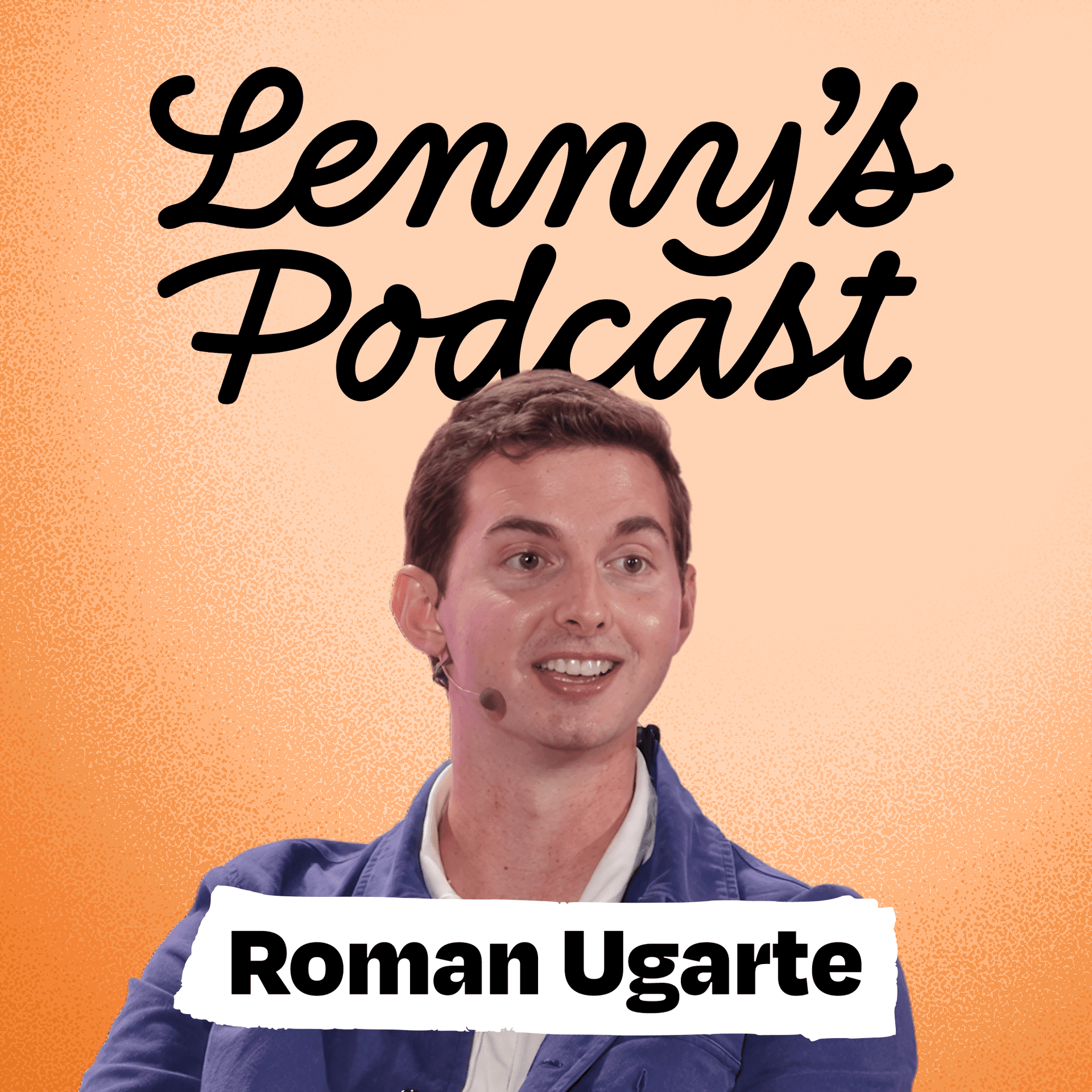
Title: How Revolut trains world-class product managers: The “local CEO” model, raw intellect over experience, and a cultural obsession with building wow products Guest: Dmitry Zlokazov, Head of Product at Revolut Air Date: [Insert Date] Listen Here: [Lenny's Podcast](https://www.lennysnewsletter.com?utm_medium=podcast)
Description: Dmitry Zlokazov, the Head of Product at Revolut, shares insights into Revolut’s unique product management culture, organizational structure, and hiring practices. He discusses how Revolut fosters an environment conducive to rapid product development and innovation.
---
Key Topics Discussed
- Revolut's Unique Organizational Approach
- Product owners act as "local CEOs" with real end-to-end ownership.
- They possess hiring and firing authority and manage cross-functional teams.
- The ultra-flat structure allows over 150 product owners to maintain high-quality outputs.
- Product Management Philosophy
- Emphasis on “raw intellect and hunger” over experience in hiring decisions.
- Successful product leaders often come from internal transfers, including ex-engineers and operations managers.
- Founders review every single UI update, contributing to a culture of detail orientation and high standards.
- Focus on Quality and User Experience
- Revolut prioritizes product quality and user experience; even features that are 99% complete are seen as closer to 0% without full polish.
- The company balances functionality with aesthetics, aiming to create "wow" products that users love.
- Hiring and Talent Development
- The company seeks candidates with a mix of intellect, drive, and a passion for building.
- Ideal candidates often come from non-traditional backgrounds or startups rather than established companies.
- Emphasis on hands-on experience and the ability to navigate complex problems.
- Framework for Launching New Products
- Process involves rapid ideation, validation with early user cohorts, and scaling only after achieving product-market fit.
- New ideas can come from any employee, not just product owners, promoting a culture of innovation.
- Cultural Values
- A company-wide obsession with customer satisfaction and building lovable products.
- Encouragement of autonomy within product teams while maintaining accountability through a flat hierarchy.
---
Key Takeaways
- Ownership and Autonomy: Empowering product owners leads to higher engagement and accountability.
- Focus on Quality: Commit to delivering a polished product to reduce uncertainty in product acceptance.
- Hiring Philosophy: Seek raw talent and intellect; prioritize character traits over years of experience.
- Continuous Feedback: Maintain direct channels for customer feedback to refine products quickly and effectively.
- Cultural Fit: Internal promotions create a strong culture match, enhancing team cohesion and effectiveness.
---
Fun Facts About Revolut
- Revolut operates in over 50 countries and serves more than 50 million customers.
- It started as a multi-currency card aimed at reducing foreign exchange fees for travelers.
- Recently valued at approximately $60 billion.
---
Resources Mentioned
- Dmitry Zlokazov on Social Media:
- [Twitter (X)](https://x.com/Dzlokazov)
- [LinkedIn](https://www.linkedin.com/in/zlokazov/)
- Lenny's Newsletter and Podcast:
- [Lenny's Newsletter](https://www.lennysnewsletter.com)
- [Listen to the Podcast](https://lennysnewsletter.com/podcast)
- Books Recommended by Dmitry:
- *The Hard Thing About Hard Things* by Ben Horowitz
- *Build* by Tony Fadell
---
Conclusion This episode provides valuable insights into how Revolut cultivates product management talent and fosters a culture focused on innovation and user satisfaction. The conversation emphasizes the importance of ownership, quality, and a unique hiring approach that prioritizes innate talent and drive over traditional experience.
---
Note: To gain more insights like this, consider subscribing and following Lenny's Podcast on your favorite platform for updates on future episodes!
Written by AI. May contain mistakes. Listen to the episode to check what was said.
Transcript
Automatic transcript. May contain errors.0:00Everyone is striving for talented, skillful, smart people. Revolute values way more raw intellect and this unquenched hunger to build things rather than experience. I hear one of the ways you approach early products differently as you guys invest a lot in actually making it good. It's not get interaction, is it because the underlying idea is wrong or maybe your product just sucks? by forcing everyone to build a product that people will love. We kind of cut out the part of uncertainty. We can cut down the product in terms of functionality to just most critical features, but we will never compromise on the quality and UX and the aesthetics.
0:42Is there anything that you've figured out about just how to set up new products for success? If something is 99 % done, it's closer to 0 % rather than 100%. Today, my guest is Demetri's LaCaza. Demetri is global head of product at Revolut, which is a finance super app offering customer savings and checking accounts, crypto, investing, joint accounts, even mortgages. Not only was it last valued at over $60 billion, but in the research that I've been doing to which companies hire and incubate the best product managers, Revolut was right at the top, alongside Palantir and Intercom. And so in our conversation, we dig into what Revolut has learned about producing and hiring great product leaders, including a focus on ownership, having people solve really painful and complex problems, while making the experience wow and lovable by users, also indexing towards hiring really smart and driven people early in their career versus people with a ton of experience in the space, and so much more if you're looking for a job that will accelerate your product career, or want to help your product team level up.
1:47This episode is for you. If you enjoyed this podcast, don't forget to subscribe and follow it in your favorite podcasting app or YouTube. Also if you become an annual subscriber of my newsletter, you get a year free of linear superhuman notion perplexity and granola. Check it out Lenny's newsletter .com and click bundle. With that, I bring you Dmitry's little cousin. This entire episode is brought to you by Stripe. There's a reason that I've had more guests on this podcast from Stripe than any other company. It's because they hire the best people and they build incredible products. You probably know them for their payments platform which powers my newsletter and also companies like Nvidia and Salesforce and Zoom and DoorDash.
2:28What you may not know is that they have several other products that can help accelerate your revenue such as Stripe Billing which powers billing for companies that you may have heard of, OpenAI and Thropic, Figma, Atlassian and over 300 ,000 other companies. Stripe billing lets you build and manage customers however you want, from simple recurring billing to usage -based billing to sales -negotiated contracts. There's also Stripe's Optimized Checkout Suite, which is a plug -in play, super -optimized payments flow that natively supports over 100 global dynamic payment methods. There's also a product called Link, which is an accelerated checkout experience built specifically to increase your checkout conversion.
3:09Every single one of the Forbes Top 50 AI companies that have a product in the market today use Stripe to monetize it. Half of Fortune 100 companies use Stripe. $1 .4 trillion flows through Stripe annually, which is equivalent to over 1 % of global GDP. Use Stripe to handle all of your payment -related needs, billing, manage revenue operations, and launch or invent new business models. Learn more at Stripe .com
3:41Dimitri, thank you so much for being here and welcome to the podcast. Hi Lenyan, happy to be here. As you know, I've been doing a bunch of research into which companies hire and create the best product managers. And I've been triangulating this across a bunch of different data points. I've been looking at which companies, alumni product managers get promoted most when they leave the company, become chief product officers at the highest rate when they leave the company, become the first PM at a startup. up, also start their own companies. And when I triangulate it across all these different data points, there's three companies that are kind of sad at the top.
4:17You guys, Revolut, Palantirid, Intercom, clearly you guys are doing something really special. I don't think a lot of people, especially in the US, know a ton about Revolut. And so I'm really excited to have you here. I'm really excited to, basically, extract as much wisdom as I can from you about what you guys figured out in helping in hiring and training product So I want to actually start with giving people a slight understanding of what is Revolute. I think a lot of people in the US especially don't know much about it. So what's the simplest way to understand what you guys do? Revolute challenges banks in 50 different countries and it all started 10 years ago in London.
4:57So maybe let me give you a bit of a context, especially for someone basing the US. it's important to understand that European banking landscape is very diverse. In the US, if you travel from state to state, things are different, but for example, you always pay in US dollars, right? In the UK, you pay in British pound. If you travel to mainland Europe, you will pay in Europe, but if you go to Switzerland, you'll pay in Swiss francs. If you go to Sweden, annual pains, we just go on and it's also overall there are 25 different currencies. And every time you were traveling and paying in a different currency, banks were charging you exorbitant fees on top of terrible foreign exchange rates.
5:42And that's when Revolute launched as a multi -currency card. And people loved it. And they loved that travel route, was saving them 50 or 100 euros. But even more so, they loved the transparency and simplicity of the product. And that's why when we started rolling out more and more products based on those principles, they were quickly getting trust of people, they were quickly getting traction. So that's how PTP transfers appeared and then frictionless, crypto, buying and withdrawal to a bank account appeared. And then more and more products, created products, savings products and so on. Awesome.
6:28And then just to give people a few, like kind of the scale of the company, how many employees are there roughly? I think the last valuation, something around 60 billion. I don't know if you can even comment on that. But just what are some numbers real quick for people to understand the scale of the company at this point? The headcount is not something we're trying to increase to be honest, actually. A reveler tries to stay as lean as possible, but I think it is just the doubt I'd be tied for growth is so big that I think we're kind of that maybe six or seven thousand and please. Okay, cool. So let's get into the, what you've learned about building an amazing product team and also hiring an amazing product team.
7:05So first of all, you call your product managers, product owners, and when we You're chatting through, initially, I was like, oh, I see. It's just like a big scrum business. And they just have all these product owners who, you know, many times on this podcast, people have talked about this, not actually a product manager, but that's not at all how you work. So in this context, product owners and actual owner talk about just the kind of the story behind why you call it your product manager's product owners. Yeah, it's not a scrum term for us. It's just how it take on emphasizing how ownership is important, really.
7:34So product owners are central to a company and its growth. They end to end responsible for the product, for this part of the business, and for their customers to be happy. And for that, they do really everything. They run the teams, they define which road map. But we need to build to improve certain business metrics and they also contribute to high level company strategy. But then most importantly, they execute on it relentlessly. And they are ultimate responsible for the product to be shipped and achieve results. There's always this term of mini -CO, PM as a mini -CO, and it feels like in your context that's actually what you try to do with your product team, is there essentially many CEOs, they have a lot of power.
8:32Like I think engineers, designers report to them, is that right? Yeah, correct. Well, I would say local CEO and other people. Local CEO, okay, let's talk about that. Yeah, yeah. Yeah, but that's true. So the way we operate, we have these fully cross -functional teams, meaning they are stopped with all necessary functions, engineers, data analyst, designers, operational managers, and so on. And we also operate in metrics, so everyone has a line manager and a functional manager. So product owner is always the line manager for everyone on the team. Meaning product owner defines what they need to do.
9:18But then functional managers, they define how these things need to be built and essentially with the right level of quality and so on. I love this because it's so fun just to learn about such different ways of operating. Another fact that I saw is that there's two types of product owners. There's kind of like a UX product owner and then there's a different, like a technical product owner. We actually have three. And the third type becomes increasingly more important. So the first type is UX product owners. Then there are technical product owners, and then there are data science product owners.
9:55So UX product owners are the ones who work on consumer facing part of the product. Usually they have a great taste for things and they understand what constitutes UX that will work and which things will not work. So they also have these expertise in the industry. Then tech product owners, they are the ones who delve deepest into the details. Usually, those are former engineers who grew into making decisions and driving business. And the data science product owners, usually former data scientists, who decided to grow into management positions. but they're still very hands on. And you know what, there are way more things that are common to each of these three specializations.
11:03So what we see sometimes, these people just shifting them, because I would say that, you know, what defines the specialization is probably 5 to 15%. While 85 to 90 % is common to each one of them. And those things are, so first of all, being a great problem solver and have a great linear thinking, but also, you know, have a creative approach towards non -linear problems. Then building this context of for customer and building empathy towards customer and translating it and translating it into the team, then going down to details very, very deep. Because in our domain, there are no obvious things.
11:59And you need to get to the root cause of the problem really, really deep to understand, okay, what will work and what will not work. And that means that you also need to be quite technical. even if you're you explore you still need to often go as deep as sitting you know with engineers and region code. And then I would also emphasize importance of business acumen because we tend to measure and quantify product performance a lot and you need to understand okay what things will we build that will drive eventually that business magic and that target. So I love this idea of the product owners having to go really deep.
12:45I think a lot of people hearing this, they think they can go deep, go deep, really understand the details of what they're working on. I'm curious if there's an example that's illustrative of just what you actually mean here. For example, to provide the best possible product in every country of presence, we need to have necessary licenses. In Europe, it means that we need to launch local branches of our European bank, for example, the branch for France, the branch for Germany, or the branch for Italy. To launch a branch, you need to fully comply with all necessary regulation. You need to report necessary data on customers to various regulators and authorities.
13:30you need to register with local payment systems. And each of these things, they have a lot of projects nested within. We have a very lean team of just a few people who need to scope everything and do it at a scale of like 50 countries, right? So the way we do it is we go very deep on example of each of these projects. For example, we launched a branch in Ireland, we launched a branch in Netherlands, then we reverse engineered what was the best process to do it. And then we went back up on top level and we said, okay, but what's the ideal framework of doing it a scale? And then we formalized it into a process really like an algorithmic process.
14:20We as a stabs and quality gate and as a knees and like which, what people do we need to higher and how soon do we need to start doing that before we want to launch a new country. And then so it's not only going deep but also being flexible, you know, and like doing this switch between zooming in very deep and then raising on the level of helicopter view and then understanding, okay, so these seem very, very complex in details. But then when you zoom out, like how can we simplify it and build a robust process around it, which is scalable, and that's something that we have to do a lot. As you're talking and we go through this chat, I'm keeping kind of track of what I think is most contributing to your alumni product owners, product managers, becoming so successful.
15:15So a couple things so far that I think are probably contributing to this as one is just having a lot of ownership over with their building, which leads to building skills to start companies and become leaders at other companies. So these product owners, they have are just like own a lot and essentially GM's of whatever product they're working on. And then there's this depth and complexity where you have to really get good at understanding a problem really deeply. Imagine many of these people go on to work on something like that later, somewhere else, because they've spent all this time. Or they just get really good at dealing with complex many layered problems.
15:49So is there anything else just kind of long as lines as I say that that you think is important? I would probably add an obsession with building wow product Wow, W, W W, W Cool And you know, I think in Fintech overall, this is probably the most neglected part usually But it's also a part that we are traveling, we pay enormous attention to So it's not only when you do a trade in the app or when you send money, it's very important for it to be very fast and cheap process for you so that you don't pay a lot of fees, but we also pay a lot of attention to the look and feel of the app and how smooth it is and how frictionless the process.
16:44Not only we invest into reducing clicks and optimizing finals, but we also want people to feel that we really cared about them. We also want people to feel that we love our customers and we the applied extra effort for the product to look great and feel great. And I hear this a lot from our customers, like the app is something they really love and it helps them solve their problems. It's at least one of the ingredients of the company's success. And I think people that work at Traveler, they build a bit of, you know, pain attention to these small nuances, small details that make the product lovable.
17:31And then second is handling this context because you know like it's a lot of details where you need to dive but there are also a lot of dimensions where you need to dive into different details right and I think this ability to So to keep this large context in your mind, and consider second order effects, and view subjects from multiple angles, I think this is also a very important skill that people usually train to travel to. Okay, cool. So if three bullet points on the ingredients of great product managers, slash owners that you guys incubate, on this wild piece, which I love, how do you operationalize this sort of thing?
18:17I imagine a big part of it is hiring people that are really good at this and value building lovable products. Is there any way you kind of have a process around making sure the things you ship are wow and lovable? Two things that you need to understand about how Revolta operates is that we operate in a small lean teams that are tasked to build products and as I mentioned, having an end to responsibility for products and usually they are the ones who build it from zero and then and they're growing and developing this product. And then another thing is that company is very flat, and Hyra is very flat.
18:53We still have our founders, Nick and Vlad, very hands on going down to details for every product and every part of the business. And every week, they have product reviews with every team giving an opportunity to every product owner present directly to CEO and CEO and show what increment has team achieved in the last week, but also get steering from founders, which is super valuable. So essentially founders of the company, they still review 100 % of screens that have been shipped, And everything that you will see in the app, this past this review, and there are a lot of eyeballs that were scrutinizing this and thinking of all possible edge cases and nuances that we need to consider to make sure that every single customer will be happy in this product, in this flow.
20:02That seems to be a consistent theme in products that are incredible as the founders are deeply involved in the experience and review everything. How many product donors are there ever of a loot just to give people a sense, by the way? Or I'm afraid to say it's already more than 150 people, maybe 170. Cool. That's what I would expect. And then you said that there's kind of these three types. There's kind of like the end type, the PM traditional type, and there's the data product owner. When you hired the UX type of product owner, Jivey, is there a previous role usually a product manager at another company?
20:35Yes, but I would say that not necessarily it's a very experienced product manager. Well, maybe even it's way more important to have this hunger for building things, you know, and having a raw intellect. And we always try to find people with these intrinsic traits rather than hiring people who are very experienced but maybe are not super excited about the buildings. What percentage of your product owners come from internal transfers from other functions? It's a quite substantial part of product owners who eventually become very successful, by the way. So it's like a positive self -select. So it means that someone already succeeded in another role.
21:32So it's a guaranteed culture match. It's a guaranteed domain knowledge. And then they simply grow. Usually it could be operations managers or engineers. They grow into someone who now manages the team. And that's why it's a very successful path. So the other company on the list of top three companies that produce and hired the best PMs according to the research I've done, Palantir, I just had someone that was at Palantir for a long time and we talked about exactly all the same questions. And interestingly, so far we have kind of these three bullet points in terms of what product owners within Revolute get to do.
22:13There's a lot of ownership, there's a lot of depth and complexity and there's a lot of focus on wow, lovable products. So interestingly at Palantir, also tons of ownership, also tons of depth and complexity. The other ingredient that I want to ask you about is they also, they have this concept of a forward deployed engineer where they put an engineer in the office of the company they're building the product from. They sit there building it for them with them. And so there's a lot of skills built in terms of understanding customer problems, talking to customers, getting empathy building, things like that.
22:45Is there anything you guys do or focus on around just like talking to customers, a way you approach, having your product owners work with customers, understand problems, things like that. That might be helpful for people to hear. For us, it's a bit easy to reach out to customers simply because the customer base is so big. It's more than 50 million people. And usually we ourselves, power users of the product, we receive our salary into Revolute and then we spend with Revolute. Our friends the same. So it's like a no -brainer to talk to people continuously. And even if you're not active in it, they will reach out.
23:27If you have a problem in the product, I guarantee that we know about it very, very soon. We've also built tools for product owners and designers to have an easy access to a panel of users by different tools so that they can just start an interview in process or survey or a test of different designs in a few clicks. For me it was very important to build this direct connection to customers because when you delegate such an important thing as a customer research and collecting the feedback to someone, you will get refined the filtered version. You won't get this, you know, like these nuances of how people describe things, which emotions they feel like, and so on, and where they think that it's very easy to lose all those important bites of information in this process.
24:24So I'm a strong believer that it's very important to have direct communication channel to customers. As you describe this, it's funny how you're, you guys at the extreme opposite aspect, end of the spectrum from Palantir in terms of how easy it is for you to get feedback. they build stuff for like the government and for like Airbus where employees would never use a product like that or need a product like that you guys are getting paid in Revolute using Revolute to pay for things and constantly in the product and so I could see why there's less of a need for something like a forward to play engineer Okay, amazing.
25:00Let's talk about hiring then is there is there anything unique about how you approach hiring sourcing looking for people what you look for in people that you think might be contributing to your alumni being so successful down the road. I think everyone is striving for talented, skillful, smart people and experienced people. Revolute values way more raw intellect and this unquenched hangar to build things rather than experience. So let me maybe, you know, like bring an example. Imagine we also this, like you hire a great experienced professional with amazing regalia of achieving a lot of things.
25:46But then what I see in product, the adoption theory is usually longer than in other functions. because probably going is by definition are the ones who are the experts in that domain and they know those intricacies of how product is built and how it's used. So what we see from these professionals is they still take a lot of time to ramp up and sometimes they also take time to adapt to new culture or worse they just rest on their laurels. But you already have like super inflated expectations and usually the computation is by the way quite high and we chance up to these expectations. So and I myself after conducting maybe four or five hundred interviews with project owners that traveled I also see this.
26:45Unfortunately professionals with a a lot of years of experience from established companies, they don't have this strong urge to change status quo, which by the way will require, you know, total tears and sweat. And that's why what even if a candy date doesn't have a lot of years of experience, But they love building things. They've done it. They worked with engineers. Maybe, by the way, maybe in their own startup or one of the best profiles that I've seen is a tech co -founder. So I think that's probably the best way to boost careers to go and to go and working all different areas, because in startup you have to work in all different areas.
27:53And then these kind of people, they really thrive and travel. And even if they don't have a lot of years of experience, they actually attack a specific problem. they have a sense of what can cause customer pain. And they are very fast moving to solve it quickly. And then that's how they get appreciation from everyone around. Teams starts respecting these people because they solve some specific problem. And then they take another problem, they solve it, and then they take another. And that's how they grow in the company. Essentially what I'm hearing is you hire kind of more junior Super high raw intellect driven, passionate, how to just grow hungry people.
28:44And this explains why so many people have so get promoted so much more that leave Revolut because they start their earlier in their career. And you help them learn all these skills, ownership, depth, understanding, working complex environments, building amazing products. So this makes a lot of sense. Is there anything you figured out about where to find these people? because this is the dream. I am amazingly smart people that are super driven, that nobody knows about yet and then make them awesome. Have you found anything about where to source and find these folks? So the way we work, we have a weekly catch -ups with the recruitment team.
29:20So essentially they are also a team that runs in Sprints. So every sprint we define what we want to focus on, which areas, which companies. One of the great sources is actually looking into products and apps that we love ourselves. So if someone built a great product, then it's likely a high performer. So usually like we provide some great products in specific areas that are more important for us to the source in team and they just try to source targeting those companies. It could be also different areas. It could be even schools like good schools. So it varies from sprint to sprint. That makes sense.
30:06There's a go -goal had this really good piece of advice. I think it was on the podcast if not. We did about it where you look at like there's like successful companies, but then there's also like what function in that company is the key to their success. And so you want to go like a company A for sales company B for customer support, company C for design. And so it sounds like this kind of the way you guys think about it a little bit. Yeah, very cool. Okay, I love how we're uncovering this mystery. This entire episode is brought to you by Stripe. Every single one of the Forbes Top 50 AI companies that has a product in the market today uses Stripe to monetize it.
Read the full transcript
30:43$1 .4 trillion flows to Stripe annually, which is equivalent to over 1 % of the entire global GDP. And Stripe isn't just a payments platform. They also have a product called Stripe Billing, which powers billing for companies that you may have heard of, open AI, and Throbic, Figma, Atlassian, and over 300 ,000 other companies. Stripe Billing lets you bill and manage customers no matter your pricing model, from simple recurring billing to usage -based billing to sales -negotiated contracts. Collect and retain more revenue, automate revenue management workflows, and accept payments globally. You striped to handle all of your payment -related needs, including billing, revenue operations, checkout flows, or simply launching or inventing new business models.
31:27Learn all the ways that Stripe can grow revenue for your business at Stripe .com. Let me go in a different direction and see if there's more to learn here. When it comes to running your teams, is there something that is fairly contrarian in how you approach running the product team that is maybe now not how other companies operate that you think is key to your success? I've changed in how I operate after a joint workload. Probably because Revolute is a founder, let company, and probably it's because SoFlet. And also because my role is quite spread across many things. So my role of travel is leading product function across company, but also leading retail, which is a core part of Revolve business.
32:17And it's very easy to be spread thinly across all those domains and catching up with 50 or 70 projects that are being executed simultaneously. Which would mean that you know you will just spend your entire a week just kitchen up on statuses, not really adding value to anyone. But it's also scary to not do it. Because why do there are some things going wrong, right? And you won't be able to stop it or steer it in a better direction. So I think that's why also a lot of managers, especially in senior positions, they kind of stay high level. They don't go very deep into details. But so how we did differently a travel is to go very deep into details.
33:16We take maybe seven or ten projects, which are most impactful for customers right now. and we go super deep into them, like really deep seating with engineers, like reading code level and understanding, okay, how it's built exactly and what's the underlying issue.
33:45And you could think that, okay, but what about others, like let's say, 50 or 60 items, or that have been executed. But the thing is that it actually, it's counterintuitive, but it works really well because, first of all, teams, they talk to each other. There are formal and informal ways of communicating through meetups or just, you know, meeting in the office. And they know which areas are being scrutinized right now and like which team is being scrutinized. and it also gives information of what are the current priorities in the company. But in addition, it's a signal to other teams that if they are not proactively executing things on the expected level, paying attention to all the details and being meticulous in all those data, especially in quality, they will be the ones that will be reviewed to a such deep level, like next phase, next cycle.
34:55So as a result, it also builds a great discipline and since like Revolute is such a high concentration of very ambitious people who thrive for being best versions of themselves and grow. And it's very important for them to prove that they can deliver great things and build next, like, great company. As a result, they do everything to operate autonomously and when you start diving deep into details, like you see the everything is fine. You see the modus operandi and you can understand, okay, if this team is on good track or not on good track and if it's not on good track, it means that it probably will be one of your next areas of focus.
35:53Okay, so what I'm hearing is there's, you said there's 50 to 60 things kind of projects being built in place. Maybe it's closer to 100 actually. Okay, okay, so there's like 100 things happening at any point, like features being built, products being launched. And you and this is you and the founders to 7 to 10 to focus on, or is it just you? No, it's just me. Just you. Okay. And by the way, do you have a leadership team that you're a part of, would like a design leader, or is it just you basically at the top? So the way it's structured, my responsibility is a product function. We also have a head of design function, it's also part of my team.
36:32But then all the other functions, they separate like engineering and data function. And all of them report directly into CEO. Got it. Okay, so you so out of a hundred things you choose, here's like the 7 to 10 things I'm going to go deep on. These are the things that matter most to the business that if they don't go well, it'll have the most down, down side. And then you just you're you basically said you sit next to the engineers, you get really involved in every detail. Yeah. Awesome. Okay. That is definitely counterintuitive. We had Brian Cheskin, the podcast, and the way he approached this problem is he just cut down how many things happen at Airbnb, and because he wants to be involved in everything.
37:12And so I think it's cool to hear a different approach for you. Okay. We can still do a lot of stuff, but I'm going to choose, I'm going to go deep on the things that matter most. No. I think we will know a cut down since it's just the epitite for the first time. for growth and also entrepreneurial approach in the company so high that we will never allow ourselves to give up on some great opportunities. But also this approach is way more scalable. So while leadership and obviously founders themselves, keep everyone accountable and go deep into details, it doesn't mean that they micromanage everyone, That's actually a very important thing.
37:59So the ideal position for any product owner is to be fully autonomous. And again, it doesn't mean that you will never be challenged. But if when you're challenged, you can show all the logic behind decisions you've made behind the road map. And even if metrics are not yet there, like you will still, like let's say have this credit of trust to keep building things the way you want to build them. Eventually, yeah, you will be presenting the outputs of your activity on this weekly product reviews. But again, it's not a micromanagement either. It's more like, let's say, a last line of control to make sure that what we're building is all makes sense and that's value and is thoroughly they thought in all details.
38:48And then you said still every screen that has shipped the founders review at some point. So it's not like someone shipping stuff without the founders seeing it in some form. Yeah, yeah, exactly. They have like full overview over everything. But also it actually allows us to build so many things because there is actually little micromanagement. If founders had to be involved in everything, they had to cut the things down. But by giving people autonomy, they actually boost company growth. And as a result, I think, revolution is a strong outlier in the industry in terms of how many products have been shipped and how fast they ship.
39:41Another thing here is what I mentioned previously is us investing heavily into platform and so that every solution is scalable from the get -go so that we don't have any custom solutions and I don't for example take our credit team they ship new products like loans or credit cards in a country literally literally every month. And it's just maybe 300 people. And I think that a credit division in a incumbent bank is maybe like 2 or 3 ,000 people building just created products for a single country. And our team is building it for 50 countries. So, and yeah, it's enabled through this approach with platforms which we build on top of, small in -teams, which are fully equipped with necessary functions and also have autonomy in defining what they're building.
40:51And the flat hierarchy with everyone being accountable and founders have in direct view over everyone and intervenient if necessary. I'm going to give people a list of the things you guys do. I didn't do this at the beginning because it would take too long, but you talk about all the products you're building and all the things that's going on. So I have a list here that it made. It's probably incomplete, but just to give people a sense. So you guys have credit cards, debit cards, savings accounts, multi currency accounts, domestic international transfers, joint accounts, miners accounts for less than 18 years old, stock trading cryptocurrency, purchasing loans?
41:35Is there anything big I missed? I mean, some of those things are huge by itself. Let's say stock trading, right? It's not just stocks. It's also ETFs, bonds, and we're working on tax -efficient accounts in different countries. and crypto, it's also allow staking crypto, for example. We have on -ramp or from products. We have acquiring products. On -created, we have loans. We have by now, per later product, we have... We even launched mortgages. We launched first mortgages in the... In the millennia recently. And then all of these across 50 different currencies and countries. Yeah, 50 different jurisdictions with each with its own regulation with its own requirements No boy This is it's a good example of Paul Graham has this concept of schlep blindness or schlepping where people Want to avoid hard problems, but that's where the big opportunities are solving really gnarly Painful problems and that's basically what you guys did.
42:45Yeah, that's one of the things that excites me maybe the most, to be honest, the market is so big and there are still a lot of very inefficient players. And as a result, customers have a lot of problems that are unsolved. While we grow insanely, and I think we'll soon be, so when I joined, we had maybe just slightly enough to 20 million customers. Now we are 50 million customers, soon we'll be at 100 million customers. The degree of surrounding each customer with the ecosystem of our products extends a lot. So they become more and more people start using Revolute as their main bank account. They start receiving their salary into Revolute holding their savings into Revolute because they love the product more.
43:42And so we can easily do another, I don't know, two, three X for X in customer based growth, but we can also do another 10X growth in how actively these people are using the product. So it's let's say what, 30, 40 X to current 45 billion valuation. right? So it's like a trillion dollar company easily. And on that note, what I'm hearing is it's still a great time to join. There's a massive upside. So I know you guys are hiring. We'll just note that real quick. There's your hiring product donors and a bunch of other roles I imagine. Yeah. Yeah. Yeah. Well, as someone who owns the product function, I'm especially interested in product products obviously.
44:33But we, yeah, we hire a lot of roles. I think we have maybe a three or four hundred open positions currently. Oh my God. Okay. I want to talk a bit about new stuff that you work on. So new products that you decide to invest in. Is there anything that you've figured out about just like how to set up new products for success? Because a lot of the stuff we've been talking about is staying on top of stuff that you're iterating on and making better. What if you learn about just helping new products succeed? Yeah, so we launched quite a few products that you actually maybe wouldn't expect from a bank starting with crypto that was insanely successful, but also non -financial services like booking a hotel through Revoltape, our loyalty program, Revitpoints, which is sort of disrupting European market where people don't get great benefits from spending it with cards.
45:28In the US you can easily get like what 2 % cash back with a credit card or in some sort of point. In Europe they don't have it and we are actually the first to build a program on cards and rewarding people with really meaningful or monetary rewards. In the manner that I described like we understood okay what's the recipe of this success to then scale it and reproduce. So we built a new batch framework and essentially everyone can come up with a new idea. It could be a product owner but it could be anyone like. And they need to show some important things we usually can expect from startup like market is there, business cases there.
46:16We know that we can do it way better than competitors leverage and for example, something that we have, obviously, some concepts of product and then what customer problem we're solving and so on. And there is very little bureaucracy. Again, thanks to having founder and so on, we can easily get a green light on anything, start launching it quickly. What we do is assemble a same lean team with just a few people to build first version and then iterate and iterate. And the main thing here is to build first version very quickly to get feedback, but then not scale it before you polish the product. But then after we make sure that all metrics are fine, retention is great.
47:09We start scaling it and the good news is that it can be instantly multiplied by our 50 million customer base and get great traction. So, for example, one of the products that you mentioned during the accounts, essentially, an account that you could have with a significant other one, was one of the recently launched feature and it grew significantly and now it has over a million active users. I hear one of the ways you approach these early products differently is you guys invest a lot in actually making it good and not just like a scrappy MVP. Is that ring a bell? Is that resonating? Indeed. That's what I may be meant by, you know, keeping your first version narrowed down to a small user base.
47:55But even in this case, we still make sure that the product is well. So no one is excluded from this requirement of building a super polished product. It takes time, but it pays off. You know, the thing is that when you launch a scrappy version and it's not getting traction, how do you know? Is it because the underlying idea is wrong or maybe your product just sucks and you need to improve it? So by forcing everyone to build a product that people will love, we build in a wow product, we kind of cut out this part of uncertainty here. So bottom line, we can cut down the product in terms of functionality to just most critical features, but we will never compromise on the quality and UX and the aesthetics.
48:55And interesting advantage you guys have that I'm realizing as you talk is like, most of the stuff you launch is stuff that is clearly something people will want because it's stuff, they get other places, but they get the advantages of it being integrated into all the other features and products you have. So it's like, you know, a cryptocurrency product. I get it's kind of like, okay, yeah, people would love a great cryptocurrency product built into this or joined accounts. So there's almost like a benefit of just like, okay, the people will want this now. Let's just make it work really well with everything else we got and not hurt.
49:28You almost don't need to be the best at every product. Although, it sounds like you still try to be the best. But we must be the best. But there's also, if you don't have the best joint account, but all the other stuff is awesome. People are like, all right, it's fine. It just makes my life easier. But tell me what I might be missing. So I think there are those kind of table stakes that we're building that anyone would expect from a bank. Like, for example, saving the count, right? It's just a basic thing that if a bank is not providing saving the count, you wouldn't even consider it. But then we make sure that our rates are very competitive, if not the best.
50:09Then we make sure that there is no bad UX, like, you know, some banks, they, for example, they don't allow you to withdraw instantly, and there are delays. or they don't pay interest on daily basis. We will never do that. We will allow you, if you want to move money out, you will be able to do it. You won't lose any interest. And interest has been paid daily, and this is a fully flexible product. And then on top of it, what I would call maybe some deliters is we will allow you to open the savings account in many currencies. So we want to add like different currencies so because now interest rates are going down so people might find it valuable to open a savings account and for example I know in Europe like Swedish corona interest rates are higher than Europe but it could be even something like Brazilian real or with what 12 % interest rate versus like two or three percent on yours and then at The cherry on top, there is this all that in an amazing you have very smooth, you can set custom wallpapers, you can set goals, you can automate a spare change towards your savings cut and all those features.
51:28So there is an underlying basic, like, fundamental layer, where you need to be just on par with competition, but then there are a lot of things on top that just make people love your product way more. And obviously there are a lot of synergies in between those things. So yeah, thinking of crypto, you can just receive crypto on your world and then you can just instantly convert it to cash on your account or just spend it with your card. How amazing can it be, right? Just buy a coffee with the theory. I love that. Okay. Let me take this opportunity to try to summarize what I've learned from you so far in terms of what you guys have figured out about creating incredible product leaders that go on to do wonderful things and basically one of the top three most successful companies at this.
52:25So there's kind of these two buckets as I talk to you and the volunteer guy. There's kind of like the hiring piece and then there's that what you do to help incubate this kind of forge for incredible product leaders. So in the what you do internally, kind of the four bullet points I've got here is give people a lot of ownership. They're essentially GMs of the product, the feature. There's a lot of focus on depth and complexity and getting really good at solving really gnarly problems. And then there's building a focus on building wow products, amazing, lovable products that have a very high bar.
52:59And then there's kind of like a a subtle point that I think is probably impactful here, is just working closely with detailed obsessed founders or product leaders like you and learning from you all, and just like seeing the value and impact of being super detail oriented. On that bucket, is there anything else that you think is super core that I missed before we get to hiring? Yeah, I would just maybe highlight the aspect of this like going deep into details, right? It's it's that there are two main streams first is let's say Being technical understanding how underlying systems work, but second is also You know building empathy towards customers understand the possible context And making sure that your product will satisfy each one of them.
53:46That's a great point So it's like actually understanding the bare metal of what is happening in how it's possible and then making experience as Simple and wowable as possible There is also a third aspect, but it's a boring one. It's like a compliant with all possible regulations and making sure that your product will satisfy the regulator. But it's also an important part of the job. What I get from that is just building patients. I would say it's actually being able to unblock your team. And that sometimes require product owners to steamroll change it. It also means that you know you could easily get stuck with a lot of people just looking into each other and thinking, okay, can they approve it?
54:36Can they not approve it? We try to innovate on it. We try to automate as many things as possible. We use even AI models for that. But it also requires a product owner to be able to get things done. you know, just just getting people down to to consensus and understanding who you stakeholders, how to get them to the necessary decision and then blocking you to them so that eventually like the value is shipped to customers. Awesome. So essentially it's just getting shit done, plowing through blockers, dealing with many stakeholders. that's always the most important. Okay, that's a great addition.
55:21I could see why that would be really helpful for folks that are trying to get ahead in their career. Okay, and then on the hiring piece, which you look for is raw intellect, drive hunger, passion, essentially, those are the first two. And then interestingly, non -senior, non, not people with a ton of experience in the problem space, more so focusing on intellect than hunger. Is there anything else in that bucket that you think is important and that leads to people being really successful. Most importantly, it's again, getting things done, getting your hands dirty, and you know, like great product owners are very hands on.
55:59They don't think of themselves as managers who just give toss to people and weigh them to complete it. They just go and get things done, and they understand that most important things, they will likely have to do themselves. And they understand that they need to be relentless focus on execution. And if something is 99 % done, it's closer to 0 % rather than 100%. Wow. Same where there is the kind of the insight there is just like things seem like they're 99 % done, but they're actually very far from being done. Like sometimes the product is built, But then product owners are the ones who also make sure that, for example, a customer care team or sales and marketing team are using it to a full extent.
56:51Because without it, it could be just another useless feature which no one knows about it. That is super cool. I like the mentality. Let me ask you something completely different. What's kind of the story of you landing at Revolution? I know you had to move your family. It was a whole adventure. my journey into Ravod actually coincided with me moving to the UK. So it was a completely new environment for myself. It's a huge stress load for the brain as well. And it's not only about using the other side of the way in the road in the UK, but also it's a lot of things, for example, in the industry, like some concepts that I never heard about.
57:39And actually, I've never worked at Fintech before, so I also changed the industry. So it was like a complete turn around for me and for my career. But I was very determined and excited about it, because everyone who I've been talking to, they were saying, Ravallod is like top talent, he's a travel look like all the best product people or I travel it and I really wanted to be part of this great team. Eventually, it actually appeared to be advantageous for me because I also had this fresh view on things and even in the Revolute app which is actually way, way better than other banks' products, right?
58:28But even there, I found some things that for me because of this lack of context, they were not intuitive and I worked hard with the team to change that. Okay, great. I'm going to take us to recurring segment of the podcast and we'll take us to fail corner. So in fail corner, the idea here is people come on spot cast, they share all these stories of success, everything's always going great. But in reality, things don't often go great and there's a lot of things that don't go right. Is there a story you could share where things went wrong in your career, where you failed with a product you were building or a moment in your career where things were looking really bad?
59:11I think the most spectacular failures probably were on the earliest stage of my career, which I studied back at university and maybe in my second year of university I started building some things. different startups and one of them was actually a product that makes me proud even now because it was like what 15 years ago so 2010 meaning like still no one really had even iPhones back then and me and my friends we started building a a website that allows people to buy tickets to the cinema, so that they can skip the line, so that they don't need to come in advance to select best seats. And they can just buy tickets online and go to the seats director.
1:00:09Something that today seems as a commodity, back then, like no one had it, like people were using pieces of paper. And we build like an end -to -end system, because not only we needed to build a website, but we also needed to build hardware to scan those tickets, for example. And to have these tickets in digital format, we needed to hack SMS standard because, again, like people didn't have smartphones. They had these Nokia's and we were sending images, QR codes inside an SMS, which is like a hack of the standard. in a way. And then we were scanning those things with our own devices and we built our own devices with scanners and we actually created this beautiful devices made from stainless steel which looked really nice inside the cinemas holes.
1:01:12And I remember how I was excited about it. with my friends, we were like, what an amazing thing is, like, look, we're bringing the future here, but we actually, we spent all our investment on this hardware, and we were expecting that, you know, like everyone would just rush into using our system. But it was a very low share of customers who started by antickets in line because people were not ready for it, which was growing quite slowly. And eventually we had to close it because we simply ran out of money, because we spent all of it on this hardware without any proven business model. So something that currently looks like an obvious mistake.
1:01:59Back then we were just, you know, enjoying building a product that we would love to use ourselves. Which I think is the right principle. But it also was a very painful lesson. You need to stay lean. You need to validate things before you scale them. You need to think way more about the run rate of your business. So there were a lot of painful lessons for me. Since then, I also tried to avoid working with hardware. I'm just going to say that. Common, common challenge for startups trying to get right into hardware. Although I wouldn't be surprised now if Revolut launched something. Another product, and this is a new product line of Revolut.
1:02:40Now that you've had that experience. Yeah, I launched the POS terminals for a quiet. All right, there we go. The feature before we get to our very exciting lightning round, is there anything else that we haven't touched on? You think might be really helpful for listeners to hear maybe less wisdom nugget that you haven't already shared or even just something to kind of double down on that you've already shared? No, I think that it was an amazing chat and thanks to any, you would cover a lot of different topics. I would just maybe summarize that, you know, if you're excited to build certain things, never hesitate to do it.
1:03:20The best way to do it is probably your own startup, and it also what will give you the steepest possible learning curve. But then if you want to join a company, try to choose the one that has this highest entrepreneurial spirit, and that that will allow you to work as closer to a mode of a founder as you possibly can. That's a recurring theme in these conversations I'm having with companies that produce the opiums that have the steepest career trajectory. And so that advice is exactly what I'm taking away from this too. Assuming you want your career to accelerate really quickly after you go work at this company.
1:04:02Okay. Demetri, with that, we reached a very exciting lightning round. Are you ready? Yes, let's go. Here we go. Okay, first question, what are two or three books that you've recommended most to other people? The hard thing about hard things by Ben Harovitz. Actually read it quite some time ago, but I found myself recommending it to other product managers most often.
1:04:34It's actually strive to be in a great CEO. And besides this book emphasizes the importance of building systematic solutions and scalable solutions, which is critical for scale and company, also being honest on how important it is to grind stuff. And then second book is I read it more recently, built by Tony Fadel. I was really inspired by this one, especially given how I appreciate how it's not easy to build hardware and what Tony was describing there is just super exciting and inspiring. And also I think that there are different archetypes of project managers. There are people who tend to disrupt things more.
1:05:32Personally, I think about myself as a for builder. So Tony is a principle that he highlighted in the book that they resonate with me a lot. I'm trying to get Tony on the podcast. If anyone listening knows Tony Fidel and can not jump. Hey, say yes to Lenny. That'd be great. I've been in touch with this team. He's not doing podcasts right now, but I'm trying to get him on. Okay, move it on. You have a favorite recent movie or TV show that you've really enjoyed. I think the last movie I watched was Openheimer and I really liked it. I always love watching biopics. I think they give you kind of a perspective and let you think about things in perspective.
1:06:16Is there a favorite product you recently discovered that you really love? Manus is a great thing. The AI agent. And yeah, yeah, it's just like I was super impressed how I was mesmerized. It's so autonomous and smooth. And I just spent a few hours vibe coding and I created this JavaScript app that sends me a rare English word every day to learn and remember. And it worked. I was just amazed. What's a learned? What's a word you learned? Ineffable. It was the yes or no. I love that it's still going. That's great. Do you have a favorite life motto that you often come back to you find useful and worker in life?
1:07:07I love this phrase. I think Eisenhower said it. Plans are worthless, but planning is everything. And it's like, you know, we often say how important it is to be flexible on the job and just to change in circumstances. But it doesn't allow us to actually not have a plan at all. It's important for us to remember that, you know, we always need to think many steps ahead. And while being flexible, we also need to think things thoroughly. Final question for folks that are maybe checking out revenue for the first time. They want to play with it already users. What's the most underrated feature? What's something that you think people should check out?
1:07:51Maybe they're not aware of or even just like a UX. I don't know animation. Something fun that people may not know about. The thing that is not yet widely used, but I really loved it is what we call a wealth protection. So if you go to settings, you can enable a limit for any transfer site that's the frevelled. And if you want to do a transfer above this limit, you will have to do a selfie check, which is our proprietary technology. We do a video selfie, and it allows us to make sure that it's you, no one else is doing the transfer. And it's actually almost as smooth as a face ID. And the way team built it is really great.
1:08:36I'm really proud of those guys. And to meet you guys are doing something very special. I really appreciate you spending so much time with me chatting through all the things you guys have figured out. I think that's going to help a lot of different companies level up the way they think about product. And for people to join Revolute, I want to experience this and accelerate their career. So thank you for being here. Two final questions. Working folks find you if they want to reach out. And how can listeners be useful to you? I think the best way is to find me on LinkedIn. and yeah, I would be happy to receive a note from anyone on how we can improve the product and if it back on the product.
1:09:11And also, if you know someone who can be a great fit to replicate after you've listened to what I've told, then yeah, I would be grateful for that as well. Awesome, you're about to get a flood of applications, get prepared. Let me show you a photo. Yeah, Ren and thanks a lot. It was amazing to be here. Thank you very much. Same. Bye everyone. Thank you so much for listening. If you found this valuable, you can subscribe to the show on Apple Podcasts, Spotify, or your favorite podcast app. Also, please consider giving us a rating or a leaving review, as that really helps other listeners find the podcast.
1:09:51You can find all past episodes or learn more about the show at Lenny's podcast .com. See you in the next episode!
From the publisher
Dmitry Zlokazov is the head of product at Revolut, the $45 billion fintech giant operating in over 50 countries, serving more than 50 million customers, and producing some of the world’s top product leaders. Dmitry shares his hard-won lessons, contrarian org design principles, and day-to-day practices that power Revolut’s relentless shipping velocity, culture of ownership, and unparalleled “wow” product experience.
What you’ll learn:
1. Revolut’s unique organizational approach, where “product owners” manage cross-functional pods as “local CEOs,” with genuine end-to-end ownership and hiring/firing power
2. How a radical, ultra-flat structure enables more than 150 product owners to maintain founder-level quality and velocity across dozens of parallel launches
3. How Revolut maintains quality while shipping hundreds of features across over 50 countries
4. Why Revolut favors “raw intellect and hunger” over experience, and how internal transfers (including ex-engineers and ops managers) become the company’s most successful product leaders
5. How Revolut’s founders review every single UI shipped, and why this founder detail obsession scales rather than limits innovation
6. Their framework for launching new products—from ideation, validation, and first user cohort to rapid “algorithmization” and scaling across countries
7. The importance of treating products that are 99% done as closer to 0% done, vs. 100% done
—
This entire episode is brought to you by Stripe—Helping companies of all sizes grow revenue.
—
Where to find Dmitry Zlokazov:
• LinkedIn: https://www.linkedin.com/in/zlokazov/
—
Where to find Lenny:
• Newsletter: https://www.lennysnewsletter.com
• X: https://twitter.com/lennysan
• LinkedIn: https://www.linkedin.com/in/lennyrachitsky/
—
In this episode, we cover:
(00:00) Introduction to Dmitry and Revolut
(03:41) Revolut’s unique approach to product management
(06:58) The role and responsibilities of product owners
(09:28) Types of product owners at Revolut
(15:50) Building “wow” products
(25:00) Hiring practices
(31:33) Managing teams and projects
(41:07) Revolut’s diverse product offerings
(44:40) Scaling new products successfully
(52:10) Attracting top talent
(58:43) Failure corner
(01:02:49) Lightning round and final thoughts
—
Referenced:
• Revolut: https://www.revolut.com/
• Intercom: https://www.intercom.com/
• Palantir: https://www.palantir.com/
• Which companies produce the best product managers: https://www.lennysnewsletter.com/p/which-companies-produce-the-best
• Which companies accelerate PM careers most: https://www.lennysnewsletter.com/p/which-companies-accelerate-your-pm
• Deliver WOW to our customers: https://www.revolut.com/blog/post/deliver-wow/
• Nik Storonsky on LinkedIn: https://www.linkedin.com/in/nstoronsky
• Vlad Yatsenko on LinkedIn: https://www.linkedin.com/in/yatsenko/
• How Palantir built the ultimate founder factory | Nabeel S. Qureshi (entrepreneur and writer, ex-Palantir): https://www.lennysnewsletter.com/p/inside-palantir-nabeel-qureshi
• Gokul Rajaram on designing your product development process, when and how to hire your first PM, a playbook for hiring leaders, getting ahead in you career, how to get started angel investing, more: https://www.lennysnewsletter.com/p/gokul-rajaram-on-designing-your-product
• Gokul Rajaram on X: https://x.com/gokulr
• Brian Chesky’s new playbook: https://www.lennysnewsletter.com/p/brian-cheskys-contrarian-approach
• Schlep blindness: https://www.paulgraham.com/schlep.html
• Revolut Launches RevPoints Loyalty Programme, Turning Daily Expenses into Exclusive Rewards: https://www.revolut.com/news/revolut_launches_revpoints_loyalty_programme_turning_daily_expenses_into_exclusive_rewards/
• Gemini: https://gemini.google.com/
• ChatGPT: https://chatgpt.com/
• Figma: https://www.figma.com/
• Oppenheimer: https://www.imdb.com/title/tt15398776/
• Manus: https://manus.im/
• Eisenhower quote: https://quoteinvestigator.com/2017/11/18/planning/
• Wealth protection: https://help.revolut.com/help/security-logging-in/wealth-protection/what-is-wealth-protection/
—
Recommended books:
• The Hard Thing About Hard Things: Building a Business when There Are No Easy Answers―Straight Talk on the Challenges of Entrepreneurship: https://www.amazon.com/Hard-Thing-About-Things-Building/dp/0062273205
• Build: An Unorthodox Guide to Making Things Worth Making―Personal Journey from Product Designer to Mentor: https://www.amazon.com/Build-Unorthodox-Guide-Making-Things/dp/0063046067
—
Production and marketing by https://penname.co/. For inquiries about sponsoring the podcast, email podcast@lennyrachitsky.com.
—
Lenny may be an investor in the companies discussed.
This is a public episode. If you'd like to discuss this with other subscribers or get access to bonus episodes, visit www.lennysnewsletter.com/subscribe