In short
```markdown How to Tell Better Stories | Matthew Dicks (Storyworthy)
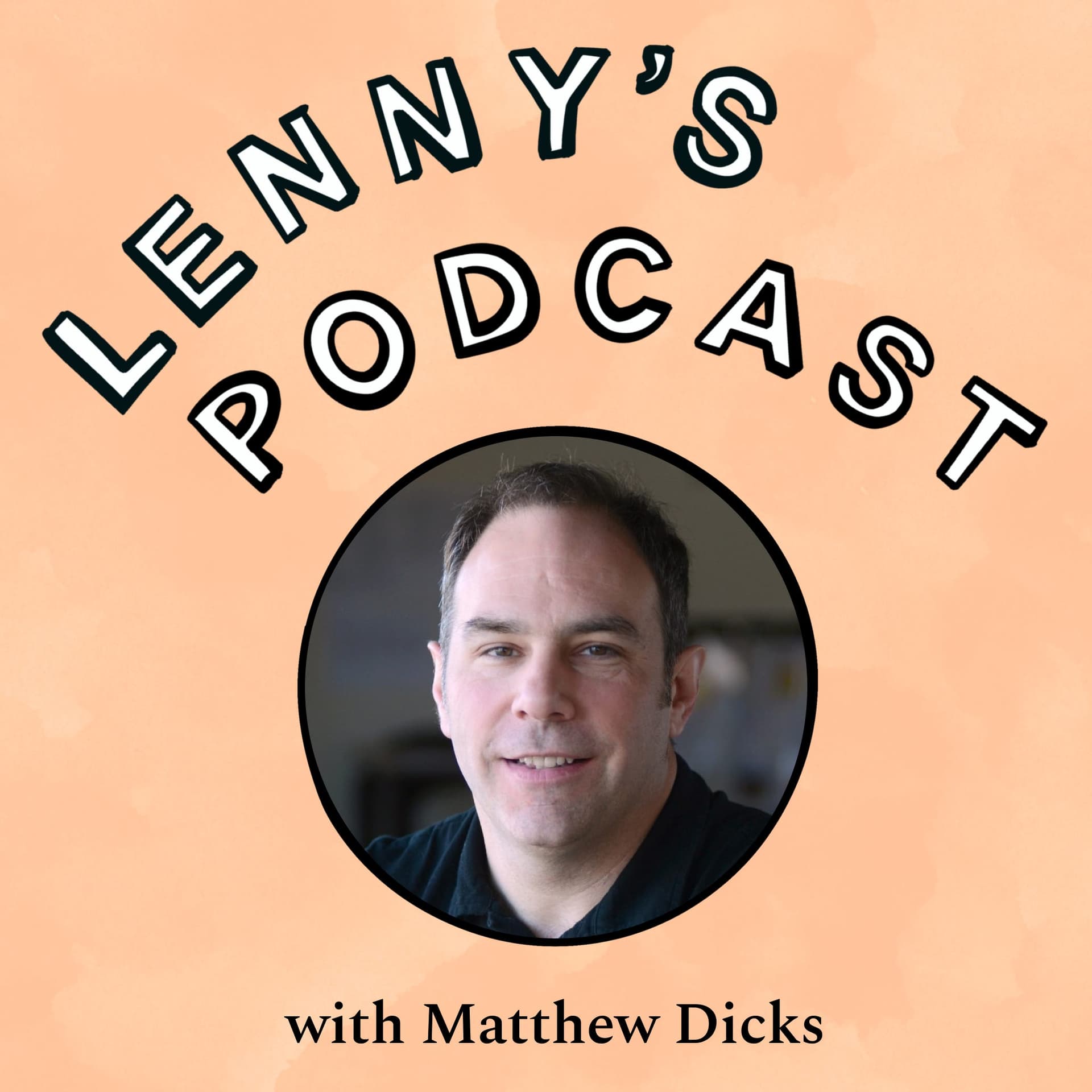
Episode Overview Matthew Dicks, a renowned storyteller and author of "Storyworthy", joins Lenny's Podcast to delve into the art of storytelling. Dicks shares his insights and techniques for effective storytelling, applicable in both personal and business contexts. The discussion covers methods to craft compelling narratives, benefits of storytelling in business, and practical tips for public speaking.
Key Concepts and Techniques
The Five-Second Moment
- Definition: A pivotal moment of transformation or realization that defines the core of every good story.
- Example: Moments that lead to a change in perception or behavior, like a student gaining confidence.
Starting at the End
- Begin storytelling with the end in mind. Knowing the conclusion helps shape the entire narrative.
Story Structure
- Change: Central to every story; without change, stories lack depth and connection.
- Dinner Test: Stories should be conversational and relatable, similar to how you'd tell a story at dinner.
- Personal Stories: Focus on your own experiences to ensure authenticity and vulnerability.
Storytelling Elements
- Stakes: Essential to keep the audience engaged. Introduce stakes early and build on them.
- Surprise: Craft moments of surprise that feel both unexpected and inevitable.
- Suspense: Use suspense to maintain audience interest.
- Humor: Integrate humor to enhance engagement.
Building a Vault of Stories
- Develop a collection of stories (bricks) to deploy in various situations, rather than creating stories ad hoc (band-aids).
Storytelling in Business
Benefits
- Stand out in a crowded field.
- Create memorable and engaging presentations.
- Connect with audiences on a personal level.
Application Examples
- Boris Levin: Uses personal stories to teach resilience and adaptability in his sales team.
- Slack: Crafted a compelling narrative against competitors by incorporating personal anecdotes.
Homework for Life
- Practice: Daily exercise of noting significant daily moments to build storytelling skills.
- Benefits: Enhances memory, uncovers patterns, and leads to personal growth.
Public Speaking and Overcoming Nervousness
- Understand that most nervousness occurs before speaking.
- Use preparation techniques like recording and listening to your talks.
- Avoid memorization; focus on storytelling flow.
The Power of Yes
- Say yes to opportunities to explore new experiences and create potential story material.
- Be open to stepping through doors without preconceived judgments.
Practical Tips for Storytelling
- Location and Action: Start stories by setting the scene and initiating action.
- Engagement: Craft stories that captivate and hold attention through stakes, humor, and surprise.
Additional Resources
- Matthew Dicks' [Website](https://matthewdicks.com/)
- Storyworthy [Website](https://www.storyworthymd.com/)
- Lenny's Newsletter [Website](https://www.lennysnewsletter.com)
Recommended Books
- "In the Heart of the Sea" by Nathaniel Philbrick
- "The Tale of Despereaux" by Kate DiCamillo
- Works by Jessi Klein and David Sedaris
Conclusion Matthew Dicks emphasizes the transformative power of storytelling, both in personal growth and professional success. His frameworks and insights offer practical guidance for anyone looking to improve their storytelling abilities, enhance communication, and create meaningful connections.
---
Full Transcript and Additional Links: [Lenny's Newsletter](https://www.lennysnewsletter.com/p/how-to-tell-better-stories-matthew) ```
Written by AI. May contain mistakes. Listen to the episode to check what was said.
Transcript
Automatic transcript. May contain errors.0:00Everyone loves the word storytelling and business. It's a huge buzzword. They love to think of themselves as storytellers. But when they come to me, they don't really want to be storytellers. Because to be a storyteller means you have to separate yourself from the herd. And in their mind, that risks them getting picked off, right? Getting picked off by some predator. But the the alternative is you're in the herd, which means you're forgettable. I mean, how many times have you go into a conference, listen to someone speak, and by the time you're pulling into the driveway, you really can't remember anything that they said, because that's what happens if we don't speak in story.
0:35Our minds are not designed to remember a pie chart or facts or statistics or platitudes or ideas that are not attached to imagery. So the risk you take if you're not telling stories is that you will be forgotten 100 % you will be forgotten. Today, my guest is Matthew Dix. Matthew is the author of my all -time favorite book on storytelling, Storyworthy, which a previous guest of the podcast recommended to me, and I couldn't put it down, so I reached out to Matthew and got him on the podcast. Matthew is a 59 -time Moth Story slam winner and 9 -time Grand Slam Champ. He's also the author of 9 other books, including Fictions, Rock Opera's, even a comic book, In his day job, he is an elementary school teacher, and on the side, teaches both individuals and teams of companies like Slack, Amazon, Lego, and Salesforce the skill of storytelling and public speaking through his company's speak up.
1:33In our conversation, we get very tactical about how to tell better stories both in life and in work, how to feel more comfortable speaking on stage, how to come up with story ideas that you can deploy when they need arises, why every good story is centered around one five -second moment of transformation, and so much more, Matt is an incredible human being, and I am excited to spread his message more widely. If you're interested in this topic, definitely pick up his book Storyworthy It'll Change Your Life. With that, I bring you Matthew Dix, after a short word from our sponsors. Today's episode is brought to you by one schema, the imbedoable CSV importer for SAS.
2:13customers always seem to want to give you their data in the messiest possible CSV file. In building a spreadsheet importer becomes a never -ending sink for your engineering and support resources. You keep adding features to your spreadsheet importer, but customers keep writing in CSUs. Six months later, you're fixing yet another date conversion edge case bug. Most tools aren't built for handling messy data, but one schema is. Companies like Scalae i and Paid are using one schema to make it fast and easy to launch delightful spreadsheet import experiences. from embeddable CSV import to importing CSVs from an SFTP folder on a recurring basis.
2:48Spreadsheet Import is such an awful experience in so many products. Customers get frustrated by useless messages like error on line 53 and never end up getting started with your product. One schema intelligently corrects messy data so that your customers don't have to spend hours in Excel just to get started with your product. For listeners of this podcast, one schema is offering a $1 ,000 discount. Now, learn more at oneschema .co slash leddie. This episode is brought to you by Maui Nui Venison, a mission -based food company bringing the healthiest red meat on the planet directly to your door.
3:23Actually joined Maui Nui Venison earlier this year after hearing their ad on the Tim Ferris podcast, and I'm excited to be spreading the message further. Not only does this company provide the most nutrient dense and protein dense red meat available, Their operation produces the only stress -free 100 % wild harvested red meat on the market. That is the only one of its kind in the world, actively managing Maui's invasive access to the other populations, helping to restore balance to vulnerable ecosystems, food systems, and communities in Hawaii. Also, it is seriously delicious, not at all gamey, and easy to cook.
3:56My wife and I mate stew and steaks and all kinds of grilled goodies with the meat. We also feel great about it as a protein from an ethical standpoint. I highly recommend trying their all -natural Venison jerky sticks for an optimal protein snack as well as a wide variety of fresh cuts all available in their online butcher shop. There are limited memberships available but you can sign up and get 20 % off your first order at MauiNuiVenison .com slash Lenny. That's MauiNuiVenison .com slash Lenny. Matt, thank you so much for being here. Welcome to the podcast. It's my pleasure. I'm excited to be here.
4:33I'm even more excited to have you on. The way I found out about you is a previous guest Mention your book as a book that really transformed the way they think about storytelling and even marketing and I completely agree It's the most tactical practical also just entertaining book I'm just how to tell better stories and when I was reading it was just like hey What if I reach out to the author of this book and see if you'd come on and here we are I'm thrilled to be here and I appreciate what you had to say I try to make my book as sort of actionable as possible. You know, I think the only reason I'm sort of successful in what I do is that I've been a teacher for 25 years and I'm a storyteller, so the two of those things come together pretty well for me.
5:12Okay, so I thought it'd be fun to start with. Maybe the most mind -expanding takeaway I got from this book is this idea that all good stories are rooted in this five -second moment of someone's life. You just talk about this insight and maybe share an example to you to make this real. Sure. Well That is true what you just said which is essentially every story is about a singular moment I call it five seconds. It can be one second honestly It's a moment of either Transformation meaning sort of I'm telling you a story about how I once used to be one kind of person and now I'm a new kind of person Or more common is realization which is I used to think something and then some stuff happened and now I think a new thing And those changes, they take place sort of over time, or really what happens is it's an accumulation of events and feelings and thoughts that ultimately result in a singular moment where that flip actually happens.
6:09And I think that's true for almost everyone. It feels like it took a long time, but there really was one second when you thought one thing, and then the next second when you thought the new thing. And the purpose of a story is essentially to bring that moment to the greatest clarity possible to the audience so that the audience can sort of in a way experience that flip, that transformation or realization along with the story teller. So 98 % of the story is the context to bring that singular moment into fruition. And that is true for stories that we tell out loud, stories we tell on the page, novels that I write, movies that I watch, television shows that I watch, all of the stories of the world that are worth hearing and truly just about every story told that qualifies as a story has one of those moments.
6:58That's a big statement. Is there an example to you can share with your stories we know or just tell a short story whatever is easier to give people like, oh wow, you're totally right. Sure. Well, I'll tell you one that happened actually today. How about that? So, I'm teaching math today. I'm an elementary school teacher and I'm teaching math and I have a student in my class her name is Eileen and she's one of those kids that I worry about a little bit because she's got some anxiety. So she's not the most confident person in the world and in September I was aware of this. So I've been working really hard at building confidence with her.
7:31And so today we're doing some math and I'm calling kids to the board and I'm sort of looking at Eileen and wondering is today the day. Am I going to call Eileen to the board? Because doing so there's a risk. inherent risk that she could, you know, be upset. She could embarrass herself in front of the class in a way that means something to her. And I just wasn't sure. So I didn't call her to the board. And so at the end of the math lesson, I wandered over to her desk and I said, so I lean. I was thinking about calling you to the board today, but I just wasn't sure if you're there yet. What do you think?
8:04And she said to me, first of all, I don't like that cheeky smile of yours. And that is all I needed to hear. That was my five second moment. That was the moment of realization where I understood that Eileen trusted me, felt confident enough in my classroom that she could be herself, that she could fire off a quip at a teacher, sort of like, take a shot at me. I knew at that point that now I can call her to the board, that she's gonna be okay. So, essentially it is a very brief story that I could actually expand into something much more meaningful. I could make that into a five or six -minute story about my journey with this student, which would include in the longer version of it, the steps that I took to discover who she was, the steps I took to help her reach the point she's at now.
8:51I would probably pull in some backstory about students who I was not so successful with, some of my failures before I learned how to be a better teacher, and then I'd bring it to the moment where she says, first of all, I don't like that cheeky smile, and that's all I need to hear. So that is essentially a five second moment for me. That is the same though as any other five second moment. You know, if you think about a movie like Star Wars, the first Star Wars that came out, right? That is a movie essentially about religion, which people sort of don't always see, but it is true. There's a boy on a planet and he wants to go to space someday and fly a spaceship and use blasters to defeat the empire.
9:29And along the way he meets a religious figure, it's Obi -Wan Kenobi and he introduces him to a religion called the force. And when the final moment comes for Luke Skywalker to defeat the Empire, his vision of using technology, a spaceship and a blaster to destroy the Empire, all of that goes away. And he turns off his technology in his spaceship. Instead, he uses the force to guide his weapon to defeat the enemy. And that is a story about a boy who once had no religion and then some stuff happened and he had religion in the end. And that's why a story like that resonates with us in a way that another story might not, because we all understand what it's like to not believe in something, and then find belief in something, whether that is religious belief, or I used to think cheeseburgers didn't taste good, and now I believe that they taste good.
10:18Either way, we understand that process, and we can connect with Luke Skywalker in a meaningful way. So every story essentially has those moments, including, I don't like that cheeky smile. With this moment, what's also interesting is you talk about how, knowing that moment of change also tells you how the story will end. So as a storyteller, you will know how it ends based on knowing with this moment is, which then also tells you how it's going to start roughly. Can you just talk about that realization? Because to me, every time I watch a movie now, I'm like, wow, I know exactly how it's going to turn out just from the beginning.
10:52Right. So we started storytellers at the end. Well, we start at the end if we are telling true stories about ourselves or our companies or our products, things that we know. I'm also a fiction writer. So when I start my novels, it's much more self -discovery. I really don't know the end of it. But in the storytelling that we're talking about, you have to know the end because you've lived the moment and the end informs everything. So you know what you're going to say. You've found a moment worth speaking to, that five second moment. And then whatever that moment is, in my case, I discover that Eileen has more confidence than I realized than is ready to take a big step forward.
11:29What's the opposite of me realizing Eileen has confidence and is ready to step forward? It is, Eileen does not have confidence and I need to help her find that confidence. So that's the opposites that will work in a story. Essentially, a story is about these two, these two moments in time, a beginning and an end and they are operating in opposition to each other. Sometimes more so than others, sometimes exactly in opposition. But you're right, if you watch a movie and you will pay attention to the first 10 to 15 minutes of a movie, you will ultimately know how that movie is going to end. You'll see a character, you'll discover what that character needs or their flaw or their desire, and you know that that's what's going to be at the end.
12:12You know, the easiest one is a romantic comedy. Two people are not in love at the beginning of the movie. You know they're going to be in love at the end of the movie, right? Even knowing it doesn't mean the story's ruined, we can get there in a very entertaining way. When Harry met Sally, that movie, when it begins, Harry and Sally actually say they hate each other at the very beginning of the movie. I hate you, Harry. I hate that man so much. We know they're going to end up together and the journey is well worth the fact that we know what's going to happen at the end. So it ruins a little bit of storytelling for people who sort of think like me and go, oh, well, I know where this is going, but you have to do it in an entertaining way.
12:53I filled with all the other things we talk about in story time. But yeah, every story should be essentially a beginning and an end in opposition to each other. And you should start at the end. That guarantees that you have something important to say, rather than what most people do, which is they simply report on their lives. They just tell you stuff that happened over the course of time in some chronological way that ultimately doesn't lead to anything. You want to always be saying something of import. So we started at the end with that moment of import. It's funny as I was thinking of when Harry met Sally exactly as you were talking as an example, my wife wants to watch the movie basically every night.
13:27It's like the one movie she could just watch a billion times. Well, that's the power of story. I tell people this all the time, you know, why are we telling stories? You've never asked to see a PowerPoint presentation a second time. You've never gone to bed and dreamt about a PowerPoint presentation. You've never heard someone give a keynote and thought, I hope I get to watch that keynote again tomorrow. But movies, you'll watch a movie a hundred times because it's a story and our minds are wired to enjoy story over and over and over again. You have a, you have a small child, right? Eventually you're going to be reading to that child when your baby's old enough and you're going to discover kids want to read the same book 50 times.
14:08They're really no different than adults except kid books are so small. you can read them endlessly. A movie takes two hours, so you don't get to read it as often as you might want or watch it as often as you might want. But Harry Matt Sally comes on and you're halfway through, you're probably in. Even though you know every scene, you can probably do the dialogue. We're wired for story. That's why it's so important. Why is something changing so important? Why is that so critical to a good story? Someone having a change or transforming? me. Well, I think that actual moment of transformation lends importance to the story and allows the audience to connect to it.
14:44If I reported on my day to you, my day at teaching in a classroom, I am unlikely to connect with you unless you are also a teacher and you experienced things similar to me. My wife is a kindergarten teacher. I'm a fifth grade teacher. If both of us report on our day, oddly, we will not really connect very often. She is teaching them how to write the letter C, and I am teaching them how to use the standard algorithm and multiplication. They could not be further apart. So reporting on the moments that you have experienced in the day is not a way to connect to people. But when we talk about change, change has a great universal appeal.
15:21So you might not be a teacher who's trying to teach someone to find confidence in their life, but you You might be a person who once lacked confidence and then found confidence in the way I leaned it, or you might be a parent or the boss of someone who is trying to bring confidence to your child, your employee, your salesperson, whatever it is. When we do change, when we're focused in on that change, we increase exponentially the universal appeal to the story and our ability to connect to an audience, even though the content we're speaking about has nothing to do with them. The actual emotional appeal will cause people to connect to us.
16:00Fascinating. So building on that same thread of change, you also have this kind of checklist for what makes a good story, what is a good story, and one of the, and I think it's only a three -point checklist. One is there's a change that happens. Can you talk about the other two? I think there's only other two. Well, the dinner test is probably one that you're thinking of. That's right. Right. So the dinner test is the idea that when you're telling a story in a formal way, if you're performing on a stage or delivering a keynote, or even delivering sort of a pitch to entrepreneurs or a sales pitch, essentially the story that you're telling should be very closely related to the story you would tell someone if you were having dinner.
16:42Right. So there should be no sort of performance art included within in your story or within your talk. So weird things that people do should not be done like opening a story with unattributed dialogue. You know, so you're standing on stage and you open your story with, Jim, it's time to come in for dinner, my wife said. Like that's just weird. We don't talk like that as regular people so you should not speak like that ever. In the history of the world, you should never speak like that. But people do it all the time. It's this weird sort of appendage from childhood when bad writing teachers thought that this was a good idea.
17:19Or you start with a sound, which is very popular, and like first grade you teach kids to start with sound, mostly because teachers are not writers, so they don't understand what writing actually is. And so they open with stories with things like, bang, the door opened. But if you and I were having dinner, and you said, hey, how was your day, Matt? And I said, well, let me tell you, Lenny, bang, the door opened. You would not have dinner with me again. So you have to be thinking that But this is a slightly elevated version of the dinner story, meaning you're probably not going to be interrupted in the middle of your story.
17:50And you want to have a little more shape to it, and you want to avoid some of the verbal detritus that tends to fill our lives. You don't want to be saying, you know, and like I said, you know, all of that nonsense sort of should get pushed to the side. But essentially, people should feel like you're kind of speaking in a very natural way. So the dinner test is pretty important in that regard. Awesome. Yeah. So the lesson there is when you're telling a story, make it sure that it's something that you could potentially tell at a dinner party slightly elevated as the way you put it slightly elevated exactly.
18:19I think that third point you make is that it has to be your story You can't be telling a story on behalf of someone else maybe chat about that briefly. Right. So if you're telling a story about someone else Essentially, you might as well be telling fiction because that person's not in the room and to the audience They don't really exist unless they're you know if they can't see them that person is just another human being who supposedly lives somewhere in the world or once lived in the world. And because of that, you are almost unable to express any vulnerability in your story. You can't reveal anything about yourself.
18:49And storytelling is one of the key parts of storytelling is to be vulnerable with your audience, meaning I'm going to say stuff in a meaningful way. I might say stuff that most people are unwilling to share in a public way, but I'm at least going to like offer up a little bit of my heart and mind. If I offer up the heart in mind of someone else that doesn't really require any vulnerability. The only vulnerability is I have to stand in front of people and talk, which I know is challenging for some people. But that doesn't mean anything to the audience. We kind of don't care if you're having a hard time presenting, if it's making you nervous.
19:21That doesn't mean much to an audience. What we really want is someone to open up their hearts and minds. So stories have to be about you in some way. This tricks where you can tell stories about other people by sort of taking that story and centering on yourself. You know, one of the examples I work with the children and grandchildren of Holocaust survivors. And in the past, what they would do is they would just tell the story of the Holocaust survivor who is often at this point passed away. And it really does feel like fiction, you know, a long time ago in a place that wasn't this, a terrible thing happened.
19:52And there's a certain level of empathy and sympathy that you might feel. but what I teach them to do is to tell stories about themselves and then at some point in the story about themselves they're going to talk about how the experience of their parent or grandparent during the Holocaust has informed or changed their own life too. So they get to dip into some history but that history is relevant to the storyteller. So it's no longer history. It's now something changed in me because something terrible happened to my parent or grandparent. Just as a tangent, you also have this funny useful checklist for how to tell vacation stories.
20:30Well, first try not to, right? I think that's step one. Do not tell vacation stories. Most vacation stories are just simply a recounting of your vacation at the expense of another person, right? So unless something happened on that vacation where you experienced one of these five second fundamental moments of change, nobody cares about your vacation. And if something did happen, only be talking about the moment when it happened. So if I had a moment of change that took place on a Thursday night at dinner, right, that story is now going to take place on the Thursday night at dinner. And it's irrelevant that I'm in a rubah, right?
21:07The fact that I am on vacation is almost completely irrelevant to the story other than I may want to offer my location. But I'm not going to talk about the beach the day before or the scuba diving or the plane. All of that goes away. We're telling moments in our lives and it doesn't matter where they happen. If your location is paramount to your story because you want people to know you are in Aruba, then you have to understand no one actually cares that you are in Aruba and you're just a terrible person for trying to like dump that on someone and use up their time so you can relive your vacation and perhaps humble brag about how much fun you have.
21:46This will be a good segment for people to send their friends if they want to tell them their vacation stories. Here's a tip for how to do this better. Exactly. And just understand why it needs to be on a Thursday in that dinner is the advice there. Keep it very focused and small, unless there's some really essential reason to share the context around the dinner. Yeah, exactly. The shortest version of every story is the best version of every story. starting as close to the end of a story as always the best place to begin. So if I had a moment of realization during dessert, you know, in a restaurant in Aruba, I may never tell them I'm in Aruba.
22:20I might start my story with the dessert hits the table and my wife says something that causes me to begin thinking, right? And that would be the beginning of the story. The fact that I'm on an island and the Caribbean may never come up in the entire story because it doesn't turn out to be relevant to the story. There's a lesson that another guest shared Wes Cow about. She calls it start when the bear starts eating your tent or something like that. Like jump to when the bear is eating your tent. Like don't do this whole introduction to why or how you got to this tent. It's just like the bear is eating your tent.
22:52That's where the story should start. Yes. Kervonigit said that. Kervonigit said start as close to the end as possible. He was talking about short stories written on the page, but it is a true story. It's a true notion in oral storytelling too. And it is of all the things I help people with their stories. The most frequent suggestion that I make for revision is you've started your story in the wrong place. Okay. I want to shift to business context advice, but before we do that, there's another really important element of storytelling, which is having stakes. And having important stakes. So could you just talk about what is a stake?
23:28And why is it important to have stakes? and then just what are examples of adding stakes to your story to make them more interesting. Sure. So stakes are essentially sort of what your audience should be worried about, what they should be wanting for you, what they should be concerned about, what they should be wondering about. If your audience isn't wondering what you're about to say, they're no longer listening to you. And if you have to internalize that in a deep and fundamental way, when I work with people in business, they are constantly under this misconception that people want to hear what they have to say, you know, some vice -president marketing thinks that because the vice -president marketing and everyone is sitting in a chair and looking at them, that they automatically have that audience's attention.
24:06I assume all the time, 100 % of the time that no one wants to hear anything I have to say. And so I am relentless in my attempt to get the audience to be constantly wondering what the next sentence is. And stakes are a big part of that. Stakes are, I wonder what's going to happen next. I'm worried about this guy. Will he get what he wants? Will he get his comeuppance because he seems like a kind of a jerk in the story all of those things are stakes What is that stake for the storyteller the company the product whatever it is and therefore what the audience is worried about as well It's why why Star Wars opens with a big spaceship shooting at a small spaceship We don't even know who's on it yet, but we're already on the small spaceship side We're already worried that a small spaceship is being shot at by a big spaceship, right?
24:50That's why stories start this way. Alfred Hitchcock has a movie where it opens with a police officer is chasing a man across a roof. We don't know who to root for, but something is at stake here, and now we're wondering what's going to happen next. We have to do the same thing with our ordinary true life everyday stories. We have to put stakes into stories. There's something that you teach around surprise and the power of surprise as a part of stakes. I forget exactly what that is, but is there a ring of bell? Well, I'll separate them really. So with stakes, there's lots of ways to insert stakes.
Read the full transcript
25:23I always say you should have what I call an elephant at the beginning of the story, which is actually a big spaceship shooting at a little spaceship or a police officer chasing a guy across the roof. We have to immediately know that something is at stakes. We have to be worried about something. In my little I lean story that I told you, I said, I'm teaching math and I've got this student and I'm worried about her because I want to call her to the board, but I know she might lack some confidence. right away I have to make it clear what kind of story we're in. In a movie you get a trailer. You don't often go to a movie and not sort of not have any awareness about what's about to happen, but when you open your mouth to begin telling a story, nobody knows what you're going to say.
26:01You need to land something immediately that causes an audience to go, oh, okay, what's going to happen here? Right, so that's an elephant. That's like plant some big thing in the beginning of a story. It doesn't actually have to be what the story is about either. Sometimes it takes a little time to get to what the story is about, but your plant something there to at least get the audience to be worried. And then you can use some other tricks. You can, you know, I call something called the backpack, which is, you tell the audience what your plan is before you carry out your plan so that they sort of have your hopes and dreams packed up with them as well.
26:32Like if you watch an Ocean's Eleven movie, right, you know what the plan is before they go into the casino. So as the plan goes awry, you can go, oh no, because you know what the plan is. If you didn't know what the plan was, you would not be able to go, oh no, right? So that's sort of like loading your audience with your hopes and dreams so that they have they can feel those stakes They can actually be hoping for you as well There's things like bread crumbs where you offer a little bit of it a little bit of what's going on But not the complete idea sort of like drop a hint You know The classic one is sort of like the gun, you know, there's a gun in the room and you know There's a gun in the room and it seems like it's not going to be relevant But if you have a gun in the room, you know, it's going to eventually go off.
27:13There's something going on there That's like a breadcrumb. Eventually, we're going to get to that gun. Don't worry, it's going to happen. There's our glasses, which is sort of when you get to the moment where everyone is about to discover what's going to happen. That's the moment to slow time down. You load your story with details because suddenly you know you have the audience on the edge of the seat and you want to leave them on the edge of their seat as long as possible. When I know my audience wants to hear the next sentence, that is when I prolong the arrival of the next sentence. by I say turning over an hour glass and letting the sand run for a while and making them wait for it.
27:48There's crystal balls where you can predict a future. You don't have to predict an accurate future. You can just predict any future. So, you know, I could have said something in the Eileen's story like, if I get this wrong, Eileen's going to begin to cry. She's going to cry in front of 22 kids. 22 kids who for the rest of the year will continue to stare at this girl and remember the moment she cried. That's a crystal ball. That's me predicting a terrible future. Because I put that terrible future in the audience's mind, now they're worried. So that is a stake. I have planted a false stake, a false future, but they're going to be worried about it because it's also a realistic future.
28:25So all of those things are used to continue to get the audience to wonder what's going to happen next, which is a little different than surprise. Surprise is just that beautiful, delightful, amazing moment where the audience didn't see something coming and then it was almost like it was inevitable. It's surprise happens and they understand why it happened. And I think it's the best thing you can ever offer an audience as a moment of surprise. And every story has a surprise, at least one, because whenever we suddenly realize something for the first time, right, I hate the word suddenly, but what happens is we used to not think something and then we think a new thing and that's often a surprise for us.
29:03if we make it a surprise for the audience too, that's a delightful thing. So surprise is so powerful and wonderful and always ruined by storytellers. I was just listening to an interview with, I think his name is David Mammoth and he made this point that endings of books and movies is always has to be both inevitable and also a complete surprise. Yes, both of those things. So inevitable means there has to be enough information placed earlier in the story so that when the surprise happens, the audience goes, yes, right? But also you have to be clever enough to plant that information in such a way that the audience doesn't see the surprise coming.
29:40You build information into the audience's mind that will allow the surprise to land in an inevitable and yet surprising way. That is the best surprise you can offer someone. These are said then done. Yes, well, there's lots of tricks to do that as well, but it takes some time. But essentially what you end up doing is you're hiding the information that they need to know in a multitude of ways So that when it lands they go. Oh my gosh. A B C D They don't connect it until the surprise hits and then they go of course a B C D So you place a B C and D in a story But you don't place it in such a way that they can connect the dots until you want them to connect the dots I feel like that's a whole other hour of podcast conversation to figure that out That's like ninja level, next level storytelling, which is very teachable.
30:27It's not like everything I say is very, very teachable and doable by anybody, but yes, it's a trickier thing to accomplish. Yeah. Okay. That'll be for our second podcast episode. Just to summarize, you kind of shared I think five ways to add stakes. Just to summarize, one is crystal ball. You basically predict the bad thing that'll happen if you do them to this thing. Hourglass, which is when something, you know, is about to happen slow time down. I think of Pulp Fiction and Tarantino in this often of just like you know some violence is about to happen and they go next door And like let's just eat a cheeseburger instead for a while.
31:00Yeah And then this backpack idea of like they know exactly what you're trying to do and it's on you in the entire movie Bread crumbs or you kind of give them a little bit of information along the way. I think maybe that's it Maybe there's one more and then the elephant at the beginning. Oh the elephant just like the big ol' here's the steak I always gotta have something I heard some advice in either your book, a different book about adding stakes is just, just drop a dead body. Every new dead body is additional stakes that are added to the story. I don't know how often people can do that in this random story.
31:30Right. But what you can take from that is so often people load the front end of a story with all of the stakes because they're worried that the audience will not pay attention to them. So they think I'm going to throw everything right in front and that'll hold an audience for the rest of the story. That's a mistake. What we want is stakes continue to build throughout a story. So dropping a dead body really means Drop a new stake. Don't load it all. Don't front load it. Give us something to wonder about and then gauge when we need the next thing to wonder about and Spread out those stakes. We need most of the stack stakes to occur within the first half of a story It's ideally the second half of the story is now the role of course to the end So we might drop one in there at an appropriate time or just through plot, sometimes they just happen to need to be in a place.
32:16But so often I hear people front load stakes because they're worried about audience attention. Just to give people something concrete to think about when they're thinking about this area, is there a story of yours that's online that we can point people to to see an example of really good stakes in action? So the one that I reference in my book, which you can go watch online, is charity thief. And it needs a lot of stakes because two thirds of the story, nothing really happens. Two -thirds of the story is explaining how I end up on a porch. And so that's not super entertaining unless I build in lots of stakes along the way.
32:51I'm not inventing anything. I'm just presenting the actual events in a way that makes you wonder what's going to happen next. And so there's an elephant in the beginning of that story, which is actually not what the story is about, because I say the elephant can change colors along the way, but it And I use a breadcrumb and an hour glass and a crystal ball. I do it all in that story, mostly because it's not super entertaining. Some stories you don't have to worry so much about. I perform as a stripper in the break room of a McDonald's restaurant when I'm 19 years old for a bachelor at party. There are stakes in that story, but I don't need to put any of them in because everybody wants to know what's going to happen all right.
33:33Sometimes you just have a story that the stakes are already prebuilt because the ridiculousness of the moment. But most of our stories are not like that. Most of them are far more benign and we have to sort of jack up the stakes By using some tricks to get people to the point we want them to be in that stripper story I've also watched and I love and we'll point to it and I love it's connected to another piece of advice You we share people just say yes to stuff had the power of yes I don't want to get into it yet. I want to come back to it. We'll leave it at breadcrumbs Yeah, but uh, but I love that point Okay, so let's let's transition to helping people in business learn all these skills and translate them to becoming better in their work.
34:11And maybe actually to add some stakes, what benefits do people get? Slash what problems do they run into if they aren't created storytelling versus if they are learning the skill and get implemented at work? What happens? What good things come out of that? Well, if you don't tell stories as part of your business, whether you're looking for investment or speaking to your people or speaking to customers or clients anything. If you're not telling stories, the good news is you're just like everybody else. The bad news is you're mediocre just like everybody else, right? You're in a lane that everyone else is in, which means that you're going to be forgettable.
34:47I often say most communication in business is round, white and flavorless, right? Intentionally so because a lot of people are afraid to stand out. You know, when I try to get people to tell stories, you know, everyone loves the word storytelling in business. It's a huge buzz word. They love to think of themselves themselves as storytellers, but when they come to me, they don't really want to be storytellers. Because to be a storyteller means you have to separate yourself from the herd and in their mind that risks them getting picked off, right, getting picked off by some predator. But the alternative is you're in the herd, which means you're forgettable.
35:22I mean, how many times have you gone to a conference, listen to someone speak, and by the time you're pulling into the driveway, you really can't remember anything that they said. My wife and I actually attended an educational conference recently. She's a teacher. I'm a teacher. There was a bunch of speakers The first person came out with his childhood lunch box put it on a table and told a story about how his parents had nothing While he was growing up and yet they somehow kept him in new shoes and a new backpack every year and sent him to school with a lunch every day And how much it meant to him and how is an educator today?
35:55He thinks about every single kid in this class like he was, a kid who had nothing except for all of his parents' hopes and dreams. And I'll never forget that story because it was a story. It was a story of vulnerability and humor and meaning. It was another person who spoke, a sort of executive will say, and he did a great job in terms of being fluent and presenting ideas and speaking well and speaking confidently. And 15 minutes after the conference, I said to my wife, who is a teacher and understand storytelling because we do it together. I said, what'd you think? And she said, well, I'm never gonna forget that guy with a launch box and I said, I will not either.
36:32And I said, what'd you think about the other guy? And she goes, he was great. And I said, so what did he say? 15 minutes after and she went, you know, I actually can't tell you a single thing he said, right? This is a woman who's a teacher and invested in storytelling and communication. Her impression was he was fluent, He was amusing. You know, he said some numbers. He said some things that seemed to mean something, but it was all forgotten. Because that's what happens if we don't speak in story. Our minds are not designed to remember a pie chart, or facts, or statistics, or platitudes, or ideas that are not attached to imagery.
37:12So the risk you take if you're not telling stories is that you will be forgotten. 100 % you will be forgotten. When people hear this, they may think like, Oh man, there's this guy at work and he's always like telling stories and we're like, shut up. Just tell me what we need to do to make it a little more real of just like what is storytelling look like where it's not annoying. It's not like, okay, everyone gather around. Let me tell you the story of our vision. What are some simpler ways? And I guess maybe non -knowing ways to think about what storytelling looks like in the workplace. That's not just like a public speaking like, everyone I'm going to give you.
37:43Let me give you a couple of examples. I have a storytelling book coming out next year on Business. So there's a couple of heroes in that story. All right, one of them is named Boris. His name's Boris Levin. He is a factory owner here in Connecticut. He's the one who convinced me I could start working with businesses. I thought it was just a storyteller who spoke about himself on a stage in Boris one day, saw me for some fundraiser and said, listen, I want you to come and help me. And I said, I can't do that. I just tell him using stories about myself. And he said, no, no, you can help me. And it turns out he was totally right.
38:11So Boris has done it the right way. Boris has decided to become a storyteller who will then translate his stories into his business. So a great example was one of Boris's early stories. He came to me and he said, my son was at bat in the Little League championship game. The bases were loaded. If my son got a hit, the team was going to win the championship. And if my son struck out, the team would lose the championship. So three and two count. It is like the ultimate baseball moment and his son strikes out. And he watches his son drag that bat back to the dugout and he's devastated. His son's devastated and Boris is devastated.
38:54And so he's trying to collect himself so he can figure out the right thing to say to a boy who's just lost the championship for his team. And by the time he makes it onto the other side of the field to catch up with his son, he sees his son running up the hill with his friends and they're already laughing. They're heading to the cars so they can go to ice cream and they can enjoy themselves. And so Boris is falling apart. He is still devastated, but his son has already moved past the failure. Boris takes that story and he crafts it as a beautiful story that he could tell on a stage and perform and make an audience laugh and cry.
39:28Once the story is done, he says to me, so what are we going to do with it? How are we going to apply this to business? And ultimately what happens is this. He's going to sales team. And quite often sales people do not land the big account they're hoping to land. And Boris knows that when his sales people fail to achieve what they want to achieve, they will often sulk. For days, they'll sort of wander around the office and be useless because they're still trying to get past the fact that they just lost the million dollar contract. So he tells the story about his son and he says, listen, there's nothing wrong with being sad, being upset with failure.
40:03But we cannot allow it to slow us down as much as we are right now. We have to think about my son. My son dragged his back back to the dugout. He sat down. He sighed. His buddies patted him on the back. He collected himself and he moved on. That's what we need to do. When we fail, we're gonna take a moment to collect ourselves to think about the mistakes we made to decide what we're gonna do differently and then we're gonna move on and that becomes a really important moment as company and it's much better than him standing up in front of his people and saying listen Then every time you guys fail to land the big sail, you wander around this office like you're dead and you're wasting our time.
40:43It ends today. Today, from now on, when you fail, you're going to move on, right, the story becomes something meaningful to everyone because it reveals something about Boris. He's a father. He's a father who cares about his son. He's the kind of father that most of us are in life, right? He shares of himself with his people and he creates a tangible vision of What the sales team can do he does that all the time He comes to me and he's not looking to solve problems through story He's looking to develop stories that he can then deploy into his business, right? So I compare it. I say band -aids versus bricks if you're building bricks You're a storyteller that's capturing stories and building bricks that you can eventually deploy into business If you're a band -aid person, which is fine, that happens.
41:31I have a problem that 90 -thousand story to solve it. Essentially, what I'm doing there is I'm putting a band -aid over a problem, but you're not becoming a better storyteller. You're just sort of using me as a consultant to help you generate a story that will solve a problem. That's fine, but you're going to need me the next time too. You're going to keep me eating me because you're not really becoming a storyteller. Boris is building bricks. He is building a vault of stories that he can then deploy into his business and he understands how to tell them and how to connect them to business. So that's something that you can do very easily.
42:01Another example, the other star of my book is a woman named Moshe Ratowski. She used to be the director of corporate communications at Slack. And now she's sort of doing work on her own. But when she was with Slack, she and I were working closely together. And she had to create the narrative that was going to compete against Microsoft Teams. Essentially, Microsoft came along and said, hey, we copied your product and it's free. And everybody already has it. So Slack had to find a way to combat that and Marsha was the one in charge of doing it. That's why we connected She found me and said I need to tell a good story.
42:33Please help me tell a good story So she crafted a brilliant narrative that worked Fantastically we worked really closely together and it came out great The way she came up with that narrative was a Tuesday night She had broken up with her boyfriend. She was alone. She was feeling pretty lonely It was in the midst of the pandemic. She had two glasses of wine in her sitting alone on a Tuesday night, she suddenly had an inspiration. She wrote three words down on an napkin and those three words become the story that we develop that allows Slack to compete against Microsoft. When it comes time to her present that that narrative, I say, what you're going to include the Tuesday night and the two glasses of wine and all that, right?
43:12And she's like, no, I'm not. Like, that's not what we do in the corporate world. We do not insert ourselves into our narratives. And to her credit, she didn't put it in and it still worked brilliantly. She was fine. But, you know, about a month later, she was presenting that same narrative to a smaller group, lower stakes. I said, let's just put it in. Just try it this time. And to her everlasting credit, she did. She put in a 30 -second anecdote about Tuesday night, two glasses of wine, feeling lonely in the middle of a pandemic. She said to me later, I can't believe the difference that that 32nd anecdotment to the narrative.
43:50Because suddenly when I reached the end of the narrative, people wanted to talk to me. People came up to me. The first thing they said was, oh God, I remember I was feeling the same way around the pandemic. People connected to her because instead of being a corporate monolith, sort of like slacks, spokesperson without personality, which is what we tend to be in business, she was an an actual human being who had an inspiration on the Tuesday night and then was bringing it forth in a meaningful way to an audience. And from that point on, she always has been doing those things in storytelling. She's always looking for a way in her narratives to insert herself or if she's working with a client, let's find a way that we can work the client into the story as well.
44:30Because people don't want to hear, spokespeople present information. They want to hear human beings connect with you and then offer you something that perhaps will have value. That is a really interesting lesson. So is your advice just when you're telling stories in business try to find a way to make it personal about you as the person telling the story? Yeah, I have this tool I use with corporate folks called a personal interest inventory. It is a list of all the things that you should be saying about yourself and clever and strategic ways that I teach and each one of them has sort of an addressable market.
45:05So how many people could this potentially hit and then the intensity of the connection. So for example, if you're married, you should always make it clear to people you're married, especially if you're a man. Because if you're a man and you're married, you're safer in the world because men are inherently just dangerous human beings. We just are. If you hear that there was a shooting, you never think, oh, I wonder if that was a 23 year old blonde woman. You know who did the shooting almost all the time. So if you're married, what you're essentially saying to people is someone has agreed to spend theoretically their life with me It's sort of like a validation that I have at least hygiene and Some decency right so you right and most people are in a committed relationship So that means that a total addressable market is large right if I say I'm married You're either married also or you're in a committed relationship So the connection is going to be large.
46:00The total addressable market is large. The possible connection probably moderate. I say it's like it's okay, but weird ones are like runners. I'm not a runner. And there's not a lot of runners in the world. But if you're a marathoner, right, your total addressable market is very small. There's not that many marathoners, but if you happen to find a marathoner, the intensity of that connection is enormous. Like marathoners are like almost automatically friends upon meeting what I've discovered. Like if you're just, oh, you ran a marathon, I ran a marathon. They're best friends already. And so if you've run a marathon and you're in a room and you discover someone else's run a marathon, you have to find a way to bring that out because the possibility of that connection is incredibly intense.
46:41So as a person in the corporate world, you should not be seeking to be round white and flavorless. You should be seeking to be like full of color and full of edge and full of flavor. you want to be an individual that people remember as opposed to what most people are trying to be, which is I am just operating this corporate or this business sphere and I'm not trying to stand out, which is just a foolish thing to want to do. I could see why people wouldn't naturally do this. Like if I'm a head of comms for a company, the last thing I want is to make it about me. And what you're saying is you actually should because people find it a lot more interesting.
47:20Yeah, no, you don't want to make it all about you, but there's just little tricks. I mean, the easiest trick is, you know, if someone asks you, how are you doing today? If you say I'm doing great, you've just really screwed it up. That's the stupidest answer you can offer, right? If you ask me, how am I doing today? I'm immediately going to think to myself, elementary school teacher is probably my best personal interest inventory item. Because if I'm an elementary school teacher, everyone loves me. They think I'm doing God's work even though they don't want to pay me a dime to do it, right? So if you say, how are you doing today?
47:53I will say to you, pretty good, my fifth graders were actually decent human beings today. They didn't try to kill me. So in that way, I'm going to slip in the fact that I'm an elementary school teacher by answering your question. I'm going to demonstrate a bit of them using content in the process, right? And maybe a little self -deprecation. But whenever I'm asked a question, I am trying to include an item of my personality, my life, something that might be of interest to people while also answering the question. You don't want to walk into a situation and say, hi, I'm a married elementary school teacher with two kids and two cats.
48:28But that's sort of what I want to do because I know that that's going to make people feel connected to me. So I have to find strategic ways to work it in. I teach people to do it all the time. but it starts with understanding what about you might mean something to other people and how can I get it in there without me sounding like I'm only talking about myself. What else? So we're basically talking about ways to become a better communicator and storyteller in business. You've shared a few tidbits here. One is think of this personal inventory about yourself that makes you relatable, try to share it in stories you tell and presentations and things like that.
49:01What else can people do to become better storytellers in business? I know this is a big question, but let's see. Let's see what I chose. Let's go back to the idea that in business you have to accept the fact that nobody wants to hear anything you have to say That is not accepted by most people even after I say it So once you understand that and once you truly believe it There's essentially four ways to keep people listening to you in any story really but especially in business because Really no one wants to listen to you in business So the first is stakes which we've really talked about already you have to have stakes You know, in every good product story and every good PowerPoint present to everything, there are stakes in their set out and exactly the way I've described.
49:43All five of the stakes that I've described to you that I use in that story charity thief can also be used in every business story, every PowerPoint deck, every entrepreneur pitch, everything. So stakes is one of them. Another one we've talked about is surprise. I should absolutely be surprised in every talk that you give. Steve Jobs was a master of it. We could just we could look at one of his talks and I could show you how he planned it perfectly Some others include suspense So keeping an audience in suspense and often suspense leads to surprise So mastering the ability to be suspenseful and then humor Like daring to be funny which no one in corporate America can do everyone wants to be funny Every person I have ever met who I've worked with every business person in some way wanted to be funny But that's really not actually what they want.
50:28They want to have been funny because being funny means you must take a risk You must say something that you believe is funny and you expect an audience to also feel as funny And if it doesn't happen that hurts and so people oftentimes tell me they want to be funny But when I tell them how they need to be funny, they say well, I can't say that Right, they say and then I say well, that's the part that's funny. So I was working with a guy I sort of an executive at a company that you interact with every day. And he was delivering a talk at the Javits Center and he was going to be funny. We built in a talk, lots of jokes.
51:09He was ready to go. He went to the Javits Center and four hours later he called me and I said, how to go? And he said, I pulled out all the jokes. I said, why did you pull out all the jokes? And he said, the first two speakers weren't funny at all. I felt like if I went on stage and I was funny, I was going to stick out like a sore thumb. I said, no, you were going to like rise from the ashes like a phoenix that everyone has been waiting to hear all day. It's the best thing in the world to follow two terrible people and then go out there and land some jokes. But again, he thought I have to stay within the confines of the herd rather than doing something different.
51:47But humor is a brilliant and beautiful and simple way to differentiate yourself, differentiate yourself from other people, but you have to be willing to try to do it. And it's just, it's a scary thing for people. But I say it's, it's stakes, it's surprise, it's suspense, and it's humor. Those are the ways that you're going to hold people and keep them listening. And if you're not engaged in one of those four things while you're speaking, people are not listening to you anymore. This episode is brought to you by Vanta, helping you streamline your security compliance to accelerate your growth. Thousands of fast growing companies like Gusto, Kham, Kora, and Modern Treasury trust Vanta to help build, scale manage, and demonstrate their security and compliance programs and get ready for audits in weeks, not months.
52:31By offering the most in -demand security and privacy frameworks such as SOC 2, ISO 27001, GDPR, HIPAA, and many more, Vanta helps companies obtain the reports they need to accelerate growth, build a fishing compliance processes, mitigating risks to their businesses, and building trust with external stakeholders. Over 5 ,000 Vascularing companies use Vanta to automate up to 90 % of the work involved with SOC2 and other frameworks. For a limited time, Lenny's podcast listeners get $1 ,000 off Vanta. Go to Vanta .com -slash -Lenny. That's V -A -N -T -A - .com -slash -Lenny. To learn more and to claim your discounts, get started today.
53:10To follow this thread on humor, I was going to ask, What do you tell people to become more funny? What are some tricks? Well, there's, you know, I have currently 26 strategies to be funny. Some are better for business than others. I will give you two that we can use in business all the time. The first one you can use is nostalgia, because nostalgia is always funny. The fact that the first VCR I had was 22 pounds and had a remote control attached by a cord that was thick enough that I could trip my brother as he walked through the living is funny. You know, the fact that I grew up and no one was allergic to anything and we all a, you know, bred packed with gluten and baked in asbestos factories and no one ever wore a helmet while they rode their bike.
53:54All of these things can be made to be funny. And it's so easy in business because oftentimes you are rolling out a new product or a new service or you're updating a product or service in a way that allows you to speak nostalgically about the past. I was working with this company and they failed me. They did not listen to my advice, which was a mistake. They're sort of like an indeed company. They're helping find employees, you know, for companies. They're one of these people. And I wanted to start their narrative with the idea of in 1983, the primary source of employment was a 16 year old kid riding on the back of a shwin, throwing newspapers at doors.
54:35And in that newspaper, which was like a paper version of the internet. You would turn to the back page and on that page there was the help wanted ads and that was essentially all you had to find a job in 1983. Everything was geographically based meaning you only could look into three or four towns around you to find a job and it had to be in the paper and you had to own a phone connected to a wall so you could call a company within business hours and hope to get an interview. Right? All of the power lived with the employers in 1983 and a 16 year old who was dropping a newspaper off at your porch every day.
55:12That's funny. I didn't even try to be funny with it. I just sort of stated the facts. We could have punched that up and made it really funny. Then we flipped the script again, the opposites in the beginning employers had all the power. Today, employees have all the power because today you can work in Singapore or Chattanooga right? While you're living in tent while you're living in Orlando, right? And today you don't have to wait for a 16 year old to deliver the paper with all of your job opportunities, every single job opportunity on the planet is now accessible to you on the internet. And you can work basically anywhere from anywhere, right?
55:48So that's why we need companies like Indeed, or the company I was working for because they have to actually gain some power for the employers. So that was the narrative we were going to tell in the beginning would have been funny. And the CEO of the company said, I don't like it. He said, nobody cares about the 1980s, which was the dumbest thing he could have said because stranger things was the biggest television show on television at the time, which was nothing but a 1980s. And if he just looked around, he would see that 1980s fashion is coming back. 1980s music is being popularized again. We're remaking 1980s music all the time.
56:24Taylor Swift put out an album called 1989, like whether or not the 1980s are relevant or not, it's relevant to talk about the past as a company, to demonstrate your expertise in your field, to understand that we know the market backwards and forwards for the last 50 years. We have expertise and we can demonstrate it by telling a story, right? So that's the power of nostalgia, and we can use that all the time in business to make people laugh. The other one I'll give you, Again, there's a whole bunch, but a simple one is a game they used to play on Sesame Street, which is one of these things is not like the other.
56:58Essentially, it's three things. Two of them are expected and one is unexpected and the unexpected one will be funny. You can say, my competitor, they have this. My hardware competitor, the guy down the street, he does sell shovels just like I do. That's true. and he does offer a wide selection of nails just like I do, right? But there's a nameless faceless machine at the front of the room, at the front of the store that you have to swipe your own stuff through and your credit card. There's not actually a human being in the store and we can make that funny, right, by showing that the third one is unlike the other two.
57:39So it's essentially a simple game once I've told it to you. You'll see every comic do it all the time. They just say thing that's expected thing that's expected unexpected thing and you make it funny So it's a simple trick that we use in business all the time And this is awesome this list you're talking about is this gonna be a new book that you're right? I have Not all 26 of them because some are not like the best business ones in the world But a large number of them. I think I maybe have like the top 12 that work best in business in terms of humor But you can just take a humor class. I teach humor all the time.
58:14I teach all 26 strategies. You know, it's something that can be practiced. The beautiful thing is so often many of the strategies that I offer in business. If it doesn't end up being funny, you're still telling a story. So nobody, it's not sort of like a, you know, babam -bam -ching kind of joke. We're not telling those jokes. We're telling, we're telling humor in the confines of a story So that if this joke doesn't land, we're still telling a story and oftentimes people don't even realize we were trying to be funny I'm gonna come back to where story can help you in your work So obviously giving a public talk is the classic You way to use this maybe giving a present like a PowerPoint deck and a meeting Is there any other maybe non obvious places that you think this skill can help you and that's not just like everyone welcome to mind?
59:02Well, I've worked with a lot of scientists and biotech and places like that I worked with a biotech company, five of their scientists were going to a conference. And essentially it's a company that sells tubes. All of their competitors sell a tube for experiments and you have to sort of retrofit the tube to fit your needs. The company I was working with, they sell like 12 different versions of the tube, better sized so you don't have to retrofit it. Much more expensive but the reliability of your experiments are improved by using their properly sized tubes. So I prepare all the scientists and they'll do a good job.
59:40They'll tell stories of some sort and they go off to their conference. One guy though doesn't present any data whatsoever. He just tells a story. He tells a story about going to the grocery store and when he goes to the grocery store, his family is really annoying when it comes to apples because everyone likes a different apple. So he's got to go and he's got to buy 300 crisps for his wife and two Gallifers daughter and they're baking a pie this week so they got to get some macintosh and he likes red delicious He said it's a nightmare, you know buying these apples and so he tells that story about the nightmare of buying apples And then he says that's what my company does right there are companies that say we offer macintosh Make do with it.
1:00:22You're gonna make your pies. You're gonna eat you're gonna eat it all of the things that you want to do with an apple all you get is Macintosh. Good luck. We believe you should have access to all the apples. We believe that you have particular needs and specific requirements. And we're going to make sure you have it, just like my family gets all the apples they want. So all he said, a longer version of it, but that's it. No data. He got more leads at the conference than the other scientists combined, all the other four scientists combined. Now, the vice president marketing was not happy about this at all when I met with her because she's a scientist.
1:00:57She's 50 years old for her entire life. She's been sending scientists to conferences and presenting data. And she said to me, so what am I going to do? Send scientists to conferences now and not present data. And I said, well, I mean, maybe because it worked, right? And she said, well, what about the data? I said, now that he has the leads, you don't think they're going to want the data? Like, he's going to get on the phone and they're going to say, tell us about the data. But now, they've established a connection. And the best thing about that story, the things she didn't even understand was every single time someone at that conference goes into a grocery store now and they're looking at apples, they're going to think about that company.
1:01:32And it's a positive feeling that they're going to have about that company. If they are forgotten to call, but they meant to call, when they're picking out a honey crisp at the grocery store, they're going to make a note, oh, right, I got to call that company and look into the tubes that they sell, right? we create positive connections with items in the world related to our company by telling stories and that means we've like built advertising into people's lives without them even being aware that we've done it. So there's a billion ways to add storytelling into business. It's just another one.
1:02:07You touched on this kind of two way approach. One is you have a problem. Let me think of a story to help you solve this problem. Versus I'm going to become a storyteller. Come up with this whole brick wall of stories and then I'll deploy them. You said that the first approach is not something you'd recommend. I imagine most people are probably going to be in that bucket. I don't want to be a storyteller. I just want to solve my problems and stories can sometimes help me there. Maybe in that bucket, do you have any advice for how to find a story that somehow helps you with that problem on demand?
1:02:35Or is it just like that is not going to work? You're not going to think of a story every time you have some problem. I think sometimes you will. I have a company that calls me Metaforman, the Kami, essentially, and say, I get that we've added a boring Feature to our boring platform and we need to make people understand what it does Will you give us the metaphor we need they don't understand that I'm not really generating metaphors I am just taking stories from my life Pulling myself out of the story and if you take yourself out of a story often what's left is a metaphor Similarly an example and then I just offer that to them So they and I tell them if you just use some of my storytelling Generating techniques you could do the same thing but they're a band -aid company and they just want me to fix things.
1:03:16And I understand that. If you're trying to do it, the best way to tell a story about something that you want people to understand is to do what I call speaking with adjacency, which means we're not going to match content to content. Instead, we're going to match theme, meaning, or message. So that scientist, for example, he wasn't talking about tubes. right? He was talking about how people deserve to get what they want in life. Right? His family gets deserves to get the apples they want and you as a business deserves to get the tubes that you want but so often in business what people think is content to content.
1:03:56Well I got to find a way to talk about these tubes to make people understand how important they are and I said well let's not talk about the tubes. Let's talk about something else instead and then we're going to move what we were talking about over two tubes. You know, we're going to snap it in place. That snap when someone realizes you were telling me about apples, but really you were telling me about tubes. That snap is so powerful. I use it with students all the time, right? A student acts like a fool, gets in trouble, sit in my desk. I'm not talking about their behavior. I'm telling a story that they have no idea like why I'm telling them the story.
1:04:30They're like, I'm in trouble. Why is he telling me about his dog, right? Why is he telling me a story about his dog when he was 12 because I'm going to snap it into place because I'm not talking about content, theme, meaning or message. So when they come to me and they say, here's what we've got. I'm not thinking about the thing. I'm thinking about what is the theme they want to convey or the meaning that they want to convey or the message they want to convey. And what story do I have that will match that or what story can I get out of them? The scientist did not come to me with the Apple story.
1:05:01The scientist came to me with the tubes and I said, well, it sounds like you're a company that wants to give people what they need. Let's find a story in your life about a time when you have to give people something that they need, right? And we brainstormed it. And when we landed on apples, I knew we had it because he was gonna be able to talk about, I'm a father, I'm a husband, I'm the kind of husband who takes apple orders from his family before going to the grocery store. I'm gonna be able to be funny because like befuddled husbands and grocery stores are always funny, right? So it wasn't that he came to me with the story.
1:05:37I came to him with the idea of let's look at theme meaning and message and then snap it over to the to the to the tubes. That's what we want to do when we're putting a bandaid on. We don't want to think about what we're talking about. We want to think about the feelings we want people to have about what we're talking about. Amazing. Okay. So the advice here essentially is you're trying to find a story to tell about something to help you convince someone of something you want to think about what is the theme of this problem that I have? What is the meaning behind it and what is the message? Yeah, one of those, usually one of those.
1:06:06Yeah. And then you also touch back on make something in the story relate to something personal about you. So that people are like, oh, I'm a runner too. I got to pay attention to this guy or I'm shopping. I shop all the time for apples. Yes, you can drop, see, so we're sort of stacking strategies, which is a really good thing to do, right? So we're pulling in all of the things we've talked about, and it really makes for a powerful moment for people in a memorable moment. Because the most important thing is that we're becoming memorable. We're in a conference amongst other scientists, and we're actually the one who's being remembered.
1:06:37Okay, so we, that was the band -aid approach. Then there's the way you recommend, it was just build a bank of stories. I imagine this is where the homework for life, framework, you recommend comes from. So maybe let's transition and talk about that because I think that has a lot of benefits beyond even just Coming up with a bunch of story ideas. Yeah, it's the most important thing that I teach whether or not you're ever gonna Speak in your life if you plan on being a hermit and going off into the woods and never speaking to someone again You should be doing homework for life regardless It's a process I came up with you know, maybe 15 years ago now Essentially when I began telling stories on stages.
1:07:11I fell in love with it immediately And I got worried that I was gonna run out of stories I saw a lot of storytellers on stages performing and they would tell the same Six, seven, eight stories every time and I didn't want to be that guy. I wanted to have a brand new story every time I took the stage So sort of in a fit of panic I decided to assign myself homework being an elementary school teacher It's sort of natural for me to have that inclination and so I just decided Every day before I go to bed. I'm gonna look back on the day and find One moment that would have been worth telling as a story even if it wasn't really worth telling I was going to write it down.
1:07:44Now I don't write the whole thing down. That's crazy. It's not doable. What I do is I took an Excel spreadsheet, two columns, the date, and then I stretched the B column across, and in that B column, essentially the length of a computer screen, that's where I write my story. My goal was I find one new moment per month, 12 new stories per year, that would be amazing. Instead, something far more amazing happens. I discovered that my life is filled with more stories than I will ever have time to tell. And I'm not a unicorn. Thousands of people all over the world are doing the same thing right now and discovering that their lives are filled with stories moments like Eileen, which 20 years ago I would have forgotten that moment within days and now I've held on to it because it's going to be a homework for life moment, right?
1:08:29So I start writing those moments down and I discovered that I'm developing a lens for storytelling. I see the moments that I did not see before. In fact, I just did some analysis for my new book. In the first year I did homework for life, I found 1 .8 moments per day. So you can find more than one. Eventually I started recording more than one. So 1 .8 moments per day, I now find 7 .6 moments per day. It's not because my life is more interesting. It's because I have a better lens and I understand what to look for, what to see, and what is worth remembering. And so I've become a person who has an endless number of stories, like Boris.
1:09:06Boris does homework for life. It's why whenever we meet, he's got three new stories to tell me. And then we work on the stories and then figure out the business applications for them, right? So it's so important because what we do is we throw our lives away, you know, people say that time flies and it doesn't. What happens as it goes by unaccounted? If you can only remember 89 days of 365 in a year, of course time flies because you had 365 and you only remember 89. It's gonna feel like it went by quickly. It's not going by quickly. you're just failing to account for each day. And each day has something worth remembering.
1:09:44Homework for life is the acknowledgement that every single day should have something. The prompt that I actually use for myself is this. I say, if someone kidnapped my family and said, you can't have them back until you stand on a stage and tell a story about something that happened today, what would you tell? That was what I would think in my head every night. And then I would write it down. To be honest, now it is, I'm not sort of sitting down at the end of the day and writing them all down. I'm recording them as the day goes on. My laptop is around me, my phone is around me. When I hear something, my son says a bit of dialogue.
1:10:16I can't believe you just said, you know, I see something for the first time or the last time or a straight thought enters my mind. I have a new thought that I had not occurred before. All of those become moments for homework for life. Not everyone becomes a story. I did some analysis on this too. About 10 % of the things that I write down ultimately, they become a story or a part of a story. But the other 90 % is just as valuable because I'm holding on to my days. And the other amazing thing that happens is once you start doing this, you'll sort of crack open. And all of the stories that you've left from the past, the ones you've forgotten, they'll start to rise up, they'll bubble up.
1:10:51And I include those in my homework for life too, as memories. Because once you start looking through the lens of storytelling, you see something like you see I lean, find confidence, and suddenly your brain connects to other students or moments in your life, or moments in your children's life, where confidence was an issue and you think, oh, that's right. It's just like that kid. And now I have another moment that I've recovered from the past. That day has returned to me. It enters my homework for life. And suddenly I have more stories than I ever have time to tell. And it's not just me. Like I said, thousands of people over the world, my own children and my students do homework for life.
1:11:26And all of them will tell you it's the most valuable thing that you can do. And I think you touched on this. It's not just to collect a bunch of stories. There's like a therapeutic element to this too that you talk about. Yeah, absolutely. Many therapeutic elements. First is you're recovering your time and slowing time down, which is beautiful, right? My kids are 14 and 11. Thank goodness I started homework for life. Just about when Clara was first born because they feel 14 and 11 to me. They don't feel like they were just born yesterday, which for a lot of parents, they do. Lots of parents say things like, oh my god, you're not gonna believe what my kid said.
1:11:57I got to write it down, but nobody writes it down. Every, you're not gonna believe what my kid said is in homework for life for me. So I'm holding on to the moments, stretching out time. You also start to do things like you start to see patterns in your life that you don't realize. You know, unless you really think about your life and I think you should, storytellers tend to be slightly self -centered in a positive way, meaning we afford ourselves time to think about ourselves. You start to see patterns if you start doing this. So I think when I talk about in my book is, I always tell people, my wife and I never fight.
1:12:29We've never raised our voices to each other. We really don't ever argue. But I noticed in my homework for life, a moment when she had asked me to put in the air conditioners before I had central air in the house, and I hated it. I hated it because we agreed to never buy a house without central air. And every year the air conditioners somehow get heavier. I don't understand the physics behind it, but every year it's worse. And so there's like, and she always asks on the 98 degree day, hey, can you put the air conditioners in? And there was a day when I was like, No, I'm not going to do it. It's really hot.
1:12:58And she was like, okay, no problem. And then, you know, 10 minutes later, I'm in the basement pulling them out, complaining, grumbling, arguing, you know, only to myself banging them on purpose so she can hear, you know, she's like, what's going on? I'm like, I'm putting in there a conditioner. Right? And so that becomes a homework for life moment. And then like, you know, a month later, she asked me to mold the lawn on 98 degree day. And I said, I'm not going to mold the lawn. I'm busy. And it's really hot. And she goes, okay, no problem. Maybe tomorrow. And then I sit for a while and I stew.
1:13:24And then I'm mowing the lawn. But I'm doing it aggressively. I'm like running and you know just angrily mowing the lawn and when I see these patterns I suddenly go, oh, I do fight with my wife on my own. Like I fight in a way that she's not aware I'm doing it. I yell at her through chores and she's not aware that it's even happening. That becomes a story that couples love, you know, they they think it's hilarious. You also start to see like stories that you would have never seen. So it was a day last May when the neighbors to my left and the neighbors to my right came over to the house and had a cookout the first one of the year.
1:13:58And that was a day when I didn't find anything in the day. I had one moment, which is very unusual for me. And I remember thinking really all you got is you had a cookout with the neighbors. That's the best you got. It's not even really a story, but it was the best I had. So I wrote it down and I moved on. About four months later, the neighbors to our left announced they were getting divorced. The devastated us because they have two kids. We've got this big communal backyard with the three houses. Every three boys to the right, two kids to the left, friends couldn't believe it that they were divorced.
1:14:28They're getting divorced, you know? No, in each other since high school, we just never saw it coming. One day later, neighbors to the right, and now it's their getting divorced. Left and right within the day of each other, right? And it becomes a story about how you never understand what's going on in a marriage unless you're like in the house, right? But I don't have that moment in May when there were three couples on a porch. One of them was happy. I thought all three were happy, right? I don't get that moment unless I'm doing homework for life and I write it down. And now I see a trajectory of a story.
1:15:03I have the opposite. Now I actually have an opposite moment, which is I'm serving hot dogs to people I think are happy. But they're only pretending to be happy for our sake. And then they're returning to their homes to discord and eventually to disillusion of a marriage, right? So homework for life gives you all of that that you don't normally have in life because we tend to live Day by day and we leave that last day behind I got tingles listening to that story For someone that's now motivated to try this I know there's a template that will link to in the show notes where you give people it's very simple But I think seeing it will be helpful But what's something someone could do tonight to start on this process and maybe set a habit to do?
1:15:42How do you actually go about doing this? Well, they have to start homework for life And I have a Ted talk about it that I go on for 17 minutes about so I suggest watching it because you'll just get more than what I just told you And I think that's important and you have to decide to do it every single day even on the day when the best you have as a clickout Right, if that's all you got that's well, that's what you got and you're writing down You have to have some faith to that it's gonna happen over time I remember I started with 1 .8 and now up to 7 .6 and that's over more than 12 years it takes for me to make that jump.
1:16:12So in the beginning you're not going to be very good at it. You're not going to see the right things and that's just the way it is. If I go back to my original home from a life, I see myself looking for stories and you're not really looking for stories. You're just looking for moments that touch your heart, touch your mind. That's all you're really hoping for and some of those will become stories. So you've got to start homework for life right away. And then if you can just find some people who are willing to listen and begin telling some stories that's really helpful because most people are unwilling to listen.
1:16:37There's not a lot of good listeners in the world. Everyone says they're a great listener, but active listening is a skill that most people do not possess in any way whatsoever. But if you find people who are willing to listen, you got to start telling stories. You got to start practicing in meaningful ways. And your first stories aren't going to be great, but the good news is most people's stories are terrible. most storytelling in the world is not very good. So if you put a little thought into what you're about to say, you're going to be better because storytelling is not about facility with the language or your vocabulary.
1:17:12It's all about decision making. That's all it is. Storytellers are people who think before they speak. They make strategic tactical decisions before they speak. And ultimately, they make enough good decisions to entertain people. Ultimately, no matter what you're doing, whether I am teaching a fifth grade on how to behave better or presenting a new product for a large company or helping someone deliver an all hands, the first and most important thing you have to be is entertaining. You have to entertain or people will not listen to you. So you got to practice. You got to get reps. I want to talk about public speaking skills, but just to close the loop on that.
1:17:51So if someone was trying to do this homework for life exercises, the idea, like would you recommend at night before they go to sleep, open up Google sheets on their phone and just add something, is there something else you'd recommend? No, yeah, that's what I would do. Although, ideally, as you go through the day, things get forgotten quickly. Your son says something hilarious, and by the end of the night, you can't remember what it was. So, if you can start sort of tracking it through day a little bit, maybe you make it a habit where at lunchtime, you're going to ask yourself, what happened that morning?
1:18:19And when you get home from work, you're going to say, what happened in the afternoon? and then the evening you're gonna say what happened since then and then sort of take a whole view of the day and Then be open to those memories allow them to come back You know I record them in my homework for life as memory You sort of a capital MEM or why because what happens is you start to build up so many homework for life memories that you get confused You're like what? When did I see a deer and then I go? Oh, that's a story from when I was 14 But you get confused because it's sitting on you know when you're 38 years old So you mark them as memories you hold on to them you put them into spreadsheets because eventually going to want to move that data around and keep track of it in some meaningful way But yeah, get started get started today because if you don't you will lose today every day that you don't do homework for life is a day that is going to be lost you forever And just very practically you recommend like Google sheets.
1:19:07I imagine is what use I actually use old fashioned Excel But yes, Google sheets would work too because I started so long ago right? Excel was the thing I used and Excel is the thing I still use. I mean, it's backed up in 19 places because it's the most precious thing I have other than my wife and children cats. But yeah, that's what I suggest to use. Awesome. Okay, just a couple more questions before our very exciting waiting round. You and your bookies say that you've only been nervous twice on stage giving a story. Most people are as that is. Yeah, that's true. I'm like, I can remember the two times.
1:19:37It was, yeah, it was PTSD related and Seth Meyers cost of ticket related. I remember that's right. Okay, so most people are not like you. Most people are nervous, including me every single time. I get on stage, tell a story. What advice do you give people to actually, to help them get better with the nerves of getting on stage and telling a story? Plasticity, it's the thing people fear most in life. Well, the first thing you have to understand is that 98 % of your nervousness is actually before you begin speaking. Once you begin speaking, almost all of your nervousness falls away, and that is the experience of most people.
1:20:12So what you're really suffering is from pre -talk nervousness. And when you find that out, that's kind of a relief. Because if you do it enough, I just had someone, someone just spoken the Netherlands. And today I'm waiting to find out how it went. He spoke it for the Florida State legislature. Same topic. And he was really nervous about going into today. He was also really nervous speaking to a bunch of scientists in the Netherlands. But I told him, I said, after you began speaking in the Netherlands, once the talk began, how nervous were you? and he said, oh, actually, when I began speaking, I was pretty okay.
1:20:44I was incredibly nervous before the talk. And I said, well, that makes sense. So if you own the fact or you believe the fact that, oh, most of my nervousness comes before the talk, but once I start speaking, I'm pretty good. That's really relieving for a lot of people. Because the, what we imagine is that we're nervous while we're talking, which is often not the case. It's particularly if you're kind of prepared, if you know what you're talking about. So be aware that most of your nervousness happens before you speak and that's a normal thing and you're just gonna have to accept that Until someday when perhaps it starts to go away through repetition through continued performance on a stage for some people They're always nervous.
1:21:22I was performing with I won't say her name but someone who you have watched on television before and we were both backstage and I was chatting up the room And she finally said to me this very famous person, would you stop talking because the rest of us are trying to keep information in our head and stay calm? I'm a terrible person backstage because I'm always calm. I never care. So I have to sort of sequester myself from these people because I torture them. But once she began speaking, all of her nerves fell away. So that's a good thing to know. The other thing to know that's really great is everyone's nervous except for me.
1:21:57I'm the only monster in the world. So if you're feeling nervous, you're just like everyone else, including a very famous person who you see on TV all the time. That person was nervous, you're nervous. You're in the same camp. You're right. You're in the same boat. And then preparation is going to reduce your level of nervousness. One of the things that I tell people to do that as most helpful is it's good to practice your talk, you know, or practice your pitch, whatever you're doing. But one of the best ways to prepare for it is to record it and listen to it. Listen to it passively. Listen to it while you grocery shopping.
1:22:29Listen to it while you're folding laundry, doing the dishes. What happens is I really believe this. As you start to listen to it over and over again, it just sort of seeps into your soul. And so it becomes part of you. You know, I have done this technique. I've told a story a decade ago. Haven't told it since. Someone hears it on YouTube and says, hey, can you tell that story at our event? I say, yes. I can listen to it once and it comes right out again. Because I allowed it to sort of sink into my memory in the same way that when Harry Met Sally has sunk into your wife's memory She can replay that movie in her mind probably perfectly if you listen to your talk enough You will get to the point where you can you can retell it with ease the other thing you can do is some active listening with it Most people don't forget Their talk they forget the transitions in their talk So I'm talking about this, but then I got a transition to this then I go transition to this So when I'm listening to my stories or a talk that I'm going to give I'm playing a game with myself So I'm listening and I go, okay, this is closing out and the next thing I have to talk about is this And then the next thing I have to talk about is this and if I don't know what I'm gonna if I'm like Oh, what am I going to next?
1:23:36That's where I go. Oh, I got to create a new monocter I got to create a bit of memorization there to train myself For that transition once you're in a new section of a talk even if you're following it up a little You're going to be okay because you're like, oh, I got to talk about the data related to the this or the that and if it doesn't come out perfectly You still know what you're talking about but what happens when you're done with the data related to this or that you go Damn, what am I supposed to do next right? So we're working on building those transitions before a talk or before a story Let's say I will do something like I'm going to start in the car and then we get out into the store And then I'm going to head out to the parking lot and then I'm going to be in the park and then it's three weeks later I don't tell myself the story.
1:24:17I'm just bouncing between the scenes because once I know the scenes and I know Okay, there's seven scenes and here they are and here's the transitions Again, if I follow up each scene, that's okay because I'm gonna get the information out It might not come out as perfectly as I hoped you also if you can avoid memorizing that'll save you a ton of Suffering because memorizers They're the most tortured souls in the world. So avoid that if all possible remember your talk without memorizing your talk Reminds me a friend of mine and gave a TED talk and he shared that they gave you this advice that people are different kind of learners Some are audio learners some are visual.
1:24:50So if you're like an audio learner listening to it is the most helpful some it's seeing the script Yes, and I'm very much an auditory learner. The other thing though about listening to it is you just get sick of practicing It gets so frustrating to practice so at some point you don't want to say it anymore So rather than saying it, you start to listen to it. You listen to yourself, tell a story about yourself to yourself, which is the most narcissistic thing you could probably do in the world. But even if you're a visual learner, because it's so annoying to practice, eventually, I think listening to it can be really helpful.
1:25:25Okay. Last question is, I want to talk about, I mentioned I'd bring this up, is the power of saying, yes, something that you, you recommend people say yes to stuff versus no. It reminds me David Saderis, and I don't know, Dave Masterclass video or something except the same thing. He's just like, I just say yes to everything because it creates great stories. Really? Yeah. It's in a specific way. And I just finished talking to him. Sideris is happy to go lucky, which is a great book. I love him. Yeah. Yeah. So I'd love to hear advice here for people just to give him a little bit of a final takeaway.
1:25:53Sure. So I'm going to disagree with Sideris a little bit. Not, I won't disagree with him. By saying yes, you do end up with some great stories, but that's not the purpose of the yes. There's actually a book, a storytelling book in the world that I'm not going to mention. and it talks about how to find great stories, and it says go do crazy things, and you'll have great stories. I disagree. Fundamentally first, that's a foolish way to live your life. And also some of the best stories I tell, I think the best stories I tell are about tiny moments in our lives where nothing extraordinary happens, except everything in our head, right?
1:26:23Most stories that I tell, if you would actually witness the moment of transformation and realization, you would have never known it was happening, because most things that happened to us happen in our heads. It's not while we're hanging from a cliff, right, for our dear life that we suddenly have a revelation. It's usually like we're walking across a parking lot and suddenly something hits us that's been building up for three weeks, but now it's hit us walking across a parking lot. So the reason we say yes to everything is, if you don't say yes, what you're essentially saying is, I am so presumptuous that I understand and what's on the other side of that door already, even though I've never set foot beyond that door, right?
1:27:05I just know so much about the world that I know that what's behind that door is not for me. And I think that's foolish and arrogant and full of hubris that is not helping anyone in any way. So I say when someone offers you an opportunity as crazy as it is, as ridiculous, as much as you don't wanna do it, which many times in my life, the yeses that I have said about something I did not want to do, but forced myself to do it because of my belief system have resulted in the best and most extraordinary opportunities of my life. A yes can always become a no, right? Yes, I will try that. I step through the door.
1:27:45I give it a try. I spend some time with it. I look around and I say, you know what? Not for me. I step back through when I close the door. But so often in life people don't step through the door. They're too afraid. They've already prejudged the opportunity in some way. They fail to see the benefits of it or the value because they can't see that because they haven't gone through the door. And then there's this ridiculous belief in the world that we are supposed to learn to say no so that we can sort of sequester our time and make it as meaningful as possible, which sounds really terrible to me.
1:28:20The problem is you're gonna be a hundred someday. And when you're a hundred, no one is gonna be asking you to step through any more doors. And at that point, you're gonna look into the past and you're gonna say, there were a lot of doors I didn't step through, right? And you're not gonna be thinking, I'm so glad I didn't, because I allowed myself to stay on the one path that I knew was gonna be good for me. I just think there is no one good path that's good for you. I think there's a multitude of paths and they're all great. And a few of them are terrible. But you find out which ones are terrible by stepping through the door, deciding this is not for me and coming back.
1:29:00So I think most of the time people say no because they're afraid. And when someone asks me to do something that scares me, that is when I run to that thing as quickly as possible. with all of my might is terrified as I am, because I know that it's the things that frighten me are often the things that are the best for me. So we say yes with the acknowledgement that we can say no eventually, but a yes can lead to extraordinary things. And if you watch my TED talk on saying yes, you'll see that yes is just lead to these extraordinary chains where you said yes to something, you didn't wanna say yes to, and suddenly it forced you to meet someone who you never would have met, who opened a different door for you and I mean the causal chain that you can sort of create by saying an odd yes is extraordinary.
1:29:46There's a quote I often come back to, round this, which is the cave you fear contains the treasure you seek. Yeah, that's really good. I mean someone I do stand up now quite frequently. I was just in the New York City Comedy Festival and I do stand up because six years ago one of my buddies sent me an email saying, hey, we should do stand up. And I replied to him and said, no, I'm not interested in that. hit reply and then I said to myself, whoa, why did you just do that? And I said to myself, I'm terrified of it. I can tell funny stories and if it's not funny, still tell on a story. But if I'm doing stand up and I'm not funny, I'm failing.
1:30:23And that's a terrifying thing. So I immediately sent a second email that said, okay, I'm in. When are we doing it? I have now done stand up many, many, many times. That guy who initially asked me to do stand up with him has never done it, not once into the life. He wanted to do it, but he's afraid to step through the door. He's too afraid to do the thing that he challenged me to do that I now do on a regular basis because he challenged me. And it's still the thing that probably scares me the most. And therefore, it's the thing that I am relentlessly trying to do at all times, because I know that things that scare me are the things that are the best for me.
1:30:56Amazing. Matt, is there anything else you want to share or leave listeners with before we get that's your very exciting lightning round. No, I've said enough. They've heard enough from me. Let's go to the lightning round. You've heard a lot. Let's do it. Well, welcome to our very exciting lightning round. Are you ready? Yes. What are two or three books that you've recommended most to other people? Oh, so Nathaniel Thilbricks, Heart of the Sea, which is a nonfiction account of the Wailship Essex, which is the origin of the idea for Moby Dick, the sinking of the Essex is what gave Melville the idea for Moby Dick.
1:31:33It's an extraordinary nonfiction account of the way I'll ship Essex. So that book for sure, if you have children, but even if you don't, because this is one of those children's books that reads well for adults as Kate De Camillo's The Tale of Desperado, it's a young adult novel. It'll take you two hours to read. I've read it 20 times. It is beautiful and extraordinary and fantastic. And then anything by Jesse Klein. She has two bucks. The only thing I don't like about her is she only has two bucks. Actually, Sideras too. Jesse Klein and David Sideras go read those two people too. I'm actually right now reading Banford's book.
1:32:11The comedian, what's her first name? Banford. I have Amy stuck in my head for Amy Sideras. Maria Banford's memoir right now I'm reading. Also extraordinary so there there's four that I that I am now recommending amazing What's a favorite reason to movie or TV show that you really enjoyed? Well for TV shows I enjoyed the last of us which is based on a video game. I've never played in my life Pretty extraordinary as a TV show both because Filled with stakes. It's one of those. Yeah, it's one of those shows. They'll kill anyone at any time And so you're on to your Javier seat. No one is safe, which is fantastic.
1:32:54And then it has this beautiful bottle episode in the middle of the season, which is one of those things where you're in a zombie TV show, which oddly is unlike any zombie TV show I've ever seen. And then there's a beautiful. Fantastic episode. There's another one later on that's sort of very similar. It's just great storytelling in a multitude of ways. It's a great. It's great. And for a movie, the Barbie movie is better than I ever expected it to be quite frankly. And it's proof positive that you can make stories about just about anything. And if they mean something, it's going to do extraordinarily well.
1:33:34My next question, I don't know if it makes sense to ask you, usually for product people and founders. But the question is, you have a favorite interview question you'd like to ask people when you're hiring. Is there anything that comes up when I ask that? I guess I'll say it's the question I like to ask people most often maybe when I'm playing golf and things I don't like to ask people what they do. I like to ask how did you get into the job you currently have? It's a dangerous question because occasionally I ask people it and they realize they're in their job for like weird happenstances that don't relate to what they dreamed of doing so I've had like two people in my life cry while they answer the question because they suddenly understand I'm doing this because my sister got me into the company 16 years ago and I go, oh, well, that's great.
1:34:18Is that what you always wanted to do? And they say no, it's actually still not what I want to do. But I do think that most of the time how you get a job is more interesting than the actual job you're doing. The answer to that question is more interesting. You have a favorite product you recently discovered that you really like whether it's an app or a clonely bot. Well, if you celebrate Christmas for years, I have had an idea on how to design the best Christmas tree stand. And I finally said someone must have done it and they did. So I wrote it down for you. It's the critter tree stand. The critter tree genie is extraordinary.
1:34:59It's exactly what I would have designed if I had any ability to design it. It holds up the tree like none other. It takes two seconds. It is everything that the research told me it would do. It's fantastic. If you don't celebrate Christmas, I will tell you that a power pod, which is a small, it attaches to your keychain and it will charge your phone twice and it just lives on your keychain. So I am never a person who's going, oh no, I don't have any charge left. I have two charges on a power pod, which lives on my keychain. You forget a bit that's even there. And then one day you need it and it's fantastic.
1:35:32It's the best one the power there's lots of versions of it the power pods the one you want and then I just bought a Hot dog toaster that toasts the hot dogs and the buns at the same time It's a it's called an nostalgia hot dog toaster. It looks like it's from the 1950s It's really beautiful actually. It's kind the kind of thing you want to put on your counter because it looks fantastic My son and I love it because we like hot dogs and it'll put two buns and two hot dogs into the toast you pull it down three minutes later, you have a hot dog ready to go. You didn't dirty anything. It's not the best hot dog in the world, but hot dogs are pretty great, no matter how they're cooked.
1:36:07So I fully support the nostalgia hot dog toast. These are amazing selections. There's also callback to our nostalgia trick for getting to be funny. Right, that's true. Yes, unintended, but I'll take credit for it. Do you have a favorite life motto that you often repeat yourself, share with friends, either in work or in life? Yeah, and change my life, really. When I was in fourth grade, a teacher who, and I don't remember what teacher it was, which kills me. I was having a bad day and I was being the way that most people are, frankly. And the teacher said to me, listen, a positive mental attitude will be your key to success.
1:36:42And I don't know why it stuck in my head, but it did. I have said that to myself 100 ,000 times. And today there's one human being in the world who I think is more positive than me, One human being who I've met who has more positivity than me, I am a relentlessly positive. Almost my wife says offensively positive person. Like she's like, you know what? Some days you can't have a bad day. And I said, I just don't because a positive mental attitude is my key to success. And it's really the way I frame so much of my life is looking to the positive, looking to the good. And I do it for people whenever I can and sometimes it frustrates people, but I really believe that most of life is the mindset that you bring to it.
1:37:21And for me, in fourth grade, a positive mental attitude will be your key to success. For some reason, hit me at the right moment in the right way and it stayed with me ever since. What's interesting about that is it's not even like that well cleverly put. It sounds like a fortune cookie. Yeah. You get and you're like, yeah, sure. But I love that that really had so much impact on you and it stuck with you. Yeah, I think it was probably timing really. I think I was really like having a hard time and I know at the time like two of my friends were are like not being my friend anymore and they were my only two friends at the time.
1:37:52And I think I was just open and ready to hear something that I could do to make my life better and that was the one. And I'm probably predisposed to being an optimist anyway. So it probably landed just right for me. A positive mental attitude will be your key to success. Amazing, a final question. Maybe just to leave listeners with one tactical thing they can do to become better storytellers. What would that be? So two things should start every story you ever tell for the rest of your life. So you start with location. Where are you? Location activates imagination, right? If I say I'm standing in the kitchen, you've already automatically applied a thousand adjectives to my story.
1:38:34You see the kitchen with great clarity. You probably put me in your own kitchen or your parents' kitchen or a kitchen you see on TV. But if the particularity is that the kitchen are relevant to the story, that's what I want you to do. I'm not interested in reproducing locations with some kind of visual accuracy in your brain. I want you to see a fully realized location. So I love location because it's one word that comes imbued with a thousand adjectives. So you start with location and you start with action, meaning something needs to be happening right away. Like literally I am in a place and I'm doing a thing.
1:39:07It indicates to the audience that you're actually going to tell something that's moving forward. It's why there's a big spaceship shooting of little spaceship in the opening of Star Wars. It's why it's why there's a police officer chasing a guy across a roof. Something is already happening. We didn't start with, you know, we just start with nonsense. We started with something happening that grabbed us right away. That's what people want from storing. Also, if you're a person unlike me, which is to say anyone who isn't sort of a white, straight American man with no physical or mental disabilities who thinks I've always thought every room I walk into I have the right to speak But if you are unlike me in in those regards you often find and I know this is true that It's harder to make space to get people to hear you if you're from any marginalized or discriminated against group in anyway but what I've been told by women and people of color and Members the LGBTQ community they've discovered that when I start a story by going I'm in a place doing a thing.
1:40:09It's a signal to people that I am now telling a story. And when you can signal to people I'm now telling a story, they will get quiet for you. And they will afford you the opportunity to speak. I didn't know this was going to be the case, but I have had many, many people who I teach the skill to come back to me and say, my God, people listen to me. And they've said, I think they listen because I tell a good story. But they've told me, because I start with that location and action, it just tells people, like the movies on, nobody talks during the movie. Like you can eat popcorn, but you're not allowed to talk.
1:40:41And that's what it silences the room for you and affords you some space to then start doing the work that a good storyteller does to hold those people's attention. So start every story you ever tell for the rest of your life with those two things and you're already gonna be like 50 % better than you were before you heard this. Well, the hits just keep on coming. Matt, you're much more of a philosopher than I imagined you were when we started this conversation, I learned a time I'm really excited for people to learn from you. Working folks find you a line if they want to learn more or continue learning from you and work with you potentially, especially companies.
1:41:14And then finally, how can listeners be useful to you? Sure. So you can find me at mathsudix .com or if you're a business oriented person or someone who wants to learn, I also have storyworthymd .com, my initialsmd, and that's where I sort of have courses and online training and things like that. That's what either place you will be able to find me and contact me. You know, in a non -self serving sort of version of your second part of the question, I think if you just tell stories, but more importantly, if you ask people to tell you stories, again, creating that space, listen for people who say things like, oh, something like that happened to me once.
1:41:53What they're really saying is, I wish someone would want to hear what happened to me once. And so I am always someone who's willing to say, oh, tell me that story. I'll offer someone five minutes of your time so they can finally speak the thing that they've been waiting to speak to someone. So if you just do that, there's gonna be more opportunities for storytelling in the world and ultimately perhaps that will funnel down to me where they will want to buy my book or visit my website or take some training with me. But just create space for storytelling. I think that'd be a beautiful thing. I love it.
1:42:25What a beautiful way to end it, Matt. Thank you so much for being here. Thanks so much, Lenny. I really appreciate it. Hi everyone. Thank you so much for listening. If you found this valuable, you can subscribe to the show on Apple Podcasts, Spotify, or your favorite podcast app. Also, please consider giving us a rating or a leaving review, as that really helps other listeners find the podcast. You can find all past episodes or learn more about the show at Lenny's podcast .com. See you in the next episode.
From the publisher
Matthew Dicks is a best-selling author, columnist, blogger, podcaster, playwright, and teacher. He wrote my all-time favorite book on storytelling, Storyworthy. He is an elementary school teacher by day and by night teaches storytelling and public speaking to individuals, corporations, universities, religious institutions, and school districts around the world. He’s taught storytelling at Yale, MIT, Harvard, and Purdue, along with Amazon, Salesforce, Slack, Lego, and others. In this conversation, Matthew shares insights and techniques for effective storytelling, including:
• The benefits of good storytelling in business
• The five-second moment and why it’s so important
• Why you should start every story at the end
• How to build a vault of stories that can be deployed in business situations
• Tips on how to be funnier
• His life-changing “Homework for Life” practice
• Advice for dealing with nervousness in public speaking
• The power of saying yes
—
Brought to you by OneSchema—Import CSV data 10x faster | Maui Nui Venison—The healthiest red meat on the planet delivered directly to your door | Vanta—Automate compliance. Simplify security.
—
Find the full transcript at: https://www.lennysnewsletter.com/p/how-to-tell-better-stories-matthew
—
Where to find Matthew Dicks:
• Website: https://matthewdicks.com/
• X: https://twitter.com/MatthewDicks
• LinkedIn: https://www.linkedin.com/in/matthew-dicks-84a95711/
• YouTube: https://www.youtube.com/channel/UC4K0fcEJkzJLso5h6CN00LQ
• Storyworthy: https://www.storyworthymd.com/
—
Where to find Lenny:
• Newsletter: https://www.lennysnewsletter.com
• X: https://twitter.com/lennysan
• LinkedIn: https://www.linkedin.com/in/lennyrachitsky/
—
In this episode, we cover:
(00:00) Matthew’s background
(04:27) The five-second moment
(10:29) Knowing the ending
(14:28) The importance of including a transformation
(15:59) The dinner test
(18:19) You can’t tell someone else’s story
(20:24) Vacation stories
(23:14) Adding stakes to the story
(25:12) The power of surprise
(29:20) The benefits of storytelling in business
(32:20) An example of adding stakes
(34:02) Storytelling in the workplace
(44:29) Using personal inventory to make stories relatable
(48:46) Four ways to keep people listening
(50:52) Using humor in business storytelling
(53:09) Advice for adding humor
(58:43) An example of how storytelling helped a biotech company sell product
(1:02:06) Advice for people who don’t want to become storytellers
(1:06:35) The power of “Homework for Life”
(01:15:26) Practical tips for starting Homework for Life
(01:19:28) Dealing with nervousness in public speaking
(01:24:42) Preparing for a talk or presentation
(01:25:24) The power of saying yes
(01:30:55) Lightning round
—
Referenced:
• How ‘Star Wars’ answers our biggest religious questions: https://www.washingtonpost.com/posteverything/wp/2015/04/21/how-star-wars-answers-our-biggest-religious-questions/
• When Harry Met Sally on Prime Video: https://www.amazon.com/When-Harry-Sally-Billy-Crystal/dp/B001Q556QG
• Persuasive communication and managing up | Wes Kao (Maven, Seth Godin, Section4): https://www.lennyspodcast.com/persuasive-communication-and-managing-up-wes-kao-maven-seth-godin-section4/
• Kurt Vonnegut’s 8 Tenets of Storytelling: https://www.themarginalian.org/2012/04/03/kurt-vonnegut-on-writing-stories/
• Vertigo on Prime Video: https://www.amazon.com/Vertigo-James-Stewart/dp/B000I9YLXU
• Ocean’s Eleven on Prime Video: https://www.amazon.com/Oceans-Eleven-George-Clooney/dp/B001EBV0JE
• David Mamet | JCCSF: https://www.youtube.com/watch?v=aZOT1jCHfhI
• Pulp Fiction on Prime Video: https://www.amazon.com/Pulp-Fiction-John-Travolta/dp/B005T3AX6E
• Charity Thief: Boston Moth StorySLAM: https://www.youtube.com/watch?v=YjrlGhAB4a4
• Boris Levin on LinkedIn: https://www.linkedin.com/in/boris-levin-ab95404/
• Masha Reutovski on LinkedIn: https://www.linkedin.com/in/masha-reutovski/
• Top Three Steve Jobs Speeches: https://www.pcworld.com/article/482269/top_three_steve_jobs_speeches.html
• The Javits Center: https://www.javitscenter.com/
• Stranger Things on Netflix: https://www.netflix.com/title/80057281
• 1989 (Taylor’s Version) on Spotify: https://open.spotify.com/album/64LU4c1nfjz1t4VnGhagcg
• Classic Sesame Street—one of these things is not like the other: https://www.youtube.com/watch?v=gCxrkl2igGY
• Homework for Life: https://matthewdicks.com/homework-for-life/
• Homework for Life | Matthew Dicks | TEDxBerkshires: https://www.youtube.com/watch?v=x7p329Z8MD0
• Seth Meyers: https://en.wikipedia.org/wiki/Seth_Meyers
• David Sedaris on MasterClass: https://www.masterclass.com/classes/david-sedaris-teaches-storytelling-and-humor
• Happy-Go-Lucky: https://www.amazon.com/Happy-Go-Lucky-David-Sedaris/dp/0316392456
• A life of yes: Matthew Dicks at TEDxSomerville: https://www.youtube.com/watch?v=F3TaQFcaMk4
• New York Comedy Festival: https://nycomedyfestival.com/
• In the Heart of the Sea: The Tragedy of the Whaleship Essex: https://www.amazon.com/Heart-Sea-Tragedy-Whaleship-Essex/dp/0141001828
• The Tale of Despereaux: https://www.amazon.com/Tale-Despereaux-Being-Princess-Thread/dp/0763680893
• I’ll Show Myself Out: Essays on Midlife and Motherhood: https://www.amazon.com/Ill-Show-Myself-Out-Motherhood/dp/0062981595
• You’ll Grow Out of It: https://www.amazon.com/Youll-Grow-Out-Jessi-Klein/dp/1455531200
• David Sedaris books: https://www.amazon.com/stores/David-Sedaris/author/B000AQ3YUW
• Sure, I’ll Join Your Cult: A Memoir of Mental Illness and the Quest to Belong Anywhere: https://www.amazon.com/Sure-Ill-Join-Your-Cult/dp/1982168560
• The Last of Us on HBO: https://www.hbo.com/the-last-of-us
• Barbie: https://www.barbie-themovie.com/
• Krinner tree genie on Amazon: https://www.amazon.com/Krinner-Genie-Christmas-Stand-Small-Green/dp/B081D78FTP
• Power Pod: https://powerpodshop.com/
• Nostalgia hotdog toaster: https://www.amazon.com/Nostalgia-HDT600RETRORED-Pop-Up-Toaster-Retro/dp/B005Q8X6IO
—
Production and marketing by https://penname.co/. For inquiries about sponsoring the podcast, email podcast@lennyrachitsky.com.
—
Lenny may be an investor in the companies discussed.
This is a public episode. If you'd like to discuss this with other subscribers or get access to bonus episodes, visit www.lennysnewsletter.com/subscribe