In short
Lenny's Podcast Episode Notes
Episode Title
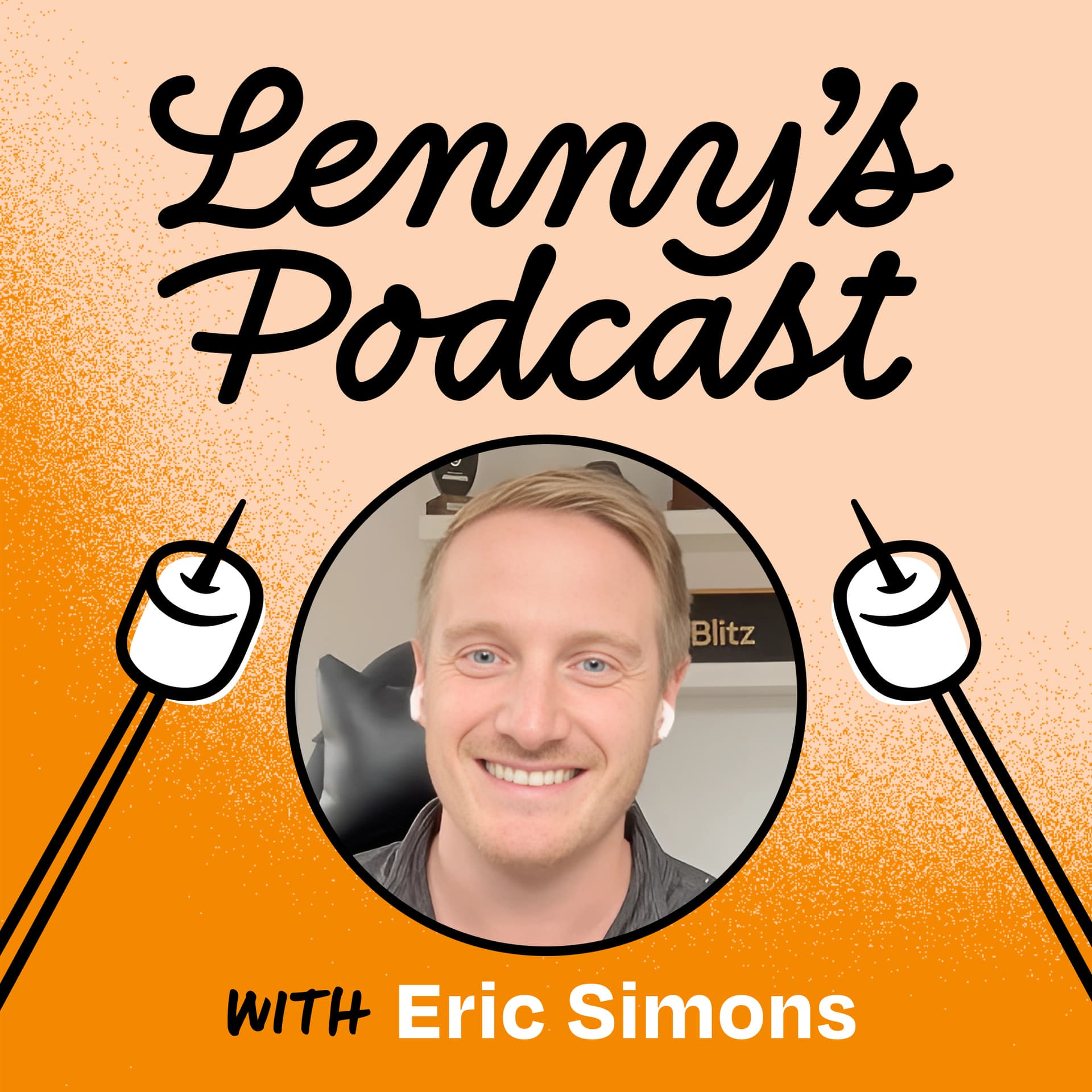
Inside Bolt with Eric Simons Episode Summary In this episode of Lenny's Podcast, Eric Simons, founder and CEO of StackBlitz, discusses the remarkable journey of Bolt, a web-based AI coding agent that achieved nearly $40 million in Annual Recurring Revenue (ARR) in just five months after a near shutdown of StackBlitz. He shares insights on the rapid growth, technology behind Bolt, and the transformation of the product development landscape in the AI era.
Key Takeaways
- Rapid Growth of Bolt: Bolt reached $40 million ARR with over 3 million registered users within five months, demonstrating unprecedented growth in the tech landscape.
- WebContainer Technology: This browser-based operating system allows for a faster and more reliable coding experience, significantly enhancing the user experience compared to competitors.
- AI Breakthrough: The introduction of Anthropic’s 3.5 Sonnet model was pivotal in making AI-generated code production-ready, unlocking the text-to-app market.
- Changing Roles in Tech: Product Managers (PMs) may have an advantage over engineers in the AI era, as the landscape shifts towards more intuitive coding tools that allow non-developers to participate actively in product development.
- Evolution of Company Structure: As AI continues to reshape development processes, company org charts are likely to change, with a potential decrease in traditional engineering roles and an increase in product-focused positions (PMs and designers).
- Eric's Founder Journey: His scrappy beginnings, including living at AOL’s HQ, highlight the resilience required in entrepreneurship.
Detailed Discussion Points
- Introduction to Eric Simons and StackBlitz
- Eric Simons introduces himself and StackBlitz, emphasizing the importance of their core group that has been together for years, which contributed to their success.
- Unprecedented Growth and User Adoption
- Eric discusses the initial expectations upon launching Bolt, which quickly surpassed any forecasts.
- Growth statistics: from $0 to $20 million ARR within two months and projected to reach $100 million within the year.
- The Technology Behind Bolt
- WebContainer: The technology that runs the operating system in the browser, eliminating the need for cloud servers, thus improving speed and reliability.
- Demonstration of building a Spotify clone in minutes highlights the efficiency and power of Bolt.
- Future of Product Management and Engineering
- The discussion revolves around the evolving role of PMs in the AI era, positioning them as key players who can articulate product needs and leverage AI tools effectively.
- Eric notes that developers may increasingly focus on complex, intellectually stimulating tasks rather than routine coding tasks.
- Key Lessons from Eric's Journey
- Building technology first, then finding a problem to solve is often seen as risky, but it can yield significant results.
- The experience of startup life taught Eric the importance of staying lean and having a long-term vision.
- Insights on AI Tools for Product Development
- PMs and designers find themselves in positions where they can now directly engage in product development using AI tools, supporting faster iterations and deployments.
- The necessity for PMs to develop skills in articulating project scope effectively to leverage AI tools fully.
- Scaling and Prioritization
- With overwhelming requests post-launch, Eric emphasizes the importance of prioritization and how they allocate resources strategically.
- Daily team meetings foster communication and ensure alignment on company goals and product development.
- Upcoming Features for Bolt
- Integration with Figma to convert designs into full-stack applications and a Slack bot that acts as a developer assistant in product discussions.
Conclusion
- Eric emphasizes the importance of resilience in entrepreneurship and the transformative potential of AI in product development.
How to Connect with Eric Simons
- Twitter: [Eric Simons](https://x.com/ericsimons40)
- LinkedIn: [Eric Simons LinkedIn](https://www.linkedin.com/in/eric-simons-a464a664/)
- Email: [Eric@stackblitz.com](mailto:Eric@stackblitz.com)
Additional Resources
- [Bolt Website](https://bolt.new/)
- [Lenny's Newsletter](https://www.lennysnewsletter.com)
References Mentioned
- Tools like Eppo, Fundrise, and OneSchema were highlighted as sponsors.
- Various technology references such as Figma, WebAssembly, and the Anthropic Sonnet model.
This podcast episode provides valuable insights into the world of rapid product development through AI, the evolving roles within tech organizations, and the compelling story of Eric Simons and StackBlitz.
Written by AI. May contain mistakes. Listen to the episode to check what was said.
Transcript
Automatic transcript. May contain errors.0:00The rate you're growing is absurd. You're in this cohort of companies that are just growing at rates that we've never seen in the history of startups. The company was on the verge of going under when we launched Boll. And what it had happening is in the first two months, we went from zero to 20 million of ARR. And we've already crossed 30 million of ARR with the current rate we're on. Our forecast for the year is we want to get to 100 million of ARR. This is just a non -stop wild shit. How is this possible? What has allowed you to grow this much this fast with such a small team? Most importantly, it's in the people.
0:31It's rare to find startups where you have kind of the core group of 5, 6, 7 people that have been there for five years plus. You basically were building a tech first and then looking for a problem to solve later, which is often what people tell you not to do. I think that's the hard thing about being an entrepreneur. They're here at the time where you have to make judgment calls that are not gonna be the consensus view. You gotta have like confidence in your convictions on how to best play the hands. A lot of people see these stats and they sometimes don't see that. There was also years and years of work before that.
0:59It was kind of like you're bolstice overnight success seven years in the making.
1:05Today my guest is Eric Simons. Eric is co -founder and CEO of Stackblitz, which makes a product called Bolt, which is currently neck and neck with cursor for being the fastest growing product in history. They are currently the number one most popular web AI code app with over 3 million registered users. Two months after launching last October, they had 20 million AR. At the time of this recording, they were approaching 40 million AR. The story of Bolt is wild. They actually started the company 7 years ago and were about to run out of money and shut down. But they realized the tech that they had been building for the past 7 years called Web Container was perfectly suited for building AI products in the browser, so they launched the product with a tweet and, as Eric describes it, it was an overnight success seven years in the making.
1:53If you'd like to better understand the cutting edge of AI coding apps and where things are going with AI and product building, this episode is a must listen. If you enjoy this podcast, don't forget to subscribe and follow it in your favorite podcasting app or YouTube. Also, if you become a yearly subscriber of my newsletter, you now get a year free of perplexity, pro, NOSION, LINYER, GRANOLA, and SUPERHUMEN. Check it out at Lenny's newsletter .com. With that, I bring you Eric Simons. This episode is brought to you by Epo. Epo is a next generation AB testing and feature management platform built by alums of air being being snowflake for modern growth teams.
2:32Companies like Twitch, Miro, ClickUp, and DraftKings rely on Epo to power their experiments. Experimentation is increasingly essential for driving growth and for understanding the performance of new features. An Epo helps you increase experimentation velocity while unlocking rigorous deep analysis in a way that no other commercial tool does. When I was at Airbnb, one of the things that I left most was our experimentation platform. Right, it set up experiments easily, troubleshoot issues, and analyze performance all on my own. Epo does all that and more with advanced statistical methods that can help you shave weeks off experiment time and accessible UI for diving deeper into performance and out of the box reporting that helps you avoid annoying, prolonged analytic cycles.
3:15Epo also makes it easy for you to share experiments inside through your team, sparking new ideas for the AB testing flywheel. Epo powers experimentation across every use case, including product, growth, machine learning, monetization, and email marketing. Check out Epo at GetEpo .com slash Lenny and 10X your experiment velocity. That's GetEPPO .com slash Lenny. This episode is brought to you by the Fundrise flagship fund. Full disclosure, real estate investing is boring. Prediction markets are exciting, meme coins are a thrill ride, even the stock market can swing wildly on a headline. Hello, Deepzik, but with real estate investing, there's no drama or adrenaline or excuses to refresh your portfolio every few minutes.
4:03Just bland and boring stuff like diversification and dividends. So you won't be surprised to learn that the Funrise Flagship Brill Estate Fund is a complete snooze fest. The fund holds $1 .1 billion worth of institutional calibrary estate managed by team of pros focused on steadily growing your net worth for decades to come. See boring. That's the point. You can start investing in minutes and with as little as $10 by visiting fundrise .com -loney. Carefully consider the investment objectives, risks, charges and expenses of the Funrise flagship fund before investing. Find this information and more in the fund's perspective at fundrise .com slash flagship.
4:44This is a paid ad.
4:48Eric, thank you so much for being here and welcome to the podcast. Thank you for having me. Yeah, I'm stoked to be here. For folks that are not super familiar with Bolt, what is Bolt? It's really simple. You go there, there's a talks box and you tell it to what you want to build, whether it's a web or a mobile app. And so it's one of these text -to -app building tools that become pretty popular over the past few months here. And it's not just like building a static site or something like that, but you can actually build full stack, real software with databases and hosting and et cetera, just from prompting.
5:27And ridiculously short period of time, It's not how you're spending hours, hours, or days putting this together. You can get results like I'm in it. Let's just share some numbers about the scale of what you're building. It's the rate you're growing is absurd. You're kind of in this cohort of companies that are just growing at rates that have never seen. That we've never seen in the history of startups and you guys are at the edge of that. Share some numbers about how things went when you launched and then where they're at today. Yeah, I mean, when we launched, I mean, the company was on the verge of going under when we launched Bolt, like in our company stack blints, We've been around for seven years building web -based development environment stuff.
6:06When we launched this, we were like, this would be amazing if this added 100K of ARR over the next couple of months. What it happening is, in the first two months, you went from zero to 20 million of ARR. I think we're on month four or four and a half or something like that at this point. and we've already crossed 30 million of ARR, and we're on the verge of crossing 40, by the time this comes out, it appears that we're gonna be at 40 million ARR. So it's just like the scale of the growth of the revenue has been nuts. I mean, of course, like kind of that correlates with like insane user growth as well.
6:44Like we've added, you know, three million registered users, you know, just in the past few months here. And, you know, monthly active users is, you know, around a million. I think at this point per month. So it's just, I mean, I've never seen anything, I've been doing startups for like 15 years, I've never seen anything like this. Everyone I've talked to, you know, our investors or, you know, et cetera. There's not a lot of corollaries to kind of what's going on here, you know. And it's kind of extraordinary because I mean, like we, you know, our company wasn't doing any eye stuff the six months ago.
7:21We had no AI products and just out of nowhere, we, you know, from almost death of the company, to being the number one bi -traffic revenue, et cetera, like AI, CodeGen app that's on your web -based in the world. Like, I think the only other startup that had of us is, you know, for CodeGen, just in general, would be like cursor on adoption, or even with this point. And so, it's been a heck of a ride. And our team's like 15, 20 people. So it's just dealing with, we're going to be closing on like 100 ,000 customers. And we've got our support teams like three people. So we're trying to scale as fast as we can.
8:01So it's just mind -blowing just the scale of the demand and how we've had to turn things around and match the demand as fast as we can. You know, mind -boggling is an excellent way to describe what you just shared. A million monthly active users year at 40 million annual recurring revenue five months into the business, that right? Yeah, single digit week, yeah, single digit week's rise. Like that's the current track rate that we're saved for this time. I think if you guys are the fastest growing startup in history. I mean, I think it depends on probably where you peg the number right? Yeah. Yeah, we're here to just build great products, right?
8:44And just push the limits of what's possible with the technology. And I think that we do our jobs well. It's kind of crazy things can happen, but I mean, the current track rate we have, we're already, we're going to be exceeding the forecast for Q1 with the current rate we're on. and our forecast for the year is we wanted to get to a hundred million of error. And now I think there's been a couple, that would either be on par with cursor or ahead of them or something like that. But I mean, and I think there's gonna be more things like this too. I don't think they'd like, you know, it's just that there's something really, you know, I think a lot of people are in disbelief about it too.
9:27We're like, this is okay. And this is, from when we got to a four million of error, five million of error in the first month, I would talk with people and they're like, okay, yeah, but like that could go to zero and then it went to 20 then actually I could go to zero and it's like, but now we're now we're closing on 40. So for my view, I was also very skeptical as this, I've never seen anything grow like this, right? And so part of me, I was just, I was kind of, for like a month, I was kind of waking up waiting for the day where it just was like, okay, so, right? I mean, like it's this crazy thing happened and now it's not, but that's just, that And you see this happening with curse.
10:08You see this happening with a lot of these other AI startups. And the value proposition is real. Like the free market is filled with rational actors. People are coming in these tools because it is solving problems. They're able to do way more for way less cost than it would otherwise. And so, and that's why I said, I think we're going to see more of this. Whether it's encoding or getting other verticals or whatever, you know, In a sense, it's almost like the maybe the new normal right for this AI just continues to get better But anyways, let's get to a demo of Bolt So people can actually see what this looks like in action and as you go through it if you get even point out stuff that is Different from other products in the space say level bowl of E0 Replit that other folks have heard about that be useful Awesome cool.
10:58Yes. This is bull if you just go to bolts on you things that I think are really interesting about bull. One is it's just like dead simple, whether you're logged in or logged out, this is the same UI, it's extremely simple, it's just a text box. And I think that the biggest difference between bull and the other stuff out there, it's actually subtle, it's not like something you'd necessarily see in the UI, but it's how fast it is and how reliable it is. And this is because of how we are actually doing the compute, because what's going on here is like, when you type into whether it's bull or another product, it has to spin up a demo environment to actually make that application.
11:33So there needs to be some operating system somewhere that's running it. Everyone else runs those things on cloud servers, which they those can take minutes to boot up, and they often will run into issues, and then you can end up literally stock, right, and have to contact support to get it done, and get it unstuck, right? With Bull, like in the past seven years, what our company's been doing has been building an operating system that runs inside of your browser locally using your CPU. So we have a very permissive free tip. And it's insanely fast and it's insanely reliable. Right. So if I want to like just as a quick example of this, they like make a clone, you know, of spawnify, right?
12:07I just hit enter. This thing's already getting to work. And already on the right here, this is a full dev environment. Like this is an actual operating system running inside of my browser. And I can, you know, run commands on it, et cetera. And really This is like what you're seeing down here, this terminal, and kind of what's backing it. This is what took us really like five, six, seven years to build and make so reliable. There would not be a bolt without this technology called WebContainer. That allows us to run an operating system in the browser. Because what's going on here is our AI agent for Bolt has bidirectional communication with this operating system.
12:44It's writing code. It's running the dev server for this thing. It's going to go ahead and spin this up. You can see how fast this is. and you met our 60sac as I said, make me a Spotify clone, and now we have one, right? And it looks pretty darn good. That looks really good. And so that's one of the other aspects around bold is this technology we made for the operating system side. The guys that have been working with us for past five -police years on it, before this, they were actually doing machine learning AI stuff. And so when it came time to write the agent for bold, we had just an incredible amount of in -house expertise on how to actually merge these two different technology sets to have this really reliable experience that produces really beautiful, really functional stuff.
13:27So that's kind of like, you know, based on what's really cool about the Bolt experience. The other thing is, you know, a lot of these products, it's like you can like make something, but you know, often you want to like actually have a URL where you can share this, like, have it like maybe even attach a domain to it or whenever I have you. So with Bull, we actually have built -in integrations with production -grade hosting providers like Netlify and for databases with SuperBase. So if I go and just click the deploy button here, this is actually going to run a production build of this project we made here.
13:59Again, this is doing this entirely inside my browser. So it doesn't cost us anything to do this. Again, you can do this for free. right? And it has gone ahead and deployed this on a real URL on nullify. This is live. I can share this with anyone. And if I want to have like, you know, by the domain Spotify clone .com and point it at this, I can click this link here, then I kick me in and let me fly. I'm going to attach this to my account by domain, point at that thing. And then from there on out whenever I'm prompting Bolt to make changes to this application and hit deploy, that goes live on my public website that, right?
14:35So it's just, this is, this is like the simplest way to build a web app that's ever existed, you know? Like that's kind of one of the key realizations I had a couple weeks into the thing. I was seeing people use this for like personal use cases like medical donation sites or weddings or whatever and I was like, don't see people know that like Wix or Squarespace exists. Should I tell them, you know, and then it hit me. And those things are so complicated to use. Like, I don't know if you've ever seen just the UI of these things, but like, they're crazy complicated. And that's just for building a static website.
15:09There's no way you could actually build a functional app. And that's like with Bolt, if we were to sit here for another 30 minutes, we would have streaming. You'd be able to make playlists of different MP3 files, whatever. You can just keep prompting this thing to keep out of function. So it's that kind of, I think, the cool core experience of Bolt here. I mean, show you something cool that we just launch if that would be a event. So this is like web apps, right? So like web apps are amazing. But often you want to have like a native app, you know? And it's hard to build web apps. It's even harder to build native apps that can actually, that you can then go put in the app store, right?
15:45And so we partnered up with a company called AXPO and their entire business is making basically like react native tooling in this ecosystem that makes it super easy to build beautiful apps and actually I'm in the app store. And so right here, I'll zoom in a little bit. We have this little build a mobile app with Expo. So if you click that, we kind of instruct you on how to just prompt mobile apps into existence. So let's make another Spotify clone that's an actual native mobile app. We'll say make a Spotify clone, go ahead and enter. And what this thing is going to do is actually again, spin up a operating system year where it's going to boot up the Expo tool chain and actually going make a mobile app for us.
16:28And what's cool about this is we could actually preview it just in the browser here. But once this thing's done and it boots up, it's going to show a QR code. We're going to be able to scan it. And in real time, actually, I basically have like a test flight of this native application that we can try out on our phones. And as we keep prompting, you'll see it making changes and stuff. Right? It's like kind of the first time that you don't have to be technical to make production grade, Web, Full Stack, Web, and mobile apps. At this point, I've done nothing that requires developer knowledge to do any of this stuff.
17:08That's kind of, I think that's what a lot of people are really excited about with this. and the majority of our audience are people that are not the millivers, they're the easiest, they're PMs, they're designers, they're entrepreneurs, because these are people that are, oh, I've always been great at building products. And the previously the only way they could get their ideas into coded software was through a developer's fingertips, right? And now, now they can, you can deal with the run, you know, through Promptheg. So you can see here, you've got this look, your code, I'm going to scan the thing.
17:42I'm going to do it too. By the way, I love that you had just enough things to say until I finish. That was a pro. Just as I planned. But on my screen, it's booting up, it's bundling the JavaScript of this thing. I think it's beta. We just launched this last week, by the way. So if you guys see on my screen here, I actually have this Spotify looking app, right? that time, you know. That looks like exactly like fun. It looks like exactly like fun. We're gonna be sued right now. So let's be quick. You're doing too good a job with this. No, that's amazing. So it's pretty cool, right? I mean, then what's cool is it?
18:24And as you keep prompting on your device, it'll just keep reloading. Like without you having to kill the app, you can actually see the functionality getting added. And so in this use case that you and I have right now, it's like, if you're not rebuilding an app together, you know, but we could be on other sides of the planet and you could actually be not just seeing a screenshot of the thing but actually touching it and feeling it and putting it through its paces. And so a lot of product teams, I mean this is just changing how people do product development, you know, it's faster to do this than design a whole bunch of figma frames necessarily, right?
18:57So we're gonna spend a lot of time on that. Okay, this is an incredible, like this whole episode So far as you're just blowing my mind, I imagine, this turns my end just over and over and over. I don't even know where to go with all this. Sometimes, you made a really important point that you worked on this for seven years before you launched Bolt. A lot of people see these stats zero to 40 million IR in like five -ish months. And they sometimes don't see that. There's also years and years of other work before that. And the reason that you guys have been so successful is all the work you did that allowed that build this web container technology, it sounds like, is there anything married that's worth sharing?
19:34You think of it just that part of the journey? I know we'll go through the origin at all, where Bolt came from, but I guess just that web container component specifically, that feels like a huge deal. It 100 % is, yeah. And I would say this is kind of, surprisingly to me, it's like still one of the contrarian viewpoints of our company, like despite, because over the years it was like, when we first, this is, and the web container was the bat that we made the company on, just to be clear. Like the stackplits was like a deep tech, a browser based, deep technology player on, can we make a, you know, a web assembly based operating system that can like boot into browser and like 100 milliseconds and like run full onto the mobile toolchains?
20:19Like that was really it. And like the, we got the idea for this and kind of the insight that this might be possible. Because back to my co -founder and I, I came out to the valley, he and I grew up demonstrators from each other at Chicago, put under code together at 13 and build stuff ever since. We came out to the valley in 2012 and we just had the good fortune of bumping into Dylan Field and Evan Wallace when they were building Figma in the early days. That was, I don't think a lot of people are like, no, that like Figma was also a browser -based deep technology play. When their first pitch for Figma, they didn't have a design tool.
20:54Their first pitch was this 3D ball dropping into water inside of a browser town. And the pitch basically was, you know, browsers have this new capability called WebGL and the predecessor to WebAssembly. And with these things, for the first time that you could actually create a graphics rendering engine that you could then build a design to on top of. But you're going to have to write that rendering engine from scratch because nothing exists that can just compile into YGL or whatever. If you want to perform as you need, et cetera, it's going to take us years to do it, but we do it. We think this will change everything for design.
21:35And obviously, we know how that story has panned out now. And back in 2017, 2016, 2017, Albert McCollough found her and I saw the same sort of story begin into play out, but for wide development and development environments. Specifically, there is some stuff that landed in browsers like WebAssembly, shared memory, service work, these different APIs. And we were like, oh, wow. It should be possible, theoretically, to write an operating system that in WebAssembly, that could run Node .js and NPM and all the toolchains on top of it that you need to do to do web development. And that would be huge because setting up developer environments is it's a pain for beginners.
22:19Like a lot of people churn out. The first thing you do when you learn out of code is not even learning how to code is how to set up your computer to even start writing the code. If you go join Netflix or any of these other fan companies, the first month or two is you being onboarding to run that stuff on your computer and set up your environment. Right? And we're like, we could just have that be something you click a link and it just boots in your browser, that'd be huge. It's also, if you look at the other productivity apps that have really worked on the web, they've all had this compute model, right?
22:49Figma, when you open a Figma document, there's not like some cloud VM that gets spun up for you to render the documents you're drawing things around. It's using your CPU and your memory to do the work. Same thing with Google Docs, right? That's the only model that's ever scaled to a billion users. And so when you look at cloud IDEs, Cloud 9 was the first one back in 2009 or so. The way these have always worked is that your browser is basically doing nothing when you go to them. It's every user that gets connected, there has to be a Cloud VM that gets spun up for them. Then your browser's just taking your keystroke, saying it to the server, then sending back the result of it.
23:27That's all these other AI text -to -apps, tools work for all using Cloud VMs. And the problem is, you know, on a small scale it can work. But as you scale it up, there's not even a hundred million VMs to write on the planet. But there are like a billion devices that you can run this stuff on. Is that kind of what we've seen with Bulbware? You know, if you want to have built a product that's going to be able to scale to that, you have to kind of look at all factors and go, we have to build, make sure the technology provides the best experience, zero latency, transient costs, there's a permissive free tier.
24:06Because the other problem with the server is, if you end up a free tier, people are mounting Bitcoin on it. They're DDoS and people using your servers. So inevitably you have to nerf these things and roll the back. But if it's all done on the end of ice, it doesn't matter. So that's why the container was the key piece and what we struggled with. It took us four or five years to build a web container. What we struggled with for the years after that was just how to build a product around it. that like that, because developers loved it, but they weren't using it in ways that they would pay the money for, you know?
Read the full transcript
24:39And as much as I, the nerd side of me wished that that would be enough, that as like a building -cool technology was not, it's like, it's not. Like this we're here to build a venture scale company. And so that was kind of why we were, we were at the end of the journey where it was like, You know, we're taking shots on goal and we, you know, at some point we just got to connect it back, right? There's a lot of, it really interesting lessons from this journey that I think are counterintuitive. One is you basically were building a tech first and then looking for a problem to solve later, which is often what people tell you not to do and it worked out in this case.
25:18The other interesting takeaway here is, it feels like a similar moment to an Ajax came out and then everyone's just like, wow, you can build these things here. So it feels like there's a lesson here of just if there's a new technology that is enabled something that something big that we think maybe let's just work there for a while and see if something comes up. And then I think the other lesson here is just as a founder, just survive as long as you can because you may find something that works. All great points, all great points, right? Because what we did, you're dead right. Like for any of the fortunately my co -founder, I had we had built a lot of unsuccessful with this, that you've spent most of the 20 times like turning through ideas on things.
25:55So we, you know, what we had conviction, I was like, this seems like a technology that will be important. Like it seems like the web is the most ubiquitous, like the pitch or the theory in R, I was like, the web is the most ubiquitous plot from the world. But yet it has no, you can't use the web to like build the web, right? Like every other plot, like Mac has, you know, the Xcode, Windows has Visual Studio. The web had nothing. And we were like, at a minimum, Google should probably buy this thing from us. It seems like that should probably be part of Chrome. At a minimum, right? And we thought, hey, this could be a huge enabler.
26:32Like, the vision of just making it as easy to build full stack applications as using Canva, right? It's like, it just seemed really compelling. And when you do that sort of risky, deep technology play, yeah, you do that. you need to, and we were very good about this. The previous company algorithm I did, we bootstrapped it all the way through to acquisition. So we understood, and we were like living hand -to -mouthed like, bootstrapped that thing. So we understood how to have a low burn rate and take a lot of shots on goal that make every dollar stretch beyond what anyone would think is reasonable or possible.
27:10And that's how we played our hands with stacklets. But we didn't raise money for the first two or three years business with it, you know, the company's life. We were, you know, bootstrapping it. We did raise money. We barely spent it, you know, largely because it was like, we need to just take a lot of smart bets and it doesn't make sense at, you know, I would just say generally, like, until you see pull, like, and you know, just people pulling the product out of your hands, you want to, you don't want to be spending money. You should be like default, no. And like when you go and buy software, where you should be going, we're a tiny startup.
27:47Can you sell it for half? Like everything you buy, I just like, keep the Burumi as low as possible, because you need as many shots on goals you can possibly get, because you have no idea. And I think there's generally for startups, that's the right way in my view to approach it, you know? I'm not stressing again, immediate demand and pull or whatever, but yeah, I think I'd be kind of like, maybe the extra context set out on top is like, I think that we end up doing a good job of being extremely conservative during a time in which, during 2020 to 2021, which were times where exuberance and growing headcount was like KPIs of companies, right?
28:27And were things that were being, you know, with a lot of emotional force of like, hey, you guys ought to be doing this. and I'm glad that we didn't heed the advice because if our we tripled the company and kicked out the Burray, there would be no bolt. We would've got a business a lot of time ago. I think that's the hard thing about being an entrepreneur, I think is you have to, there appear at the time where you have to make judgment calls that are not gonna be the consensus view. Maybe years later, or people, you know, it'll become the consensus for you, but, you know, you gotta have like confidence in your convictions on how to best play the hand, you know?
29:14So, there's so many great lessons here. I think just this idea of just staying alive, Dalton came on the podcast, he's a partner, why see ones and you just have this phrase, just don't die. And that's exactly what you guys did. Seven years of just trying it until something worked in it. I love that you actually were planning to shut down the company right before you launched Bolt, and I know you launched it with just like a tweet, right? That was the launch moment. Yeah, yeah. Maybe talk about that moment of just after launch signs that okay, this is working. Sounds different. Yeah, yeah. Yeah.
29:43So day one is like, there's a great reception to like the tweet. You know, we were like, wow, this is like, you know, one of the biggest things, you know, I love a lot of day reception we've ever seen. And I think on the first day, you know, I think we added like 60K of ARR or something, which was like, I mean, creative. We were at, yeah, again, We were at 600, so we added like 10 % in a day. And I remember our demo, I was in a year of like, he used to want to even fly, and he was like, guys, we had 60K today. Like this is crazy, and I was like, yeah, yeah, but like, this is the launch day. Like it's the, there's the tech crunch peak of initiation or we know that the classics start up through the trial.
30:17So yeah, I was like, listen, yeah, I'm trying to like temper enthusiasm for the team. Like this is great. Got a lot of work to do, da da da da. And the next day, we added 80K or whatever it was, right? And it just kind of kept going. And all the while, like the product we put out, we built the thing in 90 days. We built both. So there's a lot of things that we're missing in the product, basic stuff, basic stuff. And which again, we cut the right corners on the thing to get it online, but we had this just growing influx of people usually going, how is there not a mobile responsive view? Like how is a network chat message is not, We got the 20 million of error without a mobile response of you by the way Just throwing that out there, you know this it was like the iPhone not having copy and paste until like iPhone 5 or whatever You know that was this was that was out this is that for us.
31:10It was like no more you looked at it on mobile It was terrible right, but there's like stuff like that so we had to just like and they were small team and so we're completely unprepared for Just the the growing traffic and and and you know So there's a whole bunch, I mean, I get the list of problems that were happening every single day was not. So I mean, like, to start, we had never had a plan on stackus .com, but, you know, for more than $9. Like, we had one price, nine bucks, right? It's a little launchable. We're like, again, we don't think they, hopefully people like this, but, you know, nine bucks doesn't get you a lot of inference.
31:47And so people burn through nine bucks in like 48 hours, you know, and they're like, I want to buy more. How do I buy more? Why would you take my money? So it was like that within the week, we were just completely new price requirements where you could upgrade, which ended up, has kind of now become the standard all the other guys in the space have copied this, where prior to you bolt going online, copilot, like all these previous AI things, everyone kind of wanted this like Netflix model where there's like one price, it's like all you can eat or whatever. And for all of us, like we do that, like you can't really like you want the inference cost to be kind of low because you're expecting people to use it a lot right?
32:25And so you don't you can't do these agentic experience things. It would be too expensive. And what we had to stumble into is that okay actually people are willing to pay more right? They're willing people want to pay for more inference because we've crossed this threshold where you know you can get it a very tangible ROI like you know that this is providing a tremendous amount of value to you right? So hey it was so that was like that was like one thing and you know the servers were just melting and theropic ran out of GPUs for us like Dario email me who's like lesson we just we don't have anything more to give you at the times where we're like how do we deal with you know it was just it was just bananas you know for for weeks it felt like in 300 you know when when they're surrounded by like 10 ,000 people and and our team is just like doing everything I guess Chief of Staffinar were doing customer support 95 % day.
33:21You know, just, hey, anyways. So yeah, it was a crazy wild time. I mean, it still is. We've had a little bit more time to kind of grow into this. And usually it means a company to grow into like even 20 million ARR, you get a year, at least or something, you know, it's kind of staff up. Often decades. Yeah, you know, so it's, you know, that was as hard as we go to people and kind of be like, what do we do? And the playbooks we get back are like take six months or a year or something. It's like, this isn't going to work. You know, and which is funny. This is what it's all about, right? I mean, this is, this is, um, um, you know, it's at least for me.
34:01And this is that level of intensity is inside. It's, it's, it's challenging. I mean, fun challenges, you know. Wow. Okay. This is just a non -stop wild, wild shit. So you mentioned that your team was about 20 people through all of this. You guys are growing at this insane rate, 20 people. How is this possible? What has allowed you to grow this much, this fast with such a small team? This 300 visual is interesting. I imagine having these Spartans as a big part of it, just what has allowed you to do this? Yeah. I think a lot of me, a lot of, again, I mean, if you kind of look at where a lot of the other folks in the code gen you have talked to Appspace have really been struggling.
34:51A lot of it has been scaling our servers to the stuff, right? Because it was kind of like both this overnight success seven years in the making. Like all of this stuff, like there's no way, if you free one year two, there's no way we could have, we would not be at the growth both on DAUs and revenue or whatever. There's just no way. And so a lot of the technology we made, and most importantly, it's been the people. Like the people, it's rare to find stars where you have kind of the core group of five, six, seven people that have been there for five years plus, right? That's a pretty rare thing to see.
35:34Like in Silicon Valley, it is usually folks So kind of at a job for you to start for kind of year or two, they're gonna go to another one. You know, I mean, the problem with the turnover like that is that you can't take like really long bets like the one we did. And so we've had kind of from the get go, again, this comes back from bootstrapping the previous company like just having less people and more context per hat. Like that's just, that's just been, that's just been how we do it. And we feel very strongly about it. And the reason for that is one, that you can have high levels of trust with anyone you're talking to because you know that they have a lot of Contacts it's not like you know, and this person completely in the dark and in some quarter of the company that done I mean the second thing everyone has agency to actually get stuff done Front to back right and and you there.
36:20There's no political community to get stuff approved by there's none of that you know You know, so when you look at what kind of what happened with bowl? I mean we had engineers that were like front to back We're on a call with someone running into an issue you're going and fixing it, you're cooking up the UI on the spot and landing the thing. Without involving anyone else on the team, right? And that, yeah, so I think it was the culmination of just high trust and people, like we all just have enjoyed working together on the cost of it. That's why that's the only reason anyone would ever stay right in a company for that long or whatever.
37:00And so those sorts of stressful situations, I think, are make or break, right? Like those are make or break for any team. And so that I think that what's happened is really, you know, it is a direct reflection of the strength and the bonds of the people that are making this thing and supporting the fact. Yeah. I think that's such an important point that you guys have been working together for many years. Most people won't have that benefit. When you're hiring people, when you hire this initial team, is there anything you look for that you think maybe people aren't looking for enough, anything you prioritize when you're hiring people?
37:37Is it this idea that they can do a lot? They can do customer calls, they can do design, they can do engineering. Yeah, at that for Ross, and even if the folks were hiring us, hiring people that don't care about the titles and they don't care about, you know, it's not like they're, people, people, of course, it's where you have a career trajectory, and that's what thing. But it's like, they really are motivated by just working on cool things. And, and are, you know, checking the ego out the door and they're there to like collectively build something great, not just just kind of following, you know, be the, the, the brilliant jerk, right?
38:17most of the people that we've hired have been in Europe and we're a fully remote company. My co -founder and I are in the Bay Area. It's funny, back in 2018, we ran into an office and stuff. And we were commuting into it because we thought we'd hire people here in a year into it. We were like, what are we doing? You and I were coming to an office for 10 people. The people working for us are in Europe or across the US. And I think, and we have a one -hit show of people we've hired that are in the Bay Area at this point. But yeah, I think we kind of look for folks that are intrinsically just trying to build great stuff and are interested.
39:01And then the first people that we hired, they'd read some of them as that they were users of stockpots. That was a lot of people that the majority of people we've hired the company had been people that actually came from our community, basically. That's what we want to hire people. We put on a tweet and say, we're hiring an engineer, and then we get DMs or whatever, right? But those are the general kind of qualities we look for, though. I'm excited to chat with Christina Gilbert, the founder of OneSkima, whenever a long -time podcast sponsors. Hi, Christina. Yes, thank you for having me on, Lenny.
39:37What is the latest with one schema? I know you now work with some of my favorite companies like Ram, Vanta, Scale, and Watershed. I heard that you just launched a new product to help product teams import CSVs from especially tricky systems like ERPs. Yes, so we just launched one schema file feeds, which allows you to build an integration with any system in 15 minutes, as long as you can export a CSV to an SFTP folder. We see our customers all the time getting stuck with hacks and workarounds, and the product teams that we work with don't have to turn down prospects because their systems are too hard to integrate with.
40:10We allow our customers to offer thousands of integrations without involving their engineering team at all. I can tell you that if my team had to build integrations like this, how nice would it be to be able to take the software roadmap and instead use something like one schema and not just to build it but also to maintain it forever? Absolutely Lenny. We've heard so many horror stories of multi -day outages from even just a handful of ad records. We have laser -focused on integration reliability to help teams end all of those distractions that come up with integrations. We have a built -in validation layer that stops any bad data from entering your system, and one schema will notify your team immediately of any data that looks incorrect.
40:46I know that importing incorrect data can cause all kinds of pain for your customers and quickly lose their trust. Christina, thank you for joining us and if you want to learn more head on over to oneschema .co That's oneschema .co. I want to ask a couple more questions about Bolt and then I want to zoom out and talk about where things are heading in the future. Let's talk about peritization. Imagine you guys are just like barrage with as you described after you launched. You're just barrage with requests. Like you said, there's a million monthly active users. I can't even imagine the feature request you guys are getting.
41:21Plus all the stuff you know you want to build, just how do you go about deciding what to prioritize and what to actually build? There's a lot of things that you just don't even know are possible to do, right? It's if people aren't going to be like necessarily explicitly asking for them. And so there's been kind of a couple of these where we kind of use our gut instinct on like, hey, this, this, no one's asking for this, like a meaningful numbers at least, but we think this is going to be a big deal. The best example was last week with native mobile apps, Port. That's the, you know, a bioreception, like the biggest thing we've ever launched.
41:56And it was something that even internally at the company, you know, some folks like, this, you know, I don't know, people are like, y 'all know about these other things, right? And it's always this balance of like, how much are we just triaging various things versus like that new capabilities? But it's like, this is, strikes me as an important one where we, where we, you know, put some chips into the middle of the table on. And the okay, I'm dead right. It's just this mind -blowing experience. And now there's just thousands of middle of apps being created a day that worked before. And how does that change that?
42:30I mean, that's now there's small businesses that are, you know, they would have never made an iPhone out before, made no sense. It's super expensive. Like, now that's not the case. I mean, like, there's so many things where it's like, hey, we should go and, you know, take bets here. But there's kind of this, it's, I think the best analogy would be like, it's kind of like I think, you know, you're working at a restaurant, being like a chef. It's like there's some amount of, there's feedback from the customers, right? Like this thing didn't taste good. And then there's like, hey, we've been kind of cooking something interesting and this tastes, this, the, I don't know, this is I think you're born in like this, you know, I think this is a killer niche.
43:12And so you kind of have to balance those things and I think it's actually largely a function of just years of experience doing. I think if you kind of rerolled like 10 years ago, I would have had really no, I would have had just the years of getting my bought kits by the free market to have kind of cultivated a sense of this stuff, you know? You kind of have to build your own gunheads, take for it. I guess, is the best way putting it. To unpack this a little bit further, do you have kind of a cadence you guys work through to decide what to build and ship. Do you have a weekly meeting every week?
43:48Because I know the answer's probably really, it's just like chaos constantly in fires. We're putting out constant. I know that's a lot of it, but is there some kind of process that you guys have for deciding what to build and how to share it and just work with the team? We all meet like every day, like pretty much the entire team gets on call. They were just kind of front of that. Like a Zoom. Yeah, every day at 8 a .m. Pacific, we're on a Zoom for every day of our company. pretty much the entire company. Yeah, wow, for an hour. Okay. Yeah. And we just go over everything. And I think we're going to probably start, as the team's going to grow, we're going to start splintering off into different things or whatever.
44:23But the thing about just having everyone in the same room every day is that a lot of people will complain that it's, you know, this is, yeah, Twitter you'll see people say, oh, like, it's the most expensive use everyone's time, right? But it's like, yep, but like there's 0 % fidelity loss in that. everything is everything every day is being audited front to back and being discussed front to back. And so when you're in these times of just extreme growth, right, it's you you you want as close to zero percent, you know, loss, right, on on communications. And so that's that's how we've that's how we've been doing since especially since Bolt went online.
45:05I think it was like the week after Bolt went online. We're like every day we're until until we're through this or whatever, we're all getting on a phone call every day and we're fronting back doing this. But again, another reason why more context on, you know, in last hens, you know, every person at the company is aware of everything else that going on at the company, right? So, people can independently be making decisions that are generally by default more, more often correct than not, you know. That is so interesting. I've never heard that before, especially for company growing like it, that is like yours.
45:37So that is super interesting that that's what you do. I don't think we're gonna do that forever. Yeah, yeah, of course. But that's, I think that's a really cool thing to know, that that works and that's work for you. Where do you, so say you talk about stuff, then where do you put stuff, where do you put your roadmap, where do you plan just like with tools or kind of in the stack of the company's tool set? Yeah, on the internet side we use linear like heavily on kind of products, you know, road mapping, I think we're using notion and you're kind of making like PRD type stuff in notion. You know, and we use Figma for like design.
46:15We use Bolt for a lot of design and prototyping at this point as you can imagine. But yeah, I think the tooling is, nothing nothing crazy. There's nothing crazy sophisticated. I think we're going to be investing a lot more. And especially I don't know if you just start splintering people out of being on the same call every day. So that's where this stuff really starts to matter because you don't have a time where you're able to dynamically catch things that work and you brought off. I love that you guys use PRDs. I love that you even use that term. There's a lot of talk of just like, oh, we got a bolt now.
46:50We got like tools. We don't need PRDs. We're just going to create a prototype immediately. That's it. Talk about just like why you still find that useful and just what you put into your PRD, whatever that is for you. Unless there's something that's very sophisticated that we're working on, we tend to keep them pretty light. I like to just have the minimal amount of context possible that just ensures everyone's on the same page and that the key outcomes for whatever feature that we're working on are going to be present when we get. Because the things that when these things, when these drivers get really beefy, if you look at it at God, there's so much stuff to decipher.
47:23for you know, the problem is a lot of people are going to gloss over it when it gets kicked to development or design or whatever. There, it's just going to start snowballing into Alaska. It's just better to keep it as simple as you possibly can. And at least that's kind of our approach to this thing. And often it's, it's, some of these things are like, here's a link to a bolt. Where it's, it's, it's, it's, it's, it's, it's, it's, it's, it's, it's, it's, it's, it's, It's kind of a working demo of what it will effectively feel like. Right. And then be, because that just, you know, if a picture is worth, you know, a thousand words of like a live actual demo is worth millions, you know, like you can, you can feel it.
48:07It's real. And that's what we're seeing like a lot of the, you know, the businesses that are adopting bullet now, that's the use case that they're using this for is high fidelity prototyping. because it's now faster to make real prototypes using Bolt. And before it's too expensive, the idea of like, let's prototype it by the way, the engineers code a prototype. It's like, that would take forever. It would be expensive. And now it's faster to do this with Bolt in code and have a real working software product than dragging around frames in Figma to actually make a static version of it. So let's actually talk about that just how far have companies gotten with Bolt.
48:48Prototypes is where everyone's imagining these tools are at. I know that the goal isn't just to make prototypes. It's to build full -scale. Imagine long -term sales force, you know? Atlassian -style companies that scale. What are some examples of products people have built with Bolt that are maybe surprise people just how far they've gotten? Yeah, I mean, especially when you're starting Greenfield stuff, you can use Bolt to build, I like on the sales force it's an example. One of the first people that signed up for Bull was this guy named Paul and he's an entrepreneur and does not know how to code.
49:25Built a CRM in three weeks that has AI built into it and striped for billing, etc. He had gotten a quote from an agency for this. It was going to be 30 grand and take six months. He had done it in three weeks and it these made like 300 bucks on Bull for the thing. And so it's like this is like any is making money off of this like this is a start All right, okay So he built this and he's selling it like people are paying to use it. Yeah, yeah Yeah, and then there's many such cases of this right when you can you if you're looking at greenfield projects 100 % like there's today with this current state of frontier models You can absolutely build production grade software, right?
50:02It's you're not gonna get a zero shop But you're you're gonna spend a couple days weeks whatever However, but the cost reduction there, 30 grand versus $300. 99 % cheaper, six months versus three weeks. I mean, it's like order of magnitude sort of a fashion delivery on the thing. And those numbers of health for the people that we talk to, they're building these full stock, you know, ass. Like people that they go to work, they get a quail for five grand, they have it done within 50 bucks, you know, it's just nuts. What you're able to do with this thing. And so I think on the flip side, a lot of the existing companies, they will, there are very legitimate use cases where things are greenfields spot up.
50:44Good examples like public websites, marketing pages, landing pages, whatever have you. Folks are adopting bold to just power those instead of using webflow. For example, you know, because it's like this is simpler to use, the webflow, and it integrates with the existing design system of the company, and et cetera, right? in the marketers can up to you without knowing how to code, you know, whatever. But then for product development teams, this is most commonly for, again, existing software businesses. They're using this to just accelerate the product and element process. And in a way where it's not just like a green field wholesale, you were building the entire thing in bulk or whatever, right?
51:20Can bulk integrate with your existing code base or not yet? So yeah, we can actually open up repos in bulk. So you can like go and use bulk on your code base. It kind of depends on your setup, right? Like we do have companies, again, they have marketing sites that are using the SON or like, you know, their admin panel or whatever. And I think it's gonna be a use case that we see a lot more people orienting towards. These L -lums are not great. Do they know how big your application is though, right? These things are not quite there where if you have something that's, you know, that's a thousand files or something or more, where you're going to be able to have a really reliable, super reliable experience, per se, right?
52:04Within a year, you know, we've tried a year from now, I suspect the answer's going to be different. But, you know, it, so it kind of depends on the size, the app, the scale, the app, and if it's too big, you're looking at the prototyping, like just pure acceleration, right, a product development, and if it's not, then you're, you can just do it the entire way, right, from bold. So this is useful. So what are the, And what would you say are the major limitations of a bowl today where people should just know, okay, it's not gonna get you here yet, maybe in the future, well. So it sounds like if you have just like a really large existing code base, probably not the best tool yet, what else should people know?
52:39I would say that's a pride to mean one, because I think if you have a large existing code base, you're gonna need something like cursor. And you're gonna need to be a developer meaningfully to be adding that stuff. You know, I think outside of that, it's, there's a, just like using any other productivity tool, like Photoshop or Figma or like a DSLR or whatever. There's some level of kind of education and just kind of like an end -usement tool and like learning how to use it. That's required to like really unlock a lot of the maximum capabilities of the thing, right? And you know, the people that we see there are most successful with both like outside of developers.
53:17The people we see there are most successful are people that are amazing key amps, for example. because these are people that understand enough about how the technology works typically. Their job is to direct developers on how to go and improve the product, and how to actually spec this thing out in a way that's executable without lossiness in the communication. When you think about how would you best interact with an AI developer agent, it's basically that. You really want to be good at defining scope and helping it go and debug various things or whatever have you. And so there's a huge overlap of the skill set of just like being a rockstar or PM and being really good at using, frankly, any of these text to apps or to a code gen.
54:08I love that you made that point. That's exactly the point. I've been trying to make, I have a newsletter post about this because when all these tools People came out, there's so many people saying, okay, PMs are dead. We don't need them anymore. We just build things and build things so quickly and easily. What's the point? But I completely see the world the way you see it. The hard part now is, now it's easy to build a thing. Now it's, what the hell should we build? Can we clearly articulate what it is we want to build? And then can we just have the taste to know is this right? Is this correct?
54:38Is this good? Is this going to solve the problem? And then it's like, grow it, which is something also PMs think about. So I completely agree. Basically it feels like PMs are, and there's a lot of PMs listed this, so they'll love hearing this. To me it feels like PMs are the best position role to thrive in this world. Zero question. I mean that was like, and as Bull was growing, and like we were like, we were a developer prod before this. And so we expected the audience to be 100 % developers that were using this. And we just kept seeing more and more and more people that were not developers using it.
55:10To the point where it's like 77 % of our users are not developers at this point. When I started talking to these folks, at first I was just like, we heard or whatever, it was like, well, what's going on here? But then it just kind of clicked is like, oh, well, this is going to change everything. The entire software world order is going to get rewritten here, because the way that companies are organized to build software today, totally going to change. The idea that, again, PMs are the people that really understand to the pixel level, what matters into making a great product experience? And often, they're having, listen, I'm a developer myself, they have to go to the rank of the developers, to get things to be how they really ought to be to the smallest levels.
55:57And now, how this is going to work, if you fast forward one, two, five years, whatever, like PMs, they're gonna be writing quote unquote instead of just writing a gearticket and waiting for a developer to do it. The developers are going to be able to work on, you know, intellectually challenging tasks that all of us are not well suited for, right? And still being augmented by all of us to do it. But PMs are going to be able to go in and just make the changes themselves. And just the blue mind, that is not priced into, it's not priced into any of these companies out there. And it's not reflected in the org charts of all the software companies in the world right now.
56:36That is going to completely change. that the winners, at least the org charts are going to completely change and how they approach building products and shipping products completely, you know? And it's starting. This is the beginning. And when I follow that thread, but first of all, I want to also add, and correct me if you disagree with us. I think when we talk about VMs, it also applies to founders like product thinking founders. 100 % are all. And then I think it's also important to know, like if you also have engineering skills and design skills, you will be at an advantage. It's like that only helps you.
57:08But I feel like looking at this triangle of the triad of product engineering, PME feels like the PME skills are the ones that will be most important and valuable, although it'd be great if you could also be in code and if you could also design really well. Absolutely. And to me, it's like the most exciting mix. I think PM's designers and entrepreneurs are non -technical. That's the most exciting thing to move just because it's in brand new markets that's being unlocked here. You know, like for the first time ever, these folks can like directly code and build the product themselves. Like their vision directly into the software itself.
57:44That is, that's going to do everything. That is changing everything. So you talk about how org charts are going to change. What are you imagining there? Is it just like fewer engineers, mostly, or what is what are the future org charts look like? Good question. And I bet you there's going to be, you know, there's going to be like some gardener analysis someday, you know, a year, now or whatever that's like, here's like how the best, some term is applied to how the best companies are organizing, you know. But I mean, yeah, I think I think that we're going to, you know, I think that you're going to see developers probably being pulled off of a lot of the, generally speaking, pulled off of a lot of user interface type work, I would imagine, except for the most complicated of those things.
58:31And you're going to see designers and PMs really, really leading the charge and being responsible for crafting those experiences. And it perhaps having a developer attached to be reviewing the code and making sure that the extra, the guiding, the code that they're reviewing those poor grass and et cetera. And I think maybe even the engineers are, they like you pointed out, having engineering skills is not gonna hurt you. It's gonna make you way more effective, right? So I think that, by do you think there's gonna be,
59:04the leverage that the front engineer is gonna have is now insane, it's only gonna get more so. And so I could see, there's just being fewer front engineers attached to you. I've seen more product in design folks with one or two engineers or something, and really having a larger matching of pods like that. Something like that strikes me as probably how this is going to start trending towards. This touches on, we had a researcher from OpenAI in the podcast. She actually started her career. She worked at Anthropic first as a friend and engineer and said that once she saw what Clyde could do for front end engineering.
59:46She's like, I need to move to a different, different function. And so she moved into research because she saw that role disappearing potentially. And that's exactly what you're saying. Yeah. So let me ask you this. I don't know if you have a clear thesis on this yet, but say you just had a kid. Say your kid is going to in the future, starting school. Let's say your kid was starting college soon. Do you have thoughts on just what skills, slash areas you think they should go into versus avoid that may be popular now and be less popular. I understand how to leverage these AI tools. It's key. I think maybe getting a basic understanding of how programming works, you know, Xadaro Ryselike is great, right?
1:00:31It's like technical foundations, just understanding how systems work, how it's exciting works. right? But it doesn't have to be said because I think back, if bold existed, my albarnuses to each other all the time, since the get -go stack, we've been building the thing that we wish we had when we were 13, and have, for everything we built since then. And especially with bold, I mean, it's like, I don't know if I would have gone as deep as I did on, learning how to code and being an engineer if that had been a ramba. You know, like the whole reason we got into it is we had ideas for products and businesses that we that we wanted to build and Coding was was a It was just like a necessary Requirement, you know in order to do that.
1:01:21So you know, I think I Think that and that's that it's like I think people need to follow their intrinsic interests If folks are really interested in you know really getting the nitty -gritty of how computers work and pro -religious work and and pile owners or whenever they go for it. Like I think it's still going to be relevant. You know, like it's, I don't know if we're going to really have, hey, we'll see, well, I'd be out of your mind to the degree that there's like, AGI where it's like, we don't have to think about anything ever again. That's what we're going to like. That's what we're going to like.
1:01:49Do we need to know anything? It's like, if we're at that point, it's kind of, I don't know, I'm not sure, but I think from what, at least what I feel like, seems like the next at least five years of what we're looking at, it's like, I think people are still going to, there's still going to be places to specialize and become, and you know, really go deep. But I think you want to go into it with the idea not like I'm going to go and learn computer science because I'm going to get a job for sure out of it. I just think that's like generally, you know, not a good, this is like my co -founder and I like we didn't go to college.
1:02:28I co -founder dropped out of college after like a semester or something. But like I didn't go because I was like, I just work coding, we're doing contrasting at the time, making money. It was like, this is like a lot of, I would have been like a hundred grand of debt. And by the end of the thing, just for like four years in state tuition and U of I, 120 grand of thing at that time. And it's like, and lo and behold, I mean, there's a huge issue with this where people are, you know, kind of, there is a prevailing thought, you know, it's just, societally, like, but going to college in early 20th, or, yeah, early 20th, or maybe 2000, it's like, you're going to get a job in the other side that's going to be high paying.
1:03:12And that just has not been the case for a lot of people. So, and I think that's just going to continue to be the case, right? And so it's, but, you know, they get not to deter people from doing it, but it's like, you have to go into it, like, I for sure, this is what I want, and I want to go and be the best, and you know, that I can possibly be at this thing. You know what I mean? So I like that your answer to your kids can be like, don't even go to college. Potentially. I like they want to, right? You know, it's like, I think in 18, it's a huge ask. I mean, it's a huge ask. And not even in 18, it's like at 17, because you have to like, you can go apply for colleges at the, it's just such a huge, like a six figure debt commitment to someone who's making zero dollars or negative dollars and that young.
1:03:54It just, much you really have conviction. It costs nothing to go and explore and learn for free online. I want to come back to the skills that you think are going to be most important. Let me try to mirror back a few things. You said that I very much agree with. It feels like if you want to be successful in the world where AI can build things for you more and more, What I'm hearing is get good at figuring out what people need and want, what problems they need solved, get good at articulating it really well to the AI tools. And there's this talk you don't need to be a great prompt engineer, you don't need to work on prompting, but it feels like it's more and more important because you tell it something and it goes off and builds a thing like that.
1:04:39Just if you're clear about it, it'll save you a lot of time. So it's figure out, be good at figuring out, probably people need to all figure out how to articulate that problem well and ask for a clear solution. Figure out how to grow the thing feels like that's still going to be a need because Bolt's not going to go and find, you know, I could see that surrounding paid ads and stuff like that, but it feels like it's going to be ongoing need. And then I feel like there's this kind of unstuck step, like helping AI get unstuck. And it feels like that's where maybe engineering skills will come in more and more thoughts on just that skill.
1:05:13Yeah, I mean, so we actually, two weeks ago, I think, we announced this program called like Bolt Builders, and it's basically the genius bar at the Apple Store, where as folks are building on both that are not developers, they will run into some, some, you know, no -corpority, and for like where they are, I just cannot figure it out or whatever. And there's, I think it's just gonna continue to be the case of time to come. That's our position, and that's why we spun up this program. And these are humans. That helped you out. These are, these are, and people that were like certifying. And so, you know, when you're in Bolt and then, you know, coming weeks or whatever, there's gonna be a button where you can just say, hey, connect me with, you know, a certifying like expert.
1:05:52And you can chat with them live and they'll be get unstuck and you pay, you know, I don't know, a fakey bucks an hour, whatever it is, right? And then you get unjammed and you keep prompting, you know? And again, it's like, I just think this stuff is, it just all seems like gravy to me. Like, engineers get to focus on like, difficult challenges, not like cookie cutter, let's make another crun app stuff. Like they get to like debugging is challenging and they're in fun, you know, and like going and work on intellectually stimulating tasks and like all this stuff that's just copy pasta, over and over all this air happens, just like let the AI do all that, that, that crap, right, play, you know.
1:06:28This is like a potentially new job for now at least, just unstuck the AI, which I think over time, it'll get better and better and we maybe We won't need these people, but I love that it's like now AI first and person second versus person building the thing and then AI. When Copiala launched, she was just like, cool, here's a little suggestion for this function and out to flip. Here's like everything and then, oh, I don't know what to do here. Help us here. And then it's like a human suggestion. Isn't that interesting? It's like human copiala. It is flipping. Flip it. Totally. Yeah. That's what's wild is.
1:07:01I think Sonnet was really the first model that flipped the equation because that was really us and all the cursor and all these other things. The rapid growth started. The second Sonnet went on one. We actually tried building bull almost exactly a year ago with the frontier models at the time. It's been like a week or two building it. It just didn't work. The code output was not reliable enough. It would just be a broken abroid, ugly or whatever. And then we got to sneak peek at the son of stuff in May and we're like, oh, okay, like we should take that project back off the shelf and green one because this might be it and And you know lo and behold that's exactly what has happened, you know, but yeah, that's that's the big deal That is kind of under the hood like this is what's going on here is in a very Critical threshold has been passed with LMS ability to write production grade code and apps that actually look Beautiful and actually function well If it's not perfect, but there's kind of this zero to one moment that's happened.
1:08:01We're like, okay, so now, yeah. Now we're now the AI is the first thing and then you're kind of popping developer it every now and then versus the other way around. You know, I did not know that. I didn't realize that so much of this was unlocked with like it's sitting on top of Anthropics work and specifically saw it. That was the first model you're saying that could code well enough. Yeah, and it's your question. Zero question. I mean, that is fascinating. Just like the amount of, I don't know, revenue and business and a commerce that that one model has unlocked is insane. I did not realize that.
1:08:38It is. And in retrospect, you know, for the, you know, I'd imagine like we'd never done an AI product by a stack place. And you know, it's like, it's tempting because it's like, you know, kind of, bunch of, you know, T1 online, everyone started kind of adding the AI to their products. We're just like, we just didn't see like a clear place for it like, I really on it now. Right. So I was not super bullish on a lot of people like, AGI is going to be here at 2023. There's all this stuff that was being sent on. I just don't know if I necessarily buy how fast Bill would say it's going to move. And to assert to read, that was the correct view.
1:09:13What I didn't really think about though is if AI, if Elon Musk are going to get better at a specific vertical kind of, which are going to be the things that it would be. And if you look at law, for example, You want to make the best outline for looking at case law or the problem with that stuff is it's not deterministic. Like the judge is ruling is dependent on society's view of things at the time, right? Political stuff, the jury, there's a ton of things that it's not deterministic. And so you can't really create a lot of training data that's going to be super reliable, right? And I produce really good results.
1:09:50And you can't just like make up cases and say theoretically the judge would say this because you I mean it's like it just doesn't work Software is deterministic when you when you write code and you hit run either runs or it doesn't And and that is why that's the key insight and then through topic really how they just went deep and this is what they're doing It's just reinforcing the learning I'm basically permitating every type of app you could ever build and And just spinning up tens of thousands of course, whatever to do that, just building tons of training down and doing reinforcement learning and making their LMS the best in the world at building beautiful, reliable applications.
1:10:29I am extremely bullish, right? It makes technical sense why of anything, LMS are going to get insanely better at writing code than probably most other types of applications for LMS. simply because it's something that can be extremely deterministic and permitated thousands and thousands and thousands of times per second, right? And sorry, so I think the broader trend here is that and Sana has woken everyone up like Google and Open the Eye. All the everyone is now gunning for coding because the how much is how big is the market opportunity to rewrite the software world order. It's it's trillions of dollars or something, right?
1:11:16Like the world runs on software. You know, so I think I think that just kind of in a macro, the kind of the highest macro view and why we want to raise money for a goal, it's like, this is, this seems like an extremely clear shot. There's not this like you can kind of separate the hype of what people say in bubble blah, when you break it down technically, this makes It makes sense. It makes sense what's going to happen here. And so, you know, for us, we are just so happened to be well positioned to like go and enable people to like kind of ride this way of the innovation that is here in Adams and he's going to just keep coming.
1:11:54And therefore, enable more people to build even crazier, amazing software, right? So that's kind of that's our world to you, at least of kind of what's going on here at like the macro. And when did Sonnet even come out? It's been a while, right? I think they officially, they use in June, when they officially print it out. Okay, so since June, like this, this is the worst it will ever be, the state of AI coding, and it's already this good. And there hasn't been anything, like they haven't launched their new model since last June. So this tells us just how quickly things are gonna start moving once they launch their next model.
1:12:31And as you said, everyone's getting now for this because they realized we're behind on the coding piece. So, wow. This is gonna get crazy. I agree. Yeah, it's been like kind of, again, there's no blog post that laid all this out for us. It's just been kind of this like, you just noticed the code was really good, basically. And from there, which is we've been piecing together all this other stuff. And so it's been a kind of like a thrill of like a murder mystery of like, what is going on here, you know? Oh, really? Yeah, you know what I mean? is that what you mean? Well, like, what have you been noticing murdered mischoice?
1:13:06Well, and then the impacts of like, Bolberts, like, we have people that are not technical use in this. How are they using a wire they hear in this? You know, it's like, and then just kind of all the stuff we've talked about in this podcast has been the result of, you know, nine months of just, you know, R &D and seeing the results, they're going, what? And then digging in, doing another thing, and then going, what? Again, and they did just keeps happening because there's no charted course for us, you know? It's like an anthropologist years if that's the right term of just like watching it's like an emergent discovery.
1:13:37It sounds like versus you have a strategy here. We're going to do this where you person into lunch. This thing will happen. Yeah, 100%. Yeah, I think that's the best way to put it. It's the best way to put it. It's exactly that. And it's very interesting to just, you know, watching it be a part of it. Yeah. Yeah. Yeah. And I think as people say, okay, these are just toys or prototypes. like it's not going to work with your existing code, it's not going to scale. Like, it's important to note just what we talked about. This is a model from last June that you're, this is possible on, and everybody's working on the next cutting edge model that will make this even better.
1:14:16And that's going to come real soon. Okay. Amazing. Okay. And just have a few more questions to kind of close out this conversation. One is just what is coming next for Bolt? What are some of the cool new features that will be launching before this comes out, maybe right after this comes out, and maybe in mid -March. Yeah, yeah, okay, so by the time, and I'm gonna go back and tell our engineers, like I said this, so in this process. I haven't been asked to commit it, sorry guys. This is how I found actually being a leaky faucet on talking on podcast and stuff, and my end of year was like, how could you tell them, you should have to ship it faster now, you gotta make it real, right?
1:14:50Oh, goody, I got it. No, no, yeah, but I think for us, it's like, again, we've seen a lot of PMs, designers, entrepreneurs, etc. using Bolt. And so we're really looking at how to a better, you're kind of better fitting with the tools that folks are using to do those things today. We're like, Bolt's not going to like replace them or something, right? And for like, you know, if you're working at a company, like how do you like integrate this stuff with your existing like business, you're just in product and company, because Because that's the question we often get for people is, how do I open my, we're talking to one of the fan companies the other day, and how do we open our production co -base and that's 20 years long, you don't.
1:15:34That's not like none of this stuff. Like that's not what you do. This is for rapid product development in your use case. So the features that we're gonna be shipping, I'm pretty stoked about this one. So we're gonna, we're gonna this for a while, we've partnered up with a company called the Anima I'm gonna do this, but basically, so on any figm I rural, when you're looking at a design that you've made, if you just put bolt .new in front of that URL and hit enter, it's gonna suck that design into bolt and turn it into a full stack app or mobile app. Just out of the box. Yeah, it's amazing. It's gonna be nuts.
1:16:11Yeah, I mean, it's really fun to use, because when you're, as a developer designer, or whatever, going and taking that and turning it into an actual code of doubt. And the thing is once it's in bullet, you can just keep prompting from there. Like, yeah, we'll add another page here. So it's like, you can have like things that we want pixel -perfect design. You can have it and it'll translate one to one. Like, you know, it's splitting out the assets. Like, animals have been doing this since 2017. Like, you know, they've got the best agent in the world. like they're the number one Figma plug -in, you know, or whatever.
1:16:48And into an embo, like it's just gonna just work. Like it's just deeply integrated. So it's bold, bold that new slash the Figma URL to the design. Yeah, that's how you got to do anything. And in bold, we're gonna have also have a little Figma icon in the chat. Thanks for like viewable itself. You can like click in and paste the URL or whatever. But yeah, it's like, just, but it's like that. It's like from Figma to full stack up and in a click, literally, you know, that's crazy. So that one's pretty cool. And then kind of the other one that we're working on is looking at integration with Slack.
1:17:18Cause often, you know, you know, when you're talking about figmas, you know, like figma links whenever, at a company, you're in Slack or whatever. And so you're like having conversations about, hey, you know, we should really add a page to this that does done in the DAW. And so we're actually creating a, you know, like a bolt like Slack bot that's who his job is to basically act like a developer on your team. And so you can be like in a threat, you can be like, hey, I think we shot at home page. Like, yeah, okay, you're like at bolt. Like, you like whip this up real quick. And it'll like go and just kind of suck down the entire conversation history so far in your Slack idea of on the threat or whatever.
1:17:54You'll be like, okay, cool. So you kind of want me to like take this stigma URL, which I can convert automatically thanks to the few charges mentioned right before this. I can just go and convert that thing out of the box and then you want me to add a page to it and then do this thing. Got it. I'm going to go do that up. Here's the URL where you can open it up in my key project. Yeah, I mean, And so it's like having a developer and it's gonna really kind of kick this thing out and you're just like, I'll make this thing, but I can't. So it's like those two things I think, again, you should think about how our company's gonna change how they're currently doing product development.
1:18:22And even they're just like, hey, we need to spin up a marketing site. Here's the family link, can you do that? Well, yep, let me go do that. Yeah, I mean, that's why I'm kind of excited about those two in particular. Cause I think they're gonna be, I think it's gonna be well received, and probably start about it. I hope you have not to work. Those are awesome features. I love the Slack piece because when I think about agents, I'll talk about agents. To me, the simplest way to understand it is just a Slack bot. Just the AI can talk to you like they're a person in Slack. And I love that's exactly what you're doing.
1:18:54And this is this agentic feature just like, hey, you just have this engineer now that can go build stuff for you. Let me actually ask you a question along these lines that I was meaning to ask, but I forgot, is just how much your engineering team, how much, what are they using to build Bolt? I imagine it's a lot of cursor. Like, how much is Bolt at this point involved in building Bolt? And is there any other tools that they found useful, find useful that are worth highlighting? Yeah, good question. Yeah, we definitely use cursor. I folks use cursor a lot. We use Bolt a lot for the product development process, like a ton, we're using it.
1:19:27And we're doing basically the flow that I described, we're like, things that need to be pixel perfect, we're going to Figma for. And then after we're taking that and we're pulling that into bolt because we've got access to the integration today So pulling that into bolt and we're saying hey go add these things around or just saying hey here's a screenshot of our urogo June to do dot a dot Other AI tools That the developers are using I think those are like the primary ones I mean, I think we got like a subscription to claw and like Chotch beauty and things like that But you know, I think I think like for development.
1:20:00It's like curtsers like the main thing Yeah, it's cool how few tools it like they get there's so many AI tools and it's interesting a few people actually end up using It's like cursor clawed jet wt and then maybe another tool like yeah, okay Final wish question say somebody is Opening a bolt for the first time What's something that you if you imagine you could sit next to every new user? That's just trying both for the first time you could whisper a tip in your ear to be successful with bolt What would that tip be? And this is like, because we have a lot of different types of things. I imagine I would be like, pms or designers.
1:20:37That's two pms or that's a good one. That's a lot of the audience here. I would say, talk to this thing like you do a linear ticket or a geartick. That would be my advice. In order to talk this, you would like, you're talking to one of the developers on your team. And what that means is, you're specific on some none things that matter, right? And on things where, also, you can let it be creative. You can go to and just say, hey, they get prettier, and it'll take a, it'll, and it does a good job. It actually does a really good job. And you give it just vibes, you know? And so, hey, so I think for like PMs, it's like, you have this girls, you know how to do this.
1:21:19This is just think of this as your coworker, your developer coworker, you know? But I love that. And the, like, what, because these tools are so easy, you just go in and it's like, tell the thing, and then they'll clearly have a website. It's like coded, boom, done. And what I'm hearing here is, take a little time to craft your ask. You may be tempting to just like start. Go, build me a serum. And then you're stuck with that first version, and they're like, oh, well, okay, I didn't mean that. So it sounds like your advice is, take some time to craft the ask and be clear about what you want. Yeah, I'm dead totally, right?
1:21:50Especially if you have a clear vision of what you're trying to build, right? It's something like reasonably sophisticated. And I would recommend everyone to do whenever they, if it's your first time trying bold, you're like, what should I have a do? And I don't have an idea. Tell it to build you a personal website. Like there's something like magic. Like you take your LinkedIn, copy and paste your LinkedIn bio and work experience. Just like select text, copy, paste, how you do website, my name, and so on. So here's my LinkedIn history. My favorite color is blue and I like dogs. It's a taste, right?
1:22:18Make a predator. Yeah. And then you can get deployed and if you don't have a dot com yet, now you can't. I mean, now you have a real person. It's like, I think there's kind of a moment around that where it's like, okay, wow, like this, you know, it zero shot, zero shot, 99 .99 % of the time, like, you're getting a beautiful person website that you didn't have before that would have taken you an hour on Wix, if not one. Right? And that gives you the taste of like, okay, cool. So if I really take the time to thank this through and make a PRD and put that in piece by piece into this thing, this guy is the limit.
1:22:54Eric, this has been insane on so many levels. I have so much to process. I think a lot of listeners do too. Maybe as an actual final question, I saw this story about how when you're starting stackplits or maybe even before stackplits, you like squatted in the AOL office. because you had some badge that's still worked. Maybe just tell that story. Yeah, yeah, I know. That was like, the thing I was most known for, that I've been like 2012 and I was like 19 years old. So it's been a very long time. I think I'm like 33 now or so. But the statutory demonstrations are expected. Yeah, yeah, exactly. But yeah, for a while, I was like, I have to do something more notable than living in AOL.
1:23:37This can't be what I'm like known for, right? If we're now people are like, like, oh, wait, you're the stock, it's guy Andrew the year, well, the guy, so yeah, so yeah, when I first came out to Silicon Valley, you know, we got into a, I was building a K12 education startup at the time. And this is back during the days where Y -commoner, they only gave you like 20 grand. And so there was this off shoot of a imagine, or of Y -commoner called Imagine K12, who's Jeff Ralston, who I think he was CEO of Y -C, a couple of years back. But then, and then Magic K12 merged into Y -commoner a couple years after I went through it.
1:24:12But, they had an office space at AOL. Like at the time AOL I was trying to like reinvigorate the company and the okay, we should get like young startup blood in here. So let's like rent out office space to, you know, to, to, you know, to teenagers basically. You know, and it's, I was there and I mean, we ended up running out of, you know, money like 20, 20 grand, doesn't go very far in the valley. So like three or four months in, we were like, oh God, we're, you know, what do we do? And I was going to the AOL office a couple, multiple times a week because we had access cards to get to get to the investors offices.
1:24:42And I realized I was like, you know, like they have like couches here and they have food like there's ramen that you can microwave and there's a gym where there's like a shower and even you can do laundry and then so I was like, you know, I don't know maybe maybe a lot of people this out with all just live out of here. And so that's that's what I ended up doing for like four or five months. And so I was like living out of this headquarters over on Page Mill and Al Camino in Palo Alto. And then I got away with it for a while just cause the guards, the security guards, they worked 12 hour shifts.
1:25:21And so the guys that I was there at night, I was coding all day, every day basically. So the guys at night just for like, this guy works really hard. And then in the morning they'd be like, like, wow, this guy, this guy is working really hard, right? So they have became friends with some of them. And then eventually I think they, you know, there were also a bunch of Stanford students that they think they like put bugs. And one of the, it was just like, starting out controls, I think they started cracking down them one morning at like four in the morning, but I'm, guard came in and threw me out.
1:25:52And I prefer Chicago. I don't know anyone at that point. I'm like, I know no one in the Bay Area. So I went to a Starbucks, which was out open. I just like, I slept on the table outside of the thing. You know, I think I hit up one of the other entrepreneurs that was in the program. I was like, do you have a couch like I think I'd kind of need it at this point. Yeah, the press got wind of it. It was just like, you know, worldwide story. I lived on a dollar a day. That was the crazy thing. My burn rate was a dollar a day at that time. And when did you use that dollar for? This is back when McDonald's had the dollar menu.
1:26:28Literally. So I was like, you know, I would, you know, occasionally we'd go and, you know, get a cheeseburger or whatever. And yeah, it was, you know, ultimate, ultimate scrappiness, you know. Like you're technically homeless, from homeless to one of the fastest growing startups in history. Eric, what a journey. This is such an interesting point in time of your life and of just tech. Like no matter what happens, I'm sure you'll be extremely successful, but it's such an interesting just point in my journey. And thankfully you made time to share it with us. It's always good to just have the perspective of, you know, you should, you should start companies to keep the mindset that you're having, you're doing it to have fun, right?
1:27:10And so, start to see where this goes, one way or the other. It's going to be, it's going to be interesting. Eric, final questions, working folks, finding a line if they want to reach out, maybe follow up on some stuff you shared and how can listeners be useful to you? Yeah, totally. I mean, yeah, So bolt on news the website over on Twitter. I'm Eric Simon's 40 on Twitter and I think our Twitter account is bolt .new not with a period. It's like the OLT DOT any W And yeah, I mean, I'm very curious to hear you know, I'm curious here what folks that like I mean this is again like we're We are learning so much from the people that are coming and trying this thing out and giving their feedback and And you know, within the first week of the going online, we were not the experts.
1:27:56I don't use the tool anymore. And it's been a way ever since. And so I love hearing for folks on what they want to see, you know, next and how this is helping them. And where they run into problems. Like where we need to go and fix things. So my email address is iraqadstackbloodst .com that's Eric with C. So I'd love to hear anyone from anyone whether it's a DM on Twitter or an email. Amazing. Eric, thank you so much for being here. Awesome, thank you so much for having me. This was blast. Bye everyone. Thank you so much for listening. If you found this valuable, you can subscribe to the show on Apple Podcasts, Spotify, or your favorite podcast app.
1:28:34Also, please consider giving us a rating or a leaving review, as that really helps other listeners find the podcast. You can find all past episodes or learn more about the show at Lenny'sPodcast .com. See you in the next episode!
From the publisher
Eric Simons is the founder and CEO of StackBlitz, the company behind Bolt—the #1 web-based AI coding agent and one of the fastest-growing products in history. After nearly shutting down, StackBlitz launched Bolt on Twitter and exploded from zero to $40 million ARR and 1 million monthly active users in about five months.
What you’ll learn:
1. How Bolt reached nearly $40M ARR and 3 million registered users in just five months with a team of only 15 to 20 people
2. How Bolt leverages WebContainer technology—a browser-based operating system developed over seven years—to create a dramatically faster, more reliable AI coding experience than competitors
3. Why Anthropic’s 3.5 Sonnet model was the critical breakthrough that made AI-generated code production-ready and unlocked the entire text-to-app market
4. Why PMs may be better positioned than engineers in the AI era
5. How AI will dramatically reshape company org charts
6. Eric’s wild founder story (including squatting at AOL’s HQ) and how scrappiness fueled his innovation
—
Brought to you by:
• Eppo—Run reliable, impactful experiments
• Fundrise Flagship Fund—Invest in $1.1 billion of real estate
• OneSchema—Import CSV data 10x faster
—
Find the transcript at: https://www.lennysnewsletter.com/p/inside-bolt-eric-simons
—
Where to find Eric Simons:
• X: https://x.com/ericsimons40
• LinkedIn: https://www.linkedin.com/in/eric-simons-a464a664/
• Email: Eric@stackblitz.com
—
Where to find Lenny:
• Newsletter: https://www.lennysnewsletter.com
• X: https://twitter.com/lennysan
• LinkedIn: https://www.linkedin.com/in/lennyrachitsky/
—
In this episode, we cover:
(00:00) Introduction to Eric Simons and StackBlitz
(04:46) Unprecedented growth and user adoption
(10:40) Demo: Building a Spotify clone with Bolt
(15:28) Expanding to native mobile apps with Expo
(19:09) The journey and technology behind WebContainer
(25:03) Lessons learned and future outlook
(29:15) Post-launch analysis
(34:15) Growing fast with a small team
(41:00) Prioritization at Bolt
(45:51) Tooling and PRD's
(48:42) Integration and use cases of Bolt
(52:24) Limitations of Bolt
(54:24) The role of PMs and developers in the AI era
(59:56) Skills for the future
(01:14:18) Upcoming features of Bolt
(01:20:17) How to get the most out of Bolt
(01:23:00) Eric’s journey and final thoughts
—
Referenced:
• Bolt: https://bolt.new/
• Cursor: https://www.cursor.com/
• Wix: https://www.wix.com/
• Squarespace: https://www.squarespace.com/
• Dylan Field on LinkedIn: https://www.linkedin.com/in/dylanfield/
• Evan Wallace’s website: https://madebyevan.com/
• WebGL: https://en.wikipedia.org/wiki/WebGL
• WebAssembly: https://webassembly.org/
• CloudNine: https://cloudnine.com/
• Canva: https://www.canva.com/
• StackBlitz: https://stackblitz.com/
• Lessons from 1,000+ YC startups: Resilience, tar pit ideas, pivoting, more | Dalton Caldwell (Y Combinator, Managing Director): https://www.lennysnewsletter.com/p/lessons-from-1000-yc-startups
• Y Combinator: https://www.ycombinator.com/
• Anthropic: https://www.anthropic.com/
• Dario Amodei on LinkedIn: https://www.linkedin.com/in/dario-amodei-3934934/
• Linear: https://linear.app/
• Notion: https://www.notion.com/
• Salesforce: https://www.salesforce.com/
• Atlassian: https://www.atlassian.com/
• Photoshop: https://www.adobe.com/products/photoshop/
• Figma: https://www.figma.com/
• Greenfield projects: https://en.wikipedia.org/wiki/Greenfield_project
• Gartner: https://www.gartner.com/
• OpenAI researcher on why soft skills are the future of work | Karina Nguyen (Research at OpenAI, ex-Anthropic): https://www.lennysnewsletter.com/p/why-soft-skills-are-the-future-of-work-karina-nguyen
• Albert Pai on LinkedIn: https://www.linkedin.com/in/albertpai/
• Bolt’s post on X about “Bolt Builders”: https://x.com/boltdotnew/status/1887546089294995943
• Sonnet: https://www.anthropic.com/claude/sonnet
• ChatGPT: https://chatgpt.com/
• Breaking the Rules: The Young Entrepreneur Who Squatted at AOL: https://www.inc.com/john-mcdermott/eric-simons-interview-young-entrepreneur-squatted-at-aol.html
• Imagine K12: http://www.imaginek12.com/
• Geoff Ralston on LinkedIn: https://www.linkedin.com/in/geoffralston/
• AOL: https://www.aol.com/
• Bolt on X: https://x.com/boltdotnew
—
Production and marketing by https://penname.co/. For inquiries about sponsoring the podcast, email podcast@lennyrachitsky.com.
—
Lenny may be an investor in the companies discussed.
This is a public episode. If you'd like to discuss this with other subscribers or get access to bonus episodes, visit www.lennysnewsletter.com/subscribe