In short
```markdown
Lenny's Podcast
Product | Growth | Career
Episode Summary
Inside TikTok: Culture, Strategy, Monetization, and More with Ray Cao
Guest
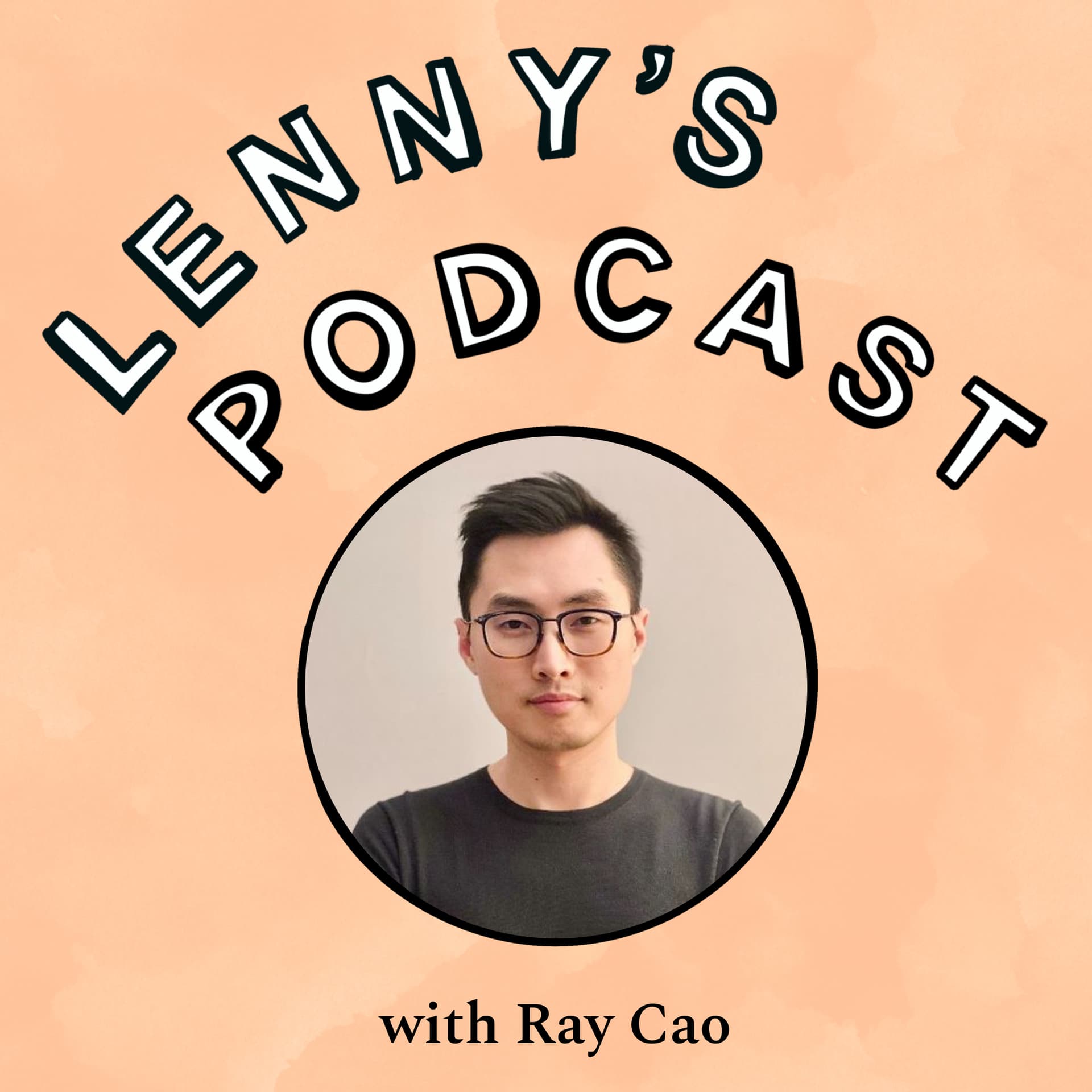
Ray (Jiayi) Cao - Global Head of Monetization Product Strategy and Operations at TikTok.
Episode Highlights
- TikTok’s Internal Culture and Core Values
- Emphasis on "Context, Not Control."
- Encourages thinking like a business owner.
- Comparison: TikTok vs. Google
- Google: Tech and engineering-driven; less market-centric.
- TikTok: Customer-centric, adapting to market needs.
- Product Development and Global Strategy
- Global prioritization and market-specific adaptations.
- Example: Different content strategies for Japan vs. the US.
- Team Collaboration and Organization Structure
- Close collaboration between engineering, product, and sales teams.
- Regular, inclusive meetings with a focus on context-sharing.
- Cultural Principles
- "Always Day One" mentality: Continuous growth and startup mindset.
- Accessibility within the organization to facilitate open communication.
- Hiring Practices
- Focus on quality over quantity.
- Importance of curiosity, discipline, and ability to prioritize.
Key Takeaways
- Cultural Values and Speed of Execution:
- Context-oriented decision-making enables quicker and more autonomous action.
- Regular restructuring for agility and market adaptability.
- Product Strategy and Market Entry:
- Importance of understanding local cultures and behaviors.
- Algorithm fine-tuning to suit regional preferences.
- Collaboration and Innovation:
- Emphasizing collaboration across different functional teams.
- Learning from industry leaders like Amazon and Google in terms of culture and innovation strategy.
- Go-to-Market Insights:
- Lessons from mistakes in building the early go-to-market team.
- Importance of aligning product development with market demands.
- Success on TikTok:
- Advice for creators and advertisers includes embracing TikTok's unique culture and testing content frequently.
- Leveraging trends and understanding the content graph for advertising success.
Advice for Advertisers
- Embrace TikTok's platform unique elements such as trends and content graph.
- Test creative content frequently to understand audience engagement.
- Begin with broad targeting to learn and adapt to TikTok’s advertising dynamics.
Notable Quotes
- “We want to make sure that in our team members always think like, ‘okay, if this is actually a new day for you’.”
- “The number one thing reasoning really really well with me is context no control.”
Additional Resources
- [TikTok Platform](https://tiktok.com)
- [Eugene Wei’s Blog on TikTok](https://www.eugenewei.com/blog/2020/8/3/tiktok-and-the-sorting-hat)
Contact Information
- Ray Cao: [LinkedIn](https://www.linkedin.com/in/jiayiraycao/)
- Lenny's Newsletter: [Newsletter](https://www.lennysnewsletter.com), [Twitter](https://twitter.com/lennysan), [LinkedIn](https://www.linkedin.com/in/lennyrachitsky/)
Sponsors
- [WorkOS](https://workos.com/)
- [Eppo](https://www.geteppo.com/)
- [OneSchema](https://oneschema.co/lenny)
---
For more insights and full episode transcripts, visit [Lenny's Newsletter](https://www.lennysnewsletter.com/p/inside-tiktok-culture-strategy-monetization).
Subscribe to Lenny's Podcast on [Apple Podcasts](https://podcasts.apple.com) or your favorite podcast app to never miss an episode. ```
Written by AI. May contain mistakes. Listen to the episode to check what was said.
Transcript
Automatic transcript. May contain errors.0:00We rarely get a peek into what it's like to work a TikTok. What are some core principles or values or just how TikTok operates? The number one thing is context no control. That's really why we're always encouraging people to sync themselves as a business owner. You give them all the information they need and then let them just do things without specific instructions. How do you actually solve the puzzle by connecting all the dots together? Just like how I see some of my friend, their kids playing Legos. If you don't really see the full picture, you won't be able to make the Lego as a one thing at in the middle of the day.
0:29You have to see the other pieces. What also are important cultural values of TikTok, of how TikTok operates that everyone always has in mind when they're building. We always have this mentality. We are a startup. We are a young company. We always hunger for growth. And a very reactive way is like, how can I run my stick in a half of my marathon faster than a first half? Today, my guest is Ray Tao. Ray is the global head of monetization product strategy and operations at TikTok, where he's been for over four years. Prior to TikTok, Ray spent six years at Google helping scale Google shopping globally.
1:04TikTok is interesting for two big reasons. One, it's one of the most successful businesses in history. Last valued at over $80 billion, and its parent company is the most valuable private company in the world. Last valued at over $200 billion. Two, TikTok is quickly becoming one of the biggest advertising platforms alongside Meta and Google, and generated nearly $10 billion in advertising revenue just a couple years ago. So for both these reasons, TikTok is a really interesting business and team to learn from. And I've seen very few podcasts and even media get a peek inside how TikTok operates.
1:39In our conversation, we discuss TikTok's culture, their core principles and values, how they hire, how they move so fast, their emphasis on working hard, how they do OKRs and planning. We also get into how to succeed on TikTok's ad network. Why you want to be testing at least 10 videos a week? How it's different for money ads on Instagram? How to make content that does well on TikTok? And so much more, this episode has a lot of interesting lessons and insights. Obviously, TikTok is at the center of a lot of debate globally. Some people love it, some people hate it. But no matter your opinion of TikTok, there's a lot that we can learn from their success.
2:14If you enjoy this podcast, don't forget to subscribe and follow the podcast on your favorite podcasting app or YouTube. It's the best way to avoid missing feature episodes and it helps the podcast tremendously. With that, I bring you Ray Tao after a short word from our sponsors. This episode is brought to you by WorkOS. If you're building a SaaS app, at some point your customers will start asking for enterprise features like SAML authentication and SCIM provisioning. That's where WorkOS comes in, making it fast and painless to add enterprise features to your app. Their APIs are easy to understand so that you can ship quickly and get back to building other features, and hundreds of other companies are already powered by WorkOS, including ones you probably know, like Versel, Webflow, and Loom.
2:59WorkOS also recently launched AuthKit, a complete authentication and user management service. It's essentially a modern alternative to Auth0, but with better pricing and more flexible APIs. AuthKit's design is stunning out of the box, and you can also fully customize it to fit your app's brand. It's an effortless experience from your first user all the way to your largest enterprise customer. Best of all, AuthKit is free for any developer up to 1 million users. Check it out at workos .com slash Lenny to learn more. That's workos .com slash Lenny. This episode is brought to you by Epo. Epo is a next -generation AB testing and feature management platform built by alums of AirbeingBien Snowflake for modern growth themes.
3:46Companies like Twitch, Miro, ClickUp and DraftKings rely on Epo to power their experiments. Experimentation is increasingly essential for driving growth and for understanding the performance of new features. An Epo helps you increase experimentation velocity while unlocking rigorous, deep analysis in a way that no other commercial tool does. When I was at AirbeingBien, one of the things that I left most was our experimentation platform. Break it's setup experiments easily, troubleshoot issues, and analyze performance all in my home. Epo does all that and more, with advanced statistical methods that can help you shape weak -stop experiment time and accessible UI for diving deeper into performance and out of the box reporting that helps you avoid annoying, prolonged analytic cycles.
4:29Epo also makes it easy for you to share experiments inside through their team, sparking new ideas for the AB testing flywheel. EpoPowers experimentation across every use case, including product, growth, machine learning, monetization, and email marketing. Check out Epo at GetEpo .com slash Lenny and 10X your experiment velocity. That's GetEPPO .com slash Lenny.
4:55Ray, thank you so much for being here and welcome to the podcast. Thank you Lenny for having me. I supply you. It's my pleasure. I'm really excited to have you here because it feels like we rarely get a peek into What it's like to work at TikTok how TikTok builds product and operates Also how to be successful on TikTok as a business as an advertisers I have all these kinds of questions for you and so I'm really happy to be chatting I wanted to start with a little bit about your time before TikTok, which was at Google and Kenny comparing that to TikTok So you're Google for six years. I believe now you're a TikTok I'm curious what stood out to you about the cultural differences between how Google operates and tech talk operates.
5:37Three major things I would say. Number one is really how these two companies think about innovation. Right, so I think Google has a very strong philosophy of, you know, we're engineering lab and there's a lot of technology driven and a lot of pieces they are not necessarily always trying to do. to, I was a coped with the market even, right? However, I think at TikTok, I think besides the technology part, we do have a very keen, I'll say, appetite to really understand what the markets really want. And also, how can we really service our clients in a better way? And the clients here is not necessarily only for advertisers, including our user and also creator altogether.
6:24So that's one of the things I think it's very different in terms of TikTok way of work is very customer -centric in a way. And again, the customer here is not necessarily only for the business partner, but also for our regular user and the creators on the platform. And the second one is really thinking about how we take approach on product development. So a lot of times that we take a very rigid approach in terms of product development. And oftentimes you see us that experimenting a lot of different things at all the same time. And also we do have a lot of engineering and a lot of project in the backend to really understand how can we optimize better for the platform.
7:09So a lot of times these are the things that I think TikTok is doing really, really well. The last piece I have to say is the approach for global prioritization, right? A lot of times that you see a US -born company go global and oftentimes still they are really like rooted with the US market. And there's nothing wrong with it to be honest because this is the biggest market for them. As a, I would say, Far East -born company. I think a lot of times that we can take approach with truly how do we think about globalization. And for example, we launch a lot of products not necessarily first in the North America.
7:47We launch them in the South Asia, for example, for our shopping really like very big initiative internally. for shopping and we launched our really like creator funds here in the North America. We launched our gaming approach, really like Service Our EUI, gaming advertisers, really strong over there. So do a lot of different approach in terms of how do we prioritize our go -to market and also product development. So that's the part I feel like, we're very unique in the market or you need to, some of the, that was the tech company born in the US. It reminds me there's this piece by this smart guy Eugene Way who wrote a few things about TikTok over the years and just like why it's been so successful.
8:32And one of his really big points is that TikTok can work really well in other markets because it's basically you don't need to know a ton about the market because it's this algorithm that figures out what people in each market want. Is there anything along those lines you've seen that just has been really fundamental to it working so well in many different markets. The algorithm is definitely helping, right? Because it is basically the machine is doing a lot of heavy lifting. That's actually, I think, across the board on the technology company today. The difference is actually how much you are willing to take the heavy lifting over there in the market.
9:06By that, I mean really like sending your troops into the market, harrowing your local talent, understanding the culture, and really understanding the behavior from those users. I understand that the machine can do things, but also at the same time that we actually get local talent to fine tune the machine. So there were a lot of conversations about how I would say technology is able to change our life, but I do think that at the end of the day, I do believe technology is a tool. So if we do have a ambition to go global, you have to do one more thing is actually take your step into global, rather than having the machine of the heavy lifting, you have to really understand in local culture.
9:47I had a fun background for my first job is to really doing like go to market research in the Southeast Asia area. I think there was only one thing open my eyes after a year and a half in this career path is different market have totally different, I would say, culture. And these market behaviors are actually coming out of this culture. One of the fun examples I was using was I was doing market research for one of the suppliers for Turner and also these ink cartridges for Thailand as a like a go -to market research. One of the things is always concerned to my at that point the client was they cannot figure out why their premium product cannot sell in Thailand.
10:39And then we just figure out like, you know, because the quality of their printing machine and also their ink cartridges are premium. And the quality of the paper and everything is very good. But when you actually do talk to those consumers in those markets, the answer is very eye -opening. They literally told me at the time is, I don't care. I don't care if your ink cartridges or your printer is at the premium quality. Maybe the printer I can use, but I can use compatible ink cartridges or tuner for that. Because my consumer won't care about your printing quality or the majority of my consumer won't care.
11:18So in that case, you should not necessarily worry about if you are a premium product. It's actually more about how long, how durable, how reliable, you're able to print things and people can read So I think these are the insights. I think a lot of times it will be Neglected from some of the clients or you know the manufacturers or even the owner of the business because they think that you know We want to serve this segmentation But however this segmentation is that big in this area, right? So that's what I tell you know the culture is really the key part from the market If you don't understand the culture, you won't be able to understand the behavior over there.
11:59It's more about that, I think, when we say about globalization or take the product to market in a global scheme, or even build it a product, you have to get your hands dirty and to really understand local culture so that you can understand local behavior. I love that advice. The way you described it, which I love also, is that you kind of have to fine tune the algorithm and the product to work in different cultures. Is there an example of how that was done with TikTok like a tweak that had to be made or some kind of fine tuning that happened for it to work in a different market? Yeah, I think we did a lot of fine tuning on our user -pronocite, releasing it about content.
12:39So that's the number one thing. You see for different, super different coming from each of the market and also from each of the culture. For example, in Japan, how do you actually get more content that relevant for the culture? A lot of people may think, okay, are you guys doing only dancing or singing for Japan? The answer is not. It is actually more food on the TikTok side. How do you actually introduce new food restaurants or new recipes? And also sometimes that you are introducing a new technology, I was a 3C product. like consumer electronics product over there. So these are the content that get really popular, sometimes in Southeast Asia or even Japan area.
13:23And versus in the US, as everybody knows that we're starting from really like lip syncing at a very early stage, but now really we're expanding to shopping behaviors and also a lot of people using us as a main platform to acquire a new discovery for the product. So these are the things I think. Yeah, different market definitely deserves and demand different kind of treatment. And if you are able to do this a lot, you're able to find success over there. That's really interesting because you could think it's just this algorithm that figures everything out for you. But I think we're pointing out as you have to see it with the right sorts of use cases that that culture is most excited about.
14:04Another good example will be creative, right? So it's a very good example how human can work with technology together. we have a ton of creatives and we have a ton of content, right? So of course we use machine to label those content, use metadata to analyze those content. However, a lot of times you can find that, you know, when we're really thinking about how creative can help out of tizers, humans actually make it more interesting or more, I'll say, influencing decisions over there. For some of the verticals, we can say that, oh, you know what? Maybe you can try a coupon image with a new product like a sticker on the top.
14:44This maybe actually works better compared to some of the price promotion even. So a lot of things it really depends on how you actually interpret the numbers and interpret the data points. But also at the same time your business acune is going to be very important here to make a judgment to call for some of the situation like that. I think we still rely a lot on those machines and also our own experts to analyzing those trends and give it over to recommendations. Awesome. Okay. So there's a few threads I'm going to follow later. You talked about the product development process. I'm going to spend time there also about how to be successful in TikTok.
15:19Both as a creator also as a business. I'm excited to hear your advice there. But I want to spend a little more time first on just what it's like to work within TikTok and the culture of TikTok. talk, what are some core principles or values or just like how TikTok operates? If you had to identify, like, here's the ways that we all think about what we want to do right and the most most important to your day to day work with what words and concepts come to mind. The number one thing reasoning really, really well with me is context no control. Well, sometimes when we're looking around companies, different sizes, we're looking at how to collaborating.
15:56Oftentimes we see the behavior that a lot of people just working on a smaller piece based off their drop description. So hey you are working on a go -to -market and you're working on data analytics and you're working on this book of business e -commerce and you're working on all of the industry for example. A lot of times that this like human -made silos is actually slow and say stuff, right? Because humans are not, or our talent, they're not supposed to be categorized into a different basket. They may have their own majority responsibility, for sure. But we don't want to like, cap them into this kind of a box we created.
16:37That's really why we're always encouraging people to sink out of the box and sink more and sink themselves as a business owner rather than a, you know, a piece of machine, like, keep the machine running. Oftentimes, that we say context no control. That means you actually can go above and beyond to really think about your whole business problem as your own problem and your piece is maybe one part of it to solve the puzzle but how do you actually solve the puzzle by connecting it with all the dots to get? We're encouraging all the people to think like that way and by that I think we kind of have a mentally break out those walls so encouraging our team members to do a little bit more thinking is very important.
17:18It's a little bit more thinking because the think part is very important, right? And then now in terms of getting things into behavior or changes or getting to action, then you need to really collaborate with other teams because we don't want to necessarily creating, you know, hey, you're on other people's working group now. You're actually stepping on other people's toes now. It is not the situation we're trying to encourage. But we're encouraging more is context no control, think more about how you can change. And then we do really actually take some actions reactive. You reach out to the who is who's supposed to be the owner of that and then have a discussion.
17:55Right. So then you can able to really like, you're able to connect in the thoughts altogether. So that's one thing. I think it's very unique to our culture. I think it's very, very important for us to continue grow at this speed because everybody but it have a, also food visibility towards or full ownership to the mindset, how they can contribute. And the key there is context, implying you give them all the information they need, and then let them just do things without giving them specific instructions. Hey, I need you to hit this goal or work on this project lunch this thing. It's, here's what we know.
18:29You have things you think are best roughly. I know it's not just like anyone does anything, but that's, I imagine that's kind of the implication there. Yeah, I think it's context no control plus proactive syncing and reactive doing. Right, so you have to do more proactive thinking with these contacts. Now reactive doing means that you need to collaborate. But when everybody has this kind of mindset, the collaboration should be very small because people have the contacts altogether. I think the part that I see other, maybe some of the other company facing challenges is actually there's too many IOs in between.
19:03And you have people that are just protecting their own thing and working their own thing and then I'm delivering. But just like how I see some of my friends, their kids playing Legos, if you don't really see the full picture, you won't be able to make the Lego as one thing at the end of the day. You have to see the other pieces. So I think that's the part I think it's really powerful and really, really well when we really think about product development and also product ultramarcade. Right? So it's a pretty full cycle. People have to see these and then they have the context. I love this and this has come up actually a few times recently when I was talking to the CT of Netflix and also OpenAI.
19:42They're very similar in culture where it's give people a lot of autonomy and freedom and not a lot of do this, do this to this. The key there is to hire very high quality people and very high caliber people because yeah, if not, then things won't work out too great. Is there anything on those lines that you can share just like, yeah, the kinds of people you end up hiring and how you hire people that can work well in that environment? I agree with you, right? So the caliber of these people is actually pretty important to support the structure I just talked about. And oftentimes I can see some people that with the quality of, you know, always curious.
20:21Curiosity is a very important quality when I'm actually talking to my interviewers because I want to see that they are naturally curious to new things. They want to learn more about the new things and don't really get stuck with their own things. That's one thing. And the other thing is the discipline because like I said, it is actually a double -edged sword in this case. Right, so it could potentially introducing some of the chaotic situation in the company because everybody is thinking everything. The discipline here is actually how you are really following the guidance on reactivity during.
20:59We always thinking about how to collaborate and the discipline here and also the rigorous approach here is also going to be very important. One of the good examples is the ability to prioritize because I don't believe one thing is everybody can do everything. you have to do a prioritized property so that you're able to push the right agenda. So I think that's more of a kind of a quality of the people we're looking for. It is hard, don't get me wrong. It is really hard to say that we can find everyone like that, but we would love to believe that we can train our employees like that so that they're able to even do better in their longer -term career.
21:38Essentially what you look for when you're hiring people is making sure they're always curious, they have high discipline, and that they prioritize well. Coming back to the cultural pieces of TikToks, the main one you've shared so far is this idea of context, not control. What also are important cultural values of TikTok, of how TikTok operates that everyone always has in mind when they're building and you know meetings making decisions. Yeah, I don't know internal thing that we always say is always day one. We want to make sure that we always have this mentality, we are a startup, we are a young company, we always hunger for growth.
22:16We don't want to fall into the trap that people may think, oh, you guys are very successful in the market and then you are not necessarily need to worry about your existence anymore. I think it is actually something we try to avoid. We always want to make sure that in our team members always think like, okay, if this is actually a new day for you, I know what other things that you always want to keep in your mind you want to do. And also, the hip -dass spirit is very important. A lot of times that I can see some of the mature company, they're not necessarily losing the edge of, I would say, this competition or losing the edge of being innovative.
22:53I think it's more about, like, you know, some of the the culture has been shifted because you have a lot of new employees diluting your culture. So not necessarily, it's not going to be like the old days that the co -founder is sitting amount of view. But I do think this company has a very interesting behavior I see there is, I can talk to anyone at any time via our internal communication system. I can ping show right now. I can ping the co -founder if I want to tomorrow. We always keep this kind of mentality internal is that we're still a young company. We want to grow and you can feel free to talk to anyone.
23:31We don't have a limitation for that. As long as you have a good opinion, I would love to hear from you. Is that creating some of the, I will say that you know, chaotic situation? It might be, but I do think that this keeps the company very energetic. People are willing to share, people are willing to engage. That's very important. I want to end one more thing. We just talk about, you ask me, what is actually the uniqueness of TikTok and versus the other company? It's very tied up to that is, I have never seen a company, the engineering team, and the product team and the sales team are so close.
24:06That's definitely one of the, a how moment I had because if you think about, if you're your engineer, it does not really know what the market wants. And if your PM doesn't really know what is actually the client's feedback, they won't be able to get a right product in the market. It just won't be. And they won't even tell a good go -to -market story to advertisers or even to our users because they just don't know what are the, you know, the end users are thinking. So I think it's a very secret source for us is that our sellers and our engineering team and our product team and also data scientist team, we're all collaborating really, really closely.
24:52And that's very much a, I would say, such a big advantage for us compared to, you know, when a company becomes too big and nobody talks to each other. So I do hope that it is the thing that we're going to continue ring force along the years where we are going to grow the company. What does that actually look like? Imagine people hearing this or like, yeah, we're going to make sales and product and end very close. Imagine many people don't actually do this too well. How do you actually execute that? Is it they report to the same leader? They sit next to each other or I don't know, zoom next to each other?
25:26What actually makes that work? Yeah, I think a couple of things. Number one is a structure. Everything has to go as a structure. So we do have a meeting structure that we call it like, used to be by month, and now it's actually a quarterly level. We get everybody together. Engineering leader, product leader, and also not necessarily only the leader level. Some of their team members were joining the team, were joining the force together to have a big meeting. That meeting is 180 people, Ish. It's crazy to have a meeting at that size, especially that there are different kind of functionality there.
Read the full transcript
26:04But one thing we keep it really well is actually we are using a reading format of a meeting. So it's a doc reading. We just read and comments and understand the context. Again, it is the doc, bring everybody together, and then we discuss the things that we want to make a decision with. Or the things that we feel is a blocker or things that we need to celebrate. So that meeting structure keep everybody together and consensus. Again, not necessarily only for the top leaders. It's normal for the engineering leader and product leader and self -leaders at the company level they talk to each other. But we made that happen for their quoting members.
26:42And the very beginning of my time here, that was literally getting to the IC level. So it is pretty eye -opening for me to join the meeting first time because I was so used to their level of different meetings at Google. But here is like, OK, everybody read one documentation. And then you just understand what our people are talking about, thinking about. It is intentional. But I do think that that structure is a very big secret source, I would say. Not necessarily, we invented it. We also learn from the other companies. So it is actually one of the things that we, as it deployed pretty well today, here to keep that structure running.
27:21And the other thing is really feed those, I'll say, market first hand market information to our PMs and RDS. That means we took them out with us. We're just inviting them together to join the first together to meet the clients. And a lot of the company, if you want to meet APMs, if you want to meet the engineer leaders, it's literally like Once a year maybe, and also if you're investing a ton, where's the most of the platforms? For us, I think it's always on. To junior PM, senior PMs, and engineering leaders, we invited them together to this immersion trip recorded, to really get FaceTime with our clients, to really feel the heat.
28:03They are actually really facing the challenge by using our own product, right? So that kind of a, I would say, the aha moment is bringing a lot of, I was the ink size to them and also get them to feel the heat of the the the paints, the sellers may feel. So that worked really well too, right? I think oftentimes is a battle, right? It is not necessarily the the general you have to stay in the back. You sometimes have to go to the front, but we just make that, make sure that the the general go to the front quite often in our company too. I love that concept of having them feel the heat. And interesting, Trent have noticed is there's a lot of Amazon influence on the way you all operate.
28:43There's the, it's always day one idea. There's the memo culture. Just described. Any idea where that comes from? Is there like a senior Amazon person that came in and helped influence those sorts of things? Is it just a Amazon's killing? And they're, I've noticed interestingly, Amazon has influenced the most companies in all of their ways of working. So it's not a surprise. I'm just curious if there's anything else there that's interesting. I think we have the we have the benefits to staining on the shoulder of all the giants, right? So we learn definitely always there was the culture that you know Amazon was always championing.
29:13I think we learn from them, right? So this is something that we I will say like, you know, always trying to listen and trying to learn from industry. The dog fashion is also learned from for Amazon, right? So we kind of studied oh this is maybe the one of the best We can employ here, or deploy here, so we tried it. Not even mentioned, we have the OKR system. So it is actually a very good learning from early stage from Google. So all these, I think, definitely we do have some of the, I would say benefits being the newcomer to the market and then learn a lot of the best practices coming from our, our industry peers and really deployed here, hopefully successfully.
29:53And some of the things that we just tweak it, right? So for example, our culture, always day one is definitely to be very similar to Amazon, but the implementation of that could be different. And also the context, no control pieces. I believe other companies may have the similar idea, but for us, I think we just need really to implement it in that way that kind of be fitting to us. I happen to listen to your podcast with the Airbnb co -founder the other day. He also mentioned that how he break out the IOs. I think it is very similar approach among industry right now trying to really make sure the team is able to talk to each other because I think I quote from him like if he if you're PM doesn't know how to sell the product they're creating you won't be able to do a do your job better right so this is literally how we're thinking about it too in a lot of way.
30:40I know that you all move very fast and I want to actually talk about that next and with that it feels like your your your value should be it's always the first half of the day instead of it's always day one it's always yeah it's always the first it's the morning of the first day. I think the value, if I put it in a very wacky way is like, how can I run my stick in a half of my marathon faster than a first half? So that's how I think about it and how do we really continue pushing for it? Wow, it sounds very hard and painful, but I like that matter for it. Okay, so let's talk about how you set up the product org to move as fast as you move.
31:18I think there's this idea of just like running fast. I don't know if that's a phrase you use, but just how is the product org set up, especially different from other teams that you've seen that allows it to move as quickly as you move and innovate as often as you all innovate? Our product teams are setting, I would say like very importantly is global. So we want actually, like I said, the number one step is if we really want to do global business, have to go global. So, we set up a team really across the board in the global locations to really acquire global talent, who knows the market and who knows the competition too.
31:56Right, so we're able to really get into the jumpstart in the local market. So for example, we have the majority of the engineer and also PMs currently located in the west coast of the North America. Right, so Los Angeles and also San Jose, these are the key hubs we have for our tech folks And also for North America wise, we do have our majority of the go -to -market leads sitting in New York to get closer without seller and also with our clients at the same time. Also, it is not necessary only for North America. Like I said, we heavily invested in Southeast Asia. So you can see that a lot of our engineering and also PM resources are deployed over there in Singapore to enable them to get closer to our clients over there as well.
32:42So really, deploy your resources globally and also focusing on the key markets you want to penetrate. That's the commitment. I think we are doing pretty, pretty, pretty good in this case. And the second one is to really, again, I think the PMs and the product team settings are oftentimes, I would say like, because we are growing so fast, oftentimes we have to do a lot of minor team adjustment to catering for that. Right. So it is very usual, usual or common for teams to do a little bit reward on an annual basis or even like on a two years or three years cycle. The stability is important. I don't get me wrong.
33:25But I do think that is a faster growing company. We need to constantly do it to reiterate not only the product but also our teams. So how can we do reiteration on the PM side, on the go -to market side? And it is actually something that, you know, I have seen this company doing really, really well. Not necessarily we're bonding to one team structure. We're actually bonding to the market need. And we're bonding to the growth we're looking for. So we're not afraid to break out things. And actually I literally break out my team last year to make sure that my team having more go to market mindset to actually embedded them with seller directly.
34:06So these are the things that are very, I would say, incommissioned to a size of this company, right? But I do think that's necessary, and also that's a good mentality for the team to really run faster with this kind of a rugged approach. So yeah, these are the two things that I think very unique to us. I think it could also be continuously helping us in the next phase of the growth. Today's episode is brought to you by one schema. the imbedible CSV importer for SAS. Customers always seem to want to give you their data in the messiest possible CSV file. And building a spreadsheet importer becomes a never -ending sink for your engineering and support resources.
34:47If you keep adding features to your spreadsheet importer, the customers keep running into issues. Six months later, you're fixing yet another date conversion edge case bug. Most tools aren't built for handling messy data, but one schema is. Companies like Scale AI and Pave are using one schema to make it fast and easy to launch to lightfull spreadsheet import experiences, from imbedible CSV import to importing CSVs from an SFTP folder on a recurring basis. Spreadsheet Import is such an awful experience in so many products. Customers get frustrated by useless messages like error online 53 and never end up getting started with your product.
35:23One schema intelligently corrects messy data so that your customers don't have to spend hours in Excel just to get started with your product. For listeners of this podcast, one schema is offering a $1 ,000 discount. Learn more at oneschema .co slash leddie. And now you mentioned earlier when we were chatting offline, when you were trying to build a good market org for this stuff, you failed in some ways. And there are some things you learned from that experience. What went wrong when you first tried to approach this? Yeah, when I joined a company, there were only two people on the go -to market side for the advertising business?
35:59Yeah, there are only two people. By that time, the US and plus, I was a Europe business together, we're having like, less than 80 people. But the businesses to grow, and we need to hire really fast. The first mistake I made was, by the way, the goal is to hiring 100 people in a six -month to support the go -to market. That's the speed we're into, right? So that is early 2020 to mid of 2020. So within six months, I need to hire, I will say, 100 people to support in the global go -to -market structure and build everything. Then the first mistake I made just write that at the right point because we're trying to grow too fast and sometimes as a higher manager, I have to compromise the standard We're trying to reach higher.
36:53So that's the mistakes I think I made first and I think nobody should beat that mistake is You need always run for the quality rather than the quantity So it's a easy mistake you can fall into the trap because the business is demanding you to go faster if you don't have the Mempower you won't be able to but Get I will say believe me when I say this is the pain right when you have the wrong people on the team It's not necessarily gonna make you move faster. It's gonna actually still you down So that's one of the biggest mistakes I made for my first year when I created team. And not necessarily myself only, right?
37:29So my reporting manager, sorry, the manager reporting to me, they are facing the same pressure. And then it's cashing in down. So it's definitely the mistakes we made at early stage. The second thing I can think about is really on the context, no control. So it is not necessarily I'm born into, to be honest, because I was trained really like, you know, hey, this is your box, finish your work here, and then you're good. But the reason why I value that, really like the attitude more today is literally I failed at the very early stage of my time here. Because I was trying to create that kind of a very black and white discipline for my team.
38:13You can do this, you can not do that. But technically speaking, that's literally slowing things down. Because a lot of times you can see that, hey, we're delivering our Go -to -Market strategy and we're good. But literally what you don't know is your goal is not to deliver the Go -to -Market strategy. Your goal is to land your Go -to -Market strategy, we're self -together. So if your job only is delivering, no, you're failed oftentimes because you're not really getting the market context. You're not even talking to your clients. So that was literally another mistake, I think, taught me how to really embrace the culture here is context and no control.
38:52And the third piece, I think, it's also a mistake. It really is a bigger hall moment for me as well is for the past couple of years now I've been managing a such big global organization. Often times, even not myself, my managers, they don't have time to go detail and to go talk to the clients, which is very scary because if you don't know, again, you don't hear what is happening in the market, you won't know the details in the market, you won't be able to take the right movement or take the right approach to go to market or even give the feedback to the engineering team. So it's very important that the leader at any level needs to be situational.
39:38You cannot always down to the weed and you cannot really distance yourself from the reality. So you need to find out the violence to really get engaged and also steer yourself out there to getting, I was getting deeper into the problems, to identify the problems and then you're able to perform even better because I don't believe one thing is you're the pure, I was the people manager, you cannot do that because when you do that, you're very, very, at I would say like, a tradition to really think about your career because you're losing your competitive edge from the other, I would say, you know, equivalent to balancing the market.
40:18I love these stories. I love stories of things not working out. So I appreciate you sharing these things. When someone doesn't work out at TikTok and they have a bad time and they get like, or they leave, what's the most common reason? Like other than just they're not good enough? Is there like something that just doesn't stick with people that often leads to like, this is not the place for me. Yeah, I would try to really think about this in a different way. I can tell how people can be more successful here. Right? So I definitely can see, we just talk about people being very curious, and people are being nimble.
40:49They can be more successful here. At the same time, I think we have to admit one thing. Join a startup and join a rocket ship is a lifestyle. It is not necessarily a job. you're working on from notified, right? So it is a different lifestyle and it's not beautiful everyone, right? So if you are not able to adjust your mentality towards some of the work that we are here to do and it's maybe not right fit for you, I'm not saying that candidates is incapable. I think they could be capable in the other scenario for sure, but it is a right fit. I think that is a, I would say like very much towards the situation or the companies that are in the market.
41:33I can see a lot of people that they left and become very successful too. So it is not necessarily that we think you're not good and then you're going to be not good for everything or the company. That's not the case. One thing, and also this is my team culture I try to create is I'm happy to say that when an employee reach out to me, say, hey, Ray, I'm actually living in a company. As long as they're telling me that they're going to a better place or a place that they can continue grow their career, I'm happy for them because every oftentimes my my last question during my interview is what is actually your goal in the next three to five years and also like, you know, I'd be really honest with them, say, hey, I don't think this is the job for you forever, right?
42:23nobody gonna walk in this forever. If you can, great. But what is really like, you know, your North Star, I think that's the part that I would love to co -partner with you because I always believe one thing is it is not only about achieving a company goal, it's also achieving your really like career goal or your employees career goal together. So I want to create in that culture here as well. So yeah, I think I'm doing so far so good. Most of my team members, when they actually moving on internally or externally, I'm able to say that, okay, that's a good choice. If I were you, I may probably do the same thing.
42:57It is actually a very good culture. I think I would love to champion across. On that first point, I'm also a huge advocate of just, you will be successful if you work very hard. I know there's a bit of a backlash at working along and thinking too much about work -life balance. And I feel like it's actually really important to work a lot and work long hours of to be successful, especially a company that's going through this, because that's not gonna last forever. I think, I do know that it's a personal choice, right? It's a very much like a personal choice. If you are excited about this, if you want to grow together, yeah, this maybe is a good thing for you, and also depends on the life stage, right?
43:35So some of the people they want actually getting more family time, I think that's also the right choice too, But it just depends on your personal, I'll say, an individual personal choice rather than if the company demands that. I mean, I cannot force my team to working hours. I don't want them to like working hours. I think it's more about like if you're able to deliver, right? If it requires a bit longer time to contribute, I think it's okay, but you will also get rewarded very well too, right? So what's getting, what's get out? So I think it's again, I do believe that this is the quality and also the value we're evaluating here as well.
44:18And even though it's hard in the moment, I find that those are the times you remember most and most fondly in your career. When you just go all in, I'm going to work really hard and do the best possible job I can do, assuming that as unless forever, those that end up being the most impactful, helpful to your career, most proud moments when you just like look what I accomplished. And so I'm on the same page. I want to talk about being successful on TikTok as a creator, as a business as an advertiser, but a couple more questions real quick on how to talk operate. You mentioned you do OCRs just briefly.
44:51Is there anything that you've learned about being successful doing OCRs within TikTok? Maybe is there anything different that you all do versus how other companies think about OCRs? It is definitely a company alignment that we are using OCR as our basically the system to make sure that everybody is working towards the same goal. Implementing wise, I think definitely we have a lot of room to improve. So how often do you actually see your team able to goal the OKR at the end of a quarter? And also putting the OKR really two weeks away before the beginning of a quarter? I have to say that, you know, Shemami, I sometimes, you know, delayed a little bit.
45:28But I think the goal is always there to using the OKR system as our Nostar to drive the behavior and also to align. Again, it's very important to align on the OKRs because I can see a lot of times the OKRs are put in but they are very siloed and that is not really necessary helpful for the company when retrieving really high growth. So I think it's very important that we don't take OKR as a shell but we take OKR as a core is cross -function alignment, cross -function goal settle. So these are the things that we're still continuing in improving. Is the way that OKRs work? It takes out, is there an OKR for team and they all kind of trickle up to a company level OKR?
46:12Is it less structure that way? And teams kind of decide if they want to use OKRs or not? How does that roughly work? The structure is basically the guidance is using the key result to evaluating and then you put the steps in between. So that's how at least my team has been using this. I think the things that we can improve is the input and output. Right, so the output is very clear, but what is actually the input? Sometimes it's debatable, sometimes I have to say. And also, oftentimes your output is other people's input. Are you able to connect in the dots over there too? Then that's actually the part that requires a lot of I would say reinforcement on alignment.
46:52Definitely we're getting better. Don't give it wrong. We're totally not perfect for sure. But I do see there was a lot of a move, I was in momentum to leveraging the system better. If you know other companies doing this really, really good, please treat it in my way. I would love to learn from them. Well, last question here. You do planning. You have OCRs just briefly. How often do you all do planning? Is there yearly plan they put together and then a quarterly detail plan? Yeah, we do have annual planning cycle. But I have to say that, you know, our annual planning cycle is the baseline. We often do a lot of iterations in the mid of the year.
47:27And also on a quarterly basis that we're able to pivot in really in the MOLI to really catering to the things that we see in the market. Some of the longer -term strategy won't change, just like the platform we want always creating, inspiring and also frictionless and immersive experiences for users. This won't change, but anything into the core of how do we realize that? You're always a consistent experiment over there. I cannot speak for the user product side, but at least from an advertising product side that this is always the rigorous approach we're taking. And for the go -to market part, that's also creating a very different behavior for us, right?
48:03Because oftentimes if we have a solid and kind of a static product long app, you can go to market relatively easy, I will say, because everything is planned. But with an environment like that, that basically make the go -to market and also the product feedback loop much more short and faster. So there's a lot of, I will say, pressure or actually put it nicely. There's a lot of innovative things that, you know, on the go -to -market side, also on the sell side, the company or the teams need to actually do to make sure that we're able to catering for that. But again, this is a teamwork rather than on one side of the work.
48:43So far so good, I would say a lot of things that we've been able to achieve within the past couple of years has been already proven that this approach has been working for us. But not necessarily, it's perfect already. Always a room to improve, to make sure that we have more structural approach as well, so that the market is able to keep the pacing with us. We don't want to overwhelm our advertisers or our users either. So that's also the other part that we need to continue optimizing to. Okay, let's talk about a different topic, which is being successful on TikTok. So the way I think about it in my head is there's how to be successful is just a regular human, greater person, how to be successful is a business trying to just create viral content and then being successful as an advertiser, which I know is where you spend a lot of time.
49:29So let me just ask, is there a tip you could share for someone to be successful, say, aka be viral on TikTok? I imagine you're on Strollbee, just produce something people love and want to share and like, but I guess is there anything that could be tactically useful when you create content and tick -tack to help you go viral. I think if I know that, I definitely will already become a very successful creator, I have to say. Our system is very much smarter than I am. I cannot trick the system, but I have seen a couple good cases, right? So number one thing is that you have to really be unfuted. I mean, you don't really need to be perfect on this platform.
50:07I mean, that's the beauty of it. You can be yourself. You can really share the things that you like and if you really master at one thing that you're really really good at and you want to showcase This is the platform for you to shine because Not necessarily that you know we are fully saturated right and also all algorithm Distributing the content in a very different way right some other other platforms. They are I will say like a people -based or friendship a friend -based I think for us is purely based on actually you're creating something that in everybody want to see. So let's see if we can distribute it more.
50:40So I think continuously to bring new content to this platform and testing and finding your own competitive edge, going to be very important as a successful creator. And most of our creator has been doing that. And I can see some of our biggest TikTok stars. They're literally practicing this every single day. And I do think that creativity and that part of, I would say, getting the nuances is the key part that to be more successful on the digital community. And the second thing is, it's including also for brands as well because our consider brands is our creator as well. They really need to embrace the culture and the community here, right?
51:23To really listen and understand what are the user behaviors on the platform, to understand what do they like to see? And also the messages or the presence could be very different from your other other media channels or as a creator it could be very different from your other outside platforms. So that's the other thing that you know it's going to be challenging because for them to ship in the mindset but I do think that you know that it was trial right? So some of the I would say our early adopters has already been proven that when you do embrace the culture here, you're able to acquire a ton of different kind of a user or the audience to your channel.
52:03You can show a different side of yourself as well. So yeah, I've been trying to do that. I have not really like finding my competitive edge. I have to say, but I'll keep trying. Is there an example you could share if someone that has done that really well, either be really authentic and also embrace the community of a business specifically that has done and it's really well -entered. Taken off, not as an advertiser. There was a one creator I remember called Shaba. She's a singer. And she is able to call my eyes because she was able to basically rap and also doing some of the songs cover in a very different way, because she's a minority.
52:41And she was able to basically using her minority identity as actually, hey, everybody was thinking, I'm supposed to be doing like bodywood music, but actually, you know what I'm not. I'm doing a lot of very hip -hop and also a little music that people may think I'm not good at. So it is pretty fun to watch that kind of a comparison or the contrast between a creator. And also she's able to put a lot of original music on the platform to really inspire more people to do the same thing. There's another music, I'll say, take the creator. So he was pretty big on the other platforms, but the total approach from him is he's basically changing the lyrics Make it very relatable as a personal life because for example, he can totally change the lyrics from a old Bassary boy song or un -sync song to make it like a related with his Daily communication with his wife making it really like relatable and fun So these are the things I think is very unique to us like if you are able to test and find something like new like that You're able to find a new batch of audience and even go viral on the platform.
53:49Okay, so then switching to the advertising network, a lot of listeners here are thinking about, I imagine, advertising on TikTok. There's kind of classically been Facebook and Google are the two places to do run paid ads. Paydads are a huge growth driver for tons of companies. It's one of the easiest, you could say, or one of the most traditional way to grow. TikTok obviously is emerging and is already emerged as one of the newer advertising networks. So there's a lot of people thinking about how do I succeed as an advertiser on TikTok? So what advice do you have for people? One, who is the best for, imagine TikTok isn't the best place to advertise for every sort of business.
54:29So what sort of businesses are best aligned to be successful on TikTok? And then just what advice can you share to do well as an advertiser on TikTok? Yeah, I see a lot of really different types of data that I already find their success on the platform. One thing that they actually can do that is really do to a couple of things that they're doing. Number one is, like I said, they're embracing this platform. They actually do a lot of things as TikTok first. I have a couple of advertisers that have actually creating their own internal creative team just dedicated it for TikTok. Right, so they actually produce a ton of creative every single day to actually test and learn to understand the platform and understand the community they're engaging with.
55:15So I was a lean in is the first part. It's harder, but it is not that hard. As long as you try it, you will feel that every single day is getting easier. So and also we make a lot of tools to make things easier for them as well. Like creative we have also a lot of resources on the platform, the creative hub, and also we have creative analytics help you. So these are the things that we're able to basically help that of a title to lean in more. The other angle to lean in more is test and learn. A lot of times that people don't know how to really run as on this platform, right? Google is very much search like search like they are really leading on the intent graph.
55:58And meta is really on the people graph they're making. I mean, TikTok is the content graph. It's very different. I would say machine compared to the other two. And it requires different way to optimizing and to leveraging the tools we have. Right? So if you're applying the same logic from meta or a Google into TikTok, not necessarily you will be able to see a great success. I have to say. So you have to really like get to the detail and to learn how you're operating this platform at the very beginning. Of course, like I said, we're trying to make it as simple as possible because we strongly believe that a DevTisers job is to taking care of their own business and our job is to service them.
56:44So we definitely make things a bit easier and along the way. But still, it's a little bit learning for the user to change their mindset when they engage with us at the first time. And I can see that, again, for example, last Q4, I can see a lot of the user taking this approach to really like listen to us and understanding what is our best part. Actually, see a very success for Q4 on the platform. So I do think that if you want to do more, just do more tests and learn with us and to really understand the impact from TickMock. Just to understand this point about versus Instagram, because I think a lot of people probably run on them on both platforms and try to see which one's working better.
57:23Your point is the same content won't work as well on one versus the other. So just so people understand what the main difference there is. I know you talk about there's the friend graph versus TikTok just spreads it all over and anyone can see it, you know, be friends and it's really good at getting content out. So what is it that you would do differently if you're making a ad video for Instagram versus TikTok? I think the TikTok video, it's more about the backend settings, right? So how often do you actually change in creatives? I think for us, it is actually pretty, you want to actually test more creatives on this platform and see which one is actually working.
58:00And then we also have really detailed guidance on how do you set up your campaign structure to make sure that you're able to be more successful on the platform, right? So these are the basic high jinks we talked about. You can see these guidance are very different from what matter has today or even Google has today because we're just basically different platforms. And oftentimes you can also hear that we require a bit more real time react on the platform due to some of the trends we have seen. So that is the part I feel like if an advertiser wants to engage more with our really the self -steam and they're able to provide more guidance to you, you're able to see more success there.
58:42But a lot of things will be counterintuitive, I would say. Because the intuitive you have learned is coming from the other platforms, but technically we are not. Right. So a lot of things that, oh, this doesn't make sense to me. But why don't you try it? And we make actually that really easy because we're showing a lot of, I would say, adacred it to intensify incentivizing our advertising to try it. At even a day that hopefully they can see the result is proven itself. I think that's such an interesting point, this idea of testing more, which basically you're saying with Instagram, certain people will see it and they're not, and they're not just gonna be, they're not gonna be showing tons of random people.
59:22So you basically have one shot at getting this in front of the Instagram crowd versus TikTok, just tries it, just explore and exploit kind of approaches like we'll just keep trying stuff until something sticks. Yeah, I think it's actually like that. I think a lot of a lot of times that I think advertising went, especially when Digit advertising becomes a thing, right? So we kind of think everything can be calculated. Because you have the data. But the beauty of advertising is never like that. The core value of advertising is to tell people don't know you exist and tell them that what you're doing for them and then creating this demand.
1:00:00Right? Discover is the core of advertising to me. Because I would never expect in my wife telling me that, well, she's going to buy when she working to a shopping mall. If I know that, I will stop her already. She often times that, you know, get out something different, right? So this is not planned. I think that's literally one of the behavior I would love to emphasize more is you want to be opened up your door to more consumer because we are a digital version of what I'm mouse. I always, always compare us to that because it is the way that how the digital era becomes more human because it is actually helping an attacker or helping user to discover new things just like what they used to do.
1:00:45There's a new place in a certain area you just go explore. It is just like that. So I think that's the reason why I think at the very beginning, continue doing this kind of open -minded testing with us will be a very good approach to get some early learning and eventually that you can refine your approach. But at the beginning, I would highly recommend that. Just be open up and also take some risks with us together and we're able to show you how much we can actually benefit in the business. Awesome. And on that point, that was the other piece of advice. He shared his pitch, and to the trends so that you can connect your ad to things that people already laughing at or finding really interesting.
1:01:25feel like a dual -ingos incredible at this. Their videos are hilarious and I think they're all just organic videos and a lot of them connect the trends that are... Yeah, it's funny you brought up your lingaro because actually now I've become a heavy user of the lingaro myself because... Me too. I find... I watch the video on the TikTok. I think just basically the kids, like just randomly learn a different language and make a lot of mistakes. It's really funny. And then I just don't know that app because I didn't know. Having using a Dealing rule for the past 40 days as a new year resolution, I'm committing myself to the Japanese.
1:02:01Wow. 40 -day streak? Yeah. Amazing. I'm at 25 days. Okay, great. We're on par pretty much. Are you in the Ruby League or Emerald League? Which league are you in right now? Emerald right now. Emerald, okay. I think I'm in Emerald too. So see, we're on par. Yeah. Just to close the thread on this. So you're talking about one of the benefits of TikTok ads is aware building, basically more top of funnel. I know you also focus a lot on taking action, not just brand. There's also a lot of, so maybe talk a bit about that, just like that's also a big part of advertising in TikTok. Yeah, I think the beauty of what a mouse is actually, you know that what a mouse leads to actions, right?
1:02:42So I think TikTok, we oftentimes, people are thinking that, oh, TikTok is really good for creating awareness, building a professional or some of the discovery funnel. But I really want to say that we want to prove, and also we already proved love throughout the studies we have seen from third parties that we're driving actions at the same time. And this is literally the ambition we're trying to really like talk to out of the hiders, especially on the commerce from that, you know, shopping and tick dot shop and shop ads. It is actually the the proven points that we see. And also this is not necessary coming off of our illusion, right?
1:03:20Because we see there was a biggest trend on TikTok. It's TikTok, maybe buy it. We have billion level views on that. It's continuing growing. And this literally inspired us to do this product. Like I said, you know, one of the very important things here is we drive our product by listening to our user and see the behavior from them. And we see the behavior and now we're trying to capture that and provide the best service to our user and also help other advertisers to really ship in their product. So I do see that this year, people will see us more as a full funnel solution platform, rather than only building the brands.
1:03:56Because we want to actually impact on full funnel for our other advertisers. Again, drumming their business without is more important to us. Say your startup is starting to think about advertising on TikTok, maybe they've done some Google ads and Facebook ads. What do you recommend they plan for in order to just see if this could work for them? Like how much time should they give it? How many ads should they run? How much budget should they add a lot to just explore this as a growth channel for them? I will say at the very beginning, the investment will be coming from their lean into creating a business account with us.
1:04:31Right? So this is actually how you're engaging with your community. But even before that, I think just do some research on a platform and be the user as a TikTok to really experiencing it and see the differences. And then you are thinking about how can you actually connecting your behavior or your desired behavior coming from a user with your business. And then you're creating content around it. And that's the moment I think this first step is creating your business presence on the TikTok. And the idea there is just an organic account you create, let's say Lenny's Podcast, which I actually have my Lenny's Podcasts on TikTok.
1:05:07So we can use that as an example maybe. So you're saying start off just creating free business account on TikTok and posting videos just to see how feels and how it goes Just see how it feels right so maybe some of the videos you don't get any views and some of the views you get you get more views right and then Then you can test some of the advertising products drive those awareness and see it's actually driving impact for you Right, and then you have to do more maybe like you know testing with us or a b testing or geospitting test even eventually depends on how big the investment is. You can see there is actually a directional impact of your business.
1:05:43And also, we are giving you reporting and insights on how you're doing on a platform. So you can optimize it towards that. But the very important part is trying to get a feeling of the platform by creating your organic presence and then try to launch the ads account to make sure that you're able to drive more traffic to your desired destination or to a desired actions that you want a user to take, and continue refining that. Along the way, there are a lot of things that you're gonna learn. For example, how can you leverage in automation solutions on a platform? And how can you leverage in some of the, I was a creator trends, you detect it on the platform.
1:06:19And also some of the tools that we're creating to help you to generating those script. Right, so these are all the things that you can learn from the platform. In terms of timing, I think, at the beginning of the month, Definitely, it's going to be, I hope it will be a little bit more intense of learning so that you're able to get a rhythm in there. And along the way that as long as it's become more automated and also get more understanding towards the business, you're able to actually creating, I was in more relevant content for the platforms by leveraging our creators or by leveraging some of your own Aussie resources of very own, very self -party for them.
1:06:56So I think, yeah, it takes a little bit of learning curve, but I do think that the result that will surprise you. And was the implication there, give it a month, like spend a month running ads, or is that not what you're saying? I think oftentimes we say that a month's minimum to run the ad, because I think it's actually a learning curve for a divotizer to really getting to understanding the behavior and the platform. And how many ads would you suggest, and I know there's not like a real thumb, but just how many ads would you suggest they try to run in that month to give you a real sense of like, this is could work or like not?
1:07:27The more the better. I will say at least 10 different add -in creatives will be ideal per week and the more the better. 10 per week? Oh wow, okay. 340 potentially. Yeah, 10 per week. And also I will say like we can see that it is a little bit of I was like a new analysis there because a lot of the oh, I don't have that resources. But as simple as possible it can give you a tool, right? We'll have CapCut as a tool. I created my anniversary video for my wife by using that tool. Don't tell her what made it, not everybody knows. But she thinks that she might not listen all the way this long. Yeah, she takes a lot of time.
1:08:08Literally, the production is amazing. We created that tool specifically for our creator and also for our user in general. So you're able to do a lot of, I will say, automated and customized the way in the app. So you're able to generate those content on your fingertips. So it will be a really good help for Advertisers to want to be more self -service, right? On the other hand, we also have third parties to certify TikTok service providers on a creative side to help you as well. So depends on the level of as Advertiser you are. Is there a most common mistake people make when they try this out, where you're just like often being like, you fool?
1:08:47Here's what you did wrong. Is there something in the air just like, Just don't do this thing because a lot of people make this mistake and then they fail and take talk. Yeah, the first one is like I can see a lot of the ties I want to do Instantly they want to do like remarketing or they want to do like a very small niche targeting on a platform because you're limiting yourself Like I said, it is more about like, you know Getting to the rhythm to understand more about platform So a broader targeting approach is actually recommended at the very early stage And most of the advertisers are already doing that today because previously I can see that for the first two years in the business Especially when we acquire new advertisers Oftentimes they get on the platform say hey, I want to do this and that like I want to really refine my targeting etc And then we just recommend hey, why do we do this comparison?
1:09:35You have a campaign setup like this going on, but this is our recommendation and you can see the difference and literally most of them They'll see a very big difference over there on it Amazing. Right. I know you have to run. I'm going to skip the lightning round. But let me ask you just one question from the lightning round. Do you have a favorite TikTok account that you've been just like really loving these days? I'll share mine real quick and then see if anything comes to mind. There's this lady who I found recently who does silent baby product reviews where her baby's like sleeping in the room and she's like, and then she just like goes through 20 different baby products like very quietly and it's hilarious.
1:10:11I'll link to it in the show notes. If you have a kid, you'll love it. Is there anything that you love or want to highlight? I do have one creator I'm actually active following is on like, he's a magician. He basically use very, I also very like normal things. Just handy around him to make something that you know, like very cool magic. I always were like, you know, how did he make that? So I'm actually following that And get more inspiration on myself is like, can I do that? No, I think that's more about my personal hobby to see something like that. It's very, very cool to see people can do these kind of tricks by using normal stuff around them.
1:10:54Ray, thank you so much for being here. Two last questions. How can folks reach out if they ever want to learn more about the stuff if they can? And how can listeners be useful to you? I think feel free to reach out to me on LinkedIn. If you want to discuss more about some of the go -to market, challenges you're facing, I think we're facing a lot of similar challenges every single day. And also in terms of, you know, on the products and endpoints, different companies have a different front of philosophy. I don't think we are like always right. I was always recommending to receive a lot of feedbacks or recommendations and that would be really, really nice to have to form these kind of, you know, leveraging your audience to be my community to teach me a lesson sometimes.
1:11:37that would be even better. Amazing. Right? Again, thank you so much for being here. I feel like people don't have a ton of insight into the way TikTok operates and I appreciate making time to do this. No, it's a pleasure, Lenny. Thank you very much for having me. Bye everyone. Thank you so much for listening. If you found this valuable, you can subscribe to the show on Apple Podcasts, Spotify, or your favorite podcast app. Also, please consider giving us a rating or a leaving review as that really helps other listeners find the podcast. You can find all past episodes or learn more about the show at Lenny's podcast .com.
1:12:12See you in the next episode!
From the publisher
Ray (Jiayi) Cao is the global head of product strategy and operations for monetization product at TikTok. Prior to TikTok, Ray spent six years at Google helping scale Google Shopping globally. In our conversation, we discuss:
• TikTok’s internal culture and core values
• How TikTok’s product team operates
• How working at TikTok is different from working at Google
• How TikTok rolls out to new markets
• TikTok’s core principle of “context, not control”
• How their sales and product teams work together
• Lessons (and mistakes) from building TikTok’s early go-to-market team
• The importance of hiring for quality rather than quantity
• Insights on being successful on TikTok as a creator, a business, and an advertiser
—
Brought to you by:
• WorkOS—The modern API for auth & user identity
• Eppo—Run reliable, impactful experiments
• OneSchema—Import CSV data 10x faster
—
Find the full transcript at: https://www.lennysnewsletter.com/p/inside-tiktok-culture-strategy-monetization
—
Where to find Ray Cao:
• LinkedIn: https://www.linkedin.com/in/jiayiraycao/
—
Where to find Lenny:
• Newsletter: https://www.lennysnewsletter.com
• X: https://twitter.com/lennysan
• LinkedIn: https://www.linkedin.com/in/lennyrachitsky/
—
In this episode, we cover:
(00:00) Ray’s background
(04:55) Cultural differences between Google and TikTok
(08:24) Fine-tuning the algorithm for different markets
(12:15) Examples of fine-tuning the algorithm
(15:11) Core principles and values of TikTok
(19:34) Hiring at TikTok
(21:38) Embracing the “always day one” mentality
(25:09) Collaboration between teams
(28:38) Amazon’s cultural influence
(31:14) Setting up the product organization for speed and innovation
(35:38) Building the go-to-market team
(40:18) What makes people successful at TikTok
(43:02) Thoughts on putting in long hours
(44:40) OKRs and planning at TikTok
(49:12) Tips for how to be successful on TikTok
(53:49) Tips for advertising on TikTok
(01:04:03) Getting started with TikTok Ads
(01:08:42) Common mistakes to avoid with TikTok advertising
(01:09:44) Ray’s favorite TikTok account
(01:10:54) Where to find Ray
—
Referenced:
• TikTok: https://tiktok.com/
• Google Shopping: https://shopping.google.com/
• Eugene Wei’s blog: https://www.eugenewei.com/
• TikTok and the Sorting Hat: https://www.eugenewei.com/blog/2020/8/3/tiktok-and-the-sorting-hat
• How Netflix builds a culture of excellence | Elizabeth Stone (CTO): https://www.lennyspodcast.com/how-netflix-builds-a-culture-of-excellence-elizabeth-stone-cto/
• Inside OpenAI | Logan Kilpatrick (head of developer relations): https://www.lennyspodcast.com/inside-openai-logan-kilpatrick-head-of-developer-relations/
• Brian Chesky’s new playbook: https://www.lennyspodcast.com/brian-cheskys-new-playbook/
• Lead with Context not Control: https://www.svpg.com/lead-with-context-not-control/
• Shuba on TikTok: https://www.tiktok.com/@tiktokbrownchick
• Duolingo on TikTok: https://www.tiktok.com/@duolingo
• Duolingo leagues: https://duolingo.fandom.com/wiki/League
• CapCut: https://www.capcut.com/
• Amanda Talijan (silent baby item reviews) on TikTok: https://www.tiktok.com/@amanda_talijan/video/7321700482018233642
—
Production and marketing by https://penname.co/. For inquiries about sponsoring the podcast, email podcast@lennyrachitsky.com.
—
Lenny may be an investor in the companies discussed.
This is a public episode. If you'd like to discuss this with other subscribers or get access to bonus episodes, visit www.lennysnewsletter.com/subscribe