In short
```markdown
Lenny's Podcast
Product | Growth | Career
Episode
Monetizing Passions, Scaling Marketplaces, and Stories from a Creator Economy Vet
Guest
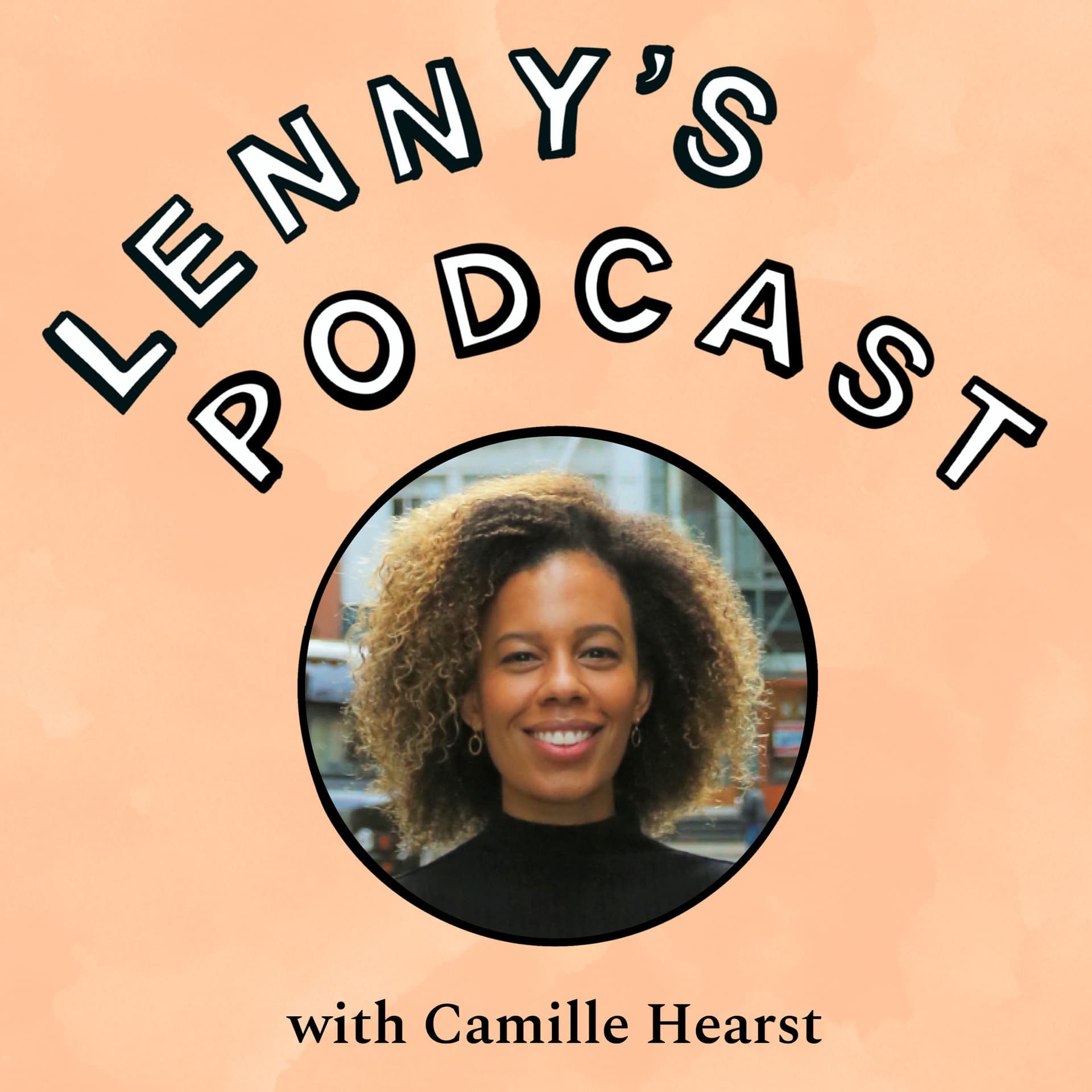
Camille Hearst
- Current Role: Head of Fan Monetization at Spotify
- Previous Roles:
- Head of Product for Creators at Patreon
- Product Marketing Manager at YouTube
- Second Product Manager at iTunes
- VP of Product at Hailo
- Co-founder of Kit (acquired by Patreon in 2018)
Key Topics Discussed
- Career in the Creator Economy:
- Camille offers advice on building a successful career as a creator.
- Insights into the future of the creator economy.
- Challenges and opportunities for creators to monetize their work.
- Spotify and Artist Monetization:
- Role involves finding ways for artists to monetize through fan interactions.
- Merchandising and listening parties as monetization strategies.
- The gap between artist willingness to monetize and fan engagement.
- Challenges of Working with Artists:
- Best part: Creativity and passion of artists.
- Challenge: Artists often hesitate to monetize their work despite fan willingness to pay.
- Experience with Apple and Steve Jobs:
- Camille shares a personal story of meeting Steve Jobs.
- Describes Apple's unique product management approach focusing on design and engineering.
- Creator Economy Trends:
- Platforms like YouTube, TikTok, Patreon, and Spotify dominate the space.
- The role of content curators in the creator economy.
- Potential for growth in vertical-specific platforms.
- Advice for Founders:
- Selling a company should be a managed process.
- Importance of building relationships with potential acquirers early on.
- Marketplaces and the Supply Side:
- Camille's focus on creating strong supply-side solutions in marketplaces.
- Importance of ensuring a robust supply to meet demand in real-time platforms.
Additional Insights
- Apple's Product Management Style: More craft-focused compared to Google's strategic approach.
- Frameworks and Product Development:
- Importance of dual track agile and de-risking assumptions.
- Focus on solving real problems for creators, especially in monetization and audience growth.
- Personal Background and Influences:
- Camille's upbringing in a creative, tech-savvy family profoundly influenced her career path.
Notable Mentions
- Referenced Content & People:
- Adam Fishman, Michele Phan, Taylor Swift’s economic impact, and more.
- Books Recommended by Camille:
- *Three-Body Problem* by Cixin Liu
- *Kindred* by Octavia Butler
- *A Wrinkle in Time* by Madeleine L'Engle
Where to Find Camille Hearst
- Twitter/X: [@camillionz](https://twitter.com/camillionz)
- LinkedIn: [Camille Hearst](https://www.linkedin.com/in/chearst/)
Where to Find Lenny
- Newsletter: [Lenny’s Newsletter](https://www.lennysnewsletter.com)
- Twitter/X: [@lennysan](https://twitter.com/lennysan)
- LinkedIn: [Lenny Rachitsky](https://www.linkedin.com/in/lennyrachitsky/)
Outro
- Listeners are encouraged to support their favorite creators, check out shows, and potentially buy merch.
- Subscribe to the podcast on platforms like Apple Podcasts and Spotify for more episodes.
---
Note: For detailed transcripts and further information, visit the [full episode transcript](https://www.lennysnewsletter.com/p/monetizing-passions-scaling-marketplaces). ```
Written by AI. May contain mistakes. Listen to the episode to check what was said.
Transcript
Automatic transcript. May contain errors.0:00though Steve Jobs' lore was that if you were in an elevator with him, you better be prepared to talk about what you do at the company because he had a habit of getting in the elevator and looking at you and saying, what do you do? What do you do here? And there were also rumors that people had not given him a good answer that ended up being there last day at Apple. So there was someone I, who I didn't know personally, but worked in my department before I got there who got in an elevator and looked up and Steve was approaching him. And so he went to press the button to open the door and accidentally press the one to close the door.
0:42And it was like doing this and you can't see me if you're seeing a podcast, but like frantically pressing the button trying to open the door, but accidentally pressing the closed door button and the elevator going to its destination and apparently he got off and just bolted like right straight up ran down the hall. I remember my face. Yeah, exactly.
1:06Welcome to Lenny's podcast where interview world class product leaders and growth experts to learn from their hard one experiences, building and growing today's most successful products. Today, my guest is Camille Hurst. Camille is head of fan monetization at Spotify. Before that, she was head of product for creators of Patreon. She was product marketing manager at YouTube and the second PM on iTunes. She's also a former founder. She started a company called Kitt that she sold to Patreon. And this episode is for anyone who's curious about the creator's space, either from the creator's site or the platform's site.
1:38Or if you just like to hear a bunch of fun stories from an awesome product leader. We chat about the future of creator platforms, how to be successful as a creator and also as a new creator platform, the downsides of creator life, Plus frameworks, stories from Steve Jobs, ways to monetize being a creator, and so much more, enjoy this episode with Camille Hurst after a short word from our sponsors. This episode is brought to you by Merge. Every product manager knows how slow product development can get when developers have to build and maintain integrations with other platforms. Merge's unified API can fully remove this blocker from your roadmap.
2:16With 1 API, your team can add over 180 HR, accounting, ATS, ticketing, CRM, file storage, and marketing automation integrations into your product. You can get your first integration into production in a matter of days and save countless weeks building custom integrations, letting you get back to building your core product. Merges integrations speed up the product development process for customers like Ram, Draughta, and many of their fast scrolling and established companies, allowing them to test their features at scale, without having to worry about a never -ending integrations roadmap. Save your engineers countless hours, hit your growth targets, and expedite your sales cycle by making integration offerings your competitive advantage with Merge.
2:58Visit merge .dev slash Lenny to get started, and integrate up to three customers for free. This episode is brought to you by CODA. You've heard me talk about how CODA is the dock that brings it all together. and how can help your team run smoother and be more efficient. I know this firsthand because Coda does that for me. I use Coda every day to wrangle my newsletter content calendar, my interview notes for podcasts, and to coordinate my sponsors. More recently, I actually wrote a whole post on how Coda's product team operates, and within that post they shared a dozen templates that they use internally to run their product team, including managing the roadmap, their OK out process, getting internal feedback, and essentially their whole product development process is done within COTA.
3:42If your team's work is spread out across different documents and spreadsheets and a stack of workload tools, that's why you need COTA. COTA puts data in one centralized location, regardless of format, eliminating roadblocks that can slow your team down. COTA allows your team to operate on the same information and collaborate in one place. Take advantage of this special limited time offer just for startups. Plendiptoday .io slash Lenny and get a thousand dollar starter credit on your first statement. That's CODA .io slash Lenny to sign up and get a starter credit of $1 ,000. Coda .io slash Lenny.
4:23Camille, thank you so much for being here. Welcome to the podcast. Thank you so much for having me Lenny. I first wanted to just give a big thank you to Adam Fishman for introducing us who had just so many nice things to say about you. And so I'm really excited to be chatting. I want to start with talking about your current role at Spotify. And I believe your role is head of fan monetization. What is that actually in tail and what are you responsible for within Spotify? As head of fan monetization, I have a team of folks who are really passionate about figuring out new ways to help artists and fans connect and also figure out ways to make those connections results in new monetization opportunities for the artists.
5:08So one of the things that we all know and we've seen is how passionate fans are about the artists that they love. You've been following any of the latest bits about the Taylor Swift tour, the Beyonce tour that's been happening this summer and their effects on local economies. It's been pretty impressive. But one of the things that we also know is it's not just the big huge superstars who have those kind of rabbit and super engaged fan bases. We are really passionate just about supporting the artists that they love in general. And on Spotify, we want to figure out ways we can help that result in more money that goes directly to the artist.
5:48What are some of those ways is just to give people sense of what might be happening. Yeah, so one of the ones that most mature is merch, which is funny to say because most people probably don't realize that you can purchase merch on Spotify. That's when it's been around for a bit of time. And my team's recently been working on making it more prominent, giving artists more ways to offer that merch in the form of a reward for fans, so things like an exclusive discount or an exclusive design or early access because you're a top listener on Spotify. Really thinking about thank yous and rewards for your Spotify listenership and fandom.
6:28And then other things we've been looking at have been listening parties. We ran a few of those over the past year. I think I talked about it actually on a Spotify event a few years ago. We were like running, sorry, wasn't a few years ago last year. But listening parties is another way and then we've got some new ideas we're exploring. I've heard people do listening parties with this podcast actually and I hope that you roll that out to podcast too because that would be very cool. Yeah, we have all kinds of ideas of really interesting ways we can bring groups of people together and get the monetization going.
7:07All right. One day. Mysterious but exciting. Speaking of Taylor Swift, I was watching a TikTok the other day and they showed a video of someone inside the concert, showing the whole concert, and then they've handed the parking lot, and there's just like tens of thousands of people just standing around in the parking lot, listening to the second -order music out of the stadium, and I wonder how how can you monetize that? There's an opportunity. Yeah, I think they often have the merch truck in those parking lots one way. Probably an official merch. Yeah. So you work with artists and I actually wanted to ask this question, what's the best part about working with artists, musical artists, and what's the worst part?
7:48I think the best part is working with people who really lean into their creativity and their passion, so much so that they do it for a living. And I think a lot of us have created pursuit and passions and things we love to do. And if we made millions of dollars and could retire, like what would you do full time? Usually it's one of these pursuits. But I think it takes an element of bravery. I'm not to mention talent, but you know, that you really have to go out on a limb. And so that's this equality that exists in this group of people and it's fun to be around and feel that rub off on you and think, oh maybe I could take the dive one day.
8:27And I don't know, go do my calligraphy or learn my ukulele and do it all time. But that's the best part. And you know, the thing I'm really, I grew up in a musical household. My dad's a drummer, although his joke when we were growing up was real musicians have day jobs. Because he had to actually have a job with benefit to support the family and can just be gigging full time. Which actually brings me to the flip side of the question, which you ask, like, what is the hardest part? I do think we saw this a lot at Patreon and I think you see it especially with musicians and artists this kind of feeling that you know you want to give your fans Everything that you create and you want to do it for free because you're though Like enamored with this idea that people really love you and want to support you and they're really responding to your creativity And everything that you're making you don't want to charge them But what comes with that is, well, how are you going to make a living?
9:29It's a some degree, there has to be a value exchange that happens in order for a creative person to live from their art. And I've found that that's much more pronounced with musicians, kind of this starving artist ethos, which makes what I'm trying to do actually quite difficult because a lot of the feedback we get is, oh, that's awesome. I want to have a listening party, have everything be free, and just have everyone show up and don't sell anything. And we're really looking at it as a way to... They have to want to support the artist they love. They want to open up their wallets. I mean, you've seen nothing else from a sub -stack in their patrons.
10:06People are actually really happy to be a patron of the arts, and they look at it as like a badge of honor. But musicians in particular, I think, kind of tend to shy away from that, which makes the kind of thing that I'm working on more difficult. Cool. This is a great segue to an area when I spend time on is kind of the creator economy and creators and artists and things like that. And along these lines, I think like I have this issue too, I feel bad charging people, but there's also, I don't think my stuff is worth enough to charge for and why would anyone ever pay anything for it? And so I imagine you see that too.
10:37It's just like, no one's gonna pay for this. It's crazy. Yeah, it's funny because we live in a very capitalist and like market dictate the price kind of society, but on an individual level, particularly when the commodity, so to speak, is art. There's so many emotions and feelings involved in that, that it's hard for someone who's the creator to kind of disassociate themselves from it and like see what the market will bear, which is why I actually think it's great that there's platforms who have stepped and said, hey, we see an opportunity, let us insert ourselves in the center, let us aggregate, and let us do the hard work of pricing and payment and tax and finance and actually create value where it would be really hard for an individual person who's a creator to do all of this work, and facilitate that connection.
11:34It's almost like the perfect marketplace solution. But again, and it's hard because if the supplier doesn't actually make money, in some case news or as shy as away from optimizing for making money. And then there's the creative process, right? Like sometimes you're in a flow mode and you're producing a lot. And then other times you're in a drought spell and that's kind of like the things add in flow, which is why I think companies like Patreon and Substack are really cool because what they try to do is smooth out that revenue and make it so artists can actually have a predictable, an even artist, a creator can have a predictable, sustainable paycheck so that they are bouncing around from job to job and losing the ability to have that burst of creativity because they're worried about their bill.
12:22I have that experience myself with a sub -stack, which is a subscription newsletter. One of the big downsides people don't think about with this life is once you start charging, people start buying, say, an annual subscription. And that means I have to at least go for another year. And in reality, I never really want to stop it because the revenue would just stop. And that would be really sad. So you kind of get on this treadmill, where you don't really have an exit path. And I'm not sure exactly where this all goes. But it's been great, but that's something people don't think a lot about is like this never ending to create a new, creating life.
12:52We call it internally the hamster wheel of content creation. I like, get on because you love it. And then how do you get off? So it's actually an interesting challenge again for platforms to think about where can they add value? Are there ways to either make the content creation process that much easier? And I don't want to say less of a burden, it's not a burden, but sometimes if you don't have time, you're just at a point in life where you can't do it. Are there services or things that can be offered? Are there things like financing that makes sense for creators? That banks or traditional institutions wouldn't offer because of Just the difference in the type of work that's being produced or another potential solution is, are there ways that platforms can create content?
13:39Maybe it's automated so that the creator can take a break. So maybe they're not AI necessarily. Maybe it's more just like aggregating data or doing summaries or maybe there's other ideas that haven't been explored out there. But it's a real problem. So I have this Lennybot .com site, which is an AI chatbot based on all my content, including the podcast episodes. And actually an engineer who was listening to this podcast reached out and offered to help me build it. And he did. And it's awesome. And I'm curious if that becomes my retirement plan. Is this bot ends up just doing this and learns enough.
14:15I highly doubt it, but it's fun to experiment with. Yeah, use your own content as your large language model, right? Exactly. That's exactly what it is. And I'm curious where this goes. I want to follow the thread of the creator economy. It feels like there's this huge wave of the creator economy is the future of work and all these platforms launch to allow creators to make money. But it feels like over the past couple of years it feels like it faded away and these small number of platforms essentially want YouTube, Spotify, Instagram, TikTok, Patreon, maybe Substack. And there was also the sense that like the future of work is freelance everyone's gonna be working for themselves creating stuff and it feels like people are still working regular jobs A lot of these start up 7 done great.
15:00So I guess I'm just curious what you think happens maybe the next 5 or 10 years from a perspective of platforms emerging and also just from creators What do you think things stay the same do you think there's another wave where do you think things go? I think it was probably predictable to some degree that platforms would win because just of the nature of aggregation, once you have either all of the supply or you've aggregated the demand, it's really a strong network effect so I investors love to invest in these types of businesses. It's hard to break out. I wouldn't underestimate the strategic ability either of some the big platforms like they were definitely thinking ahead and building features and thinking about no whether or not they saw it as a monetization opportunity.
15:51It's certainly used a great strategic play to make sure that creators felt like they were on the platform that made the most sense for them and they weren't gonna churn or leave or try to many other places out. So I think the rush and the funding was to figure out is there room for any other new platforms are their specific vertical that maybe there's an opportunity to create vertical specific features and tooling and actually I think we saw a huge massive creation there in Twitch. Right. Twitch did not exist and they are just a juggernaut. I think TikTok's another one that came out of this era.
16:29Maybe they weren't positioned as creator economy type startups, but effectively. Did you see what happened in Union Square here with Kai, the gaming streamer? So I'm in New York. And last week, there was a mob and a riot because a Twitch streamer announced that he was going to be giving away play stations and computer gear in Union Square. And something like a million teenage boys showed up. I'm making this up. They had to shut down the center of New York City. to clear what turned into a protest riot mob of teenagers who came for this one creator that probably no one listening to me right now has even heard of.
17:15So I do think a lot of the predictions have come to bear. There are tons of people making money and making a living from creating content on the internet. there have been studies too where they ask young people what they want to do and what they want to be when they grow up. We quote these at Spot at Excuse Me Patreon and you know over 60 % want to create content for a living. So those trends I don't think are are going anywhere. Maybe it'll be supplemental income, maybe it'll be something you do for a period of your life. But I do think that this area continues to be on tap. I just don't see a world where I think of Michelle fan, right?
17:59She's basically a mini Disney. And when you think of it like that, she's created IP. What can you do with IP? Comic books, movies, TV shows, plushies, merch. Like how many millions of Michelle fans are we going to have seen? Look at like what's happening in China. There's tons of creators like this. So whether or not, you know, the VCs have won or the startups have succeeded, there's no way that you can lower the cost of content creation and increase the scale of distribution and not see this emerge, this creator economy, I think emerge. But I just, I think that maybe there's still opportunity for more companies to blossom and to grow, and certainly for more individuals maybe do this, figure it out on their own and do it without too many big platforms getting paid off of their creative pursuit.
18:57Have you seen the NPC trend on TikTok slash maybe Instagram Reels where people pretend to be NPCs non -playable characters from a video game? I have not. Okay, it's crazy. People just pretend to be a computer character and people pay them little gifts to do a thing. Is this the, yes, have seen it for Spotify, ice cream, extreme snacks. Yeah, yeah, yeah, yeah. I didn't really like it. They're making like tens of thousands of dollars a day just so that's one way to make a living. Yeah, it was so fun. On the on the thread of becoming a creator, you've seen a lot of creators try to do this on Patreon, back at Apple, even with iTunes, I went chat about that at Spotify now, and even your startup.
19:43I'm curious what you've seen is important to success in the creator life, especially things that are maybe not obvious to people. What do you, what do you, do people need to get right if they want to pursue that path? One of the things that I've seen that I don't know, people realize is consistency and predictability of content creation, which is where this idea that we were talking about earlier of a hamster whale kind of comes on, but there is something to churning out consistent quality work and putting it out there for your audience to consume and respond and react to. That goes a long way.
20:21It's almost like the 10 ,000 hours. You have to 10 ,000 hours of something in order to truly master it. But I've seen that time. And again, I started at YouTube and let's see, how old am I? It must have been 2010. And that was when I really think this whole thing kind of was just first getting going. And we used to put together this playbook of what made a creator successful. So a lot of the effort there was trying to support this burgeoning economy. And I remember even back then in 2010, and to this day, that continues to be like one of the top pieces of advice. Another one is collaboration. So working with other great creators, sharing audience, exposing one another to those audiences.
21:10And then this was something we tried to employ at my startup kit. We would actually host events for creators to get together, to facilitate meeting and cross Polynesian and You know in the hopes that it would just benefit their careers if they were doing YouTube videos with someone they met at the party Then it would be great for all parties all around So those are two things and then I do think in the world with all of this content there continues to be a need and a space for the curator and You know curator is as creators kind of an interesting concept But a curator is almost like what the role at book publishing company plays or a music record label plays or radio station plays, right?
21:56There is a degree of having a brand having something you stand for having a vibe or an ethos and That person being almost not a gatekeeper in a bad way, but like I Can you know can't consume anywhere near all this content you I trust your vibe tell me what I should be listening to And so that would be the third thing I would say. It's like figure out who are those curators who he really can associate your content with, who are on the same pages you have an audience who you think would like your stuff and just try and get associated with them. Yeah, the last piece is so I totally see that all the time.
22:33If there's someone I super -respect and they recommend something, I'm obviously going to value that recommendation highly. This like we're influencing mainstream organically, right? People just there's something you should check out and let's to share things so that people share our product. That was the exact concept behind my startup kit. It was all about curating, finding people who are great recommenders for gear, having them curate that gear, and then you could follow the curators you have. You, who wants to go look on Amazon and see reviews from people you've never heard of, oftentimes if it's your brother and mom, who's a great cyclist and they say, by this, you just buy it, you don't even care what the reviews say because you trust that person.
23:13What happened with the startup and what did you learn from that experience? I started working on the startup in 2015. We managed to raise some money, raised over $2 million, which is a huge accomplishment, especially if you know anything about venture capital. They have a horrible track record when it comes to funding. People of color, women, people who are a non -sistgender white male, just kind of the track record. And we had an amazing experience building this company over several years, grew a bunch of the like, key metrics up into the right, and got to a point where we were trying to figure out what the next move was.
23:57And so we get a bridge round, we were trying to raise series A, we were I think early on the creator economy trend. Probably about a year and a half later, it would have been, I think, I hope a test nap to raise money. But anyway, we were battling a bunch of different choices, different options. And I actually did this startup accelerator called Thardnet. That somehow ran out of Stanford, which is my alma mater. And we learned a lot about how to sell a company and what M &A looks like. So we started exploring that path. And in the end, it made the most sense for us to have an exit and join forces with Patreon.
24:42And so that's what we ended up doing. Sold the company in 2018, joined Patreon, worked there a couple of years, and that's where I met Adam. Amazing. And I wanted to ask actually about that experience of Silling Company. There's a lot of people listening right now who are thinking about selling their company or maybe hope to sell their company someday. And I think there's like a reality of it and then there's like the idea of how how might go I'm curious what you've taken away from that experience and I guess specifically is there any advice you could share with folks that are thinking about selling their company someday what you think maybe could have done earlier or Or also just share a glimpse of the reality of acquisitions.
25:20I think it's different for every company for sure Some companies get sued in and get bought. And other companies actively sell themselves. That we're definitely in the latter camp, which means that we managed a process similar to how you manage a process for fundraising, right? Like not every company just meets the B .C. and raises money on the first try. They go through a process and meet tons of B .C .s in put them through the funnel and end up on the other side, hopefully with the successful round. So I think that's one takeaway is treat it like a process and manage it like a process. If it is something you're interested in, it doesn't really just, for most, most companies out there, it doesn't just happen.
26:04And then the second piece of advice I'll give, I think we should have been talking to potential acquires from the beginning and sharing our vision and what we were trying to accomplish because we started those quite late in our journey as a company and it just meant it took, you know, when I met a potential CPO who would acquire the company who would end up being my boss or CEO, it would like their first time meaning me whereas if it had been their fifth time, we would have had a relationship established and they would have known more about the vision and what we were trying to do and hopefully it would have had some more time to think about it.
26:42So those would be my two pieces of advice. Start preparing to tell your company from the moment you found it, which is kind of a weird thing because obviously if you're starting a company for most founders, they want it to be the next big thing. They're not starting it in order to sell it, but it's a good thing to have on your radar because you never know what the future holds. And then to treat it like a process. Yeah. I'm not a piece of knowing people who We may acquire you. I found that to be 1 ,000 % true. We sold our company, the Airbnb, and that's how it got to Airbnb. What I realized is you just need people who may buy you in the future to have you in their head when they have a problem so that they could be like, oh, Camille and her team could solve this problem for us.
27:27Let's go chat with her. Exactly. If they're interested in acquisition and on a process piece to 1 ,000 % resonates, when we started chatting with the company, we're just like, okay, who else could potentially acquire Let's make a big list and who we can talk to you at that company as soon as possible and just explore But it's more challenging there because it's you reaching out to them Being like hey, you want a chat about buying your company versus them reaching out to you. So it's your point Always goes better if they reach out to you, but you can't always control that right or if the meeting is not under the context of buying it All it's like we're working on something cool We have a great vision and the lines with what you're doing.
Read the full transcript
28:02Maybe there's a partnership here or just tell you what we're doing. And then when I contact you in 12 months about buying me, you've heard of me before. I find even when you're starting to chat about acquisitions, you never want to say directly, hey, you want to buy us? It's like, hey, you want to have a strategic partnership of some kind, you want to explore partnership. So funny. Like dating. Yeah, yeah, you can't just be too direct sometimes. So when you've got to Patreon, I don't know if it was immediate or eventually you ended up leading the creator's side of the marketplace. And I find that looking at your background, you basically stayed on the supply side of marketplaces through your career mostly.
28:43And I actually did the same thing. All I worked on that are being be especially, or mostly was the host side. And I think it takes a specific kind of mindset and person to be excited about that side of the marketplace versus the consumer side, which is where everyone always generally wants to go to like the customer side. So I'm curious what it is that's drawing you to that side of the business across all the places to the work and then just what you found to be important to be successful in that role and on that side. What drew me to that side of the business probably was kind of, I don't maybe accident, and I was at the beginning just again coming from this kind of musical family and background always had like a natural interest and helping artists make a living.
29:26So I think that interest was there. At Apple, I did, there were only two PMs there. we did everything. At YouTube, I accidentally ended up in creator. But where I'd start to understand deeply the dynamics of the marketplace was actually my experience. And the one job I've had that like not been in the creator are these big consumer platforms or creator economy, which was at a startup called Halo based at a London. And at the time was a huge competitor to Uber and Lyft in the ride, right, sharing and right, healing space. And I worked on the supply side, making sure that there were enough cars to fuel the demand.
30:16And in a marketplace like that, where real time people trying to get a cab to go from uptown to downtown, you see firsthand the inexperience firsthand, and the impact to your business, if you don't have suppliers, if your suppliers aren't happy, if they go on strike, if there's regulations, that means you can't use your service. And there I think I was, so one of the projects that I worked on that I launched was the US Uber competitor, because Halo in Europe was all about getting taxi cabs and did not play in the, the livery is what it's called in New York or the private ride. It's basically it's like your uncle or your owner, your cousin who can switch on lift and go pick it up, whoever.
31:07That just was not a thing in Europe. We had to figure out how to launch that in the US, how to get drivers on, how to create this supply. It doesn't matter how nice the user experience is, how great the marketing is, how much demand you can generate if when someone opens that app, there are no cars available. So, you know, a lot of people talk about marketplaces is chicken and egg. I actually just think they're too sighted and you start with the supply and at the end of the day you can kind of optimize for the demand side or choose who you're going to prioritize in terms of if there's a conflict we're going to pick this side or the other.
31:53And yes, you won't be successful with one side or the other. But I just experienced and like lived firsthand the pain of having built this great operations back in that fed into this great UI. And then you open that app and you can't get a ride because they're fun enough cars available. So I think that kind of solidified my feeling that with marketplaces, you can't lose sight of the solving real pain points and needs for the supply side in order to make sure the entire business can operate. I've done a bunch of research into marketplaces and I found basically the same thing that supplies almost always where you need to focus almost all your time, especially at the beginning.
32:34The way I think about it is that's like if you have a store that's a stuff on your shelves and you're not going to have a business if you don't have anything on the shelves. Exactly. There's a few rare cases, I forget exactly which they were, where demand was actually the bigger challenge and supply was really easy. You know, it was a rover. Rover had no problem. It turns out with supply because who wouldn't want to make 50 bucks watching a dog for a few hours? It was a really easy sell and a lot of people could do it and wanted to do it. So they actually found supply was not initially, but in most cases, exactly how you said most of 10 times supplies with people are looking for.
33:05Totally. I find that the counter example I hear a lot is eBay, right? How they were so good it aggregating demand they're basically able to force the pliers to the terms of the light. But I can't imagine, I mean, being interesting to talk to some folks who are at eBay in the early days, that the whole thing didn't start up without them going out and figuring out who are going to keep the pliers. We need to get on this thing so that we can begin aggregating demand. Yeah, you got to have some good stuff on eBay. I wonder if it's any babies or whatever they started with. This episode is brought to you by Vanta helping you streamline your security compliance to accelerate your growth.
33:45Thousands of fast growing companies like Gusto, Com, Kora, and Modern Treasury trust Vanta to help build, scale manage, and demonstrate their security and compliance programs and get ready for audits in weeks, not months. By offering the most in demand security and privacy frameworks such as SOC2, ISO 27001, GDPR, HIPAA, and many more, Vanta helps companies obtain the reports they need to accelerate growth, build efficient compliance processes, mitigate risks to their businesses, and build trust with external stakeholders. Over 5 ,000 fast -growing companies use Vanta to automate up to 90 % of the work involved with SOC2 and these other frameworks.
34:23For a limited time, Lenny's podcast listeners get $1 ,000 off Vanta. Go to vanta .com slash Lenny. That's v -a -n -t -a .com slash Lenny. Learn more and to claim your discounts. Get started today. You mentioned Apple and when I spent a little time there. So you said you were the second PM on iTunes back in the day. And I'm curious what you learned from the experience. You had working at Apple. I think right, I read somewhere you worked, maybe closely with Steve Jobs and Johnny I, but I don't know if that's true. But I'm curious just, no, okay. But you do have a Steve Jobs story. Yes. Okay. Yes.
35:00So I was very early on in the iTunes days. I started interning there when I came out of grad school. And my internship was actually in label relation. And then I started a full -time job doing product marketing. And that Apple, at the time, I think even to this day, they didn't have a product manager title. They had product marketing managers. And so one of my colleagues who remains good friend to this day, Steve looked the first, also named Steve, not Steve Jobs, that was the first PMM working on iTunes. And he primarily was doing all the client stuff. He watched the store and everything. But I think I was the second person in iTunes group with that title.
35:42So that was really cool. And then as far as the Steve Jobs story, I would think I mentioned to you, people like hearing this story, nothing happened. and I just went up to him and said, I'll tell a story. But I think the context of why people find it interesting is because of other stories about Steve. So let me give a little context. Though Steve Jobs' lore was that if you were in an elevator with him, you better be prepared to talk about what you do at the company because he had a habit of getting in the elevator and looking at you and saying, what do you do? What do you do here? And there were also rumors that people not giving him a good answer that ended up being their last day at Apple.
36:24So there was someone I who I didn't know personally but worked in my department before I got there who got in an elevator and looked up and Steve was approaching him and so he went to press the button to open the door and accidentally press the one to close the door and then like doing this, you can't see me of the year, you're listening on podcasts, but like, frantically pressing the button, trying to open the door, but accidentally pressing the closed door button and the elevator going to its destination. And apparently he got off and just bolted like straight up ran down the hall. I never remember my face.
37:03Yeah, exactly. So that's the context. So in 2005, it's my first day of my internship at Apple. And I had this situation where I tend to graduation because I only had one semester left to go back to you. So I just decided to attend the graduation that happened basically the week before and If for those of you or the job spans this is when he gave his really inspiring and famous Stanford commencement speech and an awesome awesome thing to listen to where you were at that you were at that speech I was there. Yeah, whoa people, people love that speech. It's a good one. It's what did you feel being there, listening to it in the moment?
37:51Totally inspired. I mean, Apple was not quite what it is today in terms of brand and influence and things just, like it's at the peak, you know, like it's really come a long way. It was still, when I met the recruiter at a conference, I was like, Apple, what do they do again? like my roommate had a Mac, but what's I, I think I've heard of that. I think the dancing iPod silhouette ads, which really sent Apple over the top, those hadn't even really dropped yet. But it was starting, right? It was starting to percolate and bubble and you heard more and more about it and just the associating with music was making Apple more cool.
38:34But that speech is like, talk about a commencement speech, like that is his top notch and Seabes great at those. He's phenomenal storyteller. So, graduation is what? Saturday, I go home Sunday, the Monday I started my internship and here we are at Cafe Max with my new co -workers and Steve is sitting literally at the table next to me and so I was like oh my gosh they're Steve. I would love to say hi and introduce myself and everyone at the table. Now, mind you, I hadn't heard this story about the elevator, but in the full of that, yeah, because it was my first day. But they're all looking at each other.
39:15They're like, I mean, yeah, they'll say hi to them if you want, but like you're an intern. The sick hopefully doesn't fire you on your day first day. But I've always, you know, I've been my family and in my life have always had this encouragement to say hi to people when you see them and let them know that you appreciate what they do. And just like, and thank them because it doesn't happen often. A lot of times people go and they ask for a picture or an autograph, but this idea of just like introducing yourself, saying hello and thinking someone for something that they've done that impacted you, just something that's kind of been a way that my parents have encouraged me to behave in the world and something that I saw them do and saw the models.
39:56Probably again coming from my dad being a musician and being fans of other musicians, like a thing in music, the artist culture that I talked to another about how the thing you created influenced you or whatnot. So I went up to him and I just, I got up from my lunch table and walked over and I said, hi, my name's Camille. I'm interning here this summer. It's my first day. I was at graduation at Stanford on Saturday and your speech was amazing. I was really inspired. I'm so excited to be here and so excited to work on the company and I just wanted to say thank you for spending your time doing that feature for us on Saturday.
40:38And he was like, who are you? What? What? You're an intern? Well, what are you doing here? It was a little like fifth. We had a little bit of an exchange. I'd be like, terrified. Like, yeah, I graduated, but I'm interning and I have another semester left. And he was like, oh, okay. Well, you know, welcome to Apple and good luck. And I hope you have a really great experience this summer. And that was it. I didn't get fired. And I said hello to Steve. After that, I felt like I knew him. Every time I'd see him around campus, I'd wave high. And I think he had no idea who I was, but he would look at me kind of confused and then wave back.
41:11Hello. She's so friendly. Who is this person? Yeah. Do you still remember how you would have described what you do? I have a feeling it's like seared in your head, but if not, then I would remind you. Oh, my statement if he had asked me what it was. Yeah, exactly. Well, yeah, I was lucky because one of the things that I did, he would actually know exactly what it is, which is I would manage press rooms whenever there is an iTunes watch. So this is like very much grunt work, but like when there would be a press event for one of the like the iTunes 6 launch or whatever, they would have interviews with to Isaac's inner.
41:48I don't know if Kira Swisher was working back then, but like whoever the journalist and And Thieve would have a room set up with an iMac computer with an iTunes library full of track. There would be whatever the new iPod was, think to that computer and all of the track. And after every interview, everything would have to be reset. Also the library was crafted. So he would give feedback for months on the content of the library because he would do demos. And so he wanted to know, you know, make sure all my favorite tracks are in there. My favorite Beatles records, my favorite Bob Dylan records. And who's this artist?
42:28Let me check them out. Okay, they don't cross the bar. Oh, what's this song? I love this song. Oh, at this. So he was like very involved in the entire presentation. And someone had to go do all that. So who better than the, you know, fresh out of masters of engineering instead of I'm worth it, but graduate students to go do all the grunt work of making library, but like those are the kinds of details that he paid attention to. And so, I would have just told him that I did product marketing and one of my main responsibilities was fixing the press room for him. He would be like, okay. You mentioned that your title is product marketing manager and there is a recent kind of hub hub on Twitter where Brian, Jessica Yeter, being be sure that they've shifted the role of product manager to essentially the Apple model.
43:13And I'm curious what your perspective is on that approach to product, the Apple kind of way versus a traditional product manager. They have done this very intentionally from what I've seen. I know they hired, Yeroki actually from Apple. A lot of Apple people. Yeah, and actually one of the new leaders they've hired, I don't know if you know Judson, Copeland, and it's dear friend of mine, we interned that same summer at Apple. And he worked there for like 15 years before heading over to Airbnb. But yeah, I mean, the Apple consta, it's much more of like design and engineering kind of led organizations, crafts people, I would say more so than strategy people.
43:59So that was one of the stark differences I saw in my transition from Apple to Google. There are a lot more people from Coca -Cola, McKinsey, and Bain. And at Google, I don't think any of those people have been existed at Apple. And it was very much like, let's 3D chest our way into what our next move is going to be. Whereas at Apple, it was let tinker and let craft and let's build and let's see what feels right. It's different approaches. As a result, the approach product management was quite different. So I think it makes sense, Brian Cheskey's background is a designer, so probably resonates a bit more within the Apple Way.
44:40And then in terms of what it means for product managers on an individual level, so again, there weren't product managers. The closest thing would have been TPMs, technical program managers, who kind of helped manage the sprints, managed to schedule and listing out what features would be, would happen. I spent a lot of my time with the incredibly talented design team and would if I had ideas of product features or you know we would think months ahead of time like what's the anchor story or what are the three key messages for the launch of iTunes 10 or whatever and you might we might have ideas for new features that would go in that but because we had that moment in time we knew well ahead we were planning for and you were working on the messaging and working on the consumer positioning, again, while in advance of anything actually being live or built, like that kind of was what framed what features you wanted to build and what problems you would put on the table to be solved as opposed to as clear cut metric you're trying to drive forward, which is how product management is kind of evolved in another capacity.
45:51Yeah. And that's how it works in most companies. I want to come back actually to the creator economy stuff. I feel like you've worked in the creator economy longer than most anyone. And so I wanted to use our time to spend a little more time there. What about on the platform side, if someone was thinking about starting a company, two cater to creators to build a new platform maybe for creators to make a living, do you have any advice for them? Where do you think maybe there's opportunity? What do you think it's like now probably you don't want to spend time here? I think with any company, solving a real problem is the most important thing.
46:30So, creators have lots of challenges and things that can be solved. Some, some painful things are more acutely felt than others. I think at the core, every creator needs two things. They need to grow an audience and they need to get paid so that they can make a living. And in some ways, I do think that growing in audiences more important because with that audience, it opens up opportunities in ways that you can monetize. But there are all kinds of other things like we're talking about financing, health insurance, you know, the list goes on. Things we face as human beings trying to be freelancers in the world often apply equally to people who are creative for a living.
47:14And then there are unique things about the creator space, like the spurts of energy, right? The spurts of creative flow that maybe don't apply in a salary job or an hourly job. So there are lots of problems out there still to be solved for creators. I don't think that this space is nearly solved, done, stick a fork in it. So my advice would be to look at the problems that exist and pick a real one and go for it. Why is advice? Have you seen this podcaster Bobby, forget her last name, she rocketed up to like the fourth biggest podcast in America with a few episodes of her podcast. She interviews like Drake and a few comedians.
48:03Have you seen this person? I feel like I should, but as we said at the beginning, I'm such a music head. I don't need podcast. The reason I thought of her is she, I was watching a clip of her on an interview show and she hasn't made any money from this, even though she's got like the hottest podcast in the America right now. And we're going to link to her in the show notes, but she's hilarious. It's something about her that just is really fun to watch. But yeah, podcast for you right now. We'll get you on a podcast. We'll give you on the podcast. I'm on a podcast. There you go. You mentioned your parents and I was reading your Wikipedia page and the way your parents are described on there is Radical Buddhist artist technologists I'm curious what is what that means maybe and then also just like is there a memory or moment of growing up that is a highlight that highlights that aspect of them What's funny about this is I had no idea how to Wikipedia page until Houston fat I don't know where to think game brums.
49:04I got it. Who made this? Exactly. I'm on Wikipedia, so that was funny. That's crazy. Yeah. So let's see. I grew up in San Francisco in the 80s and 90s. My parents started practicing Buddhism on the East Coast in the 70s. And my dad was, I mentioned, he's a drummer and a musician. And he also had a studio. We have like this closet under the stairs that he turned into a production studio. And, you know, he was an artist. He worked with City, my mom worked with the City. We didn't have a ton of money growing up. And so a lot of the computer equipment came from the street. He would find, when I put a PC out, like, He was building PCs before, like the gamers were doing it.
49:56And I remember he would come home with boxes and boards and chips. And would literally go get a book from the library or the store and would figure out how to assemble these computers. Keyboards that were broken, he would just fix them. Probably should have been the mechanical engineer, or super talented at this stuff. But basically he had this entire production studio with drum machines and all the equipment. And I was this helper. So I would help him solder stuff together and tinker and actually put these computers together. So that's probably, I don't know, we quote came from, I have to go click the link of what the reference is from.
50:39But that's some of the background there. And the everything that happened back in San Francisco in the 80s and 90s, we used to host Buddhist meetings in our house. And you know back then there was a lot of what was called street propagation. Like the Hari Krishna used to be up and down H Street right around the corner for me. The Nation of Iblon which my brother joined for a period of time would be selling final calls and being proud brothers on the on the corner. So the final calls the the news paper at the time for a nation of Islam. And so it's just a different era, completely different from today.
51:18And us being practicing Neutral Embudism, we had pamphlet that said, Namiol Hohring gay kill on them. And I would stand on the steps of our house and we had a gate. So I would stand behind the gate and I was probably seven or eight years old. Does that have people walking by, hey, if you're a Namiol Hohring gay kill, here's a pamphlet, learn a little more. We're having a meeting at our house. I'd laugh with my mom I'm not sure if I can't believe we're doing that. It seems totally crazy now, but at the time it was just again, like coming off of the 70s, it was a very different era. If you've ever seen what's love got to do with it, team the turners probably, who recently passed away, probably one of the more famous, more well -known practitioners of Neature and Buddhism, and she actually started practicing in the same kind of era, 70s and 80s.
52:0370s probably. So that's what that means. And those are a couple memories that illustrate that moment, But you know, you can kind of see music, technology, helping creators get paid. It's certainly influenced everything about how I am today. That was a perfect description of your parents, the based on the stories. And it feels inevitable that you would have ended up doing what you're doing now. Product, technology, music, artists, creators. So that's amazing. I'm going to ask one more question before we get to our very exciting lightning round. And the question is just around frameworks. is there just like a favorite framework or a process or system or approach to building product or teams that you come back to or and or like to share often anything might be useful to listeners.
52:50I have this great manager in my experience at Halo who turned me on to Marty K. Gain who I've been befriended and learned a ton from and I just loved the way that yeah he's I'm actually actually asking him about early days at eBay. I think he was there, probably one of the people who got off the ground. But one of the things that I learned and that we really emphasized during that time is this idea of having dual track agile going where you're doing discovery and delivery simultaneously and doing it in a way that's not waterfall. It's not like, all right, the designers are going to go over here and tinker for month.
53:33And then once we figured it out, we'll lob it over the wall to the coders and like cross our fingers and hope everything works. But rather having like this continuous cycle of essentially de -risking your assumption and getting to a point where you're able to do that with speed so that you can chart your way to new paths into innovation by constantly figuring out where the errors are in your in your thinking or where you know things that you didn't expect to happen. We're going to happen. So I think everyone knows like an impact, effort, or risk reward, two by two, and can map out different opportunities and things you might do on that two by two.
54:16But one of my favorite takeaways from that is that from this way of working around this like dual track agile, de -risk, and your riskiest ideas, first kind of approach, there's a concept of taking the things in the top right, the actually prioritizing those first in terms of product discovery and figuring out what can you do to start de -risking because if you constantly put those off in favor of the lower risk or more predictable smaller swings, how are you ever going to truly innovate and get to the next level? It's a less safe choice so it's someone that as a leader you kind of are in the hot seat and you can take accountability so that some of these things don't pan out.
55:03It's on you and on your team and kind of give your team permission to fail and try things and de -risk those risky assumptions and get them to a point where they become low risk and they become predictable and you can just put them in the delivery column and execute them. It reminds me of this piece of advice that people call eat the frog, which is right at the beginning. First thing in the morning, eat the frog, which essentially is do the hardest thing first and then the rest of the day becomes easier. Yeah. I don't know why you have to eat a frog and I know where that comes from. I don't know either.
55:34I like draw the owl. That's one of my favorite values that the Twilio was. See more. I would say more. What is that? They have a, you know, companies have their values. One of them is draw the owl. It's really draw the effing owl. And the meme is how do you draw an owl? and you draw some circles and then you draw the fucking out.
56:04So it's like, just do it. At some point, you gotta just figure it out and figure out how to do it. So, use my language, but kind of funny here when you say what the value actually is, which is sometimes you gotta just go for it. You're not gonna know the exact path to get there and maybe you won't have de -risked everything, but you start with circles and then you get it done. I love it. Curcing is very loud on this podcast, so I'm glad you went there. And with that, we've reached our very exciting lightning round. Are you ready? I hope so. I didn't prepare. I thought I figured out on this spot.
56:40Great. Perfect. What are two or three books that you recommended most to other people? Three -body problem. A wrinkle in time. And Octavia Butler's Kindred. Three -body problems come up a number of times recently. and there's a show coming out actually based on the mother. I'm excited. Yeah. I'm so excited. I've been watching Foundation, which is also another series. I've been excited to see, but it's like, I don't know what's going on there's so complicated. How is it? I've been waiting. So I'm a huge side by head. I watched Battle Star Galactica classic. Yeah. And you expand. And so I've been waiting to see what happens with Foundation because I just don't have that kind of commitment in me these tickets.
57:23Yeah. I don't know what to think of it. It's beautiful and there's a lot of interesting pieces, but it just kind of goes, I think they're making a lot of stuff up. I don't know if you've read Silo. Have you read Silo? No, but I saw the preview for the show. Another one I'm really receiving to. That's a good one to read because in the show they're just making up stories. I don't know what they're doing. There's like like 90 % of it. They're just totally invent for the show and then there's like a little bit that's kind of through the story. So I don't know what's going on. Cool. I didn't know it's a book.
57:49I'll read it. Oh yeah, it's really good. There's three of them, but the first one's only the only good one. Anyway, moving on, speaking of this topic, actually, any favorite recent movies or TV shows that you really enjoyed? I've been watching hijack over the last week with the Dreads elbow. So that's been fun. I got a couple episodes left there. And then movies, I mean, I'm a huge crystal in the van. So I haven't seen Oppenheimer yet, but I can't wait to see it. Most of the movies I'm like confused by, but the visuals are just so stunning. You let it go. Yeah, I'm excited to see it too. I've not seen it either.
58:27I have a new child and it's harder to see movies. Oh, another good one shadow and bone on Netflix. Shadow and bone. Way better than the book. I have to say. Well, I read one series, the Six of Crows. Isn't my like young adult sci -fi fantasy street? The kin coming to the fore. But the show is incredible. It is so good. So here is a good time to buy. Go for it. Okay, I'm going to check that out. What is a favorite interview question that you like to ask people when you're interviewing them? I like to ask people to tell me about something they're really proud of that they accomplished and take me through the process and talk to me about why they're proud of it.
59:08And if I need to learn so much about a person's motivations about their work ethic, about what they care about, like what good looks like to them. And I think those are all really important things to understand about a person if you're going to work closely with them. What is a favorite life motto that you just really like to share or often come back to either in work or in life? Yeah, so there is one which is actually a Japanese proverb. I took Japanese in high school and college, so. But this phrase is, a frog in a well cannot know the ocean. And so the idea is to push yourself to expand your limits and your horizons and get out of the well so that you can experience the ocean.
59:53I love that. I got a better one. Sorry. Hey, great. Another one. Tell me. I learned this one from someone at Patreon because someone was posting this around the streets of San Francisco. It's become more known recently. Apparently it's a Chinese proverb. I don't know if it's true or not. But it is that the best time to plant a tree was 20 years ago. The second best time is now. So this idea that don't delay, maybe you miss the prime opportunity, but waiting any longer is it certainly going, it certainly isn't going to help. I heard that one actually. I was at the park in San Francisco and there was this piano thing.
1:00:34I think it was called a botanical garden and people play piano all throughout once a year. And there's a guy that's just playing incredibly well. And I left and he left around the same time, and I was standing next to him. I'm like, man, I wish I studied piano when I was younger. And he's like, the best time to study piano was 10 years ago. The second best time is to start now. Yep. That's right. And I couldn't get off the hook there. And he's like, you're right. Yep. And he's still not going to do it, I guess. Yep. The final question. Who's a favorite artist right now? Who are you? Who are you liking?
1:01:05Ooh. So I've been for probably like a good three years now really into Afrobeat and Right now there's this artist called Rema RMA who I first heard a couple years ago. He's got this track called Do Maybe But he has song out right now that is my opinion song of the summer called calm down I think Ariana Grande is it came out into the verse on it But I just been listening to Rema radio calm down radio unspodify and tons of Afro beats artists So that's that's the vibe I'm on right now. I Love it. I actually once someone suggested some music at the end of a podcast and I was just like hey We're gonna end the podcast with that tune and it turned out we did that and then YouTube shut us down because they just copyrighted and so I'm not gonna I'll first never gonna do that again.
1:01:55So we're just and regular music. I know so tough come on It's just like a few seconds. Give us a break. You should have 30 seconds, fair play, right? No, don't ask me. I'm not a lawyer. We'll send you the bill. Yeah. Camille, this was amazing. I think we're living the Creator economy here. I really appreciate you making time for this. Two final questions. We're gonna folks find you online if they wanna reach out and maybe ask any additional questions and then how can listeners be useful to you? I used to be real big on Twitter, but that ship is sailed. Still on there. You can find me. X now. Yes, on X, uh, chameleons is my handle C -A -M -I -L -L -I -O -N -Z.
1:02:38Also on Threads these days, trying that out, seeing how that sticks. Um, so probably LinkedIn, if I'm you on LinkedIn, I don't think anyone ever promotes that. They do? Mostly, actually. Yeah. Yeah. Okay. And how can listeners be useful to me? Hey, go support your favorite creator. Find out, go to the show, find out if they have a Patreon. I would love to see more and more people feeling like they are patrons of the arts. Amazing, maybe buy some merch. I'm going to buy some merch, yeah. Camille, thank you again for being here. Thanks, Lenny. Bye, everyone. Thank you so much for listening. If you found this valuable, you can subscribe to the show on Apple Podcasts, Spotify, or your favorite podcast app.
1:03:25Also, please consider giving us a rating or a leaving review as that really helps other listeners find the podcast. You can find all past episodes or learn more about the show at Lenny's Podcast dot com. See you in the next episode!
From the publisher
Brought to you by Merge—A single API to add hundreds of integrations into your app | Coda—Meet the evolution of docs | Vanta—Automate compliance. Simplify security.
—
Camille Hearst is Head of Fan Monetization at Spotify, where she finds new ways for fans to connect and for artists to monetize. Previously she was Head of Product for Creators at Patreon, Product Marketing Manager at YouTube, the second Product Manager at iTunes, and VP of Product at Hailo. She also co-founded a company called Kit, which was acquired by Patreon in 2018. In today’s podcast, we discuss:
• Advice on building a successful career as a creator
• Her take on the future of the creator economy
• The best and worst parts of building products for music artists
• What Apple product teams do differently
• The story of meeting Steve Jobs
• Advice for founders going through acquisitions
—
Find the full transcript at: https://www.lennysnewsletter.com/p/monetizing-passions-scaling-marketplaces
—
Where to find Camille Hearst:
• Twitter/X: https://twitter.com/camillionz
• LinkedIn: https://www.linkedin.com/in/chearst/
—
Where to find Lenny:
• Newsletter: https://www.lennysnewsletter.com
• Twitter/X: https://twitter.com/lennysan
• LinkedIn: https://www.linkedin.com/in/lennyrachitsky/
—
In this episode, we cover:
(00:00) Camille’s background
(04:24) Camille’s role as Head of Fan Monetization at Spotify
(07:40) The best and worst parts of working with artists
(14:15) Trends in the content creation world
(19:29) Advice on building a successful career as a creator
(21:32) The importance of content curators
(22:30) Camille’s startup, Kit
(24:49) Advice on selling your startup
(28:28) The supply side of marketplaces
(34:37) How Camille became the second PM at iTunes
(35:43) The story of meeting Steve Jobs
(43:01) Apple’s style of product management
(45:54) Opportunities on the platform side of content creation
(48:34) Camille’s early years growing up in a creative tech family
(53:45) Favorite frameworks
(52:32) Lightning round
—
Referenced:
• Adam Fishman on Lenny’s Podcast: https://www.lennyspodcast.com/how-to-build-a-high-performing-growth-team-adam-fishman-patreon-lyft-imperfect-foods/
• The Federal Reserve says Taylor Swift’s Eras Tour boosted the economy. One market research firm estimates she could add $5 billion: https://www.cbsnews.com/news/taylor-swift-eras-tour-boosted-economy-tourism-federal-reserve-how-much-money-made/
• Yelp coins the “Beyoncé bump” for the economic halo created by the pop star’s Renaissance Tour: https://fortune.com/2023/07/19/beyonce-renaissance-tour-economic-impact/
• Lenny Bot: https://www.lennybot.com/
• YouTube streamer faces riot charge after Union Square Park erupts in chaos: https://www.nytimes.com/2023/08/04/nyregion/union-square-kai-cenat-twitch-giveaway.html
• Michelle Phan on YouTube: https://www.youtube.com/MICHELLEPHA
• Rover: https://www.rover.com/
• Airbnb’s product management shift: the view from product leaders: https://www.mindtheproduct.com/airbnbs-product-management-shift-the-viewpoint-of-product-leaders/#
• Hiroki Asai on LinkedIn: https://www.linkedin.com/in/hiroki-asai-a44137110/
• The Really Good Podcast: https://podcasts.apple.com/us/podcast/the-really-good-podcast/id1697794816
• Nichiren Buddhism: https://www.bbc.co.uk/religion/religions/buddhism/subdivisions/nichiren_1.shtml
• What’s Love Got to Do with It on Hulu: https://www.hulu.com/movie/whats-love-got-to-do-with-it-f996a307-ee91-4550-8829-3694f55e0189
• Marty Cagan on Lenny’s Podcast: https://www.lennyspodcast.com/the-nature-of-product-marty-cagan-silicon-valley-product-group/
• Why you should eat the frog first: https://asana.com/resources/eat-the-frog
• Draw the owl: https://review.firstround.com/draw-the-owl-and-other-company-values-you-didnt-know-you-should-have
• The Three-Body Problem: https://www.amazon.com/Three-Body-Problem-Cixin-Liu/dp/0765382032
• Kindred: https://www.amazon.com/Kindred-Octavia-Butler/dp/0807083690
• A Wrinkle in Time: https://www.amazon.com/Wrinkle-Time-Quintet/dp/0312367546/
• Foundation on AppleTV+: https://tv.apple.com/us/show/foundation/umc.cmc.5983fipzqbicvrve6jdfep4x3
• Battlestar Galactica on SyFy: https://www.syfy.com/battlestar-galactica
• Hijack on AppleTV+: https://tv.apple.com/us/show/hijack/umc.cmc.1dg08zn0g3zx52hs8npoj5qe3
• Shadow and Bone on Netflix: https://www.netflix.com/title/80236319
• Afrobeats playlist on Spotify: https://open.spotify.com/playlist/37i9dQZF1EQqFPe2ux3rbj
• “Calm Down” by Rema on Spotify: https://open.spotify.com/album/37iaWiKMa9YBbEDlw5c3Qh
—
Production and marketing by https://penname.co/. For inquiries about sponsoring the podcast, email podcast@lennyrachitsky.com.
—
Lenny may be an investor in the companies discussed.
This is a public episode. If you'd like to discuss this with other subscribers or get access to bonus episodes, visit www.lennysnewsletter.com/subscribe