In short
Lenny's Podcast Episode Summary
Podcast Title
Lenny's Podcast: Product | Growth | Career
Episode Title
Notion’s Lost Years, Its Near Collapse During Covid, Staying Small to Move Fast, the Joy and Suffering of Building Horizontal, More | Ivan Zhao (CEO and Co-Founder)
Episode Description
In this episode, Ivan Zhao, co-founder and CEO of Notion, shares the untold story of Notion, detailing its near bankruptcy during the Covid pandemic, its struggles to find product-market fit, and the lessons learned from years of hard work and resilience.
---
Key Takeaways
Notion's Early Years
- Lost Years: The first three to four years without substantial progress were termed "lost years" by Ivan. Multiple product iterations were made, but none resonated with users.
- Vision Realization: The key realization was to focus on a productivity tool instead of a developer tool, which most users found irrelevant.
- Sugar-Coating the Broccoli: Ivan emphasizes the need to present a vision (the broccoli) that may not appeal to users outright but can be disguised with a more palatable product (the sugar).
Product Development Challenges
- Perseverance Through Resets: The team underwent multiple product resets, often rewriting code entirely, which was crucial in finding the right product-market fit.
- Staying Lean and Focused: Notion prioritized a small team and system efficiency over headcount. This approach allowed them to remain agile and innovative.
Crisis Management
- Database Crisis During Covid: Notion faced a significant crisis when its only database nearly ran out of space during heightened demand due to the pandemic. This led to a full team effort to resolve the issue.
Community-Led Growth
- User Engagement: The growth of Notion has been significantly community-driven, with users creating templates and communities around the product.
Craft and Values
- Emphasis on Craftsmanship: Ivan believes that craft and values are essential in product development, focusing on technical excellence while maintaining an aesthetic sensibility.
- Tools as Extensions: He articulates that tools extend human potential and should foster creativity and beauty rather than constrain it.
Horizontal Software
- Building Horizontal Products: The challenge of creating software that serves multiple use cases (like Notion) involves understanding market segmentation and being a "solution" rather than merely a tool.
- Value of Bundling: The shifting market trends favor bundling capabilities as a way to create value, particularly with the rise of AI.
---
Insights from Ivan's Journey
- Early Life and Experiences: Ivan's background includes growing up in a small town in China, moving to Beijing, and ultimately relocating to Canada, where he honed his programming skills.
- Philosophical Approach: Ivan integrates a philosophical perspective on how tools shape human interaction and potential.
- Leadership Style: He describes himself as a soft-spoken leader who emphasizes storytelling and team cohesion over aggressive growth tactics.
---
Practical Advice for Founders
- Resilience in Iteration: Don't be afraid to reset when things aren't working. Understand the necessity of evolving ideas and embracing change.
- Balance Personal Vision with Market Needs: The importance of aligning personal aesthetic values with user demands to create a product that resonates.
- Embrace Systems Thinking: Leverage systems and abstraction to allow for scalability without proportional increases in team size.
---
Conclusion
This episode provides deep insights into Ivan Zhao's philosophy of building Notion, emphasizing the importance of resilience, the balance of artistry in product development, and the transformative power of tools in enhancing human potential. For aspiring founders, the discussions offer valuable lessons in perseverance, community engagement, and creative problem-solving.
Resources Mentioned
- [Notion](https://www.notion.com/)
- [Ivan Zhao's LinkedIn](https://www.linkedin.com/in/ivanhzhao/)
- [Lenny's Newsletter](https://www.lennysnewsletter.com)
- Various books and resources discussed throughout the episode.
Final Note
As the episode concludes, Ivan expresses a desire to connect with users for feedback and emphasizes hiring individuals who resonate with the company's vision.
---
End of Summary.
Written by AI. May contain mistakes. Listen to the episode to check what was said.
Transcript
Automatic transcript. May contain errors.0:00The way you described the early years of the notion, you described the first three to four years as the last years. We tried many different versions. The first version, the okay, everybody can make and create their software. So let's just build a developer tool that's so easy that more people can do that. We tried that like a couple years and learned that actually most people just don't care. The realization is actually let's hide our vision, which is everybody can create their software in the form factor that people do care. So what kind of tool do people use every day? Productivity software.
0:30Take us two years to realize we need to build a productivity tool. We call it a sugar called a broccoli. People don't want to eat the broccoli, but people like sugar. So give them the sugar. They hide the broccoli inside of it. What other elements do you think are key to you finding something that actually ended up working? What is a building a product or business? One user you want to revenue, that's a product business. And building for something you want a world to have is building for your value. You have some taste, you have some aesthetic. There are different energy, you need to create a balance.
0:58Too much of yourself, then there's no users. They are just doing our project. And too much for business, you're building a commodity. The way you think about Notion, it's almost like a philosophy of how to work and be versus just a productivity tool. And so I'm just curious how you think about the relationship between tools and human potential. Who's our extensions of us? And once they extend to us, once we shape them, once we bring them to the world, they can come back to shape us.
1:27Today, my guest is Ivan Zhao. Ivan is the co -founder and CEO of Notion. Ivan is a really unique and also a deeply philosophical founder who doesn't do a lot of podcasts. So I'm really excited to share a glimpse into how he built one of the most beloved and most popular products in the world. We talk about the first three to four years of Notion that he describes as the Lost Years, how he was able to get into a great school in China by winning a programming contest, the joint suffering of building a successful horizontal product plus as approach to staying lean and craft and making trade -offs and also leadership.
2:03Also a wild story about how notion almost died during COVID because the one database that everything lived in almost ran out of space. If you enjoy this podcast don't forget to subscribe and follow it in your favorite podcasting app or YouTube. Also if you become a paid annual subscriber of my newsletter you now get a year -free of notion pro and perplexity pro and superhuman and linear and granola. Check it out at Lenny's newsletter .com. With that, I bring you Ivan Zhao. This episode is brought to you by Epo. Epo is a next generation AB testing and feature management platform built by alums of air being beyond snowflake for modern growth teams.
2:43Companies like Twitch, Miro, ClickUp and DraftKings rely on Epo to power their experiments. Expermentation is increasingly essential for driving growth and for understanding the performance of new features. An Epo helps you increase experimentation velocity while unlocking rigorous deep analysis in a way that no other commercial tool does. When I was at Airbnb, one of the things that I left most was our experimentation platform. Right could set up experiments easily, troubleshoot issues, and analyze performance all on my own. Epo does all that and more, with advanced statistical methods that can help you shave weeks of experiment time and accessible UI for diving deeper into performance and out of the box reporting that helps you avoid annoying, prolonged, analytic cycles.
3:25Epo also makes it easy for you to share experiments inside through your team, sparking new ideas for the AB testing flywheel. Epo powers experimentation across every use case, including product, growth, machine learning, monetization, and email marketing. Check out Epo at GetEpo .com slash Lenny and 10X your experiment velocity. that's getepio .com slash Lenny. This episode is brought to you by AirTable Product Central, the unified system that brings your entire product org together in one place. No more scatter tools, no more misaligned teams. If you're like most product leaders, you're tired of constant context switching between tools.
4:06That's why AirTable built Product Central after decades of working with world -class product companies. Think of it as mission control for your entire product organization. Unlike rigid point solutions, product central powers everything, from resourcing to voice of customer, to road mapping, to launch execution. And because it's built on AirTables no code platform, you can customize every workload to match exactly how your team works. No limitations, no compromises. Ready to see it in action? Head to airtable .com slash Lenny to book a demo. That's airtable .com slash Lenny.
4:44Ivan, thank you so much for being here and welcome to the podcast. Thank you for having me. I know you don't do a lot of podcasts and so I'm very honored that you're here. I want to start with a story of Ivan. Your background is quite unique for a founder of a $10 billion plus tech company. And I don't think a lot of people know it. For example, you grew up in a small town in China, and the way you got out of there, the way you got into tech is pretty interesting. Can you just walk us through that early years of Ivan and how you got out of there? I think a small town in China, the definition, it's actually a 4 million people.
5:22It is called Yurumuki, it's then the northwest desert part of China. So I grew up there and then I moved into my mom took me to Beijing, the capital of China and That's actually how I got into programming coding because I'm from somewhere else and you were to go into good school in The capital you need to win some kind of competition and there's different path. You can get a math There or you can get a programming like information now in here I was reading to computer computer games at the time. So of course I picked the programming one So I can play with computers all day long. And I win some competition and come into a good school.
6:02So that's how I got into programming. Later then I moved to Canada. When I moved to Canada, I got into college, did not study computer science since I already know how to co. Play a lot of video games. Did a lot of art actually, art and science. By the time I graduated college, I realized most of my friends are artists, they need to make their websites, get web portfolio made. And I'm the only nerd in my art friend's circle. So I made three or four websites and realized, oh, actually people don't know how to create with the software media, computing media. So they come into want to create a product like notion today, which is a lot more people to create tools, create software for their daily work and life.
6:49Okay, so going back to, you to get into a great school and to kind of leave the small town, not so small, you have to enter a programming contest and you place first or second or how well did you actually do it? I can't imagine. I'm Beijing, okay. Beijing is a big city. Okay, incredible. Another stati or story I heard is that you learned English by watching Splendor Bob SquarePants. This is that real? Yeah, it's real. I'm going to Canada pretty late, 16 years old, and what I learned is, yeah, in China you can learn English, but it's typically just grammar and doing exams. What you're missing is the context, the culture.
7:35So you have to watch SpongeBob or Simpson's to get a sense of humor, it's actually. You can understand jokes, right? A watching cartoon, it's probably the easiest way to do that. That's amazing. There's another kind of seminal moment in your path. I don't know if it was this point or later, but the Dungal's Engelbert paper ended up being a very meaningful moment for you. So while I was in Canada last year of school, working on trying to build a website from our friends and building a created tool for them. And then you just look into the history of a creative tool for software computing. Eventually arrived at 1960 and 70s.
8:20So you realize the first generation of computing pioneers, which is around San Francisco's Stanford areas, South Bay, they actually had the best ideas. For them, people like Douglas Engelbar, Alan K. Tennells and those first generation of pioneers, for them computing, there shouldn't be a separation between builders and users. It's the same media. Angle bars, original paper called Augment in Human Intellect. When I read that paper, it's like, holy shit. If you're making software, if you know how to coer a design, this is the highest leverage thing you can do for other people. It's given them the ability to use computing to augment their problem -solving ability or their intellect.
9:00That just got me obsessed with this problem and one of Star Company -like notion. Makes me think of Steve Jobs' famous line of how the computer is a bicycle for the mind. You know what, Steve Jobs actually at the fault of this in some strange ways. So the story is like, actually the fact is not just story. Xerox Park has working on the first generation personal computers called Xerox Auto. Alan K. was one of the main persons behind it. Auto runs down the system called Small Talk, which is there's no separation between users and users up. But there's no thing called application. Everything is malleable.
9:39You can change the tools. So when Steve Jobs, the famous story is, when he went to Xerox Park to end them all with an alto, it's the first time he sees graphic user interface, one of the first time. And it's also, they present them with this alto system that everything could change. But he did not see the power of it. Even when people with demos are like, hey, Steve Jobs, I don't like this direction of scroll bar direction, we scroll up and down, it shouldn't scroll the opposite reverse direction, then people just instantly change the scroll bar direction for him. That's the power of the original small talk auto system.
10:19He only saw the graphic user interface, he did not see the underlying object or the environment power. As the generation Steve Jobs and Bill Gates bring PC, personal computing popular, and they sort of stuck with this application framework rather than this small talk object we're in the framework. Then that has all the apps we have today and has the SaaS product we have today. About a vision of how products should be, it sounds very familiar, and we'll talk about that later of how you think about notion. But let's zoom to the beginning of notion. When we were chatting earlier, the way you described the earlier of notion, you started notion in 2013, and so over 10 years ago at this point, you describe the first three to four years as the last years of notion.
11:05And I think this is actually a really big deal for founders to hear about, because there's all these companies these days, you hear these stats, they had 100 million ARR in like two years, in the under two years now. And you don't hear a lot of stories of companies of your scale and success that took three to four years to find product market fit essentially. What went on during these last years as you describe them and just how did you, How did you stick with it? That's a long time to stick with something that isn't working. Because the code is always building a compute in tool, it's like, what product is this?
11:39It's really hard to shape the product. The vision is that the dream is there, but the product is very, there's so many paths. We'll try many different versions. The first version to take everybody can make and create their software. So let's just build a developer tool that's so easy that more people can do that. We try that a couple years and learn that actually most people just don't care. The majority people they wake up, they have reported it together, they don't care creating software to optimize whatever they're doing. They don't care. So we give to our friends, give to investors, they not resonate with people.
12:25But we really want to build that tool. So we'll just keep going. And the realization is actually, let's hide our vision, which is everybody can create their software in the form factor that people do care. So what kind of tool do people use every day? Productivity software. So that's why it came to notion the day. If you use notion, no sure, more understood as the productivity suite, but are in 10 and we use more your honors to discover in 10, which is Zahesh has a no -code developer power into it. You can create almost any kind of productivity software using notion as soft. That took us two plus years to realize that actually the world is not like you.
13:09The world are not like developer design or mind that the world is the only care at what's in front of them and that's so noisy. There's a quote that this makes me think about where you said the first version of notion was more about what I wanted than what people wanted. Very much so. It's like sense and maturation is you don't see the world just from your perspective but from outside your perspective. Right. A text we were young, take us multiple years, a hit your head straight into the into the wall to realize that. People would just look at it. I love the way you phrase that. You kind of have to hide your vision behind something that people understand and know how to use.
13:46And we call it sugar called a broccoli. People don't want to eat the broccoli, but people like sugar, so give them the sugar. I have a broccoli inside of it. Wow. Yeah. The other thing I've heard is that you had, you threw away your code every time. Like, so you rebuilt it many times, you threw away the code each time. That's true. Actually, it took us four years to get somewhere. First two years is that you build too much like a no -co, like developer product, nobody cares. It took us two years to realize we need to build a productivity tool, then it took another year to build this owl, but in the middle of the realize we built on a run technical foundation.
14:25So like, eight, ten years ago, there's competing before we ran out all the web app runs and react. Before we react, when there's a competing technology called web component from Google. It makes sense. Web component feels like a Lego -like building block like. And we're betting on that technology. And then we realized because it's so new, it's just so unstable. It don't know where the bug comes from. It's from your source code, from underlying libraries, then we have to restart a company. Otherwise, rebuild a whole thing. Otherwise, we're going to run out of time. So that's inside reset the codebase, reset the company.
15:04So we can build on a run, more orthodox technology foundation. How did you actually stay solvent all this time? A lot of people want to keep working at an idea. Oftentimes they need to pay the bills. How practically were you able to keep working for three or four years? I know there's a story of your mom loaning you some money during that time. Well, Chinese mom always can't help. And I'm single child. Yeah, my mom helped me. My mom helped me kick start a company because I'm Canadian. In order to move to US, you need to like register a company. So my mom helped me with the initial and raised the money.
15:42I sort of returned the money to her. Then we run out of money. So, hey, mom, can I borrow that just to bridge us? Which she did. I really grateful for that. How do you bridge? How do you last your so long? Because the thing you want to create does not exist. With the call is call notions, the Lego for software, it doesn't quite exist, right? There's a Lego for Lego. You can see that in furniture, it's where it exists. But Lego for software, at the usable mass market adoption level, doesn't quite exist. And you just want that thing to exist. And I grew up with Lego's. It's the only toy I ever wanted.
16:23And I want the same feeling of creativity and playfulness to the two that people can use every day. So my co -founder sound feels the same way. Leico's the only thing he liked. I want it for every Christmas. Have you guys seen magnetiles though? I have a one and a half year old and magnetiles are quite delightful. It's like a pre -legal, like the Chilis -Ga -Rainer. Like the Chilis -Ga -Rainer. Yeah, it's like they're a little magnetic plastic planes. And then you can build a little, you can build much bigger things really quickly. It's more for babies, but I'm having a blast. Oh, I see. Yeah, it's kind of like, uh -huh.
17:01It's like a different version of Liger's. I like it here in real time, looking it up. You're like, okay, we're our new vision, magnetiles for software. Now most people know like, oh, magnetile. Ideas between modular. Yeah, creativity. Okay, back to your story. So there's also a moment where you moved to Japan, just what was that about? Is that just like escape and disconnect? Yeah, that was during the one of the reputable phases. During the, we know what the product should look like. You should be a productivity software with the Lego power hiding inside of it. We built on a run technical foundation.
17:33If we continue to build on a run once, we're going to run out of money company won't exist. We decided to lay off everybody at that time. No one was five people. They left back to me and Simon, two people. Maraud obviously was really low. You have to say goodbye to your teammates. We have the idea that let's just go somewhere that But we never been to to change the scenario a little bit. And Japan is always top on our list. So you know the funny thing is, and we sublyse our apartment and office, we're actually making money living in Japan. And then San Francisco. So we did that for a while. We actually traveled around the world for a while just to like, changed up.
18:18And me and San were just coding every day. And design every day. That's someone of the happiest moment. Birthday every day. I saw a stat you were quoting 18 hours a day. Here's the quote I heard. We just code code code, then hey, let's go for food, then we go eat, go back to work and do it again. Because me and him working so well now, even back then, it's like, you sort of know what you try to people are thinking, and you can just cross through the problem space really quickly. The technical product space, design space, and just mount stop of shipping stuff. So maybe just to close out this thread, for people, for founders that are either struggling and just like can't find a thing that's working, have been working on something for a long time, I'm curious what advice you'd share for sticking with it.
19:09And I'll share things I've heard you say so far, and I'm curious if there's something you'd add. One is you just like believe this needs to exist in the world, and you need to like really feel this, I need this to be a thing. I think there's an element of staying lean like you've let everyone go It's just you and Simon again. There's also this element of disconnecting almost and just like going to a different location And just like let's just reset What other elements do you think are key to you finding something that actually ended up working? I'm kind of lucky and Simon kind of lucky that high is never too high lowers never too low for us So somehow It wasn't feeling too down Whenever I feel down, I just go to sleep.
19:50And next day, I'm just reset. So that's kind of lucky for me.
19:57Definitely don't be afraid to reset. I think courage is quite important because like, often time you're working out and don't matter, but momentarily you took you there. Your first point of building something you want the world to have. What is the building of product or business? You want user, you want revenue, that's a product business. It's almost like a sports. The market is the arena, then you want to optimize the score card word, it's building for a winning. And I grow up playing sports, I like to compete. So I like that. I'm building for something you want the world to exist, to have is building for your value.
20:42You have some taste, you have some aesthetic, you have some values, you want the world to have more of that. There are different energy. I realize, actually fairly recently, they're really different. Depends on which day I wake up, I might be in different mood for it, thanks. But building for value, it's more lasting and more fulfilling. Looking in a thing we're building today and looking back, I find most proud of saying, like are something not fented to myself and how happened to be also useful for others. And that just keeps you going. And that feels like a more durable energy source for all those dark years, last years, during notion and still everyday for me.
21:24It's interesting to say that because there's also this, there's this aspect of it wasn't working initially because you're building it for yourself and not for people. But what I'm hearing is it's still important to build a thing that you are still excited about, but also have you go back and forth. Here's what the business needs and here's the thing I'm excited about. Yeah, really a queue, almost like a therapist, right? So it's true. You've been doing too much for your own self and value without realizing at the end of day, if you're building a product tool has to be used by others, you need to create a balance.
21:55Too much of yourself than there's no users, you're just doing our project. You're just doing a research project, Right? And it's too much for business, you're beginning a commodity. Right? So where's this backtrump? Yeah, it's never ending's backtrump. It's interesting. Yeah. Okay. So I'll summarize some of those things you shared of just how to stick with it and stay with an idea and not give up. So I love to just like just get to sleep. Very Brian Johnson of you, just like get some sleep and it's a real day. They'll be another day tomorrow. Really simple but. It's like a daily personal physical reset.
22:34You can reset your co -base, you can reset your mental model. Okay, and then there's also, I love these points, don't be afraid to kind of reset. As you just said, like Toby Lutkey was on the podcast, he said the same thing, just be comfortable with some cost. I have done all this already and I will throw it away and start again and that's okay. Yeah, I think it's not just like a self -help with a way to say don't be afraid to reset. That's like, that's okay, and that's fine. I think the more interesting point here, it's like you can create progress through better abstractions. And that in Compound Faster, you can catch up to all the things you build much quicker than you ever thought.
23:13Our humans are not thinking, not good at thinking in terms of abstraction or the exponentials. We're thinking in terms of linearly. If you just reset and you found a better way to do it, You can get all the things you have to sound cause recover really quickly. So actually going back to the computing pioneers part, like small talk, one of the first system and the huge influence for notion was release tiny co -base and inspired by Lisp, which is not a problem in languages and probably like a hundred lines of code or something. The kernel of things could be really small, but just like math, it can compound, it can have complex behavior that allows so much value and things for you.
23:57But if you just find those right, you can catch up to all the things you did. You are free to lose really quickly. So I think that's the corner of why resize is so powerful. And we're seeing exactly what you're describing in LLM advancements these days. All these companies have been working on this for so long, and then they've cracked kind of an abstraction of how to think about scaling these systems and now just people launch them and are immediately where the companies that have been working on us for decades are today because they are building off these abstractions as you described in these.
24:33Yeah, I'm trying to cut up the US really quick with deep sleep. The point you also made about momentum, like be a weary of momentum taking you in direction and moving in a different, not being stuck to that direction is exactly the way I think the chain of thought models now work actually where generally all M's are like next word next word next word next word next word and if they ever make a Wrong turn they're stuck they're keep going from that path and these chain of thought models are now good to just like wait let me think let me rethink is this actually the right path Or should I start again?
25:03So I feel like AI is almost figured out exactly what you're describing the interesting oh man Okay last question about the early years everyone's always wondering what is part product market fit feel like you worked on it for three to four years What was kind of the moment? What did it look like? What was different when you're like, oh, okay? This is gonna work. I think going back to me and Sam and Hyde is never that high -lowest and never hit us as like a final estate. It's just kind of like, oh, good. We have people who care about this thing we make now. Oh, good. People are rich out to us or paying us and it's kind of a very gradual rep.
Read the full transcript
25:39Yeah. Maybe that's why early days when it's really the lost errors, it doesn't feel too low because it just, even for an ocean today, it feels like it's so small in terms of where it could be. And it just, it keeps going. It's a less of a milestone with thinking about things. It's more just like, can we do the same as in our head and better than we did last week, we have thinking about things. So, never as there's a such moment that Prada Mark is a fume mouse don't achieve. And I feel that way. And for that from a lot of founders actually, was there, was there like a moment in that point of just like, Oh, this is different, or maybe it's going to work this time?
26:23I think for a while, like, okay, once we start revenue, product grows faster now, investors start knocking on the door was like, But remember one day, there's a dog food, dog treats sent in to our office. So first of all, office wasn't public address and the dog treats. Like why do people want this so much? Right. That was a moment I passed a little bit. I guess there's enough attraction for investors. And the dog treats were trying to, it was like a gift to be like, hey, you should talk to us. We're sending this fun gift. Yeah, because of the way how we're just higher somewhere in the office as a dog Then we think we're post on Twitter or something So why did this show off to our office someone really hustle into where we are?
27:11our office address and Follow our some Twitter, so did you end up taking their money? Not the first time. Yeah, okay later Okay. Far from long in. No. Awesome. So that's, I've never heard that before. Signed product work, fitness, VCs are starting to, you start getting a lot more messaging and cold outreach from VCs. So actually I had one of our investors, it's really helpful. Because all those years you, you sort of just like, there's no feedback loop. You just go for it. Then the feedback loop gradually show up. Then it's, for a while, oh, VCs are not talking on the door. So I actually talked to those people that people like what we're doing, right?
27:57I did some meetings quite a few meetings, maybe it doesn't. And then realized that one of the members is saying like, I don't what are you doing? Like you clear your money. Do you just try to feel good to do external validation about this? And I said, oh, that's so true. It's like, I don't there's, it doesn't help us make a better product and the truth is with our customer tell us. Then we, that's where like we just went back to building, I went back to hardcore building no meeting modes. That's where the dog food store it came about and realized, oh, it's a huge thing. You mentioned this investor they said was really helpful is you want to give them some credit or do you want to give them?
28:35Oh, it's Shana Fisher. She's saying New York. Okay, cool. Yeah, she's like another therapist, This episode is brought to you by SINCH, the customer communications cloud. Here's the thing about digital customer communications. Whether you're sending marketing campaigns, verification codes, or account alerts, you need them to reach users reliably. That's where SINCH comes in. Over 150 ,000 businesses, including eight of the top 10 largest tech companies globally, use SINCH's API to build messaging, email, and calling into their products. And there's something big happening in messaging that product teams need to know about, rich communication services, or RCS.
29:17Think of RCS as SMS 2 .0. Instead of getting text from a random number, your users will see your verified company name and logo without needing to download anything new. It's a more secure and branded experience. Plus you get features like interactive carousels and suggested replies. And here's why this matters. US carriers are starting to adopt RCS. Yes, SINCH is already helping major brands send RCS messages around the world. And they're helping Lenny's podcast listeners get registered first before the rush hits the US market. Learn more. It gets started at SINCH .com slash Lenny. That's s -i -n -c -h .com slash Lenny.
29:56I want to shift to talking about notion today and the way you've approached it. And a good segue is what you've been talking about right now is how lean and efficient you've been. and how that's been a big priority for you. So a few stats I've seen. One is that you guys are profitably, you've been profitable for a couple of years now. You haven't, I don't know if you've spent even the money you've raised. Like I think most of it is still in the, yeah, yeah, it's still in the bank. You're nodding if you're on YouTube. You didn't have a salesperson until you hit over 10 million ARR. You hired your first PM at like 50 people.
30:31You've always kept the team generally really small. Why has that been important to you? It's very cool now, everyone's like, of course, that's how it should be. But for the past decade that has not been the case, you've always been that way. Why has that been so important? I think going back to the abstraction system where the problem's all in. I think we're lucky that me and Simon and Oxey, we have the skillset, you probably can run a whole company, which is a couple of us. I can co -act and design. I can do marketing, storytelling, talk, sell, close sales deals. So you sort of realize you don't need a lot.
31:10And we can do a lot at the same time or hire people who can do that. Naturally keep the company small. And you all know, you're doing product management. The overhead is actually more from internal communication. Right, it's really hard to get people with mind to be aligned on things to see the work in the same way. And the part that you do need people, maybe you can solve better through system, through better tools. Like, notion itself is a meta tool, to build out a tool. So we pretty much run everything on notion. We use the same mindset to build our company. And accidentally that keep our head count low, keep our company profitable, which then put you on the positive treadmill off.
31:57you don't have to go for the next 18, 24 month by money, you just have to, you can just focus on building. And also, because your team's small, we have this internal notion called talent density, right? Which when not, we don't try to track a number of people, but we try to track how talent dense revenue per employee we are. And people want to work with other more talented people. So it's a positive company. I wonder how much of this is actually from being around for so many years without success. We just have to stay very lean and save our cash because otherwise we'll die. Do you think that was like a formative experience to inform how you unarbit or is that always something?
32:41No, I wouldn't say we're notions like a cost saving first company, like I like fancy chairs, I like furniture. But we're not wasting money. I think it's more just from a taste or approach to problem solving. I just believe better system. It's much better than brute force through people. When people hear this idea of staying lean and staying small, it sounds great. Yeah, or we're going to be super efficient and lean and smart with our money and down and dense. It's very hard to do. And it's very hard not to hire more engineers, more designers, what advice do you have for folks that want to operate this way?
33:22Like what has allowed you to actually be successful while staying lean and not having as many engineers as competitors, many designers, competitors? I think just understand abstraction or system is a better curve than head conquer, right? Linear. We in turn help other people in our understand this internally. We used a metaphor, notions of small bus. The bus. The smaller the bus is easier to turn corners, easier to accelerate, easier to maneuver. The bigger the bus it is, it's just like bigger the boat, bigger the bus slowed down. And as a leader in the company, you decide who sit around you on the bus seat.
34:00Right? That dictates how fast our overall bus moves. Dictates your work and life experience at this company because you pick your roommate, you pick your seatmates. That metaphor clicked with people inside a company and overall how fast optimized to make the bus type. You made the bus thing. I haven't heard that metaphor before. It probably came off somewhere. Or it's a small bus. So along these lines actually, so I visited the office recently and I noticed that it's just like a very cozy vibe. And I learned that you had a rule of no shoes in the office for a long time until the last office that you all ate around one table for a long time, that you tried 30 different shades of warm white on the walls before you chose.
34:48Why is that important to you? Why is it so important to be so thoughtful about the office experience? Maybe if they did their two -dimension part of it. One is the pragmatic part. You just one office to be a pleasant experience to be at. Therefore, most office at top -life feels like hospital. I just say, oh man, and then why is it so dark? Like, don't use why you use some kind of cream. Make flour is more friendly colors. And don't use top -life, top -life evil. So just the office feels cozy, so people spend more time. You feel more creative, more at ease in office space, right? the visual work we have is she feels like artist studio or she feels like your home.
35:33That's why most of our office furniture are home furniture. I just feel it's cozy. That's more so people spend more time. It's just more creative, juices flow better. The other one just like at least personally for me it hurts the eyes if you see ugly things. It's more from a value aesthetic front. It's like we talk about ergonomic chairs. It doesn't hurt your back when you sit on bad shares, but you have more visual input from at least for me from the eyes. If the chair looks ugly, the wall looks ugly. It hurts. So it's better now have thing that hurts. You also have a really interesting naming convention for your conference room.
36:08Yeah, the true. We name our conference room after timeless tools in history. So there are, give you a way, for example, iPhones, obvious one, original Macintosh, there's different forms of chairs. Lamy's, 2000 pens, Toshiba rice cookers and other ones. Because they're inspirations, they're just like, at the end of the day, we're creating a tool. We're creating a meta tool. A lot of people create tools, software tools. And Toshiba rice cooker changed how people eat rice in Asia for 100 million people. of 100 million people, right? The Sony transistor radio is the first one to shrink semiconductor to something small and useful for people.
36:57And those things change people's life and last for decades. What is like to create a software product like that? I want to inspire my team to think that way. Because it's like software and especially tech, it's just every six months, every 12 months cycle, they don't we don't think enough about creating something that lasts. I care creating something that's at least the form factor lasts longer than heartbreaking month. There's a quote that you tweeted once that I think of as you talk about this from Steve Jobs. The problem is that there's just a tremendous amount of craftsmanship between a great idea and a great product.
37:31I don't know if you remember tweeting that, but just what do you think of when you hear that? Yeah, I think the keyword here is craft. But internally, you are a company philosophy called Crafts and Values. Crafts, it's like your skill set, your taste, value is like your personal value, and how do you see the world. Craft is an interesting world. It's kind of like about apply your value to some technical know -how, and to make more clever trade -offs to create something new and useful. And just keep doing that. My wife often refer me like as a wood cabinet builder. That's how I, at least in my mindset, I'm treating towards building notion.
38:18It's like, oh, can I make this wood cabinet more beautiful and more useful and feels nicer on your hand? And that's like you have aesthetic direction towards it. And you have your technical know how to actually make things happen. then you need to do permutation and trade off in your hair where on paper and to get there. That's to be that's craft. And building product to me, at least to me feel that way. Building business feels that way. Building company feels that way. It's interesting that so much of this conversation is this in the way you think about building this company is this balance between practical useful things people need and like business and you know practical stuff.
38:56And then this like the value of building something you're proud of and craft. And there's always this trade -off almost of speed and quality. And I know that's an important element for you, just like thinking about trade -offs between decisions. So talk about just trade -offs, just like how you think about making a trade -off. Yeah, I think this is quite relevant, especially for product makers, business makers. There's no free launch. You don't get something for free. You have to give up something. Then what do you give up? It's essentially, are you give up the right thing that a market where your user wants at that given space and time?
39:38It's kind of just the craft of building a business or building a product. And the market is so dynamic, especially now with AI, the optimized function of the market changes. So then you need to make new trade -off and new technology merges, right? I always feel like AI language model feels like a new type of wood. It's filled like aluminum. It's a new type of material, right? So you can make like mass air travel wasn't available until aluminum become cheap enough that people can make airplanes that support this, right? And I cost and it's like computer wasn't there until semiconductor becomes It's like a require new technology to unlock new way to making trade -offs.
40:27And then you need to balance the technology to trade out with human behavior trade -offers. So where are not as human efforts ever since we got off Africa were sort of set? That's like a constraint, it's invariable. And every generation pick up some new thing, but after you're 16 years or you don't want to learn new things. So those are like the people trade -off, technology trade -off. There's some kind of macro, there's a different dimension of things just cooking together that come together as a product Where I said I'm more like business than what is that and I think a Product maker a business maker's job is to find that screen spot Of all the multiple dimensions then create something has a right to exist at least it's more durable to exist And I'm hearing there's a kind of this thread of just like with new technologies.
41:17What is now possible? and I know you guys are doing some cool stuff with AI that I'm gonna get to you that is unlocking some cool new ideas. But before I get there, I wanna talk about just you as a leader. At this point, you've been at this for 12 years, something like that? Not like that. Yeah. And if you don't mind me saying you're a soft spoken leader, which is not like, you're not like the archetype of what people imagine is like the CEO of a 10 billion. And I'm sure you guys are valued much more now, even though that was probably an old valuation. I think it's great for people to see leaders like you that are not necessarily the classic archetype of CO.
41:54And I imagine there are things you've had to work on and build and lean into that aren't natural to you to step into this role of this increasingly growing, high -scale business. What are some of the areas you've had the most build and learn to do that didn't come naturally to you? Yeah, I guess you never been in a business meeting or brainstorm session with me when I haven't seen that side of I've been doing that. Yeah, I wouldn't do the most soft interaction person at work. It's actually the reverse is true, because you grow up in China, people we more direct. People are just like say what they want, say what they think, right?
42:32So and you move to California, move to US, we move to the West, it felt, wow, everybody says, everything's wonderful, everything's nice, But that's not true. I was in Notions, Ethos, probably more like a East Coast rather than West Coast, so somewhere in between. It's more direct. What do I need to learn on a bunch of things? I think the early days of psych, we talk about that, the world is not like you. The world don't care about you. And you sort of have to shave off the idealistic part of you to build something that's like the war actually cares. The strict record of broccoli have to have to broccoli within some mental sugar pills, right?
43:14So, um, That's one. That's more self. That's one myself. As company grow, you realize I'm pretty good at storytelling. So it's like that's like a one -to -one influence. But as company grow, you realize you need to be one to many storytellers. That's the skills. Like I, the one reason I try not to do podcasts and all this is that, It's actually not a dreams energy mean in different ways, right? I prefer just building product and brainstorm sessions. Then you realize it's a necessary craft for me to pick up in order to change the shape of the company, the business that I'm building. I treat it like a craft.
43:53Like there's some things that I also love video games. You need to pick up something to unlock something else and make a new demand, new to kind of treat off with yourself and the business, right? That's kind of fun though. Every 12 -18 -month notion is like a new company. Well, these are required to kind of skill set coming from me. So I need to pick out new things. And it's an infinite game. An infinite game is more fun. I love this idea. I love that you keep coming back to this idea of there's like the ideals and the values and the vision and what you're trying to do. And then you have to find the way to frame it and package it so that people actually understand and want it.
44:33That's how you get in. Yeah, it's like human minds are resistant to change. How do you let people's head through my best for marketing and positioning art for? You need to find the sweet spot to get in. And you also be truthful. It's not just deceiving. So, deceiving is not useful. You can fool other people once or twice, and there's no future. It has to be actually tie back to something genuinely the value of creating or the change with the other person. So, yeah, it's a craft. It's like there's a market store telling that demands the vast dimension of making trade -off. Yeah, I love this word trade -offs comes up again and again too.
45:17It's so interesting that there's these threads that have come up again and yet in our chat. Along the journey of becoming this leader that you've become, what would you say is maybe the biggest surprise or most unexpected part of the journey of something you've had to learn to do or something that didn't turn out the way expected just as a personal growth story? If you use the product in the past three years, you realize notion product, you realize like hey we actually shipped bunch things now so great like two years ago, right? Because actually last year, 2024 is the year that I wish I can say would ship good stuff at good velocity and good quality and align with our values.
45:56We sort of get lost there for a year, year and a half, shipping something not current to our value, not current to my value. Like notion with connotions, Lego for software, we're sort of shipped non -legal pieces into our product. We're still there, we're still clinging up part of it. That's the realization. And so going back to the value part, it's like if you create this thing, got a product or business, you attract people or value aligned to it. Then if you're trying to optimize too much on this competition revenue side of things, forced to introduce something and tell your value, then use the system, it's like there's orphan rejection with your employees, with your customers, right?
46:42Like give you a concrete example. For a while, and still is, project management is one of the most important use cases for notion. And you can get your project management tool just by hard coding things like sprints, milestones, all those things into your product. Or you can do it in the way the notion is happening through Lego pieces. Okay, what is the sprint? Sprints are clusters of a task that group together. So it's a new Lego. So introducing Lego is much harder, slower. you can instead with hardcore to sprint concept into the product and it's become doesn't quite fit right and take us out took me out of at least a year year and have to realize that's not the way we should continue building motion we should go back to original Lego with the product so we changed quite a bit internally now feels good now and building according to the matter point at least for me okay I gotta follow thread what is it that you change that that allowed you to come back to your first principles.
47:48Was it like you step, is it founder mode? It was the answer, is it people personnel shift? Is it what allowed you to change the way things were going? I always say all of that evolve, but especially just release the spring product through our community and customers, then they say, like what is this? It's like on their powered, compared to other competitor products to doing product management. and it doesn't work well with the rest of the notion like I said. And if you talk about engineers, they're like, okay, there's this part of notion you have to touch the co -based that's just weird, right?
48:22That's your hardcore too much into it. From all the dimension technical from Collier and my customer, and when you use this, it just doesn't feel right. So there's another saying that if you're building a Lego way inside notion in the co -based or product, the system works for you. If you're feeling non like all the way, the system work against you. So in some sense, we're creating a tool that has an emerging behavior, into channeling that emerging behavior to unlock more values. So I'm hearing as you launched it, it just didn't go well. Everyone's just like, what is this? This isn't feeling good.
48:56And there's a moment of realization of I see here's what we did wrong here. And we should come back to this original abstraction vision of what we're trying to build. I took like nine month a year to realize. Sometimes. Yeah. Along those lines actually, people come on this podcast and they share all these stories of things are going awesome all the time and we have, like this was a great example of it didn't. I'm curious if there's another story of, let's say a crisis that you all went through when things were looking pretty bleak for notion along the journey of building notion. Yeah, one of the bleakest ones is when we during COVID, we just couldn't scale up our infrastructure.
49:39There's pretty, for the longest time, like Sam is really good at don't do premature optimization. So for the longest time, we're notion runs on one instance of Postgres database. And then we find the beefiest machine we keep scrolling, find the beefier future machine to scale our user base. But then we're running out that even the largest instance there is for a post -quiz. So there's a doomsday clock that when we're gonna surely run out of this space to store everything in motion and notion our complete shutdown. So we stop building any new features, all hands on tech, every inch, almost every engine in the company trying to solve that problem, eventually we did.
50:18But it was a close call. Now you have a close we're talking about. If I recall correctly, you're probably in weeks, running out of time, And then as you approach the limit of what postwords can do behavior becomes sporadic, you just, you really don't know which they kind of hit you, but you just need to go as fast as you can to become charting problem. Yeah, I was going to ask the solution to charting the database. Yeah, charting. Okay, cool. But don't go as late. Yes, don't do primitrile optimization, but plan ahead a little bit. Don't go away. How long did you have from when you launched those doomsday clock to time running out?
50:53Was that like a few months? Maybe a bit longer. Yeah, in the month less than six, but more than three, something like that. The bittersweetness of COVID just ramping up certain businesses. Yeah, people just run, they have to use online productivity software, right? Collaboration tools. Yeah, blessing and a curse. Speaking of a blessing and curse, this is a great segue to where I wanted to go and kind of the final area. I want to spend time on, which is building horizontal software and building software that bundles together, a bunch of different stuff. notoriously hard to build a horizontal platform that does a lot of things when there are often point solutions that are very, very good at that one thing.
51:30And it's interesting if you look at the timelines of companies that have built horizontal products, they all take a long time to build and finally find product market fit. So it's actually a really common pattern. And when we were talking about what would be fun to talk about, the way you describe it is, like the joy and pain of building horizontal products. So let me just ask broadly just what have you learned about what it takes to successfully build a horizontal platform type of product? First of all, no regret and second, I wouldn't want to build anything else because like going back to the value Legos for software doesn't exist and Legos are horizontal, so that's the thing we want to build.
52:11We always want to do that. So we did not start to optimize for business, but we optimized for that vision. Learning wise, I think segmentation is quite important, because people can use a Lego for different things. Only hardcore Lego fans care about Lego bricks. Most people care about Lego boxes. And they actually want the Lego box to be ready made when you unpack your box set is there for you. That's where we're learning a lot, especially move up market. There's a term that took me a while to learn, it's called solutions. You need to be a solution for enterprise customer. You need to sit somewhere on a P &L to optimize for their business, work due to their risk.
52:55That's the legal box. It's not the legal brick. Related segmentation is related to that. So you need to shift your mindset as you more towards B2B, more towards move up market. I wish what I have done earlier. Through the longest time, much, still too much in the Lego brick mindset, not in the solution Lego box mindset. That's such a good metaphor. I feel like even if you're not building Legos for for business, just this idea of what is the box that you are selling to people, like what is the housing being positioned, how do you picture it, what are the value props, such a good metaphor. If you're building vertical software, naturally, your vertical is the box, right?
53:33So you know you have one or two personas you're selling to, to pretty straightforward that your market can strengthen you. And no judgment people like you can go that way, but then you hit the wall of the market. The advantage of building horizontal, there's no wall, at least for in our space, we need to go after entire software market. But then you need to create a wall yourself to make your go -to -market distribution to create the spot and group of some mind, your customer mind more clearly for them and for your go -to -market teams. That's why I were, I, solutions won my favorite work internally to rally the sales team or the product team you'll think that way.
54:12But then you need to hold in your head, make sure you're still building bricks behind the scene. Otherwise, you're pitching it all yourself into the best botlack where I did with project management and sprint features. So speaking of that, so I don't know if you know this. I ran a survey recently where I asked my readers what tools they use most, what tools they love most. And it went out to my entire subscriber base, we got 6 ,500 people filling out the survey. And Notion, more than any other company, placed very highly in many categories. For example, it was, I have the notes here. It was the second most popular project management tool after JIRA.
54:48It was the fourth most popular docs, which is interesting because you think Notion, like Notion is known for docs, and it's interesting, it was the lowest one actually. And then it was third in CRM, just behind Salesforce and HubSpot. Yeah, it's with did not intend to build CRM, but what is the CRM is relational database? That's why we give people that brick. That's a relational database and they can build CRM themselves. I think the good advantages, if a customer use notion, they can address those three, four use cases in one place, especially for our startup and mid -marker companies. They're neat for each of the vertical use cases, not as complex.
55:28So they can have all the information in one place good for their teams, good for AI actually. That's a huge market change that's like we did not expect until recently, right? And save their costs, which is more and more people care about the bundling purchase nowadays. And our approach for that is like, yes, we're number two in project management, number four in CRM, but we're going to introduce more bricks to make us number four. move out the categories in ranking. So it just takes time, but that's our approach. Yeah, well, it's working whenever you're doing there. So say someone is trying to build a horizontal tool, like there's a lot of founders that are trying to build something that can do a lot of things really well.
56:16Do you have any advice for that first use case? Just figuring out something that initially works. Like you're talking about segmentation. Is there something there of like do this if you want to find any success with a horizontal tool? So first I wouldn't recommend it, but you wouldn't do it differently. I wouldn't do differently myself, but I wouldn't recommend it. It's a problem in the problem space too large to have best practice. But I can share something that relevant for us. Like, no, we always want to build a meta tool, a tool to build on the leg of our software. We somehow stand up upon document notes as one use case.
56:54And that just gave us a large top of the funnel. There's a 1 billion plus people use this use case every day. So that futes our growth with our internal strategy called B2C2B. All those consumers, personal user use notion, for the most simple way you can use a computer or your phone, which is note taking or document sharing. And then they realize, oh, notion can do more of that. There's relational database power. You can do tasks. You can manage track other things. then they bring notion to work. Half RB2B customers coming from prior personal users and most of them are using notion for nodes and talk in the first place.
57:34So take, well at least we stomp upon a use case, a horizontal use case, give us a large top of funnel that help us grow our more vertical -lytes enterprise use cases. And that's the reason we should be a calendar product last year because which other category of software has 1 billion plus user? There's document notes, there's calendar, there's email, right? That's why we're also working on a email product right now. Man, watch out everyone. And then you mentioned AI in such a good point that AI is best when it has data and the fact that you have all of this stuff already in there gives you a lot of really interesting opportunities to leverage AI.
58:16with definite did not expect language model. It's such a gift for everybody building tools. It completely changed the material you can work with. One realization is you have a surface area that people spend daily work with, especially doing writing and managing your tasks and project, is really easy to slice language model, writing AI capability into it. So that's the first part with Bill. That realization is AI is so good at reasoning and understanding and searching things. And it can do a much better job of finding and searching things if all the information are together. That's what realize AI is really good with bundled offerings.
59:04AI is really good horizontal tools. So that's the second phase. We call it the first part of what's our AI writer product, a second product, AI Q &A or connectors, please take out all the information in notion and give your answer. And they will also need to work with the external connector because there's things that are living in Zendask that other customers start relying on, so you need to build AI connectors. But more and more information coming back to the notion core. I will see the third one, which is even more fascinating. It's for the longest time in the style, it's the one of the biggest weaknesses of building for Legos.
59:44It's this hard piece together. It's not everybody can put the legos aside from scratch. There's always the builders and user with the Legos. But guess who is really good at piecing things together? Assemble things, especially things like S, since sound at 3 .5, S will be a writing code. Coding is just a sample that things together. So now we're looking at, holy shit, we spent the last five, six years building all those Lego blocks for knowledge work. If we're just putting AI coding agent on top of it, you can have any kind of knowledge, customer software, customer agent, for whatever your vertical use case is in it.
1:00:26So that's the most fascinating approach for me. And we did not expect this at all. Thank you, AI. Is there anything else along the lines of building horizontal products in bundling? They think it's interesting to share important. Otherwise, I have one last question. I want to ask you. I think market is kind of like waves. Who said this? There's two way to build business bundling and bundling. There's too much of a zig into zack. Actually, my favorite version of this is like, there's a classic Chinese literature called romance of three kingdoms. It's a great novel. It talks about the three kingdom era of China.
1:01:06An opening sentence of this novel. It's, empires long united must divide, long divided must unite. It has always been bundling and bundling. It's one of my favorite booktree when I was a kid. but business works the same way. When there's too much, you can sort of see this. It's like, before computers, everything works on paper. Our knowledge work are done through papers is fully democratized medium. Then PC happens during the 80s. The first error is a PC there. Actually there are so many applications. There's like early database software like Debase, it's quite famous, it's start at Debase 2 because it gives them credibility.
1:01:54Oh, they have been stuck around for some time. So that's the first unbundling phase software computing. Then Microsoft bundle everything back into one suite in the 90s, then the SaaS unbundled it. Now we're sort of at the tail end of SaaS. There's so many verticalized SaaS average company to use almost 100 tools. It's not, it's kind of madness. So there's more, the market shifting towards more of bundling approach. and with AI and with a macro. So there's more value to be created through bundling. At least for now, but Markier could shift again. So understand this trend, I think helpful. So see, should you be a vertical solution or should you hold on to a solution?
1:02:38Because that's different things. I love that story. Okay, so last question. Now, something about when you're early investors, Finn Barnes suggested asking him, curious where this goes. There's this kind of, And I, and you've kind of touched on this a number of times, is the way you think about notion, it's almost like a philosophy of how to work and be versus just a productivity tool. And so I'm just curious how you think about the relationship between tools and human potential and humans and how we live in the world. Tools are extensions of us. That's why our office room name out of time is tools that are just, they extend that a little bit.
1:03:19And once they extend us, once we shape them, once we bring them to the world, they can come back to shape us. One of my favorite quotes, like the Martian Maplon quotes, like we shape our tools, they're after our tools shape us. I think there's probably two philosophical for building product or business, but there's There is a sense thinking like, what are you bringing to the world that will come back to bite you or shape you? And are you extending the so -called good part of human nature, where are you extending the part that might be more zero -sum, might be more negative? For me, what is LEGOs?
1:04:07Lego is creativity, Lego is beauty. Software to me feels like lacking both. It's definitely lacking a lot of creativity. Creative is so rigid. So, I believe both are human nature that worst amplify. You can build another business that often find different parts of human nature. With them, it's quite famous to invest in seven cents or seven human nature. It's of human because they're so powerful. If you just latch onto them, you can create a business, you can create a product. But at least I prefer to amplify creativity and beauty in the domain of software to me that's aligned with my values. And I think at least shape the market, shape our user over product towards the better part of themself.
1:04:58It feels so good to have a product that is so aligned with the way you want to see the world and actually working and growing in this rate and scaling and becoming this, I don't know, part of the ether of the world. It feels good. It feels good that some of the most heartwarming thing is still. And never I guess, oh, like when you walk by coffee shop and see people using notion, though, it feels good. And it feels good that we see people in our community can create a living selling notion, template notion apps that they're not a software engineer and going back to the original mission of what people create software.
1:05:33I think that's one of the most fulfilling thing. At least that's a maker of tools can experience. Well, last point, I think people don't realize, so people are making millions of dollars selling notion templates on the internet. I had to see it in other places. Consulting templates, yeah, it's like, and they're not programmers. I think that's the, I was saying that's the heart of that because they are domain expertise. They have like there are YouTubers or creators, they have lifestyle brand and no certain things, but they're not makers of software, then they can use notion, package their workflows and expert team into notion at print templates and make them with it.
1:06:12It's awesome. Yeah, like million dollars. It's crazy. Ivan, before we get to an abridged lightning round, I'm curious if there's anything else that you wanted to touch on, think might be useful for folks to hear before we get to our very exciting lightning round. I think people in tech, I wish more people looked beyond tech to still good ideas. It's like tech, hack and news, Twitter are so focused on them now and what's in front of it, what happened six months ago. Versus humanity, if you just read books in other industry, you can look sideways. If you go back to a history, there's a massive amount of patterns and shapes and trade -offs you can steal from.
1:06:59You can make what's in front of you much more interesting. You can give you... People figure out clever patterns in whatever domain they pass. You can just take in front of you. I wish more people do that. I think it would be a very interesting way for product makers, business makers to solve the problem in front of them by stealing outside of it from the domain of tech and business. So, at least it's very inspiring, very useful for me personally. Makes me think of the quote, good artist's copy, great artist's steal. Great artist's steal. Picasso's still about Steve Jobs' bold eye from Picasso or something, who's still from camera house?
1:07:37Well, this is actually an amazing segue to our very bridge lightning round. And the first question is, by the way, welcome to the lightning ground. Oh, okay. The first question is just what are a couple books that you find yourself recommending most other people could be along the lines of what you just described or could just be generally. I think that domain that I'm interested in the most is the complex system domain. It's like it's you can look up the term like I think more and more people talk about this but thinking a system no complex system when all the different thing merged together it creates emerging properties.
1:08:13talking about ants, talking about beads, talking about life itself, it's just so fascinating, right? How do with few primitives, few like a breaks, you can create a thing called life. Nothing just, it's it's sugar for me. So I love readings in that domain. And it's really helpful for create product, at least a horse on the product because you're trying to channel the energy, you're smaller parts to create something that the sum is much larger than its parts. Is there a specific book that comes to mind or is it just generally that's a cool that's a cool area to attach it to? Next question. Do you have a favorite recent movie or TV show you've really enjoyed?
1:08:55I like to watch old documentaries. Maybe there's another area I categorized to. There's quite a few on YouTube. People make really good documentary in the 80s, in the 70s. That's like all the old BPC ones, they're just excellent. And they have a strong opinion in them. It's not longer just like general education thing, you know, they have a direction. They have a taste. Go look up. Like, oh, yeah, one is a really good one to get started called connections. I think it's called the gentleman's name is Burke. It's about how different things from different domains inspire other domains. And usually he used 30 minutes or 60 minutes to change to get a bunch of connection of stories.
1:09:44It's really good for technologists to watch highly recommend. I feel a very consistent pattern throughout all of these answers and your entire conversation of just emerging properties, connections like those building abstractions. Yeah, I think I did anyagram. My anyogram is seven and eight. Seven is like, I'll actually perfect with what we just talk about seven is like creative to make finding connection See the force and tree eight is they call Challenger is like competitive AR optimizing so through energy existing me. Oh wow. It's all makes sense. I got to take those integrums comes up a bunch on this podcast That's right.
1:10:28Yeah. Final question. Do you have a life motto that you often think back to, that you often repeat in your head of just like one times or hard or just to keep going with something you're working on that you find useful? I like to think things as a craft. Just make it better. Make for yourself. If it's unique enough for yourself and useful for others, say it's what I'll follow. Ivan, thank you so much for being here. Two final questions. working folks find you online if they want to follow up on anything and then how can listeners be useful to you? Probably find out me on Twitter. I've been HZ HO Use helpful from Give us feedback about notion about product.
1:11:10That's the best best help What's the best way to do that? Is it like DM? I've been or is it yeah, just DM me okay? Yeah, I mean Yeah, that's probably the best way okay. Oh boy. Here you go And then your guys are hiring anything specific you're looking for anything people should know if they're like oh shit, I want to go work. We're trying to hire misfits. So if you think you're a misfit, if you are exceptional at many things, especially you want to build Lego for software, you want to take interesting spin on AI with Lego for software and the Army. Amazing, I've been, thank you so much for being here.
1:11:47Thank you for having me. Bye everyone. Bye. Thank you so much for listening. If you found this valuable, you can subscribe to the show on Apple Podcasts, Spotify, or your favorite podcast app. Also, please consider giving us a rating or a leaving review, as that really helps other listeners find the podcast. You can find all past episodes or learn more about the show at Lenny'sPodcast .com. See you in the next episode!
From the publisher
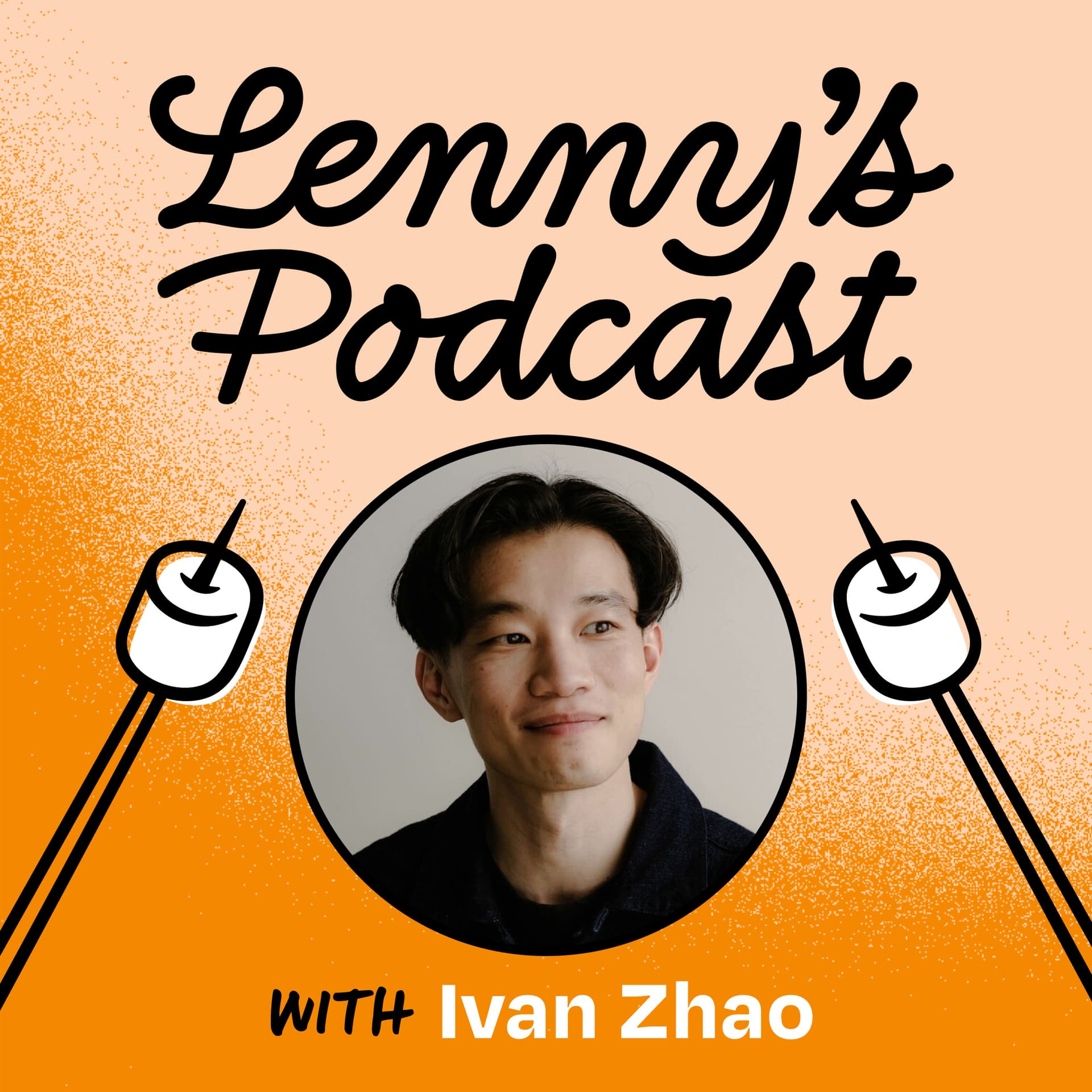
Ivan Zhao is the co-founder and CEO of Notion. Ivan shares the untold story of Notion, from nearly running out of database space during Covid to finding product-market fit after several “lost years,” and the hard-won lessons along the way.
—
What you’ll learn:
1. Why you sometimes need to “hide your vision” behind something people actually want—what Ivan calls “sugar-coating the broccoli”
2. How Ivan and his co-founder persevered through multiple product resets and complete code rewrites
3. Why Notion prioritized systems over headcount, keeping the team small and focused even at scale
4. Why Ivan believes in craft and values as the foundation for product development, balancing technical excellence with aesthetic sensibility
5. The surprising story of how Notion nearly collapsed during Covid when their single database almost ran out of space with only weeks to spare
6. Community-led growth tactics
7. Ivan’s unique journey from a small town in China
8. Much more
—
Brought to you by:
• Eppo—Run reliable, impactful experiments
• Airtable ProductCentral—Launch to new heights with a unified system for product development
• Sinch—Build messaging, email, and calling into your product
—
Find the transcript at: https://www.lennysnewsletter.com/p/inside-notion-ivan-zhao
—
Where to find Ivan Zhao:
• LinkedIn: https://www.linkedin.com/in/ivanhzhao/
—
Where to find Lenny:
• Newsletter: https://www.lennysnewsletter.com
• X: https://twitter.com/lennysan
• LinkedIn: https://www.linkedin.com/in/lennyrachitsky/
—
In this episode, we cover:
(00:00) Introduction to Ivan Zhao
(04:41) Ivan’s early life and education
(07:46) Discovering the vision for Notion
(10:49) The lost years of Notion
(13:56) Rebuilding and perseverance
(17:14) Layoffs and company morale
(18:53) Advice for startup founders
(25:08) Product-market fit
(29:56) Staying lean and efficient
(34:27) Creating a unique office culture
(37:20) Craft and values: the foundation of Notion’s philosophy
(38:44) Navigating tradeoffs in product and business building
(41:24) Leadership and personal growth
(49:11) Challenges and crises: lessons from Notion’s journey
(51:08) Building horizontal software: joys and pains
(01:02:40) Philosophy of tools and human potential
(01:06:17) Lightning round and final thoughts
—
Referenced:
• Ürümqi: https://en.wikipedia.org/wiki/%C3%9Cr%C3%BCmqi
• Notion: https://www.notion.com/
• SpongeBob SquarePants: https://en.wikipedia.org/wiki/SpongeBob_SquarePants
• Augmenting Human Intellect: https://web.stanford.edu/class/history34q/readings/Engelbart/Engelbart_AugmentIntellect.html
• Alan Kay: https://en.wikipedia.org/wiki/Alan_Kay
• Ted Nelson: https://en.wikipedia.org/wiki/Ted_Nelson
• Steve Jobs on Why Computers Are Like a Bicycle for the Mind (1990): https://www.themarginalian.org/2011/12/21/steve-jobs-bicycle-for-the-mind-1990/
• Xerox Alto: https://en.wikipedia.org/wiki/Xerox_Alto
• React: https://react.dev/
• Simon Last on LinkedIn: https://www.linkedin.com/in/simon-last-41404140/
• Magna-Tiles: https://www.magnatiles.com/
• Design on a deadline: How Notion pulled itself back from the brink of failure: https://www.figma.com/blog/design-on-a-deadline-how-notion-pulled-itself-back-from-the-brink-of-failure/
• Bryan Johnson on X: https://x.com/bryan_johnson
• Tobi Lütke’s leadership playbook: Playing infinite games, operating from first principles, and maximizing human potential (founder and CEO of Shopify): https://www.lennysnewsletter.com/p/tobi-lutkes-leadership-playbook
• Smalltalk: https://en.wikipedia.org/wiki/Smalltalk#:
• Lisp: https://en.wikipedia.org/wiki/Lisp_(programming_language)
• DeepSeek: https://www.deepseek.com/
• Shana Fisher: https://www.crunchbase.com/person/shana-fisher
• LAMY 2000 fountain pens: https://www.jetpens.com/LAMY-2000-Fountain-Pens/
• Macintosh 128K: https://en.wikipedia.org/wiki/Macintosh_128K
• Toshiba rice cooker: https://www.toshiba-lifestyle.com/us/cooking-appliances/rice-cooker
• Transistor radio: https://en.wikipedia.org/wiki/Transistor_radio
• Jira: https://www.atlassian.com/software/jira
• Salesforce: https://www.salesforce.com/
• HubSpot: https://www.hubspot.com/
• Zendesk: https://www.zendesk.com/
• Misattributed McLuhan quote: https://mcluhangalaxy.wordpress.com/2013/04/01/we-shape-our-tools-and-thereafter-our-tools-shape-us/
• Phin Barnes on LinkedIn: https://www.linkedin.com/in/phineasbarnes/
• Hacker News: https://news.ycombinator.com/
• Pablo Picasso quote: https://www.goodreads.com/quotes/629531-good-artists-copy-great-artists-steal#:~
• Connections with James Burke on Prime Video: https://www.amazon.com/gp/video/detail/amzn1.dv.gti.484e32c5-60bd-4493-a800-e44fd0940312
• The Enneagram Institute: https://www.enneagraminstitute.com/
—
Recommended book:
• The Romance of the Three Kingdoms: https://www.amazon.com/Romance-Three-Kingdoms-Luo-Guanzhong/dp/024133277X
—
Production and marketing by https://penname.co/. For inquiries about sponsoring the podcast, email podcast@lennyrachitsky.com.
—
Lenny may be an investor in the companies discussed.
This is a public episode. If you'd like to discuss this with other subscribers or get access to bonus episodes, visit www.lennysnewsletter.com/subscribe