In short
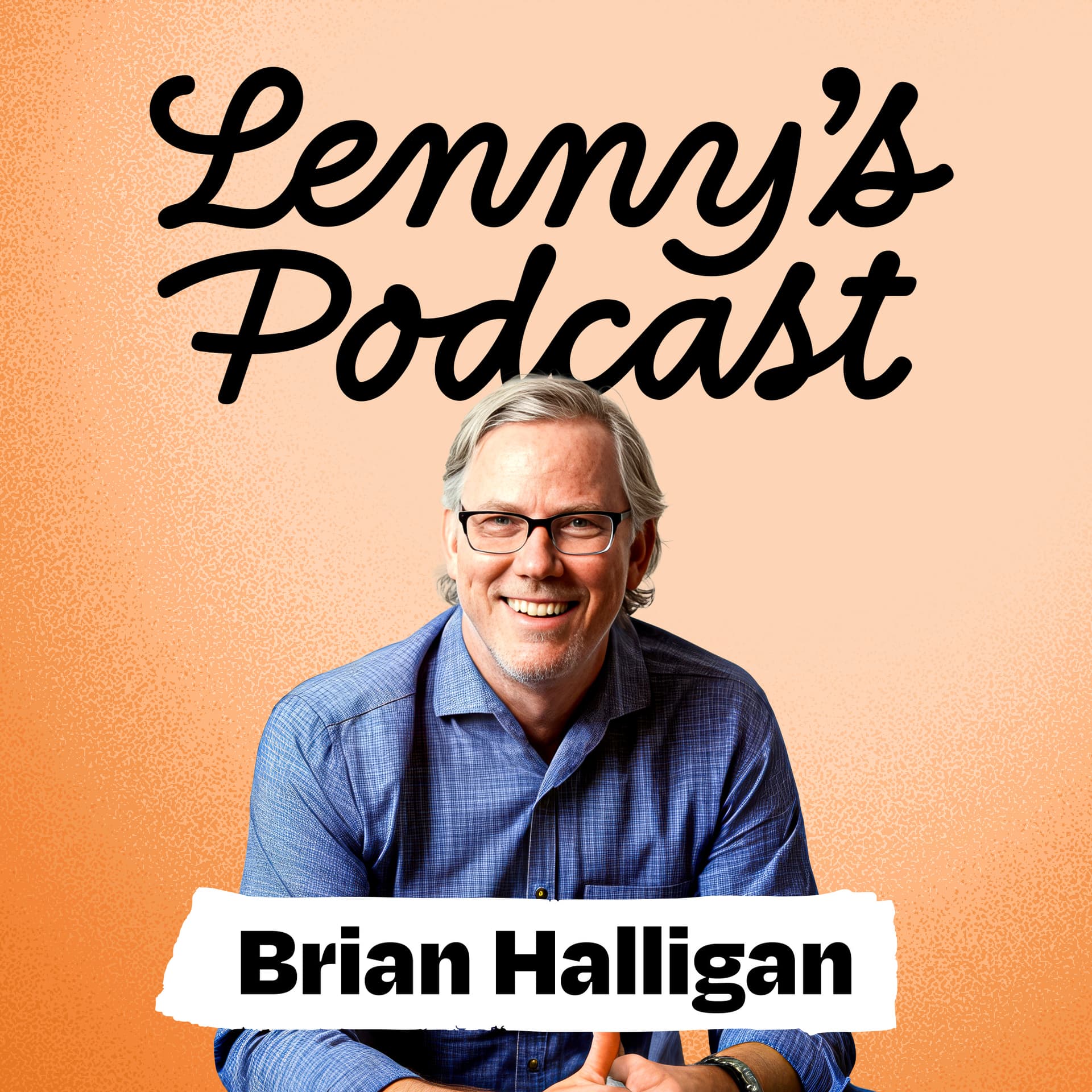
Podcast Summary: Lenny's Podcast - Episode with Brian Halligan
Episode Overview In this episode, Lenny interviews Brian Halligan, co-founder of HubSpot and Sequoia’s in-house CEO coach. They delve into the challenges of starting and scaling a company, discuss Brian's unique LOCKS framework for evaluating founders, and explore various leadership strategies for successful CEOs.
Key Topics Discussed
- The Current Landscape for Founders
- Starting a company has never been easier, but scaling it into a successful, durable organization is increasingly difficult.
- The pressure on CEOs to make faster, better decisions is greater than ever due to the rapid pace of innovation and competition.
- LOCKS Framework
- Brian introduces his framework for evaluating founders, where LOCKS stands for:
- Lovable: The ability to inspire followership.
- Obsession: A deep commitment to their problem space.
- Chip on the shoulder: A drive to prove themselves.
- Knowledgeable: A strong understanding of their domain.
- Student: A continuous desire to learn and improve.
- Hiring Strategies
- Building a team like the 2004 Boston Red Sox, which successfully combined homegrown talent with seasoned veterans.
- Emphasis on hiring "spiky" candidates who bring unique strengths rather than consensus picks.
- The importance of thorough reference checks and the need for honesty in feedback during the hiring process.
- The Role of CEOs
- Brian discusses the evolving role of CEOs over the years, particularly in the context of scaling a company.
- He highlights the importance of effective feedback and the need for CEOs to be students of leadership.
- Sales and AI
- Brian suggests that enterprise sales will likely be the last white-collar job replaced by AI due to the human element of trust in sales relationships.
- A vision for the future of go-to-market strategies where AI plays a critical role in customer interactions.
- Crisis Management
- The concept of not nibbling on a shit sandwich when facing tough decisions; instead, tackling the issue head-on.
- Learning from crises and making significant shifts in company practices post-crisis.
- Haliganisms
- Brian shares several nuggets of wisdom, dubbed "Haliganisms", which are essential lessons derived from his experience:
- "Never waste a good crisis." Use challenges as opportunities for improvement.
- "If you want to kill a plant, have two people water it." Emphasizes the importance of clear responsibility in teamwork.
Key Takeaways
- Current CEO Challenges: The role of a CEO has become more complex, requiring faster decision-making and the ability to adapt quickly to market changes.
- Importance of Feedback: Effective communication and feedback are crucial for team cohesion and success.
- Learning from Crises: Crises often lead to the most significant growth and operational improvements within a company.
- The Value of Unique Teams: Diverse teams with varied skills and backgrounds can drive innovation and success.
Final Thoughts Brian Halligan emphasizes that while anyone can aspire to be a CEO, not everyone is cut out for the role. It requires a unique blend of traits, continuous learning, and a willingness to face challenges head-on.
For more insights, listeners are encouraged to check out Brian's podcast, "Long Strange Trip", where he interviews other CEOs to share valuable lessons and experiences.
---
*For further details, you can access the full transcript of the episode [here](https://www.lennysnewsletter.com/p/sequoia-ceo-coach-why-its-never-been).*
Written by AI. May contain mistakes. Listen to the episode to check what was said.
Chapters
Tap a time to open that second in VOKey Insights on Founding and Scaling Companies
1:01 to 1:32
Discussion on the ease of starting a company versus the challenges of scaling.
“I asked Brian to come on this podcast because he is more than anyone I've met, a student of the job of a CEO.”
Traits of Successful CEOs
3:59 to 5:06
Brian discusses the traits necessary for successful CEOs today.
“I want to start with something that I've heard your board members, the way they described you, is someone with a perpetual state of constructive dissatisfaction.”
Transition from Kids Table to Adults Table in Leadership
5:06 to 6:45
Insights on the differences in mentality between CEOs of smaller and larger companies.
“And I've been surprised at how humble this generation is of CEOs.”
Improving Interviewing Skills for CEOs
6:45 to 8:02
Brian shares advice on how CEOs can improve their interviewing techniques.
“So that is one that they kind of are making that transition.”
The Importance of References and Hiring Practices
8:02 to 10:06
Discussion on how to effectively use references and the pitfalls in hiring.
“And if they're just very complimentary and it's so great, you're doing this amazing thing.”
Avoiding the Big Company Hire Mistake
10:06 to 12:49
Advice on the risks of hiring from large companies and the mismatch in expectations.
“And so what you're saying here is there's only so much you can actually do to increase those odds.”
Building a Team Like the 2004 Red Sox
12:49 to 14:07
Brian explains his philosophy on team building using the Red Sox as an example.
“If you're 50 or 500 employees and they expect you to have your act together.”
Lessons from the Red Sox Success
14:07 to 15:01
Explore how the Red Sox's mix of homegrown talent and experienced players contributed to their success.
“And then they got a few free agents like David Ortiz that a lot of people have heard of that they paid a fair amount of money to.”
The Importance of Internal Talent
15:07 to 16:04
Learn why investing in homegrown talent can be more beneficial than hiring externally.
“Yeah, if you look at HubSpot, like half the management team are folks who have been there for approximately 150 years, which I like.”
Rethinking CEO Attributes
16:10 to 16:43
Discuss Brian Chesky's perspective on the essential traits of effective CEOs.
“to the experienced talent and management teams and delegation.”
Show all 40 chapters
Understanding CEO Success Traits
16:45 to 18:21
Dive into the traits that define successful CEOs, including obsession and knowledge.
“Do you feel like there are specific profiles or just like traits that you have to be born with to be a successful CEO?”
Evaluating CEO Potential
18:23 to 19:13
Explore the 'LOCK' algorithm for assessing CEO candidates and their abilities.
“Like I look at Winston Weinberg from Harvey or James from Profound or Gabe from Rogo, some of these new, very fast growing companies.”
Common Challenges for New CEOs
19:14 to 20:39
Identify the common challenges faced by new CEOs and how they can adapt.
“I would go to LennyBot.com and be like, what is the common pattern across these folks?”
The Five-Tool CEO
20:48 to 22:20
Discuss the emerging concept of the 'five-tool CEO' and their unique skill sets.
“This is extremely interesting and useful.”
AI's Impact on CEO Skills
22:21 to 23:25
Examine how AI is reshaping the skills required for successful CEOs.
“He's brilliant, genius level, obsessive.”
Essential Feedback Skills for CEOs
23:26 to 24:32
Understand the importance of feedback skills for CEOs to effectively build their teams.
“And I need to hire somebody who can actually run the engineering machine.”
Peer Learning for CEOs
24:33 to 25:50
Discover how peer groups can help CEOs navigate their unique challenges effectively.
“He hired 10 people, but just can't quite figure out the sales profile.”
The Ease of Starting vs. Scaling a Business
25:54 to 27:20
Explore why starting a company is easier than ever, yet scaling has become significantly harder.
“And when I was a kid, I'd walked into CVS corn drug store and I want to buy a toothbrush.”
The Shifting Landscape of Sales and AI
27:21 to 28:00
Delve into how AI is impacting sales roles and the dynamics of go-to-market strategies.
“And a big part of this is distribution, essentially breaking through the noise is what I'm hearing.”
The Evolution of Go-To-Market Strategies
28:00 to 29:50
Discover how go-to-market strategies are evolving with technology.
“Let's say inside of HubSpot, software development's working incredibly well.”
The Role of AI in Future Sales Processes
29:50 to 31:30
Learn about the impact of AI on future sales interactions and processes.
“I, I, I, I think both, I think me as a knowledge worker, like what I really want as a homo sapien is I have like a Delphi clone that I really like.”
Current Trends in AI-Driven Companies
31:30 to 32:38
Explore what successful AI-driven companies are doing in the market today.
“These two bots chatting with each other?”
Shifts in CEO Responsibilities Over Time
32:38 to 35:58
Understand how the role of a CEO has changed in the era of rapid technology advances.
“I spent the first 10 years of my career at a company called PTC, which is like an enterprise sales machine.”
Halogenisms: Wisdom from Experience
38:10 to 41:40
Gain insights from key lessons and advice shared by successful leaders.
“Essentially, these are nuggets of wisdom and advice that you find yourself sharing often.”
Learning from Crises: A Management Perspective
41:40 to 42:05
Discover how crises can lead to significant improvements in business practices.
Lessons from Crisis: Building Resilience
42:05 to 43:31
Discover how crises can lead to significant improvements in business practices.
“And so in this particular case, we really rethought how we deployed software, how we thought about making software in a way that was incredibly healthy.”
The Importance of Direct Responsibility in Teams
43:31 to 45:08
Learn why having a single point of accountability is crucial for business success.
“If you want to kill a plant, have two people water it.”
The Reality of Startup Challenges
45:08 to 47:11
Understand the harsh realities and sacrifices required in startup life.
“Everything important happens cross-functionally inside a company at scale.”
Obsessed Founders: Work-Life Balance Myths
47:11 to 49:35
Explore why many successful founders often sacrifice work-life balance.
“Your teacher, your thesis advisor, you're kind of on your own and you got to figure it out.”
Balancing Company Values: EV, TV, and MEV
49:35 to 53:21
Learn about the importance of prioritizing enterprise value over individual goals.
“Just like balance for a CEO is not, you should not have work-life balance if you want to be incredibly successful.”
Shifting Focus: Customer-Centric vs. Employee-Centric
53:21 to 56:00
Discover the implications of focusing on customer needs over employee satisfaction.
“I imagine everybody listening, working at a big company, understands this, where you have goals, you get your KPIs and your performance reviews based on what impact you drive, if you hit your goals.”
Shifting Focus from Employees to Customers
56:00 to 58:20
Learn how prioritizing customer feedback transformed HubSpot's management strategy.
“Like if you look at Toby from Shopify, his scores aren't that good, but that company is doing really, really well.”
The Challenges of CEO Communication
58:20 to 1:01:15
Explore the importance of clear communication and the challenges faced by CEOs.
“It just doesn't sink into people's heads.”
The Evolution of the CEO Role
1:01:15 to 1:03:17
Understand how the CEO's role evolves from startup to scale-up and the importance of trust.
“I'm excited to get him back on the podcast someday.”
Lessons from the Grateful Dead for Startups
1:03:17 to 1:06:00
Discover how the Grateful Dead's innovative approach offers valuable lessons for startups.
“The Grateful Dead were like the ultimate Silicon Valley startup.”
Lightning Round: Quick Insights and Personal Reflections
1:06:00 to 1:10:01
Gain quick insights on favorite books, movies, and personal life lessons from Brian.
“I can't remember the last time I actually sat down and read a book.”
Surviving a Life-Changing Accident
1:10:01 to 1:11:14
Brian shares a harrowing story of a snowmobile accident that changed his perspective on life and leadership.
“And I made some decisions at the bottom of that cliff.”
The Importance of Intentionality
1:11:15 to 1:11:53
Reflecting on life after trauma, Brian emphasizes being intentional with decisions and relationships.
Insights on Running a Baseball Team
1:11:54 to 1:13:08
Brian discusses the surprising economics and challenges of owning a baseball team, particularly the Red Sox.
“bones in this accent a lot of broken bones a lot of metal i get 33 screws in me one loose one up here, Lenny.”
Engaging with Listeners and Feedback
1:13:09 to 1:14:11
Brian encourages listeners to provide feedback on his new podcast initiative and how to connect with him.
“So hop on your YouTube and leave some comments about what they think.”
Transcript
Automatic transcript. May contain errors.0:00The thing about being a founder CEO is no one there to rescue you. Your parents aren't going to rescue you. Your VC is not going to rescue you. That kind of hits you when you hit your first crisis. Starting a company has never been easier. Scaling one into a durable, high-impact organization has never been harder. The number of companies formed is going to mushroom over the next 10 years relative to the last 10 years. It's just going to be hard to stand out and really accelerate. What's most different about what it was like to be a CEO maybe 10, 20 years ago versus today? There's a massive tax on optionality when you can move this fast and try a lot of things.
0:29It puts pressure on the CEOs to be faster and better decision makers. A lot of people in the world want to be founders. They want to be CEOs. I don't think anyone can do it. People talk about 996. It's way more than that. Founders are seven days a week. They're always on. I text Sunday nights. It's full contact. Do you feel like there are specific profiles or traits to be successful? I look for four things. I call it my lock algorithm. Today my guest is Brian Halligan, co-founder and longtime CEO of HubSpot. I asked Brian to come on this podcast because he is more than anyone I've met, a student of the job of a CEO.
1:09After leaving HubSpot last year, he became the in-house CEO coach at Sequoia, where he brings together dozens of top CEOs to learn from each other. He does one-on-one coaching with some of the world's top CEOs. He also hosts a popular podcast called Long Strange Trip, where he interviews some of the world's most successful CEOs. In this conversation, we unpack what it takes to be a successful CEO in today's era. Let's get into it after a short word from our wonderful sponsors. Applications break in all kinds of ways. Crashes, slowdowns, regressions, and the stuff that you only see once real users show up.
1:44Sentry catches it all. See what happened, where, and why. Down to the commit that introduced the error, the developer who shipped it, and the exact line of code, all in one connected view. I've definitely tried the five tabs and Slack thread approach to debugging. This is better. Sentry shows you how the request moved, what ran, what slowed down, and what users saw. Sear, Sentry's AI debugging agent, takes it from there. It uses all of that Sentry context to tell you the root cause, suggest a fix, and even opens a PR for you. It also reviews your PRs and flags any breaking changes with fixes ready to go.
2:21Try Sentry and Sear for free at sentry.io slash Lenny and use code Lenny for$100 in Sentry credits. That's S-E-N-T-R-Y dot I-O slash Lenny. This episode is brought to you by Datadog, now home to Eppo, the leading experimentation and feature flagging platform. Product managers at the world's best companies use Datadog, the same platform their engineers rely on every day to connect product insights to product issues like bugs, UX friction, and business impact. It starts with product analytics, where PMs can watch replays, review funnels, dive into retention, and explore their growth metrics. Where other tools stop, data dog goes even further.
3:03It helps you actually diagnose the impact of funnel drop-offs and bugs and UX friction. Once you know where to focus, experiments prove what works. I saw this firsthand when I was at Airbnb, where our experimentation platform was critical for analyzing what worked and where things went wrong. And the same team that built experimentation at Airbnb built Epo. Datadog then lets you go beyond the numbers with session replay. Watch exactly how users interact with heat maps and scroll maps to truly understand their behavior. And all of this is powered by feature flags that are tied to real-time data so that you can roll out safely, target precisely, and learn continuously.
3:41Datadog is more than engineering metrics. It's where great product teams learn faster, pick smarter, and ship with confidence. Request a demo at datadoghq.com slash Lenny. That's datadoghq.com slash Lenny.
3:58Brian, thank you so much for being here and welcome to the podcast. Thanks for having me, Lenny. It's my pleasure. I want to start with something that I've heard your board members, the way they described you, is someone with a perpetual state of constructive dissatisfaction. Do you think this is a core foundational kind of trait of successful CEOs, successful leaders? By the way, I like that description. When she did, the woman named Lori Norrington, who's a sub-sweats chair, said that, I like it. I took it as kind of a compliment and I liked it. And as I, so I spend most of my time these days coaching very fast growth CEOs.
4:37They all are kind of like that. they're all in kind of a state of perpetual dissatisfaction, but in a positive way. One of the things, by the way, I like about the current crop of CEOs,
4:54they don't really take stock of what they've done and feel it. They're always a little bit dissatisfied with where they are and very focused on the end state. And I've been surprised at how humble this generation is of CEOs. And I think of my generation of CEOs as being, I don't know, I wouldn't, humble wasn't the first word that would come out of your mouth when you describe kind of my generation. But this generation, I feel like is different. And I've been impressed with it. Okay. I have a bunch of questions along these lines. Because one, you've been a CEO of an incredibly successful company for a long time, for about 20 years before you moved on to this new chapter.
5:35Now you work with a bunch of COs. You're Sequoia's in-house CO coach. There's a few things that I've heard you do. One is you gather groups of COs. And what I've read is that you have kind of two tables. You have the kids table and the adults table. The kids table is COs that are companies that are about under 100 employees. The adult table is over 100 employees. So let me ask you just, when you look at COs that move from the kids table to the adults table, other than just, you know, they scale and grow. What is it that these CEOs that graduate from kids to adults table do differently? The adults are really focused on, and all they really want to talk about is their exec team, their direct reports.
6:19How do you build our exec team at next level down, org design? You would be surprised how much they think about that. And on average, I would say the adults are spending half their time just recruiting and interviewing. It's pretty all-consuming. And I remember that from that phase in HubSpot's growth. And it surprises people like, wow, my job is really just to interview and hire. I didn't know that was going to be the case. So that is one that they kind of are making that transition. And I would just say in general, people are very bad at this and HubSpot was too. I think CEOs and everyone dramatically overrates their ability to interview and overrates their gut feeling and underrates a really high quality blind reference.
7:12and I interviewed Dave, the CEO from MongoDB the other day, and he had an interesting study. On average, over his like 10-year lifespan as the CEO of Mongo, there were two C-level, two C-levels turned over per year. That's a lot of turnover at the top. And I didn't keep track of it like Dave, but I'm think HubSpot was kind of similar in all of these startups are kind of similar too. And so people are working on that and struggling with it as one thing in common, like with all of them. What do you do when you coach someone on that? When you're like, okay, you think you're amazing at interviewing?
7:54You think, you know, who's going to work out? What advice do you give them to help them develop that skill? I think even me, I've been doing this for 150 years i still think i overrate my ability to interview someone uh and really know if they're a good fit um i give a couple pieces of advice parker conrad has a good hack that i like uh before he's got a c-level interview cfo chief product officer whatever he has him sign an nda and sends them the last board deck or the board memo or some important doc and he schedules a half hour interview with them. And he just has a chat about the depth. And if they're just very complimentary and it's so great, you're doing this amazing thing.
8:40It's a major red flag to him because he wants someone that will challenge him and not a yes person. And I thought that was a pretty good hack to get inside someone's head and how they think and how they'll interact with you. Getting on a whiteboard and working through a problem, I think is always a good thing. I think the standard interview of walking through your background, I don't think is all that valuable. And I coach people to do blind references. Find someone you know that work with them. VCs are good at this, by the way. And I get a lot of these. And you can tell some of them are like, we've already decided we're checking the box versus they're asking me hard questions about this person.
9:21And one of my favorite questions people ask is, would you enthusiastically rehire this person for that role? Which I think is a really good question. On a scale of 1 to 10, how likely is it that you'll try to rehire this person back from me down the road? I think those types of questions are good. So not mailing in on those blind references, I think, is really good. My other piece of advice, and no one listens to me on this, is hire slow and fire fast. People hire fast and fire slow. And if I had to guess, Lenny, with 18 months after you hire a C-level exec, at least 50 % of the time they're gone.
10:05There's a high mortality rate on them. It's harder than people think. And so what you're saying here is there's only so much you can actually do to increase those odds. I think you can. I think you can. you can um i think the blind references are key i think doing like real interactive working on a project together key i'll tell you one other thing we learned at hubspot about this like we would have a candidate come in let's say a head of engineering and we'd have like eight people interview them and our scale is one one to four and let's say four people were four out of four and four people were two out of four so that's candidate a and then the next candidate comes in eight people interview them and everyone's a three out of four almost every time we hired the three out of four like the person with the least amount of weaknesses and we changed it and we went with the spikier people we went with people with weaknesses we want people to challenge stuff and that has worked out quite well like our hit rate and hubspot's improved we also have shrunk the the pool of people on that interview panel from eight to like four like we just hired a a head of product and there were just four of us that interviewed him.
11:16I think that worked too. So I think there's things you can do to get better at it for sure. Okay. This is incredibly tactical and useful on the references piece. The toughest part is getting people to be honest because there's very little upside to them to say negative things about people. Is there anything that you've learned to help get real honest answers from folks you call for references? Well, I can just say, because I don't do this a lot anymore, but when people call me, I can tell what they've already decided. When they're really just looking for like, when they ask me for the strengths and weaknesses, I'm like, they've already decided.
11:54When they ask me something hard, like on a scale of one to 10, how likely you're to hire them again? Stuff like that, that kind of gets at the core. Or were they the top 1 % of your employees? That's a good question oh were they top 10 oh you know that type of question is pretty good uh so when i'm on the other side of it i like when i like when those types of questions come up i tell you the other mistake everyone makes i made all the ceos we're making now is you're hiring for that whatever head of engineering and you're blown away by the resume like you're 50 employees and you're hiring this person who's been at Microsoft the last 10 years and has a fancy title and fancy division in Microsoft and you hire them, there's just a massive impedance mismatch when you hire them on what their expectations are, what your expectations are in the in the in the extent that you get your shit together.
12:50It's just you don't. You definitely don't. If you're 50 or 500 employees and they expect you to have your act together. And so that is another, like avoid the big company hire. Like we hired so many people from Salesforce and Google, Microsoft, like 100%, you know, attrition rate on all those folks. Something that I've seen that a lot of companies is there's like phases of like, okay, now it's like the McKinsey, a cohort comes in and we think that's going to be the answer. And that's the Apple group. And then that didn't work out. Then the Amazon group. The McKinsey one never works. It never works.
13:26it never works like by definition they would fail on my spectrum of like most founders are like me like they are skeptical of conventional wisdom they're unhappy with the world works in some way and so they're kind of far on that spectrum of rethinking conventional wisdom and almost by definition somebody who goes to work for mckinsey is very conservative in their outlook um and so i think that almost always fails we're on this hiring kind of thread so let me keep following this conversation uh i read somewhere that you recommend building your team like the 2004 red socks what does this mean i'm well i'm a big sports fan and big boston red sox and the boston red socks hadn't won landing a world series in 86 years since they traded and they finally broke they finally won it in 2004 and the way they won it was they had a team of a bunch of homegrown really high quality, inexpensive talent that they drafted and came through the farm system.
14:27And then they got a few free agents like David Ortiz that a lot of people have heard of that they paid a fair amount of money to. Pedro Martinez and Curt Schilling were kind of the canonical older, been there, done that bigger company folks. And they mixed really nicely. The culture really worked. And I think that's the key. I think people underrate their homegrown own talent like almost across the board they underrated and i think you want that mix you don't want to hire a whole bunch of ben there done that you don't want to hire none of them i don't i imagine this is public but you're now part owner of the red socks is that part owner of the red socks yes okay i have questions for you along those lines okay okay that's uh that's amazing advice uh kind of what i'm taking away here is people see all these fancy logos amazing person vp this that salesforce amazon google whatever and what you're saying here is uh don't underestimate the power of someone internal rising to the occasion.
15:22Yeah, if you look at HubSpot, like half the management team are folks who have been there for approximately 150 years, which I like. And same with like, you look at Apple, a lot of those people are homegrown. And so is there any tips here for doing this well? Is it just like give people a chance? I tend to give people a chance. It's like if you're interviewing someone that's homegrown and their VP for that C-level job versus hiring someone from the outside. And hire someone to be outside. They're very good at interviewing from a big company. They look fancy. They're shiny. You haven't seen their awards.
15:52It's hard to figure out their awards unless you're very good at blind referencing. And so you tend to overrate them and underrate your homegrown. So if it's pretty close, I think you give your homegrown a shot at it. What's interesting to me, Lenny, is, you know, Brian Chesky sort of rethought a lot of this stuff. and he's like, everyone's over rotating to the experienced talent and management teams and delegation. I mean, I think he's mostly right about that. People haven't really followed that. People are, you know, they're hiring people from the outside quite a bit. That's kind of the standard part of the playbook that all of them are following now.
16:28It's a little different. It's actually quite different than what Brian's espousing. Going back to the conversation around CEOs, a lot of people listening to this podcast, just a lot of people in the world want to be founders. They want to be CEOs. At the same time, you look at Elon, you look at Jensen, you look at Steve Jobs, you look at you. A lot of people are like, I can't. I'm not this person. I'm not going to be as good as them. There's no world where I'm this good. Do you feel like there are specific profiles or just like traits that you have to be born with to be a successful CEO? Or do you think it's all learnable?
17:00Anybody can be successful if they really work hard? And go ahead and meet all these CEOs coming in. And I have a little algorithm in my head. And I look for four things. I call it my lock algorithm. L is for lovable. And, you know, Steve Jobs, you would say, is kind of rough and maybe not lovable. But he would inspire followership. You would want to follow him. And so could I envision a 28-year-old me graduating from business school going to work for this person? Would I crawl across broken glass? That's question one. Two is just obsession. Are they deeply obsessed with this problem? I'm a little negative on people who came up with this problem to solve six months ago and started a company.
17:49I like people with deep founder market fit. women thinking about it for a long time and have evidence in their lives of going deep down obsessively down a rabbit hole because that's kind of what it takes to be a founder CEO. The C is something I wouldn't have thought of, but this is a Sequoia thing, like chip on the shoulder. Pretty much all of them have a bit and be like a boulder on their shoulder. And I have a bit of a chip on my shoulder too. And the K is just for deeply knowledgeable about the domain. And so I kind of look for that. If I were to stick an S on it, I would say student. Like I look at Winston Weinberg from Harvey or James from Profound or Gabe from Rogo, some of these new, very fast growing companies.
18:41They're students of the game. they're not just learn-it-alls they're deep deep deep students of the game and they're they're like llms they're constantly constantly learning and it's not just learning stuff for me and their peers but they go way back in time and have a lot of history on stuff so those are some of the that's kind of my little criteria i use when i'm evaluating ceos what do you look for by the way you've interviewed a ton of folks like me what do you think's in common of what successful founders Oh, my God. I wish I had my succinct answer. I would go to LennyBot.com and be like, what is the common pattern across these folks?
19:19One that you didn't mention that I think is interesting. I did some research on this recently with Terrence Rohan. One is just extremely ambitious, just trying to do something really wild that most people are like, that's crazy. You're not going to get a subscription service for all music in the world. That's just what are you doing? Do it. And you're not going to build it. I agree with that. Is it learnable? I noticed a lot of the CEOs struggling with a couple things. Let's say you're Winston, you're late 20s. You've never managed a team. You're probably never even captain of a sports team before.
19:54And in order to scale, you have to give people feedback constantly. It's very unnatural. It's like, I'm going to give this VP I hired a bunch of feedback, positive and negative. And if you don't get good at that, you really pay the price later. That's something I think they have to learn. They all have to learn to get a good bullshit detector. They're constantly being spun. Everyone's trying to sell to them. The org is always trying to sell to them. So that's sort of something they have to develop over time. They have to all get good at the inspiration thing over time. You're Winston. You've never had to inspire anyone in your entire life.
20:36You went to school and you're a lawyer for a few years and you started this thing. Inspiration wasn't your thing. So there's certain things you have to kind of learn on that startup to scale up path. And the best ones learn it very fast. This is extremely interesting and useful. So Locke with an S at the end, just to kind of mirror back what you're sharing. And when you were saying you evaluate CEOs, is this for like investing? Okay, so when you're helping Sequoia decide, should we invest in this company? what you look for is uh locks i like the s i'm gonna include it there so are they lovable are they inspiring uh oh are they obsessed with this problem they're going after uh do they have a chip on their shoulder are they extremely knowledgeable about the problem they're going out and it sounds like not just the problem but just the studying companies business strategy things like that and then s was a student i guess that's what s is student is studying this uh being a founder being a co okay so i guess going back just to the question do you think just to put it very simply do you think co's are born or do you think they're made can anyone turn into an amazing co i don't think anyone can do it i don't think it's just anyone i i will say i've noticed that so another little rubric i have and i don't see a lot of these but like brett taylor's one there's a few out there that are in sequoia's portfolio i call them a back to the baseball thing a five-two player in baseball when you rank a player it's can they hit can they hit with power can they run can they catch a ball can they throw the ball and they they rate them kind of one to ten at each it's very rare that you have a five tool player like extremely rare and the thing that's kind of new now are there are five tool ceos like brett taylor's one you can code you have taste you have vision you can sell the product you can convince employees like this kind of super ceo and there's a bunch of them now and i don't know i didn't see a lot of those that certainly wasn't steve jobs he wasn't writing he wasn't programming um it wasn't jeff bezos uh you know i think there's kind of a new breed that's quite impressive these folks you mentioned uh were this good before ai became a thing, I imagine AI helps more CEOs fill the gaps that they have.
22:58I think AI, it's hard to fill the gap. You know, this guy's a developer. He's brilliant, genius level, obsessive. But can he convince, can he sell? Can he convince an investor to give him a lot of money and a high valuation? Can he convince brilliant employees to leave OpenAI and join him? can he convince some big skeptical fortune 500 enterprise to buy his product like being able to do that and have taste and be able to code really well at next levels i think is rare i actually think it might be the other way though where mere mortals like me who can kind of code all of a sudden we're gonna be able to build stuff i think it kind of goes the other way i love this list you shared of things that you find co's most have to learn bs detection uh inspiring people giving hard feedback what's maybe like the one thing that most often people that become ceos founders have to work on is there like a most common thread of like here's the thing you probably need to work on most it's that feedback thing all of the ceos are building their teams and so many are like i have a co-founder that runs product and engineering but I need that co-founder to kind of step aside and be the CTO and the thinker and the labs person.
24:18And I need to hire somebody who can actually run the engineering machine. Like so many of the CEOs are going through that right now. That's a tricky transition. So many of the CEOs are layering folks. Like you hired that early, had a sales. He hired 10 people, but just can't quite figure out the sales profile. can't quite unpack the sales process, can't quite forecast accurately, we need to layer the person. You know, those types of conversations are very tricky and quite unnatural for homo sapiens to have if you're, you know, you're 25 and you've never done anything like that before. So I see the best ones getting really good at that and studying it.
25:00And it's super uncomfortable, but they have to kind of suck it up and get good at it. What do you find most helps them build these skills, get better at this? Is there some kind of tidbits of advice you give them? Is it something that they study to improve? I think misery loves company on this. So what I do, like the kids table is 15 CEOs of companies under a hundred employees and the adults table are CEOs of companies over a hundred employees, about 15 of them. They talk about this with each other. It's kind of a safe space and I can weigh in, but it's actually much more effective when their peers weigh in.
25:36I think misery really does like company on stuff like this. They learn from each other. So essentially it's fine peers to talk to and share and be more open. And the reason I break it out is like the problems with the kids table are very different than the problems of the adult table. And they all rhyme a lot. So you teach a course at MIT around scaling startups and it's specifically around scaling, not startups, not starting the company. and you have this quote in your syllabus starting a company has never been easier scaling one into a durable high-impact organization has never been harder why is that the case i mean has it ever been easier to start a company it's absolutely true in the flip side of that is i mean how many companies is the the number of companies formed is going to mushroom over the next 10 years relative to the last 10 years and the last 10 years compared to the previous 10 years as much.
26:31I just think in my life, like I'm old. And when I was a kid, I'd walked into CVS corn drug store and I want to buy a toothbrush. There are four or five there. You pick one. And, you know, in the night, in like the 90s or 2000, you go to Amazon, there are four or 5 ,000 toothbrushes. It's more 5 ,000 companies greater than the toothbrushes. It got much, much easier to make stuff and even technology. AWS just made it easier to start a software company. So it's like a huge jump back then when we started UpSpot in 2006, but now it's going to be an even bigger jump. So it's easier to start. Now there's so much noise in competition.
27:13It's just going to be hard to stand out and really accelerate and scale. So that's why I say it's never been easier to start. There's never been more competition. it's never been harder to scale. And a big part of this is distribution, essentially breaking through the noise is what I'm hearing. And it's hard to learn that. Like you didn't grow up doing distribution. You don't know. So they're all learning it. And the ones that learn fast, it's like a learning game. The faster you learn, you know, the better you do. Along these lines, I said you tweet this recently where people talk about which jobs AI is going to replace.
27:44And you said that sales is maybe the last job AI role replace. Why do you think that's the case? Well, if you look inside a typical enterprise, where's AI really working? Let's say inside of HubSpot, software development's working incredibly well. Customer support, incredibly well. Legal, starting to work incredibly well. But there really aren't apps like in the rest of the org that have really changed things a lot. And in the go-to-market side has been kind of slow uh really just support like there isn't like a canonical marketing or sales or maybe the bdr is the first one but i think ye old enterprise sales where there's actual trust built up between two carbon-based life forms i think will be very very very late to go in the white collar world i also i think a lot about the go-to-market I think the go-to-market is going to get turned on its head.
28:48When we started HubSpot, if I think of the way the funnel worked, you want to get found in Google. Someone clicks on a blue link. They land on your website. They go down the rabbit hole. They clicked on contact sales. They wait until that sales rep's ready, go down that rabbit hole. And I think it's going to get turned on its head where people are evaluating a product. They start in Gemini or they start in Anthropica or they start in ChatGPT. and, you know, for example, Chachaputin knows way about your, knows everything on your website, everything beyond that, knows all your competitors. So they will stay in there and do lots more research and be incredibly well-educated.
29:23So your website's a lot less important. And they go to your site. I think sites will change where you're going to have a really high-quality avatar that knows everything about your products, knows everything about your company and your pricing and packaging. And you can have a high-quality conversation with that person. that person that will get stored in your crm in and will get um you know scored this is good quality conversation and then the sales rep will follow up but that sales rep will bring an avatar with them on every sales call you don't have to wait for their sc they'll have their own sc that's all knowing that will follow them through the process so go-to-market hasn't changed much yet but i think over time it's going to change a lot this avatar just understand so this is uh the buyer has their own little agent that comes with them or on HubSpot, you have this avatar that walks you through the sales process.
Read the full transcript
30:13I, I, I, I think both, I think me as a knowledge worker, like what I really want as a homo sapien is I have like a Delphi clone that I really like. Same. It's actually quite good. Yeah. Yeah. Where do people find yours? Uh, they find it on my footer. They can find it on Delphi. Okay, we'll link to it. Yeah. And what I want is like connect that thing to my email, into my granola, into my plod. And it knows everything about me. And then when I go to a meeting, Lenny, I want to invite that thing to my meeting. So it's sitting there in the Zoom meeting, not just taking notes like granola. It's a participant.
30:56So if I forgot something, I asked it a question. If somebody else forgot, like I think every knowledge worker will have one of these in three, four, five. years. But mine was more on the go-to-market side where I think every website will change and there'll be an all-knowing avatar on that homepage. And if it's a considered purchase, I think it gets handed off to a sales rep. That sales rep has a conversation. But when that sales rep's on Zoom, they have their SE avatar that's kind of all-knowing. And so I think this stuff all changes a lot in the next few years, but it hasn't really unlocked yet.
31:28What are we going to be doing in this world? These two bots chatting with each other? but it's gonna be great lenny you and i are gonna be like sitting on listening to podcasts relaxing on a month long vacation sending our avatars to all meetings go buy me some hub spot seats please i think this is why cloudbot was so popular i think this is essentially what they're building is this idea which is now called moldbot which might be changing again uh it's just like this personal little agent that can go do stuff for you totally so you're talking about the future of go-to-market is this world where there's these little bots and agents that are doing things for you both on both sides.
32:04When you look at companies today that you work with that are doing well, that are especially AI-driven companies, what are they doing differently in terms of go-to-market that is working really well? Honestly, the only thing that's different today, it's exactly the same as it's been for a hundred years, except they call their SCEs or their system consultants for deployed engineers. The rest of it is the same. I thought it would be totally different in AI. I'm working with all these companies. They're hiring like all the same folks running the same enterprise sales processes. So it hasn't changed that much, at least on the enterprise side.
32:38It actually hasn't. I spent the first 10 years of my career at a company called PTC, which is like an enterprise sales machine. Enterprise sales hasn't changed that much since the 1990s. Okay. And so for deployed engineer, very hot term. The idea there is they come work with the customer and help them implement this thing. And that's come up a lot on this podcast, just with AI tools. Rarely are they just plug and play. You can't just like set up some agent that figures everything out. Takes a lot of onboarding and integration. Is it actually a different thing at all versus like sales engineering in the past, things like that?
33:12I think it's a solution that's consultant, sales engineer, technical, they help you implement it. They connect all your systems, they customize it. It's different. I mean, you're training it in a different way, but I think well anyway I think the term is fine I'm sort of being light on it because boy it looks similar except that role has a different name to it got it so if anything the advice I'm hearing here is just lean into this uh continue to lean into this idea of having your employees help the customer on board be successful integrate all that stuff I think the thing that will change first is the top of the funnel around getting found in instead of google you got to get found in in in these yeah aeo yeah that's going to be really important in the way you build your website is very different for that to optimize for it um and then your i think your home page is totally different i think you land on an avatar and have a conversation with them versus you're going through all the pages on your site i think the top of the funnel is about to change a lot is anyone doing this well yet this idea of this avatar is this just kind of a in the future.
34:13If you start a program, HubSpot does it. We built one. It's working. Okay. Okay. Let me ask one more question around CEO stuff, and then I want to move on to halogenisms. All right. How is just being a CEO different than it was? So you've been doing this for 20-ish years. What's like most different about what it was like to be a CEO maybe 10, 20 years ago versus today. One of my C, as actually Winston from Harvey, said this like a year ago and I was like, that's bullshit. But I actually think he was right. He's like, you can just do a lot more. I mean, you've got AI agents doing stuff. Everyone's more productive.
34:54The software developer's more productive. Like something that used to take you a year takes two months now. And so the amount of projects and the amount of stuff you can do is much, much more. I think he's right. I think that's a little dangerous. Let's say you found your beachhead market, and that beachhead market is really good, and it's very deep. There's a lot of work to do. I think what's dangerous for companies is they hop to that second act too quickly, and they lose focus on that first act. This isn't a completely perfect analogy, but you think of OpenAI and ChetGPT, and its consumer app is doing incredible.
35:28They're doing lots and lots and lots and lots of other things. Then Gemini comes out, and they've focused back on the core. I think there's a lot of competition. and everything's moving fast. I do think people get more done. And I think that impacts everything. Like the planning cycles used to be a year. I think the planning cycles now are three months long. Yeah, that's a big change. I think it puts pressure on the CEOs to be faster and better decision makers. Like I just think of times in HubSpot when things slowed down and there was churn. it was usually my fault. It was because there were some hard, you know, one-way door type decisions on my desk.
36:16And, you know, maybe every year I would sit down and I'd open that one-way door or close it. And it just freed everyone up and we just started moving so much faster. I think people need to be making those decisions and walking through those doors much more quickly than they used to. I think that's new and different. different. I was someone who always valued optionality. I think there's a massive tax in optionality when you can move this fast and try a lot of things. So I do think the job's changing a lot. Yeah. And there's so many reasons this is happening. One is just technology is just like every week there's a new shift in what is possible.
36:53That's if you're spending all these months thinking and planning, just like what a waste of time it ends up being because so much just changing. I know. Yeah, it's hard to keep up. It's hard to keep up. Luckily, we got some sweet podcasts to check out to keep up to date with what's happening. We'll link to yours, of course. Here's a puzzle for you. What do OpenAI, Cursor, Perplexity, Vercel, Platt, and hundreds of other winning companies have in common? The answer is they're all powered by today's sponsor, WorkOS. If you're building software for enterprises, you've probably felt the pain of integrating single sign-on, SCIM, RBAC, audit logs, and other features required by big customers.
37:31WorkOS turns those deal blockers into drop-in APIs with a modern developer platform built specifically for B2B SaaS. Whether you're a seed-stage startup trying to land your first enterprise customer or a unicorn expanding globally, WorkOS is the fastest path to becoming enterprise-ready and unlocking growth. They're essentially Stripe for enterprise features. Visit WorkOS.com to get started, or just hit up their Slack support where they have real engineers in there who answer your questions super fast. WorkOS allows you to build like the best with delightful APIs, comprehensive docs, and a smooth developer experience.
38:06Go to WorkOS.com to make your app enterprise ready today. Let's talk halogenisms. Essentially, these are nuggets of wisdom and advice that you find yourself sharing often. You've written a bunch of these, about a bunch of these online. And so let me just go through them and then just share kind of the synopsis of the advice and the lesson around this halogenism. The first is when you have to eat a shit sandwich, don't nibble. Okay, I completely stole this from Ruth Porat, the CEO, the CFO of Google. I saw her quote somewhere. I'm like, that's it. She's put a perfect thing on it. And I'll give you an example where I think this will play out over the next couple of years.
38:44I think within the next couple of years, there'll be a real retrenchment in valuations. And some will live up to valuations a lot. And like if I look at the public markets, they're very tight right now. It's like the anti-bubble. I look at private valuations. It's like a real bubble. I think there's a reckoning somewhere down the road. And a lot of companies are going to have to do layoffs a lot. It's never fun. It's usually the worst thing in the history of your life. and the temptation is to do well just do a little one now and we'll grow into it and then do another and then they do another one in six months and then another one i think with everything including this type of thing it's just rip the darn band-aid off tell everyone the bad news they're adults they can handle it and get it done um and i think people avoid that i think that's good advice with poor outsgiving as you're gonna have bad news to deliver bad shit's gonna happen to your company, even though it looks like it's going amazing right now, you're going to, weird stuff's going to happen and you're going to have to deal with it.
39:47And we had a lot of weird stuff happen at HubSpot and there's a basketball coach named Mike Krzyzewski. He's Duke's basketball coach, all-time winningest college basketball coach ever. If you go to a Duke basketball game, you can hear him yelling from the sidelines let's play let's play and what's going on there is when a college basketball player is playing the game and takes a shot and clanks it off the rim and misses it they have a strong tendency to go play overly aggressively on defense in the backcourt and many times compound their error by making a foul or something like that and what he wants to do is people to make their error forget about it and move back down the other side of the court and run the play and so we used we actually there were times in hubspot's history where we had the mike sheshefsky's face on a huge slide in front of the company meeting saying next play because there was an unforced error and we need to deal with it and kind of move on is there a story of that that comes to mind that is uh interesting and worth getting into there's a lot of them but i remember in 2000 it was the end it was the last day of march in 2019 and we had a really bad outage like all day and we never really had one of those and um it was bad customers were unhappy a lot of customers canceled i had a lot of customers yelling at me and i remember that company meeting i cried in front of the whole company he couldn't believe it happened to us and i remember using the next the next play um slide on that one um yeah most of we made a lot of mistakes at hubspot a lot of bad things happened to companies and most of our stuff looks like that and a lot of them are the old the old saw like companies are far more likely to die of of of overeating than indigestion usually it was we're trying to do too much i haven't heard that version i've always heard most companies die suicide versus homicide indigestion that's youtube oh man um okay so uh next halogenism uh never waste a good crisis there's something that people hear i'm curious just just kind of like what's the what's the lesson here and then is there an example of this with that that where you learn this lesson i'll just follow on most of the good things that happened in huffbite came out of a crisis because we would take you know pretty drastic measures to fix it and make sure we didn't do the same thing again.
42:28And so in this particular case, we really rethought how we deployed software, how we thought about making software in a way that was incredibly healthy. And I mean, we haven't had a serious outage since. The quality is much better. And kind of an interesting thing with HubSpot is we started as a marketing software company and we pivoted. We had Salesforce kind of came into our market. We pivoted into CRM. and one thing that we if your marketing software goes down like if your workflow if there's a bug in the workflows or something like that it's bad but you survive it you wait a little bit if your crm goes down particularly the last day of the quarter you're really impacting your customer's ability to do business so that was like a mindset shift that we hadn't quite come to terms with of how important we were to our customers and so we made a lot of changes based on that crisis you know good things come out of crisis usually very good things came out of crises so there's a lesson there something's going wrong is it just like over correct like use this as a way to always over corrected yeah swung the we almost we purposely swung the pendulum hard the other way which connects to the first uh halogenism of uh if you're eating a shit sandwich you know nibble just it's almost like go all the way go even further yes make it really obvious to everyone what's going on.
43:49Okay. Another halogenism. If you want to kill a plant, have two people water it. I love this one. It's very true. Let's say, Lenny, you bought a new beautiful plant for your office and then you went away for a month to Turks and Caicos because you're AI agents doing your podcast and you asked two of your friends, hey, can you, would you mind watering my plant? And there's one of two outcomes when it happens to the plant. The plant would either be overwatered and die or not water at all and die in every ceo in the adults table has gone through this and they are religious about the dri like everyone talks about dri in the in the kids table but once it gets to the adults table like people get deep religion on it and and i think it makes sense like when you're small and you're in startup mode everyone's in the room everyone knows exactly what's going on so let's say you're running a pilot project with a big account you're running that pilot project, everyone's on the same page, a salesperson, service person, developer, everyone's on the same page.
44:49And you go out and do it and you execute a bell. When you get it scale, you've got a sales organization, you've got your forward deploy and engineer organization, you've got product management organization, you've got some developers working on it. Everyone's kind of separate. No one knows really what's going on in the other departments. And so let's say you want to really have a good pilot process. You want to rethink it because you're scaling. Everything important happens cross-functionally inside a company at scale. And you need someone powerful to own it. So let's say it's a salesperson. They need the power to tell people in other divisions what to do, even if they don't own it.
45:25So almost every CEO I deal with is like a zealot on the DRI idea. And it doesn't bite you until you get to some sort of scale. And to be super clear about the advice here, it's one person is responsible for a goal, a metric, some outcome you want versus you may feel like, okay, we have two people on this. It'll be awesome to work together. Your advice here is that doesn't work. Committees never work. Yes. Yes. It's in DRIs, directly responsible individual. The way I always thought about this is just having someone's ass on the line for something makes them so motivated to get it done versus like spreading, you know, the responsibility and the upside and the downside.
46:05It just doesn't work. I totally agree with you. Awesome. Okay. Another allegorism, I don't know if you put it this way. The way I think about it is this idea of there's no such thing as a silver bullet. It just takes a lot of lead bullets to get something done. I think the way you wrote about it is it's always like one step forward, two steps back. Talk about your advice there. Yeah, I always thought incorrectly that we would have one hire or one investor or one event or one product release that would, I was wrong about this, but it'd be a silver bullet. And like the reality inside the HubSpot machine, the way it felt to me, it looks from the outside like over a long time up into the right and smooth.
46:47But inside it was two steps forward, one step back, two steps forward, one step back, two steps forward, one step back. Um, and a lot of times it was a crisis that caused that step back. Um, so we just didn't have that. I, and the thing about being a founder CEO is, is no one, especially when you're in your twenties, there's no one there to rescue you. Your parents aren't going to rescue you. Your VC is not going to rescue you. Your teacher, your thesis advisor, you're kind of on your own and you got to figure it out. And that kind of hits you when you hit your first crisis. Like it's on you. You can get some help, but it's on you.
47:23sometimes they have uh you in their corner if they're lucky at sequoia plug plug i can't solve it oftentimes i can be the shoulder they cry on and i can give them advice but it's still on them do you feel like too many people start companies just like like when someone comes to you like hey brian should i start should i start company on this idea do you often just like no you don't have no idea what you're getting into this is going to be much more painful i heard jensen wonk say that like i wouldn't start nvidia if i had it to do over i that if someone asked me that question i would start hubspot over it was very hard um there were a lot of sacrifices it wasn't glamorous at all but in the end of the day i'm incredibly proud of it and you know i've you know on my deathbed i'm gonna look back and be and really enjoy it and and the dalai lama's got a good expression like live a good life so you can live it again on your deathbed and i'm really glad i did it but i do talk a lot of fat a lot of founders out of it like the obsession is real it's it's you have to be deeply obsessed and all these all these founders and ceos i talk to i mean people talk about 996 it's way more than that i mean the founders are seven days a week they're always on i text from on sunday nights um it's full contact and i think what's going on there particularly now is people just see this massive platform change massive opportunity they don't want to waste the opportunity so i think that mindset's right but people today are much more much more hardcore than they were in my era like i worked hard and i was probably i was 60 to 70 week hours a week the entire time never really turned it off but that's kind of how i thought about it it's different now people are much more focused and i think elon's inspired people like i had a starter back in the day and nowhere near as successful as hubspot But the way I thought about it is, let me just give it everything I have and see what I can do.
49:19This isn't a shot. This is my chance. Let me just give it all. Forget balance. Just go for it seven days a week for a while. And then you scale back. And it's just such an empowering thing to do for a while. Just like, let me just try. I'll give it my best. This won't be forever. Yeah. And I know you've written about this. Just like balance for a CEO is not, you should not have work-life balance if you want to be incredibly successful. I don't know if that's always true, but just what's, I don't know, how do you talk about that to founders? I don't know any of the founders I work with that have work-life balance.
49:52By the way, this is not something I recommend. I didn't have it. I don't think my co-founder Dharmesh had it. The only CEO I know, and he's unusual in this way, is Kareem from Clay. He's like, nope, you need balance. Take the weekends. He's got a different mindset. I'm going to have him on my pod to talk about his mindset, but he's sort of the outlier. Everyone else is really, really obsessed and they really don't have much of a life. It did take them a long time to find product market fit. It did take them a long time. They're definitely free AI. I wonder if there's a correlation, but it did work out.
50:31So it is a good lesson. Okay. A few more here. One is, it's a math formula. EV is greater than TV is greater than MEV. What is that? Okay. EV is enterprise value. TV is your team's value. MEV is your value. And as HubSpot was scaling, and we had a lot of people who were VPs in different roles, and they started to get good-sized organizations, where they would fall down was they didn't solve for MEV, but it's all for tv over ev it's all for their own team so let's say they ran sales let's say i just want bookings to be as high as possible because i get paid on bookings and the service team can handle all the downstream problems i created uh marketing to sales between every department this happened in the kind of immature managers who didn't scale really saw for themselves and some as they saw for themselves, kind of sub-optimized for their peers.
51:37And their employees would notice it and complain about it. It would be fine in the short term, but it would show up. And the place it would show up, Lenny, was we did, and I think a lot of companies do this now, but we did a quarterly customer net promoter survey and a quarterly employee one. And we would have people rate it by the department they're in. And one interesting thing about that, so it's like sales and service and engineering all the different departments and we had an overall net promoter score and then each department had a net promoter score and let's just take sales sales net promoter score was like 65 62 68 30 oh that's a big drop and then you read the comments and it was not good a lot of complaints about the leader of that and a lot of the complaints were a little bit of this tv thing um and then we give feedback to that vp would help them we give them all the comments be like you got this and then a quarter later and from 30 to negative five it almost they almost never they never actually recovered you lose your team you kind of can't it's hard to get them back um and that's why i say you know hire slow fire fast and this doesn't show up in the first 100 150 employees everyone's solving for ev but as it gets bigger and the ceo doesn't know anyone and there's a couple layers between you and the employees they tend to solve for tv so we always put on the wall solve for ev over tv over me and then we added cv in front of ev solve for the customers first then for hubspot than the employee, than yourself.
53:21That was very helpful to us. Yeah. I imagine everybody listening, working at a big company, understands this, where you have goals, you get your KPIs and your performance reviews based on what impact you drive, if you hit your goals. And so, you know, everyone's, the incentives are focus on my goals and drive those. And I don't care about other people's goals, the company's goals. Steve Jobs had an interesting line. He says, you don't work for your boss, you work for Apple. I thought that was pretty good. And that's, I heard that after I was CEO of HubSpot, but that kind of captures the sentiment.
53:52And that's how I felt about HubSpot. You work for HubSpot first, and then you work for your boss. This is hard because, you know, people's performance reviews are based on their goals, KPIs. It's always like, here's what I got to drive. Other than putting posters on the wall, and this is our just HubSpot growth above all is what matters. Our customers, I guess, in your case. Is there anything tactically that was useful in helping people purchase enterprise value? This was explicitly called out in the form for the employee. When you got your review, this was part of it. And so they get a score of one to, I forget, 10 on that.
54:24I would talk about it constantly. And when we first started HubSpot, I ran it a little bit like Jensen Run's NVIDIA, where I didn't do one-on-ones, and I gave a lot of good and bad feedback publicly in large management team meetings. and I definitely would go out of my way to criticize people if I felt like they were solving for TV over EG and people got a sense for that. And then every quarter we did like a really well-produced company meeting. We spent a lot of time on it. And at the end of the company meeting, we gave out, we called them the Champagner Awards. It was a bottle of Vouv that my co-founder and I signed and we'd read something nice about them and give it to them.
55:05And usually there was an EG team in that. And so we did different things to kind of beat that into people's heads. Amazing. So here is just celebrate people that focus on this and also include it in their valuation performance reviews. Yeah. Okay. That's a good segue to another Halliganism where you talk about how companies are either customer centric, employee centric, or investor centric. And it's really important to know which you are. And you guys actually shifted there. What's your insight there? Okay. We were very employee centric. more than customer-centric in the first several years of HubSpot.
55:42It's so much so that the company was number one on Glassdoor's best place to work. I was the number one CEO on Glassdoor. And as I look back at that, I'm not sure that's a good thing. Like wanting to be liked, I don't think is a good feature of a CEO. And wanting to be the best place to work probably isn't the right way to go. Like if you look at Toby from Shopify, his scores aren't that good, but that company is doing really, really well. And so we over-indexed on it. And part of the reason we over-indexed on it is my co-founder was really strong in this. And we had an incredibly powerful end of HR named Katie Burke.
56:18And we just worked on it. We spent a lot of time on it. And when we'd have a management team meeting, and let's say it's four hours long, like two of the four hours would be on employee stuff. And at some point, I was like, why are we spending so much time on employee net promoter scores? Like, let's say our employee net promoter score was 60 and our customer net promoter score is like 25. I was like, we need to take, I would give up 10 points of employee net promoter score to get 10 points of customer net promoter score. And so over some time, we shifted the center of gravity to customers. And we still, of course, worried about employees, but the center of gravity from HubSpot moves very much to customers.
57:05and we did that in a few ways like every time we had a management team meeting we had our management team meetings once a month not once a week and we would have a customer panel come on in that customer panel i would run the panel and ask very tricky questions to the customers and pull out the bad news from that and then we we still do this we have an we have a uh sorry customer panel at our board meetings our whole board can ask questions and my favorite question is what do you love about HubSpot? And then what do you hate about HubSpot? And they kind of look at their shoes and are like, come on.
57:38And it's a great way. So the employees' voice is here. Those company meetings, we have the customers in the company meetings. We changed the comp plan so the management team got paid not on revenue, but on retention in that promoter score. And so we worked very hard and kind of swung the pendulum to customer-centric. But I do think companies have one center of gravity or another. There's a really interesting thread throughout this conversation of just, what do you want to change how you operate? You have to go really far to a whole other and almost overcorrect to like, yeah, it's really interesting of just how much work it takes to change culture, to change norms.
58:15And the bigger it is, the more obvious you have to make it. And the other thing about being a CEO, Lenny, is you got to say the same thing over and over and over and over and over again. It just doesn't sink into people's heads. You have to just be incredibly repetitive on it before it sinks in. same thing with marketing but internally that happens the other weird thing about being a ceo any is as it gets bigger like when it's small everyone's giving you shit and like you're all on the same level but as it gets bigger you didn't interview everyone you had thousands of employees you don't know everyone and people put you on a pedestal that you don't deserve and let's say you're in the hallway and you just kind of shooting the shit with a bunch of people and you're like, ah, it'd be cool if we had a product that does it up.
59:00Somebody inevitably would go home and build that thing. It'd be like, Brian wants this as a big initiative. So people really lock in on what you said. And it turns out you have to be very repetitive and you have to be very careful what you say. Dharmesh was on the podcast, your illustrious co-founder, and he developed a whole system to avoid this sort of thing, flash tags. Or it's like, this is just an FYI. We had a whole system because we would say something on an email to the management team or a Slack. And everybody would be like, okay, this is what they want. Let's do it. And sometimes it is like, this is, you need to do this.
59:33And sometimes it is like, we should talk about doing this. And sometimes it is, this is just kind of an FYI, we're thinking about it. And because it got big, we came up with that rubric. We needed to tag each email with how, do you want me to get this done this week? Or is this something we should talk about? Or is this something that's just FYI I'm thinking about? And one of them is plea, pleading you to do it. I'm not telling you to do this. I'm just pleading that you do what I ask. Oh man. Okay. This all, this all connects. And by the way, you guys were co-founders for 20 years. Um, you shared something before we started recording.
1:00:08So Darmesh famously did not ever want direct reports. He's just like, Brian, I want to start this with you, but I'm not, I don't want to ever manage anyone. And you were talking about how you had to take on engineering, which didn't make any sense. I'm an engineer, and I can code, but it's not good. So when we started the company, he's like, I was a CEO before. I was terrible at it. I want to do it again. You're going to be a CEO. I'm like, great. And he's like, and by the way, I'm not going to have any direct reports. I'm like, well, it's just the two of us. So don't worry about it. He's like, no, ever, never.
1:00:38I'm like, yeah. And then we get 10, 12 people. We're starting to hire engineers and onboard them and making up big decisions. and I would go to him and be like, well, can you manage him? He's like, don't you remember I told you I don't want to have any direct reports? He's like, surely you were kidding when you said that. He said, nope. So Dermesh Shah has never had a single direct report at HubSpot. Incredible. I don't know. It's just like a dream, a dream, a way to operate. I love that you made it possible for him and it created all this opportunity for him to tinker. Yes. It's a freedom of really think and be creative.
1:01:15Yeah. I'm excited to get him back on the podcast someday. We're going to link to that episode. Maybe a last question. I'm curious if there's anything else you think we missed. As a company grows and scales, the job of a CEO changes. You've written a bit about this, of just how different the job is when you're a startup versus a scale-up. What are some of the things that most change where your time goes as a CEO as the company grows? I clicked on this earlier, but that inspiration thing, I have a little rubric where it's like, In the startup phase, it's 90 % perspiration, 10 % inspiration. You get the scale-up phase, it's 90 % inspiration, 10 % perspiration.
1:01:54And over time, you're doing every job in a startup, and you still need to be very attached to it, and you still need to talk to customers. You can't give it up. But man, you have to let go of so much stuff over time in order for the organization to scale. And I have trust issues. like i only trusted a small number of people that have spot to be a dri to really drive something important it drove people crazy that i didn't have a larger trust surface um every one of the ceos i work with has the same problem and that's a that's a scaling limit that was the limit for me um i wasn't trusting enough brian i feel like i could uh chat with you for hours there's a whole list of halogenisms i'm going to link to that we didn't even touch on but before we get to our very exciting lightning round is there anything else that you think we should chat about anything you want to leave listeners with i well i would say if you're a ceo and you're interested in scaling i think the halligan as opposed to like all the mistakes i made in my 15 years being ceo i tried to summarize in there to help you avoid them and i have a pod you should first listen to lenny's pod because it's amazing but i have a pod just for ceos called long strange trip where i interview i interview ceos about this so when he's interviewing me about being a ceo i get to interview other people about being i'm kind of a ceo geek these days and the the name of the podcast is a grateful dead reference which we haven't touched on but you're a huge deadhead as they say that could be a whole other podcast conversation i think they're sure actually because i wrote a book called marketing lessons from the grateful dead and And there's so much.
1:03:34The Grateful Dead were like the ultimate Silicon Valley startup. They started in 1964. Do you know where they started, Lenny? No. Palo Alto. Their early concerts were at Stanford, were all over Silicon Valley. They're a Silicon Valley company. They were very first principals in their thinking. They created a new category, a new way to distribute their music. They disintermediated the ticketing companies. Very innovative. Steve Jobs and Jerry Garcia are like very similar in my mind. Real crass people. So I think of them as a great Silicon Valley success story. You said you had a whole book about this.
1:04:15What's the book called, just in case people want to dig it? Marketing Lessons from the Grateful Dead. Amazing. And I read that you bought Jerry Garcia's guitar for a large sum at some point. Yes, I did. and i consider myself the steward of his guitar um it gets played like dead and co played it and there's a million grateful dead cover bands that let them play it but i i'm taking care of it for for the deadheads what's like one nugget of wisdom or lesson that people can take away from the grateful dead for startups okay people talk about spiky teams the grateful dead team was interesting. Garcia himself was a bluegrass guy.
1:04:54He was a banjo player. And then Bob Weir, recently passed, was kind of a country crooner, like country music. Then their bass player was a avant-garde jazz trombonist, Phil Lesch. And their keyboard player was a guy named Ron McKernan, Pigpen. And he was like a harmonica guy. And the drummer was like a marching band drummer. And so spikiest of spiky teams came together and made a new genre. They created a new category of music. It wasn't rock and roll. It wasn't sort of Rolling Stones. It wasn't Buddy Holly. It was like this new thing. And then they called it a jam band because they played rock and roll in a bluesy, open, organic kind of jazzy way.
1:05:43And so spiky teams in creating categories, underrated. Are you one of these people that have been to like 100 Grateful Dead concerts? search okay uh this could be a whole podcast but we're gonna we're gonna move along um okay with that we've reached our very exciting lightning round brian are you ready let's do this fire it up i've watched you do the lightning round so many times i'm flattered uh unsurprising questions uh what are two or three books that you find yourself recommending most other people I haven't read a book in a long time. I listen to podcasts. I'm on X. I talk to a lot of other CEOs.
1:06:23I can't remember the last time I actually sat down and read a book. Much respect. I had Mark Andrewson on recently, and I don't know if you've heard his whole thing on what he consumes. He talks about he has a very barbell strategy to media. It's either Twitter or books that are 10 years or older. I've heard him say that. I've heard him say that. Yeah, I kind of stopped reading. I looked at that. I was getting ready for this, Lenny, and I was like, I can't remember the last book I read. I think this is going to make a lot of people feel better that don't read books. They're like, all right, this is okay.
1:06:56Favorite recent movie or TV show you really enjoyed? I love the new Ken Burns. Very long, very good Revolutionary War documentary. He's a crass person. It's exceptionally well done. And what I like about it is America is really like a disruptor startup. like so many startup lessons from those they're gutsy talk about two steps forward one step back like they got into the details of how george washington ran the army we were very close to losing that war most of the time and two steps two steps forward ten step back two steps forward ten steps back lots of lead bullets a slot in like in like unless we had alliances like we had alliances with the French, we were screwed.
1:07:43So I love that. It's a long one, but it's really good. How long is this? What are we getting into? Probably 10 plus hours. 10 plus hours. It's a lot, but worth it is what I'm hearing. I'm in Boston. It's a revolutionary war. Surrounded by history. All right. Favorite product you recently discovered that you really love? I love my Delphi clone. I teach a course called Scaling Entrepreneurial Ventures. And I don't do office hours. I have Delphi do my office hours. Very happy with that. My favorite feature of Delphi, and again, LennyBot.com, there's my Delphi. We both have little bots. The voice feature is the coolest thing.
1:08:25Great. Not good. Great. I can't wait. I had video. They get rid of it. They're going to bring it back. Can't wait till I have this video. my least favorite my lowest mps product is my sonos system you have sonos i do and i i get you yes painful yeah it's like so good in so many ways and so annoying in so many ways but like we still use it you know there's nothing better not a competitor you and i should start a sonos competitor no we should not that's a bad i'm not doing this and just to be clear what these bots are just so people understand how cool this is so my industry on every single podcast like Like this one is going to be sucked into it and every single newsletter.
1:08:59And you just talk to it and ask it like, how do I find product market fit in? It's based on everything I've ever shared. Here's your steps. Okay, what's even better about it is because you can go to ChatGPT and say, what would Lenny think about this? What it's added is the ability to put a bunch of documents in there that aren't on the internet. Like I put my lectures in there. And there's a new feature where it asks you questions and it kind of interviews you. And so it's pretty proprietary. It's getting better. I like it a lot. yeah to that point the uh i haven't promoted this feature of it but it's trained on all my paid content too so even if you're not a paid subscriber you get access to all the things i've ever shared no don't tell let's not tell too many people that because it's one day i'm going to pay wallet in the near future anyway enough about that lightningbot.com do you have a favorite life motto that you find yourself coming back to in work or in life this isn't lightning but four years ago i had a very bad snowmobile accident drove a snowmobile up a cliff the snowmobile smashed into a million pieces at the bottom of the cliff so did i and i laid at the bottom of that cliff for a while i was unconscious for a long time i woke up and i didn't think i had my phone so i sat there for a long time like i'm probably gonna die tonight no one knows where i am it's frigid out it's in vermont and i'm gonna freeze to death and i'm sitting there for a couple hours i finally was like oh i do have my phone dialed 9-1-1 by the way 9-1-1 amazing service and so the helicopters came in it took me out took me to the hospital and lots of surgeries and i was kind of out of commission for a year uh and you can't see it I got metal all over me, all in me.
1:10:49Life's short, like life short. And I made some decisions at the bottom of that cliff. One of the decisions I made at the bottom of that cliff was I don't really like being CEO of an 8 ,000 person company. It doesn't really suit me. Like my harmonic motion is off. I don't love the day to day. If I make it out of here alive, I'm out. And so that's exactly what happened like the first big thing that happened coming out of that was i gave the job to yamini who's still the ceo doing a great job so life's short don't waste it i heard this story but it's just as powerful hearing it again what um why do you think it takes people why does it take a moment like that to help have someone realize this i need a change you know or just like i think people think they're going to live forever and they're not um as somebody who's 58 yeah life's very short and i'm much more intentional about the decisions i make much more intentional about the people i hang out with today than i was before that and i really try to work on things that bring me joy like this pot same i i appreciate it same um i read the 20 broken bones in this accent a lot of broken bones a lot of metal i get 33 screws in me one loose one up here, Lenny.
1:12:11Same. Okay. Last question. We talked a bit about the Red Sox. You're a part owner of the Boston Red Sox now. What's something that would surprise people about how a baseball team is run or just what it's like on the inside of a team like the Red Sox? It's not as profitable as people think. People think like these rich guys come in and buy these teams, but the way the league is set up and the way the economics are set up, it's not a profitable endeavor. Whereas other leagues are much, much more profitable. Baseball's also deeply flawed. It doesn't have a salary cap. And so you've got the Dodgers, who I take my hat off to, have like a$400 million payroll.
1:12:57And the Miami Marlins have like a$100 million payroll. in other leagues that all kind of balances out pretty well baseball sort of it's it's set up incorrectly i think it'll correct uh in the next couple years but um it's kind of it's a broken model intriguing uh stay in ai sast if you want to make money is what i'm hearing vertical sast uh brian this was incredible uh covered almost everything i was hoping to cover uh two final questions where can folks find a line if they want to reach out where they find the bot where do they how do they work with you if they wanted to or do I have to be a sequoia founder uh and then how can listeners be useful to you I can do this two things I would love folks to listen to long string ship my pod and I would I'd get some comments but not a ton like Lenny you have more comments than yours I'm jealous I'd like just feedback on how I'm doing like it's very new and I just started a couple months ago it seemed like it's going pretty well but like it's my family and sequoia people giving me feedback I'd like to see how all of you what you think about So that would be spectacular.
1:14:00All right. So hop on your YouTube and leave some comments about what they think. The real honest feedback. Real or unvarnished. Okay. Brian, thank you so much for doing this. Appreciate it. Appreciate it. Thank you. Bye, everyone. Thank you so much for listening. If you found this valuable, you can subscribe to the show on Apple Podcasts, Spotify, or your favorite podcast app. Also, please consider giving us a rating or leaving a review, as that really helps other listeners find the podcast. You can find all past episodes or learn more about the show at Lenny's podcast.com. See you in the next episode.
From the publisher
Brian Halligan co-founded HubSpot, ran it as CEO for about 15 years, and now coaches Sequoia’s fastest-growing founders as their in-house CEO coach.
We discuss:
1. His LOCKS framework for evaluating founders
2. Why you should build your team like the 2004 Red Sox
3. Why hiring “spicy” candidates beats consensus picks
4. Why enterprise sales will be the last white-collar job AI replaces
5. Some of my favorite “Halliganisms”
—
Brought to you by:
Sentry—Code breaks, fix it faster: http://sentry.io/lenny
Datadog—Now home to Eppo, the leading experimentation and feature flagging platform: https://www.datadoghq.com/lenny
WorkOS—Modern identity platform for B2B SaaS, free up to 1 million MAUs: https://workos.com/lenny
—
Episode transcript: https://www.lennysnewsletter.com/p/sequoia-ceo-coach-why-its-never-been
—
Archive of all Lenny's Podcast transcripts: https://www.dropbox.com/scl/fo/yxi4s2w998p1gvtpu4193/AMdNPR8AOw0lMklwtnC0TrQ?rlkey=j06x0nipoti519e0xgm23zsn9&st=ahz0fj11&dl=0
—
Where to find Brian Halligan
• LinkedIn: linkedin.com/in/brianhalligan
• Delphi: https://www.delphi.ai/bhalligan
• Podcast: https://sequoiacap.com/series/long-strange-trip
—
Where to find Lenny:
• Newsletter: https://www.lennysnewsletter.com
• X: https://twitter.com/lennysan
• LinkedIn: https://www.linkedin.com/in/lennyrachitsky/
—
In this episode, we cover:
(00:00) Introduction to Brian Halligan
(03:56) The perpetual state of constructive dissatisfaction
(05:25) Coaching CEOs
(07:49) The art of interviewing and hiring
(11:21) Getting the most out of reference calls
(13:10) Homegrown talent vs. big company hires
(16:31) Traits of successful CEOs
(19:40) Brian’s LOCKS framework for evaluating founders
(21:34) Are great CEO’s born or made?
(23:41) Giving effective feedback
(25:54) The future of go-to-market strategies
(31:56) Understanding forward deployed engineers
(34:17) How the CEO role has evolved over the last 20 years
(38:10) Halliganisms
(01:01:18) The CEO’s role in scaling a company
(01:02:41) Lightning round and final thoughts
—
Referenced:
• Dev Ittycheria on LinkedIn: https://www.linkedin.com/in/dittycheria
• HubSpot: https://www.hubspot.com
• Parker Conrad on LinkedIn: https://www.linkedin.com/in/parkerconrad
• McKinsey & Company: https://www.mckinsey.com
• Brian Chesky’s new playbook: https://www.lennysnewsletter.com/p/brian-cheskys-contrarian-approach
• Jensen Huang on LinkedIn: https://www.linkedin.com/in/jenhsunhuang
• Winston Weinberg on LinkedIn: https://www.linkedin.com/in/winston-weinberg
• James Cadwallader on LinkedIn: https://www.linkedin.com/in/jsca
• Gabriel Stengel on LinkedIn: https://www.linkedin.com/in/gabestengel
• He saved OpenAI, invented the “Like” button, and built Google Maps: Bret Taylor on the future of careers, coding, agents, and more: https://www.lennysnewsletter.com/p/he-saved-openai-bret-taylor
• Scaling Entrepreneurial Ventures: https://orbit.mit.edu/classes/scaling-entrepreneurial-ventures-15.392
• OpenClaw: https://openclaw.ai
• Ruth Porat on LinkedIn: https://www.linkedin.com/in/ruth-porat
• Mike Krzyzewski: https://goduke.com/sports/mens-basketball/roster/coaches/mike-krzyzewski/4159
• Dalai Lama’s 18 Rules for Living: https://www.prm.nau.edu/prm205/Dalai-Lama-18-rules-for-living.htm
• Zigging vs. zagging: How HubSpot built a $30B company | Dharmesh Shah (co-founder/CTO): https://www.lennysnewsletter.com/p/lessons-from-30-years-of-building
• Kareem Amin on LinkedIn: https://www.linkedin.com/in/kareemamin
• Glassdoor: https://www.glassdoor.com
• Tobi Lütke’s leadership playbook: Playing infinite games, operating from first principles, and maximizing human potential (founder and CEO of Shopify): https://www.lennysnewsletter.com/p/tobi-lutkes-leadership-playbook
• Katie Burke on LinkedIn: https://www.linkedin.com/in/katie-burke-965767a
• Jerry Garcia: https://en.wikipedia.org/wiki/Jerry_Garcia
• Bob Weir: https://en.wikipedia.org/wiki/Bob_Weir
• Phil Lesh: https://en.wikipedia.org/wiki/Phil_Lesh
• Ron “Pigpen” McKernan: https://en.wikipedia.org/wiki/Ron_%22Pigpen%22_McKernan
• Marc Andreessen: The real AI boom hasn’t even started yet: https://www.lennysnewsletter.com/p/marc-andreessen-the-real-ai-boom
• The American Revolution: https://www.pbs.org/kenburns/the-american-revolution
• Delphi: https://www.delphi.ai
• Sonos: https://www.sonos.com
• Yamini Rangan on LinkedIn: https://www.linkedin.com/in/yaminirangan
• The Boston Red Sox: https://www.mlb.com/redsox
—
Recommended book:
• Marketing Lessons from the Grateful Dead: What Every Business Can Learn from the Most Iconic Band in History: https://www.amazon.com/Marketing-Lessons-Grateful-Dead-Business/dp/0470900520
—
Production and marketing by https://penname.co/. For inquiries about sponsoring the podcast, email podcast@lennyrachitsky.com.
—
Lenny may be an investor in the companies discussed.
To hear more, visit www.lennysnewsletter.com