In short
```markdown
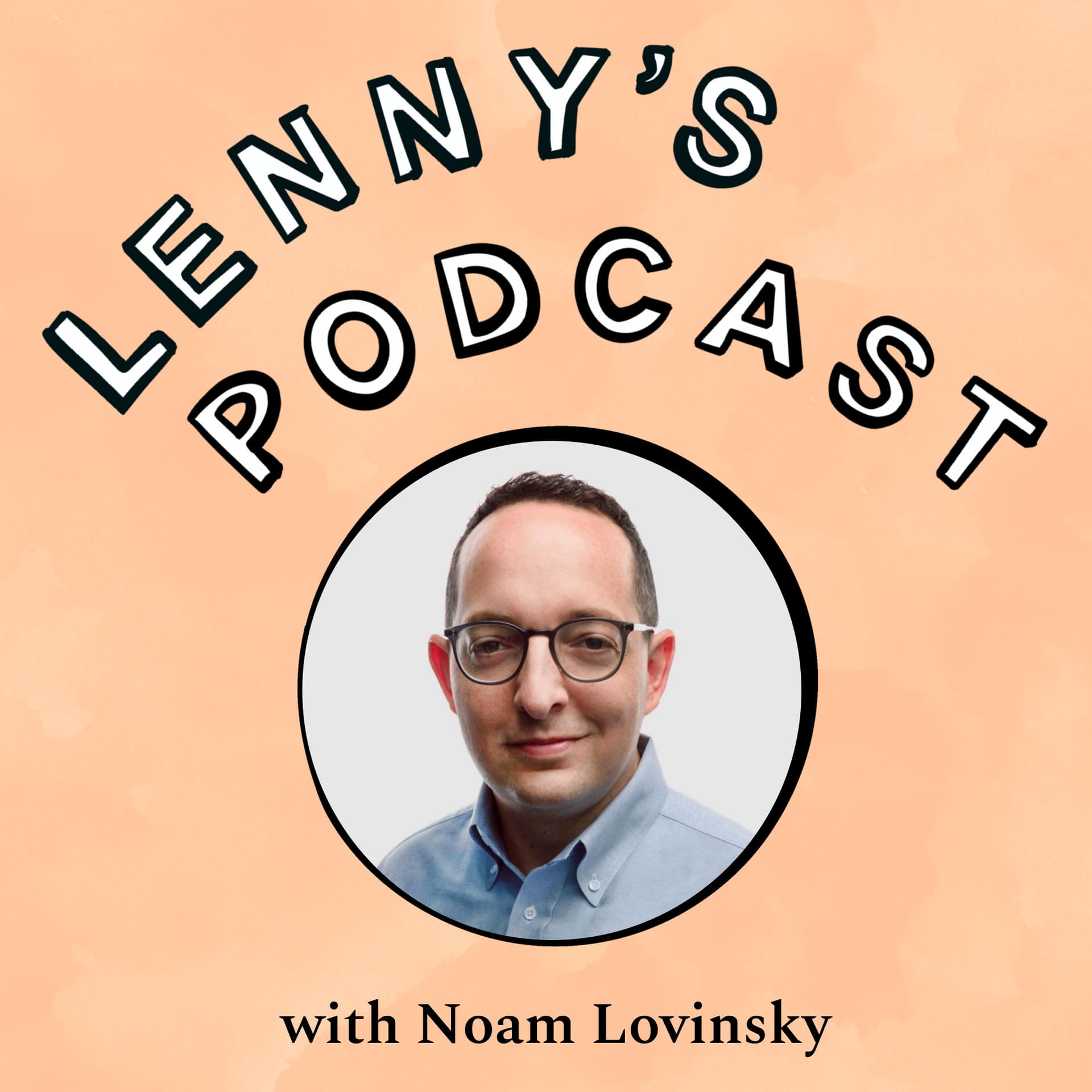
Lenny's Podcast
Product | Growth | Career
Episode Title
The Happiness and Pain of Product Management | Noam Lovinsky (Grammarly, Facebook, YouTube, Thumbtack)
Introduction
- Guest: Noam Lovinsky, Chief Product Officer at Grammarly
- Background: Experience with Facebook, YouTube, Thumbtack, and current role at Grammarly
- Discussion Points:
- Challenges in reviving growth at YouTube and Thumbtack
- Building Facebook’s New Product Experimentation team
- Insights into Grammarly’s success
- When to kill a project
- Importance of diversifying growth channels
- Visioning and storytelling in product strategy
- Creating space for innovation in large companies
- Resilience of Grammarly's team in Ukraine
Key Takeaways
YouTube
From Negative Growth to Stability
- Lesson in Prioritization:
- Early on, Noam advocated reallocating resources from his project to more critical areas, aligning with team and business needs.
- Importance of knowing when to pivot or stop projects even if it might put one's role at risk.
- Organizational Structure:
- Suggested a restructuring where he would report to another leader, enhancing support and productivity.
- Highlighted the importance of aligning individual contributions with broader company goals.
Thumbtack
Overcoming Growth Challenges
- Growth Channels Diversification:
- Initially heavily reliant on SEO, leading to challenges when algorithms changed.
- Expanded into paid channels and optimized organic growth strategies.
- Product and Strategy Adjustments:
- Transitioned from a high-friction customer experience to more immediate interactions and better monetization models.
- Emphasis on understanding and improving supply-demand dynamics within the marketplace.
Building New Product Experimentation Team
- Startup Within a Startup:
- Created a team with the freedom to innovate without the constraints of the main business line.
- Aimed not just for large outputs but also incremental learning and organizational improvement.
- Cultural and Operational Adjustments:
- Addressed challenges in large organizations where starting small is difficult.
- Provided direct interaction with users, fostering a more agile development process.
Grammarly
Sustaining and Growing a Successful Product
- B2C Subscription Success:
- Emphasized a seamless integration of the tool into users' existing workflows, providing immediate value.
- Cultural Resilience and Team Motivation:
- Profitable from early on due to a scrappy and focused team culture.
- Highlighted the resilience of the Grammarly team, especially its Ukrainian members facing personal and national challenges.
Career and General Advice
- Follow Authentic Interests:
- Focus on projects and roles that naturally interest and energize you.
- Seek opportunities that challenge and stretch your capabilities for growth.
- Navigating Career Decisions:
- Balance between leveraging existing strengths and diving into areas that offer substantial learning.
Lightning Round
- Book Recommendation: *Build: An Unorthodox Guide to Making Things Worth Making* by Tony Fadell (co-authored with Noam’s wife).
- TV Show Recommendation: *For All Mankind* on Apple TV.
- Favorite Interview Strategy: Work collaboratively on real-world product problems.
- Favorite Product: Arc browser for its innovative features.
- Life Motto: "We are meant to struggle," emphasizing growth through challenges.
Conclusion Noam Lovinsky’s insights from his diverse career underline the importance of adapting to change, leveraging team strengths, and aligning personal growth with organizational goals. His approach highlights the value of resilience, curiosity, and strategic foresight in product management and development.
Connect with Noam
- Twitter: [@noaml](https://twitter.com/noaml)
- LinkedIn: [Noam Lovinsky](https://www.linkedin.com/in/noaml/)
Connect with Lenny
- Newsletter: [Lenny’s Newsletter](https://www.lennysnewsletter.com)
- Twitter: [@lennysan](https://twitter.com/lennysan)
- LinkedIn: [Lenny Rachitsky](https://www.linkedin.com/in/lennyrachitsky/)
Sponsors
- Whimsical: The iterative product workspace.
- Vanta: Automate compliance, simplify security.
- LinkedIn Ads: Target professionals effectively.
```
Written by AI. May contain mistakes. Listen to the episode to check what was said.
Transcript
Automatic transcript. May contain errors.0:00You've worked at so many great companies that YouTube, when you join, my understanding is YouTube is losing a lot of money. There were many times where Google leadership reconsidered the acquisition and should we like sell YouTube if you can believe it or not. At Thumbtack, it looks like you went from one to negative one and then back to one. I remember in a board meeting, the new model really started to show legs and one of the board members Brian Trier at Sequoia said it was the pretty small graph that he had ever seen. When you were at Facebook, you built what is called the new product experimentation team, trying to create a startup within a startup.
0:29You're thinking on a different time horizon. If you're a large organization and you do some performance management process twice a year and you're zero to one incubator, you've already killed it. It's the wrong incentive. As the Chief Product Officer, Grammily, I'm curious what word you most often miss, the T -E -D -T -E -H. T -E -H, yeah, exactly. Yeah, yeah. Today, my guest is Noam Levinsky. Noam is currently Chief Product Officer at Grammily. Previously, he was an early PM at YouTube where he spent five years leading the creator product experience and then the broader YouTube consumer product experience.
1:07He then went on to take on the Chief Product Officer role at Thumbtack, which involved helping the company reignite growth after a downturn caused by some changes Google made in SEO. He then went on to Facebook recreated the new product experimentation team whose charter was to incubate big new ideas protected from the larger Facebook org. Noam has such a unique set of experiences, taking products from 0 to 1, from negative 1 to 1, from 1 to 100, and even starting his own companies. He's never really been on a podcast before and he rarely ever tweets or post anything online, which we actually talk about.
1:43In our conversation, we walk through the lessons that he's learned through his amazing career at YouTube, Facebook, Thumbtack, and at Grammarly. We talk about when it makes sense to kill your project at a company, when it makes sense to ask to be layered at a company. Why should you be keeping a nose out for which products matter most at a business and to find those products? Why you need to diversify your growth channels and your business? Why you should be finding work that is going to most stretch you to help you advance your career? A bunch of advice for creating space for innovation within a large company and so much more, now I'm such a gem and I'm really excited to share his wisdom with you.
2:20If you enjoy this podcast, don't forget to subscribe and follow this podcast in your favorite podcasting app or YouTube, it's the best way to avoid missing future episodes and it helps the podcast tremendously. With that, I bring you Noam Lavinsky after a short word from our sponsors. This episode is brought to you by Wimzikl, the iterative product workspace. Wimzikl helps product managers build clarity and shared understanding faster with tools designed for solving product challenges. With Wimzikl, you can easily explore new concepts using Having drag and drop wireframe and diagram components, create rich product briefs that show and sell your thinking, and keep your team aligned with one source of truth for all of your build requirements.
3:03Wimzical also has a library of easy -to -use templates from product leaders like myself, including a project proposal one -pager and a go -to -market worksheet. Give them a try and see how fast and easy it is to build clarity with Wimzical. sign up at www .wimsicle .com slash Lenny for 20 % off a whimsical pro plan. That's www .wimsicle .com slash Lenny. This episode is brought to you by Vanta. When it comes to ensuring your company has top -notch security practices, things get complicated fast. Now you can assess risk, secure the trust of your customers, and automate compliance for SOC 2, ISO 27001, HIPAA and more with a single platform, Vanta.
3:48Vanta's market leading trust management platform helps you continuously monitor compliance alongside reporting and tracking risks. Plus, you can save hours by completing security questionnaires with Vanta AI. Join thousands of global companies that use Vanta to automate evidence collection, unify risk management, and streamline security reviews. Get $1 ,000 off Vanta when you go to Vanta .com slash Lenny. That's V -A -N -T -A dot com slash Lenny.
4:21No, I'm thank you so much for being here and welcome to the podcast. Thanks for having me, Lenny. It's absolutely my pleasure. I've heard so many great things about you from so many people. I think your friends with a lot of guests that have been on this podcast and something that I find really interesting about you and really respect about you is that you've worked at so many great companies and you've done so many big things in your career. But you barely ever tweet, you don't have a newsletter. I don't see many things on LinkedIn. I don't think you've even been on a podcast before. I think the only evidence I can find that you exist is, you have this YouTube channel that's just like you go carting and kids and people wishing you a happy birthday.
5:00Oh gosh. I should go monitor that. I forgot about that. You may want to. Yeah. People are going to go find it now. Yeah, that's funny. Yeah, you know, it's funny. I think about that a lot. Am I doing something wrong? Should I be putting more effort in that? It's funny that you mentioned newsletter. I spend a lot of time with the substack teams. It's been a very active advisor there. The team is fantastic, by the way. I think about am I doing something wrong in my career by not doing that. I'm just to be honest, it doesn't come authentically to me. It doesn't come naturally to me. I get really focused on the thing that I am working on and get really deep in the thing that I am working on.
5:41And I have a hard time kind of multitasking a lot outside of that to be totally honest. And the way that I kind of get to know the industry and other teams of whatnot is just through working with people. I'm not like a very big networker. I'm not saying that there's anything wrong with that. I wish I were better at that. I get to know people by doing work with them by helping them and doesn't necessarily scale in the same way that Twitter does, but it's served me well so far and it's more kind of authentic and it's what comes more natural to me and so that's how I do it. So I'm doing a lot of coffees, I'm meeting people that way, I'm not doing a lot of tweeting or writing newsletters maybe one day, but that's not me today.
6:31So I think this is an awesome example of you can be incredibly successful as a product manager and as anyone in tech not investing time posting online and I I'm getting criminate myself here but I feel like the advice I always share with people is the best people are not spending time tweeting and talking online sharing on LinkedIn they're just doing the work that on time for that sort of thing and I think you're a great example of that. Is there anything along those lines that you share with folks that are just like hey should I be investing time here? I think everyone can chart their own path and has a way that is sort of authentic to them and leans on their strengths.
7:05What I often coach people is, do what you like. You're generally gonna be a lot better at the things that really fill you up, that really get you excited. And life is short, there's so many things to be doing out there. We're so lucky. The number of interesting waves of technology that I've experienced, it just makes me feel like it's gonna keep happening for a long time. We're very fortunate to be born in the time that we are and have the opportunities that we are. So why spend your time doing something that doesn't feel good because you think that it might lead to some success where if you lean on what's authentic to you and what makes you happy, chances are you're going to be one of the best people who have those things.
7:49I love that advice and I think it's so important. I think there's a lot of pressure on people too. I need to do this and you do that. I need to eat. I need to share content to be successful. This comes up a lot in the spot cast that the more you could just stick close to what gives you energy and what you enjoy doing, oftentimes that leads to things you wouldn't expect in a lot of success. Speaking of that, looking at your career arc, I noticed a really interesting pattern and a really diverse set of experiences. So just kind of talking through places you've been. At Facebook, you worked on zero to one stuff.
8:21At YouTube, the way I see it is you almost went from negative one 1 to 1. At thumbtack, it looks like you went from 1 to negative 1 and back to 1. So it's like a really unique turn around story. And then with Grammarly, it feels like it's like at a 1 or 5 to 100 or wherever it ended up taking it. So I thought it'd be fun to talk through each of these experiences because they're such unique approaches or such unique experiences and see what lessons and wisdom we can extract from your journey. That sounds great. Okay, sweet. So I'm thinking, reverse chronologically, we start with YouTube, which the way I see it is it's kind of negative one to one.
9:00When you join, my understanding is, YouTube is losing a lot of money. When you left, they were not losing money. And I was actually just looking, their value to apparently had $200 billion today, YouTube is a business. So I know you haven't been there for a while, but great work. What lessons did you take away from that journey? What stories come to mind from that part of your career? That might be helpful to people. Maybe it first started to kind of like why hop around these these experiences. I've always told people I feel like I'm an IC trapped in a manager's body sometimes like like fundamentally I like to build that's why I do this.
9:34I like to I like to make things and so sometimes the more fun way to make things is to start something and sometimes the the better way to to make things in the situation that I'm in is to try to you know support teams and lead through teams. And so, you know, I joined YouTube through an acquisition of a company I started and in the beginning, what I was doing there is just, you know, rebuilding that product on Google, on Google infrastructure and for YouTube customers. And maybe the first lesson was actually to look around at what the rest of the team was doing and be really honest and open about the priority, the relative priority of the thing that you're working on, even if it might lead to your project getting canceled.
10:26So, one of the things that I remember doing really on is actually talking to the leadership team and being like, I don't think we should be putting 50 engineers on this project, like looking at the rest of the roadmap and the rest of the priority, or the rest of the priorities excuse me, I think this team would likely be better served elsewhere. Even though that was likely negotiating my way out of a job in months three, I just kind of felt like that was the right thing for the team and for the business. Then that started a very interesting journey because from there, basically, the leadership was like, you're right.
11:05You know, we're going to wind that down and build some of those features into the existing product. Now, you come and lead this focus area we're calling the Creator Focus Area. So I went from basically rebuilding the product that our startup had built to leading one of the three focus areas at YouTube. There was the viewer team, the creator team, and the advertiser team. And Hunter Walk, who's amazing, was leading the viewer team. and Shishir Morocha, who's also very amazing, was leading the advertising team. What a... What a one -line community. There was me. I was like, you know, I was sort of like, you know, 29 -year -old startup -y guy, who were working with these guys who were awesome and YouTube in general was and continues to be an incredible team.
11:56And so that, I think that was like a first like really good lesson that in in the right organizations, even in large organizations, advocate for what's best for the team, advocate for what's best for the organization, even if that means that it puts you at a particular difficult moment. If it is a healthy team that rewards those sorts of decisions and actions, like, think good things will happen. If it's not, that's good to know too. And that's good to know like no, no early. So that's one thing that comes to mind. Maybe one other, I would say, like atypical career choice that I made shortly thereafter is then when I was put in that role, I really struggled in that role.
12:49I was reporting to the CEO at the time, a guy named Sauer or Komongar, who's also awesome, who was sixth employee, and just learned a ton of from him, like an incredible strategic thinker. But he was asking me questions that I felt like they were from a different planet. Like, I was like, I didn't know what they meant. And he just thought in a different way, a different level of different scale, and that's still something that I was learning. Eventually, I figured it out. But I was really struggling in that moment, and I had a really good relationship with both Hunter and Shashir, and they really helped me through that.
13:26And eventually, I went to a salar and said, hey, I think I should actually report to Hunter. Like I think this would work better if we kind of combined the organizations this way, and then we divided and conquered this way. And again, very atypical. No one has ever come to me in my career and said, I would like you to layer me in this other and this other person. But you know, in that moment, I was just like, this is how I will do better work. This is how I will get better support. I will be kind of like happier and more productive and it will be better for the team. And you know what? Like for me anyway, I was right.
14:06And we made that change and Hunter was a fantastic manager and support at YouTube. I like learned a ton, grew a lot. And then eventually when he moved on, you know, Shishir took over the organization and then I moved into the viewer part of the organization, which is where I spent the rest of my time there, which was leading and supporting the viewer PM team at YouTube. These stories are amazing. It connects to your point that you're kind of an IC, an inner child IC, or you're trying to kill your career back. And now it's a kill this project and I'm working on it. I'm going to demo it myself a little bit.
14:44But clearly, it's worked out. Is there anything that you saw that gave you that confidence that this is actually going to be okay, because again, people don't normally think this is how you get ahead in your career, as you kill your team and you later yourself. Yeah, I mean, I think having a broader view of the company strategy, having an instinct for what we should be doing and why, and how I might prioritize all of these investments if I were given the opportunity to do that. I think like internalizing that and understanding that and then trying to align whatever is under your influence, you know, kind of towards that, that overall goal is very helpful and made me feel like I'm pretty confident this is going to be okay because it will lead to better results for the organization given what we're trying to do.
15:36And so as long as I'm trying to push decisions or actions that actually lead to better results, if it's a healthy culture and organization, I should be okay. And I think that the other thing is just over the years, I got extremely lucky. The first job that I got at a school was an incredible group of people. And it gave me a nose for talent. It gave me a nose for what great feels like and what a high functioning team feels like. And it's hard to know that without experiencing that. And so in the moments like in YouTube was also one of those teams, like Grammarly's one of those teams, if Thumbtack was one of those teams, being able to sniff that out when you're trying to kind of choose the next team is very important.
16:32But I think that's another thing that gave me confidence. like I learned, you know, these people well enough, you know, Hunter Shashir, etc. to have that kind of the instinct that the right thing will happen. Like this will be, you know, better for me and the broader team. Got it. So the key there is just you have to trust that the team around you is good enough that you're not going to be pushed off into a corner. I think you made a really profound point here that a lot of people don't get about the job of a product leader and a product manager, that a big part of your job is to think about what is best for the business and work backwards from that.
17:10Not necessarily what's the best thing for the user is the highest priority, not necessarily what's the best thing for my team and how do I hit the goals that I'm obsessed with. What is going to be best for the business broadly and then make decisions there? Is there anything more you can say there about just how powerful that is as a way of thinking about prioritization and decisions as a product manager. Yeah, it's a great question. I think ideally, you know, things that are best for the customer, there's high overlap with that with things that are best for the business, but not always, right?
17:43And I think like figuring out some principles that help kind of guide those sorts of conflicts can be really helpful. Like at Thumbtack, we had principles about which sides of the marketplace we wanted to serve in which order and kind of when we served Thumbtack, right? So it was customers first, pros, second, and then Thumbtack last. And that's actually the first two. Saying Thumbtack last is like the easy thing to say, actually doing an action, I think, is a very different thing. But that first one of like, should we, you know, especially when you're starting a marketplace as you know, well, Lenny, like supply is so critical, like many marketplaces live and die by the quality and liquidity and supply.
18:31And so why would you, you know, focus on customers first in the thumbtack perspective and supply is, are the pros, the people that you hire? Well, you know, we always just felt that what the pros need from us is more customers. What the pros need from us is like high quality customers. And so if we really try to make a great customer experience that attracts more customers, help some find the right pros, provides the highest quality customers, then that will therefore be better for the pros. And so that's how we should prioritize. And if we do those things right, then the business will benefit.
19:06And so doing things like raising prices because we think it's good for the business, even though it causes liquidity issues in the marketplace might be a little, you know, a little bit of a local maxima, right, locally optimizing rather than global optimizing. So I think sometimes in these in these sorts of questions, trying to establish some set of guiding principles that help navigate some of these more, you know, ambiguous or thorny questions can be really helpful. Well, I want to circle back to this first point you made and experience you had convincing people that your first project shouldn't be something you work on.
19:46How long do you stick with something that isn't going well and then decide, okay, let's convince people this is something I should move on from versus like, you don't want to give up on a project, quickly, right? You want to give it a shot. I mean, look, I don't know that it's a perfect answer, but I think the reality is is that what kills most projects, most early companies is stamina. And I think that you, you know, So we all need to work on kind of being more resilient about kind of like I remember at Thumbtack at Marco the CEO, we used to say that it feels like we're running uphill and chewing glass and you kind of like, that's right, like we want to do that.
20:26That's good for us. We're take our medicine. So you want to practice that sort of resiliency, but ultimately I think that what starts to happen is you start to lose the stamina and you're just not bringing your best self to to the situation. And so many of these things that are so high ambiguity where you don't know exactly what to build or you don't know exactly, you're not getting the signal you need or the feedback you need to be able to hone it in and know that you're doing something well. They require just an ungodly level of faith and stamina. And so that's what I look to. When you see a team that is motivated, that is building something like they're really excited about.
21:11I mean, just like the inertia, the quality, like just it's like a whole different game. Or when you see a team that's sort of like down and out and they've really they've been hitting their head against the wall for a long time. Sometimes they just need like a change of scene, a change of pace, and they get to like a much better situation. So my honest answer is, Yeah, it's the when do you run out of steam is usually the question? And I think that happens usually before you, you know, like in the start of case a lot of times before you run out of money or you know these other things. We've talked about them a couple times now, so let's talk about that.
21:51I love this description of running a pill with chewing glass. My understanding is when you join, things are going well and then things started to go much less well. And then you help turn things around. Talk about that part of your journey and what you learned from that time. Yeah, sure. Again, really fantastic team and really strong founders. That company was just on the bleeding edge of things like SEO and growing by SEO. It was one of the best organizations at driving growth through that channel. But I think the thing that I learned really early, which with your background, you probably know as well, SEO is a sort of like a live by the sword die by the sword, you know, a channel of growth.
22:34And I think that one channel growth company is like always a no -no. And so that's a little bit of kind of what we had at Thumbtack. So it was funny because I remember when I joined and you know, Marco and I had an agreement where it's like, okay, I'm going to take, you know, do my, you know, several, three months of like onboarding, listening to our new leader and herding a team. you know, I've always gotten advice like that's what you should do. And you know, Marco being an entrepreneur and a hard running founder is like, yeah, yeah, sure, sure. And then like a month and it's like, all right, we got to run like 20, 24 planning, go.
23:11Or it's not 24, sorry, at the time it was. And yeah, like in that in the early days, like when I was there, a thumbtack was seeing Triple Digit Growth, then we had some, you know, a couple of SEO hits that got us down to double -digit growth. And then not too long after that, we were actually for the first time in the company's history seeing negative year over year of growth. And Google was just really coming down on category as we were, by the way, trying to rebuild the whole product and change the monetization model and everything in between. So it was a really tough moment of how much do we kind of spend to reinforce the old model while we're sort of building the new model, kind of changing the engine while the plane is flying.
24:05And I think I remember in a board meeting, once we kind of like turn that around and over time and also the new model really started to show legs and really started to work. One of the board members, Brian Trier, it's a Koi, I said it was the prettiest smile graph that he had ever, ever seen. And it was a really, you know, obviously a really proud moment there. But I think that the thing that I took away from that, which I tell PM's quite a bit, is growth masks all problems. You don't really have, I think, true understanding of what is working well and what is not working well when you have incredible growth.
24:42YouTube was a great example of that. And at Thumbtack, it had incredible growth for quite some time, but it was essentially burning through a lot of demand. It was just dropping a lot of demand on the floor because there wasn't sufficient liquidity on the supply side to really meet that demand. And the team knew and was trying to work on that problem, but it wasn't as urgent or high priority because you're having triple digit growth. Like, what's wrong? Everything's going great. And then the moment growth starts or certainly when growth starts to be negative, all of a sudden, the tenor in the organization really changes and you start looking at things very differently and trying to understand what's actually going on.
25:26And so I think it's actually a very healthy thing for businesses to go through as they kind of turn into long -term sustainable businesses to have those sorts of moments because I think, otherwise, it's just really challenging to identify where the true issues are. And I think as a PM, you know, if you've only ever worked on things that grow and you've never like felt the other side of that and how to kind of help turn that around with your team, I think you lose a lot in your career if you don't experience that. You know, I'm like kind of naturally paranoid and as I especially as I manage growth, I often look at things and ask myself like, okay, what would I do right now if it went negative?
26:07You know, how would I prioritize things if it went negative? Like having gone through that experience, I just look at things in a different way of urgency, look at things at different levels of priority given having gone through that experience. With this thumbtack story, I think it's a rare that a business gets the smile graph that you describe, this pretty smile graph that this board member has ever seen. I think that is rarely the case, usually it doesn't come back up. Can you share what you did to help Thumbtack turn things around? I know it's very particular to Thumbtack in the business, but just anything there that would be useful to people.
26:46Sure. First of all, this is very much the team. It's not just things that I did. So I mean, first was turning on multiple channels of growth up until then, Thumbtack had kind of tried and stopped paid channels, you know, other organic channels like, you know, referrals, you know, all of the typical things. And so we just went back to first principles on a lot of that and also just kind of reformed a team around that. And got basically got an amazing team together. One of them Whitney Steele is running marketing at the script now. another one, David Shion is running product at HMS, but basically went back to first principles on some of those growth channels and experiment our way to much, much better results.
Read the full transcript
27:41And I think that one of the things that we were doing incorrectly at Thumbtack is, Thumbtack is actually a marketplace that is actually made up of thousands of marketplaces, like like DJs in Philadelphia is one marketplace. DJs in Atlanta is another marketplace. Contractors in Sonoma is another marketplace. And then Thumbtack is obviously the container of all of those marketplaces. And I think we were just bifurcating our targeting and our growth efforts a little too narrowly assuming we had to sort of grow in that way market by market get rather than targeting more broadly, providing sort of the more aggregate data to Google and others, and then optimizing from there the fact that we already had really good showing in SEO and really good Patreon.
28:33Can SEO help to bolster things like SEM and then eventually Facebook as well. But I think that the core issue, those were kind of the growth levers, but the core issue with the Thumbtack product was that it was just a very high friction customer experience that really left customers waiting. So the way that Thumbtack worked basically was a customer would find them through a search query. They would come in and they would answer a number of questions about the job they needed done and then Thumbtack would say, okay, great. We'll get back to you in 24 hours. And this is a modern day experience. right?
29:17And then what Thamtaq would do is they would take that job and they would federate it out to as many of the pros that might kind of like match the criteria. And then the pros would pay to quote to show up as a potential provider for that job. Now, I don't want to take anything away from that team because that worked phenomenally well for a really long time. And it's actually it's a perfect case study in like, just do this crappy thing that works to grow. And they did that very well. But the stage and size of the business when I joined it had kind of like outgrown that. And the team knew that. That's obviously a very high friction experience, right?
29:56Like the idea that the customer, they're super excited. They want to hire someone in that that moment. You'd be like, cool, talk to you soon. Not the best experience. And the fact that you're asking your supply to put up money to even show up to customers in the first place. What the customers want to see is the supply. Tell me who I can hire. Also a lot of friction on that side. And also in some cases, some unfair revenue on that side because if folks are paying to be seen and maybe they're looked at but there's not really high intent, then you're not going to get the customers they want. They're going to be spending revenue.
30:35They're not going to be getting revenue back. It turns into a little. like just a bad loop obviously. So the main thing we did is to rebuild that whole loop, change the monetization model, build a system where essentially prose could provide instant quotes. Like Lenny, I'm sure from Airbnb, this is very familiar, the move from request to book to like instant booking. It was a very similar thing in a different kind of category of service and supply obviously. But that shift and doing that shift across those thousands of marketplaces and then finding the right friction point for monetization and what to charge people for and all of that all of that change.
31:18That is what really at its core turned the growth engine around a thumbtack and it's just a real testament to those founders that they kind of believe that saw that and were willing to kind of like, you know, run a pill and chew glass to get at that point. Like I don't know the details of the business anymore and I didn't, I wouldn't speak to it, but from what I hear things are going well. So I think that that that served the company well. Yeah. As you were talking about that, that's exactly an experience Airbnb went through. I actually led that effort at Airbnb. I took three years of my life.
31:53Oh my gosh. We should talk about that one day. Yeah. I've written about it here and there, but honestly, very quietly is one of the biggest transformations Airbnb went through shifting from I'm gonna go request a book to basically every booking now an Airbnb is instant and that was a very difficult and painful journey, but looking back I don't think Airbnb would have made it if not for that and Unlike them tech we did it with before things were starting to fall apart like we and Actually, I was gonna say the lens that we used that I find really helpful here is You should be asking yourself, if somebody was to come into our space and disrupt us and start now to become the new Airbnb, what would they do?
32:33Yeah, totally. And it was obvious they'd be, make it instant, just the way it works. Yeah. Welcome to Airbnb Disruptor. Yeah. And so yeah. And another learning there is, any product you work on that involves like bits and atoms is exponentially harder than the products that just involve bits. But it's amazing how something as seemingly simple as make an instant ends up being so incredibly deep and complicated and especially on an existing business like kind of making that transition while still growing is just very, very complicated. Like fantastic learning, I'm sure you had as well. Very difficult to change people's expectations in the behavior.
33:10This could be its own podcast episode just changing marketplaces into an instant experience. I wanted to circle back real quick to the first lesson you had there which is adding, adding new channels. I think that's a really interesting takeaway here. So essentially, Thumbtack was reliant in SEO. Google slash the sword as you described, started changing things. So, traffic stopped coming. And I think a cool lesson here is just if you're reliant on one growth channel, which I think most companies actually are. I think most companies have one main driver. I think a lesson here is potentially before things start to fall apart, especially if you're SEO driven, start to explore more productively paid referrals?
33:46Totally. I mean, I think maybe it's, again, it's kind of like living through that. Now, anytime I like look at a product or look at a team, it's like one of the first things that perks up the paranoia. I'm just like, oh, no, you don't want to be in that situation. Let's figure out now how you start to diversify because you just never know, like you say, when one of those might try out. Imagine a place where you can find all your potential customers and get your message in front another in a cost -efficient way. If your B2B business, that place exists, and it's called LinkedIn. LinkedIn ads allows you to build the right relationships, drive results, and reach your customers in a respectful environment.
34:28Two of my portfolio companies, Webflow and Census, are LinkedIn success stories. Census had a 10x increase in pipeline with a LinkedIn startup team. For Webflow, after ramping up on LinkedIn in Q4, they had the highest marketing source revenue quarter to date. With LinkedIn ads, you'll have direct access to and can build relationships with decision -makers, including 950 million members, 180 million senior execs, and over 10 million sea -level executives. You'll be able to drive results with targeting and measurement tools built specifically for B2B. In tech, LinkedIn generated a 2 -5x higher return on ad spend than any other social media platforms.
35:06Audiences on LinkedIn have two times the buying power of the average web audience, And you'll work with a partner who respects the B2B world you operate in. Make B2B marketing everything it can be and get $100 credit on your next campaign. Just go to LinkedIn .com slash podlennie to claim your credit. That's LinkedIn .com slash podlennie. Terms and conditions apply. Is there anything else from your time at Thumbtack that stands out as an interesting lesson or take away that you bring with you to the work you do now? I would say this, I think especially at the leadership level. In the team that reports the CEO, that group doesn't always have the opportunity to do a lot of project work together.
35:56You've got your CFO, you've got your head of sales, you've got your product and your engineering and there's just not as as often as sort of like natural ways for that work that group to work together. And then when something happens like growth goes negative, that group is very important. And that group's ability to like tackle hard things together is very important. And I think that one one important lesson from that is no one how no one can be a bystander on product strategy. If you've got, just because you've got product in your title, doesn't mean you're the only one that should be thinking about product strategy.
36:35Certainly at that level, certainly not an engineering. The CFO, the head of people, everyone needs to have a seat at the table when it comes to product strategy, what the company is doing, and what they're going to do to kind of grow out of the situation that they're in. Because otherwise, in those hard times, if it's kind of, it can kind of be like a, you know, what have you done for me lately, sort of a dynamic. And that's just not the right dynamic to have on that team. And I'm not saying that at Thumbtack, we had the right dynamic, but I think it was a really important learning in that moment of how that team, you know, even if they didn't typically, you know, kind of get has involved in things like product strategy and what we're building, how everyone had to be like all hands on deck and really thinking about those sorts of problems.
37:23It's the only way I think you can get a whole company and team out of those situations if so everyone getting involved in doing their part and pulling on the levers that they have in their area in order to do that well. Just I don't think you can work in any other way. So is a lesson there. Build a relationship with the leadership team before things start to go right? That yes. Certainly that. But I think it's also incumbent for people in our roles and engineering roles to bring strategy to that discussion, to that group in a way that it is possible for everyone to engage and everyone to internalize and understand what it means for their area and to even have a, obviously, a say in, because they're a leadership team at the end of the day.
38:12They should feel like their fingerprint is also on the company strategy. And as soon as it starts to feel like that's their world, that's our world. And I think that's true for any of those, any of the functions. It's true for like what's happening at say it and then sales. It's true for what's happening and marketing. You know, as product managers, we naturally need to be that connective tissue across all of that. But I think the whole leadership team at that level should feel like connective tissue across all of those functions. Okay. Well, let's transition to Facebook. And this is I think an example of zero to one.
38:44So when you're at Facebook, you build what is called the new product experimentation team. I actually thought it was called the new product experiment experience team, but I think it's new product experimentation team. And my understanding is the idea there is instead of Facebook having to buy the next Instagram and WhatsApp and all the things basically incubate startups within Facebook and this fabled concept, a startup within a startup, create all these startups within a startup. And as an outsider, it feels like it was really fun for a while. but it hasn't let any amazing new businesses for Facebook, correct me from wrong.
39:20I'm curious what that experience was like when you took away from it, how it went, what you think about when you look back at that part of your journey. It was one of a few folks that kind of joined that team early and helped build that team. How it ended up and how it closed down. I'm not familiar with because I wasn't there, but I think in terms of was it a success or not because it didn't build the next Instagram. I think it's a little bit of the wrong bar to set for things like that. To some extent, it's like, did the group win the lottery or not, and let's judge their success? Obviously, I'm not saying that discovering something like Instagram is just like winning the lottery, but you get what I mean in terms of the rarity of those sorts of discoveries and those sorts of products.
40:13I think that that team was very realistic about sort of the, what I would say, or be like the champagne level outcomes and or more like the, you know, kind of beer, like nice dinner, kind of like level, level outline. Yeah, the wine. Yeah, thank you. It's a better analogy. And I think we built knowing those sorts of outcomes would also be very beneficial to the organization. So, as an example, one of them is at Facebook scale, doing things that don't scale or doing things that start out small was just a muscle that was really hard to come by. It's like any community product that you build, any kind of social where there's community density that's important early on, any product that you build that way, starting with a million users is really a really hard way to do that.
41:16And at places like Facebook and Google, it's hard to run an experiment with 100 people. It's not hard, it's impossible. right? And so this idea that you would have to like get real small, that you would have to start very targeted, that you would have to start with things that clearly don't scale and don't have a chance of being big from the get -go is really, really hard in an organization like that. And so creating that space for NPE to be able to do that, to be able to help remind the organization, what are the mechanisms we need to be able to build and learn that way? Was very beneficial. Even simple things.
42:02At an organization of Facebook size, maybe experiences that it would be in me, it is really hard for product managers, engineers, and designers to talk directly with customers. It is basically impossible. You're almost always talking through some third party, some recruiting agency, getting reports and you're not always in the room. Imagine building a startup, a product from day one and not being able to sit right next to your customer and being like, show me how you do this or show me how you do that. You know, it's like, it is incredibly hard. You're looking for such faint signal. The idea that you would try to get it through like, layers of indirection and games of telephone is crazy.
42:56But at that scale, that's what you have to do. There's all of these legal concerns and many other realistic concerns about what you can say to who and who you can talk to and what you can tell them about what you're doing and all of these things. So creating an environment where those sorts of constraints were lifted and when we're different was very beneficial, I think, to the organization and kind of started to shed a light on some of the things that were broken that make it hard to kind of build zero to one in those in those sorts of environments. I also think it was a really fantastic recruiting tool.
43:35You know, it did build a really great group of folks, many of which have left to go start, you know, interesting companies. But I guess what I'm trying to say is I think when you're an organizational leader and Shrep was the org leader that was supporting NP at the time and he's fantastic and really did a good job of, you know, firewalling that team. I think you're looking at a set of objectives and a number of ways that you might help the company and the organization. And even if you set that kind of like that light on the hill to be like, go find the next Instagram, many of the things that you would do along the way to find the next Instagram and end up being very beneficial to the broader organization.
44:25We saw a lot of that in PE. That's a really interesting perspective. There's a lot of other goals with something like this. It's not just find the next massive business. It's the way I think you just, what I'm getting from this is like shine almost a mirror on the organization. Like here's the things we can't do with the regular business and we have to do something. We have to set this up in order to try something totally new and radical. Recruiting tool, I think is interesting. There's actually a team at Airbnb. The way I described it was, I don't know how many people know about Burning Man and how it works.
44:55but there's this trash fence around the side. Sure. They catch us all the trash. So it doesn't go into the desert. And I feel like there's teams sometimes that are the trash fence of the company. Or someone's about to leave. And I like, no, go work on this cool stuff over here in the fridge, which is really interesting. But it's still within the company. And maybe help with that. Just keep people that are awesome at meta. Yeah. And you're right that the team didn't kind of discover the next Instagram. For what it's worth, things like threads and ideas like threads were in that team all of the time.
45:29I think that if that team caught the wave of generative AI and all of the opportunities and sort of like new technologies there, I think things could have also, because those are certain moments where you like haven't small like really motivated dedicated teams that aren't thinking about anything mainline can lead to like faster discoveries. I think that can also help. But there were a number of things that basically end up becoming features in other products and they were just Easier faster ways of validating and building building them because you didn't have the constraints of like like the mainline product about normalization, right?
46:07For someone that is thinking about trying to create a startup within a startup Something a lot of companies are trying to do is there a In a piece of advice or two that you share for helping this be effective Maybe one is just the goal may not be build the next big business. There's these sub goals also What comes to mind? God there's there's so many And and and shrugged at a really fantastic job of removing a lot of these constraints, but So one is I would say think really hard about the incentive system, you know smart good people, you know, they even if they're not they don't even if they're not trying to they end up kind of gaming things towards the incentive system.
46:49And so think long and hard about that. So for instance, if you're a large organization and you do some performance management process like twice a year and that's how you're going to evaluate and incentivize people in your zero to one incubator, you've already killed it. It's just like it's the wrong incentive. It's the wrong time frame. It creates adverse selection problems for the sort of people that you bring in. And so it's just it's hard in an existing organization to say, we're going to take all these company processes around even how we like level people and pay them and motivate them and we're going to throw them out the window for this group, right?
47:27How you build the infrastructure you use. This is something that that then P team did really well. Everyone got a kind of cut to do their own thing from an infrastructure perspective, just do what is best for the problem we are trying to solve in this moment knowing that you're likely going to throw away a lot of this code anyway. Like being able to do that in an organization like Facebook or Google, if you ask anyone that works those things is really hard. And it takes someone like a shrimp to be like, oh, they're going to get to do this, sorry. And so I think that's really helpful. For what it's worth, one of the organizations that we talked to that I felt like was doing this in one of the best ways was Nike.
48:08Nike and Nike has this incubation lab and it's a completely different operating model. They recruit a completely different type of person, a very different incentive system and essentially where they end up plugging them into Nike is that when they have something into the kind of the distribution and marketing kind of growth like arms of Nike but for the product discovery process, they're doing their whole different thing. Once they find some fit, then Nike comes in and goes, boom, I'm going to help you explode, explode your fit. But I think that the number one thing I would think about would be the incentive system and the adverse selection that can cause.
48:52To me, the most important element of the incentive system, and maybe I'm reading between the lines is you're basically competing against them starting their own thing and and having upside if things go super well feels really important versus I'm just going to get a cool salary meta and work on this thing and it doesn't lead to the same experience right as a startup or like everything's on the line. Yeah and also what time horizons right like when you're starting a company you're not thinking like in the next six months I'm going to get a promo and then we get a good rating and you know things are going to go well you're thinking on a different excuse me time horizon and you're thinking about an outsized impact or outsides incentive.
49:30And so I would think about that if you're starting things internally as well. Awesome. Okay. Let's move to the final bucket, Grammarly, which is where you're at now. And the way I'm thinking about it is this kind of like a one -two rocket ship, or I don't know, 10. It's further along than one, but that's where you're at now. To me, Grammarly is interesting because it's one of the very few successful B to C subscription businesses. There's almost none. There's like Duolingo, Grammarly, and I know you're doing B to B also, but there's so few. There's so many dead bodies trying to build a business on top of consumer subscription.
50:08And so I'm just curious, what the current state of Grammarly are things going? What do you think has been the key to it being successful all this time and continuing to grow? And what lessons of you. Learn, I know you're, you just joined relatively recently, but anything you've taken away from that journey so far. We don't, we don't talk about it often, but you know, Grammarly is a much bigger company from a revenue perspective than I think people realize, you know, the company has been around for 15 years and was profitable from day one and continues to be quite profitable. So it's a very, very healthy business that is much larger than then folks might realize.
50:52And that is actually quite intentional because the company was trying not to be noticed for a long time, like very intentionally, the fact that you would have grammar and spell checking in Google Docs or grammar and spell checking in word, people would often write off the company that like how's that a business, us, how is that a feature like these products already have it? And that was very convenient for, for, generally, because they could kind of navigate between these giants in tech and grow a very, a very phenomenal business kind of on this, on this use case that people had kind of written off.
51:30Now, you know, come the advent of LLMs. And it's no longer a use case that people are, are writing off. and sort of the dream of the founders that machines can assist us in communication in this way, that they've had for 15 years. I feel like now the whole industry is like, well, this is obviously how we're going to communicate. Machines are going to do all these things for us, and Grammily's now sort of in the center of that hurricane. And again, I think it's a similar thing where it's like, well, there's chat GPD, there's Microsoft Co -Pilot, how is Grammily going and going to have a chance.
52:08But yet, things still seem like the future is bright. And so to your question, I think, to what has made it work. I've only been here for 10 months, so please take this with a grain of salt. But my instinct is that people really love Grammarly because of how it works and where it works. And what I mean by how it works is, Grammarly is one of the few products where you just install it and it makes you better. Like, you don't have to configure it, you don't have to manipulate it, you don't have to like change anything about like what you're doing. You carry on and across all of your applications, across all of your tabs, you'll start getting pushed assistance to you in the right moment.
52:53You could ignore it if you want, no big deal, but it takes a very, very small amount of effort to tap on one of those things, get some value, and keep going. And I think that a product that is like that easy to use, that easy to extract value from, but then also that prevalent, like how many different text boxes do you write in in a given day? I mean, it's, it is not less than 10, it is 10s or potentially hundreds, right? And so it is, it is everywhere and it is very, very low effort to get real value from it. And then the where we work is what I said, you don't have to change anything about your workflow, you know, Grammarly meets you where you are and you get value from it.
53:41Doing that really well at this level of quality for a user base of this scale. Essentially it's like a, you know, a huge AI achievement masquerading is like a little UX innovation, right? But that experience, that UX that brings AI to the masses is obviously served Grammarly really well. I think those are some of the strengths they're going to continue to lean on to now provide a very different type of assistance and value that we can because of where the technology has moved. The other thing I've heard a lot about Grammarly and Yuri, who was on the podcast and who led growth for a long time at Grammarly is just how scrappy the business has been and the founders have been from the beginning, the fact that they've been profitable from the beginning.
54:32That feels like one of the threads through all of the successful consumer subscription companies is super scrappy, not raising money for a long time. Is there anything there that you found to be really interesting or helpful for other folks that are maybe building this space? When you're a team that kind of like starts out of Ukraine and you're not thinking that there's any chance that you're going to raise money and why would you do that? I mean, it really, back to our previous conversation of what happens when growth scales negative really forces you to focus on the important things. And so, like many of the early engineers who are still here because the company has done so well over the years, they think in like, how is this work and are translating to revenue.
55:19Like they think about sort of like the impact on the business from even kind of like very deep technical work that they're doing because I think they were kind of brought up in this culture where the business doesn't really invest ahead of its profitability, because it was a bootstrap business from day one. So that enforces like everyone to think about their projects and their prioritization and how is like what they're doing over the next two months going to actually turn into more revenue and keep the company growing and sustaining. So I think that culture is prevalent and help, help, family get to where it is.
56:00Now, I just want to be really honest that in moments that we're like in that we're in like today, that can also be detrimental, right? Because like the business gets to a certain size, you start getting to kind of like like large numbers, you need to start thinking about, are there other products, are there other use cases, are there other channels of growth? How do you kind of invest ahead of some of that growth and start to diversify? Because at this scale and size that we are and aspire to be, we're gonna have to do many more things and service many more different types of customers. And as you mentioned, we're gonna have to pull off the motion of B to C to B, kind of get that profit -led sales motion going.
56:46So all of those things are happening, and thankfully the business is as strong as it is where we can invest ahead now in those things while still maintaining profitability in a really strong business. That's amazing that there's still team members, and maybe I think you said engineers from the beginning 12 years later. I think that says a lot about business. business. And before we started recording, they're based in Ukraine. And you were saying that they're like going to zooms, there's bombs going off, they have to go into like bomb shelters and then jump out of meeting. It's incredible that team continues to operate.
57:19And the business continues to do this well, in spite of all that. Yeah. The team in Ukraine, at Grammily, is, I mean, it's something else. It's a really fantastic team. And when you speak to many of them, I think actually the work provides sometimes a very useful distraction. But they obviously feel a lot of pride in the business. They built a lot of this business. There aren't yet many businesses of this size that come from Ukraine. And yeah, I think that that team is incredible and continues to deliver a ton of impact to the company even in the circumstances that they're in. And I know for the founders, a lot of why they want Grammily to succeed and be the generational company that it can be is for Ukraine, and especially in this moment.
58:18It's awesome to see how that motivates them. and 15 years on the same project is, is not nothing, that's some serious resilience. And so I think even in moments like that, using them as a way to motivate and strive for something greater, I think, as says a lot about the founders and the team of Ukraine. Absolutely. Hopefully there's a happy resolution soon there. I don't know if you know this, I was actually born in Ukraine. Oh wow. I was a desa. Oh yes. When I talk about that much, but it's true. And I just realized we both have skis in our last live -in ski and our chitsky. So for what's worth my dad was born in Ukraine.
58:58He was he's from Kiev. My mom was from Lithuania. So yeah, I also have some some Ukrainian background here. All right, so are you creating an episode? Yes. Let me zoom out a little bit and get to the final couple questions. So thinking about your career here broadly. I'm just curious if there's any general advice you share with people to help them have a more successful career. Anything that is generally fine is really important to do well or mistakes they make. Just, and this is like a big broad question, but anything come to mind, like, here's something you should really try to do more of or less of.
59:36So, look, when you're thinking about career opportunities and what job to take, it's really, really hard to sniff out really well in a high degree of certainty, like, success. I think that having a good nose for people and the sort of people that you can be successful with is something that you can develop. what I found is I always try to prioritize putting myself in positions that are going to cause a lot of growth and learning and growth and learning can be very painful. You kind of like gotta be okay with that and go into that because on the other side of that pain, I think is the promised land and that's just served me really well is I can't necessarily predict, you know, with high degree of certainty that this thing's gonna hit, But I can get a sense of the people around me and I certainly can find situations that are going to stretch me, that are going to force me to do things that I haven't done, where I'm going to grow and learn significantly, and over the sort of the arc of my career, I feel like that's served me well.
1:00:48So that's usually what I tell people is focus on, focus on that if you can. I love that advice. I've used this code a number of times on this podcast, but something I always come back to is this line, the cave you fear contains the treasure you seek. I'm curious if there's something you have found about when that's, when the pain is too much, when that you shouldn't pursue that. A lot of people get into these places where they're just, their mental health gets hit, their physical health is hit, they're just like doing work, they should not dislike too much. Is there anything there that you find is just like, okay, maybe this is too much discomfort?
1:01:23I mean, so I think about a couple of things. I think in any situation, you should be able to lean on like kind of one or two things that like you're really strong, that can kind of be the foundation, you know, that kind of keeps you going while you learn the other things. So just be wary of situations that are like too net new. There should be one or two important things as part of that job that going into where you're like, I got this. I know how to do this portion of it, right? So like as an example, if you've kind of never inherited a very large team and you're gonna work through like how that works, but the product area that you're working on is one you're very familiar with, what's necessary to be good in that product, whether it's like really good sense of design or really good sense of analytical thinking, recommendation systems, like what have you.
1:02:23There should be a couple of those things. We're like, I got this. These things are going to be a stretch, but these things, I feel like I've got to handle on how to do this. I can always get better, but I feel like they're in my wheelhouse. I think that tends to allow you to balance the pain with the areas that you already know and manage through in a more balanced and healthy way. I'm wondering if that chart, I think, from flow of you wanted to be challenging, but not too challenging. And that's where you end up being most successful. Is there anything else known you want to share or leave listeners with before we get to our very exciting lightning room?
1:03:05Yeah, I just think that maybe going back to our where we first started Lenny, work on the things that make you happy, that fill you up life is short. We're all very lucky to be in this moment. There's no reason to spend time on things that don't give you energy. There's so much to you out there. I think that's the main thing I would focus on. Amazing. Even though there will be things that you have to do, I think it's important to try to find as much of that as you can. Because not everyone can just like, I'm not gonna do this work thing. I'm just gonna go on a walk, but I think that's a important point.
1:03:45And we talked about this actually a bunch on a recent podcast of just doing this energy audit where you pay attention to what gives you energy and what doesn't and try to do more and more totally willing to that again. With that, we reach a very exciting lighting round. Are you ready? Yeah, I'm ready. First question, what are two or three books that you've recommended most to other people? You know, I'm gonna cheat on this one and I'm only going to give you one. I'm only going to give you one because I don't want to cloud with any other. I recommend Build by Tony Fidel. And other than it being a good book, one of the main reasons I recommended is that my wife wrote it.
1:04:21So she wrote it together with Tony. And I got to see that experience. And she's a fantastic writer. And Tony has a lot to learn from. So I recommend that book. I think that the part of it that was particularly inspiring to me to hear even more of the details that are in the book is just how many times he met failure before he made discoveries that are now driving so many of the things that we do. It's just like a good reminder to keep at it and do the thing that really gives you that energy because eventually you can make that incredible discovery. Next question, do you have a favorite recent movie or TV show that you really enjoy?
1:05:05I really like For All Mankind. I've seen that on Apple TV and then I just finished the last season of Fargo and every single season of that series I think is fantastic. Amazing. For All Mankind though, last season not as amazing, but a consensus that I agree with. Yeah, but worth watching. Yeah. Next question. Do you have a favorite interview question that you like to ask candidates? You know, I generally like interview questions that allow us to kind of like do some work together. So I'm a little bit less on the behavioral, tell me about a time when sort of stuff and more on the like, let's work a product problem together.
1:05:44Like, and it could be anything from like, let's design an alarm clock for children or, you know, lately I've been using one of like, you know, given, you know, where technology like if we were to rebuild email, like how might we do that? I just feel like kind of getting into it and getting into the details and really kind of watching each other kind of exercise our craft. I think is really important and I have a whole podcast one time if you're ready about how most people don't know how to do leadership recruiting and I feel like as I've advanced in my career, like the interviews for some reason like get easier and actually evaluate less about who I am as a product leader and whatnot.
1:06:26But yeah, those are the sorts of interview questions that I typically like. Amazing. Is there a favorite product you've recently discovered that you really love? It's not recent, but I was a very early user of ARC and I really love ARC. Your window right now is inside ARC. I also love ARC. We had Josh on the podcast. Nice. Just watching the onboarding experience of art alone as a product person is worth. I love the animation when you download something. I mean, just like all of the little things. And if Josh is listening, we would like to get Grammarly to work better with Arc. So please, please hit me up because I think there's a few things that the Arc browser is doing that make it hard to get Grammarly to work.
1:07:08They're on the client or the browser. Two more questions. Do you have a favorite life motto that you often repeat to yourself, share with friends or family, either in work or in life? You find useful? Gosh, for those that know me, this is going to share so much of my personality. I think the first thing that comes to mind is like we are meant to struggle. I just feel like through struggle is, you know, how we get better, how good things happen, how bonds form. And so I don't shy away from that kind of life experience. I'm going to guess that you're Jewish. I'm also Jewish. I feel like a very Jewish thing to say.
1:07:42I love it. How would you guess, Lenny? It's like literally written on my face. Yeah. Yeah. Perfect. Yeah. Last question. As the chief product officer, Grammar Lee, I'm curious what word you most often misspell.
1:07:59The T you do T .e .h. H. Yeah. Exactly. Yeah. Well, I find I misspell every word. I'm terrible spell. I'm thankful for my. Oh, sorry. I was saying I have a product for you that can help you're spelling if you want. I'm an active grammar user. Not only that, I use every product you work on. I realized obviously meta and mostly Instagram of the meta products and obviously grammarly now and YouTube. I have a YouTube channel. Check it out. Subscribe and follow and thumbtack. My wife is a big thumbtack user. We found many pros on thumbtack from all kinds of parts of the world. No, thank you so much for being here.
1:08:37Two final questions. Working folks find you online if they want to reach out And how can listeners be useful to you? Yeah, I'm pretty much know ML everywhere online. So Twitter is probably the easiest And my DMs are my DMs are open and then How people can be useful to me is please use Grammarly provide any feedback that you might have and honestly if I can be helpful and almost any way Like feel free to reach out. I often You know, we'll take those conversations and build those connections and that is always very helpful for me as well No, I'm thank you again so much for being here. Of course.
1:09:08How do we get one money? Bye everyone. Bye. Thank you so much for listening. If you found this valuable, you can subscribe to the show on Apple Podcasts Spotify or your favorite podcast app. Also, please consider giving us a rating or a leaving review as that really helps other listeners find the podcast. You can find all past episodes or learn more about the show at Lenny's Podcast dot com. See you in the next episode.
From the publisher
Noam Lovinsky has had a distinguished career in product, leaving an indelible mark at Facebook, YouTube, Thumbtack, and currently as the chief product officer at Grammarly. At Facebook, Noam helped establish the New Product Experimentation team; at Thumbtack, he was chief product officer; and at YouTube, he was one of the early product leaders overseeing the consumer experience. In our conversation, we discuss:
• Challenges and lessons from reviving growth at YouTube and Thumbtack
• Lessons from building Facebook’s New Product Experimentation team
• Insights into Grammarly’s success
• Knowing when it’s time to kill your project
• Why diversifying your growth channels is critical
• The power of visioning and storytelling in shaping product strategy
• How to create space for innovation at large companies
• The resilience and motivation of Grammarly’s team in Ukraine
—
Brought to you by:
• Whimsical—The iterative product workspace
• Vanta—Automate compliance. Simplify security.
• LinkedIn Ads—Reach professionals and drive results for your business
—
Find the full transcript at: https://www.lennysnewsletter.com/p/the-happiness-and-pain-of-product
—
Where to find Noam Lovinsky:
• X: https://twitter.com/noaml
• LinkedIn: https://www.linkedin.com/in/noaml/
—
Where to find Lenny:
• Newsletter: https://www.lennysnewsletter.com
• X: https://twitter.com/lennysan
• LinkedIn: https://www.linkedin.com/in/lennyrachitsky/
—
In this episode, we cover:
(00:00) Noam’s background
(04:18) Noam’s lack of online presence
(08:06) Lessons from YouTube: advocating for what’s best for yourself and the team
(14:31) Prioritizing what’s best for the business
(19:37) Knowing when it’s time to kill a project
(21:47) Lessons from Thumbtack: diversifying growth channels and overcoming challenges
(26:24) How Thumbtack turned growth around
(31:44) Building Airbnb’s instant booking feature
(35:28) Lessons from Thumbtack: team collaboration and product strategy
(38:38) Lessons from Facebook: building the New Product Experimentation team
(40:43) The importance of starting small and building community density
(46:07) Advice for building a startup within a startup
(48:52) Having an incentive system
(49:34) Lessons from Grammarly: adapting to changing user needs and building for the masses
(54:20) The scrappiness and profitability of Grammarly
(56:56) The resilience and motivation of the Grammarly team in Ukraine
(59:08) General career advice
(01:01:02) When to pull back
(01:02:58) Closing thoughts
(01:03:56) Lightning round
—
Referenced:
• Substack: https://substack.com/
• Hunter Walk on LinkedIn: https://www.linkedin.com/in/hunterwalk/
• The rituals of great teams | Shishir Mehrotra of Coda, YouTube, Microsoft: https://www.lennyspodcast.com/the-rituals-of-great-teams-shishir-mehrotra-coda-youtube-microsoft/
• Salar Kamangar on LinkedIn: https://www.linkedin.com/in/salar-kamangar-5a059712/
• Grammarly: https://www.grammarly.com/
• Thumbtack: https://www.thumbtack.com/
• FRED on YouTube: https://www.youtube.com/FRED
• How Airbnb Proved That Storytelling Is the Most Important Skill in Design: https://www.inc.com/yazin-akkawi/the-surprising-technique-airbnb-uses-to-better-sell-an-experience.html
• Google+: https://en.wikipedia.org/wiki/Google%2B
• Marco Zappacosta on LinkedIn: https://www.linkedin.com/in/marcozappacosta/
• Bryan Schreier on LinkedIn: https://www.linkedin.com/in/bryanschreier/
• Whitney Steele on LinkedIn: https://www.linkedin.com/in/whitneydsteele/
• David Shein on LinkedIn: https://www.linkedin.com/in/davidshein/
• The magic of thinking big, by Lenny Rachitsky: https://www.mindtheproduct.com/the-magic-of-thinking-big-by-lenny-rachitsky/
• What Seven Years at Airbnb Taught Me About Building a Business: https://www.lennysnewsletter.com/p/what-seven-years-at-airbnb-taught
• New apps, new experiences: NPE Team, from Facebook: https://tech.facebook.com/engineering/2019/7/npe-team-from-facebook/
• The Origin Story of the BRC Trash Fence: https://journal.burningman.org/2016/05/black-rock-city/leaving-no-trace/the-origin-story-of-the-brc-trash-fence/
• Nike opens high-tech research and innovation lab: https://www.just-style.com/news/nike-opens-high-tech-research-and-innovation-lab/
• ChatGPT: https://chat.openai.com/
• Microsoft Copilot: https://copilot.microsoft.com/
• How to grow a subscription business | Yuriy Timen (Grammarly, Canva, Airtable): https://www.lennyspodcast.com/how-to-grow-a-subscription-business-yuriy-timen-grammarly-canva-airtable/
• “The cave you fear to enter holds the treasure you seek”: https://gointothestory.blcklst.com/the-cave-you-fear-to-enter-holds-the-treasure-you-seek-d624e28c3848
• Build: An Unorthodox Guide to Making Things Worth Making: https://www.amazon.com/Build-Unorthodox-Guide-Making-Things/dp/0063046067
• For All Mankind on AppleTV+: https://tv.apple.com/us/show/for-all-mankind/umc.cmc.6wsi780sz5tdbqcf11k76mkp7
• Fargo TV series on Hulu: https://www.fxnetworks.com/shows/fargo
• Arc browser: https://arc.net/
• Competing with giants: An inside look at how The Browser Company builds product | Josh Miller (CEO): https://www.lennyspodcast.com/competing-with-giants-an-inside-look-at-how-the-browser-company-builds-product-josh-miller-ceo/
—
Production and marketing by https://penname.co/. For inquiries about sponsoring the podcast, email podcast@lennyrachitsky.com.
—
Lenny may be an investor in the companies discussed.
This is a public episode. If you'd like to discuss this with other subscribers or get access to bonus episodes, visit www.lennysnewsletter.com/subscribe