In short
```markdown
Lenny's Podcast
Product | Growth | Career
Episode Title
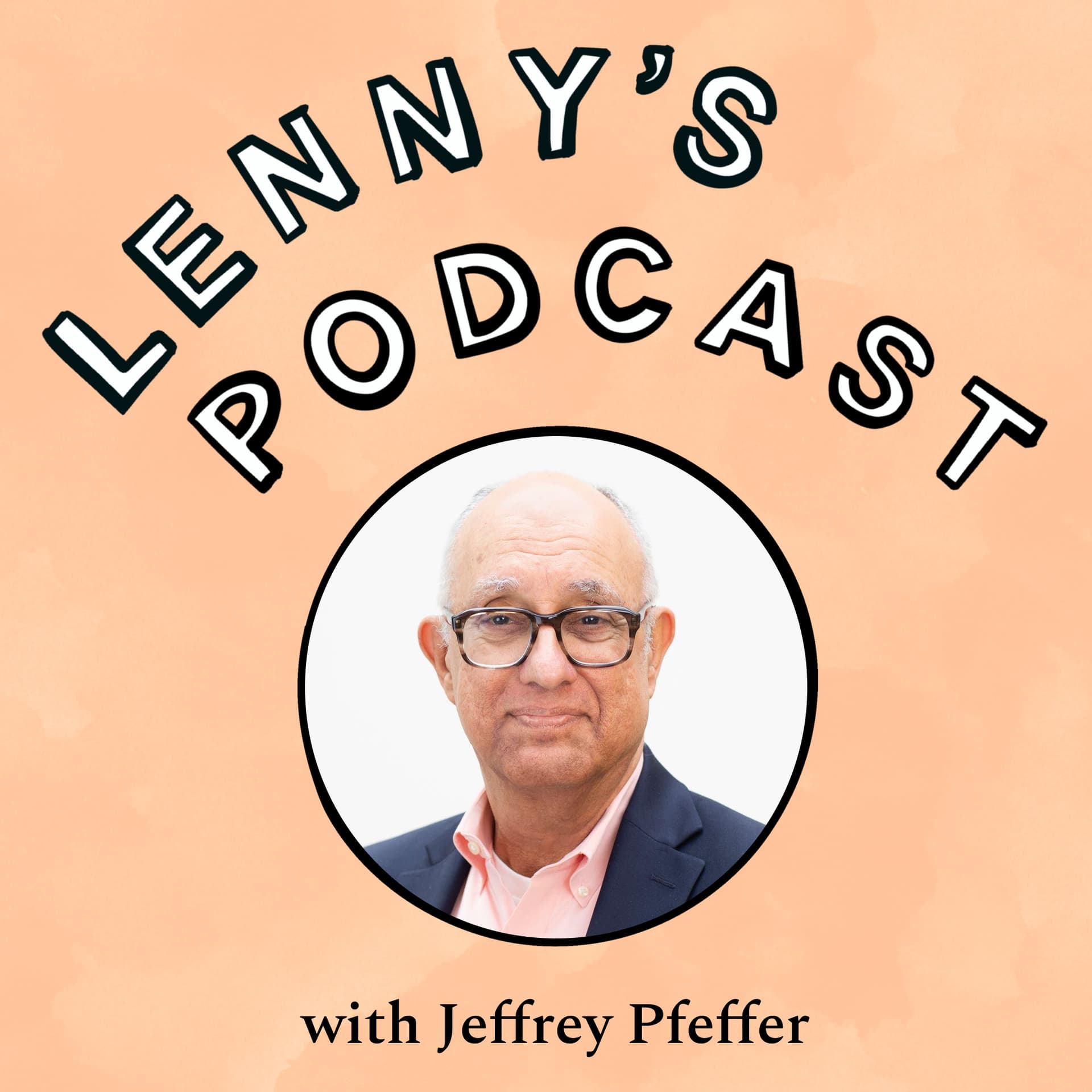
The Paths to Power: How to Grow Your Influence and Advance Your Career | Jeffrey Pfeffer
Guest: Jeffrey Pfeffer, Author of "7 Rules of Power" Host: Lenny Rachitsky Podcast Description: Interviews with world-class product leaders and growth experts to uncover concrete, actionable, and tactical advice to help build, launch, and grow products.
Episode Overview
In this episode, Lenny interviews Jeffrey Pfeffer, a professor at Stanford’s Graduate School of Business and author of "7 Rules of Power." The discussion revolves around acquiring and using power effectively in business, building influence, and advancing one's career. Jeffrey shares insights from his popular and somewhat controversial class, "The Paths to Power," and provides practical advice on building a personal brand, networking, and understanding the tradeoffs of power.
Key Discussion Points
- Understanding Power Discomfort:
- Many feel uncomfortable with the idea of power due to societal teachings and personal values.
- Power skills are crucial for career success, including higher salary, promotions, and job satisfaction.
- Importance of Power for Underrepresented Groups:
- Power skills are particularly vital for individuals from underrepresented backgrounds to succeed against systemic disadvantages.
Jeffrey's Seven Rules of Power
- Get Out of Your Own Way:
- Overcome feelings of discomfort about power. Stop self-doubt and imposter syndrome.
- Don't apologize unnecessarily and avoid self-deprecating language.
- Break the Rules:
- Stand out by being memorable.
- Disrupt conventional thinking and practices to gain attention and success.
- Appear Powerful:
- Presentation is key; use body language and presence to convey strength and confidence.
- Do not rely on notes, maintain eye contact, and control your tone.
- Build a Powerful Brand:
- Ensure people know who you are and what you stand for.
- Differentiate yourself in your field by creating value and being visible.
- Network Relentlessly:
- Networking should be based on generosity and providing value to others.
- Know a broad range of people to access diverse information and opportunities.
- Use Your Power:
- Success begets more success; using power effectively leads to accumulating more resources and influence.
- Demonstrating competence and effectiveness attracts further opportunities and allies.
- Understand That Success Excuses Almost Everything:
- Once you achieve power, how you obtained it tends to be overlooked.
- This isn't an endorsement of unethical behavior, but a commentary on societal tendencies.
Practical Assignments and Insights
- Homework Assignments:
- Identify and meet people who can help advance your career.
- Develop a personal brand statement and seek feedback.
- Engage in activities that push you out of your comfort zone incrementally.
- Networking Tips:
- Focus on creating meaningful connections and being a broker of relationships.
- Pursue "weak ties" for diverse insights and opportunities.
Real-World Examples
- Success Stories:
- Examples include Derek Kan's rise in political influence and Tristan Walker's innovative approach to securing a job at Foursquare.
Closing Thoughts and Reflections
- Price of Power:
- Power often comes with a loss of autonomy and increased scrutiny.
- It's important to weigh these factors and decide what balance suits your personal and professional goals.
- Call to Action:
- Start taking small steps towards building your power skills with support from mentors or coaches.
Resources and Further Reading
- Jeffrey Pfeffer's Books:
- [7 Rules of Power](https://jeffreypfeffer.com/books/7-rules-of-power/)
- [The Knowing-Doing Gap](https://jeffreypfeffer.com/books/the-knowing-doing-gap/)
- Find Jeffrey Pfeffer Online:
- [Website](https://jeffreypfeffer.com/)
- [LinkedIn](https://www.linkedin.com/in/jeffrey-pfeffer-57a01b6/)
- Lenny's Newsletter and Podcast:
- [Lenny's Newsletter](https://www.lennysnewsletter.com)
- [Podcast Episodes](https://www.lennysnewsletter.com/podcast)
---
*This episode offers deep insights into leveraging power effectively and ethically within professional settings. It is a must-listen for individuals seeking to enhance their influence and leadership capabilities.* ```
Written by AI. May contain mistakes. Listen to the episode to check what was said.
Transcript
Automatic transcript. May contain errors.0:00We're gonna be talking about how to grow your power. The reason why you should pay attention to this is because it leads to a lot of good things. Sour, getting promoted, being happy in your career, being less stressed. You're not describing how the world should work. It's, this is just how it is. Not only is, but how it was, and how it will be. The seven rules of power. Get out of your own way, break the rules, show up in a powerful fashion, create a powerful brand, network relentlessly, use your power, and understand that once you've acquired power, what you did to get there will be forgiven, forgotten, or book.
0:32It's not about personal, these are skills that can be masked. People might be hearing this and they're like, I don't want to be this person. Well, you already have done a fabulous job of illustrating principal one. That is one way to get in a real way. If I think power is dirty, the first thing that's going to happen is I'm not going to do what I need to do to be successful in Microsoft. The opening quotes here book that I have here, if you want power to be used for good, more good people need to have power. That's exactly right.
1:02Today my guest is Jeffrey Feffer. Jeffrey is a professor of organizational behavior at Stanford's Graduate School of Business, and teaches one of the two most popular and oversubscribed courses in all of the MBA program called The Paths to Power. The other class by the way is Tachy Fili, which we dove into last month. In his class and in his recent book, The Seven Rules of Power, Jeffrey teaches the things Things that you can do in your life and in your work to build your power. And through that, get things done and advance in your career. As one student described the class, it's the cod liver oil of the graduate school of business.
1:37You know it's good for you, but you feel a little nervous about it. In our conversation, we dig into each of the seven powers. Why it's important to build these skills, even if you feel uncomfortable. We talk through a bunch of examples of the power and action and the impact it has had on people's lives, why it isn't as cringy or scary as you may think. I was actually nervous to have this conversation and ended up being a huge fan of Jeffrey in the work that he does. We end the conversation with what you can start doing today to start building your own power. This podcast is basically for anyone that wants to advance in their career, whether you're an IC or a CEO, and I'm really excited to bring it to you.
2:17If you enjoy this podcast, don't forget to subscribe and follow it in your favorite podcasting app or YouTube. It's the best way to avoid missing future episodes and it helps the podcast tremendously. With that, I bring you Jeffrey Feffer.
2:32Jeffrey, thank you so much for being here and welcome to the podcast. Thank you, Lenny. I am honored that you invited me on. I'm even more honored that you decided to come on. We're going to be talking about something that makes a lot of people uncomfortable. I think it's going to make me uncomfortable. We're going to be talking about how to grow your power in life and in business. Let me just start by asking why does this stuff make people uncomfortable and why is it still important for people to learn how to do this well? Well, it's important because a guy named Gerald Ferris developed a scale of kind of political skill and a bunch of he and a bunch of his colleagues over the years did a lot of empirical research that demonstrates that political skill is associated with a lot of positive outcomes.
3:23salary, getting promoted, being happy in your career, being happy in your job, being less stressed. So the reason why you should pay attention to this is because it leads to a lot of good things. The reason why it makes people uncomfortable, you said it made you uncomfortable. Maybe I should ask you the question. Why does it make you uncomfortable? There's a lot of things here that are probably not how people want to live their life necessarily or want other people to act. Yeah, so I think it makes people uncomfortable because the realities of what it takes to get power, they are almost no resemblance to what you're taught in Sunday school or the mosque or wherever, how your parents raised you, they bear almost no resemblance to how we think the world ought to be, and then they bear little resemblance to our aspirations.
4:16And I think we look around the world and we see people who have acquired enormous amounts of power and have used it for bad. But I tell people, I see people with hammers hitting other people on the head that does not mean that a hammer is not a useful tool. You can take a screwdriver and stab it into somebody's belly. I have a very dear friend who will probably talk about the leader of the podcast, Laura Esserman is a breast cancer surgeon and I tell people Laura has a knife. She uses it to cure cancer. Muggers have knives. They use it to rob people. So I think we have confused the tool for how it has been used.
4:56You'll also have this quote that the people who need to understand power and build their power skills are people come from backgrounds or characteristics who would normally put them at a disadvantage. I think that's exactly right. You know, I will go this Sunday to Nashville, Tennessee to talk to a bunch of people of color in the NFL who are trying to rise up the ranks. And I, you know, this Stanford Ronser Program because the NFL is serious, I think, about trying to make more opportunity for people underrepresented minorities. And these are folks who will not succeed unless they learn power skills because the world is fact against them in lots of ways.
5:41This episode is brought to you by Wizard, empowering product leaders to ideate and iterate faster than ever before with the power of AI. As a product manager, I often spend hours taking screenshots and then annotating them with feedback for my team. With Wizard, I can simply upload my screenshot, and Wizard's AI will turn them into a fully editable UI design that I can then take, make tweaks to, and then share with my team's in minutes. And when I want to get really creative and explore totally new ways to improve our product experience, I can use Wizard's AI to generate new design concepts from simple text prompts, and turn them into interactive prototypes effortlessly.
6:21There's a reason that over 2 .6 million people have trusted Wizard to accelerate every phase of their product lifecycle and speed up time to market. Developers can even export UI components to React and CSS to speed up their development. Wizard's Drag and Drop Editor is a super easy to use and you can collaborate in real time with your entire team, even your CEO and customer service teams can contribute. Unlock all of Wizard's game -changing AI -powered features and more, with 25 % off Wizard's Pro Annual Plan. Visit uizard .io slash Lenny and use code Lenny to check out today. That's uizard .io slash Lenny.
7:04This episode is brought to you by Webflow. We're all friends here, so let's be real for a second. We all know that your website shouldn't be a static asset. It should be a dynamic part of your strategy that drives conversions. That's business 101. But here's a number for you. 54 % of leaders say web updates take too long. That's over half of you listening right now. That's where web flow comes in. Their visual first platform allows you to build, launch, and optimize web pages fast. That means you can set ambitious business goals and your site can rise to the challenge. Learn how teams like Dropbox, IDO, and Orange Theory trust Wepplow to achieve their most ambitious goals today at Wepplow .com.
7:51Another element of your course that you try to make clear in your syllabus is to teach people not to be as judgmental. You also have this whole huge bold phrase, this class is not for everyone. You can just talk a bit about maybe why it's not for everyone and then why being less judgmental is important. I mean, the class is extremely popular. I'm a long -waiting list. It's kind of mythical. And because of the principle of social influence, you know, we are influenced by what other people do. We're influenced by our choices of restaurants. We're influenced by our choices of music. You know, I'm not sure I like Taylor Swift, but I certainly want to go see Taylor Swift because everybody else is just, you know, and many people sign up for the class.
8:29And one year in particular, there were some people who sat and about the third row up directly in front of me. And they looked every day like they were having some terrible thing put up some horrible orifice or something. They looked literally in pain. And so I decided, and of course they learned nothing. If you come to the class and you're in that much psychological discomfort, you're not going to learn anything. And so what I try to do is tell people that in order to benefit from this class, you have to be open to learning the material. And if you're not, and by the way, this would be true for any class.
9:08If you got a physics and you say, I don't like physics, I hate physics, I don't believe in physics, I don't believe in the theory of physics, whatever, you're not going to learn anything. And so I'm trying to get the class given those huge waiting lists. I'm trying to get the class to have people in it who are in fact going to benefit from it, rather than sit there and look like they're in pain. And the judgmental thing, you know, if Matthew 7, Judge, not the ebe not judged, the Quran says only our conjudge people. The American poet, well -witman, said, be curious, not judgmental. Mother Teresa said, if you judge people, you have no time to love them.
9:52Judgment, if I need to build a positive relationship with Lenny, because you are on my critical path in my job and jobs necessarily entail a reasonable amount of interdependence. I get things done through and with other people. If I decide that Lenny is whatever set of bad adjectives you want to use, dumb and competent, immoral, whatever, my ability to build a positive relationship with you and you remain on my critical path becomes almost zero unless you're a better actor, I'm a better actor than I think most people are. So therefore, you should suspend judgment in the sense that if somebody is on your critical path, the only judgment you should make is there on my critical path.
10:41If I want to get something done, I need their collaboration and cooperation. And the fact that I may not like them is in fact irrelevant. And as I have taught senior executives over the years, it is absolutely clear to me that that one of the skills that they have mastered is they there with skill that you cannot tell what they think of you. And that's important because I need your collaboration, I need your cooperation. And if I leak down, you know, in ways that say, I don't respect you, I don't like you, I don't admire you, whatever, my odds of getting you to work productively with me goes essentially to zero.
11:19So that's a judgmental story. Does that make sense? Absolutely, and I have a quote from your syllabus along these lines. not everyone we encounter in paths to power someone you're gonna want to emulate. This is a class about how to get things done, how to build and wield influence, and there are multiple ways to accomplish these objectives. Yeah. So I've had two friends actually go through the course. One, I asked about the course of the impacted head on her. She's actually a founder now. And she told me that your class was her single most favorite class at all of Stanford Business School because it was realistic and applicable to life as a founder because it didn't sugarcoat business, didn't sugar sugar coat life.
11:55It's older how the world really works and that is helping our succeed with their startup right now. I'm thank you. There's no higher praise than that. I mean, I mean, you know, I actually don't read. I shouldn't probably say this on public, but I don't actually read my course evaluations because the impact I want to have is not to have people like me, but to have that kind of impact, to make people more successful, more effective in their lives. I, uh, that is a good segue to when you're rules of power. So let's just talk about your seven rules of power. Uh, actually, I have your book right here.
12:29And if folks want to learn more, here it is, seven rules of power. You've had this is your fourth book about power. And this is your best book about power because it basically summarizes everything you've learned in a really cohesive way. So let me first share the seven rules of power. And then I'm going to dive into a few of them. That sound good. That sounds perfect. Okay. So the seven rules, one, get out of your own way. Two, break the rules. three appear powerful, four build a powerful brand, network relentlessly, use your power and success excuses almost. Everything correct. Okay, success excuses everything almost got it.
13:06Okay, so let me start with power four which is around personal brand and the reason I want to start here is I have a friend that's actually in your class right now, Raf and I saw that he started a podcast and he They told me that they did it because it was part of the homework that you give students, you call it doing power, is that the name of the homework assignments? I have. So we give them a bunch of assignments throughout the class, which are self reflective assignments, but they're big saying for the class is they have to do power. They have to do something during the quarter to take the principles of the class to what they're learning and put them in the practice.
13:42And that is because, you know, everything I do has to do for a reason. That is because if you don't use what you learn, the learning will disappear. So if you go to a French class and you learn French and you never speak French, and if I'm relatively short period of time, you'll forget everything you learn. And so I want the learning to stick with them. So I try to get them to do something with it. Well, we're in this tangent because I wanted to talk about this whole, you have a book, the doing gap. No, we're doing gap. The knowing doing gap. So let's just spend a little time there because I think that's really important.
14:16What are some examples of things that have come out of people doing these homework assignments? Things that may be led to something interesting? Let me take my most extreme example. My most extreme example is probably Derek Khan, hey, and Derek Khan was a little bit older when he went through the MBA program. and in 2012 his doing power project was to get appointed to be Mitt Romney's, Mitt Romney was running for president, to be head of economic policy for the Romney campaign. Believe it or not, he was offered the job. Believe it or not, he turned it down for reasons which we could go into if you want, but aren't that interesting.
14:58He wound up relatively soon thereafter as number three in the Transportation Department working for Elaine Chao. And I have a picture of him. When he comes to the class, I introduce him. I tell students I give them a trigger warning. And I introduce him. He wound up at the end of the Trump administration as the Deputy Director of the Office of Management and Budget. And since typical of the Trump administration, by that time there was no director, he essentially ran the $6 trillion US budget. This is six years out of business. I was thinking whether he got that during his class. Amazing. Okay, so this is a success story of doing power.
15:43Let's talk about this first power of building brand. And I think this is where people start to feel like comfortable. They're going to be like, oh no, I don't want to be doing this. Why this doesn't feel good to me. So let's let's talk about it. of me. Okay. Let's see. So talk about this power of building a personal brand. There are, by definition, fewer positions at the top and at the bottom. The world we might not like this, and I know people, you know, the late Tony Shay, the examples tried to do, you know, holocrycee or whatever, but the world is essentially hierarchical. The animal kingdom is hierarchical.
16:18It is better to be at the top that at the bottom for a number of reasons. Okay. If that is true, if there are a few or positions at the top and at the bottom, then your job to advance your career is to figure out how to get promoted. There are many ways to get promoted, but I will guarantee you one thing. No one is going to promote Lenny if they don't know who the hell you are. So it is not sufficient for them to know who you are. They have to know that you're smart personable and have whatever skills you've got. But they have to know you. If they don't know you, you cannot choose what is not in your head.
16:57You know that better than I'd. So therefore, you have to do something to differentiate yourself. You have to build a brand. So when I think of letting in your podcast, I think of something, you know, not just, you know, 25 billion podcasts. you know when I when I think of somebody in McKinsey or Bay or BCG one of the consulting firms. A gazillion people start off as front -line consultants. What are you gonna do so that somebody knows who you are? What are you gonna do that creates value for the firm and for you? So my friend Keith Faratzi when he started at Deloitte Consulting did not do this red sheet stuff and he was by the way not very good at and didn't like, he started the Lincoln quality award.
17:45He decided to try to take Deloitte's brand recognition from about one or two percent to thirty percent. He was appointed though he left before he actually took the job to the position of partner and the first chief marketing officer at Deloitte. I have another friend, Tristan Walker, who wanted to get hired and forced square. You know, he's he's he's sent emails to the founder the final month of founder ignored him. So Tristan Walker did something I think very bold Tristan Walker began signing up partnerships. So one day the founder says holy god he signed up Starbucks maybe on a higher this guy.
18:26So so you have to do something that causes people to to know who you are and that is what building a brand is about. It sounds very benign, put that way. When people hear, I need to build a personal brand, it sounds like I need a post on LinkedIn, I need a post on Twitter, start a newsletter, start a podcast, which I know is a kind of a part of it, but what are some examples you've seen of ways to build a personal brand that are effective? So I have a friend who I bring to the class of a lovely tall Asian woman named Lachau who made partner at a venture capital firm after four years, which is fast.
19:00Law works for Canaan Parmer. C -A -N -A -A. Law said, I do not work for Andrii's at home. I do not work for Sequoia. I don't work for Greylock. I don't work for any of these very visible, large VC firms. So if I am going to get deals in the consumer space, that's her domain of expertise, is consumer and consumer tech. Somebody is gonna have to know Who are chow -its? Because again, you're not going to get the deal if nobody knows who you are. And so she basically did everything you talked about. She did write it. She started a podcast in which she invited influential people. She contributed to a book.
19:53She helped people out. She did networking dinners. She did everything she could so that people would recognize and know our child. And one of the things she did was she's tall. In general, Asian women are not tall. She decided to play up the fact that she was in the words of some people. The tallest Asian woman they'd ever seen, she wears heels. In her heels, she's six feet one and just tall. She also, when she comes to my class, many people come to my class and the buddies got those one. She has style and it's a unique style. So she thinks about very strategically, how am I going to dress, how am I going to look, how am I going to show up, how am I going to do what I need to do so that people know who I am.
20:43Obviously, they're substance. If you have visibility without substance, people will know you're like useless. But if you have substance without visibility, no one will know the substance that you got. You also talk about how you can reframe this idea of not being self -promotional, but it's amplifying the impact of the team that I worked with, or it's me scaling myself by sharing things I know and pointing people to it. Absolutely. Awesome. Okay, so let's move on to a different power. Let's talk about power one, which is getting out of your own way. talk about what that means and how someone can work on that.
21:20Well, you already have done a fabulous job of illustrating principal one by talking about how this is the topic that makes people uncomfortable. And when something makes people uncomfortable, in general, they're going to shy away from us. So if I think power is dirty, if I think power is evil, if I think power is something I want I want nothing to do with. The first thing that's going to happen is I'm not going to do what I need to do to be successful in my career. So that is one way in which we get it in our own way. Another way in which we get in our own way, many people suffer from what is called in the psychology literature imposter syndrome.
22:01They believe that they were the admissions mistake and Stanford. They were the hiring mistake and whatever company they're working for. It's somehow they got to this job, But they don't really deserve to be there because it's surrounded by people who are smarter and better and therefore they will do things If I can't even believe it just goes on so I will have students not many but a few now raise their head I will call them and the first things out of their mouth will be I don't know if this comment is gonna be useful This is called pre -emptory apology Don't, you know, if the comments that we use for don't say it, bad number one, but number two, don't apologize.
22:41You know, pardon me for interrupting. Pardon me for, you know, taking up your time. Pardon, you know, the stop all this apologizing. If you got the job you're in, you probably are not only qualified, you're probably over qualified. So don't use descriptors of yourself that disempowering. Don't think of yourself as not deserving of the job that you hold because that attitude will leak out and other people will say, if Lenny doesn't think he deserved the job, then maybe I shouldn't think he deserves the job either. So basically the first power is you're shooting yourself in the foot by worrying too much about whether people like you.
23:25This friend of mine who's now the founder that I read some quotes from, she said, Her number one takeaway from your class is if you want to be like get a dog. That's correct That is a quote from my dear friend Gary Loveman who for many years ran Harris which then became Caesar's the casino company You also talk about this yet. There's a quote I have acknowledged that others are often no better than you Yep Because that makes you feel better about this so for people that actually want to be like I like being liked like a I don't know if it's a flaw in my upbringing. Is there, is the lesson you can't, there's your cap on your power if you worry about, if you want to be liked?
24:05At the end of the day, you don't wanna be intentionally disliked. You don't wanna violate my different Bob Sutton's book The Noassel Rule and gratuitously be an asshole. But you are hired to get a job done. You know, it's interesting. I unfortunately am now too old. in the words of my chiropractor, I'm suffering from too many birthdays. So I have a lot of doctors who are doing a great job. Trust me, when I choose a doctor, I have an unfortunately retired in neurosurgeon who did two surgeries on my spine. He's considered to be one of the top cloning in the country. If you go on Yelp, you read about his personality and his office furniture.
24:50You know, as I said to somebody, he's doing Michaelwood's surgery on my spine. I can like that permanently paralyzed. I really don't care about his personality. I don't care about his office furniture. That's an extreme example, but it makes the point when you are putting a role, you are putting a role because presumably, you are supposed to perform in that role. If you get appointed to be a head coach, if we make you a quarterback on an NFL team or we make you, you know, center on a national basketball association team, you know, you did not get that job because people thought you had a cute personality.
25:27You got that job because you have the skills to make your organization successful. And if you do not use those skills because you're worried about what everybody else is thinking, game. You are not only harming yourself, but you're harming them because you are not doing what you were hired to do. So, in simple way of thinking about this, which makes me feel better, but like as we talked through this, I'm becoming less uncomfortable with these, which is a good sign. It's don't actively try to be dislike. It's don't prioritize being like, prioritize competence and respect and getting and doing the thing that needs to be done.
26:03Absolutely. Okay. Great. Let's talk about rule number two, which is break the rules. So basically, again, these powers are ways to grow power. And you're saying that if you break the rules, you get more power. Talk about why that's the case. That looks like, uh, the wall from anyways, number one, when you break the rules, you stand out, you become memorable when you do something that's unexpected and being memorable is of course important as we've already discussed. That's number one. Number two, the rules were made mostly by the people who are favored by the rules in place. So if we were talking about business strategy, we would talk about a word that is probably now overused.
Read the full transcript
26:45We would talk about being a disruptor. That you would disrupt an industry and how do you disrupt an industry by doing something that is different from the other industry incumbents. In Southwest Airlines you don't do hub and spoke. In Amazon, you provide an incredible level of customer service. Whole foods, you don't optimize on the cost of the stuff in your store, but you optimize on suit on, fitting local taste. Whatever. You would be a disruptor. You would do things that are different. The same principle holds for you that if you are going to be successful, you have to do what number one place to your strengths.
27:22Use the title of a Gallup book. Number two, you have to do... You have to do things again that cause you to stand out and you have to do things that basically, you know We'll make you more successful one of the conventional wisdoms that people I think and here to way too much is Don't ask Don't ask don't ask for help you need to show self -sufficiency So my colleague Frances Flynn Frank Flynn wrote an article with an essay like a title if you need help just ask and And it turns out people overestimate how many people are going to have to ask to get help. And it turns out asking for help makes people uncomfortable.
28:02But when you, you know, I was married, you know, and so if you read the acknowledgments in seven rules of power, for more than 35 years I was married to Kathleen Francis Fowler, who I could send you a picture. I mean, she looks literally like a supermod. And I didn't, I never have been any particularly better looking than I am now. So somebody said to me, hi, did you get her to go out with you? And the answer of course is? I asked. I asked. I asked. I asked. No one. Well, maybe not no one. But few people are going to go out with you if you don't ask them out. Few people are going to marry you if you don't ask them to marry.
28:41Few people are going to do anything if you don't ask. And what is the worst that can happen? If you ask and they say no, you are no worse off than had you not asked in the first place. Because if you don't ask, you're not going to get it. If you ask, can they say, no, you're not going to get it? Get over your ego, ask. Is there another example that comes to mind if someone breaking the rules saying business that ended up being really successful as a result or just someone that is really good at this in business? I can give you many examples. One of my favorite examples would be Jason Callacannas.
29:13I don't know if you know Jason. Oh, yeah. I know you did a case study on him. Yeah, yeah. and well. Yeah, yeah. So I think Jason, Jason, I think consistently breaks all kinds of rules. First of all, when he comes to my class, nobody likes him, but that's okay. I don't know if he likes him. But you know, he's that's power number one. He's not worried about that. That's number one, but also I think there is a conventional wisdom in the venture capital industry, which he defies almost completely. You know, he makes a lot of little bets, not a few big bets. He runs a very lean operation. He doesn't have a lot of partners.
29:52He doesn't have actually any partners, so he can't be fired by his partners. He began his career in journalism, which is interesting. Being a journalist is a wonderful job because you get to ask people all kinds of questions. If you ask smart people questions, and you have some reasonable level of intelligence yourself at the end of that process, you're going to wind up incredibly smart. And incredibly insightful. And he wound up incredibly smart and insightful around aspects of the internet. And he definitely has a lot of power. It is, I think that I'm going to link to the case study in our show, and then three basically walk through how he went from nothing to a very powerful person.
30:31And by the way, a very rich person as well. Let's talk about another power, power five, networking relentlessly. What does that look like and how do you get better at this? Well, I think there's research that shows that many people find networking dirty and that's because I think they think about it in the wrong way. My friend John Levy, who is written a fabulous book you're invited, which is a book about how to put on events that people want to come to, and the fabulous you want to bring. We'll tell you that the first principle of networking is in fact generosity. It is generosity. What can I do for you?
31:09How can I be helpful. Who can I introduce you to? Either a company or a product or a person who could be helpful to you in your career. But in order to be able to introduce you to someone who's got to be useful to you, I have to know people. If I don't know anybody, I can't introduce you to anybody. And the more people I know, the more likely it will be that if If you say I need to know somebody in X, I will know that person. So the broader your social network, the more people and the more things you will know. If knowledge is power, networking is a fabulous way to get knowledge about people and about ideas.
31:53It's funny to hear this where it's like, yes, obviously this is right, but connecting it to if you want to become more powerful, more successful, like you need to do this. I think that is a powerful point that we're all making here is just like this actually is necessary if you want to acquire more power of course I have a funny story about no working so We have a thing in Sanford called view from the top and which these fancy people come in and give a talk and one of the people came in and give a talk and Made my class instantly popular because he's an extraordinary wealthy person his name is homie cordistani And so I said I reach out to him.
32:31I said homie Let's have breakfast. So I can understand, because during the thing, somebody asked him with class with the most important in his success, he said mine. So I said, well, tell me your story. He said, well, you know, I graduated from Stanford. I'm Persian and background, immigrant background, and engineer, HP, all the things that would make you kind of a nerd or something. He said, I went to work for a couple of startups. They didn't do well. Then I found myself in the mid -90s at Netscape, the browser company, big deal, anyway, Mark and Dreson. Okay, so I found myself at Netscape in marketing and business development.
33:12I was not making any progress. So one day I decided to take your class to an extreme. I decided to stop doing my job. So I said, when people gave you projects to do or assignments or tasks and you didn't do them, he said it turns out that I spent my time not obviously at the bar, but in networking, first of people inside of that scape and it turns out if you're well connected to the senior leaders, they don't really care if you do your job or not. That's number one. Number two, he said, you know, oftentimes I can find other people to do the work I was doing. So instead of basically spending time doing my job, I now worked first within that escape.
33:56But that escape was not that big of a company. So after a while, he decided to go through, which is by the way, his job anyway, and marketing his tail, he decided to basically drive to the Silicon Valley, talking to people. And this is, you know, the Brussels browsers are just beginning. Nobody knows what a browser is. Nobody knows what the internet is going to become. So he's having all these fabulous conversations. All right, so he's now, now those basically everybody. It's 1998 and a little tiny company decides 10 engineers, typical Silicon Valley company, 10 engineers, all engineers. I have a friend of what's the work for a company, we're on a company, I had 26 people, he didn't have one sales and marketing person.
34:38Anyway, the company's now has 10 engineers, they decide they need to hire their first business person. Being an analytically oriented company, They say we're going to do this very analytically. We are basically going to ask everybody we can think of and a few people we can't. Do you want to list of the best, technically oriented business people that you know? And there is of course one name that appears on every list. It is Omead, quarter -starning, who becomes employee number 11 at Google and makes $2 .5 billion. Great success from networking. Well, then, when people hear about networking, it just feels like you said, like, very cringe.
35:21I don't want to go to these networking events and try to pretend to talk and care about people. Do you have any advice for just how to make networking feel less cringy? One of the exercises I give my students is, you know, I say, right -a -list of 10 people who, So if you knew them and if they knew you would be important for whatever you're trying to accomplish in your career. So maybe you're trying to get into biotech, you need to know 10 executives of biotech or whatever. Make all this to 10 people. Then for each person figure out how you're going to meet them. You know, by the way, that necessarily the networking event.
36:01Maybe you want to do what John Levy does, which is whole dinners. in which, by the way, the guests do the cooking, which is a very interesting idea. That, of course, taps into the IKEA fact. You always like something better if you participate in creating it. Maybe you want to hold dinners. Maybe you want to hold, maybe you want to try to reach out to them a lunch. Maybe you want to reach out to them and say, here's an article I think you'd be interested in. Here is somebody who I think you benefit from meeting. You know, so recently, I mean, I'm not particularly good now worker, though I'm better, I guess, than some people.
36:37I recently met Esther Wojciski. I'm sure I killed her name. She's considered the grandmother of Silicon Valley. She's Susan Wojciski's mother. And she is interested in depression, particularly depression among teenagers. And I said, you should know Leanne Williams, who's in the psychiatry of behavioral science department who has done probably 300 articles on depression and has invented something which is called precision psychiatry. So I connected them to each other. You know, I just sent out a email, I think about it, know each other, they got together. I get credit for knowing people and connecting them, but I also benefit them.
37:19Leanne needs to raise money, Esther's got money. Esther needs to understand the cutting edge research and depression and the biomarkers of depression, which is what Leanne and specialty is, so they benefit. So this is not some Ike thing. This is connecting people who benefit from being connected. It touches on something you teach in the book is in your networking, you wanna become a broker, you wanna be central, that's kinda what you wanna work on. Can you talk a bit about what that means? Well, that means you wanna connect people. So many people would benefit, and then groups would be, would benefit from being connected, and they're not connected.
37:56What is a venture capitalist? Can I ask people with ideas that people wouldn't money and takes a fee for doing it? What is an investment banker doing? Can I ask people trying to sell businesses or raise capital with people trying to buy businesses or who have capital? What's a real estate agent? Can I ask buyers and sellers of houses? I mean, there are all kinds of examples where persons in where the person's entire job is connecting people. But even for the people whose job it isn't, you benefit from knowing people, the more people you know, the more things you know. As I sometimes say in my class, if leadership management, call what you will, is getting things done to other people.
38:39It seems like common sense that the more other people you know, the more you'll be able to get done. Yeah. As someone that has become central to a lot of things in the product world and has built the large network as a result of this podcast newsletter, I can tell you a thousand percent this creates a lot of opportunity and power you could say in quotes. So I've seen it happen. Of course. This episode is brought to you by Heap, the product analytics solution that shows you everything users do on your digital product, website, mobile product, or other digital services. We all know a great digital experience when we see it.
39:17It's intuitive and anticipates your needs and makes it easy for you to do your job. If you're trying to build that kind of experience for your users, you need up to day reliable information about what your users do in your product and why they do it. Want to know how your users behave across platforms? What keeps them coming back? What they're doing that you're not even aware of? Well, I have some great news for you. Keep captures all of this user activity for you automatically and then gives you definitive answers to all your questions about user behavior. In seconds, not weeks. With heap, it's easy to prioritize the product investments that improve conversion, engagement and retention.
39:59Visit heap .io slash Lenny to get started with a demo that's heap .io slash Lenny. Another lesson I guess you teach us to pursue weak ties, talk a bit about what that means, what do you mean by that? Well, the people to whom you're strongly tied, your family, your spouse, significant other, your friends, your work, the people who work with you at work, will probably, because they are close to you, know the same things and the same people that you do. So, to the extent that you build ties with people who are more different from you and every dimension, you are more likely to learn non -redunded information and come in contact with people that you don't already know.
40:47This again seems common sense. There's a lot of research behind it. Mark Rattavetter, a sociologist who still teaches at Stanford wrote a book entitled The Strength of Week Ties. And that's, and basically, no actually, pardon me, he wrote an article called The Straight Through Weaties. His book was called Getting a Job. And he did a study, I guess it was at that time in Boston, he did a study of job seekers in Massachusetts. And he looked at people who got jobs through applying to ads and through more formal means. and then he looked at people who got jobs through referrals from their network.
41:28And it turns out, of course, the jobs that you get through your network referrals are much better jobs. And oftentimes, the best jobs that people got were referred to them by people that were not particularly close to them. Because they had a view, that's the word I was a key quote. and view into the ecosystem of the boss of the labor market that the other people didn't have because they weren't in the same place as the other people. I love that lesson. Let's talk about another power, which is using your power. So when people think of using your power, build more power, that's not intuitive. You talk about how it creates this self -repetuating growth of power, the more you practice power.
42:15Can you talk a bit about that? Sure. So when you were giving, you know, it's interesting. My friend, Deborah Goonfeld, who wrote a book, Collacting with Power, talks a lot about people's ambivalence to power. So sometimes people are put in a job. Her media bar, who teaches now at London Business School at one point, Tottidance, God, at one point, Thottidance Harvard has an article in the Harvard Business Review in which She talks about a woman in a drug company who gets a promotion and says to her colleagues to whom she's now overseeing that she's not sure why she got the job. She's not sure she deserves a job.
42:55Needless to say, she didn't do very well in the job because she got her own way. But part of this is you are putting a position of power, you're putting a position of authority in order to make things happen. So to the extent you mobilize your resources and get things to happen, you will get more resources. People want to be associated with success. To the extent that you become successful, more people will want to work with you. To the extent that you get more stuff done, you'll get more promotions, more opportunities. I mean, nobody's going to give you a job to do if the last five jobs like that they gave you, you couldn't get done.
43:33So the more you're able to do Oftentimes, of course requires power and influence the more you're able to do the more you'll be asked to do But better yet the more resources you'll be given To help you get things done And I think there's interestingly you teach that just showing that you have power Create smart power people see that you have this power and they start to follow your lead more right? That's a part of this. Yeah, I just saw over the weekend the movie the latest movie in the franchise of the planet of the apes. It's, you know, when Jim Collins left Stanford, he gave me a book called, Chimpanzee Politics, which is, of course, not based on the planet of the apes, but it's based upon the study of chimpanzees.
44:14We are the same. People are attracted to power. You know that. Yeah. By the way, that will count for a lot of what is going to happen in the presidential election. Let's save that for the end, because I think that's an interesting piece of your book of the connection to Trump. So let's say that for a bit. I think that'll be really interesting. Kind of along the same lines of the area we're just talking about. And one of the another rule of power is to show up in a powerful fashion. So look powerful. Talk about what that looks like. So my colleague at Berkeley, Dana Karney, and she's here, and he's writing a book called Tell, which is about the importance of body language and how to master body language.
44:54There is some evidence that suggests we respond mostly to how people look, secondarily to how they sound and by far the least important to the content of what they say. You can see this by turning on your TV and turning off the sound. Watch the presidential debates with the sound off. They'll be much better. I have another colleague of marketing by the name of Bob Aschiv who talks about people's freaky mind or, you know, the idea that we are in fact descended from primates and and that we are controlled in lots of ways by our emotions. And so we respond effectively to other people. We respond to how they look.
45:38You know, there's evidence in economics that suggests how people earn more salaries, control, earn more money, controlling province of things, attractive people, so I'm sure not too attractive. You earn more money. It's an optimal level of attractiveness. Because people respond subconsciously to how people look, how they sound, how they show up, how they present themselves. In my class, I take the example of Tony Hayward of BP, the Macon of the oil spill, and Lloyd Blankfine, who was accused of shorting the securities that he was selling, which by the way, Goldman did. And before I let them hear, Tony or Lloyd, we show about 60 seconds, and Lloyd's case, 34 seconds, with no sound.
46:25And even if you did not know who these people were and I asked you to make a bet. Who's going to keep the job and who's going to lose it? You would know just from their physical appearance. I love that. And by the way, what Dana Karne will tell you and what Common Sense will tell you is that these are skills that can be mastered. Robert De Niro was not born Robert De Niro in the sense of, you know, acting skills are learned. How do you show up? How you command the room? There's a guy named Regis McCembe, who is older than God, who's famous for running a very, very, very fancy public relations firm in the Silicon Valley.
47:06And his biggest contribution to life, as well as, by the way, to his personal wealth, is that he makes Steve Jobs, Steve Jobs. When Steve Jobs began, Steve Jobs couldn't convince you to buy water if you were dying of thirst. He could not give a presentation to save his life. And Regis McKenna and his team took Steve Jobs under their wing and created Steve Jobs, a man who could sell anything to anybody. These are skills. This is not about personality. This is not about undergoing some kind of cosmetic surgery or whatever. These are skills. Everything we've talked about, networking, showing up. All these things, these are skills that can be learned.
47:55I have a list of some of the stuff you actually recommend for looking and appearing powerful. So I'll read a few and I'm curious what else comes to mind. So do not read from notes, make eye contact, keep it brief. You say that anger can be a signal of power because it's outside the norm. It's kind of breaking the rules. don't apologize. It's kind of the opposite. More gestures, which is interesting. Open body posture, louder voice. Okay, I'm going to speak louder now. I like this. Okay. What else comes to mind as ways to appear powerful? Invading people's personal space. So gentle touching, standing close to someone.
48:31We're not talking about sexual touching. We're talking about touching the arm of the shoulder. you know, shaking people's hands. That's a way of, I think, being more powerful. But you've covered the main ones. I mean, I contact one of the problems with Tony Heyward and the BP is that he's been given a statement to read. You cannot read something in front of you and make eye contact at the same time. So he looks like he's scripted. He looks like he's insincere. You know, so I, you know, so I... Jack Valeni, who I had the privilege of knowing, who for 38 years was the head of the Motion Picture Association of America, and typically rated one of the number one or number two most effective lobbyists in Washington DC, said to my class when he came to my class, which he did, I never appeared before Congress with notes.
49:26I wanted them to believe, which was by the way true, that I was in complete control and complete mastery of the material and that I did not need notes or a bunch of assistants around me to help me that I is the head of the MPA. Understand the motion picture industry and then he would give you a little aside about how it was the one industry that consistently had a bunch of surplus in trade. We would talk about how many jobs it created and yet all the stuff of his fingertips. But basically, his command of the material made him more powerful. It's interesting. Jack Lennie was five foot two inches tall.
50:06And he came, talked to my class, and the next class, I said to people, what are your reactions? What are your thoughts?
50:24And a woman thought that was an assessment that was both true and insightful. When the five foot two jack validity appeared because of his presence, because of his body language, because of his Texas draw, because of his how he moved on the stage, he felt bigger. You would not say he did not feel So if I put... You read a couple more because this is a good example of stuff he did. Other ways to appear more powerful is more speaking time, longer gazing time, more disinhibited laughs. Is that just you laughing and feeling like you're just... Well, the way that we do, you're talking humor. Humor.
51:10The famous author Salman Rushdie said, and I quote Salman Rushdie, it's a fabulous quote, if you can hear people throw laugh, you can tell them anything. That's a, yeah, stand up comedy is a great example that. So, again, I think here people might be hearing this and they're like, I don't want to be this person. I don't want to be talking all the time. I don't want to be pretending like, oh, been posture is the advice here just, you don't need to do all these things. Just know this is makes people more powerful. They'll necessarily judge people. Do some of these things maybe because it'll add to your power.
51:42How do you think about just people that are like turned off by this order thing? It's a wonderful question. So I say to my class on the very first day of class that we will go through four stages. We will go through the stage of denial. It doesn't work in my culture. It doesn't work in my organization. It doesn't work for me. It doesn't work in my religion, whatever. Then we'll go through anger. They get angry at me. How can you teach us this stuff? Then it goes to sadness. I actually believe this to crest. And if we're successful, they will go through acceptance. And the process I have, I'm getting, you know, I am not, I do not have the most popular class in Stanford Business School because I am good looking because I'm the smartest person at Stanford or anything else.
52:26I am strategic about thinking about if I have someone who's going to come into this class, I have to get them from denial to acceptance in 10 weeks. and how are we going to do that? And was the easiest way to do that? If I said Lenny, I want you to become a better tennis player, or a better rollerblader, or a better ice skater, whatever, a better panel player in 10 weeks, what would we do? We have practice and coaching, and that's what I do in the class. Practice and coaching. I have executive coaches who work with the class, And I give them assignments that ask them to practice what they're learning.
53:10And therefore, by the end of the class, most people have made this transition because it is true. You know, if you've never, I had dinner the other night, this is really a woman who's like, I've done amazing stuff. Amazing, just fabulous. And she said, at the dinner, she said, I would have never done this before taking your class. And the way you get them to do this is I don't say, Lenny, you're going to swim the English Channel tomorrow. If I want you to swim the English Channel, we're going to start by swimming in pools and make every day a little bit more challenging. That's what we do. I don't start by saying you're going to network like Keith Farrati or John Levy or you're not going to be as bold as Jason Calacana who trusts me as extraordinarily bold, you're not going to necessarily do what I did.
54:03You're going to begin where you can begin and push yourself out of your comfort zone. Because, and again, this is common sense. It's awful. It's not a research behind it. If you will always stay in your comfort zone, you will never do anything different or better than what you're currently doing. This is true. If I said to you, I want you to at the end of 10 weeks, lift 100 pounds. I can't do that by the last day saying, lift 100 pounds. We have to work up to it. And that is the same principle here. So don't do something that looks so off the wall or so out of character for you that you can't conceive doing it.
54:45Push yourself a little. Push yourself a little. There's an interesting connection here too. What some say is kind of the opposite of your class at Stanford, which is touchy feely We had Carol Robin on the podcast and she has a framework the 15 % Rule where you push yourself 15 % beyond your comfort zone We're just a little bit. It's not too far and it feels like you try to do a similar thing. Yeah, absolutely So you you you begin by doing what you don't think you can do Let's spend a little more time here around the homework assignments and this kind of knowing doing gap that you talk about So you share a couple homework assignments.
55:18You give already, find 10 people. Think of 10 people you want to meet that will help you their career and then try to meet them. And then there's this like, I guess my friend's sort of podcast that I know would try to get them with. What are the homework assignments do you give? So we begin, there's a literature on goal setting. If you said goals are more likely to achieve them, this is again not, you know, not some huge insight, but there's an enormous scientific literature about this. And so I begin the very first hallwork assignment, which is by the way, in the very first day of class, why are you here?
55:50Why are you here? It is now the end of this class. What would success look like to you? What would you like to accomplish in our 10 weeks together?
56:02Second assignment. I give them a reading from the Power Book, which is the book before Seven Rules, which talks about the seven attributes of power. go out and get people to rate you on these or rate yourself. Yes, that for yourself, a development plan, energy, focus, being willing to tolerate conflict, all these qualities. What are you strong on? What do you week on? What do you want to build during our time together? And how are you going to do it? So we begin with goal setting.
56:41One of these diamonds I give them, which is the class that Jason comes through. What resources can you create? You're at Stanford Business School. Elite, fancy, Stanford. What can you do in your 10 weeks here? I have people who create an award. A woman who created an award. gave it to a colleague class, the model, got in trouble with the school. It turns out it's easier to ask for forgiveness than permission. So, you know, what can you do to create resources that will give you some leverage? That would be a third assignment. The networking is a fourth assignment. The acting with power, I showed them the videos and I in advance of the class, and I tell them they need to become Tony Hayward.
57:33They need to do a better job, which is by the way a little part, representing BP. And then you know, give me a 60 to 90 second video, and then share it with colleagues and get feedback on it. And then we're going to call on people in the class. In other words, for every idea, I try to think of something, and this is all by the way, this is all front -loading, And by the end of the class, we're not doing this so much. But I try to give them an exercise that causes them to actually take that idea and implement. Find people, oh, for brand, right, a personal brand statement. Get some feedback on it.
58:17Then write it again. How do you want to be known? Which is, by the way, useful to you, because you're a second in your MBA. You're going to go into the damn job market. What do you want people to think about? How do they want people to respond? How do you want to be known? So I basically take for every topic and have them do it. And then the coach, their person, their coach, who is responsible for 23 of these people, give them feedback on this. I could see how this makes a big impact on someone's life. Yeah. And so at the end, I had the student a couple years ago said to me, it is not that I got more feedback.
58:56And more useful feedback from your class that I did in any other class. I got more useful feedback in your class that I did on every other class I took. Come back. I can see why I'm. Let's talk about the last power. So we've talked it through 6 already. We have only one more to go, which is maybe the one that probably upsets people most, which is that once you have power, people will forget what you did to get there. Talk about what that looks like. Is that a power or is it more just like, this is what you should know about? So, and I put in rule seven for the following reason. In spite of everything you and I have been talking about, many people in a stage of, I don't know denial or something, say, I'm worried that if I do this, at the end, people believe that the world is homeostatic it is not, you know, that it's going to adjust, but whatever.
59:55You know, at the end, you know, at the end, I will be brought low. They have the myth of Echorus in their head, you know, you fly too close to the sun, your wings are going to melt. You're going to be brought down. And so I try to convince them partly through a lecture and partly through Rule 7 and some of the principles that I talk about rule seven. That in fact, life is not only ecstatic at all. That life is actually self -fulfill. If I believe you're powerful, you will become more powerful. If I believe you have no power, you will end up with almost no power. And that therefore, it is all forgotten and forgiven.
1:00:34And I'd begin, I believe I begin, but if the story of the South Carolina Senator who says nasty things about Trump and that Lindsey Graham and becomes Trump's biggest acolyte. And the New York Times of course is fascinating about this. How can you call, how can you say all these horrible things about Trump and now be his you know basically have your lips attached to some part of his anatomy? And Lindsey's answer is I want to be relevant. He's the president of the United States. If I may not, you know, this goes back to the judgment. I mean, I like all my mad just that the other thing. He's the president.
1:01:17If I want to get legislation passed, he by the way has taken over the Republican Party. If I want to get stuff done, I need to have him on my side. And like many narcissists and he go many acts, it is not a good way to get him on your side by saying nasty things about them. So this is this is the pragmatics, you know, people forget. The Bill Gates stole the code of which Microsoft has built. People forget that Jeffrey Epstein, after being convicted of sex offenses was still having dinners with members of the royal family and members of the New Ark Media elite. People forget that Martha Stewart, who served time in jail, has a brand that's never been more valuable.
1:02:13People forget all this stuff. You know, I still remember sitting in the office of someone whose name I won't use, but I'll use them instead of somebody wanting to search it out, you could. So I am sitting in this guy's office, and he's got, he's by the way a Jewish man, he's got pictures of him with the Pope. He's got pictures of him with Ronald Reagan. He's got pictures of him with all these people.
1:02:45What is the secret? He by the way took a company at the bankruptcy. People lost literally billions of dollars. He was five. He lost money. But he walked away with about $700 million. So it turns out $700 million makes you a big deal. There's the biggest house in Los Angeles. So one of the biggest houses in Los Angeles. I can't keep up with the construction of the big houses. People want to be close to money power and success. And they will overlook your flaws to be close to you. Yeah. And again, you talk about this in the book. This doesn't, you're not describing how the world should work. It's, this is just how it is.
1:03:25And this is how you can be successful in the world that we live in. And by the way, this is how the world not only is, but how it was and how it will be. Because these ideas are not something that I sat down one day and made up or something. These ideas, everything that I talk about, including this last one, has social science and logic behind it. So you can explain not only what is, but why is? So let's talk about Trump for a bit. At the beginning of your book, you say that basically you're going to write a book about why Trump is so successful and what he's done so well. And your realization is no one's going to pay attention if like, here's how to be like Trump.
1:04:11And essentially if you think about all these rules, it's clear he is very good at all of these things. That's correct. By the way, now because he read the book, because he doesn't, you know, if you trial and error or something. So when people hear that, they're like, I don't want to be Trump. I don't like how Trump is. I don't want to be seen that way. Do you have any thoughts on just how to make people feel comfortable following some of these powers and building power, knowing that, oh, wow, maybe he's the epitome of some of this stuff? I will tell you a story. In 1993, a woman named Laura Serman, who's a doctor, took my class.
1:04:49She claims publicly that this is the only class at Stanford for which she did all the reading. By the way, while she was getting her MBA at Stanford, she was having her first child and practicing medicine full -time. I, Laura Esterman said to me one day, you have a case. You have cases on all these people doing evil things. Why don't you ever write a case about somebody doing good things? And of course, I wrote a case about her. So she comes to the class. Case was published in probably 2003 -2004. She comes to the class and the students are what is the right word? Hard on her that would be a modest thing.
1:05:42The students eviscerate her because she is incredibly smart, incredibly well -intentioned, but she will not know work. She says I don't have time for She will not do almost any of the stuff that we talk about today. So, she and her husband, Michael Indicat, do my closest friends in the world. And I go out to lunch afterwards. And smoke is coming out of her ears. And she is pissed off. And this is a very accomplished woman and a very smart woman.
1:06:21And she's pissed. I said to a lot, you have boundless energy and boundless intelligence. You're a force of nature. Let me discuss something from the past, something from physics. You are creating friction. With enough force, you can overcome the friction. If you reduce friction just think how much more you could accomplish. And she looked at me and changed. And I will tell you, and I've said this publicly, because I get to introduce her for all the awards she's won and she's now won a ton of them, including Time Magazine 2016 list of 100 most influential people in the world. And I say to people, and I say it with pride, that of all all the things I've done in my life.
1:07:15The thing I'm most proud of, the most proudest of, is creating more harassment. That is an awesome story. And a really good way of thinking about this from a different angle. Yeah, no, I mean, and she, you know, I said the basic, I said the law. I said, you wanna make profound changes in the drug development process. You wanna make profound changes in whether or not we learn from the treatments that are being given to people. You want to make profound changes in the connection between research and teaching, you know, research and practice. You want to do all these things. If you're going to accomplish any of these things, you need to cross the bridge.
1:07:57And she hasn't crossed the bridge completely and she and I joke about it. But she crossed the bridge a lot. And she has accomplished incredible things. She's won every cancer award that can be given and by the way, she's won all these awards for the American Cancer Society Who she fought with? She's won these awards for the Susan Cohen Foundation who she fought with This is an incredible example of the opening quotes your book that I have here if you want power to be used for good more good people Need to have power. That's exactly right And I like that. It's like a quote a tribute attributed to me is how you yeah I don't remember saying it, but somebody said, I said, it's all they credit for it.
1:08:39I said, the law, you want to change the medicine? Medicine is not going to change without the application of power and influence. If change was going to happen, what would happen already? I mean, you have to take on entrenched interests. She has a whole thing which we need not go into because it's pretty technical on screening. You know, she said, everybody's getting a mammogram every year, a Beyond the Certain Age, which is stupid for a variety of reasons. You can read, she was on the PBS news hour about this. You know, this is what got her in trouble with the radiologists. The radiologists of course, sell her selling screening.
1:09:13She said there's some people that need to be screened every month and there's some people that need to be screened never because of their genetics. And so you know, she wants custom tailored screening or precision screening. Anyway, you can, she's, she's fine to everybody. Richard Blum, Diane Feinstein's husband, both Diane and Richard Blum and Al deceased, was at a thing where she launched the Athena project. The Athena project, she is now with her collaborators collecting data on the diagnosis and treatment and outcome for 150 ,000 patients in the University of California the healthcare system.
1:09:53So I'm supposed to give some opening talk to be providing entertainment and Dick Gormas there. Dick Gorma, of course, is wealthy. He's diet fine, fine, husband. I said to him, Dick, how did Laura get you here? And I still remember, I think this is a quote in one of the books I wrote. He said to me, he said, look, he said, I've learned that at the end of the day, when Laura asked you to do something, you may say no, but at the end of the day, you're going to do it anyway. Say it yourself, the aggregation. Oh man, I feel like you're just an endlessly full of good stories that we could just keep going on and on.
1:10:26Let me try to summarize the rules of power real quick and see if anything else emerges and then I have just a couple more questions. So the seven rules of power, get out of your own way, break the rules, show up in a powerful fashion, create a powerful brand network, or letlessly use your power and understand that once you've acquired power that what you did to get there will be forgiven, forgotten, or but. Let me ask you a question, maybe half -injust. You teach people how to acquire power. Why aren't you the most powerful man in the world? Ah, that's a very good question to which I have a very good answer.
1:11:03I have a colleague who's unfortunately now deceased by the name of James G. March, who was a very, very distinguished scholar. And James March said to me many, many years ago, something which is completely true. You can have power or you can have autonomy, but you can't have both. And I have chosen to live a life of freedom, a ton of. I mean, I could tell you stories. There were bring tears to your eyes. I'll tell you what. We had a dean of the business school whose wife was dying of cancer and she was projected to die in the fall. So the business goal goes to Heaven says, we'll give you the falloff to be with your wife.
1:11:41She lives until June. It's now winter. You have responsibilities at the Dean of the Business School. You have to be with alumni. You have to go around and raise money. You have to show up at events, university events. I do not necessarily think that is how he wanted to spend the winter and spring quarters, but that's what you have to do. When I wanted Jack Filini to come to my class, I did not call Jack Filini. I called Judy Dickie. Judy Dickie was his assistant. Judy Dickie controlled his schedule. I need Jack on such and such a day. He can't make it on that day. Fine, I can adjust the schedule.
1:12:24Can he make it on this day? When I wondered my friend Gary Lubin, who ran Harris and Seasiers, and then was the number two executive at Atman. I wouldn't become to my class. I Called Reggie Kirk. I didn't call Gary moment and that's all you need to know I do not have an assistant who controls my schedule. I Control my schedule You will not find my ala calendar on any website or on any computer I want autonomy If I set you learning I will give you one billion dollars or for that matter ten billion dollars If you can buy, if you can have last week again, you can't. You can't. Time goes in only one direction.
1:13:16I want control of my time. It is much more important to me being a dean or an associate dean, a job that I was asked to do. I took one academic administrative job. I'm actually memorialized, believe it or not, in the Stanford record is having learned, and this is according to my expenses. And they'll go private, but who is dean at the time that I let the biggest and most successful transformation in the history of higher education? I did it. I did it once. I didn't like it. Life is too short. I wanna do what I like. That's a really profound point that I think people don't think about is there's always this drive to acquire power.
1:13:57And your point is that there's a big downside, which is a lock of autonomy. Yeah, you think about the, like I was trying to get Satya Nadella on the podcast and I talked to his comps people and they're like, every hour for the next three months is booked already. We know what he's doing. He's extremely booked. And you know, you think about the president, obviously, at Elon, I totally get what you're saying. It's true with that. I don't know. I don't want to do that. And by the way, power also comes with enormous visibility. Donald Trump has done for 40 years what he's now being accused of doing.
1:14:30You know, the tax stuff, all this stuff. He's been a grifter all his life. But when you become president, people are going to look at things that in the past they would not have looked at. You become president of a university. You're going to have scrutiny. It's the president of Harvard, or the president of Stanford, when they both had to resign. In one case, got the plagiarism in another case because of research with Honda. Nobody power comes. You're going to be put under a microscope. People are going to look at a car you drive. They're going to look at who you go out with. They're going to look at how you spend your time.
1:15:06They're going to look at how you associate with. They're going to, you will have no privacy. You'll have no very little control over your life. Everybody will feel completely free to dissect you in public, in private, whatever. and you will face the trust dilemma. When you are rich and powerful, the question will be, are people praising you, are people associating with you because of you? Or because of the position you hold? Yeah. Do you spend any time just to follow this thread in your class convincing people, stopping so obsessed with power, stopping so obsessed with becoming the top of everything.
1:15:50Is that a part of the class? Or is it just... No. I teach them, you know, they see we have a class on the price of power. I bring out Rudy Cruz. Rudy Cruz was in New York schools, Chancellor, on the Rudy Giuliani. By the way, he tells many interesting stories about Rudy Giuliani. Did not just become at the joke that he is over night. He's he's worked hard to become that. But I don't know. He tells me he tell you. You know, he will and one One year, one year because his daughter at that time was living in the Bay Area. He, when I asked him about, you know, the effect of the positions he held, had a Miami -Dade County schools, had a New York City schools, and Hillary ever won, he would have been Secretary of Education.
1:16:32Literally. There's one in the room. He said to the class, Jeffrey asked me the question, why don't we allow Lauren Hansen At the time she was finished, there was not a dry eye in the room. What is it like to be the child? What is it like to be the significant other of these people? And you know the answer to that because you can see the suicides, the divorce rates. There was a price that not only you pay, but a price that your family pays. I think that's a really good balance to the entire conversation. Maybe just as a last question, what if we give the audience a homework assignment to work on these power roles?
1:17:20What's something that you'd recommend someone try to do? I know it's probably dependent on what they're good at and not good at. What's something that they could do to start moving towards one of these roles? So what I would say, and it comes from something that you talked about in our conversation at several times, which is, this is uncomfortable. Okay, so if I want you to do something uncomfortable, I can say, Lenny, go do this uncomfortable thing on your own, or I can say, Lenny, I want you to do this with help, with social support. And so the first thing I would say to someone is, if you think this is uncomfortable, or if you think you're not skilled at this, get coaching, get a coach.
1:18:03I send out regularly the list of the coaches who work with my online and on -campus classes, happy to do it. And they're happy to have the business. Get a coach. Get a personal board of directors, like they talk about in the Wall Street Journal. In other words, get people who will give you advice, give you social support, and hold you accountable. That's the very first thing I would tell people that though. And it's hard to do anything on your own. If I said to you, Lenny, I want you to start an extraordinarily successful podcast. I want you to do it without any help. You would not be where you are today.
1:18:44So that's simple principle. Yet, help. It feels like a part of rule number one, get out of your own way. Ask for help. Jeffrey, I was nervous for this podcast because I thought this was going to be super uncomfortable stuff. It turns out all of this makes so much sense. And there's a really nice way of framing all of these roles. And there's so much reason to actually invest in these skills. So I really appreciate you putting in the time being here, sharing all these stories and insights. Is there anything else you want to share as a kind of a final note or something to leave listeners with before we wrap up?
1:19:17We did it. We covered everything. I'm happy. I'm happy you're a very good interviewer, which is why your podcast is so successful. And I'm happy to spend the time with you. And I hope whoever listens to this, I hope first of all, there'll be a lot of listeners. but I also hope that they will find the use. I know they will. Two final questions. Working folks find you online if they will find your book, I guess, if they want to learn more, and then how can listeners be useful to you? So you can find my book anywhere where books are sold, and don't look at a physical bookstore because nobody carries it, including a stay -affirc bookstore, where they run out of it with people kind of.
1:19:51You can find it on Amazon, seven rules of power, so you can find the book. By the way, if the end of the book I talk about I have a personal website Jeffreyfeffer .com if you go to that website you can find my course outline You can take the course on your own if you want or get somebody or take it into a group of people You can find research you can find articles you can find columns you can follow me on LinkedIn or I don't do Twitter anymore But you can follow me on LinkedIn So so there are a lot of resources available for this The company was once thinking of hiring me to give a talk in their organization.
1:20:34The woman who wound up hiring me said to what I was discussing, a you and a arguing that we should hire you for this presentation. One of the people in the committee said, is he a good presenter? Her answer, I love this time, I remember this. Her answer was, he's a fabulous educator. My job is to educate. That is why I have done what I have done for now more than 50 years. Holy moly. I didn't realize that. For more than 50 years, I have been in the business of education. Not just about power, but about many other things as well. But, you know, I'm in the education business. So I am happy to provide people with the resources, with the readings, The 7 rules of power is well foot noted.
1:21:25It tops at the end about, you know, we could reach out for the coaches. You can go to the website and get the book, you know, I think, but I think consistent with what you and I have talked about. If all you do is read, you're not going to make very much progress. You have to do it. You cannot learn tennis by reading about tennis, or by watching a movie about Serena or Venus Williams. You have to actually get out on the court and do it. Which is a good plug for your other book, The Knowing Doing Gap, which actually helps you with the skill. Which you can also find all your finer retails, retailers.
1:22:00Jeffrey Faffer, thank you so much for being here. Thank you for having me on your show. Bye everyone. Thank you so much for listening. If you found this valuable, you can subscribe to the show on Apple Podcasts, Spotify, or your favorite podcast app. Also, please consider giving us a rating or a leaving review, as that really helps other listeners find the podcast. You can find all past episodes or learn more about the show at Lenny'sPodcast .com. See you in the next episode!
From the publisher
Jeffrey Pfeffer teaches the single most popular (and somewhat controversial) class at Stanford’s Graduate School of Business: The Paths to Power. He’s also the author of 16 books, including 7 Rules of Power: Surprising—But True—Advice on How to Get Things Done and Advance Your Career. He has taught at Harvard, the London Business School, and IESE and has written for publications like Fortune and the Washington Post. Recognized by the Academy of Management and listed in the Thinkers50 Hall of Fame, Jeffrey also serves on several corporate and nonprofit boards, bringing his expertise to global audiences through seminars and executive education. In our conversation, we discuss:
• Jeffrey’s seven rules of power
• How individuals can acquire and use power in business
• Networking, and how to do it effectively
• How to build a non-cringe personal brand
• How to increase your influence to amplify your impact
• Examples and stories of people building power
• Tradeoffs and challenges that come with power
—
Brought to you by:
• Uizard—AI-powered prototyping for visionary product leaders
• Webflow—The web experience platform
• Heap—Cross-platform product analytics that converts, engages, and retains customers
—
Find the transcript at: https://www.lennysnewsletter.com/p/the-paths-to-power-jeffrey-pfeffer
—
Where to find Jeffrey Pfeffer:
• X: https://x.com/JeffreyPfeffer
• LinkedIn: https://www.linkedin.com/in/jeffrey-pfeffer-57a01b6/
• Website: https://jeffreypfeffer.com/
• Podcast: https://jeffreypfeffer.com/pfeffer-on-power/
—
Where to find Lenny:
• Newsletter: https://www.lennysnewsletter.com
• X: https://twitter.com/lennysan
• LinkedIn: https://www.linkedin.com/in/lennyrachitsky/
—
In this episode, we cover:
(00:00) Jeffrey’s background
(02:54) Understanding discomfort with power
(04:56) Power skills for underrepresented groups
(07:51) The popularity and challenges of Jeffrey’s class at Stanford
(12:21) The seven rules of power
(13:03) Success stories from his course
(15:43) Building a personal brand
(21:11) Getting out of your own way
(26:04) Breaking the rules to gain power
(30:34) Networking relentlessly
(40:10) Why Jeffrey says to “pursue weak ties”
(42:00) Using your power to build more power
(44:34) The importance of appearance and body language
(47:15) Mastering the art of presentation
(55:12) Examples of homework assignments that Jeffrey gives students
(59:11) People will forget how you acquired power
(01:03:58) More good people need to have power
(01:10:49) The price of power and autonomy
(01:17:13) A homework assignment for you
—
Referenced:
• Gerald Ferris on LinkedIn: https://www.linkedin.com/in/gerald-r-ferris-5816b1b5/
• Political Skill at Work: https://tarjomefa.com/wp-content/uploads/2015/10/4173-engilish.pdf
• Laura Esserman, MD: https://cancer.ucsf.edu/people/esserman.laura
• Taylor Swift’s website: https://www.taylorswift.com/
• Matthew 7: https://www.biblegateway.com/passage/?search=Matthew%207&version=NIV
• Mother Teresa quote: https://www.goodreads.com/quotes/2887-if-you-judge-people-you-have-no-time-to-love
• Paths to Power course description: https://jeffreypfeffer.com/wp-content/uploads/2019/10/Pfeffer-OB377-Course-Outline-2018.pdf
• 7 Rules of Power: https://jeffreypfeffer.com/books/7-rules-of-power/
• The Knowing-Doing Gap: https://jeffreypfeffer.com/books/the-knowing-doing-gap/
• Derek Kan on LinkedIn: https://www.linkedin.com/in/derekkan/
• Mitt Romney on X: https://x.com/mittromney
• Elaine Chao’s website: https://www.elainechao.com/
• Tony Hsieh: https://en.wikipedia.org/wiki/Tony_Hsieh
• Zappos: https://www.zappos.com/
• How I Did It: Zappos’s CEO on Going to Extremes for Customers: https://hbr.org/2010/07/how-i-did-it-zapposs-ceo-on-going-to-extremes-for-customers
• McKinsey & Company: https://www.mckinsey.com/
• Bain & Company: https://www.bain.com/
• BCG: https://www.bcg.com/
• Keith Ferrazzi’s website: https://www.keithferrazzi.com/
• Deloitte: https://www2.deloitte.com/
• Tristan Walker: https://www.linkedin.com/in/tristanwalker/
• Foursquare: https://foursquare.com/
• Laura Chau on LinkedIn: https://www.linkedin.com/in/laura-chau/
• Canaan Partners: https://www.canaan.com/
• Andreessen Horowitz: https://a16z.com/
• Sequoia Capital: https://www.sequoiacap.com/
• Greylock: https://greylock.com/
• The Women Who Venture (WoVen) Podcast: https://www.canaan.com/woven/podcasts
• Imposter syndrome: https://www.psychologytoday.com/us/basics/imposter-syndrome
• Gary Loveman and Harrah’s Entertainment: https://www.gsb.stanford.edu/faculty-research/case-studies/gary-loveman-harrahs-entertainment
• “If you need help, just ask”: Underestimating compliance with direct requests for help: https://www.gsb.stanford.edu/faculty-research/publications/if-you-need-help-just-ask-underestimating-compliance-direct-requests
• Life story of Kathleen Frances Fowler: https://www.forevermissed.com/kathleenfowler/lifestory
• Jason Calacanis on LinkedIn: https://www.linkedin.com/in/jasoncalacanis/
• Jason Calacanis: A Case Study in Creating Resources: https://www.gsb.stanford.edu/faculty-research/case-studies/jason-calacanis-case-study-creating-resources
• You’re Invited: The Art and Science of Connection, Trust, and Belonging: https://www.amazon.com/Youre-Invited-Science-Cultivating-Influence/dp/0063030977
• View from the Top: https://www.gsb.stanford.edu/experience/learning/guest-speakers/view-top
• Omid Kordestani on LinkedIn: https://www.linkedin.com/in/omid-kordestani-46515151/
• Netscape: https://en.wikipedia.org/wiki/Netscape
• Esther Wojcicki on LinkedIn: https://www.linkedin.com/in/estherwojcicki/
• Leanne Williams: https://med.stanford.edu/profiles/leanne-williams
• Precision Psychiatry: Using Neuroscience Insights to Inform Personally Tailored, Measurement-Based Care: https://www.amazon.com/Precision-Psychiatry-Neuroscience-Personally-Measurement-Based/dp/1615371583
• Mark Granovetter on LinkedIn: https://www.linkedin.com/in/mark-granovetter-8161704/
• The Strength of Weak Ties: https://snap.stanford.edu/class/cs224w-readings/granovetter73weakties.pdf
• Getting a Job: https://www.amazon.com/Getting-Job-Study-Contacts-Careers/dp/0226305813
• Acting with Power: https://www.amazon.com/Acting-Power-More-Powerful-Believe/dp/110190397X
• Articles by Herminia Ibarra: https://herminiaibarra.com/articles/
• Kingdom of the Planet of the Ape: https://www.imdb.com/title/tt11389872/
• Jim Collins’s website: https://www.jimcollins.com/
• Dana Carney on LinkedIn: https://www.linkedin.com/in/danarosecarney/
• Baba Shiv: https://www.gsb.stanford.edu/faculty-research/faculty/baba-shiv
• Tony Hayward: https://en.wikipedia.org/wiki/Tony_Hayward
• Lloyd Blankfein: https://en.wikipedia.org/wiki/Lloyd_Blankfein
• Regis McKenna: https://en.wikipedia.org/wiki/Regis_McKenna
• Jack Valenti: https://en.wikipedia.org/wiki/Jack_Valenti
• Salman Rushdie quote: https://www.pinterest.com/pin/434175220328596286/
• How to build deeper, more robust relationships | Carole Robin (Stanford GSB professor, “Touchy Feely”): https://www.lennysnewsletter.com/p/build-robust-relationships-carole-robin
• Carole Robin’s 15% rule: https://pen-name.notion.site/Carole-Robin-on-Lenny-s-Podcast-dc7159208e4242428f4b11ebc92285eb
• Karlie Kloss on Instagram: https://www.instagram.com/karliekloss
• Lindsey Graham’s website: https://www.lindseygraham.com/
• Was Microsoft’s Empire Built on Stolen Code? We May Never Know: https://www.wired.com/2012/08/ms-dos-examined-for-thef/
• Who’s who of Jeffrey Epstein’s powerful friends, associates and possible co-conspirators: https://www.cnn.com/2019/08/12/us/jeffrey-epstein-associates-possible-accomplices/index.html
• Why Did Martha Stewart Go to Prison? A Look Back at Her 2004 Fraud Case: https://people.com/martha-stewart-fraud-case-prison-sentence-look-back-8550277
• Dianne Feinstein: https://www.congress.gov/member/dianne-feinstein/F000062
• Richard Blum: https://en.wikipedia.org/wiki/Richard_C._Blum
• Athena Care Network: https://www.athenacarenetwork.org
• James G. March: https://en.wikipedia.org/wiki/James_G._March
• Satya Nadella on LinkedIn: https://www.linkedin.com/in/satyanadella/
• Trump Organization fined $1.6 million for tax fraud: https://apnews.com/article/politics-legal-proceedings-new-york-city-donald-trump-manhattan-e2f1d01525dafb64be8738c8b4f32085
• Rudy Giuliani: https://en.wikipedia.org/wiki/Rudy_Giuliani
• Harvard president resigns amid claims of plagiarism and antisemitism backlash: https://www.theguardian.com/education/2024/jan/02/harvard-president-claudine-gay-resigns
• Stanford president resigns after fallout from falsified data in his research: https://www.npr.org/2023/07/19/1188828810/stanford-university-president-resigns
• Rudy Crew: https://en.wikipedia.org/wiki/Rudy_Crew
—
Production and marketing by https://penname.co/. For inquiries about sponsoring the podcast, email podcast@lennyrachitsky.com.
—
Lenny may be an investor in the companies discussed.
This is a public episode. If you'd like to discuss this with other subscribers or get access to bonus episodes, visit www.lennysnewsletter.com/subscribe