
In short
Musical daydreaming—why listening to music makes people imagine vivid inner worlds, how those journeys shape identity and well-being, and how repetition and shared listening deepen meaning.
Guest
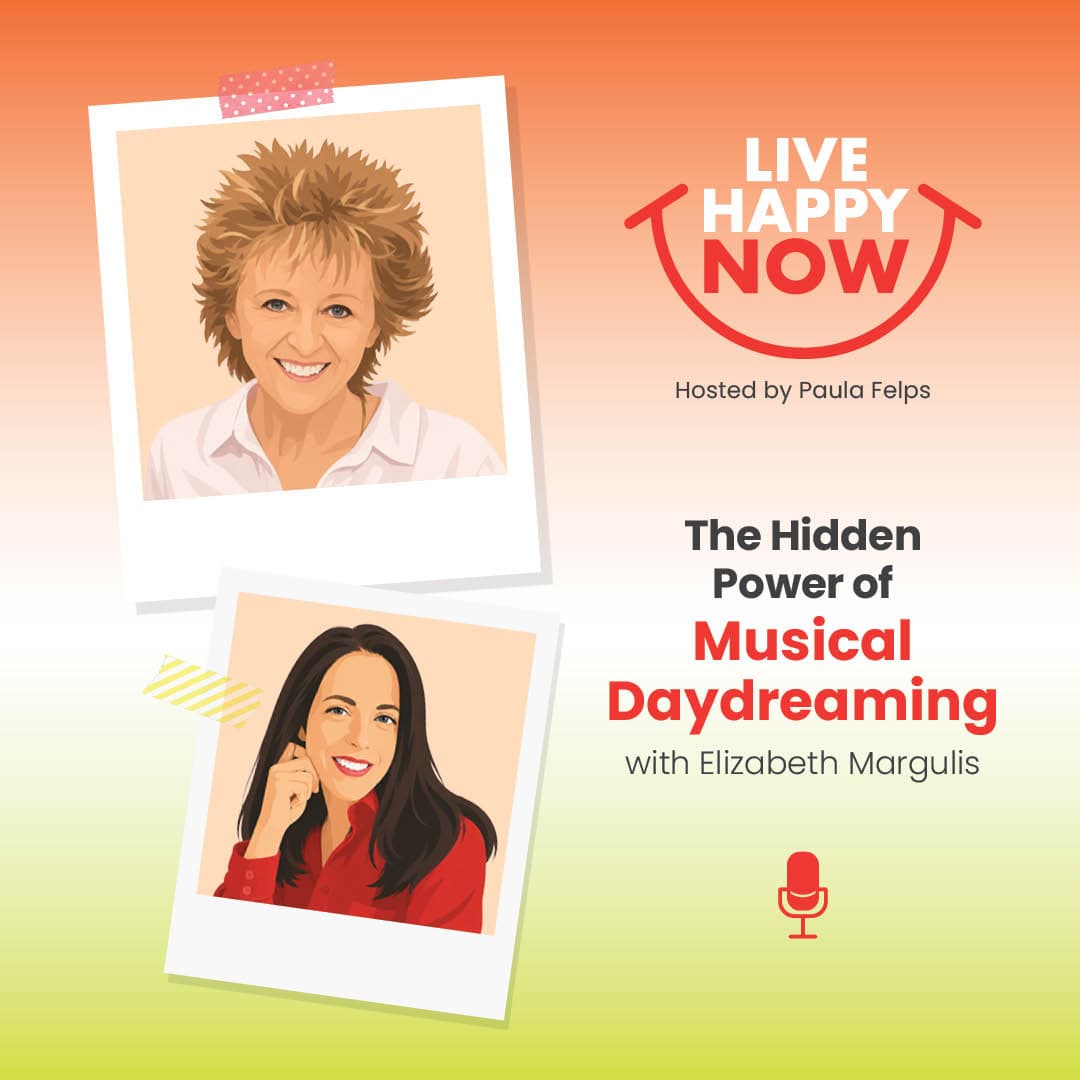
Elizabeth Margulis, professor of music at Princeton University and director of the Music Cognition Lab; trained as a classical pianist; studied musical imagination for 10 years, including lab work in sound-attenuated booths.
Key claims
Music creates “mental space” by reducing competing visual stimulation; it reliably shifts thought content, offering a low-barrier intervention for rumination in depression/anxiety; musical memories are more sensory and immersive than fact-based recall; people hearing the same unfamiliar excerpt generate surprisingly similar concrete descriptions; music meaning is in present-moment experience, so repeated listening reveals nuance rather than a “gist.”
Notable examples
Lab participants describe the same concrete images/words for the same excerpt; playlists and road trips help her teenagers talk about inner experiences; concert audiences bond via shared inner reactions and measurable synchrony; advice includes not berating mind-wandering and sharing imagined content with a “listening buddy.”
Written by AI. May contain mistakes. Listen to the episode to check what was said.
Chapters
Tap a time to open that second in VODelving into Musical Daydreams
0:45 to 3:18
Elizabeth Margulis discusses her curiosity about the inner worlds of music listeners.
“Elizabeth, thank you so much for joining me today on Live Happy Now.”
The Impact of Music on Mood
3:18 to 4:29
Elizabeth explains how music influences our mood and emotional state.
“So it was just a lot of wide ranging reading and assimilating lots of different information.”
The Nature of Memory and Music
4:29 to 7:21
Exploration of how music evokes personal memories and impacts creativity.
“And you talk about our mind's tendency to wander when we're listening to music.”
Shared Experiences Through Music
7:21 to 11:45
Discussion on how music creates shared experiences and collective memories.
“And I think one of the things that's special about music evoked personal memories is that they often have more sensory detail.”
Connecting Through Musical Daydreams
12:57 to 14:00
Elizabeth shares how to use musical daydreams to connect with others.
“Knowing that it gives us this shared experience, how can we use that to bring people together?”
Shared Experiences in Music
14:00 to 15:55
Discover how communal music experiences bond people and create lasting memories.
“One is, even if people in the audience are silent and they're watching, right, that this knowledge that there's some kind of shared inner reaction is pretty interesting and bonding in some way.”
The Meaning of Repetition in Music
15:55 to 17:48
Learn why hearing music repeatedly enhances its significance and emotional impact.
“So now you also explore how repetition and music will deepen our imaginative experience.”
Reconnecting with Yourself Through Music
17:48 to 21:17
Explore how music can help you reflect on your identity and thought processes.
“Yeah, my first suggestion is not to berate yourself when your mind wanders when you're listening to music.”
Using Music for Creativity
21:17 to 23:08
Find out how to leverage musical daydreaming to boost creativity and imagination.
“So for people who are thinking like they are not in touch with their imagination or with their creativity, how can they use musical daydreaming to reconnect with all that?”
Integrating Music into Daily Life
23:08 to 24:00
Learn simple ways to incorporate music into daily routines for mental benefits.
“Like what is one practice that they can try right now?”
Transcript
Automatic transcript. May contain errors.0:03Thank you for joining me for episode 577 of Live Happy Now. If you've ever listened to a song and found yourself suddenly immersed in another world, then you know what it's like to have a musical daydream. And today, we're finding out why that happens and why it's so good for you. I'm your host, Paula Phelps, and this week as we continue our Live Happy Summer reading program, I'm joined by Elizabeth Margulis, professor of music at Princeton University and director of the Music Cognition Lab. In her new book, Transported, The Everyday Magic of Musical Daydreams, Elizabeth explains why our minds naturally wander when we listen to music, how those imaginative journeys shape our sense of self, and why these experiences are far more meaningful and scientifically important than we realized.
0:50Let's hear more. Elizabeth, thank you so much for joining me today on Live Happy Now. My pleasure. Thank you so much for having me. Oh, you're such a great addition to our summer reading lineup. I am so excited to have our listeners learn about this book. It's called Transported and You Explore How Music Sparks Our Musical Daydreams. So I kind of know a little bit about the answer on this because I've been reading it. Why don't you tell us what first made you curious about the inner worlds that we slip into when we listen to music? It was really conversations with my students, because I came through my training as a classical pianist.
1:28So I'd gone to a music conservatory and really become a bit detached from this way of hearing. And it was really students sharing their experiences with me year after year that convinced me that there's this widespread, really important way of listening to music that I had become a bit estranged from. And so as you started looking at doing this as a book, at what point did this become, hey, I could write about this and not just something that you were interested in learning more about? Yeah, it was really as I started doing science about it, like going from talking to my students and hearing their anecdotes to bringing people into a lab and seeing that the results that were coming out of our studies were so surprising and intriguing and really upended what I thought was going on that ended up being, I thought it was like a one-off experiment.
2:22It ended up being 10 years of study. And kind of after all of that, I was like, there's a lot of weird stuff here that I want to share. And some of the findings were absolutely amazing. Like I was really blown away by some of the things, like the fact that what we listened to when we were in our high chairs, Like we are now as adults, that really resonates with us. I wondered if it was difficult to find the research that's supporting all the science that you give us about musical daydreams. Yeah. I mean, it was an interesting adventure because on the one hand, we were doing our own research in our lab.
2:56And so we had that kind of stream. But then the other literature that was relevant was kind of spread out in all these fields. There was cool stuff over here in neuroscience, cool stuff in psychology. cool stuff in history and musicology. So yeah, we ended up integrating, even in philosophy, there was really interesting stuff about just the nature of the imagination and memory and so forth. So it was just a lot of wide ranging reading and assimilating lots of different information. What's so interesting, because at Live Happy, we have talked about music and the effect it has in so many different ways.
3:30We've talked about how it affects us physically, what it does, how it can reset our moods, all these things. But this is something I have never seen addressed before. And I think that's why I was so intrigued. Like, I love this book so much that I had to get the audible version, because I didn't want to put the book down, because it's just one of those books. It's fascinating to me. So why haven't we really heard about it that much before? Yeah, I honestly think that a lot of the people that are doing this research are like me, They were trained in this really specialized, specific way, almost out of this very natural way of listening to music.
4:11So I think even when you look at things like music and mood regulation, that we were not really paying attention to this mediating factor, which is that you're listening and you're kind of sent somewhere else. You're really in some other imaginative space. And that itself is impacting your mood. And you talk about our mind's tendency to wander when we're listening to music. And so why is music such a powerful trigger compared to other art forms? Right. So I think there's a couple of things going on here. One, we're a super visually dominant culture. And we've got so much stimulation coming at us all the time on screens and video, all of that.
4:51So when we remove the noise a little bit, metaphorically speaking, and reduce the channels down to just music, it's leaving this whole kind of space for us to wander into imaginatively in terms of what we're picturing and thinking about. So I think that's one piece here is just giving us this mental space to do it. That makes sense. And I know like as a kid, and that was probably the last time I really got to do this, was I would spend hours laying on my bed with the headphones on, listening to music and just letting it take me away. And what I really got from your book, like my parents thought I was just distracted.
5:30And people think of that daydreaming as a distraction. But what does your book tell us about the benefits of being able to have those musical escapes? Yeah. I mean, in point of fact, your brain needs to wander in this way in order to have a coherent sense of yourself in terms of all the different kinds of experiences you're moving through. We need to have this time to have this sense making storytelling about ourselves and our lives that just spontaneously emerges. And yeah, that's happening less and less. And so it's becoming kind of more and more important that we have these windows, including music listening.
6:10Yeah, because one thing reading your book or listening to your book both did for me was it really did take me back to those times when I could do nothing but lay down with those headphones and take in that music. It really made me think about some of those experiences where that was really rich. It was great for my creativity and sparked desires of things that I wanted to do. and we lose sight of that as we get older. Exactly. And I mean, that's why for me, this was such a powerful journey because once I started working on this, I realized that this kind of experience had been part of what made me fall in love with music in the first place.
6:48But then kind of ironically, the kind of training that I pursued because of that interest ended up taking me away from that kind of way of experiencing. Yeah, it does make you want to reconnect with that journey, all those musical journeys that we went on. Because first of all, you give us some great anecdotes about your own, like going back to some uncomfortable experiences and things like that. And it's really revealing about just how powerful music is as bookmarks in our life. Absolutely. And I think one of the things that's special about music evoked personal memories is that they often have more sensory detail.
7:31They just carry kind of a sense of immersion and reliving that's distinct from just coolly recollecting some facts or something. And those experiences also different than the kind of mind wandering we have if we're just like driving or showering or doing mundane tasks. Can you talk about how that is different for us? Right. I mean, what's so interesting in the case of music is that even though it feels like we're off in our own really subjective, idiosyncratic world, it turns out that the music is really directly influencing the content of what we're imagining, even when we don't know that that is the case.
8:09So that has a couple of really interesting repercussions. One is if you're in some kind of state where you're experiencing stuck or ruminative thoughts, like this happens a lot in depression or anxiety, it's a really low barrier to entry intervention that you can press play on a song and have that reliably take you somewhere else, right? That can kind of jump start some other thought pattern that might be more conducive to well-being. And then the second thing it means is that there's actually this shared perceptual grounding. So if you and I listen to the same song that we haven't heard before, it can actually be really cool and interesting to talk about what we imagined.
8:52And this is something I really end up advocating for a lot in the book because lots of the time we end up having some shared experience and then that itself is interesting. And then when it's different, that's also interesting because now it's like, oh, what happened to us differently that led to that? And I kind of have an opportunity to get behind your ears and kind of experience something in a different way. And that actually was the next thing that I wanted to ask you about, those shared nature of the musical daydreams. Can you, first of all, talk a little bit about some of what you've seen?
9:28And then I want to know what surprised you most about how similar some of these experiences can be, because I would think it's the researcher that had to be like, wait, what? This is without a doubt the most surprising research analysis, like look at the data for the first time moment in my career. Because, you know, our design was very unconstrained. Like what we did is we brought people into a lab one at a time. So they're like in the sound attenuated booth. We're playing them music that we have normed to be sure they're unlikely to have heard before. And we're just asking them to describe what they imagined.
10:06So they could say anything. It's just quite limitless, right? So I think any reasonable person would expect that you'd get a huge range of answers, right? And in fact, what we get is like for the same excerpt, we would just get the same highly concrete words and descriptions emerging from person to person in this individual setting. So what accounts for that? Why are people who are having the same experience with this music, even though they're not together? That just is mind-blowing to me. What makes that happen? What I love about it is it kind of reminds us that so much of cognition and thought and even the very creative parts like imagination depend on our environment that we build and that we share and that is collective in various ways.
11:00So specifically, we go through our lives. Music is playing. We know on average four hours of the day for most people. If you're counting up, like also it's playing when you're watching TV, right? It's in the background and all that. And we're just unbelievably good at tracking the patterns of what is played when in the kind of context in a way that we do not know at all that we're tracking. but over time it results in our ability to hear some completely new excerpt that just has something in the acoustic features that calls up some of these associations and just very vividly puts in front of us these kinds of associations that we've picked up by being a member of this kind of shared world that we go through together we'll be right back with more of live happy now
11:55If you've ever wished your brain had a switch you could flip to be more positive, we've got good news for you. It kind of does. Neuroscience tells us that you can actually train your brain to look for the good. And once you start practicing, it gets easier, faster, and a whole lot more fun. That's exactly why every Tuesday in our Live Happy Weekly Newsletter, we give you a quick little workout for your optimism muscles. The Look for the Good Word Search. It's a tiny puzzle with a big purpose. Every week, you hunt for words that spark gratitude, joy, resilience, all the good stuff your brain loves to build on.
12:31It takes just a couple of minutes, feels like a win, and gives your brain a gentle nudge toward noticing what's going right. Think of it as a microdose of positivity disguised as a game. So if you want to get better at seeing the bright spots, even on messy days, subscribe to our Live Happy weekly newsletter by visiting us at livehappy.com and play along with our Look for the Good Word search. Your brain will thank you. And now let's hear more from Elizabeth Margulis. Knowing that it gives us this shared experience, how can we use that to bring people together? A couple of things. One is I found this a really wonderful thing to do with my teenagers.
13:13So we now take long road trips and put on playlists and really talk to each other about what we're imagining. And what's very cool there is that, you know, if you want to talk about someone else's inner life, especially your teenage child, like that's pretty hard to get started on. That's a journey. But these musical daydreams are really strangely easy to talk about. They're very verbalizable. And so we've just found this like an endlessly provocative, fun way of actually connecting on what we're experiencing when we're just inside our own heads. So that's been really powerful. And then the other thing is live concert experiences.
13:59So, you know, when you're at a concert with other people, there are two interesting things going on along this daydreaming axis. One is, even if people in the audience are silent and they're watching, right, that this knowledge that there's some kind of shared inner reaction is pretty interesting and bonding in some way. And the second thing is that by virtue of being together, sharing this experience, you're actually laying down tracks and encoding, you know, new associations and memories that you're now going to all take through your lives in this shared way. So this communal aspect of musical sensemaking, I think, maybe goes in the face a little bit of a common sense understanding that it's very personal and distinctive.
14:47Yeah. And I know live music really does bring people together. We last weekend, we were at a show and they had a DJ that opened it. And it was very interesting. I'm in Portugal now. And so they were playing like these 80s dance hits. And the audience is not like none of these people were alive when it came out. And it's not their native language. And they were all singing along and having this incredible experience. I just kind of stood back and watched that because you watch these little pockets of people. All of a sudden it became one unified group as they got into the music. This is another aspect here that's special with music is that when we're listening to music, even passively, even if we're not moving or singing along, it activates motor areas of the brain.
15:31So there's just this very tight connection between the auditory system and the motor system that pulls you in, makes it feel quite immersive. And then there's just the idea of orienting in time and potentially overtly moving in time with other people. And we have lots of good evidence that synchrony of that sort is really connecting and bonding in ways that are measurable in a lab. Oh, that's so cool. So now you also explore how repetition and music will deepen our imaginative experience. So why does hearing something again and again, make it more meaningful to us? And is that why we will like get, well, we used to get CDs, and we'd listen to it like a million times till we were so sick of it, we threw it out the window.
16:14Like, why does it become more meaningful as the more that we hear it? Yeah, this is so unique about music, because almost any other domain, if you listen to a song, even our conversation, as wonderful as it is, right? If we replayed this a bunch of times, right? It's like, I get it. I've heard it. But the thing with music is you can't really summarize the points, right? Like we could have a conversation and we could extract that and be like, here were the main points. And it doesn't really matter exactly the words we use to talk about them, right? We're kind of sharing this information in a way.
16:46Whereas with music, there's no extractable gist or summary. Like the meaning really is in the present moment experience of it. So the more you hear it, the more you're able to dig into the nuanced, textured sound that's going on. And the more that you're able to connect with that at these various levels. And so listening to music doesn't just feel good. It doesn't just connect us with others. you talk about how it can help us understand ourselves better. Exactly. Because I can't think of another domain where just with so little effort, we can have rise to the surface. These structures that condition our spontaneous thought.
17:31It's like what we're capable of imagining is pretty defining of who we are and where we've been. And music is just this way to kind of feel out the contours of our experience and ourself that I think is a pretty great access point for reflection. So then how could listeners today take that, like knowing that it's a great reflection point, how can they take that and apply that to their own listening habits so they get that the most benefit out of listening to music? Yeah, my first suggestion is not to berate yourself when your mind wanders when you're listening to music. That's number one. Because, you know, there's such an anxious moment around attention, right, where we all know we're too distracted and we need to focus.
18:17But this is a case where this kind of soft gaze experience can actually bring a lot of interesting stuff to the surface. So I'd suggest letting it happen, number one. Number two, instead of kind of discounting it, be like, oh, what was that? What was that that just came to mind, right? Thinking about it, trying to understand where it might have come from. And then number three, sharing it with someone. So I'm advocating a lot in the book for it being actually really interesting and illuminative to talk about these experiences that we tend to just kind of, if we have, you know, just we'll let them go by without paying attention.
18:54To me, it feels like letting your mind out for a play date. Like it goes out there. That's the best articulation of it that I've heard. But that's what really is going through your book. It's like, that's really how it came out. It's like, man, this is like a play date for my mind and just let it out there. Let it do what it needs to do. And then let it come back and figure out what that all meant. I love that so much. Yeah. So I think that would be great to have like a listening buddy or something like that, where you could say, hey, let's do this and turn our minds loose, and then we can come back and talk about it.
19:26Exactly, exactly. And I mean, I can imagine that, you know, the way I've used it most is with my family members, with both my parents, with my teenagers. I can also imagine kind of contexts where you could get people talking about this who don't know each other beforehand, which is also potentially pretty interesting. Right. Because again, I go back to concerts, That's a great place to meet people who obviously have a shared interest in an artist or in something like that and then build on that. And we know people think this is important because if you look at just dating profiles online, favorite bands tend to be right near the top of what people are choosing to share.
20:05I love books like yours because they remind us that music is not frivolous and they remind us just how important it is. Not it's for our physical well-being, our mental well-being. They're just such an important part of the fabric of our lives. And I wondered if writing and researching this book changed the way that you listen to music. A hundred percent. Did it? I want to know how. I mean, really, for me, I truly had gone away from doing this, right? I was that person who was like just corralling myself repeatedly into attention on, you know, exactly what was happening in the notes and nerding out about that.
20:43And this has really convinced me that this kind of more relaxed way of letting responses emerge can be as deeply musical, if not more musical in some cases, than that kind of focus listening that I was pursuing. And so it seems like you now have a practice, like you talk about using this with your kids and you're just really more engaged with the music. Yeah, that's exactly right. And, you know, just in myself, even when I'm just on my own, both letting it happen and being curious about what emerges. So for people who are thinking like they are not in touch with their imagination or with their creativity, how can they use musical daydreaming to reconnect with all that?
21:27What's great here is that these associations are often just quite automatic. They're really not effortful. So as long as you kind of let that emerge, right, that often puts your mind in some kind of space that it's not often in necessarily, right? That like came from the spark from the music rather than some everyday circumstance that you're used to kind of all the time in your life. So you can take advantage of being in this different headspace to then take yourself into other more remote regions of like what you might think about that you don't often get to. So it's just a way of getting somewhere different in your web of thoughts.
22:06So is it better to use an old song, like a song you haven't listened to and like, oh, my God, I haven't heard that since junior high? Or do you use something new? What would you say is the most effective for like rebooting that creativity? Yeah. So there are, you know, I guess maybe two ways of looking at that. one is listening to music from your adolescence when you were forming all these personal memories that are key to your identity that can be really surprising and powerful there's music from your secondary reminiscence bump as you were mentioning before your parents adolescence that you often have special associations with because your parents played a lot of that for you when you were tiny but then you know also listening to really new stuff because we find we can play people music even in a style they've never encountered before.
22:54And you still get these automatic imaginative responses. And so that can take you in surprising places as well. So basically people should just start exploring. So I say yes and on all of it. Yes and. I love that. So is there a single practice? Like what is one practice that they can try right now? Yeah. I mean, let's say, you know, you're doing the dishes, you're doing the laundry, right? I think there's a lot, I think this is true, that there's a lot of video watching that happens in those moments right now. I think a lot of people are going to the stream, the scroll. And so what I'm going to say is next time you're doing like some chore where you would normally pick up your phone in that way, can you instead cue up some music, right?
23:39So you're not putting a whole visual stream in front of your face. And just as you're doing your thing, let your mind wander a little bit. So that's a way of just sneaking it in to your kind of daily life in a way that doesn't require some kind of extra job. I love it. So your book is, as I've said, it's fascinating. It's very well written. It's very witty. It's so engaging. And I really hope our listeners will check it out because it really does explain how we can use music in new ways. And I really appreciate you coming on the show and talking to us about it. I'm very excited again for our listeners to discover it.
24:14Thank you so much for having me. It's been a delight. I really appreciate it. Thank you.
24:22That was Elizabeth Margulis talking about her book, Transported, The Everyday Magic of Musical Daydreams. Elizabeth is part of our all new Live Happy Summer Reading Program. And if you'd like to join us, make sure you download the Summer Reading Tracker. It's an easy way to read along with us each week and jot down your insights as you go. You can also find out how to follow Elizabeth on social media, order her book, or download a free chapter. All of those links are waiting for you when you visit us at livehappy.com and click on this episode. That's all we have for today. We'll meet you back here next week for an all new episode with Angelica Glass talking about her memoir, Scavenging Beauty, which tells how taking a walk changed her life and just might change yours.
25:05Until then, this is Paula Phelps reminding you to make every day a happy one.
25:15Thank you.
From the publisher
This week, as part of the Live Happy Summer Reading Program, host Paula Felps sits down with Elizabeth Margulis, a professor of music at Princeton University and director of the Music Cognition Lab, to talk about her book, Transported: The Everyday Magic of Musical Daydreams. Elizabeth explains why our minds naturally wander when we listen to music, how those imaginative journeys shape our sense of self, and why these experiences are far more meaningful — and scientifically important — than we realize. Listen as she reveals how reconnecting with this simple, often overlooked way of listening can deepen our relationships, boost our mental health, and bring us back to the joy that first made us fall in love with music.
In this episode, you’ll learn:
- Why unfamiliar songs can trigger similar imagery across listeners.
- How music helps us process memories.
- Why daydreaming to music may be essential for creativity and emotional well‑being.