Ask ChatGPT

 Live Well Be Well with Sarah Ann Macklin | Health, Lifestyle, Nutrition
21 Oct 2026 · 1h 49m · 36 chapters
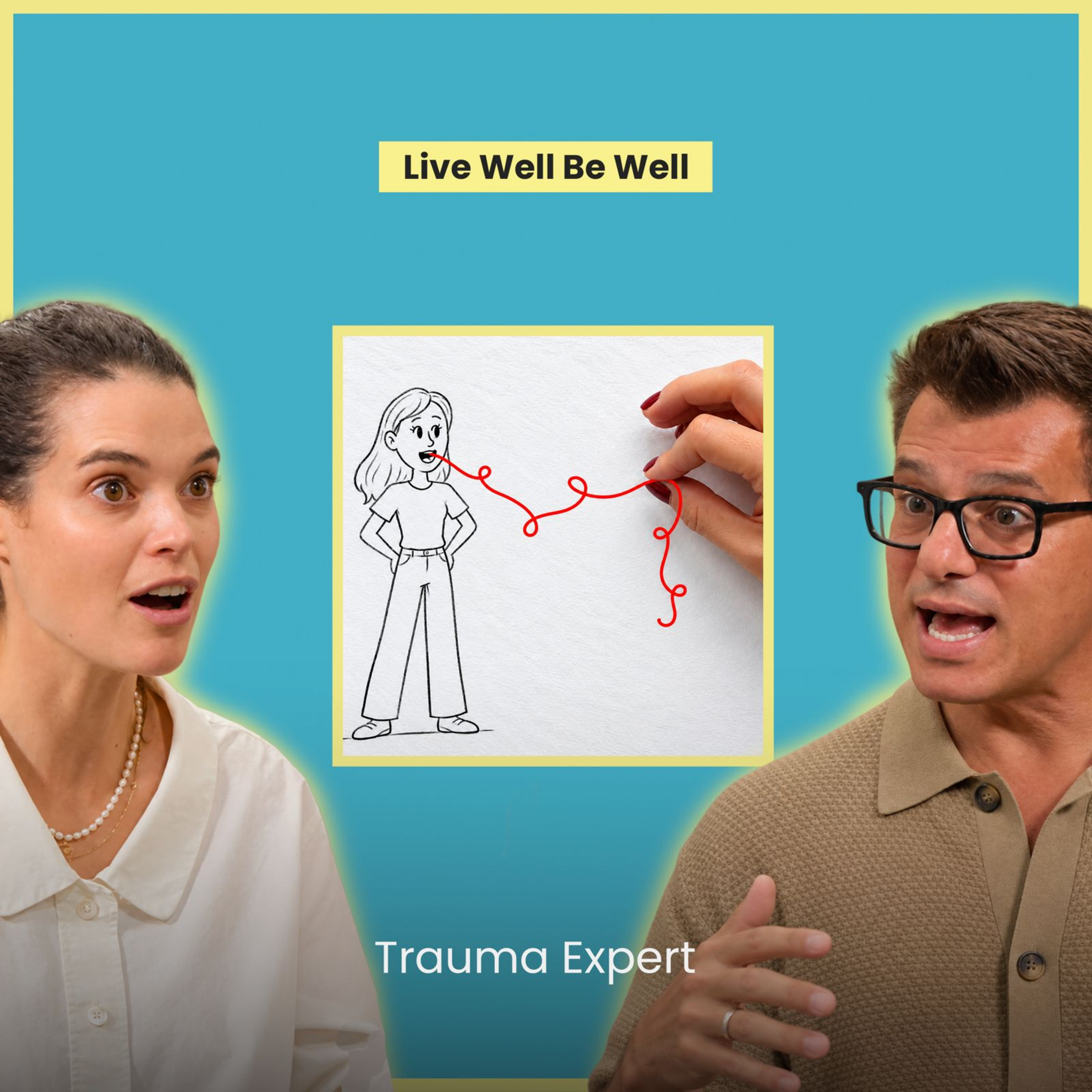
Frank Anderson argues that traditional “talking therapy” (especially repeatedly recounting trauma) often fails because it reinforces trauma neural networks and keeps people stuck reliving rather than reconnecting to their own wisdom. He proposes a broader “path to healing” that includes somatic work, movement, emotion expression, and sometimes spirituality, and he says healing is an ongoing process (“healing, not healed”), not permanent.
The episode features Frank Anderson, described as a Harvard-trained trauma expert and clinician who has worked for years (including in psychoanalysis) and now runs programs for both the general public and therapists. The host is Sarah (the interviewer). Anderson references collaborators and influences including Bessel van der Kolk (author of The Body Keeps the Score), Gabor Maté, Alan de Botton, Ruth Lanius, and Nicole Sachs (Sarno method), plus a friend, Terry Cole (father wound; boundary work).
Talking about trauma can perpetuate it by reactivating it; people-pleasing/fawning are survival strategies distinct from classic fight/flight/freeze responses; trauma violates agency and leads to loss of intuition; trauma can manifest in the body (e.g., asthma, back pain, migraines) and can be mobilized via sensation, corrective experiences, and “incompleted action” expression.
Anderson describes his own childhood-driven people-pleasing tied to conditional father validation; a couple’s “intuition ignored” story; and his personal asthma/coughing linked to “choking” sensations and an early bathtub memory, resolved through staying with sensation, corrective differentiation, and speaking truth. He also gives examples of rage expressed physically (throwing tape) to release stored sexual-abuse anger, and a back-pain case where expressing anger revealed hatred of children and underlying vulnerability.
Written by AI. May contain mistakes.
Exploring how different generations perceive and react to trauma.
“I know we're going to talk about trauma today.”
Challenging the effectiveness of traditional talking therapies for trauma.
“Everybody uses the buzzwords, but it doesn't necessarily help move the needle around healing.”
Emphasizing the importance of personal agency in trauma recovery.
“or being so distant and intellectualized that it doesn't do any healing.”
Sharing personal experiences of disconnect and its effects on relationships.
“Here's what my wisdom says is the way I need to heal.”
Highlighting the importance of listening to one's own wisdom for healing.
“You're like, I was walking down the aisle and I knew this was wrong, but I did it anyways.”
Understanding how people pleasing relates to trauma responses and childhood experiences.
“I think so many people are going to connect to this exact story of the disconnection and the suppression, right?”
Exploration of whether trauma is stored in the body or mind and the implications of this debate.
“But it wasn't what my people pleasing was about.”
Explore how trauma affects us at a neurobiological level and why awareness is crucial.
“And so that's kind of what we're seeing.”
Discussing the complexities of trauma and the necessity of connecting with our bodies.
“But actually so many people are reading into this thinking, okay, now I've done it wrong.”
Exploring the ongoing nature of healing and the idea that healing is a verb.
“Whether you're traumatized or not, we are so in our heads.”
Examining the relationship between resilience, temperament, and personal growth.
“We are always susceptible to being re-triggered.”
Reflecting on personal responsibility in parenting and fostering resilience.
“Like there's something in us that I think is also inherent.”
Discussing the integration of spirituality into the healing process.
“taken, that I've decided, chosen to keep healing, keep healing, keep healing, now I know in retrospect this is exactly the life I was supposed to have.”
Exploring how healing can be a collective experience involving energy and connection.
“Because some people will automatically switch off without realizing all the accreditation that you've got behind you.”
Exploring how access to deeper aspects of ourselves aids in healing.
“I don't have to define it for you, but I do believe that we need to access that which is beyond us in order to do this evolution and rising and healing that I think we're all capable.”
Understanding how trauma manifests physically and its implications.
“Can you explain a little bit about that?”
Discussing how sensations and memories are intertwined in trauma healing.
“You know, there's back pain in my family.”
The importance of mobilizing energy and expressing emotions in therapy.
“The outside of therapy piece is so important, doing yoga, doing movement, outside of talking about it in an office.”
The need for physical expression in managing and healing trauma.
“The other is to mobilize the incompleted action, which is the motor system.”
Learn how expressing and releasing emotions is vital for trauma recovery.
“So I really want everybody, right, look at your any physical symptoms and let's just be with what it's holding and let's find a way to express and release.”
Discover how activities like surfing and ecstatic dance can facilitate healing.
“The two things that I found really helpful for me was surfing.”
Examine the limitations of traditional psychotherapy in fostering neuroplasticity.
“So her and I were just like, she's like, I've known you for a lifetime, Frank Anderson.”
Understand how trauma influences our capacity to love and be loved.
“And then it's also a setup for failure 100 % of the time.”
Explore how trauma affects love and relationships, and the importance of connection in healing.
“more as an adult than showing up with this desperation to be healed.”
Learn the distinction between emotional responses and trauma reactions in relationships.
“This has been one of my biggest things from therapy.”
Discover the internal family systems approach to understanding different parts of ourselves in trauma healing.
“But we can't differentiate when we're in it.”
Explore the IFS model and the concept of parts in trauma recovery.
“And I was a part of the IFS community for a long time, and I taught the trauma curriculum there.”
Discuss the multifaceted definitions and experiences of trauma across contexts.
“So for me, the human self can sustain trauma, cultural, sexual, gender, orientation, race, even like neurodivergence.”
Learn about the importance of integrating various therapeutic models for trauma.
“And I think, you know, I trained as a nutritionist.”
Discover how silence and being present can facilitate healing in therapy.
“Like Alan said yesterday when he was on stage, he was like, it's about like, you know, when you're older and you try to learn another language, you're like, I'm going to learn Finnish or Korean.”
Speculate on the evolving conversation around trauma and the body's role in healing.
“And people come into therapy wanting their therapist to tell them what to do.”
Explore how perceptions of trauma have changed across generations and the future of trauma healing.
“Where do you see the next 30 years going?”
Discuss the dual potential of AI in improving and complicating human connection and therapy.
“Bringing trauma healing to the world is my purpose.”
Delve into the importance of collective healing and the role of adversity in personal growth.
“And I think there's a big change happening.”
Understand the key message that healing is possible, regardless of past trauma.
“So if there's a collective, it's like the Avengers, right?”
Hear insights on the meaning of living well and being well in the context of purpose and service to others.
“I've sat with people with horrific pain, and that is my biggest message, is healing is possible.”

Get the gist, explore an idea or ask about something said.
 Claude
On Live Well Be Well with Sarah Ann Macklin | Health, Lifestyle, Nutrition, what are the key points of this episode?
Searching your listeningAutomatic transcript. May contain errors.
0:00There's not enough therapists in the world to heal all the trauma that there is. People are desperate for help. If no one's ever heard of Frank Anderson, you are the trauma expert. Talk to me about how you're trying to change the paradigm when it comes to trauma. So healing trauma is reconnecting to your wisdom, not your therapist's wisdom. The whole setup of psychotherapy is built on faulty neuroplastic knowledge. The more you talk about your trauma, the more you relive your trauma, the more you're reinforcing the trauma neural network. Does it perpetuate trauma? You can talk until you're blue in the face.
0:34It does not work. Doesn't work for trauma. Nobody's trauma is the same. It's like your fingerprint. There's still so much we're learning in science, right? Most of our attraction is from unhealed attachment wounding. We're actually drawn to people who have similar wounding. That fireworks is not love. That fireworks is hope for redemption. How much is people pleasing connected to trauma? What else could it be connected to? You've worked with my hero, Basil, in Body Keeps the Score, one of my favorite books of all time. Now there is the biggest debate online right now. Can we just set the record straight?
1:13Christ, like it's... Your reaction is the best reaction. There you go. Boom. Mic drop.
1:22Frank. Yes. Welcome to Live Well, Be Well. Thank you. It's great to be here. I'm excited. I know we're going to talk about trauma today. Yes. Obviously. You are the trauma expert. So they say. Rumor has it. But I don't want this to feel light as well as hopeful. Yes. Right? It's a hard word, trauma. Yeah. Because it already starts kind of making people feel very wary of wanting to listen to an episode. Interesting. Don't you agree? It depends on what generation you're in, if you want to know the truth. Tell me the truth. Like I have the truth. Let me tell you as if I have the truth, right? What I find is it depends on what generation you grew up in.
2:11Like if you're a baby boomer, you have this real aversion to trauma. Not me. I'm strong. I'm not traumatized. I just get through it, right? The past is the past. But if you're a Gen Z, you're like everything's a trauma. I can't go to school today. I can't go to work. I'm traumatized, traumatized. So there's this over-identification with trauma with the younger generation. And then there's denial of it with an older generation. So it really kind of depends. Everybody's in pain. Let's say that. Regardless of whether you say, hell no, not me. Or you're like sneezing and you have a trauma. Do you know what I mean?
2:46So it really, that doesn't matter. But, you know, this younger generation grew up in a pandemic. They grew up in a trauma. So they have a reason to have this over-identification. So, yeah, it's a heavy subject, and people are desperate for help, regardless of where you fit, right? If you're a millennial, it doesn't kind of matter. But I do think, I've been writing about this in this next book of mine, that the languaging is, like, overused and confusing because it's not helpful. Because we have trauma languaging now. Everybody uses the buzzwords, but it doesn't necessarily help move the needle around healing.
3:28So we're kind of stuck in this middle ground, I think, that we are over-identified with it in some way. And everybody talks about it. Everybody knows their attachment style. Like, you know. But it's interesting, right? You say identity, and I think that's the biggest thing, right? Yes, that's right. To not identify yourself with solely just your past. That's right. To not make it fully who you are, right? to use learning from it and allow it to push you towards something that maybe you want more so to become somebody else from that. So, I mean, you want to change the whole paradigm. You are changing the whole paradigm on trauma.
4:03So talk to me about, if no one's ever heard of Frank Anderson, boy, you in for a treat. Talk to me about how you're trying to change the paradigm when it comes to trauma? So can we talk about spirituality also? Of course. Because I'm kind of changing the paradigm, but it's not really mine. It's information that's coming to me. So it really is. I get these downloads. I get these hits of information, right? And the paradigm that I'm changing, and I say I'm as if it's mine. That's why I bring up spirituality because I get this I'm a vehicle, totally a vehicle, totally. So I got some information, a couple things.
4:45One is there's not enough therapists in the world to heal all the trauma that there is. And therapy is really expensive, so it becomes a have and a have not, right? So one of the things I'm doing in this new program that I have is showing people outside of psychotherapy how to heal trauma. That's a big no-no in the field, right? And it's like a therapy talking therapy. People that are like, what's psychotherapy? So traditional talking therapy. Doesn't work for trauma. Let's just start there. Bomb. Okay. You can talk until you're blue in the face. It does not work. Does it perpetuate trauma? Yes.
5:23Because you're reliving it. It can. It can. It can. I was in psychoanalysis back in the day five times a week for 11 years. I knew my trauma backwards and forwards, up, down, all around. Talked until I was blue in the face. It didn't shift anything. I still got triggered. I still have the trauma inside of me. So people that traditionally go to therapy to talk about their trauma, when you keep reinforcing something, the neural networks get more intense and more developed, right? So the more you talk about your trauma, the more you relive your trauma, the more you're reinforcing the trauma neural network.
6:03So we have to get out of that. We have to get out of it. You have to be with your trauma, not in it. I say visit. Visit is what we want to do. We don't want to get swallowed up by it. We don't want to relive it, right? So I'm trying to create this program for people in the general public. Like, how do you start this process? How do you learn how to be with? How do you learn how to talk about without reliving? or being so distant and intellectualized that it doesn't do any healing. So both sides are problematic, right? They really are. You need to feel your way through it, which is a big thing I've learned.
6:41You need to feel your way through it. And this is what everybody tries not to do. Where's the phone? Like, where's the phone? Like, get out. We're getting out and away. And so we have to be in and with. That's hard. It's hard. But it's hard because people don't know that that's actually what's helpful. And I want to teach people how to do that in the general public, as well as teaching clinicians how to integrate models of therapy. This is one of the other big things that I'm doing. There's all these models of therapy now. Are you doing ABC, EMDR, IFS, QBC, you know, ABC? Everybody's got a model now, right?
7:27And thank you, model makers, but it's time to move beyond the model. It is time to move beyond the model. And that's one of the other kind of purposes, I feel, is integrating these models of therapy. One person doesn't need one thing. We've got a lot of shit going on inside of here. Agree. Right? So therapists, if you're going to go to therapy, have to have the flexibility to move in and out of these different models. So that's one of the things I'm teaching. I just released a new program for therapists, the Integrated Path to Healing, to teach them how to move in and out of parts work or EMDR cognitive or emotion-focused work or body-centered.
8:08If you're going to be a therapist, to help peel trauma, you need all these tools in your toolbox. So it's an important shift that we're in because everybody knows about it, right? And now we actually have to figure out what is the appropriate way forward. The last thing I want to say, Sarah, and then this is a big one for me personally, as well as sitting with my clients, trauma is a violation of agency. Okay? It's a violation of agency. And so do you go to your health system in your country and let it tell you what you need and how many do you need? Do you go to a therapist who's going to say which modality and how many sessions?
8:53That is re-traumatizing for trauma survivors. You have a trauma history, and then you give your power over to somebody else who's the expert and help you heal. That's not the way to do it. So I really want to empower people to be able to tell you what they need because they have the appropriate education, right? here's what I need. Here's what my wisdom says is the way I need to heal. Because we're sending it all out to everybody else instead of reclaiming our own power. And I want to teach people how to do that. It's the self-trust. It's regaining back to self-trust, which is so hard when you stop trusting yourself because of something that's traumatic that's happened that you might not even be aware as a trauma.
9:46That's what happens in trauma is you lose connection to your intuition. You disconnect from yourself in order to survive. That's what we do. So I want to bring people back into connection to their intuition, right? It's like, oh, I know. I've worked with so many couples who are like trying to split up, right? They had an affair, whatever's going on, they decide they want out. of the relationship. And I ask this question all the time. It's like, so what about this relationship? Like, what did your intuition say?
10:30We'll talk about you next, okay? Your reaction says everything. But this is the truth, right? I know. Right? You're like, I was walking down the aisle and I knew this was wrong, but I did it anyways. Okay? We'll talk about you next. Let me talk about me first, okay? I'll do my damn story. I married a fucking woman. Excuse me. I married a woman. Okay? That was problem number one, okay? But I was walking down the aisle, and two weeks before we got married, she tells me I've been vomiting for the last two years. You think I would be like, oh, let's look at this? Not like blaming her. This was a symptom of our problematic relationship.
11:20I was so controlling and abusive, just like my father. And she was so passive and accommodating, just like my mother. I recreated that. And so her eating disorder ended up being a direct symptom of this relationship that was so wrong. Right? She told me two weeks before, thank goodness, she's like, I can't marry you until I tell you this. And I'm like, no big deal. We could fix that. Let's march down the aisle. Like, we were both so disconnected, do the right thing. Oh, my gosh, we have a venue. We have a church. Everybody's going to be so disappointed. Right? So we literally walked down the aisle knowing it's wrong.
12:04So many of us do this. We do versions of it. We disconnect. from our truth in the service of love, pleasing, all the external things, right? So healing trauma is reconnecting to your wisdom, not your therapist's wisdom, not the insurance company's wisdom, not the health services wisdom, your own. And that is probably the biggest shift for me in changing this paradigm. One thing I think we get wrong with health tracking is that more information doesn't always make us healthier. Sometimes it gives us more things to worry about. And that's why I've always loved No Watch, which has recently been rebranded to Pulsin, meaning pulse in Dutch.
12:56Now, rather than constantly throwing scores at you, Pulsin is much more interested in how your nervous system is responding to life in real time. because as we know, stress isn't always obvious. You can feel completely fine mentally while your body is quietly accumulating a load underneath the surface. Now, their reactivity monitor tracks that response second by second. So rather than just giving you an average score at the end of your day, you can start to actually understand when your body is reacting and what might be driving it. And I think personally that's so much more useful than becoming obsessed with whether you've got a score of 82 or an 87.
13:40There are no dopamine loops, no anxiety inducing scores, and there is no subscription fee in the app either. The whole philosophy is essentially, if you can understand and manage your stress, you can better manage your health. And that's the message that I obviously really believe in. And it's why I've been wearing it on my wrist for 16 months now. You'd have seen it in every single recording. If you want to try Pulsin, you can get 15 % off with code LWBW15. And remember what I said, there is no subscription fee. So if you want to give it a go, head to the show notes where I will include the direct link to their website.
14:22I think so many people are going to connect to this exact story of the disconnection and the suppression, right? And there's a path that we see that we're meant to be on, and we've got to do everything to stick to it. And veering off feels like a car crash. Yes. And so how can we avoid that? Yeah. People please everyone else. How much is people pleasing connected to trauma? What else could it be connected to? is there another option really and i hear so you're gonna get my fawn issues okay okay let's go it drives me crazy fawn fawn fawn fawn fawn people might not have heard of fawn well it's interesting because it's all over the internet like fawn's a hip it's like ghosting and fawning like everybody's ghosting everybody's fawning like fawning is this like passive accommodating okay passive accommodate I'm fawning like I'm people pleasing I'm going to give you what you need so that I could be taken care of I could be safe that's fawning it's people pleasing they're similar important survival strategies that's what I call them survival strategies but they're not a trauma response this is the issue that I have with them right trauma responses we have very clear trauma responses.
15:42When it's an overwhelming life event, we can fight, flight, freeze, or submit. Those are trauma responses. Fawning is protecting. People-pleasing is protecting. Can it feel life-saving? Hell yes. But it's not a trauma response. This is where we get like, oh, I sneezed, I have a trauma. Trauma has to be an overwhelming life experience where fear, helplessness, and horror are involved. I'm going to die. Okay. So there's stressful, overwhelming experiences. There's dysfunctional family experiences. That's what complex PTSD or relational trauma is. So we have to be clear about what we're talking about.
16:30But people pleasing, it's a big deal for many of us who are well how do you get over this how do you step away and move forward from people pleasing because i guess that's kind of what you were in how did you i a friend of mine a dear friend of mine terry cole who's um she's a person who does this work and she's got a new book coming out called father wound i think but she's done a boundary boss she's done all this high functioning codependency work right which is so trauma related, high functioning codependent. Well, Terry and I are really good friends. She came out to LA. I'm like, Terry, you got to come to dinner.
17:10You got to meet my husband. She was so funny. She's like, we've been friends for a while in the collegial place in the realm, right? And so she meets my husband and after five minutes, she's like, Frank, honey, of course, you'd be married to a high functioning codependent. You are one. I am one. That's why we're friends. Of course your husband would be one too. And it was just kind of so funny that she just kind of blatantly names it, right? Yeah, yeah, yeah. You know, I was. And you have to figure out why you were. That's the thing. To throw these terms together, lumping them, it's not helpful.
17:50This is where, you know, like, are you avoiding attachment, anxious attachment? You've got to get specific. Like for me, I was a people pleaser because I needed and wanted to be loved by my father because I felt he hated me. The reason I wrote my memoir called To Be Loved. I didn't realize that every single relationship in my life was organized around being loved by my father. every relationship, every decision, right? And so for me, people pleasing was specific around him. And I'm like, why the fuck did I want to be cared about by this guy who hated me? He beat me up. He did all this crazy shit, right?
18:40Now, I have worked through that. I don't hold any of that. I just don't hold it anymore. I talk about it because that's my history. but I was organized. Every decision I made was being loved by this man who hated me. It was so confusing for me as an adult. So it is really important to find the origin of your people pleasing. What is it about? Like it wasn't connected to my mom. I mean, she betrayed me in a different way and we can talk about that. But it wasn't what my people pleasing was about. That's why I went to Harvard. It is why I went to Harvard, for my father to love me, right? To get his validation.
19:23To get his validation. I write about this in my memoir. I used to be, I was a smart kid, and I would get gold stars on the top of my report card, you know, E for excellent, E-S-N-U back in the day, right? Excellent, satisfactory, nodding. And I would get gold stars because I would always get on the honor roll. And I'd run home, literally run home from school with that report card in my hand. He's going to love me. He's going to love me. And I'd hand him the report card. And then he's like, yeah, you get$5, one for each E. And that was it. And I was like, fuck. Like, I remember going upstairs in my bedroom, just like so dejected.
20:04Like, I'd get$5, a dollar for each E. So conditional. It was so conditional. I was like, I never got what I wanted, but I kept, maybe Harvard will do it. Maybe this will do it. So my high-functioning codependency, my people-pleasing, was all connected to my father wanting his love. And so it was helpful for me. I've attracted so many kind of narcissistic men in my life because it was another version of wanting to be loved and liked by then. I've done it in personal relationships. I've done it in my career. And it's until you kind of look at the, like see the pattern, right? And then you have to kind of dig deeper because that's the survival strategy.
21:02If they love me, then I'm worthy. I'm worthy, right? And you have to go deeper. And that's the feeling, the pain underneath. That is really challenging. But there's not a 10 steps to get over your trauma on social media. Sorry. As easy as it sounds. I know. It doesn't work that way. It's interesting because I was at the School of Life Festival yesterday from Alan de Botton, who I love. And we talk a lot about it. We've talked a lot on this show, him and I, about the importance of going back to your childhood. Yes. And wanting to hold two truths. Yes. You know, if you think about wanting to kill your parents and love your parents at the same time, you can still hold those truths.
21:42And there's a lot of, you know, Freudian theories. Yeah. If you kind of go into psychoanalysis. You got it. And it's really hard for people. But I think you get to a point. And this is, I mean, you've worked with my hero, Basil, in Body Keeps the Score, one of my favorite books of all time. and he talks a little about it being in the body. Now, there is the biggest debate online right now. It cracks me up. It cracks me up. Bessel and I are doing an event in two weeks on my platform called the Learning Labs and I'm like, Bessel, we're going to talk about it, you know. And he's like, Frank, Jesus Christ.
22:19Like, it's ridiculous. Does the body keep the score? Like, could I go ahead and say what you want to say? It's like so absurd. Well, I just, I mean, your reaction is the best reaction. But it's like, I'm not even explaining this. I'm not even starting to get into this, Sarah. It's wild. Like the debates online about whether the emotion is stored and trauma is stored in the mind or the body. This debate has like exploded online. Can we just set the record straight? Because this is kind of what this podcast aims to do. is basically pull out any BS and just get straight into it. Well, you know, the BS, before we set the record straight, because I know the truth, right?
23:03I'm an expert, right? Before we set the record straight, I want us to back up a little bit, Sarah, to look at why this debate is out there. Yeah. Okay, because that's actually... That's unraveled. That's part of the problem. That's part of the problem. Like, I've moved to LA, and I work with a lot of celebrity clients now. And they are constantly traumatized by the media. Constantly. Because people need to build them up and people need to knock them down. Oh, England are great at that too. The English press. We all are, right? We hate people that do well. We take them straight down. Here's what I'm thinking though.
23:46I'm really, as I'm unpacking, Why do we need to have Body Keeps the Score be the number one bestseller, 350 weeks on the New York Times bestseller list, bigger than any other book ever? And then we need to tear the shit out of it and destroy it. What is in that for us, right? Here's a theory. It's only a theory. We feel inadequate and insecure because of our own wounding. so we want to attach to people who are big and great and winners so that we can feel better about ourselves. So we build them up, right? And if they say or do anything that doesn't align with who we are, we get rid of them and knock them down to maintain our own sense of self and agency.
24:44It's like any time they move right or left, and if it doesn't align, then we have to reject them to preserve our authenticity, right? So it's this constant battle. It's self-esteem, isn't it? It's all about the... You want to be higher, not lower. If this person says or does anything bad or wrong, they get canceled by the media. fuck them, they're horrible. We can shift so quickly to destroy them so that we can feel better. I don't want to be associated with that, right? So we desperately project onto them because we need to feel good about ourselves. And then they do one thing, look the wrong way, say the wrong thing, and then we destroy them because we disconnect because we don't want to be seen in a negative light in any way.
25:34So that's part of it. You know, it's interesting. I'm going through something right now where I'm really being attacked for something that I didn't do. And it's really, really painful. In the media? No, not in the media. Personally? Yeah. Yeah. And it's so painful because I know in my heart I've done the right thing. But this person, this group needs to attack me because they feel threatened by me. And as I'm going through this, I'm really learning, I'm like, Frank, this is part of the lesson you need to learn is how to move through when being hated. In order for me, I know I have a purpose of bringing trauma healing to the world.
26:19I just do. It's not even my purpose. It's like something that came to me that's not mine. And so I was like, oh, I'm in this lesson right now. I'm in this lesson because people are going to love you. Oh my God, Frank Anderson. And they're going to hate you. And I'm learning that lesson right now to move with my truth, my purpose, my alignment in the midst of being loved and hated. And we have to do that. So this does the body keeps a score is a version of that right now in my view. People were feeling traumatized by the pandemic. That's when Bessel's book blew up, everyone was sitting home, baking sourdough bread and reading The Body Keeps a Score.
27:05Yeah. Like that's what they were doing, right? Oh my God, oh my God, oh my God. And now there's the flip side of this. Like, why do we need to tear that down? As if trauma is stored in the brain or the body. Yeah, only. How ridiculous. And Bessel, he'll say it in two weeks when we meet together. He's like, I never said the body, the trauma is only in the body. Like, he's a neuroscientist. He studies the brain. Read the damn book. He talks about the brain structures beautifully. He puts them in a way that people can really understand and identify, right? So is it stored in the body only? Is it stored in the brain?
27:45Like, that's so ridiculous. But it's just reductionist. It's totally reductionistic. But when Bessel does or says something in the media that's controversial, and he has, he's a controversial guy, then people have to tear him down, right? And so that's kind of what we're seeing. It's the building up and it's the tearing down. And I think it's going to happen to all of us. I mean, he has brought trauma awareness to the world with that book in a major way. And why do we have to take a soundbite and distort it? Like, if you know the neurobiology of PTSD, it's in the body. It's in the brain. I can tell you all the structures that we know, the neural networks, right?
28:31It's in the prefrontal cortex, the anterior cingulate, the insula. It's in the hippocampus. It's in the autonomic nervous system. Like, when you look at the neurobiology of PTSD, it's all over. It's not in the either or. But why we need to do that is sad for me. Guys, it's taken me eight years, but I finally wrote a book and it's called Healthy Shouldn't Be This Hard and actually became bestseller this May. Very exciting. Now, if you want more self-compassion in your life and you want to know the reasons on why that is so important, I tell you all in this book and I give you a lot of tools to help you get there.
29:12It's definitely been a lifesaver for me and I know many people that have read it, it has for them too. So if you want to check it out, head to my bio or the show notes below, you'll find the link to the book. It is. And I also think the interesting thing that I see online is when we try to take something down, which I'm just not a fan of generally, like trying to out somebody online is not always like the most compassionate way to do something. Yes, that's right. But actually so many people are reading into this thinking, okay, now I've done it wrong. And that's also what trips me up about these kind of conversations is that actually trauma is so complex.
29:55Yes, yes it is, yes. Nobody's trauma is the same. It's like your fingerprint. That's right. And we don't even fully understand it. There's still so much we're learning in science, right? Yes. Constantly. Yes. And you're bringing all of these modalities together. That's right. And kind of saying it's not just one thing. That's right. And I remember reading his book and going through my own journey, as we all do. 100%. And I think, you know, talking therapy has definitely a place. Yes. Getting in, feeling that you can openly voice your feelings is great. Really important part of the process, yes.
30:31But I remember reading part in his book, and obviously I've read it now copious amounts of times, because his book has really served me in multitude of ways. But realizing that I wasn't in my body, and I think that is one of the most detrimental things we are in modern society today. Whether you're traumatized or not, we are so in our heads. We intellectualize everything. That's correct. We're becoming very cerebral. We're laying on an information diet. And we're basically just becoming disconnected from ourselves. And I talk about this all the time. Sir Ken Robertson, one of the best TED Talks of all time, does schools, do schools kill creativity?
31:05It's like 20 years old. But it's all about learning from the head up. And I'm like, what about the body? We've kind of just like chopped it off and just think that it just exercises. But we don't move our emotions around in it. And I know this can sound very out there, but I think that was one of the things. I remember reading about yoga, like 12 weeks of yoga has the influence to completely work on new neural networks in the brain and redistribute PTSD. And I was like, wait, this is nothing to do with describing how I feel. This is about going to a practice where I'm moving my body and becoming connected to my body.
31:42Yes, that's correct. And that to me was a whole new way of looking at healing. Because you say something that I love. Don't talk about being healed. Talk about healing. Yes. There's so much to unpack in this. I told you we're going to go deep. Oh, my goodness. I'm writing my next book. And we're shopping the proposal right now, right? And the title they wanted, the first title they wanted is You Will Never Be Healed. And I'm like, damn, that's negative. Like, this was, you know, they're like, okay. And I'm like, I just can't do it. I just can't write a book that say you will never be healed, right?
32:23Sorry. I'm a hope. I'm selling hope. You will never be healed, people. Like, I just can't do it. So we're working on a different title. Can't quite say what it is. But the point is in that, no, you will never permanently be healed. There's no such thing as permanent healing. That's a truth. We are always susceptible to being re-triggered. Do you get much better? Yes. Is healing a verb? Yes. Like it's not a thing. It's not an entity that's stuck. And so there's this ongoing process around going and visiting, being with, correcting, and releasing. and then we elevate to our next level of capacity and then we live here and then some other shit's going to happen in our life and we do another round and then we elevate again.
33:22So for me, it's this constant elevation each time something comes up. I was so bummed out. I used to teach permanent healing of emotional wounding workshops. I'm embarrassed about that now because there's no such thing as permanent healing. But you keep getting better. You keep getting better. And each time you revisit, you learn something new. There's a different dimension because you're interacting at a different level. You don't go back to square one. Do you think that's resilience? It is. It's part of what resilience is. Resilience is really complicated. I've spent a lot of time kind of thinking about resilience.
34:02How much of it is like temperament and how much of it is environment. This healing definitely builds resilience. Yeah. Because I think we can build resilience for sure. It's one of the things I talked to my son about. I'm like, honey, I didn't give you enough hard times to work through. We just took all that shit away from you. We kept giving. And I couldn't tolerate his pain because of my unresolved pain of my childhood. So I kept giving and taking away his pain. And I didn't teach him how to do hard things. I didn't. And I take full responsibility for it. And we talk about it now. He's 22 years old.
34:46He's a race car driver. And he is learning resilience. OK. And we're on it together. We're on the same page around it. So that's one piece. Resilience is also like something you're born with. I think it's temperament. Do you? I do. I why did I get up at five o 'clock in the morning when I was a kid and studied and went to school instead of reaching for heroin or alcohol or any of the other things that I could have done as a teenager there's something in people that gives them this drive for better and I think we're born with it in some ways like I could have why didn't I I mean there was alcohol all over I used to clean up the drunken parties in my house all the time.
35:35Why didn't I choose that? And why did I choose that? Like there's something in us that I think is also inherent. It's like I think of this from the soul perspective. Why did I come here? What am I here to learn? Right? Why did I come here? What am I here to learn? It's like the meaning of life. Right. So I think we have different purposes and we do it from different places, right? So I do think that resilience is inherent, but I also think you can build it and expand upon it. And so this idea of healing, I think you're done healing when you're done living. And then you're dead. And then you're dead.
36:15And then you may be a comeback for a second round in a couple of years. Who knows? We don't know what that is. But I do think there's this soul evolution and there's this human life evolution. I personally feel that way. Like I came here and I really could feel it. Like I was traumatized very early, very early. Baby in a crib, trauma, okay? And I now, because of my healing journey, know that that's exactly what I was here for, that I had to come into this human existence and learn about trauma right from the get-go in order to be who I am and having the impact on the world that I'm having. So I can fully...
37:06It's like a visceral feeling for you. Oh my God, I can feel it. It's a soul. It's a soul issue, right? Did I... Was I in a lot of pain for many, many years? Was I always in the healing journey where I am right now, no way. I was miserable for a long time, you know. But I really, now that I've taken, that I've decided, chosen to keep healing, keep healing, keep healing, now I know in retrospect this is exactly the life I was supposed to have. These things showed up in my life for a reason. I can't speak cognitively only. I guess I'm pretty smart. But I have a lived experience that allows me to look across from somebody and say, I know this is possible.
38:01And they feel that from me because I've been through it. I've been through it. Guys, we have hit 100k on YouTube. can you see this epic plaque that is behind me thank you to every single one of you that has subscribed and helped grow the show it means an absolute massive amount to me and everyone who works on this show and if you haven't if I could please kindly ask you to press subscribe it would mean the absolute world thank you well you can communicate I think the thing that I find really interesting and I want to ask you this question you know you've been at Harvard for how well when did you start at harvard you want to start outing me as my age damn i actually know that because you said it a lot but i don't care people will be like how old you look very well i know and you know why i think because i've released a lot of trauma that's what i read in comments yes underneath i really do there's so much that i have released like i was i graduated from harvard in 1992 too.
39:04Wow. A long time ago. I've been doing this work for a really long time. And I just kind of think the more I release, the more I'm aligned with my purpose and my authenticity. Trauma, like... Oh, yeah. Yeah. Right? 100%. Well, I think from somebody who has been in the scientific world and wanted to bring science to the masses, but I'm also very connected to the holistic side of things. I'm not somebody who's just driven by data. I'm very much the holistic model. How do you feel about speaking about spirituality? Because I think it's an important one to raise. Because some people will automatically switch off without realizing all the accreditation that you've got behind you.
39:50How do you feel mixing those two worlds together? I love it. I love it. I love it. I love it. And here's the thing. I talked about this new program, the path to healing trauma, I'm not calling it a model. I'm very specifically not calling it a model. And the reason that I'm doing that is people get, they create a model and then they think their model's the only way. And then they have to kind of hold to the model, which means they're not open to things beyond the model. I'm calling it a path, which includes a lot of different things along the path. And for me, so spirituality is an important part of the path of healing.
40:33Okay, so I can include everything. So can EMDR be. So can, you know, somatic work. Spirituality, I don't have to stay scientific because I don't need to uphold the model that it has to be this only way. I just really, my heart don't believe that. I'm going to be speaking at Oxford about spirituality. That's what my workshop is on. Because if you hold trauma energy, which is often energy created in human form because of human interaction, a car accident, a beating, a sexual violation, a war, trauma is a result of our human experience in one way or another. And that is an energy created by humans, right?
41:23And so if we're going to release that energy, we need to have access, in my view, to that which is beyond all of us. And I believe we all come from source, and we have source in us, and that our humanness can help create negative interactions and painful experiences. So in order to fully heal, be healing, we have to access that energy that is outside of us. And, you know, it could be Buddha. It could be Jesus. It could be God. It could be nature. It could be music. It could be art. Right? I don't have to define it for you, but I do believe that we need to access that which is beyond us in order to do this evolution and rising and healing that I think we're all capable.
42:22I think I become more, it's like I'm a clean, clear vessel every time I release more. and then that energy is healing for others that's kind of the way I see myself right is clean and clear as much as I can so that I can be kind of a pure vessel for other people to heal because I think it's collective I think it has to be done in relationship and in connection so I love talking about spirituality well I love it because in your book transcending trauma just seeing if I've got it here and I might not have the exact stat but this is all in my mind you read you talk a lot about you know how specific parts of the body show up and I know this is you know internal family systems which we haven't touched upon yet people are like what hell is the parts yeah we'll get to it we actually did a conversation at TED last year about this and it was one of our highest listened to episodes actually people were really interested in IFS but you talk about the parts but you also talk about how it shows up in the body how like a certain percentage of migraines are connected to the pain.
43:33Totally. Can you explain a little bit about that? Because I think we think a lot about trauma just being in the mind. But how does it show up as an illness in the body, such as asthma? Yeah. Did you pick asthma randomly? Such as asthma, Frank Anderson. Totally. Totally. I went to so many damn doctors. I don't have asthma anymore. I don't have it anymore. I found that wild when I read transcendent trauma. I don't have asthma anymore. And I did for a long time. And so, and Gabor also, dear friend of mine, talks about this also. Like back pain. Right? When you have trauma energy, right? When you are the recipient of harshness, yelling, screaming, hitting, whatever it is, you absorb that energy.
44:21You absorb the energy of the perpetrator and you absorb being a victim. of that energy. So you carry both inside of you. And if you have to shut, disconnect, and shut down in order to survive, you disconnect from that. That's what dissociation is. That's a survival strategy, right? So where the hell does that energy go? It doesn't just like leak out your ass. Excuse me. It just doesn't go away. It doesn't go away. It doesn't, okay? It's not like a bad antivy. Flatulence is not releasing trauma energy, people. That's the big takeaway. That's going to be the end of our trailer. There you go. Boom, mic drop.
45:06It's not. It's not. It gets stored in the body somewhere. It does. And so what happens to it, right? It's here. It's in here. And we all have different genetic predispositions. You know, there's back pain in my family. There's psoriasis in my family. You know, so all genetics, we all have. Ancestral. Yes, it's totally transgenerational. And so I had this throat thing, cough, cough, cough. And in my therapy, I'm working and my therapist is like, it looks like you're choking. And it was literally what it felt like. Like I'm choking up something, but I'm being squeezed. I'm being choked. Okay. Wow.
45:51And so I had to stay in my sensation. Like even it comes up in this moment when I just did that. Like it was like, ugh. And I really had to stay with that sensation. What is going on here? Why do I feel choked? Why can't I speak up? Okay, so what ends up happening, each time I get an asthma reaction, I'm like, I wasn't speaking. Number one, I wasn't speaking my truth. I was not speaking my truth because I was afraid I was going to get beat up like I did for my father or somebody would hate me and then I'd lose them and I'd be all alone. Even within your therapy session as well. I think that's a big thing that people may not admit.
46:38100%. 100%. So I couldn't speak up, right? Because there was two fears, right? I'm going to get killed. I'm going to be alone. So there was this, I can't speak my truth. and I'm so much better at saying hard things now. And that's partly why this is no longer here. And when I'm sitting with this, a memory comes up as a baby, and I was kind of choked in the bathtub as a baby. And so I was gasping for air at some point. That was a total pre-verbal trauma that I had no conscious memory of. But as I'm working on this sensation of coughing and choking, then I have this awareness that comes up, right?
47:25And so then, now it's like, oh, okay. Then there's a process of healing that. Then there is that process that we go through. And I want to just kind of name a little bit because neuroscience tells us different things around healing. There's different ways to do it. The outside of therapy piece is so important, doing yoga, doing movement, outside of talking about it in an office. And so there was a lot of kind of, I had to learn what was at the root and the origin of this. I had to listen. I had to be present. it had to express itself not only in words, through sound, through movement, right, through emotion.
48:16Then there has to be a corrective experience. This word is another thrown around a lot. I had to give to the part that held this what it needed and wanted and never got in order for release to happen, in order for release to happen. And I could literally feel that. Like, I now, the Frank today versus the Frank back then, I could speak my truth. And I'm strong enough to withstand it. Nobody's going to kill me or beat me or leave me. So there has to be that differentiation from then to now. And I can take care of that little kid that couldn't speak up, that was going to be beaten if he did. And so we have to differentiate.
49:08And we're the healers of what's inside of us now. And it's really interesting. And a couple times it's come up and I was like, uh-oh, all right, what's up, what's up? Like it's not just gone, right? It flares. It flares up. It does flare up every once in a while. And I'm always a little bit like, all right, what's going on? What do I need? And I'm just quicker. It doesn't last as long. I'm able to kind of connect to what it is. And then I have the strength now to say what I need to say sooner and quicker without being so afraid. My people pleasing doesn't take over so that I can kind of get held.
49:52So there's all different medical illnesses that we have that have different kind of reasons why that's energy stored and stuck that needs to be mobilized and released in order to not kind of have it only be manifest through physical sensation or through physical illness, right? And again, there's the genetics of it. Some people have high blood pressure in their family. Some people have cancer in their family. So there's a genetic component. But we have to pay attention to the emotional component also. So someone's listening to this and they're like, okay, I've got back pain or I've got asthma or I've got psoriasis or whatever.
50:37Oh, I suffer with migraines. And they've never thought about this connection. Yes. What would you say to them? Like how do they start exploring something like this? There's a friend of mine, Nicole Sachs, and she works on the Sarno method. I don't know if you're familiar with it. What's that? And it is back pain. Sarno was this guy who developed this kind of treatment. And what he does, I think she calls it journal speak. She has people write from the back pain. And write, write, write, write, write, like 10 minutes a day, every day, 15 minutes a day. And what ends up happening is over and over and over again, there's this expression of emotion that starts coming out.
51:21When you just start giving the physical symptom, giving my throat a place to speak. So you're like, what are my shoulders saying? Yeah, what are my shoulders saying? What is my stomach saying? What is my back saying? And you give it room to speak. And then nine times out of ten, maybe even more than that, all of a sudden this anger and rage and sadness and vulnerability starts coming out. Okay? And this is, for me, one of the big pieces of my path to healing trauma is mobilizing the energy. Then you've got to mobilize it because there's one thing to be with your sensation. That is the autonomic nervous system.
52:08The other is to mobilize the incompleted action, which is the motor system. And we don't talk enough about that. Psychotherapy is not mobilizing. Psychotherapy is talking, okay? So I have people that embody. I have them embody. My therapy office is not two chairs, a clock, and a Kleenex anymore. It isn't. I have a place. I'm like, show me. I'm so angry. I'm like, you don't look angry. Show me anger. People have a hard relationship with anger. Most of the time when stuff is stored, it's because there is this rage that's pent up and it has not been expressed. How can we express anger without conflicting it onto someone else?
53:01Yeah, dumping it onto somebody else is not expressing it. It's allowing it to, that's what we do when we don't want to feel it, is we're blaming other people, right? It's about being with that sensation and allowing it to move through your body, allowing it to move through your body. I was working with somebody recently, and she was sexually abused. She was kind of kidnapped as a child. She had a horrible trauma history. And yet she was a nice, good girl who was polite. And she said, that little girl is so angry. And I'm like, well, let her express it. She's like, fuck you. I said, pardon me? He's like, fuck you.
53:43I'm like, no, no, no, no, no. That's not going to work. He says, we have to do better than that. But I have to be good. I have to be kind. I can't express it. Toxic. I was the recipient of toxic anger. So if I express my anger, I'm going to be just like my perpetrator. Many of us don't want to express it because we are the recipient in toxic ways. So I'm like, in relationship, in connection, let's find a safe way to express this. Okay, so she's like, is there a ball? Like, well, let's see if we can find a ball, right? We couldn't find a ball in the studio. We were filming something. But the studio had a wad of electrical tape.
54:25And she's like, could I throw this? She's like this. And I'm like, yeah. So she throws it against the wall. She's like, wow, could I do it again? So we get up, and she's like grabbing this, and she's whipping it against the wall. and she's just one more time could I do it again like she was given permission to express physically in the body this repressed the rage for being sexually abused right never has expressed it before and once that incompleted action is expressed then she's able to connect with the little girl who holds the vulnerability underneath hugely important and I do this over and over and over again in my work now.
55:12The woman, Nicole Sacks, I was talking about, she had crippling back pain to the point that she couldn't take care of her kids. And she had to hire somebody. She was like, you know, surgeries, medicines, all this stuff. And when she started expressing it, she realized that she hated her children. Who's going to say I hate my children, right? Right. Nobody can express that. But it was this place in her that's like, I'm no good at it. They've they've constricted my life. All this stuff that is normal feelings for parents. Right. Like who doesn't get really fucking pissed at their kids every once in a while?
55:52But she just couldn't express any of it. She had no outlet to express it. And it just got all stored in back pain for her. Right. Oh, wow. Really powerful. So I really want everybody, right, look at your any physical symptoms and let's just be with what it's holding and let's find a way to express and release. Release is a big word. It's a big word. A lot of psychotherapies do not utilize effectively or at all. Release. That's a big piece for me. That's why I'm doing all this embodying is expressing and releasing. And then you can get to the underlying wound. But if we don't do that, we're not going to be able to access it.
56:38This is why the body is an essential piece of healing. It's not only, thank you very much, it's an essential piece. Ruth Lanius is another friend and colleague who does brilliant research. and she's like trauma memories are stored differently than regular memories and the only way to really access them is through the body. So the somatic work is a real key component to healing in a way that I don't think people have really understood before and the way that we do know it now. I'm not going to do a session with you unless there's some form of movement. Sometimes it's the anger and rage that needs to be expressed.
57:20Sometimes it's the helplessness that the wounded part carries that needs to be felt. I've been on the floor with people in fetal positions together. Wow. Okay, I've been in the ocean smashing waves. This is the kind of therapy I do now. I'm not sitting in an office anymore. I really am not. And this is part of what I want to teach people. This can happen with the right information, not only in psychotherapy, 50 minutes a week, in your life, in your life. The integration. And that is so important. Because do you know what? The two things that I found really helpful for me was surfing. Oh, okay.
58:08I just got full body chills. I have to tell you. Go ahead. Oh, my God. That's incredible that you said that. surfing every morning. I went away to write my book when I was not in a good space. And every day, 7 a.m., I got in the water and I surfed. And it just gave me a connection and a release that I'd like never felt. And second was a static dance, which people might think I'm a bit woo-woo. But like, I was also put in this workshop randomly. Yes. And my back pain halved. Right. Yes. And I, I mean, I read about it in my book because I'm like. Wait, I read about it in my book? No, I wrote about it.
58:51I thought you said, I read about it in my book. Like, it's like, holy shit, this stuff works. Yes, I'm so glad you wrote about it. Yes. And it was this weird, and that's why I asked you about blending these modalities together. Because for me, I was like, okay, there's only so much scientific research that I can put in, but there's also the own expression of like something that I've gone through. that for me, you can't always have 100 % data from everything. But actually, if there's a massive change, and you're also, and it's not dangerous, obviously. Yes, that's right. Like moving your body in ecstatic dance.
59:25Safety. So it's a very safe thing to express and get people to connect. Yeah. I mean, I'm English, so we're not the most comfortable with like feeling, you know, open and connected. But I can't tell you. It was like I got transported, and my back just started to kind of pull down. and I felt that it just went boom, boom, boom and then I had this huge adjustment when I was in my bed asleep and I woke up and I was like, my back pain's gone. That is healing. That is what I'm teaching. That is so important. I'm so glad you had that experience. Two things I want to say. Bruce Perry, who's also a friend and colleague of mine, talked about, he wrote a book with Oprah, What Happened to You, right?
1:00:08He talked about neuroplasticity is actually impossible to occur at 50 minutes once a week in psychotherapy. Like the whole setup of psychotherapy is built on faulty neuroplastic knowledge. How about that for a holy shit, right? Wow. You can't do neuroplastic change 50 minutes a week. That's not how it works. It's got to be outside in the world, right? And then the second thing I want to say is a dear friend, also Mindy Peltz. She's been on the podcast. Has she? Yeah. Oh, my gosh. So her and I were just like, she's like, I've known you for a lifetime, Frank Anderson. Like, we so hit it off. she told me this story and I was on her podcast recently and she's allowing me to write it in my new book is that she was stung by jellyfish when she was younger and did all this psychotherapy and nothing worked she was in the Palisades after the fire she moved to Santa Cruz and she started surfing she served with a bunch of women who she felt safe with every day.
1:01:17And that is how she healed the trauma of being stung by jellyfish, was in movement in the water. And this is a really, you know, and she's given me permission to share that story, which I'm super grateful. She's, you know, she's one of these people that is so smart and so powerful and is helping so many women, people, heal. And I just, you brought up the surfing thing and I was like, that's right. you know that's where we got to have a new paradigm i think because it takes you out of your head yes and we are so in our heads we are so in our head and i think the thing that i found was a big shift is we're in our heads because we want to feel better we want to understand we want to self-explore and especially if you're a deep thinker and you're very cerebral you'll try to make sense of the world you can't do it in your head all the time you've got to be you've got to kind of like integrate that into your body.
1:02:17Yes, that's correct. 100%. And the understanding it is a natural response. But that doesn't necessarily mean that's what helps with healing. It actually prevents us to be with our experience. Because when we're thinking about it or understanding it, we're one step removed from it and we're not feeling any of it. I was, I mean, Harvard's great, and it kept me all in my head. That's why I did psychotherapy five times a week for 11 years, all in my head. And I never dropped in. I never dropped in to feel it in a non-traumatizing way. Wow. Feel it in a non-traumatizing way. And that's part of what we need to do in order to release this?
1:03:11Something else that I think is amazing around releasing it, but one of the hardest and also could be the opposite, can actually be more detrimental unless we have it under control, is trauma blocks love and love blocks trauma. Okay. Trauma and love, it can be incredibly healing, but we can also go the wrong direction, and it can actually make us feel more traumatized. so anyone I mean honestly the biggest episodes on this podcast are around love yeah and heartbreak yeah because it's universal yes that's right it's a central node in our society where we all essentially want to feel love and be loved but it's a complex relationship depending on our upbringing and how we see ourselves I know that you talk so much about it being so important and we don't need to be fully healed to fall in love I think that's a big myth that we've all like dispelled.
1:04:07But how can we understand and trust our intuition, which we spoke about at the very beginning, how can we trust our intuition that we're falling in love with the right person and that safety doesn't just feel boring and that we're not going just for the excitement and the familiarity of what we're conditioned to believe is maybe the right person. Okay. We're going there. we're going there and oftentimes people don't like when i talk about this but it's kind of the way i see it honestly is that most of our attraction is from unhealed attachment wounding and that we're actually drawn to people who have similar wounding but opposite adaptations to it And I was like, oh, fuck, attraction is actually about our pain?
1:05:03Attraction is about our wounding. And it really kind of is, is that we are drawn to people with the hopes of redemption of our wounding. You are going to be everything my little boy needed and wanted and never got. This is what I think attraction is at its core. And then it's also a setup for failure 100 % of the time. Because in fact, if I want you to heal my little boy, you become my mother or my father. And then you don't have sex with me because who wants to have sex with their parents? So then we change the dynamic of the relationship. This is like this. There was this play in Boston when he said, I love you.
1:05:46You're perfect. Now change. Right? And that's what we do over and over again. Oh, my God. This person's so amazing. Oh, my God. They're so amazing. because it's the hope that you're going to heal my wounding. Healthy relationships are like, we have similar wounds. Here's the deal. Sign the contract. You heal yours, I'll heal mine. And then we'll be together as adults. That's the real contract which people aren't aware of. It's like we'll heal our wounding together without making the other person responsible. But the draw is the similar wounding. So if you can hold that awareness, and I did this, boy, I did my versions.
1:06:32Like I talked about my then wife. I was my father. She was my mother. I was controlling, domineering, and she was passive and accommodating. I recreated that wound and that dynamic. And she was just as insecure as I was. You know, I was like, she had this whopping eating disorder that she told me two weeks before the wedding. Like, we were both so insecure. Me hiding my sexuality, her hiding whatever happened in her relationship with her father, which was really kind of a fucked up situation. I was able to see that. So we both had similar wounds, super insecure. And we both were trying to get the other person to fix it for us, right?
1:07:14And so I did that version, and I kind of like got, thank goodness I got out. I came out, right? And then I did the exact opposite. I went the exact other way. My first relationship with a man was controlling and domineering, and he was abusive, and I was passive and accommodating like my mother. I flipped. I was like, did the exact opposite. And so I experienced that side of the wounding, like desperately wanting somebody else to do it for me, feeling less than and not good enough, and if I'm quiet, maybe they'll love me, right? So then I experienced that side of the wounding, and that didn't work.
1:07:53I got out of that relationship after three years of being in an abusive relationship. And I was like, fuck, I'm running out of options. Men don't work. Women don't work. Like, I'm running out of options here, people. Right? And it wasn't until I really healed enough of my own through those experiences also, separate from being in therapy. Yeah, because you reflected on them, right? I was in them totally. They were both so important for me. They were for healing. They really were. That I was able to heal enough. And I remember the moment, I write about it in my memoir, where my now husband, we've been together for 27 years now, right?
1:08:37And there was this moment where he was in a bad mood. I was at his house. And he's like, I think I'm going to just garden today. Like, for whatever reason, he was in a bad mood. And I was like, I didn't fall. I didn't, like, oh, my God, what do I have to do to fix him? I didn't, like, oh, my God, I don't want to be alone. Like, I had this moment. I felt it in my body. I'm like, I'm okay. And I just said to him, I'm like, all right, work on the garden. You know what? I haven't been to the beach in a while. I'm going to the beach today. I'm going to have a good day. And I had me, and I had myself, and I wasn't dependent on another person for the first time in my life.
1:09:19And he was like, what the fuck, man? Like, you're supposed to be this needy dependent. Like, he was trying to work his shit out, and I was like, I'm not playing in that sandbox anymore. And then he was like, do you want to come in for a cup of tea before you leave? And I'm like, sure, I'll come in for a cup of tea. You know, and like, we had this totally corrective experience between us. I wasn't desperate for him. He didn't have to reject me. I'm like, take your space, man, if you want to. and I was like, oh, I can come and go and we ended up actually watching a movie, spending the day together and then I went to the beach by myself the next day.
1:09:52It was a totally different interaction and it was the first time I wasn't reliving my history. I wasn't reliving my history because I had healed enough of my own wounding that I was able to show up more as an adult than showing up with this desperation to be healed. And that's so much of what happens in relationships. So the love, right? I do believe trauma blocks love. And trauma blocks our capacity to heal. And I also believe that it is love and connection that heals trauma, which is different than wounding that heals trauma. Well, I think it's important to talk about the safety of love. Because I think the fireworks and the mystical experience of someone and like trying to figure out someone is enticing.
1:10:50Yes, it is. But is that what we need? I think love is a very confusing state for many people because people have different experiences with partners. And then it's like, but what is really healthy? Yeah. Can healthy love feel boring or is that the wrong way to look at it? I don't feel healthy love is boring. That's not my experience. Healthy love is also not dopamine seeking either. Okay, that fireworks is not love. That fireworks is hope for redemption. So, and that is that mutual attraction. Oh my God, you're going to do, you know. So that fireworks is not love either. It's like, hey, something powerful is being activated here.
1:11:44Let's see if we each have the capacity to move through this in a way that honors my truth and allows space for you to have your truth. That's what I think about love. Do we have the capacity to step outside of ourselves and hold somebody else's experience, called the theory of mind, right? And am I, all of me, fully accepted in this relationship with this person? That's more of what I think love is. My husband has been the most healing relationship of my life. He has pretty much, almost never said no to anything I've wanted, which sounds bizarre. Okay, but it's true. He's like, go, do it, try it.
1:12:41He's always encouraging me. It only makes me want to give that back tenfold. So then I'm like giving him him and he's giving me me. Right? And are we always aligned? No. Do we need to always be aligned? No. It's like, can two people actually be themselves together is the way I think about love. And that is synergistic. That creates something pretty spectacular. Not always, I get what I want, I do what I want. No, it's not about that. It's like, am I allowed to really be me? And are you allowed to really be you? That's what it is. Can you show up as your full self? Yeah. If it's judged, if it has to be conditional in order to get love, no.
1:13:43That's what I mean. Like he really lets me be me. We are so different. I am the biggest extrovert all over the world. And he is the biggest homebody. like we're so different but I have to tell you the story he's gonna probably kill me but I'm gonna do it anyways because he he doesn't listen no he does listen to podcasts you listen to this one yeah that's exactly right so the other day he so I'm on a two-week tour I'm like Paris Barcelona Montreal Oxford I'm going right the other day he was sitting at his desk at home looking at his fish tank. And I just, I stopped and I watched him and he was like, I get so much joy with my fish.
1:14:34He's got shrimp and snails and fish in this fish tank. And he's just like having this relationship with snails and fish and shrimp. And it brings him so much joy. and I just looked at him with such love and admiration. I'm like, look at this sweet man. These moments mean so much to him. And I was like, let me try it. I sat at this fish tank. I was like, I couldn't even sit there for 10 seconds. I was like, this is fucking crazy. Like these stupid, like what, what, what, you know? But it was that. It was just like appreciating him in his subtle, sweet, gentle, he sees the world in a way that I never will.
1:15:22Right? Never will. And it was such love for him as who he is. Right? And I want him to be more of him. I really do. And it's that kind of stuff. Not like we have to be the same and do the same. Would I love him to travel with me? Hell yes. Because he doesn't want to. He's like, I don't want to sit in a hotel room while you're on stage all day. Totally. I'm like, I get that. I get that. Unless there's a fish tank in there. Unless there's a fish tank in plants. He has these relationships. He was just away last week. And I'm telling my kids, I'm like, all right, daddy's away. We've got like a lot of work to keep these plants alive.
1:16:07Like he's got plants all over. Plants and fish tanks. But like that's who he is. And to just fully embrace him, right, is I think what love is. I want him to fully be him. That doesn't mean he's me and likes what I like. And it takes a long time to appreciate that in somebody else. It does. And I think a big part of this is understanding how your nervous system reacts in a relationship. This has been one of my biggest things from therapy. How does someone else make your nervous system feel? which I think is a really fucking great question to ask yourself when you're dating someone, whether you're being with someone for a year.
1:16:45It's great, yeah. How does my nervous system feel around this person? Because you talk about a difference between an emotion and a reaction. Yes, yes, yeah. And I want to hit on this because this is really important. Are we reacting to our parents? That's right. In this argument? That's right. Or to the situation? And how does somebody distinguish which one that is? They feel very different, and it's a really important distinction around, is this an emotion? Is this a reaction? Most trauma survivors have big reactions. Those are not emotions. Those are actually blocking or reacting to emotions.
1:17:30Oh, my God, a panic attack is not a feeling. Panic attack is a reaction. Okay? Even anxiety is about get me over there because I can't be here. Okay? So we want to differentiate what is a feeling. Oftentimes when I used to, I don't prescribe medications anymore because it's just too complicated because I'm too busy traveling, right? Everybody needs their Klonopin on the weekends. They always run out of Klonopin on the weekends. They never run out of Prozac on the weekends. You know what I mean? So I just logistically and administratively I don't do it. But people would take an SSRI, Prozac, Zoloft, Paxil, all those drugs, and then feel sad.
1:18:13I'm like, good, we're getting somewhere. Because the symptoms of depression have nothing to do with the emotion that's underneath it all. Right? So those reactions and responses, whether they're a trauma response, whether they're depression about shutting you down and not being concentrating, and being decreased, no interest in sex, those are symptoms of depression. Those have nothing to do with emotion. And so we have to learn to differentiate because those symptoms are preventing us from feeling. And it was very striking to me because I'm a big, loud, reactive person. I've always been like that, right?
1:18:52And when my PTSD started to settle, I actually started feeling alone and sad and even joy. So those reactions are often confused with what emotion. And emotion feels differently. It is different in the body. When you said nervous system regulation, like I get, that's another thing I get kind of triggered by. Everybody talks about nervous system regulation. But you said something, and I was really listening for the way you said it. You're like, how does my nervous system feel in connection with this person? It's different than how does this person make my nervous system feel. And I love the way you said it differently because that is really important, okay?
1:19:42It's how is my energy in relationship to your energy, not how does your energy make my energy feel. And so it's really an important distinction. So we have to be able to be with ourselves while we're in connection with somebody else and differentiate what is a reaction and what is an emotion. And they do feel differently. The emotions, I think on average last 90 seconds. I think that's the average. And then they disperse. And then they disperse. And there's this arc of just moving through it and feeling it. But you have to have the capacity to ride the wave. I talk about emerging strength, wisdom, and intuition.
1:20:29It's not just there. It just doesn't happen. Emerging strength, wisdom, and intuition. and your reactions have to soften enough for you to be able to feel your emotions. Reactivity is not an emotion, it's a reaction. So we really need to differentiate those. Do you have any ways people can figure out if they're reacting or it's an emotion? Do you have any tools? Yeah, there's this saying, if it's intense, it's yours. God, that's good. If it's intense, it's yours. That's a reaction. And that's about your history. Okay? If you're able to kind of, I call the power of the pause. If you could stop the power of the pause.
1:21:15If you could stop and be with, then you're going to be able to differentiate. Is this from the past? Is this from the present? Is this mine? Is this theirs? Differentiation is really important. But we can't differentiate when we're in it. I have to stop and pause and then go in. And that's where that clarity comes in. Most of the time, it's a percentage of both, some of my history and some of the present. You do something that pisses me off. Well, you've done something that pissed me off. And if I can stop and pause, then it also reminds me of what my mother or father did too so that I can hold both.
1:22:02I talk about the power of pause in 10 in my book. Power of pause in 10? In 10. Like 10 seconds. Yeah. Right? Just a 10-second window. You got it. Is what we need. It's huge. To recalibrate. Yeah. Right? It's so, so important. Like when do we have it? Like 10 seconds is so short, but can feel so long in the moment. Yeah. If you're a parent, you have to have 10 seconds in order to survive and be a parent that doesn't transgenerationally pass down your trauma. It's an essential skill for parents to have. So it's also essential in relationships, to be able to stop and differentiate. What is yours?
1:22:40What's mine? What is past? What is present? That's what I'm doing. I'm doing three things in a pause. What's yours? What's mine? What's past? What's present? What's going on in my body? That's a big one. What's going on in my body? because that's the way we can kind of really learn to differentiate. And it's often a percentage of both. Some of it is you, 20 % you, 80 % me or my history. You know what I mean? So those differentiations, and then you can speak about it differently. What about the calm power? yeah I it's this is something that is a new kind of expansion you know I used to be part of the IFS world I'm not long I'm not part of the IFS community anymore it's got benefits that I think are really helpful and it's got some limitations in my view this is partly why I'm kind of expanding into this path to healing trauma and this is the different parts which we haven't spoke about for anyone that doesn't know it's internal family systems and you basically have different parts of you that connect to different versions of things that have played out, like the firefighter is one of them, right?
1:23:56That's how they kind of talk about it. But how you react and how you connect all have different roles. That's right. That's right. And I was a part of the IFS community for a long time, and I taught the trauma curriculum there. IFS, the parts perspective is very helpful. To be able to kind of be with the different aspects of our personality, I think, is really important because then you're not in it, you're with it. You have this capacity to be in it versus with it. This idea of naming them is problematic for me because it becomes too cognitive and it becomes too about languaging. I have a firefighter, I have a manager.
1:24:34That totally takes you out of your internal experience. So I want people to be like, oh, the part of me that wants to die, let's hear about that, right? Nobody calls themselves a firefighter or manager. So the languaging can be problematic, but this concept of parts is very important. And the same thing with this, IFS talks about self-energy, and there's this concept that if parts step back, self naturally emerges, okay? That's another divergence for me because that's not my experience in trauma. This is why I talk about emerging strength and wisdom and intuition, because trauma disconnects us from ourselves in order to survive.
1:25:21And we have to build capacity by showing up and being present and being with difficult feelings. So it just doesn't automatically happen. A lot of people get really frustrated with themselves. I'm broken, I'm bad, because that's not how it works in trauma. So I'm really trying to take those concepts but expand them, especially as it relates to the treatment of trauma. And so this calm power has a couple different dimensions. One is, for me, calm power is a combination of my human self and my soul. I'll talk about that. But calm power in the human form is emerging strength, wisdom, and reconnection to my intuition.
1:26:12So I'm really expanding it a lot in this way because it is emerging strength. It's like going to the gym. You have to build that capacity. It is a muscle. Strength, it's your wisdom. I knew walking down that aisle that was a problem. So how do we help people reconnect to their truth and their wisdom is one thing. That's undoing the trauma. And then for me, there's a difference between self and soul. And what I see is the difference between self and soul is that the human self can sustain trauma when the soul is protected from trauma. This is a differentiation that I make that's different from the IFS model.
1:26:59And the reason I came up with this distinction is working with sexual abuse survivors who don't say a part of me was sexually violated. They say I was violated. If you're a person of color, you don't say my black part was racially discriminated. You say I was racially discriminated. And the same thing with orientation or gender. I don't say my gay part. It's who I am. So for me, the human self can sustain trauma, cultural, sexual, gender, orientation, race, even like neurodivergence. People don't say my autistic part. So self-identity can sustain trauma. I believe the soul does not. I believe the soul is protected and part of the job is bringing the self and the soul together in a way and that's part of what I think healing does is bring self and soul together as we release the trauma energy that we've carried because of what we went through.
1:28:12Can I take it into a completely left field? Do you think that connects the conscious and the subconscious together. Yeah. Oh, I do. Oh yeah, definitely. Like the soul and self. I just feel like that's bringing the subconscious and the conscious together. Yeah. Yeah. I think it's similar because a lot of what's underneath is subconscious and that is connected to this other place, right? Where the consciousness is our human, here we are present. So yeah, there's a lot of different ways to kind of put those together. But I do want to make those distinctions because I think just lumping them all together in one doesn't really make sense.
1:28:54And we've got to look at the nuances part of, especially I'm looking through the lens of trauma. I'm looking from the lens of trauma and that's the way I kind of see this expansion of some of what I've learned. And And it rings true for me. It rings true, you know. But it is like, you know, trauma is complex. It's very complicated. Like it's hard. The reason why I haven't asked you for the definition of trauma is because I just don't, I personally don't believe there is one sole definition. Every podcast I go on, they're like, this is usually the first question. Frank, what's the definition of trauma?
1:29:29You know, like, and it's so complicated. It's really complicated. It's like to find what the human experience is. Right, exactly. In my mind. Yes, I agree with you. It's so complex. And I think just narrowing it into like one terminology is so reductionist. And it basically goes, if I don't fall into that, then I can't connect to trauma. And actually, it's not. It's like unraveling that like long piece of string or an onion. And you don't know which one you're going to get. You don't know which onion you're going to cut into. And you don't know what's beneath. Yes. This is why this integrated approach, the path to healing trauma that I just created, is so important.
1:30:04And I'm sorry, therapists. you need to be, that's what I'm teaching. You don't have to take 30 trainings in order to be a trauma therapist. That's not what I'm saying. But I'm teaching people how to utilize all things from all models of therapy. You need relational approaches when you're working with trauma. You need to work on distorted memory. You need to work on overwhelming emotion. You need to work on things that are going in the body. And you can utilize a parts framework in a way that's helpful. So you have to be able to move in and out of all these different modalities. I've kind of picked the core component of each of these modalities and put them into one program so that therapists feel they have the tools to be flexible and follow the client's lead.
1:30:55What do you want to work on? In what order? And I will help you navigate it with your thoughts, distorted thoughts, with emotions, with the body, with relationships, and with the nervous system, right? So it's really that. You can't – one model will never heal all of your trauma. I just – One model will never heal anything in life. Right, in life. I think this is the biggest – Yes, misnomer. It's the biggest misnomer. And I think, you know, I trained as a nutritionist. Yes. And then kind of was seeing patients or clients, for instance. and when clients were coming in to me, I was like banging my head against a wall because I was like, it's not just food.
1:31:38It's not just one vertical of health and we're all trained in one vertical and we go really far deep. And this is what this has kind of curated for me. It's like for me, I wanted to open up the world of learning so everyone can dive deep into all different things and cross-pollinate. Use it across all of their life and not just say just nutrition, just exercise, just sleep, just psychosomatic therapy, just somatic. It's all about integration. A couple of things people need, and I think we're moving more towards this, is if you've devoted your whole life to a thing, you kind of think that's the thing and you have to uphold it.
1:32:21So you have to be confident enough within yourself to allow your thing or idea not to be the only thing. You have to let go of what you think is yours. All this shit that I got ain't even mine. It's come to me, right? So you got to be able to step outside of yourself and say, this is one such thing I want to add to the mix. The second thing for me is holding the uncertainty of it. That's hard for people that we need to know. Our cognitive minds need to know so that we can feel better. But if you're going to really put it all together, you have to be comfortable in not knowing. You have to be comfortable in the uncertainty and allowing it to unfold in the way that it is organically supposed to without you knowing how.
1:33:14I think that's really important. For the practitioner and for the person who is seeking and healed. Because I think the uncertainty is part of the journey. Totally. Because it builds your tolerance. Yes. in my opinion. And it's hard. It's really hard to work hard and stay in the unknown and letting it unfold. You have to see one side just I don't have to do anything it's going to happen is not what we're talking about here. You have to show up you have to step up you have to do the work and you have to let go and allow it to unfold in the way that it's supposed to. It really is that combination.
1:33:52It is, and it takes a while. Like Alan said yesterday when he was on stage, he was like, it's about like, you know, when you're older and you try to learn another language, you're like, I'm going to learn Finnish or Korean. It doesn't happen as it did when you were a child. Your brain is not as malleable, and it takes time. And you're going to screw up, and then you're going to hate it, and then you're going to want to go back to it, and you're going to have a love-hate relationship with it. And you have to stick with it. And it's one of those, and I thought it was such a great analogy, because I was like, actually, when I've been trying to learn a language in my 30s.
1:34:22Yes. It is so much harder than learning it when I'm six. And it's giving it that space. And knowing what alignment feels like. Yeah. Alignment, like, is it aligned with your purpose? Is it aligned? Alignment is kind of soft and subtle and quiet, not big and loud. And that's an important distinction. When it's aligned, it's kind of easy and simple. It's like, oh, does this align? There's a calm that is associated with alignment. There's a peace. There's a less than, not a more. When you were talking about the reactions versus the emotion. So it's the being comfortable enough and having an internal relationship so that you can, is this aligned?
1:35:18does this feel right it's it's not big often I mean sometimes it is when it's got this expanse but often alignment is much more quiet and subtle and peaceful and when we're like doing this and out all the time we're really not connecting with what's aligned and that for some people might feel so far from where they are hearing this right now. And I spoke to young Pablo a couple of years ago, and it's when I was going through all of my own journey, and I said, the thing that I found really funny about healing is it's kind of tipped into the optimization culture slightly, where I was like, I'm going to do this, this, this, this, this.
1:36:09And I was like pushing myself so much to try and do all of these things. And actually, I kind of didn't need to do any of it. I actually needed to kind of just take a bit of a step back. And I think we don't talk about that a bit enough. One of the things I teach in my new program really is, excuse me for being blunt, I'm like, shut up, therapist. Shut up. Stop talking. Stop. Like, let me give you a great interpretation. Like, shut up. Shut up. Like, could you just stop and be with this person? Like, really, it's so hard for us to not do. It's so hard. And that is, there's so much more in the not doing than there is in the doing.
1:36:53Really. So much of my work now. And I couldn't not do it because of my own attachment trauma. Every time silence occurred for me with somebody, anxious attachment part would be like, I need the connection. I feel all alone. So it wasn't until I was able to really work with my attachment trauma that I could sit with somebody in silence and allow things to unfold. It's very different. And people come into therapy wanting their therapist to tell them what to do. And I'm like, let's just stop. And then they get freaked the fuck out. What do you mean stop? Go in here? I'm doing everything to get away from here.
1:37:36Like, all right, let's just go in a little at a time. Like, visit, as I said. Let's just be here for 10 seconds. That's all. So it's the not is the access point to healing much more than the doing is and social media is loaded with doing instead of not doing and being yes being is profound totally it's so profound you know you started off this conversation by saying trauma is so different from each generation the baby boomers were like be in denial and the gen z's are like in the doing yes right they're one to learn yes in that kind of 30 years of the difference. It has transcended so much trauma.
1:38:25Where do you see the next 30 years going? Yeah, it's a great question. It's a great question.
1:38:37I see. Wow. Nobody's asked me that before. That's really wonderful. I think we're in the era of the body right now. I think the people who do the work are in the era of the body. And I think the general public is going to come join us. Like I think, well, come on, everybody. The body, you know, it's not only keeping the score, right? But no, I think people are going to learn to do trauma work in their body somatically. I think they're going to learn to do it outside of psychotherapy in their lives. I think that
1:39:20it's interesting a part of what my mind is going around is this the benefits and the and the downsides of ai i know this is where my brain is right now right it totally is because in some ways i could see if it's done properly the lack of need of therapists interesting okay that's not the lack of human connection okay it's different so I think connect that's where the a like there's this trajectory of doing the work on your own in a way that I think is toxic and not helpful from the AI perspective but I have this it's interesting I can I honestly I feel like we're not going to need it, is what I feel.
1:40:11Bringing trauma healing to the world is my purpose. And there may be a world where we're actually more in love and alignment and less in trauma. So my future is that it's not needed anymore. That in fact, we have learned enough through all this adversity to not be living in the pain and the trauma quite in the same way. Now, I do think it's part of human experience, but I also think we can get a lot better at it in a loving, mutual, connected way. I feel like the more there, I do feel like there's an energetic tipping point where we're bringing more love and connection and life is going to be better instead of worse because we're not othering our shadow and pushing it onto the other side.
1:41:05So my big fantasy is that there is less trauma and more love and connection because we've learned through our adversity. That's interesting. Yeah, I do. I didn't expect to say that, But I could see a world where it's not as needed because we actually have evolved. And we don't have to be so separate from spirit. We don't have to be so separate from love. And we could actually live here with more of that. Because we're so disconnected from source in our human experience. and the world seems to be more disconnected. And I think there's a big change happening. There is, and I said this yesterday.
1:41:57The thing that I find quite profound that's happening right now is people are paying for more experiences for human connection. Yes. Fantastic. But the ironic side of my brain is we're paying for experiences of human connection when we should just be in that without payment and currency, which is kind of ironic, right? And it's this interesting thing. You walk into a bar now. Do you speak to people? I was walking to dinner yesterday. And I'm like looking in all these pubs. And no joke, I kept seeing people sitting across from each other on their phones. I saw it over and over and over again. There's this new thing my kids were telling me.
1:42:38I think it's in China where there's robots fighting. Have you heard about this? There are robots fighting each other. So people are using, it's AI robots, and they're using controls to watch fights. It's really popular. It's like this cult following. And I'm like, so we're not even having experiences. We're going to events to watch robots have experience. Like how absurd is that? It's so absurd, and I think that's what scares me. That's the flip side. There's an opposite flip side of what you projected. Yes. You know, the one that you projected is the one that I think a lot of people potentially think where we could go with AI, which is going to become more communist.
1:43:23And we actually aren't working as much. And we're kind of using our abilities much more in an integrated human experience way, which is like one evolution of where AI could go. Yeah. But there's another way that it could go. And I think that's been very much in the mass media in the last week when, you know, it's all been perpetuated from Anthropic coming out, kind of saying how terrified they are. We can destroy humanity. Yeah, in the next five years. And I'm like, well, then there's a big trauma there if we're not around. I feel like, and I feel chills through my body when I say this. That is why we are here.
1:43:59And I mean the we of a collective love source. I think there's a lot of toxicity here. And I think we're not very good as humans to learn through goodness. I think we learn much better through adversity. And I think we're in that. And I have an optimistic view that I am one of the people that is here to shift things in the right direction. I don't know the timing. I don't know how long it's going to take or how painful it's going to be. But I really do believe that. Every time I can interject more love and compassion into the world, I've done my job. This is what I feel. So if there's a collective, it's like the Avengers, right?
1:44:50The trauma Avengers. Like what if we collect? Because there's so many people that aren't liking what they're seeing. And can we? We're in dark times. Can we collectively make a difference? I believe that. I do. I don't know that. Again, time is a weird thing here on Earth based on what we hear it is in these other dimensions. So I don't know how long it's going to take, but that's what I hold. That's what I hold for the future. And I'm going to keep doing it. I'm going to keep showing up. Well, you're in Hollywood now, Frank. That's one of the reasons I moved is because they have the pulse on the narrative of the world in that way.
1:45:35Storytelling. Oh, it's everything. Right? Storytelling. So I have a company called Trauma Informed Media, and I'm going to bring as many trauma-informed healing stories to the world to be part of the tip. I mean, if you think about energy, it's energy. And we're like, maybe we're here, and we just got to tip it over here. And if enough of us feel it, I think we can do it. so for everyone who's like listen to this today if there's one thing that you want them to take away from this conversation and connection to healing trauma or feeling like they have a grasp to take the next step what is it that you want them to remember i want people to know that healing and releasing your pain is possible that's what i want people to know i've experienced it I want it to be more efficient and accessible, but I really want people to know that healing is possible for everyone.
1:46:39I've been through a lot. I've sat with people with horrific pain, and that is my biggest message, is healing is possible. So if you're in that dark space and you can't see your way out, that is energy that isn't yours that you have absorbed, and you can release it. And that for me is the message I want to get out to the world. Well, I'm going to link your books, Transcending Trauma and To Be Loved, which is your memoir, which is incredible. And we didn't go so deep into your story, but I feel like you've spoke about it in so many lovely ways and other podcasts as well. And we've touched upon it.
1:47:20But for me, it was like the next stage with you and trying to get a bit deeper. but for people that really want to understand more like definitely go and buy the books it's incredible and you've got your new course which is coming out for clinicians and for everybody else listening non-clinicians to have an accessible journey into this I always leave with a lasting question which I don't know if you know what it is no I don't, I do not so I ask this to everyone, it's over 600 well five or six, I need to actually figure out how many episodes we've done but it's a lot and what I love about this is it's so important because it's basically people's meaning on how they see life.
1:48:00And I think it's beautiful because everyone has a different answer. So Frank, what does live well, be well mean to you?
1:48:12Live well is being in your purpose and in alignment. Be well is doing that for others. It made me emotional when I just felt that. I was like, yeah, it's living your truth. It's living your purpose. And it's giving that to others. And I say it in that order. This way and then that way. It's like putting your oxygen mask on first, right? 100%. One that we always say. Yeah. So you can help other people. It feels so good when you can give what you have in a way that's pure and full of love. Yeah, and authentic. Frank, thank you so much. Thank you. It's lovely to be here. It's been amazing. Lovely to be here.
This week I’m joined by Frank Anderson, Harvard-trained psychiatrist, psychotherapist and one of the leading voices in trauma treatment, for a conversation that goes far beyond traditional therapy.
What we explore together:
• Why trauma treatment was never meant to be a single method, and what 11 years of psychoanalysis taught him about its limits
• The viral “does trauma live in the brain or the body” debate, and what his close friend Bessel van der Kolk actually meant by The Body Keeps the Score
• Why attraction is often about unhealed wounding, not love, and how it shaped his own first marriage
• What it actually looks like to heal trauma through the body, not just by talking about it
• Why he believes we’re entering “the era of the body,” and what that means for AI and disconnection
Love, Sarah Ann 💛
My book, Healthy Shouldn’t Be This Hard:
https://www.amazon.co.uk/Healthy-Shouldnt-Be-This-Hard-ebook/dp/B0G1DHNRV5
This episode is sponsored by:
POLSEN HEALTH: The compassionate health tracker. Connecting body and mind with unique stress recovery insights so you can live fully today.
👉 15% off with code LWBW15 at https://polsen.health/
📖 If this resonates, you can join the thousands who read The Compassionate Cure each week.
https://sarahmacklin.substack.com/
Let’s be friends!
📷 Instagram: https://www.instagram.com/sarahannmacklin/
📹 Subscribe: https://www.youtube.com/@livewellbewellsarah
🐦 Twitter: https://x.com/SarahAnnMacklin
📱 TikTok: https://www.tiktok.com/@livewellbewellpodcast
Frank Anderson:
🔗 Website: https://www.frankandersonmd.com
📷 Instagram: https://www.instagram.com/frank_andersonmd/
Chapters
00:00 Introduction
01:40 Why “trauma” is such a loaded word to open with
02:08 Generational reactions to trauma: boomer denial vs. Gen Z over-identification
03:59 Changing the whole paradigm on trauma
05:07 Why therapy alone doesn’t work for trauma
05:25 11 years of psychoanalysis and The Integrated Path to Healing Trauma
08:34 “Trauma is a violation of agency”
09:34 Regaining self-trust and reconnecting to your intuition
10:30 His first marriage and recreating his parents’ dynamic
12:37 Sponsor break: Polsen Health
14:47 People pleasing as a survival strategy, not a trauma response
18:03 The origin of his own people-pleasing: his father, Harvard and “To Be Loved”
22:02 The Bessel van der Kolk “Body Keeps the Score” debate
23:14 Working with celebrity clients in LA, and being attacked for something he didn’t do
27:18 Setting the record straight: it’s not brain OR body, it’s both
29:57 “Nobody’s trauma is the same, it’s like your fingerprint”
32:02 The pushback on his next book’s proposed title
33:52 What resilience actually is, and his own “baby in a crib” trauma
39:54 Blending science and spirituality
42:55 How trauma shows up as physical illness (asthma, migraines, back pain)
45:11 The choking sensation and learning to speak his truth
47:58 Preverbal trauma and healing through the body
50:45 Journaling, the Sarno method, and a client physically releasing repressed rage
56:17 Why trauma memories are stored differently (Ruth Lanius)
57:34 Why Frank won’t do a session without movement
58:14 Healing chronic pain through surfing and ecstatic dance
59:54 Why therapy’s 50-minutes-a-week format fights neuroplasticity
1:00:38 Healing a jellyfish-sting trauma through surfing after the Palisades fire
1:03:11 Trauma blocks love, and love blocks trauma
1:04:28 Why we’re attracted to people with the same wound
1:08:16 “Love is my husband”: 27 years together
1:16:27 Healthy love, nervous systems, and the difference between an emotion and a reaction
1:23:18 Internal Family Systems and the difference between self and soul
1:29:15 Why trauma resists a single definition
1:33:16 Holding uncertainty in the healing process
1:38:28 AI, disconnection, and “the era of the body”
1:45:27 Why Frank moved to Hollywood
1:46:19 Frank’s closing thesis: healing is possible
1:47:44 What does Live Well Be Well mean to you?