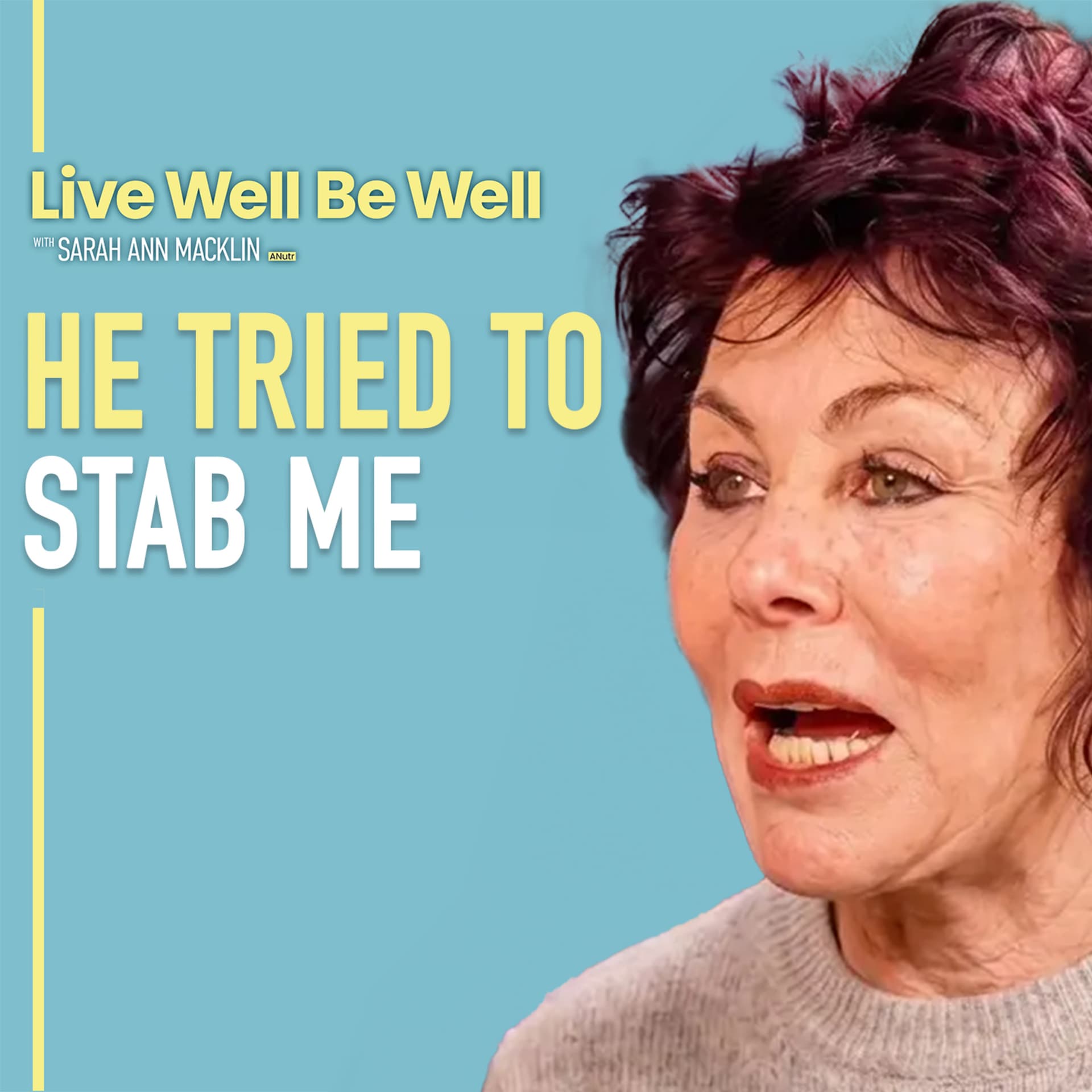
In short
Ruby Wax discusses how “gut instinct” and mindfulness help regulate anxiety and episodic depression, especially when she feels intimidated, disassociated, or humiliated. She connects childhood “scars” to adult threat responses, argues that depression is a painful, isolating brain state (not just sadness), and explains mindfulness as training attention to shift from thought-chatter to bodily sensation.
Guest backgrounds
Ruby Wax is a comedian and mental-health advocate who has worked in wellbeing/nutrition and studied mindfulness-based cognitive therapy (Oxford, 2013). She has performed in mental institutions and has spoken publicly about anxiety and episodic depression. She also references working with/being influenced by Jon Kabat-Zinn and Mark Williams.
Key claims
Mindfulness creates distance from thoughts (“it’s just a recording”), deactivates threat circuitry (e.g., amygdala) and strengthens attention networks (insula/ACC), helping her notice early warning signs and reduce “machine-gun” annihilating thoughts. Depression is described as near-death agony with “agency on holiday,” and stigma is reinforced by the fact that symptoms can come and go.
Notable examples
Her shutdown around Esther Perel; smiling through Bill Cosby’s insults; being “outed” by Comic Relief posters; 30-day silent retreat effects; hotel “lights off for five days” during episodes; scuba diving/escapism; and using attention to feet/breath on stage to lower cortisol and regain audience connection.
Written by AI. May contain mistakes. Listen to the episode to check what was said.
Chapters
Tap a time to open that second in VOExploring Mental Health and Celebrity Encounters
0:45 to 2:52
Discussion centered on Ruby's experiences with mental health and her encounters with celebrities.
“My thoughts are annihilating all the time.”
Understanding Mindfulness and Self-Compassion
2:52 to 5:02
Ruby discusses the importance of self-compassion and mindfulness in mental well-being.
“which is what is one thing that people just don't know about you?”
Navigating Social Anxiety and Vulnerability
5:02 to 7:20
Ruby shares her experiences with social anxiety and the desire for acceptance.
“Obviously, it wasn't for his intelligence, but it was his viciousness.”
Perceptions and Misunderstandings in Social Settings
7:20 to 10:32
Discussion on misinterpretations of social cues and humor in interactions.
“Because obviously we all want people to like us.”
Navigating Mental Health and Humor
14:02 to 14:44
Explore the connection between mental health discussions and humor.
Ruby's Journey with Mental Illness
14:45 to 17:11
Ruby Wax shares her personal experiences with mental illness and public perception.
“So depression, you know, is you're dead, but you happen to be breathing.”
Performing in Mental Institutions
17:12 to 18:38
Ruby discusses her time performing in mental institutions and the impact on patients.
“And I let them take the picture, but I thought, because my career was nosediving, the bigger your poster is, the more popular you are.”
A Sense of Safety in Mental Health
18:39 to 20:06
Ruby explains her feeling of safety in mental health facilities and its connection to childhood.
“And there's a lady with that kind of you know cupcake on their heads, the nurses in this country.”
Understanding Mental Illness
20:07 to 24:03
A discussion on the complexities and misconceptions surrounding mental illness.
“I've had, I'm going off again because that's how my brain works.”
Mindfulness and Depression
24:04 to 26:12
Exploring how mindfulness can help in managing depression and anxiety.
“Well, now it is because now we're looking at numbers, especially for kids.”
Show all 37 chapters
The Neurodivergent Experience
26:13 to 28:03
A conversation about neurodivergence and the validation of understanding one's brain.
Understanding Dyslexia and Personal Validation
28:03 to 29:12
Ruby discusses her experience with dyslexia and how it redefined her self-perception.
Living with Depression: A Personal Journey
29:12 to 29:45
Ruby shares her struggles with depression and the feelings of liberation it brings.
The Darkness of Clinical Depression
29:45 to 31:08
Ruby explains the depths of clinical depression and how it affects daily life.
Coping Mechanisms and Mindfulness
31:08 to 32:58
Ruby discusses her coping strategies for managing depression and the role of mindfulness.
“with a therapist when you're in that state you're gone the your your agency is on holiday there is no you.”
Mindfulness as a Tool for Awareness
32:58 to 34:24
The conversation shifts to how mindfulness helps Ruby recognize the onset of depression.
“These are the usual elevator music thoughts of like, you know, look what you look like.”
Exploring the Power of Mindfulness
34:24 to 36:29
Ruby elaborates on her retreats and teaching of mindfulness practices to others.
“I'm invited to a charity for Save the Puffins.”
The Science Behind Mindfulness
36:48 to 42:00
Ruby discusses the neurological benefits of mindfulness and how it impacts the brain.
“So I'm running them, and I'm trying to make people understand.”
Controlling Stress Through Mindfulness
42:00 to 44:25
Learn techniques to manage stress and stay present during performances.
“Or you get caught in that argument, like you become vicious because they're vicious.”
Mindfulness and Pain Management
44:25 to 46:49
Explore how mindfulness can help in observing and managing pain.
“It will always be a struggle, but I don't like going to the gym either.”
Navigating Insecurities and Identity
46:49 to 50:08
Discuss Ruby's journey with insecurity and identity shaped by her modeling career.
“If you really focus in on an area that hurts, it starts shifting.”
The Role of Self-Compassion
50:08 to 53:04
Understand the importance of self-compassion and mindfulness in personal growth.
“That was his happy Valentine's Day greeting.”
Mind Fitness and Its Benefits
53:04 to 55:48
Learn how practicing mindfulness is akin to physical fitness and its health benefits.
“You know, in my heart, it feels, my body feels really good.”
Mental Hygiene: Flossing the Mind
55:48 to 56:00
Discover the analogy of mindfulness as mental flossing for emotional health.
Mindfulness as Mental Flossing
56:00 to 58:06
Explore the concept of mindfulness through the analogy of dental hygiene.
“I mean, it's Buddhism, but I don't use a B word now.”
Understanding Negative Thoughts
58:06 to 59:54
Discuss the role of negative thoughts and their impact on motivation and success.
“They say, well, they give me drive or the negative thoughts to me, like push me to success.”
Childhood Insights and Family Dynamics
59:54 to 1:02:06
Ruby Wax shares anecdotes from her childhood and its influence on her life choices.
“And I have a footage of this that I show the audience and you just hear silence.”
The Influence of Relationships on Personal Growth
1:02:06 to 1:04:38
Examine how Ruby's past relationships shaped her views on marriage and parenting.
“I checked his line and sorry what was your question again?”
Finding the Right Partner
1:04:38 to 1:10:02
Ruby discusses her marriage and the importance of choosing the right partner.
“I think my parents are celebrating 50 years this week of their wedding anniversary.”
Exploring Family History and Mental Health
1:10:02 to 1:12:49
Ruby Wax discusses her family history and experiences with mental health.
“I think there's nature and nurture, but boy, did we do nature.”
The Unique Experience of Mindfulness
1:12:50 to 1:14:27
Wax shares her personal experience with mindfulness and emotional release.
“It's cocooned, but I want the smell of the priory or what it used to be.”
Navigating Shame and Seeking Connection
1:14:28 to 1:16:50
The conversation shifts to addressing shame and fostering connections with others.
The Nature of Fame and Its Impact
1:16:51 to 1:19:40
Ruby discusses her insights into fame, including her experiences with celebrities.
Touring and Upcoming Retreats
1:19:41 to 1:22:32
Discussion on Ruby's upcoming tour and retreats, including activities offered.
“the despots about what makes a murderer or what was going on in his mind.”
Defining 'Live Well, Be Well'
1:22:33 to 1:24:00
Ruby shares her personal definition of living well and the journey to self-identity.
“It's a manor house like you've never seen.”
Exploring Success Beyond Fame
1:24:00 to 1:26:51
Discover how personal definitions of success can vary widely among individuals.
“well be well yeah mostly how living rather than the specifics I mean I think you can't eat sugar I'm going to ask you what I should eat when this is over because I might as well use you.”
Humorous Business Ventures
1:26:51 to 1:27:58
Engage in a light-hearted discussion about modeling and imaginative business ideas.
“And find out because they probably should start this company.”
Transcript
Automatic transcript. May contain errors.0:00How did we start on this? I'm now having a horror of my childhood. I'm having a regression. Are we having a therapy session? Donald Trump, Madonna, Tom Hanks, Jim Carrey, OJ. The body of 34-year-old Nicole Brown Simpson, ex-wife of OJ Simpson, was found after midnight on the sidewalk outside her West Los Angeles home. Well, he had disassociative identity disorder. Part of his brain knows he killed her and part of his brain doesn't. And so that's how he passes lie detector tests. We put him in a white Bronco, which is the car he did the getaway in. He kept taking me by the house where the murder happened and he'd say, that's where the murder took place.
0:35And I said, well, you should know. Please welcome Ruby Wax. I'm intimidated a little by you. Really? Did understanding how your brain work help you resolve or support your depression? My thoughts are annihilating all the time. It's like machine guns are pointed at me. But after a week, the guns go down on the ground and I become enchanting. Do you know what I think about mindfulness? I think about it as mental flossing. Oh, that's good. I was outed by Comic Relief. They took a picture of me, but they blew it up into a poster size and they put it all over the tube stations. And it said on it, one in four people have mental illness.
1:15It gets worse. One in five people have dandruff. I have both. I don't think that. Could somebody Google that?
1:25Guys, I have written a book and I've just heard it's a Sunday Times bestseller, which is very exciting. Now it's called Healthy Shouldn't Be This Hard because truly that is the reason why I really started this show. Healthy really shouldn't be this hard. And the one thing that I found from all the years of being in the wellbeing space and working as a nutritionist and interviewing incredible people is that there is one vital step that is missing in our health information us and ourselves and being self-compassionate treating ourselves as we would a best friend seems to be fully overlooked and maybe even seen as soft but this book is going to help you re-explore that and realize there is so much science behind just how we think shapes every cell in our body shapes our physiology how we metabolize food how we respond to food and even the choices that we make so if you want to know more this book quite literally might change your life so head to the show notes where I put the link you can head to Amazon or any good bookstore and you will be able to buy Healthy Shouldn't Be This Hard and if you do I'd love to know what you think Ruby Wax hello welcome to Live Well Be Well thank you very much okay I'm just going to start with a very accent that was thank you very much it was it was Ruby's accent that's what it was.
2:43I couldn't understand who the mouth that came out of but it's mine. So well we just started with laughing and humor which is great but I just want to start with a very random question which is what is one thing that people just don't know about you? Like really think about that. That I'm not that social. A lot of times people think because I look gregarious and my shtick is gregarious. Like I'm a fast talker and thinker. But there's something very... I went to a party last night and I thought I really don't want to be here. Esther Perel was there and I'm very intimidated. I wasn't meant to be there.
3:26No. My friend messaged me saying Esther Perel was here. Who was your friend? A girl called Miley. I was Miley there? I don't know. No, you wouldn't know her. She's just a very old friend of mine from Estonia. How bizarre. She asked me to go. I think I know. Yeah. Yeah. She was wearing an AC Miyake top. Yeah. She left early. You should have gone. I was doing a talk. All right. Okay. Well, there she was. Wow. Yeah. I mean, I find I'm kind of intimidated around her. I mean, I would be, yeah. I mean, I stumble. and when I think somebody's highly, highly more intelligent, I lose my confidence. Really?
4:11So people think, oh, she's very confident, but I can lose it. And you can tell because I start, you know, the part of the brain that is memory goes immediately down. And so I stumble and I find myself banging myself on the leg going, why did I ask her that? Why did I say that? I'm so articulate with everybody else and funny. I get in front of a stair and I can't I can't deliver and she looks at me in a puzzled way like why do so many people like this woman I can see I feel her confusion would you know what that actually leads on to my exact question most of us walk into a room wanting someone to like us I mean it's being part of a tribe right when we rejected oh everybody I want everybody to like me yeah right but you know you've just described in that moment you felt kind of not smart enough maybe not good enough kind of comparison against esther peratt i mean she's a very high level yeah but you've also had this against and you speak about this in your live shows with trump and madonna as well you've had these like moments where i guess well that wouldn't say he was he wasn't intelligent but he was right exactly so you have this moment where your body kind of goes into a bit of a shutdown um you've had that on camera with the whole world watching which is very different to the average person listening to this right you can go into a room right and feel it but no one might know um what have you learned from those moments because it's interesting you had it last night which I didn't expect you to say I had it last night but I don't think it shows it's just my inner dialogue that gives me the review but even with Madonna or Trump or somebody that intimidates me.
5:49Obviously, it wasn't for his intelligence, but it was his viciousness. It was just pure bile that rose. And so all I did was smile because I keep thinking it's an entertainment show. Just keep smiling. I did that with Bill Cosby as he insulted me one whack after another, making me get on my knees and calling him Dr. Cosby. I watch it because we show the audience during my tour. And I think for the sake of women, I shouldn't be smiling. But I'm so embarrassed that I covered it with pretending it's amusing. And now I would just keep my face very still. I wouldn't attack because then I'd lose my mojo and also my dignity.
6:33But I'd let him hang himself. I just say, but it's very difficult. It takes years of, I do meditation. It takes years of being able to hold your real feeling of humiliation and just ask a really intelligent question. I couldn't do that. I think I could control the cortisol now. So as we were talking about, when you get a blow to the heart, my remit is just keep smiling and pretend it's really funny, which makes me look stupider. And so I would do it differently now. With Esther, I don't think she notices. It's just I can't pull any cards out. So what did you do in that moment to kind of, I guess, I don't want to say make yourself feel good enough because ultimately, obviously you are, but to make yourself feel more balanced or regulated in that moment?
7:23Because obviously we all want people to like us. We all have that feeling. I think everyone listening to this podcast is going to relate to walking into a room and potentially not feeling good enough. Well, and your heart hurts. Yeah. So with that stare, I mean, I observe myself. I think that's from doing meditation. You observe it. It's not now suddenly you're evolved and you're over it. You just see the scars of childhood. You don't have to go to an analyst and find out why. Why it already happened. I have a wound, but the wound is, the more I kind of ride over it, the fainter the scar gets.
7:58So I know what I did. I kind of feel sad that I can't pull out the stops. This happened to me with somebody else, with Diana, Princess Diana. The first time I met her, I went into a plie. I was trying to curtsy. Why was I even curtsying? And I couldn't pull out. And Helena Kennedy kept saying, Ruby's really intelligent. Say something intelligent, Ruby. That's just pressure in itself, isn't it? Well, everybody else was holding a conversation. Anyway, later on, we became friends. And then she could see I was funny. I wish Esther would come to my camp, but I still haven't conquered that one. maybe we can conquer that one together we could work with me yeah yeah what do you think it is about her that made you feel maybe in more shutdown than other people I hope she's not listening I hope she is uh I feel like she um I I'm I'm not of her species so I've said some things that are me let's for example last night that other people laugh at and she doesn't seem to get so maybe it's a different sense of humor when somebody doesn't have my sense of humor I'm dead because I speak I you know I'm seeped in irony that's what I loved about coming to England because I got coated in it yeah and maybe I had the seeds of it in America but they didn't get it and so I came here and it was bingo these were my people so I say really sharp things you know jabby things but I'm kidding yeah and I don't know if that translates in her ear so I see her kind of wincing a little bit when I'm crude not crude but direct it's direct it's she's pretty direct too but it's in a different yeah framework yeah um I wish she'd like me but I can't do everything it's such a human experience to want to be liked though like you're not on your own in that way I mean I think you speak about it so publicly and beautifully which is the vulnerability in you and that's how people relate to you that's why I think when people get to know Ruby that's why they think you're funny because they know that you're so vulnerable and how you speak about things a lot of people really struggle to be vulnerable and a lot of people can really struggle to even connect to feeling disassociated when they walk into that room and feel an overwhelm of panic they just think there's something wrong for them or they think something's wrong with her and they get aggressive well they get defensive yeah what advice do you give to someone who maybe feels that?
10:24They don't feel anything. So they feel it, but they don't have an undercurrent that says, here's what might be going on. A little bit, I know everybody's against CBT-ish, is to say, I'm just reading this because... Cognitive behavior therapy. Right. Cognitive behavior therapy. I think that I distrust my reactions. So I've learned that. These are all reactions, Ruby. You had to defend yourself at that point, but they aren't relevant now. but God bless you. You have to, that's all you've got. You know, I haven't got a lot of ammo. It's like one leg is shorter than the other. So just compensate really.
11:00But one leg really is shorter than the other. So there's nothing I can do now. But I think the more I don't believe what I'm telling you, like probably she just thinks I'm a great, I don't know what she thinks. I'm just projecting my fear onto her. I'm using her as a canvas for my own paranoia. Interesting. Maybe she looks like somebody maybe she has an attitude maybe her accent reminds me of something I mean that's usually why you project onto people is they have somebody in high school who turned their head she's the popular girl and I had to crawl so everybody is a reminder of who they of something in your life I don't have time in my life to analyze it nor do I want to pay however much money it is for somebody else to analyze it just is the way it is so now deal with it I mean I mean you're also qualified to analyze that at the same time we're going to talk about that because I really want to talk to you about mindfulness and all the amazing things that you do in your retreats I mean I know that you're known as a comedian and I think we just had this conversation before the show I'm still referenced as a model right although I've been I am too scientific community for many years and so are you Ruby people think I'm the top model because you know I look so I'm so tall you are and I wear Valentino so well no I'm kidding sorry I just had to go there two models who are angry about there I'm always being labeled as a top model no I'm sorry I didn't mean to do that don't apologize but again I need the humor in this my mouth just goes and I think Ruby pull back pull back can I tell you something don't pull back because that's why people love you I attended TED earlier this year and I found myself in conversations with the founders of NoWatch.
12:44You've probably seen me wear something on my wrist and lots of you have messaged me asking me what this is. It looks like a classic watch but it's actually quietly tracking something much more meaningful, your autonomic nervous system. This is the system that governs everything from how you respond, from excitement to anxiety, calm to overwhelm. Most wearables just give you a score but if you're anything like me that score can sometimes make you feel worse like you're already behind before your day even begins. No watch works differently there is no judgment and there is no dopamine chasing dashboard.
13:18It simply reflects what your body is already experiencing and also helps you notice what it might be missing. It gives you minute by minute timeline of your stress responses and your recovery. The recovery is the most important part and is the part that no one talks about and it is often the most revealing marker of our long-term health. In just five days it calibrates to your body and it builds your personal health fingerprint. You can try for free now for 30 days and if you use the code LWBW you can also get 15 % off. If you want to understand your body not just through performance but through self-awareness then this is where I'd begin the thing with mental health so I kind of transitioned from this model into mental health right and and nutrition and I kind of couldn't put them together so I started a mental health organization over here and a nutrition clinic over here and then somehow the podcast like weaved everything together mental health when you talk about it can feel really bloody heavy I'm being honest I I found it quite a hard world to navigate because I also don't want to talk about it from a depressing point of view so when I started be well it was about getting like Gary Barlow on to inspire people about his eating disorder and get people to speak about it from hope you have this amazing ability to speak about mental health and make people laugh and when I kind of was speaking to a couple neuroscientists yesterday you know I was kind of saying what do you what can one do when they're in that downward spiral and the first thing they said is humor you've got to connect to human I just thought about you automatically yesterday day and I was like well funnily enough I'm actually interviewing Ruby Waxner she does this beautifully right but I don't think we ever connect those two they feel very like far apart mental health conversations and humor but actually oh but that's how I make a living how can you talk to people how can you kind of be in one state but also embody it with the humor because people can feel like they're so far apart but actually you beautifully bring them together thank you but um if I was mentally ill at this point you know if I had my depression I wouldn't be I would you could talk to the chair in a better conversation than you could talk to me so I'm not in that state so I'm not funny when I'm ill I'm not I'm nothing I mean your mind is gone so do you have depression no no I've suffered with anxiety right it's a Different ballpark.
15:41Yeah. Yeah. So depression, you know, is you're dead, but you happen to be breathing. So people always think it's because you're sad or something happened. I go, nothing happened. You can win an award and you want to die. So that's that's that. But I they're my people. You know how like if you're Jewish, you can say things about being Jewish or if you're black American, you can do that. Well, I'm mentally ill. So my people let me go and let me say whatever I want. So when I first started doing this publicly, I've said this before, I was outed by Comic Relief. Oh, I didn't know. They took a picture of me, but they blew it up into a poster size and they put it all over the tube stations.
16:25And it said on it, one in four people have mental illness. Gets worse. One in five people have dandruff. I have both. I don't have dandruff. that's unbelievable and a picture of me looking slightly miserable with a red nose on my face so when I saw it in the tube I hurled myself against the wall but then there were more I couldn't hurl enough all the way down the tube station and I was mortified so I thought I'm gonna have to write a show and pretend that's my publicity post you know how they put it in the tube station that I had done that on purpose because I didn't want anybody to know I was ill because good luck holding a job at BBC.
17:04So I pretended I was doing a show. Didn't they have to get rights to put that up? Didn't they have to get your... They didn't ask. It's comic relief. Right, okay. And I let them take the picture, but I thought, because my career was nosediving, the bigger your poster is, the more popular you are. So I was surprised Stephen Fry, I thought, was on the upward. His would be gigantic and I'd be a stamp. But they used my picture. So it's nobody's fault. I just never asked. So then I performed in mental institutions for two years to write a script about mental illness. And I used to say that the bipolars would say, I laughed, I cried.
17:42I give myself reviews from them and the psychotics, you know, but they loved me because I could, you know, I could deal with them directly. I mean, I, if you give me somebody in the depth of it, I will be able to, and I'm not ill, I can make them laugh. So these people in these clinics, and it was heartbreaking. They didn't have a stage, so I'd do it on the counter of the buffet or sometimes in the ladies' loo for three people. They'd be wheeled in and really severely sick, but I'd get them to, my motive was to make them laugh. And they'd make me hysterical because there'd be question and answer.
18:17And one woman asked me, how do you get a poltergeist out of Hoover or there's a communist living at my back molar. They were sensational reactions to my show and I loved them and my payoff was I would be able to stay overnight in the mental ward because that's my home away from home. I feel really safe there. Wow, why? Because I'm being taken care of and nobody can harm me. Right. And there's a lady with that kind of you know cupcake on their heads, the nurses in this country. Don't they wear a kind of weird thing on their head? You mean like the little triangles? I think so. Like the bonnets?
18:52Isn't that quite old school? Isn't that like an old? Yeah, but the Priory, they were wearing it. And they'd come in and they'd give me my little cup with my pills in it. And I would suck my thumb and I'd be, I loved the people. So you go back to childhood, basically. I go back to childhood. When I was on tour about, I don't know, 20 years ago, I'd make them stop if I was in the south at the Priory so I could smell the lobby. Because it brings me back to safety. that's a mother I never had and then when they did who do you think you are I saw that I came from five generations of people that were incarcerated incarcerated meaning in a mental they called an insane asylum that I kept going to different archivists and they said guess what your great great aunt did and I said was she an actress and they said no she was insane how did that make you feel well it because that labeling I just feel so well they'd had something called agitation so did they have what I've got which is agitation it's not mental illness but it's funny they used to put them in cold baths and now I have a cold bath in my garden so they weren't so often I don't have a whirling chair but I've got I've got a tub anyway I'm going off piece but I kind of think about this right I'm quite um what's the word quite protective of how I speak about mental health because I think mental illness has had a bit of a bad rep and people get quite scared about connecting to that and I think I think everyone suffers in some way shape or form because we have a brain and we live in the world that we live in I have to disagree I have to say everybody suffers but mental illness is cancer you know what a tumor is to cancer I mean a mental illness is to depression but I think also people can also come and go from these states right rather than just feeling like they can oh you come and go that's why people think it's a that's why there's a stigma yeah because they say if you're okay now ruby you're sitting here having you couldn't possibly well herpes comes and goes that's the first direct reference i've heard but yeah i love that um you know so yeah i want a t-shirt that says herpes comes and goes with no explanation so how would you define mental mental illness the the real illness i mean schizophrenia Epidemia, borderline personality, depression, bipolar.
21:13How do I say? I've had, I'm going off again because that's how my brain works. I do shows for 15 years. And in the second half, I speak to the audience. I've had a lot of people maybe once a week stand up and go, I have cancer. I now have depression. I say, which is worse? It's always a depression. It's always, it is agony. That's why people commit suicide. Yeah, of course. Not because they had a lump. Well, because it's so isolating. when you're in that space it hurts it hurts you want to die it's a it's pain beyond any pain you could imagine so the thing the thing that is incredible about what you did with your mental illness is you actually went back and studied about it you went to oxford i don't know if i mean i think maybe a lot of people do know this but you went to a master's degree in mindfulness based cognitive therapy back in 2013 i mean you were new to this right so 2013 am i getting that date right yeah um mindfulness now is spoken about a lot a lot more even with nutrition even with things like oh everybody's mindful now people talk a lot about it but back then it wasn't spoken about as much as it is today it was kind of this new emerging area of research did you did understanding how your brain work help you resolve or support your depression or did it not did it kind of any way kind of help you explore that more or do you think that because I think about this with knowledge and food we have so much information now with food and diet and health but some of us still really struggle to do those behaviors right a lot of us can still struggle to eat really well did understanding about the brain and mindfulness help you control your mind in any way shape or form it's not about it's not about control I had gone to every therapist known to man, and I became a therapist.
23:06I was a therapist. That's the best thing about you. But I was awful because I used to say to people, oh, just cut to the punchline. Come on, let's just say what we think is in the room. Let's name the elephant. I didn't say that, but that's what I thought. So I never would have the patience. But once I got thrown out of television, I thought I got to find something. So I immediately went to study to be a psychotherapist. but that's not what we're talking about do you see how my mind jumps you've got a lot to say a lot of lived experience and I jump, I play jazz out of my mouth rather than a symphony so I didn't understand depression because not enough money has been thrown at it so nobody knows depression if they had thrown as much money to depression as to smallpox we'd have a cure I'm not negating what Bill Gates does or malaria.
24:01But I'm just saying there's no money in it. It's not sexy. Well, now it is because now we're looking at numbers, especially for kids. But I don't understand where depression comes from or where it is in the brain because nobody knows. But I did the mindfulness I caught on because, A, you do exactly what we've been talking about. You learn to have distance from your thoughts, and that's liberating. I now don't have depression, but depression is in the room. So my whole being is anxious. There is anxiety. So it really teaches you to just notice specifically there is depression, but there's still Ruby.
24:46So once you can make that separation a little bit, I can observe the thoughts rather than be caught in the slipstream. of their, and my thoughts are annihilating all the time. It's like machine guns are pointed at me. And this is from childhood. I don't have to keep going and bore everybody's senses about what happened. And I've turned that into comedy, you know, so, but it doesn't liberate you. I just have the machine guns pointed. So when you have depression, they fire, they start firing at you. But usually the thoughts are annihilating. So mindfulness gives me a little distance to go, Ruby, it's just a recording.
25:21It's just a recording. It's just a habit that is ingrained that helped you survive. So I can still function behind the annihilation. I mean, there's a bit of me that's adorable, but I didn't know that until I did mindfulness. And when I go on retreats, like a 30-day silent retreat, I can get to that. The beginning is the guns are really pointed and they're really trying to show, you know, how I don't deserve to live. But after a week, the guns go down on the ground and I become enchanting and colors are really vivid and food tastes delicious because I go back to who I was before the guns. How long does that last for?
26:02Well if I keep doing I do it every morning it's not a hundred percent otherwise I would be Buddha but it's there's moments let's say when I walk in and I see somebody who scares me like we were talking about earlier I can go it's just the guns Ruby it's not you you have guns pointed from a early early childhood but it's not you there's something quite you know innocent about me I guess that to me sounds like you harness back control it's not control it's observation I think control means you're repressing it you know and sitting on it but this is observation I'm friendly with the with the guns now yeah I mean as controls and like not letting that thought overtake your mind you're kind of like more in the driver's seat is kind of what I would say the thoughts are there they're just quieter yeah they're just a little quieter like while we're talking now I'm thinking I'm intimidated a little by you because you remind me of somebody I went to school with really I could name the name and if I wasn't aware of it I'd be my breath would be taken away because she was quite she was the popular girl and she remained the popular girl and she's my image of uh the first girl that really I went oh stand back Ruby you've got a competitor here isn't it funny how those early years of our life shape us so much I feel like I always remember the full name of everyone at school like whenever I reference someone back at school I normally say their full name because it's had such an imprint on my life really were you popular I don't I don't think i was like the hyper popular i think i was just kind of i flitted between a lot of groups right um i also you know i was neurodivergent which i didn't know so i would be told to stand outside the class a lot of the time because i wouldn't shut up oh really yeah so i felt like i missed a lot of my school life because i would just be talking outside the whole time then i'd be chatting to everyone else well you don't seem at the mercy of it now except you have a podcast so that's why so now it fits but now i understand my brain is different like when i went back to university later and I was diagnosed with dyslexia to start with um she taught me my brain and so I didn't hate my brain anymore I just I was so frustrated with my brain they explained dyslexia to you yeah yeah I'd never heard of all that word I didn't know what that word meant yeah that's liberating and you know when she told me how my brain worked like you keep saying your brain goes off in spirals but that's how she said my brain was when I went into a supermarket she was like most people when they go and buy a meal they want a spaghetti bolognese they'll be like yeah yeah know we get pasta i want to get some beef i want to get some tomato sauce you will go in and you'll be like i'm gonna make the tomato sauce and i'm gonna create this and i'm gonna do this and i'm gonna do that and then you're like 10 minutes later you're like why am i even here i'm like that's my brain and it just felt like a validation that the brain wasn't broken yeah and she said like when you leave this it will be your biggest superpower just just when you're in more of a linear system your brain struggles to stay on the linear path and i was like no one's ever said that to me before oh yeah and that gave me some like autonomy yeah to go off and actually believe in myself but if you don't have belief yeah then you feel very constrained i have one small ask while you're watching this show if you're enjoying it please hit subscribe on whichever platform you're listening on this really really helps the show more than you can realize it helps people that have never listened to the show before come across it and see all the incredible episodes that we have with the amazing guests so if there's one small favor today if you're not already a subscriber please do subscribe when they said you have clinical depression i felt liberated it's just that there's no explanation so i don't have what you have which is understanding dyslexia because that can be explained but depression as i said again no money no idea you just have a diseased brain somewhere have you in your own head try to understand what it means like for you have you tried to make sense of what depression means for you yeah well it's it's near death it's as as dark as it gets and um I know the moment where you go I don't care if I get a manicure or jump off a cliff I know that moment or you walk slowly in front of a car um hoping that it'll hit because you don't have the bravery to do it but you certainly feel the urge to make this end I I can't say any any more about it I do know about the brain but where it's lodged we don't know how did you go from that to comedy I made fun of the driver how did you you know so many people listening to this might be suffering with depression right now right and I think the thing that I've heard about clinical depression is that you just don't know if there's any hope yeah there is hope though this is yeah and that's what you can from what I've understood is what many can feel like like you just you can't see when you're in it forget about it like don't even do mindfulness you haven't got a mind you're wasting your time with a therapist when you're in that state you're gone the your your agency is on holiday there is no you.
31:16That's what's a bizarre thing. You'll try to imitate you. You know, when I used to have it at work, I'd imitate who I thought I was with sweat running down me. I even once, I was doing a show. My husband had to get me out of the clinic to do a show about depression. And I had a person with depression in my house. So I was wearing my pajamas with my coat over it because I didn't want the BBC to know that I was sick. And I interviewed a person with depression. And they looked at me like you are so much worse than I am and the camera crew didn't catch it at all and then when it was over he took me back to the clinic but doesn't that just show how invisible it can be to so many other people well if they didn't if they didn't even catch on they didn't catch but if they looked in my eyes they'd see it very few people looking in the eyes you can see the disease in the eyes that's why teachers should look in eyes of children because there's no mistaking it's like taking a pulse they look dead so tell me the hope of how you got from from that where you are now for anyone it was episodic it would have done it anyway you go in you go out it's not like um schizophrenia or borderline where you have to take you know you're pretty much in that state all the time I'm in I'm out that's why there's such a stigma pull yourself together or perk up that's what they used to say and I'd say oh because I never thought of that but um where I am now this isn't this is who I am I just happen to have this thing that rears its head and no reason why it rears its head I can't say whenever I smell a plant it just happens and I could be at the height of my career and it happens so wow yeah it just happens so do you think mindfulness has helped as a bolster towards it do you think it's helped gain you more perspective on on depression and just yourself I can tell when it's coming that's why I went to Oxford yeah there's signs as I say you're outside yourself a little bit but in a healthy way not in a kind of I'm watching myself from outer space because I have been picked up by aliens you didn't know that but um I can watch and I can take my temperature inside a little bit or take my pulse and say, these thoughts are getting dangerous.
33:31These are the usual elevator music thoughts of like, you know, look what you look like. She's so much prettier. You really, Ruby, you should have brought some nice, you know, the usual, just insulting slightly. You call them theme tunes, right? Theme tunes. Yeah. And then suddenly they become vicious, more vicious and faster. And my hair gets depressed. I can actually feel my hair starts to change. And I look in, and now my husband knows, look in her eyes, and when they're dead, they look like shark eyes, then it's time to go to the institution. So I can see it coming. And instead of going to more parties to show everybody I'm fine, and maybe it'll go away, I usually check in a hotel, and I shut the lights off for five days, and it passes like a devil, rather than fighting it.
34:21If you fight it, it lasts longer. gosh that sounds to me a bit like a drowning analogy you know when you're like in the water and you kind of get taken in by the tide and you're fighting to kind of stay up above the yeah the wave and you're like doing everything you can i'm not waving i'm drowning yeah and actually they just say you need to like let go because then you will naturally resurface yeah i mean i found myself at things when i was fighting it i go to everything they asked me to go to. I'm invited to a charity for Save the Puffins. And I got there and thought, I don't give a shit about puffins.
34:56What am I doing here?
35:03And then I went scuba diving in December at Brighton Pier. I decided I have to learn to scuba dive. And now I'm upside down in the water to get my certificate. It's December. and the woman was crazier than I was who said this is one of the most beautiful dives in the world I went down there there was that was yeah it was a shopping cart and a thong that was a that was the dive and I thought you just do everything because you want to say I'm fine I'm fine it's kind of escapism right it's kind of like running well you think you can over over outrun the depression but you can't and then it'll grab you by the legs and drag you back in like a monster so let's go to mindfulness yeah talk to me about your mindfulness practice I think this is something when I came to your house it was incredible I think as and the reason why I said I mean that I didn't I was not the top model but I was known as a model for years and it took me a long time to kind of change the narrative into the health nutrition mental health world you know you've been known here as a comedian to make people laugh that's why people love you for so long but when I sat there I've known that you worked within mindfulness but you know so much it's incredible I mean you've written books on this you know you do retreats on this um but I think you know sometimes it can be overshadowed by just how much you do know and I think you have an amazing way of describing mindfulness that actually feels very relatable and there's only someone else who I had on the show Matt Hague yeah who also has an amazing way of describing depression but also tools to that has helped him my i want to know did he describe it better than i did his he didn't talk about mindfulness but he talks about depression i want to know who won do you see how sad i am i want to know not competitive not at all completely come on no was he better than me we should do a podcast with three of us isn't that sad you can put it to the live audience i'm now telling you my subtext because as soon as you said Matt Hague I went did he describe depression better than I did no okay I won completely different all right which was great he talks about it as he talks about does that make you hate me that I asked that question no it makes me feel like you're just very authentic I think everyone thinks that that's the bit that's the best thing this is probably stuff that comes into people's brains immediately right because that's kind of status is a big part of how our brains work yeah and if anyone says that that's not true then they're not oh no we're always thinking where am I coming in in this where am I in the tribe yeah right so I mean it's just a very who's gonna let me into the watering hole I always think they let comedians in because they weren't attractive but they made somebody laugh so they said make way make way for the loser you just say what's in your brain and everyone relates to it so oh good it's fine it could be me in a corner just bubbling away rocking oh go ahead talk to me about mindfulness like just let's get people to understand what mindfulness is first of all you know there's a pat answer to this people say things like to become present and I go what does that mean yeah you know or they say non-judgmental well what does that mean so when I explain it and I do my retreats can I say where my retreats are of course oh I do once a month I do them at home 20 people can come to my house and then I went to right yeah and then um another one is coming up uh July the 9th July the 9th and it's in Belcom thank you you're very good um which is a beautiful country estate so we're inviting people to come to that so that's July 9th and it's on my website rubywax.net And then another one is at 42 Acres, September 7th.
38:57So that's also there. So I'm running them, and I'm trying to make people understand. I may be a comedian, but I also have, like you, I have another skill. I really know how to teach it, and I know how to explain without being heavy what happens in your brain when you do practice it. I don't mean the coloring book. I mean the real thing. And if mindfulness wasn't as potent as it is, that you could see the results in a scanner, because I don't believe in anything woo-woo. I had to go to Oxford and look at what the results are of practicing mindfulness. It's just like looking at a six-pack. You clearly did something to get that six-pack.
39:35So when you look at a scanner and you see certain areas that are more buff than they would normally be, the amygdala is deactivated. you um you know the insula is more buff i don't know buff there's more neurons in it so you could only say more muscle if people don't know what you know a more neuron mass the acc entanglement cingulate cortex is also there's more neural connections and that's in charge of we're making it simple but your attention to be able to pull focus away from distraction now if that isn't the million dollar gift in this century to be able to control your attention, then I don't know what is to take your eye off what's dragging you away.
40:19Because there's engineers that are geniuses. That's their whole job is to take your attention. And then you spend money on it. So if you can take your attention and put it like on your kids or on your holiday, you won the lottery. So what is it then? Like is it meditation? Or is it very different to meditation? It is meditation. It's the same thing. But it's not got the religious connotation. But when you're in your body or in a sense, sight, sight, taste, touch, smell, you're activating. I'm making it simple. The insula, which is interception, it's feeling of the body. You're in the body. And the amygdala, the yappering up here, the constant chatter, deactivates.
41:02Now, when you're in constant chatter mode, you're back in fight and flight and the insulin deactivates. So it's one or the other. You're either in sense mode or you're in gabbling thinking mode. It doesn't mean the thinking stops. It just gets a little quieter. You can't be focused in both areas. Try it. You know, you can't sense your feet and also think at the same time. It's one or another. And that back and forth, it's not like you're going to stop thinking. That back and forth of noticing where the thoughts go, appreciating them, because that's what we do for a living, than taking it to, let's say, your breath, losing your track, go back to the thinking, come back to the breath, thoughts come in.
41:44You need those thoughts, and you come back to the breath. It's like lifting a weight, and so more and more neural connections happen in the insula and the other areas. So when the shit hits the fan and you're with somebody shouting at you, it's easier to bring focus into the body so that you don't get caught. You don't disassociate, basically. Or you get caught in that argument, like you become vicious because they're vicious. You really learn to go, these are just thoughts. They come and go. I have a very, you know, now buffed up part of my body that while you're shouting at me, I can bring my attention to my breath.
42:19You can't do this unless you practice. Or feeling my feet on the ground. When I'm on stage sometimes, I used to lose my lines. But now, and the audience turned on you like animals because they don't like seeing a comedian dying. So maybe they think, well, now we have the watering hole, so let her die. But I send my focus to my feet on the ground, and immediately the cortisol comes down. Immediately, because my attention is now in my feet. And then I can tell it's working because the audience start laughing again, and their eyes lighten up. So I'm in control of my stress. I don't know if I'm explaining it, but I do go into deeper.
42:58Or here's what happens scientifically. And that's what makes me love it. And you become present. Because if you're in your body, let's say I'm breathing, you can't breathe tomorrow or last week. I'm breathing right now. If you say I'm in the present, you're wrong. Sorry, I'm on medication so my mouth dries up. That's why. See, I think the thing that is about that, even when you're talking about it, I feel quite calm. Because you're kind of bringing everything back inwards. which you said today everything is pulled outwards there's like everything is pulled inwards that's exactly it you're back in your body and your body doesn't have words exactly it only has sensation and sensation can't kill you words can I mean I think the thing about this you sat down and you said you know look my brain goes everywhere and it's you kind of use it in a negative connotation I saw it but it's like a superpower because you're just processing so much which is why you're you've got so many different neuron connections happening but a lot of people might feel like this right and then they go well that sounds great Ruby but I struggle to do that I struggle to sit still yeah then you know if it's really bad if it's really awful don't do it it's like forcing you to go to yoga you know there's a point where you're doing damage because you're forcing your body so don't do it but everything you learn from walking to playing tennis to you know, sitting up was always a struggle in the beginning.
44:26It will always be a struggle, but I don't like going to the gym either. But if I want my stomach to be back in the ranch, rather than hanging over the chair, I have to go to the gym. I don't like it. So with mindfulness, I want to live longer. And I want to, I don't want to be at the mercy of my thoughts all day long telling me, don't go see Esther because she's going to scare you. Don't go to Norwich because you don't, everybody's going to think you're an idiot. You know, I don't want to obey my thoughts. So because they're grueling. So I have to sit and do mindfulness every day, but not in a gluten-free cushion situation.
Read the full transcript
45:06Let's say I'll be on the train this afternoon. I'll do 20 minutes on the train. That's a great idea, actually. Yeah, you do it in situ, like you do it on the tube, which is great because when you tune into listening to sound,
45:21you can hear the pitch and the volume that's mindfulness you're focused on a sense and then you watch your thoughts going this is ridiculous i'm on a tube everybody's looking back to listening then the thoughts go and then back to if you do that for five minutes a day you're already buffing up those areas you're getting a six-pack in your brain and so you won't get a hot date but you're going to live longer You might get a hot date. You might get a hot date. You might be more aware. You might be more present. Yeah, but does that get you a hot date? It would for me. I go with somebody who's present.
45:59Of course. Yeah, Jon Kabat-Zinn is my god. He created mindfulness. Tell me more about him. I was just with him. Why? I did a retreat with him. Okay. What have you learned from him? Well, he wrote the book, Full Catastrophe Living, and he brought it from the East to the West because he was a molecular biologist at Massachusetts Hospital, and they gave up on certain people who had cancer or chronic pain, and he said, let me take them. So he created mindfulness-based stress reduction where they focus in on where the pain is, which sounds counterintuitive. But if you focus in and really sense where the pain is, what's the outline, what's the color, what's the sensation, the rest of their body is okay.
46:52And this starts moving. If you really focus in on an area that hurts, it starts shifting. So you're not in pain, you're watching pain. And then my professor at Oxford, Mark Williams, took it for depression. So that was why I went to Oxford is because he was teaching that. And not just depression, but for psychological problems. So you zoom in on where the agony is, the emotional pain. You're in your body. And you notice you're not heartbroken. You're heartbroken for a second, but in a minute, if you don't obey the thoughts, oh, I'm doing this because she's looking at me funny. I'm heartbroken because my mother did this when I was three.
47:33if you just go to the heartbreak the body heartbreak it starts to shift your thoughts are going to go crazy because they want to go this is why this is why but if you stay in the body you're liberated it moves all the time i talk about being in the body a lot sir ken richardson um do school skilled creativity is one of my favorite ted talks of all time oh ken robbins yeah i just met his wife have you seen his ted tour yeah everybody has where it says you know we disconnect from the head up to the body down when we get to school and i couldn't agree with i mean we completely treat the mind and the body yeah in two separate scenarios and actually it's like an irritating piece of meat you have to drag around under your neck i know exactly yeah it's so you know because i'm so good in the head why do i drag this thing that's just getting older and older but when you connect so I you know I came across the word somatic about five years ago I had no idea what that meant when I first came across it but it's basically like the feelings within your body I mean interception is one of my favorite words that you just mentioned interception awareness um but you know I didn't realize how much I was disassociated from my body before I started practicing more somatic experiences and more being embodied experiences Do you think because you were a model?
48:52Because everybody's looking at all of you? Do you know what I say? I mean, I ended up in hospital the first time when I was modeling, but I actually don't think it was anything to do with modeling. I think modeling actually saved me. I think it was being undiagnosed as neurodivergent at school that I felt my entire life that I wasn't smart. Oh, really? And finally someone told me I was good at something, which was modeling, and hey-ho, that's what I looked like. so all I felt that I had was what I looked like right and so the pressure to think this is the only thing that's going to get me success right is debilitating and you basically do everything until your body just shuts down and says I can't do anymore because you're always thinking at any moment that could be taken away from you yeah it's such a short span right so you kind of go to these highs and then every day you're looking at every beautiful person comparing yourself to them everyone's having a mental health crisis around you but that's totally normal yeah like you're just in the subset where everyone's the same so you don't know any different and so you're like I can't I can't lose this because I know I'm not smart right and then your entire body just collapses so I think it was actually not understanding my own brain at school that was my insecurity still my insecurity today right you'll never understand it completely but either will a shrink you'll understand it more than they will if you know the right tools yeah I mean you you know again you can't can't be conscious of what you're not conscious of so you can't use cognitive abilities to figure out what cognitively because thinking only leads to rumination you can't logic your way out of emotions you can't logic your way out of emotions but your body can feel what you feel and that's truth that's wisdom yeah that's wisdom that's my next book yeah I was going to write about wisdom oh my gosh please do that because I think the gut feeling wisdom i think we all have innate wisdom within us but we don't know how to access it and intuition is so strong but our brains are incredibly strong you'll know this that can shut these signals off very very quickly oh totally that's why nobody wants to go down below their neck yeah it's terrifying because it's terrifying but you know it's there anyway even if you're babbling away so that's why i think i don't think i know people get ill because they're shutting it off but it's working anyway your heart is still banging your cortisol still gushing but if you know it is it like power is knowledge it's the awareness that saves you so you call compassion the c word yeah why well I did I thought it was gushy and my dad always said if you stop to be nice you'll lose he made that pretty clear he was vicious you know that scene in the godfather where the guy wakes up with a horse's head next to him?
51:40Yeah. Yeah, that was kind of my dad. He was actually in that business. That was his happy Valentine's Day greeting. A horse head. No, he was vicious. So compassion was not something we used at home. But now I understand. If you don't give yourself that juice, you know, that oxytocin, if you don't give it, the thoughts will get even more vicious yeah because you know but that's what you learn is to code it code it in that stuff how did you change your because I had the cringe with self-compassion when I first came along and I thought it was very woo woo and I really struggled with it um which basically you know Oliver Berkman said one of the best lines I love Oliver Berkman he's the best so I first interviewed him when I just started writing the book and I said you know we really got into self-compassion and we were really dissecting it and after he was like you seem to know a lot about it i was like i know i'm really struggling though that's why i'm researching it because i've always found it kind of quite woo woo and yeah i'm wanting to bring kind of the science to the forefront and he said yeah well when you have the cringe you lean into the cringe because that's where the work is and it totally that's really good my concept with the word self-compassion and i was like yeah why am i struggling with this so much like for me i feel very like defensive against this word but that's because i lacked self-compassion ironically yeah so how did you kind of connect more to that word well mark williams my professor said the fact that you do sit and do mindfulness is the most compassionate thing you can do to yourself absolutely because what are you doing sitting there you know for no reason so i'm being really nice to myself when i do it i don't have to nail it as self-compassion but also i know i do things on purpose so that i get that hit in the heart that feels like a cat purring inside like i'll volunteer to go to, not a lot, but work with refugees.
53:35And then I really get off on it. You know, in my heart, it feels, my body feels really good. Well, it's because helping people raises yourself. Totally. And somebody said, well, isn't that a little selfish? And then somebody else said, but at least she's there. Or I work at a hospice. Not a lot. But you know, I was starting to. And I did it in the past, just because I get that, well, how cruel is that? But at least I'm there. but they make me feel good yeah but it's I said I feel like you're doing something a bit of a disservice because I think we'd be you probably don't intend didn't maybe intentionally know that you actually wanted to give back but you actually then were getting such a good feeling which is amazing but isn't that two-way thing you're helping people and being there but it's also building your own sense of self which I think is pretty phenomenal it's like a win-win scenario yeah but I have to insult myself first otherwise why do you think you have to do I have to do it it's also funny to me because if I just went it's a wonderful thing what if I said that Sarah it's a wonderful thing I'm doing I help people who are dying and it really makes me feel it's bullshit I feel better I feel better and they happen to be dying help me what's been the most kind of revelation experience for you then on this journey from going back to Oxford to where you are now what's helped you like the most what have you gained the most like I want to say wisdom from what I gained the most um it is doing that that it is practicing about mindfulness but I don't like the word anymore so I'm starting especially with my retreats call it mind fitness because it's exactly like physical fitness yeah it's no different this isn't a woo-woo ting ting let's take a bath in yak oil.
55:24This is hardcore science. And if you took anybody and they could get past doing the first few days, because again, if you hate it that much and you don't give yourself self-compassion, you've annihilated the whole thing. But if you get the idea and you don't want to pay whatever money to a shrink, that's the other beauty of mindfulness is you're on your own. But it's hard. People think it's hard. But if you want to avoid certain diseases, like heart disease or strokes or addiction or certain cancers or diabetes too, you might be interested in mindfulness. It doesn't have the rap. It's only 70 years old.
56:11I think about mental flux. I mean, it's Buddhism, but I don't use a B word now. c word i can use b words out what's an a word a what what's an a word oh um i say all the a words i have no shame about you know what i think about mindfulness i think about it as mental flossing oh that's good yeah oh i may use that use it thank you because we clean our teeth every day right without thinking about it's a habit no one i don't know if i've met anyone who really enjoys the process of cleaning their teeth but we do it because we don't want our teeth to fall out yeah and the consequences when we can't eat food but also we look horrendous so we want to keep our teeth nice but we do it yeah we know we have to it's an ingrained habit it's similar to like the mind and the brain like you've got to shine it you've yeah you've got to like floss it every day to kind of like make sure that you're getting all the crap out of it but if you don't you know it kind of starts to degrade and that's but it's hard to get your head around it if you think you are just a mind and these thoughts are solid and they are your truth.
57:14You could never convince somebody that actually you're more than that or that the thoughts are just recordings. I mean, you need your thoughts for cognitive abilities. You know, E equals MC squared would never have happened if the guy was feeling his navel. But you are able to go, these thoughts I need now because I'm hitting a deadline and this is just garbage. I mean, 80 % of your life or 75 is mind wandering. So if you wake up from the dream and go, let's just smell the rose, let's see what's out there, then you're not wasting precious time. You know, I need my brain when I need my brain, but otherwise I do not want to think about a pair of shoes that I'm dying for, but for eight hours straight and most of us think that's who we really are it isn't there's advertisements at last I never thought it went that way but if life is a tv show how long do you want the ads to be probably I'm the only person that understands that but those people I just made that up I have no idea what I just said but I'm sure it's meaningful it's all meaningful for those that are listening to this and like well actually my negative thoughts I think are quite helpful for me.
58:28They drive me forward. What would you say to those people? To what? My thoughts are useful? Yeah, the ones that are negative. They say, well, they give me drive or the negative thoughts to me, like push me to success. What would you say to those people? I haven't met those people yet. I'd like to, but most people, especially that I meet during my retreats or at-home things, are haunted by their thoughts. I mean, they're hip enough to go to the retreat, so maybe I haven't met the go-getters, you know, the guys in there. But they see shrinks. They see coaches. So not everything's okay in the state of Denmark.
59:06So do you think therapy's helpful? I think to get a narrative, yeah. I think you need to know your story. Like I wasn't sure, did I make it up about my parents or did that really happen? So, you know, by taking it through, you can already see where now I know that they were crazy. I mean, I have footage, which I show the audience at night when I'm doing my tour. Isn't that your first interview that you ever did? That's the first interview. That's the first documentary I ever did where my mother is screaming because I've brought sand into the building, into our house, because I'm supposed to take showers in other people's houses and then come home.
59:42So she's chasing me. Why? Holding two... Because civilized people don't bring sand in a building. Now, the sand should go outside, but I don't even think the sand should go outside. my dad's going, she's right, Bette is right. There's rules to this. There's rules to this. You do not bring sand into the house. And I have a footage of this that I show the audience and you just hear silence. Of course, it comes across as comedy. It's hilarious, but not when you're a kid growing up. But I had the cameras and that made the poison go away. So that's when I decided I would continue this line of work.
1:00:20It took the poison away. It was, they think the film Miami Men was about how nuts I was. Who brings sand in a building? Who drives a car? Are you insane? I was 35. Who gets in a car? Ask the neighbor. She was dragged from her car. And he's that angry. I said, can I use the car? That was all I said. Are you insane? You're in Miami. Who gets in a car. I rolled down the window to ask somebody for directions. They came at me. I took off. Can you follow that? He asks the guy where he's supposed to be going. The guy comes at him and he rolls up the window and drives away. You can't get a shrink to analyze that.
1:01:03My mom, once when I was a little kid, she said she was going to Europe and my dad came to see me at camp. So we spent the weekend together with all the other parents and I show them how well I could blow a ping pong across the field you know that I could clean my nails all the competition you do and on Sunday he'd been with me since Saturday he says I have a surprise for you Ruby I said what is that he takes me to the car he opens the boot of the car and there's my mother don't even try to figure it out don't even try to figure it out
1:01:37no there's no explanation I could give you a thousand more of these nothing makes sense how did we start on this i'm now having a horror of my childhood i'm having a regression are we having a therapy session we're having a therapy session i'm asking you not to try and figure it out wow yeah but actually do you know what you just something hyper powerful probably not realizing it maybe because this is what i'm this is nothing connected to my childhood um but i think a lot of the times we try and understand why certain things in our life has happened to us whether it's in work whether it's in childhood trauma whether it's in a relationship whether it's through a breakup we're always trying a logical way of like well if i just understand why that happened i can make sense of it but actually the biggest thing that i've had today is that you can't you sometimes you just can't yeah and you just have to let it go you have to let it go that is really because mine could go into comedy i could use every single incident and i wrote a book called how do you want me where I just and Carrie Fisher was my editor and she said just leave it as it is if your parents really said that don't even touch it their lines are so insane and this is coming from a person who comes from insanity your lines are so their lines are so nuts just leave them as it is so that was my first book writing the lines my parents said and it was good how has that made you in your family life now like reflecting on everything that you kind of had when you were growing up?
1:03:08Well they've got it easy. I married a guy not that I loved him yeah I like him you know but I wasn't in love not that I knew what that was because they damaged that one too but I married him because A he had length I'm that I'm not being funny he had length I wanted tall kids and B he did not have any mental illness at all. I checked his line and sorry what was your question again? How has that affected you? Oh right. So I chose him because I knew that when I had kids they wouldn't be I had chances were bigger that the line wouldn't keep going as far as madness and also he's really good when I'm sick because he comes from a long line of military people so they really know get the get bunker you know they love being in the trenches they were bloody marvelous had a cup of tea and a scone loved it so this is a tough guy he can handle my illness he doesn't run so I really was very um I had a really good shrink at the time she helped me find him and keep him that's like really touched my heart like the fact that I don't know I mean I I guess there's so much also that I know that he will be getting from you at the same time.
1:04:30Like it's not just that he didn't run, but I think there's also so much that you probably also give him at the same time. It's like a two-way tandem. But I think that's what's beautiful. I think my parents are celebrating 50 years this week of their wedding anniversary. Oh, wow. And they've had their hard times. Like they will never say like it's been 50 years of easiness. Yeah. um but you know they they're not running there's a really kind of essential part of that that they bunker down and they really got one another during the really tough moments even when they might hate one another right what what do you think's been like well your biggest lesson when it comes to your marriage with ed i'm i'd say i'm still pretty rocky on the marriage level because i really had a bad upbringing on that and like i don't know what it is you automatically love your kids.
1:05:19So that's primitive. But as far as how to make a relationship or how to do things that a lot of mothers would know how to do, I just don't. I'm not equipped. So I don't follow the rules. Now that's good because my kids think I'm wild now. But I was a terrible mother. I wasn't a terrible mother, but I was missing in action a lot because I did documentaries. And he was a great mother that I checked out. So he made up for it. That's why they're well adjusted. And if I was around, they would have caught my nerves. They would have caught on. It might not affect them because we don't know if it's nature or nurture.
1:05:59But I'm so not a child's kind of mommy. I couldn't read things. I'd get bored. And I'm nervous for their success, whereas Ed's cool, whatever makes them happy. But I only am ambitious the way my parents were. But they kept telling me I'd be a flop. So I did this despite them. But my kids were only told by him. And meanwhile, I'm going, do they like what you're doing? Are you working? Are you, you know, I, the last thing I do is ask if they're happy, whereas he does. So I've picked the right person. I got normal kids. How did you find Ed? Ed was directing me, and I tried to get him fired in Girls on Top.
1:06:44I tried to get him fired because I didn't think he was very good. And then as time went on, and I was about 35, I thought, oh, he's getting more and more attractive because I think I had about two eggs left. And as the eggs started to diminish, he became more and more attractive. So I started wearing makeup to rehearsals. I started off in pajamas, and then I started getting really dressed up. And by the end of Girls on Top, then we were getting married. Wow. Yeah. So was it quite quick? It was quick. It was like a shotgun wedding. Get the eggs out. How important is it to find the right person then for you?
1:07:20Yeah, but the right person isn't... If I went to the right person, I would have gotten a killer. Because my dad was such an alpha. He comes from Austria and nothing was going to stop him from being a success. Nothing. And he was vicious to my mother. she you know that's also in the book but it's funny I mean it's not funny but it's hilarious how they write about it or how they talk to each other but it's not funny I mean he destroyed her but she was a killer too so I'm not really good on relationships yeah but you picked an amazing man I know because I had a really good shrink she said marry this guy I said I don't even like him that much she said what's he got that you don't have I said he's got heat because I was talking about my director and she said marry him what do you mean he's got heat he's warm oh because I'm only around my parents were ice you know it was Jungian so I had to tell her what I was imagining and I imagined the arctic it was always ice I was always in a blizzard so I come up and I said oh I happen to be working with this guy I sort of like him she said what's he got I said he's got heat and she just said marry him so I took her advice what amazing advice yeah but I also think that But, you know, it took you to be honest with yourself to find that right person.
1:08:38Because a lot of us can just kind of stay in a narrative where we're kind of ashamed. Well, I was with horrible men. Until that point. Yeah. And is that what made you reflect? I didn't reflect even then. I was on automatic pilot. Wow. Yeah. My dad said, who's going to marry you? Look at you. You're a sad sack. Who would want to marry you? will be your behinds as big as a house. And my mother would go, Eddie, she said, there's something wrong with her. I think it was the war. Something entered her brain. That was the noise they made. I mean, you're doing a fantastic,
1:09:21fantastic accent. Thank you. I feel like I'm in there right now. I want you to witness it. I'm being catapulted. Welcome to the kitchen. I'm being catapulted. but I feel like you've processed so much of this now to turn it into something that is I mean relatable not relatable in many ways but you've kind of made it the emphasis also of your work the emphasis of my work you've kind of like channeled this into well I channel my anger that's quite smart though but you could see how if I didn't I would end up the way my mother's side of the family was going. I think there's nature and nurture, but boy, did we do nature.
1:10:07We passed it for five generations. I kept saying to the archive woman while I was doing, who do you think you are? She'd say, who do you think this is? I said, how would I know? She said, it's your great, great, great Aunt Olga. I said, was she an actress? I was getting angry now because I assumed I came from a long line of great artists. And she said, no, she was insane too. So it kept happening. And then they'd take me to the insane asylum. The director would take me to the insane asylum and they'd film there. And the director said, it'd be really lovely if you could cry. I said, what are you talking about?
1:10:42This is my happy place. And then what I did at the end of the film, they took me to the graveyard where one of my aunts was buried. And there were two huge graves but nothing where she was buried because they were so ashamed that she was in an insane asylum. So I bought her, my great Aunt Berta, a huge, huge tombstone that says I'm really proud of this woman. I didn't do it on TV. I just did it afterwards. That's amazing. So it dwarfed the other two next to her. That's amazing. It was good, wasn't it? Yeah. Bloody brilliant. Is it true that you struggle to cry? I can't cry. Really? It's the LaMatra gene.
1:11:20right yeah I wish I could but I can't how do you I mean I guess mindfulness is one way of releasing but how do you release emotion that you might have because crying I feel like I know regulate I know such a good regulation point I think people are scared of it but I found that for me when I actually cry I feel it regulates me yeah I feel clogged up I don't know how I um I think if I didn't have mindfulness I'd be back in the institute back in the ranch that's your happy place and oh god that's home I know it's home after I'm there a few days when I with this condition I go in on isn't worth discussing but after I'm there for a while and they say oh you have to stay a month and I start getting better I'm not happy but I'm safe I'm sick it's the only time I feel safe in a mental institution yeah I mean or a hotel that looks like a mental institution they sometimes give me suites while I'm on the road I said don't give me the suite give me the smallest room you've got if it's a really and that's why I go on retreats is the ones I do where the rooms are really tiny and it's a little nun bed um and that's where you feel safe yeah I'm safe a little side table is that what your bedroom's like at home no my bedroom's fancy but I've moved upstairs where it is a small room.
1:12:47It's pink. Maybe it's because you feel cocooned in there. It's cocooned, but I want the smell of the priory or what it used to be. Wow. If I could spray the smell of an institution, if we could bottle that one, I'd really be happy. Maybe that's your next business adventure. Yes, the smell of a mental institution. That'll go big. I think actually. Can you imagine me? There I am. I'm at Selfridges. I go, have I got a smell for you? Go with me on this. It's a mental institution. But let me explain. If that became the best-selling fragrance of 2027, it would be amazing. I mean, you're collapsing stigma right there.
1:13:28I mean, quite good marketing for you, to be fair. Maybe there's something called that already. I don't know. Well, I don't know. I have no idea. But I think that's quite a good fragrance. It's a good one, isn't it? Yeah. They might not know what it is. Or a baby's head. and I'll say it's madness. A baby's head. The top of a baby's head when it's born. If they can do that. Yeah. Yeah. So.
1:13:52Imagine the person's face at Selfridges. I've made an appointment to see them. I would like a piece of percentage of this if you actually end up doing it. Or a recording of me pitching it. This could be your app. There will be another moment of comic relief happening all over again not dandruff but mental institute fragrance happening in the middle of the tube me will this stand spraying people and them running from me you get a lot of press i can tell you that uh-huh it would work it would work so for anyone who i'm trying to think about the practical advice that we can give to people that are like listening to this that are like inspired by your story because it is inspiring you speak really authentically and I think that's what makes people feel less ashamed of talking about this the people that's like got that level of shame with shame it's big it's big yeah it's hard to even dissect that in a world I even find the word shame just makes me feel quite heavy yeah how do you advise someone to try and work their way through the shame I can only say let me teach you mindfulness but if you don't want it go find something else but it would have to be something somatic a somatic experience yeah it would have to be somatic yeah so anything that's like body touch basically yeah you could do tai chi you could do yoga unless you're in what happens with me with yoga i'm competing with the other person that i've now cracked my spine and i'm trying to tie my feet in a bow over my head so i can't do yoga because it brings that out do you see what I mean so if mindfulness you you and by the way in my when I wrote a book mindfulness guide for the frazzled I didn't do it sitting you know but my professor blessed it you know he said that's fine you do it you know in a car on a train in an ex in a gym wherever you are you can do that exercise of you know tasting the coffee watching where your mind goes come back to the taste of the coffee watching you're in the shower feel the shower watch the thoughts come back watch the thoughts the thoughts are the barbell you can't pull your you know you can't get the the muscle unless the thoughts come come back to the sense thoughts come back to the sense they're like clouds right yeah kind of like pass above you and you can kind of see them but they're not they're not fully attached to you that's the thoughts yeah a little bit like there's still the sun even if it's cloudy i think the sun analogy is really important in that yeah because it's still there shining through it's like it's less prominent on some days it's a great way to watch your thoughts or you know passing leaves on a river or traffic on the side of the road just keep them moving it's really hard when you get clogged but i have more of a chance of pulling out than the next person yeah what do you do so you're like in the midst of your so if i'm on stage and i see empty seats my heart is broken but it doesn't i know it's a cloud otherwise my next five lines are affected by the nobody likes me that's such a relatable thing though the nobody likes me yeah i think everyone listening to this will relate to that even if they don't want to admit it yeah admit it they do that's our biggest fear the tribe how do you overcome that in that moment when you when you or you maybe know someone doesn't like i let it drift i still have it it's not like i'm evolved you still have the thought of did he like me was i funnier than matt haig who's your favorite guest i still have it but i'm not if i believed it i'd be my tongue would get tied yeah because i'd be thinking so much about does she like me doesn't she like me yeah it's i mean i get that too and every time i interview someone about this it's the it's the drugs no it's fine if i had some madness um and um a smell i'd be okay you don't have some madness smell on you do you i don't i'm advertising my own have you see i'm i'm not even on the market yet but we're already starting i'm pimping it now it's already happening i think the madness bell would go absolutely when they get in touch with you send them to me I will okay on that thing well I mean I love that your jumper today says feelings feelings yeah I know I didn't plan this because I'm going off to do my tour which by the way I'll plug yeah I'll be touring for two years two years how do you stay grounded in that moment well it's not every day okay for the next two days I'm going somewhere but I stay in great hotels I like going to the train station and not knowing where I'm going and then I open the envelope and it says York and then I get on the train and go to York so everything is novel and that's how you keep young is that everything is novel I never also how you reduce dementia by the way just so you know yeah keeping your brain learning constantly new experiences yeah yeah it's a really effective important strategy that like we don't just kind of suppress and give in and go I don't know what I'm doing or I'm doing the same old same old then they wither and die that's why retirement is such a big conversation to make sure they do everything they should take up parachuting what's the difference they're old but break the habits yeah yeah talk to me about the tour for the next two years because we're going to talk about this oh right well it's called absolutely famous and so we show clips of some of my you know Donald Trump OJ Simpson Madonna Tom Hanks Jim Carrey but stuff you wouldn't have seen.
1:19:32And we talk about, let's say, the nature of fame. I think it's, you know, disease. The nature of fame. Yeah, I would talk about that. Or we talk about when we're doing the despots about what makes a murderer or what was going on in his mind. You know, OJ. Yeah. Well, he had disassociative identity disorder, which is somebody said, which part of his brain knows he killed and part of his brain doesn't. It's DID. And so that's how he passes lie detector tests. And what he did to me was he kept thinking I look like Marsha Clark, who was the prosecutor. So he wanted me to push him to confess. And eventually at the end, he tries to stab me with a banana.
1:20:13You'd have to see these shows. And so he sort of confesses to me. But he kept doing things like taking me by her house. We put him in a white Bronco, which is the car he did the getaway in. The whole interview had to be done in this car because no restaurant would take us. I'd go, hi, can I have a table for two? Yeah, sure. What name is it? I'd go, O.J. Simpson, you'd hear. So we had to eat in the car. And he kept taking me by the house where the murder happened. And he'd say, made the car go by about four times. And he said, that's where the murder took place. And I said, well, you should know.
1:20:51Anyway, that was terrifying. Well, I wasn't scared. The camera crew would have gotten it first. How do you think those moments I mean how old were you at that point? Well it wasn't that long ago 15? How do you think that moment kind of shaped because that's a big moment Not to me Not on Lamotrigine it's not I have no fear I have no tears and I have no fear So you just don't think that affected you? No not at all When you come from my house OJ is a breeze OJ's that's another t-shirt when you come from my home OJ's of Reese I am coming up with it and I know you were like you're gonna steal my ideas I know it I'm gonna see may maniac coming out on your lot with your name on it no I'm gonna let you have that we can do a collab all right why don't we do a collab definitely on maniac okay maniac she's a maniac yeah she uses me and And if you knew my home, OJ's a breeze.
1:21:57Nobody will know what we're talking about. Apart from us, we'll have to link the podcast so they understand. Yeah. It's like an incubator session we're having right here. It's a shark tank. That's what you say. Okay, so you're going on tour. Where can people see you? Oh, you have to go to the Ruby Wax tours. Okay. And I'm going everywhere. I want to come in October when we're here. In October, I'm in Wathomstone Soho Theatre. Perfect. Yeah. Okay, I want to be there. Okay. And the retreats, we're going to mention the retreats before the end. Yes, the retreats are July 9th is at Belcom, but you go on rubywax.net to find out.
1:22:32And it's magnificent. It's a manor house like you've never seen. And there's cold water swimming. There's pods of saunas. There's a huge pool. There's a feast to have. It's magnificent. And then at 42 Acres, Wild Mines it's called, we're going to do that September. seventh good memory yeah good memory the neurons are firing ruby i didn't know the seventh but i was pushing it from your mind to my mind there we go telepathy is another product we're going to come out with where i don't put any smell on me but you imagine it oh my god i'm a genius i've got to go now i've got to go patent some of my ideas okay so are you ready for the closing question that we ask guests what does live well be well mean to you
1:23:26well it's to me of no brainer if you eat and play and think and live that's as healthy as you can get I don't think it's down you know somebody at there last night said if you exercise you don't need medication or it's as good as medication and I wanted to scream I can get that yeah so that's ambiguous very reductionist it was really upsetting but I mean I let it pass because it's just a cloud yeah yeah and I'm a guest so um I think that says everything live well be well yeah mostly how living rather than the specifics I mean I think you can't eat sugar I'm going to ask you what I should eat when this is over because I might as well use you.
1:24:15Usually it's fine. I will. I'll be your vehicle. Okay. And there'll be another product coming out of this. But you know why I asked that question? Because I find Live Well, Be Well is kind of the better version to ask someone what they see as success. Because to me, success in the Oxford Dictionary is described as fame, wealth, and social status, which absolutely terrified me when I found that out. Oh, that's terrible. Isn't that terrible? Yeah. You've had it. I had it at an earlier age where I kind of had this bit of a crazy life to start with. And I was the unhappiest I ever was. And it sent me on a journey to be like, who am I?
1:24:54What is my identity? And when you ask that question to someone, every single person in like 500 episodes answers it differently. Which is what I think the beauty of that question is. It's like, it's so individual. A lot of people do connect it to joy. Sometimes they connect back to their research. This line? this line but it's like it's so interesting how it basically becomes someone's philosophy of life like to me this is what it means this is how i interpret that question which basically shows it's completely different for every single person that issue that should be living well being well that it's like yeah to me it's a no-brainer i don't think anything i think the line says it you know i don't i can't my stomach's growling you have to give me food can you hear it growling they can I have to eat constantly otherwise I get too thin and they'll ask me to model again which I really don't want to do would you do it if we did mania?
1:25:49I would model mania
1:25:55it's a whole line it's a whole line I would model mania you would be my model I'd make you get out there on that catwalk I would dress style you Spray it around the room. And you'd see people running to the priory, running to get their own whiff and bottle it. People would be paying inmates. Inmates, they'd give them empty bottles and say, run through the hallways and capture it. And then they'd take us both and put us in there and lock the door. And you'd have a little teacher that said, live well, be well. a sad little t-shirt to remember the days where she made sense and then her and Ruby went into business we became millionaires yeah ha ha we're laughing from our little beds I think that's the best end to a podcast I've ever had I've now got an entire vision of mania it's also redefined the whole word for me at the same time it's had a bit of glamour onto it We have to find out if anybody else has used that for perfume.
1:27:11I don't know that. Could somebody Google that? And find out because they probably should start this company. We don't want to suddenly find ourselves in a lawsuit. No, we don't.
1:27:25Somebody who thinks they're a tree will suddenly sue us.
1:27:32I love that this podcast went through so many things I did think we were going to end up with a business plan but we did we did finally I'm going to bring up my old horn of modelling putting me back into a state of PTSD it aligns perfect for the brand yeah we can't have any normal exactly no that's against policy yeah you're not allowed on the team if you're normal no whatever that means I'm glad we sorted this out my stomach's growling right Ruby good luck on the tour I can't wait to see you on July the 9th see you on July 9th oh yes you're coming I'm coming I'm coming we will social all about it people will try and get this out just before thank you so people can listen to it and then know all about our business plan and go and buy some tickets okay Ruby thank you thank you that was great Thank you.
From the publisher
This week I'm joined by Ruby Wax, comedian, author and mental health advocate, and someone who has spent her life turning the most painful human experiences into something that makes us feel less alone.
We explore depression, mindfulness and what it really means to understand your own mind, not just survive it, but actually work with it.
Ruby Wax is an Emmy Award-winning writer and performer who studied neuroscience at Oxford University and went on to write the bestselling books Sane New World and A Mindfulness Guide for the Frazzled. Ruby founded Frazzled Café, a peer support community for people who feel overwhelmed by modern life, and has performed sell-out shows across the world on mental health. She knows what depression looks like from the inside and she has the Oxford degree to explain why
What we explore together:
*Why depression isn't about sadness and what it actually feels like from the inside
*What mindfulness does to your brain, and why Ruby had to go to Oxford before she believed it
*Why your thoughts are not you and how to create distance from the ones trying to destroy you
*What happens when you stop fighting depression and let it pass instead
*Why self compassion isn't weak or gushy — it's biological necessity
*The moment Bill Cosby humiliated Ruby on camera, and what she would do differently now
*Why Ruby feels safest in a mental institution and what that tells us about belonging
Love, Sarah Ann 💛
My book 'Healthy Shouldn't Be This Hard': https://www.amazon.co.uk/Healthy-Shouldnt-Be-This-Hard-ebook/dp/B0G1DHNRV5
This episode is sponsored by:
NOWATCH: The compassionate health tracker Connecting body and mind with unique stress recovery insights so you can live fully today
👉 15% off with code LWBW15 at https://nowatch.com/
The Great British Veg Out
How to support your gut, energy, and hormones by eating more — not less.
👉 https://sarahmacklin.substack.com/p/t…
Reset Your Health
If your body feels off after stress, travel, or burnout — this is where to start.
👉 https://sarahmacklin.substack.com/s/r...
👉 Practical beats perfect. Here's a free 5-recipe PDF I use to support energy and stress during busy weeks.
https://sarahannmacklin.com/5_free_recipes
👉 If this resonates, you can join the thousands who read The Compassionate Cure each week.
https://sarahmacklin.substack.com/
Let's be friends!
📷 Instagram: https://www.instagram.com/sarahannmacklin/
📹 Subscribe: https://youtube.com/@livewellbewellsarah
🐦 Twitter: https://x.com/SarahAnnMacklin
📱 TikTok: https://www.tiktok.com/@livewellbewellpodcast
💌 Newsletter: https://sarahmacklin.substack.com/
Chapters
00:01 — Introduction
03:05 — Ruby's childhood and what shaped her
05:54 — How Ruby found her voice through comedy
08:49 — Being outed by Comic Relief
11:49 — What depression actually feels like from the inside
14:59 — The neuroscience behind mental illness
17:57 — How Ruby used her illness publicly to help others
21:08 — The machine guns — living with intrusive thoughts
24:04 — How mindfulness creates distance from your thoughts
26:49 — What happens when depression takes over completely
29:52 — Why Ruby checks into a hotel instead of fighting it
32:59 — Performing in mental institutions for two years
35:55 — What mindfulness does to your brain — the science
39:04 — How to actually practise mindfulness anywhere
42:00 — Jon Kabat-Zinn and the origins of mindfulness
44:58 — Ruby's modelling career and finding what she was good at
47:58 — Why self compassion feels cringeworthy — and why it shouldn't
50:51 — The difference between mindfulness and meditation
54:01 — Ruby on relationships and what she looks for
57:01 — The OJ Simpson interview
60:04 — What it means to feel truly safe
62:59 — How Ruby met her husband
66:02 — Family history and what gets passed down
69:01 — Why Ruby feels at home in a mental institution
72:00 — How to observe your thoughts like clouds
75:02 — Ruby's upcoming tour
78:00 — The mania perfume idea
80:55 — Final thoughts on living well

