In short
The episode argues that “meaning in life” can’t be found alone as an individual possession; it must be shared and cultivated through wisdom. Wisdom is defined less as “what you know” and more as “how you know,” especially overcoming self-deception to perceive what’s relevant. It also explores how grief/trauma can both disable people or catalyze post-traumatic growth, and how relationships open “dimensions” of reality that are lost when a door closes.
Key claims
meaning requires others; wisdom involves finesse against self-deception while preserving adaptivity; virtues are entangled (honesty, kindness, courage, justice).
Notable examples
insight shifts (“I thought she was angry, but she’s afraid”); C.S. Lewis’s “door closing” after his wife’s death; advice to avoid deep relationships with people who haven’t experienced significant grief.
Guests
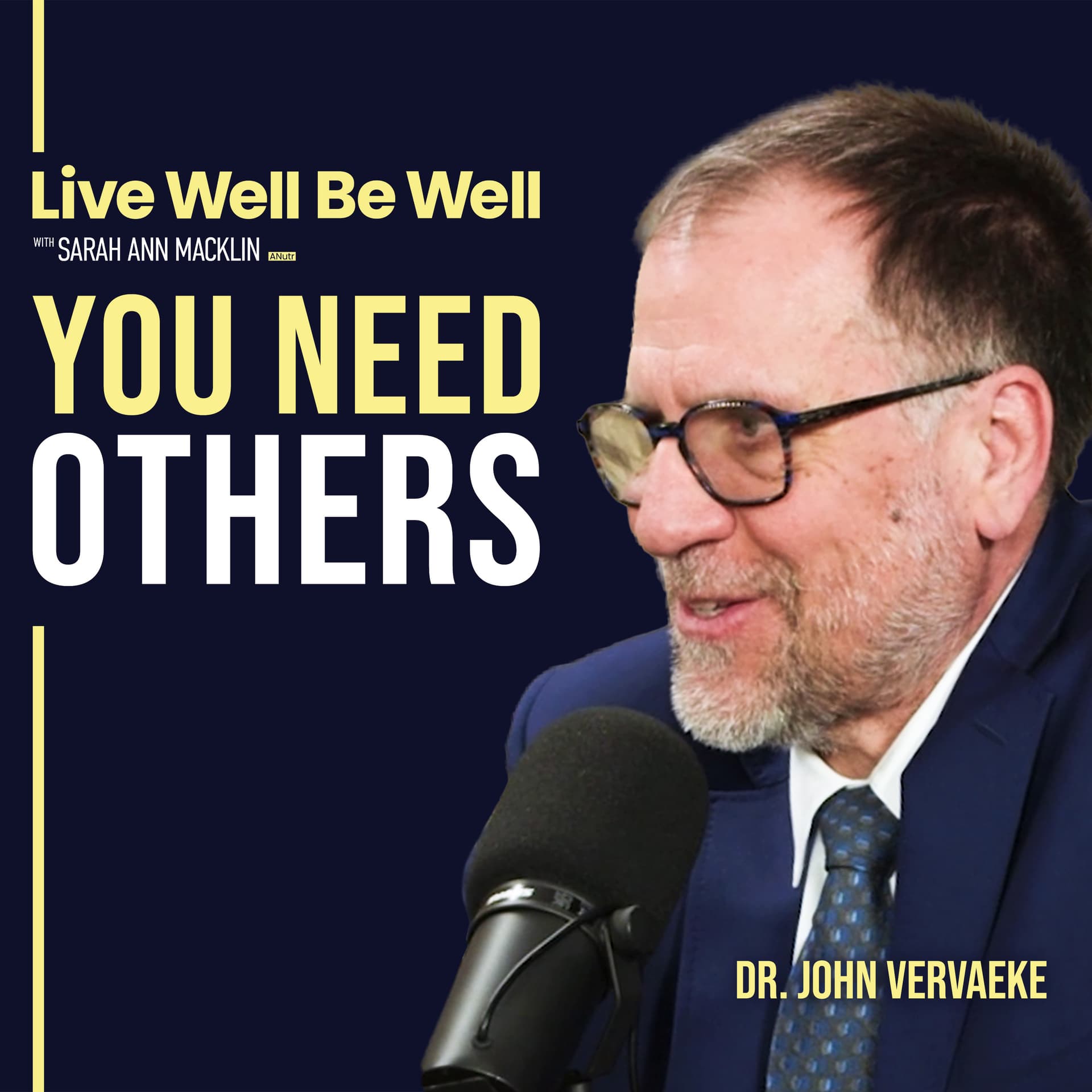
Dr. John Vervaeke is the main guest; the host is not named in the transcript.
Written by AI. May contain mistakes. Listen to the episode to check what was said.
Chapters
Tap a time to open that second in VOThe Pursuit of Meaning
0:10 to 1:14
Exploration of how meaning in life is perceived as an individual possession.
“I also feel though now that more than ever before, we're all on this kind of individual mission to find meaning in life.”
Understanding Wisdom
1:14 to 3:08
Discussion on the nature of wisdom and its importance in cultivating meaning.
“And part of this is the Enlightenment and the Romantic Revolution.”
Wisdom Through Experience
5:20 to 8:15
Insight into how trauma and life experiences contribute to wisdom.
“Are people who are more wise, have they been through more kind of destructive periods in their life that they've had to learn quite quickly?”
The Interconnectedness of Virtues
8:15 to 10:23
Discussion on how virtues interrelate and contribute to wisdom and meaning.
“holes and see more deeply into their soul.”
Transcript
Automatic transcript. May contain errors.0:00Welcome to Live Well, Be Well, a show to help high performers improve their health and well-being.
0:10I also feel though now that more than ever before, we're all on this kind of individual mission to find meaning in life.
0:18Dr. John Vervaeke:And we think about it as an individual possession that we somehow have, right? Right. But meaning has to be shared and it has to be aspired to. And it has to, the way you described it, the way I would describe it to living in this culture is, well, it's my meaning in life and I have to have it. It's a completely individual, completely subjective thing. And it's, it's just its own thing. It's like a possession. if you had said this to any other culture or even our own philosophical history they would look at you and say what like but where's wisdom like you can't get you can't get eudaimonia you can't get like happiness not i don't mean pleasure but you can't get meaning in life happiness unless you're cultivating wisdom and that has to be done with other people because you're we are all very bad at correcting ourselves we're really yeah yes right yeah right and so but it's this fundamental misunderstanding of meaning.
1:17Dr. John Vervaeke:And part of this is the Enlightenment and the Romantic Revolution. Meaning is this individual, internal, non-developmental thing. I just have to find and get and own for myself. So you mentioned wisdom, which we haven't spoken about yet. Yes. Many people, and you said in the five questions, your mother always said to you that you were a very like old soul, which I said that to somebody the other day as a compliment and they took it as a, not a compliment. And I had to kind of like wheel back and say, no, no, no, if that means that you've got a lot of wisdom, that's how I would describe an old soul is that they're kind of wise beyond their years.
1:57But how, how do we define wisdom? Because, you know, as you've said, we can all be intelligent and have intellect, but it doesn't mean that we are wise.
2:05Dr. John Vervaeke:Yeah, I think there's two dimensions to that. One is to understand that wisdom is much more about the how than the what of knowledge. It's how you know. And there's two aspects to that, I guess. one is wisdom involves uh rational not in the sense of being logical uh the the the dream that we should be sort of computationally comprehensively logical it's quixotic it's ridiculous it actually makes no good scientific sense because like you would have to check all the information in this room and like i was talking about that you just can't do that um so what rational really means is how well you are at overcoming self-deception precisely because you're doing that relevance realization I talked about earlier, but precisely because your adaptivity, your being so powerfully intelligent is dependent on you ignoring so much information, you are perpetually vulnerable to self-deception because sometimes you ignore the information that actually is what is needed to address your problem.
3:07Dr. John Vervaeke:And you know this, you know, this happens in your life because you have moments of insight. You'll say, Oh, I thought she was angry, but she's afraid. And what you're paying attention to and what's foregrounded, everything shifts, right? So we have to comprehensively address self-deception, but we can't just sort of crush it because that machinery that makes us self-deceptive is also the machinery that's at the heart of our adaptivity. So you need a way of ameliorating. It takes a lot of finesse. It takes a lot of complexity and subtlety and nuance. You have to finesse overcoming the self-deception while enhancing the adaptivity, the ability to zero in.
3:51Dr. John Vervaeke:And wise people can come into a situation and they zero in on what's relevant. They know how to zero in on what's relevant. They know how to cut through their own bias so they can see more clearly into the situation. One billion people worldwide are deficient in this nutrient that so many of you guys might not be aware of. And women, if you're listening, you are more at risk of being deficient in this nutrient. So I'm going to first of all explain what the physical symptoms are. If you have cold hands and feet, pale skin, extreme lack of energy or fatigue, then you might be suffering with iron deficiency or anemia.
4:29Now, first off, please go to your GP to get your iron levels checked. Secondly, please explore a good iron supplement. many people that come to me are worried about taking iron supplementation because it can cause constipation or GI distress that's why I'm so incredibly proud to be partnering for this episode with Spartone the number one iron rich water supplement now I've personally been using these for years the reason why is because they are naturally sourced highly absorbable iron that means it's much more gentle on your stomach. There's no harsh tablets. It's just one naturally sourced ingredient that works very well.
5:09You can pick it up in boots or buy online at Amazon, but please do not ignore this. It is really critical to make sure your iron levels are in check. Are people who are more wise, have they been through more kind of destructive periods in their life that they've had to learn quite quickly?
5:26Dr. John Vervaeke:That's an interesting question. So the empirical work on that is a little bit mixed. First of all, there is no clean and strong correlation between being older and being wiser. You can be very old and very foolish, just like you can be very smart and very foolish. There's no contradiction there at all. Being exposed to trauma. See, the problem is it probably does. What I'm saying here is not consensus view or anything. I'm just giving you my best take on this, okay? But what the trauma seems to do is it seems to accelerate people who come out of the trauma into a post-traumatic growth of some kind of way, right?
6:05Dr. John Vervaeke:But what it can do is it can also equally disable people and string them and get them more impulsive and short-term into a scarcity mentality and make them vicious. And so it's more of a mixed bag that way. We could go either way. But I want to say one thing to you that I think is, now not talking scientifically, I'll talk personally. One of the wisest things that was ever said to me by one of the wisest people I met in my life in person and got to form a relationship with for a couple of years. I had a really hard time in my life. But he turned to me and he said something that I didn't initially get.
6:39Dr. John Vervaeke:This is how you can tell when something's wise. And then later on, I got it like a time bomb, like Jesus' parables, right? You don't get them initially. And then you're walking around and then suddenly you go, oh, right. And he said, John, don't get involved with somebody who's never experienced, don't get into a deep relationship of any kind with somebody who hasn't experienced significant grief. Because they have not developed their humanity. That is wise. Yeah. That is what I think you can find that in others. I don't even believe that's just always a romantic relationship. You can sometimes connect friends deeper when they've been through something that maybe you've been through that's very similar.
7:19There's a different.
7:20Dr. John Vervaeke:Yeah. Yeah. I mean, and I tell people, like, we use the metaphor because it feels that way. Because the thing about us is we're not just bound to people in terms of, you know, just cohorts that have a utilitarian value. When you have any kind of significant relationship, any religio to a person, right, they're a doorway into a dimension of the universe that is inaccessible once that doorway is closed to you. And so people often are mourning not only the person that is some sense lost, they're mourning that dimension of the world that has now been closed to them. C.S. Lewis talked about when his wife, I believe her name was Joy, died, he felt like there was a great door closing and that God had closed this great door.
8:04Dr. John Vervaeke:And so what I tell people is don't try and close the hole. That doesn't work. You have to grow around a hole so it's not as big of a part of you. And then once you've done that, you can look through the whole to see into other people's holes and see more deeply into their soul. And that's like, that takes a lot of practice. That takes a lot of virtue. But that feels like such a, that feels like a connectedness back to the beginning question about meaning. Of course, we share meaning. But here's the thing I want to bring up about wisdom then, because what you just, first of all, notice how you're gesturing.
8:39Dr. John Vervaeke:Yeah. Yeah. You're right. You're trying. I'm on this journey. Yeah. And you just used a metaphor. You're on a journey. Yeah. So what are you trying to do with that? And this is another important dimension. You're trying to point out that there's important kinds of knowing that aren't carried in our propositions. They're not carried in our statements. They're not carried in our belief about facts, like that cats are mammals. They're carried by our skills. They're carried by the perspectives we take. They're carried by the traits that we cultivate. And then when we organize all of those with our beliefs, we get our virtues.
9:10Dr. John Vervaeke:So your meaning in life is very much, and this is why he was recommending this to me, right? If you want to trust somebody, you have to have a shared meaning, and you have to know that they have cultivated virtue. That's what he was telling me. And when those virtues aligned, then that brings a lot of meaning. Well, I think if people are, I mean, I consider myself a Platonist. Well, I call myself a Zen Vedantic neoplatonist, but I strongly believe that, you know, the Socratic idea about the unity of the virtues. Whenever we do some of these practices where we're getting people to focus on one virtue, they almost always realize the virtues are all entangled with each other.
9:53Dr. John Vervaeke:And it's not just like they're different parts of a machine glued together. They come to realize that honesty is the way to be wise in that situation, and kindness is the way to be wise in that situation. Every virtue is the way to be wise. And yet you're constantly having to keep all the virtues connected to each other because they're always interpenetrating each other. Because in order to be honest, sometimes you really need to be courageous, but you also sometimes need to be compassionate and you need to seek justice and so on and so forth. Thanks so much for listening. To hear the full episode, there's a link in the description.
10:35Thank you.
From the publisher
In this thought-provoking conversation, we explore the deep connection between meaning, wisdom, and growth. From the misunderstanding of meaning in modern culture to the importance of shared wisdom, we dive into how self-deception and trauma shape our lives. Is wisdom something we can cultivate alone?
John Vervaeke
Listen to the full episode here.
Watch the full episode on YouTube here.
***
This episode is sponsored by Spatone – the No.1 iron-rich water supplement.
This is a product I genuinely believe in — one I’ve used personally and recommended in the clinic for years. Spatone is a natural iron-rich water that’s incredibly gentle on the stomach. No harsh tablets, no digestive upset — just one naturally sourced ingredient that works.
If you’re looking for iron support that actually feels good to take, this is the one I trust. You can pick up Spatone at Boots: Spatone Apple Daily Iron Shots + Vitamin C 28 Sachets - Boots
**
This episode is also sponsored by London Nootropics, the best-in-class adaptogenic coffee I trust. Made with Hifas da Terra mushroom extracts, it supports focus, calm, and energy, and helps you stay sharp throughout the day.
Enjoy 20% off with code LIVEWELLBEWELL at londonnootropics.com
***
If you enjoyed this episode you might also like:
Understanding the Loneliness Epidemic | Dr. John Vervaeke on Trust, Belonging & Meaninghttps://youtu.be/AbxCzAt6ZcM
***
Sign up to Sarah’s Compassionate Cure newsletter:
Science Simplified, Health Humanised. Join thousands in exploring actionable insights that prioritise compassion, clarity, and real-life impact. https://sarahmacklin.substack.com/
***
Let’s be friends!
📷 Instagram: / sarahannmacklin
📹 Subscribe: / @livewellbewellsarah
🐦 Twitter: / sarahannmacklin
📱 TikTok: / sarahannnutrition
💌 Newsletter: https://bit.ly/3rUbHyS
#MeaningInLife #Wisdom #PersonalGrowth

