In short
The episode argues that cutting gluten and dairy may worsen gut health for many people, and that persistent bloating/pain is often due to nocebo effects or specific FODMAP triggers (especially fructans), not “gluten” itself.
Guests
Jordan Haworth (host/guest expert). No other guest is identified in the transcript.
Key claims
Fermented dairy (yogurt, kefir) supports gut microbes and lowers inflammation; gluten-containing whole grains provide prebiotics and are linked with lower gut inflammation. “Nocebo” can cause IBS symptoms when people expect gluten to be harmful (placebo-like studies: gluten-labeled muffins caused symptoms even when muffins were gluten-free). Fructans (a FODMAP in wheat/barley and also garlic/onions) ferment into gas and can drive IBS bloating; sourdough may reduce fructans. Low-FODMAP diets should be temporary and personalized. Lactose intolerance causes GI symptoms via undigested lactose; fermented/aged cheeses are naturally lactose-free and may help reverse lactose intolerance. A1 vs A2 casein: evidence is mixed; A1 isn’t broadly inflammatory, but some individuals may react to A1 beta-casein (bcm7).
Notable examples
IBS placebo response (~40%); gluten study with “gluten” muffins that were actually gluten-free; breath-test lactose intolerance; yogurt feeding lowered breath-test gas after two weeks; randomized study comparing A1 vs A2 milk in lactose-intolerant participants.
Written by AI. May contain mistakes. Listen to the episode to check what was said.
Chapters
Tap a time to open that second in VOThe Impact of Cutting Gluten and Dairy
0:45 to 2:52
Exploring how cutting gluten and dairy may negatively affect gut health.
“And there's studies showing that people who eat more of these fermented foods actually have lower levels of inflammation.”
Understanding the Nocebo Effect
2:52 to 6:01
Discussing the nocebo effect and its implications for gluten intolerance.
“These are a FODMAP that you mentioned so nicely, Sarah.”
Fructans and Their Role
6:01 to 11:03
Explanation of fructans and their contribution to IBS symptoms.
“So many people say, should humans, while we're adults, like, so obviously we drink milk as children, but should we be drinking milk as adults?”
Dairy: Myths and Facts
11:03 to 14:00
Examining the nutritional benefits of dairy and common misconceptions.
“But it's been proposed that that BCM7 may affect gut movement or contribute to discomfort in some people.”
Understanding Gluten and A2 Dairy
14:00 to 14:34
Exploring the nuances of gluten intolerance and the A2 protein's impact on health.
Transcript
Automatic transcript. May contain errors.0:00I cut gluten, I cut dairy, I do all these things, and maybe even following a low FODMAP because I've heard that that's good for IBS, but I'm still bloated, I'm still in pain. What's going on? Well, there's a few things you mentioned there that are a raising allowance for me. The first is cutting out gluten and dairy. And we're actually starting to see that doing that could be a bad thing for your gut, right? So when we think of gluten, we'll start with dairy. So dairy, fermented foods like yogurt and kefir are amazing for gut health. They're full of live microbes that help with support your metabolism, support your immune health.
0:43So if you cut out dairy, you're missing out on those foods. And there's studies showing that people who eat more of these fermented foods actually have lower levels of inflammation. So you're missing out on that. And then if we go to gluten, we know that gluten-containing whole grains, like spelt, wheat, barley, are amazing for gut health, full of prebiotics, and studies showing that actually people who eat more of these also have lower levels of inflammation in the gut. So I always say, if you cut out these and feel better, there could be a few explanations for that. The most common, and this is why most people still have bloating, is called the nocebo effect.
1:23The one, or not the one thing, I highlighted many things. Here we go. I was hoping you were going to have to meet, you just perfectly led to the question. So nocebo, I think most people are familiar with placebo. That's where you take something inert but feel better. And interestingly, in IBS studies, 40 % of people taking the placebo feel better. And it just shows how strong that gut-brain connection is. It's not necessarily a bad thing, but this is why if you have IBS you might feel better from taking a supplement even though it's not actually doing that much but then if we think of nocebo it's almost the opposite it's where you have something inert but it makes you feel worse not better and it's usually because of these negative expectations we have around that so in gluten's case it's because you've been told by social media that gluten is bad for you and they've done some studies to show people where basically they take people who think they are gluten intolerance or non-celiac gluten sensitivity so if you have celiac disease you definitely need to avoid gluten we need to disclaimer if you have celiac you cannot eat gluten unfortunately you have an autoimmune condition and there's no cure but for the majority of people because that's less than one percent of the population who have celiac disease to the majority of people who think they're intolerant to gluten but don't have celiac disease they they took these people and then they gave them muffins and told them that one muffin contained gluten and the other didn't lo and behold the muffin containing gluten gave them symptoms however it was a gluten-free muffin none of the muffins had gluten in and this was the no sebo effect in in practice and well also when it comes to gluten and there's something else that can be causing symptoms.
3:16It's fructans. These are a FODMAP that you mentioned so nicely, Sarah. So FODMAPs are fermentable carbohydrates found in mostly plants, especially whole grains and wheat. So fructans are a type of FODMAP that get fermented by your gut bacteria. And when they ferment, they produce gas. A good thing, as we know, make farts great again. But if you have a more sensitive gut, in the case of IBS, that gas can cause bloating. and we know well there's a little test you can do and it's actually to eat sourdough because basically what happens with sourdough is the the flour gets fermented outside of your gut first which naturally lowers the level of fructans so when you eat the sourdough you're less likely to experience bloating because those FODMAPs have already been pre-digested by the microbes during the fermentation process wow i mean that's amazing isn't it just i also love sourdough me too it's so good it's so good so you just mentioned fructans there what foods might have fructans and just so people are like oh okay how do i know yeah fructans are in wheat and some of the other gluten-containing grains like barley which is why they can often get confused with gluten but also things like garlic and onions which are the base of all of the best dishes Italian food Indian Chinese like but there's some little hacks you can do if if you do struggle with the fructans for example you can use garlic infused olive oil to get that garlic flavor and then there's an Indian herb called asphotida which has a very similar taste to garlic and onion boys is low FODMAP so yeah there's little tricks you can do but if you're sensitive to FODMAPs it's usually you know I a sign of IBS which is why the low FODMAP diet is really effective for managing IBS symptoms but it's not a long-term diet in that the longer you're on it because these fermentable carbohydrates are almost like prebiotics you're gonna lose some beneficial bacteria the goal of the low FODMAP diet is to find out which particular FODMAPs you're intolerant to because there's a whole group of them there's fructans there's galacto-oligosaccharides there's um you know there's polyols mannitol sorbitol so you need to find which ones are your issue rather than eliminating all of them because then your diet becomes too restrictive which is not good for your gut microbiome or your mental health in the in the long run no not at all and also um i also wanted to mention about was the dairy so the reason why i kind of said that is because I think so many of us can think, oh, well, I've like stripped all these things out, but I'm still having effects, right?
5:56And actually, sometimes it's too extreme, which is the reason for the first question. You mentioned dairy though. So dairy is a really interesting one. So many people say, should humans, while we're adults, like, so obviously we drink milk as children, but should we be drinking milk as adults? I feel like that is the biggest social media conversation sometimes. And people are saying, it's so bad for us. We shouldn't be drinking milk as humans. we're the only mammals that drink other mammals milk so let's just set the record straight because you have you do talk about derience book so should we as adults be drinking cow's milk can i change this to make dairy great again uh no because then you will look like especially with that color on them let's just yeah goodbye um yeah so dairy in in itself is a very affordable nutritious food source you're talking protein calcium b12 selenium so very nutritious iodine we're in an iodine deficiency right now in the uk which by the way is normally a third world country problem i don't say that loving i'm just like because they're malnourished in third world countries right that's the reason why they have iodine problems and that's why they have thyroid problems yeah we're now doing this to ourselves great great shout and even in places like china now so we we know the food pyramid in china they have the food pagoda and they recently added milk to that because they realized how nutritious milk was because china is an interesting place in that they are naturally lactose intolerant um so around two-thirds of the world population have lactase deficiency.
7:45Lactase is the enzyme that breaks down the lactose sugar in milk. And as we age, we naturally lose levels of this unless you're lactase persistent, which is usually people from European descent because our ancestors probably at some point started eating milk and developed that gene to keep lactase persistent. And if you don't have that and you have lactose intolerance, essentially what's happening is the lactose sugar in the dairy is not being broken down in your small intestine it travels all the way to your large intestine where you've got microbiomes they feed on it they produce gas that huge influx in gas is going to cause that bloating and that wind you get with lactose intolerance but it also has an osmotic effect which draws water into the bowel makes you diarrhea um so what i always tell people is you can still eat dairy even if you're lactose intolerant because fermented dairy like yogurt and cafe aged cheeses mature cheddar parmesan anything aged for longer than two months is naturally lactose free because during that fermentation process the bacteria are breaking down the lactose sugar so you can still eat some forms of dairy even if you're lactose intolerant but people this blows people's minds and when i telling this is actually you can reverse lactose intolerance by eating more fermented dairy and it's a statement actually approved by the european food safety authority so essentially the more cheat the more well the more yogurt and kefir you eat the more of those microbes make their way into your gut and because they produce lactase they help you break it down so they've done studies where they took people and they gave them a load of live yogurt for like two weeks and the way that test for lactose intolerances, we do a breath test.
9:36So if we give you lactose and that lactose isn't digested and it goes to your gut microbiome and your large intestine, they produce gas. That gas gets absorbed from your gut into your blood, into your lungs, expelled in your breath. So we can measure that gas. So if you get an increase in gas after lactose, you might be lactose intolerant. But what they found is actually eating more of that live yogurt and then they retested them two weeks later those gas levels dropped because they were now absorbing more of that that lactose sugar so because the only thing i feel like people are going to say i cut out dairy and my skin improved like there is connections with acne yeah so lactose is a sugar um that doesn't necessarily cause immune symptoms it's going to cause gastrointestinal symptoms the immune symptoms that are often related to skin and uh respiratory uh tract uh caused by usually the cow milk protein and one if there's typically two there's uh well there's a beta casein right so there's a1 and a2 this is my next question right you're aligning yourself up so well facing my questions and actually lactose intolerance can be uh confused for uh an a1 beta casein intolerance so they did a randomized study where they gave people either a1 milk or a2 milk so a2 milk is naturally comes from cows that produce a2 milk including jersey cows um but it's also found more abundant in things like sheep and goats and what they found was that these again they took people who had diagnosed lactose intolerance so we know they had lactose intolerance because they did one of those breath tests so they were proven to be lactose intolerant but what happened is they gave them a2 milk and a1 and actually now they could eat the a2 milk even though it contained lactose so actually it wasn't the lactose causing the symptoms for them it was the a1 beta casein protein so if you want to give it a go yourself or see if you can tolerate you could try a2 milk jersey cow milk you could try cheese made from sheeps goats milk you know halloume feta manchego and if you can tolerate them better then it might actually be the the protein rather than lactose well i'm glad you brought it up because there's a lot of stuff online right now by saying that and you can tell me if this is wrong or right you know a1 milk which is probably what most of us really drink um that it releases more of the peptide bcm7 not saying the full one because my dyslexic brain will break down.
12:18But it's been proposed that that BCM7 may affect gut movement or contribute to discomfort in some people. But some people are saying, like, we should just not be drinking it. It's not healthy for us. And we should be looking more at A2 milk, which is what you just spoke. But I tried to look at the evidence, and it said that the results are mixed, and the evidence is not strong enough to conclude that A1 milk is genuinely inflammatory or harmful. I mean, I looked at a randomized crossover study, but also it was the e f s a gosh my brain with dissection and words sometimes so i'm different review that's kind of what it said too and it kind of said yeah goats and sheep milk is predominantly contains a2 beta casein which may be one reason that people tolerate it better but we shouldn't be scared of a1 milk right because when i try to research this looking on social media because obviously you look at the literature but then i also go but then what's social media saying because people aren't reading the literature, people are reading social media.
13:13And people are putting up reels by saying that A1 is very inflammatory and we shouldn't be having it and it's big cattle. The how cows are looked after is very important to me. But obviously if we're looking at just pure health, so it's not inflammatory, we shouldn't be worried about it. No. That was a very long description from you. No, no. In the general population, again, it's not inflammatory. and if I go back to that study I referenced where they looked at people consuming more fermented dairy have lower levels of inflammation and the majority of that fermented dairy was likely A1 based on the countries that they studied so it's not inflammatory it's just that again all of us well not a few of us have our sensitivities and intolerances and it's just like the the sort of the gluten point that actually probably about you know i don't know the actual i'm not going to say it because i don't know the actual prevalence but there will be a small percentage of people who are intolerant to that a a1 protein and the resultant bcm so that those are the people that might need to have a2 but for the majority of us we shouldn't all be rushing out to buy a2 milk i don't why a2 milk costs more why would i spend more money well that's what I worry about is this just a marketing thing definitely yeah
From the publisher
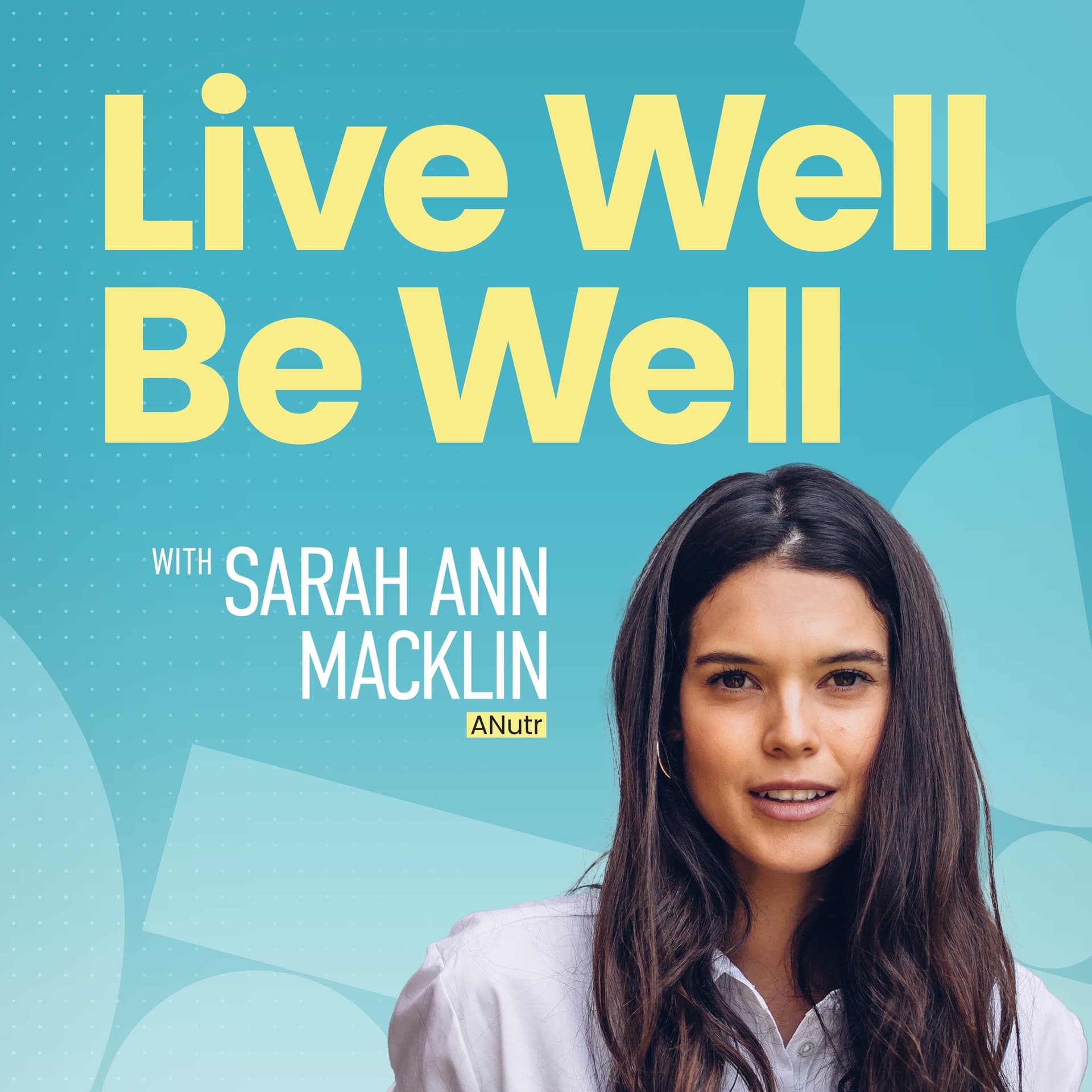
This week's Live Well Be Well Moment with Jordan Haworth, registered dietitian and gut health specialist.
We delve into why cutting out gluten and dairy might not be the answer to your bloating, what the nocebo effect is doing to your digestion, and why fermented dairy could actually be one of the best things you eat.
My book 'Healthy Shouldn't Be This Hard': https://www.amazon.co.uk/Healthy-Shouldnt-Be-This-Hard-ebook/dp/B0G1DHNRV5
This episode is sponsored by:
NOWATCH: The compassionate health tracker Connecting body and mind with unique stress recovery insights so you can live fully today. 👉 15% off with code LWBW15 at https://nowatch.com/
PULSETTO: Vagus nerve stimulation for stress, sleep and calm
👉 Use code SARAHANN at https://pulsetto.sjv.io/SARAHANN
More from me: The Great British Veg Out How to support your gut by eating more, not less https://sarahmacklin.substack.com/p/t…
Reset Your Health If your body feels off after stress, travel, or burnout, this is where to start! https://sarahmacklin.substack.com/s/r...
Free 5-recipe PDF for busy weeks https://open.substack.com/pub/sarahma...
Join thousands reading The Compassionate Cure → https://sarahmacklin.substack.com/
Let's be friends! 📷 Instagram https://www.instagram.com/sarahannmacklin
📹 Subscribe https://youtube.com/@livewellbewellsarah?si=UbuuWvMjAcTkELPN
📱 TikTok https://www.tiktok.com/@livewellbewellpodcast?_r=1&_t=ZN-96iOW29jTRm

