

 Live Well Be Well with Sarah Ann Macklin | Health, Lifestyle, Nutrition
9 Oct 2026 · 6m

 Add vo to ChatGPT or Claude to ask about everything you hear
vo listened to this episode to put together the overview and transcript, so there may be the odd mistake.
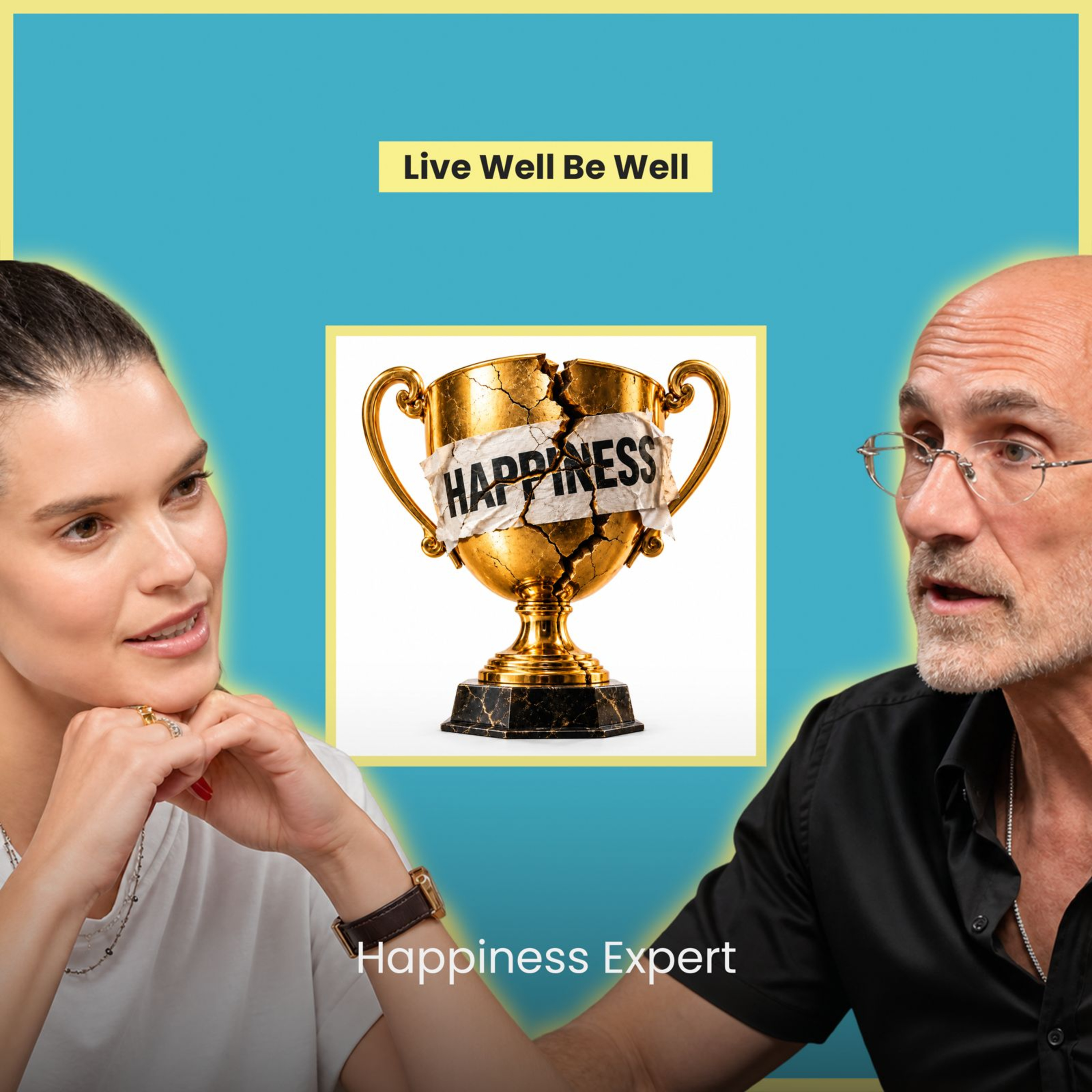
The episode argues that chasing goal completion for lasting happiness is a “arrival fallacy.” Humans are built for progress, purpose, and striving—not for permanent unremitting joy in this life. It connects this to religious/philosophical ideas of heaven or cosmic fulfillment after death, and explains the mismatch using dopamine neurochemistry: dopamine drives wanting, learning, anticipation, and brief euphoria, but fades after rewards, leading to letdown and sometimes addiction.
Arthur C. Brooks (host/speaker; happiness and virtue framework). Another guest joins with a personal example about writing a book over eight years, feeling pressure, then feeling “weird” and crying after publication and bestseller success.
Happiness is fleeting; negative emotions are adaptive; dopamine can’t sustain forever; goal attainment doesn’t equal permanent satisfaction.
“Mick Jagger” lyric about “no satisfaction”; the guest’s eight-year book project and bestseller list; dopamine/psychosis analogy; phone overuse and constant dopamine.
0:00Help me with something. The arrival fallacy. Yeah, yeah. So remember we talked about progress and we talked about purpose. Purpose is the why question. Why am I doing what I'm doing? That actually serves this visceral human need to make progress. We're not made to arrive. We're made to make progress. Now there's big theological implications to this, by the way, in every religion. I'll give you an example. You want to be happy. I want to be happy too. You can't be. Sorry. Right? Happiness is fleeting. Well, I'm a happiness scientist, and I know that happiness, you couldn't be happy if you were happy all the time.
0:37It would mean you'd be bereft of negative emotionality, which would leave you vulnerable to outside all sorts of problems. I mean, you'd get wiped out. You'd get eaten by a saber-toothed tiger because you wouldn't feel fear. You'd eat something poisonous because you wouldn't feel disgust. I mean, you'd be void of negative emotions, which make you unhappy because they're supposed to. You wouldn't have negative experiences, meaning you're actually not walking around to the world. And that's just life, humans, et cetera, et cetera. But we want to be happy. We want to be happy. And we deep down think that we can actually be happy.
1:11So think about what that actually is saying. We have this vision of actual unremitting happiness. And we want it, even though intellectually we know we can't get it. Now, philosophers say, and it's a good definition of evidence that something exists is hunger for it. So evidence that water exists is thirst. Evidence that food exists is hunger. Evidence that pure happiness does exist is our desire for pure happiness. It's just not on this earth and in this life. That's evidence of heaven for some people. Some people, some theologians will say evidence that does exist, just not in this life. That's why you strive for it and that you want it and you work for greater virtue and you work for greater love because you get a little taste of it.
2:01You make a little bit of progress toward it. And then one day, one day, when this earthly coil is finished, that you will experience it, unremitting joy and the beatific vision of the Godhead, or depending on what religion you're talking about. You suck back into the cosmic consciousness, whatever your thing is. But that's interesting because what that suggests is that there is this thing. There is this thing. The problem is when we actually think that we will get unremitting joy, this gets back to your question, here and now by doing something, by satisfying a need, by winning the race, that's a mistake.
2:39That's called the arrival fallacy. You're making progress and it's awesome. but and so therefore you the joy that you get from making progress every day suggests to your brain that when you actually get to the finish line then it'll be perfect forever you'll get that happiness that you seek but it's it's not true i mean good old mick jagger saying i can't get no satisfaction he should have saying i don't i can't keep no satisfaction that's why i keep trying if he were if he had taken my class he would have had different lyrics to that song how do we think about a goal then because i like to i'll talk you through this with me write this book that's a big goal very many years yeah right kind of eight years and eight years into it this is this is your thinking of the past decade yeah right and the pressure to make it a success i put a lot of pressure on myself there's my goal right and it's from the moment that i started thinking about it to the very end.
3:36Now it's out in the world and I'm proud of it. But I felt weird after. Yes. What did you feel after? So we could just explain this neurochemically of course. There's a chemical in our brain that we all know about called dopamine. And we think of it as a pleasure molecule. It's not. What it is it gives you wanting and learning and liking. It gives you anticipation of reward. Something that you like happens that you didn't anticipate and it gives you this little burst of euphoria that's dopamine making you learn about that thing so you'll do it again now next time when you go do it again if it's not as good as you thought you'll get less dopamine you won't like how that feels and so you'll learn not to do it if you get even more than the first time you'll get even more dopamine you'll keep doing it that's how people get addicted to drugs and alcohol and that's why they have to escalate so they get more and more of the chemical the way that this works okay so So the way for us to think about arriving is that we want to get as much of this as we possibly can.
4:44But when we do get it because we like what happened, like my book got published and it made the Sunday Times bestseller list. Congratulations. That chemical can't hang around forever. It can't. If it did, you'd literally be driven insane. you would be in an institution in one week if that dopamine... As a matter of fact, that's one of the neurochemical definitions of psychosis. People who are experiencing psychosis... Is that why our phones are driving us insane? Because it's the constant dopamine. Right. So if the dopamine is sort of in the substantia nigra of your brain, there's too much dopamine.
5:25Dopamine land. Yeah. And that would be a pathology. So you have a neurochemical pathology. you'll have to take a dopamine suppressant so that you don't hallucinate and behave psychotically. Okay, so you don't want that reward, trust me. So actually, it's quite healthy. It's totally healthy. But what that means is once you get to that thing, then you're going to come back off that particular high, and you're not going to like how that feels because you believed that when you actually got that reward, it was going to be the culmination of all of these little tiny dopamine hits as you made progress toward the goal.
5:57You hit the goal, and you're like, now it's going to be great forever. Why do I feel and why am I crying in my room? I Know I know this feeling yeah, I've written 16 books Sarah
This week’s Live Well Be Well Moment is with Arthur Brooks, Harvard happiness researcher and #1 New York Times bestselling author.
Why does actually reaching your goals so rarely make you feel as good as you expected?
Arthur breaks down the arrival fallacy and the real neuroscience behind that dopamine crash, and what it means for how you should be chasing success in the first place.
My book ‘Healthy Shouldn’t Be This Hard’:
https://www.amazon.co.uk/Healthy-Shouldnt-Be-This-Hard-ebook/dp/B0G1DHNRV5
This episode is sponsored by:
POLSEN HEALTH: The compassionate health tracker. Connecting body and mind with unique stress recovery insights so you can live fully today.
👉 15% off with code LWBW15 at https://polsen.health/
PULSETTO: Vagus nerve stimulation for stress, sleep and calm.
👉 Use code SARAHANN at https://pulsetto.sjv.io/SARAHANN
📖 If this resonates, you can join the thousands who read The Compassionate Cure each week.
https://sarahmacklin.substack.com/
Let’s be friends!
📷 Instagram: https://www.instagram.com/sarahannmacklin/
📹 Subscribe: https://www.youtube.com/@livewellbewellsarah
🐦 Twitter: https://x.com/SarahAnnMacklin
📱 TikTok: https://www.tiktok.com/@livewellbewellpodcast
💌 Newsletter: https://sarahmacklin.substack.com/

Scan the code with your iPhone camera
Listen in the app.