Ask ChatGPT


 Live Well Be Well with Sarah Ann Macklin | Health, Lifestyle, Nutrition
6 Nov 2026 · 10m · 4 chapters
Why “best ideas” arrive during quiet, non-focused moments (e.g., shower/pool), framed as a brain mechanism for insight during coaching and everyday creativity.
David Rock is a researcher and coach developer who studied insight and built a coaching program launched in 1998; it has trained about 25,000 coaches across 24 countries. (Host asks about the “shower insight” phenomenon; no other guest is named.)
Insight requires the person being coached to have the insight, not the coach. The brain stores vast prior knowledge, but distant memory networks are hard to access when the brain is “noisy.” Quieting vision/audio input and reducing threat-based thinking increases the chance of hearing quiet signals; mind-wandering during low-demand tasks helps.
Cartoon about adding a shower to an office; people “not hearing” when processing; David Rock’s observation of Brian Johnson producing a “flawless answer” after internal searching.
Written by AI. May contain mistakes.
Exploring why insights often occur during moments of relaxation, like in a shower or pool.
“So I've put a shower into my office in, you know, at work.”
David Rock discusses his journey in coaching and the role of insights in effective coaching.
“over and over that when someone has an insight, the whole game changes, right?”
A deep dive into how the brain processes memories and insights, and the importance of quieting the mind.
“And the insight phenomena is basically you like pretty much every question that we ever like ask ourselves, there is an answer in there.”
The benefits of mind-wandering and repetitive tasks in fostering creativity and insight.
“but you're kind of playing with it, what happens is you get into a brain state that radically increases insight.”

Get the gist, explore an idea or ask about something said.
 Claude
On Live Well Be Well with Sarah Ann Macklin | Health, Lifestyle, Nutrition, what are the key points of this episode?
Searching your listeningAutomatic transcript. May contain errors.
0:00Well, you said something interesting at the beginning, which is you had this big insight when you were in a pool. And I always think about people having these sudden insights when they're in a shower. And I feel like it just relates to what you said, because I guess when you're in a shower, you're feeling the water on yourself. You're probably like more connected to a sensation that's happening. Is that why we just get these kind of like epiphanies or these like ideas of creativity when we're in that moment? And you had one when, I mean, it was in water. Is this anything to do with water or is it giving ourselves space?
0:29Like, what is it? There's a funny, I'm laughing because I'm remembering this funny cartoon I used to show because I've been studying this question for years. And I wondered that as well when I first started down this path, like 22, 23 years ago, I started kind of asking these questions. And there's a funny cartoon of someone saying, you know, I seem to have all these great ideas in the shower. So I've put a shower into my office in, you know, at work. Love that. And it turns out not to be the water. Okay. So I kind of got obsessed about this question. It's a long story, but one of the first things I did sort of in this phase of my career, so I started doing what I'm doing like 28 years ago, right?
1:08And one of the first things that I did was I basically worked out how I wanted to be coached, right? So I was on a long sabbatical and somehow I got the idea of I wanted to know how to be coached better. And for a year, I sat down with a few people and we sort of deconstructed what happened when someone was actually helpful. And that turned into a coaching program in 1998, literally. I started launching this coaching program based on a year or two of his research. And that's like evolved. We've now trained 25 ,000 coaches in like 24 countries. But the basic model was I realized that when you coach people, there was an active ingredient that was very, very necessary in the process.
1:59And that was a moment of insight. And usually, unfortunately, the coach was having moments of insight, which didn't help at all. It got in the way because the coach was like asking questions and then having this great answer. And it was an unhelpful side effect, very unhelpful. You actually need the person being coached to have an insight. and I actually sort of stumbled on by literally observing workshops over and over that when someone has an insight, the whole game changes, right? Now you don't have to talk them into an action. You don't have to – like they're motivated, right? And I got really, really interested in the experience of insight.
2:34This was like literally 1998 to 2001 something. And I started studying it and I basically went and interviewed all the scientists who were studying this at the time and spent a lot of time trying to kind of unpack what was really happening. And it turns out there's a very, very clear mechanism involved. And when you understand it, you reorganize your life around it. It's really helpful. I'm like gripping onto the table now. I'm like, what is it? It's incredibly simple. Every book you've read, this is a great book I hear, congratulations on the Sunday Times yesterday. Thank you. And I remember when I first met you that you told me about this.
3:08I was like, hell yes, that's exactly right. We should talk about that sometime, and here we are. Here we are. We'll get to that. But every single book that you've read, good or bad, stays in your brain, right? But also every single conversation you've had, every problem you've solved, every TV show, every song that you've heard more than once. Like you hear a song two or three times, it's really in your brain forever, right? Just two or three times. So everything's stored. But what happens is when you don't use something again, the brain keeps it, but it recycles a lot of the networks. Right. This is why like if you played an instrument when you were like seven but never picked it up again, if you pick it up again 30 years later, you're not at the very beginning.
3:48You still have some things. It's just like skiing as a kid. Yeah, exactly. Kids that can ski, I never skied as a child. And I can see friends that haven't skied in 20 years and you put them on skis and I'm like, you are really good. Same as riding a bicycle. Exactly, yeah, yeah. People that can ride bicycles when they're children and then you might not ride a bicycle for 10 years but you can get back on and ride it again. I don't know why they call it muscle memory because it's brain memory. But anyway, it's in the basal ganglia, which is a deep network that stores motor functions and patterns and all this stuff.
4:15But all this stuff is in there. Like, think about that. Every conversation, every problem you've solved, every TV show, every CSI, like all that stuff is there. But because you don't use a lot of it, the brain recycles the neurons. So something like, say, a book you read, you know, you read this right now and really, you know, read it. You'll create billions, if not trillions of networks in your brain for all the ideas in there. But in 20 years, if you don't pick up that book again, that might be sort of turned down to just like 100 neurons from billions or trillions. But it'll still be there.
4:45The basic idea will still be there. So anyway, there's a ridiculous amount of intelligence in your brain as an adult. And the insight phenomena is basically you like pretty much every question that we ever like ask ourselves, there is an answer in there. but it's either in a problem we solved once or a TV show or a book we read or a combination of all the books we read or like something we heard, right? So the answers are almost always in there but the problem is they're very small numbers of neurons speaking to each other. So the solution might be literally 100 neurons in conversation but everyday thought is like might be a billion neurons in conversation.
5:30Like when you're like, especially when you're busy and you're juggling 25 things, you've got a lot of brain activity, you know, activity going on. So what happens is basically anything that quietens your brain makes it more likely to hear these quiet signals. Right. Right. So these distant memories are like a quiet cell phone at a loud party. Right. So anything that helps you turn down the party brings up the chance of the signals. And these are electrical signals. They're dopamine spikes as well. They've seen them as dopamine spikes. But they're essentially a memory network that's activated by the search you're doing.
6:08And you just don't hear the answer until you quiet things down. Now, it turns out what quiets the things down, we studied this exactly, wrote a whole paper on it. What quiets the things down is basically anything that makes the brain quieter. One of those things is literally not taking in visual data, he says as he closes his eyes. when I close my eyes, there's an amazing amount of information I'm no longer processing. Like your hair just like fell right there. My brain saw that. And the information in that, if I try to encode that in a computer and just that little bit of hair moving, it's like a lot of information, right?
6:44So your brain, when your eyes are open, there's a ton of information that means your brain's noisy, right? All these neurons are firing, like registering all the information visually. Whereas when you're in the shower, or in my case, the bottom of a swimming pool, or exercising somewhere, you don't have to pay a lot of attention, you can kind of check out a little bit, you'll see people's eyes go up, they go internal, and they stop taking in visual information. And often they stop taking in audio information. When you ask someone a hard question, you'll see them not hearing you when you ask something else.
7:22You'll ask them a question, and they'll be processing, they'll be like, oh, I'm processing. And then you say something else, they're like, what? So they stopped hearing and seeing. Well, when I interviewed Brian Johnson for the first time, it was the weirdest experience of my life. I'll tell you why. This was four years, three, four years ago. I asked him a question and honestly looked like a filing cabinet. He looked at me and then he went. And I was worried of what was happening. But it was like a filing system that he's like going through his brain. And then he just like came out with this like flawless answer.
7:54weird, but okay. But it's true. I mean, what he's doing is looking inside himself, which is where, you know, there's a huge amount of information. Now I understand. Yeah, yeah, no, it's all there. But so essentially, we shut down visually, so that we, and audio, so that we can basically make the brain quieter. Right. So the second thing is we don't, we have to approach the question in a slightly positive way. Like when we're trying to have an insight, if we say like, why is this a problem, you won't have many insights because threat activates lots of the brain, right? Whereas reward doesn't activate as much.
8:29So when we're like, why is this a problem? All the limbic system fires up, gets really noisy, which makes it hard to hear quiet signals. So we have to remind me, I have to come back to the two, it reminds me, I have to come back to the two types of reappraisal that are really fun, fun, fun things. But anyway, when you're quiet, when you're not actively thinking and you're internally focused and you're slightly positive and you're not working directly on the problem but you're kind of playing with it, what happens is you get into a brain state that radically increases insight. And so it's called mind-wandering.
9:07It's basically doing any repetitive task that doesn't tax you. So you don't need to use working memory, but it kind of takes just enough attention that your brain quiets down. So it could be repetitive, like it could be knitting, it could be um you know being in the shower is a really really really common one that's the most common experience where people have insights in the shower it could just be waking up in the morning your brain's not quite there yet things just come to you because it's quiet
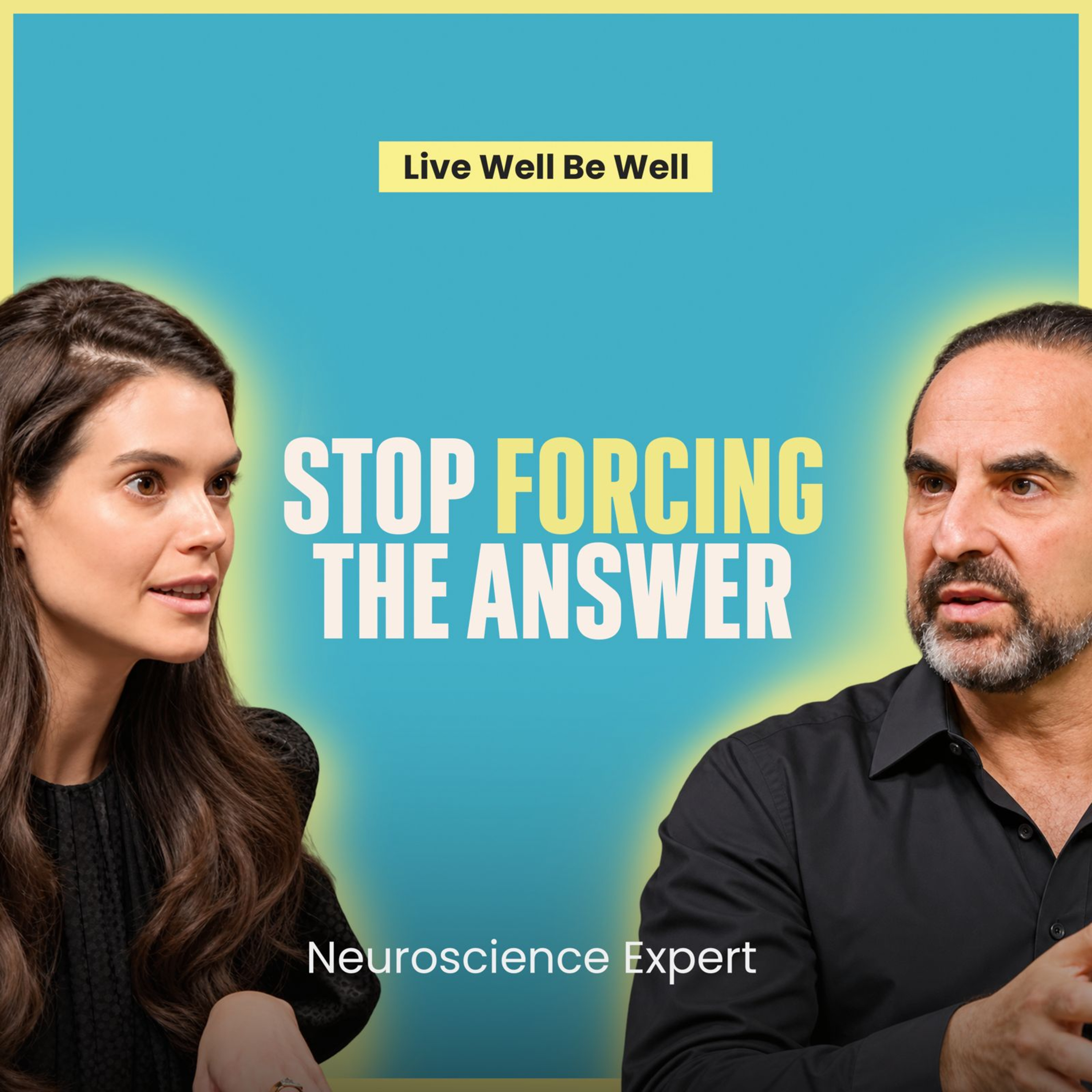
This week’s Live Well Be Well Moment is with Dr David Rock, neuroscience researcher, author and founder of the NeuroLeadership Institute.
He explains why stress and a busy mind can block the insights we’re looking for, how stepping away gives your brain space to make new connections, and what you can do to make those lightbulb moments more likely.
My book ‘Healthy Shouldn’t Be This Hard’: https://www.amazon.co.uk/Healthy-Shouldnt-Be-This-Hard-ebook/dp/B0G1DHNRV5
📖 If this resonates, you can join the thousands who read The Compassionate Cure each week.
https://sarahmacklin.substack.com/
Let’s be friends!
📷 Instagram: https://www.instagram.com/sarahannmacklin/
📹 Subscribe:
https://www.youtube.com/@livewellbewellsarah
🐦 Twitter: https://x.com/SarahAnnMacklin
📱 TikTok: https://www.tiktok.com/@livewellbewellpodcast
💌 Newsletter: https://sarahmacklin.substack.com/