In short
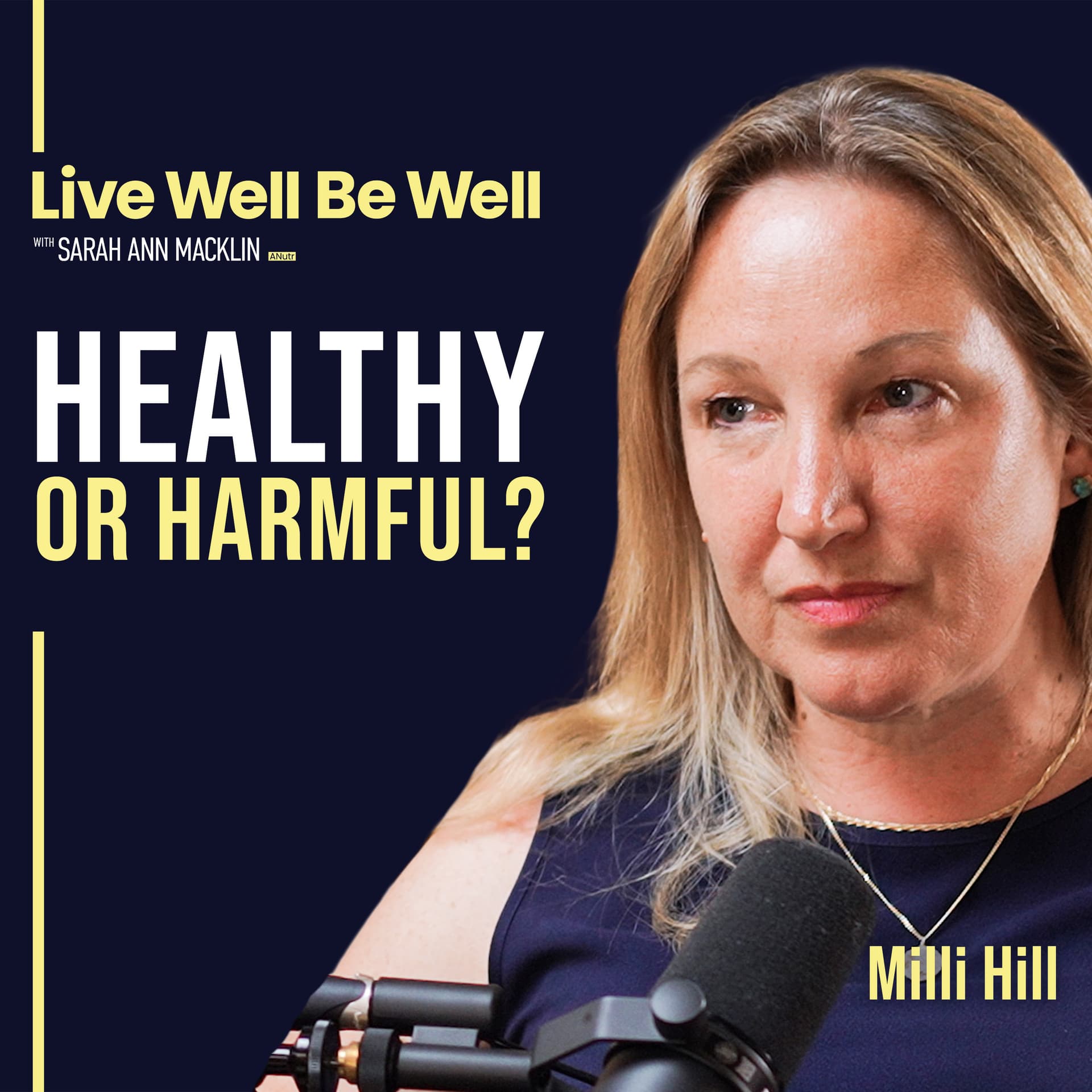
Ultra-processed foods (UPFs) marketed as “healthy” may disrupt women’s hormones and gut health, contributing to conditions like menopause symptoms, depression, autoimmune disease, PCOS, painful/heavy periods, and chronic insomnia. The episode argues women are often blamed for symptoms instead of considering diet, and highlights the gut microbiome’s “oestrobolome,” a subset of bacteria that metabolizes estrogen and depends on fiber.
Guest
Millie Hill, women’s health advocate, women’s scientist and nutritionist; author of a book on UPFs and women’s health. She discusses her menopause experience and research, and references prior podcast context on UPFs.
Key claims
UK diets are ~60% UPFs (vs ~15% in France); women eating most UPFs have ~50% higher depression risk. UPFs may reduce fiber, affecting estrogen regulation and mental health. UPFs are “hyperpalatable,” increasing overeating.
Notable examples
Activia “Gut Health Low Fat Yogurt and Granola” ingredient list with emulsifiers/thickeners; “protein bars” and “healthy bars” described as highly UPF; a kefir ice cream marketed for gut health but containing multiple additives. She also cites an Australian diet trial where ~33% of depressed participants remitted on a modified Mediterranean diet.
Written by AI. May contain mistakes. Listen to the episode to check what was said.
Chapters
Tap a time to open that second in VOThe Impact of Ultra-Processed Foods on Women
0:46 to 3:04
Discussion on how ultra-processed foods affect women's health, including autoimmune diseases and depression.
“about ultra-processed food, the female body, and the gut hormone connection no one's talking about.”
Raising Awareness on Women's Health
3:04 to 4:25
The hosts talk about the importance of focusing on women's health and the unique challenges faced.
“So the average UK diet includes almost 60 % of ultra-processed foods compared to just 15 % in France.”
Understanding the Role of Diet in Menopause
4:25 to 5:31
Exploration of how diet influences menopause experiences and symptoms in women.
“It needs to be uppermost in people's minds all the time because, you know, it doesn't get asked often enough.”
Cultural Perspectives on Menopause
5:31 to 8:06
Discussion on how different cultures perceive menopause and its relation to diet and health.
“And interestingly, women score higher on these diseases anyway.”
The Connection Between Food Choices and Health
8:06 to 12:30
Insight into how food choices impact overall health in an obesogenic environment.
“But the sea witch, the oestrobolome, is controlling all kinds of things from, you know, from our gut health to our oestrogen levels in our body, our regulation of our oestrogen levels.”
Closing Thoughts on Food and Health
13:00 to 14:00
Final reflections on the importance of diet for women's health and well-being.
“Because when you walk into a supermarket, you have more processed foods and ultra-processed foods than fresh foods.”
Legislative Solutions for Local Bread Production
14:00 to 14:20
Learn about the impact of legislation on bread production in France.
“and that it must be sold on the premises where it's made.”
Understanding Processed vs. Ultra-Processed Foods
14:20 to 15:00
Distinguish between processed and ultra-processed foods and their prevalence.
“you know, with the stats you're giving about how much of our shopping baskets are full of ultra-processed food.”
The Reality of Ultra-Processed Food Consumption
15:00 to 15:50
Explore the misconception of dietary habits regarding ultra-processed foods.
“Iron is one of the most common deficiencies that I see in clinic, especially in women.”
Iron Deficiency in Women
15:50 to 16:10
Discover the prevalence of iron deficiency among women and its impacts.
“And if you're pregnant, menstruating or following a vegetarian or vegan diet, your needs are even higher.”
Show all 28 chapters
Decoding Food Labels: Ingredients Matter
16:50 to 19:00
Understand the implications of additives in commonly perceived healthy foods.
“so on YouTube you can have a look, but there is a big old long list of words on this.”
The Profit Motive in Food Processing
19:00 to 20:50
Examine how food marketing affects consumer choices and perceptions.
“but I don't normally call brands out, but it's in your book, so I'm going to do it.”
Navigating the Confusion Around Food Processing
20:50 to 23:20
Learn how to differentiate between processed and ultra-processed foods effectively.
“Yeah, I mean, did you know that Diet Coke and Coke Zero are basically the same product, but that they created Coke Zero to appeal to men, because they thought that Diet Coke sounded more appealing to women.”
The Role of Women in Food Choices
23:20 to 26:00
Discuss the challenges women face in making healthy food choices amidst processing complexity.
“And I see a lot of this in like Facebook groups about ultra processed food and discussions of people getting really into a sort of panic about what they can put in their trolley and what they can't.”
Rethinking Diet Culture and Industry Practices
26:00 to 28:00
Challenge diet culture and discuss the implications of ultra-processed foods on health.
“It's very rare that I would talk about companies on here.”
The Problem with Ultra-Processed Foods
28:00 to 29:46
Explore how ultra-processed foods negatively impact health and hormone balance.
“You know, it is the ultra processed food that is the problem.”
Hormones and Diet Impact on Women's Health
29:51 to 33:44
Discuss how diet, particularly ultra-processed food, affects women's hormonal health.
“Well I think I just want to like bring back in some stats here because I was reading through your book and I was like wow this is actually quite interesting.”
Dietary Changes and Their Effects
33:44 to 35:56
Understand how dietary changes can lead to significant health improvements for women.
“And she'd had a really, really awful time for like over a decade.”
Mental Health and Gender Differences
35:56 to 39:48
Analyze the relationship between diet, mental health, and the gender disparities in depression.
“Whereas I think it's become an autopilot.”
The Complexity of Women's Health Issues
39:48 to 42:00
Delve into the challenges women face regarding health, pain management, and societal perceptions.
“Here's your stat, like, of the percentage of the people who go to the GP saying I'm depressed.”
Embracing Women's Cycles
42:00 to 43:31
Discover the importance of understanding and embracing women's hormonal cycles.
Cultural Perspectives on PMS
43:31 to 45:38
Learn how cultural perceptions influence experiences of PMS and women's health.
“And that is a topic of debate for some people, I think, at the moment of whether women should be having...”
Reframing Food Choices
45:38 to 48:42
Understand how to reframe the relationship with food and ultra-processed foods.
“It's harder to be more positive, but I think it's essential for any change stepping forward into any transformation we're going to go through, especially as women.”
Practical Steps Towards Health
48:42 to 50:48
Explore easy steps for incorporating nourishing foods into your diet.
“But then that in itself has a knock-on effect into our behavior and our choices.”
Mindset and Habit Change
50:48 to 54:03
Learn how mindset influences dietary habits and small changes for improvement.
“For me as a nutritionist, that's so important to get in the beginning of the day, like 30 grams of protein in the morning.”
Nostalgia and Food Choices
54:03 to 55:52
Understand the role of nostalgia in food preferences and comfort.
“What's been the biggest change that you've made when it comes to ultra processed foods?”
Investing in Health for the Future
55:52 to 57:52
Discover parallels between financial investment and health investment for long-term benefits.
“they're not going to be thinking about...”
Discussion on Ultra-Processed Foods
57:52 to 58:36
Explore the nuances of ultra-processed foods and their impact on women's health.
“Thank you so much for talking about ultra-processed food, especially in relation to women and all of the kind of nuances that maybe we haven't foreseen.”
Transcript
Automatic transcript. May contain errors.0:00Most people will say, oh, we don't really eat ultra-processed food in our house. Oh, don't worry, I've had that in clinic. People come in to me and I'm like, show me your food diary. It's only like 60 % of their diet. Because there's so many things that are marketed as healthy. You've got constant emulsifiers, loads of preservatives, rapeseed oils. This is what our bodies are metabolizing. The things that are marketed as healthy are quite often the biggest culprits. More women are more likely to suffer with an autoimmune disease. Women who eat most ultra-processed food have a 50 % higher risk of depression.
0:28We assume that women just were born to suffer of these conditions. We don't ask why have women got all these autoimmune conditions more than men? Why are twice as many women depressed as men? We may not be looking at that missing piece of the puzzle, which is what are you eating? Writer and women's health advocate Millie Hill joins us to expose the truth about ultra-processed food, the female body, and the gut hormone connection no one's talking about. Know that there is a part of the gut microbiome that regulates estrogen and that needs us to be eating fiber. So if we're eating a lot of ultra-processed food, you're not going to be getting that fiber.
1:01The oestrobolome is controlling all kinds of things, from our gut health to our oestrogen levels, and also our mental health. And so that is a subset of gut bacteria that metabolizes oestrogen, which is really important. Are women more vulnerable biologically to men? How does ultra-processed foods play a role in some of these conditions that women suffer with? Maybe we are blaming ourselves hormonally, when actually we haven't been looking at what we've been eating. Firstly, I want to say thank you to tuning in and listening to the show. It means a huge amount. And connecting with all of you is something that I absolutely love as part of this journey of growing the show.
1:38One of my biggest goals of 2025 is doubling the reach of this show. And I can't do that without your support. So I would love to ask you a favor if you can press subscribe or follow on whichever platform you listen to. This helps us reach more people. And for me, elevating women in science is so fundamental and ethical and scientific information. So if you feel the show empowers you and gives you the information that you've been seeking, I would love to ask a favour in return and to hit that subscribe button and help me reach the goal that I've set for the show of 2025. Thank you. I'm so excited to have this conversation because women's health is very close to my heart.
2:23Being a women's scientist, nutritionist, hosting this podcast, in the last kind of year, I've realized that the more content we've put out on women's health, the more virility we get. But the reason is because it's shown the demand is there, that people are really, really searching for answers on women's health. And I'm really excited today because recently, maybe recently, about a year ago, we had Chris Van Talikin on about ultra-processed people. And last year, that was one of our highest-grossing episodes. And so I'm very excited to bring this context to specifically women and women's health and everything in general.
3:03So I just want to start with a few stats. So the average UK diet includes almost 60 % of ultra-processed foods compared to just 15 % in France. Then we look at where we are in the UK compared to other parts in Europe. And then I also found this stat quite interesting. Eating just four servings of ultra processed foods a day was linked with an increased risk of early death. And I was like, well, okay, that's large. And I know that two thirds of our shopping baskets in the UK are full of ultra processed foods. So we've got a pretty big starting ground here. So then I thought, well, let's just strip it all the way back.
3:41That's currently where we are. If we are what we eat, what happens when most of us eat what isn't real? Well, exactly. Yeah. We have a problem. Yeah. Right? Yeah. I mean, you just have to look around and talk to people, I think, to see that we have a problem at the moment with what people are eating. Yeah. Well, I think maybe let's start with why this is so specific, more so to you, to women. Because people will probably listen to this saying, well, I know there is a huge problem with ultra-processed foods. Why are you focusing this specifically on women's health? Well, because I think, you know, the question, what about women, needs to be asked all the time.
4:28It needs to be uppermost in people's minds all the time because, you know, it doesn't get asked often enough. often we generalize and we talk about people and often when we generalize and talk about people we're referring to the default person which is a male so from research to you know our own concept of a human often the default person is male and so I just feel it's important to turn the spotlight on women um and ask how it affects us we're 51 of the population and we are unique our bodies are different so there's going to be specific impacts on women um so yeah it's women women's bodies are matter yeah no they do i think what i found so surprising about this is i mean there's a and a massive amount of research in this book.
5:22And you speak about how ultra processed foods can contribute to things like menopause, to depression, to autoimmune diseases, to dementia, to chronic insomnia. And interestingly, women score higher on these diseases anyway. Women are more likely to have an autoimmune condition. More women are more likely to suffer with an autoimmune disease. More women are more likely to suffer with depression. So how does ultra processed foods play a role in some of these conditions that women suffer with. Well, that's a really interesting point that you've made. And the other thing that interests me when it comes to women's health is how often we assume that women just were born to suffer, if you like.
6:02We were born to suffer these conditions. We don't ask why. Like, why have women got all these autoimmune conditions more than men? Why are twice as many women depressed as men? We don't know the answers to these things, really. And so with food, it's like suddenly you think it turns on a light bulb because you think maybe this could be part of the answer. Obviously it's not 100 % of the answer and it's complicated, but it's staring us in the face. This sort of balance isn't there between, is it because of what we're eating? So is it something in the ultra-processed foods that's causing problems in the body?
6:33For example, inflammation or some other strange response? Or is it because when we're filling ourselves up with ultra-processed foods, we're not filling ourselves up with all of these whole foods and fibres that we're supposed to be eating as humans that we were built and have always eaten up until about 50 years ago. So something that like spikes my thought here and I will take these down like level by level talking about menopause, talking about mental health, talking about PCOS. But one thing I think that really highlights when I think about women as hormones. So are women more vulnerable biologically did you feel when you were researching this book to men and maybe that's why ultra processed foods are having such an impact i think well there is obviously so much we don't understand for example the microbiome is such an emerging area of health i know you've recently had someone on your podcast talking about how there's a difference between the female microbiome and the male microbiome but we don't really know very much about that yet at all but we do know that there is a part of the gut microbiome, for example, that regulates estrogen and that that part of the gut microbiome needs us to be eating fiber.
7:45So if we're eating a lot of ultra-processed food, for example, we're not going to be getting that fiber. And so then our oestrobolome, as it's called. I'm so glad you said that because I just pulled it up and I was like, Millie will say this way better than I can. Yeah. In the book, I refer to it as the sea witch because for some reason, it gives me this image of this kind of mysterious creature deep in our gut microbiome. But the sea witch, the oestrobolome, is controlling all kinds of things from, you know, from our gut health to our oestrogen levels in our body, our regulation of our oestrogen levels.
8:20And those in turn, for example, could have an impact on our vaginal microbiomes and also on our mental health. So it's really, really complicated. We're all interconnected and I think that's the thing in the body. So can you just describe what that word was again for people that maybe have never heard of it? Yeah, the oestrobolome. And so that is a subset of gut bacteria that metabolizes oestrogen, which is really important and critical for hormone health, especially for women. Yeah. And I have one too, by the way. It's not a uniquely female thing. Wow. Okay. But it's something that is very, I mean, we've done a lot of gut health episodes and this and very rarely has that come up yeah and i imagine obviously that maybe declines as you age into menopause i'm just thinking because you have a drop in estrogen so maybe that's also another determining factor if that's if that's not being supported by food and then you're going through menopause i can imagine that also being quite a critical insurance factor to think about well i think the differences in the male and female microbiome come into play at puberty and then even out again a bit more at menopause what role the oestrobolome plays in all that and how that changes, I'm not sure.
9:28But I do know that it's definitely really important to be eating a lot of fiber and whole foods when you're going through menopause. And that that is probably the reason why. I think we can safely say that that is, it's the regulation of estrogen in our bodies. There's never been a better time really than menopause to be starting to think about what you're eating in terms of how it's affecting, you know, your estrogen. Yeah, absolutely. Well, you said in the subsect five questions, when I asked you the question on health transformation, and I said what's one health related change that significantly impacted your well-being and you actually like well I'm going to answer too and your first answer was your diet making much more focus on your diet and obviously as a nutritionist and somebody who is very empowering around food and wanting people to try and make the right choices for their health how has food become so fundamental to you in this journey especially through menopause which you spoke to me about earlier?
10:20Yeah, well, basically, I mean, that's how I came to start thinking about this book, because I was actually working on another book, which hasn't come out yet. But when I was working on that book, I was writing something about menopause. And I was going through my own experience of menopause. And I had a sort of game changing moment where I googled, how do women around the world experience menopause? And I hadn't really thought about this before, because we never do think about these things before they happen to us, do we really let's face it so um and that was really eye-opening for me because i started to read that there are women in other parts of the world who have a very different experience of menopause some cultures don't have a word for menopause some don't have as many hot flushes or as we do and a lot of some cultures also conceptualize menopause differently so they think of it as you know an upgrade uh where a woman becomes a wise woman or you know a second spring that's Such a positive version of menopause, you know?
11:16And I think in cultures that perceive older women as important, then there has been some research that has shown that women in those cultures have less menopause symptoms. So it's almost as if part of the menopause symptoms could be psychologically connected to feeling that your value is dropped. But I mean, that's speculation. but I think it's that when I read that, I thought that's actually really interesting. And it made me think about my own perception of myself and how the psychological aspect of how you feel in midlife could be not the whole picture, but part of the picture. But certainly as well, this idea that, you know, for example, women in Okinawa, you know, who are eating a lot of plants have a much better experience of menopause generally than we do in the West.
12:06And that got me thinking about diet. So then when I read Chris Mantellican's book, that was another reason why I wanted to put the spotlight onto women, because I thought this could be really game-changing for women. Again, because the female body is sort of pathologized and medicalized so readily, we may not be looking at that missing piece of the puzzle, which is, what are you eating? You know, which is so simple, really, compared to lots of the other options. That was definitely my journey into this. My, and I don't believe it's the only, the only resource that we need, but I do believe me, it's interesting when I look back, because I'm writing my book at the moment, when I look back at the last 10 years of my change of career, when everything, I'd lost my health and everything was kind of at a standstill with myself, my first step forward was into food.
12:52for me it was the first grasp of thing where I was like okay this I think is really important biochemically physiologically everything in my body from my brain to my immune system I was like I actually need to figure out that what I'm putting into my body is going to support me in all these different ways and it is sad that two-thirds of our shopping baskets are full of processed foods and I think this is the conversation that I have and I struggle with where we talk a lot about choice but I kind of feel that we are in such an obesogenic environment that actually our choice is so reduced. Because when you walk into a supermarket, you have more processed foods and ultra-processed foods than fresh foods.
13:28Whereas when I go on holiday and I go into little markets, wherever I am, whether it's Italy or Spain or France, it feels so much more abundant. The fruit, the vegetables, everything just looks so much more nourishing and fresh and it just tastes better. And so I find it easier to make those choices than when I live here in the UK or when I go to America. Yeah. I mean, in France, they've protected bread. They have a thing called the Decree Pain, which is like the bread decree, which has made rules about what can be in bread and that it must be sold on the premises where it's made. They don't have, I expect they do in their supermarkets now, but generally the bread in France is not EPF most of the bread.
14:12And that's a huge area, you know, right there, that's solved by legislation. Yeah. The other really interesting thing I think about, you know, with the stats you're giving about how much of our shopping baskets are full of ultra-processed food. And also we should distinguish between processed and ultra-processed. Yeah, let's just get these graphs up in the book. It is interesting though, because when you talk to people about, when I've been talking to people about this book as I've been writing it, most people will say, oh, we don't really eat ultra-processed food in our house. Oh, don't worry.
14:40I've had that in clinic. People come into me and I'm like, show me your food diary. and I'm like how much ultra processed food do you think you're eating and they go I don't know 20 it's something like 60 of their diet yeah because there's so many things that are marketed as healthy exactly exactly and they're ultra processed in fact yeah the things that are marketed as healthy are quite often the biggest culprits I found one in the supermarket the other day it was a kefir ice cream so I thought that's interesting I've never seen that before picked it up and turned and it said you know great for gut health and things on the front flipped it over and it had about six different emulsifiers and preservatives and thickeners.
15:19Iron is one of the most common deficiencies that I see in clinic, especially in women. And it's not just about feeling tired. Low iron can impact your energy, your focus, your mood and even your immune system. It's something we really need to be aware of because if left untreated, iron deficiency can become very serious. Now, UK data shows that around 20-35 % of women aged 18-50 do not need the recommended dietary guidelines for iron intake. And if you're pregnant, menstruating or following a vegetarian or vegan diet, your needs are even higher. And therefore, you're more at risk. So, that's why I often recommend Spartone.
16:01Now, this is a naturally sourced iron-rich water that comes from the Welsh hills. It contains ferrous iron, the most absorbable form, with studies showing up to 40 % absorption, so your body can actually use what it takes in. Now, it's also incredibly gentle. It's one natural ingredient, there's no harsh tablets, and there's no digestive issues. I use it myself, and it is my go-to in clinic. You can pick up Spartone at Boots, and if you've been feeling low in energy, it's absolutely worth checking in on your iron with your doctor or GP. You've got these, like, beef soup and noodles, which most people would probably think, oh, wait, maybe we'll actually use Tesco wholemeal bread.
16:43When I was with Chris, I actually bought these items in, and we were, like, we were descripting them on the back. But you can see, I'm gonna, like, put this up to the camera, so on YouTube you can have a look, but there is a big old long list of words on this. And I kind of think about when I would make homemade sourbread at home, not that I do that all the time. I might do that once a year. But it's only a couple of ingredients. And then you look at this and you've got things, you know, emulsif - constant emulsifiers, loads of preservatives, rapeseed oils. I mean, it's huge, like absorbic acid.
17:15Well, actually, that's vitamin C. But lots of yeast extracts, flavor enhancers, lots of thickeners. And so actually, this is what our bodies are metabolizing. They're not getting it. And what I call it is overnourished, but under eating. Yes. Well, I think that that's happening with children is, you know, growth problems because they may be eating a lot of food, but they're not, they're actually malnourished, even though they're eating a lot. And extraordinary and terrifying thing to contemplate, really. because the other thing that writing the book got me thinking about is that you can actually eat a lot of things.
17:56It's what they call hyperpalatable as well, which means it's like the Pringles slogan, once you pop, you can't stop. Yeah, it's because of one of the... I remember at school someone telling me, because there was an E number in there that literally activates a part of your brain to keep you going. So I was like, that is why when you pop, you can't stop. Yeah, I mean, they're just so Moorish. I mean, it's that Moorish nature of UPF that's really grabbing us. Yeah, well, they are good. And I think that's really important to say that because we need to have a conversation where people are honest. Like we were saying, we are, all of us are eating this stuff.
18:28All of us are tempted by this stuff. And so it's no good sort of splitting ourselves off and saying, oh, we're this holy folk who have this amazingly pure diet. I don't want to put myself on that pedestal and say that I am that person because I'm not. I've got three children. We have a normal family house where, you know, we do sometimes have things like sliced bread that we've just been talking about. It's very difficult to get away from it, but we can. There are small changes that we can make that will make a big difference still. Well, I think the one thing that's really going to shock people here is...
19:00This is labelled as healthy, by the way, but I don't normally call brands out, but it's in your book, so I'm going to do it. Activia Gut Health Low Fat Yogurt and Granola. So tell me, this is... I'm going to put this up again to the camera. So this is the label of ingredients. So talk to me about this, because maybe this is where we start, because most people probably wouldn't say, most people would say that's healthy, I think, listening to the show. Yeah. Tell me your take on this, now I've shown the ingredients to everybody. All of these products are being marketed for profit, so they have extra ingredients in them to make them more moorish, more hyperpalatable, to have a longer shelf life, to be more appealing.
19:42often they're maybe full of sugar or they may have sort of gums and emulsifiers in them to make them creamier but they don't have cream in them to make them creamier so there's all of these tricks basically that are put into that yogurt to make it cheaper to produce last longer on the shelf easier to transport reliable so that every single active yogurt that you open is the same as the other one which is actually if you make things at home yourself you know it's not how things normally work in your home kitchen so all of these elements are all for profit um when really you don't need any of that stuff if you want to eat yogurt you can just eat natural yogurt with fruit um and that then you're fine i think that whole low fat era i'm hoping it's dying out now a little bit i mean it's definitely more key towards women which i think is probably interesting to say i think more women are naturally lean towards low fat product products but you remove the fat, you remove the flavor.
20:40So obviously this is the reason why they become so bulked out with these stabilizers and thickeners. Yeah. To give them that, and the sweetness, to give them that moreish behavior. Yeah, it's cheaper. Yeah, I mean, did you know that Diet Coke and Coke Zero are basically the same product, but that they created Coke Zero to appeal to men, because they thought that Diet Coke sounded more appealing to women. I mean, that tells you so much, doesn't it about the food industry and about how women are marketed to yeah well i always love the term that if you take the tea off diet you get dye yeah and it is it's a huge undernourishment i think that's what i worry with the the rise of ultra processed food so we still haven't defined them so let's define process versus ultra process what's the difference people who are trying to navigate this in a supermarket?
21:34Okay, so human beings have always processed food, at least for as long as we know about. So if you take an apple and chop it up or cook it into cooked apple, you're putting it through a process. If you cook a piece of fish, you're putting it through a process. So there's nothing really wrong with processed food. A jar of chutney or a loaf of bread is all food that's processed. It's been through a process. Ultra processed food is something different. if you flip it over it will have ingredients on the back that you don't recognize that's one of the key ways that you can tell there are apps you can get as well i should probably mention there's one called open food facts so you can scan the barcode and it will give you a little sort of traffic light system to tell you if food's ultra processed or not but it's pretty easy to tell if it's wrapped in plastic and it's in the supermarket it's it's likely you know it the best thing to do is just assume everything is ultra processed and start there.
22:29Well it's true you know that Activia I guess people would be like oh this is something that's really good for my health there's lots of Activia shots. The big thing that I see is healthy bars that are labeled as protein bars that are hugely ultra processed. Lots of shakes are ultra processed and so I think there's this mass market because the wellness industry is about to be eight trillion dollars in 2026 and I think because that is such a big market and there is so much money to be made everyone now is trying to pinpoint what they're selling into health but sadly half of it isn't exactly and I think that food companies are going to get cleverer with what they're putting on their labels because that message has been going around for a while now of flip over the packet and read if you can't recognize some of the ingredients so i think that we need to watch out for that because i think that will definitely happen that they call it clean labeling and i think to some extent to be fair to food companies it may be that they want to make a move towards reducing the level of ultra processing but on the other hand you know being cynical it could well be that they just want to, you know, they want you to put that product in your trolley anyway.
23:45I think there is the other thing that does get a bit confusing, just to say, with this idea of it having ingredients that you don't have in your kitchen, is that sometimes, like say a tin of kidney beans will have one thing in it, like a firming agent. And I see a lot of this in like Facebook groups about ultra processed food and discussions of people getting really into a sort of panic about what they can put in their trolley and what they can't. And it's fine if you want to be a complete purist, then you need to seek out that tin of kidney beans that's just tinned beans in water, or you need to buy your beans dried and soak them, that kind of thing.
24:22But I think if you can still recognize the item as food, that's another good sign that it's probably not been ultra processed. I mean, the kidney bean still looks like a kidney bean, doesn't it? whereas when you've got your sort of strange bars like my favorite my nemesis the the go-ahead fruit and oat bake which I let my kids eat a lot of and I don't anymore because I just thought oh great it's like a kind of health you know just go ahead it's healthy those sorts of items with that have got like 35 different ingredients you know it's it's you have to have some nuance when you approach this topic but it is the case that women are quite often in charge of the shopping and the cooking.
25:04And so if you are that woman who's also trying to work and juggle loads of other aspects of your life, it does make it very difficult for you if you then feel that every single thing that has an extra ingredient on the back can't go in the trolley. So there has to be some nuance introduced so that people can navigate this and keep their sanity. I do think the overthinking part and the stress of it is also something that is really important to touch upon. But I do think that the education around the other choices is really important. I think people are so confused, and I see it. I work in this every day in the nutrition landscape, and I can see people are so confused, because it has got confusing.
25:43But actually, without me wanting to sound degrading in any way, it is quite basic. We're just making it more complex than it needs to be. Yeah, I think some of the confusion is coming from food companies. it's in their interests for people to be confused so I do see news articles for example that muddle up and even information pages on websites of people who should companies who should know better muddling that sort of process with ultra processed and making it all sound really complicated so I think some of it is coming from food companies but like you say it's obvious really if we're all really honest with ourselves we know what actual food is you know if your grandmother if it would have been in the shop when your grandmother went to get the food for the week or whatever, then it's less likely to be an egg, an apple, a potato, a piece of meat.
26:34Rice, all of that type of stuff. It's very rare that I would talk about companies on here. But I do think it's important to talk about things, and it's because this is very dedicated to women, such as Weight Watchers. And I've always had a bit of a... My back's always got up about Weight Watchers and Slimming World and these companies because I think, yes the community aspect is amazing but it's it's registered in the nhs as a great weight loss treatment and what worries me is that they're selling their products through these meetings and i think the meetings is what gives support to people being able to lose weight because we know when you do things in a community and we share our vulnerabilities and we feel that support then we can actually get much further with weight loss but the problem that worries me is that it's then about buying these products and these products are laden with all of these ultra processed foods with these gums with these sweeteners it's all about points it's all about like extreme diets and they're all nutrient deficient and it worries me that even the nhs is giving that as a support mechanism for weight loss as opposed to trying to get people to eat more foods that are full of fiber that are going to fill them up satisfy them and allow that community support aspect to still be there but not selling products that are all ultra processed yes exactly and i I mean, there's still the messaging, you know, from places like the NHS about having smaller plates.
27:55And it's all very reductive. It's ignoring the elephant in the room, I think, which is that if you have a great big plate full of freshly made salads and whole foods, then you're fine. You know, it is the ultra processed food that is the problem. And maybe we just don't want to acknowledge that because we've painted ourselves into a corner where it's so convenient or that's what we've been told. And I think that's another interesting myth that's worth challenging, the sort of idea that we can't live without these products, especially in the modern world, because I don't feel like I have loads of extra time because of ultra-processed food.
28:32And none of the women or men or any of the adults that I look around and see seem to be benefiting massively from this industry in the way that we're told that we are. I've watched the science of adaptogens grow personally over the last few years, and they've become more curious in their role in nervous system support, focus and resilience because adaptogens basically buffer the cortisol that gives us that stress and anxiety. But here's the thing, quality is everything. Most adaptogens on the market don't actually contain enough of the active compounds that you see in clinical studies to make a difference.
29:06That's why I've partnered with London Nootropics. These guys only use clinical studies standardized extracts. This is really, really important to get the benefits that you're seeing in clinical research. And they work with Hifas d 'Aterra, Europe's leading mushroom bioscience company. They have high bioavailability, they use incredible ingredients like KSM 66 ashwagandha and Radole Life. These are the active ingredients that you need to see the difference. They have lots of different blends. Flow gets me into deep focus with Lion's Mane. Zen helps support my calm, steady my clarity with ashwagandha.
Read the full transcript
29:36And Mojo gives a clean lift, no crash. And Mush Love, made with fantastic fungi, with three Hifas d 'Aterra mushrooms to elevate your day. Enjoy 20 % off and use code livewellbewell. They come in these fantastic little sachets and they're great for traveling too. Well I think I just want to like bring back in some stats here because I was reading through your book and I was like wow this is actually quite interesting. Menopause symptoms worsen with higher ultra processed intake especially hot flushes, mood swings and weight gains and then alongside that if we go back to when women are having periods, ultra processed foods are linked to more painful periods, heavier bleeding and worse PMS symptoms.
30:20And so it is having quite a direct impact. Maybe when asked for that, if you're knowing and maybe we are blaming ourselves hormonally when actually we haven't been looking at what we've been eating. Exactly. But it's such an easy thing to do as a woman. It's just, I mean, one of my chapters about being unlucky, I think it's called unlucky women. You know, we just have this idea that, you know, you say you have really painful periods and I don't, I'm just lucky. Why is that? I had a really easy birth. You had caesarean. I'm not saying you literally did. I know you haven't. I haven't got children.
30:48Exactly. In case my audience are like, did you have a baby? Yeah. For example, you know, women have these conversations. Oh, I was lucky. You know, I could breastfeed. Oh, I was lucky. I had, you know, I had a really easy birth. I was lucky. That is true. We do use that terminology. I've never had period pain. I must just be lucky. They are lucky. Yeah. But we just assume that it's just like a luck of the draw thing and that there's nothing we can do about it and so then we make ourselves powerless there's only there's only one option and that's to medicalize um and we're not asking about the role of diet at all i spoke to so many women when i was writing the book with all kinds of different health conditions many female only health conditions but some that are you know experienced by both sexes and all of them said that it wasn't mentioned when they went you know for the first line of help sort of gp and that isn't meant to be a criticism of GPs because I know that we're massively stretched and that there's only so much that can be done but I do think if we can put that idea into people's minds GPs, people in authority but also just women themselves just to think about it then that could be a real game changer because a lot of the time it isn't being mentioned even with things like infertility and I was sitting on the tube coming here and there was an advert in front of me saying you could buy this ivf package and it's only 2900 pounds or something and i was sitting there thinking wow that's a lot of money and i was thinking of all those people who are paying that money for their ivf and wondering whether they were asking what they were eating the man as well as the women obviously in that case because it can have a high upf diet can have an impact on sperm motility and sperm count but on women as well but also it can impact on your cycles so if you don't have a regular cycle it can be more difficult to know when you're fertile more difficult to get pregnant but there's so many things there wasn't a single area of women's health that I thought about and I thought right let's start researching that today that I didn't find evidence for either evidence newer evidence that looks specifically ultra processed food or slightly older evidence that looks at you know the role of a sort of Mediterranean diet that kind of research every single health condition I looked at food was was there and yet all of these people who are struggling with these various aspects of their health are very very often not having it mentioned to them at all and did any of them that mentioned it to you change and go off ultra processed foods and see a difference yes I mean those were the people that got in touch with me you know people who had women who had you know had that experience and struggled for a long time and then had sought specific help, for example, from a dietitian and had then changed their diet.
33:37And or there was one woman who stopped eating sugar for Lent. She'd always experienced premenstrual dysphoric disorder. PMDD. Yeah. And she'd had a really, really awful time for like over a decade. And then she gave up sugar for Lent and she didn't get it that month. And she was like, oh, so obviously for her, the sugar was interesting, but also she then changed her diet completely and she fixed the problem for herself. Again, I think it's really important to say that sort of fix all for everybody. And I think in a world where women's health problems are often undermined and belittled and sidelined, it's really important that people know that I'm not saying, oh, all you need to do is just change what you're eating.
34:28and everything's going to be fine. You know, some women have really ongoing difficult struggles with things like endometriosis. And I'm not suggesting that all they need to do is just stop eating ultra processed food and that that's going to be a magic wand. But I do think it's something that is very low risk or no risk for women to try. And it might not be the magic wand, but it might make a difference it could it could make a difference and it's if you try let's say try it for three months if it doesn't help fine you know email me and tell me the way i describe to people is if you think about a car and you think about it's a petrol car and you're putting diesel in it that car is going to break down our every part in our body all of our cells need certain nutrients to flourish, to let the enzymes work and to send signals.
35:24All of these things are built on a very tight machinery. And the fuel to that machinery is the nutrients and the food. And so if you're putting in the wrong type of nutrients or non-nutrients at all, then we couldn't even say they're nutrients. Very slowly, that car starts to break down. But we don't see our bodies in that way. We kind of forget that we are this machine that is built that has to have like the right substance put into it. And I think when we can try and think about it as that car analogy, it allows us to maybe think about the choices before we make them. Whereas I think it's become an autopilot.
35:59I was in France the other day and the person I was with stopped in a gas station. And I went in and this is not saying that, you know, I do eat ultra-priceless foods and I do have that, but I'm much more conscious because of my job. and I went in and bought some blueberries and some apples and some nuts because I was hungry and some water and they went in and got a breakfast bar and McDonald's and I can't remember a packet of crisps or whatever and it wasn't a judgment but it was more like I feel that you might crash having all of that in one go but the signaling was like well this is quite healthy because it's a breakfast bar and it made me realize that actually it's just because of what we're surrounded by that sometimes we're not always actively thinking like how much nutrient and nourishment am I getting in that meal yeah it's very difficult to make those choices because the ultra process stuff is kind of more tempting and it's easier to eat but it can be really really hard to especially when you're traveling and or out and about really hard to find stuff that is healthy to eat that isn't ultra process it's really really difficult yeah I think that's one of the biggest barriers I think about this in terms to mental health which I talk about a lot and women do have higher rates of depression and anxiety than men but I do want to state that it is one of the biggest killers for men in young men anyway suicide is a very big thing so it's definitely me not diminishing that men don't suffer their mental health but when I read the stat in your book it was really interesting that women who eat most ultra processed food have a 50 % higher risk of depression just from eating ultra processed foods yeah and twice as many women than men have depression and twice as many women than men have anxiety.
37:35And yes, more men die by suicide, but that is because they kill themselves using more violent means. I'm so sorry if this is an upsetting area to discuss. Actually, it's women attempt suicide more than men, but they just are less, I don't want to use the word successful, but that is true. So yeah, women are more depressed, doubly depressed. And we don't know why that is, but we do know that women who are eating as you say a diet high in ultra processed food are much more likely to be depressed and there was a great trial in australia where they um called the smiles trial dr felice jack has been on the show oh she's amazing she's amazing she is amazing and i loved um listening to her when i was researching and her trial in australia was incredible in terms of taking people who were already depressed and i think 70 of the people in her trial were female and she took people who were already depressed and changed half of them, changed their diet.
38:35And I think she had 30 % of them go into remission from depression. 33 % into a modified Mediterranean diet. Yeah, which just shows it's not just about staving off depression. It actually could help people who've actually already got depression. Well, it takes me to a really interesting point, but women are 30 % more likely to be prescribed antidepressants than men, even for the same symptoms. So we're there talking about mental health and depression the one thing that and i know gps are under so much pressure but thinking about i do believe medication is needed for a big subset of people i do think it is an important area and i sadly think there's too much stigma and shame there but i also think if we coupled that with food imagine how better the outcomes could be yeah if we put them on a prescription and also a food prescription it doesn't have to be either or in in any area of health depression another one is menopause you know i'm not opposed to hrt and in fact um in the research they've shown improvements in menopause symptoms women on hrt and women not on hrt so it's not about polarizing the situation and saying oh you know everyone's just got to ignore their doctor and start eating more salad it really isn't yeah you know it can be done in in tandem with with conventional medicine.
39:51Here's your stat, like, of the percentage of the people who go to the GP saying I'm depressed. So it's not that men, because I'm assuming there's also a large cohort of men who never get as far as the GP with depression, because there is that stigma, particularly for men around admitting that you're struggling with your mental health. Yeah. So one interesting part in there is that you coined this term, the good girl effect. Right. And how it impacts how we even talk about pain. And you've mentioned that earlier. But how do you think women... I mean, you were just saying, you know, oh, it's easy for, you know, she's very lucky, I'm not very lucky.
40:29Women do seem to have a lot more obstacles, I guess, maybe in health, maybe, should I say, than men with periods, menopause, just childbirth. There's a lot of things there. why do you think that you know that effect of being able to deal with pain is still quite stigmatized we have to just get on with it how can we kind of break that cycle it's really complicated isn't it so say for example you say women should have um leave from work once a month they should have two they should be allowed to have two days you automatically divide people because some people feel that that suggestion is deeply anti-feminist because for the last 50 years of women wanting to be perceived as as equally capable as men in you know the field of work the world is built around male the male body the world is built for people to just who who's i mean men don't have any of this cyclical nature do they they're born they go along on the mainly on the straight line whereas women are always cycling in different ways and going through these different changes.
41:40And I think that's an amazing thing about women, actually. I think that's a fascinating thing about women. I mean, we're taught, I think we're taught, that that's a negative thing. Like, lucky men, you know, they don't have to put up with all this women stuff. But I actually think the female body is fantastically interesting and incredible and well overdue a kind of reframe. And then all women should be thinking about their bodies with a sense of pride rather than a kind of sense of oh why me why couldn't it be a man and not have to put up with all this stuff well one of my friends said in relation to that just while you're on that moment she said actually i'm very i feel very privileged to be a woman because every certain time of the month i know that i can let everything out and everything like becomes like looser in me and i can like put my emotions everywhere and i feel really bad that my boyfriend doesn't really get that he doesn't really get a reset every month exactly that's quite true yeah it's really interesting isn't it the only big change they go through is puberty and then after that it's all plain sailing all the way through so our world is kind of structured around that like the world of work we work five days on two days off don't we we don't work in a cyclical way um you know and also the ovulation time for women can be a real superpower um in terms of like this is when you feel really you have all your best ideas you feel really top of your game you know you start new things you know so if you start to understand your own cycles as a woman you can structure your work life around it particularly helpful if you're self-employed and use those times of the month to either rest and recuperate or to really go for it and work in a more cyclical way but that's not how the world is structured so then you get if you get into a place where you say oh well we should have two days off a month for women's to have you know a rest if they have if they want to then that can be perceived as quite anti-feminist because it's like saying women are weak women can't compete in the man's world women need this rest time it's not perceived that way by everybody but it does divide people.
43:33So it is complicated to write that out. That is coming up, isn't it? And that is a topic of debate for some people, I think, at the moment of whether women should be having... I think it's very individual. I think some women who really actually do suffer with endometriosis or very severe problems which is related to their cycle, whether it's PCOS, whatever it is, I think actually, similar to taking a mental health day check, I think actually can be really supportive. And I think some women... I also think there's a conversation around some women just feel empowered on their cycle. Even when they're on their bleed on their first day of the month, some women feel great.
44:10And I had Dr. Sarah McKay on here. I don't know if you've heard of her, but she's a neuroscientist. Yes, I have. She's amazing. And she was talking to me a lot about the different kind of cultural observations of PMS and how certain countries have hardly any PMS compared to others. And she was saying it's more of a cultural observation of how we talk about it and how we are labeling this as a thing than others and I was like wow so it's not just biological and it's not just hormonal and she was like no and it really blew my mind having that conversation on she spoke to me so many times about kind of the the advantages and the hopes and all of the great things around menopause and women's health which left me feeling elated and excited whereas the month previous that I was LA at a conference for women.
44:56And I left feeling traumatized that the day you hit 35, everything starts to plummet, your brain changes, all of these things happen. And I always remember sitting there going, oh my gosh, I'm not quite sure I'm prepared. And I haven't quite like a terrified response. And actually that communication method, as much as it's amazing that we are communicating so much more about women's health and all the changes that one goes through the mode that it's communicated in i think is really important yes i think there's a lot of always a lot of focus on the negative aspects even if it's unintentional and so i find that women absolutely love to hear something positive about their bodies i mean i've done a lot of work around pregnancy and child birth I've written two books about it and pregnant women want to hear positive birth stories they want to hear that their bodies are capable of giving birth they love they it's like they're like a sponge they love to hear it you know and it's the same with menopause you know if you take a woman in her 40s or 50s and and talk to her about the massive upgrade of menopause and how you are becoming a wise woman you're kind of graduating into a new and even more epic version of yourself a lot of women have never had that said to them and don't feel that way and like you say and like dr sarah mckay was obviously saying you know the psychological aspect is if you if you tell somebody what's the book called this is going to hurt if you say this is going to hurt then it's more like you're prepared yeah if your expectations are low then you're likely to find that you meet those expectations i think everything is about reframing i think we're such negativity bias, our brains are naturally wired in that way.
46:41It's harder to be more positive, but I think it's essential for any change stepping forward into any transformation we're going to go through, especially as women. I feel like we're always transforming. Absolutely. Yeah. And speaking of reframing, I think a really good reframe around the food thing is thinking about, everyone always says about giving up ultra-processed food. But in the book, I write about how it's interesting to think not of giving up something, but what you're making space for because I think there's more to this than food actually I think and this again came to me as as I wrote and thought deeply about what food is and what it means to people we have lost our connection with other humans and we have lost our connection with nature in the past few decades as well as this rise in ultra-processed food and that kind of plastic stuff you know plastic packaged food is kind of almost symbolic of all of that and I think people at the moment are really feeling a need to get back to that basic stuff you know sit if you sit around a campfire it's the same isn't it sit around a table with friends with some candles and a really nice table full of food it's not really just about the food it's about eye contact seeing each other, laughing together, sharing things, tasting food together, and also food preparation with kids and with family.
48:09All of those things are actually really fundamental human activities. And they are all lost if we stop preparing food ourselves. There's something much bigger than food about it all. So I think instead of thinking about giving up ultra-processed food and it being this thing, giving up, makes it sound like a bad thing, doesn't it? like oh my god like you were saying with your friend in the service station you know i don't get to have that that anymore i just have to have these blueberries or you know but actually it's it's bigger than that it's about what you're inviting back into your life and looking at your screen people say oh i don't have enough time to cook but how many hours a day are we all spending on our devices it's we've got to face up to these things we've got to stop lying to ourselves i think about all of this stuff and the food companies have manipulated us into going they want us to go you know that's a brilliant suggestion for them isn't it it's like oh no we definitely haven't got enough time to cook it's definitely much easier to put this thing in the microwave or these chicken nuggets in the oven that serves them very well but it doesn't serve us and it's also depleting us not just nutritionally but from that kind of connection to nature and to each other absolutely so i think like people are going to be listening to this and going okay Millie well tell me some ways to not chuck some chicken nuggets in an oven or to not chuck a soup into a saucepan that's gonna make me feel better so there's so much research in this book and we sadly don't have time to go through all of it but we have really touched upon so many symptoms for women that it affects and how much abundance there is in supermarkets of these ultra-producer foods so what are some easy steps that people can take and processes even mental processes to start including more nourishing foods in our diet that aren't ultra processed yeah we'll start start out thinking of it as a positive project rather than a sacrifice definitely think of play yeah yeah i think don't sweat the small stuff don't be hard on yourself don't feel that perfection is the only option um because even small changes can be the beginning of something and i think even neurologically that's been shown you know this thing there's a really interesting I spoke to some really interesting researchers in the book about the hippocampus and how ultra-processed food affects the hippocampus.
50:26But then that in itself has a knock-on effect into our behavior and our choices. So we can get stuck in these kind of negative loops. And so one small change, talk about vicious circles, but there's this other concept, isn't there, of virtuous circles. So just by making one, I just say make small swaps to begin with. so get some fruit in the fruit bowl so if you want to have a snack have an apple such an amazing thing is an apple isn't it think about bread that's a really really good place to start as well there's a lot of snobbery around supermarket sourdough sour foe some people call it i think that's really unfair because it's helpful if you can get something in the supermarket that's accessible and not too expensive and who has time to make their own sourdough i mean come on do you know there's sourdough hotels in sweden that people give their the roots of their sourdough in when they go on holiday that's how cultural it's got over there i think it's amazing well i'm not saying i'm not trying to put people off for doing these things but i think if somebody's feeling really overwhelmed and just starting out on this journey then there are lots of small things you can do think about what you're having for breakfast you know culturally again we've just been all been brainwashed into thinking that you know boxes of cereal are the only thing to eat for breakfast or toast, sliced bread.
51:47Yeah, which is no protein. For me as a nutritionist, that's so important to get in the beginning of the day, like 30 grams of protein in the morning. If you can have some eggs, people are vegan, it's very different, but tofu, something that you can just get. And eggs can take five minutes just to boil. I sometimes do that when I'm doing my makeup. Yeah. And if you look around different parts of the world, again, it's always interesting to look at other cultures and see what they're doing. Loads of cultures don't have Kellogg's breakfast cereals and lots of cultures eat a variety of ways of having eggs in the morning so you know and spite and and many of them eat like what we would like my youngest child has allergies and he quite often has we call it having supper for breakfast because he will he will eat what we had the night before for breakfast so if we've had like a shepherd's pie he'll have shepherd's pie for breakfast and that seems like a lot of people think oh that's terrible shepherd's pie for breakfast but actually there's nothing wrong with having a homemade shepherd's pie for breakfast because he doesn't like, you know, dairy-free milks and that kind of thing.
52:43So, you know, you can think outside of the box completely and stop kind of, you know, being a slave to these ideas that we've all sort of been brainwashed into. But yeah, just start small and start making it into a fun project. You know, you mentioned soup being difficult, but I've written some stuff about soup in the book. I think soup's one of the easiest things in the world to make. If you've got a big saucepan and a stick blender, you can make soup. It's so easy. No, I think soup's great. My analogy was how can we not get people to buy the soup and chuck it in a saucepan and actually want to go and make something that's quick and easy?
53:15Yeah, I mean, I think the best thing people can do is just try it for a couple of months and see how it impacts on them. And I think, and also fizzy drinks is another thing. And that is the one thing that there's just literally no excuse for. I mean, it's got nothing to do with cost or convenience or any of the other excuses that we use or time for some of the other ultra-processed foods we're eating. soda is just totally unnecessary to human health isn't it so if you can swap that out for water or tea or something different yeah then that again i think once people start making these small swaps and start feeling better then it becomes a more interesting project doesn't it and you think it's like when you start doing exercise you know it's it's hard to start yeah if you've not done any for a long time you stop as well and you've got to get back into it exactly yeah it's really What's been the biggest change that you've made when it comes to ultra processed foods?
54:06What's been the hardest but most impactful? I think it's just a mindset thing, like I say. And I think lunches and being out and about, it's made me very much more mindful of that kind of thing. Like not grabbing the packet sandwich. I don't really like sliced bread sandwiches. Whereas that used to be a kind of lunch staple with crisps on the side, which I actually wrote about in the book. was an advertising campaign in the 1960s or something where they encouraged people to have crisps on the side of their sandwich to balance the meal. And you get these ideas and you think, where did I get that from?
54:39That I should have a little bit of a few crisps next to my sandwich. Why do I do that? So just challenging those habits, really, I think. It's not been like one particular change. It's just been a general slow questioning of the choices that I'm making and starting to make different choices. Yeah, I also feel like the word that's coming up to me there, which I also do think is an important point to make because it's not just habit change, there's nostalgia. Thinking about crisps with my sandwich is quite a nostalgic feeling for me. It's kind of like, oh, wow, that really takes me back to feeling young and at school.
55:13And it's that kind of connection that you're also like, oh, that's also why potentially it feels quite comforting. Not just because of the dopamine effects, it's also got this nostalgic side. and I know whenever I feel quite down, I'll cook something that I used to have when I was younger because it makes me feel better. Yeah. So there's also those kind of nuances that I think play a massive part in all of these decisions, especially if you grew up in the era that we did. Sure. Where ultra-processed foods were coming much more in play. Yeah. But then we can create comfort foods for our kids as well.
55:46We can do that for them, can't we? So that when they're our age and they're thinking, oh, we really want something comforting, they're not going to be thinking about... They go hummus and carrots.
55:58So it leads me to my final question, which I ask everybody, which is, Millie, what does Live For Be Well mean to you? I think it means just taking your health seriously and, you know, respecting your body, really. And knowing that you're, you know, you're making an investment for your future by making small changes. You know, you can change your future health as well as your present health. Yeah, I think that's really great because I heard an analogy and it's really made me think about health in this way where we all put money away quite early, potentially in our 20s. Or if you're not doing this and you're in your 20s, please start doing this, putting money into a pension.
56:37Yes. And we're thinking about financially about how we're investing into how we're going to look after ourselves when we're 70 or 80. and I try to get people now to think about health in the same way of investing time now and their thought processes into what they're putting their body to how their body is going to be when they're 70 or 80 it's very similar to an investment fund and your pension absolutely good analogy and and we don't want to all just live to be 100 do we we want to Brian Johnson then he really wants to live to least 100 well I'd like to live to be 100 but only if I can be the quality of life and healthy i don't want to live to be 100 if from the age of 75 i'm i can't get up out of my chair yeah no thanks yeah quality of life yeah yeah absolutely so that that's important to think about i think and does it the years do whiz by quite quickly so it will happen it happens to all of us doesn't it getting older and we'll be glad that we made these changes then i think but it also is a really really positive thing to do for today it could affect any area of your health that you perhaps haven't even thought about.
57:37Yeah. Because a lot of people won't have associated what they're eating with their health or their mental health. Absolutely. Well, everyone listening to this podcast definitely does. Yes, I'm sure they all do. Our tribe is strong in this. Well, Millie, thank you so much for coming on. Thank you so much for talking about ultra-processed food, especially in relation to women and all of the kind of nuances that maybe we haven't foreseen. But I think it's such an inspiring book to read. And it's so nice just to see more and more context put on women, really, and support from women. So thank you as a woman to a woman.
58:12Thank you for highlighting this and speaking so openly about it. So everyone can buy this on Amazon. It was out on July 3rd. And we will put the links into the show notes as well. Okay. Thank you so much for having me. It's been a really interesting chat. Thank you.
58:35Thank you.
From the publisher
You think you know what’s making you feel exhausted, anxious, or unwell.You blame stress, your hormones, or bad luck.But what if one of the biggest factors is in over half the food you eat and you’ve been told it’s “healthy”?
This week’s guest, Milli Hill, is an award-winning journalist, speaker, and author whose latest work reveals the hidden role ultra-processed foods play in women’s health. From autoimmune disease, depression, and infertility to painful periods, menopause symptoms, and chronic inflammation, her research exposes a truth that’s been hiding in plain sight and asks why we’ve normalised women’s suffering for so long.
We explore:
– Why women face higher rates of autoimmune disease, depression, and the role of ultra-processed food
– How UPFs fuel inflammation, disrupt the gut microbiome, and affect long-term health
– The marketing tricks behind “healthy” products that keep us hooked
– Why reducing UPFs is about reclaiming nourishment, not restriction
– Practical swaps that fit into busy lives without overwhelm
– The cultural loss of cooking, eating, and connection, and how to bring it back
You deserve answers your doctor might not have given you. This conversation is about taking back control of what nourishes you, asking the questions women’s health has ignored for too long, and making changes that support your body, mind, and future one choice at a time.
Connect with Milli Hill:
Website: https://www.millihill.co.uk/
Instagram: https://www.instagram.com/millihill/
Twitter/X: https://twitter.com/millihill
Books: Give Birth Like a Feminist, The Positive Birth Book, My Period
👉https://www.amazon.com/Give-Birth-Like-a-Feminist/dp/0008313105
👉https://www.amazon.com/The-Positive-Birth-Book/dp/1780667655
👉https://www.amazon.com/My-Period-Find-proud-period/dp/1526363372
Love,
Sarah Ann 💛
***
This episode is sponsored by Spatone – the No.1 iron-rich water supplement.
This is a product I genuinely believe in — one I’ve used personally and recommended in the clinic for years. Spatone is a natural iron-rich water that’s incredibly gentle on the stomach. No harsh tablets, no digestive upset — just one naturally sourced ingredient that works.
If you’re looking for iron support that actually feels good to take, this is the one I trust. You can pick up Spatone at Boots: Spatone Apple Daily Iron Shots + Vitamin C 28 Sachets - Boots
**
This episode is also sponsored by London Nootropics, the best-in-class adaptogenic coffee I trust. Made with Hifas da Terra mushroom extracts, it supports focus, calm, and energy, and helps you stay sharp throughout the day.
Enjoy 20% off with code LIVEWELLBEWELL at londonnootropics.com
***
If you enjoyed this episode you might also like:
Women's Brain Health: What Science REALLY Says About Hormones, PMS & Menopause | Dr Sarah McKayhttps://www.youtube.com/watch?v=aKnS1McNVm8
The FIRST Woman To Follow Bryan Johnson’s $2M Anti-Aging Blueprint | Why Kate Tolo Is Different
https://www.youtube.com/watch?v=BJC_E_gXYMg
***
Sign up to Sarah’s Compassionate Cure newsletter:
Science Simplified, Health Humanised. Join thousands in exploring actionable insights that prioritise compassion, clarity, and real-life impact. https://sarahmacklin.substack.com/
***
Highlights:
Intro: How Ultra-Processed Foods Are Harming Women’s Health (00:00)
How Gut Health and Fiber Shape Women’s Hormones & Menopause (06:29)
Overfed but Undernourished: The Ultra-Processed Food Trap (06:29)
The Truth About ‘Healthy’ Foods (19:04)
How Ultra-Processed Foods Affect PMS, Menopause & Fertility (28:45)
Why Small Diet Changes Can Make a Big Difference (33:25)
Depression in Women & Why They’re Prescribed More Antidepressants (37:13)
Why Women’s Pain Needs a Reframe (40:20)
Easy Swaps to Cut Ultra-Processed Foods (47:30)
What Living Well Means to Milli Hill (56:08)
***
Let’s be friends!
📷 Instagram: / sarahannmacklin
📹 Subscribe: / @livewellbewellsarah

