 Luxury Icons: The Marketing and PR Podcast with Rosie Shephard
25 Jun 2025 · 38m

 Add vo to ChatGPT or Claude to ask about everything you hear
vo listened to this episode to put together the overview and transcript, so there may be the odd mistake.
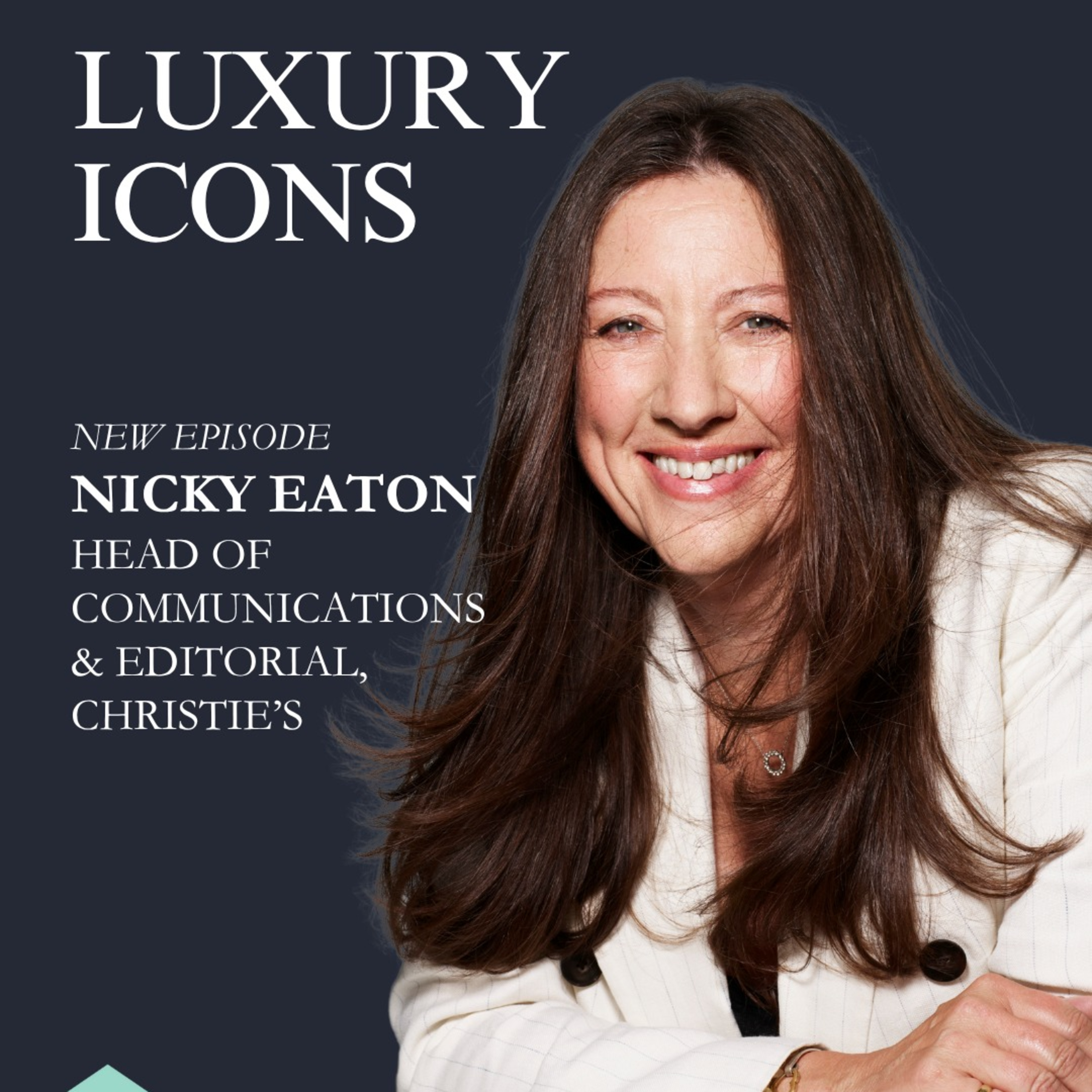
Nikki Eaton, Head of Communications for Christie's (AMIA, later Senior Director with editorial responsibilities), discusses how Christie's tells stories across auctions and digital channels, balancing confidentiality with buzz, and protecting reputation during controversies (including AI-generated art). She also covers Christie's core value proposition: due diligence, provenance, scarcity, and sustainability, plus examples like the Paul Allen collection and dinosaur skeleton sales.
Nikki Eaton joined Christie's in 2018. Previously she worked in publishing (Random House; Fourth Estate/HarperCollins as deputy managing director) and spent 13 years at Condé Nast leading communications, promoting brands including Vogue, GQ, Tatler, Condé Nast Traveller, and Wired, and managing corporate reputation.
Comms rests on two pillars—telling object stories to bidders/buyers and sharing specialist expertise globally. “Just in case” planning, speed, and fact-checking are vital for reputational crises. AI is “assisting, not replacing,” and debate is part of art’s role.
Paul Allen collection highlights (sold for $1.5bn); AI work Edmond de Bellamy (Obvious) and the Art & Tech Summits; dinosaur sales featuring two allosaurus and a stegosaurus, plus an adult/juvenile pairing; “Going Once” email to 650,000 core clients; 80% of bids placed online in 2024.
0:05Welcome to Luxury Icons, the marketing and PR podcast created by the Luxury Communications Council. I'm Rosie Shephard, the founder of the Luxury Communications Council, the world's only membership network dedicated to advancing the global luxury industry by uniting, supporting and championing marketing communication leaders. This podcast is dedicated to meeting some of the industry's most prolific leaders, delving into the challenges and opportunities that we face together.
0:35Welcome to Luxury Icons. Today I'm speaking with the much-loved and eminent luxury communications figure Nikki Eaton. Nikki joined Christie's in 2018 as Head of Communications for AMIA, overseeing reputation, positioning and promotion of Christie's. She was swiftly promoted to Senior director and editorial was then also added to her vast remit. Nikki made her name initially in publishing, firstly at Random House, later at Fourth State, which is actually part of Harper Collins, where she ended up as deputy managing director. Later, she joined Condé Nast leading communications and working with the team for 13 years to promote brands such as Vogue, GQ, Tatler, Condé Nast Traveller and Wired, as well as the reputations of their respective editors.
1:20and, of course, a hefty reputation management job on the corporate communications domain. Nikki was one of our first founding members of the Luxury Communications Council all those years ago. She was instrumental in organising our first ever guest speakers at the LCC Leaders Forum, who were the president of Condé Nast and the editor of Vogue International, for which I am hugely grateful. And that is Nikki all over. She is known for being collaborative, generous and supportive, which makes her hugely popular in the industry. Nikki Eaton, welcome to Luxury Icons. Rosie, thank you so, so much for having me.
1:55I really wouldn't have said yes to anyone else other than you. Well, great. Well, great, great, great. Let's get going. I'd love to start with thinking about your current role. So what it entails, what does it mean to be the communication director over at Christie's? Well, it's definitely one of the best jobs imaginable in the comms world. We really are dealing with the most exceptional art and objects every day. And my job is really to make sure that we're telling the story about those objects, reaching all of those possible bidders and buyers, but also all of those people who just, you know, may be genuinely interested in what we may be having under our stewardship for a short period of time and making sure they can come in and see those objects critically.
2:37That's hugely important to us. I think the other part of the sort of key comms approach every day when we go in is the amazing expertise that we're surrounded by that all of our specialists hold. So how can we really share that? How can we communicate that with everyone out there? And so that's our sort of starting point, those two key pillars, really. we work obviously very closely with our america's colleagues and also those in asia from a comms perspective we are speaking to clients who are international it doesn't make any difference where the auction is actually taking place we could have bidders coming in online we could have them through the phones on the phone banks we could have representatives for them in the room or of course still in the room at those live auctions so we really are always thinking of that global perspective and making sure we've got alignment across across that and the you know obviously there's a huge proactive strategy piece to my role really looking at how we can make sure we're landing all of those great stories and air traffic controlling at the same time because there is a lot coming out of a mirror alone before we even look at what the other regions are doing and thinking you know from a Christie's brand perspective how we can best land those moments and celebrate them and then the other part of my job actually is is working with the editorial team for Christie's so on the stories section of our website we've got a fantastic executive editor Josh who commissions writers who you know also write for airmail the telegraph among others and we're really telling those stories through that section on the website.
4:28Obviously, it's the stories that we're telling from the press office as well, whether it's the earned or the owned channels. We're, you know, making sure we're across all of those touch points. Well, I mean, that sounds like five people's jobs, to be honest, but I'm sure you've got a very comprehensive team. An amazing team, definitely. Great. And putting that in the sort of the context of the wider marketing function, you mentioned the other touch points. So obviously you're dealing with this ultra high net worth individual audience. You know, we're not talking about Google Ads here, are we? So what are sort of the most effective channels that you use?
5:01So, I mean, without question, our role within that broader marketing function, of course, we have to be so collaborative from the outset. We all we are all part of one team, whether it's creative marketing strategy, digital marketing, comms, indeed proposals getting, you know, from a new business perspective. We are all very much working together with comms tending to take the lead from that storytelling and key messages perspective. In terms of our clients, because we we work across so many different areas, so many sectors, whether it's luxury, watches, wine, handbags, jewels, whether it's it's amazing flat art, whether it's decorative art, pieces of furniture, Chippendale, let's say, through to digital art.
5:46we really have to be very very specific and focused in our approach so we have to really there's no one size fits all you know it really is very much drilling down to where are our audience again going back to the global piece you know they could be anywhere um and really thinking and understanding how they live their lives and therefore how we can best reach them and that does mean we we get very very granular yeah and very very specific and of course that all plays into what's at the heart of the business which is actually the personal relationships that then the specialists have with those collectors so I suppose there's a there's a slight difference as well um well a major difference between what we're doing to bring in new audiences and what we're doing to speak to existing core clients um and you know our editorial team um every Saturday we have a going once magazine which is delivered into their inboxes and we've got 650 ,000 recipients of that that's our sort of core client base who we're really speaking to and engaging every weekend with a really nice range of you know what are the six stories this week that we've published that we think you may be interested in receiving in this form we publish more than six stories a week and then there are other elements within that going once online magazine but then obviously new audiences you know it could be events it could be um panel discussions it obviously social um you know various things that we will be um making sure are reaching them through digital so it's it's very varied in that sense okay okay great well we'll have to i feel like there's a lot more to unpack there we'll come back to that um let's just just going a little bit um more in terms of putting everything in context so christie's is a name that most are familiar with hopefully we see amazing headlines all the time and it's everything from you know old masters nfts whiskey sneakers celebrity wardrobes you know jewelry right the way through to dinosaur bones which is you know obviously incredible and fascinating um how do you how do you sort of i guess um how do you describe the breadth and scope of what christie's do well i think um christie's is all about um the incredible due diligence and provenance research that we do into every single object or every single collection that comes into us so whatever area it is in whatever sector it is absolutely going to be um you know you can trust in what we're saying it is absolutely um the best of the best of course and in many cases there will only be one of that particular piece um so immediately we are talking about something incredibly special and incredibly unique in that way um so i think that's that's really um you know across whatever sector we may be working in um that is at the heart of it and that's i mean that's the definition of luxury is scarcity and rarity right and in a world where you've got i guess a you know mainstream luxury brand opportunity to buy on every corner of every major city you know in terms of the fashion world I guess more than anything less than the jewelry and watches but you know luxury is everywhere now you can you know get these pieces that other people have all over the world and then there's the opportunity to buy that one which is where you guys come in completely yeah and I think the other the other part to this um of course is the sustainability piece yes actually you know our business is the most sustainable business you can imagine you know that and and we are working hard on sustainability side of things and this is a huge focus for the business obviously in terms of shipping um packaging you know all of those areas that we've been doing a huge a huge amount of work around and the reduction in what we're publishing from a catalogue perspective um that's really been a focus over the last five years and um we're we're really you know um leading the industry in terms of what we're doing there we're also part of the gallery climate coalition which is a very important sustainability initiative across the art market um so but yeah our business is because of that scarcity because of that unique nature um the most unique and obviously you think of buying a piece of furniture at auction um you're not going to see that piece of furniture anywhere else if you go if you go to a friend's house um and how you then can create your your own interiors you can be you can be very unique in that in that approach yeah wonderful um thinking about you know you've got this vast I think you use the words treasure trove somewhere which uh which we fished out but you've got this treasure trove of incredible stories um which you know you're bringing to life through you know many forms of storytelling what would you say is the most sort of memorable piece or auction story you've encountered um such a hard question to answer I mean every day you walk through the gallery and um you see something extraordinary um you know whether it's you know because of the amazing value because you know that you will it's been in a private collection it will be going to another private collection and will never probably be seen again for 50 years um so you know every day you you do walk through the galleries and just just really sort of stop and and think about the incredible opportunity that we all have as we go through those spaces um but I mean there was a particular um collection sale that came actually it was in New York but often when we have um incredible works we will tour them around the world and they may go to Asia they'll come to London to Paris and we had the highlights from the Paul Allen collection which was sold um towards the end of 2023 in New York so the highlights came to London obviously that gave us an amazing opportunity to invite the media in to see these works the it was the highest value art collection in private hands to date ultimately went for 1.5 billion and we had works you know it covered a 500 year span from Botticelli to to Seurat, to Cezanne, to Hockney, to have those highlights in King Street in London and to be there early in the morning before anyone came in for the press view, you and obviously quite a lot of security, was very, very special.
12:21And so, you know, moments like that really make the role incredible. And am I right in thinking he'd collected sort of one of each of the major masters of that period? Exactly that. you know obviously co-founder of Microsoft um he he began his sort of passion for art and collecting after a trip to Tate Britain um and that was what really kind of you know sparked something in him and um the surah which we sold which was a sort of incredible example of pointillism and also Jasper Johns he was very very much um a fan of you know with his number work with numbers I think he well he said it was very much akin to his approach to computing and how his mind worked well I was thinking exactly that meticulous clearly yeah exactly and you know obviously in when he was alive he he was an incredible philanthropist and so the collection was sold entirely for um philanthropic great purposes so great and you get quite a lot of that don't you We do a huge amount, actually, of charitable focus, whether that's simply an auctioneer going to take a charity auction out of house, or indeed parts of our sales or entire sales that will be dedicated to charity.
13:39Are there any other sort of really left field examples that you can tell us about? I know that Dinosaur Bones was obviously quite unique. very unique i mean not something that um we had had in king street certainly during the the six plus years that i've been there we had um just before uh christmas of last year um we had um two allosaurus skeletons and a stegosaurus skeleton so we actually had three we created a sort of jungle environment with with jungle sounds and you know it was it was a really great immersive experience we created a special day for um those who work at christie's with their children to come in we really wanted to get the children excited my children would love this and um you know it really was um a huge talking point as you can imagine yeah and you know dinosaur skeletons are are um pretty rare um and you know to get them in the the percentage of entirety that these were you're never going to get 100 of course um there are always going to be composite elements but um you know they were they were very unique and um you know sold incredibly well yeah um but what was also very unusual was we had a um a sort of an adult and a juvenile skeleton together and it's very unusual for juvenile skeletons because of course dinosaurs don't you know they tend to you know come out on top and they live to a an older age so it's very unusual to get a juvenile um which was something that a lot of people really emotionally engaged with when they came in to to visit interview and that's a great example you know we had those skeletons in in the building we really wanted to make sure that that um you know we didn't know where they would go would they go into a private collection would they go to an institution we We wanted to make sure that while they were with us, we could get as many people in as possible to see them.
15:36And that's the point. You know, anything that's on view at Christie's, the door is open. Anyone can come in and really engage and enjoy it. Gosh, I'm not sure I even knew that. Yeah. That's really good to know. Yeah. And where did the dinosaurs go? I can't actually share that with you. I'm so sorry. Are they in the country? Presume not. Definitely not in the country. No Brits can afford that. Not in the country, but no, client confidentiality is at the heart of everything we do. Of course. And certainly, you know, within the proactive comms side of things, that client confidentiality piece is key.
16:11Well, that's an interesting one. So how do you balance that sort of, you know, private collection, private sales thing with actually whilst also, you know, trying to create a bit of buzz about something? Yes, I think, you know, I mean, what we're dealing with first and foremost is that piece that we are, we will be offering at auction. And often those pieces themselves have incredible provenance, amazing stories behind them. And so even in those instances where we are not saying who is the current owner, which is very often, we've still got enough to talk about. And there are still enough unique points around that work, whatever it may be, that we can really celebrate.
16:50But of course, when we get those private collections that are named, that really gives us a whole other storytelling opportunity. And our CEO always refers to collections as having karma. And, you know, you really are then able to celebrate that individual. I mean, regrettably, sometimes the collections that we're offering are coming to us because that person has passed away. So we're dealing with, you know, the estate or the family, and we really want to make sure that we're celebrating that individual and the legacy in, you know, in the way that then their family is comfortable with. So a lot of work is done around how we approach that to really make sure that we are landing that exactly as it needs to, because, you know, it's too important.
17:40Absolutely. It's got to be really respectful. And as you say, celebratory. Exactly that. And often, you know, the collections themselves are giving an insight into that individual that maybe many people wouldn't have been aware of when they were alive. So you'd have Charlie Watts, you know, amazing drummer and jazz musician. And yet, you know, he had the most incredible book for modern first edition book collection. Yeah. Many people only really realised when it came to auction. um barry humphries he sell we had earlier this year was a very very good painter he also had an amazing um collection of um for example charles condor an australian artist and then also he was he was a passionate um collector of books um so yeah you know you really get a sense of of the the individual um and what their private passions were um thinking a bit more about you and your career um you started in publishing which i'd love to hear a bit more about and you were actually at condon us for 13 years climbing the ladder um i guess at that time it could have been said to be peak devil wears prada time i'm sure your diplomacy really prevailed um can you tell us a little bit more about um that time and you know some of your more personal highlights of your career absolutely um well yes devil wears prada was you know absolutely um the talk of vogue house of course when that came out.
19:09And but yes, I mean, before before the sort of the Vogue House days and then the Adelphi, where Condé Nast International was based, latterly, I started I cut my teeth in book publishing, marketing and PR, first at Random House with a variety of imprints there, including Century and Jonathan Cape. So very much going from the celebrity right through to the very literary. and I owe a huge amount to everyone I worked with there because they really really did. It was one of those places where you were allowed to take risks and you know nothing was impossible. I love that. In fact that to a degree has been replicated everywhere that I've worked to date.
19:53Well maybe they allow you to take risks. Well it might not apply to everybody. um but i i think you know um the the breadth of um subject matter that one is often asked to work with or certainly at that time within a book publisher um latterly going on to fourth estate and then then to harper collins it really means you are engaging with and deep diving into such a wide um range of media contacts and you know whether that was um the placing of of of coverage or indeed taking the authors on tour, which was what I spent a lot of my time doing. And that really did give you the opportunity to make fantastic connections across the media.
20:35So that was really my springboard, I suppose, to Condé Nast. And, you know, without question, those individual brands within Condé Nast, again, very much giving you that opportunity to work in very different areas and different ways. in terms of what those brands and their personalities were. But obviously then there was that overarching Condé Nast corporate piece, which was critical to the whole thing. And so having originally gone to Condé Nast Britain to run the press office, then laterally moving to Condé Nast International, where I worked with Jonathan Newhouse, setting up the press office across all of those markets, which were outside of America.
21:17So ultimately we got to 24 markets, where I was very much sort of working with the comms team or agency. in each in each area I mean there are many highlights from that period but I suppose two that I would pick out one of which was Vogue's British Vogue's 100th anniversary a phenomenal experience working on that particularly for the anniversary issue although we also had a documentary that was being filmed at the same time we had well at the time of course Duchess of Cambridge on the cover of that anniversary issue you can imagine the the confidentiality and secrecy around the shoot leading up to that publication actually hitting the newsstand and the amazing um fun that we had with that media campaign and indeed the the um a portrait from that shoot was being hung in the national portrait gallery so that became part of the whole campaign itself um and so that was that was definitely a highlight in terms of keeping the lid on things yes and um and then well done yeah um there were there were yeah there were a few of us involved but not that many yeah um and then through to you know going to japan for fashions night out in tokyo the first time the fashions night out had ever been carried out there with every single vogue editor from around the world um the the The orchestration of that was was great fun and one of the best and most extraordinary weeks of my life.
22:50Oh, my goodness. All the devils in one place. No, they were all they were all brilliant and, of course, impeccably behaved. Yeah, I'm sure. Of course. Now, obviously, we've got we've we've already established that one of your superpowers, which I'm about to ask you about, is is clearly keeping the lid on things. Another is letting people, letting, I guess, people allowing you to do creative things, which is great. But in terms of sort of what you think is your fundamental superpower, now we ask everybody this. And, you know, we're obviously talking to marketing comms specialists who are actually the pinnacle of their careers in most cases.
23:26You know, some of them are really creative. Some of them are really innovative. Some of them are actually just really serving the wider industry. um but they they do all seem to sort of be able to identify one thing that is like their i guess their yeah their superpower um what would you say yours is i think um whether we're thinking about sort of the more proactive strategic side of things or the reactive side of things it's um that ability to keep calm under pressure and that calmness allows you to then engage complete clarity of thought and also decision making in that moment whatever that moment may be so I think it's it's that um sense of of calm whatever may be happening around which probably people call out so yeah yeah that's hugely admirable most people get in a total flap um well that must have been very useful quite recently with your AI sort of well I guess it wasn't really a scandal but you did a sale of AI work that certainly led to sort of a lot of controversy um there was a lot of media coverage there was a lot of you know social media discussion um well first of all what's the inside scoop how did it go down and in your words well it was the first um time ever that um a collection of works had been curated to um to come to auction that were entirely aided in their creation by AI and it the sale really did generate a lot of controversy there was a petition that was launched to to sort of really call for the auction to be to be stopped the auction did indeed continue and went on to sell incredibly well and no surprise we saw a huge percentage of new clients coming in to bid and buy in that auction and also no surprise a lot of bidders and buyers being millennials or gen z so from a new audience perspective this was very interesting for the business obviously and and that whole digital art area is is obviously a focus for the business as we look at these new categories you know from it from an ai perspective of positioning that within the broader art market if we look back you know over decades over hundreds of years art has always at moments in time being controversial it generates debate and um so you know it is important to allow that debate to you know be thoroughly sort of discussed and explored and I think Christie's um felt you know it could bring an element of of incredible due diligence and quality control if you like to that moment um you know works of art um creativity is is often inspired by something that has gone before um so what we're really um looking at there is what is the best of the best within this field how is ai assisting in the creation um it's not replacing it's assisting and um and and curating that and bringing the best to our clients well it's fascinating and it does spark a lot of questions presumably the artists were in uproar because ai takes inspiration from previously you know published work so you know I guess that yeah it is it's really interesting well Warhol you know that Warhol as just one example is an artist who you know people said well he's you know he's stealing from others yes um so you know it is something that has we've seen over absolutely every collage artist presumably could you could say the same yeah absolutely yeah well it's super interesting um but as you say art's role in many ways is to inspire that debate um i presume christie's has some sort of um i guess approach to this sort of um this sort of moment when you've got a bit of a bit of a bit of a i guess discussion of going around a bit of controversy um how do you sort of handle that messaging how do you sort of take steps to then protect the reputation of christie's i think firstly everything come comes back to that piece that we are offering it's all about that piece and how we how we can best represent um and and protect that piece actually um from the controversy around it and from a christy's perspective the global alignment on the messaging is always going to be key again we go back to the fact that our clients are international um and communicating actually you know in if if i think back um over those moments where we've had reputational issues to manage it's about the speed of course with which you communicate and it's about the level at which you communicate and that has to be you know quite a high and detailed level but also of course before any of that let's just stop and understand what the reality is it's so easy when you hear things sort of being you know discussed and debated you you've got to check actually what's the truth here what are the facts and yeah so that that planning for so many cases you know the just in case that we are always doing I spend a lot of time on the just in case okay much of which may never be may never see the light of day yeah let's just let's just imagine all of those scenarios what could crop up and how would we deal with those things so um definitely a lot of pre-planning um and and also then calling on past experiences yes i can imagine but that is another superpower in itself being able to predict those those earthquakes or whatever you would call them yeah and and often you know then then you know you you could be accused of being the cynic in the room because you're always thinking of the worst possible but you know um i am always thinking of that while i'm you know i am a naturally positive person i am always thinking about the worst possible um which of course you know fortunately rarely happens but some yes just in case um i suppose another sort of i guess almost tension must be celebrating these incredible old treasures you're working with a brand with incredible legacy but also it needs to be kept really fresh and relevant for the modern day attracting that new younger consumer as you say how do you go about striking that balance i think um again it goes back to who are we speaking to in each individual case and and how therefore are we best able to reach them so if it's the newer audiences how are we engaging with them is it through an art and tech summit you know back in 2018 for example we launched art and tech summits where we've now had them in london new york um paris uh dubai hong kong um that's really speaking to a particular audience and offering a platform to discuss various areas that are relevant to art and tech the first one we did was was focused on blockchain and cryptocurrency um and indeed at the time we also were the first um auction house to offer a work that was generated by AI.
31:02We go right back to the beginning. Okay, really ahead of the game. Edmond de Bellamy was the name of the work of art. It was created by a Paris collective called Obvious, and they basically used AI to take thousands of portraits, family portraits, to generate this work of art that went on to sell very well. Obviously, the debate that that generated at the time was was um very valuable and and that was sold on the blockchain and that that was around the time when we launched art and tech so speaking to to a very specific new audience there um that is also you know highlighting um that christie's is very much about you know looking at what's what's new what's next um what are the new market areas that we need to be focusing on also we have a whole section of of the business christy's ventures which is about investing in okay the in new tech um and um you know the areas that are that we feel will really add value in the future so that's presumably blockchains right there in terms of being able to sort of track the history of any particular piece absolutely and from a digital art perspective yeah we've had you know we've had several examples of where that's been in play yes and also cryptocurrency um in terms of of that being a way in which those digital pieces of work can be purchased any other sort of digital pieces of the puzzle that i've missed i think you know if we go back to the pandemic of course um this is less less digital but but the shift for auction to live stream was a huge moment yes um we turned the auction rooms into you know tv studios and um of course there were those moments where um no one bar those you know actually working on the auction was in the room people were bidding or online or on the phones and that online bidding has of course been a huge piece over the last few years i mean last year 2024 we saw 80 of bids placed online and it's only 30 years ago that you actually had to be in the room yes so it's actually that this has all happened very very quickly very quickly accelerated by covid completely yeah that is extraordinary and do you think that that will continue i mean could it be at some point that the sort of room model is obsolete personally no i don't think that i think the the the live auction with people in the room will always be a key pillar to the business um it's it's such an exciting moment um the atmosphere particularly for a big evening sale you you can't beat it it's it's um it's addictive and um you know some of that of course comes through on the live stream and and you know um and also on social you know we'll have the highlights um that we're posting etc but no there's nothing like being in the room but obviously you know there are many other parts of the business that will that will run alongside that and um private sales of course is another area that um is all about the one-to-one conversation and offering um it doesn't follow the auction calendar you know we're really putting people in touch with the work that they are absolutely passionate to acquire because our specialists know who who owns those works of art or whatever it may be a jewel it may be you know a particular watch for their collection, particular wine.
34:32So they're making those connections and that's all done with utter discretion. So nothing is coming to auction. Nothing is public. And and from a time perspective, that can happen at any moment in the year outside of the auction calendar. Gosh, there's so much going on. Any one time. Thinking ahead. So looking ahead to 2025 to 2026. what are you most looking forward to um so i think one of my highlights for this year will will be around the jenny savile exhibition at the national portrait gallery that's that probably sounds slightly odd sitting you know for in a commercial auction house um but we we do support um on occasion exhibitions um and um we recently supported the van gogh exhibition at the national gallery coming up in June the Jenny Savile exhibition we we recently sold a Jenny Savile in 2021 evening sale and I think that's that's going to be a really great moment for London and I think looking outside into the broader Amir market we've been investing hugely no surprise into the Middle East yes Dubai in 2025 is is celebrating its 20th anniversary great meanwhile While Saudi Arabia, where of course we've had clients for many years and we have very, very close relationships with many clients there, we announced in September of 2024, we'd appointed an MD and had our commercial entity license for Saudi.
36:09So that will be a really interesting area to watch for 2025 and into 26. Exciting. We'll look forward to seeing and hearing much more about that. You're on the homestretch, Nikki. the final question that we ask absolutely everybody is Nikki Eaton what is your ultimate luxury? My ultimate luxury is having the opportunity not to look at your watch or your phone to see what time it is to have complete freedom just to not worry about anything just go with the flow gosh when does that happen um on an occasional weekend i'll be lost in the garden doing something and i'll suddenly realize i've been out there for three hours and it doesn't matter because i didn't have to be anywhere yes i i didn't have a schedule that day um and that to me is the moment of luxury yes it sounds like a complete fantasy to me but maybe one day um nikki eaton this has been wonderful thank you so much for coming and chatting to all of us and yeah we can't wait to see what you do next.
37:17Thank you so much Rosie, I've really enjoyed it. Thank you. Thank you so much for joining us for Luxury Icons. This has been brought to you by the Luxury Communications Council in conjunction with Trapdoor Productions. If you'd like more information on the Luxury Communications Council please visit our website luxurycommunicationscouncil.com
Nicky Eaton has shaped the stories behind the world’s most coveted art, luxury brands, and cultural icons. As Senior Director at Christie’s and a founding member of the Luxury Communications Council, she’s the trusted voice guiding reputations at the highest level.
In this episode of Luxury Icons, Nicky takes us inside her extraordinary career spanning publishing powerhouses, Condé Nast, and now the global stage at Christie’s. We talk billion-dollar auctions, Vogue cover secrets, and the delicate balance between client confidentiality and worldwide buzz.From the $1.5 billion Paul Allen collection to dinosaur skeletons and headline-making AI art sales, Nicky shares how Christie’s tells stories of rarity, reputation, and relationships.
We catch a rare glimpse into the world of luxury communications at its finest; smart, strategic, and full of fascinating behind-the-scenes moments.
Scan the code with your iPhone camera
Listen in the app.