
 Ask ChatGPT

- Podcasts
- Made by Mammas: The Podcast
- Elliott Rae On Re-writing How We Raise Our Boys
Made by Mammas: The Podcast3 Feb 2026 · 55m · 18 chapters
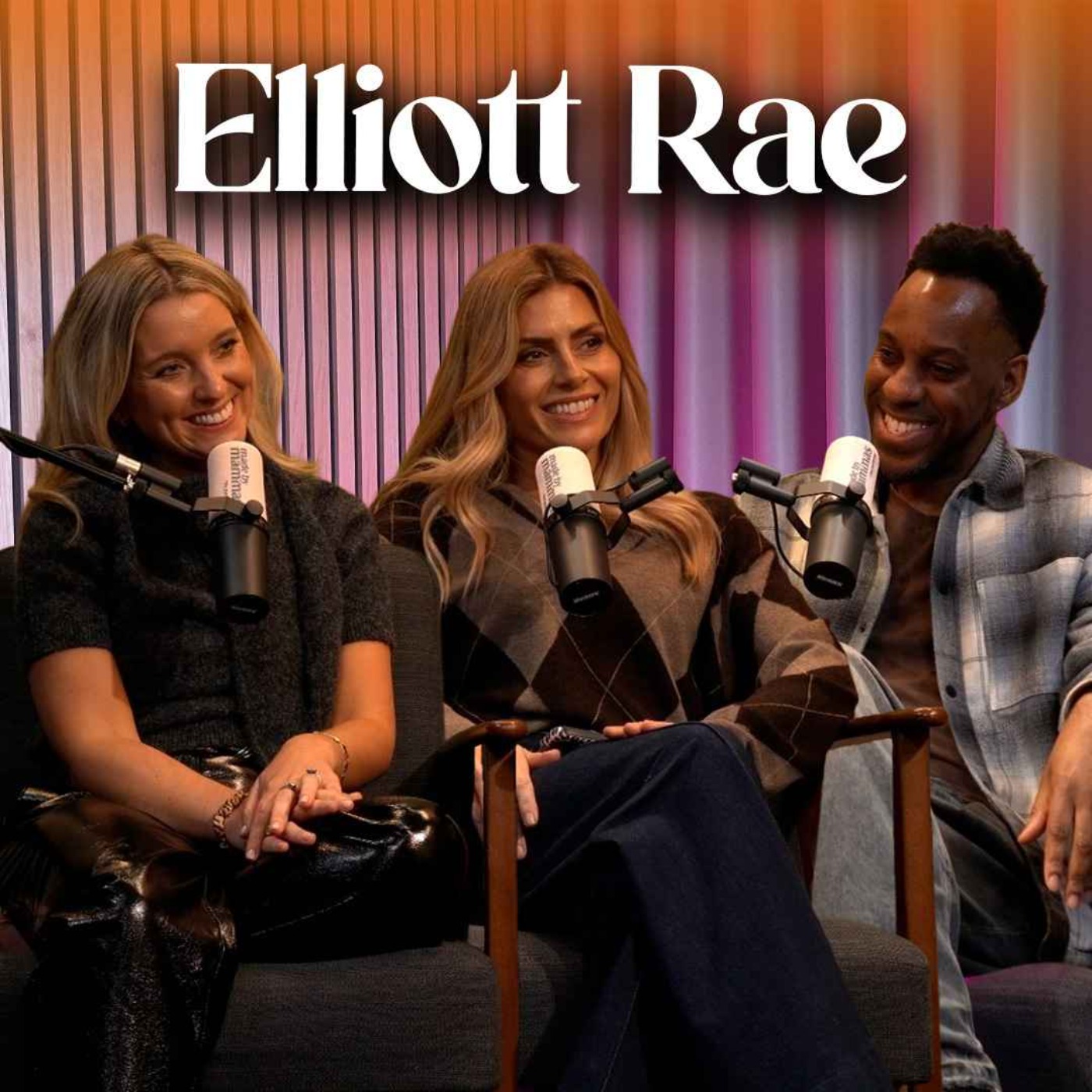
Elliott Rae On Re-writing How We Raise Our Boys
In short
Hosts: Zoe Hardman and Georgia Dayton
Release Schedule
New episodes every Tuesday and Friday
In this episode, hosts Zoe and Georgia sit down with Elliott Rae, a prominent voice on modern fatherhood. The discussion revolves around the challenges of raising boys in today's society, focusing on the lack of positive role models, societal pressures, and the importance of emotional health. The conversation aims to provide insights on how parents can foster openness, vulnerability, and emotional intelligence in their sons.
Written by AI. May contain mistakes.
Chapters
0:45
Dry January Reflections
Zoe and Georgia discuss their experiences with Dry January and hosting family.
“I DJed on Friday night and didn't have a drop.”
3:56
Introducing Elliott Rae
The hosts introduce Elliott Rae, a leading voice in modern fatherhood and mental health advocacy.
“Because I am desperate for people listening to this podcast to hear it.”
6:08
Elliott's Personal Journey
Elliott shares his challenging journey into fatherhood and mental health struggles.
“I don't know about you, but I love seeing gaps in my diary.”
7:45
Navigating Work and Mental Health
Elliott discusses the challenges of returning to work after a traumatic experience.
10:15
Impact of Childhood on Fatherhood
Elliott reflects on how his father's upbringing shaped his approach to parenting.
14:01
Understanding Emotional Challenges in Boys
Explore the societal pressures and emotional struggles boys face in expressing vulnerabilities.
20:21
Parenting Conversations on Vulnerability
Discussing the importance of open conversations about vulnerability and emotions between parents and sons.
28:00
Navigating Parenting Dynamics
Learn how to communicate effectively with your partner about parenting challenges.
“And I think, you know, what you're talking about there is it's a good relationship, right?”
28:51
Government Initiatives and Conversations with Boys
Explore the importance of discussing respect and violence with boys at home.
“Meatballs, 10 meatballs, half a chicken and chips,£1.50.”
29:49
Insights from the Prime Minister Interview
Discover the significance of interviewing political figures about youth issues.
“So I met him for International Men's Day in number 10 last November.”
Show all 18 chapters
30:43
Addressing Complex Challenges for Boys Today
Understand the key challenges boys face today, from educational disparities to mental health.
“we need to be talking to boys definitely about violence against women and girls about healthy masculinity, about the online world and the manosphere.”
35:06
The Role of Social Media in Children's Lives
Learn about the impact of social media on young boys and parenting approaches.
“I kind of, I am for a ban, but over and above that, I think it's about how we teach our children to have healthy relationships with their phone.”
36:27
Balancing Freedom and Safety for Kids
Discuss the importance of allowing children freedom while ensuring their safety.
42:00
Navigating Parenting Freedoms
Explore the balance between allowing freedom and addressing parental fears.
43:20
The Transition to Independence
Discuss the transition from primary to secondary school and its implications.
“oh, I can't believe you've just done that.”
45:27
Empowering Children Through Freedom
Learn how empowering kids with responsibilities enhances their development.
“And I think part of it is age has matured.”
46:45
Building Connections as Dads
Understand the importance of friendships and community for men's well-being.
49:36
Recommended Resources for Dads
Discover valuable books and podcasts that address modern fatherhood issues.

Ask about this episode
Get the gist, explore an idea or ask about something said.
 Claude
On Made by Mammas: The Podcast, what are the key points of this episode?
Searching your listeningTranscript
Automatic transcript. May contain errors.
0:00Hello and welcome to Made by Mum as the podcast. I'm Zoe Hardman and I'm Georgia Dayton and this is your parenting safe space where no conversation is off limits with five kids between G and I we have seen a lot we really have each week we'll be joined by some famous faces and experts and we'll chat about the brands and products that have saved us along the way in short we're the parenting podcast for you before we get started hit subscribe or follow so you're the first to know when each episode lands and they're on Tuesdays and Fridays and it really helps if you leave a rating and a review You can also find us on Instagram.
0:34We're on at Made by Mummers. But for now, George, should we get into it? It's Tuesday. It's Tuesday. How are you? I'm good. I'm, I am still, I'm still doing dry January. I'm still doing dry January. I still didn't. She's lost the ability to speak. I'm still dry. So good. I DJed on Friday night and didn't have a drop. Very good. Yeah, it's really interesting going to a party and not drinking any alcohol. Yeah. Firstly, you see how drunk everyone else gets. which is quite funny but secondly you do want to go earlier i was gonna say but there's some people who are like oh no i just exactly the same i can step i did that no no it's a no from me i want to go home early at like midnight after my set i was like right let's go yeah which is fine yeah i think it's fine like what would have been the other option staying there till three o 'clock in the morning then having an hour's taxi home and feeling like absolute garbage and i didn't do that so So it was refreshing.
1:31And what I think now in my mind is that I'm going to give myself one mulligan every month. One mulligan? No, like in golf, you get a mulligan where you get to take another tee shot. So once a month, I'll pick a night and that will be my night. But the rest of it, I think I'm just going to keep doing that for a while. Just not drink at all. Yeah, what are you doing? Have you been drinking? I mean, I don't really drink much anyway. I think we've said this. I mean, I don't even know. I don't think about it. Not at the weekend, you didn't? No. No? Didn't even think about it? I don't think about it.
1:58It's not in my like day to day at all. So I will have a drink if we go out for a nice dinner. Yeah. Or if, I don't know, like I'm hosting at home. But other than that, I never would. No. No. It's so interesting, isn't it? Yeah. Have you done any hosting at home recently? Where are you with your own? I love hosting. I love hosting. I mean, I haven't hosted any mates recently, but now my mum and dad live around the corner. We have them around a lot. Like I have them over a lot. I have like my family over quite a lot. But yeah, no, I still enjoy it. But actually yesterday I had four kids to look after.
2:35Wow. And I loved it. Yeah, it is cute because they're at an age where it's actually manageable. I really liked it. Like you would not want four psychopathic toddlers in your house. No, but I did look at James and we were like, oh, we could do this, couldn't we? What? No, we did. We actually did do that. We looked at each other and we were like, oh, we could have more kids. Oh my God. Yeah, I'm not joking. This is what we thought yesterday. So what were you thinking? Well, no, that's all we thought. I'm telling you that that was the length of the... That was the whole conversation beginning to end.
3:09Oh, yeah, we could do this. Because, George, you're still only 35. 36. 36, aren't you? I still could. Watch this space, guys! No, no, don't. Because then we had a big argument and then we realised that we couldn't. It's funny, isn't it? When you see big groups of kids kind of really interacting beautifully. Yeah, it's nice. And they're in your home and you're like, oh, actually, wow, this is what a big family would look like. Yeah. And they're all different. They were all different ages. So from like, it was 10, 9, 7, 6. Wow. And I was like, oh, I like this. This suits us. Oh, gosh, guys. We liked it when we were driving along and looking in the back.
3:47Like, I don't know. It was so weird. Georgia's got a gooey look on her face. So all I'll say, 2026, watch this face. Who knows? Please, please, please, can we get into today's conversation? Yes. Because I am desperate for people listening to this podcast to hear it. What an incredible conversation. I said it at the end of the chat, but I'm putting it in my top three favorite podcasts of all time. Yeah, no, absolutely. I can't actually think of one I've enjoyed more. No, no, not for a long time. And I think as well, it really hits a spot with us at the moment. we talk a lot about this part of parenting that we know is so impressionable and you know that we really want to get right especially with the boys um and how do we do that how do you bring it up what can we be doing at home with our partners the whole conversation about raising boys we've touched on before but I think now more than ever it feels more important um as we sort of take them into tweens and teenagers it gets a bit scarier yeah it does and like georgia said we know we've both got boys and it's something that has to be done in the right way it's it's going to be my one of my life's focuses to get that right with my son um and so yeah let's get into today's chat georgia who are we talking to today we are chatting to podcaster and campaigner elliott Ray.
5:14We are so, so, so excited about today's conversation. We are joined by one of the UK's leading voices on modern fatherhood. He is the founder of Music Football Fatherhood, a platform often referred to as the dad's mum's net, although he's shaking his head every now. Author of best selling book, Dad, Untold Stories, Fatherhood, Love, Mental Health and Masculinity. He is a speaker, a men's mental health advocate and someone who always has a lot to say. Please welcome, it's Elliot Ray! Oh yeah! Thank you very much. Thank you. And you nearly were part of our three-strike rule. Because this is the third time I've tried to get you into the studio.
5:52He's got some busy guys. I'm blaming the kids. I blame the kids. My youngest gets sick and she gave me colds over last year. So apologies, but I'm here now. We're so excited to have you. Thank you. How's your morning been? Morning's been good. I did a bit of work on the train down. And excited about the week. My week is not actually that busy. I don't know about you, but I love seeing gaps in my diary. It just makes me feel very calm. So I've got loads of work to do, loads of things coming up. So I've had time to kind of process and yeah, it's not a busy week. So I'm feeling really good and relaxed.
6:22That's good. That's good. George, yeah, I think, I guess let's start by talking about what brought you into this space, talking about fatherhood, masculinity and all of that kind of stuff, just for people who don't know. Yeah, so I worked in HR and change for many years. I was a civil servant. I've escaped now, luckily. But I was doing kind of HR, leading inclusion projects. So I had a good professional oversight of these issues in regards to the workplace. That was really, really good. But then 10 years ago, became a dad. And as you know, you become a parent and your life changes completely. For us, it was a quite tricky start to life.
7:03Our daughter was born with quite a serious infection called group B strep. so you know when she was born she was quite lifeless she was quite gray she wasn't breathing um my wife was also in trouble like losing a lot of blood and so I'll never forget like doctors rushing into the room resuscitating our daughter um sucking fluid out of her airwaves and rushing to to intensive care so we spent the first two weeks in intensive care and that was really obviously really really tough um the hospital gave us a room that we could kind of sleep in so i could stay in in the hotel in the hotel in the hospital um which was obviously amazing of them so that kind of ups and downs some days were good news some days it was bad news the infection was coming back the antibiotics weren't working around 10 days in we got the good news that the infection had gone which is incredible but she my daughter got a bump in the back of her head like right here about the size of a golf ball and that's when all the medical professionals got super worried about us they were they were stressed out on our behalf because they'd seen what we've been through as a family and we were booked in for an MRI scan like in the morning so that night in our room we were joined by a midwife called Nagmeh I'll never forget her name and essentially we just kind of prayed and cried for the whole night and this midwife stayed with us for the whole night and we knew the news that we're going to get the next day was going to like change our lives one way or another because they didn't know what it was they were preparing us for all eventualities so we went for the MRI scan came back into the room and the nurse came in burst through the door she gave us a massive hug she said it's like it's bone structure you can go home it's nothing serious which is incredible so we went home on the Friday had a weekend with the family at home had the Monday off work and the Tuesday I did what so many men do is go back to work straight away so I was in work I was like leading a team doing presentations um all that sort of stuff but I was like a shell of myself I was having panic attacks in in my work meetings I was like crying on the train on the way home from from work me and my wife was so paranoid we'd go to A &E on a weekly basis for the first two months we're just so paranoid about our daughter's health um so eventually I was diagnosed with PTSD my wife was diagnosed with postnatal anxiety we received therapy and whatnot um but yeah in that first kind of 18 months of my daughter's life I was able to change my working pattern three times okay and I'm not exaggerating to say that that literally I think saved my life to be honest and were you able to go into work and have obviously they were seeing how you were reacting uh were you able to go in and have those conversations with your work and how did they receive it about what you've been through so not really I don't think it was because of them I think it was more because of me okay so I had a great manager um He had three daughters himself.
9:54They were a bit older, but he was very, very good. He was very senior. He was very open. But first of all, it was 10 years ago. So it's 2016. We weren't having conversations about mental health then in a kind of mainstream workplace. But also I was a very different person than I am now. So now like I'm super open. I talk about everything. I'm an open book. But yeah, 10 years ago, I was very different. You know, I was more guarded. I think I had a tougher exterior. I had different ideas about what it means to be a man and so there was no way I was gonna kind of talk about it so you know when I speak to colleagues now they do say they think they could they think they saw something and they could see I was different but because I wasn't openly saying this is what's going on for me they didn't really have an idea and I think that's a an illustration what happens sometimes especially with men when it comes to mental health is that you don't know what's going on behind the surface you know people as humans we're very good at smiling we're really good at kind of putting a brave face on things we're okay we're okay and sometimes we are sometimes we aren't and so I got very good at kind of masking masking that until it was to the point where it was like yeah I can't I can't do this and received therapy and the diagnosis or whatnot but that's what drove me really to understand that okay there's a couple things going on here there's there's what what stops me and how do we have more conversations with dads about well-being bonding identity and those kind of things then also how do we create workplaces and societies friendship groups maternity services that really support men speaking about the ups and downs of parenting regardless of whether it's a traumatic birth or anything you could have a good birth in comparison yeah but it's still a massive shift and I think 10 years ago there was a lack of conversation around that so you know it went about trying to change that and 10 years later here now doing doing this work how much of your childhood and the way that you were raised by your father has impacted the 2016 Elliot to the version that you are today that's a big question I'm going in Elliot I'm going in I love what we got um so I'm like I'm one of the ones who one of the men who actually has and had a great dad um it's probably the one thing that makes me feel emotional actually talking about my dad because I think growing up I didn't as as a child you don't realize kind of what your parents go through and so he came from Grenada in the Caribbean when he was 14 um lived in Wembley He had quite an abusive father himself.
12:32And so he didn't have a blueprint for kind of what a good dad looks like. But when I look back to my childhood, you know, I don't think he could have done anything better. Like he was a disciplinary when he needed to be. He was an authority when he needed to be. He was playful when he needed to be. He prioritized education, which is important. And I think he gave me a really, really good example of what a man is, actually. and I think it's incredible that he did that with no blueprint he didn't have that so I always say to him like how did you learn like how did you understand how to be a husband and how to be a dad like the flexibility that you need the the emotional awareness the self-awareness the patience the calmness but also sometimes being an assertive man I was a bit of trouble in my years and he stepped in when I needed him to and so he yeah he's amazing I think for me in 2016 at the time I would have been what 31 32 um confident extroverted me and my wife we met in a band so I was performing um had been through trials and tribulations but I don't think I was beaten down by life so I was very positive and yeah for me going through mental health struggles at that time was something I didn't expect and so I didn't have the language to be able to articulate myself it wasn't what I saw in myself or what I think other people saw for me so it would have been a complete change for me to admit like I'm really struggling to sleep here and I'm having panic attacks and like you know I'm knackered and I'm worrying about everything that would have been such an identity shift I don't know if I would have been able to get there it was so far away from who I am right um and I think just the national conversation about mental health and men and dads was so different then yeah it was so different yeah why do we think that men find it harder to have those conversations like them because I mean it isn't just men because I think women do struggle as well you know like if you're the person who's always positive and always happy it's really difficult to then be a switch in your friendship groups or among your peers to suddenly be like oh actually I'm not that today because you don't want to be the Debbie Downer do you that's always the first thing that comes to your mind like I'm so sorry for dumping on you I'm so sorry for offloading it's it's like there isn't space everyone wants positive but then when it comes to the negative we feel that we can't share it because how is it going to be held yeah is that what you yeah exactly what I'm saying but especially with men like what like what do you think it is what like what what's why is it so different I think women are a little bit better at it like on you know stereotypically yeah I think women are in in general um I don't think it's down to biology you know I think it's down to socialization um we know when it comes to kind of raising boys even parents we are we have our ideas about boys and and men and those ideas can come through in how we treat young boys you know we tell boys not to cry um when it comes to play or gendered expectations we are much more likely to encourage our girls to do traditionally boys stuff like play with trucks and play football and wear blue than we are to to encourage our boys to do traditionally girl stuff like interesting play with dolls or um do ballet or wear pink or whatnot and I think that also translates into our expectations about how they behave at a very young age so we have more time for our girls's emotions we have more conversations with them we speak to them more openly about our own struggles and their struggles we expect them to to do that in return and I think with our boys I'm generalizing here not every parent of course but in general the research does show that we are more likely to to see our boys as tougher as harder as less needing of emotional care um but actually young boys need that just as much sometimes even more than young girls they need both right so it's really interesting that they need they for me this is the way i see it i i am desperate that kit and axel because i know axel so well to be you know brave strong but vulnerable and emotional and able to share his emotions and you're right it takes so much more work to get to a place with kit i don't know if it's the same with axel where he's ready to share that where the girls I can say is everything okay I'm sensing something from you did you want to share something they'll come out with it like that bang kit the other night I could tell that me reading with him and me critiquing him on his reading or like helping him out with his words I wasn't even saying you're not doing a good job I was saying oh that's not the correct word and let's try again his energy just and I said something you want to share no no no I left the room and then 10 minutes later he was lying in the dark and he went mummy went in and then it came the tears I hate it when you say it to me because I feel like I'm not doing a good enough job but it took him 10 minutes to get there but it's beautiful we got there seven seven so so they need they do need to have the both don't they but that's really tricky how do we instill that in our boys how what what what conversations should we be having them with them yeah i think it starts with us you know i think it starts with doing the difficult work of really thinking about our own bias first and foremost um and how that comes out in our parenting and that's hard work right because we've got to look at ourselves and and really analyze what we think and how that maybe comes out in expectations and behavior of what we do to our children.
18:06But I think it's once we're mindful of that bias that we could have, we're mindful of how society, not just us, but society is going to socialize these boys to be hardened, to prioritize competition, to prioritize winning, to be fast, to be strong, to be dominant, to earn loads of money, to be the provider. We know to be proactive in doing the other stuff. So I agree. I think people now have to be both. You know, I am now I try to be strong when I need to be. Sometimes I'm stoic when I need to be. I get my head down when I need to be. But also there's points in my life that require me to be soft and gentle and patient and emotional.
18:49And it's about being flexible. So I think it's with our young boys, just realizing that we need to do things that instill both in them. And that can come with, yes, let's go for that running competition. Let's play football, join that rugby club that's all good but at the same time how are you feeling now that your your your friends aren't talking to you for the day because of whatever yeah oh how do you feel you got dumped by your girlfriend are you okay come for a hug like give them the emotional language talk to them about feelings emotions let them know that it's okay to struggle in life sometimes that is not a gendered thing that's a that's a human thing um growing up can be really tough especially in this day and age where we've got the internet we've got social media we have so much messaging And I think young boys are so confused with all the different messages they're getting.
19:34I grew up, we grew up in an era where we didn't have these smartphones, right? I didn't care what anyone else was doing. I didn't know the opinions of what boyhood looks like apart from my mom and dad, my family, my friends, and my community. That was it. Now boys are getting confused, mixed messages from online influencers. A lot of them are, you know, grifters trying to sell their programs. So many podcasts. So we're on a podcast right now. I have a podcast. nothing against podcasts but so many of the manosphere podcasts etc andrew tate andrew tate etc that are telling men this is the way to be a boy and they're young and they're impressionable and so i think we have to counteract that with with how we parent we'll be right back after this short break welcome back to this episode of made by mamas now where were we i think that's really interesting like what it is to be a boy because we're saying oh you know like we want them to be strong and brave and all of these things but like what is brave like I had a instance actually yesterday with my husband and son in a trampolining park and so there's they've gone off there's four four kids two girls two boys and there's these big slides that you can go on on your front now my daughter actually wasn't tall enough to go on it they wouldn't let her on it she was really really upset and my son obviously was tall enough he went to go on it but got scared and then came back down my husband's reaction was really shocking like he he was furious that he wouldn't do it and he was like i don't get it what's wrong why would you not do it like look isabella's done it like what what why would you why would you not do it right and i looked at him and i was like are you all right like what what just because he doesn't want to go on the slide like what what the hell he had to walk away he was i need to be away from you right and my son is crying his eyes out nine crying his eyes out he was like daddy said i'm mentally weak and it's all about right and it was actually horrific yeah and so he walked off and then obviously when he's walked off he's probably thought like fuck like that what what is this about here what this isn't about a slide and then came back and I'd obviously chatted to Axel and I was like listen sometimes it's it's not about the slide Axel it's about something else and we do have something with our son where he gets quite anxious about things and sometimes you have to give him a little nudge to get through then he feels great about himself at the end so sometimes we do have to coach him through stuff but not make him feel bad after the situation my husband was like oh my god I don't I don't know why that bothered me so much he was like it really bothered me I didn't want him to look weak and I was like no I get I totally get that but it was all about perception of what a boy is and what's brave and I and and we had a chat about it and it doesn't make it okay because I still feel quite cross about a whole situation but i'm glad we got there like as in that it's because what society says a boy should do had it been my daughter who didn't want to go down the slide right he would not have given a toss it would have been fine but it was because it was him and in that group scenario he was the older boy he was the one who was looking after the rest of them and he felt like he didn't show him what he wanted him to be in that moment so then how do we break the conditioning because if our partners are presenting in that way sometimes and their fathers probably did the same thing and therefore the pattern continually continues so how do we break that cycle yeah well I think um I think that example is really interesting because I think what I've you know we work with a lot of men we do group peer-to-peer sessions every month we do really cool events in football stadiums our next event is at the Emirates with Arsenal in June so we work with loads of men on a one-to-one coaching basis sometimes we go into corporate organizations and do workshops with men and whatnot and I find that especially when dads have their sons they they see themselves in their sons yeah and so it feels like what was happening there is that you know your husband's seeing himself in your boy and I find that with men particularly in their sons if their son maybe doesn't represent them themselves or what the boy they thought they were going to get it's a process of trying to try acceptance first and foremost but also understanding that they're their own individual and they're going to have their own way of doing the world it's not right it might be different to you and it might be different to what you have been taught being a strong boy and a man is we are all you know we all in our development take different lengths of time to get where we are like I'm not the man I am now I wasn't 10 years ago and I wasn't 20 years ago at all it's taken me a while to get here and there were times when my dad was disappointed with my behavior not necessarily being weak but going off the rails not doing my education not like smoking weed and stuff like doing stupid stuff and he was like this is not the boy I thought I was going to get it's not what I've taught you it took me a while to get where I'm going to get to I feel like some dads struggle with their boys not being a representation or reflection of them yeah and And especially like, you know, some, a lot of children have like neurodiversity, autism.
25:02We know that a lot of dads find that sometimes more difficult to accept. And so there's a bit more of, sometimes there can be more denial. Like there's a guy that I worked with called Danny. He wrote for our book, his son has autism and he runs an autism group for dads in Walthamstow in East London. And I remember him saying to me, there's lots of dads that come into the, into the space and it's really hard for them to, to get to grips with the fact that their son is not who they thought their son was going to be. Their son is different and that can take a little bit of time to kind of get used to, you know, whereas the mothers, the women in general will be a bit more accepting early on of who their child is.
25:39And that can also come if your child is gay, if your son is gay or if your son is just different to what you expected. A lot of men kind of have to come to terms with that. So I think sometimes you can't do the work for them. They have to do the work themselves. um i think it's about you know finding mentorship finding people that we we respect and can listen to who have maybe been through a similar experience it's finding friends who can level and reason with you um maybe professional therapy or like we do peer support sessions but i think it really helps to have your community whatever that looks like where you can kind of be open and honest about how you feel and they can help you to understand that and process that um that's really important you know because i don't think anyone's immune to stereotypes and stereotypes i think it's really good that he recognized that and you could have the conversation yeah and think about why did it why did it mean so much to me why did it get me so angry it's not about the side yeah it's probably about something deeper underneath that you know yeah definitely also i think it's really beautiful when you do get there with your partner because let's be honest it's not their fault and it's not our fault either you know as mothers and as women it's not our fault because there have been those gender stereotypes that have been forced upon us big you know growing up in the 90s as a girl men have had the same conditioning in a different way but when you do get there with your partners and you do say to them look you know what you have permission to go and have that conversation with our boy please go and show him that side to you which I've seen when you cried in the kitchen or when you felt pain when you didn't get invited somewhere.
27:18Or like go and have those conversations with him because he's looking at you like you're his absolute world and you are. You can't just show up and have a rumble and punch each other in the stomach. Go in there and show him how vulnerable you can be as well. And it's like once you give them that space to go and do it, God, it makes me feel emotional. The beauty that comes from that between those two boys. It's amazing. It is lovely. You know, when we do our work, seeing men connecting and having those conversations It is so special. It is so special when you get two men sitting down and just reflecting on their parenting, reflecting on maybe their dad, reflecting on their friendships and having vulnerable conversations.
27:55It's hard to really put into words what that looks like. And I think seeing a dad doing that with his son is amazing. And I think, you know, what you're talking about there is it's a good relationship, right? Like even with me and my wife, for some days I might be just annoyed about something and she can see that I'm being a bit harsh on the kids. yeah I'm a bit you know I'm angry whatever's happened and they're not going to bed or they're not doing whatever I want them to do but vice versa as well sometimes my wife's stressed from work and I can see she's maybe been a bit short and us being able to say to each other like yeah I've noticed like are you okay and I saw how that not in a way that obviously attributes blame is gonna become a confrontation but I think a healthy in a healthy relationship we should be able to point out when we're both you know cool yeah and you can't get past these things and you can't grow as a person unless you've got someone else who you can have that with like someone to call you out because i would want to be called out like i would it might not feel good at the time but you know like eventually it does get to a good place i was going to ask what sorts of conversations you think that we're not having with our boys that need to be you know spoken about we've seen recently i think the guardian reported about you know the government scheme to go into schools now and have conversations with boys about how to respect girls to kind of bring down the violence against women and girls um how can we start those sorts of conversations at home yeah i think that's really important and we've been talking a lot about about this plan um so we have a podcast called to be a boy yeah and we had the prime minister on last week actually oh wow amazing He was in Ikea at 5am in Croydon.
29:31The Prime Minister goes to Ikea? Yeah. For the meatballs or? Yeah. We had meatballs in the staff room. I bet you did. Do you know what? Meatballs, 10 meatballs, half a chicken and chips,£1.50. Shut up. In the staff room? In the staff room. Wow. You can't believe it. Amazing. Yeah. If you can make your way into the Ikea staff room, it's well worth it. But obviously, Croydon's quite far. What's Keir Starmer like? He's all right. It was the second time I met him. So I met him for International Men's Day in number 10 last November. Very briefly had a conversation and that was good. But then, yeah, because the government have announced the employment rights bill about flexible working day on paternity leave and they're doing stuff around boys.
30:10They invited us to go and interview him for our podcast. Well done. So it was really, really cool. He was OK. I mean, I don't really like going into politics, but I'm quite disappointed with this government. I don't think they've been strong enough on so many things. so it was good that we're getting the prime minister and we could challenge him i co-host with joey brearley the founder of pregnant and screwed so we could ask really challenging questions because in our hearts we are campaigners um but at the same time i'm like uh i don't really like what labor have done but anyway it was good to get a prime minister on the podcast yeah of course um so check that out if you can so what what conversation should we be having i think we need to be talking to boys definitely about violence against women and girls about healthy masculinity, about the online world and the manosphere.
30:55Yes. And I think we need to be having conversations, wider conversations around what success looks like, healthy dynamics in relationships and mental health and wellbeing. There's so much we need to be talking about. Life is complex now. There's so much more to being a boy growing up and a girl growing up than I think there was for us. And that's because they are so much more exposed. so there's lots of research now showing that in young relationships i'm talking about 15 to 17 year olds there's a lot more coercive control um i spoke to a pastor lead in a school the other day who's been in a role for a good 10 years saying in the last year or so last couple of years she's getting way more kind of referrals for young girls saying they're in controlling relationships um so i think we have to have conversations about that i think we have to have conversations about online harm um the manosphere there's been lots of conversations around it people agree don't agree they think it's fake or whatever the manosphere just break that down for me yeah just for those who don't know so i think the manosphere is a collection of kind of influencers um podcasters There's online characters who portray a particular, narrow, harmful idea about what it means to be a boy and what it means to be a man.
32:19Prioritizing traditional ideas of masculinity that we, you'd love to think we kind of let go 50 years ago. So really saying to men, your value is in how much money you earn. Your value is in how much dominance you can assert over other people. your value is in being the man in your friendship room being the leader your value is in being strong fast successful that is your role as a man any less than that you are less than you know in a nutshell that's ultimately what it is and so there's so many there is it's so compelling um there's lots of research from the nspcc that shows that most boys that go online even if they're not searching for this content it will show up in their feed anyway once they engage with it the algorithm then feeds them more so a lot of young boys from the age of you know most 12 13 year olds have a smartphone I think it's about 90 percent 95 percent of all kids in year seven have a smartphone at the moment we have very little restrictions on on instagram on snapchat tiktok etc this content is being fed to our young boys and it is kind of really influencing their idea about their own identity and that is coming out in their behaviors and so that is one of the reasons why we have more you know young girls saying they're in controlling relationships it's one of the reasons where we're seeing more boys taking performance in hearts in drugs we're seeing 14 year old boys in the gym again nothing wrong with keeping healthy but this obsession with i need to look a certain way and if i don't i am less than and so it's linking to porn as well porn too yeah um so much more access to porn and strangulation and violent porn and aggressive porn and boys seeing that as the normal this is how you have sex and make love um and so we need to have conversations about all this stuff right it's a minefield don't get me wrong it's there's so much to talk about i do feel like though we always say on our podcast if you're engaged in this conversation if you are trying as a parent to be aware of some of the things your kids can be consuming and if you are keeping communication lines open and role modeling good behave good behaviors and trying to have the big conversations with your kids you're probably doing good enough you know so it's not like a it sounds like really hard um there are still boys that are doing amazing stuff in the world there are still boys that are kind that are loving that love their friends that are that are protective that are good souls that are good human beings that is the majority of boys of course it's not to scaremonger anyone but i think the reality is there is a crisis going on with young boys um it's been going on for a while young boys are dropping out of the edge of education more likely to be expelled they are less likely to meet their development needs or development milestones at age of five um they are falling behind in every level of education they're also falling behind in the early job market too one in eight boys are not in education employment or training so there is a lot of big conversation that we need to have here and I think you know adolescents kind of made it a mainstream conversation there's many people that were talking about these years before but we're at a point now where the government needs to step in and do something so I was in number 10 in November and it was a launch of the men's health strategy which is trying to look at men's health and well-being holistically and we have we have a violence against women and girls strategy now so there is work being done but I think it's not just a government level obviously that's important I think education and schools need to change and adapt but also parents you know we need to be more aware of what our young people are consuming there's this conversation going on at the moment about a social media ban for under 16s yeah and And there's differing views on whether that's going to be effective or not.
36:08I kind of, I am for a ban, but over and above that, I think it's about how we teach our children to have healthy relationships with their phone. Correct. We'll be right back after this short break.
36:23Welcome back to this episode of Made by Mamas. Now, where were we? My instinct when that thing came in about banning social media for under 60s, my instinct is like, great, brilliant. but then when I take a step back I'm like it's like being held back from something and then it's a hard launch it's like do is it better for a more of a drip drip drip drip approach to social media and then they learn as they go because for me right now like my son is nine turning ten but he's in year five so next year but he's last year at primary school and I'm really aware of like almost like preparing him behind the scenes for things that are coming up but it's difficult to know how to do it when essentially there is a nine-year-old in front of you you know like it's like i want him to know that people might have these opinions or might say these things and what it actually means and what that means in the long term and i don't know there's a lot of stuff i want to say but i just don't know how to approach it you've got to start the conversation now george you're very very open with your parents and you've always had that relationship with your kids also it's important to say to them that's not not so social media isn't the enemy it's how we for me anyway it's how we speak to each other on social media is what we are consuming on social media don't forget they can have access to all of that on the internet full stop and it starts when they first get their phones and they're messaging each other how do they talk to each other what apps have they got downloaded on their phone is really a second look at it it's like those conversations you have you actually so i mean he's he's nearly 10 like i know and it but he does creep on creep up on you really yeah it does like all of one time that you know they're six and you're like oh cool this is lovely still playing with dolls and trucks yeah and then all of a sudden you're like oh did they just say that in my car you know like there's someone talking saying stuff in the back of the car as you're driving them to like a football thing you think god i didn't know they knew about that sort of stuff yeah or and it does really creep up on you and i really don't want to be in the dark and you know naive to it yeah and it's tough I mean I don't know the answer about whether a band's the right thing or not um but I've been thinking about a lot over the last couple of weeks and I think so I personally feel like a band would would help for a couple of reasons I think there's risks to it of course and some people say that if you ban social media is going to push children to like darker parts of the internet more unregulated parts of the internet which I understand.
38:53I do feel like maybe 16 is too old, maybe it's 14 or so. I think it would send a message in regards to what we think about children being on phones and social media, and if that is healthy. So I think a band would send a kind of culture change. I think it would also help for parents, and this is an argument about parenting, whether we have autonomy around parenting or not, we can just tell our kids not to be on social media but i think if their friends aren't on it or shouldn't be on it on it it does give parents a little bit more kind of power to have that conversation and i guess that's the conversation about parenting right because i think about my parents generation they would not have cared if my friends are on social media or not they would have just been like you're not on it if that's what they need to do and yeah no no conversation right we're in a gentle parenting more era now we want to have conversations with our kids to race street etc so i do think it would help with that i also feel like when i really think about okay what are the benefits to social media for children i can't think of many like some people say oh community starting businesses that's me that's what i think of is the whole like starting businesses it's not about starting businesses it's the access for some kids who don't know anyone who if you're in a family where there is no role model who started a business or you know I just feel like it opened their eyes to other worlds maybe at 16, 17, 18 but at 4, 13, 14 they'd let them be kids they're kids right so yeah I've struggled to see the benefits for me personally so I would support a band maybe from 14, 15 but at the same time it's not foolproof right because if we're still letting our children on phones they'll find um apps and places that the social media ban doesn't apply to so for example yes tiktok's instagram snapchat will be in a ban but reddit whatsapp won't be and reddit and whatsapp and etc can still you can still share harmful content they can still be online bullying on on that so even if a band did come in i think the bigger thing is like how do we just educate and regulate I think our children's use of their smartphones more generally and also how do we provide other things for them to do I used to play out like in the summer holidays I used to leave the house on my bike and come back when I was hungry and I didn't have a phone and we'd be out and we made it and it was okay and we yeah there was ups and downs or whatnot but for the most part we'd just go to someone's house to get lunch and we'd maybe have two pound fifty in our pocket we'd go the shop to buy whatever and life was fine and i think as adults we all accepted that children play out and children are part of society now we are so scared to let our kids out now like my daughter's 10 she just started going to the shop we got her a little kind of brick phone an old nokia she goes to the petrol station and the shop um i drop her to school i don't get out the car she kind of gets out after school she comes out phones me where are you i meet her wherever my car is parked her friends don't have that freedom at all she's 10 right we are so scared as society to let our kids out now i think if we're gonna restrict social media and online access we need to let kids have something have something else and they need it they need that they have to otherwise what this this is a constant conversation between georgia and i as well I bumped into somebody yesterday and they were like they said oh where are your kids and we were like oh they're just playing down in the games room like you know five minutes down and I was like yeah they're there they're just kids got his watch on it's absolutely fine and he was like oh because you know my kids are not old enough for us to do that yet and I was like oh how old are your kids and they were like 14 and 11 and I was like mine's 7, 9 and they're just down there and I was suddenly looking at the doors and I went oh my god oh my god no but you have like that's normal like what you're doing is normal I know but why does it feel it feels shameful like it does sometimes I mean I've I feel like I say sometimes I say things I've done and I'm like oh that was a bit lax wasn't it like I don't think I should have done that but it's only when you're saying it out loud but actually at that time I felt comfortable with my decision and I like giving my kids freedom yeah but then something in me is like scared again when someone reminds you you know we should never worry about what anybody else is doing It goes back to all elements of parenting.
43:17There's always going to be somebody that looks at your setup and goes, oh, I can't believe you've just done that. That's their stuff. This is our stuff. And if we do want to start making changes and giving them that little bit of extra, at some point they have to go out into the real world. Well, this is the thing. This is like where I'm at now, year five. So year six is the last year of primary school. Yeah, same as my daughter. Yeah. And then in year seven, there's nothing. They don't care. They're just off into the world. You don't know if they got into school or not. How? How is that supposed to happen over a six week holiday?
43:49Well, for me, it's the transfer. We're starting now. Yeah. We're starting that transition now. Exactly. To be like, okay, yeah, I park literally three minutes from the school and you get out. And I don't, at first, last year, I used to like look and see if she got in. Yeah. Now I just drive off. I've got to drop the youngest. Yeah. Try and get to the gym or work. And trust that you get in. And again, this is completely normal. I think we've created a society where we are so scared and we've kind of like, we're cuddling our kids, right? We're so scared in the in-person world of danger, but then we've let them run riot online.
44:22Oh my God, that's so true. When you think about it, I think most, I reckon now there's probably more danger online than there is in the real world. Of course, things happen in the real world. That's really, really bad. But most children go to school, come home completely fine every day of the year. We spoke to a lady called Lenore Skenazy in America. So she was a journalist and her son was 10 in New York. and she let him one day ride the subway by himself and she wrote about it for her her piece oh i let my son it was really good he felt empowered he felt really really you know proud of what he'd done i was less stressed because i mean i didn't have to do the school run works for everybody published it and it went viral in america she would she was called america's worst mum for letting her 10 year old ride the subway so she started this movement called free range kids which is about like letting our kids go back to being children again yeah and she started this whole movement about free range kids and so we had a conversation with her on our podcast and literally that just changed the way i parent now really after that i was like yeah do you know what you get you you go to school i'll drop you down the road yep you go to the shop and my eldest feels so much more empowered for it and i've noticed as well i don't know all due to that but i've noticed just now start taking more responsibility and ownership yeah over like getting herself ready in the morning, like packing her packed lunchbox.
45:43And I think part of it is age has matured. But I think part of it is us saying, we trust you. We trust you. You have ownership over your life. And that makes people feel good about themselves. Yeah, I agree. And people who feel good about themselves are nice to other people. Exactly. Right? Because if you feel bad about yourself, there's always people who feel bad about themselves who project that onto others. So actually, by us giving our kids, you know, empowering them to do things for themselves, make them feel good about themselves, in turn that will probably feed into every other part of their lives.
46:13And also look at other cultures around the world. You know, I spent a long time of my life in Kenya. The kids in Kenya at the age of seven and eight, they're looking after their baby brother and sister on their own the whole day whilst their parents go out to work. They're walking to the village to collect water. They have to walk for 5K by themselves. This happens culturally, globally, where kids are given freedom to roam and have responsibilities and look after their stuff themselves. And so, yeah, I don't know. it's all feeding into this bloody great big like it is yeah melange of shit basically yeah basically that's a good way of putting it there you go guys that's a podcast title there that is the end of the podcast um elliot we always like to ask our guests on the podcast the best piece of advice that they uh would like to uh impart on a on a listener today best piece of advice oh that's a big one um okay so for me i would say like my work is around with men and dads and a lot of a lot of men don't have friends right so ons did some survey found that one in five men have no close friends and we work with so many men who don't have a community around them we do this exercise where we are so we go to football stadiums we do like events and we print a football pitch out we give them a pen and ask them to write down their 11 aside kind of network community team who they can go to when she hits the fan two in the morning emergency who do you feel comfortable calling who would probably answer the phone your body yeah exactly the amount of times there's like two names on that team the amount of times there's no names on that team there's five names very rare do we have men who have like a full team with substitutes and a network and community that they can go to when life gets difficult or when life's really really good and that's so much linked to well-being to to longevity to health loneliness is connected to cardiovascular diseases suicidal ideation etc so for me my message is always prioritize the connections in your life prioritize keeping close to your to your friends don't be scared to make new friends and and build your team because life's up and down right parenting's joyful but stressful health etc um we need people in our corner and so investing in those friendships is one thing i would say to people that's beautiful i love that yeah i love that we usually ask our guests to give us like five product recommendations but i'm wondering if we do five resources to go to or things to read or you know if you if you've enjoyed listening to this conversation where can where can you go next cool so i'll talk about a cup of wine if that's okay so i run a workplace consultancy called parenting out loud um so we encourage dads to be loud and proud about their caring responsibilities at work i.e work flexibly take all the parental leave available be loud and proud about doing a school pickup and leaving the office at 3 p.m um so we have a community of dads we do loads of workplace keynotes and workshops and programs all around Europe.
49:17So go to parentingoutloud.com if you're a dad and you want to learn more about how you can be more loud and transparent about your caring responsibilities at work to support you to be an equal parent at home. That's really important for gender equality, the motherhood penalty, wellbeing and children's outcomes as well. So parentingoutloud.com for that. Number two, I would say our podcast, To Be A Boy. We've had amazing guests on. We discuss things like the conversation about banning social media we talk about addiction the manosphere mental health male role models male teachers everything about how we support boys's emotional development that is where we have those conversations with experts every week so to be a boy.co.uk on spotify etc apple thirdly i would say a book by a guy called richard reeves it's called of boys and men and I think it is probably the seminal book that really paints a picture of how we're doing in regards to boyhood right now so it really lays out where we're at with education employment relationships and it's a short read but it's so informative um Richard Reeves I would you know credit him with being the person who was really kind of talking about this openly in a way that is inclusive to everybody first so check out that book I'm gonna get that yeah really really good um what would i say fourth i'm tempted not to say my own stuff here so i'll talk about other people um a book called why men have a friendship problem and it's by a guy called max dickens um so max got married and realized he didn't have anyone he could invite to be a groomsman so he kind of delved into male friendships and you know why so many men don't have close friends and it's a really really good book so i definitely recommend that book and lastly what would i say is my last one one of your own one of my own okay cool i was gonna should i be humble here no um so i did a documentary called becoming dad on bbc one for years ago it ended up being one of the 20 most watched documentaries across the bbc network and it's all about dad's mental health i spoke about birth trauma my whole family was in it we spoke to politicians we spoke to the nhs and spoke to expectant and new dads and it's all about the experience of being a father dad's mental health and what more we can do to support that um you know dad's well-being and mental health so that's on our website parenting at loud.com um or my website elliotray.com and all the all the all the information is on there thank you safe to say oh my gosh that was One of my favourite ever conversations that we've had.
52:04Are you just saying that? No, no, no. We're not. Thank you. You are absolutely fantastic. I'll come back anytime. Please do. It was so good to leave you here. And there's so much to talk about. You know, there's so much. Yeah, I know. We just scratched the surface, really. Yeah, there's so much to go into. A Friday Q &A with Elliot? Yeah. Let's do it. Elliot Ray, everyone. Thank you. Yay. I'm just going to say it. Elliot Ray from Prime Minister. Oh my God, he's so great. Elliot Ray from Prime Minister. Yeah, he is really great. Like, amazing. but I also loved how he said you know this wasn't me 10 years ago it wasn't me 20 years ago and I think a lot of this conversation some men in particular and women maybe can feel quite attacked like it's you know they've got it wrong and they shouldn't have done this but there is never too late to unpick it like change how you how you talk just because you've been a certain way or you've been raised in a certain way it doesn't mean it has to be like that forever I think one of the most important conversations we've ever had in the eight years on the podcast I would urge you listening to this if you know somebody that needs to hear that conversation today please send it to them because and also he spoke so um you know he wasn't there to panic us he didn't say oh gosh you know you're not doing enough and you need to do it like this it's like if you are conscious around the way that you are speaking to your boys then you're doing enough yeah and and really we should take take real heart from that but loads of points to think about loads of um stuff to kind of really like let's mull it over and let's keep that conversation going george and i are going to be having loads of these conversations going forward actually because like you said we are entering that stage with our kids yeah and also if you've got young kids right now and i think this really stuck with me when he said it where when you've got a young daughter you probably don't think anything of giving her trucks that played football all of that blue but where yeah nothing it's so normal but I wonder how many of you listening who have like who have boys would go into a shop and buy them a Barbie or buy them a princess dress I put hands up I wouldn't have done like when actually was little like I wouldn't have even entered my mind to do that um and actually it's really interesting how we look at the girly things for boys as negative still like even though we've come on so far I wonder I do wonder how many people listening would would sort of agree with that that they still there is still something there that is not equal.
54:32A hundred percent a hundred percent I mean Kit's always been blessed with the hand-me-down pink spots he wears from his sisters so he's always been rocking those but that's probably because they were just there. yeah exactly yeah so much to think about massive thank you to Elliot Ray for coming on the podcast today and being so wonderful and to you guys for listening as always we'd love you to rate review subscribe and please give our podcast a follow yeah and if you've got any feedback on this episode or guests you'd like to hear from topics you'd like us to cover drop us a DM on Instagram we're on at made by mummers and we'll be back on Friday
From the publisher
Today's episode is quite possibly our absolute favourite conversation we've ever had!
We are joined by Elliott Rae to talk about something that’s been quietly worrying so many parents: how we’re raising boys in today’s world.
From the lack of positive role models to the pressure on boys to “man up” before they even understand their own feelings, Elliott shares why so many young boys are struggling and what we can actually do differently.
Together, they explore how to raise emotionally healthy boys, how mums and dads can encourage openness and vulnerability, and why changing the way we talk to our sons now can shape the men they become later.
This is an honest, thoughtful and empowering conversation for anyone raising a boy and for anyone who wants the next generation to grow up kinder, more emotionally aware, and truly confident in who they are.
Find a new episode every Tuesday & Friday and in the meantime check out Made By Mammas on Instagram: @madebymammas.
Made By Mammas® is an Audio Always production.
Hosted on Acast. See acast.com/privacy for more information.
More from Made by Mammas: The Podcast
All episodes
We use cookies.They keep VO running smoothly and help us improve it. Privacy policy