 Ask ChatGPT



The episode covers two things: upcoming U.S. jobs-data releases (JOLTS, ADP, jobless claims, and the federal jobs report) and how Trump-era gun policy is changing.
Julia Coronado is founder/president of Macro Policy Perspectives and a professor at UT Austin; Chip Brownlee is a reporter at The Trace covering federal gun policy.
the labor market is stable with “low hire, low fire,” and the jobs reports differ by scope (ADP is private-sector; JOLTS shows hiring/quitting/firing flows). Gun-policy claims: the Trump administration will stop enforcing parts of the National Firearms Act, meaning ATF won’t require approval for making/transferring items like short-barrel shotguns and silencers; proposed rules would also make online gun sales/shipping easier.
public comments were mostly positive except the online-sales proposal, which drew opposition from both gun-violence groups and small dealers; Smith & Wesson’s acquisition of Savage Arms signals consolidation.
Written by AI. May contain mistakes.
Discussion on expectations for labor market reports this week.
“It's another big week for economic data.”
Exploration of the Trump administration's gun policy changes and their implications.
“That's a nearly century-old law that regulates the sale of certain firearms and accessories.”

Get the gist, explore an idea or ask about something said.
 Claude
On Marketplace Morning Report, what are the key points of this episode?
Searching your listeningAutomatic transcript. May contain errors.
0:00Vantage Score, the modern credit score used by 3 ,700 institutions, including nine of the top 10 banks. Using over 400 % more data than legacy credit scores and built with trended and alternative data, Vantage Score is more predictive, scoring 33 million more consumers than conventional credit scores. Now accepted by Fannie Mae and Freddie Mac for conforming mortgages, Vantage Score 4.0 safely unlocks approximately 2.7 million new mortgages and up to$1 trillion in new loans. Better credit score, better data, better mortgage decisions. VantageScore.com. Prepare for a deluge of jobs data and how gun policy is changing under the Trump administration.
0:44From Marketplace in Washington, I'm Kimberly Adams. It's another big week for economic data. Last week, it was all about inflation. This week, the labor market with JOLTS, that's the Job Openings and Labor Turnover Survey, coming out tomorrow. The ADP National Employment Report on Wednesday, and then later in the week, on Friday, the big federal jobs report. For a look ahead, we're joined by Julia Coronado, founder and president of Macro Policy Perspectives, and a professor at the University of Texas, Austin. Good morning, Julia. Good morning. So we're getting a bunch of jobs data this week. What are you expecting to see overall in the numbers?
1:22Look, the labor market is sort of a mixed bag. Nobody's feeling particularly fantastic about it, but it is pretty stable, creating a low number of jobs. The unemployment rate is low. There isn't a lot of movement, so it's low hire, low fire, but it is stable.
1:45to all the chaos around us. Several different reports coming out this week. How do they differ from each other? The ADP is a nice private sector check on the official statistics. So it comes from a large payroll company. It measures just private sector jobs. And it tells us whether the data, kind of two independent sources of data, that's nice to have. The JOLTS data tell us more about labor market dynamics. How many people are quitting their jobs to take new jobs? How many employers are hiring? How many employers are firing? Kind of more of the flow and the dynamics of the labor market. We also get jobless claims every week, and that tells us how many people are filing, losing jobs and filing for unemployment insurance.
2:35Julia Coronado is founder and president of Macro Policy Perspectives. Julia, thank you so much. My pleasure.
3:06Running a business is hard enough, so why make it harder with a dozen different apps that don't talk to each other? Introducing Odoo, the only business software you'll ever need. It's an all-in-one, fully integrated platform that makes your work easier. From CRM, accounting, inventory, e-commerce, and more. And the best part, Odoo replaces multiple expensive platforms for a fraction of the cost. This is why over thousands of businesses have made the switch. So why not you? Try Odoo for free at odoo.com. That's O-D-O-O dot com. Gifts mean more when they have the power to give more. They can inspire more discovery, give more confidence, and unwrap more of who you are.
3:43This Black Friday, give a gift that goes beyond the box. The Dell XPS 13 laptop. With a beautiful design and cutting-edge performance, it helps you unlock more possibilities. It's the thinnest, lightest XPS laptop yet, with touchscreen, a backlit keyboard, and long-lasting battery life to power you through your day. Built with a durable aluminum chassis weighing just 2.2 pounds and Intel Core processors, It's fast, reliable, and portable enough to keep up wherever you go. Visit Dell.com to explore the possibilities with XPS. While shopping, you'll also find great perks like Dell rewards, fast free shipping, premium support, and financing with flexible payment options.
4:21Plus, you can find great deals on monitors and accessories. That means you can score a whole new setup now for less. This Black Friday sale is one you don't want to miss. Head to Dell.com slash deals. That's Dell.com slash deals.
4:37In October, the Trump administration announced it would no longer enforce parts of the National Firearms Act. That's a nearly century-old law that regulates the sale of certain firearms and accessories. The Bureau of Alcohol, Tobacco, Firearms and Explosives, ATF, says it will no longer require people to get approval before making or transferring items like short-barrel shotguns and silencers. It's one of many changes to gun regulations that may be coming down the pipeline. Let's turn now to Chip Brownlee, a reporter with The Trace who writes about federal gun policy. Chip, good morning. Good morning.
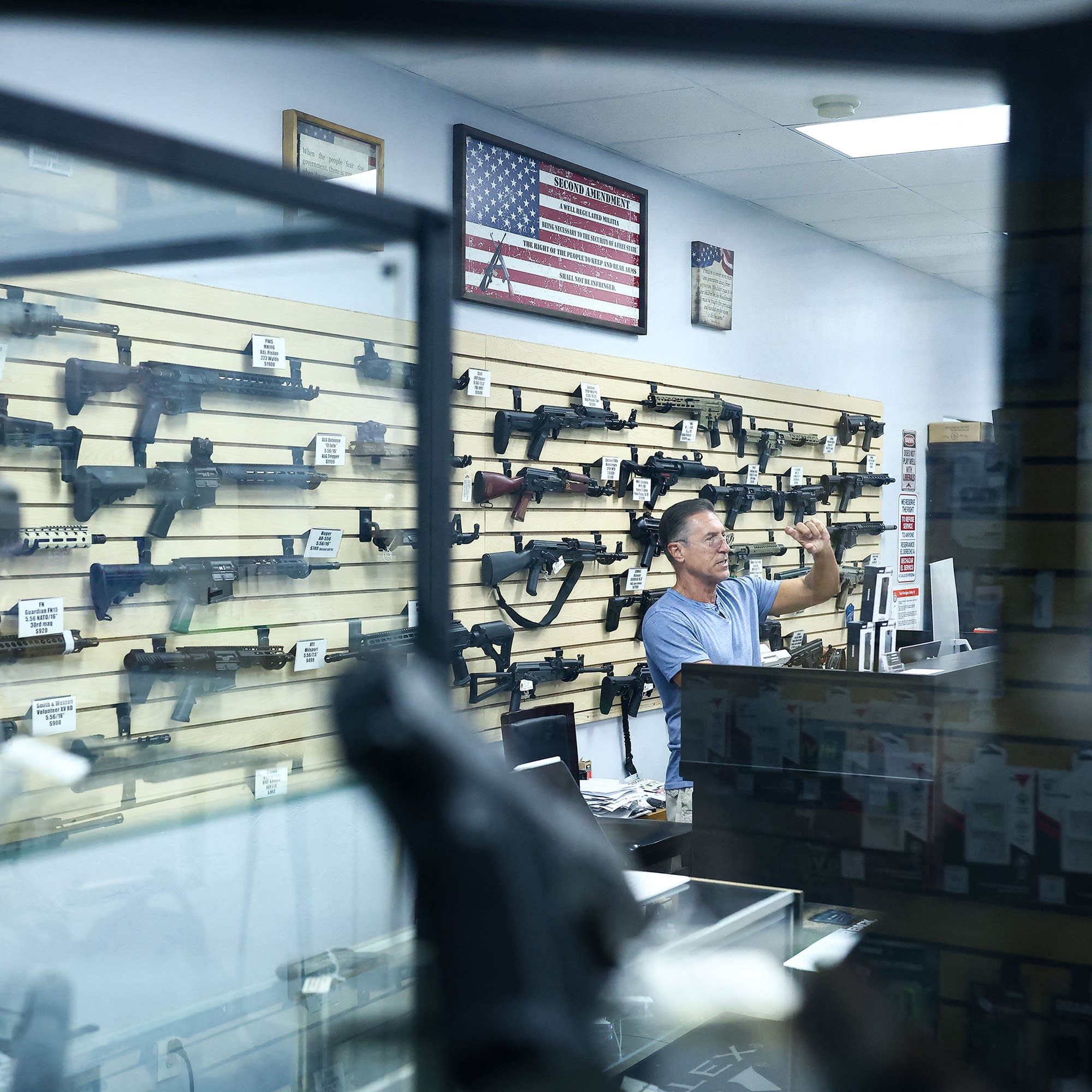
5:13Thanks for having me. President Trump said on the campaign trail that he would be a best friend to gun owners. How has he been doing on that promise so far? I mean, I think in a lot of ways he's fulfilling that promise for them. Five or six months ago, back in April, the Trump administration proposed more than three dozen regulations that essentially just roll back a lot of restrictions on guns. And one that a lot of people are concerned about is going to make it easier to sell guns online and ship guns to people's doors within the same state. You waded through tens of thousands of the public comments coming in about these regulatory changes.
5:53What were people saying? With most of the three dozen regulations that we looked at, most of them were overwhelmingly positive. And I think that that is kind of a reflection of the organizing might of kind of the gun rights organizations. They're able to get people out to support those proposals. But there were interestingly a few proposals, one of them being that online sales proposal that got mostly negative feedback. So you had kind of strange bedfellows of small gun dealers coming together with gun violence prevention groups to oppose that proposal for a couple of different reasons. One is the public safety concern about selling guns online.
6:36And these small gun dealers are kind of like on the front lines of making sure people who shouldn't have a gun because of a mental health condition, because of criminal intent, they're trying to straw purchase a gun for somebody else who shouldn't have one. But they're on the front lines of stopping that from happening. But the gun dealers themselves are also worried about their businesses, right? Because if these bigger companies like an Amazon of guns could sell guns online, then that would potentially put their small gun stores out of business. Say more about that. Like, where do most people buy guns right now and how would that change?
7:12Most people buy guns right now in these small gun stores across the country. But if you have, for example, the online sales rule, you could have bigger companies come in, set up shop, and then maybe take over the market and sell guns at a lower price. Because right now, most gun sellers don't make most of their profit off of the guns themselves. They make their profit off of ammunition, off of the accessories that they sell. So if you have this kind of big shakeup in the market, you really could see all of those small gun sellers go out of business. In addition to the regulatory changes underway that are affecting the gun industry, there's also quite a few big business developments.
7:55For example, Smith & Wesson, major gun maker, just acquired Savage Arms, and that's making it the largest commercial firearms manufacturer in the country. How big of a deal is this merger and what does that mean for sort of the industry landscape? I think it's a pretty big deal because it's part of this trend of consolidation that we're seeing not just in the gun space, but in American business in general. And I think that's these small dealers concerns, right, that these new rules and regulations might make it easier for the industry to consolidate. Chip Brownlee is a reporter at The Trace. Chip, thank you very much.
8:33Thank you. Public comment for these new regulations closed in August, and Chip says we could see finalized rules in the next few months. In Washington, I'm Kimberly Adams with the Marketplace Morning Report.
8:51From APM, American Public Media. I'm Amy Scott, and this week on our podcast, How We Survive, I visit a farm outside San Diego that lost nearly everything to an early heat wave. The heat came in, like a massive premature heat wave, for like a week or two, upper 90s, and it just thwarted everything. Like most small farms, they didn't have crop insurance, so business partners came up with a plan to bet on the weather. Calci even created a contract for them. Well, the trade was if it reaches over 90 degrees over two consecutive days this week, then we would win. So fingers crossed. Well, did the bet pay off?
9:39Find out on this week's episode of How We Survive, available on your favorite podcast app.
In October, the Trump administration announced it would no longer enforce parts of the National Firearms Act, a nearly century-old law that regulates the sale of certain firearms and accessories. It's one of many changes to gun regulations that may be coming down the pipeline. In this podcast, we unpack. But first, we have a primer for this week’s deluge of jobs data.
Every story has an economic angle. Want some in your inbox? Subscribe to our daily or weekly newsletter.
Marketplace Morning Report is more than a radio show. Check out our original reporting and financial literacy content at marketplace.org — and consider making an investment in our future.
Stories from this episode: