 Ask ChatGPT



The episode is a mix of current policy, local impacts of AI infrastructure, and remembrance of labor history. It opens with Marketplace discussing the Fed holding interest rates steady despite inflation above its 2% target; KPMG chief economist Diane Swank says the Fed may wait due to financial-market fragilities and that AI-related costs may be landing before productivity gains. It then remembers Dolores Huerta: April Teyes (Mount San Antonio College) and Dora Suerta describe Huerta as a farmworker and women’s rights organizer who co-founded what became the United Farm Workers of America, led strikes, and pushed for protections like against pesticides, bathrooms, and fair hours. Finally, it reports on a proposed hyperscale data center near Lowndes County, Alabama: residents fear diesel generator pollution, asthma/heart risks, and noise; the developer Cloverleaf cites existing infrastructure, promises ~55 decibels noise, and claims tax revenue could fund water/wastewater and jobs.
Written by AI. May contain mistakes.
An analysis of the Fed's decision to hold interest rates steady amid ongoing inflation.
“From Marketplace in Washington, I'm Kimberly Adams.”
A reflection on the life and impact of labor activist Dolores Huerta.
“April Teyes is a professor of history and ethnic studies at Mount San Antonio College in Walnut, California, and wrote a biography of Huerta.”
An introduction to the upcoming podcast episode about a farm's struggles.
“And in Washington, I'm Kimberly Adams with the Marketplace Morning Report.”

Get the gist, explore an idea or ask about something said.
 Claude
On Marketplace Morning Report, what are the key points of this episode?
Searching your listeningAutomatic transcript. May contain errors.
0:00Vantage Score, the modern credit score used by 3 ,700 institutions, including nine of the top 10 banks. Using over 400 % more data than legacy credit scores and built with trended and alternative data, Vantage Score is more predictive, scoring 33 million more consumers than conventional credit scores. Now accepted by Fannie Mae and Freddie Mac for conforming mortgages, VantageScore 4.0 safely unlocks approximately 2.7 million new mortgages and up to$1 trillion in new loans. Better credit score, better data, better mortgage decisions. VantageScore.com. Why the Fed decided to hold off on raising interest rates.
0:41From Marketplace in Washington, I'm Kimberly Adams. Last month, the Federal Reserve raised interest rates in an effort to fight high inflation. But this month, just yesterday afternoon, the Fed decided to keep rates steady, even though inflation remains above the central bank's 2 % target. We learned this morning that the Fed's preferred inflation measure, PCE, was up 0.5 % for the month, putting annual inflation at 3.6%. For more on this, we're joined by Diane Swank, chief economist at the audit, tax, and advisory firm KPMG. Good morning, Diane. Good morning. Markets are now predicting that the central bank is going to raise interest rates at the next meeting in December.
1:22Why a rate increase then as opposed to now? It's not clear why. The Fed actually waited. I think they actually should have increased rates in this meeting in October, and we will see more than one increase going forward. I think there is some concern about financial market fragilities and what happens to the AI boom. Right now it continues, but anything that would make that falter would also alleviate some of the inflation we're seeing because much of the inflation is actually related to, in some cases, the AI boom itself. The costs are landing ahead of the productivity gains. We also saw weekly jobless claims come out this morning.
2:02How are things looking in the labor market? The labor market looks healthier on paper, much like the economy than it feels to most Americans. We've seen a low hire, low fire, and layoffs have not soared. That's important because there's little margin for error. The problem is those who have a job are not quitting. It is more like the hesitancy you see in recessions rather than six years into an expansion. Diane Swank is chief economist at the audit tax and advisory firm KPMG. Thank you, Diane. Thank you.
2:51Running a business is hard enough, so why make it harder with a dozen different apps that don't talk to each other? Introducing Odoo, the only business software you'll ever need. It's an all-in-one, fully integrated platform that makes your work easier. From CRM, accounting, inventory, e-commerce, and more. And the best part, Odoo replaces multiple expensive platforms for a fraction of the cost. This is why over thousands of businesses have made the switch. So why not you? Try Odoo for free at odoo.com. That's O-D-O-O dot com. Gifts mean more when they have the power to give more. They can inspire more discovery, give more confidence, and unwrap more of who you are.
3:28This Black Friday, give a gift that goes beyond the box. The Dell XPS 13 laptop. With a beautiful design and cutting-edge performance, it helps you unlock more possibilities. It's the thinnest, lightest XPS laptop yet, with touchscreen, a backlit keyboard, and long-lasting battery life to power you through your day. Built with a durable aluminum chassis weighing just 2.2 pounds and Intel Core processors, it's fast, reliable, and portable enough to keep up wherever you go. Visit Dell.com to explore the possibilities with XPS. While shopping, you'll also find great perks like Dell rewards, fast free shipping, premium support, and financing with flexible payment options.
4:06Plus, you can find great deals on monitors and accessories. That means you can score a whole new setup now for less. This Black Friday sale is one you don't want to miss. Head to Dell.com slash deals. That's Dell.com slash deals.
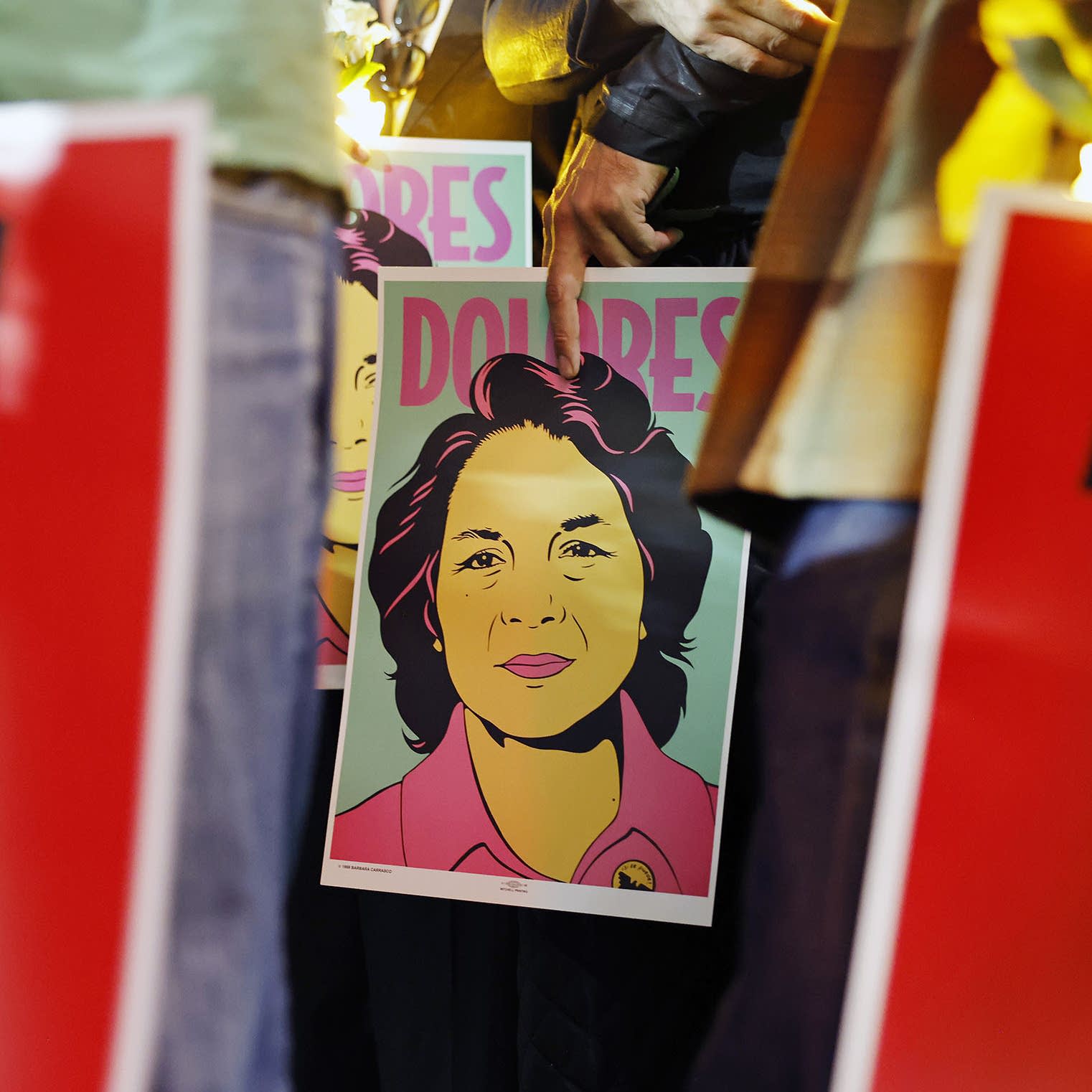
4:21Today, many are remembering civil and labor rights activist Dolores Huerta, who died yesterday. April Teyes is a professor of history and ethnic studies at Mount San Antonio College in Walnut, California, and wrote a biography of Huerta. Dora Suerta is an intrepid leader for labor rights, in particular farm workers' rights, a huge and fierce advocate for women's rights, women's liberation, a civil rights organizer and leader, a woman who never took no for an answer, and a woman who paved the way for many populations in our country. Huerta co-founded what eventually became the United Farm Workers of America and for decades led strikes and protests pushing for better conditions for agricultural workers, including protections from pesticides, access to bathrooms and fair working hours.
5:13The Lord Huerta teaches us that we need to speak truth to power. We need to demand change. Tejas says that in the process of writing the book about Huerta, she was struck by how she continued fighting for the rights of others, even while juggling the needs of her own family and dealing with poverty, in addition to abuse, including from her fellow activists. Also, how much Huerta inspired others. She always said, I'm not just an activist, I'm an organizer, right? And so I'm not the one to look to necessarily write for power. I want to bring power out of people. Huerta was 96 years old. It can be hard to wrap your head around the scale of the AI data center boom.
5:55Right now, for instance, there are more than 1 ,500 of them in the process of getting approved and built. And given the AI industry's ambitions, that number is only going to grow. The vast majority of the facilities are in rural areas, according to Pew Research Center. Marketplace's Kaylee Wells traveled to Alabama to the area near a proposed facility that could cost as much as$33 billion to build to find out what it could mean for the hundreds of people who'd live right next door. Linda Hall is bracing to pick up and move out of her house of 40 years for the second time. It hurts my heart to have to go through it again at my age.
6:35She's 85 and lives in Lowndes County, about 20 miles west of Montgomery. Forty years ago, a plastics plant went in right behind her house and bought up her property. The place she moved to is now less than 100 yards from a proposed hyperscale data center. And we've been told that you won't recognize this area here in 10 years. Well, I believe that because you can drive through my community that I raised my family in right across the road. and all the houses are gone, you won't recognize any of it. Lowndes County is rural, like 13 people per square mile rural. It's also got no zoning laws, so it's an attractive place for a data center.
7:17It's at the intersection of two highways, has a large 500 kV transmission line passing through it. Sarah Allen is VP of Development for Cloverleaf, the data center developer. And has an existing water system in place that can serve the site. But the site has downsides. It's in the county's most densely populated census tract, and nearly one in three people in Lowndes County live below the poverty line. That comes with health problems. You have in Lowndes County a higher rate of asthma. You also have higher rates of heart disease. Rob Friedman is with the Natural Resources Defense Council. That facility is going to perpetuate and exacerbate that burden.
8:00He says the culprit is the massive backup generators, which burn diesel when they're running. And that pollution has been linked to asthma, cognitive decline, heart disease, and even premature deaths. And then there's noise. No zoning laws means no noise limits. But the developer promises to keep it to 55 decibels, about as loud as a coffee maker or a conversation. Quiet enough to prevent hearing loss, but still loud enough to disrupt sleep, in the kind of place people move to escape noise. Veronica Lane was at a recent county commission meeting to oppose the development. We've been down here 18 years.
8:35This is an area where we want to retire. She lives right next to the project site. I have lupus. I walk every morning. I don't want that in my neighborhood at all because it's going to interfere with my health. Lowndes County's other big health issue is wastewater. Clay in the soil makes it hard to deal with, and the infrastructure to do it right is expensive. Dave Barry, the CEO of the developer Cloverleaf, says the project might actually help solve that problem. The data center and the economic development it would bring and the taxes it would bring are a huge source of revenue that could pay for the water and wastewater that people deserve in their homes and businesses.
9:18Taxes from the data center would nearly quadruple the local school budget and triple the county budget based on reported figures. The facility would also bring in 225 full-time jobs and a million dollars pledged for local programs. Some local residents say some local organizations are refusing to take any of that money. In Lowndes County, Alabama, I'm Kaylee Wells for Marketplace. And in Washington, I'm Kimberly Adams with the Marketplace Morning Report.
9:51From APM American Public Media. Yeah. I'm Amy Scott, and this week on our podcast, How We Survive, I visit a farm outside San Diego that lost nearly everything to an early heat wave. The heat came in, like a massive premature heat wave, for like a week or two, upper 90s, and it just thwarted everything. Like most small farms, they didn't have crop insurance, so business partners came up with a plan to bet on the weather. Calci even created a contract for them. Well, the trade was if it reaches over 90 degrees over two consecutive days this week, then we would win. So, fingers crossed. Well, did the bet pay off?
10:39Find out on this week's episode of How We Survive, available on your favorite podcast app.
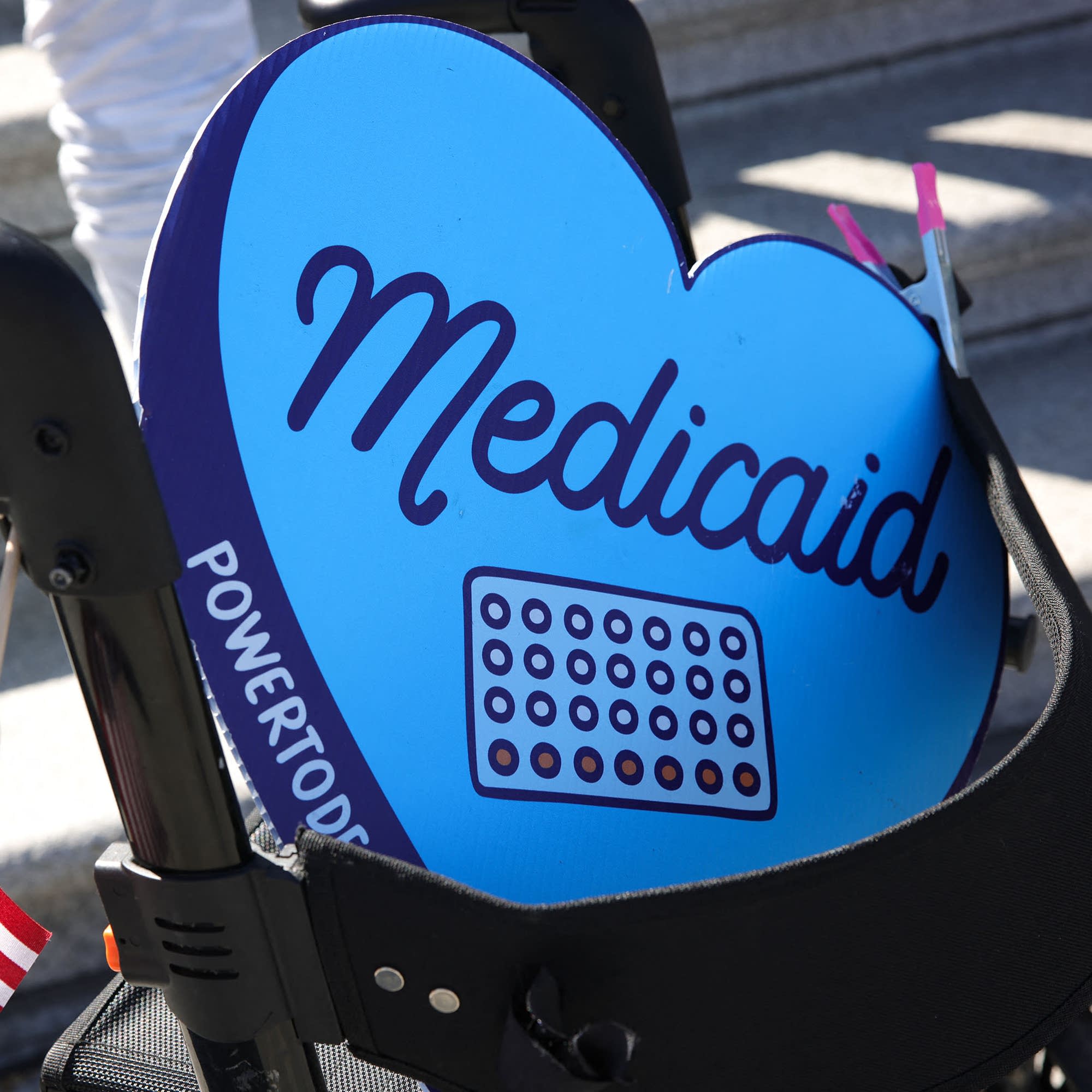
Dolores Huerta, an icon of labor rights, women's rights, and civil rights, died yesterday at 96. Huerta co-founded what became the United Farm Workers of America, and, for decades, she led strikes and protests pushing for better conditions for agricultural workers. Today, we have a remembrance. Also in this episode: why the Fed held off on raising interest rates and what a proposed hyperscale data center could mean for residents of a rural Alabama town.
Every story has an economic angle. Want some in your inbox? Subscribe to our daily or weekly newsletter.
Marketplace Morning Report is more than a radio show. Check out our original reporting and financial literacy content at marketplace.org — and consider making an investment in our future.
Read the stories from this podcast: