 Ask ChatGPT



The episode covers two main themes: holiday debt and the AI IPO/financing boom. It begins with the Federal Reserve holding interest rates steady amid persistent inflation, while households increase borrowing for holiday spending. It highlights research showing about half of surveyed people plan to use Buy Now, Pay Later this holiday season; younger users are more likely to use it more often. One in 10 working-age adults use it for groceries, and about one in three of those miss a payment. The episode also discusses Anthropic’s IPO filing: insider chatter suggests a $100B raise and $2T valuation, with five stock classes and 90 pages of risk factors.
Eric Gordon, professor at the University of Michigan’s Ross School of Business.
the IPO is unusually complex and may be timed to secure an IPO “window”; AI firms are absorbing massive capital (e.g., Meta’s $95B offering, Google’s $50B capital expense in three months). Notable examples include BNPL payment misses and the Anthropic/Meta/Google figures.
Written by AI. May contain mistakes.
Explore the implications of the Federal Reserve maintaining interest rates amidst inflation and holiday spending.
“The Fed keeps interest rates the same as it sorts out how best to fight inflation, while consumers are taking on debt to adapt to it.”
Discover the increasing reliance on buy now pay later services for holiday purchases and its impact on consumers.
“20 % are planning to use it more often than last year compared to 9 % who are using it less often than last year.”
Analyze the current landscape of tech IPOs, focusing on Anthropic and its implications for the AI sector.
“We continue to get quarterly earnings from big tech firms this week.”

Get the gist, explore an idea or ask about something said.
 Claude
On Marketplace Morning Report, what are the key points of this episode?
Searching your listeningAutomatic transcript. May contain errors.
0:00VantageScore, the modern credit score used by 3 ,700 institutions, including 9 of the top 10 banks. Using over 400 % more data than legacy credit scores and built with trended and alternative data, VantageScore is more predictive, scoring 33 million more consumers than conventional credit scores. Now accepted by Fannie Mae and Freddie Mac for conforming mortgages, VantageScore 4.0 safely unlocks approximately 2.7 million new mortgages and up to$1 trillion in new loans. Better credit score, better data, better mortgage decisions. VantageScore.com In a classroom of sodas, most stay quiet. Then there's Mr.
0:42Pibb, sweet cherry, bold outburst. The kind of flavor that gets attention. Bold kick of cherry. Hey, yo, Mr. Pibb. The Fed keeps interest rates the same as it sorts out how best to fight inflation, while consumers are taking on debt to adapt to it. From Marketplace in Washington, I'm Kimberly Adams. The Federal Reserve decided yesterday to hold interest rates steady. Not much of a surprise, but there were two dissents, so some members of the Interest Rate Setting Committee argued the Fed should raise rates in order to fight persistent inflation. That inflation will likely be on the minds of many shoppers as we head into the holiday season, when households often take on additional debt as they ramp up their spending.
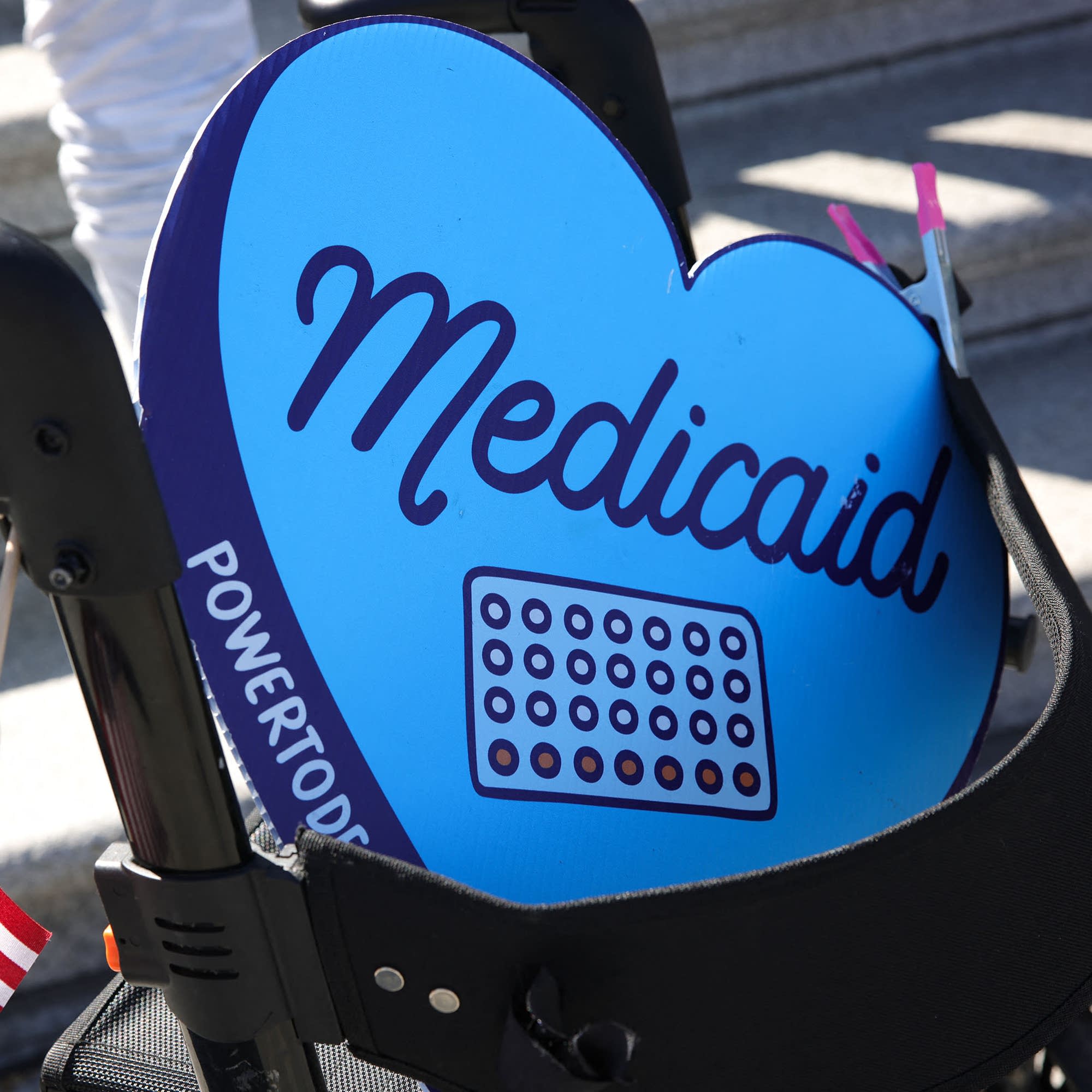
1:26And buy now, pay later is poised to be an increasingly popular method for making those holiday purchases, according to new research. Marketplace's Elizabeth Trouble has more. Roughly half of those surveyed by the consulting firm TSG say they'll use Buy Now Pay Later this holiday season. That's according to Kelly Prange, analyst with TSG. 20 % are planning to use it more often than last year compared to 9 % who are using it less often than last year. She says younger generations are more open to using the installment payment method to handle large or unexpected expenses. They know they can avoid interest while still paying that off over a few months.
2:10But people are also using buy now pay later to cover basic expenses. Roughly one in 10 working age adults are buying groceries this way, says Cassandra Martincheck with the Urban Institute. And among those who did, about one in three missed a payment. She says on the one hand, access to buy now pay later can be a lifeline for families in a bind. However, over-relying on credit can lead to future financial instability if families have a hard time keeping up with debt. And she says that's something to keep in mind over the holidays as families spend more than normal on things like groceries. I'm Elizabeth Troval for Marketplace.
3:28Thank you. Why not you? Try Odoo for free at odoo.com. That's O-D-O-O dot com. Gifts mean more when they have the power to give more. They can inspire more discovery, give more confidence, and unwrap more of who you are. This Black Friday, give a gift that goes beyond the box. The Dell XPS 13 laptop. With a beautiful design and cutting-edge performance, it helps you unlock more possibilities. It's the thinnest, lightest XPS laptop yet. with touchscreen, a backlit keyboard, and long-lasting battery life to power you through your day. Built with a durable aluminum chassis weighing just 2.2 pounds and Intel Core processors, it's fast, reliable, and portable enough to keep up wherever you go.
4:11Visit Dell.com to explore the possibilities with XPS. While shopping, you'll also find great perks like Dell rewards, fast free shipping, premium support, and financing with flexible payment options. Plus, you can find great deals on monitors and accessories. That means you can score a whole new setup now for less. This Black Friday sale is one you don't want to miss. Head to Dell.com slash deals. That's Dell.com slash deals.
4:38We continue to get quarterly earnings from big tech firms this week. Microsoft and Alphabet yesterday, Amazon today. Of course, everyone is talking about and spending on artificial intelligence. We also had news on that front this week with Anthropic filing for its long-awaited initial public offering. For more on all this, I'm joined by Eric Gordon, professor at the University of Michigan's Ross School of Business. Good morning, Eric. Good morning, Kimberly. What were some of the takeaways when you looked into Anthropic's filing for its initial public offering this week? One takeaway was the reputed size of it.
5:14So they don't specify it in the filing, but the insider chatter on the street is that they're going to try to raise$100 billion, with a B, dollars. That's a huge offering. And value the company at$2 trillion. That's with the TR dollars. So this is a gigantic offering. The other thing that you take away from it is this is the most unusual, complicated IPO I've seen in, say, 30 years. They have five classes of stock. There's the usual founders keep control. This one is a puzzler and my favorite. The risk factors that they say that you should think about when you decide whether or not to invest runs 90 pages.
5:59That's a lot of risk. Why are they doing this now? You know, the market has been a little shaky. There are days where you think, oh, the market is good. There are days where you think the market is going to crash. the IPO window might not stay open forever. This might be one of those times where the first company to go public is the last company that can go public for months. So getting through the door first, I think, is important to them. So what does this tell us about a potential IPO for the other big company in AI that everyone's watching, OpenAI? Open AI, if it goes second, hopes that its rival Anthropix IPO does really well.
6:42Because if Anthropix IPO bombs, then when Open AI comes to the market, they're going to see a lot of closed doors. Shortly after the Anthropix IPO announcement, Meta announced that it was going to have a$95 billion stock offering to expand its artificial intelligence efforts. What does that, especially coming after this Anthropic IPO news, tell us about the money landscape in AI right now? AI is the shark that's going to eat every fish in the ocean. They are just absorbing capital left and right. Think about that,$95 billion. The news just came out that Google ate through$50 billion in capital expense in three months.
7:28These companies have big bellies and insatiable appetites. These numbers are just so hard to wrap your mind around. How's the regular consumer, the regular retail investor, supposed to even think about this kind of money moving in these industries and what it means for them? I think for most of us, we're just going to follow the sentiment and the hype back and forth. most of us can't understand how the finances work because not only is it a huge amount of money, but they raise the money in very complicated ways where you sort of need a PhD in philosophy to figure out how the pieces fit together.
8:06So the only people who understand this are the big institutional investors, and I'm not sure all of them understand it. Eric Gordon is a professor at the University of Michigan's Ross School of Business. Thank you, Eric. My pleasure, Kimberly. In Washington, I'm Kimberly Adams with the Marketplace Morning Report.
8:4924-7 feel natural to talk to and resolve customer requests on their own so businesses keep up without losing their personal touch. And because workflows can be updated using natural language, teams can make changes themselves without long, complex engineering cycles. That means less time managing workflows, more time focused on customers and ROI in weeks. Also, Decagon gives your team full visibility into what's happening across every conversation so it's easier to spot trends and improve the experience over time. Ready to transform your customer support? Go to decagon.ai slash marketplace to see what Decagon can do for your team.
9:30That's decagon.ai slash marketplace to check it out.
Households often take on additional debt as they up their spending over the holidays. Buy now, pay later is poised to be an increasingly popular method for making those holiday purchases, new research finds. We hear about the benefits and the risks. And later in the show, we look at key takeaways from Anthropic's IPO filing and talk about what to make of the vast amounts of money flowing through big tech right now.
Every story has an economic angle. Want some in your inbox? Subscribe to our daily or weekly newsletter.
Marketplace Morning Report is more than a radio show. Check out our original reporting and financial literacy content at marketplace.org — and consider making an investment in our future.
Stories in this episode: