Ask ChatGPT
 Mixed Signals from Semafor Media
9 Oct 2026 · 49m · 13 chapters
Alex Gibney discusses his four-hour Elon Musk documentary and the documentary industry’s increasing reluctance to back controversial real-world films. He describes Universal Pictures’ overseas distribution hesitation (later resolved), legal/pressure concerns, and social-platform ad refusals (YouTube/Meta initially rejected trailer ads; TikTok/X issues persisted). He argues the problem is systemic: major platforms and streamers avoid controversy because they’re not primarily media businesses and fear offending customers, while political incentives and consolidation push flatter, safer content.
Alex Gibney is a prolific documentary director (e.g., Enron: The Smartest Guys in the Room, Going Clear). He also co-directs/produces major investigative work and is developing a scripted feature starring Viggo Mortensen.
Musk’s political shift is “callow” and image-driven; his power grows alongside instability. HBO required Gibney to expand the film after the attempted assassination of Trump. Gibney built an “Elon avatar” using Musk’s real quotes and AI animation because Musk wouldn’t participate.
trailer ad rejections; Universal overseas “silence”; attempts to get Musk to appear; interviews with Justine Musk, Elon’s father, Reid Hoffman, and Wired journalists Zoe Schiffer and Katie Drummond; Justine’s “gaslighting” insight.
Written by AI. May contain mistakes.
Discussing the perceived disparity between documentaries and podcasts.
“You'll hear from CMOs, agency legends, brand visionaries, and brilliant thinkers.”
Insights into the difficulties faced with the overseas release of Gibney's film.
“Walk us through what happened with the release of this film.”
Examining the current climate for controversial documentaries in media.
“So it's really bad for a group of reasons, both having to do with the aversion of some of the big platforms have to controversial content and also the growing control of broad platforms and streamers in very few hands.”
Exploring alternative distribution methods for documentary filmmakers.
“And the challenge then is for artists to find ways of going directly to consumers.”
Discover how Elon Musk curates his public persona and the impact of his actions.
“And then you get what you want from a regulation standpoint.”
Learn about the personal insights from those closest to Elon Musk that shaped the documentary.
“We'll be back with Mixed Signals right after this break.”
Hear about the creative methods used to portray Elon Musk in the documentary.
“version of Elon Musk, who kind of speaks on screen.”
Learn about the complexities of Elon Musk's political activism versus business interests.
“work of journalists, I also feel it's a good idea to honor those journalists by including them in the doc.”
Discover Alex Gibney's new film focusing on heroism and corruption.
“But I usually work on more than one at the same time.”
The hosts express excitement for Alex Gibney's documentary release.
“Well, Alex, we're really looking forward to both of those.”
Discussion on the challenges facing the documentary business and the changing landscape of distribution.
“So Ben, what did you think about Alex's assessment that the state of the documentary business in particular is in kind of a bad place right now?”
The hosts analyze Elon Musk's public image and specific controversies surrounding him, including a pivotal event in Thailand.
“And obviously the political environment has just turned around.”
The hosts reflect on the documentary's insights into Elon Musk's life and encourage listeners to watch it.
“They can watch the documentary and let us know what you think.”

Get the gist, explore an idea or ask about something said.
 Claude
On Mixed Signals from Semafor Media, what are the key points of this episode?
Searching your listeningAutomatic transcript. May contain errors.
0:00I think that for people like Bezos and Musk, I think their political ideas shifted. These people don't like me. These people are criticizing me. And now they feel more comfortable in a conservative sphere where everybody tells them that they're geniuses. So I feel like it's almost more childlike in some way. It's never been easy to get a controversial film or documentary made in Hollywood, particularly if it's about something real, something that happened, a real person. But if you ask people in Hollywood today, some people in Hollywood today, if they think that it's gotten harder than ever to make these types of films, the answer that you'll get from many of them is yes.
0:41One of the people who believes this is Alex Gibney. And on this week's episode of Mixed Signals, Ben and I sat down to talk with the prolific director about the increasing skittishness in the entertainment industry. when it comes to controversial documentary work. We talked to Gibney about how his four-hour-long documentary on Elon Musk, the new documentary that's out today as of the release of this episode, and why its foreign distributor, Universal Pictures, mysteriously went silent and almost didn't end up distributing the film overseas. Universal has since said that it is going to distribute the documentary, but there were a few weeks there where it looked like maybe they might back out amid legal pressure from Elon Musk.
1:26We also talked to Gibney about his attempts to get Musk to participate in the documentary, the response from Musk's team, as well as Gibney's desire for a kind of substack for documentary, this kind of a way to get around the traditional studios and distributors, and Gibney's first scripted film, which stars Viggo Mortensen, which is going to be out sometime in the next several years. We thought it was a really interesting conversation, and we hope you enjoy it right after the break.
2:21Ben Smith: These are your notes from the frontier. You'll hear from CMOs, agency legends, brand visionaries, and brilliant thinkers. Search for Frontier CMO from Think with Google wherever you get your podcasts or watch on YouTube.
2:41Ben Smith: Alex, we had, I don't know if you have this, we had Ken Burns on a while ago. and he was just like, you know, every second of every documentary that I put out is like, I have put many, many hours into and it's so beautiful and it's so thoughtful and so careful. And what you guys do is such garbage, this podcast thing. Like, it's like, what are you even doing? This is embarrassing. Do you as a documentarian, like, feel that when you go on podcasts? No, I mean, it is what it is. I don't know how to respond to that. It's like, yeah. Self-hating podcast crisis? No, no, I'm not. I'm all into podcasts.
3:16Ben Smith: It's more a therapy question. It's just a different thing. That's all. As you can see, I didn't have my gaffer in today to adjust the lighting exactly as I would like it. You're looking great. I'm not leaning into that kind of perfection for the podcast. So, Alex, before we get into the meat of the documentary itself, and actually, Ben and I have watched a lot of hours of your documentaries recently because we just finished having Salman Rushdie on the podcast. Walk us through what happened with the release of this film. This is something that's been getting a lot of attention. The New York Times and all the trades wrote about it.
3:55Universal was seeming to kind of hesitate about releasing the film overseas. When did you find out that Universal was kind of waffling on the release of this film overseas? And what was your reaction? Well, we were having some difficulty engaging with them about what their plans were. And that was setting off alarm bells for us. Then an article came out recently about, you know, that issue. And since then, Universal is engaged. In fact, I had a big call with them today. So we're all systems go on overseas right now. It wasn't particularly clear from the coverage why there was some hesitation. There were some kind of suggestions about it.
4:41But what do you think happened? Honestly, you'd have to ask Universal. I haven't gotten a good answer. I mean, I think there were some legal concerns. But on this one, you'd have to ask Universal. I'm happy with the outcome. Let me just say that. But yeah, I was distressed that for a long time, they weren't putting in place their plans to release. But now I just got off a call with them and they're all systems go.
5:09Ben Smith: You've been sort of living in this, you know, in a shifting climate around news, around documentary, around how big corporate media companies feel about controversy and politics. How bad is it? How much has it changed? It's bad. I mean, it's really bad. You know, I think when I think back a couple of years ago on a doc I produced that Alexis Bloom directed called The BB Files about Netanyahu and his corruption. That was a film that four or five years ago, there would have been a bidding war for it. But in this environment, people run away from controversy because you might either elicit some political retribution, or you might offend some listeners, even though you might engage others, and that would be a terrible thing.
5:56So it's really bad for a group of reasons, both having to do with the aversion of some of the big platforms have to controversial content and also the growing
6:17control of broad platforms and streamers in very few hands. So it's really a big concern. And it's actually one of the things at my company that we're trying to do something about. You know, we're exploring alternative distribution platforms and media. But and I should say, you know, in terms of the movie at hand, Musk, you know, one of the things we discovered recently, Bleecker Street and HBO so far have been great partners. and Bleecker Street, when our trailer dropped, wanted to run a bunch of ads on all the social media platforms highlighting our trailer. YouTube, Meta, meaning Facebook and Instagram, TikTok and X all turned us down.
7:05And then we appealed and they turned down our appeal. We appealed again. They turned down our appeal. And then, of course, there was an article commenting about the fact that this happened. And then mysteriously, YouTube and Meta said, oh, sorry, it was a mistake. And then TikTok still won't run the ads and X claims they're going to, but so far we haven't seen any evidence thereof. So was it a mistake or was it that just, you know, it just happened to be that they clamped down on our ads the same night that all the tech barons were having their dinner with Xi and Trump at the White House. You know, as I said, I have that photo of Hunter Thompson behind me, and Hunter Thompson's famous, one of his famous phrases was, just because I'm paranoid doesn't mean I don't have enemies.
8:00So wait, I want to linger a little bit, though, Alex, on something that you said. You mentioned that you're trying to fix some of the distribution challenges around these documentaries, in particular, because maybe some of the tech platforms, you know, obviously have shown some hesitation about wanting to showcase or promote, in this case, some of the films. And, you know, there's seemingly some skittishness, increasing skittishness on the studio side. What are those changes that you're exploring? What does that look like? It's a good question. And it's kind of too early to tell. But one of the things that we discovered, and there are a bunch of different models that we're looking at, you know, one is the way, for example, that the PBS show Frontline has gotten a ton of viewers by launching their episodes on YouTube.
8:48And it's sort of following social media platforms. There's another thing. There's also evidence that suggests that you can build up like Substack, you know, a lot of followers that help to launch some of your own films. In other words, there appears to be a kind of corporate block between films that artists make and the audience who wants to see those films, because corporate interests seemingly want to homogenize content. And also, particularly the tech platforms don't want to offend people who might buy iPhones or sneakers. And so, you know, as a result, what you want to do then is try to find a way to go direct to audiences.
9:33Now, Now, that proves challenging also because, you know, some of these tech platforms own the social media platforms. But we're trying to navigate in this environment. I mean, I remember, you know, that's where kind of theatrical, the old school model now is coming in. Suddenly, you know, like our first weekend for Musk is entirely sold out, even though it's a three hour and 45 minute movie. And I remember when I, over 20 years ago, when I did a film with Eugene Jarecki called The Trials of Henry Kissinger with Christopher Hitchens, sort of the dark side of Henry Kissinger, no broadcaster or cablecaster in this country would come close to it.
10:11But an enterprising young distributor launched it at the Film Forum where it played for four months and it started playing around the country. Word of mouth built and then networks felt, oh, it's entertainment. Now we can show it. So, you know, it's this constant struggle where big platforms want to routinize content in a way that I find dismaying, whether it's for political or creative reasons. And the challenge then is for artists to find ways of going directly to consumers.
10:41Ben Smith: Yeah, it's a strange moment, right? Because it's like there's never been a better time to release something totally insane and potentially defamatory and like far outside the scope of what any normal platform would publish and put it on the internet and get millions of views. Like it's never been more open. And yet also the corporate media, which has less control than ever, is more cautious. I mean, it's a very odd combination of things. I mean, it's usually the answer is, well, it's the economics. The corporate media still pays more. That's why you're not putting your documentaries on YouTube.
11:12Ben Smith: Do you see any kind of that changing? I mean, it's one of the things we're trying to sort out. And obviously, there are some writers on Substack who do very well on Substack because they found a way to monetize it in a way that's direct. And, you know, back in the days, and this was the thing that changed the paradigm with the sort of awful years of cable TV. HBO came along and said, instead of renting viewers to advertisers, we're going to ask you to pay for the content directly. And that plus the cable bundling allowed them to produce extraordinary content in which some people really love some shows and didn't like others, but that was okay.
11:52And so you had this menu of stuff that allowed for that. So the trick is to sort of tiptoe in between the massive footprints of the dinosaurs and see if you can find ways of using the World Wide Web before it gets controlled or AI dominated to reach viewers that want to see what you've got. And it's a challenge. But there are opportunities in addition to roadblocks. Earlier, you mentioned, you know, when we were talking about how it's getting bad in terms of releasing documentary or the appetite for sometimes controversial documentaries or documentaries, content films that are going to, you know, maybe piss off a certain segment of the audience.
12:39Is the reason that it's gotten bad, you know, and maybe the change in attitude among some of the studios and platforms, is it because the people change, the people who are in charge have changed? Or is it because they've been the people who were easy to work with before? They're no longer in those jobs, essentially. I don't think it's a people thing. I think it's a system thing. And when it comes to the tech platforms, you can see that their dominant business is not the media business. So why would you want to release a show? I'm speaking from their point of view. Why would you want to release a show that might piss off people who would buy iPads or iPhones, right?
13:20Because that's not your dominant business. Same thing with Amazon. You know, you've got people who buy sneakers and all this other Why would you want to piss them off? On the other hand, there's also a political imperative now. You know,$40 million was paid by Amazon for the Melania doc. Now, that wasn't the market speaking. That was crony capitalism speaking. You want to please the Capo di Tutti copy. So you make a$40 million documentary about Melania. Because now, and particularly, you can see the tech platforms have decided with Trump, And you can see it with what David Ellison did over at 60 Minutes.
13:59You know, they decided that the best way forward is to just flatter him or pay him or both. And then you get what you want from a regulation standpoint. So all these things are happening simultaneously, even as, you know, you're seeing more and more money flow to the top. and control of platforms, be it social media or streamers, are in the hands of fewer and fewer hands.
14:25Ben Smith: Did you ever talk directly to Elon or to his people about his participating in this film? I didn't. One of my producers, Jesse Dieter, knew him reasonably well because she had done two docs with him, one called Revenge of the Electric Car and the other one was called Do You Trust This Computer? about AI, which was never released because Elon was paying for it and he didn't want it released. but she knew him well. She had his cell phone. She had his email. And as you know, at Tesla, there isn't exactly a welcoming PR staff to help you out in these matters. So we went directly to Elon right away at the top, please.
15:03And Jesse sent him rather personal notes saying, it's a good thing to do, blah, blah, blah, blah, blah. So we went in the front door. We went directly to him and confirmed with him in person that those, you know, Jesse did, that those were the right places to go. And his response was a Twitter response, which was Gibney is a douche, which was a classic Elon response.
15:28Ben Smith: How do you, I mean, I wonder if in that process, like in sort of in approaching it, what do you think of how he manages and thinks about his own image? I think he manages his own image. I think he thinks about it all the time. And I think in some ways he's a very skilled writer, director, and producer of his own image. He's gone to great lengths to try to create an image. Now, sometimes that's a contradictory image, but I think he kind of enjoys that. He also enjoys the role, in addition to being the role of Leonardo da Vinci, you know, the one that would be celebrated by, say, Walter Isaacson, he also enjoys the role of the trickster.
16:05And so, you know, with the Nazi salute, was that LOL or was that really a Nazi salute? You know, he wants to always have it both ways. He wants to talk about stuff that's serious. And then sometimes he'll respond to you with a poop emoji. You know, so which guy is this? And he always wants to unsettle you. So he's constantly thinking about his image, even though his image is constantly shifting. So you mentioned in another interview that essentially you had a documentary about Elon that I think centered around some of his kind of early years leading up through up until Twitter. But at some point, as Elon started to get involved in politics, HBO said, we want to keep going with this, which is one of the reasons why it ends up being almost four hours long and kind of is, you know, has a bunch of these kind of different parts.
16:57Talk a little bit about the evolution of the film from this kind of first initial stage with this extra added MAGA, Doge component that got added in kind of later. Well, I think we were really basically finished with the film. I had a fine cut on the way to a locked picture in spring of 2024. And then there was the attempted assassination of Trump. Musk hitched his wagon to Trump. And I still thought, OK, well, there's something about the prologue here that would be interesting for people to see at this moment. Let's release this film. And HBO said, absolutely not. You need to keep going. follow the story, follow the story, and we can make it longer.
17:42Now, you know, to a director, it's rare that a network says make it longer. And so ultimately, I guess it didn't take that much work to persuade me, but that's what we did. And we ended up finding patterns from the earlier film that kind of repeated themselves, but in a larger scale in what would become part of the later film, though bits and pieces were shifted around structurally. And that ended up being one of the vital reasons for having it at such length, because the alternative would have just been to do sort of a stone-skipping exercise where you're just rushing through all these events or to eliminate a whole bunch of events.
18:23And there was something about the epic scope of this story and how Musk changed over time that seemed revelatory.
18:32Ben Smith: Did you leave it with a sense, because I agree with this story, it has this epic arc, did you leave it with a sense that you feel you know where the story is going?
18:44Well, not entirely, but I left it with a sense of unease that I hope the audience shares at the end, which is this person has accrued an enormous amount of power internationally in a way that's almost beyond the scope of a nation state, though he does have the backing of the Capo di Tutti copy of the United States, the President Trump. So it's disquieting. But where we go from here, and also I should say he has enormous power, but he seems to be, as he accretes more power, He seems to be becoming more and more unhinged, which is the purpose of putting in that clip from the movie, The Man Who Could Work Miracles.
19:30So you have a guy who's fundamentally unserious and unstable who's got enormous power. And it was meant to be unsettling as if to say, maybe we should take back some of this power.
19:44Ben Smith: Was there anything in all the archival and all the interviews you guys did, was there anything that most changed how you thought about him? You know, part of what some of the biggest insights I got into Elon Musk came from two women who were closest to him. One was Justine Musk, his first wife, who really kind of made me understand certain facets of his personality. Both it was interesting to see that she, you know, at one time really did love him and felt very close to him. But they grew further and further apart the more power he got, the more cool he got. And that she said something really interesting, which ended up being—two things that were really interesting would end up being key to the film.
20:33One was the personalist political. And the other was he taught her the meaning of the term gaslighting, something she didn't even know about before she met Elon. and that Elon had a tendency in their personal relationship to try to take something that they both knew to be true and to pretend that it wasn't true, that actually the truth was just the opposite. In other words, to bend reality through the force of his will. That taught me a lot about Elon Musk. We'll be back with Mixed Signals right after this break.
21:12Ben Smith: This week on our branded segment from Think with Google, we're sharing an excerpt of a conversation with Josh Spanier, Google's VP of AI and Marketing Strategy, and the host of Frontier CMO. I think the marketing industry is doing better than I thought it was going to be doing. Back in January, I was at an event, a room full of CMOs, maybe 100 CMOs and senior marketing leaders, And I was having this quiet conversation on the side with someone famous in the industry, someone who's got real influence, who everyone in the room knows. And that person said to me, as we surveyed this room of CMOs, 50 % of this room is going to be fired this year, 2026.
21:49Ben Smith: 50%. Yeah, yikes. And I was like, oh my, that was sobering. So that was pretty intimidating to go into the year thinking. And then six, seven months later, they were utterly wrong. They were utterly wrong. There has not been a CMO Armageddon. I kind of think that we're at the end of the beginning of this AI transformation, right? The end of the beginning. Fear, uncertainty, and economic squeezing, right? And that whole paradigm, that whole mindset was really about what is AI doing to me? What's changed is that the mindset shift is starting to be what can I do with AI? For more from this conversation, listen to the full episode on October 23rd.
22:32Ben Smith: And for more insights from Josh and other top CMOs, tune into Frontier CMO from Think with Google.
22:44One thing that you guys did that's really interesting is create this avatar video game version of Elon Musk, who kind of speaks on screen. Can you explain what that is or was specifically? Sure. So, OK, we had a fundamental problem, which is the guy, the central character of the movie He doesn't want to speak to us. What do we do? Well, I was determined, number one, that I wanted him to speak, and I wanted him to speak in his voice, and I wanted him to speak forcefully, both to contradict some of the people who are critics of his and to contradict me. I felt that that would give the film necessary dramatic tension and also be true to Elon Musk.
23:24so what we did was we started creating a massive archive of everything he had ever said either on podcasts or on video sometimes even outtakes of documentary material and fed it into a database so that if if we wanted to go to a certain subject we could say like what are the what are the things he said on this subject or that subject and we'd start to put them in the uh in the timeline of the edit. But then how are we going to visualize that in a way? Because they were coming from all sorts of different sources. Sometimes we edited them. Sometimes they were audio sources. And I thought, well, he's obsessed with this idea that we're living in a simulation, obsessed with it.
24:02And he feels it's a near certainty that we're living in a simulation, a kind of existential video game. So what if we created a simulated interview? So what we did was we, and we described this in the film. We went to our designers at MakeMake and we crafted a set. We crafted a costume. We put him in a leather jacket and a gamer's chair. I actually made him look pretty good, if you ask me. You know, a little bit of stubble, but, you know, chiseled jaw, much, much. He looks notably skinnier. Yes. He does. He doesn't look like the kind of Kim Jong-il character that he looked like during the SpaceX IPO.
24:41But the, and so, and we had cyberpunk lighting and so forth and so on. And then we use his actual words. Those are not confected by AI. And then we used AI tools at the end to animate him. And it proves, we also had him look directly at camera. And it proves unsettling in a number of ways, in ways that I think also relate to another theme of the film, which is AI, and the kind of uncanny relationships that we end up having with LLMs who desperately try to please us. And there's a kind of weird psychological transference process that takes place, even though we know watching the movie that it is an avatar.
25:31It's not really Elon, even though they're really Elon's voice. So for all those thematic reasons, it seemed earned and warranted. And particularly then we started to play more and more and more with this idea that he's also obsessed with, that this simulation may be some kind of existential video game. And we layered aspects of that on top as well.
25:52Ben Smith: Are you addicted now? Will your next films feature more of this stuff? Did you find it an interesting tool? I don't think so. You know, I think I went here because the theme of the film demanded it. You know, I did something sort of similar with interview subjects who, for source protection reasons, couldn't go on camera. Once in the Eliot Spitzer doc and once in a film about the cyber world. There was Client 9 and then one called Zero Days, where we had a number of NSA sources who couldn't be shown on camera, so created an avatar. And that was kind of the—but I don't do it at every film. You know, it's just—in fact, I did a lot of green screen in this film.
26:33I hope and pray that my next film won't have any green screen in it. But it seemed warranted for this film because we're dealing in this area. I wanted to play in Elon's sandbox. Alex, you did a lot of interviews for this documentary. You interview Elon's dad, most notably. You interview the founder of Tesla. You interview Ashley St. Clair. Can you talk a little bit about the research that goes into this and how many interviews, subjects you guys had? I would imagine some of them maybe didn't make it into the film themselves. How many people did you talk to?
27:09Over 100. and many of them, you know, some of them on background and some of them we talked to at great length and hoped to get them to appear and then at the last minute they wouldn't. There were a lot of people who were afraid to appear because they were afraid of being sued by Elon Musk. Or some, interestingly, some people who weren't U.S. citizens were afraid of being deported. And now some of the information that they gave us ended up in the film, but by way of background, not by way of, you know, showing them on camera. So we talked to a lot of people. And of course, I talked to a number of journalists as well.
27:51You know, obviously, when you're a filmmaker, you want to go to first person sources as much as you can. But I've also learned over time, a lot of the stuff that I do, which relies on the work of journalists, I also feel it's a good idea to honor those journalists by including them in the doc. And some of them are great storytellers, notably the two women at Wired, Zoe Schiffer and Katie Drummond. But, you know, Ed Niedermeyer was a guy who, you know, wrote a wonderful book called Ludacris about Elon Musk, which is kind of key to my understanding of the stories that would play out in the film, Laura Kolodny and others.
28:28So, you know, we talked to a lot of people and I talked to a lot of people in the Silicon Valley investment community, high up the power chain, but they were never going to go on camera because that's - Yeah, notably you did get Reid Hoffman, which was a pretty interesting and high profile interview. Yeah, and Reid was very good. And it took some persuading to get him to sit down, but I think he has some important insights about Elon, having known him for a long time, And also is one of the tech people who is not completely a folded tent when it comes to what's going on right now. How much do you feel like, you know, spending time in Elon's world, how much of this is his personal, you know, in terms of his political activism and whatnot, how much of this do you feel like is for the gain of his businesses?
29:26which you know that you you explore that a little bit in the film and how much of it is personal ideology because you know this is something that we've thought a lot about people ask you know um us in the media world about when it comes to people like um you know david ellison um and and whatnot and some of the shifts that have happened with people like mark zuckerberg um you know i think our theory i don't want to speak totally for you ben but is you know people like bezos and zuckerberg they always had these political beliefs they just felt like now they have the opportunity They had the cover politically to be able to kind of express them.
29:59How much of Elon's political ideology is, you know, in public support for Trump is on behalf of his businesses versus the things that he actually believes? Well, I hear where you're coming from, and I would take slight issue with it. I think that for people like Bezos and Musk, maybe in distinction to somebody like Peter Thiel, but for people like Bezos and Musk, I think their political ideas shifted. and they shifted for sort of callow reasons. In other words, these people don't like me. These people are criticizing me. And now they feel more comfortable in a conservative sphere where everybody tells them that they're geniuses.
30:36So I feel like it's almost more childlike in some way, though there is an ideology, the ideology, business, good, government, bad, okay? It's kind of a simple-minded ideology, but I think that's where they go. And then there's some carry-on that makes you feel part of a club, you know? That's where, and for Elon, it touched some personal issues for him, like this whole anti-trans obsession he has, because he feels that his son Xavier is dead. He actually has a human daughter named Vivian Jenna Wilson, who is very much alive. So I think there are these sort of petty personal grudges that feather in to a larger enterprise, which is extremely pragmatic.
31:19I mean, look at how all the tech barons shifted because they saw an opportunity with Trump 2.0 to get everything they wanted, which is a total evisceration of guardrails on their businesses. And when it came to Musk, I mean, we show in the film very purposefully that, you know, he was posing up to Barack Obama shamelessly because Barack Obama was showering him with money. And he wasn't talking a lot about, going hard right then. And I'm not sure he was hiding stuff. I mean, all of these guys claim to be sort of libertarians. But what kind of libertarian takes that much money from the federal government?
32:00I have this one guy in the film who's actually Jim Cantrell and Lawrence Fossey are both in the film. I would say they're real hardcore libertarians in some ways. And They look askance at Elon Musk, who says SpaceX is a virtual socialist enterprise in terms of the amount of money that the government is his customer, right? And then you have Tesla, who's gotten enormous credits from the federal government and also the government of California, wouldn't have been able to survive with those credits. And yet, you know, when there's a moment, and by the way, it happens at a moment just as Musk is being ruthlessly investigated civilly in all sorts of areas, whether it be SpaceX or Tesla, and also criminally by the Department of Justice over possible fraud relating to autopilot, suddenly the light bulb goes off.
32:51If he can elect Trump, all of those investigations might go away. Furthermore, Trump appears to be the most transactional president in American history. Think of all the things you could do in terms of eliminating constraints on your power under a Trump administration. So I think it's way more pragmatic. And, you know, I did mention Peter Thiel. I think he's more of an ideologue. Same thing with David Sachs, probably. and their political perspective may be a bit more consistent. I think Bezos and Musk roll with the punches and also went to a place that was more comfortable psychologically for them.
33:36I think COVID for a lot of them broke their brains and particularly for Elon Musk and shifted him in a direction, but he doesn't go hardcore Trump until late when he sees the possibility that he can win and therefore advance Musk's business goals in a way that's very transactional.
33:55Ben Smith: Part of their project, I think, is also creating a new media. You know, they want an Alex Gibney of the right, and they want, you know, sort of new outlets, or to take over existing ones, including HBO. I'm curious, you know, what you make of that project, and actually, like, is there anything positive about that? I mean, it is sort of a strange feature of America that if you think about my business, the news business, there's always talk about a right-wing New York Times. But actually what there are sort of blogs that attack the New York Times. It's sort of not parallel. And I'm curious if you see any – like what you make of this effort to create kind of essentially right-wing culture at a higher level than they've succeeded at for a long time.
34:35I think it was inchoate, but it's become increasingly real. And that's what I, you know, when I talk about how all of the ads for our trailer were refused by all these platforms simultaneously, you know, I think that's a coalescing around a certain right-wing culture, right? You don't criticize a tech oligarch. That's not a good thing for us because we're tech oligarchs, right? And so – and there's a vision as expressed by the All In podcast, which is featured prominently in our film, you know, business good, government bad. And that becomes part of culture. And then there are certain also you can see it in the in the Republican Party now where because of the charisma of Trump, they all coalesce around his, you know, his his his personal beefs and to some extent certain, you know, religious ideas.
35:33You know, this is something, a note that's being sounded by Astrid Taylor and Naomi Klein. But I do think there is become, there's a kind of coalescence around a certain core conservative ideas and to have those ideas dominate the media landscape. I do think that that's a project.
35:58Ben Smith: But the things you mentioned are totally negative, like them trying to stop you from distributing your film, however that happened. But I guess I'm wondering, are they making anything good? Are they succeeding at all in creating culture? I don't know. Was Melania good? I don't think so. Didn't get the best reviews. None of us saw it. From those left-wing critics. No, but that doesn't even seem to be an effort to be good, right? As you say, that was like this weird transactional thing. Right. But it's interesting. I do think there's a lot of energy going into it right now, but it's maybe not seen a lot of output.
36:29No, there's not a lot of output. Because it's like, when was the last time, you just can't imagine the popular appeal of saying, isn't it good that one person has more power than everybody else on planet Earth, and he can do exactly what he wants to the detriment of all of us?
36:48Ben Smith: I don't know, there are a lot of Marvel films whose theme that was that were pretty popular. Yeah, but usually there's a force steering against them. I mean, it sort of goes to the way all of these people seem to misunderstand the most potent tropes in powerful either sci-fi fiction or fantasy fiction. Like, they totally misunderstand The Lord of the Rings. They think they're the hobbits. They're not the hobbits. They're Sourman and Sauron. You know, and Elon Musk, and we include a little bit of it in the film, like he says one of his favorite books is Hitchhiker's Guide to the Galaxy. Hitchhiker's Guide to the Galaxy is a parody of people like Elon.
37:26And the inciting incident is when aliens from outer space blow up planet Earth, killing all the inhabitants in order to make way for a tech highway. You know, so I think that their cultural project is kind of doomed. But that's why they're playing in this weird space where, and it's a frustrating moment for people like me, because there's a lot of hard hitting, tough stuff, whether it be fiction or nonfiction, that I think a lot of people would like. But they're nervous about, you know, kind of navigating that space where they don't want to, they wouldn't greenlight something that seems to be leaning into the popular will, which is usually against them.
38:11Ben and I in the last month have watched two of your films. You know, we've got hours. Six hours. Yes, exactly. Maybe a little less than that. Maybe closer to five hours of your films. You're cranking them out these days. What else are you working on right now? What can we look forward to? I mean, I think for next year, I'm actually planning on doing a scripted film that's all about a hero. How hard it is to be a hero. It's about a soldier who discovers something terrible. It's based on a true life incident. He discovers something terrible, reveals it, and is heroic in stopping it, and then is summarily punished for it.
38:52And then how he comes out the other side with the help of another character. So it's interesting. It's good. I've been working on it for like six years, and I feel like it's finally going to happen. I'm looking forward to it.
39:03Ben Smith: Is this your first feature? Yeah, I've done some scripted stuff in TV, but it's my first feature. Can you share anything about who's in it? Have you started casting? How far along is it? It's pretty far along. I think, I mean, it was announced that Viggo Mortensen is going to be in it. And there's some other people I would announce shortly. So it's good. That's great. But nothing else in the documentary? No other? You know, you've taken on some pretty big. Yeah, I'm doing, on the doc front, I'm co-directing a film about Luigi Mangione and the insurance industry. And there's some things I'm developing long term.
39:48I mean, you say I'm cranking them out. I mean, usually my docs are kind of agonizingly slow in terms of how the Musk film took four years. But I usually work on more than one at the same time. It's really interesting. You know, the subject, when I'm thinking about recent subjects, you know, Elizabeth Holmes, you made a pretty, you know, widely viewed documentary about, you know, obviously this last one with Musk. Is there any uniting themes behind who you, the characters, when you're focused on individuals, is there any common themes between the type of people you like to focus on? Well, I guess they end up being that way, but it's not like I go to the big board and think like, what am I going to do this time?
40:35I mean, you know, Richard Plepler at HBO brought me the Elizabeth Homestock and said, you should really do this. And I wasn't convinced at the beginning I should. same thing with Enron and and so it's a combination of stuff that I seek out and stuff that seeks me out but one theme that seems to emerge over and over again is a kind of obsession with what some cops call noble cause corruption the idea that you start out with a mission Elizabeth Holmes the Enron guys even, like skilling more than Lay, probably, Elon Musk even, and that you believe that because you have this noble mission, that you're entitled to cheat a little bit, you know, sort of like the cop on the corner who's trying to bag somebody for extortion and drops a, you know, a gram of coke in his pocket or something like that.
41:30And you think it's okay a little bit. And then the next thing you know, you're the cop who's running a drug ring and you think you're still doing it for good reasons. And as you've accreted more power, you've become more and more deeply corrupt. But you think somehow that you're the good guy, not the bad guy. So, you know, I deal a lot with those characters because I think they're interesting. It's interesting. And I deal a lot with perps because I think if you want to stop crime, it helps the pay to understand how criminals think. Well, Alex, we're really looking forward to both of those. and congratulations on the documentary, which will be out exactly, I believe, when this episode is out.
42:11So people can check it out in theaters. They can choose. Terrific. Well, thank you, guys.
42:16Ben Smith: Thanks, Alex. It's great to see you. Thanks, Alex.
42:29Ben Smith: We spent 2025 talking to people who channeled the excitement and belief in AI in media and marketing. A lot of that conversation in 2026 will be about the hard work of building with those tools. Think with Google is here to bridge the gap between inspiration and implementation. This isn't fluff. It's a rigorous look at the mechanics of growth to help CMOs solve the hard problems, like navigating complex consumer journeys and proving value through better measurement. Make this the year you turn potential into performance. Visit thinkwithgoogle.com.
43:05So Ben, what did you think about Alex's assessment that the state of the documentary business in particular is in kind of a bad place right now? Because the distribution channels and the studios that have been putting these things out and that oftentimes were, especially as during the streaming boom, you know, putting out a lot of kind of controversial documentaries seem to have kind of gotten cold feet. What do you make of that assessment? Do you agree?
43:35Ben Smith: Yeah, I mean, I think we're at the sort of tail end of this long kind of tightening of speech, really specifically in the documentary business. Because, of course, it's also this wide open world on YouTube. And so, but if you want to, you know, be paid hundreds of thousands of dollars or more to or millions to create a really elaborate documentary, there's not that many people are going to do it. Not many people are going to distribute it. And those people are pretty nervous about controversy, whether it is Elon Musk, whether it's Russia. People don't like to make documentaries about Putin anymore because they don't want to get hacked.
44:06Ben Smith: There's just all sorts of – there's all sorts of things. It was very striking to hear him just say it's bad out there. I think that's – that is broadly true. And yet also, it's wide open and he's thinking about how do you get around it. I was very intrigued, and I'm curious what you think of, you know, sub-stack style subscriptions for what Alex Gibney does. There's something interesting there. Do you think he—I mean, is there something there? It's interesting. There definitely is a business model to support people who are really gung-ho about quality work, right? I mean, we see it already with Mubi making their own original movies.
44:43And we see it with the success of studios like A24 and other places. I mean, we see it with even the success of, you know, places like the companies like the Criterion Collection.
44:55Ben Smith: Right, but I mean, if you wanted to make like a really controversial political documentary that no company would touch, maybe the YouTube wouldn't touch, but you wanted to go around traditional distribution and just go direct to consumer. I mean, actually, honestly, Conservatives have been doing that for a while in certain ways. Do you think there's space for Alex Gibney to do that? I think it's interesting. I think it's interesting. I think that the demand can probably support a few of those every year. I don't know if it can support an entire ecosystem to replace what currently exists in the world of news, which is, of course, always made some of these types of documentaries.
45:34I mean, CNN makes a lot of documentaries, newsy, controversial political documentaries, or the streamers, which as they were kind of in wars with each other for cheap content that people would want to watch, they were more willing to support this type of work. And obviously the political environment has just turned around. It'll be interesting to see what happens if, you know, there's a President John Ossoff or President Gavin, whether some of these who doesn't pressure these kind of media companies, whether or not, you know, they open up and start making these things again.
46:09Ben Smith: I mean, the sort of market has been set for the price of a documentary about the First Lady. So I don't know Ossoff's wife, but I think, you know, like a$40 million Jen Seibel-Nusom documentary coming from Skydance. She could make it herself. She's a documentary. Oh, well, that's how you do it, right? Maybe she'll get like one of those sort of deals with Skydance to make some documentaries. So Ben, Alex didn't put in the film, but I really remember tracking the start of Elon's kind of bizarre trajectory. His image detachment from him as a kind of real life Iron Man into kind of something else.
46:47I track a lot of that to that soccer team that was stuck in the cave or whatnot. And Elon's controversial and kind of gross comments about the soccer coach, which you were kind of involved in that saga because you were at BuzzFeed News at the time.
47:03Ben Smith: One of the rescuers of the boys who were stuck in a Thai cave, Musk. And it's interesting, it was Musk, not in an email to my reporter at BuzzFeed, Ryan Mack, allegedly defamed him, and the guy sued him. But it was Musk really trying to manage his own image and correspondence with a journalist that blew up on him. And I think people who covered him knew he'd always been like that, been very aggressive behind the scenes, and it kind of spilled into public. And now it all, like everything else, all happens in public. I mean, I do think I found the documentary very compelling on sort of the core question of why Musk is so unusual going back to his really strange father, who is featured in the film and, you know, is just a very kind of dark, strange character.
47:43Well, folks can make up their minds. They can watch the documentary and let us know what you think. Well, that is it for us this week. Thank you so much for listening to another episode of the Mixed Signals podcast from us here at Semaphore Media. Our show is produced expertly, as always, by Manny Fidel, with special thanks to Josh Billinson, Amber Olley, Rachel Oppenheim, Anna Bizzino, Daniel Haif, Garrett Wiley, Jules Zern, and Tori Kaur. Our engineer is Rick Kwan, and our theme music, of course, is by Steve Bone. If you like Mixed Signals, please follow us wherever you get your podcasts, and feel free to leave us a five-star review.
48:23And if you want more, you can always sign up for Semaphore's media newsletter, which is out every Sunday night. Thank you.
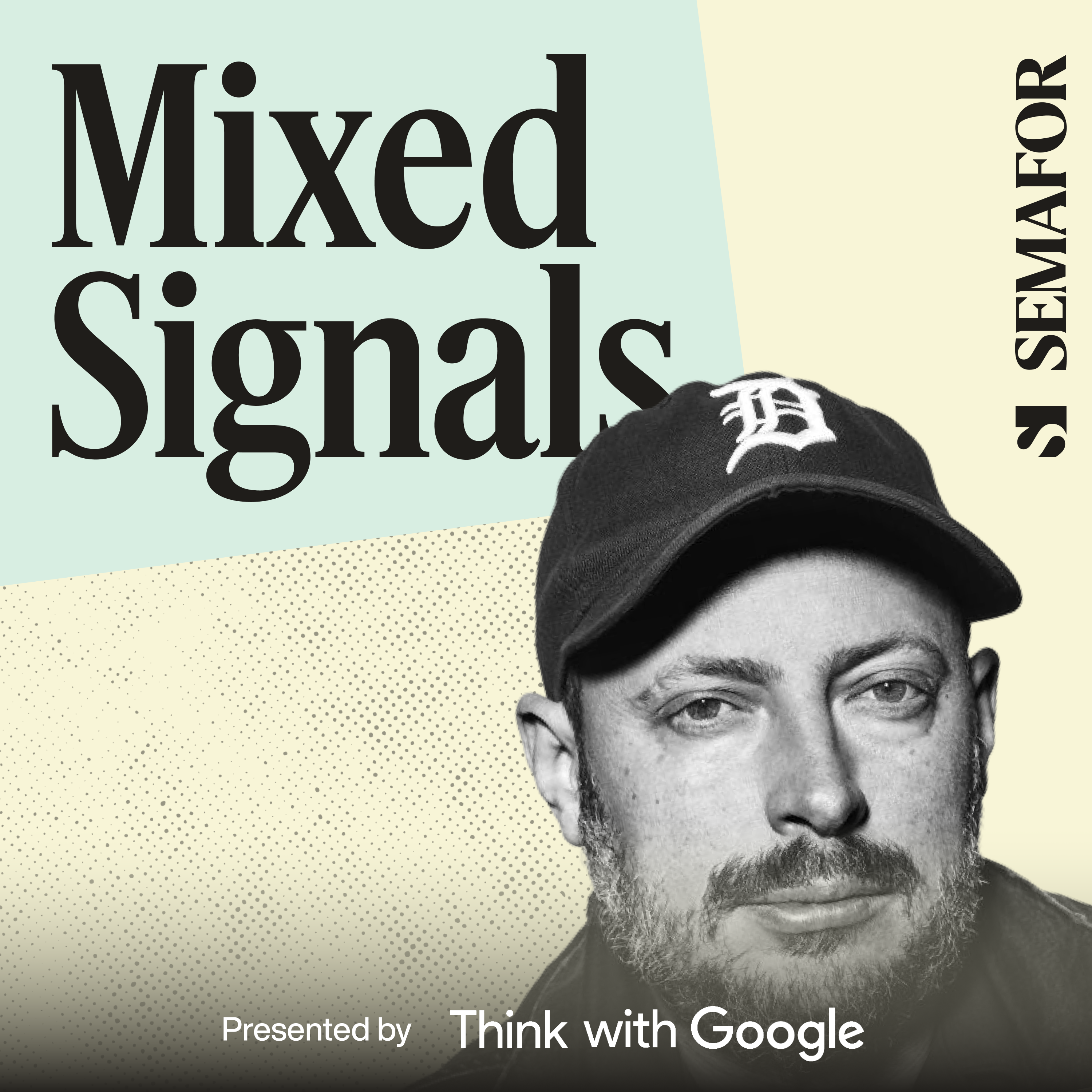
Documentary filmmaker Alex Gibney joins Mixed Signals to talk about his four-hour film on Elon Musk. Max and Ben ask Gibney how he built an AI avatar of Musk using only his actual words when Musk refused to participate, what Elon’s first wife, Justine Musk, taught him about “gaslighting” as a management strategy, and why he thinks Musk’s political turn was less ideological than it was transactional and childlike.
Sign up for Semafor Media’s Sunday newsletter: https://www.semafor.com/newsletters/media
For more from Think with Google, check out ThinkwithGoogle.com.
Find us on X: @semaforben, @maxwelltani
If you have a tip or a comment, please email us [email protected]