
 Mixed Signals from Semafor Media
13 Nov 2026 · 58m

 Add vo to ChatGPT or Claude to ask about everything you hear
vo listened to this episode to put together the overview and transcript, so there may be the odd mistake.
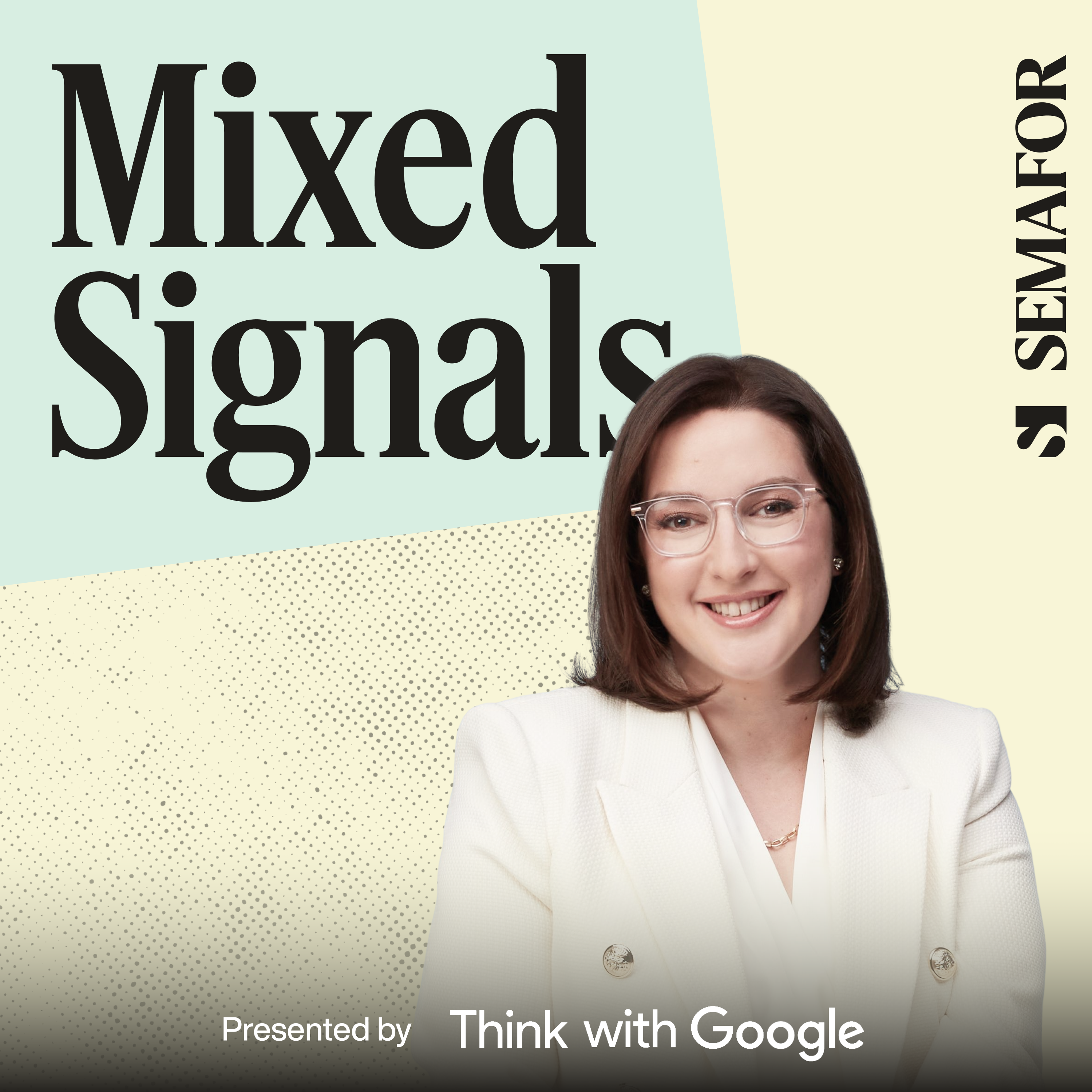
Rebecca Kutler, president of MSNOW (formerly MSNBC), discusses MSNOW’s post-spinout identity, election-night performance, and strategy for surviving cord-cutting via a subscription membership community and multi-platform distribution. She also outlines how MSNOW will approach 2028 Democratic politics and debates.
Rebecca Kutler is MSNOW president. The episode notes MSNOW’s rebrand to MSNOW in November after Versant spun out from NBC Universal; Kutler credits newsroom leadership including Scott Matthews (team in D.C.), bureau chief Sudeep Reddy, and political director Shonda Thomas.
MSNOW built its newsroom “from scratch” after the corporate split. Election night was MSNOW’s biggest YouTube day ever and its first membership-community test, with two member lounges (Georgia hosted by Antonia Hilton; Texas hosted by Alicia Menendez). MSNOW differentiates with “fun” and reverent authenticity (Rachel Maddow) plus audience partnership (members as “producers” in D2C spaces). Success metrics: audience size via engagement (average viewer watches nine hours/week) and business fundamentals (cash generation, hiring hundreds of journalists). MSNOW is pro-democracy with a broad coalition (example: Michael Steele and Chris Hayes can disagree respectfully).
MSNOW’s YouTube dominance (more clicks than ABC/NBC/CBS combined); prime-time ~1.2–1.3M average viewers nightly; strong swing-state coverage; plans for debates/town halls and even bidding on RNC debates; membership found via linear TV, YouTube, and audio (podcasts like Morning Joe).
0:10We talk a lot about the future of media here on Mixed Signals, so much so that sometimes we accidentally kind of neglect the current obvious big players in the news media space. As much as linear television, for example, continues to decline, millions and millions of people are still tuning in to cable and linear television news every night to get their information about what's going on in the world. The landscape is rapidly changing, both at the corporate level where these big corporate media companies are constantly merging and divorcing themselves seemingly more rapidly, and at the content level where existing linear broadcasters are trying desperately to find new audiences, younger audiences, by moving into digital so that they can stay relevant and survive.
0:59One of the people thinking about all of these changes is Rebecca Cutler. She is the current president of MS Now. For almost 20 years, that news organization, that channel was better known as MSNBC. But about a year ago, it rebranded when Versant, its parent company, was spun out of NBC Universal. Now the left-leaning news channel, best known for its personalities like Rachel Maddow and Joe Scarborough and formerly Keith Olbermann, wants people to know that it's more than just a television news channel, but rather a left-leaning pro-democracy news brand that hopes to far outlive its spot on the TV news dial on the thing that you're flipping through on the television.
1:44This week, Ben Smith and I sat down with Rebecca to talk about the network's midterm coverage, how it dealt with the loss of its former election night star Steve Kornacki, who went with NBC in the corporate divorce, whether the network will acquire or syndicate more shows from the podcast worlds in the near future, how MS is gearing up for the 2028 elections, which candidates may or may not already be bugging Rebecca for airtime, and of course, what MS is going to look like in five years. years as more and more people move away from cable television and towards streaming. We thought it was a really interesting conversation.
2:22So Rebecca Cutler on Mixed Signals right after this.
2:29I can tell in about 90 seconds if a CMO is truly walking the AI walk or just talking the talk. And if I can tell that fast, you can bet their bosses and their team can tell too. I'm Josh Spania from Google host of the Frontier CMO podcast. Hear how modern marketing really works from leaders who are rewiring how their companies grow. Recent episodes include CMOs of Estee Lauder, JP Morgan, and even Formula One champion Lando Norris of McLaren Racing. Search Frontier CMO on YouTube or wherever you get your podcasts.
3:06Okay, Rebecca, thank you so much for being here. We're recording this about a little less, or I guess a week after the midterm elections, which is a huge night for you guys, huge night for television in general. What was it like inside the MS Now studios, the new studios, new-ish studios on midterm election night? Kind of walk us through what was it like there? I would say a lot of proud mom vibes going on for me. And I think the best way to explain it is none of that existed a year ago. So for your audience who might not be tracking the ins and outs of all things cable, MSNOW became MSNOW November of last year.
3:55And when we spun out from NBC News and Comcast, we had to build our own newsroom literally from scratch, hire all the people, build all the pipes, do all the things. and for that team led by the brilliant Scott Matthews and in D.C. we have an incredible bureau chief, Sudeep Reddy, and a fabulous political director, Shonda Thomas. I think for all of them and for me, we kept thinking election day is kind of the first big test. It's the first day, and you guys know because you've been in this industry for a while, where everyone kind of looks around and says, hey, who's here? And we showed up. And we showed up in a big way, not just on linear television, where we had absolutely enormous audiences, but it was our biggest day ever on YouTube.
4:48And that says a lot for MS Now because we're pretty good at YouTube. We, on a regular month, get more clicks on YouTube than ABC News, NBC News, and CBS News combined. So for that to be our biggest day ever on YouTube says a lot about the scale of the audience. And then on top of that, it was our first time showing up as a membership community on Election Day. We launched this D2C product a few months ago, and we had on Election Day two members lounges in places that were absolutely electric last Tuesday. One was Georgia with Antonia Hilton as our host, and the other was Texas with Alicia Menendez as our host.
5:39And so you can just imagine the MSNOW members in each of those places interacting with each other, learning about the big news of the winners together as a community. You saw some of that play out on our air and on our social platforms. So it was a pretty electric night for us overall. And these were these are physical spaces or these are online like chat room type of places? Thank you for asking. It's both. So what I just mentioned in Georgia and Texas were physical places, big, beautiful buildouts where you kind of want to hang out. If you're someone I happen to love politics, I know Ben does, and I'm pretty sure you do too, Max.
6:19We're minorly interested. Minorly interested. You kind of like it's a it's a thing you want to do together. You want to watch it with other people who are smart and interested and invested. And that's a real observation that we've made as we've built the MSNOW D2C membership. It's not just about consuming by yourself on your sofa. It's about consuming, but also these in real life connections. So we created opportunities for those on election night. But we also had a huge night in our community space online. So like what you would call a chat room spaces that people can connect by all different ways, connect by geography, connect by topics or candidates they're interested in, etc.
7:11So you're at the end of this, I guess, kind of amicable divorce from your old friends at NBC News. And I have to admit, I think was one of many people who watched a lot of Steve Kornacki on YouTube on election night, your former colleague. And I just, even though I cover the speed at times, I have to admit, I thought I was watching MSNOW for a while and then realized I wasn't. Like, I was personally a little confused. I literally told him that it wasn't. He was like, oh, they've got Kornacki. I was like, no, no, no, you were watching NBC. I'm curious, like, how am I supposed to know? Is Steve Kornacki different than he used to be?
7:43Like, are you doing something with what you guys were doing in some meaningful way, a different way of counting numbers? Like, how are these brands different? So, Steve Kornacki's brilliant. He was brilliant when he was on MS Now, and he was brilliant this past election night when he was serving a different audience. But how I think about how the audience comes to an event like election night, there is a lot of choices. There's more choices than ever. People I didn't even know existed were doing live, you know, activities on YouTube and every other platform imaginable. So there's never been more places to experience the results on election night.
8:26What I think differentiates MSNOW are two big things. First and foremost, you are part of not just the smartest table, but I think the most fun table. And I think a great evidence of that is I got a lot of texts from around the industry of people who said, oh, I started the night. You know, I was watching thing X or thing Y at a different place. but eventually I flipped over to Rachel and Jen and Nicole and you guys are fun. Like I think - Well, was it fun because the Democrats were winning and you could be a little more celebratory than the sort of straight-faced Steve Kornacki types? Was it a good night for Democrats?
9:11It was, but I think that what Rachel brings that's so differentiated, frankly, from a lot of different people in linear television is she brings in a reverent and authentic version of herself. She's not trying to be anchorwoman from 1985. No one would watch Rachel Manow and think she belongs anywhere else than at the table with the people that she thinks are so smart. I mean, you can't watch MS Now on an election day and walk away not thinking that not only is Rachel a brilliant orchestrator of the night, but when she asks Chris Hayes a question, she's honestly interested in the answer. And his answer is not just interesting and smart, but I think we spend a lot of time making sure that we're a place that you actually want to spend your time.
10:16It's not an obligation. It's a place that feels fun to watch and interesting and not predictable and not just this kind of robotic thing that felt like, you know, was election nights of the 90s. No offense, Steve Kornacki. I mean, have these kind of competitors in the YouTube space or in other spaces, have they changed the election night broadcast for, you know, as you've seen it, you've you've been you were at CNN before you were at MS. And so, you know, you've been around election night coverage in many cycles. Do you think that it's has it gotten more loose and more fun, essentially, because there are these other alternatives that are, you know, online and inherently looser and, you know, I don't know.
11:05more free-flowing? Yeah. So all I can do is talk about my own experience and how I've seen things evolve over, you know, 20, 25 years that I've been at this. One of my first jobs on election nights was, you know, I was an election night monitor, like a young person in the newsroom, where your job is to go watch the competition and shout and scream if something happens that's important to tell your bosses that maybe we should be doing something like that. So that's what you do when you're like 22 on election night. And you learn a lot because you're watching how everyone does it. And when I think back to that time, there was this huge emphasis on, one, formality, and to results without any, not without context, but without like the greater understanding and reaction that the audience is naturally a part of.
12:09And I think a more modern approach is getting those results efficiently and accurately, but wrapping those in with the context of the moment and the feelings of the people in your audience and the people that are watching. Not to pretend that we're in some sort of like special hermetically sealed like TV news box where like we are important and the people watching us are different. That is just like not the way the world works anymore. And I think that that is something that we've learned through everything we're doing on YouTube and what we're trying to build in our community, that we're much more in conversation with our audience and much more wanting to, you know, what we did on D2C on election night and across our digital spaces next to the studio where Rachel and her team were operating.
13:10we had a different setup where we allowed our D2C community members to basically be the producers and drive the conversation and say, hey, tell me more about this. Or what do you think about that? Or where's that trend going? And I think the more we invite in our audience and treat our audience as partners and part of what we're doing, the richer our content will be. And more importantly, the deeper the engagement and connection our audience will have to what we're doing. So I want to move on and talk about, you know, a lot of that stuff and the membership program which you launched, which we broke at Semaphore.
13:48I don't know how we got that scoop. Great sources, man. Yeah, amazing, amazing sourcing. But before we do that, just to kind of give our listeners the sense for people who've never been in a television studio during a major moment like this, like, what are you as the head of the network? What are you doing on election night? Like, what did you do on Tuesday? What did I do on Tuesday? Well, I probably a few things. Here's a little secret about election day. uh during the day itself like early like late morning um there's not that much to do uh so what i what i if i'm honest and tell you what i did i went on a very long walk tuesday morning um i had an awesome breakfast by myself um and um i listened to a few podcasts to try to cram in some extra knowledge for the evening.
14:41And then by Tuesday night, I was mostly in our control room with our linear television team. And then I was flurrying around the way we are set up in our current office configuration is really close and great. So I can, within one quick circle, be in our control room for linear television, then with our D2C team, then with our decision desk folks, which are about a 10-second walk from our control room, then walk 15 seconds further and be with our news gathering, kind of making sure our crews are in the right places. A lot of times on election night, new storylines develop and you realize, oh, hey, I thought we should have had people here, here and here.
15:31But actually, over here is more interesting. So we got to hurry, hurry up and move. And so I just did that lap about, you know, 4000 times. What time did you say somebody's got to get on a flight to Mississippi? Mississippi. And I want to give very clear credit to Simone Sanders, who for at least the last month was telling this entire newsroom how important Mississippi was going to be. So that's actually a race that we had spent a lot of time in before election night and are really proud of kind of the coverage we've done up till then and the coverage that we've done since. I feel like I could actually spend the rest of the hour kind of talking about various things related to the midterms because it's pretty consequential midterms.
16:22And you guys were kind of at the center of it, particularly, you know, it made this moment of, you know, democratic ascendance of which I think, you know, plenty of people who work at MSNOW are probably pretty pleased about that result. But we want to ask you about the other reason why you're here, which is this one year anniversary of the switch from MSNBC to MSNOW in the rebrand. And I'm curious, is there any difference between MSNOW and MSNBC? And is there anything significantly that you've changed about the network since it kind of let go of that previous branding about a year ago? So I think the way that I would describe it is this spin out, first of all, and I can say this because I didn't grow up there.
17:10So I'll admit I had less emotional attachment. I'd only been at then MSNBC for about two years before the spin happened. But immediately when Mark came to the team and announced that the spin was happening. This is Mark Lazarus. He's the CEO of Versant, which is the parent company of MS. and he came and presented to the MSN, MSNBC team and said this thing would be happening and MSNBC would be a part of it. I immediately thought to myself, this is going to be fantastic. And the reason I felt that way was because of the journey of my career earlier. And what I mean by that is I grew up at CNN and I love all my CNN people.
18:01and when we were at CNN, you know, MS was one of our main competitors. So I leave CNN and I come over to MS and I am just ecstatic because I am like, I am going to learn from all these people, all these things I've been watching from the outside. I'm going to figure out how they do it. What is their special sauce? And there was a little of a surprising vibe in the building when we were at 30 Rock. a feeling of like that MS was somewhat of like a smaller fish in this giant thing that was NBC News and on top of that Comcast and it just like didn't from my vantage point have the moxie that it should have given its audience size and scale you know As a business, MSNBC is nobody's side hustle.
19:03And I don't think anyone would look at what we are at MSNOW and be confused about the strength of our business and how we're showing up. And I think that that is the difference when you're out on your own and when you're a really big and important part of a company. So Versant, who is our parent company led by Mark Lazarus, who we're lucky to have incredible support from. And Mark has said publicly that MSNOW is a very meaningful part of Versant. And look, we've all worked at different places, and I would always rather be a meaningful part of the company that I work for, because that just translates to a lot more attention and investment and a collective understanding of let's help this part of our company win and be as big as they can be.
20:06And that's what I certainly feel now at MS Now as part of Versant. And I think that that shows up on the air, not only in the journalism that we're doing, which I'm incredibly, every day there's probably a scoop I see that I just feel, again, just like proud mom vibes about. and it shows up, I think, in kind of the swagger that I'm really proud of that I feel like organizationally the way we're showing up, because we successfully launched a great D2C product and we have a very strong linear television lineup now and we're winning on a lot of new platforms and I think that that is all coming together because we are on our own now and you've got to stand up on your own two feet and own it.
20:55Do you think your old friends at CNN sort of suffer from being a like a smaller part of a pretty big conglomerate? I wish nothing more for CNN than their success. And there are plenty of people in the world who are in the CNN punditry business. So I don't need to add my voice to that. You're an expert. Yeah, more credible voice maybe than some of the other people. Yeah, I will let other people win that space. I want them to be successful because I think it's better for journalism to have more successful newsrooms. I figured I'd ask. The sort of industry that you and I came up in had pretty clear metrics.
21:34Like you were chasing ratings, I was chasing traffic. Pretty straightforward. When you talk to Mark these days, what is success? Is it linear ratings? Is it conversions? Is it revenue? Is it managing costs downward? Like what's the, like what is, just from a sort of like you're, you know, you're an executive at a big company. What is success in this funny transitional moment? Yeah, I think that when we think about success, there's two main metrics that I think about a lot. One is audience size. And I say those words instead of ratings because linear television ratings are certainly part of that.
22:10But for me, the number I'm more proud of is not the raw number of people that have watched us yesterday, but the fact that we have one of the highest engagement numbers in all of linear television. So the average, average MSNOW viewer watches nine hours a week. That's just off the charts. It's more than double than some of our closest competition. So engagement, deep engagement is very important to us. And that's a slightly different metric than just raw audience numbers. I think the other thing I think about is just the fundamentals of our business. And Ben, you cover this better than almost anyone.
22:57You know, there's a voracious market for up-and-coming media companies and all the new and shiny objects that exist across all the platforms. And I think that's fantastic. But what I think sometimes gets lost in that conversation is the incredible success of MSNOW as just a business. The amount of cash that it generates, the success of MSNOW when you think about how we are able to have a very well-funded newsroom. We are able to hire, we've hired several hundred journalists over the last few years and have them be breaking news and investing in their journalism. So those would be kind of the to ways that I think about success.
23:59Yeah. What share of that revenue is still being thrown off by cable affiliate fees? That's a question I'm not going to answer here. But I guess, is that share meaningfully going down? In terms of share, here's how I would answer that question. Because when you say it's a great business, like obviously the cable company is just like shoveling money on you is the greatest business in the history of media. But you inherited it and it's going away, right? Correct. Well, here's how I would answer that. One, going away is not at all accurate. Is there a decline happening? Yeah, there's a decline. But as far as the eye can see, do I see a very healthy business model for MS now?
24:47I absolutely do. But I think this whole linear cable conversation sometimes obscures the success of our digital businesses because I think it would surprise a lot of people to know that MSNOW just started digital business. We've actually already talked about our success on YouTube. But if you just look at our digital businesses, we get more clicks than places like The Atlantic or Politico. Politico, people are spending more time on MS.NOW than the Washington Post. So we have a very substantial digital business. And the market just doesn't always see us that way because they see us and define us as this kind of old school cable, which we're proud of.
25:34I spend many hours a day watching MS.NOW's linear cable, but we're just much bigger than that. One of the biggest things that you guys have done to talk about the digital business, since you mentioned it, is this membership program, which you've alluded to a few times. How big is the membership program at this point? Even if you're not going to give us the exact number, can you give us a ballpark of how many people are part of this membership community? I am not going to be a silly person who gives out our subs when we're only a few months old. Here's what I'll say. We have already surpassed, In fact, a few weeks ago, we surpassed our goals for this calendar year.
26:19We're well into our goals for next calendar year. And I think where I get excited, and anyone listening is welcome to do this, when you're in the community and participating, you see the conversations and live chats with hundreds of other members on them. you show up at our events. We did a big event in Texas a few months ago because we said that we were planting a flag in Texas because it was going to be the center of the political universe this year. And there was a very long line. Not a lot of the people that were already members, but the line was to get into our Founders Lounge, which is our elevated level of membership because people don't just want to be part of the community, but they want to be part of the community sometimes with people who want to invest extra.
27:19And when I say extra, I mean extra of their time. They want to connect in real life with other people who have the same passion about politics and democracy that our members do. And what's driving the subscriptions? Is it people are seeing something on TV where you guys are talking about it? Is it, you know, are they coming in because they're one of the people who are reading these articles online? Like, how are people finding the membership program? All different ways, which I love. Look, obviously, a big driver is the linear feed. People who would love to be able to watch, either they are cord cutters, but they're still MSNOW fans.
27:57One of my favorite things over the last few months, before we launched our D2C product, but we knew it was coming. all the time I would run into people in my personal life who said, oh, I'm a huge MSNOW fan, or even more, they would say, I'm a huge fan of Lawrence O'Donnell, or I'm a huge fan of Stephanie Rule, but I don't have cable. And it took me a minute to process that in my head, but then it kept happening. So I kept asking people, oh, that's awesome. I'm so glad you're a fan. But Like, why are you a fan? How have you become a fan of this person when you don't have cable television? And time after time after time, the answer was, oh, I just watched them on YouTube.
28:42Or another very common response is, oh, I just listened to the audio version. Because on any given day, if you scroll the top podcasts on Apple, like those top 200 and top 300 lists, usually many, many entries in those lists are MSNOW shows. So we have tons. In fact, I was just talking to someone the other day who said they listen every day. And a way we just kind of redid the way that we published the feed for Morning Joe, they were so thrilled because now that first hour of Morning Joe publishes in time for them to listen on their commute into work. So this is why, you know, what we do on cable and in the linear space is fundamental.
29:26It's very, very important. But it's not at all the whole ballgame anymore. And we have very strong businesses in audio, in digital, on social, and now as a subscription business. Well, we have to take a short break, but we'll be right back with Rebecca after this.
29:53This week on our branded segment from Think with Google, we're sharing an excerpt of a conversation with Josh Spanier, Google's VP of AI and Marketing Strategy, and the host of Frontier CMO. I think the marketing industry is doing better than I thought it was going to be doing. Back in January, January of this year, I was at an event, room full of CMOs, maybe 100 CMOs and senior marketing leaders, and I was having this quiet conversation on the side with someone famous in the industry, someone who's got real influence, who everyone in the room knows, who you probably know as well. And that person said to me, as we surveyed this room of CMOs, 50 % of this room is going to be fired this year, 2026.
30:3450%. Yeah, yikes. And I was like, oh my, that was sobering. But this is someone who I think is very impressive and has got a long track record. And I kind of believe them. So that was pretty intimidating to go into the year thinking. And then six, seven months later, they were utterly wrong. They were utterly wrong. There has not been a CMO Armageddon. There hasn't been a massive change in this of C-suite, the way that person was predicting. And I actually reached back out to them a couple of weeks ago. I said, hey, tell me about that. What were you thinking? And we had a long conversation, and they acknowledged they got it completely wrong.
31:08So what were they thinking? Well, you know, I kind of think that we're at the end of the beginning of this AI transformation, right? The end of the beginning. Fear, uncertainty, and economic squeezing, right? And that whole paradigm, that whole mindset was really about what is AI doing to me? What is AI doing to me? What's changed is that the mindset shift is not what is AI doing to me, but starting to be what can I do with AI? For more, check out the full episode. The link is in the description. Or head over to thinkwithgoogle.com.
31:52I wanted to ask a little bit about the sort of competitive space you find yourself in. And it seems like on one side, you have a very vibrant, growing digital space that's very, very partisan. And the other, you have NBC, CBS, ABC, trying to do maybe a little more of what you described as like sort of TV news in a box. And it did strike me that I think I was surprised how strong NBC was in a certain way on election night. And I wonder, it's a funny moment, like, do you think the kind of democratic true believer-ness that drove MSNBC and that has driven MSNOW, like, is that still a strong cultural force?
32:31Is that getting stronger? Is that getting weaker? So I think a few things are all happening at the same time. And I think election night showed us that. When you saw the types of candidates that won, they were not from one part of one party. They represented a very wide range of views, geography, life experiences. And that's what I hope MSNOW is. I hope the thing that unites our audience is a feeling that we are pro-democracy, but that under that umbrella, that can be a lot of things. that is everyone from former Republican National Committee Chair Michael Steele, who by no means agrees with everything Brooklyn's Chris Hayes thinks, but that they can respectfully talk about it because they do fundamentally believe in facts, truth, democracy, and the underlying fundamentals.
33:45So I think it's... a much wider lens than some sort of like traditional, like red, blue, right, left. But I will say, just like to your question about a cultural force, yeah. Like that is exactly what we feel and see in real life when we are with our members. Over this past weekend, we did a membership lounge at Crooked Con, which Crooked Media did in D.C. and we set up our own lounge there. And when you're in spaces like that, you just feel this overwhelming energy and desire to connect. And I really think that marrying that with the ability to reach millions of people simultaneously through traditional linear, but then also through new digital platforms.
34:48That's the magic opportunity that we represent. And I'll just say along those lines, because I've had this conversation with a ton of people before, you know, we get pitched a ton of, you know, do you want to collaborate with this podcast or this new creator? And I think it's fantastic, all the creators that are coming up. And it's all of those people. The more people that get people interested in consuming news, I'm all for it. But it's something very different to get a million clicks on YouTube at somebody's, you know, like whenever it works for them, asynchronous versus attracting a million simultaneous people to watching something every single night.
35:36So in prime time for us, you know, we're around 1.2, 1.3 million viewers in prime time every single night. And for people in the audience who don't follow how Nielsen judges this, that means 1.2 million people on the average minute. That's not the reach. That's the average number of people watching in that exact minute. The actual reach over any given night is actually many multiples of that number. So you mentioned YouTube a few times, and you guys have definitely grown your YouTube channel. I spent a lot of election night in between watching your channel and Fox and CNN. I also watched a lot of these YouTube midterm election night live streams.
36:21And it's funny because they're essentially trying to do something that looks like television in some cases, but obviously for much cheaper. Are you concerned that as more people kind of cut the cord, move to YouTube and, you know, these broadcasts that kind of look like television get better and better, more people are going to just kind of forget that they're not watching linear television and just essentially watch those, particularly on big nights? So I have three teenagers, well, one almost teenager and two true teenagers. And I have no illusions about how people consume media. One of my kids, I don't think I've ever actually seen watch linear television.
37:10So are people changing the way they consume media? Absolutely. And are we being aggressive and making sure that we find people in every place that they're consuming media? Absolutely. That's our job. Our job is two things. Make the best possible content and then find people to watch it or consume it. I'm not going to say we're platform agnostic because clearly we've made big investments in certain platforms. But we're humble enough to know that constant iteration is required in this moment and that it is on us to recruit audience. We are well past, we are decades past the idea that like brilliant news person thinks thoughts and audience will just tune in to find them.
38:12Like that is just that's we're not we're never going back to that. You it is our responsibility as content creators and journalists to not only create the thing, but make sure the audience wants to consume it. And you're going to be a central place that the 2028 Democratic primary plays at. How many of the potential candidates have called you so far? Why would I ever answer that? I mean, it's just an anonymized number. Again, why would I, what motivation would I have to answer that question? Maybe another way to ask is, I mean, are there people who are considered to be candidates like kind of banging down the door to kind of get airtime already?
38:58So I think sometimes I worry that people think I'm like living some glamorous. Like, I have kids, most of my weekends I spent on the soccer field, like, doing, like, extremely mundane mom things. We couldn't be prouder that anyone who wants to be president understands that hanging out with the MS Now audience and proving to our audience that you deserve their vote is of paramount importance. And if anyone questions that importance, watch our lineup. Watch our lineup any night, this week, next week, and you will see a lot of the people who you see mentioned as potential 2028ers all over that lineup.
39:45And I will say also, watch our lineup from October and the run up to the final stretch of Election Day. And you saw not just the candidates in the deep blue spaces. You saw Adam Hamilton all the time. You saw Josh Turek all the time. Because, and we can get you the data points on this, but it's one of my favorite charts. MS now is incredibly strong in the swingiest swing states. So I think there's this misperception that our audience is like this Acela Corridor place. And that's true. We have very strong audiences. We're number one in Washington. There's a lot of places that we have a lot of strength.
40:32But a lot of those places are places that I think would surprise the audience, which is just going back to what I said earlier. why I thought it was important that we take our big annual event and do it in Texas. And we didn't do it in Austin. We did it in Arlington. And that was intentional because we know we have big audiences in redder places because those audiences are sometimes the audience's most hungry for connection and for us to show up for them the way they show up for us. Do you want to do multiple primary debates? Is that something I would imagine that's got to be something that you guys are already planning for?
41:15Yes, yes. We want to do anything and everything. We would like to do debates. We would like to do town halls. We would like to continue to innovate what those things look like and how we can make sure that those events are answering voter questions in a way that fits the moment. And does it feel like 30 years ago? But we are already, one of the first meetings I had later last week was about 2020 things and updating kind of where we are on them and where we can be making progress. Will you bid on RNC debates? Absolutely. I would love to. And if you're pitching the RNC, what do you say to them? And what do you say to J.D.
42:06Vance and Ted Cruz and those guys about why they should show up on MSN? Ron DeSantis. About why Ron DeSantis should show up on MSN? I would say, how do you expect to become president of the United States of America by not speaking to one of the largest audiences in America? We have a large, dedicated audience, and we would like to be the place where any presidential candidate comes on the regular and answers questions not just from our hosts, but from our community members out at town halls. There's no presidential candidate that I believe will become president without investing in the type of viewer that MSNOW represents.
42:56And I think that's another lesson that we got last Tuesday. A lot of assumptions people made about what vote was possible and what type of candidates could win and how to find them. The conventional wisdom was wrong in a lot of ways. And I think that what last Tuesday taught us was the people that were the most successful were the people that went everywhere and the people that didn't take any pocket of vote for granted. And so I think the MSNOW audience is only going to get more important as we move into 27 and 28. And I'm excited for our newsroom and our shows to be part of that. You've licensed a bunch of podcasts from Crooked.
43:40And kind of obviously, it's sort of the most visible display of the convergence between podcasts, TV that you see out there. Do you have a sense of like what the optimal number of hours you're producing is versus licensing? Are you planning to license a bunch more? It's obviously a cheaper way to fill some time on television. How do you think about that? You know, I'm asked this question a lot, and there's not some sort of formula we're trying to hit. It's really about the specific opportunity, and it felt like something that we didn't have already. So when I think about what else we might be interested in, that's kind of the criteria.
44:24Is it something that's going to attract new audience for us and be welcomed by our current audience? And is it something that we don't have on our own? It's not like we have some sort of, you know, target that we have to, you know, add two more hours of other external material. Frankly, some of our highest performing hours on the weekends are hours that played earlier in the day from Jacob Soboroff and Antonia Hilton and Eugene and Jonathan and Jackie that the shows were doing so well that we realized we could replay to a completely new audience in the evening. So we're lucky in that we have this very loyal audience.
45:10And over time, we can experiment and figure out how to continue to tweak what we're doing. Last question for you, Rebecca. What does MSNOW look like in five years? How will it be different? I think if we're successful in what we're doing, every part of our organization will be showing growth. and will be showing growth in a way, and the way I define growth, is growth in audience. So we're talking to more people, that they have a deeper connection with what we're talking to them about. And we're growing in influence, which is something that we don't talk about a ton, but I think we have already started to build with our great newsroom that's creating a lot of great scoops that people more and more are saying, oh, that's a must read.
46:06That's something I got to click on every day. And, you know, you guys have built a pretty great business in a very short time. And I think that that's how you guys have probably thought about it too. We're not trying to build something to be everything for everyone. We're never going to be the place everyone turns to for consumer news or a safety recall or the royals or the weather. And we went into this very intentionally. And we said, we don't want to be everything for everyone. We're not looking to be a commodity. We are looking to kick ass at the things that we think our audience loves. And that's, to me, what success looks like five years from now, which is growing that audience and growing our excellence in those categories where we know our audience is excited.
46:58That's, I mean, that makes a ton of sense, but I have to ask you as a kind of Jeff Zucker protege, like, are you sure that when there's some massive royal scandal, you're not going to just sort of feel compelled to cover it? I mean, that sounds hard to resist. There is no story that we are above covering. It is about how are we investing the overall resources of our newsroom at our time. So I say it all the time, and I didn't invent this. someone smarter than me did a long time ago, don't be above the news. When the news is happening, cover it. I don't care if it's like the exact thing, like do not be above the news.
47:35Now, that being said, don't be distracted by stuff where you're not bringing expertise and where your audience doesn't really have a genuine interest. So figuring out those tensions, That's like what we do every day. That's why it's fun. That's what you guys do every day. That's like the definitional tension of a newsroom. Rebecca, thank you so much. That feels like a good place to leave it. Thank you, guys. Wise words.
48:12I can tell in about 90 seconds if a CMO is truly walking the AI walk or just talking the talk. And if I can tell that fast, you can bet their bosses and their team can tell too. I'm Josh Spania from Google, host of the Frontier CMO podcast. This show is for CMOs, aspiring CMOs, and every leader in the C-suite who wants to learn how modern marketing works from the people who are doing it best. I sit down with leaders who are walking the walk, testing, learning, and rewiring how their companies grow. Recent episodes include CMOs of Estee Lauder, JP Morgan, and even Formula One champion Lando Norris of McLaren Racing.
48:55Nobody has a complete map of where business is headed right now, but together we can explore and learn across these new frontiers. Subscribe to Frontier CMO on YouTube or wherever you get your podcasts.
49:12Ben, so I've been following Rebecca's career for a while. She was actually the person who was supposed to launch the short-lived CNN Plus. And for a long time, her reputation has been someone who was going to kind of help this generation, the previous generation of TV news kind of bridge the gap to a potential future beyond just linear television. And, you know, you could tell from her sometimes unwillingness to answer some of the questions that she knows how to play the game. She understands the places where she can kind of get into some trouble. But I mean, what do you think? Do you think that MS has navigated the early stages of the kind of cord cutting transition well?
50:01Or do you think that maybe Rebecca's a bit naive that there are these big changes and rivals that are coming to kind of like eat up all of their audience and attention and, you know, eyeballs. So first of all, I just want to say that I love that line of hers, don't be above the news. Like that's just a, that is such a good way of putting, you know, what you do in our business. And I think, you know, I think broadly, Versant, I think the markets have sort of recognized this, is move faster and pretty effectively into, you know, to recognize the dynamics and to make space for cord cutters and really, really lean into building digital businesses.
50:42I think that is harder for MS than it is for CNBC, for the Gulf Channel. I think some of Versace properties have really obvious kind of like either business to business or kind of prosumer businesses. CNBC has investors. They're going to charge investors more for stuff they can use to invest. Like that's sort of very logical. And I think what MS now is, I think MS now is in a harder position. They're a mass media outlet that reaches millions of people. has a bigger audience than anybody else. But it's sort of less obvious what the thing is you charge extra for. And obviously they're betting on community.
51:15I mean, I would say, obviously, Rebecca's a pro and didn't want to say her numbers, but you don't refuse to say her numbers because they're way bigger than anybody would expect, typically. Yeah, that's true. And I would assume that, and I think it's probably pretty tough, building that kind of membership thing is a slog. You know, creating in-person spaces in Texas. Again, I think these are kind of actually really smart, interesting things they're doing. But it's going to take a while to replace the, you know, just flood of money coming in from the cable networks with medium-sized events in Austin.
51:47I mean, it's just, it's a very different business. That's true. But besides Fox, it does feel like they're probably one of the better positioned linear television networks, just because the audience knows what they are, right? They have a very clear, obvious brand proposition. We are the left of center news outlet, essentially. And we reach more of those types of people than pretty much anyone other than other online outlets. They certainly reach more than most television networks, which is the reason why Rebecca won't say it. But I am sure her phone is blowing up with people from representing people like Josh Shapiro, So certainly Ro Khanna, I would imagine.
52:28You know, some of the other past 30 years. Ran into Ro in the green room at MS Now the other day. Exactly. I think, I mean, I think, right. I mean, the most sort of logical conclusion of a subscription service, which is that I would obviously, like, I would have to pay myself to, you know, if the only way to get their slate of programming was paying, I would pay. Like, it's, you know, there's stuff on, there's news made on there all the time. I think a lot of their audience would pay. Right now, though, that big chunk of their audience gets it via their cable subscription. So they're sort of in the middle of this transition.
52:59But I agree with you. They have this deep connection to big two to basically the Democratic base, you know, liberals, certainly black people, you know, huge share of their audience is African American. I think people don't quite realize what an engine that is for their business. And I think it's kind of in some ways no surprise that they were ahead on Mississippi and tapped into the electorate down there. But in a primary cycle where, you know, Blackfoot always incredibly important for Democrats, but a primary cycle that begins in South Carolina, it occurred to me as she was talking, I think MS now, even more important to that Democratic primary.
53:32Yeah, it's true. What do you think about what she was saying regarding where the actual audience is and that most of the audience seems to be liberals in conservative places rather than what you would expect or what you would think, which is that the audience would be concentrated in liberal bastions, New York, LA, DC, whatnot. Yeah, I don't know if she said most, but that a lot. I think it's interesting. It's a feature of America that when you cover American politics, I think is sometimes confounding that the most liberal people you meet are liberals in Iowa. The reason often Iowa would nominate the left-wing candidate and really give Barack Obama his start wasn't because they were people demographically similar to Obama in Iowa.
54:16Because I just think, like, if you're a liberal in Iowa, if you're conservative in New York State, you're, like, looking for that, like, beacon of, you know, that you can't just go out into the community and talk about your views. And so there is this, like, kind of special passion that, I mean, in the old days, right, like, the reader of the conservative magazine on the Upper West Side or of the nation and, you know, in Oklahoma sort of felt, I think it gives you a connection to a media brand, actually. because it's sort of like, you know, these kind of communities that you can build online when you don't have them in person.
54:48I think you can see why somebody watching MS, you know, in a deep red state feels like a special attachment. Yeah. I think that the most important thing, and we didn't have time to get to this, but I think that the most important thing for Rebecca for her job over the next few years is essentially retaining the existing talent that they already have because it seems there are a lot, and we tried to kind of press her on this a bit. But there are all of these alternatives that are out there that are doing not totally dissimilar types of programming from MS. But the thing that gives them that little edge is that Rachel Maddow is a huge celebrity.
55:24Joe Scarborough is a well-known individual. These people are more well-known than your average liberal podcast. You know, the podcasters at the Bulwark, right? At least most of them. So I think that that's one thing that I think Rebecca didn't mention, but that seems really crucial to their success over the next few years is they need to make sure that Rachel Maddow doesn't decide to leave to go spend her every day fishing and hanging out. Or join the Tucker Carlson network or the Rachel Maddow network. As you say that, I think just to conclude, I think one of the advantages they have that's a little understated, but is that I think if you are a big talent at one of these, at MS, if you are Simone Sanders or Chris Hayes or Rachel, MS now really does, they own that community.
56:12And I think it may take a little while for them to figure out how to monetize it actually. But I think if you are one of these hosts, that's really valuable. That does mean that they are going to moderate a bunch of Democratic debates. It does mean they're going to be the central platform on which democratic politics play out. And even as Crooked and Zateo and the Bulwark and all these other outlets have a lot of influence, what you might give up in freedom and maybe in money that you would get from going out on your own, I do think it's pretty attractive to be right there in the center, which is what they're going to be in 2020 yet.
56:47Well, that is it for us this week. Thank you so much for listening to another episode of the Mixed Signals podcast from us here at Semaphore Media. Our show is produced expertly, as always, by Manny Fidel, with special thanks to Josh Billinson, Amber Olley, Rachel Oppenheim, Anna Pizzino, Daniel Haif, Garrett Wiley, Jules Zern, and Tori Kaur. Our engineer is Rick Kwan, and our theme music, of course, is by Steve Bone. If you like Mixed Signals, please follow us wherever you get your podcast, and feel free to leave us a five-star review. And if you want more, you can always sign up for Semaphore's media newsletter, which is out every Sunday night.
MS NOW President Rebecca Kutler joins Mixed Signals to talk about how things are going with the network one year after its split with NBC News. Max and Ben ask Rebecca about MS NOW’s midterms broadcast, how impactful it’s been to be perceived as the network having the most fun, their partnership with Crooked Media, and how MS NOW will compete in the linear TV space and beyond.
Sign up for Semafor Media’s Sunday newsletter: https://www.semafor.com/newsletters/media
For more from Think with Google, check out ThinkwithGoogle.com.
Find us on X: @semaforben, @maxwelltani
If you have a tip or a comment, please email us mixedsignals@semafor.com
Scan the code with your iPhone camera
Listen in the app.