Ask ChatGPT
 Mixed Signals from Semafor Media
30 Oct 2026 · 58m · 18 chapters
Nate Silver discusses midterm polling and forecasting, why many people doubt “blue wave” results, how polling errors and correlated mistakes work, the role of prediction markets (Polymarket) versus models/polls, and whether fake polls are rising. He also addresses selective Republican internal polling, controversies around poll fraud warnings (including Ann Seltzer), and AI’s ability to replace election forecasters.
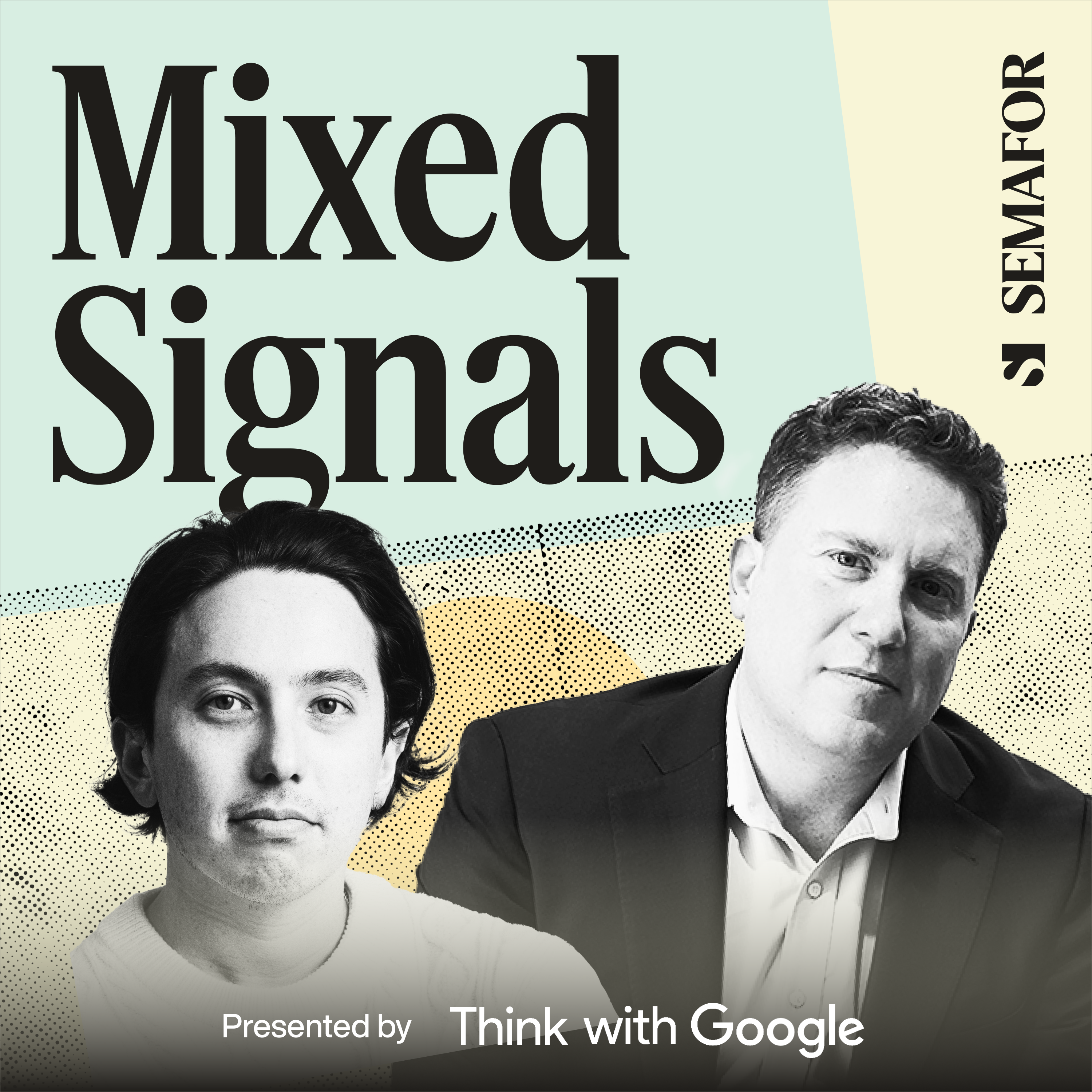
Nate Silver, election forecaster and statistician; founder/creator of FiveThirtyEight and Silver Bulletin; co-host of Still Counting (Crooked Media). Interviewers are Ben and Max from Mixed Signals.
Polling can have systematic errors, but they’re not reliably D-leaning or R-leaning; midterms are more predictable due to strong partisanship and turnout differences. Prediction markets are useful on election nights/news shocks but aren’t “ultimate truth” and often add redundant “vibes” rather than new probability. Fake polls are easier to produce now due to lower barriers, but major aggregators (e.g., NYT feed) and model defenses (banned pollsters, house-effect detection) reduce impact. Republican “don’t trust polls” messaging is partly driven by Trump’s perceived toxicity and selective internal data.
2016 polling underestimating Trump; 2012 polls underestimating Democrats (Obama +3 vs polls); 2024 New Jersey/Virginia misses for Democrats. Ann Seltzer’s Iowa 2024 poll (Harris +3 vs eventual Trump +12). Strategic Vision and Research 2000 as past fake pollsters.
Written by AI. May contain mistakes.
Nate Silver discusses the public's skepticism towards polling data and its implications.
“Yet when you talk to a lot of normal people about this type of stuff, I think that there's still a lot of doubt.”
An exploration of election forecasting models and their evolution over time.
“I mean, I'd actually say the discourse has been like slightly more hinged this year.”
Nate Silver discusses prediction markets and their impact on election forecasting.
“But one thing that I was particularly interested in is how the model this time was different than in previous years.”
Learn about the reliability and function of prediction markets in forecasting outcomes.
“Does Tallarico, he's a better candidate than Kim Paxton.”
Discover how the landscape of polling has changed and the emergence of fake polls.
“first knew you were like a blogger on Daily Kos, you know, sort of contributing quite a bit to people's understanding, but you were not the Fed chairman.”
Explore the challenges and changes in polling methods and the market's impact.
“It seems like X is supercharging these types of things.”
Hear about effective leadership in marketing from successful CMOs.
“conversation with Josh Spanier, Google's VP of AI and Marketing Strategy and the host of Frontier CMO.”
Exploring the impactful roles of CMOs in driving growth beyond campaigns.
“This is a really important function for CMOs.”
Discussing the complexities and challenges in the polling landscape.
“To move on from the old war stories, to go back to the actual topic at hand, the polling and whatnot.”
Analyzing Republican internal polling and its implications for the election.
“A lot of them, I think, have been – one thing that's been interesting in this cycle is like there are typically these polls like Rasmussen Reports and Trafalgar Group that are like very Republican-leaning.”
Examining Democratic voter turnout and the potential impact on elections.
“I remember I feel like this was a Trump thing in 2016.”
Investigating how polling adjustments reflect changing political landscapes.
“polls and there's also some hedging going on among some pollsters, maybe some forecasters.”
Discussing the controversies surrounding polling accuracy and media coverage.
“And after Labor Day, you had a couple of things happen.”
Discussion on polling trends related to Trump voters and recent controversies surrounding polling accuracy.
“And so you have these like little signals of like kind of the political climate changing.”
Nate Silver shares insights on the potential role of AI in polling and data analysis.
“But why shouldn't I take that$95, buy clawed credits, put a prompt into Fable 5.1 hard that's like, you are Nate Silver.”
Nate discusses the upcoming elections, predictions, and the challenges Democrats may face.
“But yeah, because I work with these models in coding, which is their best skill, I see how advanced they've become, right?”
Discussion on the current state of polling and how it relates to the media business and elections.
“despite the fact that there is a seemingly insatiable appetite for polls, So much so that people are creating these fake polls to kind of move these prediction markets.”
Explore how online media and independent creators are shaping elections.
“Do you want to give a little glimpse to our audience?”

Get the gist, explore an idea or ask about something said.
 Claude
On Mixed Signals from Semafor Media, what are the key points of this episode?
Searching your listeningAutomatic transcript. May contain errors.
0:09If you look at midterm election polls right now, they are telling one consistent story across the board. Democrats look like they are on track to win and possibly win big. Right now, most surveys show that Democrats are likely to retake the House of Representatives, potentially retake it by significant numbers. And they're competing in states that Democrats have typically lost in the last few elections, states like Texas, states like Iowa, states even like Kansas. But despite these indicators, many people from both parties just don't believe it. Democrats are scarred by years, several elections of Donald Trump overperforming his poll numbers, a factor that many Republicans are counting on to repeat itself in this year's midterm elections.
1:02Quality polling has also gotten a lot harder and fake polls continue to sneak into the mainstream discourse and political narratives. So at a moment when people are really starting to tune into this election and wondering what the hell is going on, what is going to happen, we wanted to talk to the person who understands the numbers better than pretty much anyone else. Nate Silver is America's preeminent election forecaster, one of the best-known statisticians in American politics. He's the author and creator of Silver Bulletin. He's the co-host of Still Counting, the podcast, the new podcast, the new old podcast from Crooked Media.
1:40And of course, he created FiveThirtyEight and famously predicted the outcome of all 50 states in the 2012 election. We'll actually get into that in the episode. So this week, Ben and I sat down with Nate to figure out just what we should be thinking about the polling and why some forecasters, pollsters, maybe even members of the media may be hedging their bets when it comes to how Democrats are going to perform and potentially the margins of their victory. If they don't win, we'll look pretty stupid. But you know what? That's what we're willing to do here at this podcast. We also wanted to talk to Nate about prediction markets.
2:15It's a thing that he knows quite well, a subject he knows pretty well. He's been working with Polymarket for a while. And when he believes that the prediction markets are actually better and ahead of the media and why they are causing this explosion in fake polling. It was a really interesting conversation and a great primer for the midterm election. So after the break, Nate Silver.
2:40Max: Hey, Mixed Signals listeners. There's a new podcast we thought you'd enjoy. It's called Frontier CMO, hosted by our friend Josh Spanier, Google's VP of Marketing. It's about the forces driving innovation and reshaping the marketing landscape today. Whether it's AI's impact on the industry or creator's role in culture, Josh is getting into the weeds with the people who are actually shaping what's next. These are your notes from the frontier. You'll hear from CMOs, agency legends, brand visionaries, and brilliant thinkers. Search for Frontier CMO from Think with Google wherever you get your podcasts or watch on YouTube.
3:19So, Nate, right now the polls seem like they're telling a pretty clear picture of what's going on, the direction of things that we might be headed towards, you know, potential blue wave territory, major Democratic pickups both in the House and potentially in the Senate. Yet when you talk to a lot of normal people about this type of stuff, I think that there's still a lot of doubt. There's a lot of people who don't believe the polls, who think that they're going to miss Republican support again. I'm curious, are people right to doubt the polls? Well, I don't think that's a normal person thing. I mean I'm not sure if normal people are looking at silver bulletin and real clear politics and sites like that.
4:02I think it's a – I mean I can get psychological if you want, right? Let me start with the cynical interpretation. I think it kind of gets a little bit at people being terrified that they don't understand what's happening in the real America, right? And that fear kind of will maybe never really be resolved after 2016. It's just a permanent scar in everybody's mental map, I think. I think people should always be concerned about the possibility of a systematic polling error, meaning an error where the polls miss in the same direction in every state or in most of the important states, right? What I would contend is that it's hard to predict whether that will be a D-leaning or an R-leaning error, and there are examples periodically of both.
4:51Obviously, the very salient Republican example is in 2016, 2020, to a lesser but still meaningful extent in 2024, the polls underestimated Trump and likewise down-ballot Republican candidates, right? They did not underestimate Republicans or overestimate them in 2018 and 2022. So my mind would go and say, okay, well, if you want to use small sample sizes, you should probably use the sample size pertaining to the election type that we're in. Right now, which is the midterm. There have also been elections when polls underrated Democrats. So in 2012, which was the year that I guess famously 538 called all 50 states right.
5:32Well, actually Obama like beat his polls by about three points. It's just kind of like it was convenient that like there were a bunch of like Obama plus one states that became Obama plus four. And then in New Jersey and Virginia in 2025, so the most recent general elections, in New Jersey, Democrats beat their polls by like nine points and Virginia by five points. And so the question is always like, are pollsters and as a kind of broader forecasting election analysis community overcompensating for 2016 or undercompensating? Because it certainly is true that like it is easier to get college-educated voters on the phone.
6:09They tend to vote Democratic, right? you can try to correct for that by weighting your samples differently, by weighting to pass vote share and things like that. It's also true that whichever party is more enthusiastic, their people are more likely to answer phone calls. But that's a mixed bag because in some sense, taking a poll is a proxy for voting, right? If Republican respondents aren't responding, then are they going to vote? Because it's not Trump on the ballot, it's Roger Marshall and Ken Paxton and Darlene Graham and all these, frankly, mediocre, uninspiring Republican candidates who don't have any kind of proof of concept in terms of people walking over glass to vote for them like they do for Trump.
6:55So that's kind of the complicated answer, I guess.
6:58Max: And different groups of Americans have different kind of sets of doubts about the polls. Democrats, I think, have one theory, Republicans another, maybe independents another. Who do you think is most sort of unhinged in this regard as a poll believer, basically, yourself? The week before the election, I think everyone gets a little bit unhinged. I mean, I'd actually say the discourse has been like slightly more hinged this year. In part because like, I don't know, I think Republicans are perceiving that Trump is becoming potentially toxic, right? So you can say, well, ignore the polls, look for kind of signs, data-driven signs in the field.
7:40And like one sign is like Trump is not mentioned very often in Republican-produced ads, right? If Republicans thought that, well, Trump might be 37 % approval in the silver bulletin average, but really he's 49, then you'd have Trump featured a lot more. But even in red states and districts, Republicans are trying to obscure their partisan orientation, talking about how Democrats are too woke and will let in too many immigrants and let crime run amok and trans kids and all that stuff, right? But they're not really running on President Trump or his record.
8:14Max: Is there anything, though, that – I mean, when you sort of hear the don't trust the polls conversation, which has been obviously going on a long time, is there anything in particular that drives you crazy? Are there any real fallacies that you hear again and again? Well, I get annoyed more when people talk about models as opposed to polls. So I think, and you're welcome to aggregate this out, right? I think 538 made maybe the best forecast we ever made in 2016, which is the year that we gave Trump a 30 % chance, I think 29 % technically, when prediction markets had a much lower and the conventional wisdom had a much lower.
8:49And like Matthew Dowd, my former ABC News colleague, like went on TV. He was like, he has at best a 5 % chance, right? It's ridiculous. People are making a mountain out of a molehill and trying to get clicks on, you know. And it's like, so, you know, I always felt like, I mean, that election was annoying because we kind of went out of our way to point out that, especially after the Comey stuff, that like Clinton's not all that far ahead here. These leads in the Midwest are pretty tenuous. And because polling errors are correlated, if she loses Michigan, she probably loses Pennsylvania. And so, like, yeah, 2016, you know, I mean, I talked before about how people, I think, were traumatized by it.
9:24But, like, I, you know, I have my own unique form of that, I suppose. But basically, your trauma is that you were right. I think, I think like a gambler. If you had looked at our forecast, you would have bet on Trump at six to one odds and made a shitload of money. Do you bet now on elections? Not on politics. I bet on sports. I do bet on sports because, I mean, in politics, I'd be worried that I would, like, influence the prediction markets, which we already do. But, like, but in sports, I do bet because I think it's a way to validate and verify our models, right? And sports is so liquid that, like, I don't think there's any potential for us to move the markets, really.
10:02But, yeah, no, I think, you know, like, I have various critiques about prediction markets. I do advise Polymarket on the side. but I think generally it's honorable to be willing to like actually invest something in a forecast because it's cheap to just kind of use rhetoric and then and then not be held accountable for it right um yeah your reputation isn't enough in politics it probably is yeah but look I do have pretty heists you know I'm sure I don't know how you calculate it but like we're a subscription-based business and like you know after an election there's churn no matter what But yeah, I think if we have a good night, then we'll have less churn than if we have a bad night.
10:46And so I have more on the line here probably than most people do. So one of the main ways that people engage with your content is through the Silver Bulletin model. Flipper, you have Flipper Premium, I guess. You have multiple different versions depending on what your level of insanity is and how deep you want to go here. But one thing that I was particularly interested in is how the model this time was different than in previous years. Can you explain how you changed your model from this year based on some of the elections that you – I guess 2024 but also I would imagine you were thinking about some of the off-year cycles as well.
11:32We haven't changed it that much and I think actually it's a problem if people are always fighting the last war, right? So we have like an NFL model, right? And the NFL, you have 32 teams times 17 games, so hundreds of games per year that are all kind of these like independent events. And so, yeah, every year you'd say, oh, it looks like we were somehow having too many touchdowns in the model, not enough field goals, or why are we so different from Vegas in this type of game, right? For elections, precisely because polling errors are correlated, it's all one big election mostly, right? You only get like one data point every two years, and one probably shouldn't change things all that much based on that.
12:13I mean, look, the thing that we have done over time is account for how politics and elections are changing as like partisanship grows ever greater, right? So a lot of – the model is dynamic in the sense of like a lot of the weights for different variables are keyed off a partisanship parameter basically. So one example is like in modern elections, you don't tend to have very many October surprises. The polls are actually quite steady through the entire stretch run. We did have a tick upward for Democrats as of Labor Day, but it's been kind of steady since, right? And so like the model of, oh, everyone is a swing voter and they don't start paying attention until the kids start going back to school.
12:51Well, that's not really true anymore, right? People are – the people who vote in midterms are – either don't have a decision to make because they always vote for one party or they are deeply invested in politics. the whole time. So that's an example of a change, right? And then, obviously, on the one hand, polls have had a couple of rough years. Although if you look at the broader history, it's actually kind of always been like this. I think people were spoiled a little bit by some elections like 2008. But now, things are more predictable based on presidential voting, right? So if you just say, so right now, the generic ballot, which if your listeners are not political nerds, right?
13:30It's like national polls for the House, basically, right? Those show Democrats ahead by nine points. They lost in 2024 by two points, right? So it's showing an 11-point swing. And what's interesting is that a lot of these states, Ohio, Iowa, Texas, Alaska, Florida, for that matter, are states that Trump won by between 11 and 14 points, right? So they're right in that zone where if you have a swing nationally of 11 points, then they all become competitive. And then it kind of comes down to individual candidates. Does Tallarico, he's a better candidate than Kim Paxton. Is he enough to overcome an R plus 11 state?
14:10Ordinarily, no. But if you have an 11-point tailwind at your back, then that gets much closer potentially. So that's the saving grace, is that because things are so partisan, it creates some predictability in a world where things are otherwise rather unpredictable.
14:27Max: You talked a little about the prediction markets. I just wanted to go into that a bit more because you wrote in your most recent Silverbolt about the gaps between Flipper and the markets. And I think this is for a lot of consumers and for a lot of the media, kind of a new frontier. And a lot of media has commercial relationships with Kalshia or Polymarket. You advise Polymarket. We don't, but could happen. Who knows? And I'm curious kind of how we in the media, I suppose, first should evaluate that kind of information. Like how good is that information? Is that just basically somebody dipping a thermometer into Twitter?
15:03Max: Is it somebody essentially taking silver bullet and then like adding a bit of noise and emotion? Or is it something – or is it some – as the markets people would have it, like the ultimate source of truth? It's certainly not the ultimate source of truth. And, you know, I've said this publicly, you know, I wish that prediction markets wouldn't use that branding. I think they're setting themselves up to be very, like, punchable when they do that. And, like, and particularly because, like, look, the best use case of prediction markets, I think, is actually, like, on election nights, right? Or on nights when news happens because they hone in on the correct outcome most of the time way faster than the decision desks do and things like that.
15:49So the whole BS pretense of like, look, was it 2016? It was clear by 3 a.m. that Trump was going to win. But if you're watching CNN or ABC News or CBS, then that might not have been as transparent as it could have been. So they're very good when they aggregate information from different people with different kind of layers of expertise. But prediction markets do not have and should not have a mind of their own. They're aggregations, kind of weighted aggregations of people who are willing to bet money on the outcome for various reasons. Some of that might be because they're hobbyists with strong opinions.
16:26Some of that might be because they are hedge funds in Dublin. And then there's kind of everything in between. you know when the silver bullshitting forecast came out this year they did move the markets a little bit which suggests that like either people believe we're wise or they believe that other people will calibrate to us in some way but like but what i don't want i don't like when like prediction markets are a summary of opinion and information um and as a quantitative guy i like a summary that you can put into a percentage or a probability i don't know that they add that much information on their own.
16:59And so like, it's redundant sometimes when you see some segments saying, well, Democrats are ahead by three points in Texas and Tallarico is at 70 % in prediction markets. It's kind of saying the same thing more or less, right? So, yeah. Again, I'm interested in like the why questions, right? If you see a number at Flipper saying Tallarico at 70 % or whatever i can explain how that number is derived and how it relates to the forecast in other states and so it's even though people accuse like the models of being a black box it's it's less of a black box but you know at the same time you know i do kind of agree with the premise that hey if you think these prediction markets are so beatable then then maybe if not in journalism but maybe go and trade go and trade yourself right certainly the experience of like sports betting is that edges are pretty small and there's only a small fraction, small, small fraction of people that can beat Vegas.
17:58Max: One more question before we move on from that, which is, you know, you, when I first knew you were like a blogger on Daily Kos, you know, sort of contributing quite a bit to people's understanding, but you were not the Fed chairman. You were not in possession of secret market-moving information, which, when it got out, would shift people's perceptions and make and lose people money. And now you're in the situation where, I mean, you, but also your copy editor and also the guy sitting behind you in the coffee shop could make real money betting, front-running your forecasts. Has that changed how you operate?
18:38Max: I mean, how do you prevent that from happening if you don't want it to happen? Look, I'm not the one publishing these prediction markets. I guess I do consult for Polymarket. No, it hasn't changed. No, but what I mean is that a silver bullet, as you said, a new silver bulletin cent is going to move the prediction markets. So if I could get that five minutes before, I would front run it. I'm just sort of curious. You're not the only one. A lot of newsrooms now, actually. There's this new thing that a story, you can make money off of journalism, which what you do is journalism. And like, have you thought about like, do you have to protect more closely the, you know, your own analysis because it's market moving?
19:17I mean, I'd say at the margin, it makes me like less inclined to do anything to alter in the model once the model is released. Like we never have done much of that anyway. You kind of live with the choices you made. And the nice thing about a model is that whatever, we'll refine it in the spring or the summer. And then you just kind of press a button. I mean, it's more complicated than that, right? But you collect the polls, you collect the latest fundraising information and the other inputs that we use, right? But it's all objective data, right? And then press a button and 12 minutes later, it spits out 40 ,000 simulations, right?
19:49And so like, you know, if it were like Nate's private stash of opinion, then that would worry me more. But this is a problem, I think, for the entire industry. Like something like, there are markets that who will be the first NFL draft pick, right? NFL insiders would make enormous amounts of profits by knowing that, right? I think there has to be some threshold of like, and I don't think election forecasts are in this category, right? I think there has to be some threshold of like a market where almost all the edge comes from insider info. Like markets like, what will the host say on this TV show tonight?
20:28Like what words will be mentioned on Saturday Night Live or whatever? Like I don't think those markets should exist. And I think that like people who are trading on them, you know, I mean, I think in the long run they're not beatable unless you have inside info because that info will leak otherwise. So yeah, I'd like to see prediction markets pare down the number of offerings they make. But at the same time, I mean, they're fascinating instruments. You know what I mean? sometimes to try to figure out why did the market move this or that sometimes it's related to like weird elon stuff on x or whatever but it's it's this weird animal which kind of like a hybrid between a hybrid between the conventional wisdom and a model i'm not sure if it's adding if there's any kind of like secret knowledge on top of that right but yeah if you kind of like it's a way of quantifying the vibes so one of the new just and also you know to your to your earlier point i mean We've already seen the abuse of some of these types of bet on the first word that Trump is going to say in the speech literally with the guy operating the teleprompter, right?
21:31He was – Trump's teleprompter. He was indicted. One other thing that we've seen a lot of discussion about this election cycle is – with regards to the polling is the seeming rise of fake polls, these viral polls. It seems like X is supercharging these types of things. And, you know, we want to get to some specific serious ones in a bit. But I'm curious, do you – have we seen a rise in fake polls? And is this a new thing? And why, if so, why is that the case? So have we seen a rise? It's not as straightforward to answer as you would think. So I, like, busted a fake pollster called Strategic Vision back in 2009.
22:13Then another one called Research 2000, which had done polling for Daily Kos, as well as, like, a lot of daily newspapers, was proven to be fake. And like overall we have in our historical database of whatever, 400, 500 pollsters, we have 11 pollsters that we have banned. In not all cases because they fake polls. There are sometimes other ethical things, right? But like – but let's say we've caught 10 fakes out of 500, right? Well, they're probably more than that. You know what I mean? You know, if you see kind of one ant in the kitchen, they're probably more – that's probably not the only ant in the kitchen than certainly if you see two.
22:47but do you think there are a couple of things that make the environment more challenging now? One is that you do have this new motive created by wanting to potentially manipulate prediction markets. Two is that it used to be that polling was done by telephone and telephone polling is expensive and so if someone purported to do 20 surveys every week by telephone interviewing 800 respondents each, It's like, well, that is a budget that would cost hundreds of thousands of dollars per week, right? And where are you getting that money? Now, like, the barrier to entry is lower, and you can have, like, college kids use, like, a pole fish or some third-party service to cheaply survey respondents.
23:34And so, you know, so A, that might make the quote-unquote real polls worse, but also it kind of, because it's so easy to do a real cheap poll, then it kind of makes the faking more plausible because it's hard to know the difference potentially. You know, it's not true, though, that like the industry is doing less vetting. I mean, probably there's more vetting now. We take the feed from the New York Times. I know those folks over there. And a lot of polls that surface on Twitter do not make it in the New York Times feed because they are on the phone with people and emailing people and using their skill as actual journalists.
24:12But a clever cheater will lie to a reporter or an aggregator too. And this is not like a national security clearance. There has to be some type of balance between – I liken it to airport security. You can't just kind of walk on through to gate B26, but at the same time, you can't have a 10-hour line at Newark either, and commerce has to get underway. Right. So why do you take the feed from The New York Times rather than kind of vetting on your own? Because it saves me a lot of work, and they do a really good job, and I've worked with The Times before. and they kind of use the same, they kind of inherited the schema that 538 I helped design.
25:02So it's almost like they are doing the work in the way that I would recommend. But yeah, look, I mean, if we had to hire... That's pretty high-rent.
25:10Max: Like, oh, I've outsourced the technical work to the New York Times. Ben, you know, I'm an independent content creator. I'm an independent content creator. I don't think it's... So the fact of the matter is, too, that like, by design, our models don't assign a lot of weight to unknown pollsters. They also detect what we call house effects. So if someone comes out and they say, we're going to just spam with lots of deleting polls that are four points more democratic than the consensus, then we'll detect that and kind of pull three and a half of those four points back out, basically. And so, yeah, designing a model is partly defensive, right?
25:50You're trying not to have the model be undermined by outlier data or by bad data.
25:58Max: Do you think people in general, like the conversation, the gamblers, are more suckers for these fake pulls than they used to be? Do you think they're easier to pull off? No, I think gamblers are generally much better at spotting fakes than the rest of the population. Than journalists? I think journalists are good too. The journalistic skill set and the gambler skill set are maybe not as divorced as one might think, right? They're very detail-oriented businesses and kind of involve – in gambling, rather, you kind of know that a bet that seems too good to be true usually is, right? I don't know if there's quite an adage in journals.
26:36I'm like, the story that seems too good to be true usually is.
26:40Max: Yeah, too good to check is the phrase. Too good to check, yeah, exactly. But there's some overlap. I once said, I had a great tabloid editor early in my career, and I had a tip, great story, and I had the story, and I had a quote. And I'm making more phone calls, and the editor says, hey, you've got to stop that. Don't go over-reporting that story. Yeah, yeah, yeah. That story's good just like it is. Yeah, exactly. Mixed Signals will be right back after this.
27:18Max: This week on our branded segment from Think with Google, we're sharing an excerpt of a conversation with Josh Spanier, Google's VP of AI and Marketing Strategy and the host of Frontier CMO. In speaking with a bunch of CMOs on and off the record for Frontier CMO, some of the things that come out is that there potentially is a bit of a crisis of confidence and competence in marketing. that if left unchecked could get worse and worse. In an AI-first world, it's quite easy for other disciplines, other departments to start making their own assets, making their own work. And CMOs need to really own the moment of actually thinking about how do I actually convey credibility and growth in its broadest sense.
28:03Max: This is a really important function for CMOs. I think the best CMOs, I've met a bunch of them, I can name check some of them if you want, who actually are leading from a growth-minded perspective and actually encompassing the entirety of their organizations, not just running campaigns. Name some names. Who's doing a good job? What are you seeing out there that you like? I had a great conversation with the CMO of AT &T, Kellen Smith-Kenny, marvelous leader, doing incredible work. It's so clear that she's running within her organization, sort of product councils, compliance councils, these other functions far beyond just talking about individual campaigns and taglines.
28:41Max: I think she's a great example of a CMO who's truly leading in the space. I think Carla Hassan at JP Morgan doing similar sort of work. And a lot of the CMOs I've interviewed and met with are really leading their organizations far beyond just making marketing campaigns. And this is the space that marketers have to fill. I interviewed Rashad Tabakawala. He is famous in the industry 40 years at Publicis and now his own sort of consultancy about the future of work. He said one phrase which really stuck in my head, which was, change sucks, but irrelevance is worse. Change sucks, but irrelevance is worse.
29:17Max: Spoken like a media person. For more, check out the full episode. The link is in the description. Or head over to thinkwithgoogle.com.
29:33To move on from the old war stories, to go back to the actual topic at hand, the polling and whatnot. You mentioned that because the New York Times, you take the New York Times feed. Recently, there was this discussion around this polling outfit, Wedgwood Polls, which ended up in the New York Times summary of polls. Is that how that ended up in Silver Bulletins feed as well? Yes. I mean, we have a list of banned pollsters, most of which are not in the New York Times anyway, but we are not manually reviewing the 300 pollsters that we rely – if the Times didn't do it, then we would have to, right?
30:16And I don't know if it would be stricter or less strict or whatever else, right? But if we did, we would not see it as something – we might spend a couple of hours on an edge case. But yeah, it's not that important. it's not that important if you have like a good model that you know if 98 of the polls are accurate and you have good techniques for not getting overly influenced by the shitty there are also real polls that are shitty and terrible right like in some sense like that's a bigger problem for a model um which are the real polls that are shitty and terrible I'm not going to get in fights with individuals.
30:57A lot of them, I think, have been – one thing that's been interesting in this cycle is like there are typically these polls like Rasmussen Reports and Trafalgar Group that are like very Republican-leaning. And because – so they look great in the years where Trump outperforms and look terrible in the years where he doesn't, right? Those polls have not been as redshifted as usual. And likewise, you kind of like hear both the Republican internal polls have been released to the public and the rumors – said rumors about internal polls show Republicans are not feeling very optimistic about the election.
31:31Like in Nebraska, you've had a couple of Republican internal polls. This is a state that voted for Trump by what, 19 or 20 points, right? That have Pete Ricketts ahead by two or three points, right? Typically, those polls have a bias of three or four points. And so, like, it's kind of like their internal polls are conceding that Nebraska is a toss-up. And if Nebraska really is a toss-up, then it's a very, very blue map.
31:52Max: But isn't the issue here that, like, I mean, and how do you deal with the fact that they're releasing those polls for messaging reasons? Like, the message is panic, Nebraska Republican. Like, we want you at the polls. And so they're putting this thing out. But it's those releases of internal, quote unquote, internal polling, like whatever that even is, are so selective, so tied to what a campaign is trying to say that I've always found it hard to sort of know what to trust. Empirically, if you take an internal poll and subtract three and a half points from whichever party releases it, then it tends to match the public polls.
32:25That's not right. Right. So yeah, you could, and I think, I think, was it 2008 where Obama was way ahead? And I think they like actually kind of released a Pennsylvania poll showing them only two points up in Pennsylvania to scare people. And I think they didn't really believe it. Right. But those examples are outnumbered like 20 to one by, I mean, I don't know. I don't know. If I ran a campaign, I'd be like, we are never going to talk about the polls. We're not going to release our polls because our polls are valuable and we're not sharing with the fucking media. Right. On the record, off the record, I'm not talking about polls ever.
32:55But I think you get people who like talking shop and – yeah, I don't know. They're both obsessed with polls.
33:04Max: They're sending out these emails that are like, Nate, we're so scared. We just got a new poll that says we're only two points ahead. Like click here to donate between$500 and$500. And also as Nate said, basically these are political professionals who are obsessed with polls and of course want to talk about the polls and are talking about polls all day to their own people. It's impossible to not talk about them to their very good friends, us in the news media. Nate, what's your theory on Trafalgar and Rasmussen and why they're not seeming as optimistic about Republicans? Because I mean I agree.
33:40I remember I feel like this was a Trump thing in 2016. I remember he would always be tweeting like, I'm up in the polls or whatever. It was Trafalgar like every time. I mean, the theory would be that – I mean, OK. The compact version of the theory is because it means Republicans are going to have a bad year and there's going to be a blue wave and it's a question of what the magnitude of that blue wave would be potentially, right? I don't know. What clearly seems to be true is that no matter what method of poll you're using, you're finding trouble getting Republican respondents who say they're going to vote on November 3rd or have already voted at this point, right?
34:17And it's kind of this game of like, how much do you believe that, right? You know, for what it's worth, it seems like in the early voting data, which I'm very cautious about reading too much into, but it seems like you're finding more participation among irregular Democratic voters than irregular Republican voters that the people who vote only occasionally and that were so vital to Trump's margins and his two wins might not turn out this year potentially. But yeah, maybe there's a secondary theory about like, is it really worth wasting credibility on boosting Trump when it's not going to go? I mean, this is the last Trump election, right?
34:58It's the last election when, I guess it's the fifth, 2016, 2018, 2020, 2022, technically not, right? 2024. So, you know, there's kind of not really any more end game, I guess. and maybe they don't want to give false hope or maybe they want to look better. I mean, they are a little bit Republican-leaning, but it's interesting that, like, you know, I think the most optimistic Republicans are kind of saying, you can't tell anything about the Senate. It's a toss-up. It's too close to call, right? And, like, I think Democrats are very reluctant to say it's not a toss-up, right? I mean, because Democrats are inherently, obviously, more neurotic and like, and have lots of reasons not to want to project optimism about, you know, about this race where everyone's concerned about, you know, I mean, again, a lot of this is because they have to win.
35:51They have to pick up some deeply red states to win the Senate, right? If Wisconsin was up this year, I guess we'd need one more. Like say Wisconsin was up this year and let's say North Carolina had a second election, right? So then there were like four purple states or blue states that Democrats could flip, right? I think everyone would be breathing more easily about that than an election where Democrats have to win in Ohio and or Texas and or Alaska and or Iowa and or Kansas, et cetera. So to stay on that, one thing that I feel like I've picked up and tell me if I'm wrong here in reading Silver Bulletin recently is I think you think that there are some – there's some hurting going on in the polls and there's also some hedging going on among some pollsters, maybe some forecasters.
36:38Basically, all the data is saying this could be a potentially huge year for Democrats, and yet there are some folks who seem to be – don't want to go that far for various reasons. Am I reading that correctly, that that's something that you feel? Look, I'm trying to figure out like kind of what, you know, the analogy I've made is like, it's kind of like you're running like a Thai restaurant or something in Manhattan and like the patrons start to complain the food is too spicy and then you change the recipe and then they complain it's not spicy enough and you're kind of like tinkering. But like, yeah, nobody would, but we're, you know, the Ann Seltzer poll, I guess your listeners are familiar with that, right?
37:19Yes, this is the famous Iowa poll from September or October of 2024 that showed Kamala Harris up by, I think, three in Iowa. And she was the kind of queen of election polling, right? She had had so many correct polls in the past that defied the conventional wisdom, showing, for example, Obama's caucus win in 2008 by almost the exact margin. And she's like, well, everyone else is hurting, and I'm just going to trust the methods I've always used. and Kamala plus three in Iowa. And it wound up being, what, Trump plus 12 or something? So that was not a real good night. But that was the death knell for the traditional don't-touch-your-data gold star polling method.
38:04And now everybody is massaging a little bit, right? And using kind of polling-flavored inputs as part of the recipe, right? I don't know if it's the equivalent of MSG or where we're going with this takeout restaurant analogy.
38:22Max: So people are so afraid to be wrong that they're also kind of afraid to be right? I think people feel like it would be really embarrassing to have another election in which Republicans beat their polls, in red states especially. But the reason why I'm not saying, oh my gosh, take the over on Democrats is A, because our forecasts are pretty optimistic for Democrats to begin with. And B, I think they are having that reaction in response to a real problem, which is that it definitely is easier to get Democrats to answer your surveys. The right reason for that might be if Democrats are more enthusiastic and therefore will vote more.
38:59Right. You know, so one split in the polls. If you ask voters, are you going to turn out, that produces a really big Democratic lead. Right. If you try to infer whether they'll vote based on past voting patterns, then then you get more toward like the toss up the Senate. Right. A more normal sized wave. and so that's kind of the key difference and like you know to me I guess there are slightly more data points consistent with the Democrats do have a big turnout advantage story right including by the way that like things totally changed in the Trump era right in certain ways the changes have been disadvantaged for Democrats where their coalition is mostly urban and you know there's one California but two Dakotas the Dakotas have twice as many senators as Californians by having one 50th as many people or whatever.
39:51However, the midterms have always been a college-educated voter kind of bonanza, right? Where the higher education, higher income, higher political news consumption consumers turn out. And so in all the elections in the Trump era, where Trump wasn't on the ballot, Democrats have matched or were slightly beaten their polls, right? And so that's where I think I come in and I also look at the fact that we had a previous midterm in 2018 under Trump and he lost the popular vote for the house by eight and a half points. And that's kind of what polls are saying now. Right. Um, and one might think that like conditions are worse for Republicans than in 2022 or 2018, rather economic perceptions have declined quite a lot.
40:39You know, inflation is running pretty hot again. Obviously, you know, my line is anytime you see a gas price, it's an ad for voting against Republicans, right? And Trump's also like 80 years old. It feels like he has made some decisions that are almost inexplicably unpopular, right? I mean, you know, I don't think we'd be talking about the Senate leaning down if it weren't for Iran. Maybe it would be a toss-up or maybe they'd have some chance, right? But like, you know, having an extra dollar in gas prices probably makes the climate up a couple points worse for Republicans, right? You know, I am a little surprised by, I mean, Trump has a very unpopular stance on AI and data centers now too, right?
41:26You'd think it would be like an issue for like populist revolt, right? Or demagoguing of some extent. But instead he's like kind of the most data center-friendly politician you can find basically. And I wonder if that's having an effect, right? The Senate was a toss-up in our model until after Labor Day. And after Labor Day, you had a couple of things happen. One is that gas prices went on another expedition upward, but also like the Jacob Cox and stuff. And like there was a lot more discussion around AI. And the New York Times-CNN University polls have shown a shift from that being an issue where no one had any opinions to now thinking they find Democrats a bit more trustworthy.
42:05I think The Economist did some polling of Trump voters and found that Trump voters who live near data centers are more likely to switch their vote this year. And so you have these like little signals of like kind of the political climate changing. Because you mentioned Ann Seltzer before. One thing that I've picked up on over the last few months, and part of this I think comes from this incident around Ann Seltzer. After the poll came out, Trump actually sued her. She won, but he sued her for essentially putting together a fraudulent poll. I don't know exactly what the case was. But there have been a lot of these people in conservative media who are talking about how the pollsters are doing fraud and there should be criminal charges brought against them.
42:54Brendan Carr, the chairman of the FCC, has also warned news outlets against publishing certain polls saying that they're in violation of various broadcast regulations. I'm curious, what do you make of all this? Do you think that this is all just kind of silly and just, you know, puffing out their chest and we shouldn't pay attention to it? Or is this actually kind of concerning? Because one day maybe one of these folks could say, hey, actually the Flipper Plus is fraudulent and is doing fraud to us and maybe we should open a criminal investigation. Look, if they want to – Brendan Carr wants to Streisand effect silver bulletin, right?
43:30I mean it's – It'll boost subscriptions maybe. Yeah. People want to see what it's all about. I tend to think we're in an equilibrium where the White House is grasping at straws a little bit, right? I mean, look, what can you say about a president that tried to overturn an election, right? You have to take this kind of thing seriously and the infinite types of corruption. But I'm not like a Trump whisperer or Trump predictor, right? I don't know which 5 % of the crazy shit they say actually comes true. They did sue Ann Seltzer. They have sued a lot of networks. They haven't won very many of those lawsuits.
44:09But sure, it should be concerning, of course. I will say, as of November 3rd, then we're 75 % of the way through the eight years of Trump. And so that's something, at least. But I think he feels less powerful than he has been in the past, right? And in some sense, the stakes of this election are— Obviously, Trump is probably the most important factor in the election, in some sense, right? um trump and or decisions that are downstream of trump um but you know i think democrats are maybe hoping for this like cathartic moment when you know the public finally rejects trump although there was 2010 or 2020 i should say right and like except that like i don't think felt very cathartic because it's in the middle of a fucking pandemic and because like um and that year people actually don't understand so the past three elections 2016 2020 and 2024 by far the worst polling error was 2020 it was just that biden was like eight points ahead instead of three points ahead and so he could withstand like a five-point polling error in a lot of these states but like yeah that year the polls were were quite bad and i think actually like in in um actually in 2020 you know in some sense i guess not speaking more as like kind of a citizen like i thought But in some ways, it wasn't like a triumph for Trump, right?
45:32But like it spoke to the limits because, you know, I guess this is before January 6th, right? But like, you know, we have this global pandemic that was catastrophically fucked up in the U.S., right? And it's not all its fault. I mean, if you go back and read Nate's tweets in 2020, there's lots of things criticizing shutting down schools and things like that. But the fact that Biden only won in those swing states by 1 % or so, that was kind of like – well, because before then you could dismiss Trumpism as this one-time fluke in response to Hillary Clinton and – Russia. Russia. Russia. Facebook.
46:18The Comey letter. Yeah, Facebook. Facebook. Right. Russian bot farms, right? And the Democrats had a pretty good midterm in 2018, right? And it looked like, okay, well, wow, Biden's going to win by eight points, the biggest landslide since Reagan or whatever, right? Yeah, that sure was weird, that whole anomalous Trump thing.
46:38Max: Yeah. So, Nate, I'm paying$95 a year for Silver Bolt, and I'm a happy customer. But why shouldn't I take that$95, buy clawed credits, put a prompt into Fable 5.1 hard that's like, you are Nate Silver. You're assembling a predictive model based on publicly available information, the polls that are approved by the Times, and let it take over. Is your job, are you going to be replaced by AI? Not me. I'm too hard to pigeonhole. I don't know, man. I'm worried. I mean, I like use, I'll tell you what though, for right now, these AI coding tools are a big net win for Silver Bulletin. Because I build these models that have complex architecture, they require understanding the domain.
47:27but I was never a particularly good coder, right? And now I have two very fast, world-class coders that never complain and work for$200 a month or whatever the pro plan is, right? Called Claude and ChatGPT. And those are highly used for the specific thing that I'm trying to do in terms of building these models and might speed that process up by 50%, right? And they also help with debugging, right? You take this 10 ,000-line program that I wrote and say, can you very, very thoroughly critique and debug this code? And they have lots of opinions about probably formulas that were written the wrong way 12 years ago and have survived into the model ever since then.
48:15And in general, running a small business, I find that the models are actually pretty good for copy editing and fact-checking.
48:25Max: But you said, sorry, when I asked that question, your first answer was, I'm worried. Why are you worried? Well, look, I think relative to the average person, I'm not sure that I'm worried. But it just, you know, the notion that, hey, and even if you ignore the fact that the scenario, P-Doom, maybe they kill everybody, right? And if you ignore that, just kind of, I'm in my mid to late 40s now, right? And you start to think ahead, like, okay, well, we got another couple of election cycles, or do I want to do something different after 2028, right? But man, in some ways I feel like I'm having the most fun of my life, right?
49:00I love having this small newsletter. I love the little team I have, right? It's doing well as a business. I feel like I'm more mature about certain things. And then it's like, well, the entire world might be upended in two to five years. Like that's a little disconcerting, I think. And it kind of, you know, part of me just wants to like stay busy because when I don't stay busy, I start to think about how AI is going to change everything. But yeah, because I work with these models in coding, which is their best skill, I see how advanced they've become, right? Still a ways away from where they could code a flipper without a lot of human input, right?
49:38Probably two-thirds of my prompts are informative prompts. They're not like, cool, man, next step, Claude. There are things where I have to provide a lot of direction. But because I saw them go from being pretty fucking stupid to really smart, at least when it comes to programming, then, you know, I feel like I have more of an inside view of it than someone who might just be kind of using them as like chat companions. There is another place that we have to end because our listeners are curious about this. What do you think is going to happen on Tuesday? What would you say if you had to predict?
50:09Look, having all the advanced knowledge that you have. Look, there's a reason why I don't provide like a subjective. You can go to the silver bulletin to see which races I, but like, it is a genuinely uncertain question because even though the background environment is very good for Democrats, unless there are things we're really misunderstanding, um, they have to summit some very red terrain. I mean, Flipper says more often than not, they do it, but it would not shock me at all if they kind of had like death by a thousand cuts where they lose Maine by a point and maybe Tallarico wins, but then El Sayed loses or whatever permutations, right?
50:50Republicans still have a lot of winning combinations. You know, like I, you know, I don't want to provide, I have subjective vibes, right? But, you know, look, Max, I mean, we kind of, you know, you kind of, part of the reason I have a model is that you force yourself to stick to an organized way of looking at things, right, instead of being ad hoc. Because if you're ad hoc, it's often driven by emotional hedging. It can be driven by wanting to confirm your hypothesis and not look stupid. And I get in trouble when I remove myself too far from the model, right? But, like, you know, can Democrats win in Texas?
51:30statistically they're probably favorites at this point right um even in prediction markets tala rico has a two to one or whatever edge right now but um you know if i went to bed in the wee hours of the morning on november 4th and texas is lit and lit up blue on all the maps that would still be still be emotionally kind of shocking just we're so accustomed to it being a red state well nate thank you so much we really appreciate this it's good to see of course guys this was fun Thank you so much.
52:29Max: Make this the year you turn potential into performance. Visit thinkwithgoogle.com.
52:41So, Ben, one thing that Nate said that surprised me was despite the tremendous interest in polls, despite the fact that there is a seemingly insatiable appetite for polls, So much so that people are creating these fake polls to kind of move these prediction markets. And people like Nate have created these somewhat successful, pretty successful medium, small to medium-sized media businesses around polls. Nate actually says that there are not enough polls. There are fewer quality polls being put out into the field than ever. Did that surprise you as much as it surprised me? I figured – I thought it would kind of be the opposite.
53:22Max: it yeah that's so interesting it's really a story with the media business i mean polls are basically part of a business that like the media business that's struggling and then there's this funny thing where they've gotten commoditized and there's no way to make money off them we always at semifore you often have pollsters saying hey do you want to do a poll with us get you know give us some money and it's like well i can just you can do that poll somebody else and i'll write about it i mean maybe the most interesting thing about nate's business is he doesn't do any polls he doesn't even himself analyze which are the good polls.
53:51Max: He lets the New York Times do that. And then he just sort of skims off the valuable part, which is the analysis. It's really, it is interesting though. And I wonder if that's a little bit like a metaphor for where the people doing the original journalism, gathering the original information, that it's hard for them to capture the value as it spreads through platforms, through artificial intelligence, whatever. And suddenly you sort of wind up in this situation, I think, where if you're not careful the AIs have like eaten the seed crop. Yeah. I mean, this is the general problem in media forever, which is that it's hard to get people to pay for something that once it's out in the air, it can kind of just spread freely, right?
54:30And you and I can, I mean, this is the reason why the aggregators seem to be doing really well. And media businesses that put a lot of resources into Do actual journalism continue to kind of struggle? It's the reason why the media companies that we have right now look a lot more like Nate's and like pop bass and pop crave than they do like the New York Times.
54:56Max: That's a little unfair to Nate. He's providing some valuable analysis. So is pop crave. So is pop crave. Yeah, they're letting you know when new things happen in pop culture. I mean Nate's core message has always been – and this is why he became so popular in the Obama era. Basically like calm down and believe the polls. Did you leave that thinking, you know what, I believe the polls more Democrats are going to win? Well, you know, Nate is making a kind of complicated argument, which is that the polls could be, some of the polls could be off in various directions, but we're kind of trying to adjust for that.
55:28And that the pollsters themselves, despite being off in certain directions and at different points, they haven't been that inaccurate. It's just that the polling in certain races like 2008 was incredibly good and people got spoiled because of that. And just to kind of slightly amend my previous statement, I do think that Nate is doing something slightly more complex than what Popcrave does. But it is aggregating information in a way that is useful.
55:57Max: So, Max, as soon as this election ends, we're going to turn to a new cycle, new polls, very high stakes with the presidential and I think a new media landscape. Do you want to give a little glimpse to our audience? I know you're thinking about this a lot of how you're thinking about that. Yeah, I think that there's going to be – I think that basically every election mints new media stars and highlights a new kind of ecosystem of big media players in 2016. It was kind of the – it was the alt-right and the far online right, which kind of boosted Trump into the White House in 2020. In 2020, it was the first kind of real creator election.
56:38As funny as it is to think about now, there was like Joe Biden on Twitch and people were actually campaigning on Instagram and things like that for the first time in 2024, of course. People called it the podcast election, though that was kind of a little bit reductive. It was more of like the fragmentation election, which is kind of what we called it. And I think this time around, it is going to be the first truly online. I think that there's been just people have underrated this online growing ecosystem of independent creators and small media companies, particularly on the left, that I think are really going to be really, really interesting to watch.
57:14But I think a lot of it will also kind of depend on what the outcome looks like on Tuesday. So we'll have to come back after that.
57:25Well, that is it for us this week. Thank you so much for listening to another episode of the Mixed Signals podcast from us here at Semaphore Media. Our show is produced expertly, as always, by Manny Fidel, with special thanks to Josh Billinson, Amber Olley, Rachel Oppenheim, Anna Pizzino, Daniel Haif, Garrett Wiley, Jules Zern, and Tori Kaur. Our engineer is Rick Kwan and our theme music, of course, is by Steve Bone. If you like Mixed Signals, please follow us wherever you get your podcast and feel free to leave us a five-star review. And if you want more, you can always sign up for Semaphore's media newsletter, which is out every Sunday night.
Silver Bulletin founder Nate Silver joins Mixed Signals days before the midterms to explain why Democrats are surging in the polls. Max and Ben ask Nate why Republican internal polls are conceding states like Nebraska are now toss-ups, how he thinks about the ethics of a model that can move prediction markets the moment it’s released, and why rising skepticism of polls isn’t really a “normal person” phenomenon.
Sign up for Semafor Media’s Sunday newsletter: https://www.semafor.com/newsletters/media
For more from Think with Google, check out ThinkwithGoogle.com.
Find us on X: @semaforben, @maxwelltani
If you have a tip or a comment, please email us [email protected]