
 Mixed Signals from Semafor Media
20 Jun 2025 · 44m


 Add vo to ChatGPT or Claude to ask about everything you hear
vo listened to this episode to put together the overview and transcript, so there may be the odd mistake.
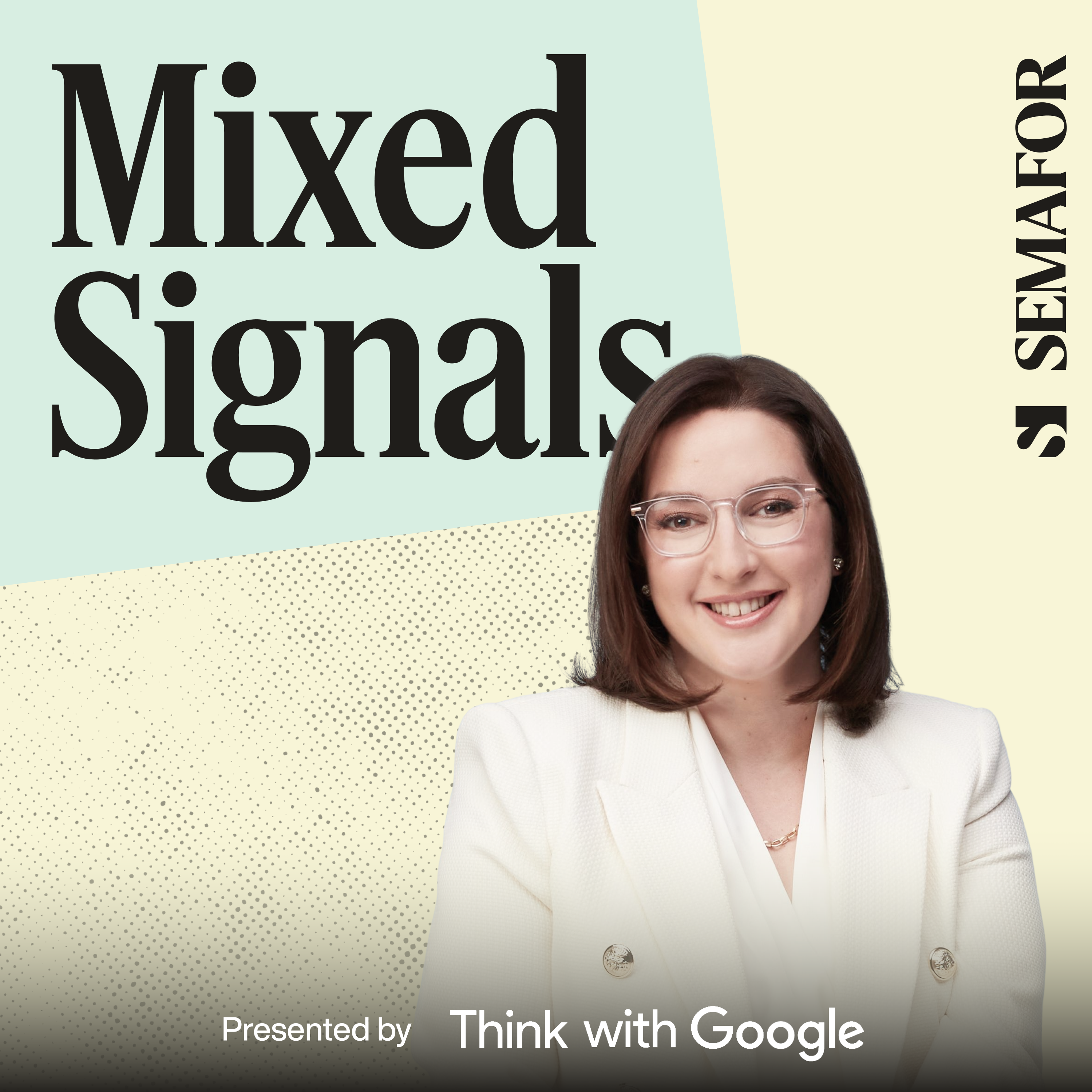
Meredith Kopit-Levian, CEO of The New York Times, discusses whether tough, independent journalism harms business, how NYT’s governance protects editorial independence, and how NYT is approaching AI licensing and partnerships (including lawsuits and deals). She also covers NYT’s audience-growth strategy via games, sports (The Athletic), and video distribution (e.g., YouTube), plus compensation and retention of star talent.
Meredith Kopit-Levian (CEO of The New York Times; joined in 2013 running ads, later subscriptions; became CEO in 2020; oversees growth via subscriptions and acquisitions like The Athletic and Wordle). Ben Smith (editor-in-chief of Semaphore; interviewer).
Adversarial “coverage of power” is not the point; holding power to account is. NYT’s family-controlled public-company governance exists to protect journalism “come what may.” AI partnerships should reflect fair value and give publishers control over full uses; NYT is prepared to enforce rights. Engagement across NYT products drives business.
Wordle/Strands/Connections; acquisition of The Athletic; Amazon multi-year AI/content agreement; NYT sued OpenAI; NYT’s YouTube strategy (e.g., Ezra Klein); NYT’s non-endorsement in NYC mayoral race.
0:08Welcome to Mixed Signals from Semaphore Media. I'm Max Tani. I am looking right at you, Ben Smith, editor-in-chief of Semaphore, because we've got a slightly different setup from our normal production of Mixed Signals. We're here in Cannes for Cannes Lion, the big advertising and marketing and media festival. It happens every year on the French Riviera. It's a very difficult assignment. I know, Ben, this is something that you dread coming to every year. A real hardship.
0:33Ben Smith: I would say it's cool that a bunch of listeners, a couple of former guests have come to hear us here. It puts a little pressure on us. That's true. That's true. And it's our first live podcast taping, which is pretty exciting. But we're mostly excited in addition to being very lucky to be here. we're very excited to have on our guest today, which is the CEO of the New York Times, Meredith Kopit-Levian. Ben, Meredith was maybe kind of your boss? Not my boss. Not your boss. We can talk about that more with her. But she's running one of the most interesting, successful, complicated media businesses in the country, in the world, navigating Trump, navigating AI, navigating video in an interesting way.
1:08I mean, there's a lot of dense topics there. So we're excited to chat with her about it. Sweat a little bit up here on stage. It's very hot, but we'll be right back with Meredith right after this.
1:31Ben Smith: So, thanks so much for being here. And we are thrilled to be joined by, I think, you know, the most successful news executive in the world right now. Wow. That was easy. Scared of everything that comes after that, Ben Smith. Right, who told us that she was looking forward to this interview less than anything else that can. Who joined the New York Times in 2013, running the ad business, quickly expanded her role to take over the subscription business as well, and has balanced those two in a pretty, I think in a way that people outside don't always realize, but I think people here probably do, how challenging that is to manage.
2:08Ben Smith: And in 2020, she took over as CEO of the Times, has seen its subscription business grow where basically all of its competitors become the envy of the entire global news business, held on to and grown its ad business at the same time and done a number of acquisitions from the sports site, The Athletic, to one of the great coups of modern media, which was acquiring Wordle for like a quarter in an incredibly bold move. It was a little less expensive than The Athletic. We bought them like the same week. Yes. And yes, so thank you. Thank you so much. I'm so happy to be here. And I just want to say, I think these guys are my running partners.
2:47Yes. Because I've listened to most of your shows, maybe all of them, certainly most of them. And I listen while I run. So I just feel like we're out on a run. Absolutely. The show gets the heart racing a little bit. It makes you need to physically move your body. But how's Can going so far, Meredith? It's great. I love being here. I've been here countless times. It's actually something feels a little different this year, which I'm really enjoying. We're in a moment where like math and machines are playing a giant role in marketing. And I am appreciating what feels to me to be an undercurrent of let's not sort of lose the plot.
3:30A lot of the reason The Times has had success is it's an extraordinary brand that has real values and a lot of value. at great scale. And I think it's because we've invested in that brand for a very long time. And so it feels like there's this sort of refreshing undercurrent that it's not all math and machines.
3:53Ben Smith: That's good to hear. I mean, the Times' brand is, at some level, adversarial journalism about power. And a lot of your competitors, I think, CBS, The Washington Post, The LA Times, their owners have concluded that that's bad for business. actually. And the Times continues to really take on a president who has gone really hard at media ownership in particular. And I saw you had a headline yesterday that was like, should we impeach him again? Maybe third time's the charm. And you run the business side, you're not across the editorial. But I really do think in our industry right now, there's a belief that that is bad for business, that doing adversarial tough journalism is bad for business.
4:35Ben Smith: and that media owners should find ways to steer away from it? I mean, is it bad for business? My first answer to that question is it wouldn't matter if it was and it doesn't matter if it is, but I'm going to push on sort of your framing of the question. I think the word adversarial may be a sense of what a subject feels when they're covered in a hard way. I would say the Times' role and the role of the quality independent journalism, the role of the press, what we're all doing, is to hold power to account and to unearth the facts that really matter to society. And sometimes that may feel adversarial to anyone in power, but I don't think that's the point.
5:27Being an adversary is not the point. Holding power to account in a way that is useful to society is the point. And I'll just say, you know, Dimes has been doing that for 174 years and nothing is going to stop us from doing it. If it were good for business or bad for business, we're going to do it the same way.
5:49Ben Smith: But is it good for business or bad for business? I think that engagement with everything we do, high quality, independent journalism, recipes, shopping advice, Wordle connections, you know, sports journalism, engagement with everything we do is undoubtedly good for business. We happen to have a model that doesn't depend on what's happening in the news cycle or did we just launch a game to sort of drive that engagement? We've got a lot of power sort of in our own right to drive it. But, you know, I think everyone who is in the media business in a digital world, their business, the fuel the business runs on is engagement of audience.
6:40So, Meredith, Ben mentioned a few examples of some recent major stories in media that The Times has covered excellently. Sherry Redstone trying to make a deal with Trump with the hopes of being able to smooth the merger with Skydance. Jeff Bezos' decision, Patrick Soon-Shong's decision to kind of both get out of the endorsement business and rethink endorsements altogether. For a while, there was a narrative that benevolent billionaires might be great owners for news businesses. Do you think that billionaires are good owners for media organizations and news businesses? I don't know that I'm the best person to comment on that.
7:16What I will say is that I think the sort of governance structure and the model that enables the New York Times is an awesome model. And if you'll indulge me, I'll describe what that is. I'm the CEO of a public company. So we are a publicly traded company that's meant to do value creation for shareholders, but we're a family controlled public company. We've been controlled by the Ox-Solzberger family for like 130 of our 174 years. And that control structure exists for a singular purpose. And that purpose is getting it right what you're asking me about, which is come what may to protect the independence and the kind of sanctity of the journalism.
8:06And when I say the sanctity, to protect the idea that it is our job to hold power to account, whoever is in power, and for the reporters doing it, to do it with an open mind and an open notebook and curiosity, and nothing happening in the political landscape, in the business landscape, even in our own business, is going to get us off that. And that goes all the way up to the governance structure of the Times. I'll say one other thing. It's of, you know, it is great to be the CEO of the New York Times working in a structure like that where that's the entirety of the company's interest that the New York Times be able to deliver on our mission today where the stories are of huge consequence and tomorrow and a generation from now.
8:59I mean, my job is, you know, are these decisions going to look good 10 years from now, 15 years from now, 25 years from now?
9:08Ben Smith: Yeah, I heard Dean Bacquet, who was editor when I was there. Yeah, that's right. And you worked very closely with it. Yeah, by the way, Ben and I were colleagues for two and a half years. Yeah, although it's a peculiarity of the New York Times that the CEO was not my boss. I was not your boss. That's a part of it. I wonder, I wonder. Would have been different if you were. I would have been held to account. By the way, you love the New York Times because I am no journalist boss. It's an incredible thing. But he was a great editor who used to say that the Salzburgers had chosen to be millionaires rather than billionaires.
9:39Ben Smith: Totally. And that that was the sort of secret, one of the secrets of the New York Times. And again, they're controlling. The control structure is there to protect our ability to deliver on the mission, which is for the public. So another simple question. Yeah. You've sued OpenAI. Yep. You struck a licensing deal. OpenAI and Microsoft. OpenAI and Microsoft. You have different kinds of commercial arrangements with Amazon, I believe with Google in various ways. It's a very complicated landscape for a publisher right now approaching artificial intelligence. And the Times has a very valuable corpus of data from the perspective of these guys, among other things.
10:16Ben Smith: Can you give us a sense of just how you're looking at that landscape? Yeah, happy to talk about that. And we have an enormous amount of, you call it data, I would call it really valuable intellectual property, journalism, other kinds of content. And, you know, a giant corpus of copyright protected content. I'm going to say just like stepping back broadly, we, you, every other media company here operates in an ecosystem shaped by, in most cases, very big tech companies. And the Times has a really long track record of doing two things, I think, pretty well. One is finding the right kind of partnerships and commercial agreements where they make sense for our business and our brand and our long-term strategy.
11:09And I think we also have a good track record. You know, we didn't always do it at speed, but I think we've gotten it right more than we haven't. Good track record of sort of harnessing technology to make the report better, you know, to make the journalism richer, broader, and to make it accessible to many more people. So, it's hard to talk about what we're doing in AI without first setting that context. In AI specifically, I would say, you know, the best outcome here for everyone is commercial agreements that reflect fair value exchange for our work that give the Times or any publisher control over how its journalism and intellectual property is kind of used across the full scope of uses by LLMs.
12:09And that is done in an arrangement that feels sustainable, that's the best outcome. We've just done a multi-year agreement with Amazon, and you can imagine, we feel like that agreement reflects what I've just said. And where that doesn't happen, we are prepared to enforce our rights because the stakes are really, really high here for everybody. By the way, the stakes are high for the times. The stakes are high for everybody in sort of anyone developing intellectual property. I think the stakes are high for society. And I think they're high for the LLMs because ultimately, you know, there's got to be a sustainable business model to make great intellectual property.
12:55The LLMs will ultimately only be as good as what goes into them. You mentioned the Amazon deal. I kind of want to focus on that a little bit because you sued OpenAI, but you've done a deal with Amazon. You know, You've said that essentially that the terms of the Amazon deal are much better than whatever was on the table for OpenAI. Can you just talk a little bit more in detail about what the Amazon agreement entails and why you were able to get to yes with them in a way that you were not able to with OpenAI? I'll just say, I mean, I think I've told you what our principles are. Is there a fair value exchange?
13:23Do we have control over the full scope of uses? Does it feel like this is something that we could do in a sustainable way? This is, to me, I think to all of us, we're at a really important moment in the information ecosystem. The stakes are high for everybody. And so we are being really thoughtful and deliberate about what we're doing. What does it look like? It looks like our journalism from The Times, from The Athletic, from Cooking, will be featured across a range of Amazon products. And we're excited about that. And we're excited to have that be a way that we get our work in front of more people.
14:09And they're not training on any of the, on any of this. I mean, you can go in and read what we've said about how they're using our work, but it's a fairly broad agreement, but it's one that we entered into with a lot of care and deliberation for what does the market look like for this over a long time horizon? Ben knows this from working at the Times. Sometimes we don't, you know, maybe to a fault sometimes we don't take much lightly at the New York Times. We do things sometimes more slowly than other companies, but we do it with a lot of care and deliberation. And with regard to how's this going to feel, as I said before, in a decade?
14:47Ben Smith: Yeah, I wrote a book about BuzzFeed and the New York Times. And when we were at BuzzFeed for a while, we sort of almost thought it was ridiculous how slowly the Times was getting onto the Internet. And in the end, you know, the Times won and BuzzFeed lost in that basically. But it almost feels like the Times' strategy is not to fast follow, but to slightly slowly follow. Watch the mistakes other people make, learn. Will that work in this moment when things are moving so fast? That's such a good and important question. And I want to be clear. It is not, I mean, you can only move so slowly. It's not always good to be slow.
15:20I'm not sure that, you know, slow is probably not the right word. I think we're really deliberate. We've got, we do two things, I think, really well when it comes to change. And we do lots of stuff not so well, like every other company. But the two things I think we do really well, we are really sharp on this is the very small list of things that cannot change because if they change, the whole thing breaks. What are they for the times? You know, we seek the truth and help people understand the world. We hold power to account. We do it without fear or favor. And, you know, we are in the business of directing attention to important things.
16:01That's like the tiny list of things that can't change, can't be broken. Everything else can change. And I do think we are working our tails off to move at speed with how those other things can change. When you talk about AI and the relationship between The Times and publishers generally and big tech, I think we learned a lot. I think the current leadership team of The Times and certainly you, Ben, Max, you're younger than us. I'm much older than Ben, but you're in my cohort. We sort of came of age. You were one of the shapers at BuzzFeed of what the last era looked like. and I just, I think the stakes were high then and I think the stakes are high here.
16:47In that era, I'll tell you, you know, if it was a 25-year transformation of the newspaper business that we're kind of at the end of one cycle, I think the times probably moved pretty slowly in the first half of that. You know, was that good or bad? I don't know, I wasn't there then. I think the thing we did really well is we made some big counter-conventional decisions, really big decisions that look different from everybody else. And then we gave them a lot of time to play out. We said, we've got to be a destination to your BuzzFeed point. People have to come to us. The best experience with the New York Times has to be on our own products.
17:32We said we have to have direct relationships. You know, we're now, we've got 150 million registrations and counting said we have to be a daily habit. We have to be something people seek out and ask for by name and make room for in their lives. We called that a decade ago. We're still at that. So some of it is like, can you make really big calls about where the industry is going to go and like actually commit to them and give them time to play out?
18:01Ben Smith: I'm glad you were able to learn from our mistakes. I don't know that it looked like a mistake at the time. We learned a lot from BuzzFeed too about how to use sort of, you know, the innovation report, which sort of kicked off the period of change at The Times, which basically authored by A.G. Sulzberger, our publisher, and a team of people basically said The Times is still crushing it at the journalism, but like losing to everyone at finding an audience for that journalism. And it's funny because The Times is very deliberate. You actually, like you can just tell talking to you and anybody who knows your career, you move fast and you're very decisive to me like the really great stories of the times recently was the wordle acquisition i think it was the city so you didn't move really fast on that you bought the it was it was 2022 you bought it's really the same month you bought the athletic like i think more than 500 million dollars i think you can confirm that the wordle you paid less than one percent of that it was a small number can you just talk a little bit how that has paid off would you say that the value of wordle is more than i think it was reported as low seven figures my favorite thing about Wordle is that every minute of every day, 2 ,000 people share their Wordle score.
19:10So it's just like tens of millions of people play our games every single day. It's something like if you play, you play daily, you play, and not just Wordle, Wordle, Connection, Strands, all really big games.
19:23Ben Smith: Do you think Wordle is worth more than The Athletic? Let me tell you what we have with The Athletic. That's a really fun question. What we have with The Athletic, I am so proud of the athletic acquisition. And you talked about us being deliberate. We're also really trying to think big and for the long term. And there are tens of millions of people on this planet who care really deeply about sports. Somebody sent me a picture of himself in a Jets jersey yesterday who's in the audience. tens of millions of people curious people who care deeply about sports and we thought there was a white space in the market for high quality journalism for fans to follow this thing they're deeply passionate about.
20:18We have what I believe is the largest newsroom in sports, certainly the largest reporting force in English language sports. It is a really big bet for us. We are so happy to be in sports. It is paying off in ways we didn't even expect. And I would say check back in, you know, we're thrilled with where the athletic is kind of as a proposition today, and it's only going to get bigger and better. What were the ways that you didn't expect that it paid off? You know, I, this, I'm not sure I should say this publicly, but you know, I had spent my whole career as an ad person working like in news on serious things.
21:02And I, and so had many of the people around me at a high level at the times, many of us who were making decisions about how to think about the athletic and the value and what it would do for us. And I just think we really underestimated how cool and fun and great it would be to be in the sports business for marketers. It has just been awesome. It's like as fast as we can grow audience and awareness, we have lots of opportunities. We are so excited about them to work with brands. And it's, we brought in new brands who were like never in the times who do stuff with the athletic and even brands that are in the times have other parts to them that they do with the athletics.
21:45It's just, It's been great. So part of that acquisition, the goal was kind of trying to help reach the ambitious subscriber goals that you guys have set for yourselves. And, you know, part of that was addressing, you know, I'm assuming reaching men across, you know, not just on the coasts, right? You know, across the central part of the United States and other different parts of the United States where there weren't as many New York Times subscribers. I'm curious what other groups are you guys looking to reach and what do some acquisition targets look like? I imagine you were talking about how there are some things that you guys don't do particularly well.
22:18I imagine that there are some groups that you might want to reach a little bit better as well. I'll say a couple of things about that. One of the great things about being at The New York Times and the sort of governance structure I described is we don't really chase audiences. We certainly don't chase audiences with the journalism. You've probably heard us say that a million times in your brief tenure with The Times. We do want to be, we want the New York Times kind of writ large, including, you know, certainly the news coverage, but also games and recipes and sports and shopping advice. We want to be for curious people everywhere.
22:54So, you know, we have really big ambitions for how large the audience can be. One of the things that when I was preparing for our advertiser new front, we hadn't done a new front in years and we did a big new front this year. One of the factoids I was given that I hadn't even seen yet was that our audience is growing fastest. Like for the Times writ large, news too, not just sports, but writ large in the South and Midwest. You know, on the athletic, what do you think is the biggest sport followed on the athletic? It's not football? It's the NFL. It's both footballs. Football OO and football FUT, right?
23:30But particularly the NFL. So it absolutely brings a different cohort to the Times. But to be clear, you know, a third of all American adults come to The Times every week. So we are all ready for a giant audience and we want that to be much, much bigger. What we really want is tens of millions of people who are coming directly and who are coming multiple days a week. And that's like a huge focus. We have to take another break, but we'll be right back after this message.
24:16Ben Smith: another huge focus here is what i think in this business is called influencers yeah and in the journalism business they throw up in their mouths if you say the word influencer but talent stars and i think one when i was at the times i think one of the big tensions for news for all newsrooms right now is this sense that they were big industrial organizations where if Rudy was a cog in the machine. And now suddenly you have this outward facing talent. They're in video. People care about their bylines. They're on TV. And I'm just curious, how is CEO? You know, you have Maggie Haberman, great political reporter.
24:49Ben Smith: You have Jody Cantor, like can't miss, somehow has penetrated the U.S. Supreme Court. It's extraordinary, yeah. How do you value talent? And how do you think about, how do we compensate? Like Jody say, or Maggie generated a huge, an outsized share of the value of the New York Times. How do you retain people like that? How do you compensate them? I think Ben is saying they could make more money. Ben's like, do you want me back? Let me tell you what it's going to take to get me. No, but shouldn't Jody and Maggie be making$10 million each? I want to, so first, let me say, if you haven't already today, I literally, on my way in, I stopped under an umbrella, and I watched, there's this incredible Jonathan Swan video.
25:30Where he's describing, and I had been in an event with him two weeks ago, and he had said like, you know, whether or not Israel moves against Iran sort of independently is like such a giant thing that's unfolding now. And he has this incredible like 90 second video describing Trump and Netanyahu and their relationship and what might happen next. He is a total star. Jody and Meghan are stars. Sorkin is a star. Sorkin's here, by the way. Barbaro's a star. I want to say the Times is a great big institution and we are also an institution that is a collection of individuals who like absolutely like make up the place.
26:16And our job, the way I think about it is our job is to make it so that whether you are that level of famous or not, you come to the New York Times. And what do we give you? We give you an opportunity to do the best work of your life and to have that work seen by a giant audience. and also, by the way, you know, if you're Ezra Klein or some of these other folks, be read by every president, be read by every member of the court if you're Jody, be read by every member of Congress if you're Sorkin, every CEO, you know, and to have the sort of talent around you who can say, you know, I'm trying to do something really tricky.
27:03The Times has the lawyers who can help you get to that information. I'm trying to do something that's hard to get people to engage with who has the visual talent to help you do that and so on and so the proposition I want to be clear these guys are worth so much so much the proposition is we want to be the place where they can come and honestly have the time of their lives in the work and have incredible impact that sounds like you're trying
27:31Ben Smith: to persuade them to take kind of below market pay in exchange for that? I don't think anything I just said is about pay. I think it's really about sort of the proposition. I have no doubt that someone like Ezra or Andrew, any of the people you've named, could be anywhere. You mentioned Ezra Klein. It's a great segue because, you know, I've been increasingly watching his videos on YouTube. We're here. This is in Google's lovely space. Thank you so much, Google. There's like a YouTube branding all over. Yeah, we've got a big YouTube here. There's a big logo maybe somewhere over here. You know, you guys have increasingly been posting a lot of your videos on YouTube.
28:09You've done it for a long time, but it seems like you guys are making a more concerted effort there as many other media organizations, creators and whatnot are also doing. I'm really curious, can you build a business there? And does the Times want to build a business there? Or is YouTube more of a vehicle for discovery and like a funnel into the Times? Times wants to build a business everywhere, right? I mean, we want or we want to be in places that are going to be good for the business. But the first priority, and this is another reason it's good to work at a company that's kind of single-minded.
28:39The first priority is how do you get the work seen, really important work seen by the widest possible audience. So what was the calculus on Ezra? That guy is doing really important work. By the way, Ross Douthit, if you haven't listened, interesting times. It is amazing. You know, if Ezra is sort of exploring the topics that are, you know, examining a progressive point of view, Ross Douthat is doing that with a conservative point of view. It's extraordinary. Both those shows are on YouTube. And the most important thing we can do, and this is like a governor for the Times, is get the work really widely seen, particularly in a moment where I do think, I mean, maybe I've said this my whole group, like media habits are always up for grabs.
29:29And many people are getting lots and lots of news and information on YouTube, on TikTok, on Instagram. We're in those places because we want the work seen. Now, on the other side of that, the Times app, the website, our newsletters, our own podcasts, these places have to have enough gravity. That's like my job. How is there enough gravity there to, if you see Ezra on YouTube, you still think, you know, ultimately, I'm going to go to the Times and buy a subscription.
30:05Ben Smith: You know, one of the things that we sort of obsess about, and I think that lots of people in media are obsessing about, I see Chris Balfe here somewhere, who's a pioneer in this particular space. But is the extent to which it feels like everything is becoming television again. Yeah. And one of the things about these Ezra videos, they're beautifully produced, produced at a level that podcasts did not used to be produced at. And I'm curious, you know, first of all, you know, Jeff Zucker used to say, we got to become the New York Times before the New York Times becomes us. And they did not. I mean, it feels like that was probably a good thing to worry about because you are starting to really play quite seriously in a TV like space.
30:40Ben Smith: Just big picture. How do you think about that convergence? Like, is the New York Times going to be a television channel like whatever that is? It's such a fun question. And I was like, oh, is he going to say the convergence word? By the way, at the New York Times, I had to spend a lot of time learning how not to sound like a business nerd. And I think I like exorcised convergence. Our audience loves synergies. Synergy. Optimization. Let's talk about the daily. You know, we were not a radio company, right? We were not NPR. We were not like, and we were not iHeart. and we said like, just what's the best way we can imagine getting people to sort of listen to news from the New York Times.
31:27And I think the Daily was the number one podcast on Apple last year, like broadly. And it is, I think the number one news podcast in a wider set still, you know, eight years, eight years in. So I, you know, what we're, our calculus is just how do we make something awesome that really is meant for the format that, you know, it takes us a minute. That's a place where we are probably slower than others. We were much slower to be on TikTok than every other media company. And we were, you know, so we're probably slower. We did not pivot to video when everyone else was pivoting to video. And it took us real time to sort out.
32:10the video thing is really what Ezra is doing. And it's what I just described Jonathan Swan is doing or Jodie Cantor did on our Amy Coney Barrett story.
32:19Ben Smith: But do those wind up being licensed to NBC as quote unquote television shows? I'm curious how you see the course of the industry. Do you think that's where that's going? I don't really know. I'm curious what you think. Yeah, I mean, listen, I think we are making journalism worth paying for. I always say you could describe the business model of the New York Times in five words, make journalism worth paying for. You know, ideally first by consumers, but, you know, by someone, right? Paying a premium for by someone. Today, we are athletic journalism. New York Times is not on Apple News. Our athletic journalism is on Apple News.
32:56We are building the athletic brand we wanted on the two biggest news apps there are. Like, so more people know it's there. I would say in every dimension, we're making journalism worth paying for. and we're open-minded about what that's going to look like. Well, Meredith, we've got one last question for you because we got - Oh my God, are we almost done? This was fun. Yes, we're almost done. And, you know, even though we're here in the south of France, I feel like everybody who I recognize out here is from New York. Don't ask me who's going to be mayor. Well, I was going to, well, we want to ask something related because, you know - I know what you're going to ask me.
33:29Yes, exactly. You know where I'm going with this, which is, you know, earlier, or I think it was last year, the Times made the announcement. They weren't going to endorse. Now, recently they put out this kind of like halfway, quasi, non-endorsement. Ben actually set up his own independent media organization because he was so upset about the New York Times. I didn't think you should ask about this. Ben doesn't think we should ask about this, but because we have so many New Yorkers in the audience. You're not going to answer it. I don't know what the question is. Well, I guess the question is just, do you think that the New York Times is giving up a little bit of its power in shaping the race and the dialogue in New York City by not endorsing in the mayoral election?
34:03I think from the beginning of time until the end of time. The real power of the New York Times is to give people understanding. And I think there are going to be lots of different ways we go about doing that. I think the most important way we go about doing that is unearthing new facts. You know, experts unearthing new facts with real judgment about why those facts matter. And I think we're going to do that lots and lots of ways. and, you know, that's my answer. All right, well, I think that's a great place to leave it. Meredith, thank you so much for doing this. This was really fun. Thank you, Meredith.
34:40Thanks, Google. Really appreciate it. Thank you, guys.
34:56Ben Smith: So, Ben, how do you feel like that interview went? And you've got a sense of both how successful she's been and how successful the New York Times has been in balancing these two things, which is one, you know, just having zero question that tough journalism is the heart of the business, that they'll make commercial sacrifices if they need to. And then on the other hand, building all these pillars around it and almost like defenses around it so that if Trump decides that he's trying to kill the journalism, they have this whole range of products. I mean, it's a really remarkable story that I don't think anybody would have predicted 10, 15 years ago.
35:31Did she say anything that surprised you?
35:33Ben Smith: I'm interested in what they imagine their deals with these AI companies are going to be. It's, I mean, I think that they are, you could just tell how pleased she was about their Amazon deal, which just must reflect that it's an enormous amount of money over a really long period of time. And it did make me think, oh, this is for the media companies with the leverage to pull this off. And The Times maybe wind up being the only one. That's an amazing revenue line because, you know, You're bringing in, I would assume, tens and tens of millions of dollars at zero cost to you. It's just newfound money on an annual basis for a long time.
36:05Ben Smith: That's an amazing business. I thought it was really interesting, though, that she... I pushed her a little bit to clarify some of the terms of that deal and why the deal with Amazon worked out and why the one with OpenAI wasn't going to work out. I mean, obviously, she indicated that it's a number, it seems like. But I felt a little bit like we didn't get the clarity that at least I was seeking in terms of like, what is actually in the deal in terms of what Amazon is doing with New York Times content? I still feel like I don't understand the answer to that question. And they're going to be promoting the Times across their huge services in ways we don't totally understand.
36:38Ben Smith: One thing I was curious about, you were sort of pushing her on acquisitions and like a smart CEO, she wasn't about to tell you what they're going to buy next. I don't know, what should the New York Times acquire? Where do you feel like they've got opportunities? I actually feel like there is an answer to this question. I was curious if she was going to go there, but she didn't, which is younger people. She talked about how many adults. She said one in three adults engage with the New York Times in some sort of way, which is obviously an amazing success. But if you look at the – there's been some data out there about what the age is of people who are – and I've talked to some executives at some audio companies who talked a little bit about how the Daily, hugely successful podcast, but really big with an older demographic, which doesn't surprise you.
37:17Old people have always been more of newspaper readers than younger people. But if they're looking at ways to expand and to grow, I'm curious if they would look at something to acquire new, younger, Gen Z and even maybe Gen Alpha subscribers. I think that that seems like... So what are you thinking of? Honestly, creators probably. Like actual interesting YouTube shows or creators or things like that. Right.
37:40Ben Smith: Is there some New York Times for kids creator collective? Is there like a red seat of news types? Or even like people in their 20s who are doing cool stuff, who like maybe don't want to be like considered to be like journalists at the New York Times, but ostensibly are doing things that are, you know, journalistic. Something like Cleo Abram, shows like that. Acquiring things in the manner that, you know, we've seen Vox Media do, or you mentioned Red Seat. I don't know. I feel like there might be something there. Those are ad businesses. They're not subscription businesses. But that's where eyeballs and attention is.
38:11Ben Smith: And I do think, I mean, it's really, her career is really interesting in that regard, because she was an ad salesperson who came in and made this very determined effort to be like, no, I'm going to own subs, and became CEO through her success running a subscription business. And then I think has found, as you talked about with The Athletic, oh wait, advertising isn't so bad. And in fact, the huge problem with The Athletic when it was independent was that they kind of didn't like advertising and The Times has been able to switch on an advertising business. And so I do think people get really ideological about how pure subscriptions are, but I think you heard in that interview, like, oh, advertising's not such a bad business.
38:42Ben Smith: We dragged Andrew Sorkin out to Cannes to sell some ads. Oh, yeah, I'm sure. Yes, I'm sure he had to be persuaded. But the sports answer was really interesting, too, in the sense that she said that sports was a great gateway to advertisers who otherwise wouldn't have engaged the New York Times, which is the reason why sports is such a big theme here at Cannes, because everybody, media companies love live sports. I mean, they love sports content in general. They particularly love live sports because it's, you know, of course, apolitical or it's not seen as political most of the time. And, you know, it does open you up to a broad swath of audiences.
39:16Ben Smith: Speaking of which, we should do more sports. We'll have to think a little bit more about that. Maybe listeners can help us. Yeah, exactly. Listeners, let us know who from the sports world we should have on. Well, Ben, I think this has been a success, but I think that's going to be it for us here on Mixed Signals today. Thank you so much to everybody who's here for watching and for listening. And, of course, thanks to Google for having us here. And thanks to Meredith for taking some time out of her busy selling schedule to be here with us. I believe she went off to have lunch with Josh. has been here.
39:42So just a little glimpse into how this world works. Exactly. So this was worth it for her. For everyone. Exactly, exactly.
39:51Thank you for listening to Mixed Signals from Semaphore Media. Our show is produced by Sheena Ozaki with special thanks to Britta Galanis, Chad Lewis, Rachel Oppenheim, Anna Pizzino, Garrett Wiley, Jules Zern, and Tori Coor. Today's episode was mixed by Steve Bone and our theme music is by Billy Libby.
40:09Ben Smith: If you like Mixed Signals, please follow us. wherever you get your podcasts and feel free to review us. If you want more, you can always sign up to Semaphore's media newsletter out every Sunday night.
The New York Times has weathered incredible changes in the media industry throughout its 174 years – and it’s managed to stay on top through the recent shift to digital, topping podcast charts and becoming a daily app for games and cooking. This week, live from the Cannes Lions festival, Ben and Max are joined by CEO Meredith Kopit Levien to talk about how she keeps the company relevant, where journalism fits into the business, and how they’re navigating challenges like Trump and AI. They also ask her about acquiring The Athletic and Wordle, and what the Times might buy next.
Sign up for Semafor Media’s Sunday newsletter: https://www.semafor.com/newsletters/media
For more from Think with Google, check out ThinkwithGoogle.com.
Find us on X: @semaforben, @maxwelltani
If you have a tip or a comment, please email us mixedsignals@semafor.com

Scan the code with your iPhone camera
Listen in the app.