Ask ChatGPT
 Monetary Matters with Jack Farley
11 Nov 2026 · 55m · 24 chapters
David Orr argues AI compute is heading toward an oversupply. He says massive AI data-center/semiconductor CapEx (through 2028) will outpace real demand because “besides software companies nobody is really buying this compute,” and software firms will eventually decide they don’t need as much capacity. He links this to falling compute-hour prices (from about $12/hour in September to about $4/hour later) and to a narrative/positioning-driven selloff in AI infrastructure after a “blow off top” in June. He also discusses market mechanics: leveraged semiconductor trades unwound, causing liquidation-like moves (e.g., Nikkei down ~5% while Japan small-cap value rose).
David Orr (hedge fund manager; runs/works at Militia; ex?; posts on Substack content.militia.com).
AI intelligence may remain valuable long-term, but short/medium term bottlenecks and compute oversupply will pressure AI hardware/software economics. Hyperscalers (Google/Amazon/Microsoft) are favored due to contract structure (claimed ~35% return on capital; ~half capacity locked in), limiting downside.
leveraged semiconductor trade unwind; compute-hour price drop; Anthropic IPO/liquidity concerns; Texas governor news dismissed as secondary to power-plant bottlenecks.
Written by AI. May contain mistakes.
Exploring the expectation of an oversupply in AI intelligence and compute.
“So we're going to have too much intelligence and it's going to take years for the physical world to catch up.”
Discussion on market changes and the unwinding of popular AI trades.
“Some of the things that are happening have kind of been underway even before we got the midterm results.”
Analyzing how leverage and market moves led to liquidations in trading positions.
“A few of the best traders I know thought it had like a sort of blow off top back in June.”
Evaluating reasons for the shift from compute shortage to oversupply in AI.
“How are you making sure that what's happening in maybe one of your other sleeves isn't going to cause a problem for you?”
Discussing capital expenditures and software companies' demand for compute.
“You can't have too much intelligence, but short term, you're going to run into all sorts of other bottlenecks and you're going to have way too much compute.”
Exploring the evolving relationship and investment narratives between AI and software.
“What about the software component of the trade?”
Analyzing the strategic positioning of hyperscalers in the AI market.
“And then the wide moat ones, they should probably benefit.”
Examining how political changes can influence market dynamics and investor sentiment.
“unless the software companies go bankrupt in very large numbers very rapidly, you know, then Amazon, Google, Microsoft won't lose much money at all in the bad outcome.”
Discussion on liquidity issues and their potential impacts on market conditions.
“and we got a true sell-off at the index level.”
Discussion on liquidity sinks in the market and share issuance.
“What happens if the price gets taken down quite a bit?”
Exploration of political factors affecting market perceptions and technology sectors.
“You think that this has much more to do with an oversupply that was kind of already potentially evident.”
Analysis of antitrust risks facing major tech companies like Google.
“I think we jumped to that, but certainly it looks like, I mean, I'm using AI for a lot of my searching now.”
Examine the future compute requirements for advancements in drug discovery.
“How do you scale up the lab monkeys 100 times?”
Discussion on the potential demand for compute in various sectors, including white-collar labor.
“then I think you run into the bottlenecks instead.”
Explore how AI will impact labor costs and job structures in the insurance industry.
“let's take a complex personal tax return, right?”
Discusses the balance of competitive pressures and margin improvements in industries adopting AI.
“My base case is that all those jobs are going away, though.”
The potential for creating specialized AI tools tailored to specific industry needs.
“And, you know, I don't think the AI is quite good enough yet, but yeah, in five years, I mean, I'm pretty sure.”
How AI can transform data management processes and reduce costs significantly.
“Yeah, and let's say the AI gets good enough in a year or two, you don't even have to do anything.”
Examines the potential for a return to higher quality craftsmanship in housing and construction.
“deflationary i mean this is the fully automated luxury abundance society that um that you know techno futurists have been talking about for a while.”
Discussion on the imbalance in talent allocation between high-end craftsmanship and tech sectors.
“How do we make search actually worse and kind of annoying to you so people have to search even more?”
Exploration of how social media is evolving and its effects on user engagement and business.
“It does seem that of all of the Magnificent Seven, Meta's ad business seems to be doing pretty well.”
Analysis of the differences between music streaming platforms and their impact on artists.
“But at the social media level, there is a network effect.”
Discussion on how AI is changing content recommendation systems and user experiences.
“So somehow YouTube lost me on the music front.”
Insights into market exposure strategies and the current market climate from a hedge fund perspective.
“Are you thinking about net exposure right now?”

Get the gist, explore an idea or ask about something said.
 Claude
On Monetary Matters with Jack Farley, what are the key points of this episode?
Searching your listeningAutomatic transcript. May contain errors.
0:00David Orr: AI is going to be in an oversupply. So we're going to have too much intelligence and it's going to take years for the physical world to catch up. You can't have too much intelligence, but short term, you're going to run into all sorts of other bottlenecks and you're going to have way too much compute. Basically, besides software companies, nobody is really buying this compute. And then, so our software company is actually going to need even more than what we already have. It's just a matter of time before basically the software companies say, oh, we don't actually need this. And then you start reselling your capacity.
0:35David Orr: And then once that starts happening, it just goes to a tiny fraction of the price. This episode is brought to you by Sarmaya Partners, who manages a return to tangibles ETF, LENS, ticker L-E-N-S. The Sarmaya thematic ETF built for a return to tangibles. Learn more at SarmayaETF.com and see the show notes for disclosures. Let's get into it.
1:26Some of the things that are happening have kind of been underway even before we got the midterm results. I'm interested in what you think of the unwinding of what really was the most popular trade of the year and long AI infrastructure data centers, semiconductors.
1:39David Orr: Yeah, like you said, it was already kind of in a decline since June. A few of the best traders I know thought it had like a sort of blow off top back in June. and I think the market was just kind of looking for an excuse for AI to sell off really hard. It kind of capped the upside when too many people sort of locked in at that really high price. It was kind of in a downtrend. You didn't have any new marginal buyers. It was just waiting to drop. I'd posted about that a few times. I anticipated it. I didn't, nobody really knows why, you know, certain thing will cause the drop. I don't think anybody knows why.
2:19David Orr: I guess the Texas governor was the biggest news. I don't really think that that's the real reason, though. Now, both in June and this time, there are a lot of talks about funds blowing up, people being liquidated out of their positions. When you get a selling event like this, how do you tell what's people puking for fundamental reasons versus liquidation? You know, these shops are running at eight times leverage or six to ten times leverage kind of range. And some of the trades you're seeing are blowing out just weird stuff like the Nikkei was down 5 percent. And then the Japan small cap value is randomly up that day.
3:00David Orr: You know, that's that was clearly somebody just blew up there using lots of leverage. And it was a bunch of things like that that kind of blew out. And there's kind of a chain reaction with these kind of moves. So everybody who is in the levered long semiconductor trades, last short, whatever, you know, they basically all blew up as a group this week. I was just trying to stay out of it for my own partition. So I sort of broke even through all this. And Mike and Rodrigo traded it well, so they both won pretty well. You're up to 10 portfolio managers now. When you believe something has topped like this, are you communicating that?
3:41How are you making sure that what's happening in maybe one of your other sleeves isn't going to cause a problem for you?
3:49David Orr: Well, the other seven guys are so small that, you know, even if they did something really stupid, it wouldn't really affect the fund. But it was kind of reassuring to see that the result of each individual guy, it's good to see a stress test finally. And basically none of them had a nasty drawdown. The worst one, I think, was minus 8%. And given such an extreme move, I'm not even reading into 8 % that much. Most of the guys broke even around. So, yeah, I didn't really see any problem at all. Yeah, and I'm trying to reassure them, hey, this is a weird market environment. Try not to stress out too much.
4:32David Orr: Everyone's risk control seemed pretty good, so things are on track. Do you have a view on if there's more to go? I'm not sure. I'm not buying the dip yet. I think I probably will buy a semiconductor ETF at some point, at least short term. You know, I've become kind of, I was a big AI bull on most of the way up, and then I actually sold all my AI stocks in June. And then basically, my opinion is AI is going to be in an oversupply. So we're going to have too much intelligence, and it's going to take years for the physical world to catch up. Long term, I think it'll work. You can't have too much intelligence, but short term, you're going to run into all sorts of other bottlenecks and you're going to have way too much compute.
5:20David Orr: So is that going to happen in a year, year and a half? If so, June was probably the top because the market's a bit forward looking. But if that happens more like in four years, maybe the AI stocks will go up another 100 % first again. Well, we were just in a world where everyone thought we were short of compute. How do we get from short compute to oversupplied being consensus so quickly? I just think it was positioning and then the price drove the narrative. You know, that's all that happened. Yeah, I don't think anything fundamentally changed all of a sudden. So then what are the fundamentals people are pointing to now to say that we're going to have this oversupply?
6:04Like if you were if you were playing the thesis that the oversupply is going to become evident in a year or two, what would you be pointing to right now?
6:15David Orr: Look at how big the CapEx numbers are over the next two years, really through 28. Right. And they're just enormous. and then you know basically besides software companies nobody is really buying this compute and then so our software company is actually going to need you know even more than what we already have i feel like they're learning to use it they're learning to integrate it and once it's already working what we already have could seem like a lot you know i just know that as long as they keep doing this huge capex it's just a matter of time before basically the software companies say oh we don't actually need this and then you start reselling your capacity and then once that starts happening it just goes to a tiny fraction of the price um i saw a couple headlines that was the most interesting thing not too not enough people were talking about this in october uh a couple headlines people are saying oh um you know i have this spare capacity and like in september people were offering me twelve dollars per compute hour but now uh all of a sudden nobody's offering that kind of price anymore now it's more like four bucks an hour and that's to me that's the kind of that's the maybe key variable of if there's going to be a huge collapse but that's very noisy too most of the big contracts are of course locked in with these huge companies and when you say people were we're saying i have this spare compute i mean are we talking about very small data centers here like yeah private data centers like single operator type of people yeah like smaller smaller shops and of course that's not maybe for a large company you're like ah smaller shop huge pain in the butt and maybe it's not worth even setting it all up and everything right?
8:10David Orr: So it's not a perfect comparison. What about the software component of the trade? Interestingly, like in the first half of the year, we had people were long semiconductors, long the AI stocks and short software. Whenever semiconductors would be up, software would be down. Then people sort of started to realize this and got long both trades because they were now, they were supposedly uncorrelated and software started to show some strength. We're seeing the IGV down with the SOX and the SMH. Do you think that this correlation of long AI short software has finally broken and did that get crowded as well?
8:56David Orr: Yeah, I think these just get crowded. It's kind of random. These narratives don't really make any sense, right? Fundamentally, In my opinion, being bearish, most software companies is fundamentally right looking at a few years. It's hard to see how they're, unless they've got a good moat, it's hard to see how they're not totally screwed. So, you know, why that should be correlated to AI hardware either way, it doesn't make sense, right? It's just like, oh, this thing's doomed no matter what, if I'm right about that. And then the wide moat ones, they should probably benefit. it. So it doesn't really matter.
9:35David Orr: Again, why does the AI CapEx matter one way or another? It doesn't. So then what are the fundamental trades that you see? My favorite AI play would just be along the hyperscalers like Google, Amazon, and Microsoft. But I anticipated that they'd probably sell off. So I got out for a while. I might rejoin those at some point. Is that based off of the idea that slowing CapEx actually helps them? That because they front-loaded everything, they're going to be the ones who have the compute? Yeah, that was a subtle thing. So on the governor victory, they were down pre-market. I almost bought the dip briefly for the trade, but I chickened out.
10:15David Orr: But they actually spiked the next day, and then all of AI nuked the next day. So they spiked the next day because of what you're saying. Yeah, it's a good thing for the hyperscalers. If hypothetically the government just blocked 95 % of all new projects, and they own this really unique, wonderful asset, actually. But I don't really think the government, like even the Texas governor thing, it doesn't actually change anything, right? She ran a good campaign and everything, but the real bottleneck was just the power plants. So it was already going to be severely limited either way. And then you can always build these like in some other state or some other place.
10:56David Orr: and I don't really think that news even mattered. But the reason I like the hyperscalers is because the way they structured the contracts, basically they're like 35 % return on capital projects and they've locked in around half of the capacity they're building. So if you do the math on it, their downside is pretty small. Even if there's a pretty nasty bust, unless the software companies go bankrupt in very large numbers very rapidly, you know, then Amazon, Google, Microsoft won't lose much money at all in the bad outcome. So, and then in the good outcome, if I'm wrong, if let's say that the compute stays tight and we don't have enough intelligence for 10 years, then you have the 35 % return on capital investments, which are incredible.
11:46Obviously, the market is a narrative machine right now. It's being incredibly driven by that. What would it take for the narrative to flip back?
11:53David Orr: I think it's just positioning. But who's the marginal buyer from here? Who's getting excited about AI from here? I'm not really that sure who it is right now. Who's the big money here? I just don't see it anytime soon. Now, we had weakness in the AI trade coming into this. Broader market, by and large, held up. I would say that yesterday was really the first time that it bled over into the rest of the market, and we got a true sell-off at the index level. Do you think that that was just technical in nature, or do people have concerns about other areas of the market beyond AI? I mean, the Democrats did really well.
12:42David Orr: So if let's say that they do really well in 28, they could increase corporate tax rates, for example. Maybe the market realized that. So that would be a good reason for the market to have sold off 4 % right there. That would make plenty of fundamental sense even. Maybe the market thought about that. because the S &P 500 is only down 4 % now. For such a strong Democrat, the tax threat, it seems pretty reasonable, actually. What would that be worth? I mean, just removing the Trump tax cut, what would that be worth in valuations? You said we're down about 4%. That doesn't quite seem like enough. Yeah, it would be kind of deferred into the future.
13:24David Orr: Let's say it happens in 2030 or something. Yeah, I'd say then if it did happen, it's not enough. But let's say you got also like a 30 % to 50 % chance that it happens. You know, and 4 % seems, you know, not too far. Maybe it should be more like 6 % or 7%, I don't know. But that's roughly the right move. We've made most of it already. So on the idea of near-term catalysts, the Anthropic IPO is expected to be priced sometime time and by the end of the year, it's already come down in valuation a little bit. What happens if the price gets taken down quite a bit? Yeah, I think there's already a bunch of these really big liquidity sinks in the market too.
14:10David Orr: So like the large, the Magnificent Seven, they're just issuing shares like crazy right now or in the bond market especially too. They're just taking everything out of the liquidity they possibly can. And then Anthropic, maybe they come out, maybe not. That'd be yet another one. Yeah, so just liquidity reasons. You have another reason to be pretty bearish here. And yeah, if the Anthropic comes out, that's just another blow. Hey, everyone. Hope you're finding value in my questions. I've got a quick question for you. How much of your portfolio actually depends on the physical world? If you own the S &P 500, more than a third is tech.
14:50Energy, materials, and precious metals, about 5%. Sarmaya Partners believes the next cycle belongs to tangibles, the energy and metals sectors that have been under-invested and under-loved for a decade. They call it a return to tangibles and LENS, ticker L-E-N-S, the Sarmaya ETF, is an actively managed ETF to express this view. An active is the point. The team follows the themes across sectors, market caps, and borders as the cycle evolves, adding where they see opportunity and trimming themes that look overextended. Miners, energy, precious metals, critical metals, all in one actively managed ticker, LENS.
15:29When inflation runs, stocks and bonds can fall together. Lens adds real asset exposure with the potential to diversify both the stock side and the bond side against inflation and geopolitical risk. Learn more about the Lens ETF, their full data and comparison, including performance at
16:04So you said you don't think that the threat of data centers being shut down by the Democrats is quite as big as the market believes. You think that this has much more to do with an oversupply that was kind of already potentially evident. You do think that the impact of tax hikes coming back is something that's serious that people should consider. Are there any other policies as a result of these election results that you think people should be considering right now?
16:39David Orr: Besides the tax thing, I don't really think politics matters much at all. I don't think that most Democrats are pretty moderate. The whole, you know, the American system works pretty well. It stood the test of time. So that's the key number. And besides that, maybe there are some small things, but it's not really going to move the needle. You're starting to see the memes joking about Silicon Valley, how they're all going to come out. They all went pretty all in on the Trump administration at the beginning of his second term. You're starting to see jokes about them now turning back to the left.
17:17Do you think that there is going to be some vindictiveness on the tech industry as a result of what many people view as cozying up to the Trump administration?
17:29David Orr: Maybe they'll start doing more antitrust. That's long overdue. So that would be, I think that'd be great for the world, but yeah, probably pretty bad for stocks. Well, what's interesting is they seem to be disrupting themselves. Like I put that in my letter in 2023 that AI is like a big threat to their monopoly profits. And I think that's definitely true, but that doesn't have to do with politics though. Which of the big tech companies do you think is most at risk from potential antitrust? Probably just Google. Yeah, they just went through it though. Yeah, but they could always go more through it more.
18:11Yes, I guess that's true. I mean, they just went through on search and ads, which looks like it's perhaps in decline. I mean, I don't know if it was down. I don't think it was down. It was just the growth rate slowed significantly. Yeah. It's not in decline yet. I think we jumped to that, but certainly it looks like, I mean, I'm using AI for a lot of my searching now. It's affected my search behavior. And I don't know if I was getting ads in my, you know, AI results, if it would impact which models I use. Like, we haven't really crossed that Rubicon yet to see how people would react. I mean, who knows?
18:53Maybe it's something that Google can figure out how to monetize.
18:57David Orr: I think that what Google has are things like the maps being integrated is pretty good for them. And their ads on YouTube probably benefits a lot from AI. You get to make way more content, one-man videos that will be really great and everything. And then they have a scale advantage in that business. But for search specifically, I think it's a headwind. It's not like they're going to die overnight, but that that business is just going to start shrinking at some point. You know, I don't think it'll get cable TV declines by about 10 percent a year. And I don't I don't think it'll get that bad, but it'll you know, people are creatures of habit and they keep doing it even if it's not the best thing.
19:44And Google can integrate the, you know, their own AI into the search to make it so people don't just go.
19:51David Orr: but they're not going to get away with just these wall of advertisements anymore. And I don't think anyone will. I don't think any of the AIs are going to be able to do this because, you know, let's say that the very best model for the very strongest use case for programming or whatever, okay, but they're charging a high price. They're not making money on ads. But then let's say for a normal person, you're like, oh, I want to figure out a good restaurant, five-minute walk for me or whatever. right in a few years all of the AIs are going to be good enough to do this there's not like a a way that they're going to get away with making really annoying advertisements or doing what google search did they actually made it suboptimal so people would have to search for longer I don't I mean I you know it's kind of a no one's going to be able to do that kind of thing anymore either so how do you square that with your view that you think the hyperscalers are the winner Just that portion of their businesses, it's a really good risk reward just because of the way they structured the deals.
20:56David Orr: So if I'm wrong and if AI, if intelligence is in tight supply for the next decade, then they're investing these hundreds of billions of dollars at 35 % return on capital. That's incredible. So that alone would sort of cut through any of the bear case of any of the other. businesses even. What is it that you think has brought us to this point of a shortage? Is it the efficiency of the models that we're just not going to need to use the frontier models to achieve most of our tasks, that most tasks do not require 300 level IQs? Exactly. They can be automated on that, that we're just not actually doing that much advanced work.
21:40David Orr: Yeah, that's exactly right. And even programming, you know, I don't actually understand what people have been spending on some products I do, but let's use Windows as an example. Like Windows 7 was basically just really good. And ever since then, Windows hasn't improved because it was already perfect. You couldn't really think of a way to make it any better. and this is but for some they keep making new windows i don't know why exactly um but i felt like this was true for a lot of things you know uh and instagram or whatever it's not like this is actually a high-tech product or netflix or whatever these are kind of really simple businesses actually you don't need a ton of uh super intelligence for this um you know i i think the intelligence could be used more for things like, say, medical research.
22:34David Orr: But that's where I'm saying the physical bottleneck is going to hit way faster than, you know, because you need like a lab monkey or something, right? How do you scale up the lab monkeys 100 times? So how much compute does drug discovery need? Like if we said we think that we're going to cure cancer, all these other major diseases with AI, how much compute could it possibly use? It could use like a lot, but you need to like probably collect data. I mean, nobody knows for sure how it'll work, but the way I think it'll work is, you know, the AI will say, okay, this seems like an interesting path.
23:13David Orr: So let's start researching this. And you're going to need a team of humans or robots or whatever to actually run the experiments, run the studies, collect the data. and then the AI will say the next time, okay, well, we need to now do these next sets of studies, get new data, et cetera.
23:35David Orr: And then, you know, I guess the sky's the limit on that. You can just keep solving this with ever more resources. But when I sort of zoom out and look at it, I say, okay, if this is going to increase the number of experiments being run by 100 times, you know actually physically building all of those labs and everything i mean that's just going to take many many years so that's why i think that that's more likely to be the bottleneck let's remove the physical bottlenecks could drug discovery alone or call call it these sorts of like hard science problems you know you could take them even beyond like we still don't have like a good solid state battery, right?
24:20Like what if AI could help us design a good solid state battery? Like you can find other hard science problems that potentially AI could solve. Like, do you think that technological advancement as a demand source for compute is big enough to take up the oversupply or perceived oversupply?
24:45David Orr: I think there's like, there is an outcome where that happens. Because the way humans sort of invent things, it takes like a long time of building up, building up, building up. And it's not usually just one man. You could say Claude Shannon or somebody was sort of like that in some ways. But let's take like an Einstein or somebody. I mean, he just had this kind of narrow one thing or a couple of things he came up with. And, you know, he's kind of this outlier intelligence. so how many more things and then and then the other point is we haven't really been we didn't really have people like this now for like almost 100 years right so we it seems like for humans who are this kind of outlier human intelligence who could just sort of sound and think about problems in their head and solve the problem they basically stopped making progress like I don't want to say exact number, but maybe 70 or 80 years ago, right?
25:42David Orr: And so maybe if the computer gets even way smarter than they ever were, maybe this will resume. In which case, yeah, the price of compute could just go crazy high. But if it doesn't go that way, then I think you run into the bottlenecks instead. Well, look, there's a lot of people with a lot of money invested in making this thing keep going. All the banks, all the big money managers, Silicon Valley, it seems almost existential to the whole trade that they make some sort of big breakthrough. And you've even seen it with the language. People are starting to pivot towards curing cancer as the reason why Anthropic is worth$1.5 trillion, right?
26:40That outcomes, it's starting to be more about outcomes than demand to replace labor.
26:47David Orr: They're going to need to come up with some more demand because the reason they're saying that is because maybe they realize what I said earlier is the software companies themselves, it's just unlikely that they're going to, you know, because they're the big customer today and they need a new big customer. So they need to sort of sell this idea. I hope it works. I hope for sure. That'd be great. So, but is it going to, I don't really know. What about just like white collar office labor? Do you think that that even is a big enough demand source if it was truly adopted? No, I mean, that stuff's so simple.
27:26David Orr: And just the way AI is improving, you can assume that all of that stuff is going to go to zero in five years. And at the cost of getting your whatever accounting and everything done, it'll just be almost free. And it will use almost no compute. So we could replace a huge, huge portion of human labor. and there's really not anybody profiting from it except for the shareholders of the existing companies? I don't even think the shareholders. I mean, I think that's a pretty crappy business, right? Let's say you do, let's say corporate taxes or something or personal taxes. Like, let's take a complex personal tax return, right?
28:11David Orr: It's kind of complex. You need a pretty good accountant personal accountant right now but the machine is it's not going to be complex for the machine and then if it's not complex for one machine they'll probably get 10 of them made and that means the price will be like basically free they're not going to make any profit from having even made the system but they're probably going to make it so i don't i think the only people who win are the kind of the consumer well i guess i'm just talking more about say like a progressive insurance like a a big company where there's a lot of knowledge work that's happening a lot of it is administrative you're dealing with like a massive like bureaucratic um mess and like the fact that like the departments of insurance are all at the state level like there are these companies that have tons and tons and tons of revenue and they have like huge amounts of cost to produce, you know, small margins.
29:09Now insurance, because of its nature, like you could argue that the margin that they earn, like might become regulated if, if we're able to create like some amount of efficiency, but that's more what I'm talking about is like, take a large, you know, national multinational corporation that has a significant amount of their costs in labor. like how much like is that story still real in any way i think that most of those white collar
29:37David Orr: jobs are going away so if it let's say that um you have a wide moat business like that right and let's say that for some reason people can't copy them just the scale of it or say it was a network effect or something like this and maybe they have to cut their prices a little bit right But because they got to fire almost all their workers, they just kind of have this cash printer. You know, that's the bull case for some of these companies. But for the actual AI use in that case, I don't think it's going to use a ton of compute still. It's just the actual compute they're using is going to not really move the needle for this hyperscaler CapEx thing.
30:20David Orr: My base case is that all those jobs are going away, though. And then if it's like a competitive industry, then they're really screwed because their whole business before was the whole bureaucracy, like you're saying. And now you don't even have that. So you might have some businesses where they're able to implement AI, improve margins, and become this proverbial cash printer. but then in industries where it's more competitive, it just becomes another race to the bottom where everybody's going to have the margin improvement and the old your margin is my market share argument. Yeah. I mean, it sort of happened in other industries too.
31:02David Orr: You can think like what Amazon did to retail generally
31:08David Orr: or like back in the day, the railroad, that screwed over a lot of businesses too, right? Those businesses all just ceased to exist. There was this funny, it's a satire website. They had this caveman trying to block the wheel from being used because, oh man, it's going to disappear so many jobs. It's funny, but I think it's a good thing. People don't even like doing accounting mostly. Yeah, I mean, when you talk about the labor, it's certainly not our highest calling, the type of labor that we're talking about as potentially being replaced. But having a sense of the idea that it won't cause societal problems, that suddenly all those people are going to become painters, right?
31:59It's like, well, we would all be producing masterworks if we weren't so busy filing TPS reports.
32:08David Orr: but that that's the thing so the the thing about uh painters is it's like a prices law kind of thing so it's like a tiny tiny percent of the people who sort of generate any of the interest but i always like the example of a furniture so we're in this supposedly super rich society today but everyone's just buying this kind of slop furniture from you know you you assemble it in a box and nobody actually put any real effort into making this it's just kind of factory made junk um you know maybe people more people will start making good quality furniture or maybe you know i think there's a lot of potential jobs people can get into so you think it's the trades you know more than anything yeah i think i think that's a big one i think yeah so we'll go back to guilds hopefully if we're lucky no that's good i i just i think it's uh i think it's a tough a tough problem um i mean but what do you think about like vertical ai and the idea that there are companies are going to be able to price based off of outcomes right that you're going to be able to make a tool like a custom tool for an industry um and it's not going to be commoditized it's not going to be usage based um in the same way and that you're going to be able to drive the type of cost savings for a particular company or industry like do you think that that there's going to be any ability to have that sort of pricing power in delivering ai solutions to large corporations?
33:55David Orr: No, I, you know, maybe for a few years, maybe it'll seem like a good business for a few years, but I'm just assuming, cause all that stuff is so simple and it's just, you need to connect kind of weird things and people and times and everything. And, you know, I don't think the AI is quite good enough yet, but yeah, in five years, I mean, I'm pretty sure. You think general AI, the idea of custom tools for specific solutions? Yeah, I'll use my own business as an example. So this year we hired a few people. We're already building tools. We built like a risk system, which, you know, it's kind of a custom in-house risk system.
34:41David Orr: And it works really well. It's maybe not quite as good as the super professional ones yet, but I like it better. I think it's great. And we've built an in-house terminal. And there's some hurdles to making this all a public product. But, you know, I think that I'm basically just going to probably make it free. Or, like, they'll pay for, like, if they have a customized AI interface, they'll pay for their own tokens or whatever. But otherwise, I think I'm just going to give it away for free. I think this should be free. It's not like, or maybe the price will be really low at first, or maybe even a little higher at first, but then I'm going to aggressively lower it because I know other people are going to make it.
35:24David Orr: So my thinking is, let's say that we have this risk system slash terminal kind of all-in-one modern portfolio product. That you can just connect your IDKR account to? Yeah, and let's say the AI gets good enough in a year or two, you don't even have to do anything. It just automatically does it for you. Great. So now you just fire the thing up. It has your portfolio. It says, here's the risk you're taking and blah, blah, blah. And then, you know, from my standpoint, we can just use this as a marketing tool. Like, oh, okay, well, at least every time someone shares a thing of their risk report or shares a thing of this company, you know, hopefully our brand logo will be some tiny little thing somewhere.
36:07You could just have up at the top how much you're underperforming militia. just constantly. Yeah, I could. You should be throwing in the towel and giving your money to David. There's still the access to the data. Are you able to just get all the data you need for the terminal? I'm sure that that costs money and then to be able to serve it.
36:25David Orr: Yeah. So the data example, basically getting the data in like the actual, let's just use annual reports for an example. Getting these was the easy part of the job before, but it was some small percent, a few percent of the job. But Bloomberg's old mode was that, you know, years and years of guys like cleaning up this data and making it work right and everything. But now, let's say we go get all the old annual reports from all these companies from the last, you know, hopefully we I can go back 100 years. That'd be fun. Then guess what? We just have the AI cleaned it up. I trust the AI's numbers better than the Bloomberg guy's numbers in a few years.
37:13David Orr: So now we have a product that costs some tiny fraction of the price, and it's better. Yeah. I mean, David, what do you think about the potential that you are perhaps a high-agency human being and that your and your business's experience in building these things and going out and getting the reports and cleaning the data is anomalous. Yeah, but I'm saying I'm going to give it away for free. So that means if it works, you know, then like the people who used to charge, they're trying to like for other companies to do the same thing. It's like 25 grand or 35 grand a year for one user. let's say my thing's better and we're free and so you know that's what i mean like you don't need everyone to be high agency to go make this thing and collect data and everything there's probably like 10 people like me we're all going to make it free this sounds incredibly incredibly deflationary i mean this is the fully automated luxury abundance society that um that you know techno futurists have been talking about for a while.
38:23Like that's, that's the world you see.
38:25David Orr: To be clear on the, like the software slash information kind of services side. Yeah. But then that's, you know, leaves a lot more smart people out there to, or, you know, hardworking people out there to go do things in, and I think it goes back to the physical world. Um, you know, there's like, like a lot of, let's use like a home building for an example. There's a lot, just kind of slop home builders, for example. They're just very mediocre houses. They're not really well thought through. They're not really places that people super love living. They're, you know, they're decent enough and nice and trendy and modern, but, you know, maybe we'll get to a point where more people are building just and really thinking through wonderful homes for people to live in.
39:11David Orr: That's good. There's not enough super nice homes for people to live in. That's a good thing, right? Yeah, that is a good thing. But as much as there is a shortage of skilled labor, I would say the cost of materials is still a pretty big component. And if suddenly this creates more demand, it doesn't necessarily jive. Who's going to buy all these houses? The housing is a good example because we already build the houses, right? They're already getting built, but they're not well thought through. You go to the most housing developments, there are better home builders than worse ones, right? But if you go to the worst home builders, you can sort of picture it.
39:56David Orr: Every house looks almost the exact same. The tree is in the exact same location. This is not a really nice place to live exactly. I mean, it works. It's good enough. But maybe places like that won't have to exist anymore. Maybe they can be improved or whatever. Well, I would argue that perhaps it is thoughtful. It's not that nobody has thought it out. It's that they have thought it out, and it's the easiest way to get the most houses built. Yes, it is easy. That's true. Yeah, and so I don't see – I mean just if – what you're saying is that there's going to be so much labor displacement that suddenly like that's what people are going to do and then but it doesn't it also doesn't seem like they're going to have a lot of pricing power on their labor because there's going to be this huge glut of labor so people are just going to have to really love working with their hands to want to do this well i don't think you have to you're not going to be physically building it exactly right you're going to be like designing or thinking it through it's kind of refining it So like one of my limited partners, he has this really cool hotel project.
41:13David Orr: He didn't actually get to build it because interest rates went up too much, but he bought the land for it. And it's really well thought out. I was like right next to a national park. He found architects who were going to like make the place look like to fit in with the scenery to actually make it look visually appealing and beautiful and everything. I think there's more room for, and it's not like he's going to go. Actually, I think the, the number of people even doing the physical part of it, it's going to go down too. Like all the drivers are going to go away. Arguably the reason that we aren't building these beautiful things anymore, that we're not building unique things is that people can't afford it.
41:51Everybody would, right? You can, you know, if you go to the ultra high end, I mean, look, even ultra high end real estate is starting to get cookie cutter, but at least in theory at the ultra high end, you can hire an architect, you can get a custom build and you can get something truly beautiful and and wonderful to live in so it's not like it doesn't exist it's just cost
42:13David Orr: prohibitive and i just don't yeah it's cost prohibitive because this the supply is too low right that's how i see it you have not enough people doing that kind of work and instead everyone's working to like work on a let's use google's uh search business right so they're they're you have all the smartest people right now figuring out how do we infringe on people's privacy to the maximum amount? How do we make search actually worse and kind of annoying to you so people have to search even more? You know, how do we stick in yet another advertisement without, you know, and that's the kind of problem that those kind of people are working on today.
42:51David Orr: And so if all those kind of people, these are our best and brightest people are working on that today, right? They all work for the Magnificent Seven and they're all working on expanding these, the moats of these businesses, I don't think that was good for anybody or, or let's use the big law firms. Like nobody likes working at the big law firms. They all hate their jobs. They're only there because they earn a lot of money, right? But what if all those kinds of people started actually doing something useful? The big law is a good example because that's just pure rot. My thing with that though, is I do think there's a class component and you're supposed to, if you're from the certain higher class, you have to signal that your worth and your place in society and get that job.
43:35And if that goes away, if working at the big law firm no longer exists as a viable route to in-group signaling, I don't necessarily think carpentry is going to suddenly take its place. I mean, maybe in some ways it is. If you look at a lot of like you know tech founder types like they do get these sort of like passion project to you know open a surf shop or whatever it is i mean charlie munger got into it right charlie
44:08David Orr: munger did like designing all sorts of weird stuff and he didn't really do it for the money even but what i'm saying is uh people will actually enjoy doing it and it might actually pay something decent in comparison to other opportunities so like it won't just be them but it'll be all of their peers, right? It'll be like millions of people actually building things that people want to like love using all day and love being around and everything. It is a beautiful, it is a beautiful vision, David. I'm not sure if, if, uh, if I see, see the path quite the same way you do, if suddenly, you know, we're all, we're all out of jobs, but you know, you talk about like what Google is doing, making search worse, how AI is cannibalizing it.
44:53It does seem that of all of the Magnificent Seven, Meta's ad business seems to be doing pretty well. You could argue that people are addicted to their phones and addicted to social media, and it has negative externalities for the individual.
45:09David Orr: I would argue that, yes. Yeah. But I would say by and large, people are at least like choosing to spend more time like nobody's choosing to to search something and not get a good result whether there is an addictive component to it people are choosing to spend more times on their phone they're choosing to engage more with sponsored content all of these sorts of things advertisements through social media um like do you think do you see that as uh one of the better businesses in the Magnificent Seven? It could be a good one. It depends because it used to be called social media and I feel like every year it becomes less social.
45:51David Orr: It's just now media. Yeah. And so if it's just only media, then maybe they don't have any moat at all. So, you know, but the media business for the last few years, of course, has done incredibly well. but maybe in five more years their platform is just a commodity i don't i don't know i i'm not saying i'm not trying i'm laying out the bear case of course what about the bull case i mean there is a number of cases people keep using it it gets more and more uh addictive it gets more and more interesting because ai makes the content actually genuinely better it's even less slop like maybe it's even a good you know yeah but there is definitely a network effect right if if you are somebody who is creating content and to monetize it you want to plug into the system where the people are like you know when you're talking about data other than the ib chat of bloomberg like to compare your bloomberg terminal and like why that's a disruptible product yes there's ib chat at the institutional level the ability to like message your broker and like make a trade in ib chat and that it's all there and like the record is is clear and clean and everything That has some value, but for the average person who doesn't need that, I can see why data from anywhere works the exact same.
47:12But at the social media level, there is a network effect.
47:17David Orr: Yeah, you're connecting many to many. So usually that's a pretty wide-moat business. But intuitively, it just doesn't seem as strong as it was, say, back in the Facebook day. that's pretty easy comparison right because there's like oh if you want to see all of your friends and family you got to be on facebook they're not going to be anywhere else but let's say that you know like some new upstart thing gets a bunch of artists to start posting their stuff there or whatever the interest topic is right maybe people start going to that new website instead because it's in that new niche it doesn't have to be on a gigantic platform anymore i don't know i um especially with these very short form videos i feel like you know doom scrolling like why does that have to be unique to you can say okay it's they have an advantage because they already have so many videos to cycle through and their algorithm keeps people addicted so it could be pretty wide mode that way i mean i don't know exactly what caused it but i just switched recently from uh youtube i used to listen to music on there most of the time and now i'm on Spotify all the time instead.
48:31David Orr: So somehow YouTube lost me on the music front. So that's what I mean, though. Maybe someone could actually make a better short form video thing. I guess TikTok already did in a way. But I think my thing with music, and maybe this would change in the world that you're envisioning, right, where we maybe we're not painters, but I would say music is perhaps like of the arts the one that is more like distributed throughout the population if that makes sense like our ability to create music i think is is less rare than our ability to create like visual art um in the that that people have interest in but spotify music is closer to your bloomberg terminal right like there's a couple of sources of data that matter like for most yes there are millions of artists out there, but we kind of, they're known.
49:26There are small groups of people that make up the majority of the demand for music, like popular artists. And so it's to me, like much more similar to your Bloomberg terminal argument. And so you just went with like the one that serves you better. Whereas like the way that individuals are creating content and plugging into the system that I like with Spotify, there's not, there's not an unknown upstart artist out there who's saying, oh, I just have to get on Spotify and then everyone's going to find my music and then I'm going to have a music career, right? Like you're, you're actually probably being discovered on Instagram or TikTok or YouTube or one of these platforms that do allow you to serve yourself out there and like i don't think that's what you're looking for in your listening experience you probably have set tastes at this stage in your life maybe maybe you're you know acquiring interest in new artists but i i think that that's why spotify is different yeah i think the spotify
50:39David Orr: algo was just better um but you know maybe um because we have these ai's we chat with and it learns our preferences now too. So maybe those will start being able to recommend, you know, if you start going down rabbit holes of, Hey, you know, can you create like a music playlist for me and all just like swipe left or right. I don't like it. I like it. Right. And then maybe the AI for all we know in five years is going to do a fantastic job of matching with what I actually like versus the, let's say the, um, the algo on, uh, TikTok and Instagram, you don't really have a choice. They're just kind of feeding you the most addictive thing.
51:24David Orr: Even if you don't necessarily like the thing, you just sort of, you're going to watch this. This is, that's the thing they know you're going to like it.
51:34David Orr: They know it's very addictive, I guess. I don't know if they like it. It's like a heroin addict. Yeah. Yeah, that's perhaps not the right way to look at it. Well, David, I want to bring it back to the here and now, back to the markets as we close out. Are you thinking about net exposure right now? Are you net short as a fund? What would it take for you to change that significantly? For some reason in the last 30 days, it says my beta has been negative at the fund level. It's not super negative, but I don't really know if I trust it because you can never tell that much. I'm just aiming to be around zero.
52:18David Orr: I just try to be in a spot where I'm not worried if the market's going up or down or all this. We did pretty well through this because of Mike and Rodrigo. I was sort of flat this really crazy week. but yeah i'm not really trying to bet on the market direction here i don't it just seems like who knows nobody knows where it's going to be in a year okay so it's not like i mean you know i think back to 2022 like i believe you got pretty net short in that period right that was a lot that was i think my beta was still actually close to zero though but yeah i was short these really bad just terrible companies because 21 made a really easy setup right the ai trade's way different of course this is fundamentally a real thing there is a real bull case but you know for some junkie thing trading for 50 times revenue at 80 billion dollars or whatever and you know it's like okay a basket of these things you can kill it so So despite, you know, your belief that there is a glut, there has been overbilled.
53:27You don't see it like 2021.
53:30David Orr: Yeah, to be clear, there is a bull case. I'm going to be wrong, like probably 40 % of the time at least or something. You know, I'm not, this isn't, that's why I'm not betting on it. I'm just sort of like going to not play this. Don't have to worry about it. Okay. Well, David, thank you so much for joining us. Where can people follow you? Yeah, I'm an ex or David. So O-R-R-D-A-V-I-D. We started a new substack for Militia. I think it only has 100 followers or something right now, but I might start posting something on there once in a while, and Mike and Rodrigo are going to start posting on there too.
54:05David Orr: So the first thing we posted there was Rodrigo's Q3 letter. There we go. All right. The URL is content.militia.com. Launched seven days ago. You have a new subscriber in me right now, David. Thank you. Great. Thanks for subscribing.
This episode is brought to you by Sarmaya Partners. Learn more about Sarmaya’s LENS ETF, their full data and comparison, including performance here: https://sarmayaetf.com/
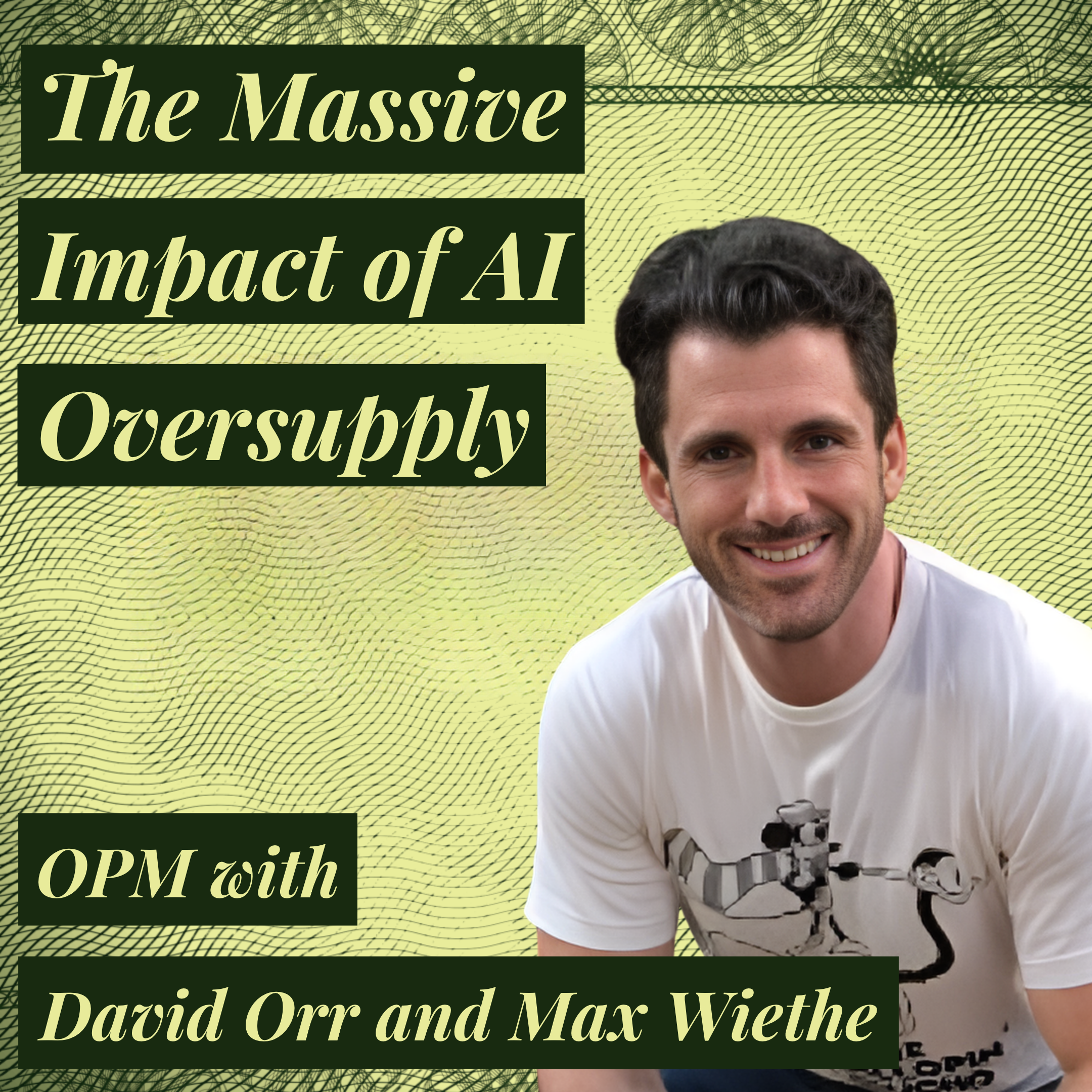
In this episode of Other People's Money, Max Wiethe sits down with Militia Capital founder David Orr to discuss the recent unwinding of the massive AI infrastructure and semiconductor trade. Orr explains his contrarian thesis that AI compute is rapidly heading for a massive oversupply because the physical world will take years to catch up with our new abundance of digital intelligence. The conversation explores the deflationary impact AI will have on white-collar jobs, how it threatens the moats of major software companies, and the potential for a societal shift back toward hands-on physical trades. Finally, Orr shares his perspective on the downside protection offered by hyperscalers and how he is managing his fund's net exposure during a volatile market environment.
Read Militia’s new Substack: https://content.militia.com
Follow David on X: https://x.com/orrdavid
Follow Max on X: https://x.com/maxwiethe
Follow Other People’s Money on:
Apple Podcast https://bit.ly/4e7QJ1M
Spotify https://bit.ly/3Yhaazi
YouTube https://bit.ly/3C63VXR
X https://x.com/opmpod
Important Information
The Fund’s investment objectives, risks, charges and expenses must be considered carefully before investing. This and other important information are contained in the prospectus, which may be obtained by following the links Prospectus and Summary Prospectus or by calling +1.215.330.4476. Please read the prospectus carefully before investing.
There is no assurance that the fund will achieve its investment objective. The Fund may not be suitable for all investors. Investors should continue to review their investment objectives and risk tolerance periodically.
An investment in the Fund involves risk, including possible loss of principal. Exchange traded funds (ETFs) trade like stocks, are subject to investment risk, fluctuate in market value and may trade at prices above or below the ETF’s net asset value (NAV), and are not individually redeemable directly with the ETF. Brokerage commissions and ETF expenses will reduce returns.
ETFs are subject to specific risks, depending on the nature of the underlying strategy of the Fund, which should be considered carefully when making investment decisions. For a complete description of the Fund’s principal investment risks, please refer to the prospectus at https://sarmayaetf.com
Metals and Mining Companies Risk. Metals and mining companies can be significantly affected by events relating to international political and economic developments, energy conservation, the success of exploration projects, commodity prices, tax and other government regulations. Investments in metals and mining companies may be speculative and may be subject to greater price volatility than investments in other types of companies.
Management Risk. The Fund is actively managed and may not meet its investment objective based on the Adviser’s, Sub-Adviser’s, or portfolio manager’s success or failure to implement investment strategies for the Fund.
Shares of the Fund Are Not FDIC Insured, May Lose Value, and Have No Bank Guarantee.
The Fund is distributed by PINE Distributors LLC. The Fund’s investment adviser is Empowered Funds, LLC, which is doing business as ETF Architect. Sarmaya Partners LLC serves as the Sub-Advisor to the Fund. PINE Distributors LLC is not affiliated with ETF Architect or Sarmaya Partners LLC.
Timestamps:
00:00 Intro
01:30 AI Trade Unwinds
05:58 CapEx Drives Glut
08:13 Software Correlation
09:42 Hyperscalers Advantage
14:39 Sarmaya LENS ETF
16:59 Antitrust And Search
21:18 Physical Bottlenecks
26:02 Demand Narratives Shift
27:14 White Collar Automation
32:20 The Impact on Skilled Labor
34:25 Software Moats and Deflation
38:31 Back to Physical World
44:53 Social Media Moats Debate
51:45 Market Exposure Wrap Up