
 Ask ChatGPT

- Podcasts
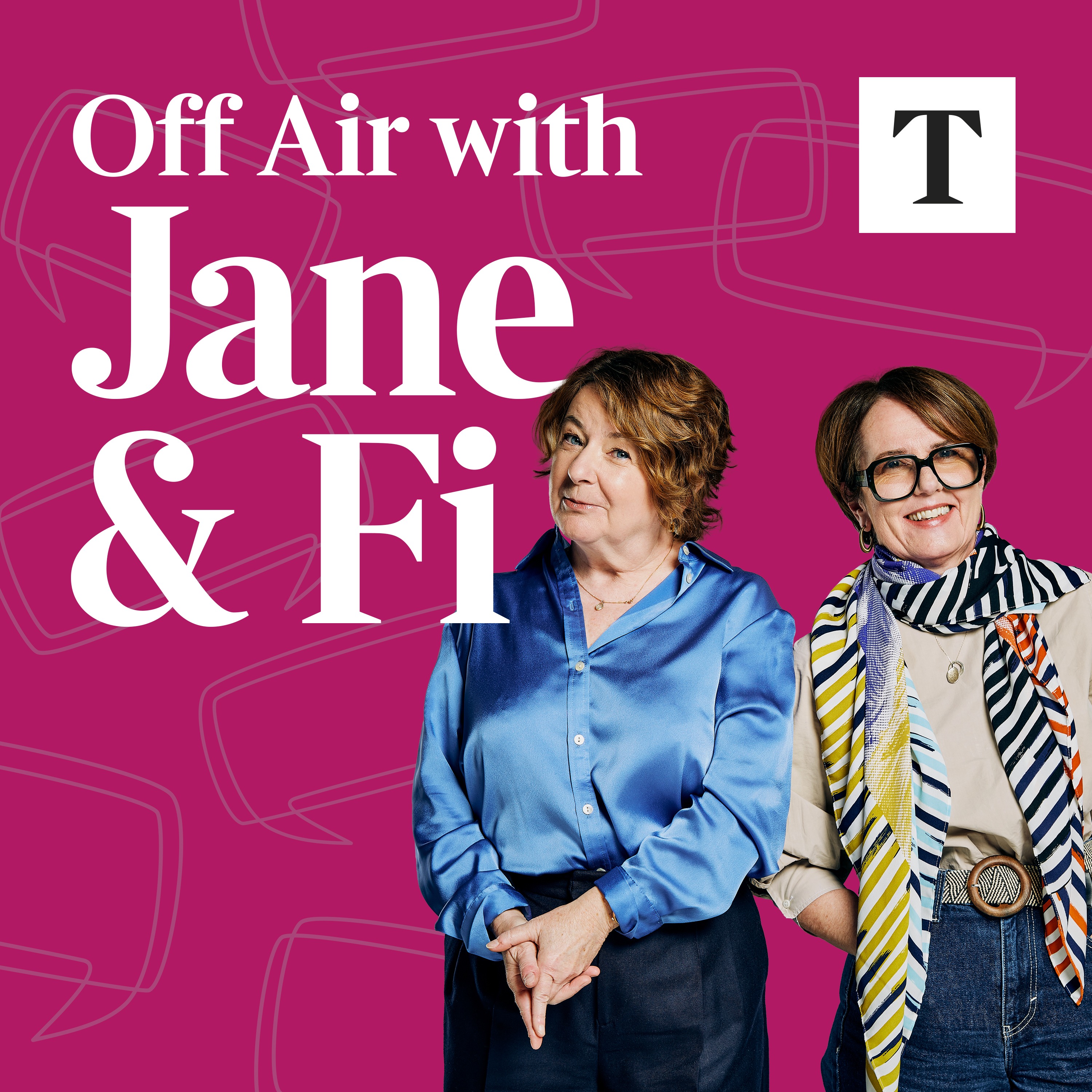
- Off Air with Jane & Fi
- Don't go changing your sacrum
In short
The episode is a mix of listener letters and studio chat, plus a major interview about food allergy advocacy. Early on, the hosts discuss hot weather and wildfire displacement in Europe, then swap personal stories about phobias (owl phobia from childhood, fear of thunderstorms, and motorway anxiety). They also joke about “no change to sacrum” during a yoga class, swimming mishaps, astrology as “fun,” and “urinal” themed emails. A recurring theme is “maxing,” reframed as healthy “fibre maxing” (aiming for ~30g fibre/day) and the health risks of low-fibre diets. Key claim: children aren’t born with food allergies; they develop, often under age one. Notable example: Natasha Ednan-Laperouse, a 15-year-old who died after eating a pre-packed sandwich on a plane because sesame wasn’t listed.
Guests
Tanya and Nadim Ednan-Laperouse (parents of Natasha; led Natasha’s Law and a £10 million research prize via their foundation).
Written by AI. May contain mistakes.
Chapters
2:30
Reflections on Heat Waves and Wildfires
Discussion about the current heat wave in London and its impact on Europe, including wildfires.
“And I did think as I was pounding my way up and down the Lido this morning, A, we are blessed because we are still able to do that in this country.”
3:56
Personal Updates and Listener Messages
Updates on Jane's family situation and sharing listener messages of support.
“Jane will be off for the rest of the week some lovely messages from people and we will always, always pass them on.”
4:30
Swimming and Outdoor Activities
Discussion about swimming experiences, including the challenges and sensations of being in water.
“Sending lots of love to her and you two.”
6:26
Astrology and Star Signs
Hosts discuss their views on astrology and the characteristics associated with star signs.
“As I was pounding up and down in the Lido, are you a swimmer, Hannah?”
9:10
Phobias and Childhood Memories
Sharing listener stories related to phobias and childhood experiences during thunderstorms.
“You can kind of make it work with anything, can't you?”
13:00
Overcoming Fear and Phobias
Discussion on overcoming fears, particularly related to driving on motorways.
“I used to spend every Sunday afternoon at my nan's house.”
14:00
Overcoming Motorway Phobia
A listener shares their journey of overcoming motorway phobia and the impact of a previous discussion.
“Cassandra, that is quite a one, isn't it?”
15:47
Booking a Guest: Driver Therapy
The hosts discuss the possibility of bringing in Liam from driver therapy to help others with anxiety.
“And Liam's explanation of how he can help and what the problem is in the first place, I think is utterly brilliant.”
16:43
Humor in Urinals
The hosts share humorous anecdotes about urinals and their related stories.
“But how lovely, actually, Janet, to be able to say to your parents, yep, just hop in the car.”
17:20
The Fly in the Urinal
Discussion about humor in airport urinals and a listener's email about a creative urinal design.
“We are literally in a urinal, aren't we?”
Show all 32 chapters
19:14
Fibre Maxing and Health
The hosts delve into the concept of fibre maxing and its importance for health.
“No, the rest of the bathroom area, they put the fly on the urinal.”
21:43
The Pressure of Looks Maxing
A conversation on looks maxing and its negative impact on young people's self-esteem.
“And in fact, I didn't realise that that's where it had started.”
23:29
Maxing in Modern Culture
Discussion on how the term 'maxing' has evolved and its implications in society.
25:25
Salad and Healthy Eating
The hosts share their experiences with healthy eating and personal anecdotes.
“And the weird thing for your generation is that I think an awful lot of young people have come through a childhood where actually the crunch and chew of food has been minimised.”
26:57
Doll Names and Childhood Memories
A listener shares a touching story about their childhood doll's name.
“She goes off in private and eats an egg.”
28:00
Doll Names and Personal Memories
The hosts discuss unique doll names and a listener's nostalgic letter about her beloved doll, Big New.
“let's start it here and let's send it round the universe.”
29:48
The Joy of First-Time Emails
The hosts reflect on the beauty of first-time emails from listeners, sharing encouragement and joy.
“But if you've got fantastic names for your dolls, do get in touch.”
30:28
Upcoming Guest: Bettany Hughes
The hosts introduce Bettany Hughes and tease her upcoming discussion about her children's book and the Odyssey.
“I think we'd all like to see that as well.”
30:56
Discussing Modern Adaptations in Film
The conversation shifts to the portrayal of characters in films, including accents and modern language choices in period pieces.
“I mean, like the fact that they all have American accents.”
32:58
Navigating Grief in Media
The hosts discuss how films portray paternal connections and the impact of grief on viewers, relating personal experiences.
38:24
Natasha's Story and Advocacy
Tanya and Nadim share their daughter's story and the advocacy work they do in the wake of her tragic death.
“This month marks 10 years since 15-year-old Natasha Ednan-Laperouse died after eating a baguette before boarding a flight to Nice.”
42:05
A Terrifying Allergy Journey
Learn about the early challenges faced by a family dealing with severe food allergies in a child.
“happened so fast her whole face was bright red swollen her lips had swelled to maybe three or times their size.”
43:17
Impact of Food Allergies on Childhood
Discover how food allergies affect a child's social life and family dynamics.
“What does it do to a childhood to suffer from allergies?”
44:48
The Reality of Allergy Tragedies
Understand the tragic consequences of food allergies through a personal story.
“And exclusion also, bear in mind that food is extremely social, as we are human beings, so we tend to come together around food in groups.”
47:57
Living with Loss and Grief
Explore the ongoing emotional impact of losing a child and the struggle to cope.
“I mean, we bought the sandwich together.”
51:43
Advocacy and Change After Tragedy
Learn how a family turned tragedy into advocacy for better food labeling laws.
“We were really campaigning for that and meeting government ministers at the Department of Environment, for example, and Department of Health, putting the case as to why it should change.”
55:27
Community Support and Resilience
Hear about the importance of community support in coping with loss and driving change.
56:00
The Journey of Loss and Support
Explore the impactful journey of helping others in the face of loss and the importance of community support.
57:10
Launching a Bold Initiative: The £10 Million Prize
Learn about the launch of a major prize aimed at solving food allergies through innovative ideas.
“Well it is remarkable and it doesn't stop there does it so we are also talking to you today because you are launching a prize in well you tell me about it you're going to explain it better than I am.”
59:08
The Review Process for Submissions
Understand the structured review process for evaluating submissions to the food allergy prize.
1:00:47
Understanding the Increase in Allergies
Discuss the alarming rise in food allergies and potential environmental causes.
1:05:23
The Implications of Rising Food Allergies
Examine the societal and economic implications if food allergies continue to rise.
“So all the more reason that we need to get this science done now, as quickly as possible, really, unrelenting with lots of momentum to try and solve the problem.”

Ask about this episode
Get the gist, explore an idea or ask about something said.
 Claude
On Off Air with Jane & Fi, what are the key points of this episode?
Searching your listeningTranscript
Automatic transcript. May contain errors.
0:00Your heart can tell you a lot about your health. Apple Watch Series 12 measures your heart rate every five seconds with the most advanced heart rate sensing in an Apple Watch. So your vitals app, now with heart rate variability, could tell you when something is off. And your readiness score can let you know when to rest and when to push. Hear the story in every heartbeat with Apple Watch Series 12. For general wellness purposes only, not intended for clinical use or to detect, diagnose, monitor or treat medical conditions. For investors at the highest level of sophistication, those with strong advisory support, the natural outcome is two distinct portfolios, one public, one private.
0:38Each plays a different role in the overall strategy. Uncover new investment opportunities for you at creativeplanning.com slash new.
0:55Greetings and good morning. How are you? I'm good. I can't hear you, but I can see that we're being recorded. Oh, gosh, that's very worrying. Are your headphones plugged in? They are. So we are definitely in the outer boundaries of obsolescence with some of our equipment here at Times Radio, but that's because it's been going for quite a long time now, and this studio gets an awful lot of wear and tear, but nothing really works anymore, does it? right yes oh brilliant okay so it's just the headphones yeah okay that's great that's great so our texts and whatsapps weren't working yesterday which is really weird because on the live show two till four monday to thursday uh we do really really love our listener interaction and also we've got some regulars who text in every day and it's just really really lovely to hear from them hannah and the screen was just completely dead nobody it looked like nobody had contacted to the radio station since the breakfast show.
2:01Which can't possibly be true because we have Gwyn. No, because we have a lot. Yes, we have Gwyn and we have a lot of people with a lot to say. But it was very disconcerting, actually. Now, it's another very hot week in London coming up. It's 34 degrees and we do have to temper every conversation that we have now about, oh, it's a bit hot, with real serious and sincere thoughts to everybody who is suffering in the continental Europe. And I did think as I was pounding my way up and down the Lido this morning, A, we are blessed because we are still able to do that in this country. We've had some wildfires, but by no means the severity of France, Spain and Italy.
2:45And also, I know that we've got listeners in all of those parts of the world. so if you've been affected and you want to drop us a note about your thoughts and what happened to you we would really love to hear from you and I know that so many people have been displaced now haven't they over a quarter of a million people so we know that there'll be some of our listeners in that mix and we quite frequently get correspondence particularly from Spain and France so we hope everybody's okay I mean it's just massive isn't it it's horrendous to watch and actually there was a news program on last night where the guy opened by saying we are mesmerized by the pictures and horrifically and weirdly we are, aren't we?
3:30Are you? I am definitely. I think it's one of those things you can't imagine it happening to yourself and then all of a sudden people are going through it. It's because it's your whole life really, isn't it? But you don't want to look away from the footage of it which is so strange really because we're not helping ourselves by looking at it. Or maybe we are because maybe that's what will make us really, really think. So we are Jane and Fee at times.radio. Jane will be off for the rest of the week some lovely messages from people and we will always, always pass them on. So Jane is up there with her sister and they are making sure that their dad has a smooth transition out of sheltered housing and into a different facility.
4:17and it's not my story to tell so I'll wait for Jane to be back on Monday we have been pinging each other and as ever with Lady Jane Garvey she has found some humour in some quite odd circumstances so I'm sure that we will talk about that next week but no cause for massive, massive alarm and we will send on all of your very best wishes to her this one comes in from Fiona and it's a follow-up just saying don't apologise for laughing it's great granny fanny i was i wonder whether you see you say great gran fanny but i wonder whether she was granny fanny i was delighted you read the email and more delighted that you two had a giggle uh confession i nicked that versailles quote because we were wondering whether or not versailles was still europe's main attraction yeah we weren't quite convinced we weren't but neither was fiona uh she says it was a quote from a fellow republican and now i think you're right it's popular but not as popular as disney or the eiffel tower but don't tell anybody i won't either completely our secret fiona as a friend used to say when telling me gossip i'm not sure if it's true but i'd like it to be which is which is great and also wrong fiona you mustn't spread libelous gossip about people or maybe uh and you say i hope jade and family are okay i know how it feels having ageing, ailing parents living far away.
5:40It is very tough. Sending lots of love to her and you two. And Hannah, what a find. She's great. Lovely to hear a northern voice too. And Hannah is great. Oh, stop it, guys. Stop it. But don't stop it. But don't stop. No, do stop. Stop it, but not for long. OK. We're delighted to have Hannah on board. And there's lots more to explore about Hannah. Now, I am on OWL inbox duty, making sure that no owls get through to you. Oh, I forgot to ask you. There were no owls this morning. But don't start being cheeky, people. Don't start sending in pictures of owls because it probably will freak Hannah out.
6:17And if I don't get to the inbox in time, then she's going to have a phobic turn before doing the podcast and we don't wish that on anybody at all. No. No. No phobic turns, please. No. As I was pounding up and down in the Lido, are you a swimmer, Hannah? I'm quite a weak swimmer, actually. I think I've got a touch of dyspraxia, I'm realising, as I get older. Okay. When you swim, do you kind of head off in a funny direction when you're trying to go straight? Odd directions and breaststroke quickly turns into doggy paddle. Okay. Front crawl, back crawl, no hope. No chance. Right. Doggy paddle is weirdly so much better for your muscles.
7:00If you're swimming because you want to be really fit, The doggy paddle motion is very, very good for your biceps and your triceps. Every cloud. Yes, yeah. I was told that by a lovely swimming instructor. And very occasionally I'll do a little length of doggy paddle. And it just, it really worries the lifeguards if they see something in the deep end. Doing doggy paddle. Doing doggy paddle. But it's also, it's really tiring, isn't it? Yeah. It's a weird one. It is. To start off with. Yes. But you like the sensation of swimming and being in a swimming pool. I do. I feel like I'm definitely not a water baby, though.
7:41Would you say you're... You know how people are different, like water, earth, fire. What's the other one? Air. Which would you say you are of the four elements? Water. Water. I'm a Pisces. Yes, you give water. What are you? I think I'm air. You think you're air? I mean, I am Gemini, which I think is there as well. Airy-fairy, up in the clouds. Okay. Do you also believe in the astrology? Do you read your stars? No, it's just a bit of fun, isn't it? It is a bit of fun. We do it sometimes on the desk, don't we? We do. Well, when somebody very, very important is having a bit of a day, it's quite good fun.
8:19Yeah. It is quite good fun to look at the sun. Figure out what's going on for them. Yeah, which is still, the astrologer is, I don't know how they, I can't remember the exact description, but they're doing it kind of in the style of the mystic meg. They credit mystic meg, but it's not actually obviously mystic meg anymore. I was very alarmed. So somebody, we were talking about astrology the other day and I don't really believe in, sorry if this is offensive to people, but I don't really believe in the star sign thing. But I can see that people have different characteristics, but sometimes I think that's, isn't that probably based just on the time of year that you were born?
8:56so you might be more likely to be a water sign if you'd been born in the winter and so you have an affinity with a lovely warm bath. I don't know, Hannah. I'm just trying to be logical about these things. You can kind of make it work with anything, can't you? Very much so. You're opinionated. I mean, anyone can be opinionated about certain things. I feel like you can twist it and suit it. And for every couple who've got together because Taurus and Gemini are a great mix, there'll be a couple who got together because Taurus and Gemini are a great mix and they've had a terrible falling out and they're not together anymore.
9:35Exactly. So I don't think you can base too much on it. But the person I was having the chat with was saying, you know, we don't really believe in all that kind of stuff. And I started to realize I actually don't even know my kids' star signs, which I know. I thought, that's not good. You've taken it a step farther. Way too far. Way too far. But no, I don't. and I still can't quite remember them because we did work them out. Well, there was that time where they invented another one and I was really annoyed about that because I like being a Gemini. I know Geminis have a bit of a bad rap, but I just like the sound of the word.
10:09I think, oh, I'm a Gemini. I'm a Gemini. What is that? Nadine Coyle, did you see that? When she was on Pop Idol? No. Oh, it wasn't Pop Idol. She was on some kind of music competition, talent show, and she was too young and she's in an interview and they ask her about her birthday and she goes like oh six of the six 1985 mecca me a germany then she goes did i say 1985 because she got the wrong year she said a real year and then she goes through this whole thing convincing them she's 18 and she's actually 16 but anyway yeah so i found out i wasn't a gemini when they created this other one it began with a no i can't quite remember what it was and i thought no this is getting silly now i can deal with gemini but if you're going to start inventing them willy-nilly i'm not having that no you can't do that no no that's very very wrong very wrong um i wonder who allowed them to do that you don't want to offend the gods that's what we learned from the odyssey you don't want to go offending the gods you really don't there's a yoga class that takes place uh by the side of the swimming pool on a tuesday morning which which looks fantastic it's quite shouty though yeah well because it's outdoors there are loads of people doing it so the instructor does have to shout and this morning as i was walking past she was shouting no change to sacrum and i did catch the eye of and she kept on you know she's doing it on repeat i caught the eye of another woman walking past because it did have exactly the same intonation as no sleep till brooklyn and it would be the beastie boys follow-up that nobody wanted wouldn't it no change to sacrum no change to sacrum so is she she's on about the posture there i think so is your sacrum the little it's i don't know what it is actually but don't change it yeah no i won't i mean i just changing it don't do that don't do that and there were loads of dads who were in there uh 8 45 in the morning uh because the kiddie section the family section opens at nine and we've you know we have all been there as parents on the very long summer holiday where you've been up since about five o 'clock so you can't wait until actual nine o 'clock for a class to start or a swimming pool bit to open so you do find yourself making a very very slow walk towards the church hall or the swimming pool and they'd obviously managed to convince the very lovely woman on reception it was going to take them 15 minutes to get changed and they wouldn't be letting their kids into the pool but i love to imagine i had to get out before nine o 'clock and uh i like to imagine at nine o 'clock they're all literally standing on the side just waiting to jump in yeah and what a great place to be great place to be every town should have a lido previously discussed on this podcast and i hope one day they will this one comes in from sandra who says following on from hannah's owl phobia it made me think of my experiences with my lovely old nan.
13:07I used to spend every Sunday afternoon at my nan's house. If we had a thunderstorm storm, she would disappear into the cubbyhole under the stairs. As she said, the sound reminded her of the war. She had been bombed out of her home in Birmingham and moved to another house across the city. To keep her company, she'd take me with her. I didn't mind at the time. She was great fun and she allowed me to rummage through the treasures crammed into the space, reading books and dressing up in the old clothes in there. Eventually, as the storm past would come out and rejoin the rest of the family they thought it was funny but the result was that throughout my childhood and into adulthood I've been alarmed by thunderstorms especially at night in the dark as a child I'd lie in my bed and scream until my parents took me into their bed the fear only really reduced when I worked nights as a nurse and just had to deal with it now I still get butterflies when it thunders but it is okay thanks Nan thanks for the memories love you says Cassandra, that is quite a one, isn't it?
14:05That is a one, but I think what a lovely story, though. I'd take that phobia to have those memories, I think. Would you, though? Yeah. Because what's happened to you with... Yes, exactly. The owl memory, there was nothing nice about that. Whereas, you know, I can imagine being in the cubby hall with a gran going through the treasures might have been quite sweet. Okay, right, right, right. From gibbering wreck to not batting an eyelid, how have you got me back on the motorway? now I think we should book this person as a guest this comes in from Janet a few months ago you did an item on motorway phobia and I wanted to thank you for it I've had this phobia for a long time nothing to do with the menopause just me and my nerves versus the M6 I tried all sorts over the years hypnotherapy breathing exercises gritted teeth and prayer and none of it stuck I had a good line in excuses too longer but prettier route fancied the scenery need the loo anything to avoid admitting the real reason.
15:01I'd basically given up and resigned myself to a life of A roads, very patient passengers and feeling like a bit of a failure. But your item made me think about what I was missing out on so I did a Google search and I found Liam at driver therapy. Five sessions of three hours later with tears, laughter and learning, I'm driving again with no fear. Liam deserves a medal or at the very least a very large cup of tea. The impact has been massive. My brother has been seriously ill in the ICU. And last week, I was able to drive my elderly parents to visit their son. This simply wouldn't have happened without your item getting me going again.
15:40Well, Janet, we are so thrilled for you that you heard something that made you take some action. And I did look at the driver therapy website and it looks superb. And Liam's explanation of how he can help and what the problem is in the first place, I think is utterly brilliant. and I think we will book him as a guest because we were trying to get the doctor who had very decent explanations of why when we hit the menopause this kind of anxiety can overtake us, particularly with regard to doing things at speed. So not only driving just anything that we used to do that involved speedy movement and decision-making, we haven't managed to get hold of him because he's too busy.
16:23So I think it's a wonderful opportunity to book a tried and tested off-air person. So we will get in touch with Liam and see what he can tell us all about getting back behind the wheel with a little bit more confidence. But also, I'm very sorry about your brother. And obviously, we send you our very best wishes. But how lovely, actually, Janet, to be able to say to your parents, yep, just hop in the car. I'm going to be able to do this without you having to take on board that anxiety as well. And I love your series of excuses. is it's exactly what I've been doing myself actually for years before realising that this was quite a symptom of the menopause and I'd taken off the motorways thing on my google maps and sometimes used that as an excuse to passengers in the car that I hadn't realised I'd done that it was a lie it was very deliberate so much stuff about urinals I mean it's almost a separate It's Friday edition, isn't it, Hannah?
17:21We're in a urinal hole. We are literally in a urinal, aren't we? Yeah, that's where we are. I've seen more pictures of urinals and thought about urinals. I never thought I was going to do in my lifetime. This latest picture we've got, though, is quite something, isn't it? It is quite something. Now, did I give that email to you or do I have it here? I think you have it. Oh, my word, hang on. But it's stuck in my brain so I can describe it if necessary. Well, could you do the description? Did you have to do this as part of your radio training? Describe pictures on the radio. No, I never did. Well, here we go.
17:57Now I feel like I'm being assessed. No, you're not being assessed at all. Would you like to describe it, though, while I try and find the person? I may have left it outside on the desk. So there's a photo of a urinal, and above it a very, very large photo of a woman who's looking down the barrel of the camera quite in an intimidating way, I'd say. And then she's got a tape measure. Yeah, a tape measure. So I don't know what she's trying to say with that. I would imagine, Hannah, that she's just about to put up a shelf. Yeah. And she's just wanting to know whether or not it should be five, six or seven inches apart.
18:37And then she's just going to get a small power tool out and do that DIY herself. What else could it possibly mean? Yeah, let's go with that. I like that. We do need to attribute that to the right person. So we've given you the description, and if we don't manage to find the right email in time, by the end of this podcast you will get a name check on tomorrow, as I absolutely promise you. This one comes in in the meantime from Craig, who says, at Schiphol Airport, which I think is where this all began, wasn't it? Wasn't it at Schiphol where the maintenance people were so fed up of having to clean splashback off the...
19:13That's not a nice job, to be fair, is it? No, the rest of the bathroom area, they put the fly on the urinal. The fly has changed to a flag in a golf hole, says Craig. And he says, wait for the gag, everybody, maybe the 19th. Well done, Anna. Well done. Which emails have I given you? I can't even remember. So we have a couple of early start to the morning. So some people to add to the morning roll call. Let's take the register. Good morning to Julie. She listens in the morning, not quite 7.45, one minute off. And she's got a photo as proof as well. Very good. And then we have Michelle says that she turns the podcast on every morning at 6.20 when she's getting ready for work.
20:00Usually has a good laugh before leaving the house at 7.20. And it sets her up for the day. So that's lovely to know. Good morning, both. Very good morning to you all. so we'll carry on taking the register because this is very entertaining as well. I also have a maxing one which I'm personally interested in this because I hope this was explained by Eve and Fee that we have a bit of a fibre maxing obsession on the desk. Yes. It leads our every conversation. There's a lot of discussion of grams going down, isn't there? Grams of fibre. I have my salad that I eat that actually I'm not even going to say that because that's actually a bit gross.
20:45Anyway.
20:49Never stopped you before. Just a little marker in there to get rid of that. Yes. So on maxing. On maxing. Mel. Hi, Jane, Fee and Eve from Chile, Sydney, Australia. Cue Fee's accent. Good morning. Very good morning to you. Good day. Good day. Good day. I lived in London for 15 years and have listened to you since fortunately piazza days I've brought you back home with me though when I moved back to Sydney a few years ago I heard for you talking about the fiber maxing at festivals and it struck me how the term maxing is everywhere how do you feel about that term being something that started in the manosphere with lux maxing is it a good thing to take their language and normalize it not a judgment but just curious on your take thank you for what you do I think that is a good point because I do see maxing everywhere now I don't mind nicking it out of the manosphere and putting it to better use.
21:41Reclaiming it. Yeah, I think that's fine. And in fact, I didn't realise that that's where it had started. I mean, I'm late to most parties at the moment. But looks maxing is, how would you describe it? It's, well, it's clavicular, isn't it? I don't know if we want to bring him into the podcast world, but he's an influencer and he kind of began it I think I don't know if it originated with him but he's very big on it definitely and it's making your physical appearance as best as it can possibly be because girls will only like you if you're as if you're good looking and you've got to be the best as possible it's kind of it's like another side of the manosphere isn't it like looking at rather than women being objects to use it's women are objects we can't have so we hate women for that and they're making us make ourselves good looking and putting us through all of this and it's quite fetishizing isn't it so it's all about chiseled jaw lines and high cheekbones and you know some some pretty specific and i would say very old-fashioned notions of masculinity you know to to do with body shape and physicality and we all know that you know the the real alpha male is the bloke who's just got a very, very big heart and a decent set of ears.
23:06Definitely. To listen to what's going on around him. But it's a horrible thing as well, isn't it? Because it's put so much pressure on young boys to start taking all kinds of steroids and horrible things and chewing this weird gum. That's such a thing, isn't it? You've got to chew this hard gum all the time so you get this big jaw. That can't be good for your gnashes. No, not at all. It can't be good for your saliva. either i mean you just know it's just horrible the whole thing uh is just horrible and that is looks maxing but i think we lift it out and we apply it to whatever we like especially fiber maxing yeah so your fiber maxing is i mean i think that's a it's a it's a good thing do you ever think that you take it too far i don't personally think i take it too far i think what i like about it is by fiber maxing you get a good diet and you're prioritizing something that you have been missing out on without realising so I had a very long journey to my fibre maxing that I won't get into um but I needed to start upping my fibre and it just was completely absent from my diet I mean I'd eat broccoli and veg but you're meant to have 30 grams a day and I just was not getting that and how big a portion is 30 grams a day of if we were just going to do broccoli and brown rice and vegetables how big a pile on the plate would 30 grams be shall i find out yeah because i get very lost on it i mean it's you know the the grammage thing is is all over products now isn't it so everything from your breakfast bar through to your yogurt through to what did i buy the other day that had i thought you've just you've added that recently that never ever used to be on your product or i'll remember it somewhere and but i find it very confusing actually i don't really work in the grams so you'd have to eat a kilogram of broccoli to get 30 grams of fiber wow that's chewing isn't it it is yeah um a lot of greenery um but yeah so i had no idea and it's so important like so many people are getting like bowel cancer and having issues with their tummy and obviously it's not all to do with the way that we eat but I think being low on fibre is a big part of it.
25:25And the weird thing for your generation is that I think an awful lot of young people have come through a childhood where actually the crunch and chew of food has been minimised. So it's such a modern thing that you create foods that you really don't need to chew but the most popular foods all down the high street and across the Western world are soft. And of course your fibre's not going to be in that. If you don't have to chew it, it's not got an awful lot of fibre in it. So that kind of, you know, I know that kids are very resistant now to the big crunch, but it's all part of eating to the older folk like ourselves.
26:11So I'm very glad that you're fibre maxing, very glad. And actually, dear listener, our team is so delightful. The youth tend to bring in their own lunches and they're so impressively healthy. They are really, really wonderful. You and Eve in particular, you've got your glass dishes. So, you know, there's no nasty plastic going down. And you've got these fantastic, quite often, the chickpea will be the star of your show, won't it? It will. Shall I say what I call my salad? Yes, please do. The shit yourself salad. Right. Well, if somebody doesn't turn that into a fantastic brand, then there's no justice in the world.
26:56No, it is good. And Eve, I don't know if I can out her, but she has her egg breaks, her EBs. She goes off in private and eats an egg. That's how she keeps her protein up. I didn't know this about her. Yeah, takes a little break. I didn't know this. EB. Have you had your EB today, Eve? Well, that's very kind of her, because there are other people in the office who are just eating their eggs publicly, aren't they? Exactly. And it's just not a nice smell. No. It's not nice at all. Young Jane Garvey, she's got absolutely hooked on the same sandwich. It's a great big wrap from a well-known high street store and it's tuna and the smell just permeates.
27:29I know as soon as I walk back in from doing a pre-rec or whatever, I know that Jane is having her lunch as tuna wafts across the desk. And actually I'd miss it now if she changed back to one of her weirdo... I think she was on Cheddar and Carrot for a while. Cheddar and Carrot, also her chicken shawarma wrap, but that was limited edition, so she can't get that. Yeah, and the tuna wrappers. It's been here for a while, actually. It's been a very long time, hasn't it? Yeah. Maybe we'll have to try and steer her in a different direction. Anything that you'd like to add maxing to as a word, let's start it here and let's send it round the universe.
28:04I think we can make it work. Doll's names, oh my goodness. Now, I really, really hope this takes off because I bet there are some very fabulous dolls names out there. Warm wishes from Emma in Wivenhoe, North Essex. Rather too warm, slightly wishing I had that home in the Highlands where it's been a whole lot cooler this summer. That's the end of the email. The start is this. Your discussion of dolls names reminded me of my very first and very deeply loved doll. When you learn her name, you might not be surprised that I wasn't yet two years old when I named her. She was called Big New. As a child, I never thought that Big New was an odd name.
28:42After all, I'd grown up with her in my life and to me it seemed a standard kind of name for a large blonde doll with a mop of blonde hair, a spongy fabric body and chubby plastic limbs, face and neck. Dear Big New finally departed this world only last year when I was clearing out my childhood home in the Scottish Highlands. Her chunky vinyl fingers and toes had long since disappeared, bitten off decades ago by my milk teeth. Her blonde curls ended up sticking straight up brush-like from her head and her eyes, which had once had lashes and eyelids that sweetly closed when she was laying down, had long since rolled up deep into their sockets.
29:19She was a great doll, very serviceable for many years as I recall and I'm pleased to say that so far ingesting so much vinyl in the form of her fingers and toes doesn't seem to have done me any harm. And Emma listens at all times of the day and night, including morning sometimes. I don't have a regular listening pattern, but I enjoy the show. I've often thought of emailing, but this is the first time I've actually done it. Well, don't make it the last time because that's fantastic. So sadly, Big New is no longer with us. Small Old went out. But if you've got fantastic names for your dolls, do get in touch.
29:53Please do get in touch because honestly, I can't wait to hear them. That was so beautifully written as well, wasn't it? Oh, just lovely. Just lovely. And there are lots of people who do the first time email, seemingly with some kind of trepidation and I wonder whether it feels like you're slightly opening a trap door in the world. Yeah. And are you ready? Are you ready to fall into the upside down? But you're very, very welcome and yes, that is beautifully written. If you happen to have a picture of Big New, certainly a picture of Big New right at the end, I think we'd all like to see that as well.
30:30Also in her heyday, so we can compare. Yeah, definitely. We've got a really fantastically uplifting guest at the end of the week, Bettany Hughes. She never, ever disappoints. I mean, that woman's love of the classical world is infectious. She is in to talk about her latest children's book, but I think we're probably going to head off into the Odyssey as well. I'd love your thoughts on the Odyssey if you've been to see it. There are so many people who just seem to be really keen on finding holes in Christopher Nolan's film. I mean, like the fact that they all have American accents. Well, I mean, actors do.
31:08I think, isn't that quite a common thing, that you'll see a bit of period drama and they will have modern accents? We don't know how the ancient Greeks sounded. We weren't there. They didn't have tape recorders. You'd rather them be doing their own accent than trying badly at another as well, I think, anyway. I'm with you on that. And also, if it was lots of actors doing a Greek accent, I think that would just be really patronising. Yeah. So I don't mind that at all. And actually somebody said to me yesterday that they didn't like the use of mum and dad, the fact that Telemachus calls his mother Penelope mum and refers to Odysseus as dad.
31:49I loved that. I really, really didn't mind that at all. It was just so... Because it's how a teenager would speak. you know if it suddenly turned into mother this and father that it wouldn't have conveyed actually how insecure and unsure of himself he is in that book you know he's grown up without a dad and his mum is in a terrible place and I just thought that was absolutely fine did you mind I think it's um well I've not I'm going to see on Thursday actually I'm excited so spoiler right oh Hannah that's not really sorry it's not really a spoiler is it no he calls her mum and dad no I'm kidding I'm kidding I'm kidding I think that's nice no I think that is nice as well I think that's a level of closeness which he maybe well he obviously doesn't have with his dad because his dad's been away for so long but it it's what yeah I'm just chatting rubbish out there no you're not chatting rubbish at all and actually can I ask you a serious question and of course you don't have to answer it and we can just take the entire thing out of the podcast if you want to but because your dad died when you were very young are you wary of going to see films that are about a paternal connection because of course right at the heart of the odyssey is the paternal connection between him and his son i think it's such a roll of the dice for me i'm not worried about going to see the odyssey because i think it's so removed from my own situation but recently i watched little voice have you seen little voice yes and i just it's the last thing i thought would send me but obviously her dad's died in that and she's singing the music for her dad it sent yeah it sent me into a real spiral of grief for about half an hour after it it's very random and do you think that you would therefore benefit from a more detailed explanation of what's in the film because they have got more detailed i mean especially on the streaming services they seem to be trying to tell you quite specifically about which areas of pain might be coming up in the next movie but i've never seen that yeah no i think for myself i think it's something I'd still want to delve into anyway so I whether it is going to upset me or not I'm happy to see it but I think definitely the description for people who might not be in that place and who might actually not want to open up things and want to leave them as they are I think then in those cases it definitely would be a positive thing to be able to see like when we went to see Bridget Jones the fourth Bridget Jones I went with my mum and I don't think she was ready to open those boxes whatsoever I think seeing another mother navigating grief with her children and prioritizing her children and then also trying to have her own life as a woman and getting back into love and feeling sexy I think it completely knocked my mum for six yeah I bet yeah I bet so then I think she could have done with the warning that Mark I mean I don't know if she missed it but I don't think she was prepared for Mark Darcy going mum we did know this she's like no I didn't no but it's a but it's a weird one isn't it because you've got to you've got to phrase it right for people to understand what it is that's coming up and of course you're always going to get those people who say well you know in that case you can't really you know you can't go to anything because the themes of grief and loss exist in so much of our culture um but but Yes, I mean, you know, I've thought a lot already about what you said just yesterday about people not saying the right thing and it coming from a place, you know, not even of ignorance, just of not having thought enough about other people's situation.
35:48And I think, you know, wherever you go, there can be a reminder of what somebody sitting next door to you might be thinking and feeling. and as previously discussed before the microphones were even switched on and we were having a nice little catch up in the studio, there are some people who just don't seem to take the time to do that at all. Let's park that. Oops, oops, oops, oops. So Bethany Hughes is coming up right at the end of the week but we are going to have a very important conversation now with two parents who have done a remarkable thing. We are always so full of admiration for people who lose a child and then decide that they want to make sure that other families don't go through that pain.
36:34And I think you will remember the circumstances that led to this campaign by Nadim and Tanya Ednan Laparose, whose daughter died. Natasha died because she had an allergy and she ate a sandwich on a plane where the allergen information had not been made available to her. so we are going to hear a chat from them you know pertaining to exactly what hannah and i have just been talking about if it's not for you give it 10 minutes and come back to the end of the podcast
37:07your heart can tell you a lot about your health apple watch series 12 measures your heart rate every five seconds with the most advanced heart rate sensing in an apple watch so your vitals app now with heart rate variability could tell you when something is off and your readiness score can let you know when to rest and when to push. Hear the story in every heartbeat with Apple Watch Series 12. For general wellness purposes only, not intended for clinical use or to detect, diagnose, monitor, or treat medical conditions. Requires iPhone 11 or later. For investors at the highest level of sophistication, those with strong advisory support, the natural outcome is two distinct portfolios, one public, one private.
37:45Each plays a different role in the overall strategy. Uncover new investment opportunities for you at creativeplanning.com slash new. outdated technology isn't going to improve a disconnected health care system next so what will at optum we wake up every day and work for better we call it healthy optimism it's how we use insights and technology to help providers focus less on paperwork and more on patients will we fix it all overnight no but we'll wake up trying again and again until health care works as one for everyone. That's healthy optimism. Learn more at Optum.com.
38:24This month marks 10 years since 15-year-old Natasha Ednan-Laperouse died after eating a baguette before boarding a flight to Nice. Now, Natasha loved olives and artichokes and, reassured by the packaging, chose a pre-packed sandwich. But what she couldn't see was that sesame had been baked into the bread dough. Severely allergic to sesame, she suffered a fatal reaction on the plane. Sesame wasn't listed in the ingredients to warn her. Now her parents, Tanya and Nadim, turned that loss into lasting change. Their campaign led to Natasha's Law, transforming allergen labelling in the UK. And now through Natasha's foundation, they've launched a £10 million prize to fund research into preventing food allergies from developing in the first 1 ,000 days of a child's life.
39:13Well I've been speaking to Tanya and Nadim about their daughter's legacy and we began by discussing a little bit more about Natasha and they told me what she was like. So Natasha was our first child, daughter, she was born in December just before Christmas and there are two parts to Natasha one part is that she was the most easy baby easy child obviously she was a normal a normal kid but she was textbook as a baby she was just as good as gold and as she grew she just had um she just had a real sense of right and wrong she was caring she was funny um she kind of ticked all the boxes i think that we just just enjoy you know she was just a great joy in our lives a real gift um and the other side to natasha was that from very young from um literally from 12 weeks she developed eczema um that bled all over her body um she was given steroid cream and a lanolin based cream under that because it was quite strong which she reacted to.
40:23She had terrible time with eczema and interestingly from the age of one the eczema disappeared and it was replaced with asthma together with food allergies which we discovered she had at six months old. So there was a lot going on on the health side but as a child we just had a positive bubbly wonderful wonderful child. I think so many people would be amazed to know that children, babies, aren't born with food allergies, are they? I think a lot of people assume it's something inherent in the body that, you know, then becomes apparent, but that's not the case, is it? No, it's not the case. No child is born with food allergies.
41:09It's something that actually develops usually relatively soon afterwards, often under the age of one year of age, though food allergies can develop later, it's not a given, but an awful lot of parents we hear about, and the statistics show that it's under the age of one or thereabouts, they discover their child has food allergies to all manner of things, could be milk, it could be a variety of different tree nuts or peanuts, and so on and so on, and it's a real shock when it happens, because you've no idea it's about to arrive, there's no warning, if you like, it just happens. And what happens with Natasha?
41:48Well Natasha was six months old and I gave her a tiny bit of banana which is an early weaning food and she didn't like it she sort of pushed it out with her tongue and then she started screaming and she was honestly it was within minutes it happened so fast her whole face was bright red swollen her lips had swelled to maybe three or times their size. She looked like her body looked like she'd been dropped in a vat of burning oil. She was bright red all over and we rushed her to hospital. We were on holiday at the time and we rushed her to hospital and they couldn't find a vein to give her adrenaline.
42:26She was too tiny and chubby and they couldn't find a vein so they just said well let's just wait and see what happens and she came out of it. So it was very early on it was terrifying because we didn't know what else she might be allergic to and I knew I was going to have to wean her onto milk at some point. I was going to go back to work when she was one and I asked our GP is there a chance she could be allergic to something else? I'm worried about milk in case she's allergic to that and such was just there just wasn't really knowledge around food allergies then. This was 2001, end of 2001 and we were told no she'll be absolutely fine you're just first-time parents you're worrying just give her the milk and of course exactly the same thing happened and she was sent to hospital and again they couldn't find a vein but she pulled through it so that that was very early on in her life all of these things happened so this is a terrifying journey to be on isn't it because every time you introduced a new food to her you must have been worried about that reaction is there any kind of test that you can have could have had then can have now that identifies an allergic reaction in tiny babies so young to alert you it's one of these things where there's just different information and it's just not it's all fragmented we had to wait until she was two and a half before we could get tested for else she might be allergic to and so we were so nervous about giving her another allergen and of course it's not just the top 14 but any food can actually be an allergen.
43:59We fed her chicken soup until she was two and a half years old but there are IgE blood tests they can test something called IgE which can show how reactive you could be to food and there's RAS tests where they do skin prick tests as well but it all depends on whether you've got a clinic near you and how quickly they can get you an appointment and how old they think your child should be before they can do that and we waited a long time to get Natasha tested and we know that still happens right across the country people do have to wait depending on where they live it is a postcode lottery of where you live.
44:36What does it do to a childhood to suffer from allergies? Well it actually affects the whole family but you know talking about child first it it's it simply means in one sense that they cannot come into contact with those that particular food or anything that might contain it so a recipe say that we may all eat together as a family if there is for when you go away or family might have milk in for example or dried milk or butter or etc well if as natasha was allergic to dairy cow's milk you know that was strictly not gonna you know be possible to eat that or even share a meal like that at the table because of the risks of some of it splashing or you know coming into contact so for children it It means largely a lot of exclusion, essentially is the word, around food.
45:26And exclusion also, bear in mind that food is extremely social, as we are human beings, so we tend to come together around food in groups. It means often being excluded from those groups, largely because the other people who don't have allergies are so scared, or have no idea how to deal with it, so they'd rather not invite you, etc. So you're excluded. And that runs through the school, literally a child's life, through nursery, primary, secondary school, etc. And it also happens on the weekends when you might be going to parties or, in the case of food allergy, not going to parties because the people throwing the party are just too scared in case something goes wrong.
46:04Well, it might even be the family too nervous, even if, I mean, sometimes there is extremely goodwill out there and people do want out, but it can just be too dangerous an environment. So, for instance, we didn't really go anywhere apart to eat with Natasha apart from with family parents our parents because it was just too nerve-wracking I remember once we went to very good friends who had children and they said don't worry they will have eaten hands washed it'll all be fine and there was a bit of I don't know how but there's a bit of a cream cake in the toy box luckily Natasha hadn't touched it and one of the kids had seen it and stopped her from from actually picking it up she was very little but these all these unknowns can happen and so quite often you know parents they just cannot participate in a normal way with that child and I think the old thing maybe for you know for people listening is just this idea that these are largely common foods things that have been around for thousands of years you know these are not new radical inventions from a laboratory we're essentially talking that nearly all people who are food allergies are allergic to things that we're all well you know we know soya sesame dairy peanuts and other types of nuts as well and these are common foods and it's very hard i think for people to who don't have allergies to really truly grasp that um these things that are so common can be really life-threatening or really dangerous for so many people um because i think we tend to associate danger generally as human beings with say sharp objects or or or things that are novel and new because they've never been tested before like a kind of radioactive food you know this sort of thing but the idea that there are these sort of bits of food lying around and you know traces of it that being dangerous is quite a hard is i think it's quite something to get your head around really and of course this was part of your family's tragedy wasn't it that natasha bought a sandwich you know the kind of sandwich that millions of people would have bought that day she knew what she needed to look out for on the label but sesame wasn't on the label was it So that just became a life-threatening instrument to her.
48:18Exactly. I mean, we bought the sandwich together. As always, we examined it thoroughly, the packaging and what was said on it. And then you examine the actual item through the packaging, like a secondary check. That's quite normal, that way of living a life, if you like, when you're food allergic. Because what else? There's no other option. So you have to do that. And Natasha was very good at that, eagle-eyed, etc., but just got caught out, basically, by the setup where, at the time, nobody knew that allergy or food labelling could be different on pre-packed foods than it would be in the same, almost identical sandwich in a supermarket, basically.
49:01So you trusted what was on the label. Of course, had there been no label on it, we wouldn't even have touched it. But the label was there. It said various things that were her favorite ingredients. No mention of sesame. And no visual cue either that there was sesame inside the sandwich. And with that situation and the trust one puts in labeling or in information generally, that's how we came or she came essentially to her terrible, tragic end. Yeah, I know that everybody listening would want me to say just how sorry, you know, everybody was to hear your story. I remember reading about what happened to Natasha and just thinking it could be anybody, couldn't it?
49:48It could be anybody's child. It's just a terrible, terrible thing to happen. I wonder now we are 10 years on what all of this feels like to you and your family I mean an anniversary of a death I always think that's a terrible word I mean it's a day that means something to you but every day must mean something to you does it feel like it was just yesterday does it feel like forever? Tell me about today for you. It's interesting, the anniversary is always the day you dread the most and for anyone that's lost a loved one I'm sure that would be the same. Every day having lost Natasha we wake up, it's in your DNA when you lose a child, you don't wake up and remember you've lost a child, you live with that heaviness in your heart every single day um and so you know when the anniversary is coming it's going to be difficult but every year is and I didn't actually think this year would be that much different to every year but actually it was and it actually and I think it was for you as well wasn't it it caught us off guard and it's really that realization that it's actually been 10 years without her and of course when you lose when we lost her we didn't know how we'd get to week one without her you know a month without her and then there was a year without her and to be here at 10 years is actually a shock it is a real shock yeah and then it's a very heavy feeling and you go back to that place for as it were of that day and that deep kind of carnal sense of loss like not even like you've had a limb or two cut off it's far deeper than that because that's quite exterior this is something like your inner soul some pieces have been removed basically and it's forever you know wounded and the pain and it's a real kind of deep sorrow that would leave you howling leaves you howling inside but silent largely etc and and you have incredible affinity and sensitivity for other people who've also lost their children or you know particularly their children i have to say and that we meet many unfortunately contact us around food allergy.
52:01I think it is so remarkable that you've done so much in those 10 years to change things for the better so Natasha's law has been passed and that food labeling now is a thing of the past isn't it did the food industry help you in passing that law Well, I would say there's two parts to that. We were really campaigning for that and meeting government ministers at the Department of Environment, for example, and Department of Health, putting the case as to why it should change. Of course, there was a public consultation. They consulted with big industry, or big food really, essentially. and we discovered there was significant pushback from big food companies saying, oh, if you have to do any change, such as being proposed, labelling, changes to labelling, it'll cost money and it'll cost jobs.
53:00So it's really the classic playbook of industry back to government, probably on any subject actually. However, we did have a couple of CEOs in big food who saw the logic of it and they helped champion it through from an industry point of view rather than letting everybody just say no no no no they called some meetings together and helped play their part internally for example I can mention them for example Greggs was one of them for example and the CEO at the time Roger Whiteside saw the good sense of it and he was well respected in that whole sector but at the same time there were a lot of forces working against us we we did pick up on that actually but we continued unabated really to keep putting the message out there and i think at the end of the day you know what happened to natasha and the sandwich she bought it could have happened in any high street chain such was the um just the there just wasn't that awareness around that food allergies can actually kill somebody i think there was awareness that they could hospitalize people because customer services were hearing about people who are being hospitalized by food from food allergies but it wasn't really going past their customer services it wasn't on the risk factor for any industry for any big food business and I think what happened to Natasha and then the the the conversation that started happening and we we realized actually we thought we were very rare in our life with Natasha and food allergies but following her inquest in 2018 suddenly so many people started saying this is our life this is what we're scared of we don't get any support we don't get any help and there was just this this whoosh of um conversation and then the food industry started really talking to each other as well didn't they and and understanding the seriousness of this and we started to once natasha's law passed through parliament which was actually very quick and that was michael gove at the time was secretary of state for environment and he i would say championed that through from a government point of view and it passed through and then we found ourselves with a sort of platform that we hadn't expected at all where we were able to speak to big food industry about food allergy in a manner that they'd never heard before and yeah and through your work you've undoubtedly saved lives I mean undoubtedly saved lives which is remarkable whilst dealing with the kind of loss that you're dealing with and I do just wonder actually and people would completely understand I mean there must be days when you wake up and you just think I don't want to have to be in this world again and also constantly talking to strangers you're having to do it now about something so personal how do you both cope with that I think we um well first of all it's more to say we have a faith we have a Christian faith and that really does help us um but I'd also say we have incredible people that have come around us um and just being here today with you you know sort of um the conversation around natasha the conversation around helping people everyone is here for the right reasons and i think that's always been at the center of why we do it you know we meet people we meet people who've lost loved ones um we meet people who are terrified of losing their loved ones um and we've met incredible people who champion what we do and have said what can i do to help and they come in at the right time and so we've been able to kind of push out these amazing projects that have real impact on people's lives positive impact immediately and that is really how I think we are able to do what we do we definitely we don't feel alone in it at all do we?
56:47No not alone I think it would be unbearable to be alone lost in a desert the pain of the loss and the pain of struggling you could almost see it like a film like a clip it would be we would have almost would have passed away we couldn't make that but Tanya's saying we're surrounded by wonderful people we started from a kitchen table mother and father literally crying over the table of the loss of our child where do we go next today we're 20 people basically and we are literally we're told changing things up incredibly at a national scale in education science and in law and and other countries are looking in through this the window saying we want a piece of that to help all our millions of people in France or Germany or in other countries who are also food allergic and it's we found ourselves surprisingly leading the whole conversation on food allergy and what will happen next it's quite an unusual position to be in if we stop to think about it.
57:43Well it is remarkable and it doesn't stop there does it so we are also talking to you today because you are launching a prize in well you tell me about it you're going to explain it better than I am. Yeah so we launched just very recently something that we had a dream about if you will about a year and a half ago it was how can we actually get closer to truly solving a major world problem and that is food allergy. Well the only way really it turns out is to do something stand out something ambitious and even though we're from a small charity base having started only a handful of years ago, we knew how to do something bold and that's why we launched a£10 million prize for the very best ideas, essentially, to help solve food allergy, get to the end of it, really, in the first 1 ,000 days of life from the moment a child is conceived to around two years of age.
58:43We know, science says, that is the sweep spot for some kind of intervention and analysis to show just how we could change things so that children, young people never get food allergy in the first place. So we can really look to consign it to history. That's the direction of travel we're on and it's launched and it has been mind-blowing. I can tell you 50 countries have put their hands up saying they want to be part of it and hundreds of applications have come in from those countries and that's remarkable, really remarkable. And it's also remarkable, it always reminds me that so when Natasha was one, so let's say in 2001 2002 around that time I went to a conference in London to find out what was happening in research and science because I wanted to know what hope there was for her and there was a panel of four scientists and an audience of mainly parents and it was most depressing hour and a half of my life because there was nothing there was a bit of research happening here or in America but it wasn't going anywhere and it was just really really heartbreaking and I remember leaving that and just thinking there is no hope for her the only hope is that we keep her as healthy as we can and it was all on us it was all on us and so to sort of be where we are now and there is there's been so much movement in science particularly in treatments but what we want is you know nobody is born with an allergy but very early on something can happen that triggers it to happen or it can happen when you're 50s you haven't been allergic to anything all your life maybe you've had a bit of hay fever and suddenly you have an anaphylactic reaction which is the most serious of reactions to something you've eaten safely all your life and what scientists really want to do is to dial that whatever it is that switches that on they can discover what that is they can stop it from happening in the first place.
1:00:37So how long is the prize open for submissions and then how do you go about awarding the prize if you have so many submissions of of you know very in in very high regard yes so we've had a little look see and we've heard so we have an international panel of 12 leading scientists uh who are reviewing right now uh all those hundreds of applications um and this it's not just by the way the scientists as we tend to think of scientists generally that we're looking for we're actually looking for data so AI specialists, environmental scientists, so not your typical laboratory science, a smorgasbord, really, of different kind of disciplines within the greater world of science.
1:01:24That collective is what we're going to draw around 40 people, the best, essentially, and we're going to fly them into Windsor in October from whichever countries they are, wherever they are, and they're going to be holed up in Windsor, basically, for several days, and we're going to run a special process which is way beyond our abilities but we have people to do that called a thinkery scientific thinkery and that will help align all these individual people who've got great ideas into groups several groups who will come together and agree that collectively each group has a sound idea that they could work on together each group will then pitch effectively their final overall idea and we know because we're going to run this for five years in a row not just one year like the year we're talking about now five consecutive years we know something amazing or several amazing things are going to come out of this because this is what you call blue sky science and not proprietary science i.e science to invent a particular product that we know what we want so we just want to get to the end of it like a food product perhaps or something else this is open sky we want the best best ideas and we will finance those best ideas in a race to come to that final solution well what an extraordinary extraordinary thing to have come out of something so so sad for you and your family will you keep us posted on the thinkery because we would very very much like to update our listeners on that and finally can I to just ask you because you would know this so much better than than me or many of my listeners as why is it that so many more children do have allergies now has anybody yet managed to identify that beyond the slightly kind of woolly environmental factors change in eating habits I think you know there's always conversations around this and it's the big question and And there is a lot of thought that, oh, we're just diagnosing more people, but they've always been around.
1:03:32However, that's not the case because we're seeing such huge increases in children and adults, but particularly children being admitted to A &E with life-threatening food allergies, or actually allergies you can be allergic to, wasp stings, bee stings, medications as well. It is, I mean, there's a lot of pointers. We know that it is to do with the environment. I mean allergies existed many many you know hundreds thousands of years ago but very very few but what we're seeing now hay fever like people had hay fever next generations are developing these allergies we're seeing there are things that are associated with skin allergy with eczema in babies and things like not weaning in time so if you wean too late which is actually six months on which is the recommended recommended time you're more likely to develop allergies food allergies if you develop if you wean earlier from let's say four months with allergens you're much less likely so there's all this stuff going around and all of it is credible but not one on its own is the answer and so the scientists that we've got you know who are coming in you know for the thinkery will be aware of all of this and it's really looking at everything from the microbiome as well and just how our immunes it's an immune disease at the end of the day and we know that immune diseases have been on the rise a lot certainly in the last hundred years so it's really targeting why our bodies are reacting so violently to something that is so innocent and would never harm you but your body doesn't recognize it and in that reaction it can actually kill you.
1:05:17I'd like to say here's a thought really if you we know from surveys big data surveys that we've conducted that people are becoming more and more allergic to a wider variety of foods so some people will know there's something called the EU or top 14 which is you know peanuts it's celery it's soya etc etc but a huge number of people are allergic to increasingly so to foods outside of that so strawberries apples and so on so on it's growing like a mushroom cloud essentially with more numbers of people allergic and what they're allergic to also getting wider so here's a thought what happens a few years from now or 10 years from now if there are maybe half of all the foods that are present in the supermarket basic as we normally pick and buy them people are allergic to them what does that mean for for families for society for food industry for everyone.
1:06:11It's a complete nightmare scenario. So all the more reason that we need to get this science done now, as quickly as possible, really, unrelenting with lots of momentum to try and solve the problem. All the more reason. It's a real pleasure to meet both of you. Thank you very much indeed for coming into Times Towers today. And please do keep in touch. Any thoughts about that? we would love to hear from you. I think that they are remarkable. I mean, you know, when you say a 10-year anniversary of a death, I always think that's the wrong term as well, isn't it? It's a commemorative day of a horrendous event in their lives to be able to put one foot in front of the other and do something as remarkable as they've done.
1:06:58It deserves all our attention and all of our thanks. If you want to drop us an email, We are Jane and Fee at times.radio. So just to remind you of our themes at the moment, we're looking to add maxing to lots of things to see whether or not it will work. And if you've got some very strange dolls names, we would like to have our ears tickled by those too. We will join you at the same time tomorrow, whatever time it is that you're listening. And if it's very, very early in the morning, good morning. Good morning. Get up.
1:07:46Congratulations. You've staggered somehow to the end of another Off Air with Jane and Fee. Thank you. If you'd like to hear us do this live, and we do do it live every day, Monday to Thursday, 2 till 4 on Times Radio. The jeopardy is off the scale. And if you listen to this, you'll understand exactly why that's the case. So you can get the radio online on DAB or on the free Times Radio app. Off Air is produced by Eve Salisbury and the executive producer is Rosie Cutler.
1:08:58Apple Watch Series 12 conditions requires iPhone 11 or later. Then I thought, what if I've scaled businesses? What if I scaled my philanthropy? What if I did as much in one year as I've done in my whole life? See how your wealth could have even greater meaning at creativeplanning.com slash impact. Outdated technology isn't going to improve a disconnected healthcare system. Next. So what will? At Optum, we wake up every day and work for better. We call it healthy optimism. It's how we use insights and technology to help providers focus less on paperwork and and more on patients. Will we fix it all overnight?
1:09:33No, but we'll wake up trying again and again until healthcare works as one for everyone. That's healthy optimism. Learn more at Optum.com.
From the publisher
Testing, testing, 123... After a brief technical hiccup, Fi and producer Hannah dive into all things "maxxing," explain why they’re putting their foot down on the new star sign, and explore the absolute Wild West of children naming their dolls.
Plus, Fi speaks to Tanya and Nadim Ednan-Laperouse about the work they've done for people with food allergies in the ten years since their daughter, Natasha, died.
Our book club pick is a collection of short stories! 'Interpreter of Maladies' is by Jhumpa Lahiri.
You can check out our YouTube channel here: https://www.youtube.com/@OffAirWithJaneAndFi
Our most asked about book is called 'The Later Years' by Peter Thornton.
If you want to contact the show to ask a question and get involved in the conversation then please email us: [email protected]
Follow us on Instagram! @janeandfi
Podcast Producers: Hannah Quinn and Eve Salusbury
Executive Producer: Rosie Cutler
Hosted on Acast. See acast.com/privacy for more information.
More from Off Air with Jane & Fi
All episodesWe use cookies.They keep VO running smoothly and help us improve it. Privacy policy