
 Ask ChatGPT

- Podcasts
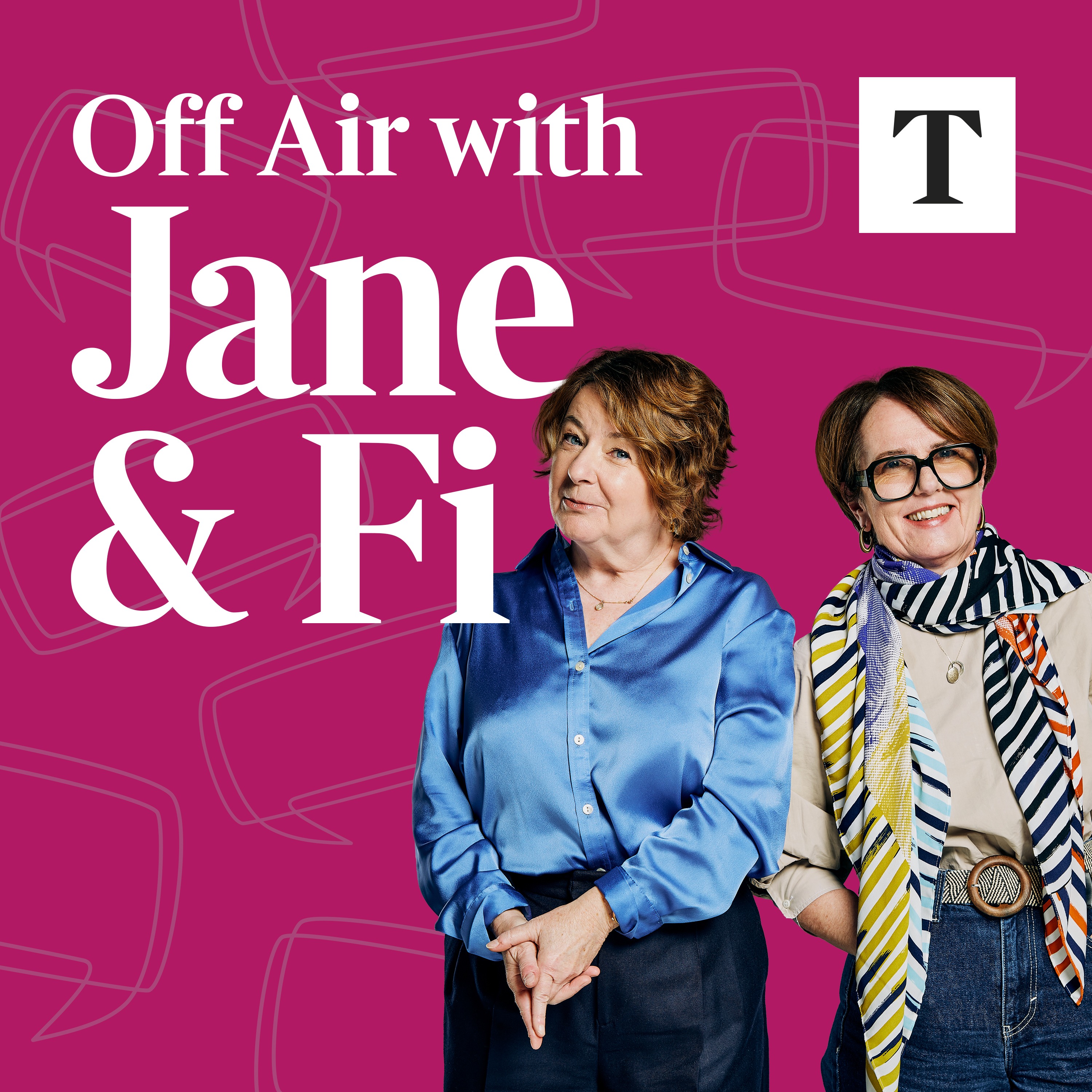
- Off Air with Jane & Fi
- Forget Baby Annabell, we want Baby Alan Ball
In short
The episode mixes wellness ads, listener letters, and a long end-of-life discussion with guest Dr. Richard Coker. Topic: grief and communication around death; end-of-life care and the legal/ethical boundaries of hastening death; plus community stories (dolls’ names, “Dolls Hospitals,” school social media, and a petition to reduce Christmas card stamp prices). Key claims by Dr. Coker: alleviating intolerable suffering can sometimes hasten death; this is not necessarily a crime; the patient should have control through prior communication with doctors and family; assisted dying legislation may distract from fixing palliative care and social care and from improving long-term patient-doctor communication; death is under-taught in medical school and should be discussed more.
Notable examples
his 26-year-old night-shift case in a flu crisis where he gave a 65-year-old man with chronic lung disease enough medication to relieve suffering and end his life; HIV patients he cared for over years who had “good deaths” due to trust.
Guests
Dr. Richard Coker (doctor and author of “Timor Mortis”/“All About Death”); plus multiple listener contributors (e.g., grief emails, choir charity story, dolls’ name stories).
Written by AI. May contain mistakes.
Chapters
2:18
Weather Forecasts and Microclimates
Discussion on weather forecasts and the complexities of local climates.
“something that includes the phrase across the Bay Area.”
4:39
Hair Woes and Blow Dry Solutions
The hosts discuss issues with curly hair, rain, and blow-drying.
“Yeah, no, I don't know, because I guess the only way to avoid having hair that's rainproof is chemicals, getting it chemically straightened, which isn't fun because that's very damaging.”
6:24
Creative Salad Ideas
Hannah shares her unique salad recipe and the hosts brainstorm ideas.
“A few people sent in emails asking for a recipe, didn't they?”
8:17
Doll Names and Nostalgia
Listeners share memories of their dolls and their names.
“Yeah, it's all of the things, you know, those hold-all things that you put over the side of the sofa that have 27 different compartments.”
10:19
The Legacy of Dolls
Further discussions about dolls, their significance, and care.
“My mum and granny then asked what I was going to call him and instead of the usual hesitation I just proudly announced his name is Alan Ball.”
14:00
The Evolution of School Communication
Explore the impact of social media on schools and student experiences.
“It would be an online platform, wouldn't it?”
16:00
Nostalgia and Cultural Reflection
Discussing the complexities of revisiting childhood TV shows and memories.
“That's me, not you, from Nuala, who says, I love listening to you both.”
17:48
The Weight of Accents and Identity
Examining the impact of accents on personal identity and societal perceptions.
“And I think you do run the risk of making yourself feel very bad that you didn't notice it at the time.”
19:46
Generational Perspectives in Radio
Insights into generational divides and mentorship in the radio industry.
“It meant quite a lot to know that actually.”
22:46
Coping with Grief Through Community
Understanding how joining a choir helped cope with loss and foster community.
“especially music, radio, that we don't need to learn very much from some of the elements of the dinosaurs.”
Show all 26 chapters
24:53
Finding Balance After Loss
The importance of self-care and balance in the wake of losing a loved one.
“this one comes in from kirstie my choir prisons and grief kirstie says when my husband died suddenly in 2013, leaving me with three children aged 11, 8 and 4.”
28:00
Understanding Grief and Support
The hosts discuss personal experiences of grief and the challenges of navigating support from others during such times.
“I always hate that feeling that we haven't read lots of emails out, so don't ever give up because we do get quite a lot.”
36:33
Humorous Anecdotes and Reflections
A listener shares a funny memory related to their father's funeral, leading to reflections on sentiments surrounding death and humor.
“And, I mean, I'm going to read as much of it as I can.”
43:35
Introduction to Dr. Richard Coker
Dr. Coker discusses his book on death and the fear surrounding it.
“They were beside themselves witnessing his pain and his distress play out.”
44:47
The Ethics of Alleviating Suffering
Dr. Coker reflects on his experience relieving patient suffering.
“is timor mortis conturbate me, which is fear of death disturbs me.”
45:52
The Role of Law in End of Life Decisions
Discussion on the legal implications of assisted dying and doctor actions.
“I think it's what doctors have always done, actually, which is to alleviate suffering.”
47:15
Palliative Care and Communication
Dr. Coker emphasizes the importance of palliative care and communication.
“doctors um and i think rather than the doctor taking control actually what i think it really should be with a good death is that the patient has control all.”
48:22
Understanding Patient Autonomy
Exploration of patient autonomy in end of life care decisions.
“Let's just hear this clip before we talk some more.”
50:27
Personal Experiences with Death
Dr. Coker shares insights from supporting patients in their final moments.
“The other thing, if I can, the difficulty with laws and regulations is that they can bring into this idea of metrics and performance measures and everything becomes quantifiable.”
51:23
Changing Conversations Around Death
The need for more open discussions about death in society.
“I mean, I think the best deaths that I have supported are actually deaths at home where I've not been present, but I've given them the means to hasten their deaths should they wish.”
52:56
Dilemmas of Communication in Healthcare
Dr. Coker discusses the challenges of communicating with patients and families.
“amount but they don't talk about it a huge amount there was a meme about 70 70 of over 50 year old men think about the Romans every day.”
56:00
Understanding Patient Wishes in Medical Decisions
Discussing the importance of communicating patient wishes regarding end-of-life care.
“I've already said to the people that love me what my decision would be.”
57:51
Empathy in Medicine and Doctor Selection
Exploring how empathy should be valued in the selection and training of doctors.
“Yeah, I have fairly strong feelings about this, and we give so little time to trying to identify doctors of the future when we're selecting people for medical school.”
1:00:05
Experiences with Difficult Doctors
Sharing personal experiences with doctors who lack empathy and the impact on patients.
“they sometimes think that there's some sort of accolade to be gained by keeping people alive no matter what.”
1:03:13
Managing Suffering and Death in Patients
Discussing the complexities of managing suffering at the end of life and ethical considerations.
“And there isn't one day that somebody says, I've had enough.”
1:05:12
Conclusion and Book Recommendation
Wrapping up the discussion with thoughts on the book Tima Mortis and the importance of open conversations about death.
“Thank you very much indeed for your time this afternoon.”

Ask about this episode
Get the gist, explore an idea or ask about something said.
 Claude
On Off Air with Jane & Fi, what are the key points of this episode?
Searching your listeningTranscript
Automatic transcript. May contain errors.
0:00Your heart can tell you a lot about your health. Apple Watch Series 12 measures your heart rate every five seconds with the most advanced heart rate sensing in an Apple Watch. So your vitals app, now with heart rate variability, could tell you when something is off. And your readiness score can let you know when to rest and when to push. Hear the story in every heartbeat with Apple Watch Series 12. For general wellness purposes only, not intended for clinical use or to detect, diagnose, monitor or treat medical conditions. If you felt stuck trying to lose weight, you're not alone. Enter Weight Loss by HERS.
0:35It's designed to support you in reaching your goals. And HERS now offers access to an affordable range of FDA-approved GLP-1 medications, including the WeGovi pill and the WeGovi pen. Even better, with a range of affordable GLP-1 options, HERS makes it simple to find an approach that fits your needs and your budget. If eligible, you'll get a treatment plan personalized to you and unlimited dosage changes as needed. It's weight loss designed to work with your life. Ready to reach your goals? Visit 4hers.com slash eligible to get personalized, affordable care that gets you. That's F-O-R-H-E-R-S dot com slash eligible.
1:124hers.com slash eligible. Weight loss by HERS is not available in all 50 states. Wegovi is the registered trademark of Novo Nordisk AS. To get started and learn more, including important safety information, Wegovi clinical study information and restrictions. Visit ForHers.com. Pessimism. It's never going to improve a disconnected healthcare system. Next. So what will? At Optum, we're working every day to connect primary, specialty, and pharmacy care and help lower prescription costs. Will we fix it all overnight? No. But we'll wake up trying again and again until healthcare works as one for everyone.
1:53That's healthy optimism. Learn more at Optum.com. Optum.
2:09Hannah has turned the podcast on. Welcome to Wednesday. It's a very sunshiny Wednesday. I always want to say whenever there's a weather forecast, something that includes the phrase across the Bay Area. Because whenever you see any American films or Australian films or TV stuff that feature a weather forecast, there's always somebody. So something across the Bay Area. Or across the dry state area. Yeah, I mean, just all of that. Just anything with a great big sweep of the hands. And of course, we can't really do that in our very small series of connected nations and islands. Because if you just did a sweep, you know, outside, I mean, let's not start in London either because we're very, very north-centric now and that's about time to...
3:00If you started in Manchester and just went across, you would have actually included several very, very different weather fronts that you'd then have to explain, wouldn't you? Yeah, very complicated. It is quite weird, Hannah, that we have so many different microclimates across a very, very small piece of land with islands attached to it that are very different. I mean, Cornwall's weather is completely different to Inverness's weather, which again is very different to anything on the west coast of Ireland or all the way down to some of the Channel Islands. it's bizarre isn't it it is I don't know where the point is as well where it genuinely just starts raining constantly too there is a point where you get far enough up the country and it is just rain rain rain and I and I say that with love and do you like the rain as a consequence of having experienced quite so much of it in your early years oh can I just say you've not got the right hair for a lot I don't I don't yeah no I was actually just having a chat with shingle about curly hair living you you have curly hair as well naturally don't you yes yeah but it doesn't see the light of day it gets very very straightened because i've shared with you the terrible picture it's my graduation picture of me with my naturally curly hair and it is like either king charles or king charles spaniel no it's not appealing we view that photo very differently i love that photo it's not gonna happen it's not gonna happen you have very curly hair my daughter has exactly your type of hair and rain is no it makes life very very complicated it does especially if you have actually gone to the effort to blow dry it that is just heartbreaking i mean when it's curly it turns to any kind of different texture which which is annoying but it was already that texture but if you have gone to that that effort to smooth it out and then the rain comes oh gosh i'm amazed because the the blow dry as well in your generation is such a thing i mean it really is it's it's a it's a part-time occupation the bouncy blow dry yeah and it's very available as well in a way that it didn't used to be for us older people and you've got all of the products to make it happen all of that kind of jazz so it's a massive industry What doesn't seem to have accompanied it is any kind of rain protection wear for the blow dry that has then been, shall we use the term, maxed.
5:41Maxed. We need blow dry maxing. Yeah. Yeah, no, I don't know, because I guess the only way to avoid having hair that's rainproof is chemicals, getting it chemically straightened, which isn't fun because that's very damaging. yeah there is no because there should be some kind of uh huge shower cap thing that everybody is wearing that's fashionable yeah yep there definitely should be yeah and nobody's made it happen which is which is weird isn't it i think that would be an absolute winner i tell you what we should add that to the podcast merchandising oh my goodness let's do it along with your shit yourself salad yourself salads i mean hannah it's only a matter of time really before that is on shelves at eye level in the supermarket.
6:26It is. And do you know what? A few people sent in emails asking for a recipe, didn't they? They did. I do base mine off the M &S superfood salad. So you can get that anywhere. It's the super nutty one. Just look at what they've got in there. And that's what I put in mine. Okay. I think you could have milked that a bit more to show your own culinary creativity in a good light. Well, I do add some miso. which I don't think they have in that. The dressing is miso, soy, rice vinegar, a bit of honey, a bit of gotcha jang. I'm sorry? A bit of what? Gotcha jang. What's gotcha jang? It's some kind of Korean spice and they do it in Waitrose in little pastes.
7:14And that's what I get. Is that a kind of umami taste? I'm not sure. Or is it chilli? I think it's more chilli. It's more chilli. And then miso. Is miso umami, is it? Yes. Yeah. heavily umami inside it we've got beans of all kinds quinoa tahini i don't know whatever whatever you want go check the eminence one i don't really know i think what you should do is develop the shit yourself salad that is sold you know with a very nice uh maybe even four ply toilet roll oh yeah oh my goodness just a go-to pack yeah i'm very commercial in this way for you I never knew this about you. Imagine, imagine if we did a whole Christmas catalogue of all of the mad things that we've come up with on this podcast.
8:00It would be brilliant. It would be so, so good. It would outsell knickknacks for dickheads, which is the term of affection that one of our listeners gave to the Christmas catalogue that pops through the door. I think only when you're a certain age, I don't think you'd be in the target market. No, I've not received that yet. Yeah, it's all of the things, you know, those hold-all things that you put over the side of the sofa that have 27 different compartments. And then it'll be, you know, a monocle that's on a telescopic stick so you can plant seeds properly. I mean, it's, you know, it's slightly kind of, you think they're unnecessary inventions and then you find yourself, when you're over the age of 55, looking at them thinking, yeah, actually, that's quite useful.
8:47if we did our own christmas catalog and put it online or something i wonder what you know if someone just happened across it what they'd make of it with no context i think it could go wild i think it could go viral well we'll keep everybody's suggestions coming in uh we need to add to the early morning register fiona uh who says i start listening to the pod as i get into my car at seven o 'clock in the morning to drive to work 18 months ago i moved to a new job which has been challenging to say the least and you accompanying me in the morning has often been the highlight of my day distracting me from my anxiety and making me with laughter we're so happy to help fiona you do go on to the register the bell will ring in just a couple of moments time uh we've done very very well haven't we on dolls names uh thank you for all of those uh did i give you a doll's name and it's providing me a lot of joy this one from ros
10:09She says weeks later I went to visit again and was handed the doll all dressed in blue baby clothes and I couldn't have been happier. I held him and danced around delighted with my new baby boy. My mum and granny then asked what I was going to call him and instead of the usual hesitation I just proudly announced his name is Alan Ball. Brilliant. What a name. I was four and had no knowledge or interest in football but there he was my Alan Ball. He was never just known as Alan, always Alan Ball and I had him for years he came everywhere with me he had a cot by my bed a silver cross pram a high chair a bath he honestly was the first love of my life i am now 61 and the memory of alan ball is such a fond one thanks for reminding me are you across the work of genius that was alan ball no alan ball was in the uh 1966 world cup football team yeah he was an amazing player who then i I think went on to be a manager of quite a few clubs.
11:08So that's just genius. That is amazing. But I don't think this Alan Ball has anything to do with that Alan Ball. You think it's just Alan Ball? Just pure coincidence. And maybe a bit of mystic Mars. Maybe she knew Alan Ball. Maybe Alan Ball was just in the ether. That makes more sense. There are so many dolls' names where the doll has been assigned the doll gender of female at birth, with the moulded plastic in the right places and all of that kind of stuff, or the wrong places. Oh dear, I'm in difficulty already, Hannah. But they are clearly girl dolls that get given boys' names. I mean, nearly every one of our listeners who's written in about dolls' names has given a boy's name to a girl's doll.
11:53Isn't this brilliant? It is brilliant, but then I don't know if I'm being cynical. Tell me more. I just, there's something about the manosphere in that for me.
12:08That's very interesting. So we may be internalised. Very, very early doors, you're thinking, so you're looking at a doll that's going to keep you entertained and become your friend in your imaginary world and it's something of a gift as well and a lovely thing and you look at it and you go, that's a man. That has to be a man. Hannah. I don't mean to out-ros there, actually. I'm sure that Alan Ball was just Alan Ball, but I don't know if there's anything deeper on a bigger level. This one comes in from Sandra, who says, by the way, of a PS, Hannah, you're doing great. What a team you have there.
12:49Yeah, we love all of our team. Best All was bought by my nan of the Thunder Cubbyhole email. While we were on holiday in Blackpool when I was about four years old, my nan and grandad together with my aunt and uncle decided it must be christened. I remember a lot of ceremony and giggling over the B &B bedroom sink, likely fuelled by a few baby shams. And I was awestruck as my new baby doll was christened Russell. Russell. Why Russell? I've no idea, says Sandra. He was lovely. My mum made him clothes from my old dresses and he was adored until tragedy struck when I left him sat too close to the gas fire and the back of his head sunk in.
13:28I was devastated. My mum took us to the Dolls Hospital in the inside market, see if they could help. The lady suggested a new head, but none of the ones on the shelf looked anything like my dear Russell. He spent the rest of his days with me wearing a knitted bonnet to hide his disfigurement until he moved on to the Wendy House at my son's nursery. Wouldn't it be lovely if there were still Dolls Hospitals? There would be. Do you know what? Well, I think there is a Dolls Hospital somewhere, isn't it? I'm going to look into that for you, Sandra. You probably ship the doll off now. I think you would too.
14:03It would be an online platform, wouldn't it? You'd have to download an app. I don't want to download any more apps, ever. My kids, neither of them are in school anymore and when my younger one left school this summer I could eradicate from my phone five apps. I mean, absolutely everything is on an app these days and I get it because you don't want to be the company that doesn't provide that kind of modern interface with your customer, but actually it's just so much. That is a lot. It's just so much. I'm finding it strange seeing my old school's social media presence. They post all sorts. Like what?
14:43They do reels on what you like most about school, what you've learned in year 11, which is all really nice, but you wouldn't have got any of me or my friends doing that. I don't know who's sorted out that. That's quite strange, Hannah. Why does the school need to have a social media presence? And how does that work when presumably in the classroom you're then saying, put down your phones. Yeah, and don't bring them in. Don't do that. Whoa. I know, I know. It is very... Yeah. And also that's only going to be, and we all do it, don't we, the shiny, boastful side of school life. Exactly. It's not going to be the poor person who's sobbing in the toilets at lunchtime.
15:25if you can get in. It's not reflective. That's weird. Yeah, because as well, you wouldn't want kids to be vlogging in school, would you? And doing their what I've eaten in my school dinner because that would be disruptive. So it might then be a bit hypocritical to have a... Yeah, that is weird. Each to their own. Yeah. Well, we've got loads and loads of teachers who listen to the podcast. So tell us about how all of that pans out. but I think I mean your school's not alone every school has a social media presence now doesn't it yeah and yeah I'm kind of with you I don't know also I think if you're one of those kids who really isn't enjoying school very much I think that must be so nauseating to see this very happy image being posted all around you something that actually you're not having a great time attending maybe you have to do it now I don't know I don't know other people will know more We're in a little bit of trouble.
16:23That's me, not you, from Nuala, who says, I love listening to you both. I've been a fan since the Fortunately days. It's my first time writing to you as I felt I need to share my memory of the Cloche Merle TV series way back in the 70s. I was probably about 11 or 12 years of age when it aired, so memories are vague, but I do remember my wonderfully unique mum loving it. She didn't watch much TV, so this programme stood out as a childhood memory. I also recall that nobody at school watched it, so it felt like a programme that was only watched by my family. I hadn't thought about it for years until you both read out an email about it from a listener last week and I won't lie, I felt slightly irritated that neither of you were aware of it, let alone knew how to pronounce it initially.
17:07I know it was a niche programme and as a family we loved it, it was quite bonkers. It may have been subtitled as it was French but as I say, memories are vague. I am a bit anxious about watching it again if it's available anywhere as it could be one of those situations where the reality doesn't live up to the memory. Well, don't go there, Nuala, would be my suggestion. Just leave it gloriously in your memory as a rather wonderful, eccentric French adaptation of a story about a urinal. I mean, what more could you want in your memory bank? Oh, yeah, you can't always go back and enjoy it on the film.
17:46No, not at all. Not at all. And also I think the huge danger now, and there's a very good reason for wanting to cast a bit of a kind of cultural gauze over some elements of our previous forms of entertainment, but you can really harm yourself by doing that because you'll watch something and it'll be so jarring now, the language that's used or the way people are dressing or the way people speak to each other or whatever it is. And I think you do run the risk of making yourself feel very bad that you didn't notice it at the time. and actually some of the books in book club that we've read have left people feeling exactly that, quite ashamed of not having the knowledge that we have now when they were younger.
18:29So, Nuna, I'd say some things, you know, it's best just let sleeping dogs lie. Just leave it there. It's a very, very happy, happy place in your memory. This one comes in from Carol. It's entitled Stick to Your Guns, Hannah. I was utterly stunned when Hannah described being asked to change her northern accent. I thought that mindset had been buried years ago. My parents were brought up in County Durham and Teesside, where all their siblings always spoke with a fairly strong local accent. But at some point early in their marriage in the early 50s, they must have made a joint decision to lose their accents completely.
19:04And I never heard them utter a north-east vowel ever, not even a hint. they must have firmly believed that their natural accents would hold them back both socially and in terms of work opportunities i always feel sad that i have no memories of hearing my parents voices speaking in their natural regional accent somehow i can't imagine hearing them talking as children or when they first met each other so to anyone out there that judges any of us based on our accent it is time to grow up i love hearing you chat away and lots of people you're a huge hit on the podcast don't tell eve oh thank you that eve is a huge hit on the podcast as well and do i really enjoy talking to both of you because apart from anything else i think you're i think you're both incredibly mature young people but you also have a delicious certainty about your place in the world which might be a cover because you and i had a bit of a chat didn't we after the andy oliver interview.
20:05Oh my goodness, yeah. Andy and I had worked at the same radio station, GLR when we were both very young and we both completely missed the fact that the other was having massive wobbles underneath their life and what we had presented was a completely well, it was an untrue but more polished version of ourselves. I loved the fact that she said that. It meant quite a lot to know that actually. It did. I was stood well we're in this studio which obviously no one listening can see but it's it's very diddy so I was stood awkwardly at this side trying to record it it is so awkward but that in that moment honestly I felt a bit emotional because I was just thinking of me and all my friends and nothing's changed really because you were both expressing how you saw each other but then how you felt on the inside and not being fully confident in that I think it's something lots of my friends would benefit here because this while I'm in my 20s it's just such an uncertain time but I think the reason that me and Eve feel so certain is because we work on an amazing team with amazing women I think a lot of listeners you see if he's instantly looked down she doesn't like the praise coming back to her she doesn't like it well it's nice of you to say that but But I think it's quite a rare thing that we've got going on, actually, because we do all get on together.
21:34And, you know, there's just a massive generational divide between us, actually, much more so than when I was your age and was working with 50-something people. Because technology divides us. You know, you're all super skilled at the technology that enables us to get this, you know from behind the microphone out into the world and you know Jane and I don't have those skills at all and so often that can I think these days result in a divide that means there's not very much respect going on between the generations but you know that isn't the case on our team at all. Definitely not I think as well though you and Jane are just so willing to nurture younger people which not everyone is either some people pull the ladder up behind them whereas you and Jane really do the opposite of that well it's very nice of you to say that it's very nice you to say that when uh when Andy Oliver and I were working at GLR the people in their 50s on the station uh were Tommy Vance and Johnny Walker oh I learned a lot from both of them uh and uh Whispering Bob as well.
22:45And I mean, I know, you know, there is a certain dinosaur in the world of radio, especially music, radio, that we don't need to learn very much from some of the elements of the dinosaurs. But actually, Johnny Walker was very helpful and kind. I'm not sure that everyone had the same experience, actually, so I'm just going to temper it by saying that. He was very helpful. Bob Harris is one of the nicest people I've ever worked with. He was so kind to everybody on the station and we were considerably younger than him and just very annoying, I would have imagined it. So, just popping in a word there, but there just weren't any women at all.
23:25Yeah, I was thinking that, actually, as you were saying that. There really weren't. So I think the line-up at GLR was Tommy Vance, Johnny Walker, Gary Crowley, Chris Evans, Danny Baker, Peter Curran Gideon Coe who I did a breakfast show with so we were co-presenting Andy Oliver was there for a while Diana Luke did the afternoon show there was a peppering Vanessa Feltz was doing Jewish London at the time there was a peppering of women doing specialist programmes in the evening but it was so man heavy it really was man heavy which is why I think sometimes maybe women when they do get into it have the reputation of being very for themselves.
24:12Oh, I think definitely, Hannah. Yeah, and you're right. I think some women felt that they did have to pull up the drawbridge after them just in order to save their energy, really, because you just needed a lot of energy to keep yourself going. So I hope that's all changed now. Me too. Yeah. We're a nicely balanced radio station. There's a policy here to, if there's a co-pres between a man and a woman, it is the woman's name that goes first on the listings and that may sound like a tiny thing but it's hugely important massively important now you've really touched an awful lot of hearts with your honest experiences of grief and the fact that you are prepared to talk about it this one comes in from kirstie my choir prisons and grief kirstie says when my husband died suddenly in 2013, leaving me with three children aged 11, 8 and 4.
25:08I was willing to try anything that made me feel less shite. I wrote a journal, went on endless dog walks with friends. I now own a dog myself, Lionel, the Border Terrier. I started college courses and less than a month after he died, I joined a choir and that turned out to be the best thing I did, as well as singing regularly and having that time to myself to be a grown up every week. I've got a whole new social group and I have sung in some amazing places. Now Kirstie goes on to detail the work of this choir. The South London Choir in Ballham is linked to the Liberty Choir. Now that one is a volunteer-based charity that my brilliantly bonkers and totally charismatic choir leader MJ Peranzino, I mean that's just that's absolutely what your charismatic choir leader should be called isn't it, has founded.
25:54It started off in Wandsworth Prison where each week a group of volunteers from the choir gave up their time to go into the jail to sing with soon-to-be-released prisoners. The idea is that as well as giving the prisoners at least an hour out of their cells each week to sing, they also met and made friends with the choir members. Many corresponded with each other as Richard, now he was our guest wasn't he on a Friday special edition, a former inmate who is still doing some very good work about mentoring to avoid re-offending. As Richard so movingly spoke about in your recent interview. When a prisoner who participated left prison, they were called a Liberty Choir graduate and they were invited to join one of MJ's choirs for free every week.
26:38This helped to give them a focus to their week once released and means that they were socialising with positive influences rather than perhaps the more negative ones that were likely to lead to re-offending. Fantastic email, lovely direction to be pointed in Kirsty. we don't underestimate how difficult that must have been to be left dealing with three kids aged 11, 8 and 4 is massive isn't it? Massive. I really can't imagine how difficult that must have been and I think it is just that finding time for yourself isn't it? And choir and singing is such a wonderful way to do that. Yeah and I think it's especially difficult for parents when you must feel that your kids need you yeah and so you need to devote your time to them but you absolutely need a break to try and process it all yourself and I'm sure your mum found that it's that thing you can't put somebody else's oxygen mask on without your own oh that's so good yeah but it is true isn't it yeah no my mum definitely definitely found that I think as well my mum when she first met my dad he had two of his own kids and so she was in her early 20s instantly becoming a mum to them and eventually becoming a mum to me I think my mum actually just needed some of her youth back she needed some fun you feel like you're not allowed that when someone's died but I'm glad that she eventually got it and now she's very happy yeah well that is very good to hear and you must want to i mean yeah you know you you absolutely do sit in sadness when somebody dies but you can't sit in sadness forever no unless you choose to some people do choose that path but then to find fun god i can completely understand why you go a bit out the other side yeah oh my goodness definitely and this one comes in from izzy who says i emailed him once before although unfortunately not successfully.
28:41I always hate that feeling that we haven't read lots of emails out, so don't ever give up because we do get quite a lot. We always read all of them. It's no measure of the content of your email if we don't read it out and obviously do still keep trying. I think I'm probably one of your younger listeners at 24. That's my age. Very much so. Izzy was incredibly grateful to hear Hannah sharing her experience of grief as a child, young person. although I was slightly older when I lost my dad I had the same situation of no one knowing what to say or what not to say or how to deal with the situation.
29:17My dad died very suddenly a week after my 17th birthday I only had two days away from sixth form either side of a weekend. All of my peers automatically assumed that I was just ill and I only told two friends what was happening. this was only by necessity as I needed to explain why I needed their lesson notes I was reluctant to tell others because I didn't want to be treated differently and I knew that they would feel awkward because they wouldn't know how to respond none of my friends had experienced the death of a close relative let alone the unexpected death of a parent even adults seemed wary about what to say to me although my teachers were clearly trying to be supportive when I returned to school after four intense days by my dad's bedside I threw myself into schoolwork and tried not to think about things too much one of the only things that I outwardly struggled with was being completely unable to watch any tv or films about death or anything without a happy ending I would have to switch it off much to the annoyance of my mum when I interrupted her gripping and emotional ITV dramas there's no other type is there is he and I couldn't stomach the meal that I'd eaten for dinner on the night before my dad went into hospital.
30:26It took almost a year before I was able to eat my mum's chickpea curry again. In terms of a good age to lose a parent, there obviously isn't one. And although my experience was awful, I often think about how it was for my six-year-old brother. He was too young to fully understand. He was too young to visit in the ICU. So I don't know if this meant that it was harder for him to have closure. On a less depressing note, me and my brother are very close and both after a rocky few years have settled down and learned to live with things although the small things sometimes get to me like passing my driving test which as an advanced police driver my dad would have loved to see I look back now without feeling overwhelmed by grief.
31:09Izzy had a doll called Mr Rabbit here we go again he was not Mrs Rabbit yes he was a buy an address and no I didn't care uh Izzy thank you for your email we are both so so so sorry that that happened to you what a thoughtful email it is and I mean that is just remarkable as well isn't it to only have two days away from school either side of a weekend yeah um I feel like when you're going through that you think nobody else could possibly understand it but there wasn't one thing that I didn't relate to in that email honestly Izzy so thank you so much for sending that in I I was the same I went straight back to school because what else are you gonna do I mean obviously it probably would have been better to take time off to process it but how do you possibly process that and then yeah not wanting to tell people and did you find that you knew how to tell people when do you put that into a conversation with somebody at that age when everyone's just something that was unfortunate for me is my dad died on the 31st of march so i had to tell people on the 1st of april did some people think it was i think unfortunately yes i know so i think that was another reason i held off telling people where i could but i remember messaging my best friend and she was like this is really sick I was like no I'm being serious um and then yeah straight back to school and it's just a complete roller coaster but you've made it you're there with Mr Rabbit still keeping you going you supporting your brother that's amazing and we just keep plodding on don't we and have you found in the subsequent years that there is some kind of league table of grief that some people have in their minds because I think that it's no more sad that somebody might die at an older age in your life.
33:19I mean it's very shocking that your father died when he was so young and when you were so young and sadness and shock are two different things aren't they but sometimes I think people do try and do the uh you know it's it's it must be much worse for you I just think when you lose someone you love it's just very bad full stop isn't it it's rubbish and it's so unhelpful to try and categorize it in that way I think to categorize any kind of hurt because I have friends who have difficult relationships with their dads who are still alive and that causes them pain in a whole other way and that pains continue all because because the dad's letting them down so it's like whatever you're going through it doesn't what do we win by trying to say all minds with i mean you lost your dad at a really difficult time in your life was it just after you had children it was just before i mean oh my goodness before yeah well it's kind of you to say that hannah or even to remember that detail i'll tell you what people have been so helpful about what not to say and what to say i would say that if you have a friend who loses a parent just before they have a baby don't say at least you've got the baby oh my god did anybody say that so many people said you're kidding so many people said oh but look you've got you you've got your baby oh it's kind of like oh my god the thing that really used to upset me about that uh was i didn't want to look at my baby and think about my dad.
34:51It was kind of like, no, these are two very different people in my life. And of course I was delighted, absolutely delighted to have my son. He's a phenomenal human being. But it was quite strange. It was quite strange. And I was grateful to be busy. And obviously if you have a baby, you become very, very busy. and I probably, looking back on it, benefited from the sheer distraction of having a baby. But it wasn't... It's not an okay thing to say, actually. It's just a slightly odd thing to say. I just think as well, for every positive you can think of, if you can even use that word, for everything you can say, oh, well, it's okay because of this, it's okay because of that.
35:35There are a whole other host of reasons why it's actually the worst time in the world. So then we're all in the same boat, actually, aren't we? But we do that thing, don't we? and I bet people did it so much to you, where out of a kind place in our heart, we want people to feel better because we care and love about them. But it is stomping down on something that is completely natural. And young people, you don't want to be told what to think and feel at the age of 17 anyway, do you? No, exactly. Yeah. So, really lovely emails. Do keep them coming. And if you're joining the podcast and you haven't heard where this discussion came from, It is fair to say, isn't it, Hannah, that you're very happy to talk about your dad's death.
36:17It's not something that we've forced you to do. No, no. I'm very, very happy. Dead dads, shoot yourself salads. Throw it all at me. There is one lovely email and then we will move on to other things, actually. It comes in from Giselle. And, I mean, I'm going to read as much of it as I can. listening to Fia and Hannah reminded me of a bizarre little event on the morning of my dad's funeral as we were all waiting anxiously for the hearse to arrive for his final journey but instead a small bus drew up with a group of silver-haired senior citizens on board a bit bemused I went out to the woman in charge it transpired they'd come to collect dad who had Parkinson's for a weekly activity day out at a centre something he hated specifically the bingo it was more to give my mother a breather as she wasn't one of life's carers and would make him go despite protests.
37:11I told the group leader he had died and we were expecting the hearse to which she smiled benignly replying probably for the best. Oh my goodness. It may not have been the most you know amusing chap to have had on the bus but Parkinson's can take that away from people and yeah I mean you You can't, you can't say that to people. No. You just can't do that. Dr. Quinn, coincidences and stamps. Fee started the podcast on Monday with a reference to Dr. Quinn, Medicine Woman. It made me think instantly of my dad, not because he was a fan of Dr. Quinn, but because he was a huge fan of the TV critic Nancy Banks-Smith.
37:48Now, she could really write, couldn't she? When Dr. Quinn first aired, Nancy wrote a very funny review of it, which made my dad chortle. I tried to find it, but failed. but I do still remember the last line. So we're off with girlish cries of, we can hide Chief Black Kettle in the barn. This line became an oft-used family phrase. I don't know whether, I'm not sure that I'd watch another episode. No. But you do also, Alex, send a fantastic petition that is definitely worthy of our time. It is to try and get Christmas card stamps reduced in price. Isn't that brilliant? Do you ever use a stamp as a young person, Hannah?
38:30I have three stamps in my bag, actually. It's only ever for my grandma and grandad, though, so I wouldn't have them otherwise. I don't think many people my age do. No, well, I'm not surprised. They're just so blooming expensive. But it is really weird, because when I was your age, I would have had a strip of stamps. We were before the books. I'd have a strip of stamps, first class and second class, and they'd just live in my wallet. Everybody had stamps because I think they were about 20p. So the idea, though, on this one is, and you can find it very easily if you go to change.org and pop in Save Christmas Cards, you can join this.
39:12Alex says, I thought I'd share the petition by the granddaughters of Sir Henry Cole. I saw it on Sophia Money Coots sub-stacks. Sophia Money Coots is a journalist who often writes for the Times. times the time very small edition that's one story sir henry cole was the man behind the first commercial christmas card and this is a petition which is being put out there by his great great great granddaughters actually and they are suggesting that just at christmas we have reduced stamps so people can still send christmas cards because they mean so much Especially to the oldies. Yeah, exactly. I think that's what it is, isn't it?
39:56Because it's sad now that you just send a message to someone or a gift. Merry Christmas. We need to get out of that, actually. Yeah. Get back to the Christmas cards. So with you. My mum loves a Christmas card. She starts writing hers in about November. And she saves up so she can buy enough stamps to send them to all of her friends. It means the world to her to receive them back. Yeah. And I mean, I completely get it. You know, it's beyond the reach of so many people now to send as many Christmas cards as they used to. But she can't put up on her, she's got one of those old-fashioned dresses. She can't put one of those paperless cards or the ones that come, you know, through the internet.
40:40She can't put that up on her dresser. And it is like, for her, it's like seeing all of her friends. Oh, that's so lovely. You know, up there at Christmas. And especially because she moved a long way away from, you know, her friendship group when she came down south after 30 years in Scotland. So really, you know, it's a big thing. I think that is an absolutely brilliant petition. We are happy to support it and send it out on its way in the world. Who is our guest today, Hannah? Dr. Richard Coker. He's fascinating, isn't he? He's doing something that is very, very rare, talking honestly from a doctor's perspective about what he has done with his patients towards the end of their lives.
41:25We put it out there, though, that this might be one of those interviews that if you are in end-of-life care with a loved one, it might be intriguing to listen to, but it might be difficult to listen to. So if that's the case, then you just leapfrog about 18 minutes across the podcast interview and join us on the other side.
41:49Your heart can tell you a lot about your health. Apple Watch Series 12 measures your heart rate every five seconds with the most advanced heart rate sensing in an Apple Watch. So your vitals app, now with heart rate variability, could tell you when something is off. And your readiness score can let you know when to rest and when to push. Hear the story in every heartbeat with Apple Watch Series 12. For general wellness purposes only. Not intended for clinical use or to detect, diagnose, monitor, or treat medical conditions. Requires iPhone 11 or later. For investors at the highest level of sophistication, those with strong advisory support, the natural outcome is two distinct portfolios.
42:25One public, one private. Each plays a different role in the overall strategy. Uncover new investment opportunities for you at creativeplanning.com slash new. If you felt stuck trying to lose weight, you're not alone. Enter Weight Loss by HERS. It's designed to support you in reaching your goals. and HERS now offers access to an affordable range of FDA-approved GLP-1 medications, including the WeGovi pill and the WeGovi pen. Even better, with a range of affordable GLP-1 options, HERS makes it simple to find an approach that fits your needs and your budget, if eligible. You'll get a treatment plan personalized to you and unlimited dosage changes as needed.
43:01It's weight loss designed to work with your life. Ready to reach your goals? Visit ForHERS.com slash eligible to get personalized, affordable care that gets you. That's F-O-R-H-E-R-S dot com slash eligible. ForHERS.com slash eligible. Weight loss by HERS is not available in all 50 states. WeGovi is the registered trademark of Novo Nordisk AS. To get started and learn more, including important safety information, WeGovi clinical study information, and restrictions, visit ForHERS.com.
43:35Richard Coker was just 26 when, as the most senior doctor on a night shift in a flu crisis at a hospital, he took the decision to help a patient, a 65-year-old man with chronic lung disease, who was suffering intently in front of his family. They were beside themselves witnessing his pain and his distress play out. The decision that Dr Coker took was to give him enough medication to relieve his suffering, enough medication to end his life. and he says it's what all good doctors do. He's gone on to do it many times, as have many other doctors, but this isn't something that they can say that they've done because that means they're admitting to a crime, manslaughter or murder.
44:18So Richard Coker's book, All About Death in its many forms, called Tima Mortis, makes for extraordinary reading. He joins us now. Dr Coker, a very good afternoon. Good afternoon. Tell us a little bit more just about the title of the book. but we might know what rigor mortis is, but what is timor mortis? Well, timor mortis is Latin for fear of death, and it comes from a poem by William Dunbar about 600 years ago. And the final clause, the final stanza in each verse is timor mortis conturbate me, which is fear of death disturbs me. And I think it disturbs a lot of people. And so what I've tried to do is I've tried to write about the anxiety we have about death, but also how we live, knowing that we're all going to die, knowing that our journeys all end in the same way and try not to be terrified of it.
45:18There is so much in the book about death and we absolutely will make time to talk about some other things. But the focus, I think, you've already come to realise will probably be about you being prepared to talk about end of life care as a doctor, a doctor who is prepared to, in a sense, take control of when that life ends. Can you just tell us a little bit more about that? I started with this example of you when you were 26. Maybe tell us a bit more about that night. Well, if I could just preface it by saying I'm not sure it's a crime. I think it's what doctors have always done, actually, which is to alleviate suffering.
46:03And sometimes that alleviation of suffering hastens death. But I don't think that that's a crime. And in fact, since I had the Times piece came out, I've had a huge number of doctors write to me saying that they support this, they've always done this. I think the end of the article ends up by saying, if you get prosecuted, then I'm Spartacus. And that's what a huge number of doctors have come to me saying. No, and I completely understand that. And I think our listeners will completely understand that. But isn't that the number of the problem at the moment, that what you see and many people understand to be a really compassionate thing that is being done by one human being to another, actually within the eyes of the law is not seen in the same way?
46:59um i'm not a lawyer um and when when somebody's in in extreme suffering they're suffering intolerably there's no lawyer in the room either there's usually a family maybe a friend and doctors um and i think rather than the doctor taking control actually what i think it really should be with a good death is that the patient has control all. But they have communicated that to their doctors, to their primary care physicians, to their family, that the suffering has become intolerable, and they can't bear it anymore. So I think this is actually not an uncommon scenario. I think the assisted dying bill and all the talk of that has maybe muddied the waters a little bit, because this is such a common occurrence and pretty much everybody I think certainly all the comments that I've had and I there have been thousands of them have overwhelmingly supported this position.
48:06When do you think the law might change then because assisted dying it was going through our parliamentary system it hit quite a few bumps in the road I'll tell you what the Prime Minister has been asked about it today. Let's just hear this clip before we talk some more. I take the view that that debate, and I don't say that there shouldn't be a debate about those issues. Personally, I think there's something that needs to happen first, and that's the fixing of the funding of palliative care and social care. I think it is very challenging to introduce that wider debate in a context of people not receiving that care and having the peace of mind about that care.
48:57And that's the way I kind of see this. And that's the position that I will stick to. Your thoughts about that, Dr. Coker? I wholeheartedly agree. I think the discussion has been sidelined actually by the assisted dying bill. Whereas what I've been suggesting in my book is that the over-medicalisation of death has been a bit of a problem. I think so many people are unfamiliar with death. I was talking to my mum who's 97 and she's only seen one person die and that was my father. Most doctors have seen hundreds of deaths and yet we don't get taught about death in medical school. So the palliative care issue is really critical but I also think the primary care subject should be coming to the fore here because the critical thing is communication as well.
49:54And communication between patients and their doctors over a long period of time so that they both know each other and trust each other is absolutely critical. 20 or 30 years ago I was looking after an awful lot of HIV positive patients, many of whom were dying, and I was looking after them for years. So I knew them extremely well when the end was coming. And I think most of them had good deaths. And I think that familiarity and that trust was actually critical. The other thing, if I can, the difficulty with laws and regulations is that they can bring into this idea of metrics and performance measures and everything becomes quantifiable.
50:41But you can't quantify despair, suffering, love, all of these things that are really, or trust, all of these things that are really critical at the end of life. So I worry a little bit about the assisted dying bill shifting emphasis away from these things that really matter. and what do you feel when you're with a patient at the very end of their life and you know them you know what they want and you are in a sense the only person who's there in the room who can help them to achieve that it's a position that very very few of us will ever find ourselves in yeah and lots of young doctors who've only just qualified find themselves in the same position I was 40 odd years ago.
51:30I mean, I think the best deaths that I have supported are actually deaths at home where I've not been present, but I've given them the means to hasten their deaths should they wish. And I think many probably took it and their family and relatives fed back to me that they had really good deaths. I write about some cases in the community who have assisted dying, have deaths being hastened by their GPs. And I think that's probably better than hospitalised deaths. Although some people do want to die in hospital because they feel safer. But I think most people want to die surrounded by people who love them and not suffering intolerably.
52:20And I think you're just, as a doctor, you're just an aid to that. You know, the autonomy of the patient, the decision making of the patient is absolutely critical. You talk in the book about outsourcing death, exactly what you're saying there. But I mean, I wonder about the practical solutions to that problem. We don't talk enough about how people die we don't see people die but how how do you change that i think well partly like conversations like this i think um an enormous number of people think about death an enormous amount but they don't talk about it a huge amount there was a meme about 70 70 of over 50 year old men think about the Romans every day.
53:12And that's not true. But an awful lot of men and women of all ages think about death every day, every week, but seldom talk about it. So I think this sort of conversation really helps. Yeah, I'm glad you said that about the Romans, because I've always thought that was absolutely daft as well. So when you're talking to other doctors about the experiences that you share. Would it help if we were all a bit more privy to that? Yeah, I think the best doctors talk to their patients about death. But, you know, a lot of hospital doctors, for example, see their patients right at the end and may not have that relationship.
53:53And a lot of primary care doctors are overwhelmed. So I think doctors should be having these conversations. I, you know, as I say, I was really fortunate because I was looking after people who for a long period viewed themselves as terminally ill. And so this was a natural event to raise. And I had never had any problem with any patient about discussing it because I knew them so well. Some doctors, though, must surely find themselves in a very difficult position where a family are asking them to make the end of a loved one's life more bearable, to hasten it along. And perhaps that doctor is unsure as to whether or not the patient wants that.
54:39What do you do in that kind of situation? Yeah, I think you've hit a really important issue. I mean, the respect of the patient is central to this. And a competent patient, that is somebody with the capacity to think what they want and know what they want should be at the centre and should not be coerced by anybody, be that doctors, nurses or relatives. So I can understand this sort of slippery slope that people feel they might fall into. There are issues about suffering and duration of life. If I can give you an example. So the 65-year-old man that is mentioned in the article, and I write about in my book, he was suffering intolerably and was going to die within a day or two maximum.
55:30What would you say to a man who has locked-in syndrome, which means he's got a brainstem bleed at the bottom of his skull and he cannot communicate? He can't move. He can't do anything. He can't tell you he's suffering intolerably. Now, he may not be in pain, but he is suffering intolerably. And his lifespan may stretch from weeks to months to years. Now, these are the really, really difficult issues where people can't communicate because they're so infirm. They're suffering so intolerably. How do we help them? How would you want to be helped? Gosh I mean a question that I can't possibly answer but I would hope that I would have managed to tell somebody before I had reached that point of incapacity what my wishes were and that's the massive problem isn't it when somebody hasn't or at the moment when somebody has said what they want to happen but actually the law doesn't allow it you're the man in the room who would have to make the decision what would yours be?
56:44I've already said to the people that love me what my decision would be. I wouldn't want to be incapacitated 100 % for years. It would be intolerable suffering for me. So I've told them. I think if we've got a second, there's another problem that doctors sometimes do. is that, and Brenda Hale talks about this in her book, where you withdraw life-saving technologies, but you do it so slowly that it can become torture. She talks of a woman who had written that she did not want to be ventilated, but was ventilated. And the doctors suggested because she didn't want to be ventilated, they slowed down her respiratory rate through the ventilation, which in effect would have suffocated her.
57:41It's just not right. It's lost the point of what medicine is. Medicine is technology, it's science, but it's also empathy and art. Well, let's talk a bit about that empathy as well because I know that you have made the point that perhaps the way that we sift through our young people in order to find the people to go to medical college, and the bar is exceptionally high to train as a doctor, that sifting may actually be taking out some people who could really benefit the medical profession. Tell us more about that. Yeah, I have fairly strong feelings about this, and we give so little time to trying to identify doctors of the future when we're selecting people for medical school.
58:30Basically, we look at how they did in GCSEs and A-levels, and then maybe we give them a short interview. But if you look at most of industry when they're recruiting people and they're intending to spend significant resources in training and sustaining their careers, they spend days and days and days. Maybe we should be doing this with doctors because we want the right doctors. And I know that training can do an awful lot about enhancing people's ability to communicate and getting people to see their patients with empathy. But I also think character is really important. And I think this should be one of the criteria that we choose our doctors.
59:16If I give myself as an example, I'm seriously, I'm not the brightest of the medical students that I trained with. but I think I was a pretty good doctor. I don't think I often lost sight of the patients in front of me and I enjoyed that role. I mean, I enjoyed the science and I enjoyed the technological aspects of it but I also really enjoyed the relationship with patients. Have you met some truly awful doctors along the way? you're going to get me in trouble um i have met a number of you don't have to name them i'm not going to name them i'm not going to name them god but every doctor's met some awful doctors you know i have a particular bugbear about hero doctors and they're often young ambitious and they sometimes think that there's some sort of accolade to be gained by keeping people alive no matter what.
1:00:23And I've also met doctors who just have complete disregard for the patients. I know an ENT surgeon who puts his hands around his mouth when a patient asks a question unrelated to ENT, because he said, I only deal with these inches that are between my hands. that's not medicine that that's that's uh i don't know what that is yeah that's unhelpful should we just say that's we're on the radio we've got so many messages uh for you dr coker i'd like to get through as many as possible so here goes uh helen says i'm so tired of the society we've created so little makes sense my cousin died in his 40s of motor neuron disease he was told that ultimately he wouldn't be able to breathe and would suffocate.
1:01:16It was explained that to ease his suffering, he could be given an injection to relax his lungs, but this would bring about his death. He understood this. When he was gasping for breath, his wife, mother and sister present. He was asked if he wanted the injection. He nodded his assent and passed away immediately. His death was managed without prolonged suffering, without drawing a lot of attention. This is how physicians have managed suffering. they should continue to do so. My cousin's name was Derek. This from Mal who says having lost my wife to cancer earlier this year she died holding my hand your doctor is 100 % right and this from David who says my wife was taken into a hospice to elevate pain from bone cancer she received morphine and died after three days.
1:02:04I feel that the pain she was in it was a relief although at the time I felt it was excessive amounts of drugs but I think it was for the best but it has taken many years to come to realise this and actually Dr Coker I think David's point is very important isn't it when you are the loved one of somebody who is in pain you may well not be in the very best place yourself that is so obvious isn't it and actually you do need a doctor for the emotional distance they have to the patient as as much as you need them for what they can do for the patient you're a different person in the room aren't you yeah yeah i i mean i wholeheartedly agree with all those sentiments actually it's some diseases are very very uncomfortable they really induce incredible suffering um many don't and many people have really really good deaths But there are some that are just awful because many of them are just slow, incremental increases in suffering each day.
1:03:13And there isn't one day that somebody says, I've had enough. Each day you think it's a little bit worse, but I'm just about hanging on. I think we can look back at George V. Remember George V? Not personally, but yes. Well, he was given a Brompton cocktail by his doctor, Lord Dalton, who wrote about it sometime after. And a Brompton cocktail was widely used back in the 30s. And that's a combination of heroin and cocaine and alcohol. And he died without suffering. I mean there were problems at the time because it was a little sensitive because actually it had to fit the Times, the issuance of the Times publication so there was some, what shall we say, some conflict over the methods that he used but the Brompton cocktail was widely used.
1:04:15Right, but to go back to the beginning of our interview isn't the whole point that if I administered that then I absolutely would run the risk of going to jail for a very long time If you administer that, it's still a cloudy area. Yes, it's a cloudy area. I think lots of relatives do so, actually, with the support of their doctors. I mean, I mentioned that many of my patients actually did die at home. And I just talked to them for a long period about the amount of morphine that they would require to alleviate their pain. and that if you took too much, then that would hasten their death. Now, I wasn't in the room when they died.
1:04:58I don't know what happened. But I've got a pretty good idea that some of them might have requested that their friends or their relatives hasten their deaths. I wish you were my doctor. I'm sure there are lots of people listening who really wish that you were theirs too. I'm sorry we don't have more time because there's so much else to talk about with regard to the book, particularly our increasing obsession with longevity and a very interesting chapter about the connection between sex and death. But it's a pleasure to talk to you, Dr. Coker. Thank you very much indeed for your time this afternoon.
1:05:30The book is called Tima Mortis. Dr. Richard Coker, I think his book is really worth a read. It's very rare to hear a doctor talk so honestly, actually. So I'd say good for him. And actually, I did get a message from Andrew Billen, one of our colleagues here at The Times. We're talking about something completely different. But he did a fantastic interview with the doctor, which has been so successful, it's actually led to his book being stocked in more bookshops around the country. Because people really do need to talk openly about this and they want to. So props to Andrew Billen, the Billen effect, I think we'll call it from here on in.
1:06:09Shall we end with a slightly chastising email that made me giggle? Yeah, so Stephen from Hong Kong. I think he's rounding off our men's underwear nicely. Please stop saying men's knickers. Hi, hi. Love the pod, but this is cringe beyond belief. Pants or underwear only, please. I'm embarrassed that I almost want to say we're British after all. Even more embarrassed since I'm Scottish. What's wrong with knickers? I don't know, but he says it with love, and I guess that's, we can do no more. we've been told we have been told haven't we we've absolutely been told right it's no more knickers from Hannah it's no more knickers from me and we will join you again tomorrow our email address remains janeandfee at times.radio
1:07:12Congratulations. You've staggered somehow to the end of another Off Air with Jane and Fee. Thank you. If you'd like to hear us do this live, and we do do it live every day, Monday to Thursday, 2 till 4 on Times Radio. The jeopardy is off the scale. And if you listen to this, you'll understand exactly why that's the case. So you can get the radio online on DAB or on the free Times Radio app. Off Air is produced by Eve Salisbury and the executive producer is Rosie Cutler.
1:08:08So your vitals app, now with heart rate variability, could tell you when something is off. And your readiness score can let you know when to rest and when to push. Hear the story in every heartbeat with Apple Watch Series 12. For general wellness purposes only, not intended for clinical use or to detect, diagnose, monitor, or treat medical conditions, requires iPhone 11 or later. If you're looking for something predictable and low friction over the long term, public markets may be a suitable option. But the moment you want different investment characteristics, it may be time to consider the private markets.
1:08:39See how your wealth can work smarter at creativeplanning.com slash access.
From the publisher
There's sunshine across the bay area in today's pod. Fi and producer Hannah have their 'Corporate Cathy' caps firmly on as they workshop the Off Air Christmas Catalogue - featuring everything from blow-dry shelters to s***-yourself salads.
Plus, Fi speaks to retired doctor Richard Coker on his new book Timor Mortis.
Our book club pick is a collection of short stories! 'Interpreter of Maladies' is by Jhumpa Lahiri.
You can check out our YouTube channel here: https://www.youtube.com/@OffAirWithJaneAndFi
Our most asked about book is called 'The Later Years' by Peter Thornton.
If you want to contact the show to ask a question and get involved in the conversation then please email us: [email protected]
Follow us on Instagram! @janeandfi
Podcast Producers: Hannah Quinn and Eve Salusbury
Executive Producer: Rosie Cutler
Hosted on Acast. See acast.com/privacy for more information.
More from Off Air with Jane & Fi
All episodesWe use cookies.They keep VO running smoothly and help us improve it. Privacy policy