
 Ask ChatGPT

- Podcasts
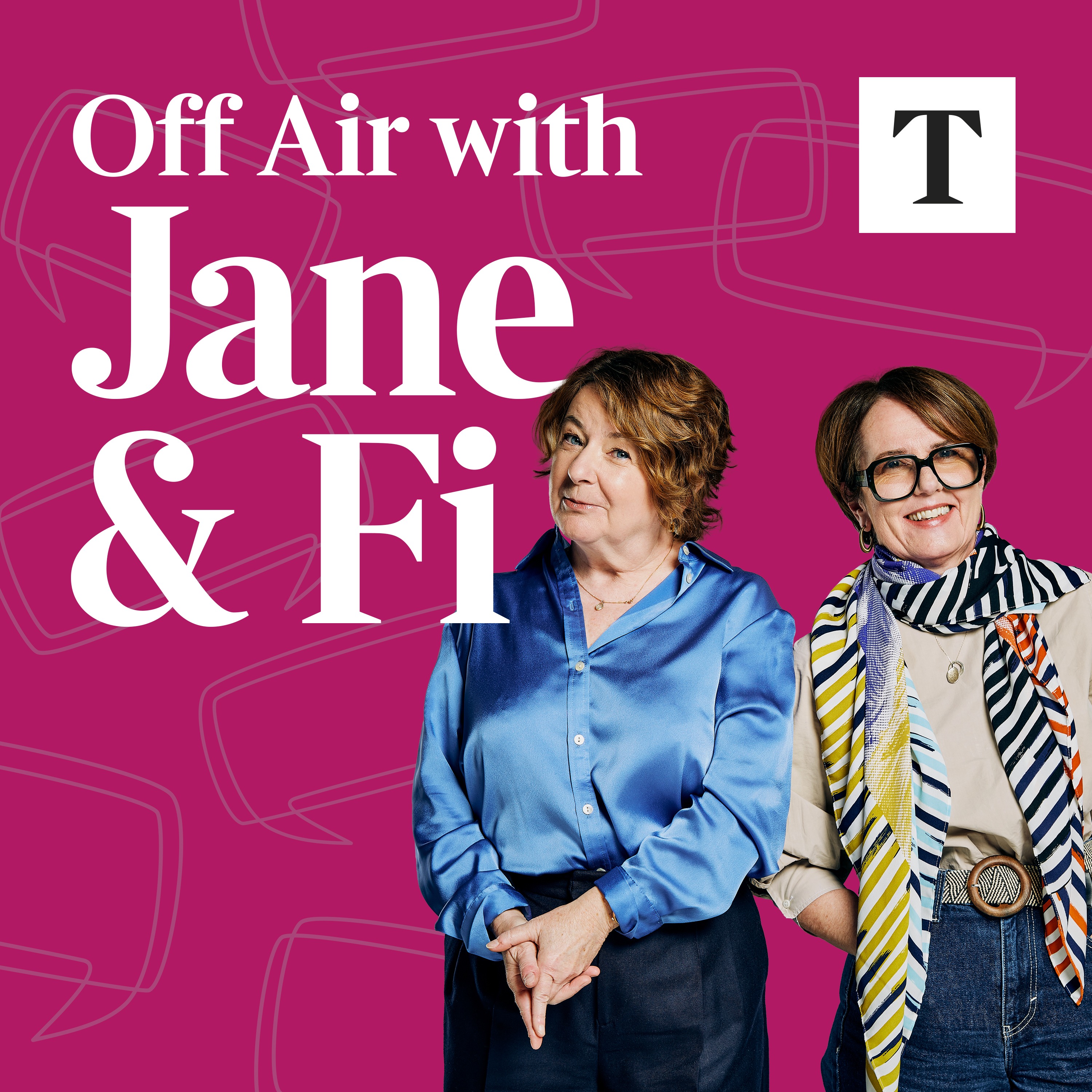
- Off Air with Jane & Fi
- OFF AIR... EXTRA
In short
This Friday bonus episode of Off Air (with Raya Neeker interviewing) is mainly about Elizabeth Hurley’s long-running breast cancer advocacy and how attitudes and outcomes have changed, plus a few career/life updates.
Key claims
breast cancer stigma has lessened but remains in some cultures; younger women are increasingly diagnosed and their cancers can be more aggressive; breast awareness/self-checking is still important because younger women often lack regular screening; mortality has dropped 44% due to advances in diagnosis and treatment.
Notable examples
Hurley describes her grandmother’s diagnosis and silence around “the c word,” and mentions a $15 million Estee Lauder grant to the Breast Cancer Research Foundation for research on younger women.
Guests
Elizabeth Hurley (actress/model; Estee Lauder ambassador since 1995; breast cancer advocate; organic farmer/producer; former partner of Hugh Grant) interviewed by Raya Neeker (Sunday Times editor).
Written by AI. May contain mistakes.
Chapters
3:04
Liz Hurley on Breast Cancer Advocacy
Liz discusses her personal journey and advocacy for breast cancer awareness.
“Liz was in to talk about her advocacy for breast cancer awareness because it is Breast Cancer Awareness Month.”
4:25
Shifts in Attitudes Towards Breast Cancer
Exploration of how attitudes toward breast cancer have evolved over the years.
“So when we started off, it was, we wanted to raise awareness of breast cancer because at that time there wasn't any.”
5:40
The Importance of Breast Awareness
Discussion on the need for breast awareness among younger women.
“Is it still a stigma, do you think, talking about breasts and breast cancer?”
7:48
Research Funding for Breast Cancer
Insights into research funding and its importance for breast cancer studies.
“we know that because it's harder to detect breast cancer in younger women because they are too young for regular screenings and they don't necessarily self-check as much as they should.”
8:23
Liz's Enduring Partnership with Estée Lauder
Liz reflects on her long-term collaboration with Estée Lauder and its significance.
“Tell me a little bit about why you think that partnership is so enduring.”
11:30
Life as a Public Figure and Aging
Liz shares her thoughts on aging and the beauty industry's pressures on women.
“And, you know, I'm very happy to do that.”
14:00
Living in the Countryside
Learn about the joys of country living and early bedtimes.
“So by 6.30, I kind of feel it's bedtime.”
15:14
Blended Families and Relationships
Explore how blended families function and the dynamics of past relationships.
“And he, he's, he's a fan of the English countryside.”
17:00
The Royals: A Fictional Experience
Discover the fun and quirks of being part of a fictional royal family.
“I did enjoy making the royals very much.”
19:13
Austin Powers and Cultural Impact
Reflect on the lasting influence of Austin Powers and character portrayal.
“I have to ask, so many people, I mean, younger generations as well, because it's still incredibly enduring and popular, know you as your role as Vanessa Kensington in Austin Powers.”

Ask about this episode
Get the gist, explore an idea or ask about something said.
 Claude
On Off Air with Jane & Fi, what are the key points of this episode?
Searching your listeningTranscript
Automatic transcript. May contain errors.
0:00Great meeting. Who took notes? Anyone? With Monday NoteTaker, nobody has to take notes again. It joins your call, transcribes it, and turns the whole conversation into a clear plan. Action items, owners, deadlines, all right there on your Monday.com board, ready for the team. So the meeting ends and the plan already exists. Meetings aren't just talk anymore. Go to Monday.com, the AI workspace platform.
0:30Therapy's biggest impact doesn't show up in some dramatic breakthrough. It shows up in the smallest moments. You bite your tongue instead of escalating. You put your phone down instead of firing off that text. You say what you actually mean instead of what would hurt someone else the most. Nobody applauds those moments, but they quietly change your life. That's what growing feels like. And that's exactly what Grow Therapy is here for. Grow is therapy that works, covered by insurance. Sessions average$21 with insurance, and some pay as little as$0, depending on their plan. There are no subscriptions, no long-term commitments.
1:07You just pay per session. Grow connects you with thousands of high-quality, licensed therapists across the U.S., offering both virtual and in-person sessions, nights and weekends. You can search by what matters, like insurance, specialty, identity, or availability. And you can book a therapy session in minutes and begin in as little as two days, not the national 48-day average. See if you could pay as little as$0 for therapy in seconds at growtherapy.com slash ACAST. That's growtherapy.com slash ACAST. growtherapy.com slash ACAST. Availability and coverage vary by state and insurance plan. Grainger knows if you're a procurement manager at an industrial manufacturing facility, You're balancing inventory and budget while sourcing critical supplies across the operation.
1:57Too much inventory? Costs climb. Too little? Production slows. Grainger's$2 billion in on-hand inventory helps you get what you need when you need it. So you can help keep budgets balanced and lines moving. Call 1-800-GRAINGER, click grainger.com, or just stop by. Grainger, for the ones who get it done.
2:28Greetings, everybody, and welcome to a Friday bonus edition of Off Air with Jane and Fee. Although the more wide awake amongst you will soon realise that neither Jane nor Fee is involved in the following interview. Raya Neeker is in conversation with Liz Hurley. Quite often when Jane is away, Raya and I do the afternoon show together. Unfortunately, my bad cough took me off air, ultimately off air, the week before last. So Roya, who is the editor, the royal editor for the Sunday Times, stepped up, stepped in and did the interview with Liz Hurley. Liz was in to talk about her advocacy for breast cancer awareness because it is Breast Cancer Awareness Month.
3:11Sit back and enjoy. Elizabeth Hurley has been in the public eye for 40 years as an actress and model. known for Austin Powers, Bedazzled and That Safety Pin Dress. She's also been an organic farmer and film producer, one-time partner of Hugh Grant, who in fact convinced her to take the Austin Powers role. More on that later. And for the past 31 years, she's been campaigning with Estee Lauder to raise awareness of breast cancer after losing her grandmother to the disease. In the UK, one in seven women will develop breast cancer in their lifetime. October is Breast Cancer and Awareness Month, so I sat down with Elizabeth.
3:50She told me about the work she's been doing, how attitudes towards breast cancer have changed over the past three decades and why there's still more to be done. This is something that I've been doing since 1995, which makes this my 31st year of working for the Estillarder Companies. And it's been just an unbelievable journey in a way. It's a humbling journey. and a journey on which I've learned so much. And, you know, my aim has just been to try and share whatever I've learned about this disease with as many people as possible. So when we started off, it was, we wanted to raise awareness of breast cancer because at that time there wasn't any.
4:33The pink ribbon had only just been co-invented, as it happens, by Evelyn Lauder. And the Breast Cancer Research Foundation had just been started. I'd just lost my grandma to breast cancer. You had and tell me about that because no one really talked about it. No one talked about breast cancer she was really embarrassed about it didn't tell anyone she'd found a lump once she'd been diagnosed finally uh she still didn't want to talk about it because she thought it was just really embarrassing to talk about breasts and in those days I mean even cancer it was all about the c word and you know sort of whispering and it was I think it must have been so isolating and terrifying for people going through a cancer diagnosis for women with breast cancer it it felt like a death sentence and since that time mortality rates have dropped by 44 percent huge advances have been made in breast cancer and it's been my great pleasure to tell people about the advances that have been made and the improvements to diagnosis the improvements to treatment but um you know an awful lot of women still die of breast cancer.
5:40Is it still a stigma, do you think, talking about breasts and breast cancer? I think a lot of the stigma has been removed in some areas and amongst some cultures. But I think there's still an awful lot of work to be done in different cultures. And I've been really lucky that the Estée Lauder companies have some other global ambassadors that work alongside me who are sort of representing different communities. And there's a wonderful girl called Leanne who has a charity called Black Women Rising. She was a breast cancer survivor herself. She was diagnosed, I think, in her early 30s. And I've learned a huge amount from her about how messaging to different communities needs to be different.
6:29And different help is needed in different communities. There's also someone from the South Asian community who again has her own organization. I've learned so much from Karina about how she needs to talk to women. And then there's another one who was very young when she was diagnosed too. And I think what's been the most sort of moving message that we've had this year is the realization that so many more younger women are being diagnosed with cancer. in fact it's growing faster among women under 45 than it is for women over 45 now but there's it's like right back at the beginning where we were really teaching people about breast awareness um a lot of young people don't have it because they think it's a disease for older women so what should women and what can women easily be doing regularly to check themselves self-check and they need to be aware of their own breasts they need to develop some kind of breast awareness which you know is a message that I think older women have been receiving for a longer time but there is still a misconception amongst younger women that it's a disease for older women yeah they can't get it and they're less likely to check their own breasts regularly and they're so they're less likely to find perhaps that something might have changed um but unfortunately we know that because it's harder to detect breast cancer in younger women because they are too young for regular screenings and they don't necessarily self-check as much as they should.
7:56We also, unfortunately, know that the cancers that young women do get tend to be extremely aggressive and they're very fast developing. So, you know, there needs to be a great deal more research on this new phenomena. And, you know, I'm glad to say that the Estelorda companies have just made a grant of$15 million direct to the Breast Cancer Research Foundation to study this. You've been working with Estée Lauder for more than 30 years now, which is quite an extraordinary feat, if I may say so, in an industry that is all about youth. Tell me a little bit about why you think that partnership is so enduring.
8:35Well, I think for me, what's made this whole journey for me, both in the beauty business and with the breast cancer campaign, is the fact that the realization that I am working for a company who respects that women of all ages buy creams. Arguably, they buy more expensive creams when they're older. Yeah. Perhaps they buy more of it, too, because there might be some more disposable income. And I think the fact that, you know, Estee Lauder companies respected that and didn't replace me. I mean, I was actually 29 when I started work for them, which in itself is very old to start as a model. It was my first modeling job.
9:15So most models had been put out to pasture by then. So I was incredibly lucky to be chosen as the face of Estee Lauder back then. Did you worry they would replace you as you got older? Well, I didn't really worry about it, but I suppose it felt inevitable. that, you know, there'd be younger people coming in. And I think what's wonderful now is that companies are using a range of ages, understanding that, you know, I mean, at my age, I'm 61, so I'm less likely to respond well to an ad of a 21-year-old selling a wrinkle cream. You're like, hmm. I mean, some people might think, oh, my God, I'm going to look like that.
9:56But most of us probably know we won't. Yeah. So I think having spokespeople that can actually speak to you and you can identify with them is, you know, something to be encouraged. And the Estee Lauder companies have always done that. You've been really open and honest about the pressures on women in terms of the beauty industry, which, of course, you have a lot of experience of. You know your stuff. How do you I mean, how do you personally you look incredible? I'm not just saying that. How do you feel the pressure of a woman who's, you know, in her sixth decade? um well I don't really feel a pressure face-wise to be honest because you know I think we've in my lifetime of being a grown-up there's been so much information out there about how to look after your skin how to use sunblock how to drink plenty of water how not to smoke how not to drink too much alcohol all those things have been very readily available to us I think if you go back many decades when people didn't know smoking was bad for you they didn't know the sun was bad for you nobody really drank water you know it's very very different times but we have had a huge amount of information at our fingertips and is it more a body thing then well I think one because you know you know we dress a little differently not only because fashions have changed but you know our bodies have obviously changed a lot too and you know are we less free and easy than we used to be with dressing when we were 25?
11:17Of course we are. But it's not an appalling thing to have to contemplate and think about. It's very normal. But yes, does one have to put a bit more thought when you're looking at a rack of clothes? Yeah, a little bit. But, you know, it's not depressing. It's challenging in a way. And, you know, I'm very happy to do that. And it's, you know, It's a small price to pay, I think, for having, I suppose, having had the time to grow and develop. Do you feel more confident now than you did as that 29-year-old who started? Sort of body image, just image-wise? No, I wouldn't say that you feel more confident with your body and face as you age.
12:02But I feel that as a person, when you gain more knowledge about things, very often understanding that you don't know everything because, you know, we can be a bit full of ourselves when we're younger. But I think having more self-awareness and also having a much clearer idea of the people we aspire to be and the way we want to treat people and the way we want to be treated. I think that is obviously something that is, you know, knowledge that you acquire. as you get older. I know I certainly have. So I think it's really wasted on the positive side, to be honest, becoming more mature. And, you know, we do the best we can to present how we want to present and, you know, take care of ourselves.
12:49But it is a cumulative thing. And it is something that, you know, I'm often asked if I would advise people younger than myself to do. and it is really look after yourself. Look after your health and don't take it for granted. And, you know, look after your vital organs, look after your ankles, your knees, your shoulders, everything that could give you trouble later. Just, you know, have a little bit of awareness of that now and sort of look after yourself. You're about to go to the States for four months to film the series, The Burbs, the new series that you're going to be taking part in for Sky.
13:21Tell us a little bit about that and filming in Hollywood. What's that like now compared to when you started? Well, I've always loved filming in Los Angeles because there's a, I don't know if it's because I'm English, but there's a glamour attached to it for me that we're filming on the Universal lot. And filming on a big studio lot in Hollywood is, for me, still incredibly exciting. I get every time I drive through the big gates and you just know the history that's gone on there. And it's, you know, it's like anywhere. I'm pretty pleased about doing that. And this is a great group of people I'm working with.
13:57um i'm going in kiki palmer is the lead of the show and jack whitehall and i play his mother coming in it's great part and it's a great show it's really good fun so um and you know it's a californian winter yeah anyone jealous you're going to be escaping the herefordshire winter that you know because you've got a house in herefordshire you're real you love the country i love the country i live full time in the country i only visit london when i have to yeah um i actually love winter at home i mean i love snuggling in front of the fire i mean i do tend to go to bed quite early in the winter in the country because, you know, it's dark by four.
14:29So by 6.30, I kind of feel it's bedtime. I don't quite go to bed at 6.30. My boyfriend goes to bed extremely early. Billy Ray. He goes to bed really early. Does he? Yeah. He's a rock star. Yeah, I know. Do you turn in early? Rock stars keep their own time, I've realised. If they feel like, I'm really disciplined. So if I'm jet lagged, I try so hard not to snooze during the day to really knock it on the head. Rock stars have, they go to sleep whenever they feel like it. They want to work in the middle of the night, 2am they work. They want to go to bed at four in the afternoon. They do, whereas I just can't do that.
15:03I can't do it to myself. So we're a little different like that. Right. But, um, but yeah, no, he loves it. And when you get to spend some time with him in the States when you're there. Yeah, yeah. We're going to live together out there. Oh, nice. In LA. Lovely. And he, he's, he's a fan of the English countryside. So I hear from you. Yeah. You know what? I think he really loves it. He never spent any time here. Just briefly on tour and stuff. But he spent most of the summer here last year. And on and off, we were here this summer. We had to go to America quite a bit. And he loves it. Absolutely adores it.
15:34What's the most consensual English thing that he loves or British thing that he loves? Well, I think for him, because he grew up in Kentucky but lives in Tennessee, and their summers are pretty brutal compared to ours. They're very hot and very humid. And it rains a lot. So for him to have our beautiful air and just the beauty of our countryside, I think, is beautiful for him. Your son, Damien, who's a film director, who's directed you in a film, I heard you talking about the fact that they get on really, really well. And you've got this lovely sort of blended family now. Tell me a bit about how that works.
16:08Well, it works very well, I think. When I dated a previous boyfriend of mine, Shane, who sadly, of course, isn't with us anymore, He had three kids and they were all sort of the same age as Damien and then a few years above, but they were kids. They were at school. There were still school runs, school holidays. There was an awful lot to juggle. And now, you know, Billy and I are, you know, we're empty nesters. And, you know, all our children are independent and Damien is the youngest of all of them. And it's very different. So it's more grown up and it's easier. but you know there's a sometimes I miss being a hands-on mummy you know I don't miss the school runs I don't miss running around the house screaming so I can't find a tennis racket I don't mind any of missing that but you do sort of miss I suppose being so hands-on you know it's it's an adjustment to have to make yeah you mentioned the late Shane Warne who I know got on very well with Damien and all your exes have I mean you famously went with Hugh Grant he's still a very good friend of yours as is Arun what is the trick to staying such good friends with exes is is there one for me I think if I've really loved someone I don't think you can turn that off I happen to like them as well but um it doesn't mean you necessarily like somebody that you've loved but I think you still love them so if you really love somebody you're still always on their side you know you're still looking out for them um I mean I do also like Hugh and Arun very much but I've had exes I didn't always like but I still love them there's still you know there's always a bond if you've fallen in love with somebody and spent time together and you know they've been your best friend it's really hard to throw that away I think even if you know sometimes a friendship ends if you really love them there's still there's still something really inside you that made you who you are so it's hard to deny that I have to ask as royal editor of the Sunday Times is one of the bits of my day job you were in a series called the royals about a fictional British royal family living in London.
18:11How fun was that to do? And who did you study to get any tips? I did enjoy making the royals very much. I mean, it was fictional. I wasn't based on anybody. In fact, if I based myself on anyone, it was on Joan Collins. Fabulous. In Dynasty, of course. The one true queen. Yes. And then, of course, she came in to play my mother. So there's so many of us in the same scene. But I think it was enormous fun to play a fictionalised royal family through Americans' eyes because it was an American show written by Americans. So was etiquette wrong? Of course it was. There were so many things that were mind-boggling in there, unlike something like Downton Abbey, which was so beautifully researched and was so spot on.
18:57Ours was the opposite of that. It was ludicrous. But people would go, hey, queen, to me. You'd just be like, whatever. That works for me. Hey, princess. Hey, Duke. But it worked and it was fun, but it wasn't real. I have to ask, so many people, I mean, younger generations as well, because it's still incredibly enduring and popular, know you as your role as Vanessa Kensington in Austin Powers. When you made that film, did you realise how much of a sort of hit it was going to be and how people would still be watching those clips and dressing up as Vanessa for Halloween parties even now? Yeah, no, we didn't because it was a, it's, my gosh, how long ago?
19:35It was 30 years ago. Yeah. It was 29 years ago. We're about to have our anniversary. It's 29 years ago. No, of course we had no idea. In fact, when I started doing it, I read the script. And I was with Hugh at the time. Hugh read over my shoulder. And it was an offer. And in those days, I wasn't offered a lot of things, just an offer. Normally, I had to have a meeting or something. And this came through as an offer. And I was reading it. The earth am I reading? Because it read very strangely. And Hugh looked over my shoulder and went, oh, my God, it's Mike Myers. He's a comic genius. just say yes.
20:07Don't even finish the script, just say yes. You have to work with him. So I said, okay, yes, I'll do it. And it was extraordinary. I remember our first read through, I was just like, oh my God, because he was outrageous in it. So no, of course we had no idea. And I think with that sort of humour that's so out there, it can work or not work. Do you think that film would be made now? Could it be made now? Yeah, it probably could because they made Rivals, didn't they which was set in the 80s and I was so impressed with the filmmakers who made Rivals that they didn't tone anything down and they really did make the book the way Jilly Cooper had written it and I think that made it a so much more enjoyable series to watch rather than if they changed everything and snowflakes it up and then it would be like why make Rivals so I love that so I think probably Austin Powers could probably still be made today because it's what it what it was.
21:03I mean, my character probably was quite woke, in fact. This was, you know, and that was 29 years ago compared to how Austen was who was from the 60s and smacking ladies on the bottom. Well, in 97, you didn't slap ladies on the bottom. So I told him off for that, don't call me baby. All that stuff. So my character's there now. 30 years on, has it, will I say more to him? I don't know. I don't know. It'll be interesting to see. Watch this space for the second.
21:45Congratulations. You've staggered somehow to the end of another Off Air with Jane and Fee. Thank you. If you'd like to hear us do this live, and we do do it live every day, Monday to Thursday, 2 till 4 on Times Radio. The jeopardy is off the scale. And if you listen to this, you'll understand exactly why that's the case. So you can get the radio online on DAB or on the free Times Radio app. Off Air is produced by Eve Salisbury and the executive producer is Rosie Cutler.
22:31If you're looking for something predictable and low friction over the long term, public markets may be a suitable option. But the moment you want different investment characteristics, it may be time to consider the private markets. See how your wealth can work smarter at creativeplanning.com slash access. This is the story of the one. As a shipping manager, he's running the dock, stocking supplies, and making sure every order goes out on time. And Grainger helps him stay prepared. From shipping supplies to PPE to hand tools, he counts on Grainger to keep products moving and trucks rolling. So his operation runs smoothly no matter the shift.
23:08Call 1-800-GRAINGER, click grainger.com or just stop by Grainger for the ones who get it done.
From the publisher
Welcome to this Friday bonus episode. October is Breast Cancer Awareness Month.
Elizabeth Hurley is the Global Ambassador for The Estée Lauder Companies’ Breast Cancer Campaign. She came into Times Towers to tell Roya Nikkhah what she has learned from more than 30 years of breast cancer advocacy – and why there is now a growing focus on breast cancer in younger women.
If you want to contact the show, ask a question or get involved in the conversation, please email us: [email protected]
Follow us on Instagram! @janeandfi
Podcast Producer: Eve Salusbury
Executive Producer: Rosie Cutler
Hosted on Acast. See acast.com/privacy for more information.
More from Off Air with Jane & Fi
All episodesWe use cookies.They keep VO running smoothly and help us improve it. Privacy policy