
In short
Jesse Williams discusses how reading shaped his life, his strict-but-accountable approach to teaching/parenting, and how Toni Morrison and other books helped him understand race, masculinity, and power. He also connects these themes to politics, media rhetoric, and his own career shift into acting/producing.
Guest background
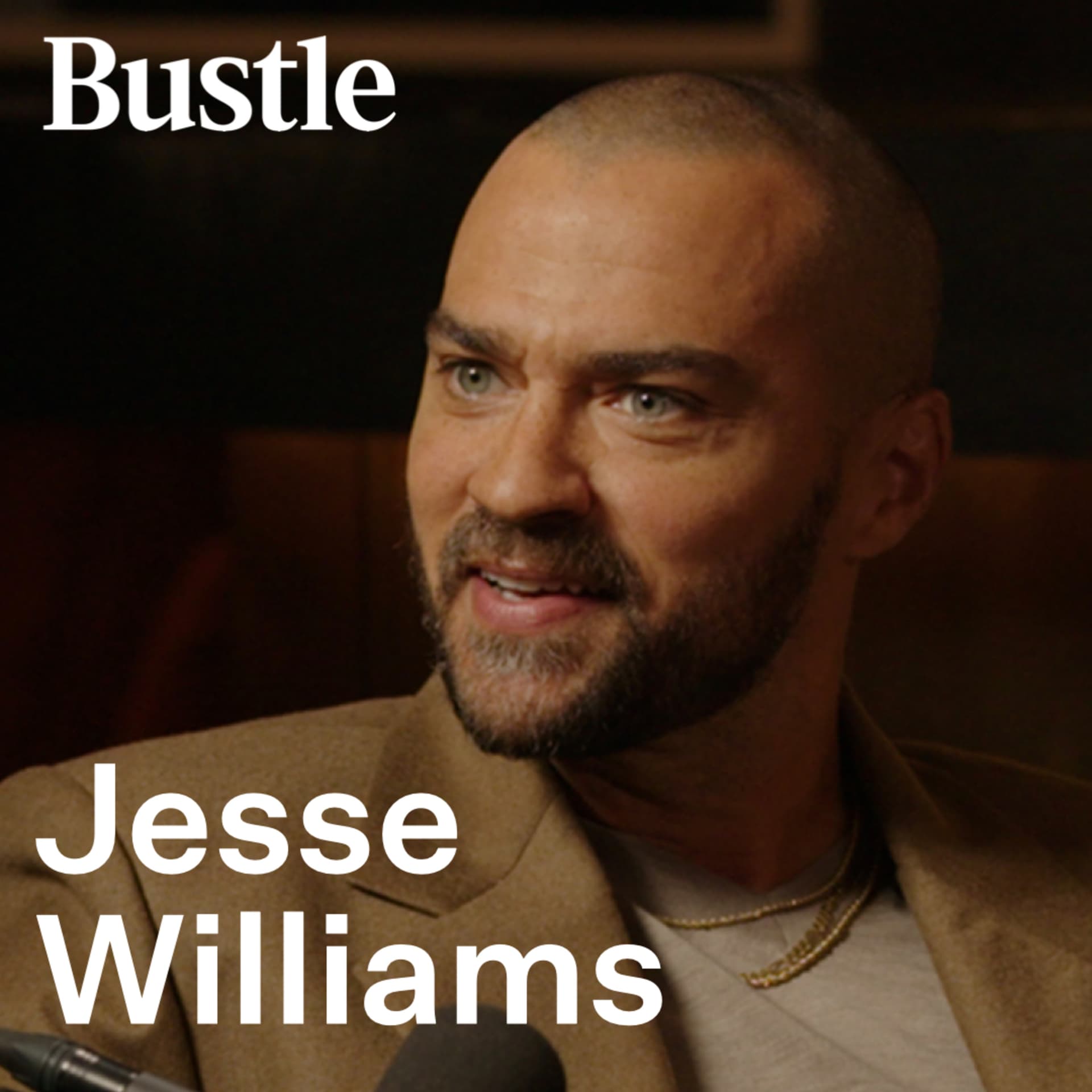
Jesse Williams is an actor and producer. Before acting, he taught (mostly high school) humanities/social studies, including African and African-American history, and taught English. He grew up in Chicago in the 1980s, then moved to an all-white suburb in Massachusetts where he faced racism and was sent to private school.
Key claims
Reading built rigor and accountability; Song of Solomon expanded his worldview beyond “limited” reality; racism functions as distraction; capitalist aspiration can isolate people; American masculinity demands domination; right-wing media rhetoric is often incoherent and performative.
Notable examples
African burial ground discovery article clipped by his father; teaching Invisible Man; syllabus picks like Guns, Germs, and Steel; Morrison’s Song of Solomon; The Fountainhead; A Confederacy of Dunces; A Water and the Spirit; his 2016 BET speech; his Prime Video action-adventure show shot on the Amalfi Coast/Rome.
Written by AI. May contain mistakes. Listen to the episode to check what was said.
Chapters
Tap a time to open that second in VOThe Importance of Reading in Childhood
0:15 to 1:24
Jesse discusses how his strict upbringing emphasized reading over TV, shaping his early education.
“It was always very important in the house.”
Influential Books and Articles
1:24 to 3:05
He shares impactful books and articles from his childhood, particularly about history and culture.
“It wasn't a lofty story of an accomplishment.”
Teaching Philosophy and Influence on Kids
3:05 to 5:14
Jesse reflects on his approach to teaching and fostering a love for learning in his children.
“And even if you told yourself you wouldn't.”
Significant Literature in Education
5:14 to 6:45
He discusses books that he would include in a dream syllabus today, focusing on personal and cultural understanding.
“europe's domination of the world in a way that i think helps us process some of the shame and suspicion around it.”
Impact of 'Song of Solomon'
6:45 to 8:51
Jesse reflects on the profound impact of Toni Morrison's 'Song of Solomon' during his high school years.
“So, A, that was like my first kind of explosion of the profundity of poetry in narrative.”
Navigating Race and Identity
8:51 to 11:36
He shares his experiences growing up in different cultural environments and the challenges of race.
“All black, sometimes Puerto Rican, but all black community.”
Activism and Literature
11:36 to 13:00
Jesse discusses how his background in activism influenced his literary pursuits and community efforts.
“And one of the results of that interaction and that kind of what the curtain got pulled down on the school and where I stood there, I also lobbied really hard for an African-American literature class.”
The Allure of Capitalism and Its Isolation
13:00 to 14:03
He analyzes the isolation created by wealth and fame, drawing parallels to characters in literature.
The Isolation of Success
14:03 to 18:00
Explore how success and fame can lead to isolation from one's community.
“And that felt in thinking about how Milkman's wealth in this small town kind of isolates him from understanding why guitar is committing the actions that he does.”
Masculinity in America
18:00 to 19:21
Discussion on America's specific brand of masculinity and its societal implications.
“And America has a very specific brand of masculinity, right?”
Show all 19 chapters
The Fountainhead's Ideals
19:21 to 21:14
Analyzing the themes and writing style of 'The Fountainhead' and its impact.
“This mythical, this mythical, like, again, bootstrapping.”
Political Reflections
21:14 to 22:40
Reflections on the political climate and the rhetoric of right-wing media.
“But I wanted to know how they fill their time and how they metabolize lying so consistently and knowingly and to the point that they don't even realize they're lying.”
Literary Discoveries
22:40 to 23:30
Discussion of personal experiences with reading and discovering literature at a young age.
“You know, I think people forget, you know, Bush was this kind of Orwellian, like, healthy skies, clear forests, like naming things the opposite of what they are.”
Racial Perspectives in Literature
23:30 to 29:41
Exploring the representation of race in literature and the implications of audience expectations.
“I have my notes because I read it because this guy I had a crush on was obsessed with it.”
Absurdity of Trolling
29:41 to 31:20
Discussion on the absurdity of internet trolling and its cultural implications.
“The New Yorker was writing about it in 2021 and they said, in 1980, he seemed harmless and Ignatius, the main character.”
Political Engagement and Burnout
31:20 to 33:40
Insights on political engagement and personal burnout in activism.
“So your whole hour is dedicated to responding to what Bill O 'Reilly said?”
The Long Game of Politics
33:40 to 36:24
Reflections on the long-term nature of political change and activism.
“It matters, you know, the sanctity of our lives and our safety and our voting rights in our schools and the safety in our schools and police in schools.”
Books and Spiritual Awakening
36:24 to 39:50
How literature can lead to spiritual awakening and understanding different cultures.
“We're always at war, but like, all right, America will figure it out.”
New Project: Costiera
39:50 to 41:43
Introduction to Jesse's upcoming project 'Costiera' and its themes.
“It's an original story, really fun kind of action-adventure, comedy, drama.”
Transcript
Automatic transcript. May contain errors.0:00I loved Michael J. Fox movies. Teen Wolf was dope. Never seen it. You've never seen Teen Wolf? No. You kids.
0:10Hey Jesse, welcome to One Night Stand. Thank you. Thanks for having me. Hi. Hi. Have you always been a big reader? I'm afraid so, yeah. Okay. Yeah, I have been. It was always very important in the house. We weren't really allowed to watch TV as much as kids. My parents had like a system actually for kind of paying for being able to watch TV. You only got a couple half hour slots. Really? Okay. So reading was everything. And of course, I'm 45 now. So this was the 80s. There was no internet or any other way to entertain yourself outside of magazines from the library. The library was kind of the source of entertainment.
0:43I mean, the library is great. Yeah. What were some of those early books you remember? I was, I had, there was two, there's kind of fiction and nonfiction. My dad was drilling nonfiction into me, a lot of historical narratives, a lot of like continental African history and African-American history, black cowboys to try to create some adventure in some of that learning. We read, I mean, we had National Geographic, Ranger Rick magazine, these little magazines. But I think the first real meaty books that I got into were like the J.R.R. Tolkien books. I love The Hobbit and Lord of the Rings. And yeah, and then just a lot of like newspaper articles.
1:19was my dad would love to remember in the 80s your parents like cut out clippings we call them clippings from the newspaper and they'd be on my bed when I got home and I had to read them and then write a report really this was a this was a like a system my dad thought it was very cute he's like yeah I have schoolwork and then I have homework and he would have there'd be clippings on my night on my bed or my nightstand almost I don't know two three times a week and I would have to when I got to my room read them and then write a report before I could go out and play do you remember any like impactful articles that he clipped for you there was i think the new york times there was an article when they discovered the african burial ground on wall street downtown here they discovered all these bodies and kind of unpacked and kind of a deeper dive into where all these enslaved africans came from and why they were disposed of here that was jarring.
2:11It wasn't fiction. It wasn't a lofty story of an accomplishment. It was kind of evidence. It was a forensic. It was a crime scene and I was very young. How old did you think you were now? It was before fifth grade. Maybe fifth grade. There were so many. It was not only the article but supportive reference documents. I had to read them in his office and I remember he positioned me in front of the window so I could see my friends playing and he'd narrate like this is so you know you're making a decision to do something that matters instead of something that doesn't like it was my dad was a very a drill sergeant in terms of academia that was torture I hated that I learned to value it later like a lot of lessons but I thought it was cruel do you impose I mean not to the level of cruelty but anything like that with your children like are you very strict with their reading you sounding like their parents.
3:08And even if you told yourself you wouldn't. Yeah. And I try to self monitor, but I absolutely I try to enforce not just a sense of rigor, but a sense of personal accountability and responsibility in them and have them. I ask them questions. I don't really tell them what to do. I ask them if they think this is the best thing to do or get them thinking. You know, you're my my dad always said, you know, school is not for you in a place for you to learn. school is a place for you to learn how to learn. The ways in which to absorb information that's effective for you that you can apply. And also a great sense of duty and obligation.
3:44A lot of people have fought and died to put you in a position to be able to better yourself. And that kind of guilt, frankly, doesn't feel good as a kid. It feels way too heavy handed. But it did get a result, I think. So I try to do the best parts of that with my kids. And sometimes I'm sure I'm a little too firm, but sometimes you've got to build foundation. And some of these things aren't optional and they're not going to like it, but they will be stronger for it. Yeah. And then you went on to become a teacher before you were an actor. And I was reading you taught English as well. What were some of the books you were teaching back then?
4:22Invisible Man, Ellison. I bounced around. I was a sub, then I was a long-term sub, and then I taught full-time, mostly high school, but I covered kindergarten for five months for a teacher on maternity leave. I did some seventh grade, but primarily high school. And so it was humanities, social studies, African history, continental African history, and African-American history, and just general American history, and then a little bit of English, yeah. If you were to teach today, what would be the dream books to have on a syllabus? like to teach like what do you think it would be really if you could like teach a high school class what would be important to you and maybe it's these books you've chosen today it would be a combination of fiction and non-fiction yeah for a couple reasons all around understanding yourself ourselves and our place in the world so i would teach gun germs and steel it really helps understand europe's domination of the world in a way that i think helps us process some of the shame and suspicion around it.
5:25It's a real wonderful read. Really, I'm a lover of language. Like the way you think is the way you talk. So the more you read, the more you're able to get artillery, ammunition to be able to express yourself in detail instead of clumsily and vaguely. There's ways to be far more precise and illustrative. And I think it's beautiful. I love the poetry of language and what I love about some of these books and Baldwin I would teach Baldwin you know people just lyricists people can really you know just take you on a journey you know adjacent to the point it's far more interesting to kind of have them take a more circuitous route sometimes uh than than just a to b and especially as on matters of emotion or ponderings you know yeah well I think then Song of Solomon by Toni Morrison is a pretty good place to start just pretty good, just pretty good lyricist.
6:19Why did you want to talk about that one today? All of these books changed my life in some regard, but Song of Solomon may have been the first. And I read it in high school. You did. I read it in high school as part of, with our class. Okay. And I was so grateful. I became so grateful that I got to read it in community with the help of others. Being able to unpack it daily or weekly and wrestle with ideas and disagree and go back and re-examine possible meanings. So, A, that was like my first kind of explosion of the profundity of poetry in narrative. Also, this blend of like African spirituality and kind of expansive kind of mysticism.
7:07It kind of, what's tangible and real is not the limitation, not the only way. It's a very limited way to view the world. there's something around the blurry edges of everything. And it turned the world into a five-dimensional place for me, I think, for the first time. And not always during the reading, but in the arguing about the reading and the discussion about the reading and then kind of being left with that. It's almost after you work out, that's fine, but the next day you're sore. You know, like there's a residue there to being stretched and challenged by her words. There's so much about Song of Solomon that deals with kind of collectivism and community and kind of ascension through attachment.
7:48Yeah. Not just going away to be on your own, which is culturally I think we're raised in so much kind of individualism as king and capitalism as king and hard work and bootstraps and leave everything behind. And this was kind of flew in the face of that. It was about return and regathering all that has made you as an adolescent. You know, I'm reading this in high school. So you're soaking up all this history and you kind of have this utopian view of the world. And you're a little bit dogmatic in your thinking. I was certainly a self-righteous kid and absorbing all this information and very politically active.
8:26My parents were super politically active. So I was charged and I agreed with Qatar. But I related to Milkman and I related to Qatar. And I needed the gentle hand and guidance of Ruth and Pilot. These were all family members or inner dueling thoughts or figures in my consciousness that I really enjoyed the company of. Well, I'm curious. You had moved from Chicago, right? Yeah. I grew up in Chicago in the 80s. All black, sometimes Puerto Rican, but all black community. and then moved to an all-white suburb of Massachusetts. If anybody's been to some of the suburbs in Massachusetts, especially in the 90s, there's a bit of like this.
9:11I experienced certainly this kind of lower middle class, ethnic white, vitriol, racist atmosphere. I became a nigger really quickly there, immediately. And we were the only black family in the area and we were poor and had a lot to push back against as I was even learning myself. You're 12, you're 13, you're fighting against society, you're trying to establish some kind of individuality, but you also want to just blend in. Which one is it? And so much is happening culturally, musically, all these. So there's a lot of inputs. I've gotten into a lot of trouble, to put it simply, acting out a lot.
9:49And that's why I was sent away to a private school. And while I resented that in principle, it really changed, if not saved a good part of my life I was challenged in a lot of amazing ways grappling with all of that and also reading this book in such a white context we were talking about before we started taping like the disciplinary committee and how a black student had never been on it before and did it feel like did this feel like a manual to you not a manual but like a kind of like a guide post in some ways yeah I mean Toni Morrison certainly yeah felt like one of my ancestors. She was alive at the time.
10:27She died on my birthday, actually. Really? She absolutely felt like one of my guides. She was. And yeah, I was navigating. I have terrific parents. Super lucky in that regard. They were guides as well, even though I didn't always agree with them. And you're always tussling with your parents and what they want for you. I very much felt like I was in the midst of a battle, not just with myself, but with society. and was forced to contend with race all the time. My parents are black and white. I blend in to both worlds and I overhear a lot of the truths in these communities and I withstand the slings and arrows of a lot of racism very quickly and very consistently, but also was familiar enough with the language to pick up on a lot of the passive and unending kind of the tapestry of racism.
11:17It's not just a comment or a remark. It's not about feelings. It's about power and constriction. And so being in a hall of power, an old institution of higher learning, seeing some of the traps that were laid for us there, the few black folks there. We were talking before we started. I got in some trouble acting out, and I beat up a kid that called a girl a nigger in my school and then had to go to the disciplinary committee and try my case, which is a very cool system, a very cool system they had where you try your case before half faculty and half students. And one of the results of that interaction and that kind of what the curtain got pulled down on the school and where I stood there, I also lobbied really hard for an African-American literature class.
12:06Oh, wow. Because we didn't have any place to really learn about our incredible titans of literature. And I got it. I got it passed. And we got an African literature class. One of the cool things that did happen was, to my memory, the kid that I fought or that I hit, I walked into the class that I had fought for, that we had advocated for. We got our own African literature class. And I walked into the class on the first day, and he was sitting there. He had signed up to be in that class. There's a larger story there, but he was a really great example of being responsible, being a human being and not feeling some false allegiance to this divisive kind of tribalism around race that we have in this country.
12:54Just being willing to evolve and grow and try to learn something a little bit more and being well-intentioned. that's an amazing story in that like obviously systemic change is so hard but to see like a tangible result and even if it's not you know you didn't overthrow Moses Brown and everything but like to have to implement that class and to be able to do that at such a young age I imagine that was like just very impactful it was I was we I was proud of our work and you know I think that that's also you know my parents were activists I grew up in an activist household and with organizing and labor organizing all around me and that's all about kind of matter is in some ways a different school of thought than some of the yeah works we're talking about today but matter is primary maybe more like mountain head like what you can touch and feel is the only thing that matters getting results protest boycott set stuff on fire obstruct the road do what you need to do to get results because they're not playing fair and I didn't do any of those things to get this glass installed but there is there is a reward at the end of the fight well you touched on the under the tension between milkman and guitar in this book and i was re-listening to your 2016 bet acceptance award speech and the tension of it where you're talking about how the pursuit of fame and money and all these things can really isolate you from the call like the experience of racial inequality, but also like the fight for it.
14:24And that felt in thinking about how Milkman's wealth in this small town kind of isolates him from understanding why guitar is committing the actions that he does. I just like I was really thinking about the parallels of that. Yeah. You certainly we see many examples of people getting drunk on access. Yeah. And that's, you know this is conditioning is real this is the allure of capitalist aspiration is we can all be anything i remember when i was in philly at university uh alan iverson had just been drafted so it was a real amazing time to be in philadelphia he's my favorite player and i remember trying to we were trying to rustle up some money to go to a game and I think that was the first time I kind of said to a friend like you know it's a trip that all these athletes it works so hard they commit their entire lives to something and the only way to really know you make made it and the only way to make it is to be able to play in a place where your own people can't afford to watch you play yeah like that's the peak is when everybody that helped you get there that literally was your nutrition can't afford to breathe in that air so that's both your highest form of success and achievement but also you're suffocating in a way whether you're aware of it or not that's a pretty schizophrenic confusing experience aren't you happy aren't you happy you should be happy and you see it coming or you see all the ingredients of the salad you're aware of them none of them are technically a surprise but to metabolize it and sit with it and wake up with it a month or three into it is a different thing.
16:10And I think that Milkman trying to, I remember feeling like I was both. Yeah. And, you know, I think whether this is, people have the Martin versus Malcolm debate or any debate about how to handle, tackle a problem, by the way, which is the, actually a great Toni Morrison quote, the real beauty and design of racism is it's a distraction. Everybody else gets to pursue, certainly everybody in the dominant class gets to pursue their interests. I'm a botanist. I'm really into gardening. I think I'm going to go to be an English Lit major. I like books. While we're struggling to just survive and get another gasp of air to hold us over for another two months to be able to figure something out and then poverty is draining us and we have to drop out and all these things, it's a distraction.
16:55And you're trying to prove. I'm going to spend the rest of my life trying to prove to you that I am smart or prove to you this or you're overcompensating. you're never actually free. To my memory, the milkman guitar duels, like kind of these verbal duels they have, their spiritual duels, their kind of understanding and really trying to convince each other. They're halves of a whole. The maddening experience of pervasive suffocating racism is you can't react to the wound because by then you've missed it and you bled out. You have to observe a pattern and then get out ahead of it and to my memory guitar's argument was like yeah maybe i'm taking down some so-called innocence but i've got to get out ahead of it because i see the pattern developing if i keep reacting to what happened yesterday it's going to keep happening if i am it's the definition of insanity if i expect a different result by just banging my head against the same wall i think a lot of that that book uh especially i was in my teenage years is like as a man, as a young, as a boy trying to be a man.
18:00Yeah. It's about masculinity. And America has a very specific brand of masculinity, right? You are not a man unless you're John Wayne, unless you're a cowboy, unless you have power and you're wielding it over other people. You have to be hurting people to be a man. You have to be strong and unfeeling and not compassionate and certainly not divine feminine and all these things. So a character like Guitart, you know, okay, I can't get it anywhere else. I can't have agency over my family, my household, my job. I don't wield any power whatsoever. Anything that I do have can be stripped from me at any moment from a child.
18:33So I'm going to overcompensate somewhere else. I was thinking as you were talking about the American ideal of a man, my thoughts started to drift towards another one you picked today, which is The Fountainhead by Ayn Rand. She wrote the book because she said thought that Howard Roark, The architect and protagonist was the ideal man. Yeah. Tell me why you wanted to talk about The Fountainhead today. I was kind of surprised you did. Yeah. So this is like. I'm not surprised that you were surprised. I loved the writing. Yeah. I think it's beautifully written. The book missed me, but I understand. I understand what it was aiming for.
19:12And I understand the heroism it was hoping to pedestal. And it's so humorless. so humorless but i understand the appeal of that lofty version of a man to look at yeah um but those are real those are real aspirations for real people that wield real power in our lives so it's important to understand the romanticism behind it it is a romanticism that in many ways uh drives what's happening on the right in politics today right it's identifies as Howard Rourke. Right. I think he is that and New York. This mythical, this mythical, like, again, bootstrapping. I built it out of nothing, even though I had every, everything, you know, invisible privilege guiding my life.
20:03But therefore, it's a, it's a total solitary, singular achievement. I thought the writing and the, and the dynamic between him and Keating and the disdain you have for these coworkers and peers and watching, there's multiple ways to skin this cat and, and watching you know this tension build as these characters tried to ascend and i but i did remember respecting the discipline of howard rork forget whether it's an architecture or somewhere else but just an ability to say no yeah it was a real example when i was reading it i thought it was an illustration of the power of no and if you believe in yourself the universe will provide what you're making space for kind of thing.
20:50I'm projecting a lot of that into it. But like that's what it's there for. But it's there. I don't love musicals, but I've seen musicals that I'm like, this is incredible. I don't care for it. Yeah. But it's incredible. I get it. You know what I mean? So I can appreciate things that aren't necessarily for me or maybe even are in opposition to me, but that's useful information. Completely. You know, I'm somebody, I worked in a law firm a couple law firms big law firms here in the city in my 20s and at one stage I worked in the basement of I think it was Paul Weiss and I couldn't the only signal I could get this is again early I don't know internet but I would listen to right wing radio all I could get was like Michael Savage like these like Hannity like these demon horrible horrible people but it was the strongest signal that would come through on the radio while I filed papers and unloaded boxes and separated privileged documents from.
21:50I found it really interesting. It was poisonous. Sure. But I wanted to know how they fill their time and how they metabolize lying so consistently and knowingly and to the point that they don't even realize they're lying. You believe the lie. Like I was an interesting character study. I think I'm an anthropologist. I like to I like to understand people. I find it fascinating. I think I watch this as an anthropologist. It's not it's not of me, but it's affects me. So I want to understand the recipe. What's in the food that I'm eating? What was the rhetoric that you were listening to at Gunn-Hannity back in the day?
22:25This was back like right before Air America happened, if they were Maddow and Al Franken. Right. You know, so this was the Bill O 'Reilly time. You know, this was, this is posh Bush Jr. Post 9-11, Bush Jr. You know, I think people forget, you know, Bush was this kind of Orwellian, like, healthy skies, clear forests, like naming things the opposite of what they are. But this vitriol was the beginning of, you know, great replacement theory. And they're coming for us. They're coming for us. And you got to support our troops by killing our troops. And, you know, the great upside down. But if you say it loudly and your face gets red enough and you're a man, then it's righteous indignation.
23:09You know, it was a lot of righteous indignation. It was just they're furious that anybody dared question their ability to have slaves. You know, it was this level of ridiculousness. I'll tell you my story of reading the book. because it's kind of so I was as I was prepping this weekend I found this old Nora Ephron review that she did in the book it's the first thing she ever got published in the New York Times I think it was like maybe the 20 30 year anniversary of Fountainhead and she talked about how lucky she was to have read it um when she was too young to get it she was like the joy of like having been like 17 or 18 was that like for her it was just kind of a love story like you know and that's I think I read it at like 16 or 17.
23:54And I have all my... Your little notes in Crankless. I have my notes because I read it because this guy I had a crush on was obsessed with it. And I have all these notes in my book of good example of self-determination. Like I gave you shit. But to me and to Nora as well, it was like Dominique really good cat and mouse game. She's really keeping Howard work on his toes. All the political stuff just was so secondary to me. I was very engrossed by the characters. But I agree with her that there was a certain, when you talk about the writing of it and how engrossing it is, there was a gift of being too young to care about the rest of it and just take it at face value.
24:31That's really interesting. I bet you part of that, I wasn't quite 17. I was in my 20s, I think. But it's almost like two books. Totally. And that's really valuable. You know, the unintended consequences of something. I'm trying to think of other examples of art in there. Sometimes kind of like don't meet your heroes. The literary equivalent of, you know, like if I took good from it, if I did feel inspired to, because you're going to channel your own, what do I need to be more self-determined about? What do I need to say no to? What do I need? What guns do I need to stick to, so to speak? That's useful and that makes it a good book in the moment you're reading it.
25:08Yeah. I mean, I think about there's like a bunch of books that I read when I was just like too young to get them. I read The Great Gatsby in middle school and I was like, Daisy Buchanan is so cool. That's who I want to grow up to be. I think I'm just like, oh, missed the mark there again. Reading comprehension was not where I thought it was in seventh grade. My daughter's 11 and a half. My son's 10. And I think about what, you know, you want to have them watch all the movies that mattered to you at the time. I saw a funny meme which was like a dad trying to explain to his kids that the best movies in the world were the movies he had on VHS when he was a child.
25:44100%. You know, like this has got to be amazing. There's a parallel there with books. What's too early to watch a movie? It's okay. A little bit of cursing. Some content. Like trying to gauge with my kids. Like is this the right, trying to remember, doing a little bit of reading. Is this the appropriate age? I want to pull them forward. I don't want to just necessarily meet them where they are. But with literature, that's a similar. What's a movie you've shown them recently that surprised you? Goonies and Teen Wolf. Kind of one of the most recent ones. I loved Michael J. Fox movies. Teen Wolf was dope.
26:18Never seen it. You've never seen Teen Wolf? No. You kids. But Teen Wolf was dope. But there's a scene where they're just talking. And his friend says the F word. Like, you know, excuse, you know, his version. You know. I was like, what? What? Like, I just didn't expect it at all. And that was totally normal. I watched that when I was seven. Nope. Yeah, just slurs everywhere. and yeah, a lot of those, it was a different time. Another book that pairs well with The Fountainhead is you brought A Confederacy of Dunces by John Kennedy Toole. I thought it, you know, I just remember it being this kind of puppet show of American self-delusion and grandiosity and petulance.
27:05I grew up loving Monty Python. Okay. You know, like it just kind of, the absurd, there's critique you know satire works when you're punching up and um but are we in on the joke and kind of a similar like you said to fountainhead like haha but we all agree that this is haha right but I saw it again it was one of some of the more visual writing that I had read and it didn't I didn't have to reach very far it was all kind of right in front of me as opposed to a song of Solomon Toni Morrison you gotta you gotta allow some of the the ridges to to blur and accept other dimensionality into your into the existence of the characters in the space in this this was just farcical and fun and fun loving I do remember appreciating the Jones character this one black character in the chaos of it all who's kind of the canary in the coal mine who who has a space as long as he's ironic as long as he's funny it's still in some way like the white world still has to be the center of his commentary for him to have a place at the table.
28:12Just existing, finding black characters outside of the white gaze and remembering Toni Morrison being asked, would she write white people? How did she answer that? She gracefully and calmly highlighted how intrinsically racist that question is. Now you would never ask a white author about that and why is that the center? Why didn't you ask me if I would write Asian? Why do you, You're asking for something for you. Why are you this? You're not my center. And I'm writing about people. And you wouldn't ask Hemingway, why doesn't he write about black people? Because the question itself has a subversive ding to it because you're implying that there's something lacking.
28:57Yeah. From a work and there's nothing lacking from my work. I read it so long ago, Confederacy, but I remember laughing. I remember really enjoying the silliness of the characters and feeling like I was, you know, watching a cartoon. That was taking shots. I loved, I spent so much time, especially at that age, was so politically wound up. Yeah. And everything was high stakes and consequential and had a sense of urgency. This let a little air out of the balloon and let me, there is some kind of abstract figuration in there and that gave commentary. but it was playful in nature and I think I just needed that.
29:37I'm going to, this, so this quote about the book really made me laugh. The New Yorker was writing about it in 2021 and they said, in 1980, he seemed harmless and Ignatius, the main character. 40 years later, this red-pilled malcontent calling for a theofascist revival seemed something else entirely. Ignatius J. Riley, the godfather of the internet troll, that Abraham of neckbeards, the 4chan edgelord to rule them all, was no anachronism. He was a prediction. Yeah, absolutely. I mean, before the advent of Trump, he was like the comment section personified. He is Reddit. Yeah, yeah. He's just like consequence-free trolling.
30:24And like I said, this petulance, this hand-wringing. He's just such a malcontent. He's so put upon and spoiled, and it remains in the realm of the absurd until people start catering to it. You're like, whoa, whoa, whoa. No, we're buying this? We're responding to this? I think when I talked about listening to right-wing radio back then, I was watching. What I do remember was watching the right move so far to the right that the left, to use these general now kind of meaningless terms, or the left had to move to the right to be in the middle. And so now it's just pulling us. And the Democratic Party, you know, becoming a party of defense and reaction instead of leadership.
Read the full transcript
31:18Well, can you believe what Rush Limbaugh said today? So your whole hour is dedicated to responding to what Bill O 'Reilly said? you know like that's not leadership that's what's your agenda what are you about Bush Jr. was a huge precursor was it was a was the first version he warmed us up to create us to create a table that could receive somebody like Trump listening to right-wing radio like how much are you really engaging with the right-wing politics today it's I'm not yeah in New York I was such a policy wonk I absorbed everything I listened to every podcast I read everything in the New Yorker.
31:52I was just a policy wonk. I was on everything. I sincerely loved it and enjoyed talking with me. My mom would talk about it constantly. And over, I think post-COVID, I just got, every few years I would kind of get burnt out because it literally just has always been my life. I changed careers, I changed jobs, I started acting, whatever. I don't change just because there was a microphone or a camera. And it was, I care about what I put my energy towards, but it burned me out. I would kind of be fried for five months and kind of regather myself and reemerge. But at a certain point, I just don't have, I'm with kids and other things in life that like me giving five minutes or five hours here is stealing it from something else that I really love.
32:41And I now, in the same way that like, you know, I've been an athlete my whole life, but in the same way that in your 40s, your body starts to change and give up on you or get banged up and you turn this and you sprain that i think my you know my my energy level and consciousness my spirit is getting banged up and couldn't bounce back from a from a from a bender you know you can't you don't make that you know make up the sleep you don't make up the sleep you lost it and you're fried and i think my spirit is certainly i just had to kind of check in with myself and i have uh had to make space for like just harmony in my life and real peace.
33:18And that doesn't mean bowing out. No. It just means like understanding my metabolism, my spiritual metabolism now and making space to be, because I still got to pick up the kids from school and be really present and have an outstanding afternoon and get back to some of these emails and give notes on my show or whatever. So yeah, just some self-regulation has, that's one of the first things that's going to go. also in the same way you mentioned the speech I stayed off the internet for I don't know 10 days after that nothing good's gonna come from that they need time to process and people still haven't processed what I said in that speech there were and there were a lot of petitions to get me fired and all this stuff right it's like okay cool interesting maybe there'll be like a really healthy critique I'm sure I missed some stuff I might have what's the critique and there was nothing you people aren't serious in the words of like Jeff Daniels character in the squid and the whale he's not a serious person and and a lot of these these right-wing nuts and i shouldn't say right wing just just politics in general life people are just so they're just not serious these are these are such flimsy arguments and we're we're living in the upside down and we're pretending that slaughter isn't slaughter if you're blonde like it like there's just so much intrinsic conditioned desperate white knuckled grasping at the little what you have left your little bag of grain I don't get hot about her anymore I feel sorry for you and I have love to give in my life and I just don't give it to strangers Can I ask you having made a speech in 2016 that people wanted to either log you for or get you fired from the TV show you're working on there's parallels to what's happening right now how do you think about the current Kimmel and Kirk and all these things we don't have to go there but it's just it's someone who experienced what it would be like to, you know, the call for you to lose a job based on your opinions and beliefs.
35:15I think that this is a long game. Empires rise and fall. I think urgency and policy is real. It matters, you know, the sanctity of our lives and our safety and our voting rights in our schools and the safety in our schools and police in schools. You know, this is a very practical work needs our attention all the time. that said these seasonal personalities, even some of the ones that I mentioned from the radio I was listening to then, I don't know if they're relevant today or have a show today or have been canceled. I can't jump every time they squeak. And they're squeaking. It's not a real, it's great fodder, but it's not materially, they're not materially important because their arguments are not cogent enough to be worthy of my attention.
36:07I agree with you. But the dictatorship, doing what he's doing to Colbert and to Kimmel is very real. And for so long, we have been like, ha ha, it's gonna... I think in America, we're so used to things being okay. We're so used to war and not affecting us because we don't have a draft. We're always at war, but like, all right, America will figure it out. COVID happened. It's like, okay, it'll be a couple of weeks because we always figure it out. We'll figure it out. and this this we're only in year one of this administration so I think people are starting to realize it's time to really batten down the hatches and and get in the streets and I think it's beautiful to see that we are in the streets you know we are not inactive um in in pushback and resistance but it is going to take all of us you know there are groups of us uh that have been in the streets this whole time and please we're we're not insane this is real you know matter Michael Che had a great bit about Black Lives Matter.
37:06Like, matter? That's the controversy? Saying we matter? Matter. Yes. We'll see if we can really get aligned and actually join hands and join arms and be allies in a fight for at least just holding what's left so we can just retain a foundation as this blows through. Well, back to Harmony. The last book we have today is A Water and the Spirit by Dr. Maladoma Patrice Sommet. How did this book come into your life? My girlfriend in college moved to Benin. I think maybe it came from her, or recommendation came from her or somebody in that space when I returned home. Similar to what the writings of Morrison did for me in terms of opening the dimensionality of not just black life, but human existence.
37:59recently I was reading something about bees and the way different animals that see in different frequencies and see completely different color schemes and hear completely you know dogs can hear 10 ,000 times better than we can we live on different we live on the same planet but have entirely different planetary experiences and the limitation our limitations are not the limitations of the world and this book really just blasted open the walls for me of African cosmology and an alternative relationship to not only the universe but ourselves. I already had a relationship to my ancestors and a spiritual knowing and comfort in my life from a very young age but I didn't have the words for it or a community or a place for it to be analyzed or exchanged or even just kind of validated.
38:56I never really felt safe asking if anybody else had had this experience just in my movements and where I was and I was young. And this put words to it, but just documented it, made it academic and put it on paper. And certainly the book is about colonialism. It's about culture that is described as genteel and the peak of sophistication actually being savage, barbarism. It's not just fiction. It's not fiction. It's real. Really widened my lens to be able to articulate some of my own experiences. But also, again, let me release my white knuckle grip a little bit on the urgency of everything all the time.
39:37Yeah. There's a bigger story happening. There's a bigger plan afoot that gave, continued to give me some peace and presence and validation for kind of just like being a having I don't know put me on a ventilator of sorts of filtering kind of uh the loveliness of the universe through me and now we have hotel costiera yes we're very excited quick pivot on over yeah but back to like you know multiple things the world can exist and the shows go on and all of that. And so where can we find that? On Prime Video. I produced it. It's an original story, really fun kind of action-adventure, comedy, drama.
40:22It kind of covers everything. It's entirely shot on the Costiera in Italy, Amalfi Coast, Rome. I'm the only American in the show. It's a really international cast and a bit of a throwback in terms of genre led by our incredible showrunner Adam Bernstein from Breaking Bad and Better Call Saul and 30 Rock, incredible visionary director. And we have a great team there. And it's an original project. It's not based on a franchise or IP or anything else. Who knew you could still do that these days? Exactly. That's the only reason I say that is it can be done. And we worked really hard to make something special.
40:57And I think in this environment that we're talking about today, it's nice to have something just beautiful and exploratory and fun. And I'm really proud of it. And I wanted to get out of the country. I wanted to go make something somewhere else. And, you know, I think, you know, even from teaching African history, like I view myself as a global citizen. I'm certainly an American and proud to be. But we live on a big planet. There's a lot of there's a lot of cultural nuance that exists that is actually very similar to some of the best of ours, but also quite different. And that that's a liberating experience, too.
41:32So we're really proud of the show and we hope that people give us a chance to check it out. That was great. Thank you so much. Thanks very much. I hope we didn't talk too fast. No, no, I could've kept, I wanted to like.
From the publisher
In One Nightstand, celebrity readers and writers join us at The Blond in 11 Howard to discuss their favorite books. In this episode, Samantha Leach goes deep with Jesse Williams on the titles that shaped his life, what attracted him to his most recent project, Hotel Costiera, and how reading A Confederacy of Dunces feels almost more relevant now. Special thanks to Tory Burch.
Song of Solomon – Toni Morrison
Of Water and the Spirit – Malidoma Patrice Some
A Confederacy of Dunces – John Kennedy Toole
The Fountainhead – Ayn Rand
All episodes of Jesse’s hit new show, Hotel Costiera, are streaming on Amazon now.
Credits
Director/Director of Photography: Marshall Steif
Assistant Camera: Jasmin Velez
Post Supervisor: Delia Kelly
Post Production Manager: Mateo Delgadillo
Editor: Jeff Striker / James Koroni
Producer: Aubree Lennon