In short
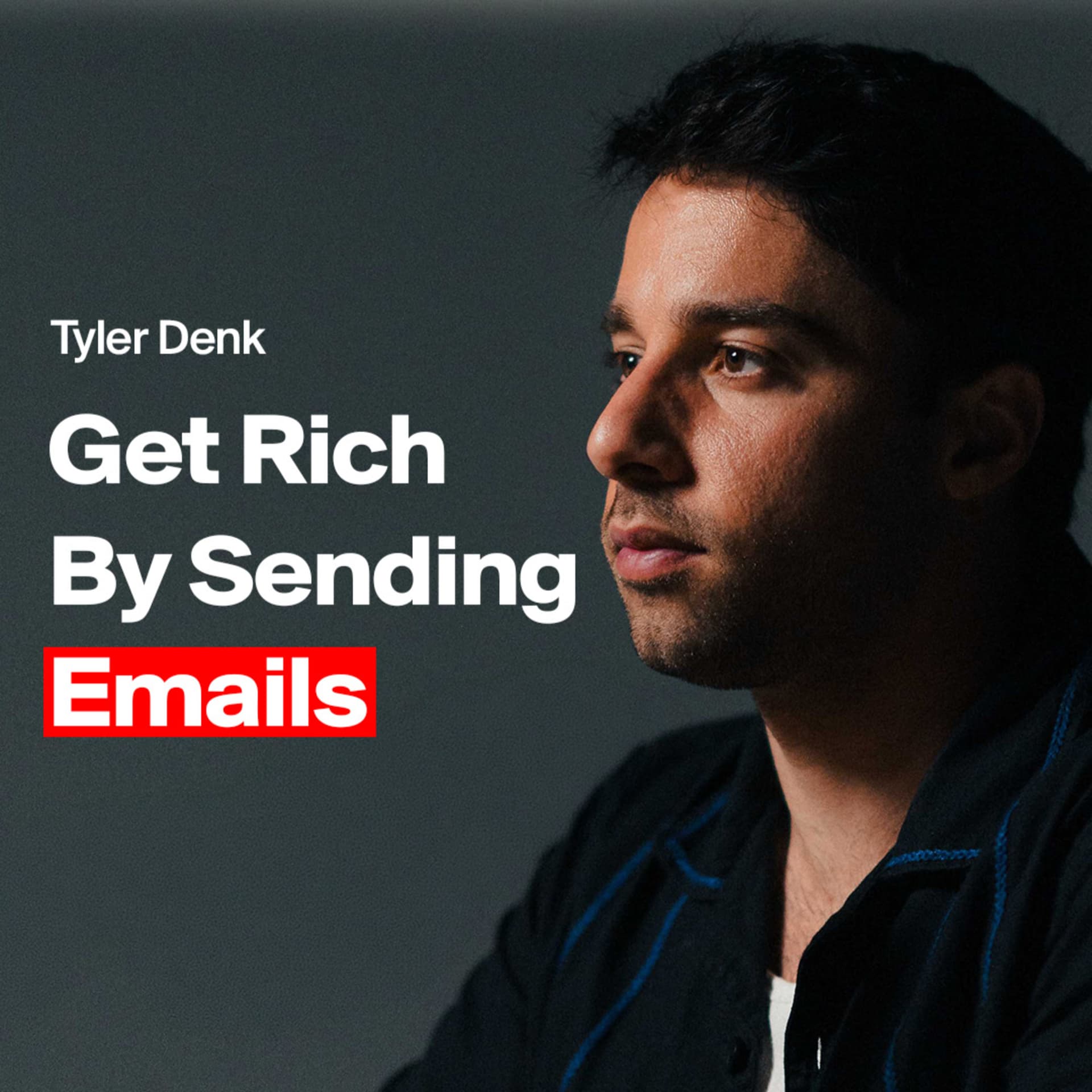
Tyler Denk (Beehive CEO/co-founder) explains why business owners should “own distribution” via an email newsletter, and lays out a step-by-step growth and monetization playbook for reaching scale and revenue.
Guest backgrounds
Tyler Denk is co-founder and CEO of Beehive, a newsletter platform used by creators, publishers, entrepreneurs, and media brands. He previously helped scale Morning Brew to 4 million readers and was acquired for $75M. He also built “Big Desk Energy,” a founder-led newsletter/media brand.
Key claims
- If you can’t move your audience/content/subscriptions between platforms, you’re stuck.
- Newsletter growth has no single “silver bullet”; it’s consistent execution of multiple strategies to reach “escape velocity.”
- Transparency and founder-led content (“Big Desk Energy”) create trust and demand.
- Email gates (hard gates) outperform paywalled-style gates when the value is free and previewed.
- Monetization can be profitable with ads, sponsorships, referrals, and ad networks; email list ownership beats “renting” audiences.
Notable examples
- Big Desk Energy: started with zero subscribers, used pre-launch hype/waitlist (target: 1,000), then launched early January; claims ~130,000 subscribers and ~5 hours/week producing “six figures.”
- Referral program: Morning Brew referrals drove +1M subscribers; Milk Road example (crypto) used aligned incentives and grew quickly after launch.
- Growth tactics: Monday night previews, Tuesday publishing with cliffhangers, email-gated content, repurposing into social threads.
- Monetization: Beehive Ad Network (brands like Roku, Netflix, AG1, HubSpot); benchmarks include ~40–45% open rates and ~0.5% ad click-through as “pretty good.”
Written by AI. May contain mistakes. Listen to the episode to check what was said.
Chapters
Tap a time to open that second in VOThe Importance of Newsletter Distribution
0:04 to 0:26
Understand the significance of owning your newsletter distribution.
“It can help you with practically anything on the web, like restoring a vintage motorcycle from a 50-page restoration block, or finally break down that long article you've had open for weeks.”
The Importance of Newsletter Distribution
1:15 to 4:03
Understand the significance of owning your newsletter distribution.
“I'm state of the end, we're going to give you guys that full playbook, but I want to start with Big Desk Energy.”
Big Desk Energy: Building a Personal Brand
4:03 to 7:11
Explore Tyler's Big Desk Energy newsletter and its transparency.
“long annual contracts, not actually building a platform that puts their users in the best position to succeed.”
Building in Public: Tyler's Journey
7:11 to 9:07
Discover how Tyler built his following and audience engagement.
“I don't think that's ever been done before.”
Strategies for Newsletter Growth
9:07 to 12:16
Learn actionable strategies for scaling your newsletter effectively.
“but there's not one that leads to hyper growth.”
Referral Programs and Engagement
12:16 to 14:00
Get insights into creating effective referral programs for newsletters.
“they have a new MCP, which is absolutely amazing.”
Referral Program Insights
14:00 to 15:07
Learn about effective referral strategies for newsletters.
“One of the rewards that I give at one referral, you get access to my series B deck.”
Leveraging Lead Magnets
15:08 to 17:11
Discover how to use lead magnets to grow your newsletter audience.
“And so at three, so I only have two incentives in my referral program.”
Boosting Newsletter Visibility
17:12 to 20:05
Explore methods for cross-pollination and boosting newsletter growth.
“We'll put one down below, but I feel like we have so much, the, the pattern recognition across all of the episodes.”
Understanding Subscriber Quality
20:06 to 22:20
Gain insights into maintaining high-quality newsletter subscribers.
“No, so it's a black box because once you let the user control them, then you can kind of game the system.”
Show all 56 chapters
Monetization Strategies for Newsletters
22:21 to 24:15
Learn various ways to monetize your newsletter effectively.
“I use a lead magnet for the referral program, but referral program is me incentivizing existing readers to share with other people.”
Monetization Strategies for Newsletters
24:19 to 24:40
Learn various ways to monetize your newsletter effectively.
“It can help you with practically anything on the web, like restoring a vintage motorcycle from a 50-page restoration block, or finally break down that long article you've had open for weeks.”
Investment in Newsletter Growth
24:41 to 28:00
Understand the costs and returns associated with newsletter growth investments.
“We got to get you on that many chat steroids.”
Understanding Beehive Ad Network Metrics
28:00 to 29:45
Learn how the Beehive ad network operates and its impact on revenue generation.
“are kind of like the two main metrics for CPM and CPC.”
Direct Sponsorships and Media Kits
29:45 to 31:19
Discover the process and importance of creating media kits for direct sponsorship sales.
“We also have something called a direct sponsorship storefront, which is if I want to sell my own ads, where's the page that I can send a Nike to say, oh, it's$5 ,000 for sponsorship.”
Audience Insights and Data Utilization
31:19 to 36:20
Understand how to leverage audience data for better advertising and content creation.
“the sponsorship bucket, we talked about three, we talked about the ad network, we talked about you doing it directly.”
Monetization Strategies for Newsletters
36:20 to 41:41
Explore various monetization strategies beyond sponsorships for newsletter creators.
“We know 41 % of you guys like Joe Rogan.”
Alternative Revenue Models and Best Practices
41:41 to 42:06
Learn about additional revenue models, including paid subscriptions and their implementation.
“that I just want to layer in there for people out there listening, getting sponsors that have high CACs, meaning it's cost them a lot of money to get a customer.”
Monetization Strategies for Newsletters
42:06 to 44:38
Explore various methods of monetizing a newsletter audience effectively.
“And that person is going to spend a gazillion dollars.”
Building Digital Products for Revenue
44:39 to 46:15
Learn how to create and sell digital products to boost income.
“Digital products is something we launched in November, which means you can sell templates, guides, courses, time, like whatever you want.”
The Importance of Ownership and Portability
46:16 to 48:15
Understand the significance of ownership and data portability for creators.
“and you can monetize however you'd like.”
Profitability through IRL Events
48:16 to 51:18
Discover how to leverage in-person events for monetization and networking.
“on YouTube and then YouTube shuts down your account and you don't have any of that data or any capability to get in front of your audience again because you didn't own that direct relationship.”
Profitability through IRL Events
51:39 to 52:06
Discover how to leverage in-person events for monetization and networking.
“It can help you with practically anything on the web, like restoring a vintage motorcycle from a 50-page restoration block, or finally break down that long article you've had open for weeks.”
Lessons Learned from Building in Public
52:07 to 56:00
Gain insights on the pros and cons of building in public as a business strategy.
“maybe two to five engaged subs, and they're going to do this.”
The Pressure of Building in Public
56:00 to 57:29
Learn about the motivations and pressures behind building a company transparently.
“I give that context because building in public has that same type of pressure.”
The Impact of Vulnerability in Business
57:30 to 58:59
Discover how vulnerability and storytelling can enhance business relatability.
“And I haven't seen too many people that have been able to do that.”
Balancing Transparency and Competition
59:09 to 1:00:38
Explore the risks and rewards of being outspoken in a competitive industry.
“the time CTO coming in that makes it all worthwhile.”
The Love-Hate of Outspokenness
1:00:39 to 1:00:49
Understand the mixed reactions to a founder's candidness in business.
“I think more yes than no you're going to get from that.”
Starting Public Sharing as a Founder
1:00:50 to 1:02:33
Get advice on the first steps for founders to share their journey publicly.
“What's the first step, people like this, if they're going to share in public?”
Building Content Muscle
1:02:34 to 1:04:06
Learn how to consistently create valuable content through everyday experiences.
“I just had a long talk with my buddy Aaron Paul about, you know, the stuff that we do every single week is absolutely crazy.”
Innovations in Podcasting and Newsletters
1:04:07 to 1:06:16
Discover how consolidating content types can enhance creator experiences.
“Let's talk a little bit more about talking about your six figure side hustle.”
Leveraging Data for Audience Engagement
1:06:17 to 1:08:26
Learn how to use data to better understand and engage your audience.
“I think it was like the first week of the quarter.”
The Future of Audience Connections with MCP
1:08:27 to 1:10:03
Explore how new technology can bridge various data sources for better audience insights.
“where if he were to launch a$10 ,000 trip in Bali next month, that he knows the thousand people that would 100 % sign up to do that.”
Maximizing Subscriber Engagement with AI
1:10:03 to 1:15:51
Learn how to leverage AI tools like Claude to enhance newsletter subscriber engagement and sales operations.
“to Claude or ChatGBT, you can ask it literally any and all of these questions.”
Maximizing Subscriber Engagement with AI
1:15:54 to 1:20:59
Learn how to leverage AI tools like Claude to enhance newsletter subscriber engagement and sales operations.
“You think you know a browser, but Gemini and Chrome?”
Effective Marketing Strategies for Startups
1:21:07 to 1:24:00
Explore innovative marketing strategies, including brand partnerships and content creation, for startup success.
“That's B-E-E-H-I-I-V dot com slash openresidency and code MARK30 at checkout.”
Building a Content Engine for SEO
1:24:00 to 1:25:18
Learn how to create a successful content strategy focused on SEO.
“It could be anything that there's a lot of search traffic for.”
Product-Led Growth and Brand Visibility
1:25:18 to 1:26:48
Understand the importance of product-led growth and branding in newsletters.
“So at the bottom, it's like the classic Hotmail example of when you signed up for Hotmail in like the 90s or whatever, it said like this was sent with Hotmail, kind of butchered it.”
Challenges and Opportunities with Meta Ads
1:26:48 to 1:28:58
Explore the complexities and potential of advertising on Meta platforms.
“So we were pretty opinionated on not removing that for a while, but then threw up a little bit and allow people to remove it.”
The Current State of Newsletters
1:28:58 to 1:30:10
Discuss the ongoing relevance and growth potential of newsletters in the market.
“Since I started raising capital, when those 40 investors passed on me, a lot of it was, hey, like Morning Brew just sold, Axios just sold, Politico just sold, The Hustle just sold.”
Creating Community for Content Creators
1:30:10 to 1:32:50
Learn about building engaging communities for content creators to enhance audience interaction.
“The other way to look at the market is MailChimp's doing a billion dollars in revenue.”
The Case for Remote Work
1:34:56 to 1:38:00
Arguments for the benefits of a fully remote workforce and its impact on culture.
“Let's get into this last block before we get into QuickStrike.”
The Benefits of Remote Work Culture
1:38:00 to 1:38:55
Explore how remote work contributes to low employee attrition and a positive culture.
“I think the remote culture is a big part of that.”
Maintaining Organization in a Remote Environment
1:38:55 to 1:41:03
Learn strategies for ensuring productivity and organization among remote teams.
“Because I mean, you have a bunch of people that could be working in Europe or behind a computer with their underwear on.”
Weekly Success Lists and Accountability
1:41:03 to 1:42:49
Discover how weekly success lists foster accountability and intentionality within teams.
“How are we doing on our quarterly goals?”
Hiring for Passion Over Experience
1:42:49 to 1:45:04
Understand the importance of hiring based on passion and cultural fit rather than solely on credentials.
“And on our all hands on Monday for 40 minutes, we've run through all of the items, about 15 to 20 items.”
Raising Series A Capital: A Case Study
1:45:04 to 1:46:22
Get insights into the process of raising Series A funding and the importance of investor updates.
“What is that rubric for when you're hiring?”
Navigating Series B Fundraising Challenges
1:46:22 to 1:51:31
Explore the complexities and scrutiny involved in raising Series B funding compared to earlier rounds.
“Walk me through how that actually happened.”
Investment Scrutiny and Team Dynamics
1:52:00 to 1:53:46
Learn about the scrutiny involved in raising capital and the importance of team selection.
“And like, they really dig into to understanding the business.”
The Value of Investor Updates
1:53:46 to 1:54:46
Discover how regular investor updates can nurture relationships and provide an edge.
“That like low touch check-in on the investor updates.”
Hiring Key Talent
1:54:46 to 1:56:06
Understand the significance of hiring the right people and the criteria for success.
“And that's such a rare mix and like a perfect piece of like what we need.”
Lessons from Google
1:56:06 to 1:57:18
Explore insights gained from working at Google, particularly in product management.
“It just never had been prioritized to get it to where we want it to be.”
Lessons from Google
1:57:28 to 1:57:52
Explore insights gained from working at Google, particularly in product management.
“You think you know a browser, but Gemini and Chrome, that's new.”
Underrated Features in Beehive
1:57:52 to 1:58:25
Learn about the underrated features of Beehive that enhance user experience.
“And so I can create a magic link and give it to you.”
Influential Newsletters and Books
1:58:25 to 2:01:05
Discover influential newsletters and books that inspire effective business practices.
“So you can partner with a bunch, you can partner with different newsletters, different publishers, different whatever.”
Vision for Beehive's Future
2:01:05 to 2:04:49
Gain insights into the ambitious vision for Beehive's growth and potential.
“And then my favorite business book is No Rules Rules.”
Transcript
Automatic transcript. May contain errors.0:01This episode is brought to you by Google Chrome. You think you know a browser, but Gemini and Chrome, that's new. It can help you with practically anything on the web, like restoring a vintage motorcycle from a 50-page restoration block, or finally break down that long article you've had open for weeks. Gemini and Chrome is here for it. Ready to make anything online make sense? There's no place like Chrome. Check responses set up required, compatibility and availability varies 18+.
0:26Tyler Denk:Everyone always asks, how do I scale my newsletter faster? The shitty answer is it's a combination of doing five, six, seven things really well consistently. That's Tyler Dank, co-founder and CEO of Beehive, the newsletter platform powering some of the world's biggest creators, publishers, entrepreneurs, and media brands across the globe. When we want to drive results, whether it's to an advertiser, to our community, to an IRL event, it's all the newsletter. In this episode, Tyler breaks down the importance of own distribution and the step-by-step playbook to grow and monetize a newsletter. If you can't take your audience and your content and your subscriptions from one platform to another, then you're stuck.
1:08So Tyler runs Beehive, a nine-figure brand, commonly known for its email newsletters. I'm state of the end, we're going to give you guys that full playbook, but I want to start with Big Desk Energy. It's the best newsletter in the game now. Five hours a week, six figures using your own product. I want to dive into that playbook, really talk about growth and monetization. There's a lot of people out there that would love to have a six-figure side hustle. So let's kind of go through that playbook that got you to 120 ,000 followers. Take me back to zero. How do you actually kind of build the hype and awareness to launch a newsletter?
1:41Tyler Denk:Also, let's take a step back and say what Big Desk Energy is. Right now it goes to 130 ,000 startup founders. It's a behind the scenes look of what I'm doing building the business. So my thesis is most founders don't actually share the secret sauce of how they're building a company. A lot of Silicon Valley and startups are this like information silo of if I'm doing well, I don't want my competition to know what's working for us because that's increased competition. I believe and I've built the company incredibly transparently from the first day. So you follow me on X, you see that I share our revenue numbers.
2:15Tyler Denk:I share the ups, the downs, and Big Desk Energy is basically what you see on social on steroids. It's a 1500 word essay behind the scenes of how we're raising money, what features we're launching, how we run board meetings, how I run a remote company of 130 people, how much revenue we're generating, and kind of like all of the stuff that most people don't see from the outside of building a startup. So that's what Big Desk Energy is. Very intimate, very personal. I mean, I just saw you had that White House dinner, like showing your personal life as well, too. So it's very unique to you. Which I've never put myself in the position of like, I'm a creator and it's never really been about me.
2:53Tyler Denk:But I've actually found the content that most of the audience likes a lot is how do you do what you do? And it's like a day in the life or a week in the life. So when we sponsor cans and go to the Can Lions event, when we go to the White House correspondence dinner, I recap kind of my week, the meetings I'm having, what it's like to be a CEO of a quickly growing startup. up. And I think there's a lot of interest in that type of content. So that's kind of how I backed into it. Founder led distribution. It's all founder led content. And it started on X and it started on LinkedIn. And from the summer, when I first started building Beehive as a side project, I was building momentum of here's where the gap is in the market.
3:29Tyler Denk:I was building credibility. We just scaled Morning Brew to 4 million readers. We got acquired for$75 million. There's this new startup called Substack that just raised at a$65 million valuation. And I think what we built at Morning Brew is so much more powerful than what they were offering. Then when you look at all the incumbents, whether it's MailChimp, campaign monitor, sale through like legacy, post acquisition, incumbent email software providers that I knew intimately well for my time at Morning Brew. Slow, the slow boys. No, no, no hustle, no reason to listen to users, long annual contracts, not actually building a platform that puts their users in the best position to succeed.
4:09Tyler Denk:And so as Beehive is just a side project for me and my co-founders, we kind of need to like be testing our language or build some momentum, share why we believe what we're building is going to be the next big thing. And so that's how I kind of backed into building in public. It was, I think the referral program could be a massive growth driver for newsletters. I did it at Morning Brew. It led to over a million subscribers. I want to build it so any newsletter in the world can have access to what we had at Morning Brew. So I'd tweet that. And then I tweet random stuff like, I think the third Friday of every week should be a monthly wellness day where it's a three-day weekend, you recharge, you work, you don't have meetings, do whatever you want to do.
4:46Tyler Denk:And so I started this whole build in public persona. And that's how I grew my following from two, 3 ,000 followers to now, I think across platforms, like 100, 150 ,000. And this is without a newsletter. This is without a newsletter. You are running a newsletter company. This is even before we launched the company. It was, again, I backed into founder led marketing, like it was really me just testing the waters of me being very excited about what we're building, sharing it on X and LinkedIn and seeing that there was a huge appetite for what we were building and even a bigger appetite for how do you take this idea, which everyone has tons of ideas in their life and actually turn that into a business.
5:19Tyler Denk:And I have people that have been following me from when Beehive literally was just an idea of like that first tweet and have seen it all the way up to the 50 million in revenue that we're going to do this year. I think that's really exciting as a content category. It's business creation, it's entrepreneurship. But again, going back to my initial thesis, everyone keeps it so close to the chest. They're so scared of other people sharing the secrets that makes them successful. And so there's a lot of alpha in the transparency of when we tragically lost my CTO and co-founder. I've shared that story many times.
5:49Tyler Denk:I share it every year. We've almost failed four or five times where I didn't think we were going to be able to get out of whatever rut we were in because of either that instance or the many other mistakes that we made along the way. And I think because once you're on that venture flywheel, you have to give the perception that everything's perfect, everything's up and to the right. And we've been very fortunate that we haven't had a down month. Every month has been up and to the right. But that doesn't mean there's a shit ton of things that have gone terribly wrong. And I have owned all of that.
6:17Tyler Denk:And I think that has really been the alpha and the content that I create. I'll own all of the mistakes that we've made. I'll own when I'm extremely burnt out and struggling for motivation. And I think that makes me more relatable to other founders who look up to that type of content. And I don't fear the retribution of investors thinking that one thing or another, that everything is perfectly fine within the org. That's what Big Desk Energy, before the newsletter, it was just me creating content on X and LinkedIn sharing. But you can only go so deep with 140 or 280 characters. And so Big Desk Energy became, well, first it was a Spotify playlist.
6:54Tyler Denk:It's the best playlist that you can listen to. Listen to it before you came in. It has 25 ,000 followers on Spotify. It's the best work playlist. That's actually a very unique piece of the flywheel that you can get people either or make them stickier and or bring them in through that. But we'll get to that. Yeah. No, I mean, I think I'd like to say that I'm the first person that has a Spotify playlist to newsletter to media company pipeline. I don't think that's ever been done before. I don't think so. And so it started off as a Spotify playlist with a cool brand. So Big Dusk Energy, retro Windows 98 theme.
7:22Tyler Denk:and then I think it was November of 23 where I had a little bit of time during Thanksgiving break and I was like, I'd love to actually write a newsletter. I have tons of thoughts. I've done the build in public thing on social and I've always wanted to build a newsletter for many reasons. One, I've seen the success. I've seen all of the people on our platform that had an idea, who had a small audience and are now making hundreds of thousands, if not millions of dollars in revenue. So I know the secret sauce. I know how to build and scale a newsletter from Morning Brew and everything that I've built.
7:49Tyler Denk:And I obviously sit in a fortunate situation and position of seeing the success on the platform of what's working for certain types of content creators. And when I initially went to launch in November, I had zero subscribers. And I first started with like a preview of I will not launch this till I have a thousand subscribers. So pre-launch hype, put it on X, put it on Instagram, put it on LinkedIn, be obnoxious, say that I've been working on something that I'm really proud of, but I'm not releasing it till I have a thousand subscribers. Took about three weeks. I launched it the first week of January.
8:19Tyler Denk:and then there's just so many other growth strategies to scale. So you did a wait list basically. A wait list. If you want to see this exist in the world and obviously I'm good at marketing it, it's everything that happens behind the scenes. If you want this inside look at what it's like to build a high growth startup, I need a thousand subscribers before I launch this. And so I had a lot of people in the early wait list promote it to other people. So we had a little bit of like an organic flywheel. And for the operators out there, it's probably just giving a little, like before you were obviously building in public via Twitter and LinkedIn, is probably giving, you know, probably 30, 40 posts, just give them a little taste of what it looks like, almost like a preview into this.
8:53Yeah, 100%. Just got to give them a reason.
8:55Tyler Denk:Yeah, and that's what, that's, I'd say everyone always asks, how do I scale my newsletter faster? And the shitty answer is like, there is not a silver bullet. Like there's definitely different strategies and things you can do. I'm happy to walk through all of them, but there's not one that leads to hyper growth. It's typically the combination of doing five, six, seven things really well consistently. That turns into 10 subscribers a day to 20 subscribers a day to 30 subscribers a day to really hit that escape velocity to reach scale for a newsletter. So the pre-launch hype, easy, anyone can do it.
9:29Tyler Denk:Over-indexing on the channels that you can already access for free. So X, LinkedIn, Instagram, like most people have some bit of a network on all of those and just leveraging that. The next thing, so Beehive has a feature that is an email gate. You can do a pop-up, which everyone knows what a pop-up is. You read an article, it pops up, you get rid of it. There's an email gate, which is just a much more strict pop-up gate, which means you scroll, you can only see two to three sentences. And there's a hard gate you have to put your email in. Every piece of content that I create has an email gate on it, which means I'm driving traffic to content, both from social and elsewhere.
10:04Tyler Denk:And if you want to read past the second line, you have to put in your email. This is undefeated. I think I get so aggravated when someone sends me an article, i.e. raised money and it's like business insider or something and i get that gate and they make you pay and i'm like fuck it i'm not paying but for something like this where you're not charging i would imagine the conversion rate with this gate is if you've already clicked through to see like if i already said here's a crazy week at the white house correspondent standard i post that on instagram you've i've gotten your attention a little social proofing with you and someone important like and then i've got your attention you click on it and then you have to just put in your email and make it clear that it's free you just have to put in your email to get access conversion rate's crazy high.
10:41Guys, next three days. That's a definite thing right there for the lead magnets. I like that. Then it's like a lot of like easy things.
10:47Tyler Denk:So I send my newsletter every Tuesday morning. On Monday night, I preview what I'm going to write about, get a lot of people's attention, post it on all my social channels and drive it to the subscribe page. Not rocket science, but gets a few dozen new subscribers just saying like, this is what I'm writing about tomorrow. Be the first to get in your inbox, sign up here. So it's basically, it's like the pre-gate before the pre-gate. So it's just all these little - And then we publish on Tuesday and then I have the content already written and I give you a cliffhanger of, you'll never like, I'll just keep using the White House Correspondents Dinner because I was in an active shooter environment and under a table.
11:19Tyler Denk:Insane. Yeah, so easy to create content for that. And I was like, hey, White House Correspondents Dinner was one of the wilder experiences. Like an interesting first one. If you want to read about my week in DC, click here. I already have their interests. They click on, they get the email gate. So there's like the pre-post type, which is like Monday night for me. And then there is the, I've already published it, cliffhanger, clickbait, whatever you want to say that with the email gate. And that's just on rinse, wash, repeat, right? And you're just going on full offense on Tuesday. You'll tweet about it once, maybe even more times looping back to that to just really hit that window because it's out of sight, out of mind the next week, quite frankly.
11:54Tyler Denk:And you can take your content and a great use for the MCP is like, hey, can you take this article that I've already put five hours into writing and create a tweet thread with that, that will break that up into like an engaging five, six tweets. So then you just repurpose that content on Wednesday or Thursday. But instead of giving the entire post in a thread, give the first three to four and be like, for the rest, click through. For everybody out there listening to our AI guys, they have a new MCP, which is absolutely amazing. Stay tuned. We're going to get into that very, very deep. It's doing so much work.
12:22It's amazing. For us right now. What about these referral programs? Tell me a little bit more about those.
12:27Tyler Denk:Yeah, so context of the referral program. Back when I was at Morning Brew, we built a referral program. and what a referral program really is, is you already have your audience. I have 130 ,000 people that are opening my emails and reading every week. How do I engage and incentivize my existing audience to refer more people? And we did it extremely well at Morning Brew. We offered coffee mugs, T-shirts, exclusive content on Sundays, a community at 10 referrals. And everyone has their own referral link. You, as a reader of Morning Brew or Big Desk Energy, you enjoy the newsletter. and for one referral, you get access to X.
13:03Tyler Denk:For five referrals, you get access to something else. So it worked extremely well for Morning Brew. We grew by over a million subscribers from people who came in from referrals. Damn. Which is crazy. And so... And ultimately, it's like, you want to obviously keep your cost basis as low as possible. You want to give out as much free stuff as possible. You can create almost like a little mini pyramid at the top. You know, you'll fly them out to go to this game. You can create as big as you want. A big special. And so that's kind of like what we did. the most important thing to realize is you have to have a brand for people to want to go out of their way to share your content with someone else.
13:35Tyler Denk:So Morning Brew had an amazing brand. I actually say that was probably the most important differentiator for Morning Brew is you can read the Wall Street Journal or Yahoo Finance, but Morning Brew actually stood for something for a certain amount of people. And getting a t-shirt with the Morning Brew logo or sticker or whatever actually said something about that type of person. So Morning Brew built an amazing brand, or we can lead with value. And so I write to the 130 ,000 founders. One of the rewards that I give at one referral, you get access to my series B deck. So again, total through line with everything I said earlier, most founders don't share how they raise capital or their numbers or how they actually raise this$33 million series B.
14:16Tyler Denk:And I tell you, if you refer just one person to my newsletter, I'll send you that deck, totally unedited, raw. So useful for any... That's a good dangle right there. That's nice. So for any founder who's seed stage series A, who wants that type of, you know, insight into like, what does a series B deck looks like that actually works from a company that I respect from a founder that I'm already reading about every week. And so it's one referral. And I would put that under kind of the lead magnets universe, but that's like a lead magnet on. It's a lead magnet for your existing readers who already have an affinity for you because they're already reading your content.
14:49Tyler Denk:And so my goal with the referral program is of the 130 ,000 people, how many can I get to like my content enough and be incentivized by whatever reward that I'm offering for them to copy their link and put it in their group chat or recommend their friend or their mom or their coworker or their co-founder. And that's kind of the name of the game for the referral program. The Big Desk Energy vibe, we're going to pop this up. The aesthetic is crazy vibey. I'm not even going to call it merch. That would be some good product. Well, I have merch as well. And so at three, so I only have two incentives in my referral program.
15:22Tyler Denk:One is the Series B deck at one, which I actually think, and you kind of alluded to this earlier, like the game is how do I offer as much value for as little cost? Yeah. So many people go into, I'm going to ship them a t-shirt and a crew neck and a hat. Like that's cool. But now you're also dealing with buying actual physical goods, shipping them. People claim they don't get it. You have to send them another one. There's like, there's costs involved. What we did at Morning Brew was at three referrals, you got access to our Sunday newsletter called Light Roast. It was a hit because it cost us absolutely nothing to produce.
15:51Tyler Denk:It was a writer's time to create an additional newsletter. Which gets amortized to pennies. And everyone already on the list obviously wants more business content because they've already signed up for Morning Brew. And if they're already going to refer someone else, like there's a high intent that they want more content for whatever reason, to be competitively, to be in the know, to understand whatever you want to get. We are not doing this. We are idiots. This is a easy, easy low lift one that we have to be doing. And we have so much, especially free stuff to offer, like unique one of one information that we can just stack the deck here.
16:24Tyler Denk:And so one of the examples that I always use and I got a lot of inspiration for mine was Milk Road, which was a crypto newsletter. Of course, Uncle Ben, Uncle Ben and Uncle Sean. They launched their newsletter, I want to say, in January of 2022. They got acquired for seven figures, eight months or 10 months later. Yeah. And so they figured out this crazy flywheel of how to grow as quickly as possible. But they did the referral program. And because you're reading Milk Road, because you're interested in crypto, they said for one referral, we'll give you a guide of what 15 crypto experts think is going to happen in 2022.
16:59Tyler Denk:me too. So like the, the alignment of incentive and people who are reading the newsletters one-to-one and because it was free, it took them, I think eight hours, like one afternoon to create that guide. I think it led to 30 ,000 subscribers. And so we are ideating right now for ourselves. This is a live session. This is amazing. Yeah. No, we do. The lead magnets are absolutely great. We'll put one down below, but I feel like we have so much, the, the pattern recognition across all of the episodes. We have so much interesting information and we could double click on any topic, whether it be hiring, firing, marketing, digital marketing, sales.
17:33So we can give codes based on that. MCP too. Take the transcript and have the MCP spit it out. Love this. On the growth side, what else? You're talking about referrals. I see often on newsletters, referring kind of other newsletters. Talk about like the cross-pollination of utilizing other newsletters to grow yours.
17:48Tyler Denk:Yeah. So there's two things. We have a recommendation network, which is exactly what it sounds like. You can recommend other newsletters. They can recommend you. The key there is you get a hub of other newsletters who are not competitive with you, but are like tangential. So I write about startups. There's other startup or creator focused newsletters that I recommend. In return, they recommend me. And so everyone who signs up to my newsletter, as soon as they put their email in, a little pop-up comes up and says, here's four newsletters that me, Tyler Dank are recommending that you should check out.
18:18Is this a barter system or is everything for free? So there's both.
18:22Tyler Denk:There's a altruistic free, I recommend you because I know you're recommending me back. And when you grow, I grow and vice versa. So it's good for all of us. So that is like the recommendation network. Then we have something called Boost, which is exactly what it sounds like. It's boosted recommendation. So you can put money behind it and pay other newsletters in the ecosystem to recommend you. And so like I have... You could selectively decide who you want. They need to say that their offer and willing to do that. So for example, for me, I have a boost offer for$3. And I'd say that any newsletter on the Beehive platform that wants to recommend Big Desk Energy can apply to recommend me.
18:57Tyler Denk:I get a full download of who you are, what's your audience size, what's your content. Like if you're writing about sports, it might not be a good fit for my newsletter, right? Or if you're writing about business or tech or startups, it's probably a better fit. This is where value of audience becomes so crazy because you can charge a premium if people want your readers. Right. And so you could sign on to Beehive. You could see that Big Desk Energy is offering$3 per subscriber. It's great revenue opportunity for you because you know you're making, you are growing 100 subscribers a day. And if half of them, so 50 of them actually opt in to my newsletter, you're making$150 every day, hands off, not doing anything.
19:32Tyler Denk:So why it's so powerful is it's revenue for one side of the market, it's revenue for your newsletter, and it's growth for me. You're sending me emails. I'm paying you$3. And what we built is we built a lot of different mechanisms to protect and make sure that they're actually verified. And so I only actually pay for subscribers who are opening emails. So it's kind of like paying for Facebook ads where you only actually pay for customers who buy something. Like I'm only, the$3 only goes from my account to your account. if the email that you sent me is actively opening my emails. So it's totally risk-free.
Read the full transcript
20:05Tyler Denk:So you guys create very, very safe parameters on the back end. Do we get to control those parameters? No, so it's a black box because once you let the user control them, then you can kind of game the system. So we have like a bunch of different mechanisms to track. Like this is fraud. This is like a bullshit email. This person's not engaging or this person's opening every email and clicking and it's not suspicious. Thus, it's a real subscriber. And this is no friction. It's after the fact. Like someone has subscribed and then they're getting like a pot. Like it's no friction. You sign up for Big Desk Energy, you see who I'm recommending and vice versa.
20:35Tyler Denk:So those are like the two different flavors of like the network effects that we have. We have 55 ,000 active publishers in the ecosystem. And so you can benefit from this recommendation network where some people recommend you and vice versa. Or if you're willing to put money behind it, you can pay two, three,$4 per lead and emails will then be sent to you from whoever you approve that can do that boost recommendation. I feel like that is safer like I know people that play the game and they play like the metagame where obviously there's way more to it you have to monitor it you have to create the creative yep how good is that email period quite frankly and this is like pre-vetted that you'd probably just hyper focus for email right like we you have we have a mechanism where you can auto approve one so if you're like if they have a 40 % open rate and higher they're based in the U.S.
21:19Tyler Denk:and they write about business I don't even want to like approve it just like know that that's good And so it's like autopilot. And then inversely, you can set it up. So like every newsletter is very different in terms of quality and how good their list is and what type of leads they're going to be sending you. And so you can like auto clean it as well. So if your newsletter is sending me subscribers and their open rates, call it 20%. I can say anything below 20%, just cut off that thing. And then you can no longer send me more emails. Yeah, we need 40 % plus. 40 % plus is the benchmark. Exactly, for sure.
21:4820 % is down the fucking dumpers. Yeah, hey, just an example. But yeah, totally agree. when you kind of look at all these things like in a pie, I imagine that is just like a crazy flywheel. On the lead magnet side, I feel like for everybody out there listening that wants to start, it's like, what do you have that is such high value that is uniquely you one of one, i.e. this money raised deck, and you obviously have social proofing around it. You've raised, I don't know, 30,$40 million. How big has that single lead magnet been as far as like in your growth? Is it 15%, 20 %?
22:20Tyler Denk:So the two other levers that I get to in growth. One is lead magnet. So I'd separate referral program. I use a lead magnet for the referral program, but referral program is me incentivizing existing readers to share with other people. Beehive also has a full website builder. And so you can build custom landing pages, multiple landing pages, lead magnets, interactive web pages, like whatever you want. It's a full website builder with like an AI integration as well. So you can just chat with AI and say, you can upload a screenshot of your favorite website. Be like, I want my landing page to look just like this, but in my brand and my colors.
22:52Tyler Denk:And it can do that in a few seconds. So with the website builder comes a whole world of possibilities where you can build different lead magnets. And so I'm running lead magnets for our seed deck. So the series B is like the referral program. If you want access to our seed deck where we raised two and a half million dollars, they'll just put in your email. And I run ads to that as well. If you want, we're running a remote company of 130 people. If you're curious how to run a remote company, I have a remote playbook and you can go to that landing page. You put in your email and I email it to you.
23:20Tyler Denk:So boys, more lead magnets. Lead magnets. Next three days. So lead magnets are one massive thing that I do for growth. And then I would say ads, which is what every newsletter at scale eventually gets into the paid acquisition game. You just can't hit escape velocity unless you're mega viral and can constantly create such amazing content that you can drive a ton of traffic. I think every successful newsletter that I know eventually gets into paying mostly meta for different ads, either to your landing page or to your lead magnets. And so landing page, like just the subscribe page, there's no button, there's nothing to do except for subscribe.
23:55Tyler Denk:And then you just lead with social proof, however you want to, or however I want to promote Big Desk Energy. Or you use a lead magnet and say, hey, I raised two and a half million dollars and this is the exact deck that I use, totally unedited, totally raw, put your email in and you'll get it sent to you. And so then I'm kind of grouping together paid acquisition with lead magnets. This episode is brought to you by Google Chrome. You think you know a browser, but Gemini and Chrome? That's new. It can help you with practically anything on the web, like restoring a vintage motorcycle from a 50-page restoration block, or finally break down that long article you've had open for weeks.
24:30Gemini and Chrome is here for it. Ready to make anything online make sense? There's no place like Chrome. Check responses set up required compatibility and availability varies 18+. We got to get you on that many chat steroids. I don't know how they're not a partner of this. I'm like literally the mayor of ManyChat. I love it. It does this all automated. Quick break, and it's a big one. In the coming weeks, we are doing a live and free email workshop with Beehive. Me, Tyler, the Beehive team, and some of the world's best email operators in the world are going to walk you through how we grow and monetize our email.
25:02This is the same exact playbook that Open Residency uses to run our newsletter, and you're going to get the same playbook at no cost. And remember, your Instagram does not belong to you. Your YouTube does not belong to you. Your email list does. Stop renting your audience and start owning it. The reality is, is this is all backing into, I mean, you're putting a lot of dollars behind this. I mean, if you're talking about referrals, two,$3 meta, let's just say it blends out to two, three,$4. You have to make money on the back of that. What are the actual ways to monetize a newsletter? Ultimately, this has to be a profitable business.
25:34So how do you make money doing this?
25:35Tyler Denk:I think it's also worth the hit on how much I am spending because I just tossed out a bunch of different numbers. probably spend$5 ,000 a month on ads on meta. And I probably put three to$5 ,000 a month into that boost network. So but call it$10 ,000 a month that I'm putting in. So costs are 10 ,000 platforms negligible. I saw the fact that I'm the CEO, but it would still, we're very, we're very efficient cost wise. So$10 ,000 in my cost. So I like at, to run a profitable business, I need to make more than$10 ,000 a month in revenue. And that discounts like all of the second and third order effects of like how the newsletter benefits my business, right?
26:12Tyler Denk:All of our, a lot of our users read my newsletter. We've gotten tons of enterprise users from reading my newsletter. So like me breaking even, I consider to be a win. I mean, hypothetically, this could be a loss later and you're going to win on the second and third effects. Totally. Totally. But how I actually make money just ignoring the second and third order and like focusing on the newsletter, there's a few different ways. I think the most common is advertisements. And so you can do advertisements a few different ways. Morning Brew, we had, you know, three, four million readers, and we were able to get brands like Apple and Visa and MasterCard to spend$70 ,000 to get in front of a single newsletter, because they're reaching so many people.
26:49Tyler Denk:I think that like set the model for how to do it at mass scale. When in reality, we're seeing so much success in these like niche B2B areas where you only need if you wrote a newsletter to 5 ,000 CMOs that audience is so valuable the amount of companies like HubSpot that would spend an egregious amount of money to get in front of an engaged audience of CMOs is so high that you actually don't really need the three four million readers that Morning Brew has to build a very successful business so the ad market has evolved quite a bit recently but ads are probably the easiest way to monetize your newsletter and is Is this flat-raised?
27:23Tyler Denk:Is this CBC, CPM? Like what does that look like? Depends. There's like a full spectrum. So we have something called the Beehive Ad Network, which is hands-off, you don't have to do any work. You log into Beehive, you type in backslash ads, and we have an entire archive of different advertisers. We have Roku, we have Netflix, we have AG1, we have HubSpot, like brands that want to get in front of your audience. And we're able to match. We know that these brands are looking for certain types of people that you have in your list. And so that is a CPC or CPM model typically. So you can get paid between two and$5 per click or three and$7 per thousand opens are kind of like the two main metrics for CPM and CPC.
28:05Tyler Denk:And that is like totally hands off. You don't have to do sales. You don't have to talk to anyone at AG1. You don't have to negotiate. You don't have to do tracking links. You don't have to report back to them. Like it's totally one click added to your newsletter. You get paid a few weeks later. So the 20th of every month, we do payouts for every dollar you made the previous month. How much are you paying out on that? What does that look like? About a million dollars a month right now. Wow. And the brands crush it on there because one, we're very creator friendly, but at the end of the day, our customer for the ad network are the brands.
28:34Tyler Denk:They give us a$100 ,000 budget for Q2 and we want to prove ROI as much as possible. I mean, that's a good look for you to have X logo on your newsletter. It's amazing. A random person with 100 followers looks like they have a Nike sponsor. There's AG1 and Nike on their sponsorship. They're like, holy shit. And like, there you go, I just signed up. It's amazing growth lever for us too, right? If you are, if you have a hundred subscribers and you have a Nike logo in your newsletter a week after you launch and everyone's like, how the hell did you get Nike to sponsor your newsletter? Oh, it's the Beehive Ad Network.
29:00Tyler Denk:I literally clicked one button and I just got paid$15 for that ad. So another thing we try to do, like one of our North Star metrics is how many of our users are actually generating more revenue than they pay us? It's like the old quote of like a platform is, I'm gonna butcher the quote, but it's when everyone in the ecosystem is getting more value than the platform itself. and if we can have all of our users generating far more revenue than what they're paying us one it gives us a pricing power to increase pricing but two like why would you ever leave if we're actually net in the black for you and you're making more revenue so yeah the beehive ad network's amazing or you could sell it yourself so ads are one thing i use both so to swing it all the way back to my newsletter for big desk energy um i have great inbound so i sell my own ads or I'll use the Beehive ad network.
29:45We also have something called a direct sponsorship storefront, which is if I want to sell my own ads, where's the page that I can send a Nike to say, oh, it's$5 ,000 for sponsorship. And so we kind of are building the infrastructure around what it means to sell your own advertisements. And I'll say this a few times, probably throughout this interview, we're like very unopinionated on how our users succeed. I think there's not a one size
30:10Tyler Denk:fits all to being a content creator, whether you monetize with paid subscriptions or with ads or with affiliates or with events. We know that one content creator can do and succeed very differently from others. And we don't force our business model on any of them. If you want to sell direct, we make no money from that whatsoever. I love that third bucket, by the way, too. I've never heard you say that since we've spoke. I love that. That you get to basically you're basically sending the one page PDF or a media kit direct to the brand. It's a media kit. Exactly. It's like a landing page for people to see your menu of what you're offering with like a media kit that comes inbound.
30:45Tyler Denk:And we make$0 from that. And like, that's totally fine. My thesis has always been from day one, if our users are having success, they're growing, they're making money, and we are helping them do that, then we don't need to be this predatory take rate model where we are constantly trying to figure out how to extract revenue. I think we're playing the long game of we know that we can provide the best software and the best service without also over indexing and finding ways to extract revenue wherever we need. And so that's been our thesis from day one. And it's one of the main reasons why we don't take a cut of revenue on anything that we do.
31:18Tyler Denk:So in this bucket, the sponsorship bucket, we talked about three, we talked about the ad network, we talked about you doing it directly. And then we talked about this conduit via direct sponsorship, where you guys don't take a cut. When you do it direct, are you just have the ability to be a little bit more creative and storytell and just charge a premium outside of the CPCs and CPMs? Is that basically what it goes to? Yeah, to answer your question from earlier, CPM, CPC is like the ad network. The other way that's probably more profitable for larger content creators is like flat rate, which is you're actually, the benefit of you advertising Big Desk Energy isn't just the clicks.
31:51Tyler Denk:It isn't just the impressions. It's the brand association of being in my newsletter and me actually saying that I get a lot of inbound, but I chose to work with this partner because I actually believe in the product. And ideally it leads to conversions and revenue for them as well. But that's some salesmanship there as well too. Sure, and so, and that's what we see. There's like a barbell approach. I think there's the long tail of content creators who are happy with the$3 CPC. They know that they're going to make, you know,$500 every single cent. That works well. And then there's the upper end of the market that knows they have a very premium audience.
32:23Tyler Denk:And the CPM CPC doesn't make as much sense. It is, for me, if you want to sponsor Big Desk Energy, it's$7 ,000. And I think over the course of two to three different sponsorships, one, you'll get a brand lift from me having a very loyal audience that's very engaged, high click-through rate, everything. And also me sticking my neck out and saying that this is a brand and a company that I believe in, which is what I think all of the larger publishers and content creators do. That's pretty crazy. It's an extra$300 ,000 of just net new money if you do that one time a week. Yeah, exactly. Damn, love that.
32:54So double-clicking on that direct sponsorships, the media kit. I actually checked out your media kit. I love it. What are some of those key things that you think need to be in a media kit to get kind of the sponsor over the hump?
33:05Tyler Denk:Yeah, I think you're either over indexing on one of two things, sometimes both. One is size. So how big is the audience? That's the Morning Brew play. It is we are reaching 4 million people. The other one is like, who is that audience? And like how premium, how engaged are they? Morning Brew works so well because it had both. Morning Brew, the pitch was you can sponsor the Wall Street Journal, the New York Times, whatever other newsletter you can find. But Morning Brew has 18 to 34 year olds that live in coastal cities with high disposable income that are upwardly mobile in their career and really care about the news, content, current events.
33:39So like they're the people that most brands want to get in front of. It's a long way of saying that. And so you need to figure out, are you selling like the niche thing of like, for me, it's 130 ,000, mostly founders and early startup employees. And so if you are a software vendor who is trying to have B2B, B2C companies adopt your software. Like you need to get in front of founders to be able to sell them. And like, that's why you would come to us. Or you could sell size. And I'm getting to the approach we can kind of sell a little bit of both. But those are the things. And I think most, what most newsletters, so maybe it's true of YouTube and some of these other channels as well.
34:13But to use the example of you having a sports newsletter, say you have 100 ,000 people on this list. Do you actually know who those people are? Like, do they like the NBA or the WNBA or MLB? Are they male? Are they female? Do they live in the US? Do they live in these types of cities? What are their hobbies? Like email doesn't really give you that out of the box. You just have 100 ,000 emails of people who kind of open your email to read about sports, but you really don't know who they are.
34:39Tyler Denk:And so that's actually a big thing that we're focusing on now is how do we hydrate and augment all of that data to be able to tell a publisher exactly who your audience is. the way that you've done it historically is like at Morning Brew, we'd send a survey every quarter. I have like an intake survey. So another feature that we built at Beehive is that - Like a little type form type thing. Yeah, you can build your own survey. Again, our thesis is a lot around consolidation that content creators and publishers don't want to manage 15 different pieces of software. And with our own survey feature, so the way that it works, you sign up for Beehive or you sign up for Big Desk Energy.
35:16Tyler Denk:First thing that comes up is the pop-up. Here's the four newsletters that I'm recommending. You choose, you want to sign up to them or you cancel it. The next step is a survey where I'm like, this is what I'd like to know about you so I can cater my content for you. Serves two different purposes. One, I do want to know who my audience is. If I can see a shift in age, demographic, interest, like I would maybe change my content to accommodate that. And you could probably UTM that based on the specific newsletter. Totally, and this is where MCP also comes in great, right? It'll do all of this. It'll take your survey responses and do that type of analysis of where they came from and who's answering what.
35:47Tyler Denk:So there's one is like from the content angle of understanding who is my audience for like me creating content for ideally them. The other one is more self-serving is if I know who my audience is. So I know that I'm 70 % male, 30 % female. I know the average age is like 28 years old. I know that 60 % of them self-identify as a founder. Every all that information that I collect in my survey, I then put in my media kit and that's what I'm selling advertisers. And so that's the historical way of like getting that data. we are thinking creatively of how do we augment and hydrate that data so we can actually do a lot of that for you behind the scenes man that is literally and again i'm just thinking about switching costs like i know that you guys are consolidating everything and you're already doing x and x and x here that if you bake this in that's huge because that's literally everything like we keep incrementally we're gonna retouch on mcp we're gonna get to mcp soon it's just like all these little things of knowing age demographics we now know via spotify we have show crossover So we know that 53 % of you guys watching right now listen to Diary of a CEO very, very often.
36:51We know 41 % of you guys like Joe Rogan. So I think every single one of those little pieces of the pie just make it that much easier to sell the direct sponsorships, which quite frankly is where you're going to get the most amount of money.
37:03Tyler Denk:Yeah, totally. Yeah. That's insane. What are those baseline metrics? So people are selling this in via Media Kit. I said 40 plus open rate. What are some of those kind of core numbers that people out there should know that like this newsletter sucks, it's above average. What are those core numbers they need to know? So I guess like the downside of newsletters is that there's just not that much data to work with, right? So there's open rate, which is the percentage of people that open the email that you've sent. And that has been obfuscated a bit because Apple has privacy things and there's other inbox software.
37:33Tyler Denk:So open rate is directionally correct, but less accurate than it was maybe five, 10 years ago. There's click-through rate, which is the percentage of people who open the email and actually click on links. So is your content engaging? And you can do click-through rate just for advertisements as well. So, you know, like a good, to give you a benchmark, I'd say anything at like the 0.5 % click-through rate on an ad is pretty good, given it's an advertisement. Under the notion that you probably have multiple links to click. Right, yeah, but group them together, right? So you group all the ad links together, 0.5 % of people who are opening that are actually clicking on the ad is like pretty damn good.
38:07Tyler Denk:Anything over 1%, I'd consider like incredible, like best in class. I think most ads are in like the 0.25 to 0.75 or 0.25 to 0.5. That I'd say is like good. Is there a direct correlation between the number of ads and that click through it? Like the more ads you have, the lower the click through it? Probably. Yeah. I'd probably assume that. But yeah, if you're a brand and you're talking to newsletters, one like open rate is like, are the people that are receiving this email even excited enough to open it? And if open rates are below 30%, I would consider that like a wishy-washy audience. That's like those sometimes open, but it's not like crazy high engagement.
38:40Tyler Denk:For the Morning Brew story, right, we're selling size. We're selling who they are. But we also had a 45 % open rate while I was there. And so what we were also selling was, these are people who have built Morning Brew into their daily habit and are super passionate and reliably open this email. So same thing for us, right? I have like my last newsletter was 45%. And so these are founders who are interested in this type of content, who have a high click-through rate. They're clicking on ads. They trust my recommendations because I don't just advertise any brand. and they're opening 40, 45 % of my email.
39:13Tyler Denk:So they're looking forward to this and building it into their habit every Tuesday. And like what I just repeated is kind of like the motions you have to go through as a content creator or publisher to craft your story of why would a brand give you dollars to advertise when they could also invest in Google and Meta and Snapchat and TikTok. And so email subs like convert crazy high. They're very engaged audiences, but you have to be able to tell that story. Yeah, you have to know at the most granular level of your audience. I think for people out there, listening, a lot of people out there are usually an operator and they have their own company.
39:44I highly recommend that if you are, you should also become a creator because obviously you'll own the audience and that's going to scale and give you a lot of leverage is knowing not only who your reader is, but also who are the companies that are going to pay you for that reader. And you can look at different industries and some of them have a declining CAGR. And like, if you're talking about AI in your newsletter right now, and let's just say you have a unique POV, guys, they're paying a lot of money.
40:10Tyler Denk:Well, that's what I'm saying. A lot of money. When people try to figure out what type of content should I create? I think it's important to understand why, like what type of newsletter are you going for? Are you doing it for your personal brand just to grow an audience? And so people recognize you and read that content. But if you're like, I want to monetize with ads and this wants, and I want this to be income in my life, then you should back into how am I going to monetize with ads and what type of brands would even sponsor to get in front of my audience? And AI is like the perfect example. And if you go hyper-focused within AI, let's just say, obviously, Claude is leaning more on kind of the technical versus, I would say, OpenAI is probably leaning more on image.
40:43It's like, if you just did just technical in the Claude world, and it was like 3 ,000, 4 ,000, especially people that are trying to compete with Claude, like those CPMs would be through the fucking roof. Yeah, 100%. And you guys have to think about that before you start, because that's also going to inform you on like, what is the type of content that I'm going to put out? Because is that X person going to be interested?
41:05Tyler Denk:Yeah. And the example is perfect because you have all of these AI companies raising hundreds of millions of dollars. They raise hundreds of millions of dollars to be able to get hundreds of thousands of customers. Where do they get those customers? And they will use Google, they'll use Meta, they'll use out of home. But if you have a newsletter of 50 ,000 people who are super technical into AI, and they can sponsor your newsletter for$5 ,000,$10 ,000, like that's a drop in the bucket for them. And it's a new channel for them to get customers. So I think that's like, again, that's like the business side of email and just content creators in general that you have to start thinking about if monetization and advertisements are going to be a part of how you grow your business.
41:40I would say one more thing that makes that very valuable that I just want to layer in there for people out there listening, getting sponsors that have high CACs, meaning it's cost them a lot of money to get a customer. You have to hit less home runs, less people need to click through and win. People that have high LTVs, they can lose on the front and win on the back. And then another big one is price discrimination is let's just say randomly I have someone here listening that manages$700 million. And I get that one person for XB and, you know, B2B company. And that person is going to spend a gazillion dollars.
42:11Like you want to be able to get that asymmetric benefit. Like if it's just a flat cost throughout, you could get a huge fish, but they're going to pay the same amount as someone that doesn't pay much.
42:20Tyler Denk:So those are the HubSpot, for example, is a$50 ,000 CRM, right? I only need one person to buy HubSpot and they are in the black for five advertisements. And so I think that's the way you have to think of like, that's very B2B centric, but it's relevant for anyone who's doing advertising. Okay. So sponsorships is one of the ways that you monetize. I feel like that's the most common of people and people would know that. What are other ways that you can monetize your audience through a newsletter? So the other most popular, I would say, is one that I actually don't use, but paid subscriptions, which is the Netflix model, the Substack model, if you want to call it that.
42:53Tyler Denk:basically readers pay 10 20 30 a month for whatever you want to give with your subscription the most common model is you send you know a free newsletter and you send two paid only newsletters so it's like exclusive content but there's other ways to bundle your subscription it can be a private community it can be a monthly webinar it could be IRL events but a subscription so turning your free readers into recurring revenue and building a subscription business around that is the other common one. We are very differentiated from every other newsletter platform in the market where we don't take a cut of revenue.
43:31Tyler Denk:So it kind of goes back to my thesis before of, we just genuinely want our users to succeed. We don't think we deserve revenue from hooking Stripe up and playing middleman. Like I think that's like a very predatory take rate model that puts creators and locks them into an ecosystem and also leaves them vulnerable to potentially pay more as take rates potentially increase, which Patreon went from a 4 % take rate to a 12 % take rate. Gumroad went from 4 % to 10%. Etsy went from 3.5 % to 6.5%. So there's a history of platforms that charge a take rate to return capital to investors or to grow revenue.
44:11Tyler Denk:If the only lever that they have to grow more revenue is to increase take rate, then I would consider those content creators to be in a pretty vulnerable ecosystem to expose themselves to that. Will you on the record with an Evergreen episode that will live on YouTube forever? Tell us that you'll never raise that rate. So we have zero. It's staying there forever. Yeah, for sure. 100%. I was looking at an eye right there. Yeah, it's on a camera. Okay. So let's just call them like kind of digital products and paid subscriptions. Two separate things, actually. So paid subscriptions for sure. That's the recurring revenue.
44:42Tyler Denk:Digital products is something we launched in November, which means you can sell templates, guides, courses, time, like whatever you want. Again, we don't take a cut of revenue for that either. And an example of that is obviously, as you've heard me speak, I've scaled my newsletter to over 100 ,000 subscribers. That's something that a lot of people want access to knowing how I did that. And you can either listen to this podcast, which will be really helpful for you. Or I created a digital product of zero to 100k full playbook. It is a 50 slide deck, and then the 30 minute video recording of me kind of going through the deck and adding more color, sell it for$10.
45:18Tyler Denk:I've sold a thousand of them. I've promoted it three times. So - Guys, we're going to give a little bit of that sauce down below. We got to give us a little bit of that sauce. That took me, I think, 30 to 40 minutes. I had to build it for a presentation. So it's work that I've already done. I flipped it into a digital product that took 10 minutes of time. And then I've sold a thousand of them for$10 ,000. And Beehive takes 0 % of that. And so that is like what I consider a digital product. And then the two last ways I monetize, there's another flavor of digital products called like booking time, consulting, coaching.
45:50It's kind of a blend. But for an hour of my time, you can book time with me directly. It's$1 ,000. And I've done four of those calls.
45:58Tyler Denk:And BeHive handles all of like the video conferencing, the scheduling, you hook it up to your calendar. And again, a broken record, but we take zero cut of revenue. So any ways that you're monetizing your audience on the platform, we don't take a cut of that. and we offer a very diverse range of different ways from ads to subscriptions to digital products and you can monetize however you'd like. I know a couple of companies that do that. The latter, the one that you talked about is people paying for the time. Everyone takes a rip. It's a good play. You're basically trying all of these kind of micro business activities.
46:31You're just rolling them all up under this umbrella, no take rate and just land grab.
46:38Tyler Denk:Yeah, in general, I think it goes to unlike other companies in this competitive space, they have a different business model. They are very opinionated on how their creators make money. If you only make money from paid subscriptions by taking a 10 % fee, then your entire platform and business models, how do we get more people to run paid subscriptions, whether that's the right business model or not for that individual content creator. we have none of those misaligned incentives we know that one creator looks very different from the next creator a paid subscription product might be perfect for one and terrible for another and we don't take a cut of revenue from any of them but we all we are still innovating and supporting them and launching new features every week towards these different feature suites and so the thesis is as long as you have success on our platform that makes us more successful we have no take rate.
47:27We are not opinionated in how you generate revenue. We have full data portability. So if you don't like using Beehive, you can export your list.
47:35Tyler Denk:You can export your content, you can export your subscriptions and take it to whatever platform you want. Data portability is super important for content creators for a lot of reasons. If you can't take your audience and your content and your subscriptions from one platform to another, then you're stuck with, if they fall behind in competition, you're stuck on their old tech. I've dealt with that before on the I just I feel like beehive is for all creators especially operators that are creators but on the e-com side we use probably some other companies that you know of and dude they didn't give us any of their when we left them they didn't give us anything it was like a battle back and forth yeah it's fucking insane and you had humans exactly and so it's one of those things that you don't realize until it's too late when YouTube when you bet all on YouTube and then YouTube shuts down your account and you don't have any of that data or any capability to get in front of your audience again because you didn't own that direct relationship.
48:26I think a lot of people find out when it's way too late. There's somebody out there listening. I had it, I don't know, probably like nine or 10 years ago with Icotic, our first media buyer. He owned the ad account in Meta. And when we let him go, he left with the ad account. Yeah. Got to make sure you guys own that. A hundred percent. Ownership's everything.
48:46Tyler Denk:So we're a big believer in that. Let's double down more on this money. I think the last thing, which when we had dinner, I was really intrigued by this, is you have another like highly profitable vertical, which you briefly touched on, which is the IRL. What are you doing with this Costa Rica mastermind and how can somebody else duplicate what you've done with that? Yeah, this is the one I'm most proud of because I think it involves thinking outside the box. Everyone thinks of monetization in ads, affiliates, subscription products, and we support all of that. But if you actually understand who your audience is, and I think it starts from the top.
49:16I know the type of content I'm creating and the type of people it attracts. And then I also have the survey form. So I know that 60 % of my audience self-identifies as a founder. So what are other creative ways that I can extract revenue or provide value, ideally both, to this audience? And founders love meeting other founders. I sit in my room 16 hours a day in isolation and just grind headphones in. But there's so much to be learned from other founders who are either further ahead from me
49:44Tyler Denk:or have made different mistakes that I haven't experienced yet or have unlocked different parts of their business that I just am unaware of. And so I started hosting these founder masterminds in Costa Rica. It's like a high ticket event. I invite eight founders,$10 ,000 per person. We get a massive villa for five days. We go surfing, we get a private boat, we have a private chef the whole time. There's all of these like sessions of like strategy sessions of how do you hire, how do you scale, what software vendors do you use? the last one was very AI centric. How do you use open claw? How do you use clawed?
50:17How do you get employees to adopt AI to unlock more efficiencies? And it's just a five day nerd session of like geeking out, but we're in Costa Rica on the beach and it's a very high premium event.
50:31Tyler Denk:And I love it. Like I, I, now I have a network of 40 founders that I've gone on this trip with. It's like kind of like a fraternal experience, right? It's cool to be able to understand the problems, the personalities, the people behind all of these different businesses and learn from them. And it's super profitable. And this is 100 % on the back of the email list and obviously sprinkling and social as well too, right? Yeah, so I put in the newsletter, hey, we're doing our next founder mastermind. I get 40 applications. I run through them. I choose eight of the best people. We go down to Costa Rica.
50:58Tyler Denk:We have an amazing time. I walk away with a better and bigger network of founders who are building really cool shit and are like alumni, I guess you'll call them, like our alumni roster is nuts, like crazy successful startups. And it's super profitable for me. It's like pays the bills. It's like a nice way. And it's another, like, I think what's most important to me is it's a proof of concept that you can take this online community through my newsletter that I've created through creating content, boost recommendations, referrals, and Facebook ads, and can convert that into real life relationships and revenue that is far higher margin than anything else that I'm doing.
51:36This episode is brought to you by Google Chrome. You think you know a browser, but Gemini and Chrome? That's new. It can help you with practically anything on the web, like restoring a vintage motorcycle from a 50-page restoration block, or finally break down that long article you've had open for weeks. Gemini and Chrome is here for it. Ready to make anything online make sense? There's no place like Chrome. Check responses set up required compatibility and availability varies 18+.
52:03Looking back on this, what's the biggest mistake you made in doing this? because somebody out there might even have less subs, maybe two to five engaged subs, and they're going to do this. If someone wants to do something like this, what are some big learning lessons?
52:14Tyler Denk:Data is super important. And so I think I flex like the importance of doing the survey and actually understanding who your audience is. You can go so much deeper than what I have. I have a survey form of five questions that are all self-reported. Again, kind of hinting like some of the stuff that we're playing with at Beehive behind the scenes, but being able to actually show you exactly who these people are makes your life as a content creator are so much easier because you know what content to create, what advertisements you can sell, what IRL experiences you can sell. So I think data is super important.
52:45Yeah, data is definitely the weapon in real life. I use Whisperflow for hours every single day. I think way faster than I type. I speak about 220 words a minute and type only 45. Whisperflow closes that gap. It's a voice to text tool that works anywhere on your computer or phone. You talk and clean formatted text shows up wherever your cursor is. All right, let me show you. I'm going to answer a real email right now without typing. You can see here Taiga is asking for feedback on our intro video for the next episode. Watch how I respond. If you could just make a few changes, make the red a little bit brighter, the typography a little bit smaller.
53:24For the music, if you can just give me some other options and that first photo, some more options as well. Please give me three options for each and make sure you send it to me by end of the day Friday. Thanks. So as you can tell, the text is way cleaner. I kind of speak in half sentences and sometimes mumble on. This makes it very clean, formatted perfectly, and avoids all the small mistakes. This is a product that I cannot live without. I promise you that you will love it. If you guys want to get one month free of Whisper Flow Pro, click the link below and use code OPENRESIDENCY. I think a big way that you get a lot of these people is obviously it's magnetic that, you know, what we talked about earlier is you're just building in public.
54:04I want to just touch a little bit more on that because there's very few people, especially the scale that you're at, that's like putting out the number, like you're putting out a lot of stuff on the internet. So has that ever like burned a deal, a hire or a relationship? I want to just kind of go into like the pluses and minuses because like you've been doing it, you've been doing it at a high level and you've been doing it for a while. So I don't think that there's quite frankly, many people better to answer this than you. What's been the pluses and minuses of building in public?
54:30Tyler Denk:Yeah, more pluses than minuses for sure. I think it's worth calling out that I'm a super competitive person. And me, part of building in public, I guess this is less building in public, but I sent a monthly investor update every single month since we first started the company to all of our investors, friends, family, and every investor who passed in us as well. Just kind of like a little fuck you for not believing in us. Wow, I like that. Because I actually, later stage, series A, series B, a lot of investing is like based on the fundamentals and the numbers. Like you either hit these numbers and you have a certain growth rate or you don't.
55:04But investing in the seed round is a total bet on you. We didn't believe in you, baby.
55:09Tyler Denk:When I raised our seed round, we had no product, no customers, no revenue. It was me with a slide deck with my story of this is what we built at Morning Brew. My vision of like, this is how big I think this company can be. and the only thing in between you writing the check and not writing the check is whether or not you believe that I could be the person to do that. And we had 40 people say no. And so that pisses me off. And like, I definitely have a grudge of me pouring my heart and soul into something and selling this vision to have someone on the other end of the Zoom call be like, I don't believe you can be the person that do it, that can do it.
55:44Tyler Denk:You know what it is, bro? They don't fuck with University of Maryland. For sure. That's mid-market, baby. I know. I'm University of Delaware. It's the same shit. It's kind of like upper mid market. I think Maryland's like a little better, but you're not like a freakazoid from the Bay. So maybe they didn't think that you were the guy. Yeah, so yeah, so I don't know. Working out pretty well so far, guys. I give that context because building in public has that same type of pressure. Like when I go to send that investor update, like I know for a fact that I can't write that update and let them know that we had a down month, right?
56:13Tyler Denk:Like I have, and I know at the end of every month, I'm going to write that update. So two weeks into the month, we are hustling. If we're not hitting numbers, I'm making sure because I have one, like our actual investors, but everyone who passed on me and said that it wouldn't be possible. Like I have that chip on my shoulder that I have to prove to them that this company is going to fucking make it and it's going to crush. And so that drive is the same thing that also drives the build in public. If I've already taken the stance that I'm going to share our revenue, our customer growth, our feature launches, like everything that I do around the building in public thing, like there's no faking that.
56:45Tyler Denk:Like the rent is due. And part of building public is sharing the failures too. And like we have made tons of mistakes. I have full newsletters dedicated to me spending an entire three months on a certain feature that just totally flopped. And like I think there's a vulnerability and transparency to building in public that actually makes it more relatable and makes my content and quite frankly me more interesting to follow. Because if it's always sunshines and rainbow, like no one wants that. They want the actual like what's happening behind the scenes. I think I've been able to, in a manner of using storytelling and narrative, be able to weave what it's like to build a company with real numbers, with the caveat that I'm not just sharing like, look at us, look at this revenue milestone.
57:29I try to incorporate valuable things and strategies that anyone can take with them. So I think that's the kicker. And I haven't seen too many people that have been able to do that. You said something really interesting there, and I completely agree. I mean, quite frankly, it's like one of the reasons why I do the podcast is just the pressure. It just, I have to live my life a certain way to be prepared to be on this podcast, both physically and mentally. And I think for all the people out there listening is finding something, they always say like pressure is a privilege, just finding something that it forces you.
58:01It's like, you know, if you have a goal, you say it out there into the public, and there's a way higher likelihood that you're going to want to obviously live up to it. And I think you're doing it at the highest of high levels.
58:11Tyler Denk:I'd say the other benefits outside of like just creating the content and the reason why I do it is the benefits have been, I'd say 50 % of our employees have came inbound because they made a decision between us and other companies paying them, if not the same amount of money, more. But they were like, I've already got a sense of who you are, the company you're building. And like, I feel like I'm already a part of the company before even signing. And so I do think there's a level of transparency there. And then also on the user side, like Time is one of our biggest customers on the enterprise. They came in because their CTO read my newsletter.
58:44Like the CTO of Time signed up to a newsletter called Big Desk Energy, read it for six months, got a full understanding of who I am and the vision and what we're building. And then decided to convince his team to move all of their email over from whatever company they were using before to Beehive solely because he had this parasocial relationship of respecting what we are doing and seeing the big vision and how it could benefit him. So many second and third level effects on the newsletter. And obviously these investor updates, it's insane. And it just could be one thing, i.e. the time CTO coming in that makes it all worthwhile.
59:15Tyler Denk:The only thing I can think about, like, where did it blow up in my face would be a lot of things I don't know what I don't know. Like, I'm very transparent about our roadmap and what we're building. And so like, we're operating in a very competitive industry. Have I tipped my hand to things that we are building that maybe, and I know for a fact, our competitors have taken attention to and maybe launched something very similar to compete with us. Like that's definitely happened a handful of times. And then I think when I wear my emotions on my sleeve, there are, and like I've ruffled feathers of other competitors in the space.
59:51I think that is me being competitive and being me and standing for what we stand for and being unafraid to speak my mind. There are definitely people who are on their pedestal who say the correct way of doing business of wear a suit and tie, don't talk about competitors, don't do this. And me being competitive and talking negatively about some of our competitors definitely rub some people the wrong way. And they think they are above wanting to support a business who would have a founder who is outspoken about those types of things. And so we've definitely lost customers because of that. I don't think it's like a massive loss of customers, but I mean, there are definitely a vocal minority of people who actually care what the CEO says of the software that they're using.
1:00:34And if it's not appropriate
1:00:36Tyler Denk:or above the belt for them, they just don't engage. Yeah, I've woken up to Tyler versus Substack, some shots fired on Twitter. Not afraid. And you either love it or you hate it. I mean, personally. I think more yes than no you're going to get from that. I think you're going to get better outcomes than worse. And most people just don't fuck with them anyway. Totally. What's the first step, people like this, if they're going to share in public? What do you think the biggest and most important step it is? There's a lot of operators out there listening that they hear. They've been hearing this a long time about kind of founder-led content.
1:01:02What do you think is the most important first step and or first inner dialogue conversation they need to have? I think it's just start testing and shoot your shot on X or LinkedIn. Like X is such a great channel because it's small sound lights of like, that's how I got into it. What my voice is now and how outspoken I am and how opinioned I am, like that's not what I was five years ago. The way that I got into building in public was just my genuine excitement for what we were doing and the possibility that I, as a 27-year-old, could launch a company doing something with people I care about in a space that I'm interested in and bring something to life and maybe have a life-changing outcome one day.
1:01:40And ideally along that journey, change the lives of millions of people. And like that, just even saying that out loud gets me excited. And so that is who I am as a person. And my building in public was just sharing that openly on X. So we launched a new feature and it's not look at me at this feature. It is, this is so fucking cool that if our users got to use this feature, they can be more successful. And so I think it's just finding your voice by testing different things on, I'd recommend X or threads. And then once you kind of build that up, like obviously I would plug a newsletter. We actually see one of our biggest segments of users are CEOs and founders, because I think they are opening their eyes to how valuable it is to have a voice, to have an audience and be able to reach your potential customers.
1:02:23And so I think you can eventually graduate to a newsletter. But if a newsletter seems like too much to like bite off at once, I just start testing things on LinkedIn and X. Yeah, I don't do a good enough job of like showing my personality and doing behind the scenes. I just had a long talk with my buddy Aaron Paul about, you know, the stuff that we do every single week is absolutely crazy. And we just don't put it out there enough. I think a lot of people out there would be very surprised about how big of a cohort it is that are interested in whatever you're doing out there. There's always going to be a group of people that are interested in what you're doing.
1:02:53Tyler Denk:And that's why I never run out of content. I have a meeting with the product team. Someone shares a graph of like some, we tested something. It led to better results. We have data to prove it. That's content right there. How many other founders or product teams would love to know that we tweak something on our onboarding flow? We did this. We made a stance. The data showed that. And you can do that for your business. That could be an entire newsletter. I could give the backstory of why we tested that, what problems our users were coming into, what we tested. Here's the different variants that we explored.
1:03:23Tyler Denk:This is what we went with. this is what the data said and anyone reading that newsletter now has tons of ammo to go back to their growth and product team to test something similar and so i think it's like developing that muscle same thing with like tweeting in general you're like it was never natural to me to like have a life experience whether it's in a meeting or in the car and be like i should share this but once you get that muscle you start to actually look for opportunities of things that you can create content around i'm terrible at that shit man yeah i think it's like i was terrible forever I'm still not great at it.
1:03:53Tyler Denk:I still have so many thoughts that are in my notepad somewhere that I just never get out. But once you start finding that muscle, you can just start looking for new opportunities to create content and provide value. Start a newsletter. So much valuable information there on how to grow and monetize a newsletter. I appreciate that. Let's talk a little bit more about talking about your six figure side hustle. Let's talk about the nine figure beehive. A couple of things. All of your team, Julia, especially talked about your insane speed to market on shipping product. Let's talk about some of those kind of new products.
1:04:26Obviously, it's very relative to this. We recently moved over there. Native podcasting hosted on beehive. Tell us a little bit about that. Yeah. And the reason why you did it.
1:04:35Tyler Denk:Yeah. So I'm a big believer in consolidation. I think I said this earlier where content creators don't want to manage 15 different pieces of software. They don't want to have 15 different logins. They don't want to pay 15 different subscriptions. And most software is shit. Like most of the platforms that people are using on a day-to-day basis, they're not actually raving. Like that was an enjoyable experience. They upload their podcast to like some janky UI. It spits back a little bit of data. They don't love it. They don't rave about it. but it does the job. I think what we've gotten really good at from our engineers and our product designers is we can build amazing software that people love.
1:05:09And I think that's rare for most companies. And so if you have the ability to build software that people love, and you realize that most content creators want us to be the platform that they're using to run their business, like where are the different opportunities where we can innovate there?
1:05:25Tyler Denk:And we saw that a lot of our users had a podcast, right? If you're creating content for a newsletter, you are a content creator. As I alluded to earlier, most content creators now that are more sophisticated and successful aren't one channel. They're multi-channel, podcast, video, audio, newsletter. And so we found that there was just no brand affinity for podcast hosts. Zero. You asked me when I was on. I had no idea. No one knows. Neither. No one knows because someone else does it or they signed up to the first thing when they typed in podcast hosting and whatever Google link came up first is what they chose.
1:05:57and it's just a rinse, wash, repeat, upload audio, send it out, check it once a month for data and then they put it into your media kit. But people were logging into Beehive daily to send their newsletter, to check their stats, to look at their lead magnets, to look at their surveys. So we already had this behavior of people coming to our software and people loving using the software. And so the natural extension was always like, can we offer podcast hosting as well? And we launched it early. I think it was like the first week of the quarter. We shattered through our goals for our Q2 adoption.
1:06:26Because our thesis was just so correct. And how amazing is it to bundle your newsletter and your podcast in the same platform? We already offer paid subscriptions. So you can now group like, hey, you have my free newsletter, but if you pay$10 a month, not only do you get my paid newsletter, you also get a paid only episode for the podcast. So you can do freemium podcast as well. We already have the Beehive Ad Network. So that's to monetize newsletters. We're a few months away, but you can see a world where we'd also monetize your podcast. So there's like a monetization angle. We already have the recommendation network and we're doing that for newsletters where we can help one newsletter grow throughout the Beehive network.
1:07:05Can we also do that for podcasts where you can bundle and group and promote other podcasts within the ecosystem? And then we're already amazing at data. We're ingesting billions and billions of rows of data every day on the email side. Can we get more transparency and tightly couple with YouTube and Apple and Spotify to provide that data of who's actually listening to your audience and your podcast? and then I think you get into what I'm most excited about is once we're hosting your website and your newsletter and your podcast and you're collecting your own first party data with surveys but we're hydrating data you can actually find out who your 10 ,000 top fans are and you can't really do that on YouTube.
1:07:43Give us the sauce now we're going to get into MCPs that's a perfect bridge right there too it's the best way to get it.
1:07:47Tyler Denk:Yeah I mean the MCP is definitely one of the ways but like right now all that data lives in different platforms you have your YouTube data you have your newsletter data, you have your website data over here, you have your podcast data. And in saying data five times in 10 seconds, like I think that is the world that we're moving towards. Is that ultimately the play on how this company sells for a gazillion dollars is I mean, you're not you're not taking a take rate on anything. So ultimately, we're not selling data. So like, to be very clear, when I say data, and I think like the data business model has a bad reputation, because people think that you aggregate data and then sell it to data brokers, you own all of your data on Beehive, like we don't own that, we don't sell it, we don't touch it.
1:08:22Tyler Denk:But ultimately, that's informing you guys to make smarter decisions on behalf of the whole entire ecosystem. I want Mark to know exactly who his top thousand fans are, where if he were to launch a$10 ,000 trip in Bali next month, that he knows the thousand people that would 100 % sign up to do that. And the way that you do that is you see like, who is reading all of your newsletters and clicking on the links, who's listening to every podcast, who goes to your website five times a day, who watches every YouTube video that you put out there. And right now, like there's not a way to do that. To use the YouTube example, you might have people that watch start to finish every single episode and comment on every single episode, but YouTube will never tell you who those people are.
1:08:58It's an individual. YouTube gives you aggregate level stats. The power of what we're building of understanding the full ecosystem is you can actually click on Tyler at Beehive and see that I've opened every one of your emails. I've clicked on all of these links. Every time you promote your podcast, I click on it and I listen to it. individualized one-to-one individual one-to-one so then whether it's the mcp there's like the manual way of doing it before which is like through segmentation or what we're alluding to in like the mcp where you just ask claude claude with our mcp can connect to your beehive account and pull all of your data across everything and so you can say who are the thousand most engaged people that i have across podcast newsletter website and we have data on all of that that's your data that we can now serve to you and then you can be like okay now let me send an email just to these 5 ,000 people and upsell this Bali trip that we're going to make, you know, half a million dollars.
1:09:47You can segment it however you want. It could be based on geography, people that are close. It could be anything. For people out there listening, this MCP, I don't know what it actually stands for. Something with a protocol, but it's like a connector, like a Zapier. It just basically allows you to connect like external tools and different sources into one. Where basically when you're talking in an LLM to Claude or ChatGBT, you can ask it literally any and all of these questions. I love it because then you're obviously layered on to the LLM that you could be like, how should I monetize this specific cohort of audience?
1:10:18And I think it's insane.
1:10:19Tyler Denk:The way to think about the MCP is like historically for all of time since we've been alive or been alive as a company is like you access Beehive through the platform. You log in, you put your email, you put your password in, you click around. If you want to know how much you grew yesterday, you go to a dashboard, you put in like the time frame is yesterday. It loads and you're like, oh, we grew by 500 subs. Do you want to know your best performing posts. You go to your post, you scroll around, you're like, this one did really well. Maybe we can sort it based on engagement. But it's a user clicking through the app to figure out what they want to do.
1:10:50In the past, definitely past five months, since the most recent models came out in December and January, more and more people are doing their work through Claude or Codex or name your AI client. But they are going first to Claude. They're connecting all of their tools to Claude. And instead of going through our dashboard and figuring out how much you grew by yesterday, you can just simply ask Claude from your phone, yo, how much did I grow and how many subscribers churn yesterday? It has access to all of your data and it can pull that in and give you the answer directly in Claude.
1:11:21Tyler Denk:And it could have other connectors to other programs. So you can connect it to Slack. You can be like, hey, you can set up something that's like, we want, our advertisers are B2B brands. Every night, I want you to go through everyone who signed up and pull based on their email if they work at a b2b company so at hubspot or whatever and then i want you to ping our slack channel with our sales team and tell them here's the people who just signed up to our newsletter in the past 24 hours and because it's the benefit of an mcp and working with like something like claude is it can think on its own so you'd be like i don't just want the email address can you go scrape linkedin or whatever give me their contact tell me who they are, are they a director?
1:12:01Are they an entry-level employee? Are they a mid-level employee? Are they in product? Are they in sales? And then you can filter down more and be like, I just want decision makers that are more senior who work on the product and marketing team that work at a B2B company and ping that into our sales Slack channel every day. And you can set that up to run every single day. And like how much of an amazing benefit is that as a newsletter operator who has a advertising business model to have your sales team fully equipped with everyone signing up in real time with a full download of exactly who they are.
1:12:31And so it's like one of like the infinite examples of why an MCP is so powerful and why we're leaning so heavily into understanding. Again, we're very unopinionated. Like we don't need you to go to our app. We don't care that you're using other software. We encourage the fact that you can do so much more in Claude. Even if that means you're spending less time in our app, you're still getting value from the Beehive platform. That's what I was going to say. Like the quote unquote dashboard is, I'm not going to say it's losing value. Ultimately, it's still the input and they're utilizing Beehive for any and all those other things.
1:13:04So they're always going to stay with Beehive, but you're just not emotional to how you extract the information via an agent, Slack or direct to Claude.
1:13:12Tyler Denk:Yeah. And I think an example and a company that I take a ton of inspiration from is Linear. So Linear is a project management app. I've never heard of them. Linear? Linear. So they're like a Trello or like a monday.com. So a project management app, mostly for product and engineering. So if - Big ClickUp guy here, guys. Cosign ClickUp. But let's go. So if you are going to launch a new feature and an engineer creates 20 tickets, so like 20 like items that they have to like build, you can track that all in Linear. They have the most beautiful interface. And so where Linear has won in this ecosystem for the past five years is their UI is stunning.
1:13:47It's so sleek. They have amazing shortcuts. It's beautiful and like really easy to use. So I'm a huge fan of them. They have leaned so heavily into agentic workflows and MCP where you actually don't need to go into Linear anymore. We have Linear integrated into Slack and you can just tag at Linear, like add a ticket for this. You can go to Claude and be like, what's the status of this project? And it pulls everything from Linear and brings it to you in Claude. And the reason why I think it's such an amazing example is the reason why Linear was winning was because of their UI. And in a way, and what a lot of incumbent companies do is they see that as a threat.
1:14:22If they move everyone out of the UI into Claude, then it's an equalizer for all these other companies. But what they've actually found out is now that they've made it so easy to access everything within Linear, it's not just our product and engineering team that uses it. Our support team uses it. Our sales team uses it. Like they've extended the number of seats that our team used from 50 to maybe 85. Because now a member of our support team might get a ticket that something seems broken. They can go to Claude and say, hey, I just got this support ticket. Is there any issues in the app that I should be aware of?
1:14:54and it can quickly pull from linear. Yeah, there's a bug that's related to that. Here's the status of it. And this is the engineer that's building it. Looks like it should be shipped tomorrow. And like that was never possible before. It required a new seat going into linear, finding that ticket, being able to have enough context to know that they're even connected. And so like more or less like wasn't possible before. But I take a lot of inspiration from that because I think a lot of incumbents view that as a threat. And a company that was actually winning and differentiated on UI and UX leaned into something that got people away from their UI and UX and are actually winning 10 times harder because they've doubled the amount of seats that we're using and how much we're using their platform.
1:15:32And so I think that's an amazing parallel. Like what inspires me at Beehive is we could maybe decrease the amount of people on a daily basis logging into our platform, but we can level up the people who are reliant on Beehive 510x by using this MCP and empowering their team and more people on their team to be able to plug in via Cloud. This episode is brought to you by Google Chrome. You think you know a browser, but Gemini and Chrome? That's new. It can help you with practically anything on the web. Like restoring a vintage motorcycle from a 50-page restoration block. Or finally break down that long article you've had open for weeks.
1:16:06Gemini and Chrome is here for it. Ready to make anything online make sense? There's no place like Chrome. Check responses set up required. Compatibility and availability varies 18+. I see you. Avatar Fire and Ash is now streaming on Disney+. It's the film critics are calling the best Avatar yet. A true epic and completely jaw-dropping. This is the only purest thing in this world. Return to Pandora on Disney+. It will be an adventure for the whole family. And watch the Oscar-winning phenomenon at home. This is sick! Avatar Fire and Ash, now streaming on Disney+. Rated PG-13. Yeah, it's so crazy.
1:16:47I think that you just like drew a hard line in the sand between shitty leaders and good leaders, especially in this inflection point with AI. Like for Iconic for 10 years, we had one moat. And then that is no longer the moat. You know, like an example, like design was the moat. And now obviously with like AI gen, it's way easier to do it. So now one of our moats, one of our new moats is pricing power. We're the only person in the space for the last 10 years that has produced X thousand number of units. So we have the ability to get lower cogs. Thus, if any new people come in, they're never going to get the unit economics that we're going to get because we have the leverage of the volume.
1:17:23So for people out there listening, I would say that's like a great exercise to just like, this man's very non-emotional. Just from the moment I met you, it's just like be non-emotional and just take a step back. And, you know, it's the old adage, like you go to the top of the mountain, like it's Naval 101. He talks about how hard it is to go back to the fucking bottom. shit we've done that with this podcast like literally going back and starting at zero it fucking sucks and it's hard um but the real gangsters totally can do it any any last kind of things to touch on on the mcps things that i thought was very unique with it is it got so and again i i'm not the one directly playing with it as much as the team is but like getting down to like subject line trends what gets the most open that's one of my favorite examples actually it's
1:18:10Tyler Denk:It's amazing, bro. Two things that I think would be helpful for the audience is like, I think where people get stuck on the MCP is it's so powerful and can do so many things that the, what people need is like a push in the right direction of like, where, where should I even point this thing? And so a few different examples that I've worked on, the lowest hanging fruit is the easiest one. It's here's my draft for my newsletter. Just like edit it, make sure it's good, but train it on all of your content. So it keeps that like the same tone and voice. That's like 101, like super easy. I would imagine most people have done that.
1:18:38the subject line one's really interesting. I was like, look at every post I've ever sent,
1:18:42Tyler Denk:look at the subject lines, figure out what works and what doesn't. And I actually didn't really expect much, but what it came back with blue, it had its own framework. It was like, anytime you use the word beehive in a subject line, it goes 5 % less open rate. If you have more than three words in the subject line, it's like two to 3 % less. If you do something abstract, like a city or location, it's like plus 4 % open rate. And so it built like based on these like 200 posts that I've sent. It created this entire framework where now I send it the final draft and it just spits out four subject lines for me to test based on like data, not just like based on like whatever.
1:19:15And then another thing I did recently, which was like really interesting, was I run an ad in every newsletter. Ads are by far the most promotional part of the email. So it's like use free code, sign up for free. And with like email spam filters with like enough words or enough promotion, you either get bulked into the spam folder, which is the worst, or the promotion folder, which is not as bad, but still not great. And so I actually had it run analysis. I was like, look at every newsletter and focus on the ad and tell me how the language I use in the ad influences the open rate of my newsletter.
1:19:48And it found like 15 key phrases from try this for free, free trial, sign up or use code XX, whatever. Anytime that I do more than one of those, the open rate drops like four to 5%. And so it's now created its own markdown file and skill where it's like, feed me the ad and I will revise it to make sure that it is optimized for open rates based on all of the data that we've seen. And you combine that with my voice and tone and now I have an ad that is in my voice optimized for opens that won't be penalized. And like I've run it for one week and I had my best open rate of the year last week. So like, yeah, yeah, this MCP stuff is absolutely crazy.
1:20:29Most creators are just duct tipping together a bunch of different tools to run their podcast and their newsletter. Your audience, the analytics, the attention, it's all split. Everything is fragmented. This is where Beehive changed everything for us. It's where Open Residency runs our newsletter and they just dropped a new native podcast tool. Upload your audio and immediately get distributed to Apple Podcasts and Spotify. If you're hosting somewhere else, just paste your RSS feed and your entire back catalog, the metadata and the episodes all carry over. One platform, one login, everything talks to each other.
1:20:59Head to beehive.com slash openresidency for 30 % off your first three months. Just enter code MARK30 at checkout. That's B-E-E-H-I-I-V dot com slash openresidency and code MARK30 at checkout. Stop renting your audience. Start owning it. I want to get just a little bit into marketing. How do you guys market?
1:21:21Tyler Denk:It's a great question. We've already done the founder-led marketing stuff. A lot of our signups actually do come from Twitter. like the first year that we started the business, we didn't spend a dollar on acquisition. So it was all product-led growth, founder-led growth and organic. We're investing a lot more in brand now. We're seeing a lot of traffic come in direct, which means that people are hearing about us from our content creators or from word of mouth. Yeah, so brand something like, I almost feel like you have to earn the privilege to invest in brand. I think like as a small scrappy startup that raises$2 million, dollars every dollar out has to return money and so you're very focused on performance marketing which is we're going to put a thousand dollars a day into meta and hopefully we get out 500 that will eventually grow with LTV and to be like ROI positive you get to a point where and for us we've seen like performance marketing work less effectively over time which I think is like the natural dilution that you eventually get and like shifting more into brand so we do a lot of creator partnerships i think that's actually there's a tailwind with what we're doing in the creator economy and building and like the business models that are supporting our users being successful and what i mean by that is it used to be influencer marketing when you find a content creator an influencer and for one post you give them five thousand dollars and like that shit doesn't work no more of that shit what what actually works and you do this others do this where you actually or like I'm only taking a certain amount of brands or flip it the other way from the brand's perspective, the only way that you're actually going to win trust with that creator's audience is if there's repeated exposure across different mediums.
1:23:01So you're on their social, you're on their podcast, you're on their newsletter. And not just once, but many times. David Senra with Founders is like a great example. Like you can't listen or watch an episode of Founders without knowing what Ramp is because Ramp has backed up the dump truck and given him money to sponsor that for years. but ramp knows that their target customer listens to that podcast and it's cac ltv and price
1:23:25Tyler Denk:discrimination and so the amount of pricing power that they are willing to allocate to just own that ad space own the founders podcast is extremely high as like as a consumer i i associate ramp with founders i'm probably making them pay a lot more by saying this right now but like it worked a thousand percent and from the content creators perspective they're not on this flywheel of constantly finding the next advertiser every week he's like i can focus on creating content because i know ramp just bought out my inventory for the rest of the year yeah and so i think it's a win win win and i think more brands are coming around to it so that's something we've been doing a lot so i so creator partnerships is something we've done we were deep into seo we've been creating content like for our blog two articles every day for the past four years so we built up this like content engine for seo best practices on the platform everything anything for like that's like the low hanging fruit.
1:24:16Tyler Denk:We'll do case studies. We'll highlight things. It could be anything that there's a lot of search traffic for. So what does an open rate mean? How do I increase my open rates? What's a good click-through rate? Anything that our target user would be Googling for, or now asking ChatGPT or Claude for, like we have content to answer that question. SEO obviously has been big for decades. Like that's something we invested a lot in and a lot of, it's a long-term play, right? Like people try SEO and they give up on SEO because they pay $10 ,000,$20 ,000 a month for content being created. And then they don't see results till years later.
1:24:50And so you have to be, you have to like stick with it. But we built our own content engine, like our own content engine, human generated. We have writers around the world that are creating content for us. So then as AEO and GEO kind of take off, we're obviously doing the same playbook, but using more modern tools to understand what's ranking in chat GPT and Claude, and how do we create our content, change our website and reposition things to show up organically in chat GPT. So that's like one bucket. We have the product led growth. So at the bottom, it's like the classic Hotmail example of when you signed up for Hotmail in like the 90s or whatever, it said like this was sent with Hotmail, kind of butchered it.
1:25:28But like at the bottom of every email, it was like, oh, it was like free email at Hotmail. And so we do that at the bottom of all of our newsletters is powered by Beehive. So we get a new user who comes over. They send to 100 ,000 people Those 100 ,000 recipients see that their newsletter looks better. It's cooler. There's more design. It's more aesthetically pleasing. They have a referral program. And they scroll down to the bottom and see that it says Powered by Beehive. So we get a bunch of growth through that. And then word of mouth. That's a really subtle flywheel right there with the Powered by Beehive play.
1:25:55In the earliest days, so like you can now pay to remove it as like most companies allow you. Well, not some of our competitors that are very opinionated and don't let you do that. But you can pay to remove that in like private label your newsletter. Again, our thesis is we don't want to be the brand. We don't say that you are launching a beehive. You're launching your own business, your own newsletter, your own website. We're tools and infrastructure in the background. So you can pay to remove that. But in the earliest days, we saw data of how many people, that flywheel was crazy. Like the amount of new users who would come send their newsletter and that would drive hundreds of new signups just from the Powered by Beehive, where we actually wouldn't let people pay to remove it.
1:26:32There's a huge friction point because people are like, hey, I'm paying you$500 a month. Like, why can't I remove this? And the answer is, I knew the data and I knew that it was driving more of our growth. And as pissed off as that one person was, I would rather them churn because the other nine out of 10 people who aren't complaining were driving so much growth for us. So we were pretty opinionated on not removing that for a while, but then threw up a little bit and allow people to remove it. What about meta? We spent a good bit on meta. We actually haven't like cracked the code on meta, which I think is both good and bad.
1:27:03Good because if we're able to grow a$30 million ARR business without cracking the meta code. Like I think there's room for improvement in a way to like really dial that in. Bad because meta is one of the most scalable channels and like we have not made it work to the extent that I think we could. I think I have like a lot of different theses around that. One is like, I think meta, like when I'm scrolling on Instagram, like it's very passive. I'm not, I'm usually not like in, I want to take over the world mode of, oh shit, here's a newsletter platform where I can launch my own business, launch my own newsletter, launch a podcast.
1:27:34Interesting. And so we've shifted meta to be more top of funnel brands where it's showcasing the success stories on the platform. Some of the capability is more like the consideration stage. I think the I was on my couch watching football, scrolling Instagram. And in between this girl and this clothing brand, there's a newsletter company that started trying to tell me to like now stand up, go to my computer, launch this business, come up with a logo, plug into the MCP. like we haven't seen that work super well so i think you need a little bit of time to explain it to people like the youtube ads that i get from you guys are good because they're like
1:28:11Tyler Denk:longer they're in depth youtube's better i i think it's like what what's the analogy where like twitter is more like lean in where you're kind of like learning things you're scrolling you're active you're being either enraged by this tweet or really engaged by this tweet where instagram and tiktok are a little bit more like laid back kind of like slouch it's more passive it's more entertainment and i do think there's something around the state of mind that that people are in each of those platforms, why one works better than the other. Same with YouTube, right? YouTube couldn't be a little bit more laid back, but typically you're going out of your way.
1:28:40When you get served an ad, you're going out of your way, you type in something, you want to learn something. And if you get a 30 second demo of a product that could hopefully help you launch a business, we've seen a lot more success on definitely Google and YouTube. What about the state of newsletters? People have been saying it's like the top, it's like the peak of newsletters, I feel like for like. Since I started raising capital, when those 40 investors passed on me, a lot of it was, hey, like Morning Brew just sold, Axios just sold, Politico just sold, The Hustle just sold. Like there's not that many of them.
1:29:10We're at peak newsletter. Like there, there can't be that much room to run. What they didn't see is like one that's just like a totally wrong thesis. Like we're still very early in newsletter. Like we, we see no slowdown. There's a few ways to look at it from where I sit as a founder. There is inbound coming in and excitement in the newsletter ecosystem has only continued to accelerate from everything from our signup numbers to the amount of press coverage we're receiving to the amount of big content creators from like Arnold Schwarzenegger to Cody Sanchez to like all these people who are investing heavily in email.
1:29:44And I had dinner with someone on Saturday night and they're a TV personality. They have a massive podcast. They're like all of our good business comes from the email. Like when we want to drive results, whether it's to an advertiser, to our community, to merch to an IRL event that doesn't happen on the podcast and it doesn't happen on TV. It's all the newsletter. And so I think people are waking up to like how impactful and useful reaching your audience is via email. So I'm very bullish on that. The other way to look at the market is MailChimp's doing a billion dollars in revenue. There's dozens of incumbent platforms that move a fraction of what we move and are post-acquisition, zero hustle run by a totally different ethos.
1:30:28And there's, I'd say, 10 billion plus of revenue sitting in all of these companies that do something tangential to what we do. And so we don't even need the market to grow in that sense, which it is growing, but we can just out-innovate and beat out the existing competitors and there's billions of revenue sitting in those companies. and then the last bucket i'd say is like newsletters not the end-all be-all for us we we acquired a website builder and we have a very powerful website builder we launched podcasts a month ago we launched digital products in november we're launching something else big in july like we are really good at product innovation and the consolidation i think is going to continue to accelerate how big of a market we can go after but i don't know if like the tagline is creator os like the operating system for creators, but you can kind of see as we talk more about data and as we talk more about the MCP, like Beehive being this infrastructure layer that any content creator, whether you're video first, audio first, or newsletter first, need to plug into an operating system that allows you to focus on what you want to do, which is creating content, and allow us to augment what you do, which is growing and making money.
1:31:38What are you launching in July? So we're launching community. So you can think of it as Discord or Slack or Circle. Nice. But now that you reach an audience of 100 ,000 people that are all interested in startups or tech or sports, like how do you actually go deeper and build those relationships? And historically, a content creator is like one to many. So it's you are creating a podcast and thousands of people listen to it. Where you get a lot of value is when those thousands of people actually interact with each other. And so can you get them in a community that you can pay well so you can turn into a new revenue stream and you have different channels.
1:32:12You have live feeds. You have audio. You have video. You have text. You have IRL events. Like you can plug a lot into this community where that becomes your home base. And unlike other competitors, like we, it's not a beehive community. It's your, it's like Mark's community. So you can get your thousand super fans in there together, paying you$30 a month. You can do quarterly payments, you can do annual payments. You can do an SF channel, an LA channel, a New York channel, so they can meet in person. You can go live and do like a live stream weekly. and like there's exclusive access that they get.
1:32:44But I think community is like the next evolution of like what it means to be a creator and to be really own the audience. This episode is brought to you by Google Chrome. You think you know a browser, but Gemini and Chrome, that's new. It can help you with practically anything on the web, like restoring a vintage motorcycle from a 50-page restoration block, or finally break down that long article you've had open for weeks. Gemini and Chrome is here for it. Ready to make anything online make sense? There's no place like Chrome. Check responses set up required compatibility and availability varies 18 plus.
1:33:16Zero take rate? Zero take rate. Nice. Excited for that. This episode is brought to you by Momentus. Most Americans today are walking around deficient in omega-3, vitamin D, and magnesium. Three of the most foundational things in energy, recovery, and sleep. And even if you're already taking supplements, the industry is so loosely regulated that you really don't know what you're taking. I know the team behind Momentus personally, and that's why I trust it. Every product, every batch is third-party tested for NSF, certified for sports. So what's on the label is exactly what's in the bottle. It's why over 200 pro sports teams trust them and why my whole stack is theirs.
1:33:54Omega-3, vitamin D, magnesium, and creatine every single day. If you're putting real effort into your health, you want to know that it's actually working. Go to livemomentus.com, use code OPENRESIDENCY for up to 35 % off your first order. This episode is sponsored by Poppy AI, a visual AI workspace that almost acts as a whiteboard where you can ingest in YouTube videos, podcasts, episodes, voice notes, PDFs. You ask it a question, and then it gives you answers based on everything that you added. It's made for visual thinkers and for anybody that's sick and tired of bouncing back and forth from a bunch of different tabs.
1:34:29It really just helps you organize your ideas and thoughts and research. For podcast prep, I load in a bunch of past episodes, some ideas for interview questions, past links, and then Poppy comes back and helps me kind of shape questions that actually sound like my true voice. Go to getpoppy.ai slash openresidency. Use the code OR for 25 bucks off. If you are a creator at any level, this will change your workflow. Let's get into this last block before we get into QuickStrike. The King of Columbia, 130 people, 100 % remote, no offices. Make the case for remote at scale because I don't know anybody that has that many employees that's doing fully scale that I talk to on a regular basis.
1:35:14Yeah, I can work. I can say the opposite. We were just in San Diego for offsite last week and the energy of having 130 smart people in one conference room where you can find a bug and walk over to the engineer, tap him on the shoulder and show him that and then have a meeting outside and work through all of these problems and whiteboard. Like there's obviously a ton of value in in-person And that one week in person, we see such incredible strides across the business where we unlock a ton of things. Energy is super palpable. Part of that's because we only get together once a year. And so we really have a lot of fun and pack a lot in.
1:35:48And it's amazing. So when I say that I am very pro remote, I'm not making the case that in person is not better. I think if I could get all 130 of those people in an amazing, beautiful office to show up every day with that same passion, we would get further faster. The argument for remote is one talent. Like when we open a new role for a product designer, I don't care if that person is in New York or in India. And in that case, we've hired multiple product designers from India. It's whoever's the most talented person for the job. Like that's who we want on the team. I joke that if I only hired people from LA, we would have failed years ago.
1:36:25Like LA just doesn't have the talent pool. Like the people that we want that are best in class aren't located in LA. And I think it's archaic in like with what we have with technology to move people from New York or whatever to have to move to a different location just for a job. Like we can do our jobs totally remote. And so talent's like the big bucket where we open a new role and I don't care where they're located. We find the best person for the job. And that in itself, I think, is a 10x multiplier of like how we're able to build a successful company. It really starts and ends with good people.
1:36:55So that's the first bucket. Second bucket, you can say cost. We don't pay for an office. Like the offsite is expensive that we do every year, but like we're not spending on office, on office managers, on materials, like any of that bullshit. So it's like a pure like P &L item. Office space, which is usually one of the biggest items on the P &L is like just something we don't have to focus on. There's also just one, I personally projecting hate commuting. Like even when I was in New York, even just commuting 30 minutes every day, like that's 30 minutes that I'd rather be either at the gym or at my desk doing things.
1:37:27so the fact that I'm not spending 30 minutes both ways commuting in a car like quality of life is so much better there's retention we have plenty of people that fuck off and go to Europe and they work from Europe for three months and as long as they can show up to the meetings that they need to show up to and they're doing the same amount of work that they need to be doing to not let anyone else down on the team I couldn't care less if they're in Bangkok which we have employees in Bangkok or in Europe in the European summer or back in New York where they typically live and I think that flexibility is amazing as a person where I mean I'm a psychopath and I have to work 16 hours a day a lot of our employees only have to work 8-10 hours a day and if they want to be in Europe and enjoy their time and still hustle like as long as the bar is not being lowered of the work that they're producing that level of flexibility I think is a reason why we can I can count on two hands how many people have left the company in five years and so we have like next to no attrition.
1:38:20I think the remote culture is a big part of that. And so, yeah, I'm a huge believer in remote culture for that reason. And there's a lot of baggage that comes with being in person as well with like, we have no HR problems. We have no fights. We have no arguments. We have no office issues. Like there's just so much bullshit that like, as you grow into a company that has actually 130 bodies in a single location where there's friction and things that you have to deal with that we just totally don't deal with. And when you add the talent density thing, and you add the cost savings on an office, and you add the lifestyle benefits of being where you want and working where you want, when you want to, the upside I think is as far exceeds the downsides.
1:39:01What about the operating rhythm? Because I mean, you have a bunch of people that could be working in Europe or behind a computer with their underwear on. How are you making sure everything stays organized? Like what are the key things that you're doing from like a structure and rhythm
1:39:11Tyler Denk:perspective yeah so a few things and and i'd also preface all this with like it requires a very high trust environment right you can't if you think like i don't know if i want to hire this guy because he might just watch netflix all day then one you're hiring the wrong person and and so the way that we built the company like that's that's always the number one question i get is how do you know they're doing shit and i can like break down very easily how we started off as an engine like a full team of like six engineers there's like my two co-founders and their cto and our first few hires were all engineers.
1:39:40You either get shit done or you don't. We have to launch these five features in the next two weeks. You're doing this one, you're doing this one, you're doing this one. If you're able to do your work faster and you're ahead of pace, like good for you. Take the afternoon off if you can get it done by four o 'clock. But like what matters to me is outcomes. And if you can ship that feature before you're supposed to, like that's all that matters to me. And when you have a team of engineers, there's also like no room for bullshit. So if you say that this is going to take 10 days and an engineer goes, I think that takes four days.
1:40:08Like we will get to the bottom of that. So I'd say as far as like the pace and the operating cadence of how we do things, like engineers have to get shit done. The sales team, like you either hit quota or you don't. And like, so everything's outcome oriented. If you can hit quota and go to lunch and take a four hour lunch break, that's totally fine. But you have an aggressive quota that you have to hit. Customer support, like you have your queue of 50 tickets you got to get through any day. And like you have to get, you either get them done or you don't. For product, like we have to push product.
1:40:36We have to do QA. you have to create a product requirement document. I can go down the line of every single role at the company and there are very specific outcomes that have to be done. And it's very obvious whether you're doing it or you're not. And when you have a high trust environment and you have a bunch of A players, it's not acceptable to have four fists of the team hustling, busting their ass and getting their shit done. And this one person who's not, because that one person, that will become very obvious very quickly. And there's just no room on this team for that type of person. And so when you run the team like that, I couldn't care less if they're working from the beach like if they're getting their stuff done at a high level and they're responsive and they're communicative That's what's most important as far as how I run the company Every sunday I send an email which takes me like two hours to write It's like therapeutic for me.
1:41:20It's a I get a download of everything that's going on and I Inform the company and that's the other caveat as being remote like communications everything Like I over communicate every initiative that we're working on where we are as a business this? How are we doing on our quarterly goals? And that you have to drill that into everyone's head because we don't have those like points of friction in the office where we're running into each other and talking about it. So every Sunday I send a deep dive email of here's like the 20 things that we're working on with tagging the right people. This is what they're owning.
1:41:48This is what they're owning. At the end of that email, I send a form which everyone submits. It's their top priority for the week. So I collect all 130 people. They have to say, this is like the number one thing I'm focusing. Partially for me, because I want to know what everyone's up to. Partially for them, I think intentionality is super important. I want them to go in the week on Sunday knowing exactly like if I get nothing else done, this is the one thing that I've already prioritized. So I think that's good just for like level setting. On Monday, we have our all hands. I had it right before I came here.
1:42:17And we have something called the weekly success list. And this is something I made up. It came out of like, it's such a whirlwind Monday through Friday where I'm putting out fires. I'm doing this. I'm launching this. Like it's so chaotic. And I remember every Friday afternoon, I would end the week and I have no idea if it was a good week. Like we had a great revenue week, but this customer turn and then this broke. And so there was no way to measure like, was that objectively a good week? So I created something called the weekly success list, which is every team can contribute up to two things that like if they get it done by the end of the week, then it's considered a successful week.
1:42:48So basically weekly goals, essentially. And on our all hands on Monday for 40 minutes, we've run through all of the items, about 15 to 20 items. So every person can speak to exactly what they're owning. So I'm adding like a layer of accountability where it's not just me projecting this, it's the team leads or whoever's owning that initiative saying, this is what I want to own this week. And coming back to like me sending the investor update to investors, that time is going to come where they have to explain to the company whether they hit that goal or not. So there's a lot of accountability baked into everything we do.
1:43:20And this gets sent on Friday, I imagine. So Sunday email goes out. I include the weekly success list, which is, hey, this is what our goals are this week. Every employee submits their top priority of the week. So then we go over that on Monday, the weekly success list. Friday, we have our second all hands. So we have two all hands. We have one on Monday, one on Friday. Friday to all hands. I pull up the top priorities. So it's in a spreadsheet of 130 people. And I sort it by team. And I randomly choose one or two people per team to say, did you get that done or not? And they speak to it. So they were like, hey, if I'm on the sales team, I wanted five outbound deals.
1:43:54I call on them and they say, oh, we only got four this week. It's not like a penalty for not getting it. Honestly, if it was a culture where you got penalized for not hitting your goals, no one would have ambitious enough goals. But it's a level of accountability that you're going to have to speak to the company and tell all 130 people whether or not you hit your goal. So 130 people are on this meeting? Yeah, 130. All hands, Monday and Friday. Damn. And so there is Sunday you decide what you want to prioritize. And Friday you're going to get called on to speak to whether or not you hit that. So there's that level of accountability.
1:44:23I pull up the weekly success list after that. And we run through item by item. It's did we hit it or did we not? And so when you run the business like that, and every role has its own things that they need to do. Every person has their top priority of the week. Every team has their weekly success item. And then we have a culture of A players, like A players reject. And I get this every now and then we'll make the wrong hire. And you, the team lets you know right away. It's like, hey, we've worked so hard to build this amazing culture. And like we hustle. And this new person you brought into this team is not, they don't have the same level of hustle.
1:44:56They're just like not cutting it. And the team rejects them pretty easily. And so like, I think that's why maintaining a talent bar that's very high is probably the most important thing you could do as a leader. What is that rubric for when you're hiring? How does that go? How involved are you in that? And what are the big things you look for? Yeah, I would like to say that I'd love to wear like a badge of honor that I did the Elon talk to everyone, but like, it's so chaotic. Like I give him a lot more respect. I used to hear that and be like, yeah, no shit. Like that's how you create like a, and maintain a bar of talent until you're putting out fires and managing a million things.
1:45:27And like, You're like, you know, at that hire, like I trust the lead to do it. So I don't speak to every new hire. But one thing I do over index, which you can probably get out of like how I speak about how we run the company is I bet on passion and drive over experience 10 times out of 10. It's funny. I don't think we have a single engineer in Silicon Valley, which is a whole nother thing. I think it's a huge competitive advantage for us. We don't need the most accredited Harvard Business School, went to Silicon Valley, worked at Google. I worked at Google.
1:45:54Tyler Denk:I wouldn't hire someone that worked at Google. like I think that there is value into the scrappier drive we also hire a lot of people that are beehive users if they love the product so much they are using it daily they know what works what doesn't and they want to see it get better and they apply for a job to help make us better we've hired some of our best employees from our existing user base and so it's been a huge secret weapon for us as well love it I want to go a little bit into money raising and capital allocation before we get to the final questions. So 12.5 million series A in six days.
1:46:27Walk me through how that actually happened. Yeah. So you can read my newsletter as well, which is another great story that you can't get from chat GPT. It's pretty interconnected with a lot of things we've already talked about. We, I send my monthly investor update every single month. And another thing that I think a lot of people over index on, like a lot of founders think that they're being productive by taking these coffee chats. And when you start the benefit of building in public, so I didn't even answer that question as fully as I should. Like I talked about the new users and I talked about the employees.
1:46:56Investors are probably the biggest thing. Every time I say that we just hit 20 million ARR or hit this different milestone or we sent 2 billion emails, I get dozens of emails from every investor being like, hey, we should chat. Hey, we should have coffee. And so when we, all of these investors want to meet for coffee, my most valuable resource is my time. Like I have a strong thesis that I don't need to be best friends with any of these investors. if our business looks like up and to the right, they wouldn't give a shit if I met with them or not. They just want to invest in winners. And in order for me to build a winner, I need to spend my time building the company, not sitting in traffic, grabbing coffee, having a surface level conversation to check the box that I'm building investor relationships.
1:47:36So I think that's bullshit. I never invested in a single investor relationship. Instead, investors would come to me. They'd be like, hey, super impressed what you're doing. Would love to meet. I go, I don't have time to meet. I'm building the company, but I have an investor update and I'll add you to that. And so I would just take their email, add it to my investor update, and they're going to get far more value out of reading our investor updates month to month than they would ever get in a 30 minute coffee chat with me. And so Faraz from Lightspeed came inbound. He came in LinkedIn, texts, X, like I ignored all of them because I typically ignore them.
1:48:09When we're not raising, we're not raising. And so I don't even pay any attention to investors. And then finally he got my attention with a dinner. He was like, Hey, we're doing like a founder's dinner in LA. And I, at the time, you know, I sit in my room for 16 hours a day. It's fairly lonely. And he caught me at a time where I was like, you know, it'd be nice to get out of the house for once and like maybe just meet a few other founders. He also sat me next to Jessica Alba, which was amazing. He told me the guest list. He's like, she's like the special guest. I was like, I'm only coming if you sit me next to her.
1:48:35And he did. So that's how I built a relationship with Faraz. And I added him to our investor update. And I was like, we're not raising money. Don't really want to talk to you. There's no reason to like, just build this relationship. And fast forward, there came a time where I was still answering support tickets. I was up to 1 a.m. seven nights a week answering support tickets. I would do my job, my normal job, which is like product design, engineer, whatever. And then at like seven o 'clock, I'd open up Zendesk and I'd answer support tickets for four hours. And it got to the point where I was like, this isn't the most sustainable way to build this business.
1:49:07And I think we were at an inflection point where we should have raised capital. And as soon as I said, OK, it's time to raise money. I had a list of 300 investors who have been reading all of our investor updates. I knew Faraz and Lightspeed has been very interested in us. So I sent him an email Saturday morning and I was like, hey, I think we're gonna consider raising a series A. He's like, okay, let's get you in contact with like our VP and this. I go, we're going straight to the top. Like you've been chasing this for months. If we're gonna do this, you are going to get me in the room with the partners who actually make the decisions.
1:49:38Like I'm not going through all these rounds. And I did that with like three other funds or firms. And fast forward by that Friday. So I sent the email Saturday morning by that Friday, we had two term sheets. And then I spent all Saturday and Sunday in Mexico City walking around, like taking calls, trying to figure out. It's like, I feel like the seed round was like... The hard round. Hard round, but also the like, just to get off the ground. Once you get into like series A, like then we had to form the board. Then there's like an equity pool. Like that's, I felt like that's where the business got real.
1:50:07Like it's now, now numbers are so conflated with AI and like companies are raising such crazy amounts of money. Like it doesn't sound like much, but as someone who's a year and a half into building this company, thinking that a tier one fund is about to invest 12 and a half million dollars into our baby. It like felt real to have like a board and everything else. So I'm like on the phone with our lawyer. I'm talking to like my co-founders, like trying to figure out whether we want to do the deal or not. But long winded way of saying, yeah, the email went out. I decided Saturday morning I wanted to raise money.
1:50:35I had all of the warm introductions from sending that investor update every month. They already knew the numbers. They trusted me. They saw how I thought about the business. They saw our growth rate for every month that they've been on the investor update. And so they didn't have to think hard when I was like, hey, we're raising money. They're like, yeah, we're in. And so that's how we did that in six days. What's that open rate on the investor update? Probably fucking high. 75, 80%. Damn. I think the only 15, 20 % that don't open is because they've moved on to like a different fund and we just haven't cleaned them out.
1:51:04Or they know that you're checking and seeing.
1:51:07Tyler Denk:Or one of the ones who passed and after like the first like three years of rubbing it in their face that they should have invested in us, they're tired of getting that email. You raised another 30 outside of saying fuck off to coffee meetups and join the list. What are some of those other big things that you've seen have been successful for you in raising money? So the B was harder because once you get into like B and more growth stage, it really is like for both the seed, the seed's all storytelling. It's here's my credentials. Here's my vision. Do you believe I can do it? the A is we have a lot of early traction.
1:51:43We're growing a lot. The market's growing a ton. And if you invest at this point in time, there's an amazing upside for you as an investor in our series A. On the multiple side. Series B is when you get into like, okay, like how do your numbers actually look? Like when you put$10 in, how much money you're getting out? What are your growth rates? What are your expansion opportunities? What is your LTV? And like, they really dig into to understanding the business. How do they 4 or 5x their money? It's easy to 4 to 5, not easy, but it's easier to 4 to 5x at like a$10 million valuation than at a$225 million valuation.
1:52:15Once you're in that, for them to be happy with their investment, it has to be a billion dollar company. And like how many billion dollar companies are there? More now, but it's still not easy to build a unicorn. And so the scrutiny of like actually knowing your numbers and trusting the team, like we got a lot of scrutiny around, is that person on your team the right person to lead this org. Like they're good in the zero to one stage. They can get you to 10 million in revenue, but can they get you to 100 million in revenue? And so there's a lot more scrutiny of both numbers and people to see if they can 5X this into like a billion dollar earn out at one point.
1:52:51I say all of that because like we ultimately raised it from NEA. They were involved with our series A. There was already like a mutual interest before them. We didn't choose them from our series A. So we already had like a strong alignment of like they believed in us and wanted to be involved. And then, but we played the field. We wanted to see what different valuations, what different partners we can get. And like the partners dug in like very deep across the board. But we're very happy with NEA. And also because like it goes back to like, at that point, NEA had read every investor update I've sent for 20 months.
1:53:22Like they knew the business inside and out. And we met with them for a series A. So they got to really know the team. And so in a way of my like, fuck you attitude towards investors of like, I'm not going to take the coffee chats because like nine out of 10 of them are going to go nowhere and they're all surface level anyway. Like that was a total cheat code for me just to add them to my investor update. But it also just nurtured these relationships. So in like a weird way, I did less but more. That's really interesting. That like low touch check-in on the investor updates. I mean, if someone sees up into the right five times, 10 times, 15 times, the FOMO is crazy there.
1:53:58We're going to get into quick track. I'm going to ask you a bunch of questions. One word to describe Andrew Plattkin. It's hard to describe him in one word. Incredible is probably the easiest one that comes to mind. A machine is probably another. Never seen an engineer with as much passion and was able to ship so much code, unblock five other engineers, and just do everything at such a high level like him. So I think everyone's first reaction to working with Andrew was just an absolute machine. Young legend. The best hire you've made, and when did you know, was the best are sorry guys we're just calling out one single individual here yeah no it's hard it's like picking my favorite child the one i'll that's top of mind is dan our coo like just such an operator amazing experience he worked at meta he helped launch instagram he worked at doordash he helped launch dash pass he comes from the background of like help launch puck airmail he at the information, like he just knows email, like the top 1%, but also knows big tech, like the top 1 % from an operational level.
1:55:06And that's such a rare mix and like a perfect piece of like what we need. We want to be big tech or some part bigger tech than what we are today. But we obviously play in this media ecosystem with subscriptions and businesses and content. And he just is a one of one that knows both inside and out. How long until you know? Instantly. what's a feature you killed in the last 24 months that you thought would be a winner killed as in like we as a good killed or bad killed bad killed killed on the bad side it's a great question i kind of a cop out the the sponsorship the direct sponsorship network that we talked about earlier i think has the potential to like totally change the game for all of our content creators and newsletters who want to sell direct sponsors we had such an ambitious roadmap for it.
1:55:52It just took so much longer to build. And so what is available today is like still our V1. It works. There's tons of dollars being transacted through it. There's a lot of publishers who are selling tons of deals through it. It's like a fraction of what we wanted it to be. It just never had been prioritized to get it to where we want it to be. What did you learn from working at Google? So I shit on that experience a lot just because like of how slow it moves, but it actually did teach me a lot. When I was at Morning Brew, I didn't know what product was. I what I figured out what product was because I worked on growth I worked on engineering and backed into product but I was the most raw product manager ever we never did a mock-up we never had a product requirement document we never had a timeline or a roadmap for anything I would just open my computer and start building things when I went to Google I saw how you actually do product management at scale there's a product requirement document to 10 pages outlines every user flow what's the timeline what's the mock-up how does it work what is what happens when you click on this versus when you click on this.
1:56:51It's like I'd never known that what a product requirement document was. It makes perfect sense to write out what you're going to build before you spend time building it. And then after that, there's the technical requirement or the tech spec essentially, which is now that you have the PRD, hand it to the engineers and let them outline exactly how they're going to build it. So before writing a single line of code, it's already been vetted and engineers all agree this is the best way to build it. The PRD, the tech spec, like streamlines everything. It's like a little bit of like upfront work, saves you so much trouble in the back end.
1:57:19Had no idea either those existed before Google and in my 10 months, like learn to do those really well. This episode is brought to you by Google Chrome. You think you know a browser, but Gemini and Chrome, that's new. It can help you with practically anything on the web, like restoring a vintage motorcycle from a 50 page restoration block, or finally break down that long article you've had open for weeks. Gemini and Chrome is here for it. Ready to make anything online make sense? There's no place like Chrome. Check responses set up required compatibility and availability varies 18+.
1:57:52The most underrated beehive feature. The most underrated beehive feature.
1:58:02Maybe magic links. It's a one-click signup. And so I can create a magic link and give it to you. And you can put my link in your newsletter. And anyone who clicks on it will automatically sign up to my newsletter. They don't have to go to a page. They don't have to go to a form. They don't have to type in their email. It's just like a thought around every additional step adds more friction and more drop-off. Because when you send your email, you can like auto-populate their email. It'll automatically add them to mine. So you can partner with a bunch, you can partner with different newsletters, different publishers, different whatever.
1:58:32Give them your magic link and everyone who clicks on it automatically joins your list. Need that. Best newsletter you read every week that isn't yours? Probably call out for techery. I'm a total tech nerd and just going deep in like how these massive businesses and tech companies are innovating and building and hitting their revenue numbers. Like I think he's the best in the business. Most overhyped AI tool right now? So many of them, right? I think one that people actually use. I think what's interesting is for the past three years, there's been all of these like AI rappers that say they can help you write better.
1:59:15They can help you create video. They can help you do this that weren't that powerful, but were marketed with like the happy path, beautiful demo of what it can do. I, in the past six months, haven't heard any of their names. I've heard Claude. I see Claude workflows now. Yeah. For people out there listening, the rappers are basically people betting on brand distribution, how they market, and they're just piggybacking off the existing alums. I completely agree with you. I know a lot of people have spent a lot of time and money on just literally a little small tweaks with their language and thought process on top of a cloud or an open AI.
1:59:51I don't think that's going to end well. One word to describe Austin Reif.
1:59:58Discipline is not the right word. It's like, I don't know what, we'll workshop this together. I think he is the best operator that I've ever worked with. he can see like a 10 ,000 foot view of how a business is functioning and break it down, figure out the right pieces, who we need, what processes we need to put into place, what's working, what's not. Like almost better than anyone else I've come in contact with. It's like operator is the word, but that's not a great adjective. It's more of a noun. It's a nice compliment. We've just done the Zoom. I'll probably meet him next month. What's the best lead magnet you've ever seen that wasn't yours?
2:00:30Yeah, now I'm just recycling content. The Milk Road one was amazing. They're the ones who inspired mine, but it's again, you sign up to Milk Road because you're interested in crypto. If you're interested in crypto, you probably want to make money with crypto. And they just had the lead magnet of one referral and you'll receive a guide of what 15 crypto experts think about crypto in 2022. If you want to make money in crypto, you got to know what the experts think. It's like it sells itself and it crushed. Hey, shout out, Uncle Ben. Dude, I had an amazing time. Last four questions that I ask everybody.
2:01:00Favorite book or podcast and why? Favorite book. So I'll give two. One, I like love psychology. So thinking fast and slow is amazing. And then my favorite business book is No Rules Rules. It's about like the Netflix culture. Obviously, I'm a big culture guy for building a company. As you could tell when you're asking about how I run the business. I think Netflix culture is like second to none. And the book is really incredible.
2:01:28Tyler Denk:Entrepreneur or brand that you want to give flowers to and why? I'm a huge fan of Brian Chesky and Airbnb for a lot of reasons. I think category creation, like super inspiring the Airbnb story. I think his background in design and focus on design is really interesting. I've also listened to a few podcasts of him and he thinks very similarly to me in terms of how to build a business, being authentic, how he values people. I think during COVID when they laid off a ton of people, they had to cut so many different divisions within Airbnb. the way that they laid them off the severance. And then I think he also created a page dedicated on their website of everyone they laid off with their profile and like a recommendation for them.
2:02:10So obviously firing people and laying off people is the worst part of the job and do in a time of crisis where you had to do it to be able to do with class and try to help them and their families. I think there's like a lot to respect about him. Never heard that. I like that. What about a creator you want to give flowers to and why they could have a good newsletter or just a creator in general? I think Colin and Samir have done such an incredible job of building that business because I think it exemplifies what it means to be a modern, successful content creator. It is meeting your audience where they are.
2:02:40When they started with YouTube and then launched a podcast and then launched a newsletter, and now they're doing IRL events in New York and LA. They do merch as well. It is like the full encapsulation of what I think our roadmap is providing, which is, again, unopinionated. However you want to provide value to your users and your audience, there should be a way to be able to do that, especially on our platform. And they're great. They create high quality content. They push the limits and they meet their audience where they are. They aren't overly opinionated. They start off as YouTubers and weren't saying they weren't anti-podcast.
2:03:13They weren't anti-newsletter. they are able to adapt to like the changing needs of like the ecosystem and their audience i think that is super admirable the two ladies that are editors they work at a lighthouse we work out of there they do not use ai they make it very clear to me it's a great newsletter public yeah it's amazing public press check it out last question man how big can beehive be uh i mean i'm coming off our off site last week where we had some like really big ambitious conversations i think we're so early. I've hinted at some of the data things that we're thinking about. Depending on when this launches, you know what we're launching in July.
2:03:50I know my best trait as an entrepreneur is like, I'm a bit of a perfectionist. I know everything in the platform that's a five out of 10 or six out of 10. And there's so much room to innovate and get everything that we already offer to a 10 out of 10 and be such a differentiated product. But there's so much with AI and building the infrastructure layer and the operating system that we're like on the cutting edge of and like so early and how we can build this infrastructure. The ad network, I think is in the earliest days, we're doing a million dollars a month from the ad network. I've said from day one that I think the ad network could be the biggest revenue stream for us.
2:04:25Like we can, we, I think we can, what my initial pitch in our first seed deck where all those investors said no was, I actually don't think our competition is the current email providers. I think it is meta and Google, because I want to take ad dollars from them. I think if you want to monetize, if you want to find customers in email, the only place to do that will be Beehive. And I've been told that's actually, I thought that was a big ambitious goal. My goal was I want to create Facebook ad manager for email. And I'd always like mic drop. I was like, that's such a big goal. That's a multi-billion dollar business.
2:04:58And then someone told me that I was thinking small. They were like, what you should actually be is the only place to be able to get in front of content creators or to serve. if you're a brand and you want to get in front of an audience of a content creator, whether it is email or podcast or website or community, we own all of that. And so if you sponsor Colin Samir and it goes extremely well, how can you find the other 500 or 5 ,000 content creators that hit that same audience like Colin Samir? And where's the only place that you can go to get in front of them across all of those different mediums?
2:05:31And that's the ad network that we're building. So I think we're so early in what we're doing. I think this can be a multi$10 billion business. Big vision. Dude, amazing time. Where can everybody find you? Hit them with a playlist too, a Spotify playlist. I mean, Big Desk Energy is definitely the place to go for sure if you want to listen to good tunes. My newsletter is just mail.bigdeskenergy.com. That's where you'll get the best content. And then on Twitter or X or whatever you call it, dank underscore tweets. Amazing time, bro. Appreciate you. Thank you. Thank you guys so much for watching. If you got value out of this episode, every single principle framework tactic is in one free playbook linked at the top of the description.
2:06:08Grab it, hit subscribe, and we'll see you in the next one.
2:06:31at mintmobile.com slash switch. Upfront payment of$45 for three months, $90 for six months, or$180 for 12-month plan required. $15 per month equivalent. Taxes and fees extra. Initial plan term only. Greater than 50 gigabytes. May slow when network is busy. See terms. I see you. Avatar Fire and Ash is now streaming on Disney+. It's the film critics are calling the best Avatar yet. Go, go, go, go! A true epic and completely jaw-dropping. This is the only pure thing in this world. Return to Pandora on Disney+. It will be an adventure for the whole family. And watch the Oscar-winning phenomenon at home.
2:07:04This is sick! Avatar Fire and Ash, now streaming on Disney+. Rated PG-13.
From the publisher
Tyler Denk is giving you The Newsletter Playbook · beehiiv's path to $50M ARR → https://openresidency.com/tyler-denk-playbook?utm_source=spotify&utm_medium=description&utm_campaign=tyler_denk_playbook
Tyler Denk turned Big Desk Energy, his newsletter, into a $400,000 side business working five hours a week. He did it by building and using beehiiv, the newsletter platform he co-founded. This conversation covers the entire playbook: pre-launch waitlists, email gates, referral programs, the Boost network, lead magnets, and paid acquisition.
You'll also hear about the five main ways to monetize a newsletter, why Tyler raised a $12.5M Series A in six days, and how he manages 130 remote employees with almost no one leaving. It's a detailed look at founder-led distribution and newsletter economics.
⏱ CHAPTERS
00:00:00 Trailer
00:00:42 What Big Desk Energy Actually Is
00:02:50 Building in Public Before the Product
00:07:31 Pre-Launch Waitlist Strategy
00:09:13 Email Gates and the Content Flywheel
00:11:58 Referral Programs and Beyond
00:17:13 The Boost Network and Cross-Promotion
00:21:27 Lead Magnets That Actually Convert
00:24:26 Five Ways to Monetize a Newsletter
00:28:39 Direct Sponsorships and the Media Kit
00:41:44 Digital Products and Paid Subscriptions
00:47:54 The Costa Rica Founder Mastermind
00:52:39 Building in Public: Wins and Backfires
01:06:24 The beehiiv MCP and Agentic Workflows
01:26:38 Creator Economy in the AI Era
01:31:27 Running 130 People Fully Remote
01:35:32 Weekly Success List and All-Hands Rhythm
01:42:51 The $12.5M Series A in Six Days
01:50:29 Quickstrike Questions
🔗 TYLER DENK
Website: https://bigdeskenergy.com
Instagram: https://www.instagram.com/tylerdenk_/
X: https://x.com/denk_tweets
LinkedIn: https://www.linkedin.com/in/tyler-denk/
🎙 OPEN RESIDENCY
Instagram: https://www.instagram.com/openresidency/
Instagram: https://www.instagram.com/markbrazil/
LinkedIn: https://www.linkedin.com/in/markmastrandrea/
Website: https://openresidency.com/
Email: info@openresidency.com
⚡ POWERED BY
Wispr Flow: Talk 4x faster. Get 1 month of Pro free with code OPENRESIDENCY: http://ref.wisprflow.ai/open-residency-aug26
beehiiv: Use code MARK30 for 30% off → https://beehiiv.link/dthris
Poppy: A visual AI workspace for thinkers who hate linear chat. Get $25 off: https://getpoppy.ai/openresidency (use code "OR")
Momentous: NSF Certified for Sport®. Use code OPENRESIDENCY at livemomentous.com for up to 35% off your first order. → https://livemomentous.com