
 Ask ChatGPT

- Podcasts
- Oprah's Super Soul
- Alanis Morissette Opens Up on the Hidden Cost of Fame
Oprah's Super Soul25 Oct 2026 · 13m · 8 chapters
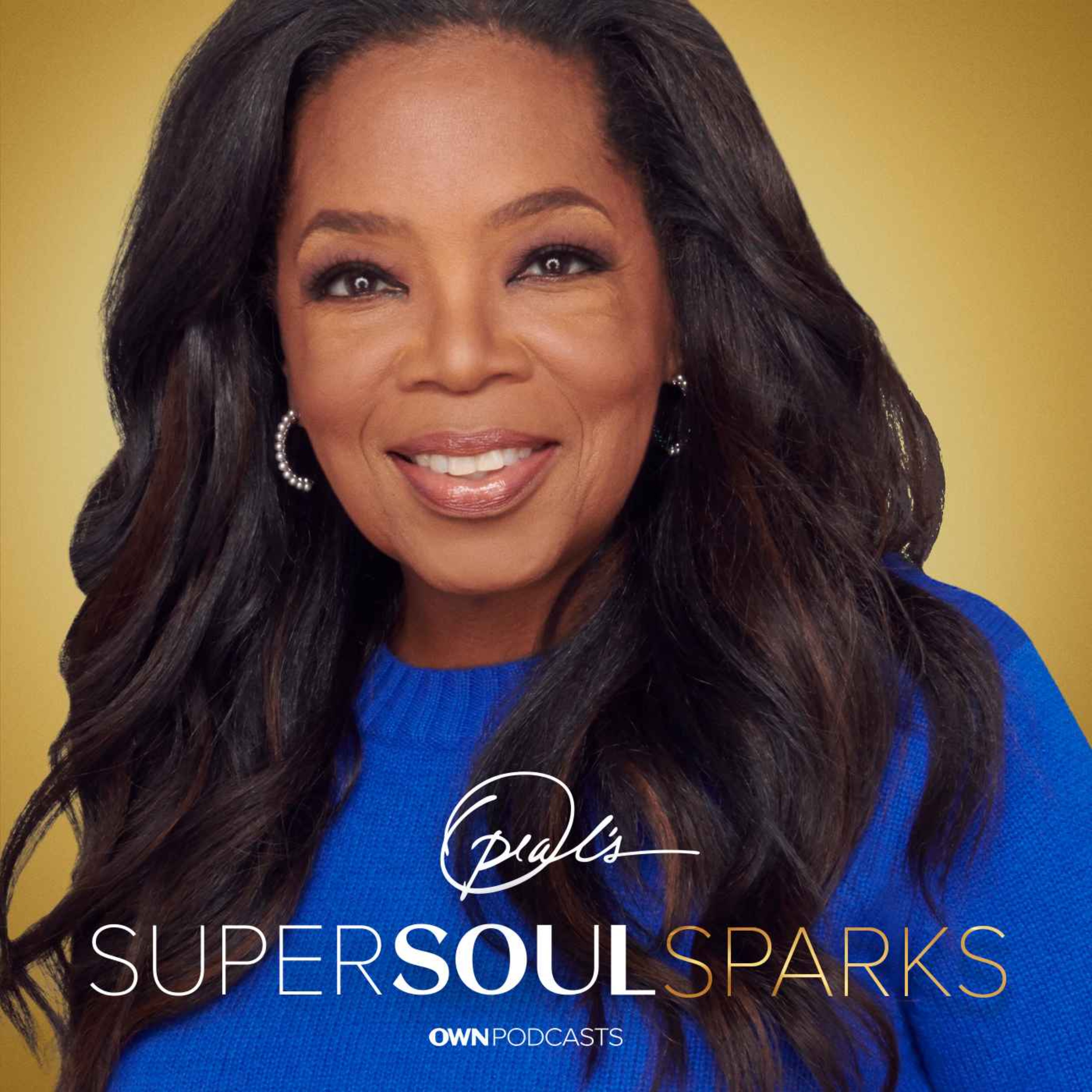
Alanis Morissette Opens Up on the Hidden Cost of Fame | Super Soul Sparks
In short
Alanis Morissette discusses the hidden psychological costs of fame, including PTSD-like trauma, anxiety/depression, eating disorders, and “love addiction,” and how she’s built recovery through boundaries, self-integration, and therapy.
Guest backgrounds
Alanis Morissette is a Grammy-winning Canadian singer-songwriter (born 1974 in Ottawa; raised Catholic; first record deal at 14; moved to Los Angeles in 1994). She became a global phenomenon with Jagged Little Pill (1995), winning four Grammys and selling 33+ million copies.
Key claims
Fame can be isolating and “disconnected,” fame doesn’t heal loneliness, and pain must be faced (not postponed to “when I retire”).
Notable examples
She describes hotel invasions and boundary-setting after Jagged Little Pill’s success; using food/work/love to calm anxiety; recovery via five-days-a-week therapy and Harville Hendrix’s Imago/Keeping the Love You Find/Getting the Love You Want; dating without committing for a year to break love-addiction patterns.
Guests
Alanis Morissette (main guest).
Written by AI. May contain mistakes.
Chapters
1:01
Introduction to Alanis Morissette
Ashley from OWN discusses Alanis Morissette's rise to fame.
“I used to think great work was about being in the right headspace.”
1:30
The Impact of Fame on Alanis
Alanis reflects on the fame she gained from 'Jagged Little Pill'.
“Today on Super Soul Sunday, Grammy award-winning singer, songwriter, Alanis Morissette is here.”
2:05
Journey Through Fame and Isolation
Alanis shares her struggles with fame, isolation, and mental health.
“That mayhem began almost immediately after Jagged Little Pill's release in 1995.”
4:00
Understanding Fame and Identity
Alanis discusses the disconnection fame created in her life.
“I had a couple of records out in Canada that quote-unquote did well by Canadian standards.”
7:44
Pain, Healing, and Self-Acceptance
Alanis talks about learning to embrace pain in her healing journey.
“I get rich or when I meet the right guy, when I get the job, when I get that car, when I get babies, then I will be...”
8:59
Eating Disorders and Women's Representation
Alanis discusses the lessons learned from her eating disorders.
“No, I had a really robust self from what people were telling me and from what my career said I was doing, certainly.”
11:50
Love Addiction and Recovery
Alanis explains her struggles with love addiction and recovery process.
“a year, if not a little bit more, five days a week therapy, you know, basically doing my own version of number one commitment recovery from love addiction.”
14:00
Navigating Relationship Phases
Discover insights on the phases of romantic relationships and personal growth.
“And so I had this fantasy the whole time.”

Ask about this episode
Get the gist, explore an idea or ask about something said.
 Claude
On Oprah's Super Soul, what are the key points of this episode?
Searching your listeningTranscript
Automatic transcript. May contain errors.
0:00Hi, everyone. It's Katie Couric. And on my podcast, Next Question, we love stories about how women are taking control of their lives. They are increasingly leading financial decisions in their households, yet many say they don't feel fully prepared for the long-term financial choices ahead. Real confidence comes from knowing your financial future is protected whatever happens. Pacific Life has helped generations protect what matters today and prepare for tomorrow with life insurance and lifetime income solutions. It's a promise Pacific Life has kept for nearly 160 years so its customers can keep theirs.
0:42Ask a financial professional about how Pacific Life can help you create a more confident financial future. Pacific Life Insurance Company, Omaha, Nebraska, and in New York, Pacific Life & Annuity, Phoenix, Arizona.
1:00Hi, it's Ashley from OWN. I used to think great work was about being in the right headspace. Then I found a TikTok video that made me think about my physical space. An interior designer explored how things like ceiling height and room size might influence how we think. Now I wonder how much of our environment shapes our work without us noticing. Now I'm looking at my workspace asking what kind of thinking I'm making room for. On TikTok, one idea can change how you see something you thought you knew. Your next discovery is waiting on TikTok. Today on Super Soul Sunday, Grammy award-winning singer, songwriter, Alanis Morissette is here.
1:39So many people first came to know you through Jagged Little Pill. Wow. Yes. That was nearly 20 years ago. And now you've just recently turned 40. Yes. And call that a seminal moment. I would have thought Jagged Little Pill, that was a seminal moment, was it? That was a seminal moment that I'm only able to process now for having PTSD'd my way through the last 20 years in response to the mayhem that was that chapter, for sure. That mayhem began almost immediately after Jagged Little Pill's release in 1995. Yeah, yeah, yeah, I don't know. Catapulting Alanis to a level of fame she never dreamed of as a child.
2:18Thank you very much. Alanis and her twin brother, Wade, were born in 1974 in Ottawa, Canada. Raised Catholic, Alanis was a self-proclaimed God girl, recognizing a deeper connection to what she calls the divine early on. She was also drawn to music at an early age, landing her first record deal at 14. After releasing two pop albums in Canada, she took a big risk, moving to Los Angeles in 1994 at the age of 19. It was in California where she began exploring an edgier, more introspective approach to her music, resulting in her first U.S. release, Jagged Little Pill. The album won four Grammys and sold more than 33 million copies, breaking the record for a debut by a female artist in the U.S.
3:07But life in the spotlight took its toll. Alanis struggled with eating disorders and was plagued with bouts of depression and anxiety, buckling under the pressure to live up to the image of a fearless female rock star. She found herself isolated and alone. Searching for deeper meaning and purpose, Alanis set out on a path toward self-healing, a path she continues to this day. So, Jagged Little Pill came out. Yes. And it just turned you into a phenomenon. Yes, we were playing 100-seater clubs, and then we were playing stadiums. So it went from zero to 650 in 3.5 seconds. Wow. And what does that do to your personal psyche?
3:56What happens? I'd had a model version of it in Canada. I had a couple of records out in Canada that quote-unquote did well by Canadian standards. So I'd had my teeth cut a tiny bit in terms of prep. But my head spun around 360. And I just remember having been the person who loved to sit and watch people. I remember I would just sit at outdoor malls and just watch people all day and imagine their lives. And then I immediately became the watch-ed. And that was really disconcerting. So I remember looking down a lot. I remember I didn't laugh for about two years. A lot of self-protection. People would, you know, break into my hotel room while I was doing a show and leave notes and take things.
4:37And so there was a lot of invading of boundaries. And all I remember was setting boundaries backstage all the time. Did you think you knew who you were at the time? I think I started figuring out who I was about a week ago. Yeah. Yeah. So you didn't even, because my thing, I've said for years, that if that big, that fame thing hits you and you're not grounded or rooted in something, in an identity and a certainty about that, then you just sort of get taken over by it. It's like a big, huge wave that takes you under. Did you feel that? I feel like the desire for fame as an end, as opposed to a means to an end, which, you know, as you probably know more than anyone, fame can be a means to an end of service.
5:26Yes, yeah. But when it's just fame, and I was subject to what fame offered as anyone would be, and it was just, it was disconcerting and it was disconnected, actually. I had the bill of goods sold to me that I'd be able to be hanging out with Johnny Depp, and you and I would be chatting every day and having tea, and then I came to see that it was actually quite isolating. I felt disconnected from people. I felt there were a lot of projections and a lot of assumptions, a lot of misperceptions, which felt violent at times. So it wasn't as connective as I thought it would be. Well, you used the term PTSD.
6:04What do you mean, really, by that? Traumatized because on some level, I think, becoming famous and wanting fame, there's some trauma. Did you want it? Yeah, of course. I don't think it happens by mistake for anybody, frankly. And then the traumatized person, in this case me, gets traumatized by the very thing that I thought would be the bomb. You know, I thought that all would be helped and healed and soothed by fame. Because when I get famous, then I will be less lonely. And I will be understood and I will be loved and that love will go in and heal any of the broken parts.
6:40I've got big news. I switched to Verizon and got the new iPhone 18 Pro. Shh. I can keep my old phone. Can I also get the latest iPhone every year? Shh. Anything else? Verizon let me choose Apple Watch Series 12 or iPad on them Everybody listen up Switch to Verizon and get the new iPhone 18 Pro now No trade-in needed And the latest iPhone every year with Simplicity Plan Plus choose Apple Watch Series 12 or iPad on us Simplicity Plan with Simplicity Pro required Plan and device payment purchase are separate agreements with separate terms Service plan for watch or iPad required Additional terms apply for all offers Are your ad campaigns lighting up the dashboard But not the pipeline That's bull spend And marketers are calling it out in Dashboard Confessions My boss asked for results, so I opened my dashboard for the only positive-sounding metric I had.
7:26Impressions. Cut the bull spend. See revenue, not just reach. LinkedIn delivers the highest return on ad spend of major ad networks. Advertise on LinkedIn. Spend$250 on your first campaign and get a$250 credit. Go to linkedin.com slash campaign. Terms and conditions apply.
7:43And the truth is, there's no difference between fame or, you know, when I get thin or when I get rich or when I meet the right guy, when I get the job, when I get that car, when I get babies, then I will be... When I retire. When I retire, then I will be happy, I will be healed, I will be... Everything will be okay. Everything will be okay. Yes. As though somehow we as humans could be exempt from pain. You know, one of the big lessons I've learned over the last little while has been that if I can become comfortable with pain, which is different than suffering. Yes. If I can become comfortable with pain as just an indication, and it's potentially a daily thing, in my case it often is, then there won't be my living in the future all the time.
8:27That one day if and when I'll be happy. Or as one of our guests said, learning to walk in the dark, being comfortable embracing when the dark shows up. Yes, and even if I'm not comfortable doing that, I'm very uncomfortable in pain. I hate it. Yeah, we all do. I run from it with all kinds of addictive fun things, you know, temporarily fun things. But at least knowing that it's a portal and that on the other side there is this great sense of peace that goes beyond this ego development. But I was having a hard time because I didn't have a sense of self. You didn't? No, I had a really robust self from what people were telling me and from what my career said I was doing, certainly.
9:04Yeah, that's so interesting and I know really kind of... Usual, unfortunately. Well, strange for people because when people are looking from the outside, they think that... Yes, the self is so concrete. Yeah, they think it's so concrete. Yeah, which is its own challenge too if the self is that concrete. You know, I think that in many ways, and I've heard lots of people say this, famous people talk about this, I think in many ways I was so blessed, actually, because I got famous for literally being myself. Yeah, that's great. Literally. And was that self something that you knew? Did you know, oh yeah, this is Oprah, quote unquote.
9:43Yeah. Okay, that's great. Yeah. And so I was, you know, the reason I think I became famous is because I broke the mold of trying to pretend to be, you know, Barbara Walters or trying to be like somebody else. That's great. And then just sort of being myself. And so the difference is, oh, so when you see me on the street, I am that person. There's a congruence. That's happening for me now. What you just described is happening for me now. And I had aspects of it that were one-dimensionalized and I was seen as singularly angry. Which, you know, if you're going to be seen as singularly anything, angry is not terrible.
10:16Yeah. Then I was singularly spiritual. Yeah. Then singularly academic. And then in certain moments singularly stupid or flaky or fill in the blank. Uh-huh. So now it feels like, and I don't know whether it's because consciousness has evolved to the point where we're invited to be more integral. More than one thing. Yes, heaven forbid, that we're known as multitudinous beings. Yes. For years, Alanis Morissette says she struggled with bouts of anxiety and depression. A self-described people pleaser and perfectionist, she says she suppressed her feelings of anger and despair, soothing herself through eating disorders and addictions to work and love.
10:55You went through some really challenging times because you had anorexia and bulimia, correct? Yeah. So what did eating disorders teach you about the self? Well, it taught me how women were and still are reduced to objects in a lot of ways, or sexual pieces of meat, to be really direct about it. And why I loved being perceived as the angry white female on the cover of Rolling Stone was because I thought, well, at least I'm not perceived as just a sex piece of meat. That's great. An angry woman is a thinking woman. You know, an angry woman is responding to what's going on in the culture and society around her.
11:34But eating disorders for me, food was such an amazing way to calm my anxiety, too. It still is. Food, work, and love addiction for a long time. I'm in active recovery for love addiction. So those are my top three. And then I have a hundredth secondary one. What does an active recovery for love addiction mean? It means, for me... Explain, explain, please. Explain, please. Details. So briefly, probably briefly, i.e. a year, if not a little bit more, five days a week therapy, you know, basically doing my own version of number one commitment recovery from love addiction. The withdrawal with love addiction is harrowing.
12:09It's probably the worst pain that I have felt in my life. So treating a human being as that object focus, it's an impersonal experience. As long as that person isn't interested, or if they're really interested in me, I would tweak it so that they would be horrified and want to run. And then it was game on. When I say love addiction, the word love, ideally, in my mind, would be in quotes. Because it's not actually love. It's obsession. Obsession. It's obsession and it's fear. Love is just this natural state of recognizing that we're all connected and that we're one. Oh my goodness. But, you know, I remember doing a show about this years ago.
12:43I mean, listen, I've done a show on everything. Yeah, what have you not discussed? I know. So this idea of, but, you know, so many women and men don't recognize, I think it's easier to know you're a sex addict than to know you're a love addict. Yeah, sex addict is easy. Sex addict. You're obsessed with sex. Because you're obsessed with sex. You can't get enough. And it's the seduction part, too, the sex thing. Yeah. But love addiction, that's how, how did you figure that out? I figured it out because of repeating the excruciating pain of the same pattern of dissolving the same relationship over and over again with many people.
13:16And the deep pain. And I promised, as part of my recovery journey, to not commit to a new relationship for a year. And that meant dating different people and not committing to them, which as a love addict I wanted to commit. My propensity was to commit five seconds later. Because you want that person then to be the person that... To run away. To run away. And they don't run away at first, right? Because at first they're like, wow. Yeah. Yeah. Amazing. Yeah. Amazing. And then. Can't get enough of you. And then it's like, oh boy. Yeah. What is this? And then, yeah. And then it's not love anymore.
13:48And that's when I also started applying Harville Hendricks Imago. I read Keeping the Love You Find when I was 15. And I thought, here is a model that explains to me healthy love and active participation in both people's healing and your partner's healing. And so I had this fantasy the whole time. So you read Keeping the Love You Find. I read, well, I had, you know, I had Harville on here in, like, whenever he wrote Getting the Love You Want. I would not still be in relationship with Sedman had I not read that book. Me neither. That book, it's the best relationship book ever. It explains it all.
14:21It explains everything. Everything. Yeah. And it's so merciful and it's so intelligent and it blends, for me, that stages of development chart. Yeah. not only explains how to navigate the relationship, but how to navigate this relationship and what I need to do in order to really become more whole. And also, for me, it shows what you're attracting into your life, why you're attracting into your life. And that's what that getting the love you want principle did for me. And the idea of being the active, because a lot of people say, well, you know, there's this autonomous movement that was going on for a long time, like do your individual work.
14:54Yes. And then there was the other side, which is, you know, do all your work in relationship. And I actually think it's both. Yes. Do your individual work and know that you could be an active participant in your partner's healing. Yes. And that's that third phase. Most people, when they, the three phase thing of three, three phase of the committed journey of infatuation, can't get your hands off each other. Second phase, start conflict because it's going to happen. Most people jump ship, especially in Hollywood. Bye-bye. Bye-bye. I'm out now. And I was of the mind that like phase two, this is just where it gets good.
15:26You know, this is where we get to help each other. And go to the phase three where you're helping each other out.
15:58they don't feel fully prepared for the long-term financial choices ahead. Real confidence comes from knowing your financial future is protected whatever happens. Pacific Life has helped generations protect what matters today and prepare for tomorrow with life insurance and lifetime income solutions. It's a promise Pacific Life has kept for nearly 160 years so its customers can keep theirs. Ask a financial professional about how Pacific Life can help you create a more confident financial future. Pacific Life Insurance Company, Omaha, Nebraska, and in New York, Pacific Life and Annuity, Phoenix, Arizona.
16:41Are your ad campaigns lighting up the dashboard, but not the pipeline? That's bull spend, and marketers are calling it out in dashboard My boss asked for results, so I opened my dashboard for the only positive-sounding metric I had. Impressions.
From the publisher
In this candid conversation, Alanis Morissette reflects on the lessons she learned through fame, anxiety, self-discovery, and the lifelong journey toward authenticity and inner peace. In this conversation with Oprah, Grammy Award-winning artist Alanis Morissette opens up about the unexpected realities of fame, her struggles with anxiety, relationships, self-worth, and her search for deeper meaning. She shares the lessons that helped her move beyond external validation and reconnect with her authentic self. Full episode “Alanis Morissette: Is Happiness Temporary? (Maybe That’s Okay)” originally aired August 22, 2017. Listen to full episodes wherever you get your podcasts.
Hosted on Acast. See acast.com/privacy for more information.
More from Oprah's Super Soul
All episodes
We use cookies.They keep VO running smoothly and help us improve it. Privacy policy