
In short
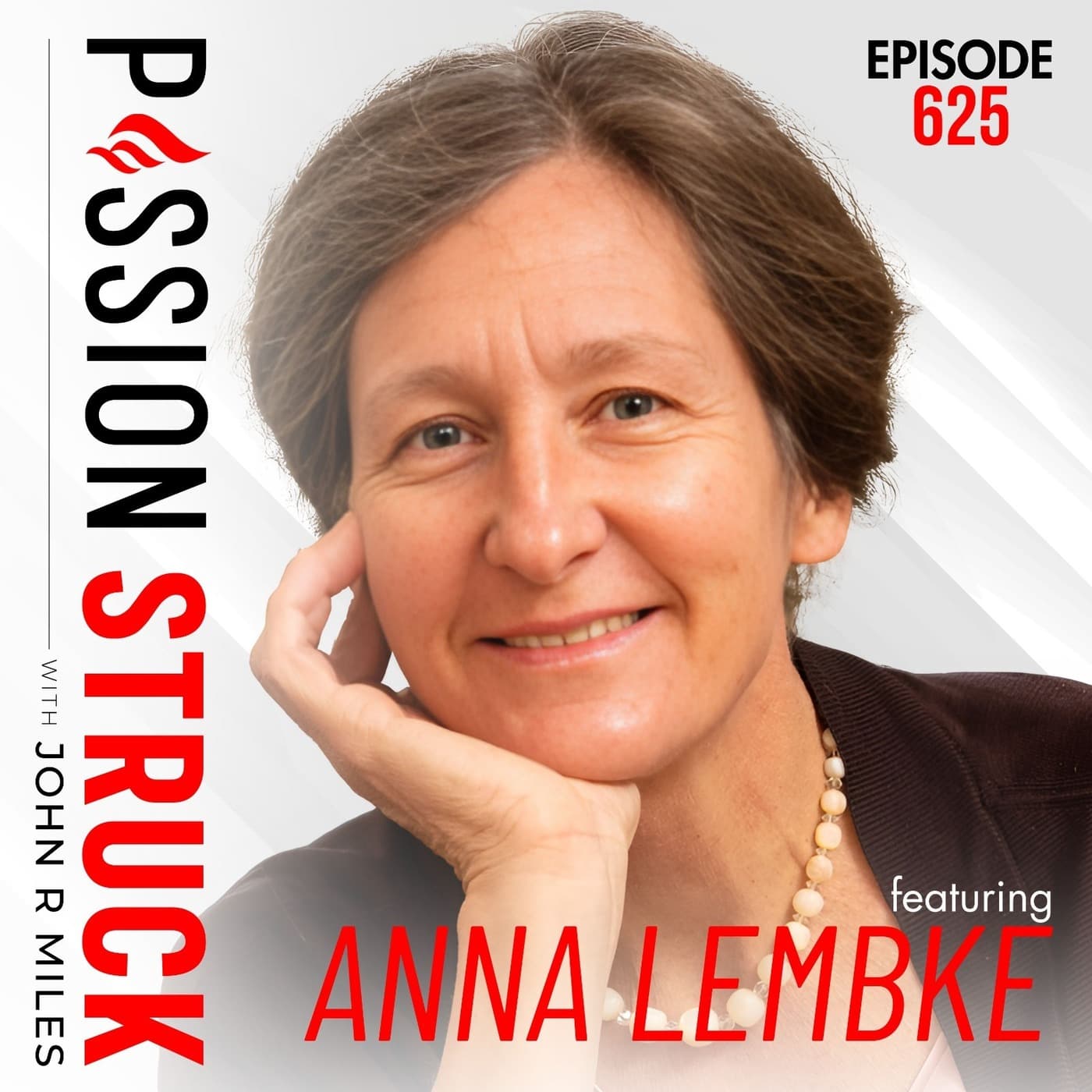
Episode Notes: Anna Lembke on How to Be Human in a Dopamine-Driven World | EP 625
Podcast Overview Title: Passion Struck with John R. Miles Host: John R. Miles Guest: Dr. Anna Lembke, psychiatrist, Stanford professor, and author of *Dopamine Nation* Episode Focus: The impact of instant gratification on human connection, addiction, and finding meaning in life.
---
Key Themes and Discussions
- The Crisis of Instant Gratification
- Modern Society's Addiction: The episode discusses how behaviors such as binge-watching, social media use, and overworking can hijack our attention and lead to emotional numbness.
- Dopamine and Addiction: Dr. Lembke explains the neurological underpinnings of addiction, highlighting how pleasure and pain are processed in the same areas of the brain, leading to a cycle of dependence.
- The Neuroscience of Pleasure and Pain
- Pleasure-Pain Balance: The conversation emphasizes the balance between pleasure and pain, noting that overindulgence can lead to a lack of satisfaction and emotional detachment.
- Neuroadaptation: As individuals experience increased pleasure, their brains adapt, requiring more stimulation to achieve the same feeling, which can lead to detrimental behaviors.
- Addiction Beyond Substances
- Spectrum of Addiction: Dr. Lembke clarifies that addiction is a spectrum disorder affecting many, often unnoticed, individuals. It can manifest in various forms, not just through drugs and alcohol.
- Modern Environment: The term "drugified" is introduced to describe the current landscape, where accessibility and novelty of substances and behaviors heighten addiction potential.
- Coping Mechanisms and Existential Issues
- Feed-Forward Cycle: The lack of meaning and purpose can lead individuals to seek comfort in addictive behaviors, which in turn can create feelings of emptiness and disconnection.
- Finding Meaning in Suffering: Dr. Lembke posits that understanding and finding meaning in suffering can lead to personal growth and a more fulfilling life.
- Impact of Technology on Human Connection
- Digital Addiction: The discussion touches on how social media functions like a drug, hijacking the brain's reward system and replacing genuine human connection with digital interactions.
- AI and Relationships: Concerns are raised about the long-term implications of relying on artificial intelligence for emotional fulfillment, with a call for balance in technology use.
- The Path to Healing
- Detaching from Consumerism: Dr. Lembke encourages listeners to consciously detach from consumer behaviors and take intentional breaks from addictive activities to recalibrate their mental health.
- Building Community and Connection: Emphasis is placed on the importance of real-world interactions and community support in overcoming addiction and fostering a sense of belonging.
---
Personal Reflections
- John's Journey: Host John R. Miles shares his personal experiences with emotional numbness and addiction, highlighting the transformative power of sobriety and the importance of social connections.
Key Takeaways
- Understanding Addiction: Addiction is a complex issue that can apply to various behaviors, not solely drugs or alcohol.
- Neuroscience Insight: The brain's response to pleasure and pain is critical in understanding addiction.
- Pursuing Meaning: Embracing discomfort and seeking deeper connections can counteract the effects of a dopamine-driven culture.
- Technological Caution: Awareness of digital addiction is essential in maintaining human relationships and mental health.
Closing Thoughts
- Dr. Lembke’s insights provide a framework for understanding the struggles of modern life and the potential paths toward recovery and fulfillment. The episode serves as both a cautionary tale and a roadmap for reclaiming balance in a dopamine-saturated world.
Resources
- Dr. Anna Lembke's Website: [annalembke.com](https://www.annalembke.com/)
- Book Recommendation: *Dopamine Nation* by Anna Lembke.
---
For further conversations and insights, tune in to more episodes of *Passion Struck* with John R. Miles.
Written by AI. May contain mistakes. Listen to the episode to check what was said.
Transcript
Automatic transcript. May contain errors.0:00Coming up next on PassionStruck.
0:30impacts not just their lives, but the lives of people who love them and the people around them. Welcome to Passion Struck. Hi, I'm your host, John R. Miles. And on the show, we decipher the secrets, tips, and guidance of the world's most inspiring people and turn their wisdom into practical advice for you and those around you. Our mission is to help you unlock the power of intentionality so that you can become the best version of yourself. If you're new to the show, I offer advice and answer listener questions on Fridays. We have long-form interviews the rest of the week with guests ranging from astronauts to authors, CEOs, creators, innovators, scientists, military leaders, visionaries, and athletes.
1:15Now, let's go out there and become PassionStruck. Welcome to Episode 625 of PassionStruck, where intention meets impact and the journey to a connected life begins. If you're new here, welcome. This show is for anyone bold enough to ask life's deeper questions and brave enough to live the answers. If you've been with us for a while, thank you. Your presence is what powers this movement. Today, we're continuing our series on The Connected Life, an exploration of what it truly means to live with death, alignment, and purpose in a world that often keeps us distracted and disconnected. Last week, I welcomed two incredible guests.
1:55First, Suzanne Giesemann, one of the world's most respected spiritual teachers, joined me to help us explore soul-led purpose and what it means to matter to the universe itself. Then, on Thursday, I was joined by Dr. David Hamilton, who unpacked the science of kindness, revealing how compassion isn't just a virtue, but a biological necessity for mental health, connection, and well-being. And if you missed it, I also dropped a solo episode on Friday on Taylor Swift and the art of valuing others, where we explored how one of the most influential artists of our time uses empathy, intention, and presence to build genuine connection in a performative world.
2:38Now, let me ask you this. What happens when pleasure becomes pain? When the things you crave, your phone, social media, alcohol, food, even validation start consuming you? My guest today is Dr. Anna Lemke, the bestselling author of Dopamine Nation and one of the world's foremost voices on addiction, compulsive behavior, and the neuroscience of craving. As a psychiatrist and professor at Stanford University School of Medicine, Dr. Lemke has helped thousands of patients break free from the grip of modern day addiction. Her work challenges us to rethink how we relate to pleasure and how too much of anything can leave us feeling empty, anxious, and disconnected.
3:21In this episode, we explore why dopamine overload is at the root of so many of today's struggles, how the pleasure-pain balance governs our mental health and relationships. We go into the paradox of abundance and why more access often leads to less satisfaction, and how embracing intentional discomfort can lead to deeper fulfillment, focus, and freedom. Whether you're seeking to reset your habits, reclaim your attention, or simply live with more balance and intentionality. This conversation will give you a scientific and deeply human blueprint for navigating the addictive nature of modern life.
3:56And one last reminder, our Ignited Life sub-stack is growing fast. Each week, I share exclusive tools, behind the scenes insights and curated playlists like this one. You can subscribe at the ignitedlife.net or go to passionstruck.com. And don't forget to check out our growing YouTube channels where we post extended interviews on John R. Miles and Clips videos on PassionStruck Clips. Now let's dive into this transformative conversation with the brilliant Dr. Anna Lemke.
4:31I am absolutely honored and thrilled today to have Dr. Anna Lemke join us on PassionStruck. Welcome, Anna. Thank you for inviting me. So it's a few years now since the release of your groundbreaking book, Dopamine Nation, Finding Balance in the Age of Indulgence. But I wanted to start out with your own journey from writing about opioids to exploring digital addiction. Was there a specific moment when you realized we're no longer dealing with just some people struggling, but that it's almost like everyone is becoming vulnerable to addiction? I have to say if there was one moment, it was the moment I met my patient, Jacob, a Stanford professor himself who gave me permission ultimately to share his story anonymously with readers.
5:21A very bright, very successful, very kind man, a good person who had developed this very severe sex addiction, which really took off with the advent of the smartphone, the internet, and then the smartphone, culminating ultimately in, as I write about him, him building his own masturbation machine, and then getting so despair, despairing around his inability to stop this behavior that was ruining his life, that he seriously contemplated ending his life, going so far as to hang a noose. And that was really the moment for me, for a lot of different reasons. It was a window into how the technology has changed our relationship with these behaviors that we are wired over many millions of years of evolution to seek out in order to optimize for survival.
6:17So it was like that the interface between his addiction and the technology, that was a sort of, oh, wow moment. But then also a big piece of it was recognizing myself in him and realizing that my own addiction to romance novels that was really exacerbated by the advent of Kindle, my e-reader, and my ability to essentially chain read without interruption and have access to a universe of romance novels. This is like a very universal problem, especially since I had always thought that I was somehow immune to addiction because although addiction runs in my family in terms of quite a few alcoholics going back the generations, alcohol never did anything for me.
7:05I was never vulnerable to alcohol addiction. So it was a realization, oh, it's not that I'm not vulnerable to addiction. It's that just alcohol isn't my drug of choice. But when I finally encountered my drug of choice, I was off and running. Well, I'm glad you brought up that form of addiction because typically when we think of addiction, we think of drug or alcohol use, but you can be addicted to work, you could be addicted to gaming, you could be addicted to many things in life. And on that same sort of topic line, we tend to live in a dopamine-rich world that, as your research points out, is designed to hijack our pleasure centers.
7:44If you had to describe the modern environment that we're living in one word from an addiction medicine lens, what would it be and why? I would probably use the word drugified. I think we've drugified almost all substances and behaviors, which is to say we've made them more potent, more accessible, more bountiful, and more novel. And all of those things increase the addictive potential of anything, including even traditional drugs. So access is a huge risk factor. If you live in a neighborhood where drugs are available on the street corner, you're more likely to try them and more likely to get addicted to them.
8:23And we live in now a world of really universal access. There's really almost nothing that we can't get. And we have drugs that didn't exist before, including digital media. In terms of potency, the classic trajectory of any drug is that with chemical alterations, we can make it more potent. If you look at the history of opioids, for example, morphine derived from opium is 10 times more potent than opium. And then you ultimately add two acetyl groups to morphine and you get heroin, that's more potent. And then eventually you end up with fentanyl, which is a hundred times more potent. So that's a history of substances.
9:04is. And we see that too, that kind of telescoping of potency with digital media too, or just screen time in general. Access potency, novelty is a way to overcome tolerance. So all of these things, I think we've now infused our entire ecosystem with this kind of drugification of everyday life. Yeah, not too long ago, I read The Revenge of the Tipping Point, Malcolm Gladwell's latest iteration of that famous book. And I'm not sure if you've read it or not, but he really starts out. It was weird he came out with it, right? Yeah. He starts out the first section of the book talking about Purdue Pharma and the opioid epidemic.
9:49And he really brings about two key insights. One you just described in that they needed their drug to be even more addictive. And so they changed the formula to do. And then he brought up about how McKenzie came in and they understood that the blanket way that they were trying to attract all the doctors wasn't working. Attract the doctors who are most addictive to making money off of their product and super focus on their vulnerabilities because they're the super prescribers. And so I never thought of prescribing out of financial desire to be an addiction, but in the way he was describing it, it was almost like these doctors were so addicted to making more money that they were willing to freely write more prescriptions.
10:44Is it possible to have that form of addiction? Oh, absolutely. I think we see addiction to financial gain in many different forms. And we've drugified work by adding all kinds of bonuses and stock options. And even in the medical field, I now get a monthly report telling me whether or not I've met my relative value unit requirements, which is shortened for RVU, which is how much the insurance companies will reimburse per patient seen. And if I go below my graph, I will not get a bonus. And if I go above my graph, I will get a bonus. There are all kinds of visible and invisible incentives inside of medicine that encourage seeing more patients, billing more.
11:34And it's not that doctors are necessarily bad people or that doctors are worse than other people. But when you have a system that incentivizes and rewards certain types of behavior, human beings are very sensitive to rewards and we will work to press a lever to get rewards. That's true, whatever the reward is. Well, I think a lot of people assume that addiction doesn't apply to them. I have met a lot of friends who I think have various forms of addiction, but none of them see it. What's the biggest myth that you wish more people understood about it? There are lots of myths about addiction. One of the myths is that people never get better.
12:27So we do have this vision of a severely addicted individual sleeping under a bench, holding a round paper bag. And that's not to say that those people like that who fit that image don't deserve our empathy. Of course they do. But the point I'm trying to make is that addiction is a spectrum disorder. And there are a lot of people walking around who have a pretty significant addiction. And you would never necessarily know because they can manage it well, just well enough to hide it and to seem to continue to function. But their loved ones know, right? The people close to them. And then there's this sort of throwing up of hands, well, there's nothing I can do.
13:11And I think that's the myth that I most actively want to fight against because we know that treatment for addiction works. And it works just about as well as treatment for other chronic relapsing and remitting disorders with a behavioral component like type 2 diabetes, like obesity, like certain forms of cardiac disease, certain forms of asthma, like depression, right? So we know when we build a treatment infrastructure and people actively engage in treatment, they have response rates that are on par with the response rates from those other chronic disorders. So that's an important, important thing for people to realize.
13:51Thank you so much for sharing that. And on a theme that I explore often on this podcast is how so many people today feel invisible and or insignificant. And I remembered when I first started thinking about this, I kept hearing, we have a hopelessness epidemic. We have a loneliness epidemic. There's so many people who feel burned out, invisible in their own lives, that they just don't matter. And the more I started to look at all these common symptoms, it made me think that they're all just things that we're categorizing of something that's larger. And do you think our turn towards addictive behaviors is in part a coping mechanism for that deeper loss of meaning or connection?
14:44Yeah, it's a great question. And I guess I would answer it by saying, I think it's a feed-forward cycle. And by that, I mean that the lack of meaning and purpose in our lives, and frankly, just sheer boredom, can contribute to addiction. But I think it's really important to recognize that being exposed to a lot of addictive substances and behaviors can also create the absence of meaning and purpose and loneliness. So the point being that while these kinds of unmet existential needs certainly increase the risk of addiction, the reverse is also true in that when we get addicted to something that's just really inherently addicting, we can go from a life of connection and meaning to a life without connection and without meaning.
15:41So it's really a feedforward, bidirectional kind of a phenomenon. In your book, you write that in addition to the discovery of dopamine, one of the most remarkable neuroscientific findings in the past century is that the brain processes pleasure and pain in the same place. Further, pleasure and pain work like opposite sides of a balance or opposite sides of a balancing mechanism. When you think of that topic of mattering and our lack of connection that many people are facing, how do those two different sides of the coin affect someone? Because it seems like it's a battle, almost an inner battle between the two.
16:27gosh I'm not really sure how to answer that how to make a kind of direct link between that pleasure pain balance which is just a metaphor to represent the drive toward homeostasis and how we achieve homeostasis with any deviation from neutrality whether to pleasure or to pain I think a somewhat maybe counter-cultural view that I have on this is that our suffering really, if we can find the meaning in our suffering, then we can find the meaning in our lives. If we feel like our suffering is just gratuitous and pointless, then that really does breed a kind of nihilism. And I say that's countercultural because it implies that suffering is maybe a good thing, which is not that I would wish suffering on anybody.
17:24And I certainly don't like suffering in my own life. But I do know that the most important lessons in my life and the experiences that have informed my own sense of purpose and direction have come from the hard things in my life. So I'm not sure if that's what you're asking, but. I think that's part of it. I recently had a guest on the show. You may or may not be familiar with them, but he's one of the foremost Buddhist teachers. His name is Yonge Mingor Rinpoche, and we were talking, and Rinpoche was talking about how, for him, panic attacks were something that plagued him and were causing him to really disengage from a lot of things in life.
18:10And then he learned to lean into it, to overcome it, and through that learning, it's what led him down the path of now using it as an example of by overcoming it and getting used to the idea that he was having them, it now opened him up in other ways of his life that he never would have been able to feel or observe had it not been for the panic attacks. So very similar kind of theme. I think we live in a culture and we certainly have a medical model that we should do all that we can to escape painful feelings and experiences, whether physically painful or emotionally painful. And I also think that's very reflexive and instinctive.
18:55Like I think we evolved to reflexively approach pleasure and avoid pain. It's how we've survived in a world of scarcity and danger. But it is also very true that like ultimately pain in various forms is really unavoidable. And the more that we try to escape it, the worse it actually gets. And what really needs to happen is we need to turn and face it and even enter into it in a kind of a metaphysical sense. And I think in doing that, we paradoxically get a respite from it. So I want to look at the other side of this. How does the super abundance of pleasure tie into a deeper spiritual or psychological poverty that people are experiencing?
19:41in? Well, if you look at the neuroscience, what we know is that no matter how much pleasure we get, ultimately our brains will adapt to that experience and need more and more over time to get the same effect. Or that even that pleasurable experience because of neuroadaptation will turn on us and we'll get the opposite of what we used to get from it. Just to take a very A common example, people often use cannabis to feel good, get high, or to stop feeling anxious or depressed or to help themselves go to sleep. But with heavy daily use, very often and quite quickly experience that it stops working.
20:24They need more and more to get the same effect or that it actually starts to make them anxious or makes them paranoid or suspicious or wakes them up instead of puts them to sleep. these sort of age-old adages from all the major religions and philosophies that say the pursuit of pleasure and of material gain is not ultimately a rewarding life. We now actually have pretty good neuroscience showing how and why that happens. Speaking of neuroscience, in your view, what happens to the brain when someone internalizes the belief that they don't matter?
21:07Well, I don't think we really know. The belief that you don't matter is probably a very complicated neurological phenomenon. It's probably different in different people. But phenomenologically, it's probably pretty similar to what happens when people get depressed. and what we know from studies of depression is that there's a dampening of neurological firing in different parts of the brain, especially the frontal lobes, but probably also in the motivational and reward systems. So people, I think, kind of decathect or withdraw from life. They stop engaging. They stop paying attention. They stop connecting or seeking out.
21:56Yeah, so I just wanted to bring in my own personal story because I think it typically will help a listener. So I was a high functioning senior executive in the Fortune 500 world. I was a senior executive at Lowe's. And during my time there, I noticed, and it happened really gradually, but it was just like, I couldn't put my finger on it, but the world just didn't feel as bright as it once did. Like the connections weren't as strong. My sense of having a desire to go out and have fun just wasn't there as much. My desire to go above and beyond at work seemed to take a step back. And at first I dismissed it.
22:45And over time, it just seemed to get a little bit darker gradually. And it's so gradual that you almost don't even know what's happening. And I remember as I was going down this path and things in my life seemed to start unraveling, I ended up going to see a psychotherapist who told me that what I was experiencing was dysthymia. And is what I'm describing a similar case of what that feels like if someone's experiencing it? Dysthymia, the difference between dysthymia and depression generally is the chronicity as well as the severity. So dysthymia is like a long-lasting low-grade depression, whereas major depressive disorder is usually more episodic, deeper depressions.
23:40But these characterizations are limited. They'll never fully capture human experience. But certainly what you're describing sounds pretty classic for some form of depression. I was just really, if someone's never been through it, I used to think at this point, having not experienced depression, that when people say someone has a chronic or severe depression and it's keeping them out of work or something else, I never understood what that meant until I went from this gradual to, I would say, a medium grade, then eventually to a severe grade. And when it hit me severely, it just felt like I was completely emotionally dead inside.
24:25something I wouldn't wish on anyone. And it was almost like I would wake up and not want to do anything. So powerful. And unless you've experienced it yourself or seen it in a loved one, it's really hard to understand or imagine. But yeah, that kind of, first of all, I think you highlight something really important. Not all depressions are characterized by sadness, right? Some people just feel the absence of feeling or kind of numbness, which it sounds like you were describing. Other people get very irritable and cranky and angry when they're depressed, can manifest differently. But certainly it's almost like life has been leached of its color, or you have the dark shade over your eyes, or it's a very strange feeling.
25:11It is. And during this time, I had moved on from Lowe's to Dell, and I'm now operating directly with Michael Dell and that level. And from the outside, you would have thought everything in my world was completely fine. But inside, it just felt like everything was falling apart. And so as this was going on, I tried to fill the void because I really felt an absence of mattering at that point. And I started to try to fill the void with alcohol. And what I wanted to ask, and I know I used my story, I probably went longer into it than I should have, but thanks for sharing. It's totally enriches everything because it's yeah, a lot of people out there struggling with these problems.
25:58Well, I, so at this point I was completely burned out. I was emotionally numb. I'm drinking more. And I guess my question to you, for someone who might be in a similar situation is how, whether it's alcohol, drugs, another addiction. How do those addictions make that void deeper? And does it make it deeper? There are a lot of doorways into addiction and certainly trying to quote unquote self-medicate a depressive state is a common pathway. And the reason that it's so common is because in the short term, alcohol makes a depressed person feel a little less depressed. The problem is that it's very short-lived and that ultimately, you know, what daily heavy alcohol use does is essentially cause the brain to say, oh, wait a minute, we're getting all this exogenous dopamine, so to speak, or these exogenous source of these sort of feel-good chemicals that we can, we don't need to make our own anymore.
27:02We can now down-regulate production of our own endogenous opioids, our own endogenous dopamine. And ultimately you get to a point where you're in this chronic dopamine deficit state, where now you need to use alcohol, not to get out of your depression, but just to bring yourself from a state lower than your depressed state, back up to your original depressed state. So it gets to be this very insidious kind of chasing the tail phenomenon. But the problem is that in the immediate moment of using again, there's at least very briefly some relief from those symptoms. And so you get in this kind of vicious cycle.
27:41Which is why I say to patients, you need to abstain from your drug of choice long enough in order for your brain to reset those reward pathways. And even if your baseline was depressed, it was probably less depressed than you are now since you've been drinking. And if you look at sort of large scale epidemiologic data, what is that addiction is rates of addiction are higher in people with co-occurring mental illnesses, but that when people with mental illnesses of all sorts are engaging in their addiction, they have worse outcomes than people with the same mental illness who are not addicted to substances.
28:20So for example, whether it's schizophrenia or major depression or bipolar disorder, somebody who is using a substance to cope with that mental illness is very likely to have more prolonged episodes, to need more medication, to have more hospitalizations, to have more complications, and ultimately to die of their disease. I know, and I don't talk about it a lot on the show, but I've been sober for a while now and life is just completely different. It takes a little bit to get there, but it's just, you sleep so much better. Your cognitive functioning is so much higher. It's just like the world for me is brighter without it.
29:03And I'm not advocating for people on the show to drink or not drink. I just know for me, it's been a godsend that I was able to move away from it because it was no longer serving a point in my life that was helping me in any way. And I found it was the common link between all the moments that seemed to go wrong in my life. So for me, it was just a need to break from it. And I actually just did it to cold turkey. I just told myself starting August 1st, I'm going to just stop. and I initially thought I'd stop for a couple of weeks and then it just felt so good that I just permanently stopped. Oh, that's great.
29:43Was that this past August? A couple, two August ago. Two August ago. Oh, that's great. Yeah. That's why I love this work because when people with addiction get into recovery, they get so good, like their lives are so much better. And I don't know that we see the same kinds of incredible improvements as when we're just like treating run-of-the-mill depression or bipolar disorder. But with addiction, people with severe addiction, when they stop using and they get into recovery, wow, they're often really remarkable people. And there's such a ripple effect because of course, addiction negatively impacts not just their lives, but the lives of people who love them and the people around them.
Read the full transcript
30:25So it's great to hear that you're feeling kind of this new lease on life. I'm curious though, looking back, you described it as first there was this sort of kind of low grade depression, diagnosis, dysthymia, and then a more severe depression, and then the drinking. But looking back, I'm curious, were you already drinking heavily before you got, when your mood went down? I would not say heavily, no. Okay. No. And I was never one of those people who drank like a bottle of liquor a week. For me, it was typically wine. And it was generally after I came home from work, I wasn't a day drinker. It was typically, I used to do something to relax or I'm a severe introvert.
31:10So I just found oftentimes in that world that I existed in where you had to act like an extrovert all the time, I was so exhausted by the time I got home that it was a way for me to just lessen the emotional drain that I had been feeling. And I think that's why I started doing it. But I noticed that the more I felt this sense of invisibility or weight take over me, it led to an increase in drinking. And then I had an incident about eight or nine years ago, where I walked in on a armed robber in my house who pointed a gun on me and I had to evade him. And that kind of brought up all the PTSD from my past and combat and other things.
31:55And then I went into another bat at that point of learning to drink heavily again, probably to cope from that incident. All right. Wow. So I wanted to move now to technology. You've compared in other interviews that I've listened to social media companies to almost drug dealers. Do you think these platforms in any way hijack our need to matter and commodify it through things like likes, follows, and metrics? Well, let me just say, I'm still optimistic that we can make less addictive forms of social media. And I think that the fact that so much of us spend so much time online is in some ways positive in that it speaks to our desire for connection with each other, which is a good thing.
32:48But there's no doubt in my mind that there are certain forms of social media that are highly addictive and have been engineered to be addictive through the algorithm that learns what we've liked before and then pushes that content to us in ever shorter, now primarily video format, which is very reinforcing for our brains. And that it actually now takes work to stop viewing these videos, rather than to view the videos. Plus the ability to control the experience, I think is hugely contributory to its addictive nature. Because a big piece of addiction is actually the control that we can reach for a substance or a behavior and in a second change the way we feel.
33:38And the fact that the digital medium can be is and can be specifically tailored to our wants, needs, and likes. And if we get bored or frustrated, we can just get rid of it and get something else is really a key piece of its addictive potential and why it's a departure, very much departure in my mind from like TV. TV had its own addictive potential, but I think we've now gone from the equivalent of a heroin to the equivalent of fentanyl with these new digital mediums. Yeah, they're highly reinforcing, again, the control piece, the interactive piece, all of these design elements, the shares, the likes, the comments, the posts, the quantification, the endless scroll, the notifications, all of it is really engineered to hijack our brand reward pathway.
34:30And it does so very effectively. And you can see that in many different ways. Here clinically, we see people coming in with very severe addictions to social media and other forms of online communication and entertainment. But you can just walk around in an airport or in a museum or in a theater or at a musical performance or whatever it is in a classroom, right, where people are supposed to be engaged and learning. And the extent to which people are not engaged in the thing that they're supposed to be engaged in, but distracted by these devices, I think kind of speaks for itself. So it's almost like you're saying we're not just addicted to dopamine, but to digital proxies of mattering?
35:26Well, dopamine is a metaphor. We're not actually addicted to dopamine. Dopamine is a brain signal. The changes in dopamine from the baseline tell us to approach or avoid. We know that screens and digital media, social media, pornography, video games, they light up the same reward pathway as drugs and alcohol. So they clearly release dopamine in this ventral tegmental area. And anything that releases a lot of dopamine all at once has the potential to be addictive. But I think getting back to your kind of question or comment, it's anything that gets us addictive will pull us away from meaning and mattering because it's a false worship, right, we're now in this very narrow loop of auto titillation.
36:20And we're disengaged from the people around us and from the world around us. And to find meaning and to feel we matter, we need to be engaged with other people in the world. And we can't do that if we're self stimulating. Yeah, it was really interesting. A friend of mine sent me this article about Satya Nadella, a CEO of Microsoft the other day. And he was saying that today he's an avid listener of podcasts, but he's making the decision that going forward, he's going to stop listening to podcasts and instead upload the transcripts from the podcasts. And I'm not sure if you saw this article, but he was going to upload the transcripts into AI and then have conversations with AI.
37:06And it just really, to me, alarm bells were going off because I remember when Steve Jobs used to talk about the reason he created the iPhone, it was to help people connect more. And it sounds like what Satya is describing here is that he's going to take the human form of listening to a podcast and that interaction and switch it to an artificial form. And I just worry the long-term implications of if we start having more and more interactions and conversations with artificial intelligence instead of people, where does that lead? I think that's a very legitimate concern. We already anthropomorphize our AI interactions, right?
37:54People will commonly say thank you to chat GTP for helping them and the experience that large language models are so advanced that the experience feels very much like talking to another human being. I think there really is a very real danger of de-cathecting or withdrawing from real people because we can get all of our needs met from this technology, which seems more and more human, even though it's not. In my book, when I talk about my patient, Jacob, who ultimately, as an engineer, built this masturbation machine that got more and more advanced and complex over time. And like my initial reaction to hearing about that was one of horror that someone would actually build a machine to engage his genitals in that way.
38:45But in a flash, in that moment, I realized, oh, these smartphones, they're masturbation machines. That's essentially what we're all doing. We're getting all of our needs met through these machines, our intellectual needs, our emotional needs, our sexual needs. And pretty soon we won't need each other because we'll just be relying on this technology. So I think we have to really seriously talk about how can we live in balance with the technology because the technology is here to stay. And there are a lot of great things about it, which nobody would want to get rid of. On the other hand, there is this really potential dark side and it's already here.
39:23It's a reality, right? We see in clinic people who have no friends at all, almost no human interactions, and spend all of their waking hours online interacting with AI avatars as their surrogate girlfriend or boyfriend or friend. And I don't know, these are not well people. This is not quality life. So I was listening to what you were saying, because I know it's happening more. And I know there was a big warning that just went out to parents to not let their kids start getting the habit of doing this, because it's like having an imaginary friend that talks back at you. But do you think that if you were thinking about how the brain is processing this, do you think it treats this sense of communication and the meaning that you're getting from a digital device the same way that it does with a human?
40:22Or do you think there's a difference? No, I think there's a difference, but not in the sense that our brain's able to distinguish it as non-human. I think we very much experience it as human. But you add on top of that, the medium itself, which is so reinforcing in the sense that like with a human, there would be all the added complexity and reciprocity that is required of real human relationships, right? Like I ask you a question and you talk, and then you ask me a question and I talk, and we have to tolerate each other's idiosyncrasies and we have to tolerate frustration and boredom and all those things.
41:00But online, if my AI avatar says something I don't like or is boring, I can just tell it to recalibrate, right? I experience it as human, but it's a human interaction that I can control. And again, you know, a big part of addiction is control, right? So it's not, it takes those aspects, the reinforcing aspects of human connection, and then turns the volume way up on those, which is precisely why it's so reinforcing and potentially addictive. I do want to interject, though, that there is a way in which, for example, asking AI or asking chat GPT a question about some kind of personal problem, could positive way access some kind of collective wisdom?
41:49So this is working in a way where you could get good information and useful information, but the whole idea is that it would be information that you would then take with you out into the real world as you're navigating your real world encounters. What we don't want is that becomes the entire experience.
42:11So Ana, I wanted to spend a couple of questions on what do we do about these scenarios? So how do we begin to heal in a culture where people are treated as consumers more than they do as human beings? I think we have to consciously and with intention detach from our consumerist tendencies and take a break for long enough to reacquaint ourselves with the natural rhythms of our own brain processing and see the ways in which this capitalist consumerist culture can really hijack our reward pathways. It's very hard when we're chasing dopamine, so to speak, to really see true cause and effect. And it's painful to disconnect from this kind of addictive hedonic treadmill.
43:04But when we do, it can be incredibly liberating and just a real aha moment. So that's why I recommend taking a break from our drug of choice, whatever it is, typically for four weeks, knowing that we'll feel worse before we feel better. that's a withdrawal. The first 10 to 14 days are super hard. But by the time we get to week three or four, the craving to continue to use goes away. Well, from personal experience, I can tell you it absolutely does. Tell me more. At the first couple of days, it's like a novel thing and you don't really think about it. The hardest thing for me wasn't necessarily not drinking.
43:49It was just that everyone around you is doing it. I remember when I first stopped drinking for the first two, three, four weeks, I would go out and into restaurants and literally 99.9 % of the people in a restaurant are drinking alcohol. And it is just so widely accepted culturally that we almost don't realize how normalized it's been. So when you stop and everyone else around you has that as part of their ritual, it was harder for me because I didn't really want to be around those things. I didn't want to go to a bar. I didn't want to hang out at a bar in a restaurant. I still wanted to talk to people, but what was strange is people were asking me, well, why don't you drink?
44:40Why are you stopping? And it was just weird for me to even get the question of why do I want to make a personal choice? That's my personal choice. And why are you questioning of me? But I have noticed that as a result of it, I've had friends drifted away. But when I look back upon it, those friendships typically had alcohol as a form of medium that was holding the group apart to begin with. So when I look at it, was it a true friendship or was it more like a drinking buddy? But it was the most interesting thing for me was just how much society gravitates towards its use and how abnormal I felt at first.
45:27And even because a lot of restaurants make it very difficult for you to find other, I didn't want to drink soda. I didn't want drink iced tea because I didn't want to stay up all night. So really it just left me with water or soda water to drink. And that was the hardest thing for me to get used to. Now, 20 months in, it doesn't bother me at all. But that was probably one of the things plus how friends and the groups I was in started to treat me differently. Yeah. Yeah. That's, it's the social networks. interesting in the last, I feel like in the last, I don't know, five to 10 years, there has been this kind of like sober movement when it comes to alcohol and more and more people are embracing not drinking alcohol.
46:13I've got the whole mocktail movement. That's been really interesting to see and to analogize that to social media and how difficult it is to get off social media, because not only are you the only one, often not on, but all of our systems, the QR codes and the school schedules and the homework, it's all on there, which is why, again, this is not just like an individual solution where I can say, well, I'm going to stop drinking or I'm going to not use social media. It really has to be a top-down solution as well, where we, especially when I think about the digital media create boundaries around being online and create spaces where people know they can come together and not be connected to their devices and know that other people won't be connected to their devices either, which is why I'm a big proponent of getting smartphones out of schools, K through 12, so that kids don't have as much FOMO and they know that they're not online, but the other kids aren't either.
47:12And so they're more present for each other, interacting during the school day. Well, I think that's an important change. And I think another form of addiction, at least I saw it in my own kids was an addiction to success, to feeling that their significance was driven by success. And I think that starts early on with kids because everything is a reward system based on grades and testing and things like that. And I agree that there needs to be structural changes, but I also agree that it really begins in the family unit and in individual persons changing their mindset about how they're viewing what makes life fulfilling or not, and what we're teaching our kids about that and what they should value.
48:01I really agree. I think that's why the nuclear family is a really important foundational unit and what parents both model in their behavior as well as say about what the family values are. I think that's so impactful for how that kid then views themselves in relation to their family, but also in relation to the world and how you measure and define success. Is it the grades you get or is it how you treat other human beings? Anna, I have one last question for you and it's a fun question. Great. There's a lot of talk now about going to Mars. And if you were selected as an astronaut on the first mission to Mars, and you knew what had happened to Earth, what would be one principle, guideline, governing law, something that you would put in place for our new civilization?
48:56Oh my gosh. Well, first of all, honestly, if I were offered a mission to Mars, I would refuse. I am so terrified of even getting on an airplane. I'm never getting in a rocket ship. But yeah, I see your broader point. Like what would be some foundational principle for starting a new colony, a new human colony? I really think that at the end of the day, the thing that matters most is really our relationships with other people. So I would look toward any kind of foundational principles that would really enhance our relationships, building trust and intimacy and regard and care for each other. And Ana, the last thing is I know you're not on social media.
49:41So where, if people want to learn about your research, your book, your workbook that accompanies your great book, where's the best place for them to go? I'm not on social media. So I guess the best place is to just the books themselves, the speaker themselves, and then podcasts like yours are a pretty good place too. Well, thank you so much for joining us. It was such an honor to have you. Thank you for inviting me. Thanks for sharing a bit of your life. That's a wrap on this powerful episode with Dr. Anna Lemke. What I appreciate most about Anna's work is her unflinching honesty. She doesn't just diagnose the problem.
50:16She gives us hope, hope that we can reclaim our brains, our lives, and our sense of meaning, not by avoiding discomfort, but by embracing it intentionally. As you reflect on this conversation, I invite you to consider what's one habit in your life that used to bring you joy, but now leaves you feeling drained? Where can you create more balance between pleasure and purpose? And how might you build micro moments of intentional discomfort that actually restore your capacity for deeper joy? If today's episode challenged or inspired you, I'd love for you to leave a five-star review. It helps others to discover this content and helps us grow this mission.
50:53For more information on Dr. Lemke's work, check out the links in the show notes or visit passionstruck.com. And don't forget, if you'd like to take this message even further, I'm now booking for speaking engagements in the fall and winter. You can learn more about my public speaking engagements at johnrmiles.com slash speaking. Next up on PassionStruck, I'm joined by Bill McGowan, Emmy-winning journalist and one of the world's top executive communication coaches. We'll unpack the art of persuasive storytelling and how to communicate with clarity, authenticity, and presence in every room you enter.
51:28I think it's a fool's errand to try to replicate the style and the content of an established speaker. The minute you start playing somebody else's game, you've lost. and because there's no way you're ever able to recreate that. It's not you. I often tell people that the best way to create content in a presentation or a speech is not to sit down at a computer and write it. And the reason why is because unless you've worked in TV or radio, your writing style, it's one that's designed for the eye, not the ear. And people in the media have been taught how to write content that is easy to deliver and is also easy for the audience to absorb.
52:24So what I often recommend to people is... Until then, remember, if you got value from today's conversation, share it, and more importantly, live it. Because knowledge alone doesn't change lives, action does. Until next time, live life, passion struck.
From the publisher
In this compelling episode of Passion Struck, John R. Miles sits down with Dr. Anna Lembke—renowned psychiatrist, Stanford professor, and bestselling author of Dopamine Nation—to unpack the invisible crisis of our times: how a world saturated with instant gratification is quietly numbing us, hijacking our attention, and severing our sense of connection.
They explore the neuroscience behind addiction, why pleasure and pain share the same neural real estate, and how seemingly harmless behaviors—like binge-watching, social media scrolling, or even overworking—can rewire our brains in harmful ways. Dr. Lembke explains how real connection, meaning, and purpose are often sacrificed in our pursuit of dopamine—and how the antidote lies in facing discomfort, building community, and rediscovering what makes us human.
John also shares his own journey through emotional numbness and addiction, making this conversation both intellectually rich and deeply personal.
Click HERE for the full show notes
Explore More: The Ignited Life Substack
If today’s episode sparked something in you, you’ll love The Ignited Life— created to fuel your growth between episodes.
👉 Subscribe now at TheIgnitedLife.net.
Catch more of Dr. Anna Lembke: https://www.annalembke.com/
If you liked the show, please leave us a review—it only takes a moment and helps us reach more people! Don’t forget to include your Twitter or Instagram handle so we can thank you personally.
How to Connect with John:
- Connect with John on Twitter at @John_RMiles
- Follow him on Instagram at @John_R_Miles
- Subscribe to our main YouTube Channel and to our YouTube Clips Channel
For more insights and resources, visit www.passionstruck.com.
See Privacy Policy at https://art19.com/privacy and California Privacy Notice at https://art19.com/privacy#do-not-sell-my-info.


