
In short
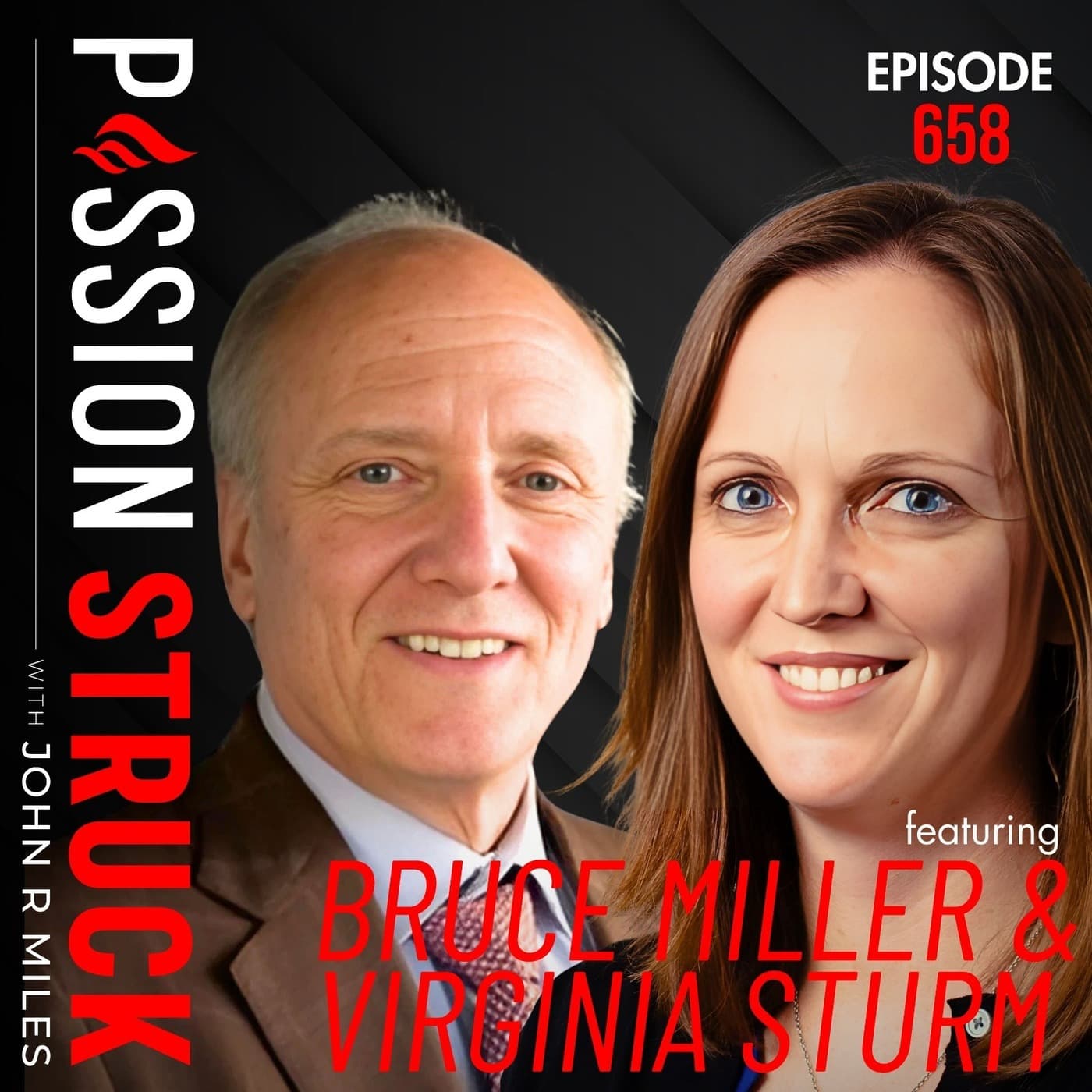
Podcast Summary: Passion Struck with John R. Miles - Episode 658
Episode Overview In this episode of *Passion Struck*, host John R. Miles engages in a deep discussion with neuroscientists Dr. Bruce Miller and Dr. Virginia Sturm, co-authors of *Mysteries of the Social Brain*. The episode delves into the biological underpinnings of empathy, fairness, altruism, and connection, revealing how these traits are hardwired into our neural architecture. The conversation explores the implications of their findings for combating loneliness and building meaningful relationships.
Key Concepts
- Social Brain: The segment of the brain responsible for sociability, empathy, and moral behavior.
- Empathy as a Neurobiological Capacity: Empathy is defined not just as a personality trait but as a complex neural capability that can be measured and studied.
- Neurological Basis of Connection: Specific brain networks play a crucial role in shaping moral behavior, creativity, and human connection.
- Importance of Positive Emotions: Emotions like awe, compassion, and gratitude are essential for our vitality, identity, and longevity.
- Impact of Brain Health on Aging: The social brain’s ability to connect and feel is as vital as cognitive functions in preventing dementia and other age-related decline.
Discussion Highlights Empathy
- Two Types:
- Cognitive Empathy: Understanding another's perspective.
- Emotional Empathy: Vicariously experiencing another’s feelings.
- Empathy can be improved and cultivated, similar to other skills.
Importance of the Right Hemisphere
- The right hemisphere, often underappreciated, is crucial for social intelligence.
- Cultural values have historically placed emphasis on left-brain functions (logical thinking), leading to the undervaluation of the social brain.
Foundational Traits of the Social Brain
- Empathy
- Respect
- Fairness
- Self-Awareness
- Openness
- Creativity
Case Studies
- Thomas's Story: A case study illustrating a loss of empathy due to brain damage affecting emotional connection and altruism.
- Anne's Story: Demonstrates that losing language abilities led to unexpected artistic expression, highlighting the brain’s potential for reinvention.
Practical Applications
- Increasing Empathy: Engaging in altruistic behaviors can foster a sense of connection and improve emotional health.
- Nurturing Social Skills in Education: Advocates for integrating empathy and emotional learning into educational systems to foster well-rounded development.
Implications for Aging and Dementia
- Dementia Research: Explores the role of proteins like amyloid and tau in cognitive decline.
- Importance of Sleep: Emphasizes the need for deep sleep in maintaining brain health and preventing neurodegenerative diseases.
Call to Action
Listeners are encouraged to
- Reflect on personal relationships and how they can nurture connections.
- Consider the importance of emotional well-being in their daily lives.
- Engage in community-building activities to foster a sense of belonging.
Final Thoughts The episode concludes with a powerful reminder that our ability to connect and empathize is not just a nicety but a necessity for human flourishing. John R. Miles encourages listeners to take active steps towards building a meaningful life by prioritizing their social health and emotional connections.
Additional Resources
- Full episode notes available at [PassionStruck](https://passionstruck.com/bruce-miller-and-virginia-sturm-the-social-brain/)
- Subscribe to *The Ignited Life* for further insights and tools.
- Links to the guests’ work and the podcast's social media for ongoing engagement.
---
This summary encapsulates the episode’s main themes, highlights, and takeaways, facilitating an understanding of the significance of the social brain in human flourishing.
Written by AI. May contain mistakes. Listen to the episode to check what was said.
Transcript
Automatic transcript. May contain errors.0:00Coming up next on PassionStruck. Empathy allows us to feel all sorts of things, good things, positive things, bad things or negative things. So the same system in the brain might allow us to feel the pain of a loved one who is injured or sick, but also to share in the joy of their success or experiencing something amazing or beautiful in life. Like you said, it's that resonance system that allows us to reverberate in our bodies with that other person's experiences, be they good or bad. Welcome to Passion Struck. Hi, I'm your host, John R. Miles. And on the show, we decipher the secrets, tips, and guidance of the world's most inspiring people and turn their wisdom into practical advice for you and those around you.
0:52Our mission is to help you unlock the power of intentionality so that you can become the best version of yourself. If you're new to the show, I offer advice and answer listener questions on Fridays. We have long form interviews the rest of the week with guests ranging from astronauts to authors, CEOs, creators, innovators, scientists, military leaders, visionaries, and athletes. Now let's go out there and become passion struck. Welcome back, friends, to PassionStruck episode 658. I want to start by thanking each of you for being here. Week after week, over a third of you return to listen, and that loyalty fuels this movement.
1:33If you haven't had a chance yet to leave a rating or review, I'd be so grateful if you took just 30 seconds to do so. It's the best way for others to find and join us. We just wrapped up our Rediscovering Wellness series, where we reframe wellness not as diet or hacks, but as a four-part journey. Fuel, feel, fulfill, and flow. In my closing solo, I introduced the fragmentation gap, the hidden divide between the selves we present and the wholeness we crave. And today, I'm opening a new series that I'm calling Decoding Humanity. Over the next five weeks, we'll be exploring the foundations of who we are, our biology, psychology, trauma, identity, community, and the stories we live by.
2:15Because only when we understand what makes us human, can we begin to build lives that aren't just optimized, but whole? That's exactly why I wanted to start out this series with today's conversation. My guests are Dr. Bruce Miller and Dr. Virginia Sturm, leaders at UCSF's Memory and Aging Center and co-authors of the new book, Mysteries of the Soul Brain. Their work has uncovered how the circuits in our brain shape empathy, fairness, creativity, and even our moral compass. And what they found is transformative. Emotions like awe, compassion, and gratitude aren't soft extras. They are biological capacities that determine our vitality, our identity, and our longevity.
2:59What fascinated me and why I chose this episode for the series is that their work reframes how we think about brain health. For so long, we've been taught to focus on memory and cognition. But Miller and Sturm show us that the social brain, our ability to connect, to feel deeply, to share awe, may be just as important as exercise or sleep and protecting against dementia and shaping how we age. In this episode, we'll unpack why empathy is hardwired into the brain, not just a personality trait. We'll go into how positive emotions literally change our nervous system, why the right hemisphere, the silent side of the brain, holds so much of our social intelligence, and why nurturing our social brain is so important.
3:39Before we dive in, a quick reminder. Our new store, StartMattering.com, is now live. It's part of the mattering revolution, a movement that I've built on one truth. You matter, live like it. Every hoodie, tee, and hat carries that message, reminding you daily of your worth and sparkling ripples of change far beyond yourself. Head over to StartMattering.com and wear the movement. Now, let's dive into this powerful conversation on the mysteries of the social brain with Dr. Bruce Miller and Dr. Virginia Sturm. Thank you for choosing PassionStruck and choosing me to be your host and guide on your journey to creating an intentional life.
4:17Now, let that journey begin.
4:22Hey friends, it's the beginning of 2026 and if you're like me, you didn't come into the Sheerda Coast. You came to live with purpose, to show up with energy, clarity, and intention. That's why how you start your day matters. And for me, that starts with Huel. Every morning, I reach for two things. First, Huel Daily Greens Ready to Drink. The peach and hibiscus flavor is crisp and refreshing, with 42 superfoods, vitamins, and minerals, all in just 25 calories and one gram of sugar. Then, I turn to Huel Black Edition Ready to Drink. With 35 grams of protein, 27 essential nutrients, and no junk, it's a full meal that fuels focus, not fatigue.
5:00I start with Huel because I want to be present, intentional, and ready, not just today, but every day. Start 2026 like a minute. Grab Huel today with my exclusive offer of 15 % off online with my code PASSION15 at Huel.com slash PASSION15. New customers only. Thank you to Huel for partnering and supporting our show.
5:26I am so honored today to have Dr. Bruce Miller and Dr. Virginia Sturm on PassionStruck. Welcome, Bruce and Virginia. Thank you, John. Really excited to be with you today. Thank you so much for having us. And today we are going to be exploring your brand new book, Mysteries of the Social Brain. Congratulations on its release. Thank you. It was a long effort. Virginia and I went back and forth on this for actually, sorry to say, but years, John. In your research, you describe empathy not as a soft skill, but as a neurobiological capacity. that's rooted in brain circuits. What do most people must understand about what empathy really is and isn't?
6:11Empathy is a word that we use often in everyday life, but it's actually quite complicated and has a lot of different elements to it that we can measure and study in different ways. So sometimes when people refer to empathy, they mean, I recognize how you're feeling, or I understand your perspective. And that's what we refer to as cognitive empathy. And that's a pretty complicated form of empathy, but there are simpler forms of empathy that we call emotional empathy. And those have to do with the ability to experience vicariously how others are feeling. We mirror people's facial expressions and bodily postures, and even our heart rates can synchronize.
6:58And that kind of simpler, more automatic form of empathy is present in other species and infants. And these two kinds of empathy kind of work together. And you can have one without the other, but it's often more helpful when they kind of work in conjunction. So we feel how someone feels and then we can better understand how they're feeling. And all of this is organized by the brain. And I think that part is often not appreciated as much, but just like our memory systems and our language systems and our movement systems. There are systems in the brain that help us to empathize and to be social creatures.
7:32Well, I opened up with that because what you both have written a lot about is the way that we connect socially is not just emotional, it's biological. But empathy to me is one of the most important aspects that we have. And it seems like some of us are wired for it and some of us are wired less for it. Do you find that is actually a real thing? I think so. Just like any human ability, there's a normal range of strengths and weaknesses. We all have strengths and weaknesses. Some of us are really good at playing tennis and others are really good at solving math equations and empathy is just another mobility.
8:13Yeah, like you said, I think some people are born just more prone for empathy and some are less, but we all can work at it and improve it if it's something that we value and want to have in our lives. And I always think that as you talk about this range of abilities, this is really important. And I think in public education, we think a lot about, as Virginia touched on math or reading or writing, but what about empathy? What about how much my son or grandson cares for someone else in the class. And really thinking about this in the same serious way that we think about math, I think is really critical for a society.
8:57I think teachers know it. We all know it in the workplace there. Some people where a deficiency in empathy is really a problem. And we evolved from a primate that lived very isolated into large groups. and without empathy, without that feeling of caring for what one of our loved ones is feeling and without being altruistic and thinking about ways to help others in our group, we suffer enormously in a society. I'm going to take a step back and then we're going to come back to these different elements like empathy here in a second. But you guys write that humans are wired to interact, connect, and innovate.
9:44And yet many of those capacities live in the right hemisphere, not the logical left. That's so many of us prize. Why do you believe our culture has so thoroughly undervalued the social brain? I think we take for granted these skills. They tend to be sorted away as if they have nothing to do with the brain. And I think this is a terrible mistake. The right hemisphere where these capacities primarily lie is silent. It doesn't speak. It doesn't advocate for itself. So we require the left side of the brain to talk about the things that the right hemisphere does. And I think that dichotomy is a bit of a paradox and maybe is one of the reasons that we humans tend to talk about the skills that we have in our left hemisphere.
10:39And people don't think of this as an intelligence. This is our intelligence. This is the most noble and important thing that the human brain can do, is touch others and protect others. And this combination of emotion and cognition that really good people devote to others is one of our finest and most developed human traits. So when it involves the social brain, you found that there's six foundational traits, if I have it correct. Empathy, which we touched on earlier, respect, fairness, self-awareness, openness, and creativity. Do I have those right? You got it. Which of these traits most surprised you two in how it's neurologically wired?
11:30For me, the big surprise, and I began to realize this only fairly recently in my career in Virginia, who is a social psychologist and neuroscientist, really helped me to understand that. But that these set of values, fairness, respect, courage, openness, these are wired in the brain. And just like learning how to remember, we can improve and perfect these particular skills. So this whole notion that the traits that many of us admire so much can be learned, can be developed, can be cultivated. for me was rather new. I spoke recently with the president of a university and I was talking about this and this person, I won't give their name, they said, well, I don't think you can teach empathy.
12:25I don't think you can teach fairness. And I think, sadly, this is how we parcel away these values that are so much, just like every other skill we have, learnable. Thank you for sharing that. And in the book, one section that I found interesting is you quote neuroscientist Dr. Singer's finding that the interior insula activates not only when we feel pain, but when we witness pain in someone we love. And I found that to be interesting because you two are both at University of California in San Francisco. I interviewed Dacher Keltner, who's at Berkeley, not too far away from you. And we were talking about his concept of moral beauty and that when we see someone express moral beauty, it makes us inside awaken parts of the brain.
13:20And I found it interesting how it works in a similar way. Could you maybe touch on, I'm not sure if you're familiar with his work on moral beauty, but maybe this concept of how moments like this reframe empathy, not as a choice, but maybe as a shared biological resonance. I think empathy allows us to feel all sorts of things, good things, positive things, bad things or negative things. So the same system in the brain might allow us to feel the pain of a loved one who is injured or sick, but also to share in the joy of their success or experiencing something amazing or beautiful in life. Like you said, it's that resonance system that allows us to reverberate in our bodies with that other person's experiences, be they good or bad.
14:17So I think empathy lies at the root of exactly what you're describing in terms of experiences of more beauty or pain. And there might be differences in the sides of the brain that participate more strongly in the good things or the bad things or the positive or negative experiences. But overall, the systems are in common. We do a Dakar Keltner. He was, I think, one of Virginia's teachers, and he's a really great thinker in this space. Yes. Yes, I worked with him when I was a student at Berkeley and continue to collaborate with Dacher. I love Dacher's work and love it when I can get him on the show.
14:53So that would have been quite the experience to actually get to work with them in the lab as well. So I'm awesome. Yeah, it was great. So in the book, you have a number of stories and I want to talk about Thomas's story, and then we'll get to Ann Adams. But you all, and I'll let you tell the story, describe Thomas's as devastating. He lived in a cocoon devoid of emotions, you write. And he was someone, as we've been discussing, empathy lost the capacity for empathy. And what I wanted to ask is if you could tell a story and then maybe how should loved ones and even clinicians begin to define after you lose a capacity like that, who does that person become?
15:44So Thomas startled me and really our whole team at UCSF when we first saw him. And he had lost in a very primal way, not only cognitive empathy, but emotional empathy as well. A couple examples, He lived in a small town and had become intensely religious in the setting of his degenerative disease and spent a lot of time in church. And it was a Sunday morning and the town was experiencing a massive flood. And everyone, including the minister, was out at the river with sandbags protecting the greater whole of that community. Thomas was in the middle of the church, extremely angry because the rules that he was guided by, these are all left hemisphere rules, suggested that everyone should be in church on Sunday.
16:48Thomas also had this seminal moment with his wife where she cut herself with clippers in the garden. and Thomas showed no empathy for her during this period of pain and in fact asked her to be quiet so neighbors wouldn't hear her crying. And rather than thinking about how to help his loved one, Thomas actually took the clippers to the neighbor and said, I want you to use these because I'm not going to be using them for a while. We'll be going to the hospital. So Thomas was a real outlier. He just had unbelievable inability to empathize with other people. And it was a change. This was not who he was before.
17:36He had been a beautiful, wonderful husband and father. And so we systematically looked at him and asked about surprises. This is one of the biggest surprises in my career in research. And what we learned was that the right anterior temporal lobe, which we now think is part of the empathy circuit, was shrunken. It was almost non-existent. And there were similar changes on the left side. So he didn't have severe brain injury in most areas. His brain was pretty normal. But this loss of empathy was very strongly correlated with loss of circuits that we now realize are important for, as Virginia has touched on today, seeing other people's pain, feeling it internally, and then doing something about it, the altruistic part.
18:33And without that circuit, we are devoid of empathy. So I wanted to ask you a follow-on question about that. So it's becoming more and more common, especially with the sports that kids play today, that they experience traumatic brain injuries. Yes. Is it possible for a TBI to cause an injury that could impact a person's sense of empathy? Absolutely. I think one of the general principles of brain trauma, physical brain trauma, is that the parts of the brain that sit against bone are those that are often most vulnerable to a shaking of some kind. So where do the anterior temporal lobe sit? They sit right adjacent to bone.
19:20So I think along with the memory that is localized a little more posterior in that region, a lot of TBI is associated with memory problems, but often more silent, this loss of the ability to empathize with others. It's so interesting. And if someone has experienced that, is there a way to correct that deficiency or is it a permanent type of loss? There are ways that anyone can try to improve empathy by learning to see emotions in someone else's face that are more subtle and learning more details about how to label those experiences or expressions that they notice. changing how someone feels is always more complicated, but engaging in activities and interacting with humans in enjoyable ways are often effective ways to feel positive states and get oneself out of a rut, if that is the case.
20:25I think what you touch on here is the fact that we have all sorts of rehabilitation programs that think about memory, that think about what we call executive function, planning organization, and some fairly effective strategies about how to help when people have suffered from traumatic brain injury. But the area of rehabilitation around empathy, I would say, is sparse. And there's little research and there are very few programs that have focused on this. In our field of frontotemporal dementia, a woman, the scientist, Elizabeth Finger in Canada has tried using oxytocin, this nurturing peptide that is released when a child is born to see whether she can activate empathy.
21:19And I think with some success, actually, her research has suggested that one simple chemical, while not a cure, can have positive effects in people who have lost this critical human value. I just bring it up because for me personally, I've experienced six or seven TBIs and one of them was quite severe when I was in combat. And coming out of that, I know something fundamentally changed for me when it comes to expressing empathy, which is why I've made this such a focus of the conversation. and it's something that like just disappeared and I have really tried to understand how I could get it back and I've tried different vitamins and nutrients and different fruit and different natural forms to try to reignite it and nothing has ever seemed to work.
22:16What you're saying is confirms what I have found in my own research. It seems so unfair that someone who is in an occupation to help others, as you were, suffers an injury that diminishes that ability. But just from our discussion on this podcast, I would say you have plenty of empathy and cognitive empathy, that's for sure. Yeah. Well, I want to now switch to the paradox of Anne's story, who I mentioned earlier, because it's really staggering. In her case, she loses language, but she almost miraculously gains artistry. What does her case reveal about the brain's untapped potential for reinvention?
23:05So when I was growing up, and we still hear it, I would often hear, we need to increase the entire brain's activity if we're going to really have the ultimate outcome. And I think what I learned from Ann, and this is really how the brain works, is that we have very specific circuits in the brain with very specific functions. And if we activate other circuits, when we want that very specific skill, it will actually impair that circuit. So what we learned from Ann was that as she lost language, and in retrospect, probably not a surprise, that circuits in the back of the brain involved with vision and visual processing activated it.
23:56Anne became visually obsessed. Everything in her life was colors and pictures. And she, because Anne was unique with this preoccupation visually, suddenly produced beautiful art. And so it pointed out that, no, we don't necessarily want to activate the whole brain at ones. Rather, we want to turn off certain parts of the brain so that others can really do their magic. And I think this is true of everything, whether it's a sport, whether it's a speaker, whether it's a singer. They need to cultivate the very specific circuit that they use, create something that is special, and they have to turn everything else off.
24:43This leads me to, you both describe creativity as a form of, if I have this correct, compensatory blooming. Is it possible we all have dormant capacities that only emerge under certain neurological conditions?
25:05I think so. I think it's definitely possible that we all have more potential that it's hard for us to access for whatever reasons. That's not to say a disease or disorder is a good way to unleash that ability, but there probably are systems in our brain, like Bruce was describing, that we can't turn off very easily. And in the unfortunate situation, when there is a disease or a head injury or a stroke in those parts of the brain that are suppressing other regions, then it would be possible that people could gain and develop these new kinds of strengths and abilities. So that's possible. We all have hidden talents lurking within us that in the right circumstances, we could release.
25:52This is very true. And I think this is what music teachers and art teachers try to do. And Betty Edwards, the great art educator, said, I have to teach people to draw on the right side of their brain. And she even had formal exercises that they work. I've done them. For a non-artist, these exercises really work. And she said, when I get these very logical left hemisphere dominated people in my class, I want them to turn off that way of thinking. So she takes a picture of Teddy Roosevelt and puts it upside down. Doesn't allow you to think about it in the logical way we usually do about a face. and anyone who hasn't tried it, who's never drawn very well, if you turn Teddy Roosevelt upside down, you do a much better job of drawing him than you did when he was right side up.
26:46When I was younger, I got every possible lesson imaginable to learn how to play piano. And I was blocked. It wasn't the teacher's fault. It was me, something about my brain. but as I've gotten older and almost certainly lost something, my ability to play the piano is much better, much more natural, much more spontaneous. And I think that this is the holy grail for teachers is how do we get people to turn off things that are inhibiting them from doing something really special? And everyone's different, everyone's unique, so there isn't one formula. But this is, I think, more advanced in sports psychology than anywhere else, where people think about how to get someone like Steph Curry in the zone, where there is no conscious thought, then direct from the basal ganglia and cerebellum to the basket in a blink of an eye.
27:47Man, I'll tell you, I have worked for a long time on how to find, I call it the zone of optimal anxiety or flow state is what most people refer to it as. I have really come to find out that you can learn to put yourself there and keep yourself there for a longer period of time. And I started doing this when I was an executive because I saw studies that McKenzie did that if you're in a flow state, you're more productive in two hours than your peers are in eight to 10. And so I just figured if I could get myself in this flow state, I could be hyper-focused and then I could spend more time once I'm out of it, socializing with employees, doing the HR side of things.
28:32That's how I acted during a lot of my career. And now I find myself using it most effectively when I myself am writing a book or trying to do a solo podcast episode that I'm working on or a keynote speech. And it really five minutes goes, it seems to me it's like five minutes and it's four hours later. It's a wonderful state of being. I do a lot of writing and my most effective writing is when I'm on an airplane with my AirPods, listening to my favorite music. And it gets me into a very focused state with a good feeling. And the writing I do there is 10 times more effective than when I'm not there.
29:15Yeah, I think the only person who doesn't like it when I'm in the flow state is my wife, because it's like everything else just fades away when I'm in that concentration state. Yes. So I want to talk to you both about a topic that is really close to my heart, and that is the subject of mattering. Do you see mattering as a biological need, something the brain registers like food or safety? And if so, how do you believe it intersects with the traits of the social brain? We love that question. I'm going to let Virginia say. I love the way you phrased it. That's a really interesting question. Can you say more about what you mean by mattering?
29:57I think I've read a lot about Jeff Cohen's work on belonging, and I think belonging and mattering are related, but they're different. You can get picked for a team if you go back to the school playground and feel like you belong, but that doesn't necessarily make you feel like you matter. Mattering, I think, goes a step beyond that, and it's how your teammates treat you. It's how they recognize you. It's how they make you feel inside. And so I think mattering really has three different dimensions. There's personal mattering, how we feel we matter to the world. There's relational mattering, how we make or how others make us feel we matter.
Read the full transcript
30:42And then to me, there's almost like this ripple effect of when those two come in alignment, that helps us to make other people feel like they matter. And when that construct breaks down, like it's doing for billions of people around the world, you have real issues when it comes to the consequences, which are showing up is loneliness, hopelessness, people burned out, whatever you want to call it. They're just symptoms, I think, of a bigger issue that's going on, I would argue, with our social brain. I definitely agree. It sounds like the way you're thinking about mattering is at the intersection of a person and their sense of self and their interactions with other people and how those people view them and respect them and appreciate them.
31:30And I do think that feeling a sense of belonging and self-worth is a key biological and survival relevant need. We all need to feel like we have a place in the world and in our communities. But as you were describing, even before that feeling of having a place in a community, we have to have a sense that that we have value as a human, as a person. In psychology, there's lots of theories about how that sense of meaning or mattering develops from the very first days of life being held by parents and loved ones and through childhood being validated and supported in various ways through our families and friends.
32:17And that we develop this sense of that we do matter and have a role and sense of purpose in life, but that also we can help other people to feel like they're important members of our communities as well. And so all of that again is definitely supported by the systems in the social brain that allow us to understand who we are as people and also to understand how other people are and then the very complicated ways that we all interact in everyday life. I think this is one of the most important issues facing humankind in the next century. So we can talk a lot about efficiency and get rid of people that we think aren't necessarily important for the global efficiency of our engine.
33:02But I think that a bigger issue for our society is what are we going to do when cars like the Tesla, for example, I just had a Tesla ride where the Tesla did all the drive-in without any direction. And I realized it did it better than me. And my comparison to a Tesla is pitiful. And I think more and more, we are going to face as a society that there are many things that computers are going to be able to do better than we can. So I think one of the big movements, the big questions that's going to come up over the next decades is how do we give in our society people meaning? What can they be doing that is meaningful and important?
33:50And lots of things come to my mind. I'm an elder and I've spent a lot of time in my career thinking about myself and how to be successful. And that was one of the ways that gave me meaning. But now I have grandchildren and my wife and I think a lot about that everyday message to our grandchildren about how important and meaningful they are. And I must say this is a far grander job than anything I've ever done before. And I'm not a psychoanalyst, but I will say that when people don't get that from teachers, from grandparents, from parents, it leaves a tremendous hole and it makes living a meaningful life twice as hard.
34:40I think the topics that you're taking on, like mattering, are the major topics of the future. This is so important. Thank you for saying that, because I personally think it is the topic that we all need to be worried about. And I've just spent the past five months writing a book on how do you fix it, which on the surface seems like an impossible thing to do. But I've brought in the research of so many great scientists and analyzed it into a cohesive picture of how you do it at a personal level, a family level, a work level, and then eventually to a societal level. But the issue with mattering, like many things in life, is it doesn't just appear in one fell swoop.
35:29It's not like you get burned out overnight. It happens over a period of time. That's what happened to me. Happened over years. So if you lose your sense of mattering, it happens because of a series of micro losses. So the only way you can build it back is through a series of gains. And what you're saying is something that I was just talking yesterday to Dr. Anna Lemke about, actually, is that we are replacing so much of our social connections going forward with artificial intelligence. I was just reading an article where Satya Nadella was saying he's no longer going to consume podcasts. Instead, he's going to find the transcripts, plug them into AI and use his Microsoft tools to talk to a computer about the human interaction he just observed.
36:17And I just wonder, the trickiness of this is your brain doesn't know the difference. But if we keep continuing to do this, we're going to take connections which are already becoming less and less, and we're going to just replace them using technology instead of human interaction. And then what are we left with? To me, that's one of the most scary dimensions of where the world is heading. And it terrifies me. Me too. Me too. So we haven't touched at all yet on dementia and Alzheimer's. And it's really important that we touch on these different aspects, because that was one of the things that got me so interested in interviewing you two is I had a grandfather who was one of the most brilliant people I have ever met.
37:08He was a constant reader. He was the head of research and development at Kraft. Before that, He worked for the U.S. government doing germ warfare, a highly intelligent person. And from the age of 88, 89, till when he died at 96, and God bless, he lived a long life, he experienced dementia. And I saw this just brilliant mind conform into the only memories that he would bring up were of when he was like five to eight years old living on a farm. and it was just so difficult to see that collapse. And I know you guys are researching this and I wanted to touch on two different things. First, what is happening in the brain that is causing this to happen and causing it to happen in more frequency?
38:04And then after that, I want to explore some of the research that I've heard you describe in other podcasts that's coming out that could dramatically help people potentially prevent this, especially if it's hereditary? A big topic. Alzheimer's disease is very prevalent. It's probably the most costly illness in the United States. It is very age-related, so we know the older we get, the more likely we are to develop cognitive impairment. Yet, there are still people in their nineties and even centenarians who function at a cognitive level that is much closer to someone in their twenties or thirties.
38:48So a couple of things. One is that their circuits in the brain are particularly vulnerable to aging. Memory would be the prime example. As we get older, we don't tend to have the encyclopedic type of memories that we did when we were younger. and this is a common aspect of normal aging. It's not Alzheimer's. But then Alzheimer's disease, we think there are two proteins that aggregate in the brain. One is amyloid and the other is tau. I think the tau aggregation is particularly important. And what happens when tau aggregates in a nerve cell is that it causes to lose function and then die. So this is a relentless process in people.
39:35Once it starts, people have said they can stop the progression of Alzheimer's. They can't. We're not there yet. But I think we're on the verge of very exciting therapies, particularly around tau, where if we could lower tau in the brain, All sorts of research suggests that we could protect people from this progressive cognitive loss that is often in older people related to Alzheimer's disease. I'm going to unpack those two things just a little bit more. So I'm going to try to dumb this down. So we, all of us have these amyloid plaques that are accumulating in our brain and the normal brain flushes them out down your spinal cord, if I understand this correctly.
40:27But what ends up happening is sometimes that flush system gets disrupted. And so the amyloids just keep accumulating. And once they start accumulating, that mass then starts impacting different elements of the brain and adversely causing the conditions we were just talking about. Is that a good way to understand it? Or am I simplifying it too much? No, I love it. And I think it's a really smart way of describing this. And I think in terms of this getting rid of the garbage in the brain, we've learned that deep sleep is a state when we are particularly effective at getting rid of amyloid and how.
41:09So if we don't get into deep sleep, we are much more likely to increase the aggregation of these bad proteins, which eventually affect function in the brain. I wanted to ask two follow-on questions about this, and some people in this audience might not like where I'm going to go with this, but if someone has sleep apnea, this is the first thing I want to tackle, and they're not getting those deep sleep cycles. This is a fundamental reason why they should be wearing a mask, using a CPAP, or some type of mouth device, and why it's so important. Is that an accurate link? Extremely accurate. One of the big risk factors for Alzheimer's is poor sleep.
41:53And if we are disrupting our ability to get into dream states, into deep sleep, we are putting our brain at risk. And then the second one that's probably going to upset people is alcohol. And so I now abstain from drinking alcohol. And a fundamental reason when people ask me is that my grandfather had dementia. I'm worried that it could be passed down to me. I already had sleeping issues to begin with because of my TBIs, and I also have sleep apnea. What I was finding from all the research I was doing that when you have that nightcap, it's actually not really a nightcap. It might help you fall asleep, but it doesn't help you sustain sleep, and it actually breaks up your sleep pattern.
42:42So alcohol, in a sense, disrupts your sound sleep. At least for me, one of the things I personally decided to do is to abstain because I want to do whatever I can to promote brain health as long as I possibly can in the future. Would you say that there is a link between alcohol use and our sleep patterns and that could impact our ability to get these diseases of the brain? I might just comment that for a long time, the data suggested that moderate drinking might actually be protective in some people. That probably more and more as the data emerges, it looks like that drinking alcohol, particularly later in life, is not good for the brain.
43:34Do I abstain while I just got back from Italy and I confess I did not? But I think moderation, cautiously, and probably drinking just before we go to sleep is probably not the best time to do it. I think very pertinent to what you just said, John. So if you are a person and you have a loved one that is starting to act different, what are some of the most early signs that they might have early onset of dementia or something like that that listeners could be paying attention to? A lot of people are pretty attuned to changes in memory. Alzheimer's is very common and people are aware that memory changes can be a sign of early Alzheimer's.
44:25But there are other diseases that can occur as we age that affect different systems in the brain. So sometimes changes in emotion and mood and behavior can also be indications that there is something going on in the brain that might warrant medical attention or to be followed up with. We're learning that a lot of people have difficulties with anxiety or mood throughout their lives. But if you're a person who hasn't had any of those kinds of symptoms before, and then suddenly you develop problems with anxiety or depression in mid to later life, those changes also can signal that there might be a neurodegenerative disease beginning.
45:11It might not be that, but it's worth having a doctor and often several doctors talk with you and your family and do a comprehensive workup to check out and make sure everything is okay. The last thing I wanted to touch on is the opposite side of the spectrum. So you both present this position that we really need to focus on our education systems to nurture the social brain in kids as they're growing up, especially emotional attunement, fairness and creativity. What are some ways that parents can think about this and how they could help augment what the education system is doing for their kids?
45:59Virginia is right in the middle of this with her two children. I'm a little bit into it with my grandchildren, but go ahead, Virginia. Well, I'm not an expert in the educational systems, but some of my very good friends are educators. So I've really learned from them about all the challenges in our education systems, just getting basic skills taught and met in, especially in our public education systems that are often struggling with budget shortfalls. And when there are shortfalls in the budget, the things that get cut are the classes and activities that are considered not essential. And those often are the things like the arts and sports and socio-emotional learning and all of the kind of extra stuff that isn't perceived to be as needed as reading, writing, and arithmetic.
46:51And Bruce referenced that earlier, that our whole society, beginning with our educational system, is really geared to the people who are good at math and reading and spelling and science. And the other forms of intelligence, such as the visual arts and music and dance and athletics, are very much overlooked. That all said, we can all do our best to give opportunities to our kids and kids in our communities if possible to have those other kinds of experiences. Because sometimes people might have an astounding talent in one of those areas that really can shape their whole life that they might not even have discovered if they didn't have the opportunity to try different non-formally academic kinds of subjects.
47:36With educators, I think sometimes we forget, and this is certainly true for me, that the ones that make the biggest difference in our lives are the ones that think about, as you characterized, John, as mattering. The ones that can dig deep into our own feeling and think about who we are. And these are qualities that I cherish. I think of my own educational system and not often, but the occasional person who really could meet me where I was and who I was. And this is adults. This is what grandparents, I think, do really well. But I think this is if Virginia and I could design an educational system, we would have the principle of, I love your phrase, mattering.
48:24That's what schools really need. It's thinking about how to give meaning to children and give them a sense of value. The other things are easy. Those are the easy skills to teach. Well, the values are the things that stick with us through our life. And it was interesting. I was talking to Gary Vaynerchuk about this, and he recently had a book come out last year for kids. It's called Meet Me in the Middle. And the reason he did this is he was trying to reach younger kids to start teaching them core values that they need to be thinking about that the world is not giving them. Nice. Well, I wanted to end the conversation.
49:05In the book, you say we can't change the circuitry we're born with, but we can choose how we shape it. I wanted to ask each one of you, and I'll start with you, Bruce. What's one choice each of us can make today to grow our social brain and build a better world? I think it's all about that, still to Virginia and me, I think serious circuit of altruism, but is touching someone else who needs us and growing that circuit of empathy and altruism. We touch on empathy without altruism as a little bit of limited value, but that doing piece, tying the feeling to doing something good for another person, never regret it, never regret it.
49:48that anytime we do that, we feel better. I think in everyday modern life, it's very easy to become very internally focused with all of our own problems and worries and anxieties and stresses. And when we're in that kind of anxious state, we don't notice what's going on around us and we don't notice how other people are feeling or we don't notice how beautiful the day is. And I think making an intentional shift of attention outward sometimes is a very simple thing that we all can do that can actually help us to feel better and can be helpful to someone else when we're aware of their feelings and needs.
50:29So that's just a kind of very simple thing that I remind myself of when I can to shift my attention outwards onto others and onto the world. Well, two excellent responses. And I wanted to thank you both again for joining me on the podcast and congratulations to you both on the launch of Mysteries of the Social Brain. I highly encourage the audience to go and pick up a copy and it will be in the show notes. Thank you so much again for joining me on Passion Struck. Huge gratitude to you, John. Thank you so much. And that's a wrap. What an inspiring deeply human conversation. Dr. Miller and Dr. Sturm reminded us that cognitive health isn't just about what we remember, it's about what we feel.
51:14That emotions like awe and compassion aren't soft extras. They're central to our vitality, our identity, and even our longevity. So as you reflect on today's episode, ask yourself, am I making space for moments of awe in my daily life? How often do I slow down to feel, not just think? And could emotional enrichment be the missing link in how we approach aging and mental health? If this episode moved you, challenged you, or helped you see aging in a new light, please take 10 seconds to leave a five-star rating and review. And if you know someone who's caring for an aging parent or navigating their own midlife journey, send this episode their way.
51:49It could reshape how they think about the brain and the heart. For more, head to passionstruck.com for resources, links to Dr. Sturm's work on awe interventions and Dr. Miller's groundbreaking research in dementia care. And don't forget to subscribe to our substack at the ignitedlife.net for weekly stories, strategies, as well as workbooks that go along with each one of these episodes. Check out our new startmattering.com store and join the mattering revolution. Subscribe to our YouTube channels for full episodes, clips, and behind the scenes extras. And if this message resonates with your organization, I'd love to bring this conversation to your stage.
52:28I'm now booking keynotes and workshops for late 2025 and 2026. Visit johnrmiles.com slash speaking to learn more. And don't miss our next episode with Dr. Caroline Fleck. Caroline's message is powerful. Validation isn't nice to have, it's survival. It's also the foundation of mattering. So if you've ever felt invisible, unheard, or misunderstood, you'll want to hear this one. One of the weirdly, this is going to sound so weird to say, but it is true. One of the weirdly refreshing things about having cancer was that people immediately understood, right? I'd lost my hair and all this stuff, so I couldn't, I'd have to cancel a session or I'd have to, everybody understood.
53:10There was all sorts of support and understanding. And I'm thinking like, wow, this feels, because with MS and depression, that stuff is very hard to see in a lot of ways. Until next time, feel deeply, connect wisely, and live life passion struck.
53:29You
From the publisher
In Episode 658 of Passion Struck, host John R. Miles sits down with renowned neuroscientists Dr. Bruce Miller and Dr. Virginia Sturm, co-authors of the book "Mysteries of the Social Brain," to explore their groundbreaking work on the social brain. Together, they explore how empathy, fairness, altruism, and connection are not just cultural ideals but are also hardwired into our neural architecture. From the role of specific brain networks in shaping moral behavior to how purpose and creativity emerge from our capacity to connect, this conversation redefines what it means to be human. Bruce and Virginia also share insights into how understanding the social brain can help us combat loneliness, strengthen relationships, and build cultures where people truly matter.
Visit this link for the full show notes
Go Deeper: The Ignited Life Substack
If this episode stirred something in you, The Ignited Life is where the transformation continues. Each week, I share behind-the-scenes insights, science-backed tools, and personal reflections to help you turn intention into action.
Subscribe🔗 and get the companion resources delivered straight to your inbox.
Catch more of Virginia and Bruce: https://amzn.to/47k9LCD
If you liked the show, please leave us a review—it only takes a moment and helps us reach more people! Don’t forget to include your Twitter or Instagram handle so we can thank you personally.
Get the full companion workbook at TheIgnitedLife.net
Full episode on YouTube: https://www.youtube.com/@JohnRMiles
Listen on Apple Podcasts, Spotify, or wherever you get your podcasts
Everyone deserves to feel valued and important. Show it by wearing it: https://startmattering.com/
See Privacy Policy at https://art19.com/privacy and California Privacy Notice at https://art19.com/privacy#do-not-sell-my-info.


