
In short
Podcast Notes: Passion Struck with John R. Miles
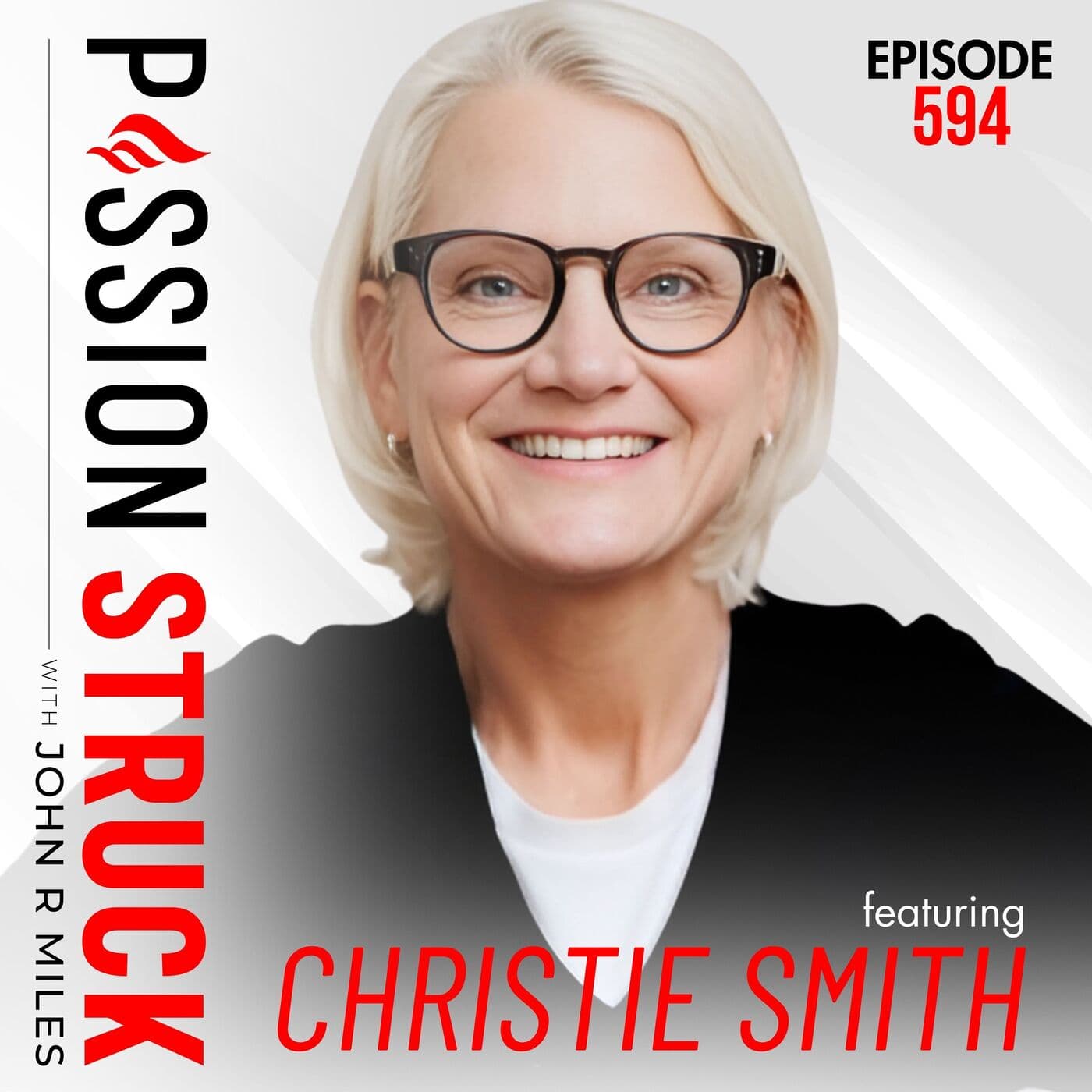
Episode 594
Christie Smith on How to Embrace Human-Powered Leadership
Overview In this episode, John R. Miles interviews Dr. Christie Smith, a respected leadership advisor and author of *Essential: How Distributed Teams, Generative AI, and Global Shifts Are Creating a New Human-Powered Leadership*. The conversation uncovers the pressing need for a new leadership paradigm in response to a crisis of human connection and the increasing technological disruptions in the workplace.
Key Themes & Discussions
- Crisis of Human Connection
- The greatest disruption in business is perceived as a crisis of human connection rather than advancements in AI.
- Leadership skills previously considered "soft" are now essential for thriving in a disconnected world.
- Human-Powered Leadership
- Dr. Smith emphasizes the need for leaders to focus on the humans they lead rather than solely on outcomes or technology.
- The shift towards *human-powered leadership* is framed as necessary for adapting to the evolving landscape of work.
- Four Essential Needs of Employees
Dr. Smith highlights four critical aspects that employees require from their leaders:
- Purpose: Alignment of work with the organization's core values and mission.
- Agency: Flexibility for employees to define how and when they work.
- Well-Being: Recognition of mental health issues and the importance of wellness in the workplace.
- Connection: Building genuine relationships and fostering an environment of psychological safety.
- Emerging Trends
- The rise of fractional workers: Individuals opting for contract work over traditional employment due to a desire for meaningful engagement.
- The importance of adapting leadership styles to accommodate distributed teams and the realities of remote work.
- Cultural Transformation
- A call for leaders to adopt emotionally mature leadership, which emphasizes:
- Suspension of self-interest: Prioritizing team success over individual accolades.
- Insatiable curiosity: Leaders should actively seek to understand their employees' motivations and experiences.
- Cultivating excellence: Leaders must architect work environments that encourage collaboration and mutual support.
- Long-Term Organizational Success
- Companies focusing on the holistic well-being of employees and creating inclusive cultures are likely to see better performance outcomes.
- The discussion draws parallels with the long-term success stories of organizations that prioritize employee connection and purpose over short-term financial metrics.
Key Takeaways
- Human Connection is Vital: In today's business landscape, fostering a sense of belonging is crucial for employee engagement and productivity.
- Leadership Requires Evolution: Leaders must adapt to changing worker expectations and the dynamics of remote work.
- Focus on Emotional Maturity: Developing skills that emphasize empathy, curiosity, and team success will lead to more effective leadership.
- Invest in People: Organizations must commit to nurturing their employees’ well-being, purpose, and agency to thrive in a competitive market.
Closing Thoughts Dr. Smith’s insights provide a roadmap for leaders looking to cultivate a more human-centered approach to management. As organizations navigate the complexities of modern work, the emphasis on emotional health, connection, and purpose-driven leadership can pave the way for sustainable success.
Resources
- Dr. Christie Smith's website: [christiesmith.phd](https://www.christiesmith.phd/)
- Book: *Essential: How Distributed Teams, Generative AI, and Global Shifts Are Creating a New Human-Powered Leadership*
Next Episode Teaser In the next episode, John will be joined by Anne Marie Anderson, an Emmy Award-winning broadcaster and leadership expert, to explore high-performance mental frameworks, storytelling, and confidence-building in various fields.
---
*For more content, visit the Passion Struck community and consider subscribing to the newsletter for additional resources and insights.*
Written by AI. May contain mistakes. Listen to the episode to check what was said.
Transcript
Automatic transcript. May contain errors.0:00Coming up next on PassionStruck. We are living in unprecedented times and have been living in this for the last five years, really, since the pandemic and maybe a little bit before that. And what makes it unprecedented? Well, we are seeing a super cycle of change happening in the market, happening in our sociopolitical and economic conditions around the world, which really challenge leaders to fundamentally have to lead differently. Welcome to PassionStruck. Hi, I'm your host, John R. Miles, and on the show, we decipher the secrets, tips, and guidance of the world's most inspiring people and turn their wisdom into practical advice for you and those around you.
0:47Our mission is to help you unlock the power of intentionality so that you can become the best version of yourself. If you're new to the show, I offer advice and answer listener questions on Fridays. We have long-form interviews the rest of the week with guests ranging from astronauts to authors, CEOs, creators, innovators, scientists, military leaders, visionaries, and athletes. Now, let's go out there and become PassionStruck. Hey, PassionStruck fam. Welcome to episode 594. Whether you've been with us for a while or you're tuning in for the first time, I am absolutely thrilled you're here. You're now part of a global movement dedicated to igniting purpose, unlocking potential, and creating a more intentional human-powered future.
1:32So let me ask you this. What if the greatest disruption in business isn't AI? It's a crisis of human connection. What if the leadership skills we once dismissed as soft are now the most essential powers for thriving in a fractured, fast-changing world? That's exactly what today's guest, Dr. Christy Smith unpacks in her groundbreaking new book, Essential, how distributed teams generate of AI and global shifts are creating a new human powered leadership. Christy is a globally respected leadership advisor, former managing principal at Deloitte, and has worked with iconic companies like Apple, Accenture, and more.
2:08Her insights have been featured in Harvard Business Review, the New York Times and Forbes. And today she brings her powerful perspective to PassionStruck. In this conversation, we explore how to lead with intentionality, empathy, and authentic power, even in a world that feels increasingly disconnected. We dig into why soft skills are actually power skills and how to develop them, how distributed teams and AI are challenging everything we know about leadership. We go into the new pillars of human-centered organizations, trust, well-being, and psychological safety, and how to create environments where people truly matter and thrive because of it.
2:43Christy doesn't just talk about theory. She brings real-world strategies for building purpose-driven cultures that adapt, inspire, and endure. But before we dive in, let's reflect on the interviews from earlier this week here on PassionStruck. On Tuesday, I was joined by Dr. Tasha Yorick to explore her brand new book, Shatterproof, a deeply insightful roadmap on how to move beyond grit and build true resilience. Then on Thursday, Dr. Gregory Walton shared the science of belonging, ordinary magic, and how small acts can create seismic change in our lives, classrooms, and communities. And if you're new to the podcast, we've created episode starter packs to help you dive deeper, exploring curated themes like emotional resilience, personal mastery, and intentional leadership.
3:27You can find those on Spotify or at passionstruck.com slash starter packs. Want more tools to grow intentionally? Be sure to sign up for my Live Intentionally newsletter at passionstruck.com. And if you'd rather watch today's conversation, check out our growing community on YouTube. Now, let's dive into this powerful conversation on what it means to lead and live with humanity at the core. Here's my discussion with Dr. Christy Smith. Thank you for choosing PassionStruck and choosing me to be your host and guide on your journey to creating an intentional life. Now, let that journey begin.
4:03I am so excited today to have Dr. Christy Smith on PassionStruck. Welcome, Christy. Hi. Right. It's great to be with you, John. Thanks. Well, as you and I were getting to know each other a little bit before the episode, I think we felt like kindred spirits. We both spent time in management consulting and in big four accounting firms and in tech companies. So we have an overlap in our backgrounds. It's kind of surprising our paths have not crossed before this. It is very surprising, in fact. I know you do a ton of work in DEI, and you have seen the transformation that's occurred over the past decade.
4:45What do you think are some of the brightest spots on the horizon? I think we are in really a tumultuous time right now. If you saw the news today. McDonald's just announced that it was pulling back on some of their DEI efforts. And many companies, I think, unfortunately, are doing that. And in some cases, obviously, they feel necessary to code switch and go to things like belonging and culture and to talk about those things. Now, I think that there's a really good outcome as a result of that. And I think there's a negative outcome as a result of that. The display by leaders of pulling back on DEI and calling it that, I think, engenders further disengagement of an employee base and on the attraction of talent that they will need and skills that they will need.
5:45Now, the bright side, I think, is that we've been doing the same things generally in our DEI efforts in corporations for 50 years, and the promise of more representation at the top and equity has not come to fruition. So we fundamentally must do something different. So given the place that we find, the crossroads that we find ourselves in today, I do think it is an opportunity for leaders to fundamentally rethink and recommit to the ideals of inclusion and diversity and not walk away from them and focus more broadly in the organization on things like engagement and culture and what leadership and skills are needed.
6:40So it's a double-edged sword for sure. So today we are going to be discussing your book, Essential, which congratulations on its release. I know what it's like to put one of these in the world. You must at this point be a little bit nervous and in full relief. You got that right. But so far, all interviews are a good reception. Well, it's fantastic. You got endorsements from Adam Grant and many other leaders, lots of great names associated with it to help bolster its success. Congratulations on that as well. So your book is really exploring this whole idea of human powered leadership. And I asked you that question on DEI to start out on purpose, because I think the two intersect and I wanted to get your ideas on that.
7:30I think they certainly do intersect, but let me give you some background as to why we wrote this book. We are living in unprecedented times and have been living in this for the last five years, really, since the pandemic and maybe a little bit before that. And what makes it unprecedented? Well, we are seeing a super cycle of change happening in the market, happening in our sociopolitical and economic conditions around the world, which really challenge leaders to fundamentally have to lead differently. When you look at the culmination of two wars going on in the world, most predominantly in the Middle East and in Europe, you look at the acceleration of technology, AI, automation, all of the learning systems, and you look at how they are impacting the way work gets done.
8:33You look at employee disengagement, which is the lowest that it's ever been, frankly. 54 % of managers themselves say they feel burnt out. And employee engagement and the lack thereof is costing us$322 billion globally a year. And then you add on to that, certainly the pandemic and health issues, but the silent pandemic that we're not talking very much about, which is mental health. And then add on to that continued supply chain issues. So there is a culmination of issues that are facing our leaders today in the private and public sector that we've never seen before in the kind of extreme that we're seeing it today.
9:26So we felt it was really important to write a book that provided a new roadmap for leadership. And that new roadmap has the need for leaders to lead the humans that they're leading, not necessarily always the outcomes or the technology and so on and so forth. It's interesting. I came out with a book last year myself, and I opened it up in many of the same ways. I was talking about this thing that I found called social cycle theory, where history tends to repeat itself. And I feel we are doing this major change where for a long time, people have worked in these big companies, but now people are waking up to the fact of how disposable they are and AI and other things are only making that come about in a quicker way.
10:21And so I projected that more and more people were going to become independent operators akin to what a blacksmith was or a printer back in the day, but now they're going to be using digital skills to do the same thing. And I don't think companies or governments are prepared for this onslaught of change that's coming. And so I completely agree with you that leadership is going to take on a completely different dimension. Is that pretty consistent to what you're seeing? It's 100 % consistent. We start out in the book very intentionally with what you've just articulated, what has been our history, what is repeating itself, what's not repeating itself.
11:04And again, what we have found, which I'm sure you found in your book, is that in the world we live in today with all of these headwinds that I just articulated, the kind of leadership that has existed in our organizations, meaning we have rewarded technical expertise and put technical experts in roles of leadership. Now, that doesn't fully go away, but it is not the kind of skills we need to lead people because people are no longer coming to work and checking their humanity at the door. They're coming to work with all sorts of pressures that are related to the things that I just talked about. And because engagement is so low in organizations and because there are so many distractions and because the people are not being trained and new skills are needed and new technology is needed, all of these things require a different kind of leadership.
12:10And that's the premise of the book. Not only does it require a different type of leadership, but it requires us as individuals to maximize the one gift that I think that separates us from everyone else. And that is we were built to become the ultimate learning machine. And I think it is important, regardless of what age you are, but especially for the younger generations, like my son, who's 26, and my daughter, who's soon to be 21, coming into the workforce to realize they're going to have to reinvent themselves countless time. And the only way to stay ahead of this onslaught is to learn to become someone who is capable of learning new things all the time and staying ahead of the curve.
12:58which means if you're a leader, you've got to do that and then learn how to lead those people. A hundred percent right. You also have to learn how to lead a distributed workforce. You also have to learn new technologies and how they should be used and what is the capacity of your current employees to learn and develop the skills to use those. You've got to give that time to those employees and not make it a side of the desk demand to learn new technologies in their roles. I think that the other thing that you mentioned before, which is something you articulate in your book, is this rise of the fractional worker.
13:40And this is the fastest growing part of our economy is those individuals who've decided, no, I'm not going to go into a traditional job. I'm going to go into the work that I feel passionate about, that I want to be engaged in, and I'll do it as a contractor. And many of the startups, you look at this phenomenal startup called A-Team, which is all about fractional technical workers. And these are technicians and technologists that have come from the brightest companies out there, from Google to Apple. They're now deciding, I don't want to work for those big companies, but I want to work on really interesting projects that matter.
14:25And so the fact that this part of our economy is growing rapidly is, I think, a commentary on the conditions that we have in our organizations today of low engagement. And, you know, what the New York Times or rather CNBC talked about last week as the great detachment of employees. I think that is a great setup for this deeper discussion in humanity and leadership, because what you're arguing is that it's essential to save the workplace. So I think where we need to begin this discussion is what does humanity and leadership look like and how is it different from leadership in the past? Let me start with some facts because this is not fluff, right?
15:14What we articulate and examine in our book is the notion of skills scarcity and that this is an economic crisis that we're in. If you think about the U.S. economy alone, and I'll talk about the global economy, but the U.S. economy alone needs to have 4.6 million workers enter into the workforce with the right skills just to maintain status quo. And it is predicted by 2032 that we will be in a 6 million person deficit of workers in our economy. If you couple that with global numbers like we are losing$8.8 trillion globally a year and lost productivity of employees and companies. Now, put that in perspective.
16:13$8.8 trillion a year is Apple, Microsoft, and Amazon combined. That's staggering. On an annual basis, we're losing that much to productivity. So this notion of employees and how leaders lead their employees is really leading to a crisis point, I think, in our economy. added to that is$322 billion of people who feel burnt out at work. That's an annual cost globally. Now take all of that. That says to us, well, what do employees require of us? If these are our realities, what do they require of us? So we examined and did research around what are the most prevalent things employees are talking about that they need from their leaders.
17:09The four are purpose, that companies live up to their rhetoric, that your insides match your outsides, that the work that those employees are doing is tied to the purpose of the organization, and it is made purposeful, and it lives up to its values. The second is agency. Employees want the ability to work where, when, and how they want to. And so that means a fundamental shift in designing work, in leaders needing to design work to meet that need. Now, it's not going to always happen for everyone. There are certainly parts of our workforce that need to be frontline. But how do you build predictability and flexibility into that?
17:57To our earlier discussion of DEI, people actually want the ability and the agency to define themselves in their own words, not be defined by several factors, which we do in organizations, title, color of skin, gender, sexual orientation, where you work within the organization. People want the agency to define themselves in their own words and do the work that they feel is purposeful. The last two areas that employees talk about are wellness. And we spent a little bit of time talking about that as well. And also connection. And now connection has become really popular in the press of late with return to office kinds of mandates.
18:46Here's where I think there is a failure of imagination in leadership. And certainly we found this in that leaders who are requiring return to office are hoping, and I get it, it so makes sense to my generation of leaders why somebody would do this, is that's where culture gets built. That's where productivity happens. Well, the evidence suggests something completely different. One in five employees in the globe report feeling lonely. One in six feel highly connected at work. One in five feel psychologically safe at work. So the reality that the rhetoric of I've returned to the office and this is where I get a sense of connection couldn't be farther than the evidence of the research we've done.
19:39It gets even worse than that. The belonging barometer, which is created by the American Immigration Council, recently published that 64 % of workers in the United States don't feel like they are seen or they belong in the workplace. And the studies on loneliness are showing that 54 % of people feel lonely at some point. These to me are symptomatic of a bigger issue that's going on. and the world right now is facing division. As you brought up, it's facing a whole shift in how we're working, how we're communicating with people. And a lot of what your book speaks to ties very closely with the work of Edward D.C.
20:24and Richard Ryan's self-determination theory, where they found that intrinsic motivation really was dependent on autonomy, mastery, and connection. So very much coincides with the four things in your book. But I think we are overbalancing on agency at the expense of connection in some ways. And where I'm going with this is, if you think about work for the past hundreds of years, many people found their best friends at work. Many people got married because of a work environment. There was like a family. So work in many ways, people would stay like my grandfather was at craft for 40 years. He worked with the same people for decades and decades.
21:17And if you think about how humans grew up, they really, we really started in small groups or villages. And for many, the work environment was another extension of that village. And people in your work environment, because they stayed in the same company for so many years, cared about you. There was this feeling that you belonged. And now it's almost like being a professional athlete where people are just leaving jobs at the highest bidder. And we've lost this connection. And the village is evolving so much that you don't have that same feel. And you couple that with the outsourcing that's going on.
22:00And then the post pandemic restructuring of the whole workforce, and the village is gone. It's now become a global village. So I put that all as a backdrop for the demands that are put on leaders today. It is so different from when I was leading teams at Lowe's and Dell, when we were dealing with offshoring, But we still had a huge amount of workers who were there. How does a leader start to approach this? Because when you think about it, it's just staggering what they're having to jump into these days. Well, this is where I think the great hope lies with our book, is that these realities in this perfect storm of forces against or creating chaos in the workplace, in our society overall, can be healed.
22:58And it can be, there is hope for the promises of fulfillment at work and the village, as you talk about, and community and connection with the right skills of leadership. Now, what we talk about is building a blueprint of what we call the emotionally mature leader. Now, where did we come at this kind of conclusion? Well, we looked very closely at the other leadership models that have been prevalent in certainly my lifetime and for generations. If you think about servant leadership in the 70s and then you look at emotional intelligence in the late 80s and 90s, these were great frameworks for leaders trying to understand themselves, right?
23:53Especially emotional intelligence. Emotional intelligence is a great tool for me as a leader to understand what my proclivities are in terms of my own emotional capabilities, right? But I can take an emotional intelligence test or course or what have you, and I can put those results in a drawer. It's not that I am being held account to them. We believe really strongly that we need to build on this idea of emotional intelligence, but move dramatically from that inward-looking self-diagnosis to an outward-focused model, which we call emotional maturity. Now, emotional maturity is built on a couple of key elements, the first being suspension of self-interest.
24:50In order for us to lead the complexity in the workplace today, to connect with our employees, to connect purpose to the work that is being done, we must suspend our own self-interest in getting that work done. Right? It's not about us anymore. And that is a key element we have found to great leadership. The second element is this notion of insatiable curiosity. In order for me to suspend self-interest, my interest has to lie on you. And that is understanding our employees by asking lots of questions, by taking time. Listen, I'm sure your schedule is like mine had been, which was get up, check my smart device and my email, and then meeting after meeting.
25:53And very little, and all of those meetings are about productivity and outcome. Very few of those meetings are set up to spend time with employees to really understand what makes them tick, what motivates them, what kind of work that they want to do. if the conversation allows and the employee has to allow it, what is going on with their life that is hindering any aspect of the work that they can get done? We need to be more curious as leaders. Interestingly, after we had submitted the final manuscript on the book, Jamie Dimon came out and started talking about curiosity as the number one leadership skill.
26:36Well, I think it's maybe not Not one, I think suspension of self-interest is one, but two is, okay, curiosity. The third thing is focusing on creating cultures of excellence. Now, creating cultures of excellence is really looking at how do you construct the work that needs to be done? And how do you take the team that you're responsible for and architect the work such that each individual feels that they are fulfilled, but know that their success is dependent on the rest of the team? And that there's this notion of, if you go back in the day with the Chicago Bulls when they were a championship team, I know what my role is on the team.
27:23Dennis Rodman's role on that team was to get rebounds, right? That's all he was supposed to do. The minute he started taking three-point shots is when he got benched because that wasn't his role. That was Jordan's role. And so the understanding of how do I architect this team and its culture to create that sense that we are a team and that everybody is contributing equally to that team. Christy, thank you for bringing that up. And I'm not sure what your experience was like, but when I was at Dell, the way that they operated was we had to have at least 12 direct reports and they typically wanted 16.
28:08And I remember I just got to this point where everything that I was doing was either like you're talking about looking at output, dealing with HR issues or dealing with the politics that were happening because we had forced rankings. So you knew 20 % of the people that you were working with were going to be gone, including the leaders you were working with. It just made it so difficult to find any time to truly be present. And I found one of the most important things I learned from being in the military was the greatest leaders speak with their feet and they are on the floor. They are interacting with the front lines.
28:52They're getting a pulse of everyone from the lowest person in the organization to the highest and understanding what the pulse of the organization is like. And so what I have been calling for, because most of my life I was a servant leader and I don't think it suits the environment today, is something I call a gardener leader, which is very similar to what you're talking about. Meaning similar to a gardener, you have to really nurture your crops, but you can't expect to stand over them all times. So I really call this eyes on, but hands off. And a key component of this is you got to inspire your people through a noble mission, what you were talking about with purpose.
29:38You have to put the team first at all costs. But one of the most important thing is you need to be ambitious. A leader in the future cannot have an ego or you're just going to go to the wayside. So I love what you're saying there. So thank you for creating this new model because I completely agree with it. I appreciate your words. And I do think it's interesting when we look at, you probably know this as well as I do. I've talked to hundreds, if not thousands of leaders who are in and still doing this today in transition from about five years out, maybe shorter period of time from retirement. And inevitably to a leader, they say to me, well, I really want to focus on my legacy.
30:30I want my legacy to be how much I cared about people and the culture I create and blah, blah, blah. It's never about I created billions for the company and created the best widget in the world, whatever. I have not heard that at all, right? What I've heard is I want my legacy to be about the people and the culture and the commitment and love I had for the brand, right? It's what we're suggesting with an emotionally mature leader is don't wait for that five years out. Don't wait until you start thinking about retirement. This is something you must do from day one, right? It's cultivating those attributes of suspension of self-interest, curiosity, thinking about architecting teams and constructing the way work gets done.
31:22moving from a focus primarily on productivity and financial metrics to the consideration of, yes, financials, but environmental, societal, your people, and what matters there. It really is a fundamental shift. And I'm not sure if you've heard of, I think that it's called the B Team. It's this organization that Sir Richard Branson was forming. Mark Benioff is one of the people on it. And what they were trying to do is to get the leaders of the biggest companies to stop making shareholder value and top line, bottom line, the major metrics that were governing whether a company was successful or not.
32:01So that sounds like it aligns with what you're saying. 1000%. I think we need more leaders like the two of them in terms of that kind of mission of the B Corp, right? Or the B team rather. That we would term as a great example of an emotionally mature leader. Well, I would agree with that. And I hope companies go that way because as those who are public, it is quarter by quarter and it's very difficult to get that out of the environment, which is why when I got involved in private equity, I liked working in that environment better because it tended to be, even though they were looking at a shorter duration, it tended to be longer term thinking because you weren't held to the same market demands.
Read the full transcript
32:53Well, there's a great example in the book that we talked about a leader from the CEO of Unilever, who actually said, we're going to stop the madness around quarterly earnings and talking about that. We are actually going to focus on our longer term goals. And that shift, incredibly courageous, right? That shifted the entire culture of the organization to not be in this kind of fear, kind of chaos. You and I both work for public companies. And as soon as you close one quarter, you are like already gunning and planning for the second quarterly update. And that is a distraction to the work that actually needs to be done to connection to our customers and our clients.
33:42It's a distraction in terms of how we think about the demands that we make on our employees. How many times have you experienced in the workplace in these kind of quarterly rushes? I certainly did, about two weeks out, several demands from a CEO on, I need this deck. No, I need this deck. I need that deck. And just the chaos that it created and distraction from the actual purpose of the organization, which was to serve clients. So I think that this example of Unilever saying, we're going to shelve that, allowed them to come together as a team. and frankly focus on the things that mattered, which then had confidence that it would result in better earnings, which in fact it did.
34:33So I really think this need for a leader to think very differently about culture, architecting the work, architecting the teams will result, and all evidence points to this, will result in higher earnings. Greater productivity of your greater engagement of your employees leads to something like, not something like, six times better sales and revenue goals. Six times. So the evidence suggests that this is the best thing for the performance of your company, yet we are still stuck in these old models of quarterly short-term thinking. Couldn't agree more. So, Christy, I had the privilege over the past couple of years of interviewing Gary Vaynerchuk and Claude Silver.
35:26And I'm not sure if you're familiar with Claude Silver, but as far as I know, when Gary created the position of chief heart officer, I think she was the first one ever in that position. And to me, I have always felt when I would look at the chief human resources officer, I thought that there were two different types. And I might be unfair when I say this, but there was the one type who really was all about what the book said you should do, a focus on numbers, etc. And then I would work with others who were more about caring for the employee base, really focused more on the culture. and I saw in them, they were more about the core values and not only what it meant for employees, but how this impacted the customers.
36:18And when I think of this chief heart officer and what Gary told me he was trying to do is he saw that there was this gap between employees and them realizing what their purpose was, but he said it went beyond that. It was not only their purpose at work, it was really understanding what was their purpose in life and how do you start understanding the motivators of a person's entire 360 of them and really being glued into it to understand that if you wanted a person to really perform and to want to stay at the company, the more you invested in them and all aspects of their life, the more it was going to do it.
36:59So I bring this up in a long way to, do you think what they're doing with the chief heart officer is something that more companies should be doing? Full stop. Absolutely. I know Claude, and I remember when she was thinking about this transition and this position and how excited she was because of it. I think that what you just described and what they're trying to achieve is exactly what we need in our organizations. I think that like most of the C-suite, the CHRO role is changing and evolving rapidly and needs to, candidly. I've worked with, for example, I've worked with a lot of CHROs, not a lot, some CHROs who really are seen, and rightfully so because their behavior suggested this, as the protector of the CEO's reputation, not the advocate for the humanity in their organizations.
38:01So it created a fear culture, right? I've worked with a number of CHROs who are just inundated with technology vendors knocking on their door with this thing to create productivity, that thing to create connection skills, blah, blah, blah, whatever it is. and they're ill-equipped in thinking about, well, what do I do? Who do I talk to? How do I bring this in? How do I structure my technology capabilities for the best interest of the employees? How do I begin to understand what is the best thing for the employees, right? And how do I create this kind of 360, as Claude is doing, right? This 360 view of our employees, And there is no longer this division of self that happens when you cross the threshold of your company.
39:00I come to work with everything that's going on, whether that is I have family in crisis or I have health issues or one of my kids is struggling with ADD or whatever it is. right? I come to work with that. I choose not to work with one hand tied behind my back by pretending like everything is copacetic. Everything's great. I'm 100 % focused on my work. The truth is I can be productive with all of those outside things happening. I can be super productive, right? But I can only do that if I feel safe, if I feel like my manager has my back, that I feel a sense of psychological safety, that my work matters, that I have agency in structuring my work to get what needs to get done when I get it done.
40:01My best hours always in with every company I've worked with, and I live on the West coast of the United States, has always been from about 5 a.m. to like 10 a.m. I am hyper productive at that time. Well, I have no expectation for those employees that live on the West coast that they're answering emails at 5 a.m. or they're doing things at 6 a.m. or 7 a.m. That is a discussion I have with my employees. That's my best time? Do not answer. What is your best time? If your best time is six o 'clock at night to midnight, great. I'm asleep. Not at six o 'clock, but great. Then we've got the clock covered.
40:43But how do I, as a leader, structure the way work gets done so that I can deal with all of those outside forces? As I was preparing for this, I was listening to an interview you did from a number years back and it reminded me of what you were just saying here, but on a different topic. And at the time you were asked to go in and assess a leader and how they were interacting with their team. And this leader comes into the room after a week weekend where the Parkland shooting had just happened. And this person has a large contingent of people who've got kids who are middle school teenager age and proceeds to go into the meeting and go about it as if nothing happened.
41:27And maybe I'll let you take it from there and share what happened. Fundamentally, the work ethic at this company was work, nothing else matters, right? Very high powered, very driven environment. And things mattered as long as they weren't, personal things mattered as long as it was around grabbing a cup of coffee between working on a project, right? So this leader had asked me, much to his credit, asked me to come sit in a couple of meetings. And as you suggest, the first meeting I sat in was that Monday after the Parkland murders. And he started ripping through the agenda like he does every week.
42:09People were disconnected. They were distracted. impacted they were not as leaning in they were back in their chairs something was uncomfortable and the leader just didn't pick up on it because he was getting the agenda done just like he had done every Monday before that and frankly had been rewarded for so afterwards we had this discussion of well did you notice and I gave him very specifics about the people that were in the room He just felt like it was a blah Monday. And I said, no. I said, not a blah Monday. What? I said, do you know that the Parkland murders happened over the weekend? And he's, oh, yeah.
42:57He goes, my wife and I were talking about it. It was really horrific. And I said, do you think that had any impact on the people in that room? And it was as if the light bulb went on for the first time. And he thought, God, I didn't even think about that. and we talked about it for a while and he said, what would you do different? I said, well, how about going into your meetings, starting with how is everybody? Did you have a good weekend? I said, you can rip through your agenda and get everything done on that by taking 10 minutes at the beginning of the meeting and just seeing, taking the temperature of your people.
43:33He did it the next meeting and I sat in it and he asked those questions and everybody looked at each other. wait, what is going on here? They thought somebody had possessed him. But you could see everybody's shoulders go, huh, release. And then they started sharing. And so he has started that meeting like that ever since. And the engagement, the care that each employee has with one another, it wasn't necessarily a competition or I need this from you to get my project done. It turned from that to much more collaboration, much more humanity in interacting with one another and getting the work done.
44:17And the work was done faster. All those metrics you want to have faster, more complete, less revs, all of those kinds of things in a greater culture, frankly, of excellence than he could have ever imagined. Yeah. He became a gardener. That's exactly right. No, you're a hundred percent right. Well, and what he did was he cultivated his village and created an environment where people were seen and respected and saw their differences. So great example. And that's why I wanted to bring it up. Let me just, you've talked about village and I think you're so spot on. And I think we have not thought about our workplaces as communities, villages.
45:00We haven't thought about them in an intimate way like that. And I think that's in some ways why we may be in this period of lack of engagement or mental health, the prevalence of mental health, the feelings of being lonely. The great psychologist Robert Putman talks about what makes successful societies and communities. It's two things. It's bonding capital, that we share a common mission, we share a common ground with one another, whether that be the project that we're working on or the part of the company that we're in. there is a bonding capital that needs to be resident, right? But there's also bridging capital that needs to happen.
45:48And how do I build across differences with people? Going back to the most obvious, which is your DEI example, but also across areas of the business, the silos of the business. How do I break those silos down? How do I create bridging capital where we all win, not just I, right? So I think that we have to almost go back to those basics of thinking, A, our companies are communities that need to thrive. They are villages. That's where we spend the majority of our time. With any employment I've had, that's where I've spent 60, 70, sometimes 80, 90 hours a week, right? That's extraordinary. So feeling part of something matters, feeling part of a village that I can bond with people, but also I can reach out and create something better because I did reach out or I had that bridging capability.
46:48I think we need to get back to that kind of mentality so that people can feel more engaged, less disengaged, less disconnected. Thank you for sharing that. I'm not sure if you're familiar with the work of the late Emile Bruneau, who was a professor at University of Pennsylvania. I love Emile's work, and it's such a shame that he died of cancer. But to me, what you're really describing is the work he was doing around dehumanization and how do you humanize work? How do you humanize connections? That's exactly. I want to go back to the beginning of our conversation. We were talking about the scarcity of work.
47:25And as I was reading your book, I happened to see a passage that you wrote about Thomas Davenport. I've known Thomas for 20 years. I used to, before I became a CIO, was the head of data for Lowe's. And I used to work a lot with him and we used to share a lot of ideas. But you quote him stating, jobs are increasingly viewed as undifferentiated and interchangeable across humans and machines. Scary. The very definition of a commodity, The value of many jobs is driven less by their intrinsic worth than by market demand. And then you write, we're seeing this in jobs that were once prized as only human-only tasks, like writing or content creation, and are now being completely offset by AI.
48:11So while technology is disrupting the workplace, and this is a question I get from my son all the time. He's, I want to go back to school. I want to learn, but things are changing at such a rapid pace. Where does this next generation focus their skillset so that they don't feel they're going to become obsolete? And I would throw that over to you. Yeah. What we're talking about, and we devote a whole chapter to the skills scarcity issue, which is the half-life of skills is shortening and shortening. And candidly, your son asked a really good question because skills are outpacing our educational systems, our traditional learning and development models within organizations, and they simply can't adapt at the pace of change.
48:59So I think that to address this, listen, I think technology is fantastic, but we have to begin, we have to always think about technology as an enabler to the work and the performance context of an organization. And when you think about a performance context of an organization, you begin, anyone begins with, okay, what's our purpose as an organization? Purpose drives strategy. What is the strategy of the organization? What's the strategy of the groups within the organization that will create that reality for the company in the marketplace. Strategy leads to culture. Culture leads to structure. Structure leads to design.
49:49Design leads to then our op model. And that leads to what are the skills that I need. Now, that won't go away. It may be made faster with some data given to us from technology, but the reality for performance will remain the same. And we will need to go through those steps to define how our companies are structured and who runs them, right? So in terms of what I think, I'll get to the obligation of the individual, but the obligation of leaders is to keep pace with what skill development their people needs and to provide the outlets to get that done, the time and the outlets to get that done. Again, if we don't do that, we are going to be at a deficit of skilled workers in the millions by 2032, six million in the United States, right?
50:52If you think, just extrapolate that, we're talking about close to billions worldwide. So the onus is on both the company and on the leader to provide those opportunities for continuous learning and the time and the resources to do. Now, for your son, for my kids, they need to keep pace as well with defining what is their interest, what do they want to learn, and then the tools are available to them, right? And to begin to play with those tools, to begin to understand what are those tools that they need to develop their craft, right? To talk to other leaders in how do they use technology as a means to getting a project done.
51:46Now, kids in colleges are learning this. And I think some of our educational systems are beginning to create these opportunities for more experimentation around technology. But frankly, it's happening at the high school level, right? And you don't need to go to college anymore. So I think the resources are available. The individual themselves has to create their own curiosity and their own learning path, if you will, to keep pace if the organization is not creating them that for themselves or if they're not in the workplace. I think this goes hand in hand with an interview I did with Professor Emma Cappella, where she really talked about, we need to really think about how technology can connect us or disconnect us and really focus on how it connects us.
52:43Now, the last question I wanted to ask you, and I'm going to go back to your book, is you write in the end, we must honor our people by recognizing what we covered today, that purpose, agency, well-being, and connection are not just encouraged, but required for the future of business. It is in these environments that workers thrive, innovation flourishes, and organizational goals are met with unprecedented success. So my question to you would be, if that's the goal of the book, what is a step that a listener today can do to further them on this mission? It's a great question. The thing that your listeners can do right away is create themselves as an emotionally mature leader.
53:29Create emotional agility and connection. Create curiosity, insatiable curiosity about your people and the environment. Focus on creating those cultures. Understand the context in which your employees are coming to work and what they may be dealing with. Those four things, if we begin to shift our mindset to this suspension of self-interest, our behavior to being insatiably curious and understanding the context in which people are coming to work, and then focusing on creating and architecting those cultures of excellence that we want, that creates a flywheel effect that addresses human rights. requirements and invests in learning and development for your people.
54:27And so those are the steps, become an emotionally mature leader. Christy, thank you so much for spending your time with me today and for you and your co-author coming out with this amazing book. Where are the best places that people can learn more about you and what you're up to? Sure. People can go to our book website to learn more about the book, which is Smith-Monahan man.com. In terms of myself, you can go to christysmith.phd and you will find the kind of work that I do more about me and my company called The Humanity Studio. Well, Christy, thank you so much. It was such an honor and you've had such an amazing career.
55:12So I feel very fortunate to have you on the show today. Well, I feel very fortunate to be here and it's been so much fun talking to you, John. Thank you.
55:23And that's a wrap. What an incredible conversation with Dr. Christy Smith. Her insights on human-powered leadership offer a refreshing and much-needed perspective in today's world of work. From redefining soft skills as power skills to cultivating purpose and connection in distributed teams, Christy's wisdom provides a powerful framework for transforming the workplace and ourselves. As we wrap up, take a moment to reflect on some of the key takeaways from today's episode. How can you bring more humanity into your leadership or interactions? What steps can you take to create environments of trust, psychological safety, and growth?
55:58And how can we, as individuals and leaders, foster connection and purpose in an increasingly digital and fragmented world? If this conversation resonated with you, I'd be honored if you left a five-star rating and review. Your support helps grow this movement and ensures that more people can discover these life-changing insights. All the resources we discussed today, including Christy's new book, Essential, are available in the show notes at passionstruck.com. Want to dive even deeper? Watch the full video version of this episode on the John R. Miles YouTube channel, and be sure to hit subscribe so you never miss a moment.
56:30And if you're looking to bring these insights into your team, organization, or event, visit johnrmiles.com slash speaking to learn how we can collaborate to drive intentional change together. Coming up next on Passion Struck, I sit down with the one and only Humble the Poet to discuss his newest book, Unanxious, and how overachievers can finally feel less stress and more calm. We explore identity, letting go of pressure, and why peace is found not in perfection, but in presence. You won't want to miss this conversation. All we need in our lives is an orientation, no matter how specific, no matter how vague.
57:03If we know where we're going, that in itself reduces our anxiety. If you put someone in the middle of the desert and they have no idea where to go, their anxiety is going to go up. Just say, hey, head north. that will reduce their anxiety. We need a little bit of clarity. We need a little bit of direction, something that we can orient ourselves towards. And then we just enjoy the journey, understanding that that journey is going to have its highs and its lows, its easy days, its very difficult days. And who we become through going through that, that is the only thing that matters. Thank you for being part of the Passion Struck community.
57:38Your commitment to growth, to intentional living, and to making what matters truly matter inspires me every single day. And remember, the fee for this show is simple. If you found value in today's episode, share it with someone who needs to hear it. Until next time, live life passion-struck.
From the publisher
What if the greatest disruption in business isn’t AI—it's a crisis of human connection? What if the leadership skills we once dismissed as “soft” are now the most essential powers for thriving in a fractured, fast-changing world?
That’s exactly what today’s guest, Dr. Christie Smith, unpacks in her groundbreaking new book Essential: How Distributed Teams, Generative AI, and Global Shifts Are Creating a New Human-Powered Leadership.
Christie is a globally respected leadership advisor, former managing principal at Deloitte, and has worked with iconic companies like Apple, Accenture, and more. Her insights have been featured in Harvard Business Review, The New York Times, and Forbes—and today, she brings her powerful perspective to Passion Struck.
Full Shownotes here: https://passionstruck.com/christie-smith-embrace-human-powered-leadership/
In this conversation, we explore how to lead with intentionality, empathy, and authentic power—even in a world that feels increasingly disconnected. We dig into:
- Why “soft skills” are actually power skills—and how to develop them
- How distributed teams and AI are challenging everything we know about leadership
- The new pillars of human-centered organizations: trust, well-being, and psychological safety
- How to create environments where people truly matter—and thrive because of it
Christie doesn't just talk about theory—she brings real-world strategies for building purpose-driven cultures that adapt, inspire, and endure.
Connect with Dr. Christie Smith: https://www.christiesmith.phd/
Sponsors:
- Factor Meals: http://factormeals.com/factormeals50off and use code “FACTOR MEALS 50 OFF”
- Rosetta Stone: Unlock 25 languages for life at “ROSETTASTONE.com/passionstruck.”
- Prolon: Reset your health with 15% off at “ProlonLife.com/passionstruck.”
- Mint Mobile: Cut your wireless bill to 15 bucks a month at “MINT MOBILE dot com slash PASSION.”
- Hims: Start your journey to regrowing hair with Hims. Visit hims.com/PASSIONSTRUCK for your free online visit.
- Quince: Discover luxury at affordable prices with Quince. Enjoy free shipping and 365-day returns at quince.com/PASSION
Next on Passion Struck:
In the next episode of Passion Struck, John sits down with Anne Marie Anderson, an Emmy Award-winning broadcaster, sports journalist, and leadership expert. Anne Marie has spent years breaking barriers in sports media, navigating high-stakes environments, and coaching top athletes and executives on leadership, resilience, and communication. In our conversation, we'll dive into the mental frameworks of high performers, the art of storytelling, and how to build confidence in any field.
For more information on advertisers and promo codes, visit Passion Struck Deals.
Join the Passion Struck Community!
Sign up for the Live Intentionally newsletter, where I share exclusive content, actionable advice, and insights to help you ignite your purpose and live your most intentional life. Get access to practical exercises, inspiring stories, and tools designed to help you grow. Learn more and sign up here.
Speaking Engagements & Workshops
Are you looking to inspire your team, organization, or audience to take intentional action in their lives and careers? I’m available for keynote speaking, workshops, and leadership training on topics such as intentional living, resilience, leadership, and personal growth. Let’s work together to create transformational change. Learn more at johnrmiles.com/speaking.
Episode Starter Packs
With over 500 episodes, it can be overwhelming to know where to start. We’ve curated Episode Starter Packs based on key themes like leadership, mental health, and personal growth, making it easier for you to dive into the topics you care about. Check them out at passionstruck.com/starterpacks.
Catch More of Passion Struck:
- My solo episode on 4 Powerful Trust-Building Exercises for Strong Teams and Relationships
- Can't miss my episode with Gabriella Rosen Kellerman on Thriving in the Future of Work
- My episode with Ethan Mollick on the Impact of AI on Life and Work
- Catch my interview with Morgan Housel on How to Use the Past Wisely to Forge the Future
- Listen to my interview with Jacob Morgan on the Vital Power of Leading With Vulnerability
If you liked the show, please leave us a review—it only takes a moment and helps us reach more people! Don’t forget to include your Twitter or Instagram handle so we can thank you personally.
How to Connect with John:
- Connect with John on Twitter at @John_RMiles
- Follow him on Instagram at @John_R_Miles
- Subscribe to our main YouTube Channel and to our YouTube Clips Channel
- For more insights and resources, visit John’s website
Want to explore where you stand on the path to becoming Passion Struck? Take our 20-question quiz on Passionstruck.com and find out today!
See Privacy Policy at https://art19.com/privacy and California Privacy Notice at https://art19.com/privacy#do-not-sell-my-info.


