
In short
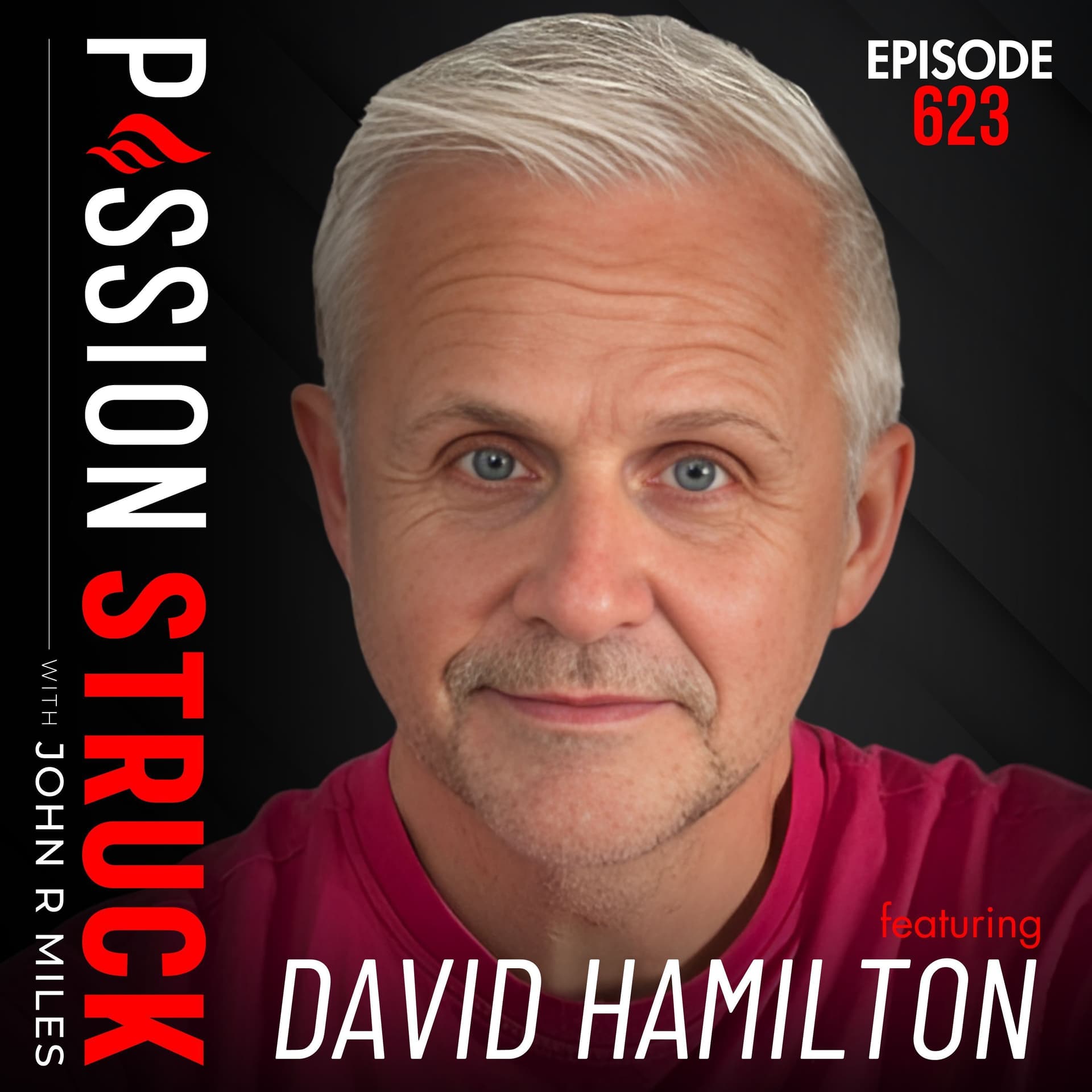
Podcast Notes: Dr. David Hamilton On How Kindness Heals Your Body And Mind | EP 623
Podcast Overview Title: Passion Struck with John R. Miles Host: John R. Miles Guest: Dr. David Hamilton Episode Number: 623 Release Date: [Insert Release Date]
Podcast Description
*Passion Struck* focuses on human flourishing, emphasizing the strengthening of the brain, body, and spirit. John R. Miles engages in conversations with experts to uncover insights that help listeners live purposefully and meaningfully.
---
Episode Summary In this episode, Dr. David Hamilton—a scientist and expert in the mind-body connection—explores the profound impacts of kindness on health and well-being. He discusses his 21-Day Kindfulness Experiment, revealing how intentional acts of kindness can lower inflammation, enhance heart health, and improve overall mental well-being.
Key Topics Discussed
- Biological Impact of Kindness:
- Kindness counteracts stress both physiologically and psychologically.
- Acts of kindness can initiate profound biological changes, including improved heart health, immune function, and brain structure.
- The 21-Day Kindfulness Experiment:
- A study designed to measure the effects of kindness on happiness and well-being by asking participants to observe and meditate on kindness rather than perform acts of kindness.
- Results showed over 30% improvement in participants' happiness and sense of connection.
- Empathy and Compassion:
- Kindness arises from empathy and compassion, which are crucial for human relationships.
- These feelings can lead to profound connections and positively influence mental health.
- Ripple Effect of Kindness:
- Kindness has a contagious quality, creating ripples that can affect social networks. An act of kindness can lead to multiple subsequent acts of kindness.
- Neuroscience of Kindness:
- Witnessing acts of kindness can boost the immune system and create psychological well-being.
- The "Mother Teresa effect" illustrates that even simply observing kindness can enhance one’s immune response.
- Importance of Active Listening:
- Active listening is a critical skill that validates others and fosters connection.
- It is a form of kindness that can significantly impact self-worth and interpersonal relationships.
---
Key Takeaways
- Kindness as Medicine:
- Kindness should be viewed as a powerful tool for improving mental and physical health, rather than just a moral ideal.
- Simple Acts Matter:
- Even small, intentional acts of kindness can have substantial impacts on oneself and others, reinforcing the idea that every individual can make a difference.
- Intentional Kindness:
- Practicing "kindfulness"—being mindful of opportunities for kindness—can enrich everyday interactions and foster deeper connections.
- Prepare for Conversations:
- Emphasizing the importance of preparation in conversations to promote active listening and show genuine interest in others.
---
Conclusion This episode emphasizes that kindness is not just a virtue but a crucial element for healing and connection in a disconnected world. Dr. Hamilton’s insights encourage listeners to embrace kindness as a necessary part of their daily lives, reinforcing the interconnected nature of human experience.
Call to Action: Listeners are encouraged to reflect on their own acts of kindness and consider participating in the 21-Day Kindfulness Experiment to enhance their well-being and relationships.
---
Resources
- Dr. David Hamilton's Website: [drdavidhamilton.com](http://drdavidhamilton.com)
- YouTube Channel: [Dr. David Hamilton](https://www.youtube.com/c/drdavidhamilton)
- 21-Day Kindfulness Experiment Playlist: Available for free on Dr. Hamilton's YouTube channel.
---
Related Episodes
- Previous discussions on the importance of intentionality and emotional mastery.
- Upcoming episodes featuring experts on related topics of mental health and human connection.
---
*If you enjoyed this episode, please consider leaving a review to help others find this meaningful conversation.*
Written by AI. May contain mistakes. Listen to the episode to check what was said.
Transcript
Automatic transcript. May contain errors.0:00Coming up next on PassionStruck. One of the key things that I've explored is that kindness is physiologically the opposite of stress. And when I say the opposite of stress, I know people might think, well, stress is a feeling, a state, and kindness is a thing that you do. So let me reword that, which fits nicely with what DACA's research says, is the opposite of an experience of stress. So what that experience is psychologically for you and therefore what happens inside the body, the opposite of that experience of stress is an experience of kindness. And what that is like psychologically, therefore all that happens inside the body.
0:38If you chart many of the physical effects in the body of stress and those of kindness, you'll find that they go in the opposite direction. Welcome to Passion Struck. Hi, I'm your host, John R. Miles, and on the show, we decipher the secrets, tips, and guidance of the world's most inspiring people and turn their wisdom into practical advice for you and those around you. Our mission is to help you unlock the power of intentionality so that you can become the best version of yourself. If you're new to the show, I offer advice and answer listener questions on Fridays. We have long-form interviews the rest of the week with guests ranging from astronauts to authors, CEOs, creators, innovators, scientists, military leaders, visionaries, and athletes.
1:25Now, let's go out there and become PassionStruck. Welcome to Episode 623 of PassionStruck, where intention meets impact. If you're new here, this is the space for those bold enough to ask the deeper questions and brave enough to live the answers. And if you've been with me for a while, thank you. Your presence fuels this movement. Before we dive in, a quick reminder. Our new substack, The Ignited Life, is growing fast. Each week, I share exclusive tools, behind-the-scenes insights, and curated starter packs, podcast playlists that help you explore topics like emotional mastery, soul-driven leadership, and the science of meaningful connection.
2:09You can join us at theignitedlife.net. We're continuing our series this week on The Connected Life, exploring what it truly means to live with presence, purpose, and emotional depth, and how we relate to ourselves and each other. Earlier this week, I sat down with the incredible Suzanne Giesemann, one of the world's most respected spiritual teachers, for a soul-expanding conversation about the unseen world, soul-led purpose, and what it truly means to matter, not just to others, but to the universe itself. And tomorrow, I'll be releasing a solo episode on Taylor Swift and the art of valuing others, with lessons on authenticity, belonging, and what it takes to build genuine human connection in a performative world.
2:52But today, we shift our lens to the science behind kindness and why it's more than a virtue. It's a biological necessity. Let me ask you this. What if the most powerful medicine for your mental health, your immune system, even your sense of meaning wasn't found in a bottle, but in how you treat people? My guest today is Dr. David Hamilton, a scientist, bestselling author, and one of the leading global voices on the mind-body connection and the biology of kindness. After earning his PhD in organic chemistry and working on cutting-edge pharmaceutical research, David made a radical shift from drug development to human development.
3:31His mission? To explore how the power of thought and kindness can shape our health, our relationships, and our collective future. In today's episode, we explore the 21-day kindfulness experiment and how combining mindfulness with kindness can rewire your brain. We explore the immune-boosting, stress-lowering, heart-protective biology of kindness. We discuss why small intentional acts can ripple outward in life-altering ways, and why kindness may be the ultimate antidote to loneliness, stress, and social disconnection. Whether you're seeking better well-being, deeper relationships, or simply a more grounded way to show up in the world, this episode is packed with actionable wisdom that will change the way you think about kindness and its impact on your life.
4:17Now let's dive into this inspiring conversation with the one and only Dr. David Hamilton. Thank you for choosing PassionStruck and choosing me to be your host and guide on your journey to creating an intentional life. Now, let that journey begin.
4:36I am so honored today to welcome Dr. David Hamilton to PassionStruck. Welcome, David. Thanks for inviting me, John. It's a real pleasure to be chatting with you today. Well, I'm so excited for this conversation. You have really pioneered the work around the science of kindness, which is going to be a core aspect of what we talk about. But before we get into that, your journey is interesting. How did you go from being in the pharmaceutical industry to becoming an advocate for kindness? What inspired that shift? I had a fascination with the mind-body connection because a part of my job allowed me to observe the results of medical trials.
5:22And I was fascinated by, I wanted to understand the placebo effect. Why is it that people getting placebos, sugar tablets, were seeing some improvements? So I began to research while I worked in the industry, just in my spare time, I began to research the mind-body connection and find a whole lot of research showing how beliefs and mind and emotions could have physical effects in the brain and on the body. And that was absolutely captivating for me. And I would say the reason why I was probably so interested, my mom and I, when I was a kid, used to talk about the mind. My mom called it the magic power of the mind because she was going through postpartum depression.
6:03And I found a book in a library called The Magic Power of Your Mind that was really helpful for her. So all through my childhood and teenage years growing up, mom and I would talk about the magic power of the mind. And so I guess probably why I became fascinated with the placebo effect more so than all my colleagues was because I had that background and interest. So I eventually left the industry with a passion, really, that I wanted to write and educate people on the different ways that mind and emotions could impact our health. And if we could somehow understand this and even harness it, mind and emotions in some way, by the way we think and the way our attitudes, for example, then we might have bring about health giving effects.
6:46And that led me into kindness because kindness naturally falls into that whole genre of the mind body connection. Because when you have an experience of kindness, a whole heap of different things because of how it feels, a whole heap of different things happen in your brain and body. well i think since you've laid that out it's important to maybe go into how do you define kindness and why is it such a transformative force in human relationships for me i would say kindness is usually a something that you do that's usually rooted in empathy or compassion it's something that you do that helps another person in some way it could even be something that you say and I say rooted in empathy and compassion because empathy is often the starting point of compassion so you can think of so the starting point of kindness you can think of empathy as I feel with you so I'm sharing your pain I'm here with you right now and then empathy evolves naturally into compassion which can be thought of as I feel for you so I'm here with you sharing your pain but now part of me wants to see you free of that pain free of that suffering so I feel for you and that's compassion and then compassion naturally evolves into something that you say or do to support or assist or help this person in some ways so that's how I would define kindness sorry I forgot the second part of your question I was so into the definition there so the second part David is really why is kindness such a transformative force in human relationships so I would say it's such a transformative force because I think it cuts through a lot of the stuff that we have swirling in our minds that sometimes blocks connection for example if you reach out say something kind or do something kind I think it just cuts through to the very basis of what makes us human and so i think kindness has a deep penetrating effect and i would say the reason why i say it's what makes us human is because we actually have kind genes but we're supposed to be kind in fact our kind genes are some of the oldest genes in the human genome they're at least 100 million years old but go back much further than that and our ancient ancestors learned through experience that helping each other looking out for each other supporting each other was better in the long term in terms of safety and thriving than trying to go things alone so we naturally evolved genes associated with that tendency to care and to help each other and genes that ensured the process was a pleasurable one so kindness is something that's deeply ingrained in the human psyche and in the human nervous system so I think when we say or do something kind.
9:45I think people hear it and feel it on a much deeper level than purely a surface superficial level. And I always like to try to incorporate stories into these podcasts. And as I was doing my research on you, I was reading your blog posts and I came across this one where you were describing that you used to be a bartender way back earlier in your career. and you had this patron named Jack who had served in World War II. And he tells this story of this moment where he faced a life or death situation and a German soldier ended up displaying an act of kindness. I was hoping you might be able to explore this and maybe use this to introduce this concept of kindness.
10:35So this was several years. In fact, let me think exactly when. It would have been 23 years ago. and I worked in a little bar, a little wine bar actually in the west side of Glasgow, a city in Scotland. And this gentleman, Jack, he was in his 70s at the time, came in and I used to chat with him. I used to chat with other patrons in the bar, but I didn't really know much about him. And one day he told me that he used to be in the war. And he said one of the most memorable experiences of his life was that he got separated from his company, from the rest of the people in his company, his troop. And he found himself hiding out in a bombed out town.
11:17And he was like the only person there. And he'd spent a few days there just hoping and praying that they would recognise he was missing and they would come back and rescue him and pick him up. And he said, one day his worst nightmare came true because a troop of German soldiers were walking through and they were checking all the buildings. and he was absolutely terrified because he said I was just a kid he was only 17 years old so he really wasn't even long out of high school and here he found himself on the front line in I believe it was in France this particular thing that happened and he found himself on the front line just literally out of school a few months earlier and he said I was absolutely terrified I was absolutely so afraid and then I eventually I could hear them coming into the building and he could hear the footsteps walking over rubble and broken glass and he said I was standing there and I was in this room and I said I stood behind the door a bit and I was holding my gun and I was literally shaking with fear because he was thinking what happened is he will see me and what if I raise my gun if I shoot him then they'll know I'm here and the rest of them will come and they'll shoot me and he said I was absolutely panicking because I was just a kid and I didn't really know what to do and he said I was just absolutely my whole body was shaking with fear holding my gun and he said I heard the footsteps and the soldier walked into the room and he turned around and he held his gun and he saw me and he pointed his gun right at me and he said he could see me shaking and then he said I wet myself I just lost control and he wet myself and he said the German soldier looked and he could see that I was a kid and he could see the urine coming out the bottom of my leg and had his gun and he put his gun down and he looked at me and he said he smiled and he went and he made a kind gesture and then he walked away out of the room and out of the building and signaled to the rest of the of his troops that the building was clear and Jack said and here I am like nearly 60 or so years later and he's or 50 something years later and he said it's funny despite everything that happened in the war that is what I most remember about the war is that particular thing he said that changed his life it made him he said it made me a better person a different person as I went through my life and I think that captures what I said a moment ago about the roots of kindness empathy you could see that the soldier empathized I feel with you I share your pain I understand we're two human beings and I understand what it must be like for you right now and that the soldier must have taken that position and said I can't do this and showed an extraordinary act of also bravery to lift his own gun and put his own gun down and walk away and turn he actually turned his back Jack said he turned his back and walked away that was an act of courage and bravery but exceptional kindness and then he walked away so that for me captures that story of kindness empathy to compassion to a physical act but it starts with feeling I share I feel your pain.
14:19Well, I think it was a great story. And I, over the holidays, I happened to watch Saving Private Brian, which I hadn't seen in many years. And it reminds me of some of the scenes from that movie, where almost the same thing happened, where a German soldier lets an American live, and the American had previously helped that same soldier to get out of a sticky situation. So it's an interesting example how in the heat of battle, even we can still show kindness and empathy to a person from the other side. Absolutely, John. And I reckon it probably happened a lot during these terrible wars that we've had.
14:58I bet there's been a lot of displays of compassion between seeming different sides because when it comes down to it, we're human beings. And I think we've heard, we saw some in that film, even Private Ryan, I've heard of Jack's story, but there's probably lots of similar experiences people have had in these sorts of situations. I can't remember what movie I saw and whether this is true or not, but it was World War I. And they would blow the whistle at times and take a pause where neither side was fighting. And I remember in one of these scenes, a bunch of the English soldiers got out of the trenches, the Germans got out of the trenches, and they started playing a game of football in the middle of the battlefield.
15:43Yeah, yeah. I think it was Christmas Day. Yes. And it, to me, was so ironic because it made me remember a moment when I was in the military and it was our holiday Thanksgiving. And we were in the middle of writing, running this turkey trot on the ship that I was on doing laps after laps. And above us, a sortie of allied aircraft came overhead because they were using our ship as one of the liaison points for their missile run. And they come screaming overhead. And it just was this interesting moment where here we are celebrating Thanksgiving, but we're in the middle of this war and it just brought the whole situation back to me.
16:32This game of soccer that at one sense, we're sharing our mutual humanity and the next moment, we're back to fighting each other. It's an interesting world we live in, isn't it? It really is. And again, it comes back to what I think is supporting each other and being kind and having these displays of affection and love and real human qualities. These are what make us human. And I think sometimes we just need a little trigger, like Thanksgiving or Christmas Day, something that reminds all of us, this is what makes us human. This is who we are. This is what we're supposed to be like. And it's just things get in the way.
17:10Like wars, for example, and even wars between people. Things get in the way. But this is who we are and this is what we're supposed to be like. I believe we all have moments when we question whether we matter to others. how does kindness influence this sense of self-matter i share a wee bit of science a wee example i'm not sure if it'll answer the question exactly but finding this scientific study helped me one day i was writing on kindness i think we all go through i've written 12 books and b i still have moments john where you lose your way a little bit and i still have these little moments from time to time where I'm not quite feeling myself not quite feeling connected and wonder if what I'm doing is mattering at all and then a few years ago I came across some research into the contagiousness of kindness and it was learning that kindness an act of kindness most of the time has a ripple effect that goes out to what's called three degrees of separation but more so than that kindness has an r number and we know the r numbers from covid times which means reproducibility rate and it's the higher the number the more contagious the more infectious something is and it turns out that kindness has an hour number somewhere between three and five that's a reasonable estimate that's based that's grounded in science but also estimated a bit more and the thing is in terms of the fact that kindness has this ripple effect to three degrees of separation this is what it means let's suppose that you do something kind for someone today and it doesn't have to be a life-changing thing most of the kindnesses that really matter are the small things the little shows of support or encouragement the little acts of assistance these tiny little things we do every day but let's suppose you do something kind and because of how you made that person feel that person has an experience of kindness because of how you made the person feel that person will probably be kinder to five people over the course of the rest of the day that's the r number of five simply because of how you made them feel if you were to follow that person around not that you would but if you did you would probably find they would be kind or kind there to about five people give or take a wee bit now these five people are at one degree of separation from you they're one social step separate from you now if you had a wee drone and you tracked the locations of those five people not that you would but if you did then what you would probably find over the course of the next day or so is that each of those five people would also be kinder kinder to five people and so what you now have is 25 people who are now at two degrees of separation from you two social steps away from you now if you happen to have a swarm of drones not that you would do it but if you did and you tracked all these people then what you would probably find on average it's not an exact thing because it depends it's an average that each of those 25 would also be kinder to five people so what you now have at three degrees of separation from you is 125 people experiencing an act of kindness because of something small that you did and I put it to the people who are listening today is whenever if ever you feel small if you feel you're not having an impact every act of kindness matters you just don't see it because what happens is we do something or we say something even a little show of support or encouragement for someone and then we walk away we get on with the rest of the day what we don't see is what happens next and what happens next is the ripple effect it's if you're passing a pond and you casually flick a pebble into the pond and you hear it plop but then you walk away and you get into your car or you go into a shop or you go to work whatever you do you're not really looking at what happened but what did happen is a pebble landed in the pond and it plopped and it created a little set of waves and then the waves moved out and at the other side of the pond there's lollipads rising and falling now they don't know why they're rising and falling but they're rising and falling because of the wave and what set the wave in motion was the pebble dropped in a pond now the pebble is a metaphor for an act of kindness and it's not a lollipads that are rising and falling it's people's spirits it's people smiles in people's faces it's the quality of people's days so I wanted to say that because even on those days when you think that you don't matter or what you do doesn't matter every little thing that you do to support another person matters you just don't notice what happens after you go away because there's always, almost always a ripple effect.
21:54And so every small thing that you do matters much more than you realize. And you matter much more than you realize because you're always having these effects, even though you probably don't notice most of the time. I think that whole explanation of ripple effect is really important to understanding this. And one of the books I wanted to mention that you wrote is The Little Book of Kindness. And in this, you're talking in the beginning about the world today. And I'm going to just read what you wrote here. You say, our world is becoming more interconnected and seemingly smaller. The currency of the future is not euros, dollars, or yen.
22:37It's empathy, the ability to understand and relate to another, to understand their needs, to understand what life is like for them, to share their pain. Only through empathy can we actually solve our problems together. And as I was reading that, David, I'm not sure if you've ever read any of the research by Emile Bruneau, but it reminded me of his research. If you're not familiar with him, he is deceased now, but he was a University of Pennsylvania professor who was really looking at dehumanization and how do we use empathy to help the other side see the commonality that we have in each other.
23:20Is that kind of what you were referring to here? Exactly. And I wasn't familiar with his research, so it's great to hear this. But that's exactly what I was referring to, because the world is becoming smaller in the sense that compared to a long time ago, it's easier to travel and it's easier to communicate with people. We do it unlike we're communicating right now. And these kind of things 20, 30 years ago wouldn't be possible. So the world's becoming smaller and we're recognizing the interconnectedness. So much of what happens in the world is founded upon relationships and the ability then to understand and relate to another person.
23:54And the ability to do that is based on empathy. And I want to research this a little bit more, but before I go there, I wanted to explore the gap that you bring up, which I call the epidemic of disconnection. You say our world is becoming more interconnected, yet seemingly smaller. And those two things seem like they would be the opposite. We're more interconnected. We're more together. But why are we experiencing such a void? I think that there's a disconnect that's happening that's related to an over-focus on doing and productivity. I've got to do this. I've got to get that done. And I think there's so much focus at the moment on just stuff that we have to do that I just think we lose touch a wee bit with, as I say, some of the things that make us human.
24:46It becomes so important to get all these tasks done nowadays because the world seems, especially with social media and we're scrolling on our phones and everything seems to be fast paced all the time. And I just think I've noticed it myself that we just sometimes forget, we lose touch a wee bit with the things that make us human, which is the importance to take time to help each other, to empathize, to be kind. And so I think that for me is something that I've noticed. And I think kindness is one of the ways that we can help to really to connect a wee bit better again. Thank you for sharing that.
25:25And I think it's a good lead in to discuss empathy in more detail because you describe empathy as the path into knowing what type of kindness to show. This is really interesting. I love to cite the work of Dacher Keltner, who studies awe and compassion. But as I was interviewing him about his most recent book, The Power of Awe, he brought up that his research found that people experience awe the most when they're witnessing what he calls acts of moral beauty, which is really us performing acts of kindness, demonstrations of gratitude towards another person, et cetera. How does this tie into your own research?
26:12And do you, yeah. Oh, very much so, because I often talk about that there are neurological and physiological effects of kindness. And it doesn't really matter whether you're the giver of the kindness, the receiver of the kindness, or even the witness to it. And I think what Dakar was saying there is when you witness kindness, you're in a state of awe. And so you're having an experience of kindness. And that brings about many of the same effects inside the brain and inside the body as actually doing an act of kindness itself. Because when I often talk about and write about, for example, the impact of kindness on the heart and on the immune system, I am explicitly stating that it's not an act of kindness itself that does it.
27:00It's the experience of kindness. It's what that experience is like. And so you can have an experience of kindness if you're giving the kindness or even if you're witnessing it, you're aware of, as I would say, an act of moral beauty. It moves us in the same way. So it generates more or less the same physiological effects inside the brain and inside the body. And I put my hand on my heart here because some of the most profound effects are on the heart. In fact, often one of the key things that I've explored is that kindness is physiologically the opposite of stress. And when I say the opposite of stress, I know people might think, well, stress is a feeling, a state, and kindness is a thing that you do.
27:43So let me reword that, which fits nicely with what Daka's research says, is the opposite of an experience of stress. so what that experience is like psychologically for you and therefore what happens inside the body the opposite of that experience of stress is an experience of kindness and what that is like psychologically therefore all that happens inside the body if you chart the many of the physical effects in the body of stress and those of kindness you'll find that they go in the opposite direction but the only reason that explanation works is because it's not the act of kindness itself it's the experience of kindness which can be giving or having experience of watching observing or learning of an act of moral beauty and it's a bit like stress because again two people can be in the same situation one of them could have an experience of stress and the other person have an experience of calm because they could be stuck in traffic for example one person's feeling stressed the other person's quite relaxed about it so it's not the stuck in traffic that's causing the physical effects of stress it's the experience of being stuck in traffic so similarly with kindness it's not kindness itself that brings about the neurological and the physiological effects it's what the experience is like whether you're the giver the receiver many times or even the person who's witnessing, who's in awe witnessing an act of moral beauty.
29:12Man, I love that explanation. It leads me to want to go into this next area. I saw in your most recent book, The Joy of Actually Giving a Hoot, that our mutual friend of both of ours, Sharon Salzberg, gave you an endorsement for the book. And one of the things that Sharon is most well known for is her book, Love and Kindness. and this is something you have really dived into. Research has shown that this Tabishan Buddhist meditation, love and kindness, really encourages us to generate feelings of love, kindness, and compassion for all beings. And really where you go into is just like you have to practice tennis, and I know you're a big tennis player if you want to be a good tennis player or a good golfer, which I know they love to do in Scotland as well.
30:03You need to practice compassion for it to show up. Can you go into loving kindness and neuroplasticity and how these things are like a muscle that needs to be constantly trained? So it's a bit like mindfulness. If someone does mindfulness, for those of you listening who've never tried it before might think of this as mindfulness 101 so let's suppose you were to breathe which I'm assuming most people do but let's suppose you were to breathe and then notice that you're breathing the moment you notice that you're breathing you'll find a lot of the activity in the brain changes so if I was to scan your brain while you breathe normally there'd be activity dotted all over the brain but the moment you notice you're breathing in other words you're mindful of the experience of breathing you're mindful you're aware of the sounds and the sensations of breathing now you'll find that most of the activity is now at the frontal part of the brain just above your eyes and that literally gets a workout literally because the activity is there that it gets a workout it's if you go to the gym and you work out a muscle you'll notice if you do reps maybe for a couple of weeks you'll notice three things happen to the muscle it becomes firmer larger and more powerful and everything you use that muscle for therefore becomes easier so similarly when you work out a region of the brain and we're talking here of mindfulness so you're working out this frontal region of the brain it also becomes firmer larger more powerful obviously neuroscientists don't call it muscle growth like to sound really clever so we call it neuro neuroplasticity but the idea is more or less the same and when i say it becomes firmer larger more powerful what's happening is a growth in the number of neural connections so it's becoming more connected and then more powerful so everything you use that frontal part of the brain for becomes easier which is why mindfulness is associated with more better concentration more self-control the ability to manage your state because these are governed by this frontal part of the brain but where i'm going with this is let's suppose instead of mindfulness you do what i broadly like to call kindfulness of which the loving kindness meditation practice is one of a kindfulness meditation.
32:17A kindfulness practice is any mindfulness-based technique where at least some part of the focus is in the direction of thinking kindly or compassionately of someone. Now what happens if you scan the brain is, yeah, you're working out the frontal part, but now there's a bias to the left-hand side and a little bit deeper in. And these also become firmer, larger, more powerful. Now the point I'm making here is this is a physical change to brain networks you know being kind and thinking kindly isn't just something that you do it's an experience that you have but this experience is actually causing physical changes in some of the fine structure of the brain and incidentally that these regions of the brain are associated with not only empathy but happiness and joy and what that means as these regions become more powerful it means happiness and joy become more accessible to us doesn't mean obvious if you practice a loving kindness you'll always be happier of course because life happens but because that muscle is stronger it's more powerful it just means that against the backdrop of life as it happens these states happiness and joy become a little more accessible to us because the brain networks that can access it are more powerful than they were prior to a consistent practice of loving kindness say?
33:39Well, one of the things that I love about the way you talk about this is you connect kindfulness to intentionality, which that's something I really explore on the podcast is our life is really about being intentional about the micro choices that we make in the moments that make up our days. The way I interpret this is kindfulness focuses on intentional kindness. It's really training our brains to become more mindful of opportunities to practice kindness. One of my definitions of kindfulness is to be mindfully kind, in other words, intentionally kind as you go about your day. So kindfulness can be a mindfulness-based meditation practice, or it can be being intentionally kind, i.e.
34:23mindfully kind in the micro moments of your life. this made me really think of the mother theresa effect study that you showcased in the little book of kindness which found that witnessing kindness boosts the immune system and maybe you can go into a little bit more about the study but why do you think kindness is so contagious and impactful when it comes to the immune system what happens is having an experience of kindness in this mother theresa effect i'll describe in a moment was literally witnessing it's coming back to what Dacher was saying, it's you're in awe of an act of moral beauty. And partly what that does is it takes some of the stress pressure off the immune system, because kindness is an experience of kindness is the opposite from an experience of stress.
35:12So when you have an experience of kindness, so witnessing, for example, an act of someone else being kind, then it takes some of that stress pressure off the immune system, thereby allowing the immune system to work more optimally. But Other research, before I talk about the Mother Teresa effect, other more recent research compared people doing acts of kindness over a period of time with people just acting as normally, so not being intentionally kind. And they looked at blood samples and then they looked at white blood cells of the immune system inside our blood. And what they found is those people being intentionally kind caused effects on the genetic activity inside these immune cells that more or less meant a kind of anti-inflammatory effect inside the immune cells, inside the blood.
36:03Isn't that absolutely amazing? Simple through being kind. But the Mother Teresa effect was volunteers were asked to watch a video that lasted about an hour long of people, oh sorry, of Mother Teresa on the streets of Calcutta showing acts of kindness. This is why it was called the Mother Teresa effect. It was done back in the 80s and that was the video they happened to use. If they'd used the video of Gandhi, it would be called the Gandhi effect. They happened to use a video of Mother Teresa. and it showed over this hour she was really caring for people on the streets of what was then known as Calcutta and they had their immune system sampled before and after then a little bit later again and what the researchers did is they measured the levels of an antibody in the saliva that lines their mucous membranes it's called SIGA and that's short for salivary or secretory immunoglobulin A that's for the test at the end of the podcast part of the immune system at lines and mucous membranes it's the first part of the immune system that responds if you say eat or inhale something that's contaminated so the immune system reacts to it so levels of SIGA are a good proxy for overall immune function and what they found is just by watching that video that one hour video levels of SIG went up by 50 % on average isn't that amazing and they stayed elevated for several hours and the reason why they stayed elevated is because people kept referring back to it they were still being moved by this these acts of moral beauty they would say something like oh remember that scene where mother Teresa sat beside that elderly man and she didn't say a word she just took his hand and laid her head against him just so that he wouldn't feel alone in the world at that moment and they felt so moved by even though they watched the video an hour ago they still remembered that they still had an experience of kindness and the levels of SIGA were kept up for that reason so part of the reason is that the relieving having an experience of kindness releases some of the stress pressure on the immune system so the immune system can work more optimally as it's supposed to work and secondly there's actually a direct impact on the immune system right down at the genetic level that's related to experiences of kindness.
38:28And I love that you just went into that. And one of the things that I think is so profound about doing the podcast is how much I get to learn week in and week out about things I didn't really know. And one of the key findings for me reading your work was that we all have a kindness gene and there's no exception. The kindness gene, as you point out, is one of the oldest in the human genome, it's approximately 500 million years old. And it's integrated itself because of that into many key systems of the body. So I really found that fascinating, along with what you just talked about. It's actually why kindness has physiological effects.
39:11As I pointed out, our ancestors learned through experience that helping each other was useful. In fact, it was the right way to go because there's no convenience shops at the bottom of the road. And they also had to protect themselves from other tribes or from predators or from things that happened in a world that wasn't quite as safe as ours is for most people these days. So they learned through it. So they had these experiences of just helping each other, living in communities, looking out for each other, supporting each other, sharing, caring for each other. So over time, we evolved genes that ensured that was a key practice.
39:49So nature wanted to make sure that we kept doing that because it was going to save our lives. So that's what we call nature's selected genes for kindness, because nature understands through experience that helping each other is going to make us survive. But because it's such an ancient gene that we have, it all through that time has integrated itself into a huge number of healthy systems from impacting our mental health, making our minds clearer and sharper and making us feel happier and protecting us to a degree against depression and anxiety, to lowering blood pressure to support the immune system, even to helping us digest food, to helping wounds heal faster.
40:29so all of these things happen as what I call side effects of simply caring for each other it's extraordinary it's one of the most beautiful and magical things I've ever came across in science is how kindness actually does this so that's why I've been exploring it in my books because it's been so fascinating to me and it makes so much sense it does and when I reached out to you in December, making sure that we were still on for this conversation that we're having today. You mentioned to me that you were in the middle of a 21-day kindfulness experiment, and I wanted to make sure we got this into the episode.
41:07So can you talk about what inspired it and what the results were of this experiment? Sure. So I realized that most of the research published around kindness is when people are asked to do intentional acts of kindness. and and then and I wondered what would happen if I didn't ask people to be kind I just got them to contemplate it if people were aware of kindness thinking about it would they then go and be kind and would that lead to improvements in their happiness in their connection with others in their sense of overall well-being and that's exactly what I found and what I did every day for 21 days is I sent people two videos one was a very short video about a minute or two long just asking them to consider or notice something so for example on day one I just ask people to notice acts of kindness that you see around you as you go about your day just notice if you see someone being kind to someone else or someone saying something can't just don't I'm not asking you to be kind just notice things and then on another day I ask people just to notice when you notice have an experience of kindness notice how it feels psychologically and then another day notice how it feels in your body do you feel any different in your body and then other days I'll ask if they notice something else so basically a different theme for 21 days but something really small not go out and be kind just notice something and each day I also sent them a kindfulness meditation practice so as I pointed out earlier a kindfulness meditation practice is a mindfulness practice that some part of it points the mind towards thinking compassion that they are kindly So I guided people through meditations between six and 11 minutes long, a different one each day for 21 days, just thinking, encouraging them to think and focus on kindness.
Read the full transcript
42:58Anyway, we measured at the beginning and at the end, happiness, connection with others and overall well-being and got significant, substantial increases in happiness, connection with others and overall well-being. and that was not asking people to be kind just asking people to think about it to consider it to notice it and I figured that they would probably because they feel because they're having they're thinking about it they would then because it's on the surface of their attention they would intentionally be kind and that's exactly what happened people were being kind all over the place and receiving kindness having noticing it having experiences by witnessing other people's kindness, and it all had an impact on their happiness, connection with others, and their overall sense of well-being.
43:47And incidentally, I've left the entire playlist on YouTube. So if anyone wants to do it themselves at any time, the entire 21-day playlist is on my YouTube channel. So it's open, it's free, just click on it and you can work through it at your own pace. David, I'm interested, and thank you for sharing that, were the results even more profound than what you expected? Yeah, absolutely. I got more than 30 % improvement in happiness, connection with others and overall well-being. That's way more than I thought, because that's more than you would get from taking antidepressants, for example, over that period of time.
44:24So in just 21 days, it was a substantial change in people's state, how they feel, but also their relationships with other people and their overall sense of psychological and emotional well-being these were way more than i expect i don't really know what i expected to be honest i expected a gain but not maybe not quite in the ballpark that we actually got and there was there was about three and a half thousand people that started this experiment so it was a fairly decent number of people man i love it well thank you for sharing that and i'm glad we could tape this so close to you completing it.
45:02Yeah, it literally just finished a few weeks before, just actually a week or so after Thanksgiving, it finished. So I ran it up through the middle of November to early December kind of thing. Awesome. Well, one of the areas I wanted to take our discussion is I recently had Dr. Alison Wood Brooks on the podcast. She's a professor at Harvard who studies how we converse with one another. And as I was interviewing her, she was talking about the lost part of active listening and how listening is really one of the most powerful ways that we either show someone that they're seen or unseen. Active listening is also one of the most powerful ways to show kindness.
45:53And I wanted to ask you through that lens, what does truly listening to someone look like? And when they do it with kindness, how does it affirm both self-worth and the value of the other person? Absolutely. I would say when you're really active listening is kind because you're sharing this space with someone and you're being fully present in the moment with this experience with the person and you're showing them that I'm respectful of you I value what you're saying and by actually really truly paying attention you're by giving that person your maximum attention you're showing empathy and you're showing kindness for them and it really for a lot of people when you're on the receiving end of that it can feel like an affirmation of your value I know when someone's actively listening to me they're really paying attention it feels really nice and and I say it feels nice because it doesn't always happen does it in general and you can tell when it does and you feel god that what a great and you walk away thinking what a beautiful person she or he was and all they actually did was really give you that space and i think it it taps into something really important and as some human i think human connection grows it gets a little bit stronger when you're really actively listening and it is like you said it's like an affirmation of our value of our self-worth, and it's a demonstration of kindness and respect.
47:20I agree with you. And one of the things she talked about is that we often think of conversations as being spontaneous, but there's a level of preparation that we can do to make them more rewarding, especially if we know we're going into a setting with certain people. How do you think we can be more intentional about preparing conversations through this lens of kindness? that's a really good question I think if you don't know a person then just taking a little bit of time and you know that you're about to meet them in some way I think just taking a little time to get learn a little bit about the person but also even consider what are some of the things that we some of the topics we could explore in a conversation and it just I think it just gets around some of the little blank moments where you're not really sure of what to say and what to talk about i've noticed myself if i even if i'm going to a party like to dinner or something and i don't know some of the people if i just take even a short amount of time to even prepare myself and to maybe some of the questions i might ask people that shows that i'm genuinely interested in their lives like i really would like to know where did you grow up what did you do for 11 even depending how the conversation goes what kind of have you ever done anything that took a lot of courage or have you ever had an experience of kindness just when prepared with a little weak things like that just show that you really want to listen to a person i think i've noticed that really helps to develop a relationship and a friendship as well i agree with you and i think is something that we really need to tap into more because it appears as we start out the whole conversation, the more we experience this global village that we're living in, the less and less we seem to be listening to one another on a deep and meaningful level.
49:21Yeah. So I wanted to ask you a couple of questions about how you apply kindfulness. And one of the things I know is that you have done a lot of work with organizations like Google and the NHS and others. What have you learned about the role of kindness in the workplace? And do you see any tie in having kindness in the workplace to how many employees today feel like they're disengaged in the workforce? I've certainly noticed that kindness is so incredibly important in the workplace. And where I've worked a lot on is in the leadership side and pointing out, because I think sometimes we have in our heads that kindness and leadership doesn't go together because we think of leadership as having qualities of strength and vision and powerful.
50:12These sort of ideas we have around it. And those are absolutely true. Having strength and vision, decisiveness, these are important. But so also a lot of research also is kindness. And it doesn't mean that you have to be overly lenient, and nor does it mean avoiding making difficult decisions. It doesn't mean that at all. Kindness in the workplace and in leadership especially, it simply means an approach to leadership and approach to interaction that is based in empathy and compassion and a genuine concern for the needs, the opinions and the well-being of each other. And then how a person acts or reacts in any given situation evolves naturally from that space.
51:00But that starting point is empathy, compassion and a genuine concern for the needs, the feelings, the opinions and the well-being of other people. It can take different forms depending on the context. We've talked about active listening. It can be literally giving someone your full attention so that a person feels listened to, a person feels heard, a person feels valued. It can even be saying thank you, which I know sounds really obvious. And it is for many people. But for the person hearing the words thank you, that can be an absolute, that can make their day. It can make a person feel respected.
51:34Now, kindness in the workplace or in a leadership capacity can also be offering supportive feedback. And even if you're giving feedback where change or improvement is needed, it's just showing someone that support is available and showing them that you believe in their ability to learn and that leaves a person feeling I've got this and even if I haven't if I'm struggling I know that I can ask for help so it's rooted in empathy and it can even be making an attempt to understand to better understand people's opinions and a lot of that comes down to respecting people by giving them attention by listening to people so in a corporate environment it's about bringing your humanness and your natural empathy to the way that you do what you do and it's funny because research shows that organisations who make kindness visible in some way, whether it's through the way some of their internal practices, but they've made it visible, actually retain staff so much better than companies that don't.
52:33Comes back to the fact that kindness is what makes us human and we're human in a workplace. Whether we have a job to do or not, we're still human beings. So we still expect and need to be in an environment that has values of empathy and compassion and kindness so that we feel human as we do what we do. I think a great example of this is I recently did an interview with Dr. Adam Galinsky, and he really focuses on the science of inspiration. And he was hired a number of years ago to go into this company and to evaluate some of its leaders. And on one morning, I think it was a Monday morning, he was observing a leader start the morning meeting with his team.
53:16And he realized that almost all of them were completely checked out. And it goes to what you were just saying. The reason they were checked out is that almost every single one of them had high school children. And the Parkland high school shooting had just happened here in America a few days before. and instead of really going into their emotional states, he just treated it like it was any given day. And most of those employees had other things on their mind and he didn't even think to go into it. And this is something that you write about in your most recent book that you never know what someone else is dealing with.
53:58And I wanted to just quote what you wrote because you say that the fact is that most of us are basically like award-winning actors when it comes to hiding our real emotions. I think you and I both use this concept that oftentimes we live behind a mask that we put up. And maybe it's society, maybe it's pride, but many of us put on a brave face even when we're feeling anything but brave inside. That super cheerful coworker, maybe they're having tough nights. You're always there for your friend person. Maybe they might need someone there to be kind to them too. Everyone's dealing with something and everyone's fighting their own battles and most of them in silence.
54:43And I think that's a good backdrop to explain what you were just talking about and how we're recognizing this in others and showing kindness in the workplace. Is that a good way to think about it? Exactly. I think, John, that captures, for me, a large part of the essence of everyday kindness if we err on the side of that in other words it's easy to judge people and it's easy to be critical and stuff but if we can err on the side of knowing that you never know what someone's dealing with right now or has dealt with that is contributing to the way they're presenting right now if you understand that then it doesn't necessarily always change a situation but it might change how you feel about it and how you feel about the person and therefore how you respond and that makes all the difference because that's how we that's how we break down barriers that's how we solve a lot of our problems we can start with that basis that you never know what the person is dealing with can I share a personal story with you John that I also wrote in the book but it captured when I the reason why I included those words that you wrote in the book the reason why I included this is because I started writing the book shortly after I lost my dad my dad had a brain tumor a very fit and healthy man in his late 70s and it was one of these things that just happened right out of the blue and my dad had surgery and he was undergoing radiotherapy three times a week and I used to most of the time take him to the appointments because he wanted he liked me being there because for the best will in the world sometimes doctors use terms because you're talking to medical people all the time they use terms that you don't fully understand and if you lose a wee part of it then it's gone so I used to always explain and translate exactly to my dad in everyday terms what was really happening and what things meant so it was like a hundred kilometers round trip to pick up my mom and dad drive them to the appointment back and back home and I did it like most of the time sometimes my sisters or someone helped out but there was my dad always wanted to get there really early he was always worried about because he knew this was his life he was scared of being late for traffic or what if they can take him early so my dad always wanted to be there like 40 minutes something like that really early and it was very important to my dad to be super early so I always made sure that I was picking them up in the morning in plenty of time so that even if there was traffic delays we'd still get there really early but there was one morning John and I was running a wee bit late and it was more and what I was annoyed at was it was my own fault I allowed things to to delay me and I was driving along the motorway or the free the freeway or the motorway as we call it in Scotland I was driving along the road faster than I should have done and I wasn't we weren't going to be late we'd still be early 15 minutes early but I knew that wasn't enough for my dad and I knew he'd be feeling anxious about the fact we weren't as early as he wanted to be so I was driving along the road fast and I pulled off the road at a little junction it's what we call a roundabout over in the UK and I wasn't paying fully attention because I was so lost in my head John I was worried about being late and I was worried about how that might make my dad feel and I was thinking about the inevitable what seemed like the inevitable prognosis and I wasn't thinking clearly nor paying attention and I pulled out in front of another driver and luckily that both of us just put our foot on the brakes and he skidded and we missed each other by a centimeter and now luckily we missed each other there wasn't an accident if we had have crashed it would have been entirely my fault now what I expected in that moment was him to honk his horn really loud maybe shout and offer a few expletives maybe even a an obscene gesture because that's what happens so much in the roads but he didn't do that in fact what he did instead is he put his hand out and he looked at me and he smiled and his face looked really soft and compassionate and he looked at me and he said it's okay on you go and he smiled and it was nice it's kind and i didn't know how to respond because i was so struck by the opposite of what I expected in that moment and I went well thanks and I drove round and 50 yards along the road I burst into tears I was so overcome it was like a rush ever it was like a clearance almost like I was so moved by the kindness that he showed me and I just suddenly came to my mind about what I was really worrying about everything I was pushing inside it came out I was worried about my dad being late I was worried about his health and the prognosis and what happens if we lose him etc etc and had he been if that gentleman had been really nasty and peeped his horn and swore at me I don't think I could have handled it despite the front I put to the world I was given podcast interviews before and after this I was speaking on live stages days before days after I was making social media videos despite the face I the mask I wore the face I presented to the world I was really fragile on the inside because of what was I was going through and I don't think I could have dealt I don't think I could have coped if he'd been really nasty I think I may have burst into tears in front of me and that was the first time I can remember consciously being aware of being on the other side of those words because I've said so many times and I've written so many times try to be kind because you never know what someone's dealing with and I found myself that day on the other side of it and I understood it on a whole nother level because previously I just said the words but now I understood I really deeply understood what that felt like when someone is kind because you never know what someone's dealing with and that's the whole reason why the words you read that's why I wrote that section in the book and included those words because it was such a profound personal experience for me of receiving kindness in that form.
1:00:45Thank you so much for sharing that. And I'm so sorry about your father. It sounded like this came about when he was about 78. And I'm very sorry to hear about your loss. Thank you. Thank you. I appreciate that. Well, we last year went through one of the hurricanes and ended up having about three feet of water throughout our house. And it just made me... I don't think until something like that happens to you, truly realize like the fires in Los Angeles, other natural disasters, how much this truly impacts your life and how much small acts of kindness can change your whole perspective on things.
1:01:26So thank you for sharing that as well. And David, one thing I always like to do in these episodes is to give the listeners a starting point, something that they can take away as homework. Is there a starting point that you could give listeners if they want to embrace kindfulness, how they could take one or two actions to do so? Actually, John, one of the simplest things I can do, it's my favorite word at the moment. It's a word that I think most people haven't heard of because I only came across it myself recently. And the word's called confelicity. and what con felicity means is sharing in the happiness of other people so being happy for other people's happiness and success i'm so pleased that you had a good day i'm so pleased that you got that promotion i'm so pleased that thing happened for you i'm so thrilled for you so you're happy you're taking pleasure in other people's happiness and the word comes from the latin con felicitas which means with happiness shared happiness and one of the most amazing things about that is it's kindness in action it's not about physically going out and doing something it's just simply being kind in supporting other people's happiness and the magic of it is you feel happier as a consequence that's what it means that's what it means shared happiness literally by being happy for someone else you become happier as a consequence it's just it's one of the easiest things we can actually do is just to be happy for the happiness and the successes and the well-being of other people.
1:03:02So confelicity, it's one of the easiest ways to access kindness. Confelicity, another new thing that I learned today. I only learned it myself recently. Or the word I should say. David, it's been such an honor to have you on the show today. Where can listeners learn more about your work, your books, and the 21 Day Kindfulness Experiment? experiment my website is dr davidhamilton.com and i'm active on social media instagram facebook tin threads basically most of the platforms you can access them all from my website or just dr david hamilton is my name on each of those things the 21 day kindfulness experiment is on my youtube channel so dr david hamilton that's the title my youtube channel the playlist is called the 21 day kindfulness experiment.
1:03:56So all of the videos are there, all the kindfulness practices, all of the little teaching videos are there as well with wee bits of every other day I throw in wee bits of science as well about how kindness impacts your heart or your immune system or something. So it's all there and it's all free for people to explore. David, thank you so much for joining. It really lived up to everything that I hoped it would. And thank you for bringing so much knowledge into the world on the science of kindness. You're impacting so many people worldwide with your message. Well, thanks so much, John, for saying that.
1:04:31And thank you for inviting me onto your podcast. It's been a real pleasure. I've really enjoyed chatting with you. It's felt like a conversation between two friends. So it's been really nice for me today. So thank you. I've really enjoyed it as well. And I'm trying to bring on more people from the United Kingdom on the show because it's one of the biggest areas that the podcast is listened to. Wonderful. It is. But thank you again. Oh, thank you. That's a wrap on this conversation with the brilliant Dr. David Hamilton. What I love about David's work is that it bridges science and soul. It reminds us that kindness isn't just nice, it's necessary.
1:05:08That how we treat others doesn't just shape their world, it changes our own biology, our emotions, and our sense of connection. So as we close, I invite you to reflect on a few questions. What's one small act of kindness you can offer today? Not because you have to, but because it heals you too. How might you combine mindfulness with compassion to show up more fully for yourself and others? And what if kindness isn't something you do, but something you are? If today's episode moved you, please take a moment to leave a five-star rating or review. It helps us grow, and more importantly, it helps others find conversations that truly matter.
1:05:45To learn more about David's books and his work on the science of kindness, visit passionstruck.com or check the show notes for all the links. And don't forget, The Ignited Life is where I go deeper into these ideas each week. Sign up at theignitedlife.net to get exclusive insights and tools you won't find anywhere else. And if you want me to speak to your organization or community, then check out johnrmiles.com slash speaking to hire me for your next event. Coming up next on PassionStruck, I'm joined by Dr. Anna Lemke, bestselling author of Dopamine Nation and one of the world's foremost experts on addiction and compulsive behavior.
1:06:25We'll explore the neuroscience of pleasure pain and how to build a healthier relationship with technology, consumption, and self-worth. You won't want to miss it. When people with addiction get into recovery, they get so good. Like their lives are so much better. And I don't know that we see the same kinds of incredible improvements as when we're just like treating run-of-the-mill depression or bipolar disorder. But with addiction, people with severe addiction, when they stop using and they get into recovery, wow. They're often really remarkable people. and there's such a ripple effect because of course, addiction negatively impacts not just their lives, but the lives of people who love them and the people around them.
1:07:08And as always, the fee for the show is simple. If you got value, share it. And more importantly, live it because ideas don't change lives. Action does. Until next time, live life passion struck.
1:07:31Thank you.
From the publisher
In this Passion Struck episode, Dr. David Hamilton—scientist, bestselling author, and expert in the mind-body connection—uncovers the extraordinary biology of kindness. Drawing from his background in pharmaceutical research and spiritual science, Dr. Hamilton explains how intentional kindness can lower inflammation, improve heart health, boost your immune system, and even reshape your brain.
Together, we explore his 21-Day Kindfulness Experiment, the neuroscience behind compassion, and why kindness is more than a moral ideal—it’s a powerful tool for healing personal pain and bridging social disconnection. This conversation is part of our Connected Life series.
If you’re ready to live with more intention, compassion, and inner alignment—this is your episode.
Click HERE for the full show notes
Explore More: The Ignited Life Substack
If today’s episode sparked something in you, you’ll love The Ignited Life—our free Substack newsletter created to fuel your growth between episodes.
👉 Subscribe now at TheIgnitedLife.net.
Catch more of Suzanne Giesemann: https://suzannegiesemann.com/
If you liked the show, please leave us a review—it only takes a moment and helps us reach more people! Don’t forget to include your Twitter or Instagram handle so we can thank you personally.
How to Connect with John:
- Connect with John on Twitter at @John_RMiles
- Follow him on Instagram at @John_R_Miles
- Subscribe to our main YouTube Channel and to our YouTube Clips Channel
For more insights and resources, visit www.passionstruck.com.
See Privacy Policy at https://art19.com/privacy and California Privacy Notice at https://art19.com/privacy#do-not-sell-my-info.


