
In short
Podcast Episode Notes
Podcast Title
Passion Struck with John R. Miles Description: *Passion Struck*® with John R. Miles is the #1 alternative health podcast about human flourishing. It focuses on strengthening the brain, body, and spirit to help individuals live meaningful lives. New episodes are released weekly.
---
Episode Title
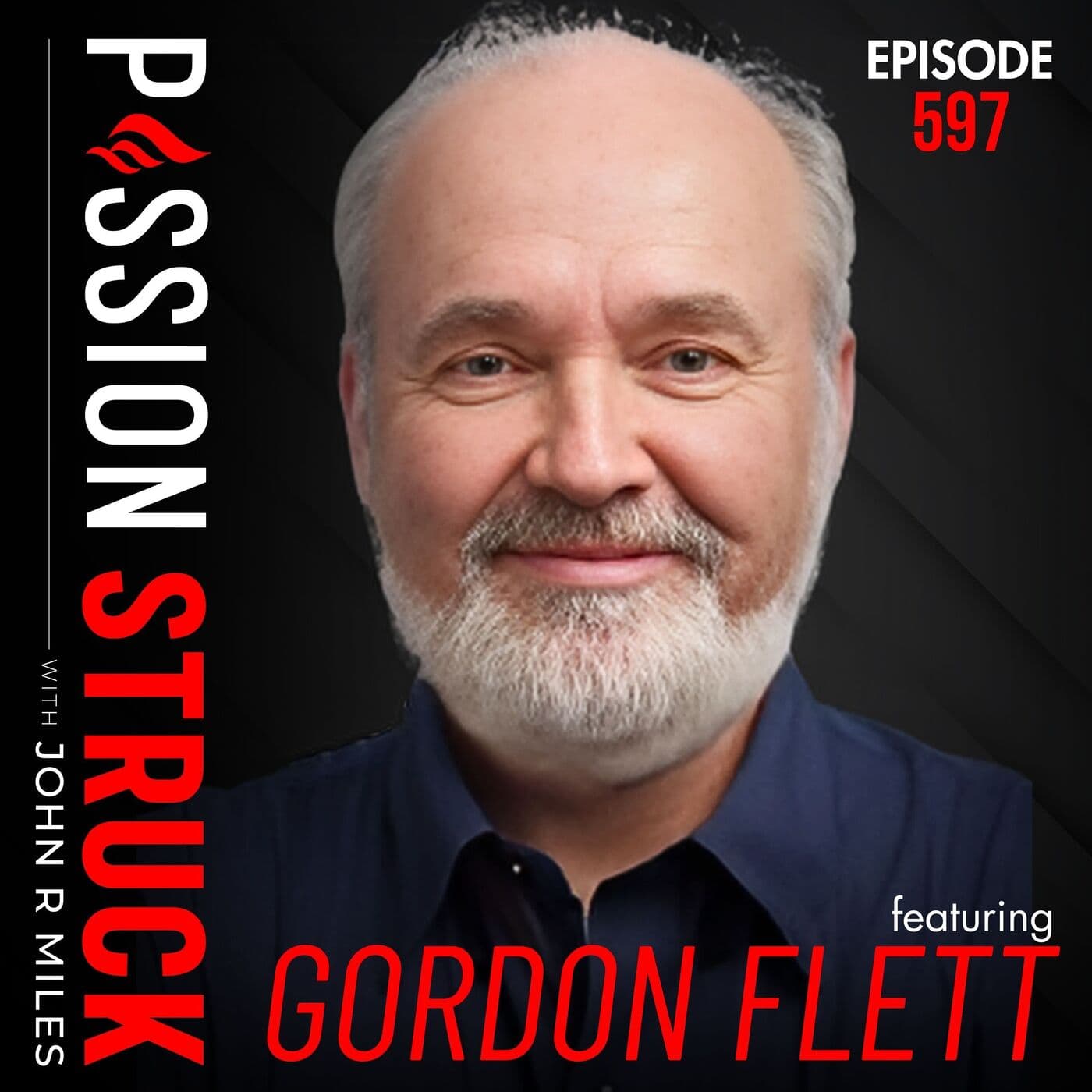
Dr. Gordon Flett on the Urgent Need to Know You Matter | EP 597 Episode Description: In this episode, John R. Miles interviews Dr. Gordon Flett, a pioneering psychologist known for his research on mattering—the feeling of being seen, valued, and significant. Dr. Flett highlights the differences between mattering, belonging, and self-esteem, as well as the consequences of "anti-mattering."
Key Themes and Topics Discussed
- Distinction Between Mattering, Belonging, and Self-Esteem
- Mattering is about feeling important and valued.
- Belonging relates to fitting into a group.
- Self-esteem focuses on feeling liked and confident.
- Consequences of Anti-Mattering
- The absence of mattering can lead to burnout, depression, loneliness, and hopelessness.
- Fear of Not Mattering
- Concerns about future significance can drive perfectionism and overachievement.
- Reciprocal Relationships
- Giving and receiving mattering is crucial for emotional well-being.
- Strategies for Rebuilding Mattering
- Practical steps for enhancing one's sense of mattering, especially after loss or transitions.
---
Key Takeaways
- Understanding Mattering:
- Mattering is a universal human need; all individuals require a sense of significance to thrive.
- The concept of "anti-mattering" reveals how detrimental feelings of insignificance are.
- Research Insights:
- Dr. Flett discusses his extensive research linking mattering to mental health, resilience, and overall life satisfaction.
- Community and Workplace Impact:
- The role of mattering extends into schools and workplaces, where feeling valued can significantly affect performance and well-being.
- Practical Applications:
- Encourage communication of appreciation and validate others’ contributions to foster a sense of mattering.
- Personal Reflection:
- Listeners are invited to contemplate their own sense of mattering and how they can enhance it for themselves and others.
---
Additional Resources
- Books by Dr. Gordon Flett:
- *The Psychology of Mattering*
- *Mattering as a Core Need in Children and Adolescents* (new book)
- Previous Episodes:
- Insights on mental health and self-worth from various guests, including discussions on anxiety and the science of influence.
---
Sponsors
- Factor Meals: Healthy meal delivery.
- Rosetta Stone: Language learning tool.
- Prolon: Health reset program.
- Mint Mobile: Affordable wireless plans.
- Hims: Hair regrowth products.
- Quince: Affordable luxury products.
---
Call to Action
- If you found value in this episode, share it with others who might benefit from understanding the importance of mattering. Consider writing a review to help broaden the reach of the podcast.
Connect with John R. Miles:
- Twitter: [@John_RMiles](https://twitter.com/John_RMiles)
- Instagram: [@John_R_Miles](https://www.instagram.com/john_r_miles/)
- Website: [johnrmiles.com](https://johnrmiles.com)
---
Closing Thoughts
Dr. Flett’s discussion on mattering offers profound insights into the significance of feeling valued and seen. The episode encourages listeners to reflect on their own significance while also recognizing the impact they have on those around them.
Written by AI. May contain mistakes. Listen to the episode to check what was said.
Transcript
Automatic transcript. May contain errors.0:00Coming up next on PassionStruck. I'd say, just as a quick snapshot, if you feel like you're not just a non-essential worker, you're a non-essential person. Now, everybody's essential. Everybody matters. And you have the potential to make a difference in people's lives. But if you're walking around feeling like that, you've probably got this sense of anti-mattering. And the other thing that we've been studying lately as an extension of that is the fear of not mattering. So that you feel like you matter now, but you anticipate maybe you won't matter down the road. Welcome to Passion Struck. Hi, I'm your host, John R.
0:34Miles, and on the show, we decipher the secrets, tips, and guidance of the world's most inspiring people and turn their wisdom into practical advice for you and those around you. Our mission is to help you unlock the power of intentionality so that you can become the best version of yourself. If you're new to the show, I offer advice and answer listener questions on Fridays. We have long-form interviews the rest of the week with guests ranging from astronauts to authors, CEOs, creators, innovators, scientists, military leaders, visionaries, and athletes. Now, let's go out there and become PassionStruck.
1:14Welcome to episode 597 of PassionStruck. Whether you're a longtime listener or joining us for the first time, I am so grateful you're here. You've tuned into a movement dedicated to unlocking your potential, living with intention, and making what truly matters matter most. And today, I have to tell you, I am absolutely thrilled for this episode. If you've been following me for a while, you know that I've been studying the science of mattering for years. It's one of the most profound and personal topics I've explored on this show, and it's at the very heart of how we build resilient lives, relationships, and communities.
1:52So it's truly an honor and a full circle moment for me to welcome someone I've long admired, someone who literally wrote the book on the subject, Dr. Gordon Flett. Dr. Flett is the author of The Psychology of Mattering, as well as the new book, Mattering as a Core Need in Children and Adolescents. He recently retired as a distinguished professor of psychology at York University, where he spent decades pioneering research into how the feeling of mattering, of being seen, valued, and significant, shapes everything from our mental health and relationships to our sense of identity and purpose. In our conversation, we explore what mattering truly means and why it's different from self-esteem, belonging, or mere connection.
2:40The profound emotional and psychological toll when we experience anti-mattering and how loneliness, depression, and anxiety often stem from feeling overlooked or underappreciated. We go into practical, actionable ways we can enhance our own sense of mattering even during life's most difficult seasons. We discuss why reciprocal relationships are so vital and how giving mattering to others can transform our own lives. And lastly, we go deep into understanding mattering at the societal level and how it could reshape education, workplaces, and communities for the better. This episode is deeply meaningful for me, and I truly believe that it will change the way you think about your relationships, your worth, and your impact in the world.
3:25It's not just about feeling good, it's about becoming whole. Before we dive in, let's take a look back at the two incredible episodes that led up to today. On Tuesday, I sat down with Humble the Poet to explore one of the most misunderstood emotional experiences of our time, anxiety. It's an unfiltered conversation about identity, self-worth, and how to find calm in a chaotic world. And just yesterday, Dr. Emily Falk, a trailblazing neuroscientist from the University of Pennsylvania, revealed the science behind how ideas spread, what makes messages persuasive, and how understanding brain synchrony can transform how we connect, influence, and communicate.
4:04If you want to become a more intentional messenger of change, make sure to check it out. And here's something else. Next week, I'm making a big announcement, one that's been in the works for a long time. I can't say too much just yet, but trust me, you'll want to tune in for the big reveal. For those eager to dive deeper into our most popular topics, check out our episode starter packs at passionstruck.com slash starter packs. With over 590 episodes, we've created curated playlists covering themes like mental toughness, emotional mastery, and personal growth. And don't forget to subscribe to my Live Intentionally newsletter for exclusive insights and behind-the-scenes stories you won't find anywhere else.
4:43Now, let's get into this transformative conversation about why mattering is a core human need and how understanding it can unlock deeper meaning, greater being, and more powerful human connection with the one and only Dr. Gordon Flett. Thank you for choosing PassionStruck and choosing me to be your host and guide on your journey to creating an intentional life. Now, let that journey begin.
5:10Hey, Passion Struck family. I have an extraordinary guest today, someone who I've wanted to have on this podcast for about 18 months, and we finally made it happen. I'm so honored and privileged to welcome Dr. Gordon Flett to Passion Struck. Welcome, Gordon. Thanks for having me, John. I am glad we finally got together and we have done a lot of things, I believe. Well, just before we came on the air, you told me that you recently retired from your teaching position, but you were just bestowed an honor. And I thought it was important to maybe start there. Can you tell us what that honor was? I was just named the honorary president of the Canadian Psychological Association, which is quite an honor and has had former presidents like Albert Bandura and Kahneman of Kahneman and Tversky.
6:04But to me, it's an opportunity to get people to find out more about mattering. I'll be giving a keynote address at our annual convention and it will be focused on mattering and how it can make a difference in people's lives. It's such a well-deserved recognition and congratulations to you. and wanted to just start today's discussion with just a little bit of history. I have really been trying to understand why are there so many people, and when I say so many, I'm talking in the neighborhood of billions, who are facing so many issues in their life, from feeling helpless and hopeless, to lonely, to rising mental health, to anxiety.
6:49And I kept trying to search for, was there some linchpin that was tying this all together. And I remember I was talking to Tom Curran in an episode and we were talking about perfectionism. And I was telling him I had spoken to Angela Duckworth and Ethan Cross and all these people with these famous researchers. And I said, I can't find anyone who was studying mattering. And he goes, have you ever heard of Dr. Gordon Flett? And I said, I have not. And so I immediately started Googling you and reading everything I could get my hands on that you had produced. And you are at the epicenter of this nascent world of studying mattering, which I think is one of the most important concepts that we need today.
7:42So I was hoping with that as a backdrop, Gordon, that we could start at the beginning. Sure. As I've done research, you first discovered the concept of mattering as a graduate student in the late 80s. Can you describe that moment of when you discovered it and why it resonated so deeply? It was fortuitous in the sense that I was a member of a club with one of the publishers that had discount books for graduate students. And I saw this book on the self and I sent off for it at the low price that they were offering it for, along with the provisions, don't share it with others. And I came across this chapter by Morris Rosenberg, who was the person who originated the concept of mattering.
8:24And in that chapter, there was five pages. And he gave the impression that here's this totally neglected element of the self that's so relevant to people of all ages, so predictive. And I just filed that away thinking, well, why aren't people studying this? But then I left alone. I had to finish my work, my dissertation on depression. And then later we were doing a project on the transition to college. And I'm actually just finishing a paper on transition and the role of mattering as a key resource. And I said, one of the postdoctoral students said, Hey, I came across the scale on mattering. And immediately the light bulb went off.
9:06And I said, Yeah, we need to be including this. And at the same time, I was asked to be the researcher for a provincial program on developing a resilience prevention program and encouragement program for young people. And we were kicking around concepts and I said, well, there's this concept of mattering. And with educators, they knew exactly what I was talking about. It's tied into the idea of the one caring adult who can change a kid's life, like Oprah Winfrey did with her teacher who she had on her second last show. So we included it as well. And while we were looking at that's when I also came up with the idea that just as important as to feel like you matter, the feeling of not mattering is also something that sticks with you at a very deep level.
9:53So we started measuring it there. But aside from that, I'd say that I look back and I said, was I being prepared to realize that this was a concept? I was very fortunate to be raised by loving parents and grandparents. And we actually had the two grandparents and my aunt in the house growing up. So I had surrounded by adults and my paternal grandmother. I was the first born, so I was treated like that spoiled special kid. and got a lot of attention. And then later on, the school experiences, including when our daughters, we have two daughters now grown up and the local school is just a block away.
10:30And that school was all about mattering. And when you have environments where it's right at the top to the principal and the staff who, ironically, I just met the principal again a couple of days ago at an event. They're all about the importance of the child as a person, not just the curriculum and really to the point where the principal in a school of 900 students knew every kid by name and something about them so that she could walk up to them on the playground during recess and then just start talking and really giving that sense of individual attention, which is one of the ways you end up feeling like you matter.
11:06And then when I became a faculty member at York, I became the undergraduate director. And I had these students come in who had many of the things that you described in terms of loneliness, disconnection, demoralized, depression. And these were excellent students who had just not got off to a great start. And what they needed was somebody like me in that position to be able to show some faith in them and to give them some strategies. And one of the things that goes along with mattering, it's the secret power, I say a secret sauce of mattering is that it's very strongly correlated with hope. people who feel like they matter have a sense of hopefulness about them at a very high level and not just hope in terms of being able to do things and make things happen but hopefulness about other people and other people are going to be for them when they need it and so I saw it and I've seen it in other people in terms of just how it's changed their lives and brought them from a position where they're really not doing all that well to a position where hey suddenly they realize their strengths and they're more likely to develop self-compassion and other positive things that go along with it.
12:13And in my new work, a new book coming out, I talk about with kids how if they feel like they matter, it comes with a host of other strengths, usually including hope and positive orientation towards the future and a sense of resilience that they'll be able to overcome challenges and obstacles and adapt as new situations emerge. They said, I just recently retired, but I'm busier than ever. And it's like the famous line from Al Pacino and the Godfather, just when I think I'm out, they pull me back in. And that's what's mattering. There's much more to be learned about it and much more in terms of heightening awareness, which is another reason why I appreciate this opportunity today.
12:54So I'm thinking about the best place to go. And I want to come back to your grandmother's story here in a second. But I think before we do, it might be best for you to ground the listeners or viewers on when you define mattering, what words do you use? Well, mattering is essentially defined as feeling important, feeling significant, feeling like people are paying attention to you. What I really come down to and something we've added much more focus on recently is the sense of that you feel cared about, that somebody cares about you and somebody really is looking out for you and thinking of you and when you have that you can be able to carry that from situation to situation even when those people aren't there and then of course the flip side is when you feel like you don't matter so you're not heard you're not seen you're feeling invisible you're feeling overlooked maybe feeling forgotten which we call anti-mattering and that feeling is something that some people have at a chronic level but you can also have those kinds of experiences, even if you have a sense of mattering and you have to learn how to cope with that kind of treatment.
14:03But another element of it that's key, because it almost sounds like you're waiting for somebody to treat you the right way, but also you can generate feelings of mattering by going out and doing things for others. Isaac Prilatensky has talked about this in terms of adding value to other people's lives. And this is what I tell someone who says, well, people just aren't treating me the way I need to be treated, what I'm just going to have to deal with this. And I say, well, you can become more involved. You can find a cause. You can make a difference in somebody else's life. And you know that you matter to them at least.
14:38And then you can go from there. But really it's something that's described as a feeling in terms of that, how does it make you feel when you feel like you matter or don't, but also it's described as a need so that everybody has a need to matter and it's believed to be universal. And this is the way that Rosenberg talked about it in terms of needing to be significant and needing to feel like you're making a difference or people would miss you. Because one of the things that he said is that if you're somebody who knows you matter, you know that people would miss you if you weren't around anymore.
15:08Well, I think it's important because when I was doing my research, a lot of people pointed me towards the work of Jeff Cohen on belonging, or I was pointed to study work on self-esteem or study work on happiness. How does mattering differ from belonging or self-esteem or happiness? Yeah, it's a very important point. When I was just doing work on this, somebody would get reviewers that said, well, I already studied this and it's called belonging. And I said, there's a difference. And the difference has to do with, I see belonging as you're fitting into a place somewhere where you're in the circle.
15:47But mattering comes into play if you're in a group setting, for instance, when people recognize you and hear your voice. I had this experience sometimes at meetings where I'm at, where I say, well, I belong at this meeting. They let me into this meeting, but nobody seems to want to hear what I'm saying. So it's not just fitting in, it's a sense of importance or being valued within the belonging setting. And one key difference is that school boards have told me, educators have told me that they can identify kids and they have identified kids who have a sense of belonging when they're measured but they don't have a sense of being valued and they said for some reason it seems that these are the kids that may be the worst off in the sense that they're wondering why don't i have a sense of value even though i clearly belong here as for self-esteem in the original work by rosenberg he made the key point that it's not just self-esteem that it's a unique element And self-esteem is more about feeling liked and feeling confident and feeling confident.
16:49But mattering is that sense of feeling valued and being important. And he showed in his original work that once you took into account self-esteem, that mattering was very much more predictive over and above. And there's been multiple papers because that's the challenge for researchers when they have something that they think is fairly new is they have to show that it predicts above and beyond other measures like self-esteem or sense of belief. belonging. And of course they're all correlated. So somebody who feels like they matter tends to have higher levels of self-esteem and higher levels of belonging, but they're different.
17:25And when somebody has a lack of mattering as their core thing, there's no way around it by boosting self-esteem where you might add to some narcissistic tendencies or the sense of belonging. And I found this one time, by the way, with a boy who had been given one of our questionnaires and And he wrote on it when they weren't supposed to write on it. He'd circled, I don't matter to anyone. And then he says, and this I know for sure, he wrote. I was telling the school board, I said, look, with this boy, if he's coming for counseling, unless you address that core sense of not mattering, educational initiatives, self-esteem initiatives aren't going to get to what he needs because he's got that core sense of just not being important to anyone when he overgeneralized.
18:11That's the thing about mattering is that you can say, I don't matter to anyone. That's why it's important for someone to show somebody they matter because then they can no longer say, I don't matter to anyone. And then overreact as a result of that. I'm sure you're familiar with the belonging barometer that the American Immigration Council put out. But when you talk about not feeling like you belong, I think the figure was 17 % of people feel like they don't belong or don't feel like they matter at any point in their life, which is a huge number when you think about it. And the numbers are close to 70 % who feel they don't belong in their work environments.
18:55The same thing with their communities. This is a huge thing. Yeah, I've spent a lot of time looking at those numbers. I just want to add that in our original work with the school board, about two thirds of the kids said they felt they mattered, but the other third said they either didn't matter or they weren't sure. And a really important element and the thing to realize about mattering is we can measure it generally as we typically do, but you can measure mattering at school, mattering in the community, mattering at work. So it cuts across these domains. And research that's been done with kids mostly in the U.S.
19:29on mattering in the community indicates that 45 to 50 percent of them say they don't matter in the community. And to me, I said, well, we don't address that as a core thing. What chance is there in terms of raising well-being and helping them develop the way they could in terms of their potential? So it's shocking when you think about the sheer volume of people at different ages who feel like they don't matter. It is shocking. And I want to get more into that. I wanted to ask you one more thing around science. So when I talked to my friend Ethan Cross about mattering and I was asking him where he suggested I should look, he turned me towards Edward Deasy and Richard Ryan's work on self-determination theory.
20:14And I have seen the linkages between the need for intrinsic motivation and mattering. But when you look at it, where would you say it crosses? And where do you think mattering goes well beyond self-determination theory? Right, right. Well, their theory focuses on three primary needs that everyone needs to have satisfied, the need for autonomy, the need for competence, and the need for relatedness. So it links mostly with the need for relatedness. but I actually did find a quote from them that I'm cherishing that I found where they talked about belonging and mattering. It's tucked away, but I cite it now quite frequently and realized that they had been thinking about this without going and drilling down.
20:59People who are feeling like they matter feel like they have a sense of agency. They have a sense of self-determination, but they also have unfulfilled needs in terms of that sense of confidence and autonomy. And we've shown with our work on the anti-mattering, which is that feeling invisible, that when people say they feel a strong sense of not mattering with that scale, it's very robustly correlated with all of those needs in terms of deficits across those three core needs. But it predicts above and beyond in terms of other outcomes. Let me put it to you this way. One of my students also has a class that he's teaching.
21:37I gave an exercise to the students and said, here's what competence is. Here's what relatedness is. Here's what this is. Here's a bunch of other needs, including this one we call mattering. Please rank them in terms of which is the most important to you and the people you know. and mattering came out over and above those other ones. And another illustration with the school board project is we had principals at a table where we had all these concepts on cutouts. And we said we got like 15 psychological concepts here, like Jargon City in terms of we got self-compassion and optimism and grit and all of these growth mindset.
22:21and they said well all these are important but we said which one would you pick and just go through them in order and the principals unanimously agreed that mattering was the top thing out of the 14 or 15 that they picked and when asked why they said it's because it applies to everyone it apparently applies to our students it applies to our teachers it applies to our staff and the custodial staff the parents in the community and then they immediately made the tie into the the kid with the one caring adult who changes the life of that kid. When I see those sorts of things, that's how I know that we can look at research findings, but it's something that has incredible resonance with people once they understand what the concept is.
23:04And usually they then tie that to somebody that they've known in their past has made them feel that way. And what do you think is that link that gets people to understand the concept? Because when I try to explain it, I remember I was having this discussion with a person in the PR field, and I was talking to them about the need to matter. And they go, well, everyone has a different sense of mattering. And I said, well, that is exactly true. We all have our own view, but I think there are commonalities that we all share as well. And we tend to focus on the differences instead of the commonalities.
23:42But how would you answer that? What I would say is like people talk about, as we have talked about belonging, they talk about connection, but mattering is about those special connections that everybody wants to feel special to someone. They want somebody who truly understands them at a level that nobody else does. And so many people don't feel understood and they don't feel seen or heard. But it's largely about those feelings and it's tied to memories that people have that a time when they've had someone like that. And I remind myself of this when I go and I look at popular things that are out there.
24:17Why are some of these things so popular? So fictional-wise, I always come to the movie It's a Wonderful Life, where there's Jimmy Stewart's character shown what it would be like if he didn't exist, which, you know, you do not matter. You don't exist. The other fictional example I point to is Mr. Holland's opus with Richard Dreyfuss at the end when he thinks he's wasted his life and he's not really going to do the great symphony. and he retires and there's that room, the auditorium filled with his former students who he's impacted in ways he didn't understand. And it just, it's the value of the rewardingness of people and the comfort that comes from knowing that there are people who really, you know, it's not just loving you, but they really care about you and they would miss you if you weren't around.
25:04And it even goes through, I realized I was looking at, I gave a talk for a hospice organization and the Cicely Saunders I believe is her name who has the famous phrase you matter to the end of your life even when you're not here no longer you matter and you'll never be forgotten that sense of people want it's about their identity too it's like they want a sense of unique identity and I added this in my description of mattering the need to feel like a unique individual who people are seeing as somebody with unique positive properties a sense of individualization. And people, that's the thing about belonging versus mattering is that you're, you've got a unique identity within that group.
25:47Absolutely. And the way I look at it is I've developed this framework where I think it starts with how you matter to yourself. Then how do you matter to others? How do you make other people feel they matter, and then how do you then extend mattering beyond yourself to the community around you? And I think when you talk about the second one, how other people make you feel you matter, and then how you make other people feel they matter, there's something that comes in with reciprocity. Is that something that you've looked at? Yes, I haven't studied reciprocity per se, but in the new book that I just finished, talk about mutual mattering in terms of that reciprocity.
26:37And when you're really locked in with somebody, you've got that sense of reciprocity where they understand you and you understand them, but they're looking out for you and you're looking out for them. And the book I always go back to read to remind myself of this is Tuesdays with Maury. It should have been called Tuesdays with Maury and Mitch, Mitch Albom's book that was a gigantic bestseller. And I said, there's Mitch Albom going back to visit his professor who's in his final days or he's heading in that direction. And that sense of caring about each other and how much he seemed to miss that in terms of when they've lost contact.
27:14And that's the key. And that's the best thing in terms of parent-child relationships where, you know, there's that sense of connection where the child is showing concern for the parent's feelings as well. And that whenever they get to that stage, some young people intuitively seem to have that component. Reciprocity is key. One-sided mattering is going to feel bad at some point in terms of, hey, I'm doing all this stuff for them, but they're not doing it for me. Nancy Schlossberg, who was another big name in the field, looked at this in terms of caregivers. And she said, it's the only time when you feel that mattering is not really good is that it's, you're feeling too dependent on, and it's more one way so that you're not getting the recognition.
27:59So you have to perhaps remind yourself of times when, if it's an aging parent, maybe dealing with dementia, when they were able to engage that way, or there'll be moments where you get that glimmer. But when it's too one way, it can become a sort of a compulsive thing where it's all focusing on other people's needs. And especially glad your framework includes that focus on mattering to yourself, because ultimately, I fear what happens with far too many people is they don't feel like they matter to others, and then they internalize it. I talk about this in terms of the internalization so that I don't matter to anyone, I don't matter to myself anymore, which potentiates a lot of very bad, risky behaviors with young people that could be internalizing in terms of self-harm.
Read the full transcript
28:46but it could also be acting out and doing things where you're not worrying about consequences because you don't see a future. And mattering to yourself wraps around that concept of hope and optimism in terms of what you're for yourself in terms of the future. And if you don't matter to yourself, then you just act whichever which way because you're not seeing anything that you're going to lose down the road. Psychologists, I'm not a clinical psychologist. My closest colleague in the perfectionism work, Paul Hugh, We've been working together for 30, 35 years now. And he talks about the relationship that the self has with the self, that you've got to be kind to yourself.
29:23You've got to care about yourself and not be so hard on yourself as perfectionists tend to be because they feel that they're pushing themselves by being so hard on themselves. But ultimately it's a recipe for exhaustion and being totally drained. You've got to learn to be accepting of oneself or your setup for all those bad choices. So as I was discussing this concept with my wife, we were talking about events like Easter, which is coming up, or Christmas, Hanukkah, where to me, I always feel the most emotionally involved in the holidays when I'm giving a gift to someone else, much more than when I'm receiving a gift from someone.
30:09It wouldn't be the same if I didn't intentionally go out and select that gift for them, wondering how they're going to react to it, wanting to see their anticipation, et cetera. So when you think about that, what are the psychological benefits that come specifically from giving mattering to others, not just receiving it? yeah I have to say here that when you said to giving a gift I immediately my mind went to being at the bottom of our stairs here waiting for our daughters to come down the stairs to see caught him sneaking down there early a couple of times along the way too but just the looks on people's faces and how that makes you feel to realize that you've had that impact where people think wow that's somebody who's really thinking about me and I did find that as a big shift for me as you get older that but you do get that sense of having a positive impact so it reflects back on you in terms of you can make a difference in other people's lives and that special glow which I learned back when I was the undergraduate director because this person I inherited the role from said unlike most things where you send a paper off to a journal and be waiting months and wondering is anybody going to read this when I actually have it out there if it goes out there.
31:27When you're the undergraduate director, you have students with real problems, real lives right there. You can do something about it. And he says, you'll get that glow of knowing that, hey, I actually am making a difference around here, that this student's life is going to be better. This person got back on track. And it does develop a sense of what we interpersonal efficacy, where you feel you can have a positive impact on others. And some people, I think, have taken what they've learned through mattering to others in terms of relationships, And then they've gone on to careers in terms of public service.
31:58And anybody who's in a public service will know about what it means in terms of wanting to make a difference in people's lives and how you feel like you do make a difference in people's lives. And when they're prone to burnout is when they get to that point of saying, I don't matter. Nobody's paying attention to this. If I didn't show up for work, nobody would miss me. And that's one of the key elements that's not been studied extensively, but there's clear links between feelings of not mattering and psychological burnout and demoralization in the workplace. To the point that the US Surgeon General Vivek Murthy, Dr.
32:33Murthy, included that as one of his five pillars in terms of workplace mental health, the feeling of mattering in the workplace. So I think of that, though, in terms of, I think back to the pandemic and here's those situations where we celebrated first-line people, front-line people, and celebrations at night, ringing bells and that. And then later I've seen accounts of going, hey, where did all the appreciation go? Because suddenly it's not taking on that spotlight. But you get that sense of making a difference in people's lives. And the key part, which Nancy Sloshberg talked about, a key element of the mattering concept is the feeling of being appreciated.
33:14Once you know that you're appreciated, it's like a sense of validation that's not going to be creating narcissism or false feelings about the self that, hey, somebody sees that I made a difference. And when I'm asked to give advice for perfectionistic kids and their parents, parents say, well, what can we do? I said, how about you spend some time volunteering where your child learns that it's not all about grades and competition, but you can actually feel really good about yourself in a lasting way by going out and doing something for other people and you don't forget it. And also when you're in an occupation where you feel you should be getting some acknowledgement and appreciation and instead maybe you get criticism or no attention, it can cut you both ways in terms of that as well.
34:02For sure. So we've talked a little bit about anti-mattering and you gave the definition of mattering. So how would a listener know if they might be experiencing anti-mattering? Are there certain psychological or emotional signs that someone might be feeling? Yeah. I won't go into this in great detail. In terms of the scale, it talks about things like, to what extent do you feel insignificant? To what extent do you feel invisible? But I think one of the things that's correlated with anti-mattering that probably might amplify feelings of it is when people feel really isolated and lonely. There's a very strong correlation.
34:48I just have a recent chapter on loneliness and the feelings of not mattering. And the premise of the chapter is the loneliness epidemic actually an epidemic of feelings of not mattering because they're so highly correlated. And even when I look at the items to measure loneliness per se, I see all these anti-mattering type items that are in there. That's sort of cool for those two to be related. So it's a sense, though, of really feeling like if you weren't around, nobody would miss you. And there's different levels of it so that, you know, you can have a moderate level. But if you have an extreme level, which sadly some people do, I've seen perfect scores on our measure that are so alarming.
35:32This is where you'd say, I don't matter to anyone. And people seem to be going out of the way to make me feel insignificant, or they look through and past me. People in homelessness situations, they feel like people are just looking beyond them and they're not really there. But some people have lives like that. And it's also possible to have a general feeling of mattering because we've shown in profiles that people have a sense of positive mattering, but they also have a sense of anti-mattering because maybe they have a background where they know they matter to people, but they're in a work context where they're made to feel irrelevant.
36:05And that famous thing about essential workers versus non-essential workers. I'd say, just as a quick snapshot, if you feel like you're not just a non-essential worker, you're a non-essential person. Now, everybody's essential. Everybody matters. And you have the potential to make a difference in people's lives. But if you're walking around feeling like that, you've probably got this sense of anti-mattering. And the other thing that we've been studying lately as an extension of that is the fear of not mattering. So that you feel like you matter now, but you anticipate maybe you won't matter down the road.
36:39So it could be in my context, for example, okay, I'm facing retirement. Am I still going to have attention paid to me? Do I have to stop people on the street now and start rambling? I'm a madman. And that fear of not mattering, I think, makes people just keep striving if they're perfectionists because they don't want that feared outcome to occur. And I came up with the idea of actually studying this when I was watching the Emma Stone, Michael Keaton exchange and Birdman movie, where she very harshly says, Dad, you know what your biggest problem is? You're afraid that you don't matter. And then she says, and you know why?
37:15Because you don't matter. So she got him on the anti-mattering and the fear of not mattering. And this is not as prevalent a feeling, but it certainly is relevant to certain age periods in one's life or transitions. And the whole side of mattering that's not been studied with exception of maybe four studies is the loss of mattering where you were somebody who felt significant and then something happened where you now feel insignificant. And then you can dread the dreaded anticipation of something like that happening, which tends to tap into other insecurities. Well, when you think about what you've just described, there are various points in your life where that could happen.
37:59One could be you're coming out of a long term relationship or a marriage. Yeah. Could be one aspect of it. Another one that I typically see people who come to me who have had a long career and now they're either retiring, maybe from the military, maybe from what they're wanting to do. And their whole sense of identity is shaken to its core and they don't feel like anything they're doing matters. I've seen this happen. It happened to me when you get well into your career, only realizing that what you're doing is not what lights you up inside and never was. And you're searching for your identity again.
38:43So I think there are many different circumstances that in our lives that we hit peaks and valleys where we feel like we matter and other times troughs where we've lost it completely. Yeah. And the feeling transition in terms of the feeling really gets at people. In my case, I spent three and a half years as associate dean in our faculty of health. And I remember the feeling, okay, you're literally a big man on campus. And then the next day when it's all over, you're not. that's okay now I'm back into the rank civilian life as one of my colleagues described it but it really hit home when I said that parking spot that I had right by our building am I going to be allowed to keep that no you're not allowed to keep that and and then I said how about like can I go on the waiting list no it's too long so it's like status one day not status the next but we could be doing a great service to people if we start to put ourselves in the shoes of all these individuals and think what kind of things can we set up so that they can retain a sense of significance where they can make a difference in other people's lives so that it's not what they were doing but they still have something where they can see a valued role because it's far some people simply just can't handle it and I think there's even in retirement there's the stories of people who don't last very long after they've got the coveted retirement because they just don't feel a sense of being valued and anymore it's too much of a transition for them but we don't tend to do this.
40:13We don't try to, there's a lot of things going on in the world. So we don't think of what opportunities we create for people as they are making these transitions that can be incredibly difficult for them. Absolutely. Gordon, I wanted to go into a couple different areas. One of them is going to start with workplace, and then we're going to go to schools after it. So I want to start with the early experiences that you had visiting your grandmother's workplace because they had a significant impact on you. And I wanted you to use the experiences of visiting her workplace to how the workplace has evolved today.
40:50Right, right. I can answer the first part of that easier. But my paternal grandmother and my other grandmother worked at a cafeteria that my one grandmother ran. So my sister, and I'm talking maybe six years old, five years old, and my sister is a year younger, We would go to visit the grandmothers and get a special lunch and have all this attention, plus whatever we wanted, which for me was usually some mac and cheese and some chocolate milk. But I'm concerned about this in general. We know that mattering is associated with workplace satisfaction, and I've talked about the mental health. But the anti-mattering also occurs at work.
41:31And I think we've lost the sense of what it means to be a person who's experiencing job transition. So when people who have been in a valued role for years suddenly get an email that tells them, sorry, but your performance isn't up to speed and pick up your stuff and you're gone. And I do know that there are people now working on an anti-mattering work version to show that this sense of being unimportant and insignificant in the workplace is also very potent above and beyond general feelings of mattering or not mattering. And what I would tell leaders is that you need to focus on the human costs.
42:08Effective, impressive leaders already have figured this out. So it's part of their leadership orientation where they feel that everybody counts, everybody matters and that everybody has a role to play versus the type of person who might go to the favorite, the prestige employees and not give others a chance to have input into decisions or a sense of voice. And, you know, workplace mattering is something that has got very limited attention. There's a separate scale, the measures mattering in the workplace that's only been used in a handful of studies, but it's absolutely critical. And that's something that I saw in our local school in terms of the educators all feeling like they mattered and everybody feeling like they mattered.
42:53And it is tied into that sense of demoralization and burnout that I was referring to. and people like Freud said, love and work are the two key domains. Well, if you feel that your work is something that's draining you in terms of you're not getting any sort of validation or sense of being valued in that workplace, it's going to be reflected in illness, turnover, absenteeism, presentism, where you're there, but you're not really there psychologically. Bottom line is that when people in a work setting or another setting feel like they matter, they're much more engaged in a day-to-day way and in a problem-solving proactive mode versus being disengaged and disillusioned and demoralized if you feel like you don't matter in a work setting.
43:41And the leaders who have already figured this out, they've gotten where they got for a reason because they are realizing the human side of everything. Yeah. When I talk about this, I talk about my experience when I was at Lowe's Home Improvement. I had this friend of mine named Steve who was over all the distribution components of the company. So when you think about this, this is about 30 ,000 employees. So it's a big job. And we would go into these distribution centers themselves that are They're about a million and a half square foot. So there are these huge facilities. And at the time we had a number of them.
44:20And I remember we would walk into these facilities and they had hundreds of employees and Steve would walk around and he would know every, not only every person's name, he would understand who their family members were, what their passion for. It was amazing. And he was almost like a rock star. People just flocked to him because he made them feel seen. And then I had this boss who was hired. And I remember for the first two weeks that she was there at the new job, she'd come into work, go into her office, lock the door. And the only time she would come out would be if she had a meeting or needed to go to the bathroom or something like that.
45:06And I remember when I finally got a chance to talk to her, I had major components of her job before. So I knew all the employees who were literally just sitting right outside her office, thousands of them. And I went up to her and I said, would you like me to take you around so I can introduce you to the directors and managers and other people who are part of the group? And she goes, you don't understand. And she goes, that's your job. I don't have any desire at all to meet them. My job is to manage you, to manage my peers and to manage the relationships with my superiors. And I just look at this, two people were at the exact same level.
45:49They were both SVPs. And I look at how differently they approach their jobs and how the people underneath them performed for each of those people because one treated them like they were family. The other treated them like they were a cog in a system. Yeah. And people are very attuned to that. And it could be even worse if they treated a few people like they were key and the rest of it, they weren't. I'll tell you a quick story about this. My brother decided to get involved in photography, my youngest brother, and he happened to be at a photo shoot with President Bill Clinton there in Hamilton, Ontario.
46:27And Bill Clinton is somebody who figured this out a long time ago in terms of his charisma. A lot of his charisma is making everybody feel like you're the only person I'm talking to in this room and being sincere about it. It has to be authentic too. It has to really matter. So at the end of this photo shoot, when my brother's in the corner and he's, oh, there's Bill Clinton in Secret Service. And he's just the assistant to the photographer who's doing the main shoot. President Clinton went over to my brother when he didn't have to, when he was already probably behind schedule and said, young man, tell me a bit about you.
46:57You've been here. I want to find out what's happening with you. And he spent time with him, which the glow that my brother had would have probably lasted the next couple of years because of that. The same thing with, there's a big element of mattering in sports and performance. And the really successful coaches are not just the strategists and the taskmasters, but also the ones who make their players feel like they matter as people. And I got a read on this when I went through the book that was written by Jerry Kramer, who became Hall of Fame lineman from the Green Bay Packers, who talked about Vince Lombardi behind the scenes and the diary that he kept for a year.
47:34It's great reading for anybody into sports. And he talks about how Lombardi humiliated him because he was the blindside tackle. And he once as a rookie missed the block and Bart Starr, the famous quarterback, almost got massacred by the blindside hit. And Lombardi showed the tape 32 times or something like this in the film session the next Monday with Kramer right at the front feeling totally humiliated. And he's thinking, I'm going to get my pink slip. I'm going to get cut from this team. So he's sitting there actually thinking, should I clear up my locker as everybody's left? And suddenly an arm comes around him and it's Vince Lombardi.
48:14and he's saying, I was pretty rough on you. I want to tell you why. He goes, I was rough on you because I know you have greatness in you. And I want to make sure that never happens again, because you're going to develop and you're going to, and that was like, he realized what he was doing. It was not just being heartless. He had a goal in mind. And with those kinds of coaches, you might hate them one moment, but you'll go through a wall for them or a frozen tundra field on your way to the first Super Bowl wins. And the coaches who don't figure this out are the ones who don't last very long. That they've got to connect.
48:49And Ted Lasso, of course, fictional example is the example of this. There's a famous clip where he talks about mattering. It's got millions of views online. And at the end of the day, everybody in a role needs to know that the person in charge cares about them. Even just a little bit goes an incredible long way where you make sure to say hi and make eye contact rather than just ghosting by. And people realize that people are very busy. So if you give them a little bit of time, that they realize, hey, I'm important enough, they gave me some of their valuable time. But so many leaders don't figure it out.
49:24And I talk about human costs, but if somebody added up the financial cost, people not being as productive as they could or being ill, it pays for itself. But I think it mostly pays in terms of the people themselves in terms of how they feel as a result of their interactions. And I feel sorry for that lady who's like, she cut herself off from rewarding interactions and more enjoyable workday by not getting, talking to some of the people and probably also not learning some of the things that would then enable her to make important decisions down the road. I won't pick on her too much though. I don't even know.
50:01No, I think that's one of the things that many leaders fail to do is to treat people regardless of where they are in the organization at an equal level, because some of the most mind-blowing discoveries I made was by talking to all the employees, because sometimes they have the best ideas possible to fix things, but they're never given the chance to have a voice into strategy and ways to overhaul things. So you're doing yourself a huge disservice by not including people in the discussion. Yeah, and I always think of my favorite fictional detective Bosch with Michael Connolly. Everybody counts or nobody counts.
50:45And everybody in an organization is important because they're going to be in an opportunity to do whatever or whoever. And as you say, sometimes the greatest ideas come from having many minds focused on the same thing and many voices talking about it. So I now want to switch the topic to kids. So as I have been writing my own book on this and trying to figure out what is going on and who is suffering the most when mattering is lost, what I keep finding is this is what has already happened to Generation Z, and it's what is already occurring to Gen Alpha right now as we speak. And there seems to be a couple different dimensions of it.
51:32You talked about the school that your kids or grandkids were in earlier as a great example of a school where mattering is present. But I feel in the vast majority of schools, mattering is completely absent or severely lacking. And then on top of that, as the work of Jennifer Wallace showed, you then have this erosion of the family system as well, where the person who shows a child that they matter the most is the parent. And if the parent themselves don't feel like they matter, it starts having this ripple effect. So they're not feeling it at school. They're not feeling it at home. They're probably not feeling it from their friends.
52:15And so you've got this recipe where this is something that's now being taught from their earliest ages. Am I thinking about this in the right way? Yes, for sure. Well, you think about everything in the right way, as far as I'm concerned, because that sense of looking at all those domains is critical. And I found there are schools and there are even some school boards here who are now trying to put a focus on mattering, but it's the exception rather than the rule. And for those kids who don't feel like they matter at home and they don't matter in the community, if they matter at school, then they can no longer say I don't matter anywhere.
52:50And they can get out of that type of thinking. And one of the concerns, of course, with the generation that we're dealing with now is social media addiction. And if you feel like you don't have that sense of mattering in your day to day, whether it's at school, family relationships, then you can turn to the Internet and social media to try and get that sense of mattering. And there is some initial research, including studies I've been involved with linking the feeling of not mattering and the unmet need to matter with social media addiction. And that sets you up, I think, for maybe more contact with people, but not the kind of quality relationships that provide that key, unique sense of self-worth.
53:30my thing about schools is that it would be very easy for schools to implement something that would enhance the sense of mattering of everyone at the school if there's no focus on it and it doesn't take a lot of time or energy I did come across one school in our resilience project that was supposed to be in a comparison group and I looked at the scores and the students in the school had much better adjustment and much bigger sense of mattering. So I asked the school board educators, I said, what's up with this school? Because this shouldn't even be a control school. Whatever they're doing, people need to do more of it.
54:08And they said that, well, on Mondays, the school-wide theme is mental health Mondays. And Fridays, it's physical Fridays for the physical well-being. So that sort of initiative where it's coming from the top of the school and then comes in various ways as part of how the week unfolds, sends the message right at the start that, hey, we realize that you need to matter and you matter to us to the point where we've structured this and made it a focus and try to show how you let your fellow students know that they matter so you can develop more peer relationships. But I do think that the mental health issues of young people today, whether it's anxiety, depression, loneliness, suicidality, mattering and that feeling of not mattering has a very strong role to play.
54:57It's not the only thing, of course, but for many, it's at the core element of this. And when they feel that they don't matter, then there's little reason to become engaged in learning. So this is what I was telling our educators is that the ultimate goal for them was to increase learning outcomes and to decrease problem behavior that was really problematic in several schools. And I said, people need that sense of a future and a sense of worth. And that will carry over in terms of learning. And it will carry over in terms of behavior so that people are going to benefit, young people benefit in multiple ways.
55:36And it can create a culture. So if you can foster an environment where it's across, whether it's a workplace or a school or wherever, where that is a very salient thing and people do big things are small things to promote the sense of mattering among the people they interact with. It can have an enormous benefit. And I've seen it. So I actually found with the school behind us and the principal who we renewed acquaintances with on Friday that I found the initial documents where they went and selected staff that had this kind of orientation, who had a people orientation so that it was a brand new school at the time and it was something that was built in, baked in, in terms of picking people you could carry this message and this way of interacting with people.
56:18A following question to that is, I think whether it's kids or adults, many people struggle to see how their actions actually affect others. Do you have any insights from your research on why recognizing our impact on others is so crucial to feeling like you matter? don't have any research per se, except to turn back to that work on doing for others in terms of volunteering or mentoring and how there's a literature on this. Now, usually these papers on volunteering or mentoring don't mention mattering as key ingredients in terms of those interactions, but they say, well, there's a benefit to this and benefit to that.
56:59And what is it about that? And it's in terms of that relational side of things where you can see somebody's face light up when they learn something that they weren't able to learn that transformation because you were able to tutor them in a way that got them on the right track where they suddenly are not self-doubting anymore. But generally speaking, like I said, I do believe there's even examples in terms of that making a difference in other people's lives. There's case examples of people with severe forms of mental illness, and then they were given a role within a setting or helping a fellow patient or that where they suddenly realized, hey, hey, I can do something worthwhile for somebody else.
57:38And I do have this positive and it transforms them. And it's a key to their wellbeing. Just one example of this, how people can lose sight of this though. For years, I don't go to church often, but my wife did. And the church where we were married and the minister who actually married us ended up suffering from severe depression. He was a fabulous guy. And he knew I studied perfectionism and he had perfectionism inclinations. So he asked after two months off due to depression and the whole congregation knew that he was depressed. He asked if I could drop by the manse, the house where they live, and just talk to him.
58:14And on my way there, I got the feeling, this is before I was really studying mattering to the degree that I do now, I said, somewhere along the way, I think he's lost the sense of just how much he means to other people. So as part of our three-hour conversation, I said, I need to remind you what you mean to people, you know, to us, to our kids, to the broader congregation. My wife, when she had a health incident that was almost potentially fatal, he came to the hospital and made sure that she was doing okay. So I don't know if that was it, but I suspect that it was because within 10 days, he was back at work and doing much, much better.
58:55And I said, but it also taught me a lesson though, like how can people who do so much for others lose sight of that? This is where people judge themselves according to some very difficult standards and lack of self-accepting. And I've actually been to a few things that are sad in a sense, but where somebody far too young has passed away and you get there and there's three or 400 people and you're going, did this person realize just how much they meant to all of these people. I had a grad student who passed away tragically around the age of 40. And when we got to the funeral, there was 500 people there because what I learned was, although he procrastinated on his own work, he was a master tutor in terms of statistics.
59:36And he literally went around the university helping out any grad student he could find for undergrad who was having problems with statistics. And it's too bad that people don't realize this. It's like Jimmy Stewart, and It's a Wonderful Life. He didn't realize his impact until he was shown what it would be like if he wasn't around anymore. And I think people need to get reminders. So this is what I tell parents is just don't assume that your kid knows that he or she matters. Show them, remind them, talk about it, and realize that you matter as part of it as well, because parents also lose sight of how much they matter, especially when you feel like it's a thankless role at times.
1:00:16But parents. One piece of advice I give is for that situation where the teenager looks like they don't want any input from the parent, give it a try anyway. And then you can say, well, directly, you can say, hey, I just want you to know, even though you don't seem to want to talk to me, that I'm interested in finding out what's going on with you. Because they will remember that. They may not acknowledge it, but they'll know that somebody actually cared about them when the parent was trying to show an interest. Thank you for sharing that, Gordon. And there A couple of last areas I wanted to go into with you.
1:00:47One of them is the fact that mattering is malleable, that we can actively increase our sense of significance. And I was hoping you might give some practical strategies or maybe habits any of the listeners could do to enhance their own sense of mattering. Well, we can't forget as well the mattering to yourself part of it. People remind themselves of what they have done if they don't feel that way in the current situation with what they've done in the past. But I think the outreach to other people can be through small ways. Just checking in on somebody is one way to get their sense of mattering up, and then you will feel that you matter as well in terms of the reaction.
1:01:28The principal I referred to at the school was the master of the lost art of writing somebody a personal note. But you can also write a note to yourself in terms of reminding yourself about things that you've done that people seem to have appreciated and things that you could do if you're not having a chance at the current time. Really a key thing though is spending time with people. My one brother said one time, he never went beyond high school, but he said to me one of the wisest things I've ever heard, he says, your time is limited. So if you give your time to somebody, that's the most precious gift of all.
1:02:04So spending time with someone shows that you want to be with them, that you're valuing them in a way. And unfortunately, in the busy world that we have too many situations where people are left to themselves and they don't get that interaction. But even just saying to somebody, I've been thinking of you means that, hey, of all the things that are there to distract you and all the social media, that you were the person on their mind, not to the point of stalking or something like that. But on the flip side, of course, is the antimatter. You want to make sure that you're not doing the things that will make people feel less than, to feel devalued or unvalued.
1:02:38So for instance, try not to spend time looking at your cell phone when you're interacting with somebody. Try to have some eye-to-eye contact and put the phone away. That's called phubbing, P-H-U-B-B-I-N-G, in case people thought I said something differently. and don't add to that sense of, hey, they don't see me. They're not really paying attention. They're not listening to me because that can be just as destructive as all of the positive things that I've said. And the work by the Gottmans on marital interactions showed that if you had a very difficult something with a partner, like somebody harshly criticized you, it's gonna take about seven or so positive exchanges to make up for that one negative exchange.
1:03:20So in addition to doing the positive things, make sure to try and limit the negative that will be destructive and give that sense of fears and feelings of not mattering. So it can go both ways. And another one I wanted to make sure I got in here is if our society as a whole, given all the issues of dehumanization, conflict, everything else that we have going on, prioritize mattering more explicitly, what changes do you envision we would see in our communities, workplaces, and our overall mental health? Yeah, massive changes. The potential is there in terms of, especially we talk about the divisions that are amongst people right now.
1:04:02What I tell people is people have more in common than they don't. And something that ties someone together is that everybody has that shared need to matter. And that's important to realize that even when people have fallen by the wayside or done things that are horrible. Even people think about it this way, if somebody's engaged in criminality at some level, they still have a need to matter too. And unfortunately, they didn't have people in their lives who positively exchanged with them in a way that satisfied that need. So maybe I can matter by joining this gang who gives me the attention. So the search for significance through maladaptive, inappropriate ways.
1:04:38But if we dedicated ourselves to this in organizations and in communities, it could transform everything. And we've got a federal election just starting here in Canada. And the ad that's running with our short-term prime minister, Mark Carney, talks about, we care about people. Just that sense of people knowing that people generally do care and it's authentic can go a long way. But when we have situations where maybe every second young person says, I don't matter in my community, we can say, what can we do in the community to make a difference? And I'll just very quickly tell you a story. I know we're going long here, but we once went to Maine to a town called, I think, Macias, and it has the most famous blueberry pie in the United States.
1:05:22And my wife said, hold off till you get across the border because you're going to get some of the blueberry pie. And unbelievably, the night before we went to this inn where there's the restaurant with the award-winning pie that won a national award, the restaurant burned to the ground. Oh, my God. And I said, oh, my God, there goes the pie. But these young people who just took over the place, they've lost their place. Where does Mattering in the community come in? They told us when we got there that the town was very now concerned about all the students who had summer jobs at that place. So the town was getting together the following Tuesday to say, what jobs can we come up with?
1:06:01What opportunities can we come up with? if we can help these young people who now have lost their employment as a result of this burning down, I said, I would want to live in that community. Who wouldn't want to live in that community where people are looking out for each other and deciding that, hey, we'll look past what race, whatever, sexual orientation, and realize that everybody has this core sense of need to matter, and we can do a better job at making everyone realize that they do indeed matter. Yeah, we had something similar to that happen to us about six months ago. We got impacted by Hurricane Helene and had about three feet of water in our house.
1:06:38And we had a dozen or more friends who ended up showing up for us, some pulling up carpet and helping us get the water out of the house and others bringing food and others packing up things for us. And I'll tell you, it's when people show up like they did that you feel that sense of mattering in the most profound way? When you need it the most, and that's a key thing about reciprocity, I should have said, is that it involves a responsiveness to someone's needs. When they send out a signal where you can figure out that they need something, whether it's the help of neighbors or whatever, responding to that is a key time because then they say, hey, this person has tuned into me and what I need and was sensitive that I needed it.
1:07:26On the other hand, if the signal's there, that signal's up and you don't respond, that also then adds that sense of, hey, I'm alone here. I don't have that sense of connection. That's the key is the responsiveness when somebody clearly needs it. Great neighbors, you want to stay there as long as you can. Gordon, you've been studying mattering now for decades. What has surprised you most or challenged your assumptions about how people build mattering in their lives? I think it's when people don't realize that they matter, as we were talking about earlier, but also just how I like to change that around a little and say that people who've told me, like Jennifer Wallace, for instance, have told me that knowing about this concept has changed how they interact with people.
1:08:14The research really hasn't picked up on that yet in terms of how people have had their lives changed as a result of being attuned now more to the relational side of things as opposed to the achievement. One thing that I learned, and this goes back and praise to my colleague Paul Hewitt and our work on perfectionism over the years, is that he said all along in therapy that perfectionists are driven by unmet interpersonal needs. And the achievements driving that's excessive that will end up maybe creating major health problems for them is driven by unmet needs. So indeed, one of the unmet needs is the need to matter.
1:08:48And we need to get a better appreciation of how achievement and interpersonal are actually connected through the needs that are largely interpersonal. And there's now five or six studies showing that perfectionists of different age levels are ones that feel unmet need to matter. And it's like the striving is, okay, if I do something spectacular, if I'm famous, then people will give me the love, respect, attention, and the sense of being cared about that I've been lacking all this time. Yeah. And unfortunately they'll reach that point and realize lie they've been told is going to hit them in the face.
1:09:24Yes. Yeah. The worst people off are the ones who actually attain perfection and find out that it didn't really matter to certain people that they really cared about. Yeah. And I just had a really good conversation with Lori Santos about this. She was put into this position, like the one you were describing, where she got picked to live on campus in this big house. And she was in the middle of all the students, became the den mom at the time, and realized just how many of them were suffering from perfectionism, from overachievement, from feeling less than. And that's why she created the whole course that became Yale's most attended course in history off the back of mattering really or seeing the phenomenon of anti-mattering feeling like an imposter feeling unseen and not wanting to share anything about themselves and a lot of the other thing that i've talked about in this new book on kids is that the front that people put on where they let on that everything's okay and this is especially the case when people feel like they don't matter because there's a sense of shame about it.
1:10:36Maybe it's something about me as the reason why I don't matter. That's the sort of time to talk to oneself that people have to stop doing. No, it could just be you're in the wrong place at the wrong time with the wrong people, or you haven't had a chance. You need an opportunity to show that you matter. But I learned very early on with students and was a champion of student mental health that they may look like they're doing okay, and they're exceptionally talented and all kinds of potential, but dealing with things. And that's where I came up with the idea of individualization, that you talk about students, but students are different.
1:11:06Each has their own unique history, unique set of experiences. And what might be how somebody got that way is totally different for someone else. And taking the time to hear somebody's story and to be responsive is one of that keys of building that sense of individual connection with somebody and realize that things are much more complicated than they seem on the surface at times. Absolutely. Gordon, can you just for the listeners. You had a previous book, The Psychology of Mattering. Can you talk about that just to tell them more about it and then maybe just introduce this new book that's coming out?
1:11:40I appreciate it. The Psychology of Mattering book was in 2018, and it was the first full-scale book on this particular topic. I think I have it behind me. This is it here. And you notice the hands that came up brilliant, I thought, within the book cover. And this talked about mattering in terms of introducing it, but also mattering in terms of its link with mental health. You can feel like you don't matter because you're not getting the services that you need when you're seeking help, but also mattering at school, mattering in the workplace and so on. And the new book, this one here, just published by the American Psychological Association.
1:12:15This is the full-scale look at what is it like to be a kid growing up in today's world without a sense of mattering. There's a top 10 list, for instance, of 10 indicators of kids feeling like they don't matter. Also, I talk about links with depression, anxiety, social media, physical violence issues as well. So full scale look. And one of the key points that I could say about both books is that 10 years ago, there wouldn't be enough to write these books. I struggled at first with the first book published in 2018, just to pull everything together because the literature wasn't as voluminous as it is now.
1:12:53Now there's plenty enough and books on the way. And I've been asked to write a follow-up volume to the first book, edition two, plus one on perhaps on the workplace. But what I'm pleased to see is that it's something that is a topic that resonates with the public. So it's not something that sits on a shelf and doesn't get put into action. And there's big ways and little ways that it can be injected into settings and organizations to really make people's lives much better. Gordon, thank you so much for sharing that. And thank you so much for joining us today. It was such an honor to have you. Well, thanks John.
1:13:30And maybe we can have a follow up sometime as I know you're invested in mattering. And I also would like more chance to learn from you because I'm sure you would love that some stories like the ones that you've shared that I find when like-minded people with passion, if you want to say passion struck, get together. and one person will say something and create a light bulb going off and the other person and then even some shared initiatives. So thank you. Absolutely. And that's a wrap. What an incredible conversation with Dr. Gordon Flett. His groundbreaking insights into the psychology of mattering have illuminated a profound truth.
1:14:06Feeling significant isn't merely a nice to have. It's essential for our wellbeing, resilience and overall happiness. His research reminds us that mattering goes far deeper than simply belonging or being connected. It's about feeling valued, knowing we're needed, and believing that our lives genuinely make a difference. From uncovering the hidden cost of unmattering, like anxiety, depression, and loneliness, to providing actionable strategies we can use every day, Dr. Flett has shown us a clear path toward living lives of greater purpose and intention. As we close today's episode, I invite you to reflect on a few key takeaways.
1:14:42How can you actively communicate to others in your life that they truly matter? What practical steps can you take to enhance your own sense of significance, especially in areas where you often feel overlooked or undervalued? And how might embracing the reciprocal nature of mattering deepen your relationships and foster genuine connection? If today's discussion resonated with you, please take a moment to leave a five-star rating and review. It's one of the best ways to support PassionStruck and helps these transformative insights reach even more people. And if someone in your life could benefit from Dr.
1:15:14Flett's powerful research and perspective, please share this episode with them because one conversation can ignite lasting change. For all the resources and links discussed today, including more of Dr. Flett's research on mattering, visit the show notes at passionstruck.com. And if you want to dive deeper, don't miss the video version of this conversation on our YouTube channel titled John R. Miles. And finally, if you'd like to bring these life-changing insights directly to your team, organization, or event, visit johnrmiles.com slash speaking to learn how we can work together to spark intentional transformation and inspire meaningful growth.
1:15:48Coming up next, I'm joined by Isabel and Laura Hoff. We go into their groundbreaking new book, Secrets of the Ice Woman, and we discuss the power of cold and breathwork to balance hormones, bolster health, and unlock inner potential. When my mother died, it was one of the most dramatic, impactful moments in our lives as a family and also my father, because it really made him want to go out into the world and just do things, right? Act to almost soothe this hurt that he was feeling. It was a way for him to escape, but then it became a way of healing. but it was also the reason that he went into these extremes like sitting in a bucket for two hours who does that well a person maybe that is super driven it made my father driven to the point that he went into these extremes doing marathon bare feet climbing a mountain even the mount everest up until the death zone 7800 meters in shorts this practice that my father used to heal himself later on we also we love to practice for different reasons we see it as one of the best modalities to regulate yourself to really come to a center point of yourself where you can go through life in a balanced way it healed him but then he brought it out into the world he has a purity of heart of mind of being that is my thought that's a childlike purity and he gave it to anybody who was willing to listen, anybody who needed it.
1:17:30And remember, the fee for the show is simple. If you found value today, share this episode with someone who needs to hear it. Most importantly, take what you've learned and put it into action. Because knowledge alone doesn't create change, action does. Until next time, live life passion struck.
From the publisher
In Episode 597 of Passion Struck, host John R. Miles sits down with Dr. Gordon Flett, a pioneering psychologist whose decades of research have shaped our understanding of mattering—the feeling of being seen, valued, and significant.
Dr. Flett, author of The Psychology of Mattering and Mattering as a Core Need in Children and Adolescents, explains how mattering is distinct from belonging and self-esteem and why its absence—what he calls “anti-mattering”—can lead to burnout, depression, loneliness, and even hopelessness.
For full show notes: https://passionstruck.com/gordon-flett-the-urgent-need-to-know-you-matter/
In this profound and deeply personal episode, John and Dr. Flett discuss:
- The difference between mattering, belonging, and self-esteem
- Why feeling unseen or insignificant is a public health issue
- How fear of not mattering drives perfectionism and overachievement
- Why giving mattering to others is just as important as receiving it
- Strategies to rebuild mattering after loss, failure, or transition
This conversation will change how you see yourself—and how you show up for the people around you.
Dr. Gordon Flett is one of the world’s leading researchers on the psychology of mattering. A recently retired Distinguished Professor of Psychology at York University, he is the former Honorary President of the Canadian Psychological Association
Connect with Dr. Gordon Flett: https://health.yorku.ca/health-profiles/?mid=3719
Sponsors:
- Factor Meals: http://factormeals.com/factormeals50off and use code “FACTOR MEALS 50 OFF”
- Rosetta Stone: Unlock 25 languages for life at “ROSETTASTONE.com/passionstruck.”
- Prolon: Reset your health with 15% off at “ProlonLife.com/passionstruck.”
- Mint Mobile: Cut your wireless bill to 15 bucks a month at “MINT MOBILE dot com slash PASSION.”
- Hims: Start your journey to regrowing hair with Hims. Visit hims.com/PASSIONSTRUCK for your free online visit.
- Quince: Discover luxury at affordable prices with Quince. Enjoy free shipping and 365-day returns at quince.com/PASSION
Next on Passion Struck:
In the next episode of Passion Struck, John sits down with Anne Marie Anderson, an Emmy Award-winning broadcaster, sports journalist, and leadership expert. Anne Marie has spent years breaking barriers in sports media, navigating high-stakes environments, and coaching top athletes and executives on leadership, resilience, and communication. In our conversation, we'll dive into the mental frameworks of high performers, the art of storytelling, and how to build confidence in any field.
For more information on advertisers and promo codes, visit Passion Struck Deals.
Join the Passion Struck Community!
Sign up for the Live Intentionally newsletter, where I share exclusive content, actionable advice, and insights to help you ignite your purpose and live your most intentional life. Get access to practical exercises, inspiring stories, and tools designed to help you grow. Learn more and sign up here.
Speaking Engagements & Workshops
Are you looking to inspire your team, organization, or audience to take intentional action in their lives and careers? I’m available for keynote speaking, workshops, and leadership training on topics such as intentional living, resilience, leadership, and personal growth. Let’s work together to create transformational change. Learn more at johnrmiles.com/speaking.
Episode Starter Packs
With over 500 episodes, it can be overwhelming to know where to start. We’ve curated Episode Starter Packs based on key themes like leadership, mental health, and personal growth, making it easier for you to dive into the topics you care about. Check them out at passionstruck.com/starterpacks.
Catch More of Passion Struck:
- My solo episode on The Mattering Mindset in Love – Choose the Love You Deserve
- Can't miss my episode with Jennifer B. Wallace on the Consequences of Prioritizing Achievements Over Mattering
- My episode with The Art of Listening: How to Make People Feel Like They Matter
- Catch my interview with Laurie Santos on How to Matter in a Busy World
- Listen to my solo episode on Fading into Insignificance: The Impact of Un-Mattering in Our Interconnected Era
If you liked the show, please leave us a review—it only takes a moment and helps us reach more people! Don’t forget to include your Twitter or Instagram handle so we can thank you personally.
How to Connect with John:
- Connect with John on Twitter at @John_RMiles
- Follow him on Instagram at @John_R_Miles
- Subscribe to our main YouTube Channel and to our YouTube Clips Channel
- For more insights and resources, visit John’s website
Want to explore where you stand on the path to becoming Passion Struck? Take our 20-question quiz on Passionstruck.com and find out today!
See Privacy Policy at https://art19.com/privacy and California Privacy Notice at https://art19.com/privacy#do-not-sell-my-info.


