
In short
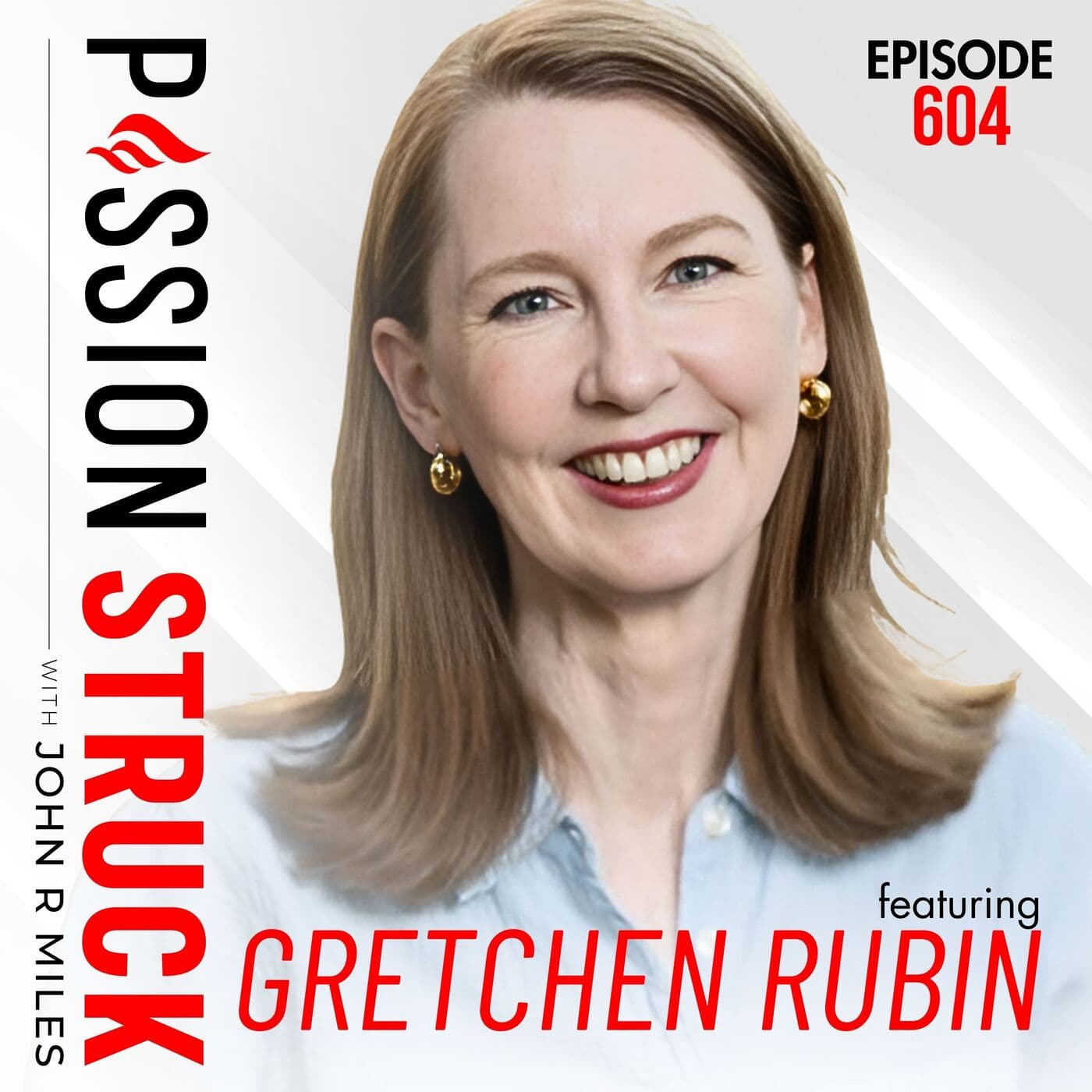
Podcast Notes: Passion Struck with John R. Miles - Episode 604
Episode Overview Title: Gretchen Rubin on the Secrets of Adulthood and Happiness Host: John R. Miles Guest: Gretchen Rubin Recording Location: Oxford Exchange, Tampa, Florida Air Date: [Insert Date]
Episode Description In this live episode, John R. Miles converses with New York Times bestselling author Gretchen Rubin, exploring the insights from her latest book, *Secrets of Adulthood*. The discussion focuses on the lessons that can enhance personal growth, relationships, and overall happiness.
Key Takeaways
- Power of Aphorisms: Rubin emphasizes the effectiveness of aphorisms as concise tools for understanding complex human truths.
- Intentional Living: The importance of shifting from a passive "drift" to a more conscious, intentional approach to life choices.
- Impact of COVID: Rubin shares personal experiences regarding the loss of senses during COVID-19 and how it heightened her appreciation for sensory experiences.
- Friendship Dynamics: Rubin discusses the challenges of maintaining meaningful friendships in adulthood and suggests strategies for building them.
- Paradoxes of Life: The conversation touches on embracing paradoxes in relationships and personal development, such as balancing self-acceptance with ambition.
Detailed Discussion Points
Importance of Aphorisms
- Rubin views aphorisms as powerful literary tools that can distill complex ideas into memorable phrases.
- She explains how these can serve as reminders for personal growth and self-awareness.
Transition to Intentional Living
- Discusses the difference between drifting through life and making intentional choices.
- Rubin reflects on her past experiences and lessons learned to guide her daughters through life.
Personal Experiences with Sensory Loss
- Rubin recounts losing her sense of taste and smell due to COVID-19 and the profound realization of how much we take our senses for granted.
Building Meaningful Friendships
- Acknowledges the difficulty of forming and maintaining adult friendships.
- Recommends joining groups as a way to foster connections and suggests that interconnected friendships are more fulfilling.
Embracing Life's Paradoxes
- Explores the idea that love can simultaneously affirm someone's worth while also encouraging improvement.
- Highlights that the opposite of a truth can also be true, suggesting a nuanced understanding of life experiences.
Quotes from the Episode
- Aphorisms: "A single sentence can provide all the insight we need."
- On Choices: "Whenever we choose one path, we must forgo others."
- On Regret: "You will feel regret either way - it’s part of making choices."
- On Friendship: "More friends, more safety."
Audience Interaction
- The audience had opportunities to ask questions, which led to discussions on topics like the challenges of podcasting, creative processes, and personal anecdotes relating to Rubin's work.
Closing Thoughts Rubin’s insights remind listeners that adulthood is not merely a destination but a journey of continual growth and self-reflection. Her work encourages embracing the complexities of life and finding wisdom in everyday experiences.
Follow-Up For more insights, visit Gretchen Rubin’s website at [gretchenrubin.com](https://gretchenrubin.com/) and connect with John R. Miles on social media.
Next Episode Preview Stay tuned for the next episode featuring Elizabeth Weingarten, discussing the importance of questioning and navigating uncertainty in pursuit of a meaningful life.
---
Note
For full episode transcripts and additional resources, visit [Passion Struck](https://passionstruck.com/gretchen-rubin-on-the-secrets-of-adulthood/).
Written by AI. May contain mistakes. Listen to the episode to check what was said.
Transcript
Automatic transcript. May contain errors.0:00Coming up next on PassionStruck.
0:30actually get published. This was a hooky book. The Four Tendencies was a hooky book. Outer Order Intercom was a hooky book. I wrote a book called My Color Pilgrimage because I went through this period of being absolutely preoccupied with color. And I've shown it to a few people. I think it's really interesting, I have to say. And they're always like, well, you had fun with that, didn't you? So that would never see the light of day. So I have all kinds of oddball projects, some of which like will come to have a life. When I was working on this I had a giant document of aphorisms and some were secrets of adulthood in that they had some kind of useful thing to remind people when they're dealing with relationships or trying to get ourselves to do something or trying to know ourselves better but then I have a lot that I would call just mere observations.
1:21This was me just noticing something. The tulip is an empty flower. What is up with that? The tulip is an empty flower. I find them very unsatisfying. That is a mere observation. And then I also have a bunch of bleak aphorisms. I'm like, nobody wants Gretchen Rubin's bleak aphorisms. I leave those to the side. So these are really the ones that are useful. Welcome to Passion Struck. Hi, I'm your host, John R. Miles. And on the show, we decipher the secrets, tips and guidance of the world's most inspiring people and turn their wisdom into practical advice for you and those around you. Our mission is to help you unlock the power of intentionality so that you can become the best version of yourself.
2:06If you're new to the show, I offer advice and answer listener questions on Fridays. We have long form interviews the rest of the week with guests ranging from astronauts to authors, CEOs, creators, innovators, scientists, military leaders, visionaries, and athletes. Now, let's go out there and become PassionStruck. Welcome to PassionStruck, episode 604. Whether this is your first time tuning in or you've been with us for a while, thank you for joining a movement that's all about defying limits, living with intention, and making what truly matters matter most. Now, let me ask you something. What if the biggest breakthroughs in life aren't about chasing something new, but finally seeing what's been true all along?
2:50What if wisdom isn't reserved for milestones, but built moment by moment in the small choices, the quiet reflections, the everyday acts of courage? And what if the secret to building a better life isn't about becoming someone else, but becoming more deeply yourself? Today, we explore those ideas with one of the world's most beloved guides to happiness, habits, and human nature, Gretchen Rubin. Gretchen is the number one New York Times bestselling author of The Happiness Project, The Four Tendencies, Better Than Before, and Life in Five Senses. And she's back with her newest work, Secrets of Adulthood, a distillation of the hard-won lessons, insights, and truths that help us live more wisely, intentionally, and joyfully.
3:34We recorded this conversation live in front of a vibrant packed house of over 200 people at the beautiful Oxford Exchange in Tampa, Florida. The energy, the laughter, and the moments of reflection made this one of my favorite events yet, and I can't wait for you to experience it. In today's episode, we dive into why aphorisms carry power in an overwhelming world, how self-knowledge is the foundation for lasting happiness, what it really means to accept yourself and expect more from yourself, and how small shifts in perspective can change the course of a life. This conversation also feels special because PassionStruck was recently honored with the Gold Stevie Award for Best Independent Podcast at the 2025 American Business Awards.
4:17It's a reminder that building lives of meaning and mattering truly resonates, and I'm so grateful to share this journey with all of you. Before we dive in, a quick heads up. If you're looking for a space to connect with other purpose-driven high performers, we've just launched The Ignition Room, a private membership community where listeners, readers, and intentional leaders like you can go deeper on the ideas that we explore here. You'll find curated tools, bonus sessions, and behind the scenes access. Check the show notes for more information. And if you're new to PassionStruck, don't miss our episode starter packs, theme playlists on resilience, mindset, leadership, and emotional mastery at passionstruck.com slash starter packs or directly on Spotify.
4:57And this past week, we had some unforgettable conversations. Last Tuesday, I spoke with meditation master Yonge Mingo Rinpoche about why joy is already within you, even in suffering. On Thursday, we explored how sponsorship, not just mentorship, shapes careers with Dr. Rosalind Chow. And on Friday, I sat down with Olympic silver medalist Tom Scharr on failing 999 times and still winning. Now, let's jump into this deeply personal and thought-provoking conversation with the one and only Gretchen Rubin, recorded live at Oxford Exchange in Tampa. Thank you for choosing PassionStruck and choosing me to be your host and guide on your journey to creating an intentional life.
5:37Now, let that journey begin.
5:48We're Mike. Jeff. Jeff. There. Hello. So we're doing two things at once. We're taping an episode of Passion Struck, which you're all going to be part of, and we're doing this interview for you here as well. So I am so excited to do this with my friend Gretchen Rubin. This will be the third time I've interviewed Gretchen. And the first time we were talking about this book, which many of you have read, and then the last time we talked, it was actually about Life in Five Senses. And I was telling her as we were backstage that the first time that we talked about Life in Five Senses, it was coming right off of COVID.
6:27And I had, like many people who had gotten COVID, this period where all of a sudden I completely lost two of my senses, taste and smell. And I ended up losing them for a really long time. How many people experienced that? Wow. A lot of people. So I lost it for almost seven weeks, and there was a point in time when I was really worried, is it ever going to even come back? But what's happened to me since then is anytime I get a common cold now, I am losing taste and smell again. So I just went through this about two weeks ago, and I was telling her it reminded me of the book, because when you lose two of your senses or any one of your senses, you don't realize how much it impacts you.
7:14So maybe you can just tell the story of you went to the dentist and that kind of launched this whole book. Yeah, I went to the eye doctor, actually. I got pink eye. And I was getting checked out. And as I walked out of his office, he said to me very casually, well, be sure to come back for your regular checkup, because as you know, you're more at risk for losing your vision. And I was like, what? I did not know that. What are you talking about? And he said, oh yeah, you're so severely nearsighted. You are at risk of having a detached retina. And that can affect your vision. And in fact, I have a friend who lost a significant amount of his vision because of a detached retina.
7:57So that felt like a very real thing to me. So I walk out, and I live in New York City, so I had walked to the eye doctor. And I'm looking at New York City all around me and thinking, I didn't notice one thing about this on my way over. I'm just up in my head. I don't notice anything. And now that I'm thinking about the possibility of some threat to one of my senses, it's like it's all so precious to me. And on my walk home, it was like a psychedelic experience where I could see everything crystal clear. I could hear every sound. I could smell everything. New York City is quite smelly. and of course I could have a rich meaningful life if I lost one or more of my senses but it just showed me how important they are and how easy it is to take them for granted and so I did that walk home and I realized I feel like I'm on this kind of psychedelic experience but it's just because I'm paying attention and that's why I decided you know what, research is me-search if I want to fix this I'll write a book about it and I'll explore the five senses.
9:01And that was such a joy to write that book. And I have to ask, do you still keep up the habit of going to the museum? I do. I go to the Met every day that I'm in New York City, except Wednesday when it's closed. That's awesome. And the gala is coming up. I always forget and go anyway, but this year I'm like, I'm not going to forget. The first Monday in May. So Gretchen, as I was prepping for this, I happened to be going through some of your older blogs. And one came up from 2018. and you were actually on the process of launching the Four Tendencies. But in it, you had this list of about 25... Secrets of adulthood.
9:39Secrets of adulthood, essentially. And so this is something you've obviously been thinking about for a long time. Why did you think now was the right time to bring this out? Well, a couple strands came together. First of all, my daughters, you know, I'm going into the empty nest phase, which I am rebranding as the open door because I don't like the term emptiness. And so I wanted to write down kind of the lessons that I had learned through time and experience, usually the hard way, to give my daughters, to try to spare them some of the suffering or frustration or, you know, procrastination that I had gone through.
10:15And then also I wanted to write it down for myself because I feel like I keep learning the same lessons over and over and over, like something that can be done at any time is often done at no time. I have to remind myself of that constantly. And so I wanted to write these down and in a collection. But I also have, for a very long time, as you noticed, been very attracted to this form of the aphorism. Now, the word aphorism does not appear on the cover of the book because nobody knows what an aphorism is. And an aphorism is a general observation about human nature that's made in a very succinct way and it's attributed to a particular person.
10:56So this is different from a proverb. So a proverb is something like, a stumble may prevent a fall or here's one of my favorites, sailors fear fire more than water. This is folk wisdom that's floating around we don't attribute it to a particular person. If it's an aphorism it's like Mark Twain said it, Warren Buffet said it, Oscar Wilde said it, and And so these are my secrets of adulthood. So they're aphorisms because they're attributed to me. And then I really wanted to embrace this very ancient literary form where you're really trying to distill big ideas into a very, very short form. You know, it's that whole thing.
11:33It's hard to be concise. It forces you to be very clear in your thinking. And I often would think of that line, you know, I'm sorry I wrote you such a long letter. I didn't have time to write a short one. It takes a long time to write short. and as I was reading the book you say you originally wrote it for your daughters and then as you were doing it you realized it was more for yourself actually yeah exactly yeah and I kind of went through with passion struck kind of the same thing because I was trying to I've I've I live here in Tampa and I've got my my son graduated from USF my daughter's at UF and I wanted to give them kind of the same thing, my life advice.
12:15And as I was writing it, I think any book you end up writing becomes your own personal journey that you put on page. Do you kind of feel the same thing? No, yes. I always, whatever it is that I'm dealing with my own life, I'm always like, okay, and I'll write a book about it, and that's how I'll figure it out, because I can't think if I'm not writing something down. And so that's definitely true for me. But the funny thing about this book is often when I'm writing a book, I have something called a hooky book, which is the book, it's like my busman's holiday. It's the book that I go work on when I'm like sort of like taking a break from what I'm actually supposed to be doing.
12:49Working is one of the most dangerous forms of procrastination, but fortunately for me, sometimes my hooky books actually get published. This was a hooky book. The Four Tendencies was a hooky book. Outer Order Inner Call was a hooky book. I wrote a book called My Color Pilgrimage because I went through this period of being absolutely preoccupied with color and I've shown it to a few people I think it's really interesting I have to say and they're always like well you had fun with that didn't you so that book may never see the light of day so I have all kinds of oddball projects some of which like will come to have a life this when I was working on this I had just a giant document of aphorisms.
13:36And some were secrets of adulthood in that they had some kind of useful thing to remind people when they're dealing with relationships or when we're trying to get ourselves to do something or trying to know ourselves better. But then I had a lot that I would call just mere observations. This was me just noticing something like, the tulip is an empty flower. What is up with that? The tulip is an empty flower. I find them very unsatisfying. That is a mere observation. And then I also have a bunch of bleak aphorisms. I'm like, nobody wants Gretchen Rubin's bleak aphorisms. I'll leave those to the side.
14:16So these are really the ones that are useful. So I just wanted to ask, is anyone in the room an author? Yes, raise your hand. Well, congratulations. Prospective authors included, yes. Well, I always love Gretchen's story in it because you see her up here in front of you and you think she's an overnight success. She sold three and a half million books. But when I go back into your story, it wasn't your first book that hit or the second. No, it was my fourth book. And so it showed me something that I've loved about you from the beginning, which is it was your passion just for writing, which always drove you to create what you were creating.
15:03And it just became the output eventually caught on. But it didn't deter you from putting your ideas and words into the world, so to speak. Yeah, no, that's very true. I would say it almost feels like a compulsion to be writing to me. So, yeah, absolutely. Yeah. Yeah, I know the feeling because I was telling her I just got done my first draft of my latest book. And when I'm writing, it's like the rest of the world melts away, which the podcast team does not like because I get so distracted. Well, in the book, in the intro, you say sometimes a single sentence can provide all the insight we need.
15:40Can you share an example when one of these secrets gave you unexpected clarity? One of my own or somebody else's gave it to me? No, someone else's. Okay. So, and I've told this story many times because it truly did transform my life. So I am a huge fan of Samuel Johnson, Dr. Johnson, and he is an amazing aphorist. I highly recommend him. And I was reading kind of, he was so celebrated that they would even just keep accounts of conversations that he had. So I was reading, it's not even really a book, it's sort of an appendix, but there was an account of a conversation where Dr. Johnson walked into a party and someone asked if he would take a little wine.
16:24And he said, I can't take a little. Moderation is as difficult to me as, abstinence is as difficult to me as temperance would, abstinence is as easy to me as temperance would be difficult. Meaning, I can have none, but I can't have a little bit. Abstinence is as easy to me as temperance would be difficult. See, this is the thing about an aphorism. You have to get it exactly right. But when I read that, it was a huge insight for me, because I had this really overwhelming sweet tooth. And I thought, maybe I'm like Dr. Johnson. maybe I should just have none. Maybe, and I realize I'm an all or nothing person, I can have no Thin Mint cookies very, very easily.
17:14Or I can have a whole sleeve of Thin Mint cookies. I can't have one Thin Mint cookie. I can't have half a dish of ice cream. I can't have one square of fine chocolate, you know? And so, and I realized that's okay. That's just how some people are. And I gave up sugar that was like 13 years ago and it is so and I wouldn't say this is true for everyone not everybody wants to give up sugar it's just something that works really well for me but I hadn't even considered that approach until I read that about from Dr. Johnson talking about himself so that was that was something that like transformed my whole life it just there was just this really boring noise in my head that went away well there are those things that you you end up hearing like For me, how many people here know who Robin Sharma is, the author?
18:00So I happened to be talking to Robin, and as we were talking, we were talking about how many people are on their phones and disconnected and everything else. And he said to me, John, you can either decide to change the world or you can be absorbed in your phone, but you can't do both. And it just got me thinking. What he was really talking about is how you spend your time. And are you spending it on what matters most to you and to the people that you want to influence? So these things really carry weight. Well, and I think that's a great example of, like, this is a proverb, that when the student is ready, the teacher appears.
18:38And I think a lot of times it's like the readiness is all. See, I can go on and on with these forever. And it's like, it probably, you were ready to hear that, you know, and it came to you and then it hit you very hard. Whereas it might not have hit somebody else very hard or even you at a different time. or often metaphors matter. Like with the happiness project, many really well-intentioned people said, do not call it the happiness project because project sounds like homework. Nobody wants to do a project. And I was like, what are you talking about? I love a project. But you know what doesn't resonate with me?
19:12The journey. People will often talk about the journey. And for whatever reason, that isn't a metaphor that resonates with me. And so I think sometimes it is you just, unless you find that thing that strikes a chord when it's in the right words at the right time for you. But it's kind of hard to manufacture that. So my hope is that with Secrets of Adulthood, maybe people will have those kind of sparks of illumination that are really coming from them, that moment of recognition. Because my favorite thing, like you experience, is when somebody says something or you read something and you think, oh my gosh, now I see it clearly.
19:48Or even better, I've always thought the same thing myself. I just never quite put it into words. And you feel that kind of satisfaction that comes from it. And so I think we do have these moments. We definitely do. I actually had a moment with Marshall Goldsmith, if anyone knows who that leadership coach is, where I did a podcast interview with him. And then afterwards, he said, do you have a few minutes? And I said, sure, Marshall, what can I do for you? And he goes, I actually have some coaching for you. So he ends up giving me... Wow, okay. He wrote the... A little radical candor coming your way.
20:26He wrote the book, The Earned Life is his most recent one, but the one he's most famous for is What Got You Here Won't Get You There, which was really important to me in my career, but he was giving me direct feedback on the way that I was asking questions, and it turns out that he was right and he noticed something subtle in the way that I was doing it. What was it?
20:55He said that the way I was doing it is I was opening myself up for the other person to take advantage of me in the way that I was trying to be nice in the way that I was asking it, but I wasn't being forceful enough in my delivery. And he gave me a couple of examples. Oh, interesting. But after it, I went back and looked at a bunch of the past episodes I'd done and how we was interviewing, and he was absolutely right. And some people had actually done it. So that was interesting to see how that worked. Right, that he was able to sort of give you that insight at the right moment. But I never know what I'm going to find on a podcast.
21:35Right, right, right, right. So I want to go through some of my favorite lines that you had in the book. Oh, good, good, good. But this is my favorite part because I love all of them, of course. But what's interesting to me is the ones that strike a chord with other people. And I have to say, I've been very surprised why some of the ones that have sort of floated to the top, they are not the ones that I would have expected. So I'm so interested to hear which ones struck a chord with you. So for those of you who've never heard of the Passion Struck podcast, we do a lot around behavioral science.
22:06So habits are something that are top of mind for me. So you write that habits are the invisible architecture of everyday life. And when I think about this, I remember I was talking to a behavioral scientist named Michelle Seeger at the University of Michigan. And she said, our life is determined by the micro choices that we make. And it really gets down to these tiny habits that you talk about. What habit or shift has most changed you? I think really becoming a sleep zealot, really protecting my sleep and always thinking about sleep. And like, for instance, on this book tour, I did like 10 cities in 10 days, and then I took a break, and then I did another week.
22:54And I just, and usually I'm very affected by jet lag and everything. And now, but I know sleep is so important, so I really took a nap, and it made a huge, huge difference. But I think that just thinking about sleep, one of the, okay, talk about, so at the end of the book, there's some like hacks. I can't resist a hack. And as I was writing the book, I couldn't resist. Most of them were sort of transcended, but then I have to get into the nitty gritty. And I thought, I included them with the draft of the book that I thought my editor would say, like, Gretchen, these do not belong in the book. Take them out.
23:24But I couldn't resist. And then she said, oh, I think they're kind of fun. Let's put them in. So here's a hack if you're trying to guard your sleep. If you have cold feet, I bought an electric foot warmer that has changed my life. because my feet were icy, icy cold, and it would literally keep me up because I was so uncomfortable, and I would wear socks, and I would wear slippers. I mean, I was trying everything, and now this thing really has dramatically, and you know, that is, that's really annoying time, that time when you're trying to fall asleep, and I feel like it's really made a difference.
23:58So that's, talking about micro habits, whereas something like going to the med every day is a very kind of transcendent habit. It's also made a huge difference in my daily life. It's is such a pleasure and such a solace and a respite. But, you know, note to self, live within walking distance of a major museum. I got that done. But I have lived within walking distance of it for a very long time, and I hardly ever went. So it's not like that was enough. So I think Picasso is a great segue to the next question, which is going to be about Picasso. Oh, yeah. So in the book, you have this saying, own your fakes.
24:34Are you painting your own fakes? Are you painting your own fakes? And this was one of my favorite stories that you wrote about. So I was hoping you might be able to share it. Okay. So the aphorism is the question, are you painting your own fakes? So this is a true story where a gallery owner had come into possession of an alleged Picasso. So he goes to Cannes to ask Picasso in his studio, is this your work? And Picasso glances at it and he says, oh, no, that's a fake. And some time goes by and another painting, you know, another artwork emerges and the dealer takes it to Picasso and Picasso says, no, no, no, that's a fake.
25:17And then the dealer says, Bessar Maitre, I myself saw you paint this with my own eyes. And Picasso said, I often paint fakes. And I think this is for people who are creative, which is, are you dialing it in? Are you just following in a rote way? Are you like, is it just coming too easily? I'm always like, if I start typing really fast, I'm like, okay, you're probably dealing with a cliche, repeating yourself, just recycling something from the past. If it's original and fresh, it's hard. I don't want to paint my own face. I love it. That was one of my favorite ones. Yeah, that was a fun one. Yeah, the drop mic quality of afro-seas is part of what makes me fun.
26:01But sometimes I just couldn't resist just a delicious illustration. So I now want to ask you about a contradiction. You write, love says that you're the best. Oh, this is a great story. Okay. You write, love says you're the best, and love says you can do better. Yeah. How do we hold space for both in our relationships? Right? Isn't this one of the great challenges of parenthood? this paradox puzzled me for such a long time because I was thinking I love my daughters with all my heart I think they are perfect just as they are and I pushed and I prod them to improve how can both be true and then I realized both are true love is unconditional and love is demanding absolutely the job yeah often algorithms are in secretive adulthood are expressed in paradox because it captures our attention.
Read the full transcript
26:56There's often a great truth in paradox. In fact, one of the secrets of adulthood is the opposite of a profound truth is also true. So love is unconditional and love is demanding. So this next one kind of goes into work situations and family situations. And you write, we care for many people we don't particularly care for. What's the deeper wisdom here? I think I said it all. Yeah. We care for many people we don't particularly care for. And is that where you need boundaries? Sure. Yeah. Yeah. Okay. You say more friends, more safety. Yes. How can adults build that kind of meaningful friendships that protect us, not just socially, but also emotionally?
27:51Well, I would say as somebody who spends a lot of time exploring happiness, I will say that one of the biggest happiness challenges that I hear over and over is the difficulty of making friendships and sustaining friendships as adults. Partly because it can be hard to make new friends, like let's say you move to a new city, or it can be hard, even if you have friends, to keep up with friends because friends take time and energy. That's the truth of it. and so one of the things that I've written about many many times in different ways is like how might you do that and I like one thing I am a huge fan of is to join or start a group because it takes a lot of I feel like the scheduling of seeing friends is one of the major stumbling blocks and so if it's a group it's like okay if you can't make it this month you'll do it next month a lot of time and then one of my secrets of adulthood which is also research back, which is one of the best ways to make friends is to make friends with the friends of your friends.
28:49And believe me, there is no more elegant way to say that. I have tried. But this is true. It's called triadic closure. And so if you're trying to make friends, the best way to make friends is to make friends with the friends of your friends. And often, if you start a group, whether it's like a bird watching group or a book group or like a neighborhood club or a mahjong group or whatever it is, that will often, that's a good way to make friends. and there's research showing that density matters, that you're better off having a group of people who are interconnected than having a lot of one-off friends.
29:20You get more of a feeling of belonging, and there's greater cohesion. And so instead of chasing down this person, this person, this person, which can be very time-consuming and burdensome, you really are better off trying to form an interconnected group. But one of the things... Now I'm just going on a sidebar on happiness. So I'm writing this book, Project Empty Nest, which is going to be all about what I think is a forced reckoning in adulthood, which is if you're a parent. And one of the very poignant things that I've found is that many people think they have friends. They're like, I've been hanging out with these people for years.
29:59We're in a group text that's like firing all the time. And like, I'm so happy to see them when I show up at the soccer game. I'm like, we're making plans all the time. But they're not friends. they're friendly acquaintances who are connected by something related to their children and when the children go away off to college the soccer group falls apart the performance group falls apart there's nothing holding those friends together you really have to push a friendly acquaintance into the friend zone and there's a lot of ways you can push put somebody into the friend zone but you really have to do it because otherwise it just it just doesn't exist anymore without that centerpiece.
30:38It's like work friends. You can see somebody all the time and have great conversations by the coffee machine, but unless you really push it into being a friend, it tends to vanish if you get a new job. But the poignant part is that people don't know that. They think they have friends. So you really want to know in advance so you can make people those friends, or then you want to grab them from the past, which that's a great way to find friends is from friendly acquaintances in the past, but it's nice to do it prospectively. Now, I'm so glad you covered that. I happened to be interviewing this person, Rick Hansen, Dr.
31:17Rick Hansen, and he told me a similar story. He is part of the leadership on this thing called the Global Compassion. Yes, right, yeah. And they had this thing that they call compassion circles. And it's basically something where the world needs more compassion, and they give you all the tools that if you're in your local community, you can start your own compassion circle. And I liken it kind of to a small church group type of setting, but you would do it around compassion or gratitude or something else. But what I love about what they're doing is they give you motivational videos. They give you the tool set to create the group.
31:57And it's a great way if you want to bring people together to rally around a good cause. Yeah, yeah. One of my favorite was a bunch of guys, and they were like, look, we're not going to read a whole book. Let's be real. And so what they did is they took turns picking famous profiles from The New Yorker, which are like 4 ,000 words long, written by amazing authors about amazing people. You can get them off the internet. You can read them pretty easily. So I think if anything that brings people together is great, and you pick the thing that works for you, that's a terrific way to do it. And then people find their own centerpiece.
32:37So, Gretchen, this was one of my favorite ones, given I've got a creative bent to me. And I think it's so true. To make something beautiful, it's often necessary to add a touch of ugly. I love that you picked that one. That's one of my favorites. That was in Life in Five Senses. Yeah. You find that too. I do. Yeah. Yeah. You know, I absolutely do because I think for me as I'm writing or even if I'm doing a podcast solo episode, sometimes it gets really ugly and then it's in that ugliness that the inspiration hits and I find something beautiful in it. And for instance, my episode tomorrow is on serendipity.
33:19And I started to look at this reciprocal nature between the need to matter and serendipish moments that happen. But it came out of a bad moment for me, an ugly moment that actually I discovered how much these tiny events can make us feel like we matter. Or in this case, it was one where I didn't feel like I mattered at all. ah and so i it just made me remind me of that situation well it's interesting because that's a good example of how with some of these they're both literally true and metaphorically true so it's it's also literally true where like often a fine perfume will have some very bad smelling notes so it's literally true but you're saying it's also metaphorically true and that in a creative sense or in a kind of a more transcendent sense there's a little bit of ugly.
34:11Along the same lines one of my favorites is if you don't like a pair of pants don't pay to get them hemmed. It's like literally true and metaphorically true. A friend of mine said I disagree and that's part of the fun of the secrets of adulthood. You may not agree. I'm like I don't know it's never worked out in my case but yeah. Well, and this is something I found throughout my entire life journey. We often change what's easy to change rather than what needs to change. Yes, yes. Did I include the example? I can't remember if it made it to the book. My book is the example. So a lot of these came from like, like something will happen and I'll like be like, oh, there's a lesson there.
34:50Or I'll be like, like preoccupied with a story and it will just run it over and over in my mind and I'll try to understand the meaning of it. And with that one, And what happened was a friend of mine was, she was looking for a new apartment. So like six months go by and I see her again and I say, oh, how's it going with like looking for a new apartment? And she said, oh, you know, I gave it up because I thought I wanted an outdoor space, but I realized I actually want a husband. We change what's easy to change. It's easier to get a terrace than it is to get a husband.
35:26You're killing me. And I'm a big idea person, so this one really I leaned in on. Pouring out ideas is better for the imagination than doling them out by the teaspoon. Well, you have podcasts, children's books, adult books, speaking. Do you find this as well? I do. Yeah, it really is true. I remember when we were, Elizabeth and my sister Elizabeth, for those of you who, how many people have listened to the podcast? Yeah, yeah. Is it kind of funny to hear my voice coming out of my face? So when Elizabeth and I were getting started, we were telling her parents about it, and our mother said, well, but girls, don't you think you're going to run out of ideas in like six months?
36:14And we were like, no, Mom. We don't think, we're not worried about that. Because the more you create, the more you create. Absolutely. So then I wanted to just ask you a couple questions about the last section, which really gets into tough decisions, pain, and getting it wrong is the ones I picked from. You say whenever we choose one path, we must forgo others. How do we deal with the regret that comes with making those decisions? Well, I think that part of it is realizing that you will feel regret either way. because I think sometimes, at least in my case, I would often fantasize that if I made the perfect choice, then there would be no regret.
36:54That, you know, if I could just get the pros and cons column exactly right, then I could avoid regret. But it's actually comforting to realize that you can have an apple or an orange, but to have an apple means that you cannot have an orange. And that there is regret in that. And I feel like it relieves your feelings to understand that that is just a necessary part of making a fundamental choice, which is that to choose one thing means that you can't choose another. You can't escape it. But I think it's comforting to realize that that's just the source of why that negative emotion is appearing.
37:34So no one in this room really knows my background, but I spent a number of years working for Lowe's in Dell and here locally Catalina Marketing. But I was a senior executive at Lowe's, and I remember I was meeting with our chief operating officer. I had just become the chief data officer, and he said to me, John, you guys are absolutely phenomenal at creating solutions, but by the time we get them in the business, they're absolutely obsolete. So it made me think of this, don't judge the wisdom of a decision by its outcome but that kind of time has a factor i think in those decisions was my point right well that's interesting see that's again this is what's fun about these is that you people will take them in directions that you that i did not anticipate so i hadn't thought about thinking about it in that context for me it's more like sometimes something doesn't work out or you don't get the result that you wanted, but it doesn't mean that your decision-making was bad because we don't control outcomes often.
38:46And just to realize you're not in perfect control of your fate. It's just saying, well, knowing what I knew then, I have grace for myself even though it didn't work out the way I wanted. I think sometimes people are like, well, if it has a bad result, I screwed up not necessarily things don't always go the way we want okay and and this was the the last one I really wanted to dive into the place that hurts isn't always the place that's injured yes metaphorically and literally yeah so this is this came to me because I was having a lot of lower back problems and somebody said to me oh it's probably your hip flexor and I was like well that's why and they said oh well you know it they're not it's not always it doesn't always show up where you would think and i was like well that's very interesting and i think that happens a lot to us in our lives where the the pain flares up in one area but actually if we're really honest with ourselves and you know when we really do a searching look it actually may be coming from a very different place and if what you only do is address where the pain point is you may miss a very different problem yeah so Gretchen I wanted to ask you a couple non-book related just fun questions oh good okay so the first one is you get to be on the late late night show and you're in a car and you're going to do car karaoke who what performer would you want to be in the car with Dolly Parton.
40:26Oh, wow. Why? I just admire Dolly Parton so much. She seems like a truly good person. And she's so in command of herself and her business. And she's such a great artist. Here's a Dolly Parton-related aphorism. You don't have to be good at something to be good at something. Dolly Parton can't raise music. Okay, and this next question... This next question came off of me reading this. A quest is more fun than a jaunt. Yes. So I have a lot of friends who happen to be astronauts. How is that possible? Did you all know that we have an astronaut that lives in St. Pete, Nicole Stott? Yes. Yes, and she runs this great organization doing space art.
41:17So she's one. but one of my best friends from the Naval Academy, Chris Cassidy, was the chief astronaut. So through him, I met all these other astronauts. And when I was at the Academy, my physics teacher, who was my mentor, Wendy Lawrence, became the first female Naval Academy graduate to go into space. And so she got selected. So through them, I've met a bunch of astronauts. Has anybody read Orbital? The novel? Yeah, yeah, yeah. Okay. It's People in Space. People in Space. Well, here's where I'm going with this. So you get selected by NASA to be one of the first astronauts who's going to Mars.
41:59And when you get up there, you can put a design principle in place for humanity once you get there. What would your design... It could be a philosophy. It could be something you don't want people to do. It could be advice you give. What would you give to that planet?
42:22Other than like don't break the oxygen seal. I guess be kind. Be kind. Right? Is that too basic? No, it's a good one. Okay. No, that's a good one. So I wanted to now turn this over to some of you in the audience, and we wanted to allow you the opportunity to give. Yes, but you get a gold star if you ask the first question because nobody likes to ask the first one. So, okay, gold star right over here. Oh, it's a little. I just got to make sure it's on. Okay, hang on. Oh, it's on. Good, good. First one.
43:08Do you have, I know you love kid lit. Do you have a children's book inside of you? What a great question. Do I have a children's book inside me? What I sometimes fantasize about is taking a classic that I love, something like The Secret Garden, and then retelling it in a modern way. I'll sometimes do that in my head when I'm in the dentist's office or something. Maybe one day I would love to do that. I would love to do that. Can I just answer that by just saying how hard it is to write a children's book? I just wrote one. You have a picture book, right? Yeah, I just wrote one, and it's for four - to eight-year-olds.
43:49But to get it down, I mean, I'm used to writing. To be so short, it's hard. I do Toastmasters, and it's kind of like Toastmasters because you're trying to collapse a keynote speech into seven minutes. And that's what I found the analogy to writing a children's book is because we typically write in 2 ,000 to 4 ,000-word chapters, sometimes a little bit longer than that so for me it was trying to get from 3 ,000 words to a thousand down to somewhere under 700 and to do it in a way that you're you're talking to a four-year-old and it is so difficult and what I realized doing it is the pictures have to do so much of the words for you in the story so it was a completely different experience for me but it's actually made my other writing better because I've gotten a lot more succinct in how I'm writing.
44:44Yeah, shorter is always better. Up here?
44:53Have you noticed any patterns in how the different tendencies respond to the secrets of adulthood? Ooh, what an interesting question. So a couple people have said I should write A Secret of Adulthood for the four attendance fees specifically, which is interesting. But I don't think, I don't know that I can, you know, the book only came out on April 1st, so I haven't really been able to tell. But that would be really interesting. Do you have a hypothesis? Well, I feel like upholders would be more open. Because they want the rules and the secrets. Yeah, no, yeah. And the questioners would be like, well, why?
45:37Yes, good point. Like, why should I listen to you? Yes, yes, yes, yes. Yeah. No, that's a very good point. And there's room at the back for people to write their own. So if you're, like, going through and you're like, I completely disagree with her. My secret of adulthood is much better. You can write it in the back. Or, like, a lot of times people realize that they do have secrets of adulthood that they never really kind of thought of that way. But then reading them, they're like, oh, wait, here, I'm going to write my own. or it's also like this is what my grandfather always told me or whatever.
46:02So I think that's true. The questioners are like, why would I listen to her and I disagree anyway? Yeah.
46:10My husband is a questioner, so. Yeah.
46:19By a lot of standards, you're very successful. I have an either or question for you, and you don't have to be forced to pick one or you can elaborate on it. Do you feel that your life has unfolded and you've just been following that? Or do you feel that you have been pushing to unfold your life? Wow. I'm going to steal that one. That's a great way to open a podcast.
46:48I think I started out being very much pushed forward. and then and that's how I went to law school I was just pushed forward by events which I would call drift push forward by events and just led forward by kind of like the next step I would just take the next step and then take the next step you know I ended up clerking on the Supreme Court so it worked out great but but then I think when I became a writer then I was much more pushing my own and then I was much more like I'm in charge I'm like deciding to do things so that's very interesting I think that's I think I started out one way and flipped to the other.
47:24That's a very, very profound question.
47:33How is the process of writing for the empty nest season helped you go through the process of empty nesting? Well that's exactly why I did it, yes. It's so great because it's given me, it's forced me to deal with it with clarity. Because I think a lot of what, this is, okay, so spoiler alert, this is all in the book. I think a lot of what is puzzling to people or makes the transition more difficult is that people just sort of have like a general feeling of an easiness or a transition, and they kind of don't, it's kind of hard to put your finger on it. And by really forcing myself to examine what I was going through, I realized there's actually 12 changes that people go through.
48:20And that what anyone's individual experiences is like, do you experience this in the positive or in the negative? Is it intense or mild? And how does it fit into sort of your kind of general overall personality, circumstance, history? And for me, really getting clear on like, OK, this is good, but this is bad, and I'm feeling this, and really, I think, is helping me understand how to specifically address the things that are unsettling or saddening to me, and then being grateful and taking advantage of the things that are good. So one of the things that I felt and that my husband also felt was that one of the things that we missed is just the sense of life in the house.
49:06There's just less sound. There's less energy. There's just less of a feeling of movement. And we're getting a puppy day after tomorrow. Okay, did you see the puppy before you named her? Because you picked a name. We picked a name. You think that's on the lines? What if she's not attacking? Well, we see pictures. Okay, okay. Look, my daughters picked the name. This is where I let them have their way. But, yeah, we will maintain the flexibility. Like, nothing's written in STEM. But that's part of the reason that we did it. what we're feeling is that it would be fun to have like more life and more energy.
49:49We're also definitely feeling a lot of dread and trepidation about, but it's going to be great. I'm going to trust to the research, trust to life experience. Like we're going to love it. Elizabeth has two dogs. She loves it. But for somebody, but then like, I remember talking to a guy who's like, Oh my gosh, every time I'd look at my son, I'm so full of resentment and anger and jealousy. Like, he's just having so much fun and he's taking all these courses and he's so free and he has no responsibilities. He can just do what he likes. And his wife is like, let's get a puppy. And I'm like, I don't think that's what you need.
50:23I think you need more freedom, more adventure, more spontaneity. That's what you're yearning for, right? And so, yeah, if you know what the problem is you can see a solution better and maybe two people want to if you're married or you know you have a partner maybe you're experiencing different things and so you have to you have to navigate that but just sort of thinking like i'm sad doesn't really help you figure out your way forward um and so so that has been really helpful for me because i feel like because i'm writing it and talking to so many people and seeing all these patterns unfold it's really helped me feel like Like, okay, well, like another thing, so if you follow the podcast, you know that one of the things I'm doing for 25 to 25 is I'm doing watercolor every single day.
51:10I said I'm an all or nothing person, so I'm like, I'm either going to do it never or I'm going to do it every single day. So I'm doing it every single day. And this is because one of the things that I feel is a lack of the atmosphere of growth. The children give us this feeling of growth because they're growing and we're contributing and we're teaching and we're helping and we're participating. And they give us that feeling of growth. And I'm like, I don't want to stall out. I don't want to feel like there's no growth in my life. How can I get a feeling of growth? And I'm like, well, I'm going to learn to do something new and throw myself into a whole new arena.
51:44The funny thing is, I feel like I might actually be getting worse as time goes by. But I'm like, I'm just not even going to think about that. That's not what this is about. I'm just going to do this. I'm just going to trust to the process. It's only April 17th. I've got a long way to go. Because I knew that I needed the atmosphere of growth. But for somebody else, like organization of time is a big, big problem. They might really have to think about, okay, how am I going to think about my time? For me, I experienced no difference. No difference at all. So this is one where I'm like, that's not a problem for me.
52:16I'm moving to the next one in line. Whereas for somebody else, that might be like the major focus of how they deal with the transition. So it's been extraordinarily helpful to me. And it's also absolutely fascinating. If anybody has any good resources, and I'm especially looking for novels that deal with the emptiness, I'm finding almost no novels. Which staggers me, but often it's from novels that I feel like I get the biggest insight. Let me know somewhere on social media. I'm taking suggestions. And I know you've been dying to ask a question. Yeah, yeah, yeah. You mentioned you're a compulsive writer.
52:56Yes. Do you have a ritual that you do every day to start your writing and schedule time within it, or do you just go and flow until you are done for the day? So I get up at 5.30. Well, it's all going to change from the puppy. But what I usually do is I get up at 5.30, and I write from like 5.30 to like 9. And during that time, I take my dog out for a walk. So that's like, you know, a little bit. and because I'm a real morning person and I'm at my freshest early in the morning and that time is not interrupted so I know that if I'm doing like original writing which is my most difficult writing I will do it first thing so I get up I get a cup of coffee and I sit down and write and I will always start with something that's hard so an original writing and then as the day goes on if I have a if I have time I will write again but often what I end up doing is things like podcasts or podcast planning or interviews or like I do a tremendous amount of note-taking which is when I'm looking at a source and I have to transfer the notes in from the source into writing now that's a huge part of my process so that's real work that's not it's not like that's procrastination but it doesn't take the same amount of mental energy so I might do that later in the day but I can I can because I always start with a huge amount of notes and then so I start with a huge amount of notes, then I start to understand a structure, then I organize the notes that I have into a structure, and then I start like figuring out how to make a book out of it.
54:28I never face a blank page, and I think that's really helpful for me. I'm always working off of something. I'm always like, this is the part where I'm writing about blah, blah, blah, blah, blah. So then I'm writing with something in mind and I always write my introductions last. So, um, so I, so that's, that's my process. Yeah. So for me, it's that early morning is the most precious. And, and I'm going to ironically just echo what you said, because I get up at five, I walk, I walk my dog. And then by six, when I'm writing, I'm in front of the computer till nine. Um, Because I'm like you, I'm front loaded with energy.
55:09And I was telling Gretchen before we came in here, as I was writing this most recent book, I was trying to figure out a framework for the book. The structure is always the hardest part. And some of you might have heard of the Heath brothers, Chip and Dan Heath. They and I have the same agent, which is like being from the same hometown. So for me, reaching out to Dan Heath is like reaching out to Gretchen. Would he even talk to me? So I said, I'm having a real struggle trying to put my thoughts around this book, and I keep writing chapters, and it just doesn't feel like it's flowing. And he said, the thing is, is you're trying to put the framework in front of the questions.
55:58And he said, you need to start asking the right questions, and the right questions are going to lead you to the framework. And when I started to do that, it did exactly what he said it was going to do. So it's interesting because to me, sometimes that blank page is the hardest thing. But I do the same thing as you. The editor always wants that introduction so early, but I feel like I don't have it until I get farther into the book. I know. It's very annoying that they do that. I'm like, that doesn't make any sense. But to the point, a book whose format I've always admired is a book called Why Don't Students Like School?
56:33And that's the question. Why don't students like school? And then the chapters are different questions within that. And I thought that was such a brilliant way to structure it. Because it immediately arises your curiosity. And it's a great organizing principle. So I think that's really, really good advice. Follow the questions. My other one is skip the boring parts. You can do that. As a writer, it's so exciting.
57:06So out of all the topics that you cover in the book, what did you find the most complex and difficult to translate into the different countries? Ooh, what a good question. Which was the hardest? Probably all the stuff about love. Love. Probably love. That's a hard one. Yeah. Well, also, you know, in order to write it, I had to, like, think it, you know, and that's hard too. It's hard to have a thought. Yeah, but I think those were the ones, thinking back, those are the ones that I struggled with the most. And we have a couple up here up front. But our microphones don't stretch that far.
57:54you shared on the podcast about how your parents always provide plane tickets for you yes any travel expenses yeah are you doing anything like that with your girls I have two girls I'd love to hear you know what are you doing for your girls yes so by way of background a lot of times people will say oh because my sister and I have this podcast together like oh you two are so close like were there it was there anything that your parents did to help you to stay close and so what my parents did is they would always pay any time when we were young adults for us to go see each other so Elizabeth was taking the train from New York City to New Haven they would pay for that or if we were like gonna go you know so that we we could afford to do it another thing that they did I was just thinking about this today is that they didn't if we made plans together as young adults or as adults, they didn't always insist that they could join us.
58:49Because lately, I've noticed with Eliza and Eleanor, Eleanor was home from college, and Eliza lives in New York City, and they went out to lunch. And I wanted to say, well, I'd like to come to lunch. But I'm like, no, they have to have time together, just them. And they can't feel like they can't tell me or I will want to show up or Jamie and I will want to show up. They have to have an independent relationship. And I think it's like, you know, it's like everything. As you become a parent, you realize, wow, I understand my parents' choices much better. And I realize they were very wise and that they really supported us having our own independent friendship.
59:29Just the two of us, we didn't always have to be the four. And of course, now what we're realizing like much later is, Elizabeth and I have been talking about how much we really like being just the original four of us. And we're making plans to try, no children, no spouses, just to be Elizabeth and me and our parents, because there is something special about going back to that. But I think that making it easy for us to be together really did help that. Yeah.
1:00:02You and Elizabeth had talked about writing a book together at some point. Yes. Is that still percolating? Well, yeah, that was about the Ellucidian mysteries, which is like a subject that continues to preoccupy me to this day. I love the Ellucidian mysteries. And it just didn't work. I don't have that novelistic skill. and Elizabeth is doing like a thousand things. She seems to have seven full-time jobs as far as I can tell. So we did try it and then it just sort of drifted away. And a part of what that was was we really did want to collaborate. And now because of the podcast, we have like that vehicle to collaborate.
1:00:40So I'm not sure that we will pick that up, but maybe someday because we really, we had fun with it. I couldn't play my role because I just sort of don't have that novelist bent. I did all the research into the Elia City of Mysteries, but because it's a mystery, there's a lot that they don't know. But I did find one of my very favorite phrases of all time, which is mystical pigs. Mystical pigs played a very important role in the Elia City of Mysteries. It feels like you need to write a novel just around that.
1:01:18Again, being very successful, I'm just curious. I guess it's either or, but you can add another thing if you want. How much of the work that you do is enjoyable and fun, and what percentage is really hard work that you really got to push yourself? Oh, well, who said this? I forget who said it, but somebody said...
1:01:43Okay. the true test of a vocation is a love of the drudgery involved so I would say I think about 15 % is something where I'm like I really have to push myself to do it like scheduling podcast recordings is something I do not like to do and I cannot seem to delegate it because there's too many factors that by the time I explain the factors it takes just as long to just do it but most of it most of it I kind of do like or I want control of it so badly that I would never give it up for instance this cover was very very hard I do not like covers you know if you I always thought oh that would be so fun but I don't know how to express myself visually when it comes to words.
1:02:36I know how to make words better. I know how to express what I want, but I don't know how to do that visually. And you're working with a team. You don't want to seem impossible to please, and yet it matters tremendously. I mean, how many people here bought a book simply because you liked the cover? I do this constantly. And yet I would never say like, oh, somebody else, you're better off. You just pick the cover because no I have even though I don't enjoy the process because it's so high stakes and I feel like I don't really know I'm not very good at playing my part I still feel like it's really important so I would say I would say 10 to 15 percent which I think is pretty good so we have time for two more questions and I wanted to ask does anyone have a podcasting question it's so fun to have a podcast don't you think oh yes well Well, I don't know if anyone knows the podcaster Jordan Harmiger.
1:03:38Jordan's been doing this almost longer than anyone. I remember when I was thinking of starting five years ago, I asked him, you know, what's your advice, Jordan? He goes, my advice is to not do it. He just wants to develop. Why would he say that? I think what he was saying is you don't realize until you get into it how much work it is to keep it up. And that's where he was going. That's like everything. But I asked him about a year into it, you know, why did you say that to me? He goes, well, if I warned you like that and you still did it. There you go. That's good. It's a good filter. Yes. Right?
1:04:11You have to have the true desire to do it. So my question is for both of you. What would you suggest as kind of first steps to starting a podcast? And for you specifically, Gretchen, keep in mind I'm a rebel. Ah, okay.
1:04:33So if you're a rebel, I would say you want to tap into your identity. Like, do you embrace the identity of a podcast? Well, you know who is an amazing, incredibly consistent podcaster who's the biggest rebel is Chris Guillebeau. Chris Guillebeau has a podcast called Side Hustle School. It is literally every single day. And why is that? Because Chris Guillebeau is like, I'm not going to do it the way everybody else does it. you do your podcast once a week and you think you're so great watch me I'm gonna do it every single day you know so he found his own way to do it but because that was the challenge he was able to do it perfectly consistently because that's his identity is like I'm the person who's gonna blow you away with like my ideas and my chops and so it's the that identity and just remember like I I want it's like I want this platform I want this money I want this way to spread my ideas with people who they'll resonate with.
1:05:33But always to stay in that mode of like, this is what I want. This is what I choose. And so you might say like, well, I choose to do it once a week because I think that I'll have more listeners. And I am the kind of person who wants to become a habit with listeners. Because you don't want to build up that spirit of resistance even in your own mind. Yeah, you're nodding your head. Okay, you know how it is. Yeah, yeah, yeah. It's so hard, and I just want to thank you because I always thought I was broken until you came up with the four tendencies. Oh, good. And I was like, oh, I'm not the only one in the whole world.
1:06:13I resist my own desires. Yes, yes. Yeah, I think that rebel is the most misunderstood tendency of the four. Yeah, I think, yeah. Well, I'm glad it strikes a chord with you. Yeah, so just tap into the identity that you're striving for what would you say well I would say that whether it's one our podcast or Joe Rogan or Jay Shetty or Mel Robbins whoever it is what I learned early on was when I first started I I ended up studying like 600 different podcasts and I listened and I'm one of these people that I want to get it right when I when I get it right especially when you're putting out your own voice in the world but I found that I was trying to emulate them more than I was leaning into my own, you know, vulnerabilities, strengths, whatever you want to call them.
1:07:04And what I realized about six months into it is people don't go to my podcast necessarily because Gretchen's on it, even though Gretchen's a great guest, it could be Michelle Obama, it could be whoever, they end up coming back because they like the way that you ask questions or the way that you handle the podcast. So I think that's a very important learning lesson. And then another one I learned by a gentleman who just made it into the podcast Hall of Fame is he has the longest running podcast about Disney World. I think he's been doing it now for 15 years. And I remember he told me that when he is behind the mic, he never knows who he's going to be talking to.
1:07:48And this could be a last person's wish that they get to go to Disney World and they might have a terminal illness. Or it could be someone's looking for hope in their life. And so when I think of podcasting, I think it's one of the last mediums that we have where you get an opportunity, if you're a host, to talk individually to your audience. And so what I always lean into is you never know how those people are feeling. And maybe you've got that bit of wisdom that that one person needs. And so I've always looked at it as not that I'm trying to touch thousands, but how do I touch one person with the message?
1:08:29And especially when I was doing my solo episodes, how do you not deliver it as something you want, but how do you deliver this as something your audience is going to get benefit from? And so those would be some of my advices. And we have time for one more.
1:08:52I was going to ask, since it's dedicated to your daughters, do they have a favorite aphorism?
1:09:00Well, on the publication day, my older daughter, Eliza, texted me and said, my secret of adulthood is to have you on my team. That was very sweet. But I asked them which ones they think of the most. I will say they do probably feel like innocent bystanders with some of this. But so Eliza said the one that resonated the most with her is you're unique, just like everybody else. And for Eleanor, it was something that can be done at any time is often done in no time. So those are the two that struck a chord the most with them. And then I had one last question for you, Gretchen. And you've been on this book tour.
1:09:42You're nearing the end of it. And today is a fabulous gathering of people. So thank you all for coming because I agree with all of you how great Gretchen's works are and how many people it's impacted. But I always know when I write a book, I want to know, like, I always wanted people who are reading it to use it. How do you hope the people in this room and people who are going to be listening to this use your book? Well, it's funny because people have told me that they use it in a way that I didn't think, which is like they'd sort of pull it out at the dinner table or like at a restaurant and just read a few and then people discuss it.
1:10:24So they're kind of using it like table topics. So I'm like, that's so great. Excellent. My family would not go for that. I'm glad to hear yours. What? So I think that's super fun. So I think there's two ways. I think some people just love this stuff. Like I have books of aphorisms and I'll just sit down and read them from beginning to end. I love them. And so I think some people will do that. And then I think some people will probably, well, actually, there's three ways. Then I think some people will just sort of have it lying around, and they might pick it up and read a few, just sort of as an interstitial thing, just to have something to spark a thought, just like some kind of, you know, like a thought starter at random.
1:11:03And then it is very, it is divided pretty precisely into kind of problems or situations that we face where you might think like, wow, I could really use the secret of adulthood. So you might be facing something and think, oh, well, let me see if something here sparks an idea or response for me. So you might go looking for it. So I did the table of contents hoping that if somebody wanted to use it that way, they could. So I think people might approach it in a lot of different ways. And I think a lot of people too, one of the things I'm hearing from people now is that they do write their own at the back, and then they'll give it to a graduate or something.
1:11:44So it's sort of like, here's Secret of Adulthood, and at the end, our mind that I want you to remember or that we always talk about or our inside jokes or whatever. And so then it becomes almost like a keepsake. Well, and the last thing I want to do was thank the Oxford Exchange. Yes, I came here for lunch today. It's amazing. Thank you. Beautiful store. Thank you for organizing. Enjoy this space. And John, thank you. Amazing book. I can't wait to read the next one. You were telling me I heard all about it. I can't wait to read it. Thank you. Thank you so much for doing this, Gretchen. And I've lived in Tampa for 15 years, and I've lived in St.
1:12:26Pete the whole time. And Gretchen and I were talking, when you see the Oxford Exchange, it's like one of the best jewels that I think the area has. And it reminds me of being in like downtown Philly or New York, but it's such a fantastic venue. So I hope we get to come back and do a lot more of these. Yeah. But thank you so much for coming to Tampa. Oh, thank you. Thank you, everyone.
1:12:57Thank you. Thank you. Thank you so much. And that's a wrap on this insightful, thought-provoking conversation with Gretchen Rubin. From the power of a well-timed affirmism, to the importance of knowing and accepting ourselves, to the realization that adulthood isn't about arriving, but continually evolving. Gretchen's work reminds us that wisdom doesn't always come with age, it comes with awareness. Here are a few key takeaways I invite you to reflect on. Happiness is built not on perfection, but on self-knowledge and intentional growth. A single sentence remembered at the right time can change everything.
1:13:32Self-acceptance and ambition are not opposites, they're partners. And adulthood isn't about mastering life, it's about mastering how we live with life's complexities. If today's conversation resonated with you, I'd be so grateful if you could take a moment to leave a five-star rating and review on Apple or Spotify. Every review helps PassionStruck grow and reach even more people who are ready to ignite their potential and lead intentional lives. For links, highlights, and resources from today's episode with Gretchen, including video highlights, head over to passionstruck.com or watch the full interview on my YouTube channel.
1:14:05If you're interested in bringing this kind of high impact storytelling leadership development to your company or team, visit johnrmiles.com speaking to learn how we can work together. Coming up next on Passion Struck, I'm joined by Elizabeth Weingarten for a deeply moving conversation about how to fall in love with questions and why uncertainty rather than clarity might be the key to unlocking a more meaningful life. So this book is really an exploration of how to fall in love with the questions of our lives, particularly the ones that can be painful, and especially in a culture in which so many of us have become addicted to fast, easy answers.
1:14:41And I'll say too, this book is really about my journey to explore this question through science, history, philosophy, poetry, religion, art. And I wrote it because when I was facing down this really painful uncertainty in my life, I was craving a guide to help me navigate it. Not someone or something to give me the answers, but to help me understand the experience better, to share wisdom from folks who had been there and come through it. Until then, remember, sometimes the greatest wisdom doesn't just come from having all the answers. It comes from learning how to live those questions well. Live boldly, lead with intention, and above all, live life passion struck.
1:15:25Thank you.
From the publisher
In this special live episode of Passion Struck, host John R. Miles welcomes New York Times bestselling author Gretchen Rubin to explore the timeless wisdom captured in her latest work, Secrets of Adulthood. Recorded at the vibrant Oxford Exchange in Tampa, Florida, this conversation dives deep into the small but powerful lessons that can transform the way we live, love, and grow.
Gretchen Rubin, known for her groundbreaking books The Happiness Project and The Four Tendencies, shares why she believes Secrets of Adulthood is the book she has been writing in her mind for decades. Through a series of carefully crafted aphorisms—short, memorable phrases that distill big truths—Rubin captures what she has learned about human nature, habits, relationships, and personal growth. Her goal: to offer readers simple yet profound insights that illuminate the path to a happier, more intentional life.
Click here for the full show notes: https://passionstruck.com/gretchen-rubin-on-the-secrets-of-adulthood/
Join the Ignition Room!
Join the new Passion Struck Community! - The Ignition Room: https://station.page/passionstruck
- Why Gretchen views aphorisms as a powerful literary tool
- How she shifted from "drift" to intentional living
- The surprising impact of losing two senses (taste and smell) after COVID
- The lessons Gretchen learned from Samuel Johnson about abstinence vs moderation
- Her advice on how adults can build and maintain meaningful friendships
- How to embrace paradoxes in love, parenting, and personal development
- The surprising truth about regret and decision-making
- Why Gretchen believes "a quest is more fun than a jaunt"
For more information on Gretchen Rubin: https://gretchenrubin.com/
Sponsors:
- Factor Meals: http://factormeals.com/factormeals50off and use code “FACTOR MEALS 50 OFF”
- Rosetta Stone: Unlock 25 languages for life at “ROSETTASTONE.com/passionstruck.”
- Prolon: Reset your health with 15% off at “ProlonLife.com/passionstruck.”
- Mint Mobile: Cut your wireless bill to 15 bucks a month at “MINT MOBILE dot com slash PASSION.”
- Hims: Start your journey to regrowing hair with Hims. Visit hims.com/PASSIONSTRUCK for your free online visit.
- Quince: Discover luxury at affordable prices with Quince. Enjoy free shipping and 365-day returns at quince.com/PASSION
For more information on advertisers and promo codes, visit Passion Struck Deals.
Speaking Engagements & Workshops
Are you looking to inspire your team, organization, or audience to take intentional action in their lives and careers? I’m available for keynote speaking, workshops, and leadership training on topics such as intentional living, resilience, leadership, and personal growth. Let’s work together to create transformational change. Learn more at johnrmiles.com/speaking.
Episode Starter Packs
With over 500 episodes, it can be overwhelming to know where to start. We’ve curated Episode Starter Packs based on key themes like leadership, mental health, and personal growth, making it easier for you to dive into the topics you care about. Check them out at passionstruck.com/starterpacks.
Catch More of Passion Struck:
- My solo episode on The Mattering Mindset in Love – Choose the Love You Deserve
- Can't miss my episode with Jennifer B. Wallace on the Consequences of Prioritizing Achievements Over Mattering
- My episode with The Art of Listening: How to Make People Feel Like They Matter
- Catch my interview with Laurie Santos on How to Matter in a Busy World
- Listen to my solo episode on Fading into Insignificance: The Impact of Un-Mattering in Our Interconnected Era
If you liked the show, please leave us a review—it only takes a moment and helps us reach more people! Don’t forget to include your Twitter or Instagram handle so we can thank you personally.
How to Connect with John:
- Connect with John on Twitter at @John_RMiles
- Follow him on Instagram at @John_R_Miles
- Subscribe to our main YouTube Channel and to our YouTube Clips Channel
- For more insights and resources, visit John’s website
Want to explore where you stand on the path to becoming Passion Struck? Take our 20-question quiz on Passionstruck.com and find out today!
See Privacy Policy at https://art19.com/privacy and California Privacy Notice at https://art19.com/privacy#do-not-sell-my-info.


