
In short
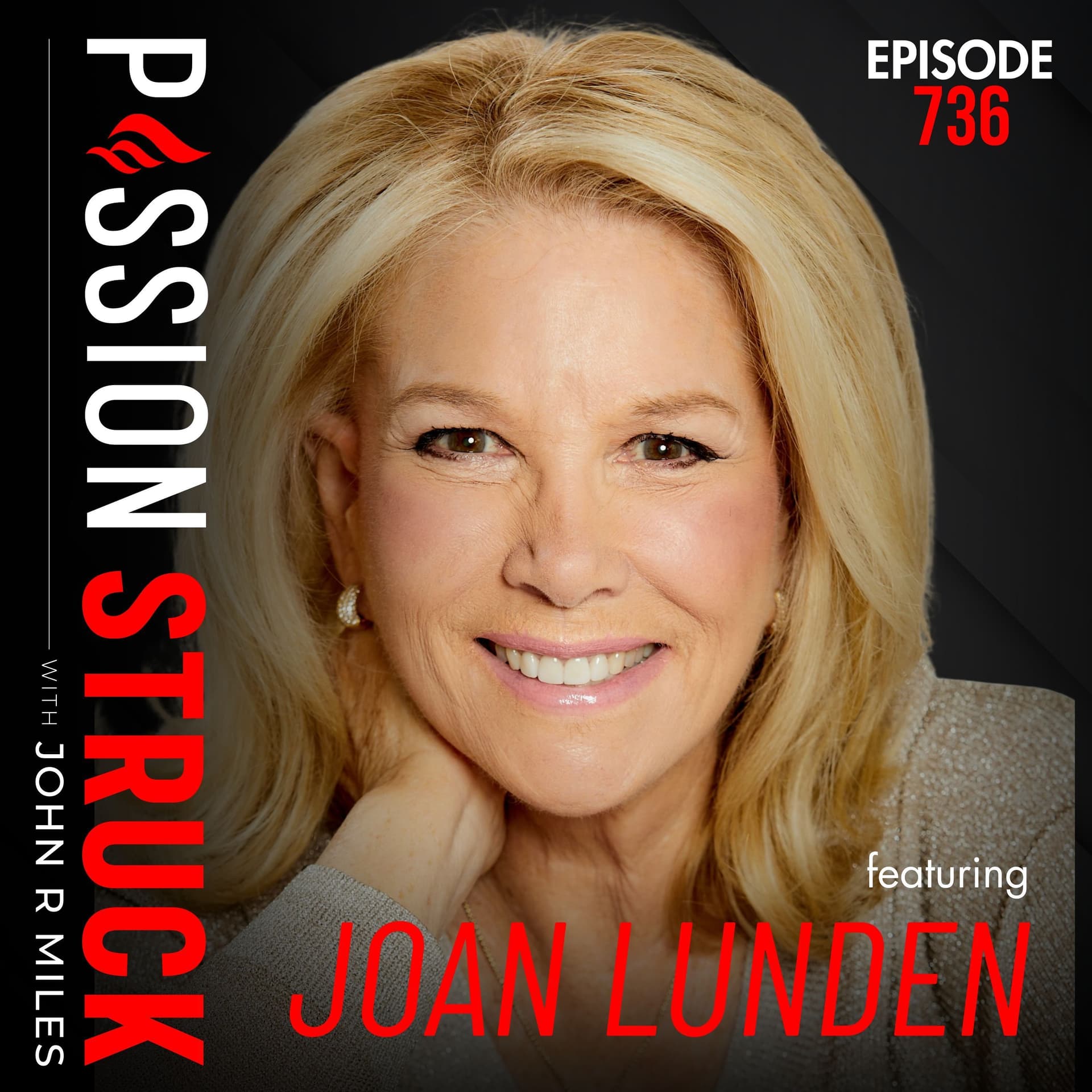
Podcast Summary: Passion Struck with John R. Miles - Episode 736
Episode Title
Joan Lunden
Reinvention, Identity, & Life Beyond the Script
Episode Overview In this episode of *Passion Struck*, host John R. Miles interviews legendary broadcast journalist Joan Lunden, who discusses her new memoir, *JOAN: Life Beyond the Script*. The conversation explores Lunden's career in broadcast journalism, her battle with breast cancer, her advocacy for caregivers, and the philosophy of reinvention at any age.
Key Themes
- Reinvention: The episode emphasizes the idea that life is not static and that individuals can redefine themselves at any point. Lunden shares her personal philosophy that reinvention is essential, not just possible.
- Identity: Lunden reflects on the complexities of identity, particularly how it evolves when significant life changes occur, such as leaving a professional role or facing health challenges.
- Advocacy: Joan discusses her transition from journalist to advocate for women's health, particularly in the context of breast cancer and caregiving for the elderly.
Key Takeaways
- The "Just Say Yes" Philosophy
- Joan's motto: "Whenever anyone asks you to do something, just say yes and then go figure out how to do it."
- This philosophy catalyzed her career, enabling her to embrace opportunities that came her way.
- Breaking Barriers in Broadcast Journalism
- Lunden navigated sexism in the media industry, advocating for working mothers and establishing a 50/50 partnership with her co-host Charlie Gibson on *Good Morning America*.
- She highlights the struggles of being a woman in a male-dominated field and how her actions helped pave the way for future generations.
- Identity After Leaving GMA
- After her 20 years on *Good Morning America*, Lunden faced emotional challenges and the question of "Who am I now?" The transition was difficult, but she emphasizes the importance of rebuilding purpose beyond a defined role.
- Turning Adversity into Advocacy
- Joan's breast cancer diagnosis shifted her perspective, allowing her to become a powerful advocate for women's health and legislative changes regarding breast cancer awareness and reporting.
- She emphasizes the importance of sharing personal struggles to help others and drive change.
- Caregiving Insights
- Lunden provides practical tips for the "sandwich generation" of caregivers, stressing the importance of early preparation for elder care decisions.
- She advocates for open conversations with aging parents about their health and future needs.
Joan Lunden's Journey
- Joan's story is a testament to the power of resilience and adaptability. She has continually reinvented herself through various life stages, proving that it's never too late to start anew.
- The episode serves as an encouragement for listeners to embrace change and remain open to new opportunities, regardless of their current circumstances.
Conclusion Joan Lunden's experiences offer invaluable lessons on the importance of reinvention, the courage to face life's uncertainties, and the power of advocacy. The conversation serves as a reminder that identity evolves, and it's never too late to write a new script for one's life.
Support for the Movement The podcast encourages listeners to engage with the discussions and share their insights, emphasizing the belief that every individual deserves to feel seen, valued, and like they matter.
---
For more insights, you can access the full show notes at [Passion Struck](https://passionstruck.com/say-yes-joan-lunden-interview-life-beyond-script/) and explore Joan Lunden's new memoir, *JOAN: Life Beyond the Script*.
Written by AI. May contain mistakes. Listen to the episode to check what was said.
Chapters
Tap a time to open that second in VORecognition and Community
1:03 to 2:26
John thanks listeners for supporting the show and discusses the theme of mattering.
“This is the show where we explore the art of human flourishing and what it truly means to live like it matters.”
Introduction to Joan Lunden
2:26 to 4:23
John introduces Joan Lunden and sets the stage for a discussion about her life and memoir.
“And at some point, every one of us faces the same question.”
Joan's Journey and Challenges
5:06 to 12:00
Joan shares her experiences in journalism, motherhood, and navigating career challenges.
“I am absolutely honored and thrilled today to welcome Joan London to Passion Struck.”
Opportunities in Adversity
12:00 to 14:01
Joan discusses how unexpected opportunities shaped her career and the importance of being ready.
“And how am I going to figure out how to do it?”
The Power of Saying Yes
14:01 to 19:00
Learn how embracing opportunities can transform your life and career.
“And like, I threw on clothes and ran up the block and walked in and they like got me ready really quickly as much as they could.”
Building Anticipation in Storytelling
19:00 to 22:47
Discover the importance of quotes and chapter titles in memoir writing.
“It grows your self-confidence and your own self-image, your own self-identity, and you start thinking of yourself as someone who can accomplish that.”
Intentional Choices in Life
22:49 to 26:35
Understand the significance of intentional decision-making in personal growth.
“I love what you brought up earlier about saying yes to opportunities.”
Creating Consumer Reports in Journalism
26:35 to 28:00
Explore the unique challenges and creative solutions in journalism.
“Well, we're going to do something that just a few stations around the country are doing.”
The Blue Screen Experience
28:00 to 30:00
Learn how the blue screen technology led to unexpected challenges on air.
“And the camera only sees everything but the blue so that they see your image.”
The Cost of Being Unflappable
30:00 to 32:00
Understand the internal struggles of maintaining composure in broadcasting.
“But I wanted to ask this in a different way.”
Show all 19 chapters
Breaking New Ground in Media
32:00 to 34:30
Discover how Joan Lunden's return to work with her baby changed perceptions in media.
“And I know one of the things that I learned through reading the book is that you were quietly rewriting the rules through the course of your career.”
Navigating Pressures of Motherhood on Air
34:30 to 37:40
Explore the challenges Joan faced while balancing motherhood and her television career.
“Well, actually, ABC has contractually given me permission to take the baby with me wherever I need to go for as long as I'm breastfeeding or throughout the first year.”
Shifts in Power Dynamics on Good Morning America
37:40 to 40:40
Learn about the changes in gender dynamics and interview opportunities after Charlie's arrival.
“But, and here I am 50 years later, John, 50 years later.”
The Evolution of Opportunities in Broadcasting
40:40 to 42:04
Understand how Joan's role evolved with new leadership and the changing media landscape.
“The ratings just continued to go up and they stayed that way for the next over a decade.”
The Evolution of News Broadcasting
42:04 to 44:27
Learn about the significant changes in broadcasting and audience expectations over time.
“And quite honestly, over time, so I grew the confidence in myself.”
Facing Major Career Transitions
44:27 to 48:39
Joan shares her emotional journey of leaving Good Morning America and its impact on her identity.
“where I always felt my job as the interviewer is to serve my audience by interviewing the guest in a way that brings them the most value.”
Advocacy Through Adversity: Joan's Cancer Journey
48:39 to 55:59
Discover how Joan transformed her cancer diagnosis into an advocacy platform for women's health.
“And so I went and I really deliberated, John, a lot as to whether I was going to tell this story in its entirety and how I was going to tell it.”
Navigating Aging and Caregiving Challenges
56:01 to 1:02:29
Joan Lunden discusses the importance of planning for aging and the challenges faced by caregivers.
“and going through the things that all us women go through.”
Reinventing Your Life Script
1:02:30 to 1:03:55
Joan emphasizes that it's never too late to rewrite your life story and remain engaged in new opportunities.
“No, you're never too old to write a new script.”
Transcript
Automatic transcript. May contain errors.0:00Joan Lunden:It's time your hard-earned money works harder for you. With the Wealthfront Cash Account, your uninvested cash can earn up to 3.95 % APY. That's a 0.65 % boost over an already high rate for three months, just for being a new client. Plus, free instant withdrawals to eligible accounts. Start today at Wealthfront.com. 3.3 % base APY via Program Banks as of January 30th, 2026. It is representative variable, requires no minimum, and is earned on funds swept to Program Banks. Boost up to$150 ,000. Cash account offered by Wealthfront Brokerage LLC member FINRA SIPC, not a bank. Coming up next on PassionStruck.
0:32John R. Miles:I think people often hear things that are opportunities and they immediately think, oh, now, now, that would be great for someone. Why not for you? And I don't think that people just let ideas and opportunities, like pass them by, like just float right by them because they don't take that moment to consider, maybe I can do that. You don't have to see as one of the quotes in my book is you don't have to see the whole staircase. You just have to take the first step.
1:01Joan Lunden:Welcome to PassionStruck. I'm your host, John Miles. This is the show where we explore the art of human flourishing and what it truly means to live like it matters. Each week, I sit down with changemakers, creators, scientists, and everyday heroes to decode the human experience and uncover the tools that help us lead with meaning, heal what hurts, and pursue the fullest expression of who we're capable of becoming. Whether you're designing your future, developing as a leader, or seeking deeper alignment in your life, this show is your invitation to grow with purpose and act with intention. Because the secret to a life of deep purpose, connection, and impact is choosing to live like you matter.
1:49Joan Lunden:hey friends and welcome back to episode 736 of passion struck before we dive in i want to take a moment to thank you over the past two weeks passion struck was recognized by interview valet is one of the top podcasts for conversations and also one of the best podcasts for business and mindset. That recognition is because of you, your support, your sharing, and the community we're building together. Over the past month, we've been exploring what it means to matter, why it's essential, how it's formed, and what happens when that feeling is missing. But life doesn't stay fixed. Roles change. Identities shift.
2:31Joan Lunden:And at some point, every one of us faces the same question. Who am I now? This episode marks the beginning of a new series that I'm calling Life Beyond the Script, a series about what happens when the version of life you've been living, the role, the identity, the path, no longer fits, and you're asked to write something new. Because a fulfilling life isn't built once, it's rewritten, often in moments you didn't choose. My guest today is Joan London, journalist, author, and former co-host of Good Morning America. We're discussing her new memoir, which launches today, Joan, Life Beyond the Script, a deeply personal reflection on the transitions that shaped her life from her decades-long career in broadcast journalism to caregiving, advocacy, and reinvention.
3:23Joan Lunden:In this conversation, what stood out most is this, reinvention isn't a single decision. It's a series of moments where you choose to step forward before you feel ready. From stepping into a role she initially doubted she could hold, to leaving behind an identity that defined her for decades, to advocating for caregivers and redefining purpose later in life, Joan's story reflects something we all encounter, the need to evolve. And today we're going to discuss how confidence is built through action, why caregiving becomes one of the most defining roles later in life, and how to stay open to change even when it disrupts your identity.
4:01Joan Lunden:Before we begin the conversation, a quick ask. If this episode resonates with you, share it with someone who may need to hear it. You can also watch the full conversation on YouTube. And if you haven't yet, leaving a rating and review on Apple Podcasts or Spotify would mean a great deal. It helps more people find these conversations. Now, onto our conversation with Joan London. Thank you for choosing PassionStruck and choosing me to be your host and guide on your journey to creating a life that matters. Now, let that journey begin. You know that wellness goal you set at the start of the year? It's not too late to stick with it and make your future self proud, especially with the all-in-one nutrition shake from Cachava.
4:42Joan Lunden:With 25 grams of protein, 6 grams of fiber, greens, adaptogens, and more. No fillers, no nonsense, just the highest quality ingredients. Stick with your wellness goals. Go to cachava.com and use code FITNESS for 15 % off.
4:57John R. Miles:That's K-A-C-H-A-V-A dot com code FITNESS.
5:06Joan Lunden:I am absolutely honored and thrilled today to welcome Joan London to Passion Struck. Joan, it is such an honor to have you here today.
5:14John R. Miles:It's my delight to be here. I love the idea of this show.
5:18Joan Lunden:To me, it's surreal because I remember in the late 70s, early 80s as a kid growing up seeing you on my TV. So it's a full circle moment to have this opportunity to interview you. And I'm even throwing in some questions that my mom and my aunt had that I'll ask later on in the conversation.
5:39John R. Miles:I was growing up on the show. I was 27 when I started Good Morning America. I have all these young kids all the time saying, I grew up with you. And I said, yeah, well, I grew up also on the show.
5:51Joan Lunden:Well, before millions of people welcomed you into their homes every morning, who did you believe you needed to be in order to feel like you mattered?
6:02John R. Miles:Obviously a trusted voice, a trusted journalist. But you also had to be, for that time of morning, likable, perky. and there's that fine line at seven o 'clock in the morning you don't invite your best friend over the kids aren't dressed you haven't brushed your teeth it's a unusual time of day it's not like being on a prime time show and we always had that in mind we understood that and but you're real people used to always say to either charlie gibson or even today my husband what she really like. But you are yourself on a show like that. You have to be. You're there in real time and you're reacting.
6:44John R. Miles:It's not a scripted show. And I think that the dilemma for a woman, particularly back then when I first went to GMA, like in 1977, I first started as a correspondent, became the host 1980. We weren't supposed to be independent, strong women necessarily. That was still at a time. I remember I had to ask my agent to go to the network I just had my first baby. And I said, ask him if I can bring my baby with me because I'm breastfeeding. He said, you can't even say breastfeeding on television, which was true, which is almost hard to believe. But I made him go have that conversation and damn if they didn't say yes.
7:30John R. Miles:And then there was that worrisome, are my colleagues going to take me seriously if I do this? How can I be a mommy and a working independent journalist that people are going to expect that I'm there and I'm prepared and I'm ready and I'm going to ask the questions that needed to be asked? It was just like this tightrope that you had to walk and we didn't have any of the lean in yet I wouldn't even have thought to try to go into that corner meeting with the executives and the producers after the show and they were doing that how did we do today what do we want to do tomorrow so you didn't have a chance to toot your own horn you didn't really have an opportunity to show up with ideas because frankly, I didn't really have bullets or whatever to walk into that meeting.
8:26John R. Miles:And it took many years. But it's interesting, John. I don't remember how long it was after I started the show, but it wasn't too long after I started the show that Barbara Walters was on one day. And she was on to talk about one of her primetime specials, interviewing some celebrity. And I don't remember what her show was, that I just remember that during the commercial break, she said, computer. And she said, I'm going to give you some advice. Do not try to fight for equality. That time has not come, not just here at the show. That time has not come socially in our country. And if you do it, and women are going to try to goad you into doing it, don't do it.
9:07John R. Miles:Because if you do, you will end up where your predecessors ended up, which is out the door. And in order to get that job, I had to go be interviewed by David Hartman's agent. Now, I don't know if listeners would realize how ludicrous that is, but you don't usually have to go get interviewed by the other talent's agent to get the job. And he said, I need to know, are you willing to be second banana? Like you're going to be Ed McMahon to Johnny Carson, for people who are old enough to have that analogy. And I was like, yeah, absolutely. I understand what the job is, but I know it's one of the best jobs in the world.
9:48John R. Miles:And I'm coming in with eyes open. And as time goes on, but there's an opportunity to grow my role a little, then so be it. I will say that his first question was the startling question. The first question literally when I sat down in the chair across from me was, would I change my hair color? I was like, what? what? I said, may I just ask you, why would you ask that? And he said, well, you look young. I was young. I was like 29, just almost turning 30. And he said, we don't want David, we don't want you to make David look older. That blonde hair might make you look young. And I said, well, look, if the network executives thought that somehow my hair color didn't play well on television, I'd have the conversation with him.
10:38John R. Miles:It just seems a little strange to me. And like, he let it go and go on to the second banana discussion. That was the time. That was what life was like for women in general back in the late 70s. I don't even know women could get credit cards in their own name at that point. And interestingly, when I got that call, John, I was still working at Eyewitness News in New York City as a reporter and weekend anchor. and I got the call from my agent and I was like getting ready on my typewriter. That's a dead giveaway. My agent called and said, I just got a call from ABC. They're offering you the job as co-hosts to Good Morning America.
11:20John R. Miles:I was like, oh my God, that's great. I'll call you after the show. I've got like 20 minutes to get ready. 20 minutes later, the phone rang again. I thought it was him calling back and it was my gynecologist saying, congratulations, you're pregnant with your first child. It was like, wonderful. Like the light dilemma. What are you going to do with this one, London? And I could have folded. That probably would have been the expected thing. Oh man, bad timing. But it just, to be very honest, never even occurred to me to do that. It just, okay, how am I going to figure this out? I can't, I can't say no.
11:58John R. Miles:And I'm obviously going to have this baby. And how am I going to figure out how to do it? And you just have to come up with a plan.
12:04Joan Lunden:Joan, as I've been studying your life and preparing for this interview, and of course, reading your brand new autobiography, Joan, Life Beyond the Script, one of the things that really hit me is you have these life sayings that seems to have guided your whole career. And the moment before you got this role on Good Morning America, I understand And laryngitis of some other host might have prompted a decision that you had to make to get out of bed that actually led down the path for you actually getting the opportunity. And I was hoping you'd like to talk about that.
12:46John R. Miles:I think I use the analogy in the book of Shirley MacLaine, who is, I forget the Broadway show, she was in that, and she was like an understudy, but she was ready to walk into the starring role. She knew it by heart. And the star broke her leg and boom, she walked in that night. And there was a big television producer in the audience and she became a movie star. It's called being ready in the wings and being open to opportunity. These are the things you got, you got to be open to opportunity. opportunity. And I got a call one morning, I don't know, it was like maybe 6.30 or so in the morning. And when the phone rang, I looked at my clock like, I'm not due in today to the newsroom until eight o 'clock.
13:32John R. Miles:But it was the control room calling me from Good Morning America. Data Hartman had called in sick. And the co-host at the time was Sandy Hill. And she had come in thinking she could pull it off. And she just had such bad laryngitis that the producer said, this is just not going to work. Called to London, she was right across the street. And I did, I lived like right down the block. And he said, I need you to come in today. And I said, to do what on the show? To do the whole show. Okay. And like, I threw on clothes and ran up the block and walked in and they like got me ready really quickly as much as they could.
14:14John R. Miles:And I went on and hosted the whole show. And by saying yes to that opportunity, that gave, that was the first time those network producers had an opportunity to see me as a potential host and that I had walked in and pretty seamlessly pulled off the whole, anchoring the whole show that day. And that catapult to my career. So I have this motto. I'm sure you know it by now, but you've read my book. Whenever anyone asks you to do something, just say yes, and then go figure out how to do it. I have people all the time say to me, oh my God, you've just done so many things in your life. It's just unbelievable, especially with all my behind closed doors shows, jumping out of planes and flying in F-16s and F-18s and landing on aircraft carriers.
15:07John R. Miles:And do they think I was completely like not nervous when I was driving out of my driveway with yet another uniform packed in my suitcase going till I have to go through the training to do this, to be allowed to do something like this? No, I was nervous. Again, it's because I just have continually said yes, that has afforded me this truly unbelievable life. The hardest part of doing a legacy memoir in my case was how are you going to boil this down to 100 ,000 words? It was like a task. I hear you.
15:48Joan Lunden:Well, I wanted to give the listeners just a little bit more feel for what was going on when you entered the studio that day, when you got out of bed and ran down there. Because as I understand it, you had 90 seconds, maybe two minutes at the most after they put the makeup and stuff on you. And you have to interview someone off of Broadway. And so you were given this whole outline to interview this famous person that you literally had 60 seconds to prepare for. And the person you're interviewing, I understood, was put off because here this person comes in off the street to interview them. Who's Jean?
16:28Joan Lunden:Yes. So I was hoping maybe you could take us there because I think sometimes people don't, they see the aftermath, but they don't see the moments that you have to walk into. And that's, to me, what defines our lives.
16:41John R. Miles:I don't think I expected her reaction. No, I definitely did not anticipate it, but I understand it. She knew that Dana Varman started on stage and Broadway shows. That's how he started his career in like L.O. Dolly, the waiter that came in, whatever. And she had anticipated this wonderful interview with someone who really understood the stage and Broadway. And she was doing a show called Runaways with all these kids. And the kids were all there and they were all around her. And she's waiting for Denny to like I walk over and sit down across from her. and I think she was a little dumbfounded and I do the intro to camera and I give her the first question and she really wasn't very nice to me.
17:28She was pretty icy and I get it, but I'll admit
17:33John R. Miles:I didn't really anticipate that in the aftermath. I understand it, but it was just one more little thing on that morning that throw me something else to make it just a little bit harder to do this, to walk in and do a two-hour show live by myself that I've never done before. I had done little pieces on the show, but I hadn't done anything like that. You just sometimes have to rise to the occasion. I can't even tell you honestly that going into that morning, I was thinking, ooh, here's my chance. This is, I'm going to show what I can do. I didn't have time to think that. A good thing is I didn't really have enough time to get too nervous.
18:15John R. Miles:That's probably the good thing. It was like, as soon as I walked in the door, they're saying, okay, you're going to start with this interview, then this interview. And I'm like listening because I wasn't prepared for any of those interviews. And I'm like taking it all in a little sponge. You're just saying, okay, I got it, got it, I got it. But it was actually good because you didn't have too much of an opportunity to get nervous. But that was like really, like you're picking out an example of my life from a very early staged. Like when I was young, all the way through saying, you want this opportunity?
18:48John R. Miles:Sure. Yeah. Let's try that on. And then going and doing it. And every time I did one of those, it gives you self-confidence. It grows your self-confidence and your own self-image, your own self-identity, and you start thinking of yourself as someone who can accomplish that. Or the day before, you would have said, I don't know if I could do that. And so those are really important. And those are all the things that I really wanted to convey. I tell my story, but I'm sure you saw that in it, even the usage of quotes at the beginning of each chapter. I'm a person who really loves quotes. When I see them and they impact me, I save them.
19:42John R. Miles:I've got my list of quotes. So when I do a book like this, I can cull through that list. And it was so important to me to find the right quote that would set the scene, that would make you read this quote and say, oh, what's coming in this chapter? That's all part of building the anticipation and then letting those moments unfold and letting them say, oh God, that's how she did that.
20:11Joan Lunden:I find this funny because as I told you before we got on the interview, I just turned in my manuscript and I had gone through painstakingly and attributed quotes at the beginning of every single chapter to do exactly what you're suggesting to set the tone through someone people would recognize in some cases more famous than others. But my editor, the first thing she did is she said, I hate quotes at the top of chapters. So the first thing you need to do is remove all of them.
20:42John R. Miles:Something they, at one point that came to me, now I've done it in every single book. And I don't know if you're, this is my 11th book. And there was no way I was going to do it in this book. but it's gotten more difficult in the publishing industry. And you really have to be able to, my editor just drilled down and made me really painstakingly identify where a quote came from. And I would say it came from somewhere and they would come back and say, actually, no, that person got it from somewhere else. And like the research we had to do into every one of these quotes. And I don't know, 40 chapters, that's 40 quotes.
21:26John R. Miles:Took so much time and effort on our part, but I didn't care. They were too important to me. So I'm sorry you can't use them because I love the usage of the quote at the top of the chapter. The title, and I love chapter titles. To me, chapter titles are, I spend forever on coming up with the right chapter. I love my last chapter title, Surfacing with Intention. which is like something so important in what we're talking about today.
21:55Joan Lunden:Before we continue, I want to pause for a moment. One of the ideas at the center of this series is this. You don't move through life once. You move through it in chapters. And most people rarely take the time to reflect on where they are or who they're becoming next. That's why alongside this series, I'm building something deeper. On the ignitedlife.net, I'm publishing companion reflections and articles for each episode. designed to help you examine your own life. If you want to go deeper into this work, you can visit theignitedlife.net. And I also want to thank our sponsors. Their support makes the show possible.
Read the full transcript
22:31Joan Lunden:And if you've been getting value from PassionStruck, supporting the brands that support us helps keep these conversations going.
22:41Joan Lunden:You're listening to PassionStruck on the PassionStruck Network. Now let's return to the conversation with Joan Lunden. Well, I love it because this whole podcast is about why we need to be intentional with the choices that we make throughout our life. I love what you brought up earlier about saying yes to opportunities. And I'll just share a little bit about my life. I was given this opportunity to join Lowe's Home Improvement as a senior executive. But the task I was being given was to clean up the worst hacking incident that had ever happened in retail. And as I went into this, people have asked me after the fact, how did you even think you could do the job?
23:24And when I was thinking about it, I'm like, nothing like this has ever been done before.
23:30Joan Lunden:No one has ever solved this. So it's not like anyone has a resume to solve it. So I just thought I could figure it out. And then when they asked me to build a 200 ,000 square foot data center, I'd never build anything like that. But if I figured I could get the right people around me who had, and I hired the right engineering firm, then I could get it done. And I think people let themselves think themselves out of opportunities before they even hit the starting line. Is that what you have found in your own experience?
24:04John R. Miles:100%. And I resonated this thought, I think probably in a number of the books I've written, and I keep resonating it again and again, because it needs to be, is that I think people often hear things that are opportunities, and they immediately think, oh, wow, wow, that would be great for someone. Why not for you? And I don't think that people just let ideas and opportunities, like pass them by, like just float right by them, because they don't take that moment to consider, maybe I can do that. And it's, you don't have to see as one of the quotes in my book is you don't have to see the whole staircase.
24:45John R. Miles:You just have to take the first step. And as you start down, when I was in the very beginning, 23 years old, KCRA TV, an affiliate in Sacramento, California, my hometown before I ever got to national. And they brought, and I had just gone in because someone said, you ought to consider this. There were no women on news back then. There was Barton Walters. I was almost like it. And so I called and I got this appointment to go in and I asked him all these questions about what the possibilities were. And after five minutes, he said, well, clearly, you know how to write an interview. You have the look, you have that it factor.
25:26John R. Miles:Let me take you down and audition you. It was like, okay. He put me on this news set that I saw every night on TV and he auditioned me and he said, I think you have something, but I don't have a job. He just walked in here out of the blue, but we're going to start this new early news show and I'll keep you in mind. But then weatherman at the station was back behind the set, saw the audition and followed me out into the parking lot and said, a few stations around the country are hiring weather girls. I'd like to make you Sacramento's first weather girl. and that sounded absolutely totally uninteresting to me but thank god i was a smart little whippersnapper who knew an opportunity when i heard it so i said okay he said okay you'll be here monday morning at 5 a.m it's 5 a.m because he went on the air and did all this morning drive time weather on the radio that was very important to the sacrament of the agricultural valley all these farmers and i guess that was the start of my early morning career right out of the box But then a few months later, the news director called me in and said, remember when I told you we were going to start an early show?
26:35John R. Miles:Well, we're going to do something that just a few stations around the country are doing. They're having consumer reports, and this had never been done before. Do you think you could come up with some consumer reports for us? I was like, okay. So I lived in Sacramento. That's the capital of California. And I got in my car and I drove to the Department of Consumer Affairs and I found their public relations office and said, if I was going to go on television as a consumer reporter, could you give me some news to report? And they said, oh, my God, we're always having recalls of products and things we were always trying to get our information on.
27:13John R. Miles:I got in my car and went to the Department of Agriculture and said, could you give me any information like on a regular basis about food prices or maybe tainted food or things like that? And by the end of the day, I went back into the news director and said, I could do a consumer report every night. Mind you, I was convincing myself of that just as much as I was convincing that news director. And I was making it up, but I was figuring it out, kind of like you figured out how to solve that hacking thing. there was no precedent there was no other consumer reports on television that i could look at and so i just put it together and figured out what does the consumer want to hear what does the viewer want to hear out there and started writing up my reports and okay i'll tell you a funny one and i think it's it's in the book i'm pretty sure it's in the book they used they used something in television called a blue screen where you sit in front of a blue screen or a weatherman stands in front of a blue background or green background.
28:17John R. Miles:It's crazy to watch too. And the camera only sees everything but the blue so that they see your image. And then they roll a piece of tape in the back. Then it was film videotape hadn't been invented at that point. And they run a piece of film of a rainy day. So you see this weatherman seemingly standing outside in the rain. so they sent me out with a camera person and said you're going to do all these agricultural reports take the camera person with you and they'll shoot footage of tomatoes and lettuce and meat and milk and blah blah blah so we did all this footage and so now my first night going on talking about food prices and I'm in front of a blue screen and they're running the footage that's now been put together and I didn't realize it but back in those days it was a very big thing to wear blue eyeshadow okay it was very trendy so no judgment and every time and there was no teleprompter so you went by the script in front of you on the desk and every time I would look down at the script, you would see tomatoes or lettuce or meat, like through my eyes.
29:38John R. Miles:And needless to say, all of the other reporters up in the newsroom who wondered how in the world this girl just walked in here off the street and got this job, didn't exactly welcome me with open arms. And they thought it was the funniest thing in the world and didn't tell me for weeks because they just wanted it to keep happening.
29:58Joan Lunden:So throughout the book, and you've been giving us some great examples, you describe moments where being unflappable became part of the job. But I wanted to ask this in a different way. What do you think being unflappable cost you internally?
30:16John R. Miles:There are plenty of times I can think of a million different kind of things that you needed to remain unflappable, even though people were writing things about you in tabloids. First of all, back then, we didn't have social media. They would write letters. But they'd still write letters. I don't like the dress she wore. Or the big one for women. Hasn't she gained a little too much weight? That was the big one. You were supposed to be thin if you were on TV. And by the way, I had three babies. One, two, and Good Morning America. And they would write things in the tabloids. And you can say, I don't read that, but that's not true.
30:55John R. Miles:And if you don't read it, a friend of yours reads it and tells you. And you get dressed down every now and then by the boss who says, I don't like the interview you did yesterday. And no matter what it is, you do have to just, there's a saying that's better to stay even than get even. You couldn't get mad about it. You had to just take it as constructive criticism, whether it was coming from a viewer or it was coming from your producer. and always remain unflappable. And certainly live on television, no matter what happened, you had to. And sometimes there was a lot of chaos going on that we might hear in our earpiece and you had to remain unflappable.
31:37John R. Miles:You were never to let the audience know there was something going on. The next satellite interview is off. We don't have it. We're going to get something else. We're going to put something else in its place. Okay, so I won't go to that. You really have to just remain cool and calm and collective. And I don't think most people ever necessarily think about that while watching live news on television.
32:00Joan Lunden:And I know one of the things that I learned through reading the book is that you were quietly rewriting the rules through the course of your career. And one of the first starts of this is you would bring your daughter to work and it was framed as activism at the time. But little things like that started, I think, to give you permission to expand. But did you feel like that at the time?
32:27John R. Miles:I was not a flag-waving, braw-boarding feminist at all. I was like the mom with the new child that got this big job, and I was just putting one foot in front of the other, trying to figure out how I could do them both at the same time. And I don't think ADC understood. Kudos to them for saying yes to me. Because back then, it wasn't like today's world. There weren't all the contraptions. If you were breastfeeding, you really had to have the baby with you. And while they said yes, and I give them credit, I don't really think that they totally understood what they were saying yes to you or how it would impact the show or the audience or America, society.
33:09And the first day back, they planned this big news conference
33:14John R. Miles:after the show, and we went upstairs. sort of dressing rooms and they put all these chairs out and had a nice little breakfast and they invited all the newspapers, New York Times and the Washington Post and I'm and Newsweek and Ladies Home Journal. It was a packed house and we walked out. David Hartman introduced me, welcomed me to the show. I said a few words. I opened up questions. But right before I came downstairs, the PR people came and grabbed me and said, listen, whatever you do not say anything about the fact that you have a baby upstairs. These are critics. These are television reporters.
33:50John R. Miles:They're going to, they would chew you up and spit you out. They'll never think that you could actually do your job. It's okay. No problem. I didn't plan on mentioning it. So now here I am and I opened up to the questions and I'm supposed to have this best kept secret. And first question, Time Magazine, we hear you are bringing your baby to work. How did you get ABC to let you do that? Like your eyes dart to the back of the room where all these executives are standing up. The PR people that just gave you your marching orders. But I had to answer. You not answer. I answered this question. Second question, Newsweek magazine.
34:30John R. Miles:This show travels the world. How are you going to do that? Again, I had to answer. Well, actually, ABC has contractually given me permission to take the baby with me wherever I need to go for as long as I'm breastfeeding or throughout the first year. Oops, I said breastfeeding. And it clearly became very obvious to everyone within the first five minutes of that press conference that the breaking news story of the day wasn't who, what female was the new co-host of Good Morning America. That was a little story. The breaking news that day was that a major media corporate corporation had given a woman permission to bring a baby to work.
35:17John R. Miles:It was in every paper. And by the way, before the press conference was over, that PR guy went up, scooped my little seven-week-old baby out of the crib. And all of a sudden, I saw him walking in with my little baby Jamie in his arms. And he's like, bring her to you. He walks right up the center aisle through all the different news reporters, puts her in my arms and every camera is flashing. And that was the picture on the cover of everything. And I still don't know if ABC really clearly understood at that point what the reaction was going to be by our audience, which was, I think that I bonded with the audience so much more quickly because they knew I was showing up.
36:01John R. Miles:they know I was prepared for the interviews, but they also know I was dealing with dirty diapers and spit up. So there was like a, like an interlocutor there that just created the fun and our ratings soared. And I'm going to tell you a little something that didn't make the book. And it's because I only found this out six months ago. I'd set my galley off to a couple of producers of GMA and the executive producer at the time I started, I just wanted them to fact check everything and he got back to me he said i'm going to tell you something he said when you started really showing the head of entertainment called me and said you gotta get joan long and off the air i said why he said she's showing nobody wants to see a pregnant woman walking down the street let alone on television in the morning when they get up and he said well that's not really the reaction that we're getting from our audience.
36:57Our audience is absolute, all of them
37:00John R. Miles:are reacting favorably. And he said, I got together with David Parkman and the vice president in charge at the time, and we powwowed and we decided we just can't do this. It would go against what's, our audience would get upset. So they went against him and the guy eventually acquiesced and dropped it. And they let me stay in the air until, I don't know, two weeks, three weeks before delivery. And back then they didn't have all the cute little maternity clothes that they have now. It's like tense. And I said, and he said, we opted not to tell you. I said, oh my God, I'm so glad you did not tell me that back then.
37:37John R. Miles:Because it would have, I think it would have just thrown me for a loop if I knew that. Yeah, it would have destroyed you. Get her out of here. And I'm so glad they didn't tell me. But, and here I am 50 years later, John, 50 years later. And I find out that story.
37:54Joan Lunden:It's unbelievable. Well, I think looking back, everything humanized you and that's, and it drew people in because they saw you, you weren't just a placard. You were a real person, which wasn't what they were accustomed to seeing. So I think it made it appealing. And what I think a lot of listeners might also not realize is during your time with David, which lasted about a decade, if I have it right. He had strict parameters in on how the show would begin, how it would close, who got to interview, how much money he made. I made. Yeah, I understand that there was almost like a 10x difference in pay at one point.
38:36John R. Miles:Yeah, 10 times what I made. Yeah.
38:39Joan Lunden:But then new ownership came in and he played his cards wrong. And Charlie then comes in. And from the get-go, everything changed. But Charlie was a primary reason for that. What did he do differently in his approach?
38:56John R. Miles:Okay, so now your listeners are going to hear one other thing that I just found out at the 50th anniversary this past November. Charlie flew in and Spencer flew in and we all went out to dinner. And Charlie said, I remember when I first came and I knew that I was like a huge cheerleader. I really thought Charlie would be great. I thought he was the right. He was very smart, but he didn't wear it. And he said, the day I came to move into the office, he said, the executives called me in. And they said, all right, you need to establish yourself immediately as the alpha male. You got to make Joan realize that.
39:33John R. Miles:You got to make the audience realize that. And he said, I looked at them and said, I think you're really wrong. That's what it's been for the last 10 years. I don't think that today's audience, That was like 1987. And he said, I don't I can't buy into that. I don't think that's right. He said, and then I came to your office. Now, this is the part that I knew. I never knew about that meeting where they told him to come in and be the alpha male until this past November. So it's not in the book either. The book was already put to bed at that point. And he said, and then I know this part. He walked into my office and he sat down across from me.
40:10John R. Miles:And he said, I want to make a deal with you. Let's do this show 50-50. Let's show America that a man and a woman can come together and do a show as equals. And boy, I shot my hand across the desk and said, I'll take that deal. I knew I liked him, but I liked him even more. And that is how we did the show. And I think the audience felt that. And you usually have a dip in the ratings when one host leaves and they're bringing somebody new on. We did not have a dip in the ratings. The ratings just continued to go up and they stayed that way for the next over a decade.
40:47Joan Lunden:For those of us who've not been behind the scenes on a show like that, when it comes to a guest is coming on the show and it's a desirable guest, what was the difference between when you were working with David and who got assignments on stories versus how that changed with Charlie, and was it a pretty big shift?
41:08John R. Miles:Well, when I was with David, if it was anybody, if it was any kind of a political leader, world leader, senator, major star in any industry, I knew I wouldn't get the interview. I got the woman's stories. I got DIY and do your own. I got cooking spots. I got all the Julia Child spots. I I got parenting and nutrition. And the doctor's daughter here, who always thought I'd be a doctor, I hauled any medical spot that I could possibly get my hands on. And he'd let me have them unless they were really important. And that's just what life was like during those years. And every now and then, when he would be out of town and I would be on with someone else, the producers would slip me an important interview.
41:57John R. Miles:you. And that's where they allowed me to take it, be prepared and shine so that they can have confidence in me. And quite honestly, over time, so I grew the confidence in myself. And by the time Charlie came, we took one of our first trips overseas and we got to the hotel. And back in those days, still, Charlie and I never had a laptop. Today, bankers with laptops in front of them, they're seeing people's comments in real time. We never had a laptop. We couldn't Google anyone that we were about to interview and fact check something that didn't exist. We got packets and packets of research that we had to read.
42:34John R. Miles:And I got to my hotel and I saw, oh my God, I'm interviewing the king and queen of Sweden. Like that, it was astounding to me because that never would have happened before. And so it was really a huge kind of power shift. It was like coming out from behind that barrier as a woman. And it worked. It worked for Good Morning America and ABC. The audience loved it. And I see it on my social media every day, my 99 ,000 BFFs that I don't know, but they're really nice. And I hear it all the time. if I post anything remotely has to do with television or GMA, I have all these people that come in and say, you and Charlie, that pair that we had in our home every morning, we could tell.
43:26John R. Miles:And you told us like it was. Back then, John, it was so different than today. Like today, they expect anchors to give their opinion. And the audience doesn't really like that, quite honestly. They don't want opinion news. Like we just gave the news. And if I had an interview, if I was interviewing two people with opposing views or moderating a debate, our goal was that at the end of that, you wouldn't know what our opinion was, which by the way, was somewhat of a challenge. It wasn't always easy to do, but you didn't chime in and say, oh yeah, you're right. You just didn't do that. And that's a major difference.
44:08John R. Miles:And I'm really glad that I was in that position for the 20 years that I was and not in today's world. And I think that viewers out there, from what I hear on social media, is that they yearn for those days.
44:26Joan Lunden:I always think from a podcast host, I listen to other podcasts, and I find that oftentimes the host is inserting themselves so much into the commentary. where I always felt my job as the interviewer is to serve my audience by interviewing the guest in a way that brings them the most value. And I find so few people really do that anymore. It's more they're trying to win. Yes. Well, I want to talk about when GMA ended. And I'm going to build into this a little bit because as I was thinking about this moment for you, this was such a colossal part of your life and such a platform of your identity.
45:09Joan Lunden:And few people I think could have faced as daunting a transition as you did. But I happened to interview one about six months ago. I'm not sure if you ever interviewed Susan Kilrain on a little bit of background. Susan was the first F-14 pilot in the Navy. And then she became the second. She became She became the second female space shuttle pilot in the program. And after flying her two missions, because she was on the space shuttle journey where they had to come back early because they had an issue and then they sent them back up. She made the decision, because her husband is a retired Vice Admiral Navy SEAL, that they wanted to have a family and allow him to pursue his career.
45:58Joan Lunden:So she had to give up everything. And I just think about giving up everything as an astronaut or giving up everything like you did. I just wanted to ask for you, what do you think disappeared first when this happened? Was it the routine? Was it this platform that you had behind you? Or was it your own sense of mattering?
46:17John R. Miles:It was my own sense of mattering. It's like the world just drops out from underneath of you. I wasn't so sorry to say goodbye to the 330 Winnie Cups for 20 years of that. But it leaves you very vulnerable. And you really can't help but have that thought, then, who am I? Because you've just been so completely enmeshed in this national identity and this self-identity as Joan Lunden, the co-host of Good Morning America, for 20 years. And that's how you're always introduced. That's how everybody thinks of you. and all of a sudden you're not and I was exhausted at that point and truthfully I'd asked ABC like can you put me on an evening show put me on 2020 put me on something else get me off the shift and they didn't really have a place to put me and so they wanted me to sign another three-year contract and I almost reluctantly signed my name to that three-year contract another three years of getting up at 3.30 in the morning every day.
47:26John R. Miles:But I did. And then three months later, I got the call that said, they're going to make a change. You're going to be taking off the show.
47:38And it was a shock.
47:40John R. Miles:I don't know why it should have been a shock. I'd asked for it, but it's still a shock when it wasn't you that did it. When it was them that decides that they're going to replace you with a 30-year-old Joe London look-alike. that nobody knows. And it was really rough. It was really, it was really rough. And I finally, I came out and I told the audience and I called up the executives at ADC and I said, they did this over at the day show. They replaced Jane Pauley with Deborah Norville, the younger girl, and didn't work so well for them. They took a big hit. Like you're about to do the same thing.
48:17John R. Miles:So let me help you help yourself. I'm going to say that I'm leaving because I was asking you to leave anyway. So I want to leave a class act. I've been a class act here for 20 years. I want to leave a class act. And I don't want to leave the woman scorned. That's just, I don't identify with that. And also it'll be good for me as I go up into whatever else I'm going to do. And so I went and I really deliberated, John, a lot as to whether I was going to tell this story in its entirety and how I was going to tell it. And I thought, you know what? Don't write a legacy memoir if you're not going to be 100 % honest.
48:58John R. Miles:And let them understand what you went through, how you decided to make that decision, to leave just saying, I wanted to leave, so I'm going to leave. So there wasn't this big uproar with the audience. There was a big uproar anyway, because I think people see through that whenever someone says, I want to leave with my kids more. okay there was a huge drop off but I wasn't interested in participating in that and I don't regret for a minute taking the course that I did but it's taken 25 years to write a book and say it and I thought it was important to tell it like it was and to let people understand what that was like and then and there was this recorder that said as I left some young little spunky guy that that, gee, how are you going to ever talk this one?
49:49John R. Miles:And like that question lived at the back of my brain year after year, that expectation that I was supposed to pop up on some other major show. And again, I was exhausted and I had opportunities that came to me that I didn't lean into. And I thought that was important to tell people and to realize that there are other ways you can make your mark on this world. And I think it took me this long to be able to look at the whole arc of my life and say, you know what? I became this advocate. I did 10 shows after GMA, but they weren't shows that were on every day that people saw. They were all health shows.
50:29John R. Miles:And I worked on all these campaigns and I made a difference. And that to me at this point, I can now stand back and say, all right, that 25 years was just as meaningful as the 25 years before as this big national broadcaster. And I needed people to hear that so that they could take that to their own life.
50:49Joan Lunden:Joan, one of the things that I wanted to make sure we talked about was the journey you had with facing your battle with cancer. And this is very personal for me because I lost my sister to pancreatic cancer last year. Sorry. And as I was reading your story and remembering some of my conversations with my sister, there was a similar aspect to it. You write candidly about fear and not just of dying, but of disappearing. And Carolyn told me the same thing. For you, how did that shift your definition of courage and what surprised you most about who showed up for you and who you expected to and didn't?
51:39John R. Miles:Well, certainly you learn when you go through something like that, who are the people, friends and family that show up for you. And in the aftermath, they become your besties. They become the people you know that you can count on and that will always have your back and always be there. But I think the main thing that I wanted to convey in telling that story, and of course I told it in its entirety in another book had I known, but I felt it was important to touch on it for a chapter in this book too, because within 24 hours, maybe less, it occurred to me that I always thought I'd be a doctor like my dad.
52:17John R. Miles:My dad was a cancer surgeon back at a time when there wasn't radiation, there wasn't chemo. And I just got this gift. And I know it's hard to imagine somebody thinking of a cancer diagnosis like that. But in this weird way, it was this gift that just dropped in my lap. But I said, I can finally fulfill that legacy. I can finally pick up that torch and run with it. And I'm not going to go through this journey as a victim, as a patient. I'm going to go through this journey as an advocate. And I'm going to learn everything I can about breast cancer and about treatments that, and I'm going to take that by phone into every appointment and I'm going to show them.
53:03John R. Miles:And I got to tell you, John, I've had so countless women come back to me and say, thank you so much for sharing all of that because you took the scary out of it. It's allowed me to, not to mention I went in front of Congress, in front of the FDA to testify in favor of mandatory mammogram reporting. I started becoming involved in the advocacy for women. And we got that legislation passed so that now when a woman goes to get a mammogram, they can find out if they have very dense breast tissue, which masks cancer. It shows up wide on a mammogram, exactly the same as cancer. And now that they know that they need an ancillary test.
53:45John R. Miles:I only learned that by going for an interview. I was sent to do an interview for a health show I was doing. I learned it from Dr. Susan Love, who wrote the breast book, and came back, like marched into my gynecologist, said, write me a script for an ancillary test. And I got a clean 3D mammogram that day of my diagnosis, and then went across the fold and found out in an ultrasound, that ancillary test that I otherwise wouldn't have known to have. And that left that I had cancer, and I said, I have to pass this message along. That's really what lit this fire in me. You have to do something about this.
54:23John R. Miles:You have to make sure that women are told this and you have to go out and spread the word as far and wide as you possibly can. And for the next five years, I didn't, I don't even know how to tell you how many breast cancer luncheons I did and how many times I went back and forth to Washington. I couldn't even get all the female senators to sign on with this legislation. why because everybody knows that the next domino to fall is getting the insurers coming to pay for this ancillary test and they were bigger stronger and more well financed than us little grassroots ladies that were coming in there and saying can I come in and talk to you about the senator and I've never gone to Washington in that capacity I know always gone as a reporter where they open the door and go ahead set up your lights now I was like knocking on the door would you please signed this bill, it was a totally different experience.
55:11John R. Miles:And I loved every minute of it. And it made that journey, it was so hard. I had a year of chemo. I lost my hair, lost my eyebrows, and you lose everything. But at the same time, it was an amazing year. And I wouldn't have passed it up for anything. And I reached a lot of women. I made a difference. And seriously, John, if I'm like a tombstone, all it said was she helped other women in their journey in breast cancer. If it just said that, I'd be okay with it. But I've shared these journeys. I've shared these moments in my life, whether it was dealing with this huge change leading GMA. and I wrote a book about dealing with change or whether it was aging and going through the things that all us women go through.
56:07So I write a book, my last one,
56:09John R. Miles:why did I come into this room? A candid conversation about aging. Like all these things all the way through because I've chosen to share them. That's what's given me the opportunity for self-fulfillment. That's what's given me this opportunity to feel like I made my mark on the world. And maybe that mark is even more important than my incredible career in journalism.
56:38Joan Lunden:Well, I wanted to ask you a follow-on question about that, Mark Joan. My aunt, who is also a breast cancer survivor, is the one who wanted me to ask you this, but her father, my grandfather, had dementia. And it was very hard. And she was closer to it than I was, but it was so difficult to see a person who was so brilliant reduced to the state that he was in. And on this topic of advocacy, she wanted me to ask you, you were an advocate for your mom who had dementia, and you're an advocate on behalf of the elderly and caregivers. She wanted me to ask you, what current challenges do you feel right now are the most important to address for the elderly and caregivers.
57:24John R. Miles:And once again, dealing with my mom, and then I just felt that I needed to help other Americans get prepared. You don't want to make all these decisions and figure out what caregiving to an elderly parent is all about when the crisis occurs. And yet, unfortunately, that's how most of us do it. In today's world, the reason why I went to Washington to advocate for passing an addition to the Family Medical and Leave Act. It was wonderful that Family Medical Leave Act finally gave women and then subsequently men the ability to leave when their child is born and not lose their job at work. But now I went and said, that's not the only time people need to have protection.
58:11John R. Miles:They need to at the end of life. This is like at the beginning of life. At the end of life, we have a nation full of people that are having to leave jobs and dip into their own retirement to take care of aging parents and aging spouse and anybody that's in your circle that you become responsible for advocating for their actual care. And this is going to become a bigger and bigger issue because the population in our country is going through this very rapid change. And by 2030, we're going to have far more people over 65 than we have under 18. And as we have these wonderful advancements that are keeping us all alive, this huge older population is going to live longer and longer.
58:58John R. Miles:And it's starting to get good publicizing so that people start understanding, I'm going to have to maybe live another 20 years when I only thought I was going to live another five or eight years. And I have to plan for this. but I'm going to say to everybody out there right now who has aging parents, and you might not even consider them aging yet. If they're in their 60s, sit them down and take your phone and interview them. Start with them about what life was like when they were young. And then what was life like when you and dad or you and mom met? What was I like as a kid? And they might, if they're older, They won't remember what they had for lunch 15 minutes ago, but they can connect with these memories.
59:43John R. Miles:Now you've got them in this wonderful place that they're talking about their life and they're sharing with you. And this is your opportunity to say, and by the way, as long as we're talking about this, is there a relative that had any kind of a chronic illness that you know that maybe other people don't know? Like an aunt, an uncle, a grandpa, or grandma, did they have like polyps? Did they have colon cancer or breast cancer or anything? that maybe didn't get talked about because in the old days they didn't talk about it, that's your chance to find out that so you know your health risks. And then you can say, all right, we've been talking about the past.
1:00:19John R. Miles:Let's talk about the future. I'm the one. I can be your advocate. I want to know how you see your future if you want to stay here in the house, if you can. And instead of sitting down saying, all right, I'm going to be responsible for you, So tell me all this stuff, which they're not going to want to do because it makes them face of mortality and it's an uncomfortable situation. This is a really cozy familial opportunity to get them to look at their future. So that's something that I always suggest people do. But in the meantime, make sure you are signed onto their bank account. Make sure you have all the important papers you need.
1:00:59John R. Miles:Make sure there's a FIPA release because hospitals and assisted living places can't talk to you and their doctors can't talk to you unless your name is on that KIPAA release and only one name. So don't get the most worrisome person in your family. Don't let the sibling who's the worrywart put her name on that and make sure you have a durable power of attorney for financial and for health and get them to do a living will. A will is for what they're going to leave after they're gone. But what about when their life is in the balance and you don't know whether they want to have a feeding tube, be put on a respirator, donate their organs.
1:01:38John R. Miles:And they're uncomfortable conversations, but you can do it. You can say, mom, dad, my husband and I just saw this. We just listened to this podcast and they told us we should do this. So we just did this with each other. Have you guys done that? There's ways you can get them to open up without making them feel like you're forcing them to face their mortality.
1:02:00Joan Lunden:And I, we just did this with my parents and it is tough because you realize they are getting older, but it was actually them who forced the issue on my brother and I, but I'm glad we did it as painful as it was. Joan, today we've really talked about how for part of your life, you were mastering the script and now you're in this new chapter where that script has grown in ways you probably never expected and would have. So my last question for you is for someone who's listened today, who feels their best chapters behind them, what's your advice for them?
1:02:37John R. Miles:No, you're never too old to write a new script. Ever. And a lot of people do feel that way. And that's why I just felt it was so important to write this book. Not just to say, oh, look at all the things I've done. But to let them realize that I've rewritten my script. I don't know, like a dozen times, at least since I left GMA. And I think when they, and a lot of people, when I'm out places, they'll say, oh, how are you enjoying retirement? Meanwhile, I've got five campaigns I'm working on. My husband always says, just tell them you're enjoying retirement, please. Don't feel compelled to tell them all the things you're still doing.
1:03:15John R. Miles:But it's important for them to understand that I've still been open to opportunity. I'm lucky that having had the platform I've had, a lot of things come my way, and why pass up the opportunity to do all these meaningful things? And it might not be the situation where you have those kinds of opportunities, but that doesn't mean you can't plant a new garden, learn a new hobby, join a group, be a reader. A reader never goes to bed alone. You can always be ensconced in someone else's story, and then join a book club because it's really important as you start to get older that you stay engaged and you keep talking with people.
1:03:52John R. Miles:These are some of the most important aspects of successful aging. And I thought that was important to talk about in writing this book. I'm excited to read light beyond the script.
1:04:06Joan Lunden:Joan, thank you so much for joining us today. This, I'm sure, will be a fan favorite for the PassionStruck listeners. It was such an honor to have you.
1:04:14John R. Miles:Thank you so much.
1:04:16Joan Lunden:That brings us to the end of today's conversation with Joan London. and the beginning of something new. Because this episode introduces a question that many people avoid until life forces it. Who am I now? Joan's story reminds us, identity evolves, confidence follows action, transitions shape who we become, and reinvention remains available at every stage of life. This is what life beyond the script is all about, continuing forward with awareness. If this conversation resonated with you, Share it with someone who may be navigating change. Leave a five-star rating or review on Apple Podcasts or Spotify.
1:04:54Joan Lunden:Explore more at theignitedlife.net. You can also pick up a copy of my new children's book, You Matter Luma, at umatterluma.com. Next, we continue Life Beyond the Script with Leslie John, a behavioral scientist and professor at Harvard Business School. We discuss her new book, Revealing, and what it takes to show up honestly in a world that often rewards performance over authenticity. We explore why people hold back, what it costs to hide parts of ourselves, and how revealing who we are at the right time in the right way can reshape our relationships, our work, and our sense of identity. We want to feel known for who we are and we want to not be so alone.
1:05:35And what's interesting,
1:05:36Joan Lunden:the corporate world or academia, buttoned up academia, I started noticing like in these meetings, nobody is sharing their actual feelings about this. Like we're sharing our thoughts, we're kind of dancing around. And I just realized how pervasive this is, the holding back. I'm not saying we should reveal everything all the time, but I think that most of us stand to benefit tremendously from revealing a little bit more a lot of the time. Until then, remember, you are allowed to evolve. You are allowed to change and you are allowed to write a new chapter. at any point in your life. This is John Miles, and you've been PassionStruck.
1:06:30Joan Lunden:With markets changing and living costs rising, finding a reliable place to grow your money matters now more than ever. In the Wealthfront Cash account, your uninvested cash can earn up to 3.95 % APY. That's a 0.65 % boost over an already high rate for three months just for being a new client. There are no monthly account fees or minimums, and you get free instant withdrawals to eligible accounts 24-7. So you always have access to your money when you need it. And when you're ready to invest, you can transfer your cash to one of Wealthfront's expert-built portfolios in just minutes. More than 1 million people already use Wealthfront to save and build wealth with confidence.
1:07:07Joan Lunden:Get started today at Wealthfront.com. 3.3 % base APY via Program Banks as of January 30, 2026. It is representative variable, requires no minimum, and is earned on funds swept to Program Banks. Instant withdrawal subject to conditions boost up to$150 ,000. Cash account offered by Wealthfront Brokerage LLC member FINRA SIPC, not a bank. Investing involves risk, including possible loss of principal investment advisory services provided by Wealthfront Advisors LLC and SEC Registered Investment Advisor.
From the publisher
What happens when the script you’ve lived for decades suddenly ends, and you’re forced to write a new one?
Today, I am joined by a true pioneer of broadcast journalism and a household name for nearly two decades as the co-host of Good Morning America, Joan Lunden. We are discussing her deeply personal new memoir, JOAN: Life Beyond the Script.
In this conversation, Joan pulls back the curtain on the transitions that defined her—from the high-pressure world of morning television and being a trailblazer for working mothers to her public battle with breast cancer and her current mission as a powerful advocate for the "sandwich generation" of caregivers.
We dive into the "just say yes" philosophy that launched her career and why she believes reinvention isn't just possible at any age—it's essential. Joan reveals why your worth isn't tied to a title or a teleprompter, but to the courage it takes to step into the unknown.
If you are navigating a career change, facing a health challenge, or wondering what your next act looks like, this episode provides the blueprint for writing a life of meaning on your own terms.
Passion Struck is the #1 alternative health and personal growth podcast dedicated to human flourishing and the science of mattering. It is ranked #1 on FeedSpot’s list of the Top Passion Podcasts on the Web and is consistently recognized among the world's top business and mindset podcasts.
Check the full show notes here: https://passionstruck.com/say-yes-joan-lunden-interview-life-beyond-script/
Download a Free Companion Reflection Guide: [Link]
Explore You Matter, Luma: https://youmatterluma.com/
Connect with John (keynotes, books, podcast): https://linktr.ee/John_R_Miles
Get the New Book JOAN: Life Beyond the Script: https://joanlunden.com/books/
In This Episode, You Will Learn
- The "Just Say Yes" Philosophy: How Joan Lunden's motto—"Whenever anyone asks you to do something, just say yes and then go figure out how to do it"—catapulted her career, from impromptu hosting GMA to embracing new opportunities at any age.
- Breaking Barriers on Good Morning America: Bringing her baby to work, navigating sexism in the "second banana" era, and shifting to a true 50/50 partnership with Charlie Gibson—lessons in equality and humanizing television journalism.
- Identity After the Spotlight: The emotional toll of leaving GMA after 20 years, the vulnerability of losing a national platform, and how to rebuild purpose beyond the role that defined you.
- Turning Cancer into Advocacy: How a breast cancer diagnosis became a "gift" to fulfill her father's legacy, fight for dense breast tissue reporting laws, and remove fear for other women.
- Caregiving Wisdom for the Sandwich Generation: Practical tips for preparing early—interviewing aging parents, securing legal tools like durable power of attorney and HIPAA releases, and addressing the emotional and practical challenges of elder care.
Support the Movement
Every human deserves to feel seen, valued, and like they matter. Wear it. Live it. Show it. https://StartMattering.com
Disclaimer
The Passion Struck podcast is for educational and entertainment purposes only. The views and opinions expressed by guests are their own and do not necessarily reflect those of Passion Struck or its affiliates. This podcast is not a substitute for professional advice, diagnosis, or treatment from a licensed physician, therapist, or other qualified professional.
See Privacy Policy at https://art19.com/privacy and California Privacy Notice at https://art19.com/privacy#do-not-sell-my-info.


