
In short
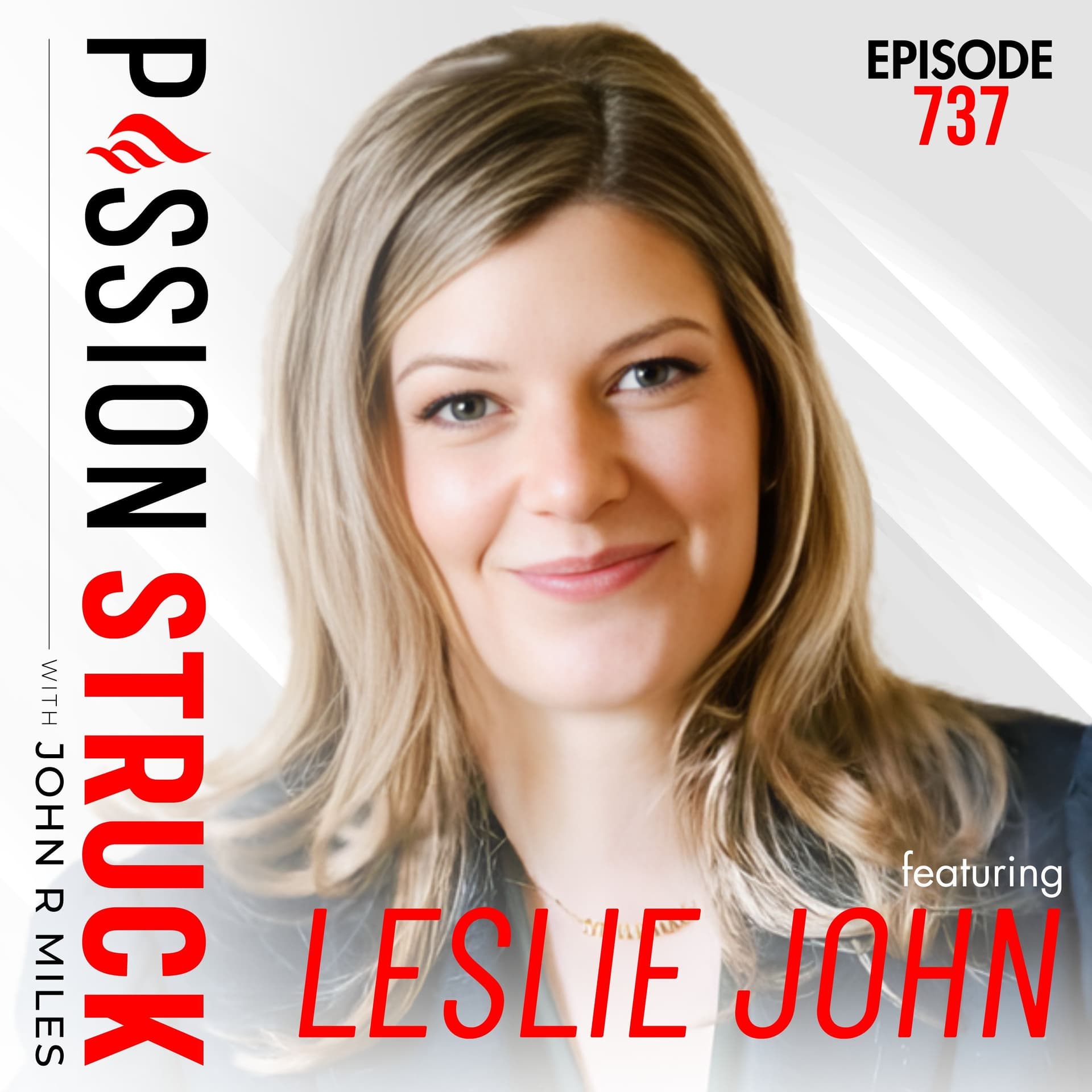
Podcast Episode Summary: The Science of Opening Up: The Hidden Cost of Under Sharing | Dr. Leslie John - EP 737
Podcast Overview Title: Passion Struck with John R. Miles Description: Passion Struck is a podcast dedicated to human flourishing—strengthening the brain, body, and spirit to help listeners live meaningful lives. Host John R. Miles engages in deep conversations with experts and individuals who have impactful stories and lessons.
Episode Summary In episode 737, John R. Miles welcomes Dr. Leslie John, a Harvard Business School professor and author of the book *Revealing: The Science and Power of Opening Up*. The episode explores the psychological aspects of self-disclosure, the implications of oversharing versus undersharing, and the profound effects of vulnerability on human connection.
Key Concepts Discussed
- Disclosure Hangover: The emotional toll felt after revealing personal information, which often leads to misjudgment of social risks.
- Too Little Information (TLI): A term coined by Dr. John to highlight the hidden costs of not sharing enough, which can create feelings of loneliness and disconnect.
- The Importance of Vulnerability: Sharing sensitive information is essential for building trust and rapport in personal and professional relationships.
Main Takeaways
- Cost of Silence: Silence can lead to missed opportunities in relationships and professional environments, contributing to an increase in feelings of loneliness and disconnection.
- Cultural Norms: Cultural influences, particularly regarding gender, shape how individuals express emotions and can lead to under-sharing. Boys, for instance, learn to suppress emotions from a young age.
- Psychological Safety in Leadership: Leaders who model vulnerability and share their feelings create a psychologically safe environment that fosters trust and motivates teams.
Discussion Points
- The Role of Emotion in Communication: Emotions significantly impact interpersonal dynamics. Acknowledging feelings can lead to better communication and improved relationships.
- Coping Mechanisms: Writing down feelings or discussing them with empathetic listeners can significantly enhance psychological well-being and promote healing.
- Real-Life Examples: Dr. John shares anecdotes illustrating the power of vulnerability, including the relationship between John and Grace, which suffered due to a lack of open communication.
Strategies for Effective Disclosure
- Practice Self-Disclosure: Start small by sharing personal thoughts and feelings in safe environments to build comfort and confidence.
- Gauge Context: Understand the appropriateness of disclosure by assessing the setting—what may be TMI in one context may be just right in another.
- Strengthen Relationships: Approach personal and professional relationships with a mindset that encourages open dialogue and emotional sharing.
Conclusion Dr. Leslie John's insights reveal that while the fear of sharing too much is prevalent, the repercussions of not sharing enough can be far more damaging. Embracing vulnerability not only enriches personal relationships but can also enhance professional connections, leading to a more fulfilling life.
Call to Action Listeners are encouraged to reflect on their own tendencies to overshare or undershare, to begin practicing more open communication, and to consider the benefits of revealing their authentic selves.
---
This summary encapsulates the essential discussions and insights from the episode, providing a structured and comprehensive overview for readers interested in personal development and the science of human connection.
Written by AI. May contain mistakes. Listen to the episode to check what was said.
Chapters
Tap a time to open that second in VOThe Importance of Being Known
0:46 to 1:30
Discussing the need for emotional expression in personal and professional settings.
“Whether you're designing your future, developing as a leader, or seeking deeper alignment in your life, this show is your invitation to grow with purpose and act with intention.”
Celebrating New Achievements
1:31 to 2:06
John shares the success of his new children's book and its connection to the episode's themes.
“This past week, I released my new children's book, You Matter, Luma, and the response has been overwhelming.”
Exploring Vulnerability in Relationships
2:07 to 3:08
Introducing the challenges of self-disclosure and the significance of openness.
“In our last episode on Tuesday, I had on legendary Good Morning America host Joan London.”
The Cost of Undersharing
3:09 to 3:48
Examining how undersharing can impact trust and connection in relationships.
“We're often taught to be careful, to hold back, to filter, to avoid saying too much.”
Dr. Leslie John's Insights
5:56 to 7:30
Introducing guest Leslie John and discussing her friendship with Alison Brooks.
“Caraway, non-toxic kitchenware made modern.”
The Narrative of John and Grace
7:31 to 9:40
Exploring a poignant story about vulnerability and connection between two individuals.
“So I thought, given that I knew the two of you work together and I'd heard you talk about her on other podcasts, I thought I would start there.”
Cultural Influences on Expression
9:41 to 12:22
Discussing how cultural norms shape emotional expression from childhood.
“And it was so lovely because I was talking to Grace.”
Regret and the Cost of Silence
12:23 to 14:01
Analyzing how silence and failure to communicate can lead to regrets and missed opportunities.
“They were holding things in, which also meant the logic would follow that they were more physiologically stressed.”
The Cost of Silence and Missed Opportunities
14:01 to 18:12
Explore how silence and unexpressed feelings lead to missed opportunities in various aspects of life.
“I'm getting caught up in their love story, which I love.”
Understanding Self-Disclosure and Connection
18:13 to 18:52
Learn about the importance of self-disclosure in building trust and combating loneliness.
“Before we continue, I want to pause for a moment.”
Show all 25 chapters
Food Aversion Stories and Connection
18:52 to 24:56
Hear humorous food aversion stories that reflect on the costs of holding back in social situations.
“And if you've been getting value from PassionStruck, supporting the brands supports us, helps keep these conversations going.”
The Role of Feelings in Communication
24:57 to 28:00
Understand how expressing feelings can enhance communication and foster psychological safety.
“Because again, this idea that when you say something a little vulnerable, a little edgy, it has these benefits of making people trust you and rapport.”
The Importance of Psychological Safety
28:00 to 29:20
Explore how revealing thoughts affects psychological safety and well-being.
“I mean, it's antithetical to psychological safety, right?”
The Power of Eye Contact in Leadership
29:20 to 30:50
Learn how eye contact can encourage participation and foster inclusion.
“I'm working on my organizational skills.”
Understanding What People Hide
30:50 to 33:00
Discover common secrets people keep and their impact on relationships.
“I'm just trying to think through my own time and eye contact or non-eye contact and how that changes.”
Catalyst Confessions: Courageous Reveals
33:00 to 35:10
Learn about catalyst confessions and their social impacts using Magic Johnson's example.
“are sharing, but the less we talk about it, the more anomalous and sensitive it becomes, right?”
Personal Confessions and Their Importance
35:10 to 39:10
Hear personal stories about the benefits of re-recording interviews and sharing thoughts.
“He said, I need to make a couple of calls.”
The Challenge of Sharing Thoughts
39:10 to 40:50
Examine the reasons why individuals often hesitate to share their feelings.
“But rather we should consider saying these things.”
The Masks We Wear in Daily Life
40:50 to 42:08
Discuss how self-presentation can hinder deep connections with others.
“I think that, you know, the, the, my body image, that, the, this, that specific example, I do think that, you know, there is, we withhold things even from our partners.”
The Masks We Wear and Connection
42:08 to 44:28
Explore how self-presentation affects our ability to connect with others.
“If I have his work summarized appropriately.”
Analyzing Miss Universe's Final Questions
44:28 to 48:26
Learn how the responses of Miss Universe contestants illustrate the concepts of TMI and TLI.
“Like kids, kids is another example of where we often, we feel like we need to be perfect around them and not show them.”
The Healing Power of Revealing
48:26 to 52:14
Understand the psychological benefits of revealing emotions and sense-making.
“It was, you know, what, 20-ish, 20 plus years later.”
Disclosure Courage in Relationships
52:14 to 56:00
Discover the importance of disclosure courage and emotional intimacy in relationships.
“I want to go, Leslie, in the time we have left to the topic of love.”
The Importance of Emotional Intimacy
56:00 to 57:11
Learn what emotional intimacy means and its role in relationships.
“There's a lovely another construct that I like called emotional intimacy.”
Benefits of Being Open and Honest
57:11 to 58:10
Discover the personal and relational advantages of increased revealing.
“I've got a tool in my book to help with that, which is one that you can see everywhere on the internet.”
Transcript
Automatic transcript. May contain errors.0:00Coming up next on PassionStruck.
0:02John R. Miles:We want to feel known for who we are and we want to not be so alone. And what's interesting, the corporate world or academia, buttoned up academia, I started noticing like in these meetings, nobody is sharing their actual feelings about this. Like we're sharing our thoughts, we're kind of dancing around. And I just realized how pervasive this is, the holding back. I'm not saying we should reveal everything all the time, but I think that most of us stand to benefit tremendously from revealing a little bit more a lot of the time.
0:37Dr. Leslie John:Welcome to PassionStruck. I'm your host, John Miles. This is the show where we explore the art of human flourishing and what it truly means to live like it matters. Each week, I sit down with changemakers, creators, scientists, and everyday heroes to decode the human experience and uncover the tools that help us lead with meaning, heal what hurts, and pursue the fullest expression of who we're capable of becoming. Whether you're designing your future, developing as a leader, or seeking deeper alignment in your life, this show is your invitation to grow with purpose and act with intention. Because the secret to a life of deep purpose, connection, and impact is choosing to live like you matter.
1:24Dr. Leslie John:Hey, friends. Welcome back to episode 737 of Passion Struck. Before we dive in, I want to take a moment to thank you. This past week, I released my new children's book, You Matter, Luma, and the response has been overwhelming. I am so grateful for your support, your messages, and the way that you've helped bring this book into the world. It means more than I can fully express. And that moment connects directly to what we've been exploring here over the past month. Because at its core, You Matter Luma is about helping children feel that they matter. Something many adults spend years trying to rediscover.
2:06Dr. Leslie John:And that idea carries forward into this series. In our last episode on Tuesday, I had on legendary Good Morning America host Joan London. and we began Life Beyond the Script, a series about what happens when the version of life you've been living no longer fits and you're asked to write something new. Because a meaningful life isn't built once, it's rewritten over time through experience and through the choices we make about how we show up. But once you begin that process, once you start to evolve, to rethink the question, another challenge emerges. How much of yourself are you actually willing to reveal?
2:48Dr. Leslie John:My guest today is Leslie John, the James E. Burke Professor of Business Administration at Harvard Business School. Leslie's award-winning research has appeared in top academic journals and media outlets, including New York Times, The Wall Street Journal, and The Economist. And her new book, Revealing the Underrated Power of Oversharing, explores attention most people feel but rarely examine. We're often taught to be careful, to hold back, to filter, to avoid saying too much. But what if the greatest cost isn't oversharing, it's undersharing? In today's conversation, what stood out most is this.
3:27Dr. Leslie John:Silence shapes our lives more than we realize. The moments we hold back, what we don't say, what we don't express, what we keep to ourselves, quietly shape our relationships, our opportunities, and our sense of connection. Today, we're going to explore why people fear saying too much, but overlook the cost of saying too little. How self-disclosure builds trust, connection, and psychological safety. The role vulnerability plays in relationships, leadership, and everyday life. Why small moments of openness have outsized impact and how revealing who you are at the right time reshapes how you experience the world.
4:06Dr. Leslie John:Before we get into this conversation, a quick ask. If this episode resonates with you, please share it with a friend, a coworker, or someone you know who may need it. You can also watch the full conversation on our YouTube channels. And if you haven't yet, leaving a rating and review on Apple Podcasts or Spotify would mean a great deal. It helps more people find these conversations. Now, let's begin my conversation with Leslie John. Thank you for choosing PassionStruck and choosing me to be your host and guide on your journey to creating a life that matters. Now, let that journey begin.
4:44Dr. Leslie John:Hey friends, there's something about March that makes you want to reset your space. For me, that started in the kitchen, clearing out what I didn't need and upgrading what I use every single day. That's when I brought in Caraway. What I love is how simple Caraway makes everything. The ceramic coating means food just lifts right off, so I'm using less oil, cleanup takes seconds, and cooking actually feels enjoyable again. But it's not just performance, it's the intentional design. The storage system keeps everything organized, and I've become a lot more mindful about what I bring into my home. And that's why it's so important that Caraway is third-party tested and made with high standards, which just gives me more confidence in what I'm using every day.
5:28Dr. Leslie John:It's one of those upgrades you feel immediately. Caraway's cookware set is a favorite for a reason. It can save you up to$230 versus buying the items individually. Plus, if you visit carawayhome.com slash passionstruck, you can take an additional 10 % off your next purchase. This deal is exclusive for our listeners. So visit carawayhome.com slash passionstruck or use code passionstruck at checkout. Caraway, non-toxic kitchenware made modern.
6:03Dr. Leslie John:I am so excited today to welcome Leslie John to Passion Struck. Leslie, how are you today?
6:10John R. Miles:I'm well, thanks. Thanks for having me.
6:12Dr. Leslie John:I'm going to open today up in kind of an unusual way. I understand that you are good friends with Alison Brooks.
6:19John R. Miles:Oh, yes. She was just texting me, actually. She's getting her hair done. She's reading my book in there. So we share the same stylist and they just texted me a photo of the stylist, Shanine and Allison. She's sitting in the chair reading my book. It was so cool.
6:34Dr. Leslie John:That is awesome. I had Allison. And for the listeners, the episode is Allison Woodbrooks. You'd have to search for it like that. But it was such a fan favorite because she teaches the course around talking. It's like some crazy name, like the fun of talking gooder in life or something like that.
6:55John R. Miles:Yeah, exactly. How to talk gooder in life or something like that. Exactly. I love it. So cheeky.
7:01Dr. Leslie John:Today, we're going to be talking about the science and power of opening up. But I brought Allison up on purpose because when we were doing that interview, we were talking about like this lost art of connection that so many of us have. And she and I were talking through that when you're really paying attention to someone, it's almost like holding a mirror up to yourself because in the other person, through their stories, you also see your own journeys. and it helps you relate to them in more ways. Does that resonate to you?
7:33John R. Miles:That's so well put. Beautiful.
7:35Dr. Leslie John:So I thought, given that I knew the two of you work together and I'd heard you talk about her on other podcasts, I thought I would start there. But today we are talking about your brand new book. And one of the most moving narratives follows John and Grace, whose relationship you cover in the book, and I want you to talk about it, but it collapsed not from conflict, but from withheld vulnerability. And I was hoping you could start there.
8:03John R. Miles:Sure. Yes. So Grace and John had this whirlwind romance when they were in college. He was an exchange student from Australia, and they just really bonded and fell in love quickly. But he lived in Australia, and there's this pivotal moment in their young relationship where she was going to, she cashed in all her savings and she was going to jump on a plane and go be with him for at least the summer. And they'd been planning this. And just before she left for the airport, she kind of had some, she needed reassurance. And so she called him, she said, do you want me to come? And he said, if you want to, or something like that.
8:47John R. Miles:And then she didn't get on the plane because she didn't feel like she didn't feel it, you know, that she felt as in she loved him and wanted to be with him, but she wanted him to express how he felt. And so they eventually broke up and married other people, had their own families. And then years later, something like 20 years later, they, as happenstance had it, they connected. And also as happenstance or fate had it, he had just gotten divorced and she had just gotten divorced. And so 20 years later, they got together and they said all the things that they didn't say when they had in their youth that they had wanted to say, but were too scared to say to the demise of their relationship.
9:34John R. Miles:And then they finally, 20 years later, became reunited and now they're married and John moved to the US and they're together. And I interviewed them for the book. And it was so lovely because I was talking to Grace. And then John was in the other room. And he was like overhearing and making like these loving and snide remarks. And then I'm like, bring them over here. And then we were all talking together. And you could just feel their warmth and their love for each other.
10:00Dr. Leslie John:I love it, Leslie. And you argue that we worry too much about oversharing or TMI and not enough about undersharing or TLI. Too little information.
10:12John R. Miles:I know. We don't even have a word for it. Now we do.
10:15Dr. Leslie John:What do you think we're getting wrong culturally?
10:18John R. Miles:That's such a great question. It's interesting because I think when you say culturally, where my mind goes is the cultural influences on us. And perhaps they're no more apparent than with children, right? I have small children. I have two small boys and there is this cultural imperative almost to like perform invulnerability sometimes, right? If someone shares their feelings in like, I'm thinking of my own work in a senior faculty meeting at HBS. At one time I said, I'm feeling frustrated and people were like, but yet when you do that, it unlocks so much. After I said that people were like, but then also finally we got to the core of what our barrier was.
11:02John R. Miles:And so on the cultural point, especially, I think there's also the gender norms too. I think it's especially problematic for males. I have two young boys. And one of the studies as I was writing the book that really struck me was this study on preschoolers. So three and four-year-olds. And what they did was they video recorded their faces as the children were watching a scary movie. They also recorded the sweat on their skin, on their hands. It's called, of course, the galvanic skin response, which it measures how physiologically stressed out you are. The sweatier your hands, the more stressed you are.
11:41John R. Miles:And what they found is that there was this relationship between letting your expression show on your face and stress. Specifically, when you let it out, you had a very expressive face, you were less stressed out, you were less sweaty. Put differently, the children who held it in, they were more stressed physiologically. And this is like a really hardcore measure, right? It's like the body doesn't lie. And the thing that really struck me here, when you talk about the cultural element is that by the time the children were in kindergarten, so like one, two years later, a gender difference had emerged whereby the little boys were not showing it on their face anymore.
12:23They were holding things in, which also meant the logic would follow that they were more physiologically stressed.
12:30John R. Miles:And we know that comes with all kinds of negative implications. And so that really was one of those studies that jolted me awake on this issue.
12:40Dr. Leslie John:I got the opportunity to interview Dan Pink when his book, The Power of Regret, came out. And we spent a lot of talk about this regret survey that he did globally that he thought wasn't going to amount to much. And before he knew it, he's getting thousands and thousands and thousands of people writing in. And what he found is some of the biggest regrets came from the things we didn't say or do, like the story you mentioned. Why do you think silence is so costly?
13:13John R. Miles:Totally. Yes, that's so spot on. I mean, that jives with so much research on regret that in the long run, the things we end up regretting are the things we didn't do. And so with self-disclosure, that means we regret the things we did not say, what wish we had, over the kind of stupid, regrettable things we say in the moment. And John and Grace are a perfect example of how like, you know, in the book, I talk about what they actually said, but then I interviewed them. So 20 years later, and I know what they actually were feeling and what she meant to say is, do you still love me? I still love you so much.
13:48John R. Miles:And I want to be sure, right? I need assurance and that's human and that's normal. But yet we have to kind of pretend as if like, we don't need assurance. And so I think that, I'm sorry, I'm rambling a little bit. I want to make sure I answer your question. I'm getting caught up in their love story, which I love.
14:05Dr. Leslie John:I was wondering why is our silence or what we didn't do, like these regrets, why is that so costly?
14:13John R. Miles:Yes. It's costly because the things that we don't say that we should say, they, the, the, the negative symptoms of that show up in all kinds of ways, largely in the form of missed opportunities. So John and Grace, not saying how you actually felt means that the love that could have blossomed then did not. It's colleagues that never quite trust you. If you're a leader and you project like so many of us, this uber confident facade, really, your employees are never going to quite trust you because you're not real. And yet the challenge here is that these missed opportunities are very harmful. You're missing out on love.
15:03John R. Miles:You're missing out on wellbeing. You're missing out on influence, but because they're missed opportunities, if you flip the side of it and you say, what about oversharing? Okay. So I say something, I maybe cross the line with some humor or sass, and I immediately get negative social feedback. I see people grimacing. I see people looking a bit aghast. And that we're so exquisitely sensitive to negative social feedback that we massively kind of overweight that. And we live in fear of this cringy situation of the disclosure hangover, right? When you say a little too much, you get negative social feedback.
15:41John R. Miles:And so the next time that you have an opportunity to reveal, you remember that and you feel like staying silent is the safe option. But you're right. The message I really want to share is that silence is not neutral. Silence is costly. Silence has risks. Silence has rewards, just like speaking up. But when we make these decisions of what to reveal and not, we have a really lopsided way of evaluating them. We fixate almost exclusively on the risks of revealing. And that's, of course, very problematic.
16:13Dr. Leslie John:And one of the things that is problematic across society now is the epidemic of loneliness. And I was just doing an interview with Gordon Flett and a fellow Canadian. And we were talking about how loneliness, through his research, he's connected it to anti-mattering. But I think it's also connected to our fear of revealing ourselves.
16:40John R. Miles:And this is something that you've written about.
16:44Dr. Leslie John:So what is that connection?
Read the full transcript
16:46John R. Miles:Definitely. Revealing sensitive information, self-disclosure is one of the best and most important ways that we create connections with others. Yet we shy away from it because it feels risky and it is risky, but that's part of the point. It's precisely because of the social risk it entails that we forge bonds when we do it. And so, for example, when I share something sensitive with you, like a weakness of mine, like I'm working on being, you can see this phrase organized, but I'm just so, so messy. But when I share something sensitive to you, it's a bit of a social risk. and I am showing that I trust you because when I share something sensitive, it entails risk.
17:37John R. Miles:So I'm relinquishing control to the universe and I'm saying through my actions implicitly, I trust you. I trust you to not make a fool out of me. Otherwise I wouldn't be revealing this. And so by showing I trust you via taking the social risk, it causes you to trust me. And that mutual trust is the foundation of friendships, of intimacy, of colleagueships, and so on. And so that's really the core thing that's going on of why self-disclosure fights loneliness and why holding back doesn't do us any good.
18:13Dr. Leslie John:Before we continue, I want to pause for a moment. This series is exploring what it means to move beyond the roles and identities we've outgrown. And part of that process is becoming more honest with ourselves and with others. On my sub stack, theignitedlife.net, I share companion reflections and articles for each episode designed to help you think more deeply about your own life, where you might be holding back, what conversations you may be avoiding, and what might change if you showed up more fully. Because awareness creates insight, but action creates change. If you want to go deeper into this work, you can visit theignitedlife.net.
18:50Dr. Leslie John:And I also want to say thank you to our sponsors. Their support makes this show possible. And if you've been getting value from PassionStruck, supporting the brands supports us, helps keep these conversations going.
19:11Dr. Leslie John:you're listening to passion struck on the passion struck network now let's return to the conversation with leslie john leslie i i used to take trips to australia a lot i used to work for this company called lundleys and uh yes they have very different customs there and one of their customs is to eat raw squid. And so there was this time where I had just gotten off an airplane and I joined my friend Richard, who has a sailboat and over there for high wealth individuals, sailboats at once upon a time were a way for them to write off their taxes because their taxes there are so high. We get on this sailboat with a bunch of his friends and they break out these raw, disgusting octopi.
20:08Dr. Leslie John:And I am, you know, here in the States, we don't eat raw octopus. I'm not sure how this is a delicatessen anywhere, but I do not want to partake in this, but I'm feeling because it's a bunch of jocks, a bunch of rugby players, and I'm one that I've got to go through with it. And I understand you had a similar experience with raw steak tartare.
20:32John R. Miles:I sure did. First, tell me how it went. Did you like it? Was it as slimy and gross as I imagined it to be?
20:42Dr. Leslie John:It was horrible. I mean, I'm trying to eat this thing and I don't even know how to describe it. It is just like a gob of gook in your mouth. I mean, I imagine eating like a huge snail because this thing is probably the size of a golf ball, if not a little bit bigger. So it's, and you're, it's like chewy and it's just. And like spurting and the whole time I felt like I'm about ready to puke, but, and they're all laughing because I'm probably turning green and, and I'm watching them just eat it with raw delight and I ended up getting it down, but it was like, why in the world did I do that? One, I just say, I have no interest in eating that.
21:26Dr. Leslie John:But the same thing has happened to me in China when you eat crazy food over there.
21:31John R. Miles:My own food aversion story. When I was a baby academic, I went to Berkeley to give a talk and two of the most senior scholars there, they're married and they invited me for dinner at their house. So I was on my best behavior. I was super excited. I was also a little nervous and I'm walking through the Berkeley Hills. It's so beautiful. I show up at their door and they're like, welcome. We're so excited you're here. We walked to the market today and we got our favorite cut of meat. I'm sure they didn't say meat. They said something more elegant. And we're making, we made steak tartare for you. And I just, my heart sank because I've tried it and I just don't like it.
22:09John R. Miles:And I know I've always felt a little ashamed because it's like, I'm supposed to like highfalutin things, right? Well, I don't like steak tartare, but I didn't tell them because I was trying to impress them. And same, it was like very generous servings of steak tartare, like two giant tennis balls. And so, yeah, I got through it. I ate it, but you know what I was thinking as I was thinking of Mr. Bean, who I love, I love Mr. Bean so much. And there's this amazing sketch of Mr. Bean, the mime, who he makes these delightful social commentaries. I call them social commentaries. They're hilarious. these awkward situations people are in.
22:45John R. Miles:And then he makes us laugh about them. And so he's at a restaurant and he orders steak tartare, doesn't realize that it's raw flesh. The fancy waiter comes out and makes a big, great display. And then Mr. Bean's aghast. And then he proceeds to try to hide it. So he takes like a dollop and he puts it in the woman's purse behind him. He puts him in the vase. Like God forbid he actually say what he thinks and that he doesn't love it. And so, but it's interesting because writing the book, I have stories like this in the book and they're not just gratuitous. It's because I realized like it's made me reflect on like, what would have been the harm?
23:24John R. Miles:I kept my mouth shut. There was certainly some harm. I mean, lowercase harm, like whatever. I ate something I didn't like, but there was a cost of hiding is what I'm saying. And if I think back, I'm like, well, what if I had just said, it's not my favorite thing. I mean, they're so nice. Surely they wouldn't have wanted me to be suppressing my gag reflex and they would have offered me something different. And maybe we even would have had a good laugh over it. We would have, they would have teased me about it. And then we would have been maybe connecting, becoming more friendly with each other.
23:53John R. Miles:So I kind of imagine this alternate world. And that's the core thing that I kept coming back to in doing this work is like, what's the harm of sharing? And we're not really thinking about these things in an even-handed way often. And even like some of my most embarrassing, cringey stories, in the moment, the next morning I had a disclosure hangover, I'm like, oh my God, it's like I just poured gasoline all over my body and lit a match. Like, what have I done? Career suicide, whether it's crying in front of an audience or sharing my most embarrassing story with senior colleagues. I've done it all.
24:33And I regretted it in the moment.
24:36John R. Miles:But then when I was writing the book, I was reflecting back and thinking, well, what about the long game? Those two fancy profs that I told my most embarrassing story to when I was a baby academic, they have become my closest mentors. And I don't think it's in spite of what I shared. I think it is partly because of what I shared. Because again, this idea that when you say something a little vulnerable, a little edgy, it has these benefits of making people trust you and rapport.
25:07Dr. Leslie John:Yeah, it really does. And I found this through my corporate career, that it seems like when you like reveal an embarrassing truth or something unknown about you, people tend to lean in more than if you're more secretive.
25:26John R. Miles:Completely.
25:27Dr. Leslie John:What does that teach us, because you're a behavior scientist, about human behavior? I mean, I think that part of this is that we want to feel known
25:37John R. Miles:for who we are and we want to not be so alone. And it's interesting, the corporate world or academia, buttoned up academia, I started noticing in these meetings, nobody is sharing their actual feelings about this. Like we're sharing our thoughts, we're kind of dancing around. And I just realized how pervasive this is, the holding back. I'm not saying we should reveal everything all the time, but I think we should be revealed. I think that most of us stand to benefit tremendously from revealing a little bit more a lot of the time. And one of the most powerful things to reveal is our feelings where, because we're, One of the reasons is that they're so credible.
26:24John R. Miles:Feelings, I want us to stop thinking about feelings as like woo-woo things. Feelings are really, really solid information and they're really compelling. And when you're in a meeting at work, and the workplace even is a place for feelings, believe it or not. You're in a meeting and you're not getting anywhere and you're talking in circles. You can say, I'm feeling frustrated. And when you do that, you'll see that it changes everything because it turns out that if you're feeling frustrated, probably everyone else is. And when you name it, it's like this release valve that, okay, now we can really get down a bit.
27:04John R. Miles:Now we can realize, okay, well, we're not meeting our goals here, whatever. Like it kind of opens this ability to communicate clearly. And yet we're very scared of it. I'm of course not saying we should say all of our most vulnerable feelings. You know, the more sensitive the feeling or the thought, the riskier it is. And especially in workplace context, we need to be very careful about that.
27:25Dr. Leslie John:I have a good friend, Erin Deal, and she was taught at Second City how to do improv. And she's now takes this concept of improv and she goes into many corporate environments and facilitates meetings or goes in and helps struggling teams through the use of it. And I think loosening up like that or allowing yourself to do yes and to those around you, I think opens up so much more discussion and commonality amongst your peers. And where I wanted to go with this is another person that you work with at Harvard, whose research I love is Amy Edmondson's. If the listener is not familiar with Amy is, is kind of the person who, when you think about psychological safety, you think of Amy, how does an environment where you're not allowed to reveal impact someone's psychological safety?
28:29John R. Miles:Oh, geez. Yes. I mean, it's antithetical to psychological safety, right? And it's not just the psychological safety. It's antithetical to their wellbeing, right? There's so much research on how holding things back, concealing, holding secrets, it's very effortful for your brain. And in fact, it takes a toll on your mental and physical wellbeing. It even takes a toll on your IQ. So we all want our employees to be on their game. Well, if we don't let them say what's on their minds, it can be preoccupying and their performance may suffer. And I guess then the question becomes, to me, I think leaders have a really tremendous opportunity to help here, where when the leader goes first, when the leader shares something vulnerable, when the leader shares that they're pathologically messy, maybe don't say it that way, but like, I'm working on my organizational skills.
29:22John R. Miles:We have found this in study after study that when the leader does this in a metered way, it causes, and I don't say the C word lightly as a scientist, it causes their employees to trust them more. It causes their employees to be more motivated to work for them. And so leaders have a real opportunity for this. Another thing that, speaking of psychological safety, that's really cool. It's new research by Nicole Abby Esber. She's a professor at London Business School. She's looked at the role of eye gaze. So when you're in a meeting, some people speak, some people are less comfortable speaking. The people who are less comfortable speaking are no less valuable.
30:00John R. Miles:Of course, they're just more reserved. So how do you nudge them to speak up? Now, you could say, you could cold call them and say, Leslie, what do you think? But also people who are retentant to speak up, that's a bit of a hard, not harsh, but heavy handed way of doing it. There's actually a more subtle and elegant, and I think even more powerful way of doing it as a leader. And that is making eye contact with them. So Nicole has found that when a leader, especially someone who has high status in a meeting looks the person in the eye, like not, I'm doing it exaggeratedly, not in a creepy way, but like turns their eye gaze to the quiet person, that's this nonverbal cue that's very powerful and very interpretable.
30:38John R. Miles:And I dare say the automatic response is for that person to, they for sure feel more included, number one, and safe. And number two, they're more likely to speak up.
30:48Dr. Leslie John:Yeah, thank you for sharing that. I'm just trying to think through my own time and eye contact or non-eye contact and how that changes. When I was at Arthur Anderson years ago, we had a full-time person on staff who would come to each of the offices. And she used to be in the FBI, and she used to train FBI agents, how do you tell if someone is lying or not based on their body language. And so she would come in to teach us what body language we shouldn't do. And one of them had to deal with eye contact, but it was crazy. Even things of how a person crosses their legs, what direction they cross them.
31:33Dr. Leslie John:Do they pause before they say something? Do they gulp? Does their eyes twitch? She gave us all these things to look for, but what you're saying with eyes. I mean, it really does come into the trust circle in a big way. So I'm so glad you showed that.
31:50John R. Miles:Yeah, completely, completely. Yeah.
31:52Dr. Leslie John:So one of the things that your work shows is that people keep around 13 secrets at any given time. What kinds of things are we hiding? Yeah.
32:04John R. Miles:So this is wonderful work by my colleague, Michael Slepian and Malia Mason at Columbia University. And yeah, they developed this questionnaire to ask people what kind of secrets they keep. And one of the common categories of secrets is secrets around things in your romantic relationships, intimacy, sex, people keep secrets about that. People keep secrets about their finances. And those things that people keep secrets about are very much jibe with my own research where for 20 plus years, I've been asking people sensitive questions in various ways. And one of the most, again, and again, the most sensitive things are things, romantic relationships, details about those are very sensitive.
32:52John R. Miles:Finances are sensitive. And so there are these common, common patterns. And it's a bit of a paradox because the more sensitive the thing, the less comfortable we are sharing, but the less we talk about it, the more anomalous and sensitive it becomes, right? So when we break this and start sharing, it really helps to de-stigmatize, that's a strong word, or make us feel more human and not ashamed of the things that are just really human and natural. One of the terms that I like to use to refer to this is called when someone who reveals something in a really courageous way and it helps others to not feel stigmatized, for example, it's called a catalyst confession.
33:37John R. Miles:And a prime example of that is, of course, Magic Johnson. Remember in the 90s, HIV was very, very stigmatized in the sense it was kind of thought to be the gay disease. And there was a lot of stigma around that and tons of misunderstanding is about how it's actually contracted. And Magic Johnson comes into the conference room in the 90s. And, you know, it's this epic moment. You can still see it on YouTube where he walks into this conference room in a hotel in LA and he announces his retirement from the Lakers because he had contracted HIV. And that was just a complete shock. And, you know, very sad, of course, but also very courageous.
34:19And his doing of that,
34:22John R. Miles:his courageous reveal, scientists have studied its impact and they have been able to find, to detect that his saying that in the 90s, in the subsequent months and years, caused people to get tested who wouldn't have otherwise been tested. So that is a beautiful catalyst confession. It does social good, right? And I think it's really, it's the leaders in society, the people that are held in high regard that have such an opportunity there.
34:50Dr. Leslie John:I think we saw the cross speaking of secrets of Charlie Sheen's way that it came out and how different it was between the two. I have a confession to make. Ooh, juicy. So I interviewed Michael Slapian and we do this whole hour long interview. and I get done and I look down and my computer says you ran out of space recorded that's the worst and so Michael is still on and I'm like you are not going to believe it and I am so sorry but it didn't take so I understand if you don't want to re-record this but he was so genuous about it. He said, I need to make a couple of calls. So let's come back in about 20 minutes.
35:43Dr. Leslie John:And we re-recorded it. And then when we were done, we were both so happy. We re-recorded it because it was such a better second interview because he had spoken about something that he wished he could award it differently. And I asked questions differently because I had more familiarity and that episode turned out to be great.
36:03John R. Miles:amazing amazing i have a confession too in that vein where i was doing a podcast a few months ago and i was not in a good headspace going into it there was a bunch of things going on that day and also the video wasn't working like it was just a comedy of errors but we went through with it and then a week or so later the host emailed me and he's like because you study revealing i'm telling you this, I think the podcast, I think the episode could be way better. He's like, do you want to record it again? And I'm like, yes, what a gift. I had been ruminating about it too, but, but me, the person who studies this, it honestly didn't even occur to me to say, Hey, reach out to him.
36:43John R. Miles:I could have reached out to him and say, I think that we could make a much better powerful, we could have a better conversation. It didn't even occur to me to share that. And then we re-recorded and it was so much better. But that's a really important point because I think you asked why do we undershare and what we think silence is neutral, which is all of those things are valid. I think a fundamental, even first order problem is more basic than that, which is that it doesn't even occur to us to share. We don't even think we're feeling frustration in a meeting. We don't even think to share our feelings.
37:22John R. Miles:Like it doesn't even occur to us. And as an example of this, the way I often talk about this in class is I take people through kind of a day in the life, boring Leslie John. And what I do is I keep track, but that's part of the point, right? Even the most mundane day, there's so many missed opportunities. So what I do is I keep track of the things I said. And then I also keep track like a tally of the things that I thought, but I didn't say. So like, I'll just do the first beginning of it with you to, so you can get a feel for it. But so I wake up in the morning, I'm writing this down right now.
37:54John R. Miles:I'm doing a little tab. This is real data collection on the fly, real science. So I have a column that says said, and a column that says unsaid on the back of a health summary statement thing from Bluegrass Blue Shield. Okay. I told you I'm messy. So I wake up in the morning. I roll over in bed. I say, good morning, Kali, my hubby. What I don't say is I slept terribly. When I don't sleep well, I'm unhinged. I don't say that. We get into the bathroom. We're brushing our teeth, staring in the mirror. What I think is I feel older than I thought I would at this age. And how come I still have acne?
38:36John R. Miles:I'm in my forties. Jeez. We get down to the kitchen. He starts making the kids lunches. He says, what do they want for snack, Les? I say, I don't know. Stop asking me. I don't want to make decisions. That's what I say. What I don't say is I'm exhausted. I need a hug. I have a big presentation. I'm feeling nervous. Okay. So we're not even at breakfast and the very serious data collection we have done here, you can see there, is the unsaid is eight and the said is two. My point isn't that we should say all of the things that are on our mind all the time. You don't want that. I don't want that. But rather we should consider saying these things.
39:14And those, until I started really actually writing
39:18John R. Miles:the book, I didn't realize myself how many times I didn't even consider, right? So the old me wouldn't have even considered talking to Colin about telling him what I thought about aging. And yet you can see that if I had shared that, that would be intimacy enhancing in my relationship, right? In the sense that like feeling known for who you really are, having a partner that understands your thoughts and feelings is just one of the best ways to have a secure relationship. It's so deeply intrinsically fulfilling, not to mention the fact that he probably would have said something that like was interesting or made me feel better.
39:54John R. Miles:If I had told him that I hadn't slept well, I wouldn't have snapped at him in the kitchen with the lunches, right? He would have been like, oh, LJ needs kid gloves today because she's exhausted, you know, but he can't read my mind. And so you see that by not sharing, you see one, how much withholding we're doing. And two, that if we shared a little more, we would often be better off. But it's of course not saying we should say all the things like we withhold for good reason. You get into work, your assistance is how you're doing. I say, great, which is good. Like, I don't want to burden her with like, I have a big meeting.
40:28John R. Miles:I feel overwhelmed. I haven't slept. Like there's a time and a place we often withhold out of kindness because of power asymmetry, because we don't have time, whatever it is, even for strategic reasons. But we should consider revealing more than we do.
40:42Dr. Leslie John:So in that scenario, how much of that not revealing for many people comes down to shame or fear of judgment? I mean, some of it, for sure.
40:54John R. Miles:I think that, you know, the, the, my body image, that, the, this, that specific example, I do think that, you know, there is, we withhold things even from our partners. Like this is the person, the one person in the world that I should be able to say what, say anything to. And even then. And so I think that, yes, some of it is our own feelings, but I also think that once you share more, you realize the shame goes away. So now writing this book was like the therapy I didn't know I needed because it wasn't until I was writing it that I was putting the stuff in practice. It's one thing to know the science.
41:36John R. Miles:It's another thing to actually do it. And writing the book made me do it. And now that I share my feelings with my husband, when I tell him how I feel, our relationship is even stronger. It's unbelievable, the benefits.
41:50Dr. Leslie John:So as I was writing my first book, Passion Struck, I studied Irving Goffman's work. And in the book, I write about how for so many of us, we go through life wearing a mask. And we are really performing life instead of living life. If I have his work summarized appropriately. How does that self-presentation that we think is helping us actually blocking our connection to others?
42:24John R. Miles:That's a great question. Yeah, I think the self-presentation, it can inhibit the deepening of relationships, right? So here's an example, which was when I'm thinking back, I'm being transported back to this scene when I was interviewing for academic jobs. And so it's like at a hotel and you're moving around the hotel and interviewing with various universities. So the candidates move around and I'm in the elevator. I get on the elevator and clearly there's another candidate there. And I just. So the door closes. We're literally in a steel vault. And I say to him, oh, I'm just so exhausted. Like I just had this moment of like letting my down, my guard down, taking the mask off.
43:10John R. Miles:and what the fellow candidate did was well he kept his he straightened right up he secured his mask even further and he said oh i'm having such a great time this is such an amazing opportunity to share my research with all these professors and then then and then he did the like tap dance which you know and then and and he's he's become a very established scholar and i see him at at conferences occasionally. And, you know, I, I've always remembered that interaction or non-interaction in a way. And I've never felt the desire to kind of chat him up at conferences. And, and I play the other side of my mind of like, imagine if he had taken that self-presentation veil off for just one moment in a steel vault with another person that she like, right.
43:58John R. Miles:So it's safe. It's so safe. And if he had done that, then maybe like, imagine if he had said like, oh, I was in this interview just now. You'll never believe what happened. This like crazy thing. It was so funny or whatever. Like, and then we would have, that would have like bonded. Like we maybe would have been friends for life. So yeah, the facade is, of course, there's a time and a place to not really show how you're feeling. But again and again, more often than not, I'm like, I don't know. Like kids, kids is another example of where we often, we feel like we need to be perfect around them and not show them.
44:36John R. Miles:And I think that's exactly wrong because then the child learns that like when the child feels strong feelings or something negative or something that they're ashamed of, then they feel it's even worse. They feel more anomalous because you're so perfect. And so my husband and I were really trying to make a point of like, Like when we make a mistake or when we disappoint them, like we try not to, but when we do, we talk about it. And I think that's really important.
45:05Dr. Leslie John:Leslie, last year I had the reigning Miss America on the show and I had her on because she was an Air Force Academy graduate and was one of the first, if not the first military officer to ever get the crown. But in chapter five, why of disclosure decisions, you have this iconic example. of Miss Universe final questions. And I was hoping you could maybe for the audience analyze the three contestants answers. Yes.
45:36John R. Miles:I love beauty pageants. I have a lot of strong feelings about them in all ways. They're fascinating too, right? As a social scientist, they're just so interesting. So this was the Miss Universe, I believe it was 1998 and it was down to the final question. And so this is a very high stakes thing where the contestants get one question they have to answer on the spot. Often it's not in their native language and that they are judged for it. And then the winner is crowned afterwards. It's very consequential and nerve wracking. So in 1998, it came down to three contestants. And one of them, Miss Venezuela, who fun fact was wearing white, which is the color that is statistically most likely to win in beauty pageants.
46:22John R. Miles:So she was wearing white. And the question is asked, and it's, if you could be crazy and do whatever you want for a day, what would it be? and she says something like, I would magically fly from place to place. And that was okay, but I would say postdoc analysis, number one, this is incredibly nerve wracking for to do what they did. So I have to say that before I critique them, but the disclosure analysis I would have of that is that was a little safe, T-L-I, too little information, right? It wasn't sparky. It was kind of boring, kind of dull. The next one, Miss Trinidad and Tobago, she said she would not wear clothes.
47:04John R. Miles:And then I think there might've even been an audible gasp because that's pretty risque for a more conservative beauty pageant crowd, at least at the time. And so that was TMI in that context. Now, in a looser environment, maybe that would have been a fun topic, but not in this situation. And then Miss USA, her name is Brooke Mihailani Lee. And she comes out, she's in this beautiful royal blue, funky, spunky gown. And she says, I would eat everything. You do not understand. I would eat everything in the world twice. And there's just uproarious laughter. And that was magical. That was the sweet spot.
47:54John R. Miles:It was a little gutsy, a little risky, right? For a beauty queen to say, to admit that she loves eating. And so that is a nice example of that Goldilocks spot between TMI, too much information, and TLI, too little information. It's often very narrow and And it's so context dependent. But I love that example because Brooke really nailed it. Well, when I was writing the book, I was able to track her down and interview her. And so she, like I played the clip for her and I was like, walk me through what you're thinking, what's going through your mind. It was, you know, what, 20-ish, 20 plus years later.
48:31John R. Miles:And she said 30 more like, right? And she said, you know, that wasn't just any blurt. That was agentic because what was going on at that time was that Donald Trump, he owned it. And he was thinking about instating a weight clause. That meant that the winner, if she gained a certain number of pounds, she would lose her title. And Brooke was like, so she was like an activist against this. She thought this is not right. And so that her message was actually, not only was it perfect in sense of like navigating that line between TMI and TLI, it was a catalyst confession, right? Like she was trying, she made a statement with it.
49:15John R. Miles:And sure enough, like things did change a little bit in the, in the beauty pageant, I think because of her courage.
49:21Dr. Leslie John:I love this story and I wanted to make sure we captured that one because I think it explains so well. Chapter six, the healing power of revealing, I felt was really the scientific heart of your book. And I'm going to go back to Gordon Flett, because when we were talking about mattering, mattering impacts the brain's threat response when you don't feel it. When you don't feel mattering, it impacts immune function, depression, anxiety, and recovery, and it impacts people's mental and physical well-being. and what was interesting to me as I was reading the book in this chapter is the power of revealing
50:02John R. Miles:kind of impacts the same things yes completely completely you know you're right that's the scientific core of the book there's so much amazing research on the power of opening up even privately like the power of putting your the the the catastrophic thoughts that are swirling around in my brain, when I put them on paper, when I translate them into words, that process is so potent in helping us to feel better about the issue. And it seems so silly, right? Because what's the difference between my brain and privately writing things down? Well, the process of putting words on your feelings activates a different part of your brain, a more logical part of your brain.
50:46So when you do this, I think of it as you're becoming the CEO of your feelings.
50:50John R. Miles:You're becoming more in control. You're taking that stuff that's swirling around that feels uncertain and you're making it feel more concrete and certain. And by doing that, it's more manageable. It's also another really powerful process that undergirds this is the process of sense-making. So tons of research has found that when we can make sense of difficult events, when we can derive meaning from them, we are able to cope better and grow from them and we're no longer traumatized by them. There's amazing studies with Holocaust victims on this, for example. By sense-making, I don't mean making it okay, what happened to you, but understanding it better, that experience.
51:32John R. Miles:And so when you put words onto paper or when you dictate them, there's not even anyone on the other side. You naturally impose a story structure. It's something that's what we humans do naturally. naturally it's not that you're making a happy ending or something deliberate it's just you naturally sequence it in a story-like way and that helps you make sense of it and what I love about this is that you don't even have to try like you don't have to say oh I got to tell a story I got to make a sense of this all you have to do is write down on paper the words that's all you have to do and it's so powerful and then there's more studies of course that if you have an empathic listener, it's a supercharged effect.
52:11John R. Miles:It's even stronger, these effects.
52:14Dr. Leslie John:I want to go, Leslie, in the time we have left to the topic of love. I recently put out two episodes by the time this one comes out. And one was with Paul Eastwick, where we kind of went through the evolutionary elements of love. And then I, Sonia Lieber-Mirsky reached out to me and said, I'd love to talk to you. And she goes, do you mind if I bring Harry Reese on? I'm like, you're asking me, do I want to have the preeminent expert in happiness and relationships come on together? So it's interesting because I found in your chapter eight, Finding Love, a lot of correlations between your work and both of theirs.
52:56How do romantic relationships,
52:59Dr. Leslie John:and this goes back to the example you shared with your husband earlier, how do they hinge on disclosure courage?
53:06John R. Miles:Yeah, that's great. Oh, and I love that word, disclosure courage. It really does take courage. So in long-term relationships, long-term romantic relationships, the longer we've been with someone, the more we know about them, right? The more we know them better with time. But the problem is that our confidence in our knowledge of them massively outpaces our actual knowledge. So we think we know them even better than we actually do. And that's where the problem begins. And here's a demonstration of what I mean by that. So in one study, they had people who have loved each other for years, 10, 20 years, married couples come into the lab and talk about something conflictual to them.
53:46John R. Miles:And as they did it, each person wrote down what they were in real time, what they were thinking and feeling. And then they had each partner try to guess what the other person had been thinking and feeling. and they were wrong about 80 % of the time. So, but yet they thought they knew that they knew what their partner was thinking. And that's problematic because that means we like, we stop asking our partners how they, what they're feeling and thinking. We assume we know. And when we do that, there's all kinds of misunderstandings. And so, but good thing that the antidote is very clear. Share, it's be curious.
54:21John R. Miles:It's ask questions. And this is another one of those things that like, okay, share that I knew in the general sense. But then when I was writing the book, I realized, wow, I'm not like, we're talking about logistics at the end of the day. We're not talking about, hey, I made a speech today and I was really feeling really anxious beforehand. And then to my surprise, I did really well, right? Like we don't talk about that. And it's sharing your feelings specifically that is most bonding. And so we're kind of focused on logistics. And so we want to get out of that and share feelings. The other thing that compounds this issue is a trait called mind reading expectations.
55:02John R. Miles:You know, we psychologists love traits and scales. So there's a scale. I have it on my website too. If people want to check it out, you can do it for yourself because I did it for myself when I was writing the book. As you can tell, I used myself as a guinea pig for all this stuff. And gosh, I learned so much. So I took the test myself. Mee search. Oh my gosh, it's totally me search. and mind reading expectation is the belief, implicit belief that your partner should just know what you feel all the time. They should just know your needs. You shouldn't have to state them. And when I say it so overtly like that, it's clear that this is not a reasonable expectation, but it's one of those implicit beliefs that we have and we don't even notice it.
55:43John R. Miles:So I took the scale and I found out that lo and behold, I have super high mind reading expectations. But the amazing thing is that once I realized that, I'm like, oh my gosh, he can't read my mind when I haven't slept well. Turns out though, if I tell him, he's so compassionate. And so I've really learned that what feels like over communicating, what feels like oversharing, especially in these deep relationships, is just communicating. It's just sharing, right? Right. There's a lovely another construct that I like called emotional intimacy. And that refers to do you have emotional intimacy? Emotional intimacy is when you feel like you can tell someone anything.
56:22John R. Miles:You can tell them anything that's on your mind. And that's really what we're going for in the closest of relationships. Not all for sure. Not all, not even most, maybe one or two of our relationships tops. But the people that do that reveal best. So I think of increasingly revealing as a skill. It's not something we're born good or bad at. It's a skill. And like all skills, it's something that we need to practice and get better at. And one of the things I've realized with revealing is that kind of the more practice, the more you do it, the better you get at it. But it requires kind of taking that leap.
57:01Dr. Leslie John:Leslie, if listeners embraced revealing just a little bit more, what would be the biggest advantage that they see in their lives?
57:10John R. Miles:The biggest advantage? Okay. The advantages would be feeling more at home with yourself, gaining self-awareness for one, because in order for you to share your feelings, I encountered this also while I was writing the book that, wait, I don't even know what my feelings are. I've got a tool in my book to help with that, which is one that you can see everywhere on the internet. The one that I customized for my book is even more remedial because I needed the remedial help in knowing how I felt. So self-awareness, feeling comfortable at home in your shoes is just so important. Beyond that, of course, wellbeing, mental, physical wellbeing, stronger relationships, stronger, more intimate relationships, more influence even.
57:55John R. Miles:That was one that really surprised me, right? All this research we've done on when leaders share a bit more, it causes people to trust them more and follow their leadership even more. So there's all these benefits in really all swaths of life.
58:10Dr. Leslie John:Leslie, it was such a great discussion today. Thank you so much for coming to discuss your book, Revealing the Science and Power of Opening Up. It was such an honor to have you.
58:20John R. Miles:Thank you so much for having me.
58:22Dr. Leslie John:That brings us to the end of today's conversation with Leslie John. And this episode deepens something we began with Joan London. Because once you start rewriting your life, you also have to decide how honestly are you willing to live it. Leslie's work reminds us that connection is built through what we're willing to share. Trust grows when we take small social risks. Holding back creates distance even when we don't intend it. And revealing who we are allows us to experience life more fully. This is what Life Beyond the Script is about. not just changing your life, but showing up truthfully within it.
58:58Dr. Leslie John:If this conversation resonated with you, share it with someone who may need it. Leave a five-star rating or review on Apple Podcasts or Spotify and explore more at the ignitedlife.net. Next week, we continue Life Beyond the Script with Dave Asprey. In that conversation, we shift from how we show up psychologically to what supports us biologically, because the version of you you're trying to become is also shaped by your energy, your brain, and your physical state. There are 40-something core traumas that people can tune into at some point or another. And one of them is, I don't matter. I'm not lovable.
59:34Dr. Leslie John:No one loves me. I'm all alone. There's this long list of things that are all nuanced. And any of those beliefs is not actually true, but it feels true if you're stuck in that. And most of this programming comes long before you're an adult, before you even had a prefrontal cortex to judge it. So since it was already there before your prefrontal cortex formed, you're going to believe it to be true until it's questioned. And it'll create suffering in your life. Like this is just part of growing up. Until then, remember, you don't have to share everything. But the more of yourself you're willing to bring forward, the more of life you get to experience.
1:00:10Dr. Leslie John:I'm John Miles, and you've been PassionStruck.
1:00:17Thank you.
1:00:47John R. Miles:in. Recommended by leading dermatologists, Canopy is a completely reimagined humidifier designed to elevate any space, offering the ultimate in skincare and wellness benefits. Canopy's clean moisture combats dryness, dullness, and fine lines while strengthening the skin's barrier and boosting the effectiveness of topical skincare products. With its sleek design, Canopy is the cleanest and easiest humidifier on the market. With its unique technology, cleaning is as easy as popping it in the dishwasher. Go to getcanopy.co to save$25 on your Canopy humidifier purchase today with Canopy's filter subscription.
1:01:20John R. Miles:Even better, use code podcast at checkout to save an additional 10 % off your Canopy purchase. Your skin will thank you.
From the publisher
Why do we feel a "disclosure hangover" the moment we reveal something real, yet feel a persistent sense of loneliness when we stay silent?
Today, we are diving into the complex psychology of human connection with one of the world's leading experts on the science of secrets and sharing. Joining me is Harvard Business School professor and author Dr. Leslie John to discuss her groundbreaking new book, "Revealing."
In this conversation, we challenge the conventional wisdom that "less is more." Leslie argues that while we are hyper-aware of the risks of oversharing (TMI), we are almost entirely blind to the devastating costs of under-sharing (TLI—Too Little Information). We explore why silence is not neutral and how the fear of vulnerability is actually holding us back from the trust, influence, and well-being we crave.
We move from the research labs of Harvard to the internal "release valves" of our own emotions. Leslie reveals why your "disclosure reflex" might be miscalibrated and how "revealing wisely" can supercharge your career, deepen your most important relationships, and even improve your physical health.
If you’ve ever held back your truest self out of fear of judgment, this episode provides the scientific compass to help you navigate the social risks of being real.
Passion Struck is the #1 alternative health and personal growth podcast dedicated to human flourishing and the science of mattering. It is ranked #1 on FeedSpot’s list of the Top Passion Podcasts on the Web and is consistently recognized among the world's top business and mindset podcasts.
Check the full show notes here:
Download a Free Companion Reflection Guide:
Connect with John (keynotes, books, podcast): https://linktr.ee/John_R_Miles
Get the book Revealing: The Science and Power of Opening Up: https://www.lesliekjohn.com/book
In This Episode, You Will Learn:
- The TLI (Too Little Information) Trap: Why the opportunities you miss by staying silent are far more damaging than the occasional awkwardness of saying too much.
- The Disclosure Hangover: Understanding the psychological sting we feel after being vulnerable and why it’s often a false signal of social danger.
- The Body’s Release Valve: Why sharing your feelings is a highly credible form of information that reduces physiological stress and breaks through stagnant communication.
- The Gender Gap in Vulnerability: Insights from Leslie’s research on how boys and girls process emotion differently as early as kindergarten, and what it means for us as adults.
- The Power of "Going First": How leaders can use metered vulnerability to build psychological safety and increase team motivation.
Support the Movement Every human deserves to feel seen, valued, and like they matter. Wear it. Live it. Show it. https://StartMattering.com
Disclaimer
The Passion Struck podcast is for educational and entertainment purposes only. The views and opinions expressed by guests are their own and do not necessarily reflect those of Passion Struck or its affiliates. This podcast is not a substitute for professional advice, diagnosis, or treatment from a licensed physician, therapist, or other qualified professional.
See Privacy Policy at https://art19.com/privacy and California Privacy Notice at https://art19.com/privacy#do-not-sell-my-info.


