
In short
Podcast Summary: Passion Struck with John R. Miles
Episode Title
The Words That Lead Us: The Power of Language in Leadership (EP 681)
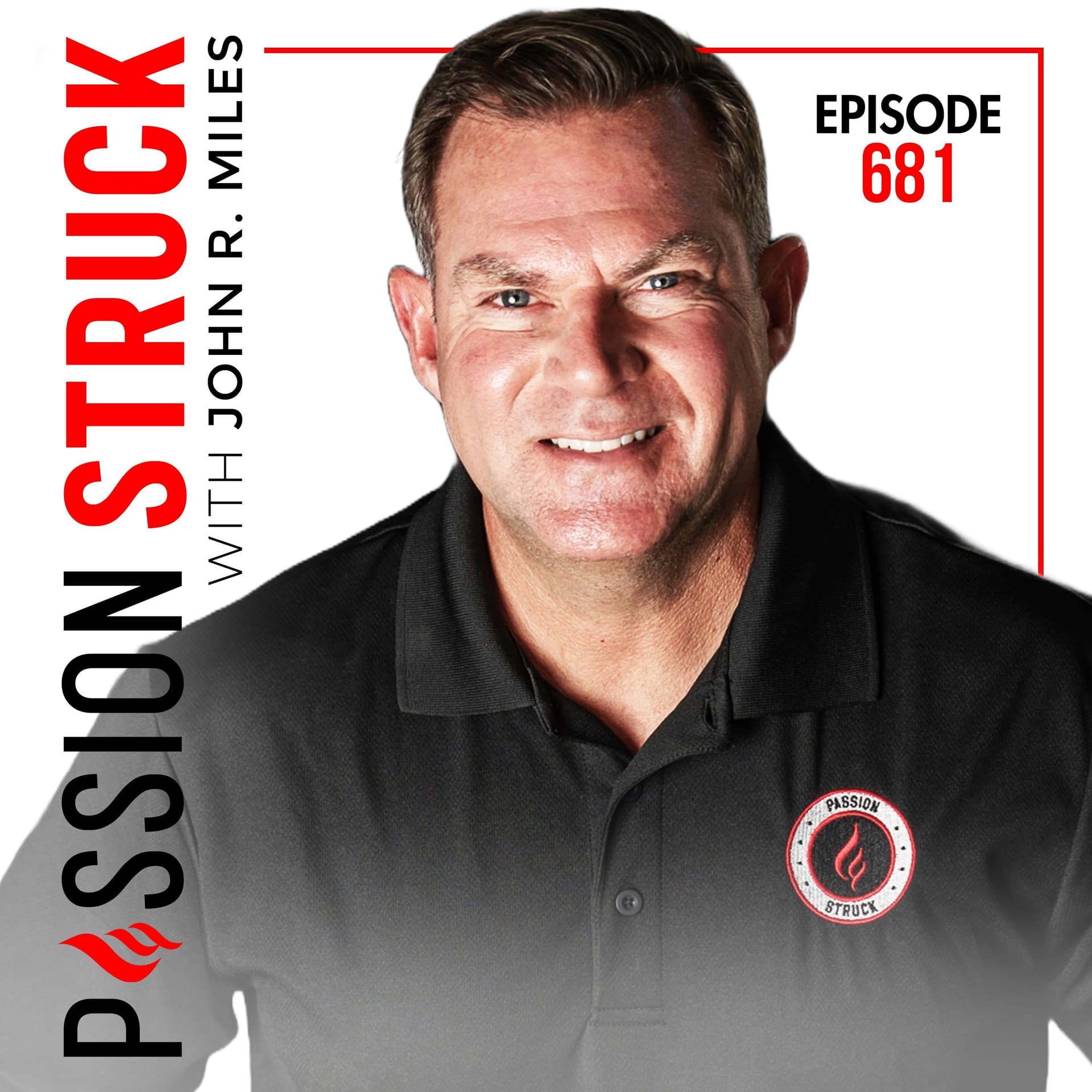
Episode Overview In this episode of *Passion Struck*, host John R. Miles delves into the profound impact of language in leadership, exploring how words not only describe reality but also shape it. By examining the architecture of language, Miles discusses its role in building trust, guiding ethical decisions, and influencing identity. This solo episode is part of the ongoing series, *The Forces That Shape Us*, which seeks to uncover the unseen influences that guide human behavior.
Key Themes
- Language as a Tool for Design
- Words can open hearts or close minds, build trust or break it, and initiate movements or conflicts.
- Language is not just a means of communication but a fundamental creator of our realities.
- The Role of Language in Leadership
- Effective leaders utilize language to connect rather than control.
- The way words are framed can have a significant impact on decision-making and trust-building.
- Insights from Experts
- Dr. Sunita Sah:
- Language influences ethical decision-making.
- Advice is never neutral; it carries inherent biases and frames choices.
- The concept of the *advisor's dilemma* illustrates the dual nature of advice as both helpful and potentially hazardous.
- Charles Duhigg:
- Great communicators ask many more questions than average, which fosters deeper understanding.
- The goal of conversation is to help each other see the world more clearly.
- Dr. Alex Emis:
- The framing of statements can dramatically reshape decisions.
- Language acts as the scaffolding of our mental models, determining how choices are perceived and made.
Practical Takeaways
- Empowering Language: Use words that encourage agency, such as "choose" or "explore," to foster autonomy. Avoid controlling phrases like "should" or "must."
- Curiosity Over Control: Shift the focus in conversations from asserting dominance to encouraging understanding and connection.
- Reframing Choices: Changing the language used in decision-making can alter perceptions and outcomes. For instance, saying "I choose to" instead of "I have to" reclaims agency.
Personal Story Miles shares a pivotal moment in his life when his grandfather advised him to "choose a life of purpose over a path of privilege," illustrating how impactful language can redirect life paths and shape identity.
Conclusion
- Language is a powerful tool that impacts leadership and personal development. By being conscious of the words we choose, we can create a culture of trust and empowerment.
- The episode concludes with an invitation to listen closely to conversations and to reflect on the language used in daily interactions.
Call to Action Listeners are encouraged to engage with the episode's themes by sharing their experiences and insights on how language has shaped their lives. Miles invites the audience to reflect on the one sentence that changed their self-perception and to participate in the ongoing conversation using the hashtag #TheWordsThatLeadUs.
Additional Resources
- A free companion workbook, *The Leadership Language Toolkit*, is available for download at [TheIgnitedLife.net](https://theignitedlife.net) to help apply the episode's insights in daily life and leadership.
- Pre-order Miles' upcoming children's book, *You Matter Luma*, which shares a message of belonging and self-worth.
Upcoming Episode Preview Next week, the podcast will feature Claude Silver, Chief Heart Officer at VaynerMedia, discussing the importance of authenticity and empathy in leadership.
---
This summary encapsulates the key insights and themes from the episode, providing a structured overview for listeners and those interested in the power of language in leadership.
Written by AI. May contain mistakes. Listen to the episode to check what was said.
Transcript
Automatic transcript. May contain errors.0:00Coming up next on PassionStruck. What if the words we speak don't just describe the world, but design it? A single phrase can open a heart or close a mind. It can build trust or break it. It can start a movement or start a war. Language isn't just communication, it's creation. The stories we tell, the questions we ask, the silences we hold, they shape who we become. And yet, in a world filled with noise, few people stop to ask, what are my words really doing? Today, we're exploring the words that lead us, how language builds trust, how it guides decisions, and why great leaders use it not to control people, but to connect them.
0:48Welcome to PassionStruck. I'm your host, John Miles. This is the show where we explore the art of human flourishing and what it truly means to live like it matters. Each week, I sit down with changemakers, creators, scientists, and everyday heroes to decode the human experience and uncover the tools that help us lead with meaning, heal what hurts, and pursue the fullest expression of who we're capable of becoming. Whether you're designing your future, developing as a leader, or seeking deeper alignment in your life, this show is your invitation to grow with purpose and act with intention. Because the secret to a life of deep purpose, connection, and impact is choosing to live like you matter.
1:38Hey friends, welcome to episode 681 of Passion Struck. I'm John Miles, and I'm so glad you're here. To all of you who come back week after week, thank you. You're not just supporting a show. You're fueling a movement to create a world where people feel seen, valued, and like they truly matter. And if this podcast has ever inspired you or helped you to lead more intentionally, here are two quick ways to help it grow. First, share this episode with someone who will find it valuable. A friend, a teammate, a leader in your life. Second, leave a five-star rating or review on Apple Podcasts or Spotify.
2:11It takes less than a minute, but it's the single best way to help new listeners discover these conversations. Today's episode continues our series, The Forces That Shape Us, where we explore the unseen influences that guide how we think, lead, and live. This week, we're diving into the power of language, how the words we choose can shape trust, drive ethics, and even define identity. Along the way, we'll pull from my recent conversations with Dr. Sunita Saab, whose research reveals how moral courage shows up in the moments we least expect it. and Charles Duhigg, who explains why great communicators ask 10 times more questions than the rest of us.
2:50And we'll look ahead to my episode with Alex Emas, whose work uncovers how framing decisions through language changes what people believe is possible. And if you'd like to go deeper with today's episode, I've created a free companion workbook over on my sub stack, the ignitedlife.net. It's called the Leadership Language Toolkit, filled with reflections, prompts, and exercises to help you apply these ideas in your life and leadership. You can download it right after the episode. But before we dive in, I'd love to hear from you. What's one sentence someone once said to you that changed the way that you see yourself?
3:26You can share it in the comments on The Ignited Life, on my social channels, or in your own notes. I'll be featuring a few of your responses in next week's newsletter. because when we share the words that shape us, we help others find the language to shape their own. So with that in mind, let's start with a story, a single sentence that changed the trajectory of my life. Thank you for choosing PassionStruck and choosing me to be your host and guide on your journey to creating an intentional life. Now, let that journey begin.
3:59Hey friends, it's the beginning of 2026 and if you're like me, you didn't come into the sheer to coast. you came to live with purpose, to show up with energy, clarity, and intention. That's why how you start your day matters. And for me, that starts with Huel. Every morning, I reach for two things. First, Huel Daily Greens ready to drink. The peach and hibiscus flavor is crisp and refreshing, with 42 superfoods, vitamins, and minerals, all in just 25 calories and one gram of sugar. Then I turn to Huel Black Edition ready to drink, with 35 grams of protein, 27 essential nutrients and no junk, it's a full meal that fuels focus, not fatigue.
4:38I start with Huel because I want to be present, intentional, and ready. Not just today, but every day. Start 2026 like a minute. Grab Huel today with my exclusive offer of 15 % off online with my code PASSION15 at Huel.com slash PASSION15. New customers only. Thank you to Huel for partnering and supporting our show.
5:04When I was 17, my entire future seemed mapped out for me. I'd earned a scholarship to the University of Michigan. The school where my grandfather, grandmother, parents, and even my aunt had all gone. I dreamed of following in their footsteps for as long as I could remember. My best friend was set to be my roommate. The path was clear, predictable, and if I'm honest, comfortable. Then came another letter, this one from the United States Naval Academy. It promised something entirely different, structure, service, and sacrifice. Suddenly, I was standing at a crossroads between legacy and purpose.
5:48I still remember sitting with my grandfather, an Army veteran and proud Michigan alum, as I wrestled with what to do. He listened quietly, then said nine words that changed my life. Choose a life of purpose over a path of privilege. It wasn't a command. It was an invitation. Somehow those words carried more weight than any acceptance letter. Looking back, I realize now that moment wasn't just about college. It was about language. How the right words can alter the entire direction of a life. I grew up about an hour from the Naval Academy, and we used to visit often, especially when out-of-town relatives came.
6:34We'd watch the Midshipman march in formation and listen to the rhythmic bark of orders echoing across the yard. I remember seeing the plebs during plebe summer, sweating in the Maryland humidity, getting yelled at, their faces flushed red under the sun, and thinking, why on earth would anyone sign up for that? Fast forward a few years, and I was standing in that same courtyard, this time on the other side of the gate. The words my grandfather gave me, choose purpose over privilege, weren't abstract anymore. They were blistered hands, sleepless nights, and the sounds of boots hitting the pavement at 0500.
7:17But here's what I didn't realize until much later. Those words didn't just send me to the Naval Academy, they started shaping how I saw the world, how I define leadership, trust, and choice itself. Because language, when it's anchored in values, does more than motivate us. It molds us. It creates the lens which we understand who we are and what matters. And that's where we began today, because this episode about the words that lead us, It's about how language quietly builds the architecture of leadership, how words create trust, guide ethics, and determine whether we serve something greater or simply ourselves.
8:02The longer I've lived, the more I've realized that words don't just describe reality. They design the lens we use to see it. When language is anchored in values, it doesn't just motivate us. It molds our sense of who we are and what matters. But it made me wonder, how often do the words we hear from mentors, leaders, or even ourselves quietly steer our decisions without us realizing it? That's the fascinating question at the heart of Dr. Sunita Sa's research. She studies how language advice and authority shape our choices, especially the ethical ones. When I spoke to her earlier this week, she said something that stopped me cold.
8:49Advice is never neutral. Every piece of guidance carries a bias, not just from the person who's giving it, but from how it's framed. Think about that for a second. Even when someone has your best interests at heart, the moment they say, if I were you, or you should really consider, their words begin bending the arc of your thinking. Not because you're weak, but because humans are wired for trust. She calls this the advisor's dilemma. The paradox that advice is both helpful and hazardous. We crave it. We trust it. And yet it subtly reshapes how we see ourselves, our options, and what feels morally right.
9:35In one of our studies, participants received identical information. The only difference was the language used to deliver it. When advice was framed in terms of what they should do, people made safer, more conservative choices. But when it was framed as what they could do, people became more creative and open to risk. Same facts, different words, completely different outcomes. That's the power of linguistic framing. And it's everywhere, in boardrooms, in classrooms, in political speeches, in parental pep talks. It's the invisible current that pulls us toward conformity or courage, fear or freedom.
10:15And here's what struck me. My grandfather's sentence could have been framed differently. He could have said, you should serve your country, or you'd make me proud if you went to the academy. But he didn't. Instead, he said, choose a life of purpose. He gave me agency. He didn't direct me. He invited me. That one shift in phrasing made all the difference. Because when language empowers, it builds trust. When it dictates, it builds dependence. Dr. Sa's work reveals something essential for any leader. The ethics of your leadership aren't just in what you say, but in how you say it. When we use language that gives others ownership, words like choose, explore, consider, we create what psychologists call autonomy-supportive communication.
11:13It honors the other person's ability to think, decide, and grow. But when we use controlling language, should, must, have to, we hijack that autonomy, even when our attentions are good. And here's the uncomfortable truth. Leaders who think they're empowering people often aren't. They're just using nicer sounding control. That's why Dr. Sa's work is so vital. It exposes how our advice, however well-meaning, can become a quiet, ethical blind spot. She told me if you're in a position of power, people will interpret your words as directives, even if you didn't intend them that way. I've seen that firsthand in the military, in corporate life, even now as a mentor.
12:05A casual remark like, you might want to move faster on that project, can ripple through a team like a command. Suddenly, people stop thinking and start reacting. Language shapes trust and trust shapes behavior. That's why the best leaders aren't the loudest voices in the room. They're We're the ones who know when to ask instead of tell, when to listen instead of lead, and when to use language that empowers choice rather than enforces it. What Dr. Shah reminded me is that moral courage isn't just about standing up when it's easy. It's about speaking up when every instinct tells you to stay quiet.
12:49But courage doesn't always show up as a headline moment. Sometimes it's a quiet word, a story we tell, or a question we dare to ask. And that brings me to something I've learned through the years. From leaders, scientists, and storytellers alike, the right words invite vulnerability. And vulnerability, not authority, is the currency of real connection. So here's a question for you to sit with. How can language become a tool for trust instead of control in the way that you lead, parent, or teach? You can share your story in the comments on The Ignited Life or post it on social using the hashtag, The Words That Lead Us.
13:33And in case you didn't listen last week, I just announced my first children's book, You Matter Luma, a beautifully illustrated story about a little bunny who feels too small to make a difference. until she discovers her light matters. It's a story about belonging, kindness, and self-worth, inspired by my own childhood experience of learning that being seen can change a life. You Matter Luma is now available for pre-order at Barnes & Noble. When you pre-order, you're helping to bring this message of mattering to families everywhere. Visit youmatterluma.com to learn more. Now, a quick word from our sponsors.
14:12Thank you for supporting those who support the show. It truly helps us keep bringing conversations that matter.
14:23You're listening to PassionStruck on the PassionStruck Network. We've explored how moral language creates trust, but what happens when those words ripple beyond the room, into teams, communities, even entire cultures? That's where we're headed next, because when language becomes a mirror, not a mask, it changes everything. Bo Eason, the former NFL player turned storyteller, once told me, people don't connect to your highlight reel. They connect to your lowest moment. I have to tell you, that line hit me so hard because for years I believed leadership meant projecting strength, having the answers, holding the room, never letting the cracks show.
15:06But as Beau teaches, connection isn't built on our victories. It's built on the moments were broken and kept going anyway. The truth is, when we talk about trust or influence, we're really talking about human connection. And connection begins where perfection ends. And that's where Charles Duhigg's research lands with such force. In his book, Super Communicators, he found that people who build trust in business, in in love, in leadership, share one core habit. They ask 10 to 20 more questions than the average person. It sounds so simple, right? But as Charles told me, that's the revolution. Super communicators don't talk to impress.
15:56They talk to understand. They don't treat conversation as a performance. They treat it as a practice of curiosity. He said the goal of conversation isn't to win or be right. It's to help each other see the world a little more clearly. That shifted something in me. Because when we stop trying to be right, we start becoming real. And in a time when trust feels like an endangered resource, authenticity has become the new currency of influence. Now, when Duhip talks about how we prove we're listening, he means something specific. He says, don't assume the other person knows you're listening. Show them.
16:40Reflect back what you've heard. Tell them why it mattered to you. Because when people feel understood, they open up, and that's where transformation begins. It reminds me of something Harvard professor Allison Wood Brooks told me. She said, the best conversations act like mirrors. When we really listen, we hold up that mirror. And in that other person's story, we catch a glimpse of our own. That's what empathy actually feels like in real time. So when Bo says, lead with your lowest moment, and Duhigg says, ask more questions, and Brooks says, hold up the mirror, they're all talking about the same thing, the courage to be human first.
17:25It's not about controlling the room. It's about creating a space where truth can breathe. That's what I call mattering through conversation, because every sincere question is an act of respect. When you ask someone to share what they believe, you're really saying, you matter enough for me to listen. And when that invitation is genuine, it changes the room, whether it's a board meeting, a family dinner, or a podcast mic. But here's the paradox. Our brains aren't wired for this kind of listening. They're wired for efficiency, prediction, and self-preservation, which is where behavioral scientist Alex Emis, an upcoming guest on the show, adds the next layer.
18:12Alex studies how we mentally represent decisions, the invisible frameworks that define what we think we're choosing. Two people can face the exact same situation, a job offer, a risk, a relationship, and see completely different realities. Because the decision doesn't live out there in the world. It lives in here, in the stories our minds are telling. He calls it the mental representation of choice. It's not the options themselves that matter. It's how we frame them. And that framing lives in our language. Say, I have to do this, and you've already surrendered your agency. Say, I choose to do this, and you've reclaimed it.
18:58That one word shifts your identity from obligation to ownership. It's subtle, but it's everything. Because when we change our language, we change our behavior. And when we change our behavior, we change our life. He told me when something's missing from your mental model, it's missing from your decision. Think about that for a second. If your story leaves out a key detail, your brain never even votes on it. It's invisible. And what fills that gap most often? Language. Because language is the scaffolding that holds up our mental models. Change the words, you literally change the way people think.
19:42Politicians know this. So do marketers. So do leaders. Call it tax relief. And it sounds like a burden being lifted. call it tax investment, and suddenly it's about building the future. Say global warming and people picture heat. Say climate change and the mind goes to systems, patterns, and complexity. Same data, different framing, completely different action. That's the quiet power that Dr. Emis is talking about. That the stories we tell aren't just stories, they're decision architectures. And that insight has massive implications for leadership. Because if you want people to make wiser, braver, more ethical choices, you have to help them see the full picture, not just the convenient one.
20:33The words that we use as leaders, opportunity versus risk, failure versus feedback, employees versus contributors, they're not semantics, they're invitations. They tell people which version of the world to step into. And as Alex would say, once that frame is built, the behavior follows. So here's the takeaway. The stories we tell shape the decisions we make. To lead intentionally, we have to become architects of language. To choose words that expand, not shrink the horizons of possibility. because leadership isn't just what you decide, it's how you help others imagine what's worth deciding for.
21:23So imagine this toolkit that we've just built together, Eason's Vulnerability, Doohig's Curiosity, Brooke's Mirror, Emus' Framing. Put them together and you get the foundation of leadership in the modern world. A way of leading where trust isn't demanded, it's earned. where words aren't just communication, they're creation. The right question opens the door. The right frame gives someone the courage to walk through it. And maybe that's the point. Leadership isn't about commanding the story. It's about inviting others into it. Because words aren't just what we say, they're how we lead. Every sentence we choose becomes a signal of what kind of culture we're building.
22:09Here's the thing about language. It's easy to overlook and impossible to escape. Every phrase, every question, every silence communicates who we are. Leadership isn't just what you decide. It's how you communicate those decisions. Duhigg calls this conversation awareness, the ability to know whether you're in a practical, emotional, or social conversation, and to adapt your words accordingly. So here's your leadership lexicon. five habits that help you navigate all three. First, pause before persuasion. Before you try to convince anyone of anything, a team, a partner, a board, ask yourself, am I informing or influencing?
22:56Clarity begins with intent. When people feel informed, they feel respected. When they feel manipulated, they resist. Second, name the invisible. Dr. Emis reminded us that when something's missing from your mental model, it's missing from your decision. As a leader, your job is to surface what others can't see. The unspoken risk, the unheard voice, the unseen cost. Bring those things into the frame. Third, mirror, then move. Dr. Brooks taught us that empathy isn't agreement, it's alignment. Tune to the emotional channel before you broadcast the logical one. When people feel seen, they're ready to hear.
23:41Fourth, choose transparency over certainty. Dr. Saa showed us that moral courage isn't about being flawless. It's about being honest when the truth is inconvenient. Truth doesn't thrive on perfection. It thrives on humility. And fifth, audit your language. Every must, should, and can't shrinks possibility. Every could, might, and together we can, expands it. You would be amazed at how quickly people shift from compliance to commitment. That's how leaders rewire culture, one word at a time. because in the end, language is leadership in motion. When you learn to read the room and speak to its real conversation, your words don't just move people, they matter to them.
24:35When I think back to that conversation with my grandfather, choose a life of purpose over a path of privilege. I realized he wasn't giving me a career plan. He was giving me the language for living because purpose isn't a destination. It's a dialogue. It's built in the words we use with ourselves and others. It's the questions we dare to ask. It's the honesty we're willing to hold. Every conversation we explored today, Sunita Sa's lesson in moral courage, Bo Eason's call to lead with vulnerability, Charles Duhigg's insight into curiosity, Alison Woodbrook's wisdom about mirrors, and Alex Emas's reminder that language shapes choice.
25:21They all point back to one truth. Our words create the world we live in. Because when you change your language, you change your perception. And when you change your perception, you change your possibilities. So the next time you find yourself in a hard conversation with a colleague, a loved one, or even your own inner critic, pause and ask, am I trying to be right or am I trying to be real? That's where trust begins, not in having the perfect answer, but in asking the better question. And maybe that's what my grandfather was really saying all along, that a life of purpose isn't something you choose once.
26:04It's something you speak into existence every single day. That's the power of language. It's not just how we lead, it's how we live. So as you move through your weekend and into next week, listen closely to the conversations you're having with others and with yourself, because sometimes the most meaningful shift doesn't come from changing your circumstances, but from changing your words. If today's episode gave you a new perspective on communication or helped you think differently about how you connect, here's how you can help us grow this movement. Share this episode with someone who needs to hear it and leave a five-star rating and review on Apple Podcasts or Spotify.
26:52You can also find key takeaways, behind-the-scenes insights, and companion workbooks at our substack at theignitedlife.net. And don't forget to pre-order my new children's book, You Matter Luma, at Barnes & Noble. Next week, we continue the forces that shape us with Claude Silver, Chief Heart Officer at VaynerMedia and Gary Vaynerchuk's right-hand person, for a powerful discussion on be yourself at work. The groundbreaking power of showing up, standing out, and leading from the heart. We'll explore what it means to lead with empathy, build cultures of belonging, and bring more authenticity into how we live and lead every day.
27:31Go and stand on the stage and show everyone who you are. And if that means you like to juggle and sing at the same time, maybe not. But try to dip your toe in with one or two people by sharing yourself. Or here you are and you have a coffee with someone and they share they're having problems in their relationship and maybe you share where you are in your relationship. It takes some vulnerability. It takes some vulnerability, but you're not going to know unless you try. You're going to assume maybe from watching other people that, oh, they're not accepted. They're not accepted. We have no idea what's going on with other people, but you can control you.
28:08And so what I would say is try it. Until next time, listen with empathy, speak with intention, and as always, live life passion-struck.
From the publisher
What if the words you speak don’t just describe the world—but design it?
In this week’s episode of Passion Struck, host John R. Miles explores The Words That Lead Us: how language quietly builds the architecture of leadership—creating trust, guiding ethics, and shaping identity.
Drawing on insights from Dr. Sunita Sah, Charles Duhigg, and Dr. Alex Imas, John reveals how the words we choose influence every decision we make—whether we lead a team, raise a family, or simply try to understand ourselves.
This solo episode continues our series The Forces That Shape Us—following episodes on gravity, doubt, luck, and defiance—by uncovering the invisible force that defines how we lead, connect, and belong: language.
🎧 Listen + Watch + Go Deeper
All episode resources—including my books You Matter, Luma, and Passion Struck, The Ignited Life Substack, and Start Mattering store—are gathered here:
To go deeper, download the free workbook The Leadership Language Toolkit at TheIgnitedLife.net.
🎯 Fuel your body with purpose.
Get 20% OFF BUBS Naturals Collagen — clean, NSF Certified, and veteran-founded.
Use code **PASSIONSTRUCK** at [bubsnaturals.com]
After checkout, tell them our show sent you!
⚡️ Feel younger, sharper, and stronger — from the inside out.
Get 20% OFF Mitopure Gummies from Timeline, powered by clinically-proven Urolithin A.
Head to [timeline.com/passionstruck]
Your cells will thank you.
🧠 About the Episode
- Discover how the power of language in leadership shapes trust, identity, and ethical decision-making.
- Learn the science behind how framing, phrasing, and curiosity drive better conversations and cultures.
- Explore why great communicators don’t talk to impress—they talk to understand.
- Gain practical tools to apply linguistic awareness in your daily leadership and relationships.
- Understand how reframing “I have to” into “I choose to” rewires agency and motivation.
💬 Let’s Continue the Conversation
What’s one sentence someone once said to you that changed the way you see yourself?
Share it on The Ignited Life, in your social posts using #TheWordsThatLeadUs, or in the episode comments—I’ll feature select responses in next week’s newsletter.
🌍 Support the Movement
Everyone deserves to feel valued and important. Show it. Wear it. Live it.
Visit StartMattering.com
See Privacy Policy at https://art19.com/privacy and California Privacy Notice at https://art19.com/privacy#do-not-sell-my-info.


