Ask ChatGPT
 Passion Struck with John R. Miles
3 Nov 2026 · 57m · 27 chapters
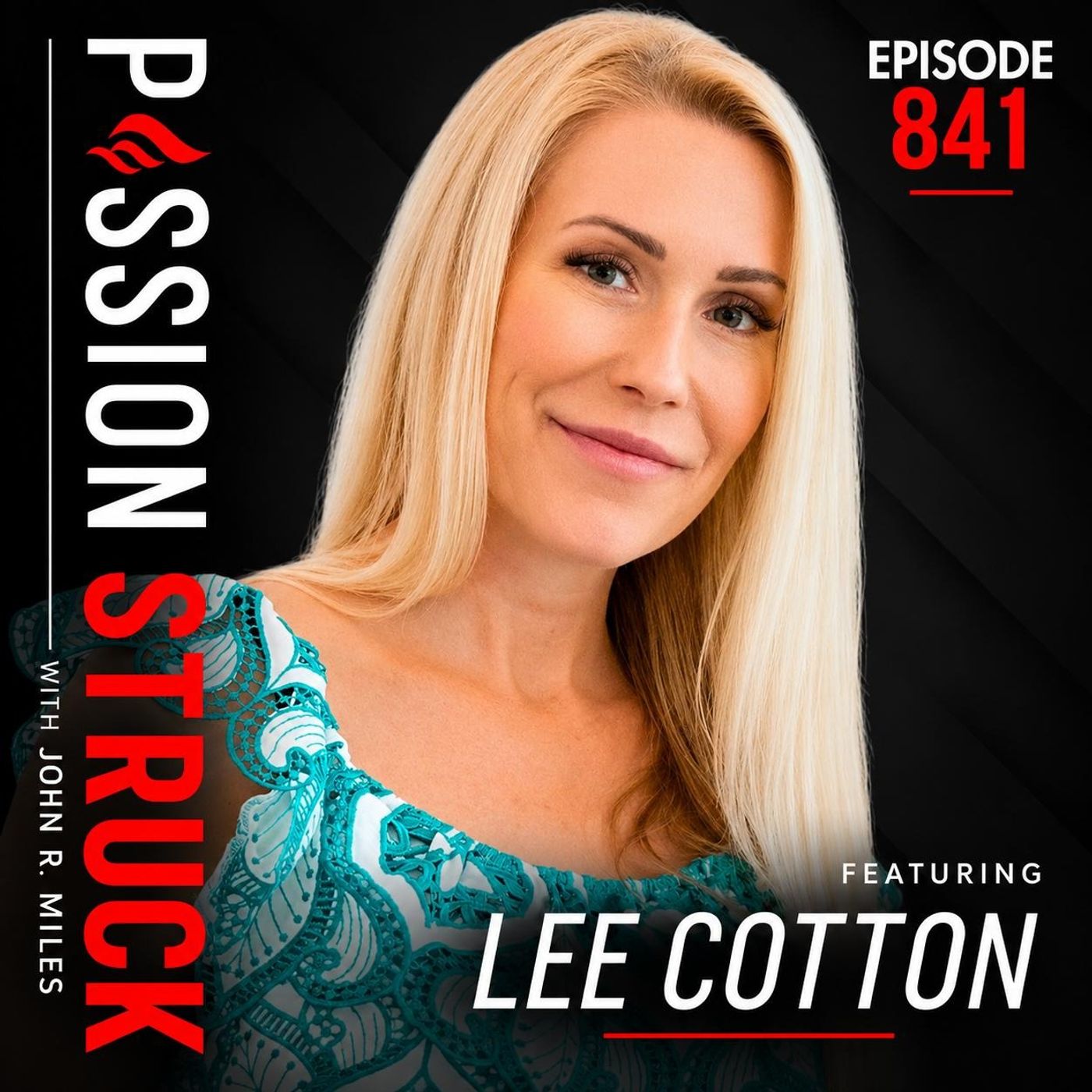
Relationship between food and self-worth; how personal history, emotions, gut health, and mindful/individualized nutrition shape eating.
People often use food to manage feelings of invisibility, control, guilt, or comfort; “you matter” is foundational to nourishment. Food rules and “clean your plate” messages from childhood can persist into adulthood. Nutrition should be individualized (no one-size-fits-all), and mindful/intuitive eating helps people listen to hunger cues. Gut/metabolic health can influence mood and mental health. For menopause/perimenopause, under-eating can worsen hormones; food impacts sleep, mood, cognition, bone density, and cardiovascular health.
Mirror/self-worth framing; restaurant dessert/appetizer “who orders” dynamics; sister’s “not leaving the table” vegetable refusal; COVID loss of taste leading to more nutrient-dense eating; antibiotics affecting her mood/gut; ice cream as enjoyment/reward (not restriction).
Lee Cotton, registered dietitian and author of A Nourishing Perspective; also referenced: Chris Palmer (Harvard), plus podcast mentions of Dr. Gabrielle Lyon, Terry Walls, and Dr. Gundry.
Written by AI. May contain mistakes.
Discussion on how self-worth is tied to our relationship with food.
“Hey friends, welcome to episode 841 of PassionStruck.”
John and Lee discuss managing holiday stress and old habits.
“The holidays have a way of bringing out old habits.”
Lee shares insights on how childhood experiences shape our eating behaviors.
“and coverage vary by state and insurance plan.”
Discussion on the holistic approach to nutrition and its effects on wellbeing.
“And I certainly have over the past decade as I've gotten more into alternative health, certainly have dialed in my diet, especially as I've gotten more into looking at biological age and the factors for it.”
Learn how gut health influences overall well-being and mental health.
“Serotonin and all the transmitters, they've done research indicating that the gut really is the powerhouse for our mental health and our mental well-being.”
Understand the significance of setting realistic goals for health.
“you that you're so in touch with your body, that you could feel that.”
Explore the differences between disordered eating and diagnosed eating disorders.
“What do you think, because this has been a cornerstone of my work, is I find a lot of people set goals and then they fail to take action on them.”
Discuss how societal standards impact perceptions of body image and eating.
“So they might be somebody who might have a little aversion or a certain way.”
Examine the personal and emotional relationships people have with food.
“because when I grew up, it was comparison yourself to the magazine covers.”
Learn about the importance of engaging the audience and growing the community.
“the physical content of nourishing our bodies, but like we talked about earlier, the spiritual and the emotional connection to food.”
Discover how food serves as both a reward and a source of comfort.
“those who support the show you're listening to passion struck on the passion struck network now let's get back to my conversation with Lee Cotton.”
Reflect on how food evokes memories and personal stories.
“So I try to just balance it out with just being mindful about the different meals that I'm eating.”
Explore how food evokes memories and personal connections.
“And then it makes me remember my Uncle Jerry, who was a Mexican chef.”
Discuss how menopause affects women and their relationship with food.
“because, and I was just talking to my wife about this, who's a primary care provider.”
Learn about dietary changes and their importance during menopause.
“Just looking at food of really of how it can be there to help assist with symptoms.”
Understand the importance of listening to your body’s needs regarding food.
“And for a number of them, it was really working.”
The necessity of understanding nutrition across different life stages.
“But it's like anything after a week or two of getting used to it, you don't even, you don't even notice it anymore.”
Discuss common myths surrounding diet and disordered eating.
“I do a chart showing just our needs at certain life cycles, which, again, is important.”
Examine the implications of seed oils and their consumption in diets.
“And then like the research will show that maybe it was consequential.”
Hear personal experiences with diets and the importance of individualization.
“Again, just really looking at what your diet is and trying to make sure that you are getting balanced nutrition in other ways.”
Learn about the significance of mindful and intuitive eating for overall health.
“I in practice like to use mindful eating and also intuitive eating with my clients or my patients.”
Discover how our inner voice influences our relationship with food and nutrition.
“And in the book, you introduce your love framework.”
Explore how trauma can affect eating behaviors and the psychological aspects of food.
“and you've had to deal with adversity or trauma at all, which leads to how does trauma impact the way we eat?”
Understand the importance of nutrition in cancer treatment and its impact on health.
“First and foremost, my advice would be that you're worthy of nourishment, that you matter, and to seek help.”
Learn about self-worth and nourishment in relation to pursuing your true calling.
“But I've talked to some people who are getting advice that they should eliminate all meat, go completely plant-based in that situation.”
Learn how recognizing your relationship with food can impact well-being.
“That means paying attention to what your body needs, understanding your own relationship with food, and giving yourself permission to take care of yourself without shame.”
Explore the challenges of maintaining healthy eating habits in a busy life.
“And this inevitably leads into this cycle where the drive-through or calling Uber Eats or picking up a prepackaged microwave meal just from a survival instinct seems like the best thing to do.”

Get the gist, explore an idea or ask about something said.
 Claude
On Passion Struck with John R. Miles, what are the key points of this episode?
Searching your listeningAutomatic transcript. May contain errors.
0:00This ad placement is paid for by Bath & Body Works. This holiday, they're bringing back the feeling that makes the season special. It's called the season of wonder, and it all starts with fragrance. If the holidays have felt a little ordinary lately, Bath & Body Works' beloved seasonal scents bring that nostalgic, festive feeling back to your home and to you. Start with fan favorite Snowflakes and Cashmere, then layer it with the fine fragrance mist for a scent that leaves a lasting impression. Or bring it home with a three-wick candle, up to 45 hours of room-filling fragrance. Go with Snowflakes and Cashmere if you love warm and woodsy.
0:33Or try the new vanilla cocoa flurries if you want sweet and cozy. It's all about the little moments that make the holidays feel magical. Snowflakes and Cashmere is available in more forms than ever across home fragrance and body care, with fragrances you love and formulas you can trust. Let it be a season of wonder. Shop now at BathAndBodyWorks.com. Coming up next on Passion Struck. What happens when the way we treat our bodies reflects how we feel about ourselves? Dietitian and author Lee Cotton shares a deeply personal insight about food, control, and what it means to believe you matter. Listen to this.
1:11When I was struggling in my late teens with my issues surrounding with food, that word, matter, was something that I didn't feel like I mattered. So if I shrunk myself or disappeared, it wouldn't really matter. And that was the way that I controlled it with food. So that is a very profound statement when it comes to food and nutrition. Those words, I matter, those two words. Very important. Hey, it's your friend, John, and welcome to PassionStruck. I'm so glad you're here. Whether you're a longtime listener or someone who just discovered the show, thank you for pressing play today. Maybe you've built the life you were supposed to want, but you've quietly wondered why it still doesn't feel like enough.
1:55If that's you, you're in the right place. Every week, I sit down with the world's top scientists, researchers, and thinkers to uncover what it actually takes to build an intentional life that matters. Thanks for joining me. Let's get into it.
2:16Hey friends, welcome to episode 841 of PassionStruck. What does it mean to live well? We often think about the habits that improve our health, the goals we pursue, and the choices we make to build a better life. But there's another question worth asking. Do we believe we're worthy of the care we give ourselves? That question brings us to the start of our November series, The Art of a Life Well Lived, an exploration of how we nourish ourselves, discover what matters, and build lives guided by purpose. My guest today is my friend Leigh Cotton, a registered dietitian and author of the amazing book, A Nourishing Perspective.
2:59Leigh's path to nutrition was shaped by her own struggles with food and by what she saw in her work with women navigating the complicated emotions tied to eating body image and self-worth. In our conversation we explore how our personal histories shape our relationship with food, why nutrition needs to be understood on an individual level, and how mindful eating can help us become more attentive to what our bodies actually need. But beneath those practical questions is a deeper message. Lee reminds us that nourishment is about more than what we put on our plates. It's also about recognizing our worth and learning to care for ourselves accordingly.
3:42One of her most powerful affirmations is simple, you are worthy of nourishment, and that feels like a meaningful place to begin a series about what it means to live well. As we explore what it means to live a life of meaning and purpose, these questions of worth matter deeply to me. They're also at the heart of my book, The Mattering Effect, Creating a Life of Meaning and Worth. If this is a subject that resonates with you, you can learn more about the book at matteringeffect.com or through the link in the show notes. Now, let's dive into my conversation with Lee Cotton. Thank you for choosing PassionStruck and choosing me to be your host and guide on your journey to creating an intentional life that matters.
4:25Now, let that journey begin. The holidays have a way of bringing out old habits. Saying yes to every invitation because you feel guilty saying no or getting pulled into the same family arguments year after year. But what if this year you gave yourself permission to do things differently? Maybe you skip an event you don't have the energy for or take a breath instead of reacting to that comment that always gets under your skin. Those small moments can change how you feel and how you show up for the people you love. That's what growing feels like. Grow therapy makes finding care easier. Find a licensed therapist who fits your needs.
5:04Book your first session in minutes and start in as little as two days. Prepare for holiday glimmers instead of holiday stress. Visit growtherapy.com slash book now. That's growtherapy.com slash book now. Availability and coverage vary by state and insurance plan.
5:25I am absolutely thrilled today to welcome Lee Cotton to PassionStruck. Lee, how are you doing today? I'm doing great. Thank you for having me. You and I met about three or four months ago, of all places, and NBC Studios. And I was being interviewed for my book, You Matter, Luma. And your book, which is here on the table, had just come out as well. And I remember when I met you and hearing you talk, I'm like, I just have to get you on the podcast. It just so happened you came back to Tampa, so we're getting to do this live. So it's great to see you again. Oh, thank you for letting me be here. I'm so excited to see you again.
6:01Yeah, it's absolutely awesome. How has it been since you released the book? Oh, it's been great. It's been a whirlwind. I'm so grateful for all the experiences. This was definitely one of my bucket lists to complete this book, to be able to help other women. And I feel like the words are doing that. So that makes me feel fulfilled. And I was surprised when I started reading it, giving it, it's a book by a dietician. I thought you were going to lead with food. And instead you led with the story of a young woman looking in a mirror who was questioning her worth. Why did you decide to start there?
6:36Well, that's my personal story. my personal backdrop. I am a dietitian. I changed careers in my 20s to actually mid-30s from public relations and PR to become a dietitian because of my own personal struggles I had with food. And in my own private practice, just the discussions around food and the emotions that come from women, I felt like the book was really well needed. And I started off the story with that vision of looking in the mirror that many women do. We look in the mirror and now these young people look at social media, we have that reflection that just impacts our worth. Interesting because I have been doing a ton of work on this topic of worth because I keep hearing all these things that are happening to people, whether it's people feel lonely or hopeless or disengaged at work and all these things.
7:29And I think a lot of that comes back to our sense of worth. And I think these are just symptoms of something larger going on. In your work, do you kind of find the same thing is happening? I definitely do. It's hard to really figure out your self-worth when we have all these different mixed messages and we're always taught the way to basically succeed or to be accepted in our society. So it's something that people do struggle with. Well, when you think about self-worth, how does that relate to food? And what is the connection a lot of people aren't making between the two? Definitely. Well, I think first and foremost, we think about the appearance-oriented.
8:07As a woman, we think about food and the way that our bodies are. And maybe our capability of nourishing our bodies is more reflective on the scale than how we feel. So our self-worth is tied to that aspect. And that can be a little bit overwhelming, confusing, especially now in this society with the pressures that we have. And do you think whether it's something we like to eat or don't want to eat, I think we've all been at those kind of gatherings with friends where people order and you order something that's maybe not as healthy and you get a whole bunch of looks. Or I think we've all had that perspective and we step on the scale and it's not giving us the result that we want.
8:49How does that figure into how we think of success? Definitely. Well, first and foremost, food is a behavior. Eating is a behavior. So you mentioned going out to a restaurant and people giving you the eyes if you order something. And I actually spoke about that in my book A Nourishing Perspective. I gave the dialogue of women going out for dinner and how we all kind of look at each other to see who's going to order dessert or order that appetizer. And that's our place to sit at the table. And that's actually a little bit of how we find our worth with the behaviors surrounding about food because food is such a community-based experience.
9:23And a lot of our food language and our food rules comes from our childhood. and they stick with us. I grew up with the Clean Your Plate Club, and that ties to your worth, right? If you're not completing your meal or something like that, it kind of sits with you. And a lot of people have that language surrounding what they eat, and they do tie that to the way that they think of themselves, whether it's guilt, remorse, or emotions, because food is a behavior and it does evict those. Shock line, because when I was growing up, we also had the Clean Your Plate Club, But my younger sister was like the pickiest eater I've ever seen.
9:58She didn't want to eat vegetables. She didn't want to eat this. She didn't want to eat that. And so I remember the family dynamics were kind of interesting because it was that typical thing. Well, if you're not going to eat, then you're not going to leave the table type of thing. And man, she had will because she would sit there for hours. So my parents eventually kind of relented. But how much does food and the way it gets labeled affect us from our family and childhood? Only 100 % affects people. That's one thing. When I used to counsel parents with adolescents who were dealing with a disordered eating or eating disorder, that was something that I always said is a dialogue that you have at the table really impacts your children.
10:44And it will impact them until adulthood. Yeah. I'd be curious to know if your sister, some of that information that was passed to her is impactful to her now, even with her dietary choices or maybe the way she approaches food. Because it does. Well, I think, ironically, she probably became the healthiest eater out of all of us over time and probably the most conscious about her diet and what she was putting in. And I certainly have over the past decade as I've gotten more into alternative health, certainly have dialed in my diet, especially as I've gotten more into looking at biological age and the factors for it.
11:24I think gut health is becoming more and more apparent how important it is to us. Without a shadow of a doubt, I took a chapter and I spoke about gut and gut microbiome. And you're absolutely right. Food is longevity. Food is medicine. And it's important. and it's great that we can make those choices, what we put in our bodies, because it does reflect just everything, our mind, body, spirit. So there is something really important about how we nourish our bodies, but it's also giving ourselves permission to nourish our bodies. Yeah, I just want to go back to something you just said, because in the book you talk about mind, body, and spirit.
12:01And a lot of people talk about the mind and body aspect of it, but I haven't heard the spirit aspect brought up as much. Why did you think that was important to bring into it as well? I think it's important because it's always looking within. And spirituality can be defined differently by different people. But when I'm talking about the spirituality concept of eating food, it's really just that innate capability of our bodies guiding ourselves. And one way we can look at it is if you're hungry, honoring your body's hunger cues. Or if you're thirsty, you go have a glass of water. And a lot of people don't feel safe with the way that their bodies communicate or their program that if they are listening to their body, there might be something wrong.
12:41So I think that's important to get back to the root and to the spirituality aspect of eating, which is really important. Our bodies are really intelligent and they're here to guide us. And it's important. The other thing I picked up when I was reading the book was that you also talk about how a lot of people think about the gut, mind. Yeah. aspect of it, but you cite the research. I interviewed Chris Palmer from Harvard about this, how I remember his words were, he has found that all issues of mental health tie back to metabolic issues. And to me, when that, I think it became apparent to him because he was working with a patient who was schizophrenic and he determined that he could adjust or almost cure the person based on their metabolic health.
13:32And that's just miraculous to me that it has that big an impact. How have you seen this play out with people that you've helped? Definitely. I feel like people that have a lot of digestive issues or imbalances in their gut, it can be reflective on their mood. And there is scientific research quoted in my book regarding that too. And I feel that that's one thing that's really affected. Our gut's affected by environmental, affected by stress, affected by medications or supplements. So it really is important to address that when you're looking at how to nourish your body and providing the education that it is important not only to fuel like the protein aspect, which everybody's really into nowadays, but also really looking at what our gut health does too, because it is reflective.
14:16And you're absolutely right. Serotonin and all the transmitters, they've done research indicating that the gut really is the powerhouse for our mental health and our mental well-being. I've recently, I spend a lot of time trying to keep my gut health where it needs to be. And so I avoid antibiotics at all costs because you can take probiotics, but it kind of resets your whole intestine. So I've recently had this eye issue. And so I've had to go on repeated rounds of antibiotics. And this is the first time I've had to use them and probably... three or four years. And I've noticed every time I have to take a dose, I feel completely different for days as I'm trying to eat fermented foods and trying to build it back up.
15:05But I don't think we realize just how important it is. Correct. Well, first and foremost, I commend you that you're so in touch with your body, that you could feel that. And it's probably doing so, the fact that you have been keeping your gut healthy over all these years. And that's why your body is more sensitive or you're more aware, right? Going back to that like spiritual innate capability of listening to your body. I believe in modern medicine. I think that there's a place for antibiotics. But I also feel, again, it's all about balance when we're looking at health. It's making sure that you are doing things that are going to encourage a good ecosystem within our bodies.
15:41Lee, one of the things I saw throughout the book is you like to use acronyms. I do too. But one of the things that you talk about is the importance of goals. Yes. And I thought that might be a good one to start with. Oh my gosh, you're going to have me say my acronym on top of my head? I would have to look it up in my book. Well, I will give it out to you. Thank you. There's 275 pages of lots of acronyms. So it's give your best effort. Correct. Overcome setbacks. Yes. Ask for help. Yes. And list your reasons. Yeah. If you look at those, give your best effort, overcome setbacks, ask for help, list your reasons.
16:19What's the most important? The most important, I talked about that in that chapter, was I opened it up, actually, like going back in my head with that acronym, was about realistic goals. And I think that's the most important thing. Not necessarily one of those letters, but just being more realistic when it comes to goals. Because I feel like sometimes people will make these goals and they're not realistic. They're not achievable. and that makes somebody feel guilt or remorse. So I feel like that is the most important thing when it comes to setting goals. And goals are important. What do you think, because this has been a cornerstone of my work, is I find a lot of people set goals and then they fail to take action on them.
17:01And to me, action is the ultimate decider on whether you want to improve your life, you want to improve your diet, You want to improve anything. It starts and ends with a choice to take that action. When it comes to nutrition, what stops people? What are the barriers? I think it's, again, not being realistic with your goals. I work primarily with patients with disordered eating and eating disorders. When it comes to goal setting for them, I try to keep things as realistic as I can. It might be in the morning, do you think you could add the protein food to your breakfast? Or maybe you can add something with dairy, just small little changes.
17:39because small changes are doable and they actually set the momentum to bigger changes. And I think that's the most important thing. I was going to ask you this question anyhow, but you've brought it up a couple of times now. So you mentioned disordered eating and then eating disorder. And for a lot of people who are listening or watching to this, they probably don't understand the difference. I didn't really until I read it in the book. How did the two differ and why is it important? Sure. An eating disorder is a diagnosed mental health. Disordered eating could be, just to use the example that you mentioned earlier with your sister, the analogy that somebody maybe who isn't meeting the criteria for an eating disorder, but they might have ways that they're eating that's not, and I would hate to use this word, normal per se or normalized.
18:27So they might be somebody who might have a little aversion or a certain way. I think when it comes down to it, just really looking to see if that person's going to be getting their foods and is nutritionally balanced. And that's really what just sets the criteria. Obviously, if somebody has an eating disorder, that's something that they do have to get diagnosed and meet with a mental health counselor. It is one of the highest mortalities of mental illnesses. So it is something to take serious. And what is the most common diagnosed eating disorder? I can't necessarily quote the most common eating disorder.
19:02I see in my practice a lot of restriction or anorexia in my practice. I'm also noticing too that I'm seeing primarily women in their midlife and I'm noticing a lot of women in midlife facing a lot of disordered eating because of the change of hormones and menopause, which is becoming more of a forefront. I want to, there are a couple of questions for sure. I'm a bit surprised that anorexia or that remains as large as it is because it seems like culture-wise, we are trying to project more favorably different body images. So it's not like when I was growing up, all the commercials, everything you looked at were like the perfect body.
19:49Now it seems like you have more models who are every shape and form, Yet it still seems like we come back to we have to be this Barbie version of ourselves. Why is that trained in our childhood or where does that come from? I think it's trained by society, which is interesting that you mentioned the magazines, because when I grew up, it was comparison yourself to the magazine covers. And that was triggering in itself. And you think about these kids now or anybody, for instance, they're scrolling through social media. I feel like there was a movement where body types were all accepted. I felt like that was really going strong for quite a while.
20:26And I feel like we've almost backtracked with a lot of the new medications for weight loss. And it's really in the forefront, again, the shrinking society that we have. And I can only imagine how impactful that is for somebody who's already struggling with body image to be fed all these images constantly in their feed. That is interesting how you use the word our shrinking culture. Yeah, it is. And I have to say that I always use this analogy. If I was sitting here with a knee that was hurting and all of a sudden you start asking me questions regarding knees or talking about a knee, I'm going to be so interested into what you're saying because it's something that I'm personally dealing with.
21:03And for those who are struggling with body image and they're having these constant reminders of how they might be a peer or how they're even accepted, you watch an award show and the celebrities nowadays, it's really impactful. One of the questions you ask readers in the book is, what does food represent to you? And it's something most people have never really asked themselves. Why do you think it's such an important question? That's so interesting. In that question specifically, I remember I had it in a chart and I had different words. And it was like, food is emotions, food is comfort, food is happiness, but food can also be a negative emotion.
21:43so I always ask that question when I do women's seminars that's like the first question I always ask is what is food to you and I have them journal and it's amazing the comments that people will have and it really does when you start doing the deep dive and you start asking about that question with curiosity well why is food sad to you or why food is fattening to you or why food is comfort for you and you really look at it and there's been a moment in their life where that emotion has attached to what's on their plate and is based on their own experience. So again, we approach our meals with such a different experience, not only from just the physical content of nourishing our bodies, but like we talked about earlier, the spiritual and the emotional connection to food.
22:29Before we continue, I have a quick favor to ask. If you're listening to PassionStruck and haven't followed or subscribed yet, take a moment to hit that button. It's free. It just takes a few seconds, and it helps podcast platforms everywhere recognize that this show is worth recommending to other listeners. That means your follow can help these conversations reach someone who hasn't discovered PassionStruck yet. And if something in this episode makes you think of a friend or a family member, share it with them. Maybe it's a conversation about health, self-worth, or learning to take better care of yourself.
23:05whatever resonates pass it along to someone who might benefit from hearing it thank you for listening and for helping us grow this community it really does make a difference now a quick break for our sponsors thank you for supporting those who support the show
23:30you're listening to passion struck on the passion struck network now let's get back to my conversation with Lee Cotton. It was interesting to me because as I read that question and then kept reading on that chapter, what you're really getting into, is there a relationship with food, really a relationship with food, or going back to where we started with the mirror example, is it really a relationship with ourselves? And therefore, depending on how we're handling food, it can really be something that we're using to punish ourselves or to reward ourselves or other things. How would you answer that question?
24:08I definitely reward myself with dessert sometimes, specific. I remember I was interviewing this gentleman and I'm like, man, I love ice cream, but I try to restrict it because I've read so many studies that it's not great to eat on the regular. And then he was saying, well, when you have a really good day, you should save it for that. But then if you have a serious seven or eight great days in a row, that's a lot of ice cream too. So I try to look at food that, and I think you and I share a similar thought pattern here, that if you restrict yourself so much, to me, eating is one of the wonders that we have and being able to taste and smell.
24:49And it's one of the enjoyments of living. So to completely eat a diet that rids you of that, to me, is too restrictive. Yeah. So I try to just balance it out with just being mindful about the different meals that I'm eating. But I do try to give myself rewards too, because if not, it would be pretty boring. Well, it'd be very boring. And ice cream is delicious and it tastes good and it makes you smile. So to me, that's a great thing. But it's interesting when you were mentioning the ice cream about using Osmos as a reward, right? For a good day and then having that ice cream. And that's something I try to really install in my patients or parents that I'm counseling, that it shouldn't be that.
25:36You should really just honor your body and honor that. And the enjoyment factor of eating is half of the experience. Think about birthday parties. Every birthday party, what? We celebrate with cake. I mentioned in my book growing up and looking forward to a cookie that my grandmother made. And that brought such comfort and warmth. Yes. In my house, my wife loves baking. So any baked goods are high on her list. And of course, I love them. But for me, it's always been, for some reason, it's always been my favorite. And I think it goes back to some really good memories. Because when I was growing up, I played Little League.
26:10And if we won the game, our coach would take us to Dairy Queen and we'd get, you've probably seen them. They have the baseball cap that has a little sundae in it. And he would reward the whole team with ice cream. So man, did we play better. But I always kept it in my mind that it was a reward. because of that. That's so impactful though, thinking about that. And you're supposed to wonder sometimes intentionally doing the wonderful interviews you do and the work that you do, and you're an amazing writer. If in the back of your head that you just must accomplish that, do you ever accomplish it just to have the ice cream?
26:44Probably some type of a reward, yes. And then even talking about your wife, like with her baking. And she probably enjoys like giving you her baked items. And that just shows you, again, food is love and food is comfort. And sometimes what we can do for our loved ones is to provide a good meal. I think back to my grandfather. I always, like when people ask me, who do you think the best barbecue you've ever had is? And I always say it's my grandfather. And he wasn't one of these guys who had this elaborate. I'm one of these people. I have a smoker. I have a flat top. I just ordered a grill today.
27:20So I'm super excited. I ordered a Napoleon. So hopefully Napoleon will sponsor this podcast because I love their product so much. But he was like Mr. Weber Kettle Grill. And I still think the Weber grills are like some of the best to grill on. And I can just picture that there was like no elaborate sauces, none of that. He was just your plain garlic, salt and pepper. But there are times when I don't think I've ever tasted chicken or pork chops that have been as good as my grandfather's. And I somehow just think it had to do with the care he put into it. It did. That's so nice. That's a good story.
28:02Yeah. But that evoked a good memory. That evoked a good memory. And then it makes me remember my Uncle Jerry, who was a Mexican chef. Oh. Who, unfortunately, made the most bland Mexican food I've ever eaten in my life. I'm like, how do you make bland Mexican food? It seems like between that and Italian are like the two easiest things to soup up. But and the funny thing is Jerry was so proud of his food. So I never wanted to say anything to him about it. Except if you listen to this today. Well, unfortunately, he's not with us anymore. But it is amazing how food brings up those memories. It definitely brings up memories.
28:43So you were talking, and this has become a more frequent theme on the podcast. I haven't done an episode in a while, but I had done a number of episodes on menopause because, and I was just talking to my wife about this, who's a primary care provider. And she said, it's so interesting that we're treating infertility. We're treating weight loss. We're treating all these things. Yet you have menopause, which impacts every woman. Yeah. And yet insurance doesn't cater to it. There's nothing. She's like, nothing prepares a woman for it. All of a sudden, you just feel like you're completely out of your body.
29:22And I like that you dedicated a chapter to it. How does food play into menopause for the women who are less? Selfishly, I did a lot of that research for my own personal matter. And I agree with you. It's absolutely true. It's like something that we didn't really talk about as women, like a shun-shun thing. But we're all going to go through it. And one of the things that I started seeing more in my practice was women that were going through perimenopause or menopause with their bodies changing. And not only their bodies changing, but their kids going off to school, empty nesters, changing in careers, experiencing death or trauma.
29:59They felt out of control in their life. So they started to look for food as their control. And I just started seeing more in my practice, more of restrictive intakes or disordered eating with that population. Food is so important, especially during that time of age. Because we do have to look at food as medicine and what it can be to help us. Making sure that our bone density is good. Making sure that we are having essential fatty acids, which are beneficial at this time of life. Just looking at food of really of how it can be there to help assist with symptoms. Again, in speaking with my scope of practice as a dietician, I look at it from what food is.
30:34And also the dangers of maybe resulting into a fad diet or weight loss that people might do, again, because their bodies are changing. But we're meant to change, right? That's life. We are, we have the privilege of getting older and our bodies do change. We can't compare ourselves to an infant when we're adults, but people like to compare themselves to younger years, which is far out of reach because we do age. And for a woman who's in perimenopause or menopause, do you suggest changing the diet? Are there some things that work better? Are there some things they should avoid? That's a really good question, actually.
31:12I believe when it comes to nutrition, there's not one fits all. I always meet the person where they're at. I do believe that one of the things I do find a lot of people doing is not eating enough throughout the day. Because instinctually, we'll think if our bodies are changing, how do we control that? We limit our intake. And that actually can be devastating. And it can also be very impactful on our hormones as well if you're not fueling your body correctly. Because your body basically goes into a flight or fight. It is interesting. So I have liked that I'm seeing more and more books on the topic, which I think anytime you see that, it's telling you that there's a gap in the market.
31:49Without a shadow of a doubt. Are there any other aspects of how menopause affects nutrition that would be important for listeners to understand? No, for sure. The research indicates it can be effective, impactful on cardiovascular health, nutrition, which is really important and to be mindful of. Again, the bone density, which is extremely. But then we're not only looking at it from just maybe the body systems or even like bone health, but we're also looking at it from a cognitive perspective as well. Food does impact your mood. And that's important. And food can also impact your sleep. And if you're already not sleeping, going through the change, which I understand being a woman in her midlife, and you're not fueling your body correctly, that can be a big recipe for disaster.
32:33Do you think fasting plays a role at all? It's so interesting that you just asked that question. I just was asked that earlier today. I personally, just because of the way that my philosophy is, I personally do not promote fasting. Yeah, I found I did intermittent fasting for about five or six years straight. And for a number of them, it was really working. And then it seemed to stop working. So I think your body also goes through cycles. I've recently been reading more and more the importance of front-loading your meals and making breakfast the most important. And I had been avoiding it for years.
33:16And so I've been testing out what works. And as you go through the day, trying to slowly minimize so that dinner isn't the largest meal and you front-load it more. How do you feel about doing that? Well, I think the less I eat at night, the better I sleep. I also find for me, it's very important after meals to go for walks. So that is something I try to do after every meal is, and it doesn't have to be a long walk, but typically at night, if we're in our routine, we'll walk like a mile, half a mile to a mile. Cause I just find it kind of gets your digestive system going, moves your body, gets you going.
33:56But I do find the earlier I eat and at night and the less I eat, and then I try to restrict a couple hours before I go to bed from eating anything at all. And the more I can stick to that, the better I sleep. If I eat closer to when I sleep or if I eat too much, I just feel like I'm just not as comfortable. Well, I really think that's amazing that you're listening to your body first and foremost, and that you're in touch with it because that's the most important thing. I am a big fan of, you mentioned having breakfast in the morning. It just really fuels the rest of your day. And there's been so much research indicating that somebody who eats breakfast in the morning is going to have more sustained energy and more satiety throughout the day, which is really important.
34:37So I'm a big advocate of starting your day with breakfast. I think it's also the most important thing that you mentioned with that story is that you listen to your body. It wasn't working before you switched up your eating patterns and there's not a one fit situation. So even mentioning like fasting, and again, I'm really just like very, very impactful about how this affects people is the social media trends and how certain things will become more of the fad. And again, it's not for everybody. You really do need to learn to trust your body and what works best for you. I eat a particular way because I just found throughout the years that it works best for me and I have the best energy and I'm better at performing with my eating pattern, but it might not be the best eating pattern for you, but it takes that time and understanding.
35:24I remember when I first started doing it and I started to do it because I was really getting into trying to get into how do I improve my biological age? And so I was really trying to dial in, trying different supplements, different eating patterns, different this, different that. And I remember a lot of my friends were like, how can you intermittent fast? Aren't you hungry? But it's like anything after a week or two of getting used to it, you don't even, you don't even notice it anymore. In fact, there were times it would be noon one, two, and I'm not even hungry at all. So you almost are forcing yourself to eat, which isn't healthy either.
36:02So to me, it's just being mindful about what you're doing. And what I found was my energy level wasn't as high. And then I was getting moodier. I was getting hangry and then I was putting on weight and I couldn't figure out why. And then I switched to trying to do more caloric intake earlier. And it actually started, I started to see different results. Which is important that you listen to your body and the body does reflect the need for nourishment. So it will show up in different ways, whether it's weight or cognitive or emotional. It's important to understand that. Well, that was one of my favorite parts of the book is you go through a number of chapters.
36:43There are a number of chapters, as we've been discussing about, that kind of go into the nourishing aspect of the book. But you do have chapters also on nutrition. I talk about longevity and age. I do a chart showing just our needs at certain life cycles, which, again, is important. I don't feel that even nowadays their nutrition is even taught in school. So I wanted to have the reader be able just to understand, have a basic nutrition education breakdown where I went through macronutrients and micronutrients. But then also did the lifespan nutrition, which is important because there are certain nutrients that we need for each stage of our life.
37:19And we are, age is an interesting thing. Well, you also were a myth buster. So can you go through one or two of the myths? Sure. One of the myth busters I know was one of the things was that only women will be affected by disordered eating. And I think that's really important as well. Another thing, it necessarily wasn't like the myths, but I did go through, which I thought was very interesting with all the diet culture, starting from like the early 1900s until now, what the diet was and how this diet was not really impactful or positive for health. I spoke about like the cabbage soup diet. And then there was at a time where women were just smoking cigarettes and taking medication that their doctors gave them because during that era in the 1950s, they just had to like perform.
38:06And that was just something that was given out. So it's very interesting speaking of myths that not necessarily the myth mythology, but like the fact that we look at like our world and how our world is shaped and how we are influenced about the way we choose to eat, how that can be impactful. And then like the research will show that maybe it was consequential. How much have you studied seed oils? I remember I had Morley Robbins on the podcast and we did a whole episode on seed oil. And what really got me like not wanting to use them at all was him describing the production process of how seed oils were made.
38:47Yeah. Which is like listening to how do you make automobile oil for your car. Yeah, definitely. So what's your thoughts on them? I feel like the way that things are prepared is something to be mindful of when we're using these seed oils. and maybe the type of food that they're in. But I really don't like to install a lot of fear regarding certain foods. So if you're gonna go out, let's just say, and predominantly most of your foods are fried in seed oil or you're getting things maybe from a easy fast food restaurant and you're eating that in abundance, that could possibly add up. But again, it's really how much are you consuming and really how are you consuming them?
39:28How are they prepared? What foods are you using them with? Well, it's interesting to me. It's nearly impossible. Correct. To go to the supermarket and try to find a salad dressing, unless you want like balsamic or something simple that doesn't have canola. Or go out to eat or go on holiday or do any type of, I don't know, go see a concert and get something to eat. So when we're looking about that too, if we were necessarily going to start really concentrating on that, our life would be very limited. So that is why I don't necessarily put a lot of fear in that. Again, just really looking at what your diet is and trying to make sure that you are getting balanced nutrition in other ways.
40:08I'm a firm believer in lots of color on your plate, fruits and vegetables, antioxidants. I do really truly believe that food is, like I mentioned before, it is medicine. It is a way that we have the ability to create health. But I also feel like the fear around certain foods can also become more harmful in their own as well. And I've had guests on both sides of the fence on this one. I've had Dr. Gabrielle Lyon come on and talk about the importance of a high-protein diet. I've had Terry Walls come on and talk about, and Dr. Gundry come on and talk about the importance of a plant-based diet. Are you do whatever one fits your lifestyle, or do you recommend one over another?
40:51I personally love this question because, interesting enough, prior to becoming a dietitian, I went on my own pursuit for health, trying to figure out how to actually feed my own, my body. Because I had suffered with disordered eating as a young person. And I never really understood really what the right way to eat. And I was getting all this information from magazines or anything about all these different diets. And I went on like a journey. And through that journey, I studied Ayurvedic nutrition. I studied raw foods. I became an educator for a raw foods institution. I went to culinary school for plant-based nutrition.
41:24I studied every single diet and like I really experienced it myself. And from that, I've cultivated my own way of eating. But again, it goes back to the person. Some people do better eating more plant-based. Some people do better eating more carnivore diets. It's really that person and that constitution. Just like I always say, somebody might be a runner. Somebody might enjoy walking, right? Our bodies just do different things and we need to listen to that. So mindful eating has become a buzzword. What does that word mean to you? Mindful eating has definitely become a buzzword. I in practice like to use mindful eating and also intuitive eating with my clients or my patients.
42:07But mindful eating is just being aware. I always like to say to patients before a meal, really just sit with yourself and feel how your body feels, which I think is really important. Do we ever just sit down before a meal and just become present and think, OK, I'm really hungry. Something salty really sounds good to me today. Did I have enough protein today? Do I need to add a little calcium into my intake? We just go through the motions. So it's just taking that moment and taking that pause. For me, I think the thing that I have realized is that when I look back, I think there were a lot of times I was eating out of habit instead of eating out of the need to eat.
42:44And I think a lot of us do that. We are accustomed to the afternoon snack. We're accustomed to this. that. And I've just realized the more mindful I am about it, the more I realize at times I was eating, but not hungry at all. So I try to avoid those urges, but they're hard to break when it's more of a habitual pattern that you're eating for than a nutrition-based one. And I'll tell you, one of the times I discovered this the most was during COVID. I lost, it was scary. I lost all taste and smell for, I mean, almost was three months. And I realized when I couldn't taste anything, I started and I knew I was eating because of nutrition.
43:28I started pouring in the broccoli, the cauliflower, because I was like, if I can't taste it anyhow, I might as well eat things that are good for me. But it also awakened me to the fact of how much I wasn't intentionally eating enough of those nutrients that I should have. And then I felt on the backside of it, how much better I felt when I was eating like that. And luckily, a lot of that has persisted afterwards because of how much better I felt. That's interesting because I've had so many, I used to work at an integrative cancer center. And it's interesting when you're faced with something, maybe you were mentioning with COVID not being able to have your taste, but whenever you're faced with something with your health and you have to take that pause, right and really look at your health or what you're eating and how that can shape that and I don't feel like a lot of people again we're just going through these endless motions like you mentioned like the eating like for instance how comforting it is to have a bowl popcorn and watch Netflix it just becomes comfort it's like you feel empty without that bowl and holding it right yes but it is true that's something too I feel that people when they're faced with health consequences is really when they really become more mindful of what's on their plate.
44:41And if we can install that mindfulness every day, that every opportunity that you have to eat is a way to nourish your body and heal, that's a really good way to look at it. Yeah. And in the book, you introduce your love framework. So listen, observe, vary, and embrace. Why those words? First of all, who doesn't love the word love, right? And I do think listening and observing is extremely important. And I think that's something we need to tend to do more in life when it comes to our bodies or just the way our health is. Yeah, I thought it went back to the. And our personal self. Yes. Going back to what we started off with.
45:19Yes, that was the natural connection that I made. So I have been doing a ton of episodes over the past year on inner voice. Okay, good. Inner identity, attachment cycles, all of that. What does our inner voice have to do with nutrition? Our inner voice has so much to do with nutrition, right? That's where our core values are. That's the way we respond to certain triggers or trauma. For the inner voice to specifically with my book, I was also talking about somebody who might be suffering from a eating disorder eating, that eating disorder voice or that inner voice that kind of is there. It's that little, remember, I think it was Pinocchio.
45:57He had a little, that little bug that he had on his shoulder that always was there. or like you see in cartoons, like the two characters that are there just talking. So your inner voice is really like your way that you respond to the world or like what your opinions are or how like you frame things. So it's important to get in touch with that and to cultivate a better relationship with ourselves, which is hard. It definitely is, especially if you are like most people and you've had to deal with adversity or trauma at all, which leads to how does trauma impact the way we eat? No, trauma affects the way we eat extremely.
46:35Trauma, again, when we're looking at food as a controllable thing most of the time in our life. So sometimes people that have trauma will look to food as something that they can control. And I see this a lot with patients who do have an eating disorder. They've had a past of trauma and the food is something that they do control. Or is the food that sometimes that they do to cope with emotions? I think for me, that's how I used it more was as a coping tool. rather than the other. I always found for me during times of stress, when I was doing my corporate time, I noticed that my eating got much worse as well because I was binge eating.
47:13And at other times the stress was so high, I didn't want to eat at all. Or it's interesting the types of foods that you crave during those time periods because they typically are not the healthiest for you. Yeah. And they've actually done studies too about like the food that you crave and the emotional component behind it, which I think is so interesting. But people necessarily, and I always use this example, like you have a high stressful day and you're doing corporate meetings all day long. You're not going to go home and be like, okay, I'm going to bake some trout and asparagus. You're going to go for something maybe more carbohydrate because it's going to give you those feel good feelings.
47:48And it's going to give you a lot of a spike of sugar within your body. That's going to give more of a coping and more of a feeling of contentment, which is really good as well. So it's interesting the foods that we choose. And when we really look at why we're choosing them, it's usually, again, to help with a feeling or help feel more calm and centered. A lot of my research, Lee, and my upcoming book are really about this topic of mattering. And I think, I don't know if this is accurate or not, so I wanted to ask you about it, but I have the sense that when people don't feel seen, valued, heard, they want things that they can control.
48:24They want some element of self-control. And to me, food is something that to me would be something that you could control if you have that feeling. Have you ever thought about that? Oh, without a shadow of a doubt. When I was struggling in my late teens with my issues surrounding with food, that word, matter, was something that I didn't feel like I mattered. So if I shrunk myself or disappeared, it wouldn't really matter. And that was the way that I controlled it with food. So that is a very profound statement when it comes to food and nutrition. Those words, I matter, those two words. Very important.
49:00And can you explain that invisibility aspect that you were alluding to? Sure. I just felt like at the time when I was younger, I was living in a situation that I didn't feel very in control. And that was just something that I felt that I can control was my intake. And it just felt like if I diminished or evaporated per se, that those things wouldn't be there as much when it comes to food. And I know that some patients, too, will find that eating or eating with comfort and maybe putting on some weight is very, it provides safety for them. So, again, it's just really looking at the psychology of eating.
49:36And if someone was experiencing that, what we were just talking about, what would be your advice to them? First and foremost, my advice would be that you're worthy of nourishment, that you matter, and to seek help. This is a life worth living, and there are so many great resources out there to help people. And relationship with food is complicated, and it does take professional help or professional guidance and somebody with an empathetic ear. And one thing I wanted to circle back on is you mentioned that you had spent time around cancer centers. And I know having loved ones who have unfortunately experienced cancer, like so many people do, that diet became a really important aspect of their fighting the disease.
50:26And I think we hear more and more of the link between sugar and cancer growth, things like that. But what are some of the best resources or places for people who might be unfortunately experiencing this? Definitely. First and foremost, I think talking to your oncologist is important and seeing if they have a dietician on board. It's important to seek out a dietician who works within oncology and also to understand too. And the reason why it's so important to work with a medical professional is during the course of going through cancer treatment with the different medications or even treatment protocols, there could be contraindications.
51:01And I noticed that when I was working in oncology that I had a lot of patients that would, they would really want to live, which we all want to live and thrive. And they would get a lot of supplements or things from the health food store, just really wishing for that miracle in a bottle. And a lot of times some of these medications are over-the-counter. Things could be contraindicated with some of their treatment plans. So again, it's just really making sure that you have a good care team. And nutrition is so important because nutrition is healing. And when you're going through different healing stages, your caloric intake could be increased because your body is a little bit more hypermetabolic.
51:41So it needs extra nutrition. And that can be hard too, because a lot of patients are having issues like how you mentioned earlier when you had COVID with your taste alterations, and you really almost have to mechanically eat in order to fuel your body. I know one of the biggest elements of when you're going through cancer treatment, and you just alluded to it, is a lot of times you have weight loss. And if you have too much weight loss, you're not going to have the stamina to fight the way you can or that you need to. But I've talked to some people who are getting advice that they should eliminate all meat, go completely plant-based in that situation.
52:21Others are being told the reverse. Do you have any way to point them? For sure. Again, it's based upon the individual and really what system of their body has the cancer. because there'd be certain different requirements for protein and maybe we could explore different eating patterns. But again, it's really based upon the individual. And what type of cancer? Correct, without a shadow of a doubt. Okay. If a listener today has spent years believing their body is something to fight against, what's the conversation you hope they start having with themselves? It's something that I mention a lot in my book and it's one of my most favorite affirmations is you are worthy of nourishment.
53:01And I think that's really important. Okay. And how did you get the name A Nourishing Perspective? Where did that come from? Because nourishing is putting food in our body and fueling our body. And it's basically my perspective on nutrition as well as my own personal story and my perception to other women of how our ideas are shaped around food. And then lastly, throughout the book, you return again and again to one simple idea, which we've been talking about. You're simple. You're worthy of nourishment. What do you hope those words mean to someone who reads the book or who's listening or watching to this episode?
53:37I hope that they will realize that they matter and that what we put in our bodies is so important to our health, our mind, body, and spirit. Okay. And then lastly, I think there are a lot of people who struggle with, they're in a career like you were in PR, yet they feel another calling, yet they don't know how to take that new path. Do you have any words of wisdom since you've successfully done it? I sure do. I feel like we all have a purpose here on this planet. And I feel like our previous history, our experiences are meant in our life that maybe we can teach others and help others. So I feel like always doing the soul searching and really feeling what really ignites like your passion or really makes you really focus and what makes you smile and what really gives you the energy every day to do something and go for it.
54:32We are lucky that every day we have a choice and our choices are amazing and they can be impactful for our life and it's just having the courage in order to make those choices. Great and Leigh where can people learn more about you? Sure. Leigh Cotton Nutrition is my practice and I am a private practice dietician, North Carolina and in Florida, and also an author. And I'm a big advocate for creating a positive relationship with food and really just providing education for women, men, and especially the younger generation to really just be more mindful of the impact nutrition can do and the long lasting impact it can make on our health.
55:14Lee, thank you so much for joining us on Passion Struck. Yeah, I'm so glad we could do this in person. Yes, me too. Thank you. Thank you. Lee's story reminds us that nourishment reaches far beyond what we put on our plates. It touches the way we see ourselves, the care we believe we deserve, and the choices we make when life gets complicated. One of the most powerful moments in our conversation came when Lee reflected on her own struggles with food as a young woman. She described a time when she didn't feel that she mattered and how making herself smaller became a way of coping. It's a deeply personal reminder of how closely our relationship with food can be connected to our sense of worth.
55:55Lee leaves us with a simple but important message. You are worthy of nourishment. That means paying attention to what your body needs, understanding your own relationship with food, and giving yourself permission to take care of yourself without shame. As we move to our next episode in our series, The Art of a Life Well-Lived, I can't think of a more meaningful place to start than this conversation with Lee. Living well begins in part with recognizing that our well-being matters and that we are worth the effort it takes to nurture it. If you're looking for more thought-provoking conversations, explore the PassionStruck Podcast Network.
56:37One show I'd recommend is Your Brand Amplified with Annika Jackson, which takes a deep dive into the strategy stories and mindsets that separate thriving entrepreneurs from the rest. From marketing and brand strategy to public relations and the decisions behind real growth. Next week, we'll continue that conversation with Carly Beaudrug, the creative behind PlantU and author of the new book, PlantU Quickies, 140 plus nourishing plant-based recipes for busy people. In our conversation, Carly shares a perspective that really stayed with me. What if the biggest barrier to taking better care of ourselves isn't a lack of motivation, but a lack of time?
57:19I believe people don't have a motivation problem. They have a time problem. The average person just really does not have time to get a healthy meal on the table the way that they would like. And this inevitably leads into this cycle where the drive-through or calling Uber Eats or picking up a prepackaged microwave meal just from a survival instinct seems like the best thing to do. And then what that leads to is you're eating crappy, so you feel tired. And then the next day, you're going to do the same thing because you're too tired to make the meal. We explore how to make nourishing choices more realistic, even when life is busy and time is in short supply.
58:01Because living well isn't just about knowing what matters. It's about finding ways to make room for it in our everyday lives. if today's conversation resonated with you share it with someone who might need the reminder that they matter and that they are worthy of care until next time I'm John Miles stay curious stay intentional and stay passion struck
What if the way you eat has less to do with food than with how you feel about yourself?
For registered dietitian and author Lee Cotton, the path to understanding nutrition began with her own struggles with food and body image. In this conversation, she shares how those experiences shaped her work helping people develop healthier, more compassionate relationships with food—and why nourishment begins with recognizing that we matter.
On Episode 841 of Passion Struck, John R. Miles and Lee explore the emotional stories, childhood messages, cultural pressures, and personal experiences that influence how we eat. They discuss the connection between food and self-worth, the impact of trauma and stress on eating behaviors, and why body image challenges can become especially complicated during perimenopause and menopause.
Lee also explains the importance of mindful eating, realistic nutrition goals, listening to the body's signals, and resisting the idea that one diet or eating pattern works for everyone. Drawing on her work with people experiencing disordered eating and eating disorders, she emphasizes the importance of professional support, individualized guidance, and approaching food without unnecessary fear or shame.
At the heart of the conversation is a powerful reminder: nourishment is about more than fueling the body. It expresses care, and everyone deserves it.
As Lee puts it: You are worthy of nourishment.
Get your copy of The Mattering Effect
What happens when you spend so much of your life showing up for everyone else that you start to disappear from yourself? Take the 90-second diagnostic to discover whether you're experiencing the signs of unmattering.
Explore the Passion Struck Starter Packs
Not sure where to begin? Discover curated episode collections designed to help you explore the ideas, conversations, and questions that matter most.
Every human deserves to feel seen, valued, and significant. Help make that belief visible. Wear it. Live it. Show it.
Passion Struck with John R. Miles
The #1 Health & Fitness Podcast. More than 85 million downloads.
Passion Struck is provided for educational and entertainment purposes only. The views and opinions expressed by guests are their own and do not necessarily reflect those of Passion Struck or its affiliates. Nothing shared on this podcast should be considered medical, mental health, or psychological advice, or a substitute for consultation with a qualified professional.
Hosted by Simplecast, an AdsWizz company. See pcm.adswizz.com for information about our collection and use of personal data for advertising.