Ask ChatGPT

 PBD Podcast
29 Sep 2026 · 1h 59m · 42 chapters
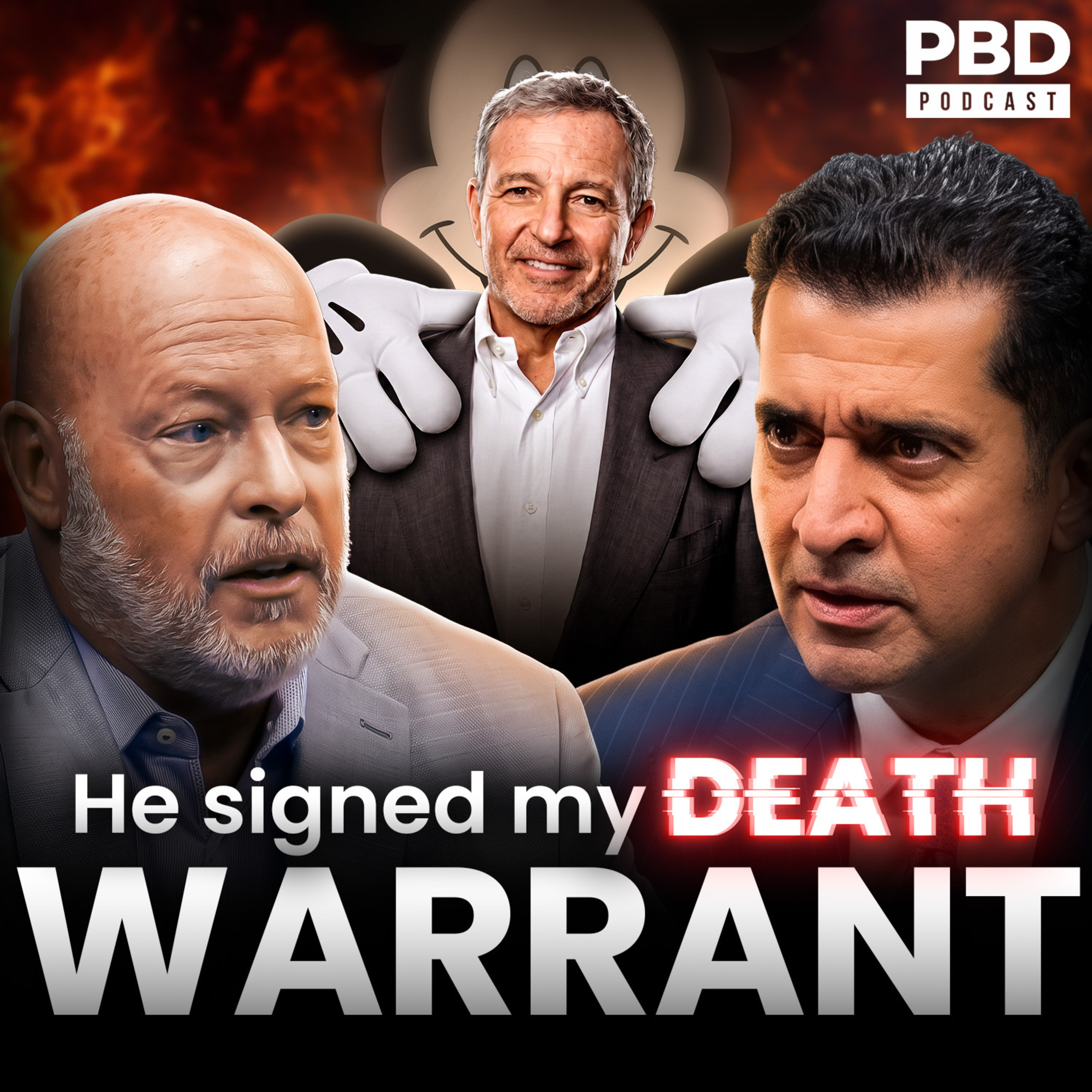
The guest, a former Disney executive, describes how he lost his job after Bob Iger’s return as CEO, portraying it as a “death by a thousand cuts” triggered by a New York Times article. He also recounts his rise at Disney, his “disruptor” approach to distribution and home video, and major strategic decisions (Disney Vault scarcity, the DVD-to-Blu-ray format war, and a shortened theatrical “window test” for Alice in Wonderland). He addresses internal culture: protecting brand equity and fostering creativity, and discusses Disney’s leadership dynamics and competitors.
The episode features the host (PBD Podcast) and the guest, an ex-Disney CEO/executive (referred to as “Bob” in the transcript’s context, with the guest speaking about his own Disney career). The transcript also mentions other Disney leaders as interview subjects within the discussion: Michael Eisner, Bob Iger, Dick Cook, Rich Ross, Peter Schneider, Tom Schumacher, Pete Docter, and Michael Johnson.
Written by AI. May contain mistakes.
Discussion on the challenges faced during leadership changes at Disney.
“And it's my understanding that the board didn't even know.”
Recounting the speaker's journey to securing a job at Disney.
“So Disney, the story of Disney for the audience that doesn't know, did you pursue it?”
Exploration of innovative marketing strategies implemented at Disney.
“So they want to know if you were real or not.”
Learn about how the Disney vault strategy impacted sales and brand equity.
“and there was no more value to, because you can get a title anytime you wanted, you know, once we started distributing it digitally.”
Listen to the challenges faced while balancing a career and family health crisis.
“Then this is a job for Indeed Sponsored Jobs.”
Discover how Disney fosters creativity while protecting its brand equity.
“They were always, you know, no one ever said, don't, don't do it.”
Learn about the blend of creativity and engineering at Disney's Imagineering.
“but it had to be storytelling at the same time, and architects were very good at bringing those two together.”
Discover why animators hold a revered position at Disney.
“And so you get some really incredibly talented people that have gone through the doors there at Imagineering.”
Explore the key figures behind Disney's animation revival in the 80s.
“and they're, I mean, to this day, those gentlemen are, you know, plastered all over, all over the building and their work is, I mean, you still can experience their work when you go to Disneyland.”
Uncover what positions at Disney are surprisingly well-compensated.
“Yeah, well, they saw that, you know, there was a bit of a blip, historical blip.”
Learn about the strategic decision behind choosing Blu-ray over HD DVD.
“Because so much of the brand relies on what comes out of animation.”
Understand the risks involved in rejecting a significant offer for innovation.
“But because there was a lot of powers that be in the industry, they wanted those revenue streams.”
Explore the early interactions and relationship with Bob Iger.
“And we had essentially a good old format war.”
Learn about Michael Eisner's approach to leadership and innovation.
“You guys met at first one at an event, right?”
Discover the challenges of innovating Disney's theatrical release strategy.
“Was he selling the dream and the vision?”
Learn how Disney tested a six-week release window for 'Alice in Wonderland'.
“Even though 98 % of the business was done in the first month, they just didn't want anyone infringing on their window with the expectation that maybe if somebody knew it was coming, they would not go to a theater.”
Explore the strategic considerations for choosing film release dates against competitors.
“and we got a chance to see what would happen with the DVD sales when you didn't have to wait until it was ice cold to start selling it.”
Understand the competitive dynamics and respect between major film studios.
“I'm sure people wanted to pick on you guys all the time or or was it behind closed doors, a bunch of friends?”
Discover which Disney executives were known for their competitive nature.
“I mean, you know, there's that in sports and business and everything.”
Examine the leadership styles of competitive figures within Disney and their impact.
“And did he end up, was he a guy that was ever considered as a CEO position or no?”
Examine the leadership styles of competitive figures within Disney and their impact.
“For those who move through life differently, from sunlit decks to nights that never need an occasion, every detail is considered, every step effortless.”
Dive into the transition from physical media to streaming and its implications.
“Fall has never looked or tasted this good.”
Exploring the challenges and impacts of transitioning from physical media to streaming services in the entertainment industry.
“I think even Best Buy was calling you when you're getting all these calls.”
Details on Bob Iger's Fox deal and the speculation surrounding the next Disney CEO.
“Said Disney's now going to release their movies.”
A recount of the steps and significant conversations leading to the narrator's appointment as CEO of Disney.
“that I said I was going to achieve when I was in college.”
Learn how body language influenced perceptions of leadership during a crisis.
“You were saying that in the introduction.”
Understand the challenges and perceptions faced by leaders during the pandemic.
“But taking SniperFire, friendly SniperFire, at the same time, which was not helpful.”
Delve into discussions surrounding Iger's potential motives and leadership style.
“But he also really protects his image very carefully.”
Examine the communication breakdown between Disney's executives and its impact.
“I watched this thing four or five times last night.”
Insights into Bob Iger's confidence regarding his return to Disney and the board's dynamics.
“And I say in the book that it's not a miracle that I lost my job.”
Discussion about Disney's current valuation and potential to reach a trillion-dollar market cap.
“He just decided to do it by pronouncement with the New York Times.”
Exploration of Bob Iger's past aspirations to run for president and potential reasons for not pursuing it.
“You guys made a decision and numbers went up, I believe, slightly.”
Discussion on Iger's leadership style, his risk-taking, and the impact of his decisions.
“Maple glazed, roasted, and edges perfectly caramelized?”
Reflection on missed opportunities and leadership decisions made during the pandemic.
“okay, of Iger becoming a president one day, what do you think are the percentages that he pursues politics now?”
Discussion about Disney's recent cultural shifts and the implications of LGBTQ representation in media.
“And, you know, and the list just keeps growing.”
Exploration of Disney's decisions regarding LGBTQ representation in films.
“But that story is kind of out there on what happened with that story.”
Discussion on the distinctions in creative responsibilities at Disney.
“Four to five years prior is the development.”
A look at the history and key figures behind Disney’s LGBTQ initiatives.
“And by the way, if you can go to the stock, there's one that matches all four of them.”
Examination of controversies regarding LGBTQ content in children's programming.
“Anytime you see queerness, it's probably me.”
Discussion on the differing views of Disney employees regarding company policies.
“Uh, and, and if you zoom in, you guys are a behemoth.”
Learn about Al Weiss's conservative leadership and his impact on Disney.
“But one thing was with Al that the average person doesn't know.”
Explore the hypothetical scenarios for Disney's leadership and market challenges.
“Then this is a job for Indeed Sponsored Jobs.”

Get the gist, explore an idea or ask about something said.
 Claude
On PBD Podcast, what are the key points of this episode?
Searching your listeningAutomatic transcript. May contain errors.
0:00You just signed my death warrant. What I should have done is seen the smoke on the horizon. In the beginning, I saw what happened to Jay. I saw what happened to Tom. But I'm different. That's not going to happen to me. I think he got a taste of retirement or, frankly, a.k.a. less relevance. And I don't think he liked it. He didn't like being the color commentary guy. He wanted to be the play-by-play guy. He looked miserable sitting next to you. And I knew that I was going to have a rough time, and then it just started piling on. When I knew I really had a problem was when he did the New York Times article.
0:40I thought I had no idea it was coming. He didn't tell me. His publicist didn't tell me. And it's my understanding that the board didn't even know. I'm at home, and someone calls me and says, you lost your job already? Board members brought back Bob Iger to lead as CEO. You signed my execution papers. How do I recover from this? From then on, it was a death by a thousand cuts. It's not a miracle that I lost my job. It's a miracle that it took three years. Was there ever a conversation that we effed up behind closed doors, pushing too much LGBTQ to kids and families? There was plenty of conversation as to what was the right direction for the company.
1:22When I got the CEO job, I was concerned that this could create a backlash. Are you a long bi on Disney? I'd have to see where Josh is going to take it. I think it's going to take some courage. He has to confront Iger. He has to confront legacy management decisions. He has to be bold. He has to have courage. Bob had a lot of support from loyalists on the board. The four board members that he replaced from Eisner. I think Bob was always very, very confident that he can have his job back whenever he wanted. He hasn't called you since.
2:11So I'm going to ask you an indirect way of helping our guys, our production team that works so hard, get a raise. Do you want to help them get a raise? This is how you can help us out. 49 % of you watch our podcast that our editors work so hard producers, cutters, all of them our production team 32 of them that work here they work very very hard to deliver a good quality to you if you enjoy our show and you want to help this thing get bigger so we can take our talent that we have in-house that support this production all the time and maybe even give them a raise then please subscribe to the channel that allows us to get more viewership and indirectly it makes bigger opportunities for our current team that we have.
2:52Thank you so much. So Disney, the story of Disney for the audience that doesn't know, did you pursue it? Was it accidental that it happened where there was a job opening? Hey, babe, maybe we should think about it. How did that happen? Good question. So I was talking to a friend, and I said, you know, I really feel like I need to get back to California because I'd spent a little bit of time with H.J. Hines in Long Beach. Really would like to get back to California. You know, Cincinnati's great, but eh. And he says, well, I have a friend who just applied for a director of marketing job at Disney.
3:26He didn't get the job, but I know there's one that's open. So I just wrote a letter to the hiring manager. And interestingly enough, I got a call back. And when I got the call back, it was only like maybe five days later, they said, well, we have a job, but we're not really hiring right now. We're going to be hiring in like three or four months. And I didn't want to let that opportunity go. So I stuck my foot in the door before she can shut. I said, I have a commercial shoot on my current job in Los Angeles next week. Would you mind if I just stop by one day, as long as I'm going to be in town, and just say hello?
4:06This is the one with Will Chamberlain. Yes, it was. Exactly, it was. How was Will Chamberlain? He was great. He was great. Was he funny? Was he flirting with the girls? because he's got the reputation. He's got the reputation. Yeah. No, he was a gentleman. He was a gentleman. He was a gentleman. That's good. Yeah, playing basketball in dress shoes, which was interesting. But, you know, it was one of those things where they said, okay, if you're going to be in town, sure, come on in. And three days later I had an opportunity. Well, they actually gave me an opportunity to come back the next day, but I was supposed to be on a flight back to Cincinnati with my boss, and I figured that would be kind of awkward to try to explain why I'm staying.
4:47so I said I'd come back Monday. They agreed and I think by Wednesday had a job offer. So I went in like five days from getting the phone call saying we're not hiring anybody to getting the job. How many interviews did you do? Was it an extensive interview process even at that time? Six or seven. And who are you meeting with? What did this start? I met with the president of the segment. I met with the vice president of marketing and a whole host of the direct reports of the president. What are they asking you? Do you remember the questions? Oh yeah, no, they were trying to figure out how legitimate I was.
5:20Disney at that time really was all about the theatrical business, movies and theaters. And now they had this packaged goods item, which was videotapes, you know, because it was kind of coming off the era of, I mean, depending on, you know, your age, this may make sense, Blockbuster or Photomat. People were renting videos. And this was the first chance to actually own a movie to create a library. And that business was in its infancy. And so I think, you know, I give credit to Ann Daly, who was the president of the division at that time, to know that they needed to do more than just sort of photocopy the theatrical marketing plan.
6:04Renting a movie or watching a movie in the theater is a little bit different process than I want to own that forever. And this business model that I was working on was really the ownership side primarily. And so they wanted a packaged goods marketer. And again, the Disney thing just happened to be a fantastic product category for me to do that in and ended up getting the job. And that's how it started. So they want to know if you were real or not. You're going through six interviews, then you get the job. So you come back and is it fairly quickly that you moved to LA? Six weeks later. Six weeks later, you moved to L.A.
6:44Right. Okay. And when you get there, somebody five minutes before you got there got laid off. What was the story about the person that got laid off right before you? Well, I had mentioned that this was a very quick turn between the time I got there and the time I got the job. One of the reasons why they said it was a work in process, the job was, because they hadn't actually removed the person who was in the job yet. That was a— That's an awkward moment. It was a termination. and I get there and I'm sitting in the lobby waiting to start my first day. I'm early. I'm gung-ho. I'm ready to roll. Just moved to Los Angeles and I'm waiting and waiting and waiting and it's really taking a long time.
7:23I'm like, wow, I've been out here for an hour and a half, two hours waiting and something doesn't feel right. Well, they were in the process of actually firing the person. Did you actually see him getting fired coming out of the office? I did not. I did not. They did it in a different conference room. They did it in a different conference room It was like two ships passing in the night we didn't see. They showed me to my office, welcomed me. They showed me to my office. I said hello to my new administrative assistant who was completely shocked because she just found out five minutes earlier. And she was his.
7:54She was his. So she learned immediately he's gone and here's his replacement within five minutes. I got there and his papers were all over the desk. Did you ever talk to him or you and him never interacted? We had an interaction after that. Just like, hey, what do you find is? How does this work? Where is the... Well, no, I've just wanted to introduce myself and wish him luck. Yeah. And that's your day one. That's my day one. Chaotic day one. Yeah, well... That leads to a nice story. Yeah, it does. Okay. So what happens next? Because you end up having quite a few victories. You know, you did some stuff.
8:31You would, a lot of the main word that I saw all over the place in the book was as a disruptor. You would disrupt some segments of the business that even some people would say, Bob, you sure we want to do this? You sure this is going to work out? And ended up working out multiple times. That's sort of my history. Would you mind sharing some of those successes on how that happened? Sure. Well, I always like to think that I see one of the things that I think is one of my strengths is I see clarity through objectivity. And sometimes there's a lot of learned behaviors or expectations or norms that get layered on objectivity that turn it into subjectivity or turn it into dogma.
9:11And one of my strengths always was to kind of cut through the dogma and find out what's been layered on over the years that may not even be necessary or critical or advantageous. And I like to kind of strip it down. And so throughout my career, whether it was in the studio and the home video side or whether it was in Disney consumer products or whether it was in theme parks or even at the CEO level, I like to think that I was able to kind of cut through all of that, find the truth, and then act on the truth, even if it was something that defied convention. And it seemed to be a pretty good formula for me throughout the years.
9:51What were some of the victories? I know the DVDs, I know some of the... Was it VHS when you came there? It was VHS when I came there. So, you know, whether it was, you know, my contribution to the moratorium and the Disney vault, you know, the idea is if you want to sell something, you make it available. Well, this idea was completely different. This idea was by taking it away, you create scarcity and people will buy it more. And that was just a head scratcher for a lot of people. Wait, you're going to tell me you're going to take Dumbo or whatever the title might be. You take Dumbo off the market for seven years, re-release it for one year, and you're going to sell more in that one year at a higher price than you would in total for all seven years.
10:37Yes, and why? The reason is, is that like any product, if it's just ubiquitous and it's out there, it tends to lose its value. And I noticed when I walked through a Walmart or a Target or a Best Buy, there's all these VHSs that were in dump-ins. In other words, they weren't the nice ones that were stacked that had just been new releases. And they all had holes drilled in them, which means it was old inventory,$1.99. And I saw classic movies from other studios with holes drilled into them. You know, basically$1.99. I'm like, how could that be$19.99 a year ago, and now it's$1.99? Well, the reason is because sales slowed.
11:20So my thought was, rather than treating your product that way, what if we revere it? What if we pump it up and make its release? Like they would, a big deal, but you make its removal a big deal too, the Disney vault, and then you withhold it from the market for seven years and then you bring it back into the marketplace, possibly in a new format, but at least a gold edition, platinum edition, silver edition, whatever edition. You add extras to it. You somehow make it better restored, newly restored. How do you sell that to the board or the team? If it's like for seven years, I'm not going to get the revenue on this product, but trust me, in seven years, we're going to blow up.
12:04Well, we tried it. We tried it on individual titles. How did they push back? What did they say to you? Well, it's just counterintuitive. And then the biggest thing was once it was successful, any time an executive who was actually managing the segment or division wanted to make a number, they wanted to open up the vault because they saw how crazy it was when we re-released something, whether it was in the same format or maybe a successive format. In other words, VHS gets replaced by DVD. DVD gets replaced by Blu-ray. Blu-ray gets replaced by digital. every time that happens that, you know, we could sell.
12:38And so what you would, we were selling at that time, geez, you know, 10 million copies of a title, 10 million copies at$20 a piece. We would announce it coming out into the market. We would announce it was going away. We would, you know, have a mnemonic where the vault door would slam, you know, going into the vault for the next seven years, you know, Pinocchio, boom. How would you promote that to the audience? Because I don't remember that. How would you promote it to the audience that's going into the vault? We would show, you know, going away, you know, into the Disney vault. This is like the last chance to buy it.
13:12Is that how it was? It's the last chance. Exactly what it was. And we would, like, put a timer on it seven days more, six days more, five days more. And where do I see that? On your site? On television. On television I've seen that. And the reason that was important, again, there was an objective strategic reason that was important. Well, the number one reason why people never bought a title wasn't because they weren't interested in it. It's that they never got around to it. So you created urgency by doing that. Created urgency by doing it. And it was, I mean, until distribution went digital and there was now ubiquity of product, it really was the main driver for studio profitability for 20 years.
13:56But then, you know, product became digitally distributed and there was no more value to, because you can get a title anytime you wanted, you know, once we started distributing it digitally. And so it, you know, lived out its normal life. But there you go. Is that what it was like? Literally? That is exactly. Is there a video? The difference is that that vault door would shut. Going back into the Disney vault, you know, Aladdin, boom. And you'd show it. And so let me ask you, when that happened, was there eBay out back then or not yet? No, not back yet. So were people going at auctions and buying stuff online like, hey, if I pay 90 bucks and I'm selling it for$300?
14:36Yes, there you go. There you go. There you go. There's the vault door. So you would put this up to the world and they would see that something's going into the vault. They would see something's going into the vault and then I would get calls from friends. Hey, my daughter's got a birthday. Could you open the Disney vault? There's no such thing as a vault though. Well, there's a vault, but it doesn't look anything like that. and it was where the masters were held. But we didn't store 20 million units inside that vault there. But there was a bunch of people that were involved in this with me, some exceptional marketers by the name of Laurie McPherson, Gordon Ho, Andy Saditsky, who were all part of this, and they did a spectacular job.
15:19We all had different pieces. I had the Disney brand. I was working on marketing the Disney brand products because, you know, We had other brands like Touchstone Hollywood Pictures and things like that. So there was a whole bunch of brands, and those non-Disney brands didn't have the benefit of having a Disney vault. But we all really, really did some exceptional things back then. When you opened it up, when the seven years came by and you're opening it up, what were some numbers you guys would put up on day one? It depends on the title, but Snow White. Okay, so Snow White was the classic because it was the one that started them all, right?
16:02And that particular title, I think we did in excess, I believe, over 10 million units. And that would have been, by the way, at$20, that would have been$1.99 and we would have sold 100 ,000 of them if we didn't have that strategy. But we wanted to protect. Disney is all about the content. It's all about the equity. It's all about the brand. So we needed to protect that, but at the same time, commercialize it. How do you do it? Make it scarce. And don't treat it like something that belongs in a dump in with a hole drilled in it. This episode is brought to you by Indeed. You're ready to level up your business, but the pressure to find the right person to make that happen is intense.
16:44Indeed-sponsored jobs can help carry the load. It boosts your job post to help it reach quality talent fast. Cut through the chaos with Indeed Sponsored Jobs. Get a$75 sponsored job credit at Indeed.com slash podcast. Terms and conditions apply. Hiring now? Then this is a job for Indeed Sponsored Jobs.
17:0510 million units in a day at 20 bucks. Of a movie made in 1937. That is unbelievable, Bob. So now when the board's seeing this and saying, hey, good job, Bob. What's the reaction from the board, from the leadership team? I get made president of home video. And this is when the guy was leaving a Microsoft and your wife wasn't feeling well and he was going to be the EVP. You applied for the EVP, but they said instead of giving you EVP, they're going to give you the president. So this is a very important lesson for the average person, if you don't mind unpacking, because at that time, you know, what you talk about in the book, your wife's going through a real health issue.
17:41We're not talking about something small. This is a challenging time for you. So you have an opportunity to and Cindy, right? And you have an opportunity to take on a life-changing job. It's going to pay well, but it's going to come with responsibilities, time, all of that stuff. But at the same time, your wife has leukemia. How are you managing this season of your life? Through perseverance and just mental toughness. So I went in to see my boss to let him know that my wife had leukemia and was going to need a bone marrow transplant, which serious today but it was really serious back then and uh he said well before you tell me what you got to tell me i'm i'm leaving i want to tell you i'm leaving and my job's going to be open and you can apply if you want and so i you know i was like here here's my chance to you know reach reach for the the the all i can be is this guy mitch is it was yeah yeah miss coke yeah yes good guy But at the same time, I've got a bigger priority.
18:42So I went home and told my wife, and she goes, you've got to do this. You've got to do this. Good for her. So shortly thereafter, she went in to City of Hope, fantastic place. They saved her life. City of Hope for a bone marrow transplant, and her brother was the donor. But that basically meant that for about six weeks, she was in the bubble. like you know there's no no anything could have killed her if it was a virus or bacteria so she was in tough situation and we have three kids and we're about an hour and a half away from Duarte where City of Hope was and so I would go to work well first of all I would get up I would work out at about three o 'clock in the morning because I needed the stress relief I would go and get the kids breakfast.
19:32I would pack up their homework, get them breakfast, and take them off to school and then go to the Disney studio, which was about an hour away from where I lived. That was in Burbank. I would work until about noon, and then I would head back to pick them up from school at about 1.30, and then I would take them, so that's another hour, I would take them another hour and a half, because that's even past Burbank, about another 45 minutes. You probably know where that's at here. Of course. Pasadena. Yep. and uh 210 134 exactly and so i would take them to duarte every day to see their mom get there about four o 'clock 4 30 we would stay about two hours i would drive them home pick up some food um as bad as it is in the car as they did their homework get them home give them baths put them in the bed we didn't have any family in the area all our family is back in the midwest in Indiana.
20:25So, and about 11 o 'clock, I would, you know, finish up laundry and collapse and get up and do it again. And I did that pretty much every day for six weeks, being sort of dad, being, you know, housekeeper, doing everything that I could for her, both physically and psychologically, and cut my teeth as a first-time president at Disney. So, you know, it's amazing what people can do when they have to. You know, when you're pushed to the limit, that's when you're the best you can be. And I felt that even though I was, you know, operating, you know, probably at 50 % of time capacity because of my other obligations, I was 100 % on it.
21:14I was performing at 110 % of capacity at 50 % of the time. What gave you strength at that time to go through it? You're by yourself. It's not like you got a sibling to go see, a friend to go. What gave you strength to go through it? My wife. I had to do it for her.
21:32And the story you tell, the fact that what are the chances that the matching bone marrow was the brother Rob, I think, right? Rob, right, right. Right. You know, her other siblings, she's got three other or two other siblings, and they weren't even close. There was not one allele match. They they matched by alleles. And Rob was six out of six alleles. And as a result, he was he was the donor and he saved her life. You mentioned the doctor. The doctor sounded like you had a Persian name. Not Amani. Yeah, it was. That's a Persian lesson. It could be an Indian lesson, but it's also. Yeah. I'm not sure, but Dr.
22:13Nadi, as she's called, was amazing. Wow. She was really amazing. She used to get a kick out of me because I would study the blood journal before I'd go in for one of Cindy's appointments, and I'd be asking her about different drugs. She was like, where'd you get that? I said, well, I read the blood journal. The major Indian. So it's kind of. Well, I say, yeah, kind of did. So, you know, I always wondered why. It's because of my career. makes no sense with the degree away from you know uh microbiology why did i do that well it really came in handy because i was able and then unfortunately three years later despite the bone marrow transplant uh one or two cells survived and started replicating and actually the treatment that she ended up getting was something that i found in a blood journal and because dr nadi was thinking of a more traditional treatment i said well what about a donor lymphocytum infusion.
23:07And she goes, how do you know about donor lymphocyte infusion? I said, well, I've been doing my research. And she goes, it's very risky, but it's very effective. And you just have to understand the risks. And that's what she ended up doing is not very common treatment, at least then. I'm not sure now, but Rob came back in, they spun out his lymphocytes, was very scary because it went wrong in the beginning, but had a lot of guilt about that, But she survived it. Well, thank God. It's girl, boy, girl, right? I think the son's in the middle or the son's the... For me, our kids. Yeah, girl, boy, girl.
23:43Girl, boy, girl, right. And at that time while you're going through it, by the way, what did Mitch end up doing when he went to Microsoft? Did he end up climbing as well? Yeah, I think he did well. I think he did well. I don't recall exactly what he did when, but he stayed there for quite a long time. So now you make it past this transition. how how much is disney also watching you and saying this guy's legit he can you know he can have some mental toughness and he can handle you know tough times are they sizing you up that way as well or not necessarily i don't know how aware they really were of my personal situation obviously they were aware because you know i wasn't there in the afternoon for six weeks when i first got the job who you're communicating with at that time was it the president level at that point I believe I was communicating with Dick Cook okay and what position was the head of the studio oh so you're dealing directly with the head of the studio so he knows what he has an idea and he was aware right he was aware that I was going through challenges but one of the things that I was really really fortunate is that they always gave me a lot of leash in my jobs they gave me a lot of room to do what I wanted to do and as a challenge dogma.
24:57They were always, you know, no one ever said, don't, don't do it. Michael Eisner was very supportive as well when it came to some bigger things that would require his approval. And it was all, it was all really very positive, very enabling. What wouldn't they compromise? You can't become a, at one point, a half a trillion dollar company with this kind of a brand that's one of the most famous brands. And what did they not compromise? Anything to risk brand equity. What does that mean? You know, Steve Jobs used to talk about brand deposits and brand withdrawals. And, you know, because obviously Apple's very similar, you always have to be conscious of making a brand withdrawal.
25:38You have to put in a lot more than you can ever take out. And so creativity and the brand are the two things at Disney that you cannot compromise whatsoever. What areas did they invigorate creativity or was it more like they recruited creativity? They couldn't take a six and make him creative. It's culture. It's a cultural thing. They, you know, I mean, obviously they got great creative talent. I mean, look at Disney's history. But it really, it's a cultural thing. It's because those two elements, stewardship of the brand and, you know, really fostering creativity are two of the biggest hallmarks that I think have made Disney what Disney is.
26:23and that goes true all the way back to Walt. Yeah, it's interesting to build a brand like that. What would the thing, Imagineers? Is that what they call it? Imagineers are the group of artists, engineers, and architects. Fascinating documentary on that. Yeah, there is. I don't know how many episodes it is. That's a long list of people. It is a long one. But they're responsible essentially for a lot of things in the company, but most notably the theme parks and putting in the, you know, developing the attractions, developing the restaurants, theming the whole places towards story, cruise ships, designing cruise ships, designing hotels, extraordinarily talented group of people.
27:10Who created that? Who came up with that idea? Well, I think it was Roy. Roy, I think it was Roy. Was it Roy that did it? It was a real thing. It was like a real, like, and the people who were Imagineers, was that, who got that qualification? What would it take for me to be that? Generally, you had to, it's more of a physical thing than a film thing, although obviously there's elements of film and attractions and things. You basically, most of the Imagineers were from architecture schools. Architectures. Yeah, it's a real balance between practical, because if you have an attraction that's going to run a million times a day and holds a certain number of people, that's a very scientific basis of approaching things, but it had to be storytelling at the same time, and architects were very good at bringing those two together.
28:05Now, don't get me wrong. There's people that are into costuming there. There's people that are into music. There's people that are into film. There's a whole variety of people, but the core of the people are people that design attractions. And, you know, there's physics involved, but there's creativity. They all have to tell a story. And so you get some really incredibly talented people that have gone through the doors there at Imagineering. Bob, you know, in many sales organizations, they'll say, sale is king. And many tech companies will say, you know, engineers are king. Who was king at Disney?
28:40who was protecting it would be the animators the animators why the animators well because disney's creativity disney's content really started out in animation and uh as a result they were revered they were revered and protected probably more than anybody but the imagineers were closely behind the nine old men that's the that's the genesis of it all right there and they're, I mean, to this day, those gentlemen are, you know, plastered all over, all over the building and their work is, I mean, you still can experience their work when you go to Disneyland. At Apple, Apple created six levels of engineers.
29:25If you type in Apple, six levels of engineers, you'll see it. And then they made it very public where it's like, Like if you're a level one engineer, you make, yeah, there you go. If you're a level one, can you, yeah, there you go. Level one, can you go back real quick? They would call it ICT. I'll make it small right there. There you go. If you were an ICT2, you would make 166 to 180. ICT3, 250 to 260. Go a little bit lower. ICT4, 345 to 380. And then you get to 480 to 560. And then 750 to a million. And if you make ICT 6 plus 15 years, million plus, some of them are making$5,$10 million. Who were some of the highest paid people at Disney that the average person would never be able to guess?
30:10Well, you know, I don't know what their compensation is because that isn't something that, you know, we would ever share nor would be shared with us. But, you know, there's a lot of legendary animators. You know, I had the pleasure of working with, you know, people that ran a lot of those jobs, Peter Schneider and Tom Schumacher, who were really responsible for the revival of Disney animation after a period of time where things got a little soft. Revival? Yeah, well, they saw that, you know, there was a bit of a blip, historical blip. What year was that? Before, it was right before I came. It was, you know, probably the 80s.
30:50Mike Eisner comes in 84, 85, right? Right, and then he was, I'm going to fix this. And basically, you know, Little Mermaid, Aladdin, Beauty and the Beast, Lion King. That is the cadence that, you know, the genius of Peter and Tom really shepherded within the company to bring Disney animation back. outside of being a CEO at Disney, which you're one of seven to do so when you became the seventh, what is the hardest position to get to? Like you have to be cream of the crop, top tier to become an XYZ at Disney. What was that? Anywhere in the company or within the creative? Anywhere in the company.
31:38Well, obviously CEO would be. Outside of CEO. Outside of being a CEO. Outside of CEO. I would probably say head of animation. Head of animation. Head of animation. Because so much of the brand relies on what comes out of animation. Animation is the heartbeat of the company, always has been. And, you know, Pete Docter is a person that I had the privilege of working with for so many years. When he was sort of a middle-level animator, I was a middle-level executive, and we got a chance to work with each other. And Pete was fantastic and has gone on to do great things there. And he has certainly shepherded a lot of great animation history.
32:24And it was great working with him. Very interesting. So during this time when you become the president of the division you're running, what's the story about somebody that came knocking on your door for$100 million and you said no to them and all your competitors took them? What happened there? Well, I don't know if the competitors took them, but the story is there was an impending format change. Okay? And the options were this is when DVD was already established and there was going to be a high-definition format. And there was proponents of HD DVD was essentially a DVD on steroids, which maintained a lot of the intellectual property licenses and benefits, financial strings, for people that had IP in the HD DVD format, the DVD format, because it was the same IP.
33:28And then there was a sub-start where Sony came in and said, no, we can actually do something a little bit more revolutionary and have a much greater chance of completely transforming the business. And remember, the transformation of the business was important because then we can sell the whole catalog all over again as opposed to some people making the transition a high-definition HD DVD versus people wholesale completely replacing all their library. You can understand how valuable that would be with the Disney library. So Blu-ray is out there from Sony. Warner and Toshiba had HD DVD. and crazy me, I'm like, boy, a complete transition to the library with something that was revolutionary like Blu-ray sounds to me to be a lot more transformative than just going with two DVDs glued together, which is what HD DVD was.
34:20But because there was a lot of powers that be in the industry, they wanted those revenue streams. You know, Warners wanted the revenue stream. Toshiba wanted the revenue stream from DVD to continue. And if it went to Blu-ray, then Sony was getting it. But I looked at it through a consumer lens, and I said, what would be the most transformative thing for the consumer from an experience standpoint, from an interactivity standpoint? Because this is where it wasn't just sit back and watch the movie. This was a little more lean forward. What year is this? Oh, gosh. Early twos? Yeah, early twos. Early twos.
34:57And sure enough, I lined up with Sony and the rest of the industry lined up with HD DVD. And we had essentially a good old format war. And somebody did come to my office and essentially in the form of what would be replication credits. In other words, consideration for discounted disk replication, because we make a lot of hundreds of millions of disks. And I took the offer to Bob Iger at the time. And he goes, what would you do? I said, the value to us of a complete format transformation to a format that's going to, you know, obsolete DVD is worth so much more than$100 million that I think it's short-sighted to take it.
35:50He goes, okay, your call. So that's what I'll talk about the amount of freedom, the degrees of freedom that I got were enormous. But I always made it work. What was your first interaction with Bob? Is that the first one or no? You guys met at first one at an event, right? Yeah, we met at an event. It was kind of a simple introduction. He said hi, I said hi. Because he was much higher than me. He came over from ABC, went in the Cap Cities ABC acquisition. And so to me, he was just another one of these kind of super executives. And I was, you know, a division president. If there's levels to the average person to understand what that means, like let's just say level 30 is CEO.
36:41What is Bob at the time? What are you? So Bob at the time was right underneath Michael Eisner. He's true. He was like company president, sort of the equivalent of a COO. And then there would be chairman of the big conglomerates like Parks, the movie studio, right? And I was then a division president underneath that. So it would be Michael, it would be Bob, it would be chairman like Dick Cook, the gentleman I mentioned earlier, and then a whole bunch of division presidents. I was the video guy. When you did the Sony deal, did you deal directly with Tommy or Mottola or who was that Sony? No, no, no, no, no, no, no, no.
37:20That was, the name's escaping me right now. I'll think of it in a second. Was Tommy still there or he was already out? He was on music though. He was on music. He was on the other. It's a different Sony you're dealing with. Yeah, a different division of Sony. DVD, you're dealing with, is it DVD and... Yeah, it was the, you know, it wasn't the biggest part of Sony because they didn't have the IP. So this was kind of an upstart for them. Got it. It was Warner Brothers and Toshiba. Their arch nemesis, Toshiba, was minting the DVD business. They were going to mint the Blu-ray business if it worked.
37:54And it did work. And against all odds, Blu-ray won the format war. We were in a catbird seat because that's what we supported. And the rest is history, complete conversion in format. What was your experience, any experience working with Eisner, Michael Eisner? He's great. What was he like? I watch his interview. He is so easy to listen to. Yeah, very supportive. He told me when I got my first president's job, I was in his office, and he said, I'll never fire you for failing. I will only fire you for not taking a chance on something new. That's all I needed. Being that disruptor, that was my language.
38:38You like that language. Yeah, I like that language. Was he a driver? Was he an expectation guy? Was he selling the dream and the vision? Was he a numbers operator? I would say he was more selling the dream. He was or no? He was, and an expectation guy. He wasn't like a driver. He wasn't the kind of guy that was at least me. And again, remember, I had a layer between myself and Mike. So he may be driving the guys above you that you never experienced that. Maybe, but, you know, he was so successful even before he came to Disney that he sort of knew how it needed to be done. And, you know, he wasn't afraid to share his vision about how you make that happen.
39:17And, of course, I was a sponge. What was the book? Did he write a book called Working Together or Michael? It's a red book with a white, I don't know who he wrote, but it was like all these different stories. He wrote one of the chapters, I think, was about Studio 54. That's the one right there. Go back to where you were at. Go back to where you were at. No, no, no. The one above. The one above. The one above right there. Right there. What is that? Working together. Michael Eisen wrote this book. I read this book a long time ago, and in it, but who was he talking about working together? Maybe he was telling stories of others working together.
39:54Yeah, in one of the chapters, he actually talks about how Studio 54, you know, him and the other guy worked together as a team. Very interesting stories he told in this book. Interesting. So Michael Eisner, he was the CEO for almost 20 years. He was there for a minute, right? He was there for a long time. And, you know, at what point, like when you and Bob got together and Bob asked you, should we accept that$100 million or not? What did that relationship with you and Bob start? Like when was it when it eventually led to you becoming the CEO? Well, we had a situation where Bob was really an innovator.
40:40He wanted to test new things. He wanted to try new things. when he took over from Michael when he became the CEO. And he wanted to do a window test. You know, for so long, movies had to be in a theatrical window, meaning it couldn't be released in anything else for six months. And being sort of the video guy, I'm sitting there for six months twiddling my thumbs, waiting for my chance to go sell it while this thing's melting like an ice cube. You know, the heat for most of these titles goes away. And he always thought that that was wasteful. I always thought that was wasteful. So Bob made a change at the studio leadership.
41:24And at that, he put a gentleman named Rich Ross in as the new studio chief. And he kind of promoted me to manage distribution of all studio content across theatrical, across digital, across video, across DVD, blah, blah, blah. and one of the challenges he gave me is I want you to do a window test. Now, a window test meaning that instead of waiting for six months, we might wait for six weeks. That had been tried several times, and each time the powers that be in the industry made sure that died, which were the theater exhibitors. The theater exhibitors wanted no part of having their selling window go down from six months to six weeks.
42:05Even though 98 % of the business was done in the first month, they just didn't want anyone infringing on their window with the expectation that maybe if somebody knew it was coming, they would not go to a theater. So Bob came to me and said, I want to test this. You're going to get a lot of pushback, but I want to do it. And I'm like, you got the right guy. Yes, sir. And there were some hairy moments because we picked a title, Alice in Wonderland, Johnny Depp, Tim Burton film. and not only did we put it in a window that was very nontraditional, which was March, big movies only come out at big times, right?
42:45Fourth of July, Thanksgiving, Christmas. Well, I always believed that was somewhat self-fulfilling. Of course, because that's the only time you put out big movies. What if we take a big movie like an Alice in Wonderland, put it in March and use it as Bob's test so we don't have to wait another six months to get a big film to do the test of Bob's windows, It was, you know, taking it from six months to six weeks. So we did it. The whole world knew it was a shortened window because the theaters boycotted us. They said you're going to get zero distribution. So here we go six weeks before the title comes out, four weeks before the title comes out in theaters, three weeks, two weeks, zero distribution.
43:25I'm flying around the world trying to get the exhibitors to agree to this, trying to convince them that a six-week window was not going to cannibalize. We had research. We had everything. They didn't care. They didn't want to do it. So it became a game of chicken. And I remember I was in London, and I was talking to Bob on the phone. I'm like, I believe they're going to cave. I believe the exhibitors will cave. They will show this film. There's no way they're not going to show this film. And he goes, and it was bad. I mean, this is going on for a month. It was a face-off. And Bob said, you really believe this is going to work?
44:02I'm like, it's going to work. A couple days later, they acquiesced. They agreed. The movie went out in theaters, did a billion dollars in box office, the first billion-dollar box office film outside those big windows. No shit. As we had forced awareness, 100 % forced awareness, that this was going to be a short window, which directly contradicted the hypothesis of the theatrical exhibitors. If people know it's a short window, it will fail. It went on to do a billion dollars. We did a six-week window. We had ubiquitous distribution, and everybody won, and we got a chance to see what would happen with the DVD sales when you didn't have to wait until it was ice cold to start selling it.
44:47Did this disrupt? I'm assuming Disney's a calendar-based business, right, on the movie side. 100%. So what are the do's and don'ts on the calendar? Like is there don't touch October or don't mess with – Well, I mean, if there's two big rules, it would be pick a high seasonality time period when people will come, right, and stay away from titles that are bigger than you. Stay away from titles that are bigger than you? What does that mean? Well, if you have a competitive title and it's expected to do$500 million in the box office and you think you're going to do$150 million, you might not want to compete with them because you'll lose.
45:25That makes sense. Your$150 million will be$100 million. So how did you guys get access to know what the competitors are coming up with next in the next two, three, four, five years? Oh, they go to industry conventions. Everybody knows. And they show their trailers. And coming next July, on July 22nd, and so everyone kind of sits there and says, they're July 22nd. What happens if we go July 4th? There's a whole group of people in theatrical distribution that that's their list. What are those guys called? What do you call them? Like a strategic? But is there a specific title for them, the guys that are calendaring the whole thing out?
45:56Just basically theatrical distribution. You've got to be strategic to be thinking about it. You've got to be strategic to think about what your competitors are doing. And, you know, you take every bit of information you get, and you're like, you know, you talk to exhibitors, and exhibitors say, wow, that Sony film is really looking great right now, or that Warner Brothers film is looking really strong. Did you ever change dates to demolish a competitor's movie that they were really banking on? Like, was it that competitive? It wasn't to demolish somebody else. It's to advantage your own film. Right.
46:27Your decision was about advantaging your own, not demolishing a competitor is just to demolish a competitor. Right. So I know you guys are the heavyweight. I'm sure people wanted to pick on you guys all the time or or was it behind closed doors, a bunch of friends? No, no, no, no, no, no, no, no, no, no, no, no. Yeah, there was no no cooperation at all. This was it was a war, but you were really looking to advantage your title. And sometimes, you know, they they think they got the heavyweight. You think you got the heavyweight, and those titles go really close to each other, and then you find out who had the heavyweight.
46:58Tell me one of those where you guys are sitting there saying, guys, this could go. It's funny because I'm not in your space. I don't know how to think about it, but it's kind of like, you know, sometimes you got Formula One. I don't know if you go to Formula One races or not. I'm not a huge fan. Are you a Kentucky Derby guy? A little bit. Okay, so they fight. They do it in the same weekend. Right. You know, Formula One and Kentucky Derby, same weekend. So sometimes you'll see fights, a boxing match at the same time as a UFC match, and it's just like, let me see who's going to do better. What was one story that you guys have where two heavyweights went against each other and you guys won?
47:35This happened, basically, I can't give you one story because it happened every 4th of July, every Christmas, and every Thanksgiving. That's what happens, right? Everybody, that's right. So the rest of the weeks, there's jockeying. But when it's the Wednesday before Thanksgiving, everybody puts their monsters out, and then you go toe-to-toe. If it's the week before Christmas, everybody puts their monsters out. You know, July 1st, everybody puts their monsters out. And so you would get those times where the seasonality, remember I said one of the things you look at is seasonality, where the seasonality is so big that no one's going to back down.
48:13And, you know, essentially you go toe-to-toe. Do you guys see each other at events? Is it kind of like when you see each other, like, hey, congrats on the movie? Is it like? Yeah, there's some of that. You know, they all, you know, see each other socially in town. You know, the places that people go to dine or go play golf. But, you know, they're competitors. You know, they're competitors. There's a lot of respect for each other. For sure, I get that. I mean, you know, there's that in sports and business and everything.
48:44But I didn't even think about asking you this question. Just curious what you say. Out of everybody you worked with at Disney for 30 years, who was the biggest psycho competitor? Positive. Don't worry about the word psycho I put as an adjective. I'm just thinking a competitor. Competitor. So I would probably say it was Warner Brothers just because they sort of saw themselves as a version of Disney. Any general they had that was really driving on the back end that they felt they were better than you guys? Well, there was a guy that was in the video space. I can speak to this because it was in the video space.
49:16He was a guy named Warren Lieberfarb who was a legend, a legend. And he was an advocate for the HD DVD movement on the other side. And, you know, most people kind of stared away from Warren because he had a lot of influence throughout the industry. And it's another one of the kind of titans that. Did he go with Toshiba? Is he who they went with? Okay. You see the smile on your face? So, but who was the most competitive at Disney? Like who was like, you guys knew this guy was determined and super competitive. Was it Iger or was it somebody else? I guess it depends on where and which business. You know, Disney, again, has cruise ships.
49:56It's got theme parks. It's got, you know. Any department. Any department. Michael Johnson's a guy who was my boss for a while. He ran home video before I ran home video, before Mitch Koch ran video. And Michael's a real competitor. Michael was like an Olympic skier. I mean, this guy was like the real deal. And, you know, he carried himself very much. Can you pull him up? Michael Johnson. Michael Johnson. And did he end up, was he a guy that was ever considered as a CEO position or no? I don't know, but Michael went on to Herbalife. Oh, that's the one. Go back? Yeah, yeah. But Michael Johnson went to Herbalife?
50:38Yeah. What a weird transition. Herbalife, CEO 2003, 2020. and you know he's a 2020 so this is the time where bill ackman and carl icon are going up against each other and he was a ceo there and bill ackman was against herbalife and he was trying to destroy their stock he had to live through this he had to live through this yeah you ever seen that exchange with icon and bill ackman no legendary if you've never seen i've not you've never seen it oh just show 30 seconds of it for shits and giggles can you go to youtube and we shouldn't show the whole interview because it's long, but just go to that one.
51:13Go to that first one right there. Listen, just listen. Yeah, go ahead. I had it with this guy, Ackman. He's like the crybaby in the schoolyard. He was like one of these little Jewish boys crying that the world was taking advantage of him. Much like in the old song, you rue the day I ever met the guy. David signed something called schmuck insurance. I got to show my investors that I'm making money and all that crap. On Wall Street, if you want a friend, get a dog. There's a book about this whole story called Confidence Game, which is worth a read. In that context, we were winding down the fund.
51:42What he called schmuck insurance, because Carl Icahn, unfortunately, does not have a good reputation. Stick with me, because this is important, and I've got a few more points to make. Stick with me for one more second. And it was a Ron Herbalife. So it's interesting. Michael Johnson goes to, so he was a real driver. He was a competitive guy. He was a competitive guy, a real competitive guy. I skied with him several times. I played golf with him several times, and he is a competitive guy. I like that. Who else? Second person. Anyone else at Disney? There's a lot of competitive people. In a different way, Harvey Weinstein was, you know, a competitive guy, but he wasn't a competitive guy on the sports field.
52:20But he's certainly a competitive guy in, you know, the boardroom, meeting room. Pushing the envelope, negotiating, pinning people against each other at all costs. What was it? Because you've done business. My way or the highway. Him, his style. Oh, yeah. And was he truly as feared as people say he was? As what? Was he as feared as people say he was? In his business, yeah. In his business, yeah. Yeah, I believed he thought he could make or break people. He could destroy someone's career. So it goes.
52:57You said Michael Johnson was a former skier. He was a skier. I think he was like an Olympic alternate. And skiing with Michael was interesting because he would ski with, you know, the Mayer brothers. You'd go skiing with Michael and he'd bring the Mayer brothers, you know, the twins. And it was very quickly when, you know, I got down. Did you hang? No. I skied once a year. Michael skied a lot. So, you know, pretty much after a couple of times down the hill, they get tired of waiting for you and they'd go ahead. What did Disney recruit? Handmade in Portugal. Their craftsmanship is a way of life.
53:32For those who move through life differently, from sunlit decks to nights that never need an occasion, every detail is considered, every step effortless. Crafted from fine suede and built with builder technology, designed to move with you. Because true luxury isn't about being noticed, it's about how you feel when you arrive. The FLB Icon Loafer. Made for the life you've earned. This episode is brought to you by Indeed. You're ready to level up your business, but the pressure to find the right person to make that happen is intense. Indeed Sponsored Jobs can help carry the load. It boosts your job post to help it reach quality talent fast.
54:19Cut through the chaos with Indeed Sponsored Jobs. Get a$75 sponsored job credit at indeed.com slash podcast. Terms and conditions apply. Hiring now? Then this is a job for Indeed Sponsored Jobs. Fall has never looked or tasted this good. Sweet Green's fall harvest menu is back with seasonal favorites dressed to impress and made to be devoured. Warm roasted sweet potatoes, crisp apples, maple glazed Brussels, and crave worthy flavors in the autumn harvest bowl, maple glazed salmon plate, and roasted bacon Brussels side. The season's most desirable menu has returned to Sweetgreen, featuring fall's best dressed.
55:01Make your move. Order on the Sweetgreen app.
55:09Did they recruit former athletes? Was there like a pattern of who they looked for? No, no. Generally, big schools were kind of a thing. You know, Stanford, Chicago, MIT. they were pretty conscious of that kind of thing, which makes my background even more ironic. Indiana, that's what makes it a great story. Yeah, well, I really didn't fit any of those bills, but my results spoke for themselves. Respect. And in this part, there's a part of the book that was fascinating to me where you talk about Steve Jobs. When Steve Jobs came in and the Pixar deal is getting done and he's talking to you and then they're going to go into streaming and you know if they go streaming, it's like an overnight shift for the people that are relying on DVD and Blu-ray, all that stuff.
55:59And then Walmart's calling you, Target's calling you. I think even Best Buy was calling you when you're getting all these calls. How chaotic was that season? Well, you know, I didn't know this was coming. Bob had been working with Steve very quietly. on streaming. Yeah, yeah. Because he knew that everyone was going to say, remember what I had to face with theatrical when I only wanted to shorten the window. Imagine that you're going to release a product that eventually is going to obsolete physical media, right, with iTunes. And he didn't want to have to debate anybody. He and Steve figured out that they had the best path forward, and they did.
56:43They did. but that doesn't mean it was going to be easy for the people in the business units that you know were legacy business units to go to their customers and say well you know it's going to be because remember we got all the advantages on dvd dvd and blu-ray and vhs really paid the bills for the studio for a long time over a decade and one of the reasons we got that is because all the retailers use those products as a loss leader. In other words, they would buy them for 20 bucks and they would price them at 15. Stop it. Oh yeah. Stop. I lost money on every one of them. So you sold at retail to them.
57:21You're not even selling wholesale. No. So let me know. We would sell at wholesale. They would price below wholesale. But if I'm, if I'm Walmart, if I'm buying it from you, am I paying you 19 bucks per DVD? Yeah. You're, you're expecting 20 bucks from me on DVD. You're Disney. Yeah. You wouldn't sell it to me at six or seven bucks, even though your cost is$0.35,$0.45. We set the wholesale price where they set retailer was up to them. And they used it as a loss leader for over a decade. Remember, you used to go to a Target or a Walmart or a Best Buy, and if the title was Pirates of the Caribbean, you would have pallets of that, and it would be picked clean by the end of the day.
57:57And then we'd bring in more pallets. And so it was bringing people in. You know, one would price it$0.50 lower than the next one became a price war. We're still getting our$19.99. That is crazy. That is crazy. So these people that are generating all this business for us, selling this product at a loss, wake up one day. By the way, I learned about it just like they did. Said Disney's now going to release their movies. How much did that cost them? Cost who? Them. The fact that now everything's going into streaming. I tried to convince them that it would be a long burnout rate and that we would do things to protect the physical goods.
58:38And it took, by the way, it took the better part of a decade for it to go, you know, really peter out. You know, actually it was slower than we even in our projections. So to some extent we were right. It was going to be a long burn. But, you know, the DVD sections then started doing this. They stopped promoting it at the front of the store. But it was a necessary move and they were both geniuses for doing it because we had to make that turn to the digital evolution. And so it was the right thing to do. just would have been nice to have a little heads up so I could have prepared for the onslaught of angry calls.
59:09So walk me through the steps of, you know, when he's doing the Fox deal, and this is Bob Iger, he's doing the Fox deal, and at that time, everybody's, I'm speculating, everybody's thinking, who's going to be replacing him? And he whispers something to you and says, hey, I think if I do this Fox deal, I'm going to need to stay sealed a little bit longer. You can correct me on this, but that's kind of how I took it. That's true. And there were a couple guys that were waiting to see if that was going to be their job. Rosulo was one. Staggs was another one. And then Kevin Meyer eventually became another candidate as well.
59:40During this season, what's he telling you? Just be patient, Bob. You're one of the candidates. Just be patient, Bob. Or did you kind of know you were one of the guys poised to be the next CEO? At the time that Jay and Tom were sort of the frontrunners, or that at least, you know, it's all what's rumored, what's innuendo. Bob doesn't go and say generally that, you know, they're the frontrunners. I was just you know I wasn't high on the awareness scale for that kind of job and he did come to visit me once when he was trying to make his decision and he asked he came to my office which was rare normally you go to see Bob I was in a peripheral campus in Glendale our main offices are in Burbank so he had to drive like 15-20 minutes to get there and he was coming to see me which I thought was highly unusual and he said uh can I come see you today I'm like uh this is 2019 December yeah uh no no no this was back when I was consumer products so 2013 2014 okay this this is way before you become CEO yeah six years before yeah got it right got it right and he said uh you know Bob doesn't usually you know ask you who he should promote that's not you know that's not something he collaborates on, especially me being a whole notch below these guys.
1:01:04And he goes, so I'm debating Tom or Jay, who should I promote? And I said, he asks you, yeah, what's your opinion? No, big, big call. And I said, neither. He said, who? I said, me. He said, that's what I thought you'd say. And we shook hands and that was it. Wow. Wow. That's, well, what month was this exactly in 2013? Oh, I don't know. But it's 2013. Well, I'm going to guess because I got the Parks job in 2015, and this was a couple of years, I think, before I got Parks. So I'm going to guess it's 2013, 2015. Okay. So this was the only outcome of why he came and met with you. Yeah. Yeah. This was not normal.
1:01:46This was highly unusual. And that was the first indication I had that maybe that long list was a little longer than I thought. Did you call Cindy and say, babe, you won't believe what just happened? I think I waited until that night, but yeah, I told her, obviously. What was her reaction to it? I think to some extent she was surprised at the way it went down, but she always had a lot of confidence in me to achieve that goal that I said I was going to achieve when I was in college. That's right, for a second date or first date. So when this happens, Bob, when is the next time he brings it up to say, hey, that last conversation, are you getting ready?
1:02:27Like, does that happen again? No. Or it doesn't happen for? No, it's just that, you know, Bob promoted Tom to COO. Jay left, right? So. There goes Jay. Great guy. But there goes Jay. And then eventually, you know, Tom left the company as well. And then there's myself and Kevin Mayer, at least in terms of, you know, presumably, presumably. Kevin's one of your generals, right? No, no, no. Kevin ran strategic planning for the company. Who was your general that you had? I thought you had a Kevin as well. Who was your guy that when they... Kareem? Kareem. Yeah, Kareem is who it was, right? Yeah, yeah.
1:03:12Kareem wasn't in that conversation. He was a chief of staff. Kareem was sort of my equivalent of a head of strap planning for my business. He's an incredibly talented guy. And at this time, Bob, who is Josh DiMauro? Josh was sort of a, I'm going to guess he was probably a VP maybe at Walt Disney World. And as soon as I met Josh, I thought he was great. He certainly had the social skills, the personality, the charisma, but he also had all the hard skills, too. And he had an ability, an elasticity to learn. And I remember telling Bob, you know, because you do succession planning every year. You know, who's on the rise, who's somebody to watch.
1:04:00There's all these categories. And I put him on the list. and Bob said you should go give him some encouragement that you're going to give him some opportunities and I was about to promote him to president of Disneyland. So he's your guy. He's my guy and he's telling me to wind up someone else. So at that point I'm starting to think, well, maybe there is. In other words, he never came to me and had another one of those meetings. But I'm saying this guy's got, I think he's the real deal. So I literally flew down to Orlando and met with Josh alone and said, you know, you're going to start moving because I believe in you.
1:04:45But, you know, you need to do more than support somebody who runs a business and made him president of Disneyland. I remember he tells the story where I called him and he was driving down the road. And he took my call and he pulled over. And I said, you're going to be president of Disneyland. And he talks about the story all the time about what that meant to him because it was his chance. I mean, that's a pretty big job president of Disneyland. 1.1 million subscribers or 1.1 million annual pass holders? That's what it was then. Average price,$1 ,000. Top is, what,$18.99 right now? So it's a big business.
1:05:22Big business. And then, you know, eventually then I made him head of Walt Disney World. And now he's a CEO. So I had a lot of confidence in him, saw potential in him. And obviously it's confidence that everyone shared. He was on my succession list as long as I had the big job. So, you know, he was special. There was something special about that. So now walk me through you becoming CEO. How does that happen? Well.
1:05:49it was December you know bonus time usually whatever personal conversation about you and your career a lot of times it happens around bonus time because you're just too busy the rest of the time you're actually just running the business and you know I'm sitting there you know getting ready to get the number revealed to me what my bonus was for that year and Bob said I think I'm going to retire I think this is it. And I had heard this a number of times before, and so I was a little skeptical, honestly, so didn't put a lot of credence into it. And so he goes, Susan, Susan Arnold, who was the chairman of the board, will be contacting you.
1:06:36Now I'm like, this sounds a little more serious than, you know, sort of the every two or three year I'm retiring. To the average person, they don't know who Susan is. Susan was the chairman of the board. She is a super, super heavyweight. If she calls you, something's going on. Yeah, yeah, yeah. And I'm like, wow, well, this is interesting. Maybe a little more credibility to this one, but I had been sort of expectation set. And, you know, he said, I recommended you to Susan as my replacement. Susan's going to call you. Well, sure enough, Susan called me and said, let's go have lunch at the Rotunda, which was the executive dining room.
1:07:18And she told me that Bob had decided that he was ready to move on and that Bob made the recommendation that I would be his replacement and that the board unanimously agreed and that this was going to move very, very fast. and Bob had mentioned to me that there's going to be a period of time where you're going to want to go visit the board members because the board had sort of turned over at this point. We had a board, I think we had like four board members, I think I don't exactly remember the number, who all turned out at the same time. They're old Michael Eisner board members and Bob had replaced all them with his choices And so I knew most of them, but I didn't know them intimately.
1:08:08I knew some of them intimately. And so I figured, you know, I would, you know, take the month of January and go fly around to their individual cities and sort of, you know, make sure that, you know, we all knew what the score was and that they had confidence in me and I thought I knew what the score was. And she says, no, this is going to happen right away. It's going to happen right away. and so Was that kind of weird that they said they're going to do it right away? Did it create a red flag? That's kind of weird. You know this had gone on. Remember the first time Bob came in and asked me who he should promote with six years earlier so in many ways it was quick but in many ways it wasn't so I got it.
1:08:53You know when this kind of thing is thrown open to you you don't ask a lot of questions. You're just like yes sir may I have another you know and so I you know I said great and it was and I think what she said was it's going to be weeks not months and now at this point she's really got my attention that time I did call my wife yeah I said you know I don't know if it's real but it certainly seems real and gosh it was like two weeks later three weeks later that that uh the satellite trucks pulled up into the lot and the announcement was made. And the date, I have it here, is February 25th, 2020.
1:09:33Yeah. Right? You take over. The two of you guys are doing that CNBC interview, which I watched last night multiple times, okay, just to see his body language, because you talk about it in the opening of the book, where you say, and by the way, fascinating book. We're going to put the link below. If you haven't ordered it, I highly, highly recommend. In the book, you say, I'm trying to see where it was, where you said, I looked at his face, I went back and looked at it again, and I knew this is going to be trouble, right? Because he did not want to give up his job. You were saying that in the introduction.
1:10:06Well, it was brought to my attention by a reporter who said, have you watched the interview? Did you see his body language? And, of course, I'm not going to respond to a reporter because I'm not going to feed that story. So I did go back and watch, and I did see the body language. but it was obvious not only to me, it was obvious to a lot of other people. The market as well. The market saw it as well. It wasn't like it was just maybe insiders in Disney. Others looked at it and said, ah, it's a little bit true. Even Michael Eisner was asked about it, and he said things about the co-CEO. He says, I don't think that's going to work.
1:10:42That's going to be a problem if they do that. He said that in an interview with somebody. But I'm going through the timeline. So February 25, 2020, you take over. Then the CNBC interview happens. Weeks after that, it's COVID. Now, it's already in COVID, but it gets pretty nasty, COVID. You got shutting down the park. I'm in L.A., actually, at the Beverly Hills Hilton. When Disney shut down, it could have been March 12th, 13th, 14th, some date like that because we were going to take the family there. June 28, 2022, Disney unanimously extends Chapek's contract, right, saying, hey, you're the guy.
1:11:11She talks to you. You're ours. We like you. We're picking you. And then Bort says, you don't talk to Bob Iger enough. This is the whole session that they're going back and forth. You should call him more often. You said, I talked to him 30 minutes to 45 minutes every day. Then on November 20th, 2022, the board announced Chapek was out. Iger was back. They blocked your email. You couldn't even send one last email to the people you were working with. One of your generals, Kareem Daniel, which I mentioned earlier, chief of staff, Arthur Bachner, and assistant Jackie Hart, they're out. Iger was back, and you were done.
1:11:49This timeline that the average person sees, how fast did this timeline go by for you? This episode is brought to you by Indeed. You're ready to level up your business, but the pressure to find the right person to make that happen is intense. Indeed Sponsored Jobs can help carry the load. It boosts your job post to help it reach quality talent fast. Cut through the chaos with Indeed Sponsored Jobs. Get a$75 sponsored job credit at indeed.com slash podcast. Terms and conditions apply. Hiring now? Then this is a job for Indeed Sponsor Jobs. Fall has never looked or tasted this good. Sweet Green's fall harvest menu is back with seasonal favorites dressed to impress and made to be devoured.
1:12:34Warm roasted sweet potatoes, crisp apples, maple glazed Brussels, and crave worthy flavors in the autumn harvest bowl, maple glazed salmon plate, and roasted bacon Brussels side. The season's most desirable menu has returned to Sweetgreen, featuring fall's best dressed. Make your move. Order on the Sweetgreen app.
1:12:56That timeline between the time that I got the extension, another three extension, seemed like an eternity. It didn't go by fast because not only was I dealing with trying to bring the company back from the pandemic, where we have almost all of our revenue streams shut down, but I'm also trying to launch a brand-new growth business for the company, which is streaming, which is, you know, we're only a decade behind Netflix. But it's going very well. But taking SniperFire, friendly SniperFire, at the same time, which was not helpful. So, you know, you might think I would say, well, the time between the extension and the fateful November day was quick.
1:13:43It wasn't. It felt like it was an eternity. It felt like an eternity. It felt like an eternity. So you said something in the book, which was very interesting. You said some people told you, and I'm curious who these people are, that Bob knew COVID was coming and he was setting you up. He was almost setting you up for you to fall. What did you mean by that? Well, I didn't exactly say it that way. What I said was people volunteered to me that he likely knew, in their opinion, that he likely knew more than the average Joe did about a pandemic being around the corner. I don't know if that's true or not, because you'd have to ask him.
1:14:28He denied that COVID was ever an element in his resignation when he resigned. But I heard it one time and I completely disregarded it. I heard it a second time and I was like, God, that's funny. I heard that again. I heard it about five times. From credible heavyweights? Credible heavyweights. Credible heavyweights. From Disney or even outside? Outside Disney. Outside Disney. I don't want to go any further with it. But suffice to say that, like, wow. And by the way, it may not be true. I don't know. It may not be true. But this is what outsiders told me, is that there was some awareness there.
1:15:05And, you know, if Bob's one thing, he's a great executive, a lot of success, very, very excellent leader, very excellent executive. But he also really protects his image very carefully. and I'm sure if he had awareness that what I eventually had to do was lay off 110 ,000 people out of 200 ,000 would not be high on his list. Now, again, that may be circumstantial, but I'm just saying there was enough people. My dad used to say where there's smoke, there's fire, and a lot of smoke. But again, I don't know if that's true. and he's denied it but the timing is curious because it was so fast bob's bob's you know after all this toying around where i'm going to resign very methodical right no i'm not yes i am no i'm not then all of a sudden one day it's real and it's not a matter of as susan said weeks not months and it just was weird that i get the job and a couple weeks later i find out there's a global pandemic uh which of course i had no idea of and again maybe maybe he didn't maybe he did Maybe it was just pure random circumstance.
1:16:22Well, one part which was kind of interesting, Bob, is when you became CEO, he had a CEO office. If he's not going to be the executive chairman and he has a CEO office with a shower and everything, he didn't let you go into that office as the new CEO. That's kind of weird. Or was it like when Michael Eisner stepped away as a CEO, was his office given to the next CEO? I believe it was. But, you know, frankly, I've never been one caught up with the trappings. You know, I just kind of keep my head down. That's weird though, Bob. It was weird. But frankly, I knew that Bob sort of celebrated these kind of things.
1:17:03These were things that were important to him. And he said to me, he says, having a shower in your office is not important to you. You don't go out, you know, on the town and do power dinners like I do. You know, you won't miss it. It's important to me. I'm like, great. That was his reason? Yeah. That was his reason. And, you know, a lot's been made out of the media. Somehow this story's gotten out. To me, it wasn't really a big deal. Maybe it should have been. But you wrote about it in the book. Well, I wrote about it in the book because now in hindsight, it was meaningful. But I'm saying at the time, I'm like, well, because remember, I knew there was going to be some trouble in paradise.
1:17:42as soon as the CNBC interview, which you showed us, you know, a still from, shoot us a CNBC interview. It's very awkward. Right, it was very awkward. So I knew there was going to be a problem, and then, you know, you wanted to keep the office. So these things are just kind of piling up. I think the main thing is that 34 seconds. So play it from 25 seconds. I watched this thing four or five times last night. Play it from right there. Press play. He's going to go in the short term. Over time, though, as we all both recognize, disruption and transformation are just inevitable in this business, and it hits each one of our businesses a little bit differently, but it's inevitable that those businesses will be disrupted, and it's recognizing at that time when we'll need to shift.
1:18:21And that's, I think, the art of the job. And it's important for the audience to know what question was asked. If she asked the question, in what way will you lead differently than him? And you gave that answer, right? And so if you watch the whole thing, did you watch the interview that he did with Josh DiAmaro? No. You haven't seen that interview? No. Okay, well, I saw it. And if you haven't seen it, the body language is very different. So I watched it multiple times last night just to see the body language here. That's the one right there. And if you fast forward a little bit, you can go to the point where they're together.
1:18:55Keep going, keep going, keep going. Okay, right there. Press play from right there. And life for years going forward. Well, I think you touch upon something that is critical in terms of what the next CEO appreciates and what the next CEO is capable of doing. And that is truly, truly appreciating Disney's position in the world and to people. Disney is not just another company. Disney really is a cultural institution that has touched hundreds of millions of people for now over 100 years. of working with Bob for all of those years, first from a distance and now much more up close and personal. And I've watched probably the best of the best balance those two things.
1:19:44He smiled the entire time and he wasn't smiling in the interview with you. So I thought about it two different ways and I want you to break it down and maybe give your thoughts. So when I thought about, okay, you were set up to go up there, to take the heat, to say, oh my God, we need Iger back. Sometimes CEOs don't want to give up the throne and they want to be missed. And there is a internal battle between not a founder, but a CEO founder wants the business to grow forever. CEO is kind of like, man, you know, I want the next guy to transition to do better than me. But man, I also don't want them to forget about me because I've been so important for 38 years.
1:20:17Right of a lifetime. I've read right of a lifetime multiple times as well. It's a phenomenal book on what he did. It's a great story of all the deals that he did. but then set him up, leave, and this time around that he wants to leave, he truly wants to leave, and he learned from the mistake on the way he did it to set him up in a different way. How do you process it? I think it's a different time in his life. I think he got a taste of retirement or, frankly, a.k.a. less relevance, and I don't think he liked it. and I think he immediately knew during that interview that he didn't like being the color commentary guy.
1:20:57He wanted to be the play-by-play guy. I think after three more years of it, and frankly, a rough three years, because stock prices, when he left, it's pretty much where it was when he got it. So three years and no growth while the rest of the market's exploding. He realized, oh, you know, this post-COVID world is really kind of tough. And so I think he was a lot more willing to smile at Josh and give Josh the reins and support Josh. And by the way, after doing it to me, he couldn't do it twice for sure. So I think he was a lot more ready, and I think you can look at it in his face. By the way, that happened on the first day of the job, so it wasn't like I did anything to earn that.
1:21:35It just was the situation that I walked into. And, you know, that was the first of many. He looked miserable. He looked miserable. He looked miserable sitting next to you. One I knew I really had a problem was when he did the New York Times article with Ben Smith via email, and he reasserted himself back as CEO. That was the weirdest article. By the way, I had no idea it was coming. He didn't tell me. His publicist didn't tell me. And it's my understanding that the board didn't even know that he did that. Susan didn't know? My understanding. Wouldn't Susan need to prove that if you're the executive chairman?
1:22:10Yeah, but Bob did this thing that I called management by pronouncement, were just like the Apple iTunes. You don't want to debate it. You just make the announcement. Everyone says, oh, gosh, it's already announced. It's a very classic tool that he used. And so I'm at home, and someone calls me and says, you lost your job already? Like, this is a month after I got it, and COVID's, and I'm just like, and I'm like, what are you talking about? Because Iger just reasserted himself as the CEO in an interview with New York Times. I'm like, what are you talking about? Is this pre-Susan's meeting with you?
1:22:49No, no, no. This is after I got the job, but only like a month after I got the job. Got it. And I'm like, what are you talking about? So now I've got a real tangible idea that he wants his job back. Did you call him? The next day we had a conversation. What was that call like? Not good. from I have you know I'm very much a almost like a military kind of guy where yes sir I'll take the hill and I never push back I just say yes and I'll figure out a way to get it done this was a little uncharacteristic and I think I caught him by off guard because I said you just signed my death warrant you just literally signed my yeah I told him you signed my execution papers because how do I recover from this you just go and reassert that you're you're coming back and I said you signed my death warrant.
1:23:37And from then on, it was a death by a thousand cuts because it continued. These types of things continued. And, you know, I don't know who else gets a job after a day, after a month. And, you know, his predecessor asserts to the New York Times in an email interview. So there was no misquoting that I because of the circumstances, I need to come back. I mean, it was my epitaph. That was it. And I say in the book that it's not a miracle that I lost my job. It's a miracle that it took three years and I got an extension right before it happened. Did you call Susan? Because one call is to him, but did you call Susan?
1:24:24Susan's given you reassurance that don't worry, Bob, we're sticking with you. He's only going to be here for a couple more years. Don't worry about it, Bob. It's that's just Bob, you know, and I'm like, are they best friends no or they're not i would not characterize them as best friends so then the edge goes to you so doesn't she have to vote to bring him back because the board voted to bring him back oh eventually two yeah two and a half years later but why would she do that if they're not good friends it's more complicated than that there's more board members than susan or other people that are highly influential on the board.
1:25:05So if it was Susan, he wouldn't be back? I can't say yes or no. Your body language tells me if I'm a poker player, I read it as there's no way she would be voting for him to be back. You can come to whatever conclusion you want. All I know is that Bob had a lot of support from loyalists on the board, and he always believed. The four from Michael Eisner? Who's that? The four board members that he replaced from Eisner? Well, yeah, and all of them at that point. Well, but in some, yes, but yes, some in particular. I think Bob was always very, very confident that he can have his job back whenever he wanted.
1:25:42Very confident. So if we speculate, it would be one, he set you up. Two, he missed the limelight and just wanted to be back. Or three, you know, just a very honest, you know, the business was not doing good and this wasn't a good choice for you to be the CEO, which one of those three do you lean towards? He regretted his decision immediately upon making it, and you saw it for some time from the time period where he said, I'm leaving, to the time period that that first press interview came. You can tell he already regretted it. And whatever attempts he made to go through whatever process he might have, maybe none, to reassert himself as CEO.
1:26:32He just decided to do it by pronouncement with the New York Times. That's my belief. And again, it's my hypothesis. But look at the evidence in book and tell me you can possibly come to any other conclusion than that. No, that's very weird. And I called some people around to just kind of find. I've been following. Just so you know, I think Disney needs to be a trillion-dollar company right now, not a 200-whatever billion-dollar company. You guys had a good week this week because, you know, some of the announcements that we'll make, I think it's like 21.4. I don't know what the number is, but it was a decent week for Disney this week.
1:27:00You guys made a decision and numbers went up, I believe, slightly. But I believe this is a trillion-dollar valuation. Have you ever read the book Right of a Lifetime? Yeah, of course. Okay, do you remember in Right of a Lifetime when he says he's sitting with Rupert Murdoch while they're doing the Fox deal? I think it was Rupert or Ailes. I think it's Rupert Murdoch. He's sitting there. And then questions are being asked about what he's going to be doing. Hey, you know, Bob, have you ever thought about running for president? Oh, no, I'm going to do this for the rest of my life. did you ever think maybe at that time he was like thinking about running for office and then he's like, no, I'm just going to go back to Disney?
1:27:32Because he's got the personality to be able to run for president. And he had aspirations at one point. I think if he had any reason to believe he could be president, I'd still have that job.
1:27:48Remember, he wanted to bring an NFL team to Los Angeles. That didn't work out. He clearly had aspirations to be president. For whatever reason, that didn't work out. And, you know, oh, I think I want that Disney job. Got it. That's my hypothesis. So it's a possibility that the moment he maybe realized that president job may not be a job for him at that time, let me go back and get my Disney job back. Possibility. Certainly looks like a possibility, doesn't it? And did people at Disney know that he had aspirations of being a president? Was that a known thing or no? Everybody knew. Everybody knew.
1:28:31Yeah, everybody knew. Since then, like 20 years, 15 years, 10 years? 10 years, 15 years. Meaning, like, did they know in 2010? No, no, no, no. This was sort of a later revelation. And it was kind of like Bob's going to make a run at it. Well, not that he's going to, but he had interest in it. Of being it. By the way, he would have been a heavy, I would have loved to have seen him, how he would have campaigned for it, because it would have been interesting. Do you have any idea on why he didn't, why he didn't pursue it? There are hypotheses out there. You know, you have to have support of the party, I guess, is one assumption.
1:29:13Well, he had relationships with Emmanuel and, not Ari, the other one. Rom. From Rom, yeah, from Illinois, right? Because he was a player with, what do you call it, with Obama. And Bob was a pretty connected guy to a lot of the guys. Oh, yeah, very connected. I'm surprised you're saying he may have not had the support from the party. Well, I'm saying that is one reason why maybe he never chose to go far. This episode is brought to you by Indeed. You're ready to level up your business, but the pressure to find the right person to make that happen is intense. Indeed Sponsored Jobs can help carry the load.
1:29:53It boosts your job post to help it reach quality talent fast. Cut through the chaos with Indeed Sponsored Jobs. Get a$75 sponsored job credit at indeed.com slash podcast. Terms and conditions apply. Hiring now? Then this is a job for Indeed Sponsored Jobs.
1:30:13Brussels clean up nicely at Sweetgreen. Maple glazed, roasted, and edges perfectly caramelized? Sweetgreen's fall harvest is back on the menu, and the season's most overlooked little green vegetable is dressed to be devoured. You know what to do. Order on the Sweetgreen app.
1:30:35Mmm, man. Was he a perfectionist? Is he a guy that's a perfectionist? Like he won't take risks that the odds are not fully in his favor? No. He will take the risks. Yeah, he'll take the risks. He did Pixar. I'm so curious he did Marvel. He did Lucas. Those could have gone belly up. Who in the history of this business has done more deals than him? The size of the deals? Nobody. He's the goat of the deal making in the media space. I don't know if anybody's done these deals. Correct. You know, some of the things, every time you would look at him, there's no way he can close this deal. And he would keep closing and closing and closing.
1:31:08So if the political thing would have gone a little bit more, Bob Chapek is still the CEO of Disney today. I think part of the dynamic was that some of the things he thought he would do after retirement never came to fruition. It's a football thing. Yeah. During the team. Yeah. Got it. Got it. And that's a pure speculation that you felt like he didn't have the momentum to go pursue it. So let me come back to this. Do you think this time with Josh DiAmaro? do you think there's a possibility like if josh is going to be watching this interview for sure bob eiger is going to be watching this video i think michael eiser is probably going to be watching this video because we sold some of his books today because i think people need to go buy his book as well on top of yours but uh if josh is watching a video it's like man i hope the same thing doesn't happen to him what are the likelihood that you think eiger will do the same thing to Josh that he did to you?
1:32:09I think zero. Okay. I think number one, because I have gone public with my story. So I think the hazards of that happening, you're welcome, Josh. Um, and then I think the second thing is the fact that he's already got his next gig now with the Lakers. So his equivalent of bringing an NFL team to Los Angeles has been realized through the NBA. So. If somebody was looking at Calci odds, okay, of Iger becoming a president one day, what do you think are the percentages that he pursues politics now? Oh, gosh, I don't know that I have a crystal ball to that, but I'd say near zero. Oh, near zero. So that chapter has been closed.
1:32:56In my own personal opinion. Yeah, I totally get that. And that's why I'm asking that. totally get that on what you're saying so this is brought to you by cal she if you remember if you go put it it's going to be a risk so maybe the rate of return will be like the horse at kentucky derby that's 1 in 99 chance of winning but no one bets on that yeah no one bets on that okay so um then let's let's go through a couple of parts on this what what do you what do you take responsibility yourself because the board did say you said in the book summary like i should have gone and met with the board more often i did not you know in the 18-month period during covid where You never met with the board face to face.
1:33:31What things do you think you could have done differently as a CEO? Yeah, that wouldn't have been one of them, by the way, because I couldn't. We were all locked up at home. Right. We were locked down at home, so we couldn't get on planes. The board, you know, the first board meeting we had was like 18 months after COVID hit, and there was plenty of debate about not even doing that. And that was at the 18-month period. That was my first opportunity. So that was just a function of COVID that I really couldn't do that. I was on the phone with them all the time. But, you know, something about the like you and me right now, right?
1:34:00We're talking interpersonally one on one. It'd be different if we were doing this via Zoom. That would not have been it. What I should have done is seen the smoke on the horizon. In the beginning, like previously? In the beginning, because, you know, here's the thing about human nature. You're different, right? I saw what happened to Jay. I saw what happened to Tom. But I'm different. That's not going to happen to me. This is going to be different. This is going to be different. Then I saw the interview. I was like, no, it'll be okay. It'll be okay. Then we had the incident on the plane where the CFO, Christine McCarthy, says, hey, let's have our first one-on-one together.
1:34:39And so I said, oh, okay. And Bob's sitting next to us, and he blew up. Like, Bob doesn't blow up. That's not his style. He blew up. That's disrespectful. You're going to have your first one-on-one in front of me? I already had the job. All we're going to do is talk about what's on her tick list and what's on my tick list, right? You know, and then the New York Times, you know, and then just keep going. The tweet about, you know, Black Lives Matter, or not Black Lives Matter, but Don't Say Gay. Yeah, Don't Say Gay. Don't Say Gay. And, you know, and the list just keeps growing. And each time, you know, when I really had awareness that, like, wow, I should have seen the smoke signals earlier, was the New York Times.
1:35:23But at that point, he'd already told the world he's coming back. And so what's surprising to me is anybody has any difficulty at all believing the hypothesis that he wanted to come back and he was going to be determined to come back because he said it. He said it in an interview, in an email interview. So there's no doubt that that's the situation. There is no other hypothesis. Read the New York Times interview. One month later. One month later, case closed. So that's why I said the miracle isn't that I lost my job. It's that it took three years and an extension for that to happen. Do you still talk to Susan?
1:36:03No. When's the last time you spoke to Bob? Last time I saw him was at Sun Valley. Yeah, Sun Valley Conference. I think, I'm going to guess it was 22. Sun Valley Conference. Friendly? He was in a group of people, was cordial. I stopped, shook his hand, said hi. He said hi, and I moved on, and that was pretty much it. He hasn't called you since? Oh, gosh, no. No. You think this book is going to prompt a phone call for you guys to have a conversation or no? I doubt it. You doubt it? I doubt it. Okay. So let me go to a different phase with this. on the few things that I myself, as a customer of yours for 47 years, as a kid that grew up in Iran watching Disney in Farsi, all of them, we collected all the VHSs.
1:36:54My sister has all the collection of the VHSs. That was like our inventory. Dream, memories, crying, watching it. It was incredible stuff. The part that was confusing to me is the following on what Disney did. So Disney, you know, the whole woke, where Disney's going woke. Disney's gone woke. Disney's gone woke. I went and pulled up numbers. And I said, you know what I want to know? I want to know why Disney chose to get all these LGBTQ. Can you go to the other chart? Not this one. Go to the other one where this one right here. I said, prior to 2019, how many gay characters or LGBTQ characters did Disney have?
1:37:38So we used AI and it pulled up the numbers. You guys wouldn't have characters. And if you did, it wasn't even public. I think the first character that ever came out and says, I'm gay, it was 2019. So it was a newer thing. Even one time, what was that one movie where the fellow goes and dances with a boy, with another guy. And that was like the first time where it's like, well, it's kind of weird. Why is a guy dancing with a guy? I don't know what the movie's name was. But that story is kind of out there on what happened with that story. But then afterwards, pull this up to go to it. if you go back to this, go back to the charts that we had, all of a sudden Disney decides to get every single time, I would go to movies with my kids.
1:38:20I'm like, guys, this is out of control. If you're deciding to go and have gay characters with kids, why are you doing it to kids? You're doing a lot of this gay characters, LGBTQ. And this is the part where I'm living in LA 20-some years. I leave LA, I go to Dallas, live in Dallas, and my wife and I are thinking about going back to Newport Beach to buy a house because that was a place we were looking at. And I saw this happen. I said, there's no way in the world I can live over there. We come to Florida, and we choose DeSantis over Newsom. And you know during COVID, because you were running the park, you were talking to both of us.
1:38:49You're in the middle of this thing. You're talking to Newsom, and you're talking to him, DeSantis. Why choose a brand like this that the parents, I'm your customer. I don't mind going and watching an adult movie with gay characters. That does nothing to me. But why did you guys choose to do this as a company? I'm not going to endorse a position or other, but I will say that there was a belief by the LGBTQ community and the advocates within Disney that they had made a lot of strides in acceptance and that they were about to move backwards. If you look at this time period here, understand that the way you've plotted this is when the movies come out.
1:39:34Four years prior. Four to five years prior is the development. Also understand that I was not responsible for creative development. Go back and read the announcement of my CEO. Bob Iger will retain responsibility. He will be executive chairman and retain responsibility for creative and talent. So the only time that I actually had as CEO or as any job responsibility for developing talent was in my last year, 2022. But those films were all greenlit back in 2018, 2019. So I can't speak to what was going on in his mind when he made those decisions. But I will tell you what, I inherited that situation.
1:40:22And it was obviously something that I knew was going to be very, very contentious. And yeah, it's another thing I inherited, just like COVID. Yeah, you said in 2022, when you were asked directly whether Disney had become too woke, you said Disney's content should reflect the diverse world around us. That was your answer in 2022. So respectfully, that's still your position. And at that time, as a parent, I'm your customer. Yeah. And I would literally, every one of the cartoons, I would go with my kids. I'm like, are you kidding me? We're leaving. I can't tell you how many times I left. And by the way, if you can go to the stock, there's one that matches all four of them.
1:41:00Yeah, I remember this. I read this tweet as well yesterday. I'm with the president on this. If I pass this bill, we'll put vulnerable young LGBT people in jeopardy. I remember this. Don't say gay, but we'll come back to this. Bring the chart that has all four of them together. So this right here, if you look at this, the blue represents Disney stock. The green represents worldwide box office. Then orange is parks. And then yellow is the LGBTQ amount of film rate. Look how you guys are spiking. And this shows pre-U. So respectfully, it shows what happened. Then look at the stock. It kind of went down.
1:41:32The Red Stock's like, look, I don't want to mess with this. So there's a few names. I went to this because I wanted to ask this question and be fair to you because a part of it is when I'm looking back, I bought a bunch of Disney shares last year because this year, seven, eight months ago, I believe in this product long-term. So this is not coming from somebody that is just using this opportunity to criticize and, you know, history of it. I wanted to know the history of LGBTQ with Disney. 1984, Michael Eisner comes in. He reversed its prohibition on same-sex dancing at Disneyland in 85 and in 1995.
1:42:05Okay, so that's his position. Bob Iger, 2019, Disney had earned a perfect human rights campaign corporate equality index score of 13 consecutive years. Disney also supported organizations like GLAAD, you know, all these other HRC. Then I said, who else was responsible for this? Latondra Newton was a name that popped up. She was a corporate diversity infrastructure. Iger hired her as chief diversity officer in 2017, became prominent executive overseeing diversity and inclusion, including LGBTQ workplace initiatives. This is Iger's hire. Then you got Latoya Raveno. I don't know how to pronounce her name if I'm butchering it, my apologies.
1:42:41Children's Animation was an executive producer at Disney Television Animation. She's the person from the same leaked meeting who generated enormous controversy by joking about her not at all secret gay agenda. This leaked. We saw it. and discussing adding queerness and same-sex couples to children's programming. That's one reason her name became prominent in criticism of Disney's children content specifically. She said, I add queerness. This is the recording. I don't know if you have it. I add queerness wherever I can. Anytime you see queerness, it's probably me. This is it. Can you please play this?
1:43:16I love Disney's content. I grew up watching all of the classics. They have been a huge informative part of my life. But at the same time, like I worked at small studios most of my career and I'd heard, you know, hear whispers like I'd heard things like, oh, you know, they won't let you show this at a Disney show. And I'm like, OK. So I was a little like sus when I started. But then my experience was bafflingly the opposite of what I had heard on my little pocket of like, you know, Proud Family, Disney TVA. the showrunners were super welcoming Meredith Roberts and like our leadership over there has been so welcoming to like my like not at all secret gay agenda and so like I feel like I felt like it was I mean like maybe it was that way in the past but I guess like something must have happened in the last like they were turning it around they're going hard and then all that like momentum that I felt like that sense of I don't have to be afraid to like, let's have these two characters kiss.
1:44:21Let's in the background. Like I was just wherever I could just basically adding queerness to like, if you see anything queer in the show, I'm proud of them. But like, I just was like, no one would stop me and no one was trying to stop me. It's just a little weird when we saw this. So that's her saying she, and then by the way, this is a heavyweight children's animation controversy. Then Karen Burke, she was the president of ABC Entertainment and later president of Disney General Entertainment Council in the leaked 2022 regimen tomorrow meeting. Burke said Disney had many, many LGBTQIA characters, but too few LGBTQ leads, and said she intended to focus more on that going forward.
1:44:57Critics subsequently made her one of the most visible faces of Disney, and I was critical of Kathleen Kennedy. I thought Kathleen Kennedy was behind it, but respectfully, Kathleen Kennedy was actually hired by George Lucas, had nothing to do with Igor nor you. So my criticism to Kathleen Kennedy was unfair, and publicly I'm saying this. But you're a family guy. You've got three kids, right? Two girls and a son. Didn't you sit there and say, what are we doing, guys? Like, our customers are parents. And forget about that. I'm a conservative. You watch some of my stuff, so you know where I'm leaning politically.
1:45:29I'm a conservative guy, and I grew up, but I love this product. Was there ever a conversation that we effed up behind closed doors pushing too much LGBTQ to kids and families? I don't know that there was a conversation that, quote, unquote, we effed up, but there was plenty of conversation as to what was the right direction for the company. You don't think this was an eff up? No, I'm not saying that. I'm saying we didn't have a conversation that did we eff up. But there was a lot of debate. What I'm saying is that's the way you're phrasing it. Sincere debate. There's a lot of sincere debate as to where the company should be on this because, look, Disney's in a tough position because in some ways it's matched up very well with the values of most of its customers, right?
1:46:18You know, families, that's where a lot of it's families. It's neutral. I don't even think of this as a political organization. Well, that's exactly where I was going to go. It doesn't need to be political. You guys made it political. By the way, where was I on the announcement of, you know, what our position was going to be on Don't Say Gay? My announcement was that we were going to stay neutral. Because nothing comes, nothing positive comes. Until Bob pushed you, and Bob Iger pushed you with that tweet, and then you came back and you sided with him with DeSantis, because DeSantis never even said don't say give.
1:46:48All he said is stop putting all these gay content to kids under the third grade. It wasn't that big of a thing that DeSantis was doing. You do realize that there's a lot of voices in the room, and you also realize that whatever I believe personally about any of this stuff, is not what you as the CEO advocate for. You're advocating for what the company believes it should stand for, right? I have my own personal beliefs. Do I go around talking about them at work? Hell no, right? So I think you have to separate what a CEO does as he advocates for a position that a lot of people debate and come to a conclusion, this is probably where we should rest.
1:47:37When I got to the CEO job, again, not controlling creative, and I saw the cadence of that spike, I was concerned that this could create a backlash. So you were worried that something could happen? I was worried that this was going to occur. Because remember, I had just gone through the, again, I hate the term, but don't say gay controversy, where I said, we respect everybody, but let's stay neutral. and then, you know. Which is very fair as a consumer. I want that position. Fair, but not necessarily the consensus after the impact of that statement in terms of where the company should reside. And as the CEO of the company, I had to go make a statement that backtracked.
1:48:27Did you get a call saying you should take a stronger position on that? Did people push you to make a stronger position on the LGBTQ? Because I know a lot of Disney employees on the inside. I know people that are working at Disney and they're careful because they're Disney employees that love Disney, but they're conservative. So they don't publicize their political, but there's a lot of people in Disney employees that are on the left and woke who are louder. Conservatives can't be loud at Disney. You know that if conservatives are loud at Disney, you'll get fired. You're not going to move up. So you're better off just staying quiet and just kind of going with the flow.
1:49:00Right. So the question? The question is, was a part of you knowing your employees who are on the other side could turn against you, wanted you to be more vocal on the LGBTQ, would cause you to cave and side with them? It wasn't necessarily that it was the synthesis of such an opinion by a larger group of people who believe that there were risks both sides and where we land as a company where we landed in that first particular example with uh you know we should stay neutral was something everybody thought was the appropriate landing spot i agree uh yep and let's just say it wasn't just throngs of employees who didn't agree with that it was the synthesis of a lot of people's opinion that the company's statement needed to be amended company statement needed to be amended on the back end where you know i look at your flywheel very closely disney's flywheel and i remember the first one in 1957 this is disney's flywheel i'm sure you've seen this right 100 it's a great story theatrical studios merchandise licensing all this stuff then if you go to 12 years later this is the flywheel get bigger at another park et cetera, et cetera.
1:50:28Then bring it to the flywheel today. Uh, and, and if you zoom in, you guys are a behemoth. You're a small country is what you are. Right. And the companies that you own, if an average person knew they wouldn't believe the companies that you own. Right. Do you know a man named Al Weiss? Yeah. Okay. So Al Weiss was a heavyweight at Disney. Maybe if you can share with the audience who Al Weiss was, because you know him better than I do. Yeah. Al was a legend. He spent a lot of years in parks and experiences. Well, we call it parks and experiences in parks. And he was a legend in Orlando, headed up operations for the parks and very well respected.
1:51:13And he he left the company, I believe, maybe about 10 years ago and is a prominent citizen in Orlando, advocating for hospitals and things like that. So I do know Al very well. Was there any rumors ever of him becoming a CEO? Because I talked to a few people that said there were some conversations that he may have become the eventual CEO. I don't know because that's at a time before when he – that might have been the case. I don't know. At a time before I had any – It makes sense because it would have been like your 15th year and you were like – Yeah, I was too low. I wasn't – So the reason why I'm asking this question is because Al Weiss, based on some of the folks I spoke to, insiders, was he was offered to be the CEO of Disney, at least seeing if he had any interest, but he didn't want to do it because he didn't want to move to LA because he was in Orlando and his job, he didn't want to leave Orlando with his family.
1:52:00But one thing was with Al that the average person doesn't know. I think the fans need to know this. This guy was a massive conservative. He was a Christian guy. He was a leader in the company. He created an organization called Vision 360, okay? And he made an argument at one point, Disney cruise ships can be as profitable without gambling and casino. He ended up being right with the argument that he made that we don't need to do that. And then he joined Disney 72, stayed there for, you know, 39 years. And now Vision 360 is a national multi-denominational Christian church planting organization based out of Florida.
1:52:35Founding, it was established in 04 and he does what he does. So question for you. This episode is brought to you by Indeed. You're ready to level up your business, but the pressure to find the right person to make that happen? is intense. Indeed Sponsored Jobs can help carry the load. It boosts your job post to help it reach quality talent fast. Cut through the chaos with Indeed Sponsored Jobs. Get a$75 sponsored job credit at indeed.com slash podcast. Terms and conditions apply. Hiring now? Then this is a job for Indeed Sponsored Jobs.
1:53:10Brussels clean up nicely at Sweetgreen. Maple glazed, roasted, and edges perfectly caramelized? Sweetgreen's fall harvest is back on the menu, and the season's most overlooked little green vegetable is dressed to be devoured. You know what to do. Order on the Sweetgreen app.
1:53:30Could a conservative man, if a guy like Al Weiss would have become the CEO who is an operator, he gets the job done as well. Let's say he takes the job instead of Iger. Let's just say, Even let you say that speculation is out there. And Disney doesn't make the massive hiccup of going and doing the woke stuff. You think Disney would have the same valuation it has today? Oh, gosh. There's a whole bunch of hypotheticals in there. I like hypotheticals. Yeah, I could say you layered about three. If, if, if, if. It's hard to say. Look, Al's a good guy. And let's be honest. West Coast Disney, East Coast Disney.
1:54:12Different animals. You're right. West Coast governor, East Coast governor, different animals. You are trying to please, one is trying to please, a lot of different masters when you're CEO of Disney. And I can attest to the fact that it's very, very difficult. I have my own opinions where the company should be on these matters. I'm sure Josh DeMauro has his opinions. I'm sure Bob Iger had his opinions. I'm sure Michael Eisner, well, this is before all this kind of really blew up. But suffice it to say that oftentimes when someone gets up in front of a crowd and makes a statement for the company, he's making or she is making a statement for the company.
1:54:56They may have their own points of view that may match up with that or may not match up with that. But, you know, that's part of the job. You think this is one of the five big screw ups the last six years? Could this be ranked as one of the big six screw ups? Yeah. Well, I know what I think was number one, but. Well, the number one we already addressed. Right. We went through it. But do you think this is a top three matter? I think the company unnecessarily put itself into a fire that it didn't have to. You don't need to touch that. Why even touch that? There are certain things I don't even want to put the pressure on you.
1:55:28Nobody should even ask you, hey, Bob, are you a Republican or Democrat? It's none of my flipping business. Go make good cartoons. Go make a good product. Can you type in Disney's stock? Just go to Disney stock. And this is the last thing I'll stay on this. And then I'm going to go max. If you can go to max. Max. Yeah. If you go to max, it goes not that far. It goes to 1985. Okay. So you know all I'm sharing with you? If you go from 85 to 2019, look how great you did without any LGBTQ characters in cartoons. You guys crushed it. And then what do you do? Your valuation today is the same as it was in 2014.
1:56:08How does that make any sense? I think there's a lot of independent variables that lead to that dependent variable, and the one you point out is one. What did you add? Can you give two more? Yeah, okay. Cable television. We're the gods of cable television for a long period of time. It became cable cord cutting. That became sort of irrelevant. That happened. and that's you guys made a very good move to remove from Netflix Disney used to be on Netflix right and you put it on Disney that was a massive valuation play I thought it was a brilliant move and I don't know who made that decision whoever did brilliant flipping move for valuation you're bigger than everybody we can have our own audience so guess what I'm forced to do I have Disney as well so I think there were don't you guys own Hulu isn't Hulu also yours yeah but it's being de-emphasized it's being de-emphasized I think Hulu is a massive upside.
1:57:04It's being de-emphasized? What a weird... I cannot believe you guys are de-emphasizing Hulu. You look like... No, no, no. Well, it's all past me. My point is that there's a lot of variables that track that. It wasn't just one. It wasn't the company's stance on LGBTQ. That's a big one, though. But it is one. And I think it would be a mistake to look at that as the dependent variable and say it's because of one thing. There's a lot of things. You know, I was asked a question earlier today in an interview. If I had one wish for the company, what would it be? My wish would be that it had a growth vehicle because I think that is a function of the company not having something that Wall Street sees as an obvious growth vehicle.
1:57:48Streaming looked like it was going to be it, and now they're selling Disney content off to other third parties that aren't streamers. It's not exclusive to Disney anymore. There's a lot of things that there's so there's a lot that goes into this. But I think this this speaks if you would ask anybody from Wall Street, this speaks to as much of that. Yeah, we don't see a real strong growth driver. We know that, you know, the cable business broadcast business going away. We know ESPN is challenged because of, you know, cost of sports rights relative to what it can charge. And it's trying now to invest in streaming.
1:58:24You know, parts is doing well, you know. But where's the growth going to come from? Are you a long buy on Disney?
1:58:38I'd have to see where Josh is going to take it. I think it's going to take some courage to go long on Disney. He has to confront Iger. He has to confront legacy management decisions. He has to be bold. He has to have courage. Is he a strong character guy? Strong character guy, yeah. Okay, that's good. Is there a strong foundation with him as an individual? Oh, yeah, yeah, yeah, yeah. That's great. Yeah, yeah, yeah. No, no, no. That's great. And is he a family guy? He is. He is. Very much so. Good. Very much so. Listen, to me, I'm the guy where when a local business shuts down and say I've been going to that place for 10 years, I don't like that.
1:59:26It's like a funeral to me. And I'm a guy that loves America, and one of the things about America to me is Disney. I don't think you can say America, and Disney is not a part of the story. Walt, what he did, him and his brother Roy, Roy was the CEO for the first 40 years, and him the creative. It's an incredible story. It's an incredible story on what happened there. By the way, selfish question. This has got nothing to do with the interview. Do you think Johnny Depp's going to come back to do Pirates of the Caribbean? I don't know. I've been too far removed after three and a half years out. Remember when he said, even if they gave me$300 million, I won't comment?
2:00:01Yeah, I remember that. I can't say. I don't have any knowledge of. Would you want to see it? No comment. No comment? Yeah. Interesting. I'm staying away from that one. With Johnny Depp? Well, just the subject matter. Pirates. Who I want to see. Oh, I got it. I don't want to be quoted there. Interesting. Really? Out of everything, that's a no comment? I have a lot of no comments. You've been pretty good today. You've not been no comment. You know, when I read the book. Johnny Depp was fantastic. I mean, his character is maybe one of my favorite and most beloved characters of all time. There's, I mean, you know, even Alice in Wonderland.
2:00:51I mean, the guy is absolutely amazing. It depends on the script. You know, creative studios always have a situation where they break somebody back 10, 15, 20 years later. And, you know, Harrison Ford. How do you integrate them? It's not as simple. That's why I didn't want to get into it. It's not as simple as would you like to see him come back? In what role? What's the story? It's all part of the integration, and that's why. There's only one. But he's spectacular. Jack Sparrow. There's only one Jack Sparrow. There's only one Jack Sparrow. And I hope he gets the money. Bob, let me just say this to the audience before I say it to you.
2:01:27I read the book. My son had homework to do last night until midnight. Okay? So I got all these AI, Claude, and all this stuff, a summary that you put in there, and you kind of go through it. And we kept asking you for the audio book and all this stuff because we wanted to go through it. And I read the book. Highly recommend you read the book. so many things I haven't even covered you right now. We're going to put the link below for you. Go read it on your own, but I'll give you the final thoughts here, Bob, on where you're at right now, the future. Any last thing you want to share with the audience before we wrap up?
2:01:58Disney's a great company. It's got a great brand. That doesn't mean that it doesn't face challenges. A lot of times there's uncontrollable challenges from the outside world, whether it be COVID or things happening in the business environment, but sometimes, you know, unforced errors happen for a variety of reasons that have nothing to do with, you know, the environment, the business environment or COVID or whatever the world's going to throw at you, social things. And I think if Josh DeMauro can stay clear of those issues and has a board that actually supports him in doing that, then he's going to be tremendously successful.
2:02:40But you got to have the support. From Iger? No, from the board. From the board. We'll finish on that. Bob, thank you so much for your time. Appreciate you. This was great. Handmade in Portugal. Their craftsmanship is a way of life. For those who move through life differently, from sunlit decks to nights that never need an occasion, every detail is considered, every step effortless. Crafted from fine suede and built with builder technology Designed to move with you Because true luxury isn't about being noticed It's about how you feel when you arrive The FLB Icon Loafer Made for the life you've earned
2:03:51We'll see you next time.
Former Disney CEO Bob Chapek sits down with Patrick Bet-David for a rare, wide-ranging conversation about his nearly three decades at Disney and his rise from the home entertainment division to CEO of one of the world’s most influential companies.
Chapek shares the strategy behind the Disney Vault, his high-stakes bet on Blu-ray, navigating COVID as a new CEO, his complicated relationship with Bob Iger, Disney’s culture wars, streaming, leadership, succession, and what really happened behind the scenes before his exit.
👞 Get the NEW Billionaire Suede Loafer:
https://bit.ly/4ym5oRA
🏰 Get Bob Chapek’s book, Behind the Castle:
https://bit.ly/46LbgrY
👕 Shop the Icon Collection:
https://bit.ly/3TuUU3x
👞 Get the FLB1s:
https://bit.ly/4mC4uf6
Ⓜ️ Connect on Minnect:
https://bit.ly/4kSVkso
Ⓜ️ PBD Podcast Circles:
https://bit.ly/4mAWQAP
👔 Bet-David Consulting:
https://bit.ly/4lzQph2
🥃 Boardroom Cigar Lounge:
https://bit.ly/4pzLEXj
🇰 Kalshi:
http://kalshi.com/pbd
SUBSCRIBE TO:
@VALUETAINMENT
@BetDavidConsulting
@vtgenz
@ValuetainmentComedy
ABOUT US:
Patrick Bet-David is the founder and CEO of Valuetainment Media. He is the author of the #1 Wall Street Journal bestseller Your Next Five Moves (Simon & Schuster) and a father of two boys and two girls. He currently resides in Fort Lauderdale, Florida.